This 211 hectare site in east London, managed by Thames Water, is one of the largest urban wetland in Europe.
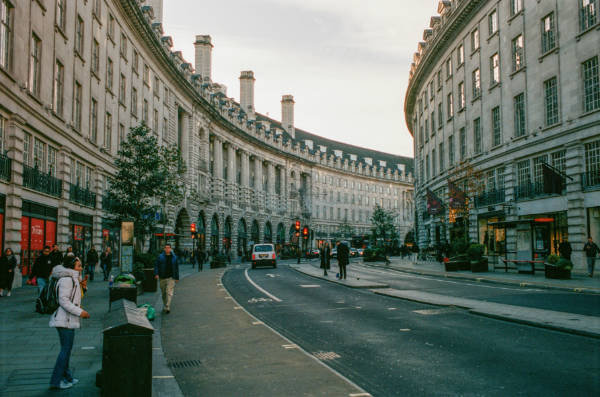
LondonLife – Regent Street curve…
10 Questions – Dr Louise Devoy, senior curator at the Royal Observatory Greenwich…
Exploring London spoke to Dr Louise Devoy about her role at the observatory, her new book, Royal Observatory Greenwich: A History in Objects, and her “must-see” for those visiting the observatory…
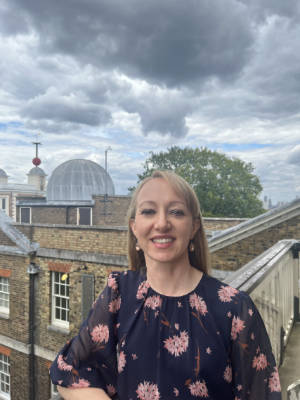
How long have you worked as senior curator at the Royal Observatory Greenwich and what was your pathway into the job?
“I’ve been working here for 12 years now and it’s been quite a journey! I originally studied physics with astrophysics at the University of Leicester and intended to continue with scientific research but my ideas changed after an inspirational internship working at a museum in the US. I really enjoyed learning about the history of astronomy – how our ideas have changed over time and the incredible stories of the people who were involved – and I continued my studies in the history of science. I’ve since worked at the Science Museum and British Museum and came here in 2013.”
Have you always been interested in astronomy?
“Yes, I have vivid memories of building a space rocket in primary school from cereal packets and yogurt pots that quite literally fired my imagination! I’ve still got The Night Sky Ladybird book that I bought and later in my teens my parents kindly bought me a telescope so I could learn more about practical astronomy. I don’t have much time for stargazing these days but I’ve recently purchased a compact smart telescope that you can put in your hand luggage and I’m looking forward to taking it on my travels.”
What does your job at the Royal Observatory entail?
“My job consists of two main parts; one based on research and one focused on communication. As a curator, I’m responsible for doing research on our collections, identifying objects for display and collaborating with researchers from other museums and observatories. Once I’ve done the detective work, I like to share these ideas and stories with our visitors through displays, talks and writing books and articles.”
What’s your favourite part of the day at the Observatory?
“For me, I enjoy seeing the sunset as I’m leaving the office, especially as the lights start to come on across London and you get a great view of the city from our hilltop location. It also makes me smile that sunset means going home for me, whereas for Greenwich astronomers in the past, it would have been the start of their working ‘day’!”

What prompted the writing of the book?
“It’s difficult to say but I definitely remember working on this during lockdown in 2020 and being inspired by similar books such as Neil MacGregor’s A History of the World in 100 Objects. Most books about the history of the Royal Observatory focus on the story of longitude, John Harrison’s marine timekeepers and Greenwich Mean Time (GMT) but I wanted to show how the Observatory has a much broader, richer history that encompasses many more people, subjects, stories and objects.
How did you decide which objects to feature in the book?
“I knew that we would be celebrating our 350th anniversary in 2025 and so I decided to choose objects that spanned the full chronology from 1675. I also wanted to expand the scope beyond the well-known clocks and telescopes to include books, paintings, manuscripts, watercolours, and even items of clothing previously worn by the Astronomer Royal and his family. In addition, I selected a few mystery objects to give me a good excuse to dig into the archives and piece together their stories.”
Do you have a favourite among them?
“I really like the story of the hole punch from the 1840s because it’s indicative of the paperwork and number-crunching that is an important but often overlooked aspect of astronomy. Once astronomers have done their observations, they have to apply mathematical corrections (‘reductions’) to account for atmospheric effects that might affect the results. It’s very tedious, repetitive work that was traditionally done by teenage boys known as ‘computers’. The seventh Astronomer Royal, George Biddell Airy (1801–1892) tried to make the process more efficient and less prone to errors by creating a template known as a ‘skeleton form’. The system worked well but generated vast amounts of paper, leading Airy to design a hole punch to organise the work. He was so proud of his idea that he encouraged other observatories to do the same and that’s why you’ll find another example of this hole punch over 8,000 miles away at the South African Astronomical Observatory in Cape Town. Airy invented his hole punch several decades before the standard office hole punch was patented, making our gadget one of the oldest in the world!”
What did you learn during the process of writing the book that you didn’t already know about the history of the Royal Observatory?
“The story of the secret binocular testing during the First World War really surprised me. The Observatory had already been involved in testing chronometers – portable, accurate timekeepers for navigation at sea – since the 1820s but the binocular testing was a new task. For security reasons, it was not mentioned in the Observatory’s Annual Reports and remained an unknown story for decades. I was intrigued by a one-line mention to it in the archives and dug a little further to uncover the full facts.”
Subscribe for just £3 a month to see all of Exploring London’s content – including the answers to the final two questions…
This Week in London – Cecil Beaton at the National Portrait Gallery; Diwali on the Square; Winifred Atwell honoured; and, Nordic works on paper…
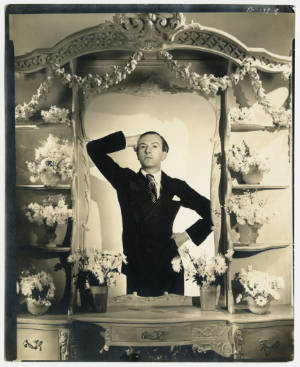
• The first exhibition to exclusively explore Cecil Beaton’s pioneering work in fashion photography opens today at the National Portrait Gallery. Cecil Beaton’s Fashionable World features portraits of some of the 20th century’s most iconic figures including celebrities, Marilyn Monroe, Audrey Hepburn, Elizabeth Taylor and Marlon Brando as well as royalty including Queen Elizabeth II and Princess Margaret and artists such as Lucian Freud, Francis Bacon and Salvador Dali. Curated by Vogue contributing editor Robin Muir, the display charts his meteoric rise and legacy and celebrates his signature artistic style which married “Edwardian stage glamour with the elegance of a new age”. As well as photographs, the 250 items displayed include letters, sketches, and costumes – the latter including the costumes and sets he created for the musical My Fair Lady, performed on stage, and then later on screen. The exhibition runs until 11th January. Admission charge applies. For more, see www.npg.org.uk/whatson/exhibitions/2025/cecil-beaton/.
• Diwali on the Square – London’s annual celebration of the Festival of Lights – takes place in Trafalgar Square this Sunday. The free, family event runs from 2pm to 8pm and will feature 200 dancers from Hindu, Sikh and Jain communities performing a mix of modern and classical dance. There will also be diya lighting, a retelling of the Diwali story by Aaya Anand Chaaya Anand, Bollywood Bhangra, and activities such as turban tying, yoga and meditation, henna decorations, puppet shows and dance workshops. Vegan and vegetarian food will be available at market stalls serving traditional and fusion cuisine. For more, head to www.london.gov.uk/events/diwali-square-2025.
• Piano legend and TV personality Winifred Atwell has been honoured with an English Heritage Blue Plaque at her former Mayfair home. Atwell, the first black artist to achieve a UK number one single, with the medley Let’s Have Another Party in 1954, lived at the home at 18 Bourdon Street with her husband and manager Lew Levisohn during the 1950s and the 1960s. It was in this property that she kept her famous Steinway concert grand piano and a deliberately out-of-tune upright piano that become a signature in her honky-tonk performances. For more, see www.english-heritage.org.uk/visit/blue-plaques/
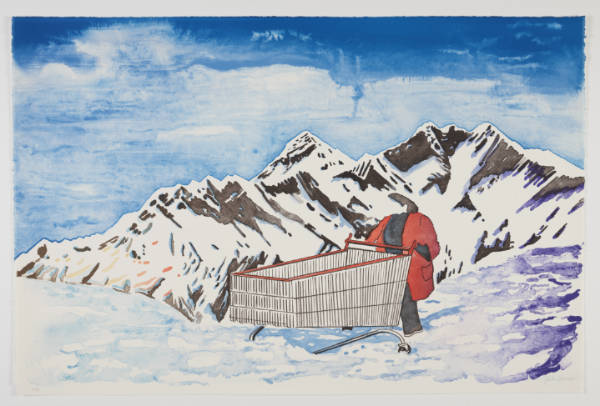
• The works of artists such as Edvard Munch and Mamma Andersson are at the centre of a new exhibition at the British Museum showcasing Nordic works of art on paper. Nordic noir: works on paper from Edvard Munch to Mamma Andersson is the culmination of a five year programme to build the museum’s collection of post-war Nordic art and among the highlights on show are two of Munch’s woodcut prints. Other artists featured in the exhibition include Olafur Eliasson, John Savio, Vanessa Baird, Yuichiro Sato, Fatima Moallim, and John Kørner. Key themes explored in the exhibition include nature and the need to preserve the natural world, the worlds of Norse myth, inner struggles with mental health, post-war angst, the threat of the Cold War, feminism and the rights of the Indigenous Sami people. Runs until 22nd March. Admission to display in Room 90 is free. For more, see www.britishmuseum.org/exhibitions/nordic-noir-works-paper-edvard-munch-mamma-andersson.
Send all items to exploringlondon@gmail.com.
10 places to encounter London’s animal life…8. Epping Forest…
This 6,000 acre woodland and pasture habitat, located on the north-eastern outskirts of London, is famous for its ancient and veteran trees – numbering almost 55,000 – but is also home to a range of wildlife.
Subscribe for £3 a month to access all of our articles (and support our work!)…
LondonLife – Rush hour, Poplar…

London pub signs – The Lord Clyde, Borough…
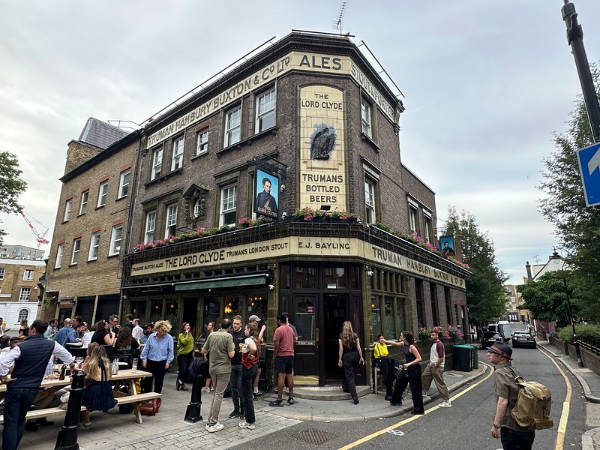
This Borough pub’s name comes from 19th century Field Marshall Colin Campbell Clyde (Lord Clyde).
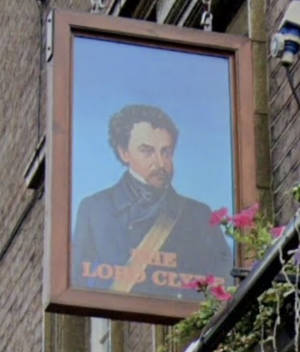
Clyde (1792-1863) was a Scottish carpenter’s son who joined the military at age 16 and fought in many campaigns during the first half of the 19th century including the Peninsular War of 1808-1814, the War of 1812 in the United States, the First Opium War in China in 1842, and in India during the Second Anglo-Sikh War in 1848-49.
During the Crimean War, Clyde led the Highland Brigade at the Battle of the Alma and repulsed the Russian attack on Balaclava. He become Commander-in-Chief, India, during the Indian Mutiny in 1857 and relieved the siege of Lucknow in India the same year.
Clyde was raised to the peerage in 1858. Her died in Chatham on 14th August, 1863, and was buried in Westminster Abbey.
A pub was first erected on the site at 27 Clennam Street (on the corner with Ayers Street) at the time of his death in 1863 by brewers in East London (originally known as the Black Eagle Brewery, the name Truman, Hanbury, Buxton & Co – which appears on the pub’s exterior – was being used for the brewery by 1889).
It was rebuilt in 1913 – the present frontage dates from that period – and is now Grade II-listed thanks to its architecture, which exemplifies the development of the ‘house style’ in pub architecture of the early 20th century.
The signage on the pub depicts Lord Clyde wearing the insignia of the Knight Commander of the Bath, an honour he was awarded in 1849 for his services in the Sikh War. There is a statue of him in Waterloo Place in London.
For more, head to https://www.facebook.com/lordclydeborough/.
This Week in London – Lee Miller at the Tate; the Hallelujah Chorus’ origins and impact, and conkers on Hampstead Heath…
• The UK’s largest retrospective of trail-blazing 20th century surrealist photographer Lee Miller opens at Tate Britain today. Lee Miller features around 230 vintage and modern prints, some of which are on display for the first time, which reveal how her approach pushed boundaries and led to the creation of some of the most iconic images of last century. Highlights include the newly discovered solarisation exemplar, Sirène (Nimet Eloui Bey) (c1930-32), her celebrated surrealist image of Egypt’s Siwa Oasis, Portraitof Space (1937), London-based works such as You will not lunch in Charlotte Street today (1940) and Fire Masks(1941) which convey the “pathos and absurdity” of the city in wartime, and war-related images including portraits of Miller and David E Scherman in Hitler’s private bath in April, 1945, as well as a rare 1950 self-portrait showing Miller posed in Oskar Kokoschka’s London studio flanked by artworks. Runs until 15th February. Admission charge applies. For more, see www.tate.org.uk/whats-on/tate-britain/lee-miller
• The initial and enduring impact of the Hallelujah Chorus is the subject of a new display at the Foundling Museum in Bloomsbury. A Grand Chorus explores the profound impact music can have on listeners and performers and brings together musical scores, librettos, and musical instruments as well as paintings, photographs, audio, video, personal testimonies, and other archival material spanning three centuries. Originallycomposed as part of his famous Messiah oratorio, George Frideric Handel later incorporated the Hallelujah Chorus into an anthem he created speciallyfor the Foundling Hospital that premiered in 1749 as a fund-raising exercise. The exhibition also showcases a major sound and video installation byMikhail Karikis – We are Together Because (2025), described as a modern counterpart to the Hallelujah Chorus. Runs until 29th March. Admission charge applies. For more, see https://foundlingmuseum.org.uk/event/a-grand-chorus-the-power-of-music/.
• Swing a conker at the Hampstead Heath Conker Championships this Sunday. People are all ages are invited to join in, whether a conker veteran or a newcomer, with competitions held in a range of age categories. The competition is being held near the Parliament Hill Bandstand from 1pm to 4pm. Entry is free. For more, see www.cityoflondon.gov.uk/events/go-conkers-on-hampstead-heath-5-october.
Send all items for inclusion to exploringlondon@gmail.com
10 places to encounter London’s animal life…7. Kew Gardens…
Famous for it’s flora, Kew Gardens is also home to some unusual animal life including Chinese water dragons who live in the warm environments of the glasshouses.
See all of our content (and support our work) for just £3 a month…
Other animals in the gardens include foxes, hedgehogs and birds including green and great-spotted woodpeckers, mute swans, Canada geese, mallards, ring-necked parakeets, kingfishers, tawny owls, moorhens, and stock doves.
And, of course, the gardens are home to a myriad of insects including bees, butterflies and dragonflies as well as aquatic life including frogs, newts and fish.
WHERE: Kew Gardens (nearest Tube station is Kew Gardens); WHEN: 10am to 7pm (last entry 6pm) daily; COST: £25 adults/£8 children 16 and under (children under four free) (cheaper tickets for online bookings and during off-peak period from 1st November to 31st January); WEBSITE: www.kew.org.
LondonLife – Screen characters set a new record in Greenwich…
It’s official, a new Guinness World Record was set in Greenwich on the weekend when some 874 people gathered at the Old Royal Naval College on Saturday dressed as their favourite characters from the big (and little) screen. The Old Royal Naval College team partnered with Elstree Studios for the event, part of the festivities being held to mark 100 years of film and TV at the site, which featured everyone from Stormtroopers to Jack Sparrow, Batman to characters from Bridgerton and Sherlock Holmes. The record, which was verified by Guinness, is officially known as the ‘largest gathering of people dressed as screen characters’.
This Week in London – Guildhall Library marks 600 years; the David Bowie Centre opens; the Chelsea History Festival; and returning to the Blitz Club…
• Guildhall Library is celebrating its 600th anniversary with a new exhibition. The display, which can be seen for free at the library, looks at the founding of the original library in 1425, what a medieval library would have looked like and what books it would have included as well as links with the library as it is today. Runs until 30th December. For more, see www.cityoflondon.gov.uk/things-to-do/history-and-heritage/guildhall-library/information-and-enquiries/visit-guildhall-library.
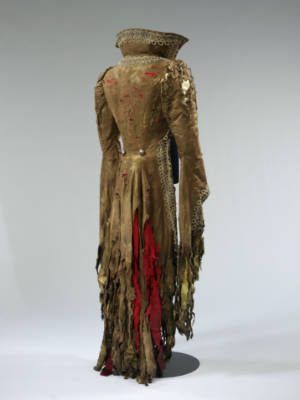
• David Bowie’s final, unrealised musical projects – The Spectator, an unseen Ziggy Stardust guitar, and Bowie’s costume designs are just some of the treasures housed in the new David Bowie Centre which opened to the public this month. Located at the V&A East Storehouse in Queen Elizabeth Olympic Park, the new home for David Bowie’s archive features nine displays show-casing more than 200 items which also include handwritten lyrics, photography, costumes and sketches. As well as seeing the displays, visitors can book one-on-one time with some of the 90,000-plus objects in the archive through the ‘Order an Object’ service. More than 500 items were requested in the first week of the service going live with a frockcoat designed by Alexander McQueen and David Bowie for his 50th birthday concert in 1997 the most frequently requested item. Entry to the archive is free, but ticketed. For more, including bookings, see www.vam.ac.uk/exhibitions/david-bowie-centre.
• The annual Chelsea History Festival kicked off yesterday with more than 80 events taking place until Sunday. Events include tours of the Royal Hospital Chelsea, and the chance to visit the Soane Stable Yard, the free exhibition Lost and Found in Hong Kong: The Unsung Chinese Heroes at D-Day at the hospital, walking tours including ‘Rock ‘n’ Roll Chelsea’ and ‘1960s Chelsea’, and a medicinal trees tour at the Chelsea Physic Garden. For the full programme head here.
• A major exhibition on the Blitz club – which helped shape London’s culture not only in the mid-1980s but in the decades that followed – has opened at the Design Museum in Kensington High Street. Located in a Covent Garden side street, the club is credited with having “transformed 1980s London style”, generating a creative scene that had an enormous impact on popular culture in the following decade. Blitz: The Club that Shaped the 80s features more than 250 items including clothing and accessories, design sketches, musical instruments, flyers, magazines, furniture, artworks, photography, vinyl records and rare film footage. Runs until 29th March. Admission charge applies. For more, see https://designmuseum.org/exhibitions/blitz-the-club-that-shaped-the-80s.
Send all items to exploringlondon@gmail.com.
10 places to encounter London’s animal life…6. The River Thames…
The River Thames is home to a range of wildlife as it winds through London including several thousand seals which have been spotted at locations across the city’s span.
Subscribe for just £3 a month to access all of Exploring London’s content (and support our work!)
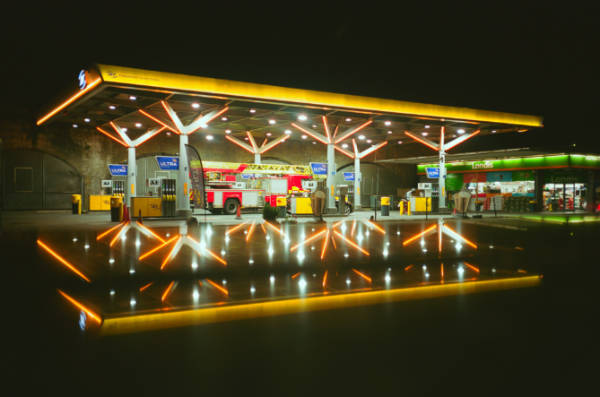
LondonLife – Refuelling…
Famous Londoners – Obaysch the hippo…
Given our current series on London’s animal life, we thought it an opportune time to take a look at another of London’s most famous animals – in this case a hippopotamus called Obaysch.

Obaysch had been living near (and named for) an island in the River Nile in Egypt. He was gifted by the Ottoman Viceroy, Abbas Pasha, to the British Consul General, Sir Charles Murray (who became known as “Hippopotamus Murray” due to his affection for the animal).
Transported via a steamer to Southampton, he arrived at London Zoo in Regent’s Park on 25th May, 1850.
Said to have been the first hippo to be brought to Europe since the days of the Roman Empire, Obaysch soon gained the status of a celebrity at London Zoo with Queen Victoria among the thousands who came to see him (she apparently compared his swimming technique to that of a porpoise) in a craze that became known as “hippomania”.
In 1854, Obaysch was joined by a female hippo Adhela, also known as ‘Dil’, (again as a gift of the Viceroy) who was the first living female hippo in Europe since, you guessed it, Roman times.
In 1860, Obaysch escaped from the hippo enclosure and was only lured back to his enclosure by using one of the zookeepers whom he apparently particularly disliked as bait.
The zoo hoped the pair of hippos would breed but it wasn’t until 1871 that they first became the parents of a baby who sadly, didn’t survive.
Two more babies followed and the second of these, born in November, 1872, and named Guy Fawkes despite subsequently being found to be a female, became the first captive bred hippo to be reared by its mother.
Obaysch died on 11th March, 1878 and Adhela four years later on 16th December, 1882. Guy Fawkes died in March, 1908.
This Week in London – Marie Antoinette; ‘Theatre Picasso’, ‘Exploring Space’ at the Science Museum; and Talk Like A Pirate Day…
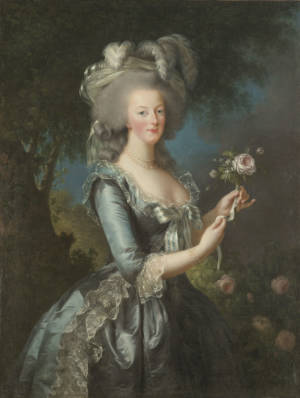
• The UK’s first exhibition to focus on the French Queen, Marie Antionette, opens at the V&A on Saturday. Marie Antoinette Style explores the dress and interiors adopted by the Queen, an early modern “celebrity”, during the final decades of the 18th century. It features some 250 objects including loans from Versailles which have never before been seen outside of France. There are personal items worn by the Queen including fragments of court dress, her silk slippers and jewels from her private collection as well as items from the Queen’s dinner service at the Petit Trianon, accessories and intimate items from her toilette case and even recreated scents from the court and a perfume which was favoured by the Queen. There also contemporary couture pieces by designers such as Moschino, Dior, Chanel, Erdem, Vivienne Westwood and Valentino and costumes, including shoes, made for screen, such as for Sofia Coppola’s Oscar winning film Marie Antoinette. The exhibition can be seen in Galleries 38 and 39 until 22nd March. Admission charge applies. For more, see vam.ac.uk/exhibitions/marie-antoinette.
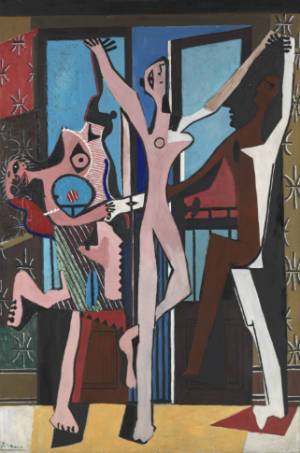
• Around 50 works by famed artist Pablo Picasso have been brought together for a new exhibition at the Tate Modern to mark the centenary of the artist’s work The Three Dancers (1925). Staged by contemporary artist Wu Tsang and write and curator Enrique Fuenteblanca, Theatre Picasso explores aspects of performance in his works and features the Tate’s entire collection of Picassos which, alongside The Three Dancers, also includes Weeping Woman (1937) and Nude Woman in a Red Armchair (1932). There are also loans from key museums in France as well as prints, drawings, sculptures, textile works and collages. These include the wool and silk tapestry Minotaur (1935) which is being displayed in the UK for the first time. Accompanying the works is Henri-George Clouzot’s 1959 film The Mystery ofPicasso. Admission charge applies. Runs until 12th April. For more, see
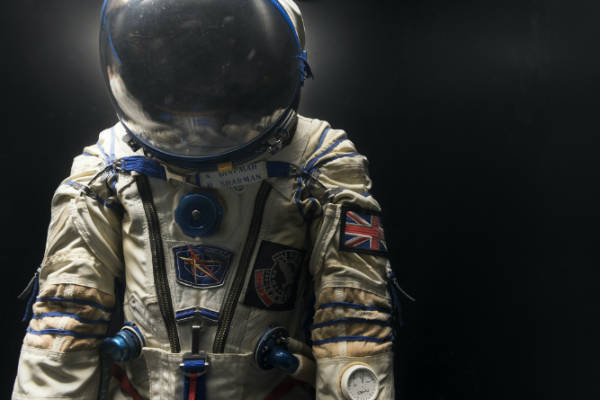
• A new free gallery revealing the stories behind space exploration opens at the Science Museum in South Kensington on Saturday. The gallery – Exploring Space – showcases iconic items from the history of space exploration including a chunk of Moon rock nicknamed ‘Great Scott’ which was collected in 1971, the Soyuz TMA-19M descent module that carried astronaut Tim Peake, and the Sokol KV-2 rescue suit worn by Helen Sharman in 1991. There are also new technologies from the space sector including prototype electric propulsion technology from Magdrive and the ‘rolly-polly’ LEV-2 Moon rover, the result of the first collaboration between a space agency (JAXA) and a toy company (Takara Tomy). For more, see www.sciencemuseum.org.uk/see-and-do/space.
• “Ahoy me hearties!” It’s International Talk Like A Pirate Day on Friday and the National Maritime Museum in Greenwich is celebrating from Friday across the weekend with talks about everything from Barbary corsairs to sea shanties, character actors and two-for-one discounts on tickets to the Pirates exhibition. Visitors over the weekend who dress like a pirate will be in the chance to win prizes including Cutty Sark rig climb tickets, annual passes to the Old Royal Naval College, and a family tour of The Golden Hinde. And to brush-up on your pirate lingo, “Abbey-Lubber” means a lazy sailor avoiding work, and ‘Jack Ketch’ a hangman or executioner. For more, see rmg.co.uk/whats-on/national-maritime-museum/international-talk-pirate-day.
Send all items to exploringlondon@gmail.com.
10 places to encounter London’s animal life…5. Golders Hill Park Zoo…
Not to be confused with the much larger ZSL London Zoo, this small zoo in Golders Hill Park on the north-western side of Hampstead Heath is home to a number of exotic species including ring-tailed lemurs, red-necked wallabies and kookaburras.
Subscribe to get access
Read more of this content when you subscribe today.
LondonLife – Going up…
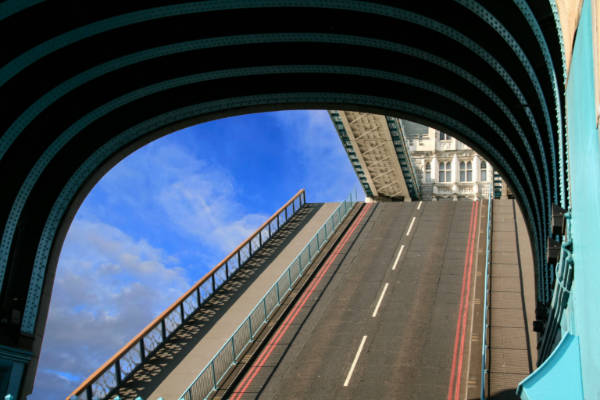
This Week in London – Open House London; Georges Seurat and the Neo-Impressionists; and, the Burma campaign remembered…
• The week-long Open House London kicks off this Saturday and features a range of activities across all 33 London boroughs – from “drop-ins” at and guided tours of buildings to talks, exhibitions, workshops and, of course, walking tours. Highlights include architect guided tours of Rana Begum’s Little Citadel retreat compound in Stoke Newington, rare access to the Islip and Nurses’ Chapels in Westminster Abbey, tours of several facilities at Queen Elizabeth Olympic Park including the new Sadler’s Wells theatre, the Lee Valley VeloPark and the Hackney Wick Fish Island Creative Enterprise Zone, and walking tours exploring Roman London. For the full programme, head to https://programme.openhouse.org.uk/.
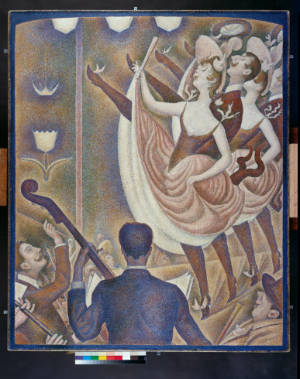
• Georges Seurat’s painting of cancan dancers Let Chahut (1889-90) goes on display in the Sainsbury Wing of The National Gallery on Saturday. Radical Harmony: Helene Kröller-Müller’s Neo-Impressionists, which draws on the collection of the German art collector Helene Kröller-Müller (1869‒ 1939), at the Kröller-Müller Museum, Otterlo, in the Netherlands, also features several other works by Seurat as well as other radical works of French, Belgian and Dutch artists, painted from 1886 to the early 20th century. Among the highlights are Seurat’s Sunday at Port-en-Bessin (1888) and The Canal of Gravelines, in the Direction of the Sea (1890), Théo van Rysselberghe’s In July – before Noon (1890), Jan Toorop’s Sea (1899), Henry van de Velde’s Twilight (about 1889) and Paul Signac’s The Dining Room (1886-87). Runs until 8th February. Admission charge applies. For more, see www.nationalgallery.org.uk/exhibitions/radical-harmony-neo-impressionists
• Marking 60 years since VJ (Victory over Japan) Day, the National Army Museum is hosting the first national museum exhibition on the Burma campaign during World War II in the 21st century. Beyond Burma: Forgotten Armies features more than 180 objects including artworks, weapons, uniforms and photographs and explores the retreat from Burma in 1942, the transformation and resurgence of British and Indian forces in India in 1943 and the campaign against the Imperial Japanese Army during 1944-45. Highlights include the abstract painting And the World was covered in darkness by Major Conrad ‘Dick’ Richardson Romyn who experienced intense fighting in Burma, a bottle of Army anti-mosquito cream and a vial of anti-malarial tablets representing the treatment of soldiers, a tin identity bracelet and food bowl used by Gunner Moss Simon, who spent three years as a prisoner of war, and a military medal awarded to Corporal Dogo Manga who served with 1st Battalion, the Nigeria Regiment, Royal West African Frontier Force. Opens on Tuesday and runs until 13th April next year. Admission is free. For more, see www.nam.ac.uk/whats-on/beyond-burma.
Send all items for inclusion to exploringlondon@gmail.com
10 places to encounter London’s animal life…4. Bushy Park…
Famous for its herd of Red and Fallow deer, the expansive Bushy Park in south-west London is also a haven for many other kinds of wildlife – from birds and fish to insects and small mammals.
Subscribe now for access to all Exploring London’s stories and support our work!
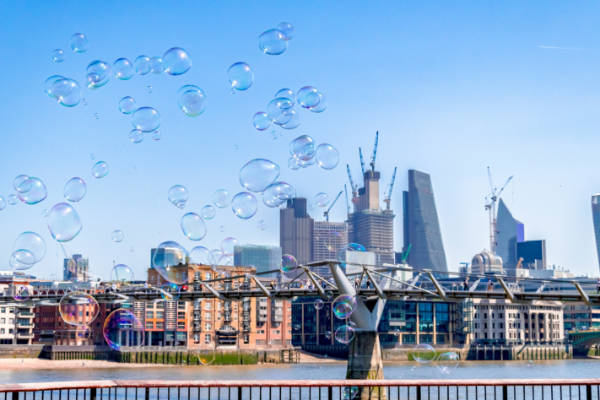
LondonLife – Millennium Bridge bubbles…
 Exploring London