This Week in London – Rare Tudor choirbook at Lambeth; Sculpture in the City returns; and, picturing Blondie…

One of only two surviving choirbooks from the reign of King Henry VIII is on display in a new exhibition at the Lambeth Palace Library. Sing Joyfully: Exploring Music in Lambeth Palace Library displays the ‘Arundel’ or ‘Lambeth’ Choirbook (Arundel, Sussex, c. 1525) – this year marking its 500th birthday – along with other items from the library’s collection such as two leaves of a 14th century polyphony recently discovered in the binding of an early printed book. The exhibition, which is free, can be seen until 6th November. For more, see www.lambethpalacelibrary.info/sing-joyfully/.
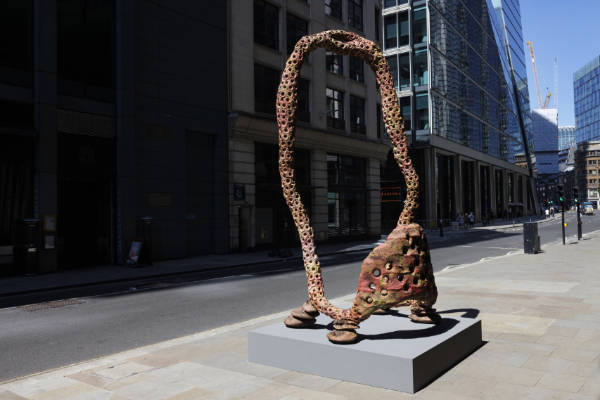
Looping Loop, © Andrew Sabin, Courtesy of the artist and Brooke Benington. PICTURE © Nick Turpin

On Now: Sculpture in the City. The 14th edition of the annual sculpture exhibition in the City of London features 11 pieces including three new works as well as six works which have been retained from previous iterations of the exhibition and two permanent acquisitions. The new works include: Ai Weiwei’s Roots: Palace, a cast-iron tree root sculpture located outside St Botolph without Bishopsgate which, as part of a series created in collaboration with Brazilian artists and communities, explores the concept of unrootedness; Jane and Louise Wilson’s Dendrophiles which, located beneath the escalators of The Leadenhall Building, combines ink drawings based on images of DNA with 3D scans of ancient oak wooden samples; and, Andrew Sabin’s Looping Loop which, located outside 70 St Mary Axe, which forms a continuous loop creating what’s described as a “lively, pulsating sensation”. Runs until April. For more – including a map of the locations – see https://www.sculptureinthecity.org.uk/.

Rare, behind the scenes images of US band Blondie have gone on show at the Barbican Music Library from today. Taken by photographer Martyn Goddard during the group’s breakthrough year of 1978, the 50 images show the band in concert, backstage, in the studio and during photo shoots. The display of photographs is complemented by poster prints, album covers, tour and concert memorabilia, period cameras, and photographic equipment. There are also items lent by Alan Edwards, who has handled Blondie’s publicity since 1978, from his private collection. Blondie in Camera 1978 runs until 5th January. Admission is free. For more see, www.cityoflondon.gov.uk/services/libraries/barbican-music-library.

Send all items for inclusion to exploringlondon@gmail.com.
This Week in London – Royal garments; Victor Hugo’s drawings; and, British Black music…

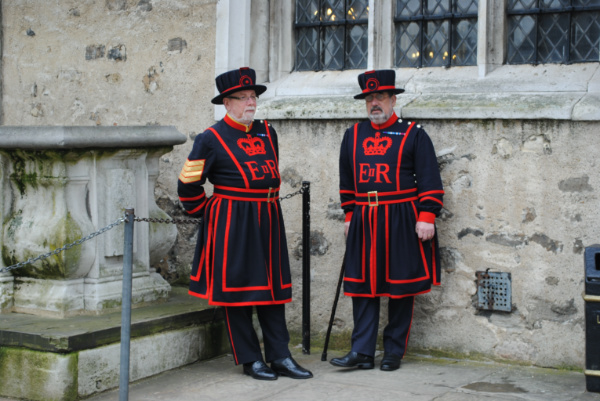
Yeoman Warders at the Tower of London. PICTURE: David Adams

Almost 200 garments from the Royal Ceremonial Dress Collection are able to be explored online thanks to a new collaboration between Historic Royal Palaces, which looks after six royal palaces including Hampton Court Palace and the Tower of London, and Google Arts & Culture. Drawing on ultra-high-resolution photography and 3D scanning, the garments – which include everything from ceremonial uniforms such as those worn by Yeoman Warders and a rare Bristow hat which may have been worn by King Henry VIII to Queen Victoria’s silk shoes, a waistcoat worn by King George III and a dress worn by the future Queen Elizabeth II in 1927 when she was just 18-months-old – can now be viewed in unprecedented detail (a billion pixels per image) without the risk of the damage which can occur thanks to light, humidity, and handling. The Royal Ceremonial Dress Collection comprises over 10,000 pieces of historic dress and related materials spanning the period from the 16th century to the present day and features garments worn by monarchs and key historical figures, including, as well as the aforementioned, Prince Albert, Princess Margaret, and Diana, Princess of Wales. To see the items, head to goo.gle/royalwardrobe.

Author, politician and artist Victor Hugo’s rarely seen works on paper have gone on show at the Royal Academy of Arts. Astonishing Things: The Drawings of Victor Hugo features around 70 works drawn from European collections and follows his preoccupation with drawing from early caricatures and travel drawings to later landscapes and abstract works. Arranged across four sections, the works on show include everything from Mushroom (1850) – which depicts a giant anthropomorphic toadstool, some of his many works depicting castles such as The cheerful castle (c 1847), and drawings that Hugo created in tandem with writing his 1866 novel The Toilers of the Sea, set in Guernsey in the years following the Napoleonic Wars, as well some relating to his most famous work, Les Misérables. The exhibition, being held in the Jillian and Arthur M Sackler Wing of Galleries, can be seen until 19th June. Admission charge applies. For more, see royalacademy.org.uk.

A “ground-breaking” exhibition showing the outsized impact British Black music has had on the world stage over the past 100 years has opened at the Barbican Music Library. Black Sound London highlights artists who created their own platforms, audiences, and spaces, often without mainstream support and spans genres including jazz, lovers’ rock, jungle, grime, and drill. Among the objects on show are vintage mixtapes, iconic magazine covers, and fly-posted walls. Runs until 19th July. For more, see www.cityoflondon.gov.uk/services/libraries/barbican-music-library.

Send all items for inclusion to exploringlondon@gmail.com.
This Week in London – Silk Road treasures; a new Lord Mayor of London; and, reassessing the UK’s early Emo scene…

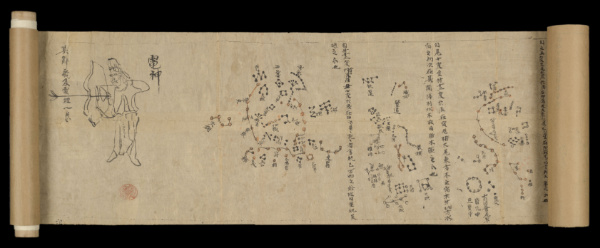
Dunhuang Star Chart 649 – 700 CE – Or.8210/S.3326 © British Library Board

The world’s earliest complete printed book with a date, the earliest known manuscript atlas of the night sky and the earliest surviving historical document in Tibetan are among treasures on show in a new exhibition at the British Library. A Silk Road Oasis: Life in Ancient Dunhuang features more than 50 manuscripts, printed documents and pictorial works including many which were sealed in the so-called ‘Library Cave’ in the Buddhist Mogao cave complex near the oasis town of Dunhuang in Gansu province, China, for almost 900 years before they were rediscovered in 1900. Highlights in the display include the Diamond Sutra (868 AD) – the world’s earliest complete printed book with a date, the Dunhuang star chart (649-700) – the earliest known manuscript atlas of the night sky (pictured), and the Old Tibetan Annals (641-761) – the earliest surviving historical document in Tibetan. On public display for the first time is a rubbing of the Stele of Sulaiman – a carved stone slab that was erected in the caves in 1348, a copy of the Diamond Sutra written in the scribe’s own blood (considered by Buddhists to be an act of powerful sincerity), and one of the most important and complete manuscripts among the Old Uyghur Manichaean texts, the Xuastuanift. There is also a 9th century manuscript fragment about the prophet Zoroaster or Zarathustra (believed to be nearly 400 years older than any other surviving Zoroastrian scripture) and the longest surviving manuscript text in the Old Turkic script, a Turkic omen text known as the Irk Bitig or Book of Omens (930 or 942). The exhibition, which explores Silk Road interactions through a case of characters including a scribe, merchant and Buddhist nun, runs until 23rd February and is accompanied by a programme of events. Admission charge applies. For more, see https://silkroad.seetickets.com/timeslots/filter/a-silk-road-oasis-life-in-ancient-dunhuang

Alderman Alastair King has been elected the 696th Lord Mayor of London. King, who succeeds Lord Mayor Professor Michael Mainelli, takes office on 8th November for a one year term with the annual Lord Mayor’s Show, which takes place the following day, his first public event. “It is a tremendous honour to be elected as the 696th Lord Mayor of the City of London,” the Lord Mayor-elect, whose role will see him serving as a global ambassador for the UK financial and professional services industry, said. “London remains the world’s leading financial centre, but global competition is fierce. We have the expertise and talent to thrive, yet we must do more to unlock growth, equip people to innovate, and harness the remarkable dynamic diversity that makes the City exceptional.”

An “unfiltered” look at the early Emo scene in the UK is the subject of a new exhibition at the Barbican Music Library. I’m Not Okay (An Emo Retrospective), a collaboration between the library and the Museum of Youth Culture (MOYC), features personal photos taken on early digital and phone cameras and focuses on the first-generation Emo scene (2004-2009), a time when bands such as My Chemical Romance, Fall Out Boy, and Finch were “hugely influential”.  Jamie Brett, creative director at the MOYC said the Emo scene “resonated deeply with teens who wanted to express their angst, doubts, insecurity, and sense of feeling and being different, and channelled their collective melancholy into a transatlantic subculture”. The exhibition, which is free to enter, can be seen until 15th January. For more, see www.cityoflondon.gov.uk/services/libraries/barbican-music-library.

Send all items for inclusion to exploringlondon@gmail.com.
This Week in London – Charles Holden’s university vision; Two-Tone at the Barbican; and celebrating Winston…

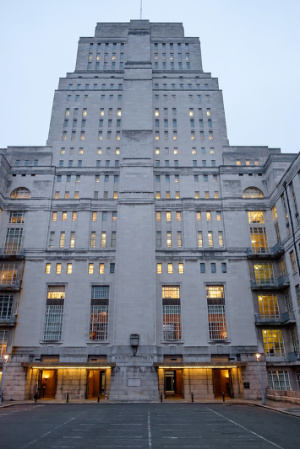
Senate House. PICTURE: Tim Abbott (licensed under CC BY-NC-ND 2.0)

A new exhibition celebrating the vision architect Charles Holden had for the design of the University of London – including the iconic Senate House – has opened at the venue. Holden had a hand in designing some 48 Tube stations and 55 Broadway – London’s first skyscraper - before in 1931 being appointed to develop the university’s Bloomsbury estate, including its headquarters. While the master plan was never completed (only the Senate House and its library were finished), it provides a fascinating insight into a part of London that could have been. Charles Holden’s Master Plan: Building the Bloomsbury Campus tells the story of institution’s design through architectural models, archival documents, photo albums, and other mixed media. The display in the Chancellor’s Hall Lobby on the first floor of the Senate House runs until 17th March. Entry is free. For more, see www.london.ac.uk/news-events/events/charles-holdens-master-plan-building-bloomsbury-campus.

A new exhibition tracing the origins and influence of the popular British music genre known as two-tone has opened at the Barbican Music Library. Two-tone, which is also known as ‘ska-rock’ or ‘ska revival’ and which had its heyday in the late 1970s and early 1980s, fused traditional Jamaican ska, rocksteady, and reggae music with elements of punk rock and new wave music. Its name comes from record label 2 Tone Records which was founded in 1978 by Jerry Dammers from The Specials, one of the most popular Two-tone bands of the time. The display – From the Caribbean to Coventry: Plotting the Rise of Two Tone – features band memorabilia as well as clothing, literature, art, photographs, and fan contributions, and explores how Caribbean immigration influenced UK youth culture. Runs until 25th May. Admission is free. For more, see https://fromthecaribbean2coventry.co.uk.

FURTHER AFIELD: Sir Winston’s family home – Chartwell in Kent – is hosting a new outdoor photography exhibition to mark what would have been his 150th birthday which features some of most spectacular birthday cakes. Press interest into Churchill’s birthday extravaganza – and in particular the cakes – was considerable and historic photographs from TopFoto have now been colourised for the first time, bringing the baking creations vividly to life. The images can be seen until 25th February. For more, see www.nationaltrust.org.uk/visit/kent/chartwell.

Send all items for inclusion to exploringlondon@gmail.com

This Week in London – Wren at Work; music moments captured in photographs; and, the RA’s 255th Summer Exhibition…

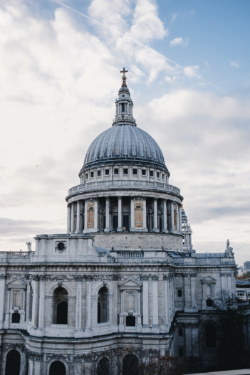
Wren’s monument – St Paul’s Cathedral. PICTURE:
Aaron Gilmore/Unsplash

A recreation of Sir Christopher Wren’s office while he was working on St Paul’s Cathedral can be seen at the Guildhall Art Gallery from today. The faux 17th century environment, created by Chelsea Construction, will allow visitors to explore the building methods and tools of the age, as well as the daily lives of 17th century diarists including Robert Hooke, John Evelyn and Margaret Cavendish, and a case study of how citizens lost and regained their properties during and after the Great Fire of 1666. A specially commissioned map by artist/cartographer Adam Dant will provide insight’s into Wren’s life and times and will be displayed alongside illustrations by architect George Saumerez-Smith and members of the Worshipful Company of Chartered Architects, a scale model of St Paul’s Dome by students at Kingston University, and stone models from master mason Pierre Bidaud. The Wren at Work exhibition is part of Wren300. Admission is free but booking are recommended. For more, see www.cityoflondon.gov.uk/events/wren-at-work-wren300-exhibition.

Photographs capturing Pete Townshend’s guitar flying through the air at Madison Square Garden and Noel Gallagher during the making of the video for Wonderwall are just two of the images on show in a new exhibition at the Barbican Music Library. Celebrating the 25th anniversary of music photography collection Rockarchive.com, In The Moment: The Art of Music Photography also features images of everyone from David Bowie to Debbie Harry, Queen, Biggie Smalls, led Zeppelin, Lady Gaga and Amy Winehouse, capturing them in recording sessions at live gigs and at photo shoots. The free exhibition, which opens on Friday, can be seen until 25th September. For more, see www.cityoflondon.gov.au/services/libraries/barbican-music-library. Meanwhile, a bust of Sir Simon Rattle is being unveiled today at the library in tribute to his five decades in classical music. Sir Simon, who has made over 100 recordings. became music director of the Barbican’s resident orchestra, the London Symphony Orchestra, in 2017 and will conclude his tenure this year.

The Royal Academy’s 255th annual Summer Exhibition opened this week under the theme of ‘Only Connect’ (inspired by a quote from the novel Howards End by EM Forster). Exhibiting artists include British sculptor Lindsey Mendick, Barbados-born painter Paul Dash, American multi-media artist Ida Applebroog, St Lucia born painter Winston Branch, Colombian sculptor Carlos Zapata and British painters Caragh Thuring and Caroline Walker, and Irish fashion designer Richard Malone, who has created a dramatic mobile installation which hangs in the Central Hall. There are also works by Royal Academicians including Frank Bowling, Michael Craig-Martin, Tracey Emin, Gillian Wearing and the late Paula Rego. Runs until 20th August. Admission charge applies. For more, see royalacademy.org.uk.

Send all items to exploringlondon@gmail.com

This Week in London – Boleyn ring at Hampton Court; and, Status Quo at the Barbican…

© Historic Royal Palaces/3004593

A gold signet ring once believed to have belonged to the Tudor-era Boleyn family has gone on display at Hampton Court Palace. The ring, was discovered in a field near Shurland Hall on the Isle of Sheppey in Kent, the country home of one of Anne Boleyn’s cousins and a property she visited with King Henry VIII. It is engraved with with a bull’s head – which appears in the arms of the Boleyn family (a visual pun on the family name, which was often spelled as ‘Bullen’) – and arrayed with sunbeams and stars of white enamel as well as being decorated with icons of the Virgin and Child and St Catherine of Alexandria on its shoulders. Analysis concluded the ring was consistent with objects of the early Tudor era, leading historians to suggest that it may have belonged to either Thomas or George Boleyn – Anne Boleyn’s father and brother. The ring, which was purchased by Historic Royal Palaces with support from the Arts Council England/V&A Purchase Grant Fund, the Art Fund, the Meakins Family and John Harding, under the terms of the Treasure Act 1996, can be seen in the Great Hall. Included in general admission. For more, see www.hrp.org.uk/hampton-court-palace/.

One of the UK’s most successful rock bands, Status Quo, are the subject of a new exhibition at the Barbican Music Library. Celebrating Seven Decades of Status Quo is the first ever public exhibition on the band and features never-before-seen material including the original handwritten lyrics to Caroline and Down Down as well as tour posters, photographs and more than 40 of the bands key albums. The display is a collaboration between Paul and Yvonne Harvey, who ran the band’s official fan club, ‘From The Makers Of…’ (FTMO), and Status Quo fan and collector Andy Campbell. Status Quo was formed in 1962 and has since had more than 60 chart hits as well as opening the LIVE AID concert in Wembley in July, 1985, and receiving a Brit Award for Outstanding Contribution to Music in 1991. Runs until 22nd May. Admission is free. For more, see www.cityoflondon.gov.uk/services/libraries/barbican-music-library.

Send all items to exploringlondon@gmail.com

This Week in London – Spitfires at Duxford; The Jam in photos; and, Waterloo & City line reopens…

A Spitfire at IWM Duxford. PICTURE: Peter Bromley/Unsplash

The largest collection of Spitfires gathered under one roof can be seen at the Imperial War Museum Duxford’s AirSpace hall. Twelve of the iconic planes have been gathered at the airfield, often referred to as the “home of the Spitfire”. Spitfire: Evolution of an Icon, which is being accompanied by a programme of tours, talks, events and family activities, shows how the plane evolved throughout World War II in order to keep pace with German aircraft development. As well as the IWM’s iconic Mk Ia Spitfire, the display also features Mk V, Mk IX and Mk XIV models. The Spitfires be seen until 20th February. Admission charge applies. For more including details of events, head to www.iwm.org.uk/events/spitfire-evolution-of-an-icon.

A new exhibition focused on photographs of iconic 70s and early 80s band The Jam opens at the City of London Corporation’s Barbican Music Library tomorrow. True is the Dream features the photography of Derek D’Souza who has captured the band and frontman Paul Weller, who went on to found The Style Council, on film over several decades. D’Souza’s work include a career-defining shoot of the band at Chiswick House. The display is free to see until 16th May. For more, see www.barbican.org.uk/whats-on/2022/event/true-is-the-dream.

The Waterloo & City line has reopened following a brief closure over Christmas. The London Underground line, which connects Waterloo to Bank, was temporarily closed by Transport for London in late December following increasing COVID cases in the capital and the impact on staff absence. Meanwhile, the Bank branch of the Northern line (between Moorgate and Kennington) for 17 weeks from 15th January to allow for upgrade works.

Send all items to exploringlondon@gmail.com.

This Week in London – The British Museum gets arty; music festivals in Georgian Britain; the story of Tangerine Dream; and, migration at Dulwich…

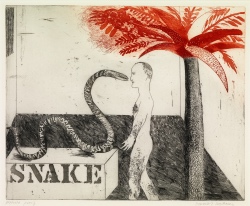
• Artworks by the likes of Pablo Picasso, Henri Matisse, Lucian Freud, Bridget Riley, David Hockney and Visa Celmins are on show in a new exhibition at the British Museum. Reflecting artistic developments in the past 100 years of modern art, Living with art: Picasso to Celmins features 30 prints and drawings. It showcases highlights from the wide-ranging collection of Alexander Walker (1930–2003), a longstanding film critic for London’s Evening Standard newspaper, which was bequeathed to the British Museum in 2004. The exhibition can be seen at the museum until 5th March before heading off on tour. Admission charge applies. For more, see www.britishmuseum.org. PICTURE: David Hockney (b. 1937), ‘Jungle Boy’ (1964) Etching and aquatint in black and red on mould-made paper © David Hockney Photo Credit: Richard Schmidt.

Music festivals in Georgian Britain – from the Handel Commemoration of 1784 to the Crystal Palace concerts of the late 19th century – are explored in a new exhibition at the Foundling Museum in Bloomsbury. Music Festivals in Georgian Britain looks at the logistics behind the organisation of the concerts which followed on in the tradition of benefit concerts for charities as well as the expectations of audiences. Runs until 14th September. Admission charge applies. For more, see https://foundlingmuseum.org.uk.

The “extraordinary story” of German band Tangerine Dream is told in a new exhibition opening at the City of London’s Barbican Music Library today. Tangerine Dream: Zeitraffer features photographs, previously unpublished articles, video clips, and original synthesizers as it tells the story of the band – credited with laying the foundation for the Ambient and Trance music styles – from its founding in 1967 and the release of its first album, Electronic Meditation, in 1970 through to the latest album, Recurring Dreams, last year. The band, which has released more than 160 albums, has also composed the scores for more than 60 Hollywood films including Michael Mann’s Risky Business and Ridley Scott’s Legend as well as Firestarter, based on the Stephen King novel. In 2013, they also wrote the score for the record-breaking video game, Grand Theft Auto V, and their music has appeared in recent Netflix series, Stranger Things, Black Mirror and Mr Robot. Runs until 2nd May. Admission is free.

The stories of six “community curators” – each of whom has personal experience of migration – are at the centre of a new display at the Dulwich Picture Gallery. Journeys, which explores themes of identity, belonging, migration and London’s multiculturalism, examines the contemporary relevance of works by the likes of Poussin, Rubens, Canaletto and Van Dyck against the backdrop of the life stories of the curators who, aged between 29 and 69, have a combined heritage spanning eight countries including Yemen, Sri Lanka, Italy, Pakistan and Ireland. Opens next Tuesday (21st January) and runs until 24th June with a special free late opening on 19th June during the final week which coincides with Refugee Week. For more, see www.dulwichpicturegallery.org.uk.

Send all items for inclusion to exploringlondon@gmail.com.
This Week in London – A rare surviving piece of Queen Elizabeth’s dress on show?; Inside Ronnie Scott’s Jazz Club, and, Islamic influences on art…

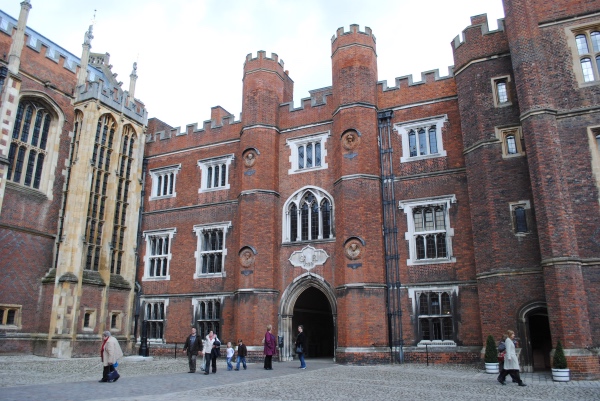
An altar cloth which may have once been part of a dress worn by Queen Elizabeth I goes on show at Hampton Court Palace (pictured) this Saturday. The Bacton Altar Cloth, which was discovered in a church in Bacton in rural Hertfordshire, has undergone two years of conservation work and will be displayed alongside a portrait of the “Virgin Queen” featuring a dress of similar design. The altar cloth has long been associated with Bacton-born Blanche Parry, one of Queen Elizabeth’s servants who became her Chief Gentlewoman of the Bedchamber. Records show the Queen regularly gave her discarded clothing to Parry and for years there has been speculation that the altar cloth was part of one such discarded item. Historic Royal Palaces curator Eleri Lynn, an expert in Tudor court dress, was able to identify previously unseen features and studied the seams of the fabric to show it had once been part of a skirt. Further research – including an examination of the dyes used in the item – have added weight to the theory it was once part of a dress. The altar cloth, on loan from St Faith’s Church in Bacton, can be seen until 23rd February. Admission charges apply. For more, see www.hrp.org.uk. PICTURE: David Adams.

A photographic exhibition of the first ‘golden’ decade of Ronnie Scott’s Jazz Club – featuring images of legendary British and American jazz singers – opens at the Barbican Music Library on Saturday. Ronnie Scott’s 1959-1969: Photographs by Freddy Warren, which marks the club’s 60th anniversary, features Warren’s photographs of the likes of Miles Davis, Duke Ellington, Dizzy Gillespie, Count Basie, Ella Fitzgerald, Zoot Sims, Cleo Laine and Tony Bennett. Warren was the in-house photographer at the Soho club from the opening night in 1959, when it was based in Gerrard Street, and documented the construction of the new site in Frith Street in the mid-1960s along with the arrival in London of big American stars. The exhibition includes rare vintage prints – some which were salvaged from the walls when the club was renovated in 2006, Freddy Warren’s original contact sheets, and previously unseen prints specially produced from the original negatives. The exhibition is free. Runs until 4th January. For more, see www.barbican.org.uk/your-visit/during-your-visit/library.

An exhibition exploring how western artists have been inspired by the Islamic world opens at the British Museum today. Inspired by the east: how the Islamic world influenced western art features paintings by leading ‘Orientalists’ including Eugène Delacroix, John Frederick Lewis and Frederick Arthur Bridgman as well as less well-known pieces like British artist Edmund Dulac’s original illustrations for a 1907 edition of the Arabian Nights, and ceramics by Frenchman Théodore Deck, who in the late 19th century created a range of pieces directly inspired by Islamic originals. The display also includes contemporary reactions to the imagery of Orientalism by Middle Eastern and North African female artists such as Lalla Essaydi’s Women of Morocco triptych and Inci Eviner’s 2009 video work Harem. The display can be seen in The Sir Joseph Hotung Exhibition Gallery until 26th January. Admission charge applies. For more, see www.britishmuseum.org.

Send all items for inclusion to exploringlondon@gmail.com.

This Week in London – VAULT returns to Waterloo, and, ‘Making Music’ at the Barbican…

London’s largest arts festival, VAULT, kicks off next Wednesday in Waterloo with more than 400 shows on offer. Taking place across a range of venues including the main festival hub, The Vaults below Waterloo Station, as well as pop-ups in shipping containers, caravans and escape rooms and the festival’s new space for immersive events – Unit 9, highlights of the seventh festival include the Belarus Free Theatre’s production of the immersive Ukrainian folk opera Counting Sheep, the Lucy Jane Atkinson-directed play Vespertilio, and the comedy of Ciarán Dowd – winner of “best newcomer” at the Edinburgh Comedy Awards. There’s also a twilight program – featuring the VAULT Comedy Showcase – from 10pm on Thursdays and Fridays and a series of Lates including Launch Party: Hype Time featuring the eight-piece New Orleans band Brass Funkeys,  blues band Slow Mojo and special guest DJs including Hazel Marimba. The festival runs from 23rd January to 17th March, from Wednesdays to Sundays (times vary). For a full programme of events and tickets, head to vaultfestival.com. PICTURE: VAULT Festival’s 2019 “class photo” (courtesy of VAULT)

• The joy found in communities making music together is explored in a new exhibition which opened at the Barbican Music Library in the City of London this week. Making Music Together: A celebration of leisure-time music in the UK shows how 13,000 leisure-time groups gather to play and perform a wide range of music – from jazz and folk to classical and barbershop – in locations ranging from houses and garages to halls, theatres and fields across the country. The exhibition, held in conjunction with Making Music – the UK’s largest organisation for leisure-time music, will feature posters, films and quotes by contributing Making Music member groups as well as specially commissioned portraits of leisure-time musicians. Runs until 23rd March. Free admission. For more, see www.barbican.org.uk/your-visit/general-info/library.

Send all emails for inclusion to exploringlondon@gmail.com.

This Week in London – V&A’s new Photography Centre; ‘Women in Jazz’; and, Anna Albers retrospective…


The world’s first photographic experiments and earliest cameras, pictures by everyone from pioneer Julia Margaret Cameron to 20th century great Cecil Beaton, and a series of newly commissioned works by German photographer Thomas Ruff and American artist Penelope Umbrico are among attractions at the V&A’s new Photography Centre, the first phase of which opens tomorrow. Designed by David Kohn Architects, the new centre spans four galleries and more than doubles the space dedicated at photography at the South Kensington institution. The initial display, Collecting Photography: From Daguerreotype to Digital, includes more than 600 objects from across the world including seminal prints and negatives by pioneers like William Henry Fox Talbot and Cindy Sherman, 20th century greats like Alfred Stieglitz, Walker Evans and Irving Penn, and contemporary photographers like Hiroshi Sugimoto, Mary McCartney and Martin Parr. There’s a pioneering botanical cyanotype by Anna Atkins, images by the world’s first female museum photographer – Isabel Agnes Cowper, and motion studies by Eadweard Muybridge as well as camera equipment, photographic publications, original documents and a “digital wall” to showcase cutting-edge photo imagery. The opening is being accompanied by a three week ‘spotlight’ on photography across the V&A including talks, screenings, courses, workshops and other events. Entry to the new centre in the V&A’s North East Quarter is free. A second phase, including a teaching and research space, browsing library and studio and darkroom for photographer residencies, will open in 2022. For more, see www.vam.ac.uk. PICTURES: Top – Rendering of Gallery 99 in the new Photography Centre (© David Kohn Architects); Right – Hiroshi Sugimoto, Lightbody Fields 225, 2009, Gelaton silver print form a photogram (© Hiroshi Sugimoto, Victoria and Albert Museum).

The role women have played in the development of jazz music is the subject of a new exhibition at the Barbican Music Library in the City of London. Women in Jazz explores how social and political changes in the 20th century played a significant role in encouraging more female involvement in jazz and highlights the new generation of performers. The display includes photographs, journals, video and memorabilia from the National Jazz Archive. Opens on Tuesday and runs until 31st December. For more, follow this link.

The first major retrospective of textile artist Anna Albers (1899-1994) opens at the Tate Modern today. Anna Albers features her most important works – many shown in the UK for the first time – in a display including more than 350 objects including small-scale studies, large wall-hangings, jewellery made from everyday items, and textiles designed for mass production. It explores the many aspects of Albers’ practice including the intersections between art and craft hand-weaving and machine production as well as the artist’s writings, including The Pliable Plane: Textiles in Architecture (1957), On Designing (1959) and On Weaving (1965). Berlin-born Albers was a student at the Bauhaus in the 1920s and there began working with textiles – later taking her talent to the US and making many visits to Central and South America. The exhibition in the The Eyal Ofer Galleries runs until 27th January. Admission charge applies. For more, see www.tate.org.uk.

Send all items for inclusion to exploringlondon@gmail.com.
This Week in London – Monet and architecture; Abbey Road Studios on show; and, Maqdala recalled…

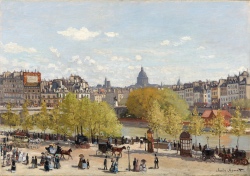
An exhibition showcasing the works of Impressionist artist Claude Monet with a focus on his depictions of architecture opens at the National Gallery on Monday. The Credit Suisse Exhibition: Monet & Architecture is the first exhibition concentrating solely on Monet’s works in London in more than 20 years. It spans his entire career from the mid-1860s to early 20th century and features more than 75 paintings depicting everything from villages to cities like Venice and London as well as individual structures and monuments. The display includes a rare gathering of some of Monet’s great ‘series’ paintings including five pictures from trips to Holland made in the early 1870s, 10 paintings of Argenteuil and the Parisian suburbs from the mid-1870s, seven pictures depicting the cathedral at Rouen from 1892–5, eight paintings of London from 1899–1904, and nine canvases showing Venice from 1908. Highlights include the Quai du Louvre (1867) (pictured), the Boulevard des Capucines (1873), and the flag-filled Rue Montorgeuil, 30 June 1878. Can be seen in the Sainsbury Wing until 29th July. Admission charge applies. For more, see www.nationalgallery.org.uk. PICTURE: The Quai du Louvre (Le Quai du Louvre), 1867, Claude Monet, Oil on canvas © Collection Gemeentemuseum Den Haag.

London’s Abbey Road Studios are celebrated in an exhibition of the work of rock photographer Jill Furmanovsky which opens at the Barbican Music Library on Monday. Inside Abbey Road Studios – Through the lens of Jill Furmanovsky is a showcase of her work since 1976 when she photographed Pink Floyd during the Wish You Were Here recording sessions and, as well as those images, includes more recent images of the likes of Nile Rodgers, Royal Blood, Novelist, and Mura Masa, as well as emerging musical talent. The display is a collaboration between Abbey Road Studios, Furmanovsky – who became artist-in-residence at the studios last year – and the Barbican Music Library. The exhibition, which is free to enter, can be seen until 27th June. For more, see www.barbican.org.uk/whats-on/2018/event/inside-abbey-road-studios.

Some 20 objects from Ethiopia are featured in new exhibition at the V&A marking the 150th anniversary of the siege and battle at Maqdala, culmination of the British Expedition to Abyssinia. Maqdala 1868, which focuses on the battle and its aftermath, features some of the earliest examples of military photography in Britain as well as a portrait of Emperor Tewodros II’s son Prince Alemayehu taken by Julia Margaret Cameron soon after the prince was brought to England by the British military. There’s also examples of metalwork and textiles including a gold crown with filigree designs and embossed images of the Evangelists and Apostles, a solid gold chalice, jewellery and a wedding dress believed to have belonged to the Emperor’s wife, Queen Terunesh. All of the objects were taken during Sir Robert Napier’s military expedition of 1867-68 which was aimed at securing the release of British hostages held by the Emperor and which culminated in the Emperor’s suicide and the destruction of his fortress. The exhibition, which is free to see, has been organised in consultation with the Ethiopian Embassy in London and an advisory group including members of the Orthodox Tewahedo Church, members of the Anglo-Ethiopian society and representatives from the Rastafarian community. Runs until July, 2019, in Room 66 of the Silver Galleries. There is a program of related events. For more, see www.vam.ac.uk.

Send all items for inclusion to exploringlondon@gmail.com.
This Week in London – Sir Simon Rattle; Rachel Whiteread at the Tate; and, trading prints…

Sir Simon Rattle, in his first season as the music director of the London Symphony Orchestra, is the subject of a recently opened exhibition at the Barbican Music Library. Rattle follows the life of a man now considered one of the world’s foremost conductors, from his birth in 1955 to the present day. Featuring photos, awards, video, letters, programmes and unseen items from family collections, it’s curated by his first manager, Martin Campbell-White, and Edward Smith, former CEO of the City of Birmingham Symphony Orchestra and has been organised by the LSO in partnership with arts management company Askonas Holt. The free exhibition runs until 22nd December. For more, follow this link.

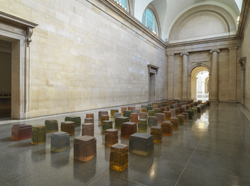
The works of Rachel Whiteread, one of the leading artists of her generation, have gone on show at Tate Britain. Spanning the three decades of her career, the show has everything from four early sculptures displayed in her first solo show in 1988 to works made this year especially for Tate Britain with scales ranging from the monumental to the intimate. Whiteread came to public notice in 1993 with the East End unveiling of her first public commission, House, a concrete cast of the interior of an entire terraced house. She won the Turner Prize the same year and represented the UK at the Venice Biennale in 1997 and has had solo exhibitions of her work in museums and galleries including The Solomon R Guggenheim Museum in New York City, the Serpentine Gallery in London and the Museums of Modern Art in Rio de Janeiro and Sao Paolo. Highlights of the show include Untitled (Room 101) 2003, a cast of the room at the BBC’s Broadcasting House which was thought to be the model for Room 101 in George Orwell’s Nineteen Eighty-Four, a selection of Torsos – casts of hot water bottles, and Untitled (One Hundred Spaces) 1995, an installation of 100 resin casts of the underside of chairs (pictured). Runs until 21st January. Admission charge applies. For more, see www.tate.org.uk/visit/tate-britain. PICTURE: Courtesy of Tate Britain.

An exhibition which focuses on the use of prints as an “object of trade” opens at the British Museum today. The business of prints, based in part on Antony Griffiths’ prize-winning book The Print Before Photography: An Introduction to European Printmaking 1550-1820, focuses on four major areas – the production of prints, the lettering on prints, the usage of prints and the collecting of prints and the concern for quality. Delving into the museum’s collection of more than two million prints, it features works by the likes of Durer, Rembrandt and Goya alongside those of far less famous artists. The display can be seen until 28th January in Room 90, the Prints and Drawings Gallery. Entry is free. For more, see www.britishmuseum.org.

Send all items for inclusion to exploringlondon@gmail.


This Week in London – The Great Parchment Book; 20th century art at Guildhall Art Gallery; and, iconic music photography…

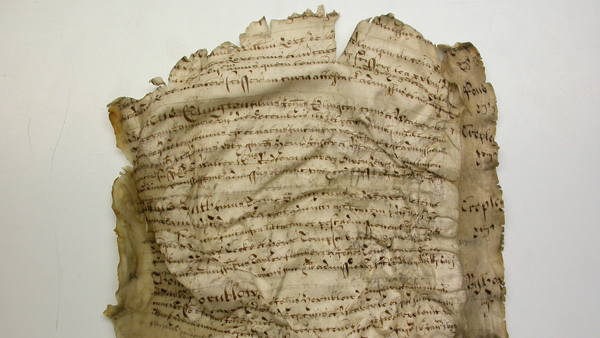
The Great Parchment Book, known as the ‘Domesday Book’ of the Ulster Plantation (now part of Northern Ireland), has gone on display at the City of London’s Heritage Gallery, located in the Guildhall Art Gallery. The book was compiled in 1639 and documents the period following King James I’s settlement of English and Scottish Protestants in Ulster. It came about after King Charles I seized estates around Derry which were managed by the Irish Society on behalf of the City of London and City livery companies and a survey was done to gather information about the lands. Stored at Guildhall, The Great Parchment Book was damaged in a fire in 1786 but following conservation is now on display. Runs until 10th August. Admission is free. For more, see www.greatparchmentbook.org. PICTURE: Courtesy City of London Corporation.

Works by Damien Hirst and David Hockney are among those on show in #LondonTrending which opens at the Guildhall Art Gallery today. A selection of limited edition prints on loan from British Land’s collection charts how collectives of London-based artists created some of the 20th century’s most innovative art. The display will also feature prints by pop artists Peter Blake, who created the sleeve design for The Beatles’ Sgt Pepper’s Lonely Hearts Club Band album, and Eduardo Paolozzi, who designed the mosaic patterned walls at Tottenham Court Road tube station as well as works by Richard Hamilton, Patrick Procktor, Jan Dibbets, Richard Long, Bruce McLean, Michael Lady, Simon Patterson, Gary Hume and Ian Davenport. Runs until 28th August in the Temple Room. Admission is free. A series of curator talks are scheduled. For more, see www.cityoflondon.gov.uk/londontrending.

Sheila Rock’s iconic portraits of musicians ranging from Sir Simon Rattle to Siouxsie Sioux are on show at the City of London’s Barbican Music Library. Picture This includes a wide range of her vintage prints including her work for album and vinyl 12” releases such as the shot of Debbie Harry used in 1978 for Blondie’s Denis’ 12. Other images included in the display feature Irish band U2 and conductor Daniel Barenboim. Rock, who has been based in London since 1970, was introduced to music photography by her ex-husband (and renowned rock photographer) Mick Rock and became known as a highly influential photographer during the punk and post-punk scene, later helping to shape the look of creative magazines such as The Face. Runs until 4th July. Entry is free. For more, follow this link.

Send all items for inclusion to exploringlondon@gmail.com.
This Week in London – Kew Gardens celebrates its herbaceous borders; the global ‘War on Terror’ at the IWM; Bobby Moore honoured; exposing the camera; and, 60 years of fanzines…

The first of three weekends celebrating the creation of the world’s longest double herbaceous borders – known as the Great Broad Walk Borders – will be held at Kew Gardens this weekend. Made up of 30,000 plants, the borders run along 320 metres of the Broad Walk which was originally landscaped in the 1840s by William Nesfield to provide a more dramatic approach to the newly constructed Palm House (completed in 1848). The spirit of the formal colourful beds he created along either side of the walk have been recreated using a range of plants. To celebrate, Kew are holding three themed weekends, the first of which, carrying a history and gardens theme, is this Saturday and Sunday. As well as talks and drop-in events, there will be a range of family-related activities as well as craft workshops, tours, and shopping. Further weekends will be held on 13th and 14th August (around the theme of the excellence of horticulture at Kew) and the bank holiday weekend of 27th to 29th August (around the theme of a celebration of beauty). For more, head to www.kew.org.

A new exhibition centring on the experiences of UK citizens and residents suspected but never convicted of terrorism-related activities and the role of the British Government in the ‘Global War on Terror’ opens at the Imperial War Museum in Lambeth today. Edmund Clark: War on Terror, Clark’s first major solo show in the UK, looks at the measures taken by states to protect their citizens from the threat of international terrorism and their far-reaching effects, exploring issues like security, secrecy, legality and ethics. Among the photographs, films and documents on display are highlights from five series of Clark’s work including Negative Publicity: Artefacts of Extraordinary Rendition, created in collaboration with counter-terrorism investigator Crofton Black, and other works including the film Section 4 Part 20: One Day on a Saturday, photographs and images from the series Guantanamo: If the Light Goes Out and Letter to Omar as well as the first major display of the work Control Order House. Runs until 28th August, 2017. Admission is free. For more, see www.iwm.org.uk/exhibitions/iwm-london/edmund-clark-war-of-terror.

The only English football captain to win a World Cup, Bobby Moore, has become the first footballer to be honoured with an English Heritage blue plaque. The plaque was unveiled at the footballer’s childhood home at 43 Waverley Gardens in Barking, East London, this week. Moore is best remembered for leading England to a 4-2 win over West Germany in the 1966 World Cup. For more, see www.english-heritage.org.uk/visit/blue-plaques/.

The camera is the subject of a new photography display which opened at the V&A in South Kensington last weekend. The Camera Exposed features more than 120 photographs, including works by more than 57 known artists as well as unknown amateurs. Each work features at least one camera and include formal portraits, casual snapshots, still-lifes, and cityscapes. Among the images are pictures of photographers such as Bill Brandt, Paul Strand and Weegee with their cameras along with self-portraits by Eve Arnold, Lee Friedlander and André Kertész in which the camera appears as a reflection or shadow. The display includes several new acquisitions including a Christmas card by portrait photographer Philippe Halsman, an image of photojournalist W Eugene Smith testing cameras and a self-portrait, taken by French photojournalist Pierre Jahan using a mirror. Runs in gallery 38A until 5th March. Free admission. For more, see www.vam.ac.uk/exhibitions/the-camera-exposed.

Sixty years of fanzines – from the development of zine-making back in the 1940s through to today’s – go on show at the Barbican Music Library in the City on Monday. FANZINES: a Cut-and-Paste Revolution features zines including VAGUE, Sniffing’ Glue, Bam Balam, Fatal Visions, Hysteria and Third Foundation among others. The exhibition, which runs until 31st August, is being held in conjunction with this year’s PUNK LONDON festival. For more, see www.cityoflondon.gov.uk/services/libraries-and-archives/our-libraries/Pages/Barbican-Music-Library.aspx.

Send all items for inclusion to exploringlondon@gmail.com.

This Week in London – Botticelli at the V&A; Shakespeare recalled in free sound and light show; and, ‘punk’ captured on film…

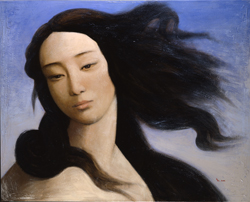
VenusA major new exhibition opening at the V&A this Saturday will feature more than 150 works from around the world in a display exploring how artists and designers have responded to the artistic legacy of Botticelli. Italian artist Sandro Botticelli (1445-1510) was largely forgotten for more than 300 years after his death but is now widely recognised as one of the greatest artists of all time. Botticelli Reimagined features painting, fashion, film, drawing, photography, tapestry, sculpture and print with works by Dante Gabriel Rossetti, Edward Burne-Jones, William Morris, René Magritte, Elsa Schiaparelli, Andy Warhol and Cindy Sherman. The exhibition is divided into three sections: ‘Global, Modern, Contemporary’, ‘Rediscovery’, and ‘Botticelli in his own Time’. Runs until 3rd July. Admission charge applies. For more, see www.vam.ac.uk/Botticelli. PICTURE: Venus, after Botticelli by Yin Xin (2008). Private collection, courtesy Duhamel Fine Art, Paris. (Name of artist corrected)

The historic facade of Guildhall in the City of London will become a canvas for a free son et lumiére show on Friday and Saturday nights to mark the 400th anniversary of the death of William Shakespeare. The display, which runs on a 20 minute loop between 6.45pm and 8.45pm, will feature period images and music from the City’s extensive archives and use 3D projection mapping techniques to transform the Dance Porch of the 15th century building. The Guildhall Art Gallery will be open from 6pm to 9pm and, as well as allowing people to view a property deed for a house in Blackfriars which was signed by the Bard, will feature a pop-up bar with a Shakespeare-themed cocktail. For more on this and other events, see www.cityoflondon.gov.uk/shakespeare400.

The 40th anniversary of punk is the subject of a new photographic exhibition drawn from the archives of world renowned music photographer and rockarchive.com founder Jill Furmanovsky which opened at the City of London Corporation’s Barbican Music Library this week. Chunk of Punk, which runs until 28th April, features many of Furmanovsky’s well-known punk-related images as well as hitherto unseen pictures with The Ramones, Buzzcocks, The Clash, The Sex Pistols, Blondie, The Undertones, Siouxsie and the Banshees, Blondie and Iggy Pop among the bands featured. The exhibition forms part of Punk.London: 40 Years of Subversive Culture. For more, see www.cityoflondon.gov.uk.

Send all items for inclusion to exploringlondon@gmail.com.