This 6,000 acre woodland and pasture habitat, located on the north-eastern outskirts of London, is famous for its ancient and veteran trees – numbering almost 55,000 – but is also home to a range of wildlife.
City of London Corporation
10 places to encounter London’s animal life…5. Golders Hill Park Zoo…
Not to be confused with the much larger ZSL London Zoo, this small zoo in Golders Hill Park on the north-western side of Hampstead Heath is home to a number of exotic species including ring-tailed lemurs, red-necked wallabies and kookaburras.
Subscribe to get access
Read more of this content when you subscribe today.
London Explained – Lord Mayor or Mayor?
Lord Mayor of London or Mayor of London? They have similar titles but their roles and responsibilities (not to mention their history) are quite different.
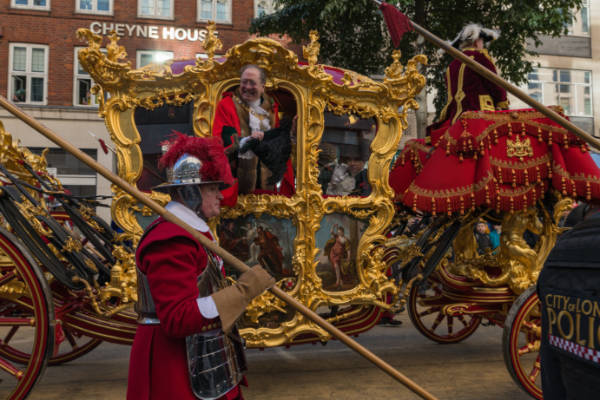
The older of the two posts is the Lord Mayor of London, a title which refers to the governance of the City of London, known to many as the “Square Mile” in the heart of the capital.
The Lord Mayor of London (officially, since 2006, known as the Lord Mayor of the City of London) heads the City of London Corporation and is an elected position; in fact it’s one of the world’s oldest continuously elected offices dating back to the late 12th century.
The Lord Mayor, who holds office for one year, is elected by the City liverymen at the Common Hall held on Michaelmas (29th September) each year. They must be serving in the office of Alderman at the time.
The Lord Mayor of London takes office on the Friday before the second Saturday of November in what is known as The Silent Ceremony (the Lord Mayor’s Show, a celebration of the newly elected Lord Mayor, takes place the following day).
The role of the Lord Mayor of London – who takes precedence over all individuals in the City of London with the exception of the monarch – has historically been to represent the residents and businesses within the City although in modern times the role is effectively an “international ambassador” for the UK’s financial and professional services sector.
The current Lord Mayor of London is Alastair King who is the 696th Lord Mayor of London. The Lord Mayor of London works out of offices at their official residence near the Royal Exchange and Bank of England known as Mansion House.
Onto the Mayor of London. A much more modern position (it was created in the year 2000), the Mayor of London is directly elected by the registered voters of Greater London. They serve as the chief executive of the Greater London Authority and work with the 25 members of the London Assembly.

The Mayor of London is charged with overseeing the strategic governance of Greater London which includes the City of London and all 32 London boroughs (each of which also has a ceremonial or elected mayor).
Responsible for setting an overall vision for the city, the Mayor is tasked with creating policies on everything from arts and culture, the environment and the economy to policing and crime, transport, sport and housing.
The Mayor of London is based at City Hall at Royal Docks in Newham.
The current Mayor of London is Sadiq Khan, the third to serve in the role, has been mayor since 2016. The previous two mayors include Ken Livingstone and Boris Johnson, who, of course, went on to be PM.
10 towers with a history in London – 4. Caledonian Park Clock Tower…
Located in Islington, the Caledonian Park Clock Tower is a local landmark and among all that now remains of the 19th century Metropolitan Cattle Market.
Subscribe for just £3 a month – less than the cost of a coffee – to get access to all of Exploring London’s content!
Lost London – The Guildhall Chapel…
Used by the Lord Mayor of London and his retinue as a location for weekly worship for more than 200 years, the Guildhall Chapel was once an important part of the City infrastructure.
Please consider supporting our work for just £3 a month.
10 significant (and historic) London trees…6. Mendelssohn’s Tree…
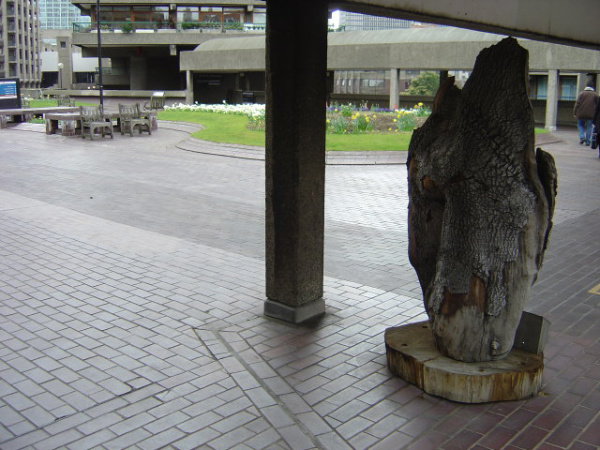
Standing on a Barbican walkway is the remnant of a tree believed to be at least 500-years-old which fell during a storm January, 1990.
The now hollowed-out stub of the beech tree (Fagus Sylvatica) had previously been located in the woodland known as Burnham Beeches, in Buckinghamshire – a woodland which was purchased by the City of London Corporation in 1880.
But what apparently sets this tree out from the others at Burnham Beeches is that it is believed famed German composer Felix Mendelssohn Bartholdy (1808-1847) used to sit under its then leafy branches while staying nearby during his several visits to England.
He is said to have done so to gain inspiration for his compositions and among the works he is said to have composed while here is some “incidental music” for A Midsummer Night’s Dream (although it has been suggested this might not actually be the exact tree under which he sat).
The tree and its plaque were installed in 1993 by the Barbican Horticultural Society and unveiled by conductor and composer Carl Davis.
There is now a replacement “Mendelssohn’s Tree” in Burnham Beeches which was planted in 2005.
WHERE: Barbican, off Aldersgate St (nearest Tube station is Barbican); WHEN: Anytime; COST: Free; WEBSITE: N/A.
London Explained – The Common Cryer and Sergeant-at-Arms…
One of three ceremonial officers appointed by the City of London’s Court of Aldermen, the office of Common Cryer and Sergeant-at-Arms, commonly known as the “Macebearer”, is believed to the oldest of them, established well before 1338.

The Common Cryer and Sergeant-at-Arms has the role of carrying the Great Mace of Government ahead of the Lord Mayor of London.
The post was originally held by one of the King’s Sergeant-at-Arms. In 1419, the title held by the mace bearer was referred to as the “Common Serjeant-at-Arms of the City”, otherwise known as the “Common Cryer”.
Records show he had a salary of 60 shillings a year, robes, fees from the alderman and sheriffs and a “sufficient horse” for the honour of the City.
By 1559 the current title was in use.
As well as bearing the ceremonial mace before the Lord Mayor, the Macebearer also opens proceedings at Common Hall, the electoral assembly at Guildhall, with the cry “Oyez, Oyez, Oyez”. The Macebearer also proclaims the orders at the monarch and Privy Council at appointed places within the City.
Along with the City Marshall and the Sword-Bearer, the Common Cryer and Sergeant-at-Arms is one of three Esquires based at Mansion House, the official residence of the Lord Mayor of London.
They run the Lord Mayor’s official residence and office, and accompany him on official occasions. They are usually senior military officers with diplomatic experience.
Major Peter Oweh was appointed to the post of Common Cryer and Sergeant-at-Arms in December, 2022.
10 historic London homes that are now museums…3. Keats House…
Briefly the home of Romantic poet John Keats, this Hampstead premises is a now a museum dedicated to the writer and exhibition space.
Constructed in around 1815 as a pair of semi-detached dwellings, the now Grade I-listed house was one of the first to be built in the area. The two residences were initially occupied by critic Charles Wentworth Dilke and his family, and by the writer Charles Armitage Brown.

Keats, a friend of Dilke and Brown, began visiting the Regency-era villa, then named Wentworth Place, soon after. He was then living with his two younger brothers nearby in Well Walk but after George married and emigrated to America and Tom died of tuberculosis and, Brown invited Keats to move in as a lodger.
He did so in December, 1818, and it was while living at the property that he composed La Belle Dame sans Mercians, completed The Eve of St Agnes and write his famous odes, including Ode to a Nightingale.
The Dilkes family moved out in April, 1819, and Mrs Brawne and her daughter moved in. Keats developed an intimate relationship with the daughter, Fanny, and the couple were secretly engaged but owing to his premature death, never married.
In September, 1820, with his health failing, Keats left the property and headed to Rome (the trip was funded by friends who hoped the warm climate would help improve his health). He died in the eternal city on 23rd February, 1821, and was buried in the city’s Protestant cemetery.
Brown, meanwhile, left the property in June, 1822 (he also left for Italy) and Keats’ sister Fanny – who had become friends with Fanny Brawne – moved into Brown’s half of the house with her husband Valentin Llanos between 1828 and 1831. The Brawnes left in early 1830.
Subsequent occupants included actor Eliza Chester who converted the two residences into one.
The property was threatened with demolition in the early 20th century but saved by public subscription. It opened to the Keats Memorial House on 9th May, 1925. In 1931, a new building was erected nearby house artefacts related to Keats.
Since 1998 the property has been under the management of the City of London Corporation. It underwent a restoration project in the mid-1970s and again between 2007 and 2009. The Keats Foundation was established in November, 2010, and is involved in educational initiatives, both at Keats House and elsewhere.
Visitors to the house today are taken on a journey through Keats’ short life and legacy. Among the artefacts which can be seen there are items related to his time as a medical student, portraits of some of the famous people Keats met while living at the property including the poets Samuel Taylor Coleridge and Percy Bysshe Shelley as well as Shelley’s wife Mary (author of Frankenstein), a bust of Keats which stands at his actual height – just over five feet tall, and a mask of Keats’ face made by his artist friend Benjamin Haydon.
There’s also portraits of both Keats and Fanny, Fanny’s engagement ring, and a volume of Shakespeare’s plays Keats gave her before leaving for Rome as well as busts of Charles Brown and editor Leigh Hunt (it was through Hunt that Keats met Dilke and Brown).
The garden features a 200-year-old mulberry tree and a plum tree which was planted to commemorate Ode to A Nightingale.
A Blue Plaque (although it’s actually brown) was unveiled at the house at 10 Keats Grove by representatives of the Royal Society of Arts on the property as far back as 1896 to commemorate Keats.
WHERE: Keats House, 10 Keats Grove, Hampstead (nearest Overground station is Hampstead Heath; nearest Tube stations are Hampstead and Belsize Park); WHEN: 11am to 1pm and 2pm to 4pm, Thursday, Friday and Sunday; COST: £8 adults/£4.75 concession; 18 and under free; WEBSITE: www.cityoflondon.gov.uk/things-to-do/attractions-museums-entertainment/keats-house/visit-keats-house.
10 unusual parks or gardens in London…6. The Hill Garden and Pergola, Hampstead…
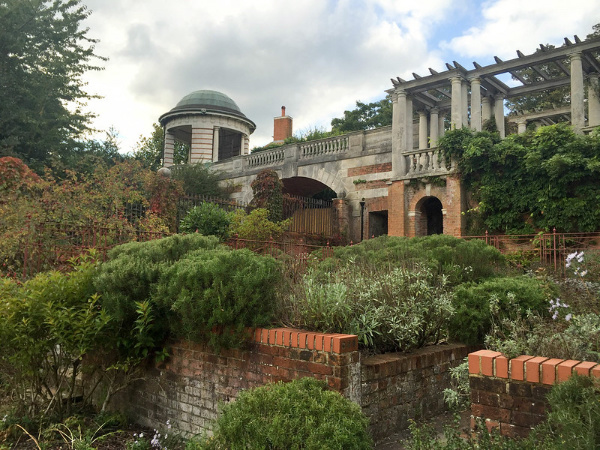
Tucked away in the north-west of Hampstead Heath is a Edwardian-era garden and extravagant pergola that were originally created for a mansion but are now open to the public.
The garden and pergola were created on the orders of the wealthy William H Lever, later Lord Leverhulme, who in 1904 purchased a sizeable Georgian townhouse on the Heath called “The Hill”. Remodelling the house extensively, Lever wanted to also create a garden where he could entertain and sought the help of renowned landscape architect Thomas Mawson to design one on what was steeply sloping land.
Mawson’s plan involved raising the level of the gardens by up to 30 feet and creating a series of terraces. This was made possible due in part to the close proximity of the Hampstead extension of the Northern Line of the Tube – Lever paid to have the spoil which had been dug out to make the Tube tunnels transported the short distance to his garden so it could be used to build it up.
An Italianate pergola was constructed on the boundary between 1905 and 1906, providing views over West Heath while at the same time preventing the general public from looking into the garden. The gardens and pergola were subsequently extended after he bought the neighbouring property in 1911 – the same year Lever was made a baronet – and again in with further works completed in 1925 just months before the now-Lord Leverhulme’s death.

The property was sold to Scots shipping magnate Lord Inverforth and, on his death in 1955, was bequeathed it to the private Manor House Hospital. Following a long period of neglect, London County Council bought the pergola and the gardens which had once been those of the neighbouring property, Heath Lodge, and opened them to the public in 1963 as the Hill Garden.
The City of London Corporation took over management with the abolition of the GLC in 1986 and restoration work was carried out. When the hospital closed in 1998 and the house was sold for luxury housing, further works were carried out and the public part of the gardens took on their current form.
WHERE: The Hill Garden and Pergola, Inverforth Close, North End Way, Hampstead (nearest Tube stations are Golders Green or Hampstead Heath); WHEN: 8:30am to 8pm daily; Daily; COST: Free; WEBSITE: www.cityoflondon.gov.uk/things-to-do/green-spaces/hampstead-heath/where-to-go-at-hampstead-heath/hill-garden-and-pergola.
LondonLife – Black holes pioneer, Sir Roger Penrose, awarded Freedom of the City of London…

World-renowned mathematical physicist Professor Sir Roger Penrose has received the Freedom of the City of London. Sir Roger, who won the Nobel Prize in Physics two years ago for his pioneering studies in the 1960s, was the first to prove mathematically that black holes exist. The now 90-year-old, who is currently Emeritus Rouse Ball Professor of Mathematics at the University of Oxford and Emeritus Fellow of Wadham College in Oxford, also jointly won the 1988 Wolf Prize in Physics with the late Stephen Hawking for their work on gravitational singularity theorems. Sir Roger said he was “hugely honoured” to be given the Freedom of the City. “London is a magnificent city in which I have spent many happy and productive years since my school and undergraduate days, and then with four separate academic appointments,” he said. Sir Roger, who is also known for discovering Penrose tiling in which a pair of rhombus-shaped tiles can be used to tile a flat service without the pattern ever repeating itself, was nominated for the Freedom by Lord Mayor of the City of London, Vincent Keaveny, and the City of London Corporation’s policy chairman, Chris Hayward. The tradition of the Freedom of the City of London is believed to have begun in 1237 and enabled recipients, who were also required to join a Livery Company, to carry out their trade.
LondonLife – Green spaces form part of ‘Green Canopy’ for Queen’s Platinum Jubilee…
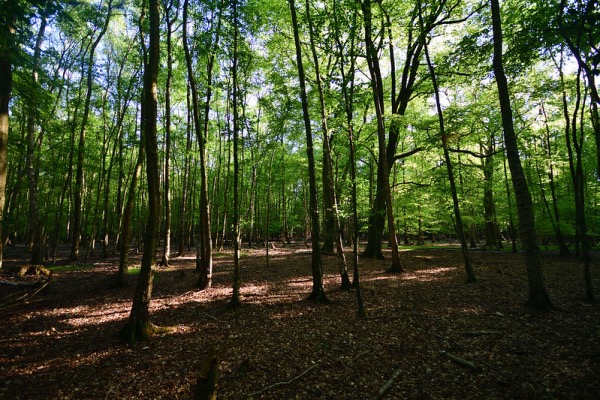
City of London-managed open spaces Epping Forest, Burnham Beeches and Ashtead Common have been selected to be part of a nationwide network of 70 ancient woodlands to be dedicated to The Queen in celebration of the Platinum Jubilee. At almost 6,000 acres, Epping Forest is London and Essex’s largest green space and is known as the “green lungs” of London. Burnham Beeches, located in Buckinghamshire, is only a square mile in size but is described as a “New Forest in miniature” while Ashtead Common in Surrey’s 200 hectares of open public space is home to more 1,000 living ancient oak pollards. For more on The Queen’s Green Canopy initiative, see www.queensgreencanopy.org. For more on the City of London’s green spaces, see www.cityoflondon.gov.uk/things-to-do.
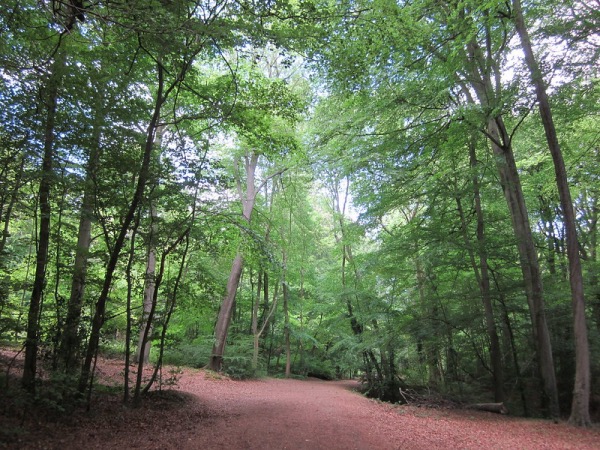
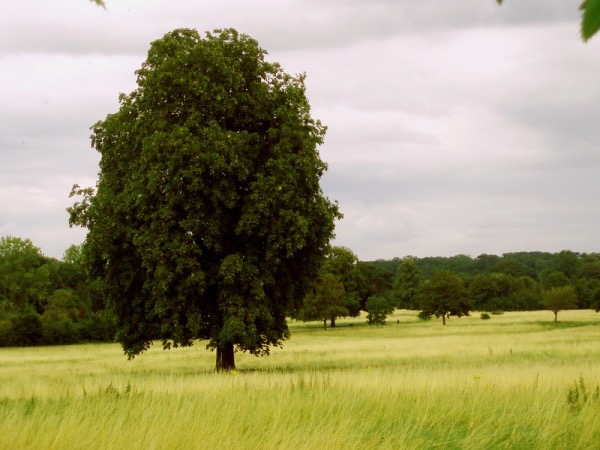
This Week in London – The extraordinary story of George King; Guildhall statues survive (with explanations); and, Wildlife Photographer of the Year…
• The extraordinary story of 18th century foundling and sailor George King, who fought in the Battle of Trafalgar, is the subject of a new exhibition opening at the Foundling Museum in Bloomsbury tomorrow. Fighting Talk: One Boy’s Journey from Abandonment to Trafalgar features King’s hand-written account of his life, a fragment of the flag from Nelson’s coffin, letters between the Foundling Hospital’s matron and Lady Emma Hamilton (annotated by Nelson himself) and two rare Naval General Service Medals, of which only 221 were awarded retrospectively when the medal was first issued in 1849, belonging to King and the foundling William South, who served aboard HMS Victory. There is also a display of works by contemporary artist and photographer Ingrid Pollard – Ship’s Tack – which reflects on the Foundling Hospital’s connections with Empire, trade and the Navy and which includes newly commissioned work responding directly to George’s autobiography. Runs until 27th February. Admission charge applies. For more, see www.foundlingmuseum.org.uk.
• Two Guildhall statues portraying figures with links to the slave trade will be retained but have information added detailing those links. The City of London Corporation’s Court of Common Council voted last week to keep the statues of William Beckford and Sir John Cass which will have plaques or notices placed alongside them containing contextual information about the two men’s links to slavery. William Beckford was an 18th century slave owner and two-time Lord Mayor of London, while Cass – an MP and philanthropist – was a key figure in the Royal African Company, which traded in slaves in the 17th and 18th centuries. Sir John Cass’s Foundation Primary School in the City and the nearby Cass Business School have already changed their names to remove the association with their founder and his links to slavery.
• French underwater photographer and biologist Laurent Ballesta has won the Natural History Museum’s Wildlife Photographer of the Year for an image showing camouflage groupers exiting their milky cloud of eggs and sperm in Fakarava, French Polynesia. The image was selected out of 50,000 entries from 95 countries and is being displayed with 100 images in an exhibition opening at the museum on Friday. Meanwhile 10-year old Vidyun R Hebbar, who lives in Bengaluru, India, was awarded the Young Wildlife Photographer of the Year 2021 for his colourful image, Dome home, showing a tent spider as a tuk-tuk passes by. The exhibition can be seen until 5th June next year. Admission charge applies. For more, see www.nhm.ac.uk/visit/exhibitions/wildlife-photographer-of-the-year.
Send all items for inclusion to exploringlondon@gmail.com.
London Explained – The Square Mile…
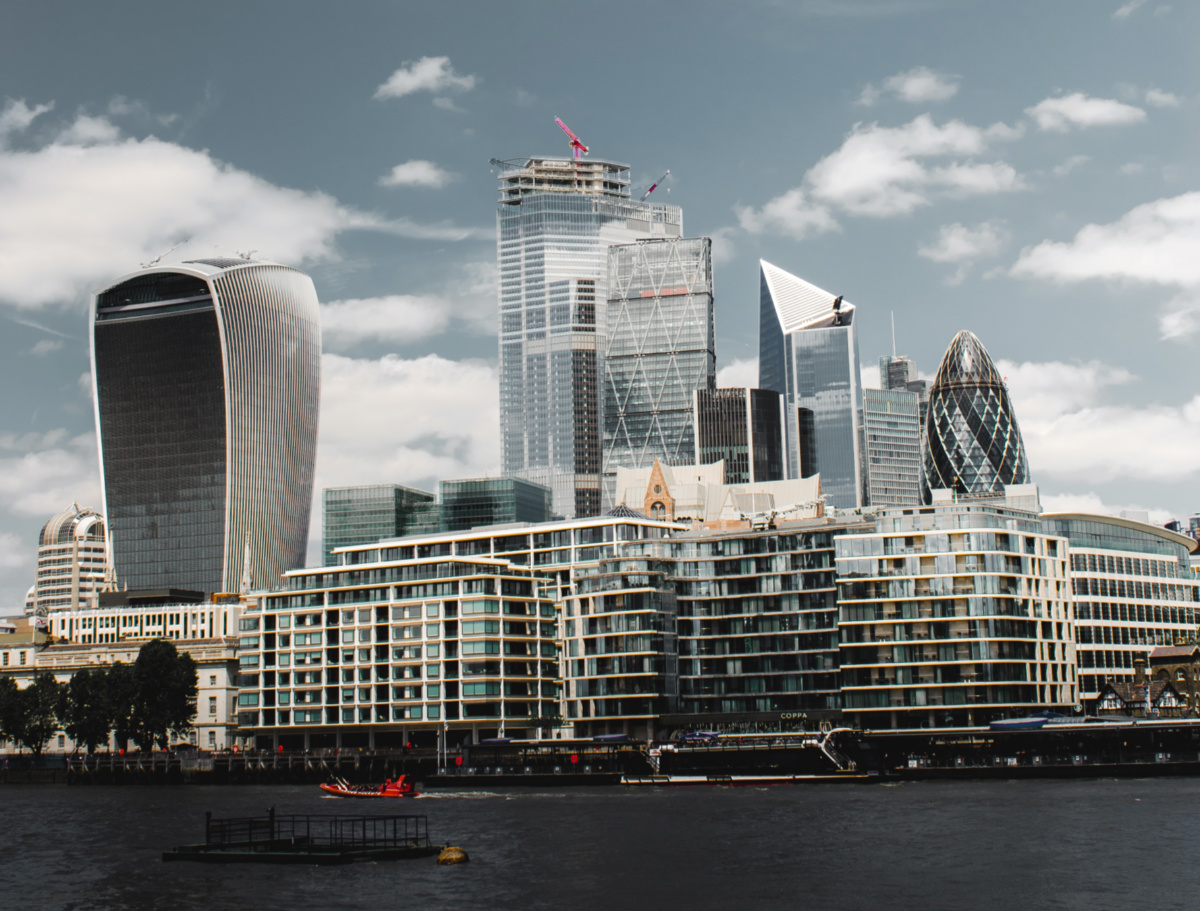
Commonly used as an alternative for the City of London, the term ‘Square Mile’ comes from the amount of land in the heart of the city which is under the jurisdiction of the City of London Corporation.
The City (with a capital ‘c’, it’s another commonly used term for the City of London) contains the core of the ancient city which has stood here since Roman times and is still the financial centre of the city. While called the ‘Square Mile’, it actually encompasses 1.12 square miles (equivalent to 716.80 acres or 2.90 square kilometres).
While the City has been roughly that size since medieval times (the City has long included land both within the medieval city walls as well as some without), the term ‘Square Mile’ is understood to have been a relatively recent invention, created in the Victorian era.
It’s interesting to note that the Square Mile was slightly smaller – just 1.05 square miles – up until the mid-1990s when some boundary changes increased it to its current size.
Below is a map showing the outline of the ‘Square Mile’ today…
This Week in London – City statues to be removed; 800-year-old window at centre of upcoming Becket exhibition; and, weavers give £100,000 for new museum…
• Statues of two prominent men with links to the trans-Atlantic slave trade will be removed from Guildhall, the City of London has said. The City of London Corporation’s policy and resources committee voted to remove statues of William Beckford and Sir John Cass following a recommendation from the corporation’s Tackling Racism Taskforce. The statue of Beckford, a two-time Lord Mayor of London in the late 1700s who accrued wealth from plantations in Jamaica and held African slaves, will be replaced with a new artwork while the likeness of Sir John Cass, a merchant, MP and philanthropist in the 17th and 18th centuries who also profited from the slave trade, will be returned to its owner, the Sir John Cass Foundation. The corporation will now set up a working group to oversee the removal of the statues and replacement works and will also consider commissioning a new memorial to the slave trade in the City.
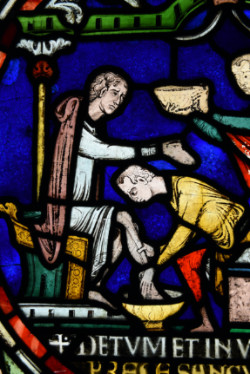
• An 800-year-old stained glass window from Canterbury Cathedral will form the centrepiece of an upcoming exhibition on Thomas Becket. Now scheduled for April after delays due to the coronavirus pandemic, Thomas Becket: murder and the making of a saint will feature more than 100 objects as it tells the story of Becket’s life, death and enduring legacy. The ‘Miracle Window’ – one of seven surviving from an original series of 12 – will be shown in its original arrangement of the first time in more than 350 years. The fifth in the series, it depicts miracles which took place in the three year after Becket’s death including the healing of eyesight and the replacement of lost genitals. The exhibition will represent the first time a complete stained glass window has been lent by the cathedral. Details of tickets will be announced soon. For more, see www.britishmuseum.org/becket.
• The Worshipful Company of Weavers this week announced the donation of £100,000 towards the creation of the new Museum of London in former market buildings at West Smithfield. The donation is one of the largest ever awarded by the livery company which, having a Royal charter dating from 1155, is the oldest surviving. The masterplan for the new museum received planning permission in June last year.
Send all items to exploringlondon@gmail.com.
This Week in London – Statue of slave owner removed; Finsbury Circus to be redesigned; and, ZSL London Zoo reopening…
• A statue of slave owner Robert Milligan has been removed from its position outside of the Museum of London Docklands. The Canal and River Trust removed the statue this week in recognition of the “wishes of the community”. The move had the support of the museum which is one of only three museums in the UK to address the history of the transatlantic slave trade. “The Museum of London recognises that the monument is part of the ongoing problematic regime of white-washing history, which disregards the pain of those who are still wrestling with the remnants of the crimes Milligan committed against humanity…” the museum said in a statement issued earlier in the week. “Now more than ever at a time when Black Lives Matter is calling for an end to public monuments honouring slave owners, we advocate for the statue of Robert Milligan to be removed on the grounds of its historical links to colonial violence and exploitation.” Milligan was a prominent British slave owner who, by the time of his death in 1809, owned 526 slaves and two sugar plantations in Jamaica. The statue, the work of Sir Richard Westmacott, was moved to a position outside the museum in West India Quay in 1997. Earlier this week, the Mayor of London, Sadiq Khan, announced a new Commission for Diversity in the Public Realm which will review landmarks – including murals, street art, street names, statues and other memorials – across the city of London with a view to improving diversity in the public realm.
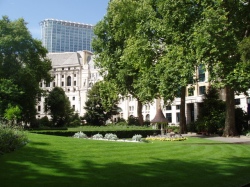 • The City of London Corporation has launched a competition to redesign the Grade II-listed gardens at Finsbury Circus. The two-stage competition aims to identity creative and sustainable design ideas in a bid to return Finsbury Circus Gardens to being a multifunctional public space with a pavilion as well as a “sanctuary” within the Square Mile. The corporation is seeking a joint bid from an architect and a landscape architect to deliver a new design for the reinstatement of Finsbury Circus Gardens and Pavilion. Some two-thirds of the Finsbury Circus Gardens, one of the oldest parks in the City, have been used by Crossrail for the past 10 years to provide access to a section of tunnel between Farringdon and Liverpool Street. The works required the removal of historic features like the bowling green and historic Grade II drinking fountain and these will now be reinstated into the new design. PICTURE: Looking across Finsbury Circus Gardens in 2006 (David Williams /licenced under CC BY-SA 2.0)
• Tickets for ZSL London Zoo have gone on sale ahead of its planned reopening next week. The zoo will reopen on Monday, 15th June, for the first time since its closure on Saturday, 21st March due to the coronavirus pandemic. The zoo, which is offering pre-allocated, timed entry slots, limited to just 2,000 visitors a day, says its taken numerous measures to ensure the safety of visitors. For more, head to www.zsl.org/zsl-london-zoo.
Send all items for inclusion to exploringlondon@gmail.com.
This Week in London – Hampton Court Palace breathes new life into Tudor kitchens; Kew’s Temperate House to reopen; and, World War I commemorated in Guildhall Yard…
• Hampton Court Palace will on Saturday launch a major representation of its Tudor kitchens with a new display designed to give visitors a ringside seat to preparations for a royal feast. Visitors will be immersed in the sights, sounds and smells of King Henry VIII’s kitchens as they explore the stories of everyone from cooks to liveried pages who made the great court feasts possible and meet the likes of Thomas Cromwell, right-hand man to the king, master cook John Dale and Michael Wentworth, clerk of the kitchen. A specially commissioned play will be launched for the summer and during holiday periods there will be workshops, games and competitions. Admission to the kitchens is included in the palace admission. For more information, head to www.hrp.org.uk/hampton-court-palace/.
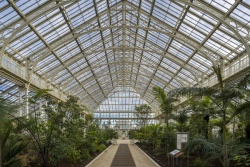 • Kew’s iconic Temperate House – the world’s largest Victorian glasshouse – will reopen on Saturday after the biggest renovation project in its history. The five year restoration project has seen its entire framework repaired and thousands of panes of glass replaced. Some 500 plants were taken out and housed in a temporary nursery and some 10,000 plants, consisting of 1,500 species, have gone back in. A programme of events will take place involving the Temperate House, which dates from 1863, over the summer and there are special preview openings on Friday and Saturday night. For more, see www.kew.org. PICTURE: Gareth Gardner/Kew.
• The City of London Corporation is marking the centenary of the end of World War I with a new open-air exhibition highlighting the global nature of conflict. Fields of Battle, Lands of Peace: 1918-2018, which opened on Monday, is the third and final display by photographer Michael St Maur Sheil to go on show in Guildhall Yard. The display can be seen until 28th May. Accompanying the exhibition is a free guided walk – The City’s Great War Heroes – which enables people to walk in the footsteps of City men and women who went off to the Great War. It departs from Bishopsgate every Monday and Saturday at 11am and 2pm until 28th May with an extra walk at 1.30pm on the final day. For more, follow this link.
Send all items for inclusion to exploringlondon@gmail.com.
This Week in London – New museum on policing in the Square Mile; the 801st Lord Mayor’s Show; and maps on show at the BL…
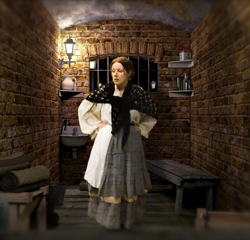 • Stories including that of Catherine Eddowes, one of the victims of the notorious Jack the Ripper whose tale is brought to life through a virtual hologram (pictured), that of the Houndsditch Murders which claimed the lives of three police officers, and those of the more than 70 horses which have served in the City of London Police are among those told in the new purpose-built City of London Police Museum. A collaboration between the City of London Police and the City of London Corporation’s Guildhall Library, the new facility covers the 177 year history of the men and women charged with policing the Square Mile. Other stories highlighted in the museum include that of the recruitment of women into the force, the impact of the two World Wars on policing in the capital (featuring photographs taken by City of London police officers Arthur Cross and Fred Tibbs), the force’s tackling of terrorism and the progress of its communications, uniforms and kit and the victory of the City of London Police as the winner of the Olympic gold medal for the tug of war in 1920 (which, given the event was dropped, leaves them as the current champions). Entry to the museum, which opened this week at Guildhall, is free. For more, see www.cityoflondon.police.uk/about-us/history/museum/Pages/default.aspx. PICTURE: Courtesy City of London Police Museum.
• The Lord Mayor’s Show takes place this Saturday, kicking off with a river pageant followed by the grand procession through City streets and fireworks over the Thames. The 801st Lord Mayor’s Show celebrates the election of Andrew Parmley as the 689th Lord Mayor of the City of London. This year’s procession, which kicks off at 11am and runs from Mansion House down Cheapside to the Royal Courts of Justice – where the Lord Mayor swears allegiance to the Crown – and back again at 1pm via Victoria Embankment, features 6,500 participants, 180 horses and 164 vehicles including steam engines, fire engines and a tank. The Show’s Pageantmaster, Dominic Reid, is celebrating his 25th consecutive show this year (his father organised 20 shows before him). The river pageant, featuring the QRB Gloriana, sets off from Westminster at 8.30am with Tower Bridge opening in salute at 9.25am. The fireworks display, which takes place over the Thames between Blackfriars and Waterloo, starts at 5.15pm. The tradition dates back to 1215. For more, see https://lordmayorsshow.london.
• A major new exhibition looking at the history of the 20th century through maps has opened at the British Library in King’s Cross. Maps and the 20th Century: Drawing the Line features maps ranging from the first sketch of the London Underground dating from 1931, to declassified Ministry of Defence maps from the Cold War era, John Betjeman’s personal set of Ordinance Survey maps from the 1920s, a Russian moon globe from 1961 and EH Shepard’s first map of the Hundred Acre Wood (home of Winnie the Pooh). Other highlights include 3D relief models of the Western Front from 1917, a dress made of World War II escape maps printed on silk, an aerial photograph of Liverpool with targets marked used by the Luftwaffe, a map of the Atlantic Ocean floor from 1968. The exhibition, which runs to 1st March, is running in conjunction with a series of events exploring how maps continue to shape and influence our world. Admission charge applies. For more, follow this link.
Send all items for inclusion to exploringlondon@gmail.com
LondonLife – Hang on a minute! City gardens turned upside down…

A showcase of flora inspired by the gardens of the City of London, The City Garden features fresh flowers which, entwined with copper wire, hang from the ceiling of the newly opened gallery and exhibition space known as The City Centre. The work of East London-based artist Rebecca Louise Law, the display is the first public art installation at the premises – located next to the Guildhall at 80 Basinghall Street, it’s being managed by New London Architecture on behalf of the City of London Corporation – and the flowers can be seen there as they dry out until 25th September. The exhibition also features two films on the City of London’s gardens as well as a map of those that inspired the artwork (this is also available in an app which details some of the history, horticulture and design of some of the Square Mile’s most iconic gardens). For more, see www.thecitycentre.london. PICTURE: Courtesy of The City Centre.
Lost London – The Great Conduit…
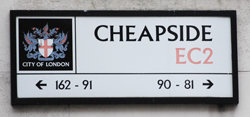 Located at the junction of Cheapside and Poultry, the Great Conduit, also known as the Cheapside Standard, was a famous medieval public fountain.
The Great Conduit (the word conduit refers to column fountains fitted with ‘cocks’ or taps for dispensing the water) gave access to water piped using gravity four kilometres from the Tyburn into the City largely via lead pipes.
It was constructed by the City Corporation from the mid-13th century after King Henry III approved the project in 1237. It was rectangular-shaped timber building with an elevated lead tank inside from which the water was drawn.
It took the name ‘Great’ after further conduits were built further west in Cheapside in the 1390s. There were at least 15 conduits or standards scattered about the City by the time of the Great Fire in 1666.
It was rebuilt several times over its life, notably in the reign of King Henry VI, but after being severely damaged in the fire was deemed irreparable and orders were given for it to be taken down in 1669 (many houses by then had alternate water supplies, notably from the New River project). From the 1360s, management of the conduit was the responsibility of four wardens, maintaining the pipes and charging professional water carriers and tradesmen who required water by allowing free
The Cheapside Conduit was a notable landmark – some executions and other punishments were carried out here, speeches were made from here and the conduit building itself was used as a place for posting information. And to celebrate special occasions it was made to flow with wine – this took place in 1432 when King Henry VI marched through London after being crowned King of France, at the coronation of Queen Margaret in 1445 and at the wedding procession of King Henry VIII’s queen Anne Boleyn in 1533.
The substructure of the Great Conduit was rediscovered at the end of the 19th century and again in the 1990s. A plaque marking the location of the Great Conduit at the eastern end of Cheapside was unveiled in late 1994 by Thames Water and the Worshipful Company of Water Conservators. There’s also a memorial set into the pavement over the substructure.
10 small, ‘secret’ and historic gardens in central London…2. Whittington Garden…
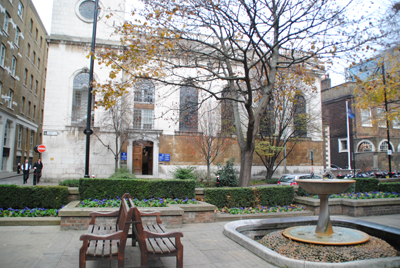
The history of this City of London garden can be immediately spotted in the garden’s name.
It’s named for Richard (Dick) Whittington, a four time medieval mayor of London whose name (and cat) has been immortalised in stories and rhymes which continue to be retold in Christmas pantomimes every year (you can read more about the real Dick Whittington in our earlier post here).
 The reason for the garden’s name is in its proximity to the church of St Michael Paternoster Royal – it stands on the other side of College Street – which he poured money into rebuilding during his lifetime and where he was buried (you can read more about the building here). You can also see a Blue Plaque on the former site of Whittington’s house further up College Hill.
The garden (pictured above looking across to the church) stands on what was the river bank during the Roman era at the bottom of College Hill. It was previously the site of buildings connected with the fur trade but these suffered bomb damage during World War II and were subsequently demolished.
The City of London Corporation acquired the site in 1955 and laid out the gardens in 1960 and the small fountain now found there dates from later that decade.
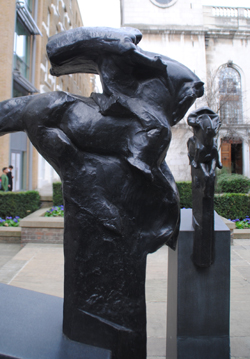
The gardens, which contain some substantial trees and lawn areas as well as hedges and flower beds, were refurbished in 2005. Features include two granite plinths upon which sit two horsemen (pictured). Sculpted by Italian sculptor Duilio Cambellotti, they were presented to the City of London by the Italian President during a state visit in 2005.
WHERE: Whittington Garden, between College Street and Upper Thames Street, City of London (nearest Tube station is Cannon Street); WHEN: Anytime; COST: Free; WEBSITE: www.cityoflondon.gov.uk/things-to-do/green-spaces/city-gardens/visitor-information/Pages/Whittington-Garden.aspx.
 Exploring London