This Week in London – Guildhall Library marks 600 years; the David Bowie Centre opens; the Chelsea History Festival; and returning to the Blitz Club…

Guildhall Library is celebrating its 600th anniversary with a new exhibition. The display, which can be seen for free at the library, looks at the founding of the original library in 1425, what a medieval library would have looked like and what books it would have included as well as links with the library as it is today. Runs until 30th December. For more, see www.cityoflondon.gov.uk/things-to-do/history-and-heritage/guildhall-library/information-and-enquiries/visit-guildhall-library.
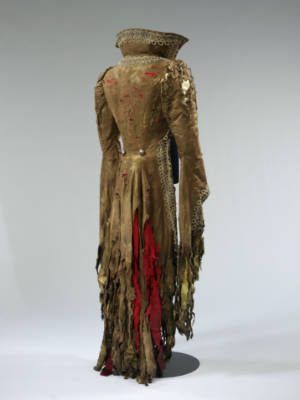
Frockcoat designed by Alexander McQueen and David Bowie for his 50th Birthday Concert, 1997. Image courtesy of the V&A

David Bowie’s final, unrealised musical projects – The Spectator, an unseen Ziggy Stardust guitar, and Bowie’s costume designs are just some of the treasures housed in the new David Bowie Centre which opened to the public this month. Located at the V&A East Storehouse in Queen Elizabeth Olympic Park, the new home for David Bowie’s archive features nine displays show-casing more than 200 items which also include handwritten lyrics, photography, costumes and sketches. As well as seeing the displays, visitors can book one-on-one time with some of the 90,000-plus objects in the archive through the ‘Order an Object’ service. More than 500 items were requested in the first week of the service going live with a frockcoat designed by Alexander McQueen and David Bowie for his 50th birthday concert in 1997 the most frequently requested item. Entry to the archive is free, but ticketed. For more, including bookings, see www.vam.ac.uk/exhibitions/david-bowie-centre.

The annual Chelsea History Festival kicked off yesterday with more than 80 events taking place until Sunday. Events include tours of the Royal Hospital Chelsea, and the chance to visit the Soane Stable Yard, the free exhibition Lost and Found in Hong Kong: The Unsung Chinese Heroes at D-Day at the hospital, walking tours including ‘Rock ‘n’ Roll Chelsea’ and ‘1960s Chelsea’, and a medicinal trees tour at the Chelsea Physic Garden. For the full programme head here.

A major exhibition on the Blitz club – which helped shape London’s culture not only in the mid-1980s but in the decades that followed – has opened at the Design Museum in Kensington High Street. Located in a Covent Garden side street, the club is credited with having “transformed 1980s London style”, generating a creative scene that had an enormous impact on popular culture in the following decade. Blitz: The Club that Shaped the 80s features more than 250 items including clothing and accessories, design sketches, musical instruments, flyers, magazines, furniture, artworks, photography, vinyl records and rare film footage. Runs until 29th March. Admission charge applies. For more, see https://designmuseum.org/exhibitions/blitz-the-club-that-shaped-the-80s.

Send all items to exploringlondon@gmail.com.
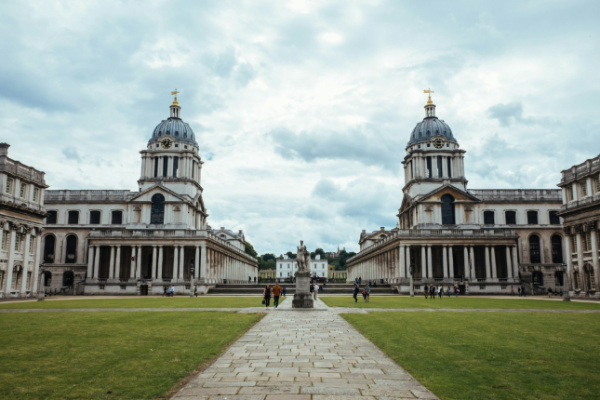
This Week in London – New film tour at the Old Royal Naval College; beyond human design; the UK AIDS Memorial Quilt on display; and, the power of gardening…

PICTURE: Robert Bye/Unsplash

The Old Royal Naval College in Greenwich is celebrating at 100 years of film and TV at the site and mark the occasion, it’s launched a new film-related tour. The new tour – Wigs, Weddings, Powder and Palaces – looks at where productions such as BridgertonThe CrownPirates of the Caribbean and Les Misérables have been filmed and promises to explore some “closely guarded secrets of filmmaking” as well as letting those on the tour “step in the shoes and onto the set of stars”. The tour, which leaves from the Visitor Centre, also includes a fun and interactive 15-minute class of hand fan etiquette and its secret meanings inspired by the filming of Bridgerton. Charges apply. For bookings, head to https://ornc.org/whats-on/wigs-weddings-powder-and-palaces-film-tour/.

• A major exhibition exploring how design can help the planet thrive by shifting its focus beyond human needs has opened at the Design Museum. More Than Human – the first major exhibition from a growing movement of ‘more-than-human’ design, features more than 140 works by more than 50 artists, architects and designers. They include Japanese artist Shimabuku’s artworks created for octopuses, a new monumental seaweed installation by artist Julia Lohmann, a vast new tapestry that explores the perspectives of pollinators by Alexandra Daisy Ginsberg, and an eight metre long mural by MOTH (More Than Human Life Project) depicting the growing movement to award legal rights to waterways around the world. Runs until 5th October. Admission charges apply. For more, see https://designmuseum.org/exhibitions/more-than-human.

• The UK AIDS Memorial Quilt goes on display in the Tate Modern’s Turbine Hall today. Started around 1989, the work is made of 42 quilts and 23 individual panels which represent 384 people affected by HIV and AIDS. Volunteers from the UK AIDS Memorial Quilt Partnership will be present alongside the Tate’s staff to welcome visitors and on Saturday, at 11am and 2pm, the hall will host live readings of the names. Runs until 16th June. For more, see https://www.tate.org.uk/whats-on/tate-modern/uk-aids-memorial-quilt.

On Now: Unearthed: The Power of Gardening. This display at the British Library explores the “transformative, enriching and sometimes radical power” of gardening in the UK and the impact it’s had on the nation. Among the items on display is the only surviving illustrated collection of herbal remedies from Anglo-Saxon England (dating from around 1000–25), the first English gardening manual, Thomas Hill’s A Most Briefe and Pleasaunte Treatise (1563), the first mechanical lawnmower (1832), and gardening boots which once belonged to horticulturalist and designer Gertrude Jekyll (1843-1932). Runs until 10th August. Admission charge applies. For more, see https://events.bl.uk/exhibitions/unearthed-the-power-of-gardening.

Send all items for inclusion to exploringlondon@gmail.com

This Week in London – ‘The World of Tim Burton’; Halloween at Hampton Court, the Tower, and Kew Gardens; and, Diwali celebrations…

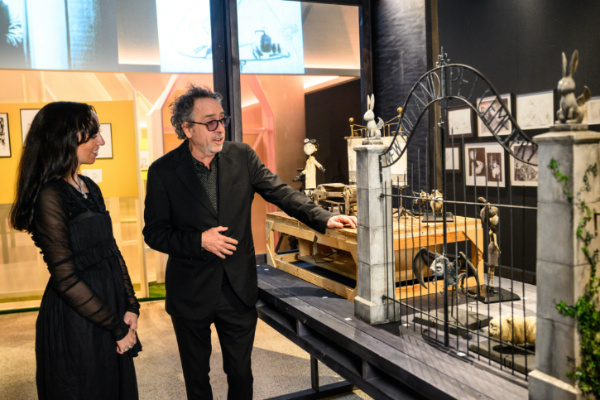
Tim Burton and curator Maria McLintock visit ‘The World of Tim Burton’ , on 23rd October. PICTURE: Matt Crossick/PA Media A (courtesy of the Design Museum)
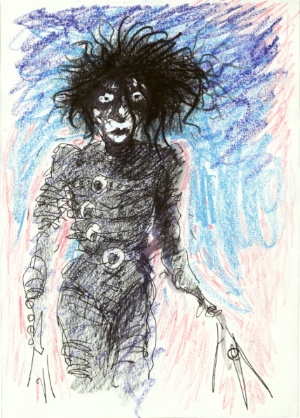
Tim Burton, Untitled (Edward Scissorhands), 1990. EDWARD SCISSORHANDS ©1990. 20th Century Studios, Inc. All Rights Reserved.

The fantastical world of celebrated film-maker Tim Burton is on display in a touring exhibition opening at the Design Museum on Friday. The World of Tim Burton, making its final stop after a decade-long world tour, showcases his 50 years of creative output and looks at not only his role as film-maker but as illustrator, painter, photographer and author. Drawn from Tim Burton’s personal archive as well as film studio collections and other private holdings, the more than 600 objects include film props, drawings, paintings, photographs, sketchbooks, moving-image works, sculptural installations, set and costume design. Highlights include the Catwoman suit from 1992’s Batman Returns, Wednesday Addams’ viral Rave’N dance dress from the recent Netflix series and the Edward Scissorhands costume worn by actor Johnny Depp in the 1990 film. There’s also early drawings of the Martians from Mars Attacks! (1996), the Mad Hatter from Alice in Wonderland (2010), and Emily in Tim Burton’s Corpse Bride (2005) and a specially created cinema experience which gives voice to some of Burton’s key collaborators and is being shown in a bespoke art-deco space reminiscent of the theatres Burton frequented as a child growing up in Hollywood. Runs until 21st April. Admission charge applies. For more, see https://designmuseum.org/exhibitions/the-world-of-tim-burton.

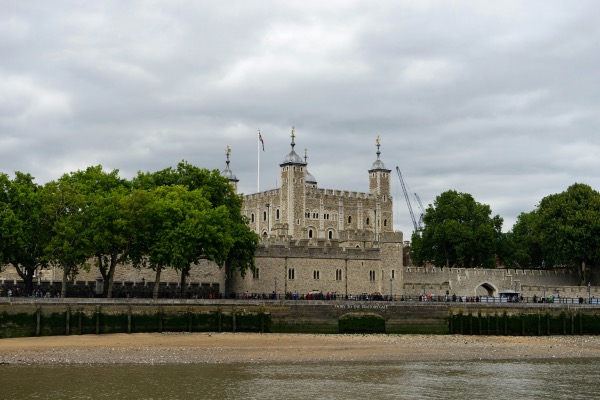
Hampton Court Palace and the Tower of London are marking Halloween with a series of spine-tingling events which delve into the mysterious past of the royal residences. From Saturday, visitors to Hampton Court Palace can, among other things, discover the ‘Alchemist’s Apothecary’ and meet the ghost of a long-departed alchemist, venture into the ‘Spider’s Lair’ in the depths of the palace’s wine cellar, catch a glimpse the frantic ghost of Catherine Howard in the Haunted Gallery, and encounter the spirit of Sybil Penn, a former nurse to Henry VIII’s son Edward, who has haunted the palace hallways ever since her tomb was disturbed. At the the Tower of London, meanwhile, the grounds have been transformed, hosting everything from a haunted chess game on the South Lawn to a glimpse into the tower’s astronomical past, complete with celestial maps and scientific instruments. Events take place until 3rd November. Admission charge applies. For more, see www.hrp.org.uk/hampton-court-palace/ or www.hrp.org.uk/tower-of-london/.

The first Halloween-themed light trail has opened at Kew Gardens with eerie illuminated trees, ghoulish installations and fire performers. Visitors can wander through an illuminated spiders web or discover a neon Carnivorous Tree feeding on unsuspecting skeletons by choosing one of three sessions to attend (daylight, twilight and moonlight) with things getting scarier as the evening progresses. Runs until 3rd November. Admission charge applies. For more, see www.kew.org/kew-gardens/whats-on/halloween-at-kew.

Diwali is being celebrated on Trafalgar Square this Sunday in a free, family-friendly festival. Delivered in partnership with the volunteer-led Diwali in London committee, the event – which showcases the culture of London’s Hindu, Sikh and Jain communities – features a programme of dance, music, activities and food. Highlights include dance workshops, sari and turban tying and the new Bhajan singing space where groups will perform throughout the day. The day runs from 1pm to 7pm. For more, see www.london.gov.uk/events/diwali-square-2024.

Send all items to exploringlondon@gmail.com

This Week in London – Trail-blazing women celebrated at the Tower; ‘The Judgement of Paris’ back on show; and, Barbie at the Design Museum…

PICTURE: Joseph Gilbey/Unsplash

• The lives of five little-known trail-blazing women are being celebrated at the Tower of London. The five women – who will take part in a guided procession through the grounds and features in staged performances and face-to-face interactions at the Tower this summer – include Winifred Maxwell, a fearless Jacobite who smuggled her husband out of the Tower the night before his execution and Katherine le Fevre, who served as the Master Smith of the Tower during the Hundred Year War with France. Also represented are Phillis Wheatley, an intellectual prodigy and enslaved woman hailing from West Africa who became the first African-American author of a published book of poetry; Catalina of Motril, a Granadan bedchamber attendant of Katherine of Aragon who was privy to her former mistress’ secrets; and, Leonora Cohen, Yorkshire-born Suffragette who smashed the case holding the Crown Jewels at the Tower with an iron bar – and kept campaigning until she was 105. The chance to meet the women is included in general admission until 1st September. For more, see www.hrp.org.uk/tower-of-london/.

Peter Paul Rubens’ The Judgement of Paris has returned to public display after a 14 month restoration project. The project found that the painting, believed to date from 1632‒5 during the last decade of Ruben’s life, has been restored several times including a significant re-working of the composition sometime between 1676 and 1721. The new analysis reveals what changes were made by Rubens himself to the work – which arrived in Britain in 1792 and was acquired by the National Gallery in 1844 – and which were done after his death. For more, see www.nationalgallery.org.uk.

A major exhibition on the creation and evolution of Barbie opens at the Design Museum on Friday. Barbie: The Exhibition, which coincides with the 65th anniversary of the Barbie brand, showcases the diversity of the Barbie range, as well as her friends (and, of course Ken) and looks at how Barbie’s homes, vehicles and other products have reflected the tastes and trends of day. Highlights include a rare first edition of the first doll released by Mattel in 1959 (‘Number 1 Barbie’), the ground-breaking ‘Day to Night Barbie’ from 1985 and the best-selling Barbie of all time, 1992’s ‘Totally Hair Barbie’, which sold more than 10 million across the globe. There are also examples of the first Black, Hispanic and Asian dolls to bear the Barbie name as well as the first Barbie with Down syndrome, the first to use a wheelchair, and the first to be designed with a curvy body shape. Runs until 23rd February. Admission change applies. For more, see https://designmuseum.org/exhibitions/barbie-the-exhibition.

Send all items to exploringlondon@gmail.com.
This Week in London – Charles Dickens’ court suit and Queen Elizabeth II’s coronation glove; Frans Hals at The National Gallery; Peter Paul Rubens at Dulwich; and, email explored…

• A piece of the only surviving dress worn by Queen Elizabeth I, Charles Dickens’ court suit, an RSC robe worn by David Tennant as Richard II, and the coronation glove of Queen Elizabeth II are among highlights of a new exhibition at the Guildhall Art Gallery. Marking the 400th anniversary of the Worshipful Company of Gold and Silver Wyre Drawers, Treasures of Gold and Silver Wire features more than 200 objects related to royalty, the arts, military, and the church spanning the period stretching from the Middle Ages to today. Other highlights include a uniform of the State Trumpeter, The Jubilee Cope from St Paul’s Cathedral, a robe of Order of the Garter and the burse of the Great Seal of King Charles II. The exhibition, which opens on Friday, runs until 12th November. Admission charge applies. For more, see www.cityoflondon.gov.uk/events/treasures-of-gold-and-silver-wire-exhibition.

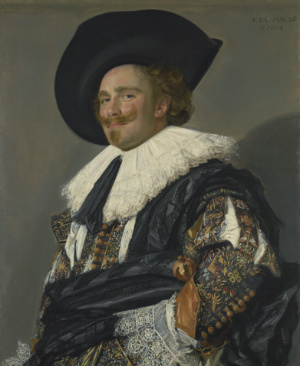
Frans Hals, ‘The Laughing Cavalier’ (1624)/ Oil on canvas, 83 x 67 cm © Trustees of the Wallace Collection, London    

The Laughing Cavalier serves as the centrepiece of a new exhibition of Frans Hals works at the National Gallery – the largest focused the 17th century Dutch painters’ works in more than 30 years. The Credit Suisse Exhibition: Frans Hals, which has been organised with the Rijksmuseum, Amsterdam features some 50 of the artists works gathered from across the globe. Alongside The Laughing Cavalier which is on loan from the Wallace Collection, highlights include Portrait of Isaac Massa (1626), Portrait of Pieter Dircksz. Tjarck (about 1635–38), The Rommel-Pot Player (1618–22) and Portrait of Tieleman Roosterman (1634). Admission charge applies. Runs until 21st January.

A major exhibition on the work of Flemish artist Peter Paul Rubens (1577-1640) has opened at the Dulwich Picture Gallery. Rubens & Women features more than 40 paintings and drawings along with archival material and challenges the perception that the artist only painted one type of women as it explores his relationships with women and how they nourished his career and creativity. Highlights include Portrait of a Woman (c1625), Marchesa Maria Serra Pallavicino or Marchesa Veronica Spinola Doria (1606-07), The Virgin in Adoration of the Child (c1616), Looking Down (Study for head of St Apollonia) (1628), Ceres and Two Nymphs (1615-17), The Birth of the Milky Way (1636-1638), and Clara Serena Rubens, the Artist’s Daughter (c1620-23). The exhibition runs until 28th January. Admission charge applies. For more, see www.dulwichpicturegallery.org.uk.

An interactive exhibition exploring email’s impact in our lives – how it shapes our work, relationships, cultures and economies – opens at The Design Museum today. Email is D̶e̶ad̶ ̶, being held in partnership with Intuit Mailchimp, charts the history of email, from its embryonic beginnings in the 1970s to what the email experience might be like in 2070. Admission is free. Runs until 22nd October. For more, see https://designmuseum.org.

Send all items to exploringlondon@gmail.com for inclusion.

This Week in London – Freud’s antiquities; how design can help the aging; and, new home for the Migration Museum…

Sigmund Freud’s collection of ancient antiquities and books inspired by them are the subject of a new exhibition at the Freud Museum London in Hampstead. Freud’s Antiquity: Object, Idea, Desire, which opens Saturday, explores the crucial role the collection played Freud’s development of the concepts and methods of psychoanalysis. The display, which is co-curated by Professor Miriam Leonard of UCL, Professor Daniel Orrells of Kings College London, and Professor Richard Armstrong, of the University of Houston, discusses six separate aspects of Freudian theory alongside representative objects from the collection and spans his entire psychoanalytic career from 1896 to 1939. Alongside the physical objects is a comprehensive digital multimedia resource, containing video recordings, podcasts, photographs of rarely seen objects from the collection, and a list of suggested reading. A series of events accompanies the exhibition. Runs until 16th July. Admission charge applies. For more, see www.freud.org.uk/exhibitions/freuds-antiquity-object-idea-desire/.

PICTURE: Ardfern (licensed under CC BY-SA 4.0/image cropped)

A new display at the Design Museum will showcase how cutting-edge design can help people live “more independently, sustainably and healthily but also with joy and fulfilment” as they age. Designing for our Future Selves, which opens on Friday, follows on from last Future of Ageing exhibition and will feature 10 design initiatives currently being developed by Design Age Institute and its partners which aim to positively impact the way we live and work as we grow older. The exhibition is free to visit. Runs until 26th March. For more, head here.

A permanent home for the Migration Museum, currently based in Lewisham, will be built in the Square Mile following planning approval this week. The new facility at 65 Crutched Friars will be located in a 21-storey building and will consist of three floors featuring space for exhibitions and events, a cafe and a shop. The City of London Corporation said the developer had agreed to provide the museum space rent-free for 60 years and to cover its operating costs for three years, and has also donated £500,000 to support its fund-raising campaign.

Send all items from inclusion to exploringlondon@gmail.com.
This Week in London – The Queen’s jewellery; ‘The Future of Ageing’; and painting the view from Tower Bridge…

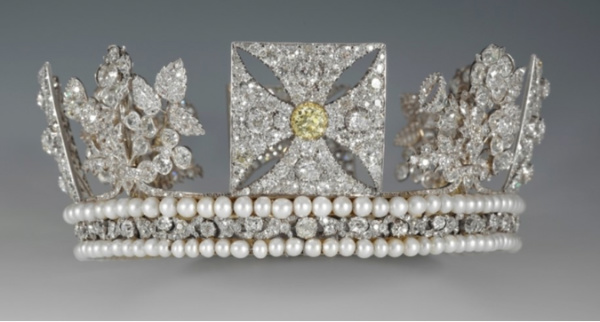
Rundell, Bridge & Rundell, Diamond Diadem, 1820–1. PICTURE: Royal Collection Trust / © All Rights Reserved
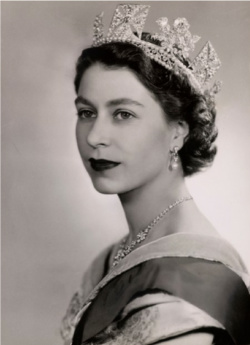
Dorothy Wilding, ‘HM Queen Elizabeth II’, 1952. PICTURE: Royal Collection Trust / © All Rights Reserved

Key items of Queen Elizabeth II’s jewellery including the Diamond Diadem and the Delhi Durbar necklace go on display in Buckingham Palace’s State Rooms from tomorrow as part of the palace’s Summer Opening. Created for the coronation of King George IV in 1821, the Diamond Diadem is set with 1,333 brilliant-cut diamonds, some of which are set in the form of a rose, a thistle and two shamrocks, the national emblems of England, Scotland and Ireland. The diadem, which was inherited by Queen Victoria in 1837 and passed down to the current Queen, will be displayed alongside the official portraits of the Queen taken by photographer Dorothy Wilding just weeks after the Accession (the portraits were later were used as the basis of the Queen’s image on postage stamps from 1953 until 1971, as well as providing the official portrait of Her Majesty sent to every British embassy throughout the world). The Delhi Durbar necklace, meanwhile, incorporates nine emeralds originally owned by Queen Mary’s grandmother, the Duchess of Cambridge, as well as an 8.8 carat diamond pendant cut from the Cullinan diamond – the largest diamond ever found. It was made for Queen Mary as part of a suite of jewellery created for the Delhi Durbar in 1911. The Queen inherited the necklace in 1953 and wore it in a portrait sitting for Dorothy Wilding in 1956 – thought to have been their last sitting together before Wilding’s retirement in 1958. The jewellery, a special display to mark the Platinum Jubilee, can be seen at the Summer Opening of the State Rooms at Buckingham Palace, the first time the palace has been open to the public in three years, until 2nd October. Admission charge applies. For more, see www.rct.uk.

An exhibition exploring how design can enhance our experience of ageing has opened at the Design Museum. The Future of Aging includes a selection of prototypes, sketches and research from projects that are being developed by Design Age Institute and its partners. They include a self-balancing, two-wheeled personal electric vehicle known as ‘The Centaur’, a hands-free cargo-carrying robot called Gita, and a digital ‘audioscape’ app that uses the sound of birdsong to engage visitors with their hearing health. The free display also includes a long-term participatory project that explores opportunities for an intergenerational garden at the museum and two new film commissions which showcase stories and experiences of later life. Runs until 25th September. For more, see https://designmuseum.org/exhibitions/the-future-of-ageing.

On Now: Painting ‘A Bridge with a View’. Until the end of August, English artist Melissa Scott-Miller is painting the views she spies from Tower Bridge’s West Walkway. Visitors are able to observe her at work and take part in related public workshops and family activities. Admission charge applies. For more including the dates for activities, see www.towerbridge.org.uk/see-bridge-view.

Send items to exploringlondon@gmail.com

Lost London – The Imperial Institute…


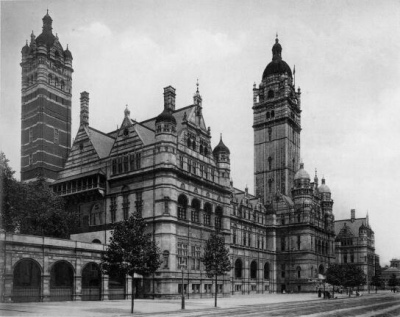
An ornate turreted building in South Kensington, construction of the Imperial Institute began in 1887 – the year of Queen Victoria’s Golden Jubilee.

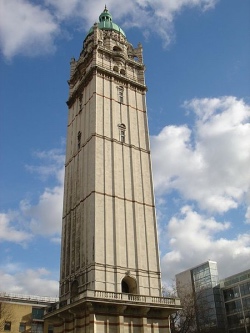
Designed by Thomas Edward Collcutt and paid for almost entirely by public subscription, the huge 213 metre long building featured three “Renaissance-style” towers with copper covered domes. Foremost among them was the 87 metre high Queen’s Tower (initially known as the Collcutt Tower after the architect).

Officially opened by Queen Victoria in 1893 (although the building was apparently never completed), the building – which was built to mark the Queen’s Golden Jubilee – was intended as an exhibition space to showcase the Empire’s industrial and commercial resources and also as a location for research and meetings.

The idea for a permanent exhibition space for colonial “produce” had apparently been enthusiastically backed by the Prince of Wales (and the Queen herself) following a series of exhibitions showcasing the wares of India and the colonies in preceding years.

But the enthusiasm for the institute, said to have cost more than £350,000, quickly waned (perhaps because of a vagueness over its purpose) and despite efforts to encourage people to use it through introducing “attractions” like a billiards room, the financial position of the institute became somewhat straitened.

Help came from the University of London which took over half of the building just six years later in 1899 and other tenants followed in attempt to keep money for maintenance flowing. Various government departments took on responsibility for the building in the following years.

With its purpose increasingly questioned by the middle of the 20th century, when Imperial College needed to expand, it was decided to demolish the building. Demolition started in 1957 and ran into the mid-1960s. Thanks to public protests led by Poet Laureate Sir John Betjeman, the Queen’s Tower, however, was preserved and is now part of Imperial College.

The tower, which once had a public viewing gallery (now closed) contains 10 bells, known as the Alexandra Peal, which are hung about halfway up the tower. They given by a Mrs Elizabeth A Miller, of Melbourne, Australia, in 1892 as a gift and are named after Queen Victoria, the then Prince and Princess of Wales, and other children and grandchildren of the Queen. They are rung on important college occasions.

Meanwhile, the institute, renamed the Commonwealth Institute, relocated to Kensington High Street. It later went into liquidation. That site now houses the recently unveiled Design Museum.

PICTURE: Top – Imperial Institute during the Edwardian era (public domain); Below –  The Queen’s Tower is all that now remains of the institute (licensed under CC BY-SA 3.0

This Week in London – V&A celebrates new Exhibition Road Quarter; London’s Eid Festival; and, Colour and light at the Design Museum…

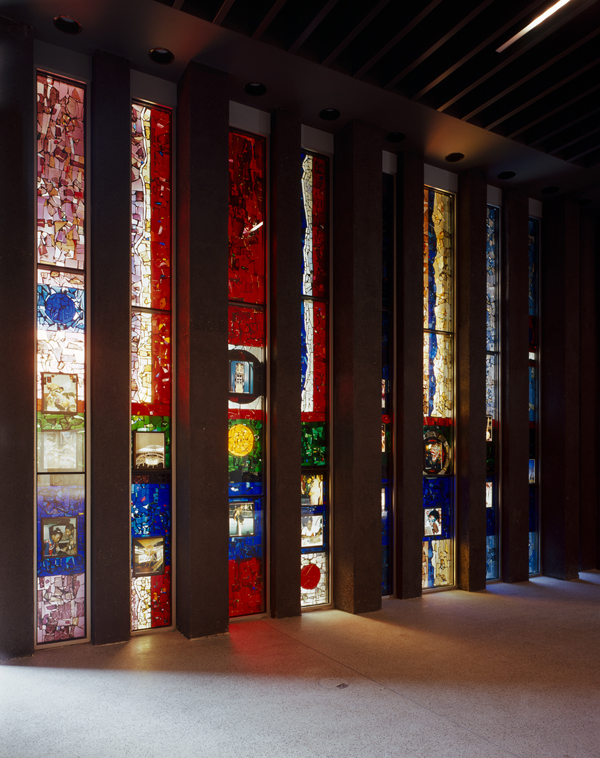
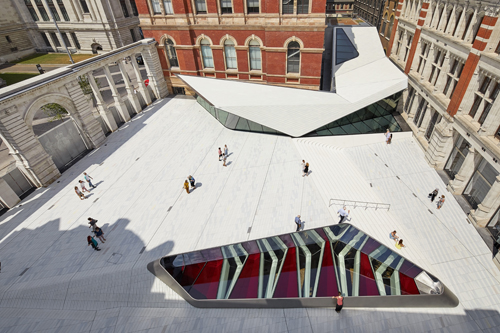
The Victoria and Albert Museum is celebrating the opening of its ‘Exhibition Road Quarter’ with a week long public festival featuring art, performances, fashion and family activities. Kicking off tomorrow (Friday), the REVEAL festival also coincides with the museum’s 165th anniversary. It opens with a music and digital-themed Friday Late, hosted in the Boiler Room, and culminates on 7th July with Fashion in Motion, four special catwalk shows in the new Sainsbury Gallery featuring Molly Goddard, British emerging talent winner at the 2016 Fashion Awards. Other events during the week include an immersive light experience by Simon Heijdens, a special performance by Julie Cunningham & Company responding to Yoko Ono’s ‘Dance Pieces’, a new hybrid opera by Anat Ben-David, and musical performances with the Royal College of Music and Albert’s Band from the Royal Albert Hall. The week also includes collaborations with partners from across Exhibition Road, including Discover South Kensington, Imperial College London, the Natural History Museum, Royal Albert Hall, the Royal College of Music and the Science Museum. The V&A’s Exhibition Road Quarter has been designed by Stirling Prize-winning architect Amanda Levete and her practice AL_A and, the museum’s largest architectural intervention in the past 100 years, it comes with new public areas and gallery spaces as well as revealing the historic facades of the existing Grade I buildings. The new spaces include the 1,100 square metre Sainsbury Gallery, the all-porcelain Sackler Courtyard and a new entrance from Exhibition Road, The Blavatnik Hall. A 1909 feature – the Astor Webb screen – has also been restored and incorporated into the design. Entry to the festival is free. For more, see vam.ac.uk/reveal. PICTURE: The Sackler Courtyard and Cafe, V&A Exhibition Road Quarter, designed by AL_A.

The Mayor of London, Sadiq Khan, has called on Londoners from all communities to join in this year’s Eid Festival celebrations in Trafalgar Square as a gesture of solidarity with those affected by the Finsbury Park attack and the Grenfell Tower fire, which, like Finsbury Park, affected many Muslim families. The event, held to mark the end of Ramadan, will feature live music and performances, arts and crafts, exhibitions, calligraphy, henna, face painting and food from across the world. Highlights include Rai musician Cheb Nacim, British Sudanese artist Rasha from the Shubbak festival, children’s writer Hajera Memon – who will be promoting her childrens’ book Hats of Faith, beat-boxer Omar Sammur, breakdancer Hakim, and a bazaar-style market area. The free event runs between noon and 6pm. For more, see www.london.gov.uk/eid.

A series of newly commissioned installations exploring perceptions and connections to colour have gone on show at the Design Museum. Breathing Colour, by designer Hella Jongerius is an installation-based exhibition that blurs the boundaries between art and design. The display is divided into separate spaces that simulate light conditions at morning, noon and evening and explore the impact of changing light on our perception of colour. Each of the three spaces includes a series of three dimensional objects as well as textiles, some of which have been hand-woven. Runs until 24th September at the Kensington High Street premises. Admission charge applies. For more, see www.designmuseum.org.

Send all items for inclusion to exploringlondon@gmail.com.
This Week in London – Michelangelo & Sebastiano; St Patrick’s Day festivities; the first woman in space; and, Moscow’s unrealised past…

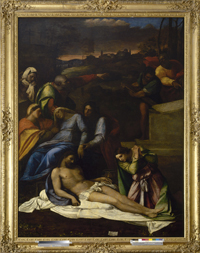
The collaborative partnership between Renaissance Italian artists Michelangelo and Sebastiano del Piombo is the subject of a new exhibition which opened at The National Gallery this week. The Credit Suisse Exhibition: Michelangelo & Sebastiano features about 70 works – paintings, drawings, sculptures and letters – produced by the pair before, during, and after their collaboration. The two met when Michelangelo was working on the ceiling of the Sistine Chapel and spent 25 years in a friendship partly defined by their opposition prodigious artist Raphael. Key works on show include their first collaborative work, Lamentation over the Dead Christ (also known as Viterbo ‘Pietà’ it was painted in about 1512-16), The Raising of Lazarus (completed by Sebastiano in 1517-19 with Michelangelo’s input and one of the foundational paintings of the National Gallery’s collection – it bears the first inventory number, NG1 ), The Risen Christ (a larger-than-life-size marble statue carved by Michelangelo in 1514–15 which is shown juxtaposed, for the first time, with a 19th-century plaster cast after Michelangelo’s second version of the same subject (1519–21)), and, Michelangelo’s The Virgin and Child with the Infant Saint John the Baptist (also known as the ‘Taddei Tondo’, it was commissioned in 1504-05 and is on loan from the Royal Academy of Arts). The display features a 3D reproduction of the Borgherini Chapel in Rome to evoke the sense of seeing the works in situ. Runs until 25th June. Admission charge applies. For more, see www.nationalgallery.org.uk. PICTURE: Sebastiano del Piombo, Lamentation over the Dead Christ (1516), The State Hermitage Museum, St Petersburg/© The State Hermitage Museum /Vladimir Terebenin

St Patrick’s Day is tomorrow and to celebrate London is hosting three days of events showcasing Irish culture, food and music. Cinemas in the West End will be showing short Irish films, there will be comedy, drama and family workshops, an Irish Cultural Trail in the Camden Market and a world-renowned parade on Sunday ahead of a closing concert in Trafalgar Square. For the full programme, see www.london.gov.uk/stpatricks.

An exhibition dedicated to the life and career of Valentina Tereshkova, the first woman in space, has opened at the Science Museum. Attended by the woman herself in honour of her 80th birthday this week, Valentina Tereshkova: First Woman in Space tells how Tereshkova came to be the first woman in space when, on 16th June, 1963, at the age of just 26 she climbed aboard the USSR spacecraft Vostok 6. She orbited the Earth 48 times over the three days, logging more flight time than all the US astronauts combined as of that date. She never flew again but remains the only female cosmonaut to have flown a solo mission. Tereshkova, who had been a factory worker, went on to become a prominent politician and international women’s rights advocate. The exhibition, which is free, is part of the 2017 UK-Russia Year of Science and Education. Runs until 16th September. For more, see www.sciencemuseum.org.uk/valentina-tereshkova.

Six unbuilt architectural landmarks – proposed for Moscow during the 1920s and 1930s but never realised – are at the heart of a new exhibition which has opened at the new Design Museum in Kensington. Imagine Moscow: Architecture, Propaganda, Revolution looks at how the proposed schemes – including the Palace of the Soviets, planned to be the world’s tallest building, and Cloud Iron, a network of horizontal ‘skyscrapers’ – reflected the changes taking place in the USSR after the Russian Revolution. As well as the six case studies, the exhibition features a dedicated room to the “geographical and ideological centre” of this new Moscow – the Lenin Mausoleum. Runs until 4th June. Admission charge applies. For more, see www.designmuseum.org.

Send all items for consideration to exploringlondon@gmail.com

Treasures of London – The (new) Design Museum…

design-museum1

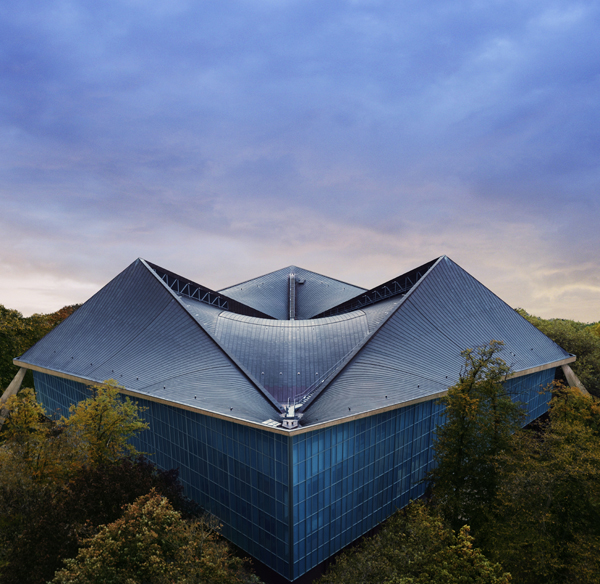
The Design Museum’s new home in Kensington finally opened this week and it’s already been getting some rave reviews, hence why, despite its freshness, we thought we’d mention it in our Treasures of London feature.

The museum, which moved to its new premises after 25 years in Shad Thames, now occupies the former Commonwealth Institute building, which dates from 1962 and was designed by Robert Matthew. The building has recently undergone a £83 million makeover with the interiors designed by architect John Pawson.

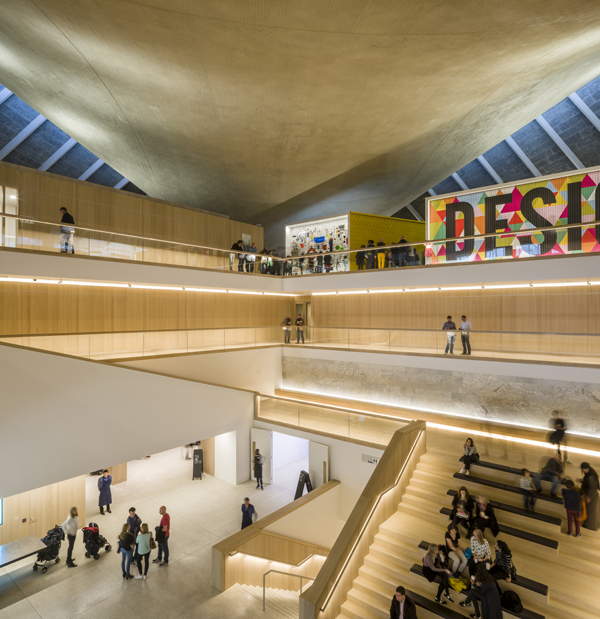
The new museum has three times the space of the previous premises and features the only collection in the UK devoted exclusively to contemporary design and architecture. At the heart of the building is the Designer Maker User exhibition which, as the museum’s first free permanent display, occupies the top floor of the museum, and includes more than 1,000 items of 20th and 21st century design. At its entrance can be found a wall featuring more than 200 items from 25 countries nominated by the general public including a Bible, Coca-Cola can and a £5 banknote.

design-museum2

Inside, the Designer section focuses on the thought-processes of designers and features a full-sized production of a gerberette used in the Richard Rogers-designed Centre Pompidou in Paris as well as models and images of the works of the late architect Zaha Hadid, David Mellor’s traffic lights, Kinneir and Calvert’s British road signage system and a full scale prototype for a new London Tube train designed by PriestmanGoode as well as Moulton bicycles and London Underground maps.

The Maker section, meanwhile, traces the evolution of manufacturing from Thonet bentwood cafe chairs and Model T Ford cars to robotic arms and 3D printing and includes objects at different stages of production – from tennis balls to the London 2012 Olympic Torch.

And in the User section, visitors will be led to explore the interaction between the consumer and brands that have become household names – Braun, Sony, Apple and Olivetti – as well as the impact of design on politics, fashion and music. Displays in the latter part include Gucci tennis shoes, the fashions of Vivienne Westwood and Christian Louboutin and the pioneering magazine The Face.

design-museum3

As many as 500,000 people are expected to visit the museum in its first year. Along with permanent displays, also unveiled this week was the new exhibition, Fear and Love, featuring 11 new installations by world leading designers. They include The Pan-European Living Room by architecture practice OMA, Room Tone by fashion designer Hussein Chalayan, Pittsburgh-based designer Madeline Gannon’s “mechanical creature” Mimus, and a series of death masks called Vespers created using 3D printing technology Neri Oxman.

And running until 19th February is the Beazley Designs of the Year, a celebration of design that promotes or delivers change, enables access, extends design practice or captures the spirit of the year past. Categories include architecture, digital, fashion, graphics, product and transport.

WHERE: The Design Museum, 224-238 Kensington High Street, Kensington (nearest Tube stations are Kensington High Street. Earl’s Court and Holland Park); WHEN: 10am to 6pm daily; COST: free (admission charges to special exhibitions); WEBSITE: http://designmuseum.org

PICTURES: Top – Gravity; Middle – Gareth Gardner; Bottom – Helene Binet. Courtesy The Design Museum.

This Week in London – Samuel Pepys and his world revealed; the world of contemporary cycling; and, Indian jewellery traditions…

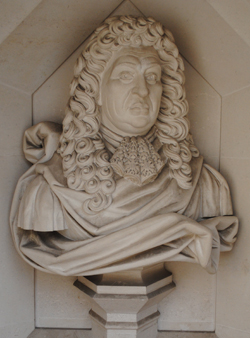
Samuel-PepysThe largest exhibition ever mounted about the life of 17th century diarist Samuel Pepys opens at the National Maritime Museum in Greenwich tomorrow. Samuel Pepys: Plague, Fire, Revolution features more than 200 paintings and objects brought together from museums, galleries and private collections which explore the life of the famous diarist (depicted here in a bust outside the Guildhall Art Gallery) against the backdrop of the tumultuous events of Stuart London, from the execution London of King Charles I in 1649 through the Great Fire of London and the Glorious Revolution on 1688. Objects on show include the famous painting, Portrait of Charles II in Coronation Robes, objects connected to Pepys’ mistresses including one of his love letters to Louise de Kéroualle (aka ‘Fubbs’ or ‘chubby’) and other personal items such as a lute owned by Pepys. The exhibition is accompanied by a series of events including Pepys Show Late: Party like it’s 1669 (26th November) and a series of walks and talks. Admission charge applies. The exhibition runs until 28th March. For more, see www.rmg.co.uk/national-maritime-museum.
Cycles are in the spotlight at the Design Museum in Shad Thames with a new exhibition, Cycle Revolution, opening yesterday. The display, which focuses on the world of contemporary cycling, features dozens of bicycles from key manufacturers as well as high end accessories, items belonging to celebrated cyclists Sir Chris Hoy and Sir Paul Smith and specially commissioned films and photography. It looks at cycling subcultures – everyone from the “high performers” to the “cargo bikers”, examines manufacturing techniques and innovations in the use of materials and design with exhibits including a large scale recreation of a bespoke bicycle making workshop, and tackles questions about the future of cycling particularly in relation to the urban environment. The exhibition is being accompanied by a ‘cycle cafe’, large scale installations and a series of public events. Runs until 30th June. Admission charge applies. For more, see www.designmuseum.com.

The jewellery traditions of the Indian sub-continent are set to sparkle at a new exhibition opening at the V&A in South Kensington this Saturday. Part of the V&A India Festival, Bejewelled Treasures: The Al Thani Collection features 100 items, drawn from a single private collection, including a Golconda diamond given to Queen Charlotte by the Nawab of Arcot in South India in 1767, a jade-hilted dagger that belonged to the 17th century emperor Shah Jahan (builder of the Taj Mahal), and a jewelled gold tiger’s head from the throne of the Tipu Sultan of Mysore. As well as showcasing the types of jewels collected by the Mughal emperors, the exhibition reveals the influence of India on European jewellery houses in the early 20th century and the ongoing impact of Indian influences on more modern pieces. The exhibition runs until 28th March. Admission charge applies. For more, see www.vam.ac.uk/BejewelledTreasures.

Send all items for inclusion to exploringlondon@gmail.com

This Week in London – The Boat Race; Designs of the Year; Heckling Hitler; and Victorian-era homelessness…

The 161st Boat Race is on this weekend and will once more see Oxford and Cambridge rowing crews battling it out in their annual contest on the Thames. The day’s schedule of festivities kicks off at noon at Bishop’s Park near the race’s starting point just west of Putney Bridge and at Furnivall Gardens near Hammersmith Bridge but the main highlights don’t take place until late in the afternoon – the Newton Women’s Boat Race at 4.50pm and the main event, the BNY Mellon Boat Race, at 5.50pm. The race runs along the Thames from Putney Bridge through to Chiswick Bridge with plenty of vantage points along the way. The tally currently sits at 78 to Oxford and 81 to Cambridge. For more information, including where to watch, head to http://theboatraces.org/.

• Prospective “Designs of the Year” are on display at the Design Museum in Shad Thames ahead of the announcement of awards in May and June. With the awards – handed out in six categories – now in their eighth year, the 76 designs on display include Google’s self-driving car, the Frank Gehry-designed Foundation Louis Vuitton in Paris and Asif Kahn’s experimental architectural installation Megafaces which debuted at the Sochi Olympics as well as Norwegian banknotes, a billboard that cleans pollutants from the air and a book printed without ink. Runs until 23rd August. Admission charge applies. For more, see www.designmuseum.org/exhibitions/designs-of-the-year-2015.

On Now: Heckling Hitler: World War II in Cartoon and Comic Art. Showing at the Cartoon Museum in Bloomsbury, this exhibition explores how World War II unfolded through the eyes of British cartoonists. It features more than 120 original drawings and printed ephemera and while the focus is largely on those contained newspapers and magazines, the exhibition does include some sample materials from books, aerial leaflets, artwork from The Dandy and The Beano, postcards and overseas propaganda publications as well as some unpublished cartoons drawn in prisoner-of-war camps and by civilians at home (the latter on scrap paper from the Ministry of Food), and even a rare pin cushion featuring Hitler and Mussolini. Among the artists whose works are featured are ‘Fougasse’ (creator of Ministry of Information posters reminding the public that ‘Careless Talk Costs Lives’), William Heath Robinson and Joe Lee. The exhibition runs until 12th July. Admission charge applies. For more, see www.cartoonmuseum.org/exhibitions/current-exhibitions/heckling-hitler.

On Now: Homes of the Homeless: Seeking Shelter in Victorian London. This exhibition at the Geffrye Museum in Shoreditch explores the places inhabited by London’s poor during the 19th and 20th centuries and brings them to life through paintings, photographs and objects as well as the retelling of personal stories and reports. Starting in the 1840s, the exhibition charts the problems faced by London’s poor and examines the dirty and cramped conditions of lodging houses, workhouses and refuges where they took shelter along with, for those even less fortunate, the streets where they slept rough before moving on to some of the housing solutions designed specifically to help the poor. Runs until 12th July. Admission charge applies. Running alongside the exhibition is a free display, Home and Hope – a collaborative exhibition with the New Horizon Youth Centre which explores the experience of young homeless people in London today. For more, see www.geffrye-museum.org.uk/whatson/exhibitions-and-displays/homes-of-the-homeless/.

Send all items for inclusion to exploringlondon@gmail.com

Around London – Celebrating the coronation at Buckingham Palace; Royal births at the MoL; the Fourth Plinth unveiled; Menon remembered; and, manufacturing at the Design Museum…

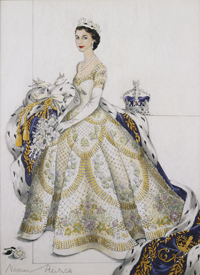
Norman-Hartnell-sketchThe Queen’s Coronation in 1953 is the subject of a special exhibition opening at Buckingham Palace as part of the palace’s summer opening. Celebrating the 60th anniversary of the coronation, the display features an array of outfits including uniforms and robes worn on the historic event on 2nd June, 1953, as well as a series of paintings recording the event, works of art and objects used on the day and film footage and sound recordings. Among the highlights of the exhibition will be sketches made by Norman Hartnell, the principal designer of the outfits worn at the coronation by the Queen, principal ladies of the immediate Royal Family and the Maids of Honour. The State Rooms of Buckingham Palace open on Saturday and remain open until 29th September. An admission charge applies. For more, see www.royalcollection.org.uk. PICTURE: Her Majesty The Queen in her Coronation Dress, 1953, Norman Hartnell. Royal Collection Trust/All Rights Reserved.

Meanwhile in this, the week of the birth of Prince George, it’s only fitting that we mention a small display at the Museum of London showcasing memorabilia relating to royal babies of years past. A Royal Arrival features baby clothes and other items worn by future monarchs. They include a embroidered skullcap worn by the future King Charles I, a tiny linen vest and mitten which once was worn by the future King George III and a dress emblazoned with the three feather insignia which belonged to the future King Edward VII, eldest son of Queen Victoria. The free display will be on show until October. For more, see www.museumoflondon.org.uk.

The new commission for Trafalgar Square’s Fourth Plinth will be unveiled today. The 4.7 metre high sculpture, Hahn/Cock, is the work of contemporary artist Katharina Fritsch. It will sit on the plinth for the next 18 months.  For more details, see www.fourthplinth.co.uk.

Indian statesman VK Krishna Menon has been commemorated by English Heritage with a blue plaque on his former residence in Highgate. A key campaigner for Indian independence, Menon lived at 30 Langdon Road from 1929 to 1931, having moved to England from Madras in 1924. In 1947, Menon was appointed India’s First High Commissioner in London and among his greatest achievements was his work in keeping the country in the British Commonwealth after independence. Having been a local councillor in St Pancras, he later returned to India and embarked upon a political career there. For more, see www.english-heritage.org.uk/discover/blueplaques/.

The-Future-Was-HereOn Now: The Future is Here. A major new exhibition examining the changes taking place in manufacturing around the world, opened this week at the Design Museum. The Future is Here looks at how everything from “cars to shoes” is manufactured, funded, distributed and bought. Among highlights is a ‘Factory’ where visitors can discover how 3D printing works and see production in process. There will also be the chance to make your own ‘action doll’ and see a sofa designed through a crowd-sourcing process which involved members of the public. Runs until 3rd November. Admission charge applies. For more, see www.designmuseum.org.

Around London – Celebrating London’s architecture; space at the NMM; Tate Britain redux; remembering Waterloo at Apsley House; and, ‘Coins and the Bible’ at the British Museum…

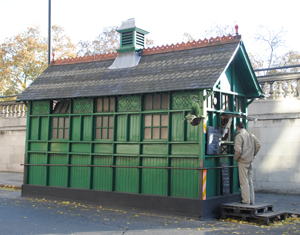
Cabmen's-ShelterThe London Festival of Architecture has returned with a month long celebration of the city’s built form in a program of events including talks, tours and exhibitions. Among the latter is Lesser Known Architecture – A Celebration of Underappreciated London Buildings – a free exhibition at the Design Museum which runs until 22nd July and looks at 10 structures ranging from London Underground Arcades and Cabmen’s Shelters (one of which is pictured) to Nunhead Cemetery. Other events include an exhibition at Somerset House – Nicholas Hawksmoor: Methodical Imaginings – looking at churches designed by Hawksmoor in the late 17th and early 18th centuries (this runs until 1st September), and The Secret Society – A Sculptural Banquet, a large scale installation by artist and designer Kathy Dalwood at Pitzhanger Manor in Ealing, west London (ends this Sunday). For more on the festival, check out www.londonfestivalofarchitecture.org or for fringe events, http://londonarchitecturediary.com.

A new exhibition featuring more than 100 images from space – including images of the colourful dust clouds in which new stars are formed, the aurora on the surface of Saturn and the sight of Earth from the International Space Station – opens at the National Maritime Museum in Greenwich tomorrow. Visions of the Universe takes visitors on a “visual trip through our solar system” with images of the moon, sun, plants and distant galaxies. It looks at the development of telescopy and photography and examines our understanding of our place in the cosmos. Space scientists including Astronomer Royal Sir Martin Rees and The Sky at Night‘s Chris Lintott introduce each section of the exhibition which has at its centre a 13×4 metre curved wall known as the ‘Mars Window’. It has the latest images from NASA’s Mars Curiosity Rover projected onto it. There is a programme of events accompanying the exhibition which runs until 15th September. For more, see www.rmg.co.uk.

Tate Britain is undergoing an overhaul this year with the opening of new galleries and a rearrangement of the institution’s collection. Last month, a new chronological presentation of the institution’s British art opened across more than 2o of the institution’s galleries. BP Walk through British Art features around 500 artworks, dating from the 1500s to present day, by artists ranging from Sir Joshua Reynolds and William Hogarth to JMW Turner, John Constable, Lucien Freud and David Hockney. Meanwhile new galleries have opened dedicated to the works of sculptor Henry Moore and artist William Blake. Around 30 of Moore’s works are featured in the rooms as well as more than 40 of Blake’s works. For more see www.tate.org.uk.

Apsley House, regency home of the Duke of Wellington, is hosting a series of events every weekend in June in the lead-up to the anniversary of the Battle of Waterloo. Interpreters will be at the house, known as Number 1 London, this weekend to discuss the dress and manners of the era while next weekend (15th and 16th June) visitors have the chance to meet some of Wellington’s soldiers and their wives. Gentry from the Napoleonic era will be celebrating the victory at Waterloo on 22nd and 23rd June while on the final weekend of the month, the focus will be on the 200th anniversary of the Battle of Vitoria in 1813, which led to eventual victory in the Peninsular War. For more, see www.english-heritage.org.uk/daysout/properties/apsley-house/.

On Now: Coins and the Bible. This free exhibition at the British Museum looks at how money was referred to in the Old and New Testament, and the use of Christian symbols such as crosses or monograms derived from Greek letters on later coins. These include the first coin, dating from about 450 AD, to depict an image of Jesus (the coin, on loan from the Hunterian Museum in Glasgow, is included in the exhibition). There are also early Biblical fragments on papyrus and vellum lent by the British Library and an ivory panel dating from the early 400s AD which includes an image of the purse of 30 pieces of silver Judas received after his betrayal of Jesus. Held in Room 69a, the exhibition runs until 20th October. For more, see www.britishmuseum.org.

Around London – Margaret Thatcher’s funeral; telling the Jewel Tower’s story; depot open weekend; and, Designs of the Year…

Margaret Thatcher’s funeral will be held next Wednesday at St Paul’s Cathedral from 11am with Queen Elizabeth II among those attending (the first time she has attended the funeral of a British politician since Sir Winston Churchill’s in 1965). The funeral procession of the former Prime Minister, who died on Monday aged 87, will start at the Houses of Parliament and make its way down Whitehall to Trafalgar Square before moving down the Strand, Fleet Street and Ludgate Hill to St Paul’s Cathedral. Baroness Thatcher’s coffin will carried in a hearse for the first part of the journey and will be transferred to a gun carriage drawn by six horses of the King’s Troop Royal Horse Artillery at St Clement Danes church on the Strand for the final part of the journey. There will be a gun salute at the Tower of London. Meanwhile, a Book of Condolence has opened at St Margaret’s Church, beside Westminster Abbey, this morning and will be available for people to pay their respects until 17th April, during the church’s opening hours. St Margaret’s – which stands between Westminster Abbey and the Houses of Parliament – is commonly known as the parish church of the House of Commons.

The story of the Jewel Tower – one of the last remaining parts of the medieval Palace of Westminster – is told in a new exhibition at the historic property. Now in the care of English Heritage, the tower – located to the south of Westminster Abbey, was built in 1365 to house King Edward III’s treasury, later used as King Henry VIII”s ‘junk room’, the record office for the House of Lords, and, from 1869, served was the “testing laboratory” for the Office of Weights and Measures. The exhibition, which opened this month, is part of the English Heritage celebrations commemorating the centenary of the 1913 Ancient Monuments Act. The Jewel Tower is open daily until November. Admission charge applies. For more, see www.english-heritage.co.uk.

See some of the earliest underground trains, a Lego version of Baker Street station and ride the Acton Miniature Railway. The London Transport Museum’s depot in Acton is holding it’s annual spring open weekend this Saturday and Sunday and in celebration of the Underground’s 150th anniversary, attractions will include the Metropolitan Steam Locomotive No. 1 and the recently restored Metropolitan Carriage 353 along with model displays, rides on the miniature railway, film screenings, talks, and workshops. Wales’ Ffestiniog Railway team – celebrating their own 150th anniversary – will also be present with the narrow gauge train, Prince. Open from 11am to 5pm both days. Admission charge applies. For more, see www.ltmuseum.co.uk.

Now On: Designs of the Year. The Design Museum has unveiled contenders for the sixth annual Designs of the Year competition and you can what they are in this exhibition. Consisting of more than 90 nominations spanning seven categories, the nominated designs include the Olympic Cauldron by Heatherwick Studio, The Shard – western Europe’s tallest building – by Renzo Piano, a non-stick ketchup bottle invented by the Varanasi Research Group at MIT, and Microsoft’s Windows phone 8. The exhibition runs until 7th July – the winners will be announced this month. Admission charge applies. For more, see www.designmuseum.org.

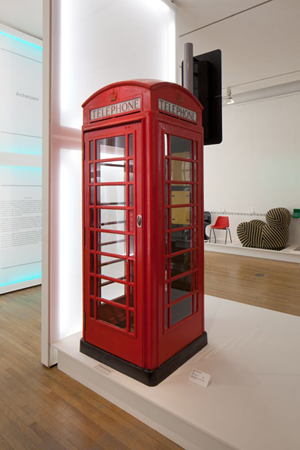
Treasures of London – K2 telephone kiosk at the Design Museum…

This version of the iconic British ‘institution’ – the red phone box – was designed by architect Sir Giles Gilbert Scott in 1924 (you may know him as the designer of the Battersea Power Station).

K2-KioskFormally known as the K2 telephone kiosk, Scott’s design was selected after a competition organised by the Royal Fine Art Commission (there’s a wooden prototype of Scott’s K2 located under the entrance to the Royal Academy of Arts in Piccadilly – the location where it was originally positioned).

The design featured a classical-looking dome (said to have been influenced by the work of architect Sir John Soane) which featured the royal crest of King George V (done in perforation, so it also provided ventilation). The phone box was made in cast iron and painted red (Scott had apparently suggested silver). From 1926 onwards, around 1,700 of the K2s – which weighed more than a ton – were deployed around London (very few were ever erected outside the city).

The surviving K2s – there are said to be slightly more than 200 – are now listed buildings.

The telephone box is a part of the Design Museum’s permanent collection which is currently held in two locations but from 2015 will be housed in a new purpose-built museum in High Street Kensington.

The box, which will be displayed on the museum’s top floor which will be dedicated to the display of 20th century artefacts, is currently featured in a special exhibition, Design Museum Collection: Extraordinary Stories About Ordinary Things, which runs at the museum’s current premises until January, 2015.

To further explore the Design Museum’s collection, you can download a free Design Museum Collection App for iPad app via iTunes.

WHERE: Design Museum, 28 Shad Thames (nearest Tube stations are London Bridge and Tower Bridge); WHEN: 10am to 5.45pm daily (last admission 5.15pm); COST: £11.85 adults/£10.70 concessions/£7.50 students (children under 12 are free); WEBSITE: www.designmuseum.org

LondonLife – A snapshot in time at the soon-to-be Design Museum…

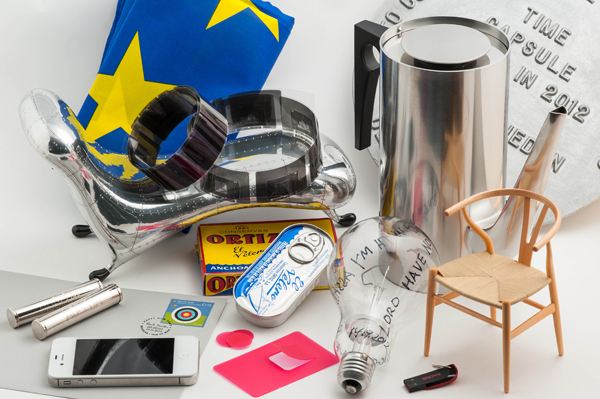
A selection of objects chosen by leading designers and architects including Sir Terence Conran, Sir Paul Smith, Zaha Hadid, and Norman Foster were buried within the foundations of the soon-to-be Design Museum in Kensington High Street earlier this month. The objects, which included everything from a miniature model of an 1949 Wish Bone Chair to an iPhone, a Cylinder Line Coffee Pot, a tin of anchovies and Tube maps, were placed within a time capsule which was buried as part of a ground-breaking ceremony for the new museum. Designed by John Pawson, the new Design Museum will be based within the converted interior of the former Commonwealth Institute Building. Expected to open in 2015, it will have three times as much space as the existing premises in Shad Thames, south east London. For more, see http://designmuseum.org.

PICTURE: Dominic French.

Around London – Cecil Beaton at the IWM; a night of bicycles at the Design Museum; and, Dickens and the Foundling…

A major new exhibition featuring stunning images captured by the late renowned society and fashion photographer Cecil Beaton during World War II opens at the Imperial War Museum in Lambeth today. Cecil Beaton: Theatre of War features some of the 7,000 photographs the photographer took between 1940 and 1945 with many of them exhibited for the first time. The photographs were taken in an array of locations – from Britain and Europe to the Middle East and Africa, India, Burma, China and the US – and depict everything from “ordinary” people in civilian life through to some of the era’s most famous military leaders. The exhibition will also look at how the war affected Beaton personally including his own brushes with death including in a major air crash and suffering from the likes of dengue fever and dysentery. Admission charge applies. Runs until 1st January. For more, see www.iwm.org.uk.

• A celebration of all things bicycle will be held at the Design Museum tomorrow (Friday, 7th September) night. Bike V Design, which kicks off at 6.30pm, will feature talks exploring the design of bikes, a mini cinema and live performances including BMX stunts and circus trick cycling as well as a demonstration of saddle manufacturing. Visitors are encouraged to bring their own bikes or enjoy the selection of bespoke bicycles on display. The night is being held to coincide with Designed to Win, the museum’s current exhibition exploring the tension between sport and design. An admission charge applies. For more, see www.designmuseum.org.

• On Now: Dickens and the Foundling. In case you’ve missed it, this exhibition at the Foundling Museum in Bloombury explores the relationship between the writer and the Foundling Hospital through a series of objects selected for display by six people with an interest in Dickens including actress Gillian Anderson, Dickens’ descendent Mark Dickens, comedian Armando Iannucci, Camden councillor Tulip Siddiq, poet Lemn Sissay and journalist Jon Snow. Among the objects on show are a letter from Dickens to the editor of The Times in which he objects to public hangings, the writing desk at which Dickens wrote what we have of the unfinished The Mystery of Edwin Drood, and a manuscript page from Oliver Twist, written when Dickens lived in a house at nearby Doughty Street. The exhibition runs until the end of October. Free with museum admission. For more, see www.foundlingmuseum.org.uk.

Around London – Celebrating the Olympics; Camden Lock’s night market; and, images of London at the Tate…

We’ll kick off this week with just a few more of the plethora of Olympic-related events which are happening around town:

Tower Bridge, site of some spectacular fireworks last Friday night, is currently hosting an exhibition celebrating the 26 cities which have hosted the modern Olympics. Cities of the Modern Games, located on the bridge’s walkways, runs alongside an interactive exhibition looking at the bridge’s construction. Follow the link for details.

The Guildhall Art Gallery is showcasing sculpture and art inspired by sport and the “Olympic values”. The art works are all winning entries from a contest organised by the International Olympic Committee. The chosen works were selected from among 68 submissions made by an international jury. Follow the link for details.

The Design Museum is hosting a new exhibition celebrating the nexus between sport and design. Designed to Win looks at everything from the design of F1 cars to running shoes, bats and bicycles and explores the way in which design has shaped the sporting world. Runs until 9th September. Admission charge applies. See www.designmuseum.org.

• The London Metropolitan Archives is holding an exhibition of playing cards featuring an Olympic theme. Sporting Aces – Playing Cards and the Olympic Games features cards drawn from the collection of the Worshipful Company of Makers of Playing Cards which have an Olympic theme. Admission is free. Runs until 13th September. See www.cityoflondon.gov.uk/lma.

And in other news…

A night market has been launched at Camden Lock over the summer period. Street food stalls and vintage fashion, arts and crafts and book shops will be open until 10pm every Thursday with extras including live music and film screenings. For more, see www.camdenlockmarket.com.

• On Now: Another London: International Photographers and City Life 1930-1980. This exhibition at Tate Britain in Millbank features more than 150 classic photographs of the city and its communities by foreign photographers including such luminaries as Henri Cartier-Bresson. The exhibition features iconic works such as Robert Frank’s London (Stock Exchange) 1951, Cartier-Bresson’s images of King George VI’s coronation, Elliot Erwitt’s depiction of a rain-washed London bus stop, and Bruce Davidson’s image of a child with pigeons in Trafalgar Square alongside works such as Wolfgang Suschitzky’s images of working class families in the East End, from the 1940s, and Karen Knorr’s images of punks in the 1970s. The photographs all come from the Eric and Louise Franck London Collection, which includes more than 1,200 images of London and has been promised as a gift to the Tate. Runs until 16th September. Admission charge applies. See www.tate.org.uk. 

Have we missed something we should be telling others about? Send details in an email to exploringlondon@gmail.com.