• The history and culture of the Krio people of Sierra Leone are the subject of a new display opening at the Museum of London Docklands tomorrow. The Krios of Sierra Leone explores the dress, architecture, language, lifestyle, traditions and history of the Krio community with contemporary objects from Krio Londoners on show as well as items related to the history of British colonial rule of Sierra Leone from the museum’s collections. Highlights include a large carved wooden printing block dating from around 1800, known as a ’tillet block’, that bears the crest of the Sierra Leone Company, a silver entrée dish which was presented to Thomas Cole, acting colonial secretary of Sierra Leone and assistant superintendent of Liberated Africans, who was responsible for assisting people freed from slave ships when they arrived in the colony, and, a typical Krio dress ensemble wore by Krio women. The free exhibition can be seen until 27th September next year. For more, see www.museumoflondon.org.uk/krios.
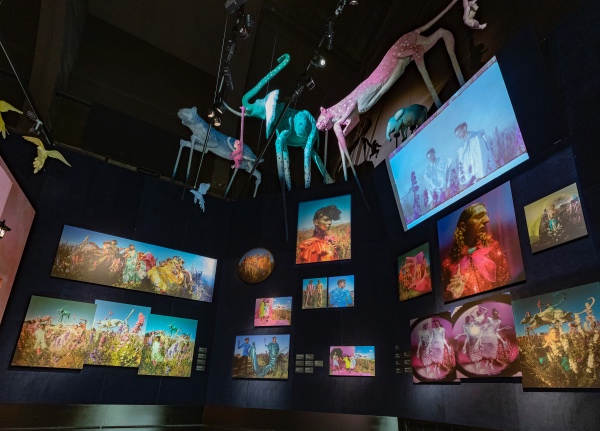
• Portraits of everyone from Sir David Attenborough to actor Tilda Swinton are on show as part of the largest ever exhibition of the work of photographer Tim Walker at the V&A. The display, Tim Walker: Wonderful Things (pictured above), features more than 150 new works inspired by the V&A’s collections and boasts more than 300 objects, encompassing photographs and the objects that inspired them as well as images of some of the biggest names in fashion – Lily Cole, Lindsey Wixson, Stella Tennant and Alexander McQueen among them – and portraits of such luminaries as Margaret Atwood, David Hockney, Daniel Day-Lewis, Claire Foy, Saoirse Ronan, Kate Moss, and artist Grayson Perry. Runs until 8th March. Admission charge applies. For more, see www.vam.ac.uk.
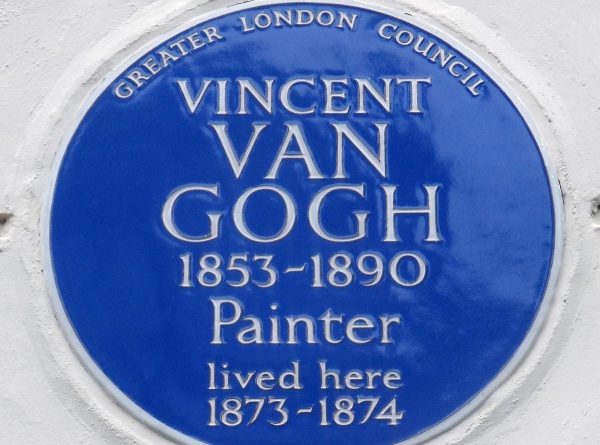
• Writers Angela Carter and Martha Gellhorn were both commemorated with English Heritage Blue Plaques earlier this month. Carter, an award-winning novelist, spent the last 16 years of her life at the property at 107, The Chase, in Clapham, and it was there she often tutored her then-student Kazuo Ishiguro and received fellow writers like JG Ballard, Ian McEwan and Salman Rushdie. Meanwhile, Gellhorn, a war correspondent who reported on conflicts ranging from the Spanish Civil War to the Vietnam War, was commemorated with a blue plaque on her former top floor flat in Cadogan Square where she spent the last 28 years of her life. For more, see www.english-heritage.org.uk/visit/blue-plaques/.
• The final release of tickets for this year’s New Year’s Eve fireworks go on sale from midday on Friday. Those who wish to attend the fireworks in central London must purchase a ticket priced at £10. To sign up for ticket updates and more information go to www.london.gov.uk/nye
Send all items for inclusion to exploringlondon@gmail.com.

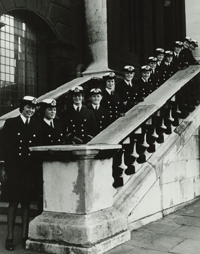



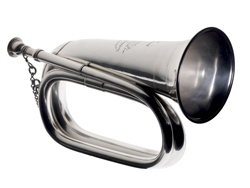 Marking the centenary of the battle, Jutland 1916: WWI’s Greatest Sea Battle explores the battle itself (which claimed the lives of more than 8,500 as the British Grand Fleet met the German High Seas Fleet in what neither side could claim as a decisive victory) as well as its lead-up, aftermath and the experience of those serving on British and German warships through paintings and newspaper clippings, photographs, ship models and plans, sailor-made craft work and medals. Among the objects on display is a 14 foot long shipbuilder’s model of the HMS Queen Mary, which, one of the largest battle cruisers involved,was destroyed with only 18 survivors of the 1,266 crew. Among the personal stories told in the exhibition, meanwhile, is that of boy bugler William Robert Walker, of Kennington, who served on the HMS Calliope and, severely wounded during the battle, was later visited by King George V
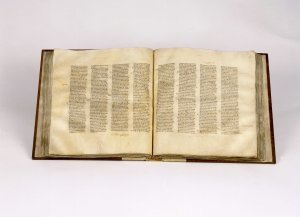 The first major exhibition to explore the history of Egypt after the pharaohs opens at the British Museum today. Egypt: Faith after the pharaohs spans 1,200 years of history – from 30 BC to 1171 AD – with 200 objects showing how Christian, Islamic and Jewish communities reinterpreted the pharaonic past of Egypt and interacted with each other. The exhibition opens with three significant examples of the Hebrew Bible, the Christian New Testament and the Islamic Qur’an – the texts include the New Testament part of the 4th century AD Codex Sinaiticus, the world’s oldest surviving Bible and the earliest complete copy of the New Testament, which is now part of the British Library’s collection. All three are juxtaposed with everyday stamps associated with each of the three religions in an illustration of the relationship between the institutional side of religion and its everyday practice, both key themes of the exhibition. Other exhibits include a pair of 6th-7th century door curtains featuring classical and Christian religious motifs, a 1st-2nd century statue of the Egyptian god Horus in Roman military costume, and a letter from the Roman Emperor Claudius (41-54 AD) concerning the cult of the divine emperor and the status of Jews in Alexandria. Admission charge applies. Runs until 7th February in Room 35. A programme of events accompanies the exhibition. For more, see
