This Week in London – Lee Miller at the Tate; the Hallelujah Chorus’ origins and impact, and conkers on Hampstead Heath…

• The UK’s largest retrospective of trail-blazing 20th century surrealist photographer Lee Miller opens at Tate Britain today. Lee Miller features around 230 vintage and modern prints, some of which are on display for the first time, which reveal how her approach pushed boundaries and led to the creation of some of the most iconic images of last century. Highlights include the newly discovered solarisation exemplar, Sirène (Nimet Eloui Bey) (c1930-32), her celebrated surrealist image of Egypt’s Siwa Oasis, Portrait􏰊of Space (1937), London-based works such as You will not lunch in Charlotte Street today (1940) and Fire Masks􏰘(1941) which convey the “pathos and absurdity” of the city in wartime, and war-related images including portraits of Miller and David E Scherman in Hitler’s private bath in April, 1945, as well as a rare 1950 self-portrait showing Miller posed in Oskar Kokoschka’s London studio flanked by artworks. Runs until 15th February. Admission charge applies. For more, see www.tate.org.uk/whats-on/tate-britain/lee-miller

The initial and enduring impact of the Hallelujah Chorus is the subject of a new display at the Foundling Museum in Bloomsbury. A Grand Chorus explores the profound impact music can have on listeners and performers and brings together musical scores, librettos, and musical instruments as well as paintings, photographs, audio, video, personal testimonies􏰞, and other archival material spanning three centuries. Originally􏰞composed as part of his famous Messiah oratorio, George Frideric Handel later incorporated the Hallelujah Chorus into an anthem he created specially􏰞for the Foundling Hospital that premiered in 1749 as a fund-raising exercise. The exhibition also showcases a major sound and video installation by􏰞Mikhail Karikis – We are Together􏰈 Because (2025), described as a modern counterpart to the Hallelujah Chorus. Runs until 29th March. Admission charge applies. For more, see https://foundlingmuseum.org.uk/event/a-grand-chorus-the-power-of-music/.

• Swing a conker at the Hampstead Heath Conker Championships this Sunday. People are all ages are invited to join in, whether a conker veteran or a newcomer, with competitions held in a range of age categories. The competition is being held near the Parliament Hill Bandstand from 1pm to 4pm. Entry is free. For more, see www.cityoflondon.gov.uk/events/go-conkers-on-hampstead-heath-5-october.

Send all items for inclusion to exploringlondon@gmail.com
This Week in London – London’s transport history captured; Sir Quentin Blake’s foundling portraits; and, the history of prison healthcare…

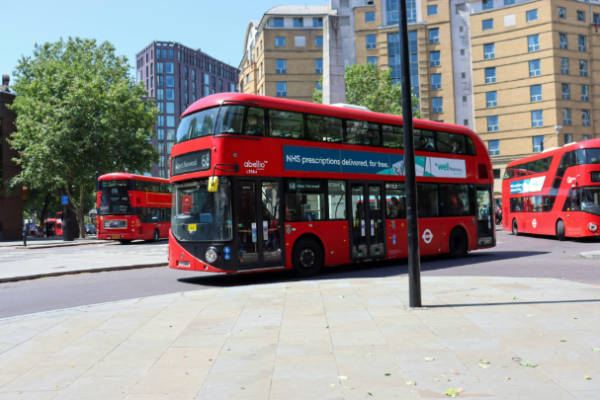
Some of London’s iconic red buses (not one of the images in the exhibition). PICTURE: Dele Oke/Unsplash

A new photographic display featuring a mix of historical and newly commissioned images has gone on show at the London Transport Museum. The exhibition – Then and now: London’s transport in photographs – marks the 25th anniversary of Transport for London and more than 160 years of transport history within the capital and features 40 photographs exploring how public transport in London has evolved amid social change. As well as historical images drawn from the collection, the display features images taken by photographer and train driver, Anne Maningas. Runs until spring, 2026. Admission charge applies. For more, see www.ltmuseum.co.uk/visit/museum-guide/then-and-now-londons-transport-photographs.

A display of portraits by acclaimed artist Sir Quentin Blake has gone on show at the Foundling Museum in Bloomsbury. The Foundling Portraits: Quentin Blake features a series of 10 Stabilo watercolour pencil on paper artworks which depict imaginary children created by Blake during a period of self-isolation during the COVID-19 pandemic. The images are among a collection of 45 which were gifted to the museum by Sir Quentin. Admission charge applies. For more, see https://foundlingmuseum.org.uk/event/the-foundling-portraits-quentin-blake/.

On Now: Prison Nursing Unlocked – A History of Care and Justice. This exhibition at the Royal College of Nursing Library and Museum in Cavendish Square looks at the role of health care in prisons, from the work of early reformers like Elizabeth Fry to the role nurses play today. Co-created with Royal College of Nursing members, it tells the story of the suffragettes who were force-fed in Holloway Prison, the formation of secure hospitals like Broadmoor, and features artwork created by prisoners and nurses at HM Prison Eastwood Park and HM Prison Warren Hill. Runs until 19th December. For more (and a link to the exhibition online), see www.rcn.org.uk/news-and-events/news/prison-nursing-unlocked-exhibition.

Send all items to exploringlondon@gmail.com

This Week in London – West Ham Park celebrates its 150th; rare examples of 17th century paper-cutting; King Henry VIII jousts at Hampton Court; the collection of Elizabeth Legh; and, ‘Horrible Science’…

West Ham Park celebrates its 150th anniversary this weekend with a festival of music, food, sport, and other activities. On Saturday there will be a free, family-friendly festival with music – including appearances by Australian-born singer-songwriter Celina Sharma and singer-songwriter, Fiaa Hamilton, as well as a DJ set from Ellis – along with arts and crafts, a children’s fun fair and local food stalls. On Sunday, activities are based around the theme of ‘give it a go’ with visitors able try out various sports and health activities, including football, cricket, tennis, athletics, Tai Chi, and long-boarding. There will also be free taster sessions and opportunities to meet local sporting legends. An outdoor exhibition about the park’s history can be seen in Guildhall Yard in the City leading-up to the event after which it will be moved to Aldgate Square. West Ham Park is the largest green space in the London Borough of Newham and has been managed by the City of London Corporation since 1874. Activities on both days start at 12pm. For more, see www.cityoflondon.gov.uk/westhampark150.

To see the rest of this post (and all of our coverage), subscribe for just £3 a month. This small contribution – less than the cost of a cup of coffee – will help us continue and grow our coverage. We appreciate your support!

This Week in London – Maharaja Ranjit Singh at the Wallace Collection; Anne Desmet’s Kaleidoscope/London and displaced Ukrainians at the Foundling Museum…

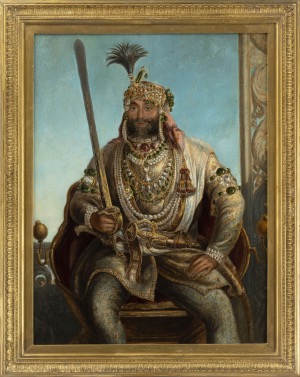
August Schoefft, Maharaja Sher Singh (1807–1843) seated on his father’s golden throne
Lahore, Punjab or Delhi, c 1841–42 © Toor Collection 

The remarkable life and legacy of Maharaja Ranjit Singh (1780-1839), the founder of the Sikh Empire, is the subject of a new exhibition which opened at the Wallace Collection this week. Ranjit Singh: Sikh, Warrior, King features historic objects from Ranjit Singh’s court, courtiers and family members, including those personally owned by the Maharaja and the most famous of his wives, Maharani Jind Kaur, as well as their son, Maharaja Duleep Singh. Highlights include a fine miniature painting of Ranjit Singh and his favourite, a Golden Throne made by Hafez Muhammad Multani, and a sword richly mounted in gold and gemstones which was thought to belong to the Maharajah. Runs until 20th October at the Manchester Square institution. Admission charge applies. For more, see www.wallacecollection.org/whats-on/events/ranjit-singh-sikh-warrior-king/.

A “fresh perspective” on London can be seen in a new exhibition by multi-award-winning wood engraver Anne Desmet at the Guildhall Art Gallery. Inspired by looking at a fragmented view of the world through a toy kaleidoscope, Anne Desmet: Kaleidoscope/London features works created by the artist slicing into prints focused on London from her earlier wood-engravings, linocuts and hand-drawn lithographs to make a new series of digital collages. The display features 150 works including 41 London-themed kaleidoscopic prints created exclusively for this exhibition. Among highlights is a complex collage, Fires of London, created using 18 razor-clam shells to present a theme of the many historic fires of London over the last 1,500 years. Admission is ‘pay what you can’. There are an accompanying series of artist-led tours. Runs until 8th September. For more, see www.cityoflondon.gov.uk/events/anne-desmet-kaleidoscopelondon-exhibition.

• Photographs depicting women and children forced to leave their Ukrainian homes following Russia’s invasion is on at the Foundling Museum in Bloomsbury. Polly Braden: Leaving Ukraine features the work of photographer Polly Braden and includes first-hand photographs, personal films and recorded conversations. It focuses on four central stories – that of three school friends trying to forge new lives and continue their education; that of a young graduate making a fresh start as a lawyer in London; that of a mother whose baby was born shortly after a perilous escape from Kherson to Warsaw; and that of two friends and their children who fled to Moldova with help from a kickboxing club, now struggling to find work in Italy. Admission charges apply. Can be seen until 1st September. For more, see https://foundlingmuseum.org.uk/event/polly-braden-leaving-ukraine/.

Send all items to exploringlondon@gmail.com

This Week in London – Wren letter in the Painted Hall; art from America’s South; and, ‘Finding Family’ at the Foundling Museum…

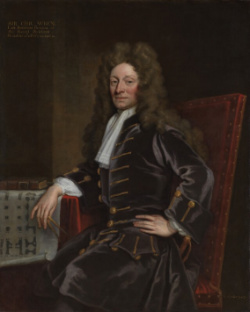
Sir Christopher Wren, by Sir Godfrey Kneller, Bt, oil on canvas, 1711 NPG 113

A letter written by Sir Christopher Wren requesting stone for the construction of the Royal Hospital for Seamen in Greenwich is on display in the Painted Hall vestibule. Wren wrote the letter requesting 2,000 tonnes of Portland stone to Thomas Gilbert, overseer of the King’s Quarries of the Isle of Portland, on 11th October, 1700. It is being displayed along with information explaining how the stone was brought from Dorset to London. The display is one of a series of events taking place at the Old Royal Naval College marking the 300th anniversary of Wren’s death on 25th February, 1723. Can be seen until January, 2024. An admission charge applies. For more, see https://ornc.org/whats-on/painted-hall-display-letter-written-by-sir-christopher-wren/. For more on events surrounding the 300th anniversary of Wren’s death, head to https://ornc.org/celebrating-wren300/.

Slavery, the cruel segregationist policies of the Jim Crow era, and the civil rights movement in the southern United States are all explored in a new exhibition at the Royal Academy. Souls Grown Deep like the Rivers: Black Artists from the American South, features around 64 works – including assemblages, sculpture, paintings, reliefs, and drawings – by 34 artists spanning the period from the mid-20th century to the present. Drawn mostly from the collection of the Souls Grown Deep Foundation in Atlanta, Georgia, many of the works are being seen in Europe for the first time. The display in the Gabrielle Jungels-Winkler Galleries also features quilts by the celebrated quiltmakers of Gee’s Bend, Alabama, and the neighbouring communities of Rehoboth and Alberta. Opening on Friday, the exhibition can be seen until 18th June. Admission charge applies. For more, see royalacademy.org.uk.

Three masterpieces from The National Gallery’s collection – by Hogarth, Gainsborough and the Le Nain Brothers – have gone on show at The Foundling Museum in Bloomsbury as part of a new exhibition exploring what family is and can be. Finding Family examines the ways in which artists have represented and responded to ideas of family with reference to the historic paintings as well as contemporary works of art. The art is accompanied by creative writing created by participants in ‘Tracing Our Tales’ – the museum’s award-winning programme for young care leavers – who have responded to the exhibition’s themes. Opens on Friday and runs until 27th August. Admission charge applies. For more, see https://foundlingmuseum.org.uk/event/finding-family/.

Send items for inclusion to exploringlondon@gmail.com.

This Week in London – St Patrick’s Day returns; London’s first female mayor and Welsh thinker honoured with Blue Plaques; and, ‘Seeing the Light’ at the Foundling Museum…

PICTURE: Svetlanais/iStockphoto.

London’s annual St Patrick’s Day Parade will be held on Sunday with more than 50,000 people expected to take part. The festivities will kick off at noon with a spectacular parade featuring Irish marching bands, dancers and pageantry which will wind its way from Green Park through Piccadilly Circus to Trafalgar Square. From noon until 6pm, Trafalgar Square will feature performances from the likes of Sharon Shannon & Band, Celaviedmai, The Craicheads, Celtic Youth Orchestra, Biblecode Sunday’s, and AIS as well as the Maguire O’Shea School of Dance and spoken word artist Leon Dunne. There will also be family-friendly workshops run by Irish youth creative programme Junk Kouture, a selection of food and drinks stalls including demonstrations by celebrity chef Anna Haugh and stalls where you can learn about Irish culture and community staffed by representatives of the Irish Cultural Centre, London Irish Centre, Irish in Britain, Irish Film London and London Gaelic Athletic Association. For more, check out www.london.gov.uk/events/st-patricks-festival-2023.

London’s first female mayor, Ada Salter, and Welsh philosopher and preacher Dr Richard Price have both been honoured with English Heritage Blue Plaques. A social reformer and activist, Salter became mayor of Bermondsey in 1922 and so became the first female mayor of a London borough as well as the first Labour woman to be elected as a mayor in Britain. The plaque has been placed on 149 Lower Road in Rotherhithe, the Women’s House of the Bermondsey Settlement where Salter lived in the late 1890s. Price, meanwhile, is considered to be one of the greatest Welsh thinkers of all time and, as well as a preacher and philosopher, was also a pioneer of actuarial science. A plaque has been placed on a red brick house at 54 Newington Green which dates from 1658 and is believed to be the oldest surviving terrace in London. Price, who was born 300 years ago this year, lived in the house from 1758 to 1787 and while there wrote letters to the likes of Benjamin Franklin and Thomas Jefferson with whom he enjoyed close friendships. For more, see www.english-heritage.org.uk/visit/blue-plaques/.

Joseph Wright’s painting A Philosopher Giving That Lecture on the Orrery in Which a Lamp is Put in Place of the Sun has gone on show at the Foundling Museum. The painting is at the heart of Seeing the Light, an exhibition which explores the connections between Wright, who hailed from Derby, his large network of friends and acquaintances, and key people in the Foundling Hospital’s history as well as objects in the museum’s collection. This includes the story of the founding of the Lunar Society. Admission charge applies. Runs until 4th June. For more, see https://foundlingmuseum.org.uk/event/seeing-the-light/.

Send all items to exploringlondon@gmail.com

This Week in London – Christmas at Hampton Court Palace; the V&A’s couture Christmas Tree; and, the stories of Asian and African foundlings…

Festive Fayre returns to Hampton Court Palace this weekend with visitors having the chance to do some Christmas shopping, sample some festive treats and enjoy live music. The festival, which runs from Friday to Sunday, takes place ahead of the launch of the palace’s Christmas light trail – Palace of Light – next Wednesday (7th December). Inspired by Henry VIII’s heraldic beasts, it features an array of installations, ranging from a sea-monster lurking in the Great Fountain Garden to polka-dot panther lanterns in the Wilderness. Created by the award-winning outdoor event producers Wild Rumpus, the light trail can be visited until 2nd January. For more, see www.hrp.org.uk/hampton-court-palace/.

Christmas tree installation, designed by Miss Sohee PICTURE: © Victoria and Albert Museum, London

The V&A has unveiled its couture Christmas Tree installation for this year – a work by London-based Korean fashion designer Miss Sohee. On display in the Cromwell Road Grand Entrance, the installation reimagines the traditional Christmas tree as a three metre long couture gown, which combines Sohee’s signature style of vibrant silhouettes and intricate embroidery with religious statuary found around the museum. The installation can be seen until 5th January. For more, see www.vam.ac.uk.

On Now – Tiny Traces: African & Asian Children at London’s Foundling Hospital. This exhibition at The Foundling Museum in Bloomsbury explores the newly discovered stories of African and Asian children in the care of the hospital in the 18th century, following the stories of more than a dozen children through personal items, physical artefacts, works of art and archival documents. In a parallel thread, works of art by artists including Zarina Bhimji, Hew Locke, Kehinde Wiley, Alexis Peskine, Deborah Roberts and Shanti Panchal form a dialogue with the historic narratives. Admission charge applies. Runs until 19th February. For more, see https://foundlingmuseum.org.uk.

Send all items to exploringlondon@gmail.com

This Week in London – Charles Jennens at the Foundling Museum; Dr John Conolly’s Blue Plaque; and, Kyōsai at the Royal Academy…

The Foundling Museum. PICTURE: dvdbramhall (licensed under CC BY-NC-ND 2.0)

Charles Jennens, who is best-known as the librettist of Handel’s Messiah but was also a patron of the arts, scholar and educator, is the subject of a new exhibition opening at the Foundling Museum in Bloomsbury on Friday. Charles Jennens: Patron & Polymath features portraits, correspondence and printed documents reflecting the varied interests and achievements of this Georgian character. Jennens was a non-juror – meaning he supported the legitimacy of the deposed Catholic Stuarts – but was also a Protestant. His art collection was one of the best in Britain and his Palladian mansion, Gopsall Hall in Leicestershire, featured a music room with an organ built to Handel’s specifications. Admission charge applies. Runs until 16th October. For more, see https://foundlingmuseum.org.uk/event/charles-jennens-polymath/.

• Dr John Conolly, an early advocate of human treatments for people living with mental illness and the former Hanwell Asylum have been commemorated with an English Heritage Blue Plaque to mark Mental Health Awareness Week. The plaque has been placed on what was the left wing of the asylum and is now part of St Bernard’s Hospital. It was here that Conolly, who was appointed Resident Physician at the Middlesex County Pauper Lunatic Asylum in 1839 – then one of the biggest asylums in London, advocated a system of ‘non-restraint’ which, though initially seen as controversial, drew support from reformers and which by 1846 had been embraced as ruling orthodoxy by the then-new national Lunacy Commission. For more, see www.english-heritage.org.uk/visit/blue-plaques/.

On Now: The works of Kawanabe Kyōsai, the most popular Japanese painter of the late 19th century, are on show in the Royal Academy’s Gabrielle Jungels-Winkler Galleries. Kyōsai: The Israel Goldman Collection focuses largely on the art of sekiga or ‘spontaneous paintings’ which were produced at ‘calligraphy and painting parties’ (shogakai), often fuelled by prodigious amounts of saké. The display – the first monographic exhibition of Kyōsai’s work in the UK since 1993 – includes around 80 words, many of which have never been exhibited. Admission charge applies. Runs until 19th June. For more, see www.royalacademy.org.uk.

Send all items for inclusion to exploringlondon@gmail.com
This Week in London – Canaletto at the National Maritime Museum; the story of the postcode; Easter hunts at royal palaces; and, superheroes and orphans…

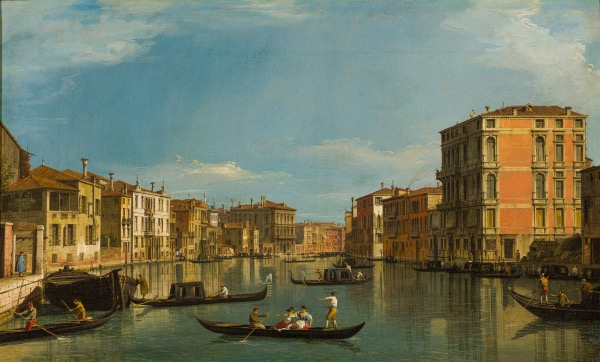
Canaletto, ‘View of the Grand Canal from the Palazzo Bembo to Palazzo Vendramin-Calergi‘ © From the Woburn Abbey Collection

Twenty-four of Canaletto’s Venetian views which are normally found at Woburn Abbey form the heart of a new exhibition opening at the National Maritime Museum in Greenwich on Friday. Canaletto’s Venice Revisited explores some of the most iconic view paintings of Venice and how tourism, which helped establish Canaletto’s career, today threatens Venice’s future. The views from Woburn Abbey were painted by Canaletto for Lord John Russell, the 4th Duke of Bedford, in the 1730s and this is the first time the paintings, which are thought to be Canaletto’s largest single commission, will be on display in their entirety outside of the abbey. As well as 22 smaller views of Venice depicting iconic landmarks such as Piazza San Marco and the Grand Canal, as well as campi, palazzi and churches, the works include two monumental views, A Regatta on the Grand Canal and The Grand Canal, Ascension Day: The embarkation of the Doge of Venice for the Ceremony of the Marriage of the Adriatic. Runs until 25th September. Admission charge applies. For more, see www.rmg.co.uk/canaletto.

The story of the postcode is the subject of a new exhibition at The Postal Museum. Sorting Britain: The Power of Postcodes charts the journey of postcodes in the UK, from the post postal districts in London, Liverpool and Manchester and the first trial of postcodes in Norwich in 1959 to how postcodes are used today as an indicator of social standing. Highlights in the display include ELSIE, one of the only original 1950s Electronic Letter Sorting Indicating Equipment left in existence, images of ‘Poco the Postcode Elephant’ – one of the biggest advertising campaigns of the 1980s and unseen maps of London from the 19th century. Runs until 1st January. Included in admission ticket. For more, see www.postalmuseum.org.

• The Lindt GOLD BUNNY Hunt is returning to both Hampton Court Palace and Kensington Palace this Easter for the first time since 2019. Children aged four to 12 are invited to use a trail map to explore each palace and gardens and find the Lindt GOLD BUNNY statues while learning about people from the palaces’ past and, on successfully completing their mission, claim their chocolatey reward. Check the website for details of dates. The hunt is included in palace admission. For more, see www.hrp.org.uk.

The representation of foundlings, orphans, adoptees, and foster children in comics and graphic novels comes under scrutiny in a new exhibition at the Foundling Museum in Bloomsbury. Opening Friday, Superheroes, Orphans & Origins: 125 years in comics looks at traditional orphan superheroes ranging from Superman and Batman to Spider Man and Black Panther along with characters from early newspaper comic strips, Japanese Manga and contemporary graphic novel protagonists. The display includes historical newspapers, original artwork and contemporary digital work as well as examples of international comics rarely exhibited in the UK. There are also three new artistic commissions specifically made for the exhibition. Can be seen until 28th August. Admission charge applies. For more, see https://foundlingmuseum.org.uk/event/superheroes-orphans-origins/.

Send items for inclusion to exploringlondon@gmail.com.

This Week in London – The extraordinary story of George King; Guildhall statues survive (with explanations); and, Wildlife Photographer of the Year…

The extraordinary story of 18th century foundling and sailor George King, who fought in the Battle of Trafalgar, is the subject of a new exhibition opening at the Foundling Museum in Bloomsbury tomorrow. Fighting Talk: One Boy’s Journey from Abandonment to Trafalgar features King’s hand-written account of his life, a fragment of the flag from Nelson’s coffin, letters between the Foundling Hospital’s matron and Lady Emma Hamilton (annotated by Nelson himself) and two rare Naval General Service Medals, of which only 221 were awarded retrospectively when the medal was first issued in 1849, belonging to King and the foundling William South, who served aboard HMS Victory. There is also a display of works by contemporary artist and photographer Ingrid Pollard – Ship’s Tack – which reflects on the Foundling Hospital’s connections with Empire, trade and the Navy and which includes newly commissioned work responding directly to George’s autobiography. Runs until 27th February. Admission charge applies. For more, see www.foundlingmuseum.org.uk.

Two Guildhall statues portraying figures with links to the slave trade will be retained but have information added detailing those links. The City of London Corporation’s Court of Common Council voted last week to keep the statues of William Beckford and Sir John Cass which will have plaques or notices placed alongside them containing contextual information about the two men’s links to slavery. William Beckford was an 18th century slave owner and two-time Lord Mayor of London, while Cass – an MP and philanthropist – was a key figure in the Royal African Company, which traded in slaves in the 17th and 18th centuries. Sir John Cass’s Foundation Primary School in the City and the nearby Cass Business School have already changed their names to remove the association with their founder and his links to slavery.

•  French underwater photographer and biologist Laurent Ballesta has won the Natural History Museum’s Wildlife Photographer of the Year for an image showing camouflage groupers exiting their milky cloud of eggs and sperm in Fakarava, French Polynesia. The image was selected out of 50,000 entries from 95 countries and is being displayed with 100 images in an exhibition opening at the museum on Friday. Meanwhile 10-year old Vidyun R Hebbar, who lives in Bengaluru, India, was awarded the Young Wildlife Photographer of the Year 2021 for his colourful image, Dome home, showing a tent spider as a tuk-tuk passes by. The exhibition can be seen until 5th June next year. Admission charge applies. For more, see www.nhm.ac.uk/visit/exhibitions/wildlife-photographer-of-the-year.

Send all items for inclusion to exploringlondon@gmail.com.

This Week in London – Paddington’s story; pioneering neurologist JS Risien Russell honoured; and, Sir Quentin Blake’s gift…

Michael Bond with plush Paddington. PICTURE: © P & Co. Ltd 2021

A new family friendly exhibition celebrating Paddington Bear opens at the British Library tomorrow. The Story of a Bear features more than 50 books, documents, film clips and original artworks as it explores Michael Bond’s creation of the much loved children’s book character. Highlights include a first edition of Bond’s A Bear Called Paddington published in 1958, Barbara Ker Wilson’s original review of the book, photographs and memorabilia of Michael Bond on loan from his family as well as original illustrations of Paddington stories by artists including Peggy Fortnum, David McKee and RW Alley. There are also clips from the Paddington movies and sound recordings featuring Bond speaking about his creation. The exhibition is ticketed (booking in advance recommended). Admission charge applies. For more, see www.bl.uk/events/paddington-the-story-of-a-bear.

Pioneering neurologist James Samuel Risien Russell has been honoured with an English Heritage Blue Plaque at his former home and practice in Marylebone. Russell, born in 1863 in what was then British Guiana (now Guyana), was one of the UK’s first Black consultants and played a critical role in establishing the British school of neurology in the 1890s. His contribution in furthering our understanding of many conditions of the nervous system and mental health issues has only recently come to light thanks to new research by the Windrush Foundation. Dr Risien Russell lived and worked at 44 Wimpole Street from 1902 until his death in March, 1939. For more, see www.english-heritage.org.uk/visit/blue-plaques.

<iframe width="560" height="315" src="https://www.youtube.com/embed/XACNk26xulk" title="YouTube video player" frameborder="0" allow="accelerometer; autoplay; clipboard-write; encrypted-media; gyroscope; picture-in-picture" allowfullscreen></iframe>

• A display of images from Sir Quentin Blake have gone on show at the Foundling Museum in Bloomsbury to mark his gift of 24 drawings to the museum. Curated by children’s author and illustrator Lauren Child, Quentin Blake: Gifted features pictures form two series –  Children and Dogs and Children with Birds & Dogs – as well as a range of responses from writers including poetry collective 4 BROWN GIRLS WHO WRITE, children’s author and poet Michael Rosen and Scottish playwright, poet and novelist Jackie Kay. Admission charge applies. Runs until 26 September. For more, see https://foundlingmuseum.org.uk/events/quentin-blake-gifted/.

Send all items for inclusion to exploringlondon@gmail.com.

This Week in London – Richard Leveridge in the spotlight; ‘Paradise Lost’ at Kew; and, Princess Beatrice’s wedding dress at Windsor…

The life and work of Richard Leveridge, a leading singer of the London stage during the 18th century, is the subject of a new display opening at the Foundling Museum in Bloomsbury tomorrow. The display, which can be seen in the Handel Gallery, charts the life of this popular theatre singer who became the lead bass singer at Drury Lane Theatre in 1695 and sang for Purcell in many of his stage works as well as, later, singing in the first performances of Handel’s early London operas. It also includes a look at Leveridge’s work as a composer and coffee shop owner and among items on show are manuscripts, early printed music, artworks, copies of drinking songs and stage works, contemporary accounts and formal portraits. Runs until 28th March. Admission charge applies. For more, see https://foundlingmuseum.org.uk

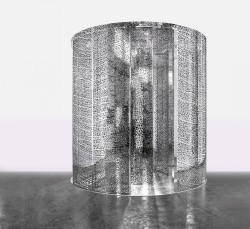
The first solo exhibition by Dutch-born, Mexico-based visual artist Jan Hendrix to be held in the UK opens in Kew Gardens’ Shirley Sherwood Gallery of Botanical Art next week. Paradise Lost features new works in a number of mediums created as a responser to the transformation of the landscape known as Kamay Botany Bay, in Sydney, Australia (which gained its English name – Botany Bay – from plants collected and recorded there in 1770 by European botanists Sir Joseph Banks – Kew Gardens’ first director – and Daniel Solander abroad the HMS Endeavour). Reflecting on how the visit of the Endeavour sparked a transformation of the region – from a pristine environment to what is now a suburban and industrial landscape, the exhibition explores themes including the destruction of the natural world in the wake of colonial industrialisation, contemporary urbanisation and climate change. New works include a vast monochrome tapestry evoking the dynamic texture and beauty of an Australian landscape threatened by wildfire – which ravaged the region in 2019 – as well as the display’s centrepiece – a huge walk-through mirrored pavilion inspired by two plant species that grow in Kamay Botany Bay – Banksia serrata or Wiriyagan (Cadigal) and Banksia solandri, and a moving image work created by Hendrix in collaboration with filmmaker Michael Leggett. A visual tour narrated by the artist will be made available online for those not able to visit in person. Runs from 3rd October until 13th March. Admission charge applies. For more, head to www.kew.org. PICTURE: Mirror Pavilion III, 2020, Stainless Steel by Jan Hendrix/Kew Gardens

• FURTHER AFIELD: Princess Beatrice of York’s wedding dress, first worn by Queen Elizabeth II in the 1960s, goes on display at Windsor Castle from today. Designed by Sir Norman Hartnell, the dress was first worn by the Queen during a State Visit to Rome in 1961 and was altered for Princess Beatrice for her marriage to Edoardo Mapelli Mozzi on 17th July this year. The display, which can be seen in the State Dining Room, also features Princess Beatrice’s wedding shoes, made by Valentino, and a replica of her bouquet. Can be seen until 22nd November. Admission charge applies. For more, see www.rct.uk.

Send all items for inclusion to exploringlondon@gmail.com
This Week in London – V&A reopens; institution reopenings; and, ZSL London Zoo looks for volunteers…

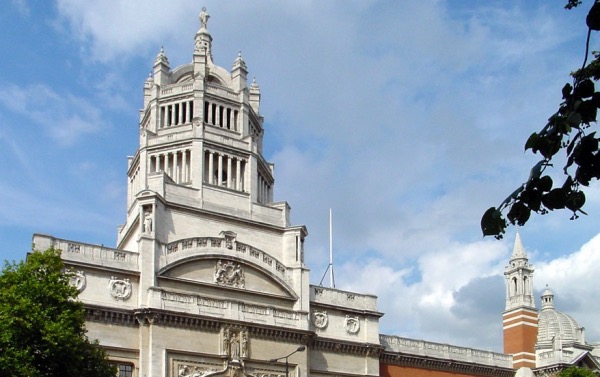
The V&A in South Kensington reopens its doors to visitors today in the first phase of a staged reopening strategy. All of the ground floor galleries are reopening including the Medieval & Renaissance Gallery, the Cast Courts, The Jameel Gallery of Islamic Art and Fashion Gallery, as well as the Europe 1600–1815 galleries on lower ground floor. The first and second floor collection galleries including The William and Judith Bollinger Jewellery Gallery, Theatre & Performance Galleries, and the Photography Centre as well as the museum’s Paintings, Tapestries and Silver Galleries are all scheduled to open on 27th August as well as the exhibition Kimono: Kyoto to Catwalk, which had closed just two weeks into its run.  For more, see www.vam.ac.uk. PICTURE: M.chohan (Public domain). 

Other recent and upcoming reopenings include: the Horniman Museum, the Foundling Museum, the National History Museum, The Queen’s House in Greenwich (Monday, 10th August) and the National Maritime Museum in Greenwich (exhibitions only; galleries coming later).

ZSL London Zoo is calling for volunteers to help assist visitors as they make their way around the zoo via three new one-way trails. The move, which follows a successful fundraising effort fronted by Sir David Attenborough, is aimed especially at people still furloughed and students forced to cancel gap year travel plans. Those interested in volunteering are asked to commit to a minimum of half a day each fortnight. For more, see  www.zsl.org/volunteering.

Send all items for inclusion to exploringlondon@gmail.com.

This Week in London – 500 years of pregnancy portraits; Picasso and Paper; and, The Cato Street Conspiracy explored…

Representations of the pregnant female body across 500 years of portraiture are the subject of a major new exhibition opening at the Foundling Museum on Friday. Portraying Pregnancy: From Holbein to Social Media features paintings, prints, photographs, objects and clothing from the 15th century to the present day as it explores the different ways in which pregnancy was – or wasn’t – represented as well as how shifting social attitudes have impacted on depictions of pregnant women. Highlights include Holbein’s portrait of Thomas More’s daughter Cicely Heron, the maternity dress that Princess Charlotte wore for an 1817 portrait painted by George Dawe shortly before her death and William Hogarth’s The March of the Guards to Finchley (1750), which features a heavily pregnant woman. There’s also a previously unseen work by Jenny Saville, Electra (2012-2019), Marc Quinn’s Alison Lapper (8 Months) (2000) and Lucien Freud’s Girl with Roses (1947-8) which depicts his first wife Kitty. Runs until 26th April. Admission charge applies. For more, see www.foundlingmuseum.org.uk.

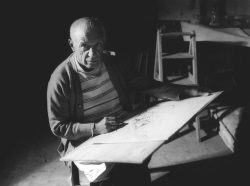
The most comprehensive exhibition ever held focused on Pablo Picasso’s imaginative and original uses of paper opens at the Royal Academy of Arts this Saturday. Held in the Main Galleries, Picasso and Paper features more than 300 works from across the span of the artist’s career as it explores the “universe of art” he invented involving paper. Highlights include Women at Their Toilette (winter 1937-38) –  an extraordinary collage of cut and pasted papers measuring 4.5 metres in length (being exhibited in the UK for the first time in more than 50 years), outstanding Cubist papiers-collés such as Violin (1912), and studies for Les Demoiselles d’Avignon (1908) such as Bust of Woman or Sailor as well as drawings like Self-portrait (1918) and Seated Woman (Dora) (1938). His masterpiece of the Blue Period, La Vie (1903) will also be in the display as well as his Cubist bronze Head of a Woman (Fernande) (1909) and monumental sculpture Man with a Sheep (1943), and the 1955 film Le Mystère Picasso, which records Picasso drawing with felt-tip pens on blank newsprint. Runs until 13th April. Admission charge applies. For more, see www.royalacademy.org.uk. PICTURE: Key 486, Pablo Picasso drawing in Antibes, summer 1946. Black-and-white photograph, Photo © Michel Sima / Bridgeman Images © Succession Picasso/DACS 2019

On Now – The Cato Street Conspiracy: A Terrorist Plot in Georgian London. This exhibition at the City of London’s Guildhall Library draws on contemporary accounts and pictures to tell the story of the conspiracy and its participants. The conspiracy, which was uncovered in early 1820, involved a plot to kill the British Prime Minister and Cabinet Ministers. Thirteen of the conspirators were arrested and five executed while five others were transported to Australia. A policeman was killed in the operation to arrest those responsible. This free exhibition runs until 30th April. For more follow this link.

Send all items for inclusion to exploringlondon@gmail.com.

This Week in London – The British Museum gets arty; music festivals in Georgian Britain; the story of Tangerine Dream; and, migration at Dulwich…

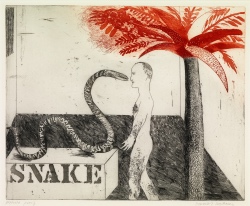
• Artworks by the likes of Pablo Picasso, Henri Matisse, Lucian Freud, Bridget Riley, David Hockney and Visa Celmins are on show in a new exhibition at the British Museum. Reflecting artistic developments in the past 100 years of modern art, Living with art: Picasso to Celmins features 30 prints and drawings. It showcases highlights from the wide-ranging collection of Alexander Walker (1930–2003), a longstanding film critic for London’s Evening Standard newspaper, which was bequeathed to the British Museum in 2004. The exhibition can be seen at the museum until 5th March before heading off on tour. Admission charge applies. For more, see www.britishmuseum.org. PICTURE: David Hockney (b. 1937), ‘Jungle Boy’ (1964) Etching and aquatint in black and red on mould-made paper © David Hockney Photo Credit: Richard Schmidt.

Music festivals in Georgian Britain – from the Handel Commemoration of 1784 to the Crystal Palace concerts of the late 19th century – are explored in a new exhibition at the Foundling Museum in Bloomsbury. Music Festivals in Georgian Britain looks at the logistics behind the organisation of the concerts which followed on in the tradition of benefit concerts for charities as well as the expectations of audiences. Runs until 14th September. Admission charge applies. For more, see https://foundlingmuseum.org.uk.

The “extraordinary story” of German band Tangerine Dream is told in a new exhibition opening at the City of London’s Barbican Music Library today. Tangerine Dream: Zeitraffer features photographs, previously unpublished articles, video clips, and original synthesizers as it tells the story of the band – credited with laying the foundation for the Ambient and Trance music styles – from its founding in 1967 and the release of its first album, Electronic Meditation, in 1970 through to the latest album, Recurring Dreams, last year. The band, which has released more than 160 albums, has also composed the scores for more than 60 Hollywood films including Michael Mann’s Risky Business and Ridley Scott’s Legend as well as Firestarter, based on the Stephen King novel. In 2013, they also wrote the score for the record-breaking video game, Grand Theft Auto V, and their music has appeared in recent Netflix series, Stranger Things, Black Mirror and Mr Robot. Runs until 2nd May. Admission is free.

The stories of six “community curators” – each of whom has personal experience of migration – are at the centre of a new display at the Dulwich Picture Gallery. Journeys, which explores themes of identity, belonging, migration and London’s multiculturalism, examines the contemporary relevance of works by the likes of Poussin, Rubens, Canaletto and Van Dyck against the backdrop of the life stories of the curators who, aged between 29 and 69, have a combined heritage spanning eight countries including Yemen, Sri Lanka, Italy, Pakistan and Ireland. Opens next Tuesday (21st January) and runs until 24th June with a special free late opening on 19th June during the final week which coincides with Refugee Week. For more, see www.dulwichpicturegallery.org.uk.

Send all items for inclusion to exploringlondon@gmail.com.

This Week in London – Experience Colombia at Kew; Norwegian landscapes at Dulwich; and, shining a spotlight on London’s disadvantaged children…

The flowers of Colombia are at the heart of this year’s Kew Orchid Festival which kicked off in west London late last week. Featuring what’s promised to be “dazzling displays” inspired by Colombia’s fauna and flora – the country boasts some 4,270 species of orchids alone, the 24th annual festival includes music, food, crafts and, of course, coffee. More than 5,700 orchids – including the Flor de Mayo – feature in the display in the Princess of Wales Conservatory with visitors led through a series of zones that evoke the sights, smells and sounds of Colombia. The central display is a “carnival of animals’ which depicts a toucan in flight, a hanging sloth and swimming turtle – all made of orchids, bromeliads and other tropical plants. There’s also a cascade of colourful hanging vandas representing the “rainbow river” – the Cano Cristales, an enchanted forest with life-sized jaguars, and, a golden floating display featuring yellow orchids depicting the legend of El Dorado. Meanwhile, the glasshouse film room features Bogota-style street art murals by Colombian multidisciplinary artist, Vanessa Moncayo González. The festival runs until 10th March. Admission charges apply. For more, see www.kew.org.

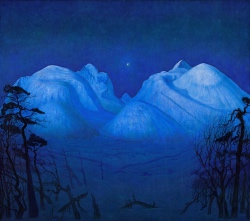
The works of Harald Sohlberg, one of the great masters of landscape painting in the history of Norwegian art, are on show at Dulwich Picture Gallery in the first ever exhibition of his works outside of Norway. Marking the 150th anniversary of the artist’s birth, Harald Sohlberg: Painting Norway boasts more than 90 works revealing the role of colour and symbolism in his art as well as his passion for Nordic landscapes. Spanning the period from 1889 when he was starting out as a 20-year-old through to 1935, the last year of his life, the works include the ‘national painting of Norway’ – Winter Night in the Mountains (1914) which took some 14 years to complete (pictured), as well as Fisherman’s Cottage (1906), Summer Night (1899), Sun Gleam (1894) and Street in Røros in Winter (1903). Runs until 2nd June. Admission charge applies. Accompanying the exhibition is a new sculptural installation in the gallery’s mausoleum by Bristol-based artist Mariele Neudecker – And Then the World Changed Colour: Breathing Yellow. For more see www.dulwichpicturegallery.org.uk. PICTURE:  Harald Sohlberg, ‘Winter Night in the Mountains’, 1914, The National Museum of Art, Architecture and Design, Norway.

A new photographic exhibition documenting the living conditions of London’s most disadvantaged children has opened at the Foundling Museum in Bloomsbury. Being run in partnership with The Childhood Trust, Bedrooms of London features images of sleeping spaces by Katie Wilson and they are shown alongside stories collected by Isabella Walker which bring into sharp focus the consequences of London’s social housing shortage. The display builds on the history of the Foundling Hospital, providing a glimpse into what life is like for the 700,000 London children currently living below the poverty line. It can be seen until 5th May. Admission charge applies. For more, see www.foundlingmuseum.org.uk.

Send all items for inclusion to exploringlondon@gmail.com.

This Week in London – Talking Shakespeare; Dickens’ letter in support of ‘fallen women’; and, wallpaper at the Geffrye…

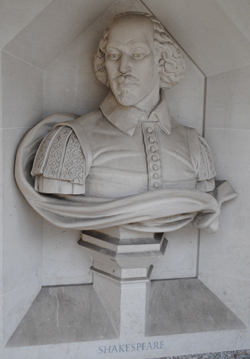
William-Shakespeare6• Guildhall is hosting an “open mic” Shakespeare day this Tuesday as part of commemorations marking the 400th anniversary of his death. Speeches, Soliloquies and Songs from Shakespeare will be opened with recitals from actors Simon Russell Beale and John Heffernan before members of the public will have their chance to recite their favourite piece from Shakespeare. Participants are invited to sign up by emailing ghlevents@cityoflondon.gov.uk or calling 020 7332 1868. The event will run between 10am to 12pm and 1.30pm to 3.30pm at the Basinghall Suite in the Guildhall Art Gallery. For more, see www.cityoflondon.gov.uk/things-to-do/visit-the-city/attractions/guildhall-galleries/Pages/guildhall-art-gallery.aspx.

A letter written by author Charles Dickens to the governors of the Foundling Hospital has gone on display at the Foundling Museum in Bloomsbury. The letter was written to the governors in support of an application for a new matron and touches on Dickens’ belief that the downward path of a ‘fallen woman’ wasn’t irreversible and inevitable but that reform was possible. Tempted to Virtue: Dickens and the Fallen Woman can be seen until 22nd May. In a related event, Lynda Nead, curator of the recent exhibition, The Fallen Woman, will join Jenny Earle, programme director at the Prison Reform Trust, in discussing the hidden stories of vulnerable women in the 19th century and today on 21st May. This event is free but booking is essential. For more, see www.foundlingmuseum.org.uk.

An exhibition celebrating how wallpaper is made is running at the Geffrye Museum in Shoreditch as part of London Craft Week. The Craft of Wallpaper demonstrates the variety of processes being used to make wallpaper in today’s world and features papers by some of the UK’s most innovative makers including Claire Coles, Elise Menghini, Helen Morley, Identity Paper, Juliet Chadwick, Linda Florence, Erica Wakerly, Fromental, CUSTHOM, Tracey Kendall and Graham & Brown who are showcasing six of their most successful wallpaper designs: from its first design in 1946, Original, to the 2016 Wallpaper of the Year, Marble. You’ll have to be quick – only runs until Sunday. For more, see www.londoncraftweek.com.

Send all items for inclusion to exploringlondon@gmail.com.

This Week in London – Literary ‘foundlings’; Anthony Van Dyck re-examined; Astronights; and, Liberty in Fashion…

A new exhibition featuring drawings of fictional child protagonists who were orphaned, adopted, fostered or ‘found’ opens at the Foundling Museum in Bloomsbury tomorrow. Drawing on Childhood shows how illustrators, spanning the period from the 18th century until today, was inspired by Lemn Sissay’s 2014 commission, Superman was a Foundling. It features original drawings, first editions and special illustrated editions depicting everyone from James Trotter (James and the Giant Peach) to Cinderella and Rapunzel. Among the artists whose work will be on display are Phiz (Hablot K Browne), Arthur Rackham, Quentin Blake, Stref, George Cruikshank, Thomas Rowlandson, Nick Sherratt and David Hockney. Three contemporary artists – Chris Haughton, Pablo Bronstein and Posy Simmonds – have also been invited to produce a new illustration for Henry Fielding’s 1749 novel, The History of Tom Jones, a Foundling. Runs until 4th May. Admission charge applies. For more, see www.foundlingmuseum.org.uk.

NPG Supplementary Image

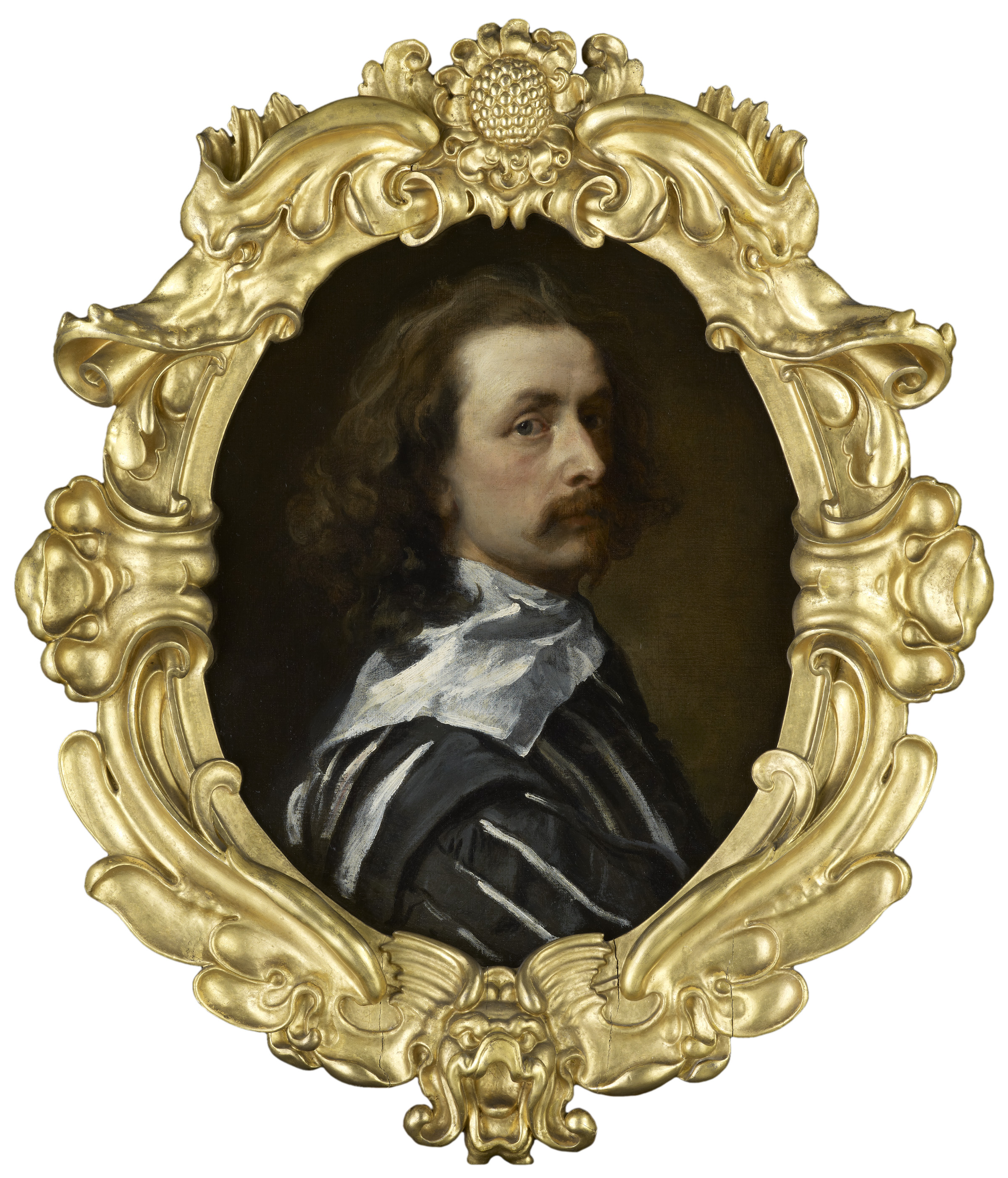
The works of Anthony van Dyck are the subject of a new display at the Dulwich Picture Gallery. I Am Van Dyck centres around a self-portrait of the artist recently acquired by the National Portrait Gallery and lent to Dulwich and juxtaposes the painting with two works by contemporary British artist Mark Wallinger – Self (Times New Roman) and I Am Innocent – in an effort to explore the meanings of individuality and our sense of self. The display – the first of four under the umbrella of Making Discoveries: Dutch and Flemish Masterpieces – also reveals new information on works by Van Dyck held by the gallery and shows how he developed and altered his compositions. Runs until 24th April. Admission charge applies. For more, see www.dulwichpicturegallery.org.uk.

The Science Museum is holding the first of its Astronights – “sleepovers for grown-ups” – this Saturday night. Guests will be treated to a midnight screening of Star Wars: Episode VII – The Force Awakens before which they’ll enjoy a three course meal with live music and an evening of entertainment. The next Astronight will be held on 4th March. Charges apply. For more, see www.sciencemuseum.org.uk/astronights.

On Now: Liberty in Fashion. Commemorating the 140th anniversary of the company in 2015, this exhibition at the Fashion and Textiles Museum in Bermondsey Street explores the impact of Liberty & Co on British fashion and features more than 150 garments, textiles, and objects which demonstrate the company’s relationships with designers such as Yves Saint Laurent and Vivienne Westwood. The exhibition, which opened in October, runs until 28th February. Admission charge applies and there’s a series of events accompanying the exhibition (many of which have still to run). For more, see www.ftmlondon.org.

Send all items for inclusion to exploringlondon@gmail.com.

This Week in London – V&A reopens Europe 1600-1815 galleries; the Victorian era’s finest; and, ‘Handel’s Performers’…

ZMMA_VA_Dec_2015_DG_01

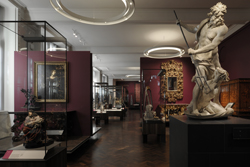
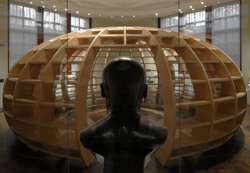
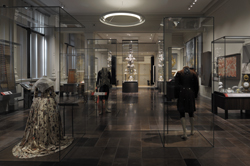
The V&A has reopened its ‘Europe 1600-1815’ galleries to the public this week following a major £12.5 million refurbishment. The seven transformed galleries, located close to the South Kensington museum’s grand entrance, tell the story of how France succeeded Italy as the “undisputed leader” of fashionable art and design in Europe in the late 17th century and how Europeans systematically “explored, exploited and collected” resources from Africa, Asia and the Americas. Featuring more than 1,100 objects, the galleries – redesigned in conjunction with architectural practice ZMMA – include four V&A2large rooms introducing the story of Europe across the period and three smaller rooms focusing on specific activities – ‘collecting in the Cabinet’, ‘enlightened thought in the Salon’, and ‘entertainment and glamour in the Masquerade’. Objects on display include a highly ornate Rococo writing cabinet made from Augustus III (on show for the first time since it has undergone a conservation work), a newly conserved 18th century bed from the Parisian workshop of George Jacob – furniture maker to Napoleon, a 17th century Venetian table by Lucio de Lucci and Pierre-Denis Martin’s oil painting, The Visit of Louis XIV to the Chateau de V&A3Juvisy (both on show for the first time) as well as several large recently cleaned tapestries including the 1860s Gobelins tapestry, The infant Moses tramples on Pharoah’s crown. The display also includes three recreated period rooms – a 17th century French bedchamber, Madame de Sérilly’s cabinet and a mirrored room from 18th century Italy – while in the Salon can be found a contemporary installation, The Globe. A curved architectural sculpture, it is the creation of Havana-based artist collective Los Carpinteros and forms a “room within a room” within the ‘Salon’. It will be used for events and discussions. Entry to the galleries is free. For more, see www.vam.ac.uk/europegalleries. PICTURES: David Grandorge/©Victoria and Albert Museum, London.

On Now: A Victorian Obsession: The Pérez Simón collection. This exhibition at the Leighton House Museum – former home of artist Frederic, Lord Leighton – features more than 50 works by leading Victorian artists, some of which are rarely exhibited. The paintings, which include six works by Leighton himself as well as works by Dante Gabriel Rossetti, Edward Burne-Jones, John Everett Millais and John William Waterhouse, all form part of the collection of Mexican Juan Antonio Pérez Simón who has the largest private collection of Victorian art outside the UK. The highlight of the exhibition, however, is Lawrence Alma-Tadema’s The Roses of Heliogabalus, being shown in London for the first time since 1913. Admission charge applies. The exhibition at the property on the edge of Holland Park runs until 6th April. For more, see www.leightonhouse.co.uk.

On Now: Handel’s Performers. This display of portraits and documents in The Foundling Museum’s Handel Gallery is a showcase of celebrities and singers who brought the work of composer George Frideric Handel’s work to the public in the 18th century. Among those depicted are Anastasia Robinson and Senesino, among the highest paid singers of their time, Anna Maria Strada, a leading soprano, Gustavus Waltz, a bass singer who sang at the benefit performance of Handel’s Messiah at the Foundling Hospital in 1754, and John Hebden, who played in the orchestra during benefit performances of the Messiah in 1754 and 1758. Runs at the Bloomsbury museum until 1st May. Admission charge applies. For more, see www.foundlingmuseum.org.

Send all items for inclusion to exploringlondon@gmail.com.

This Week in London – Celts at the British Museum; the Fallen Woman at the Foundling; and Ai Weiwei…

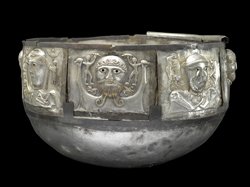
Gundestrup_Whole-ImageThe story of the Celts and their culture is being explored in a new exhibition which opens at the British Museum in Bloomsbury today. Celts: Art and Identity, being run in partnership with National Museums Scotland, is the first British exhibition on the Celts in 40 years. Highlights of the display include a hoard of four gold torcs found at Blair Drummond in Stirling in 2009, Christian artefacts including iron handbells used to call people to prayer, elaborately illustrated Gospels, carved stone crosses and, a gilded bronze processional cross which, dating from 700-800 AD and coming from Tully Lough in Ireland, will be on show for the first time in Britain. Also present will be the Gundestrup cauldron, which dates from 100 BC-1 AD and comes from Denmark (pictured), London artefacts such as the Waterloo helmet and Battersea shield, and works created more recently which reflect on an often mythical Celtic past such as George Henry and Edward Atkinson Homel’s 1890 painting The Druids: Bringing in the Mistletoe. Runs until 31st January in the Sainsbury Exhibition Gallery (Room 30). Admission charge applies. For more, see www.britishmuseum.org. PICTURE: © The National Museum of Denmark.

A new exhibition exploring the myth and reality of the ‘fallen woman’ in Victorian Britain opens at the Foundling Museum in Bloomsbury tomorrow. The Fallen Woman features works by artists including Dante Gabriel Rossetti, Richard Redgrave, George Frederic Watts and George Cruikshank, displayed alongside stereoscopes and depictions of the fallen woman in the era’s popular media. It also looks at the petitions of women applying to the Foundling Hospital, bringing to life the real ‘fallen women’ of the period through a specially-commissioned sound installation by artist and musician Steve Lewinson. The exhibition runs until 3rd January. Admission charge applies. For more, see www.foundlingmuseum.org.uk.

The London Transport Museum’s Depot in Acton hosts its autumn open days this weekend. The day includes the chance to see the original printing blocks used for the Johnston font – London Transport’s iconic typeface, expert talks on transport vehicles, a chance to see how the moquette – the seat covering on the tube – is made and film screenings from the LTM archive. From 11am to 5pm Saturday and Sunday. Admission charge applies. For more, see www.ltmuseum.co.uk.

The Worshipful Company of Woolmen will be holding their annual  sheep drive across London bridge this Sunday. The event, free to watch, kicks off at 10am and runs until 5pm. For more, see www.woolmen.com.

• On Now: Ai Weiwei. This landmark exhibition at the Royal Academy of Arts in Piccadilly celebrates the work of Honorary Royal Academician and leading Chinese artist Ai Weiwei with significant works from 1993 onwards and new, site specific installations. Among the key exhibits is Straight (2008-12), a body of work related to the Sichuan earthquake of 2008, fabricated from 90 tonnes of bent and twisted rebar which was collected by the artist and straightened by hand. Runs until 13th December.  Admission charge applies. For more, see www.royalacademy.org.uk.

Send all items for inclusion to exploringlondon@gmail.com.