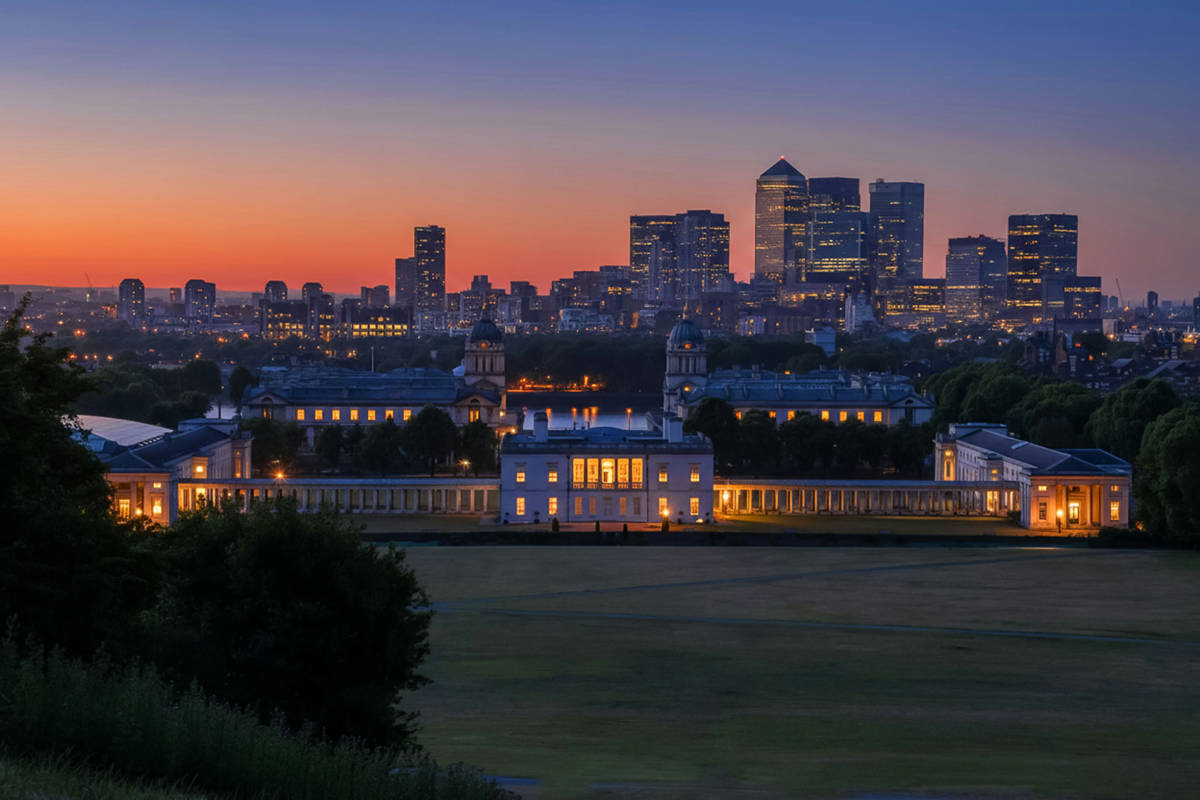
LondonLife – Greenwich overwatch…
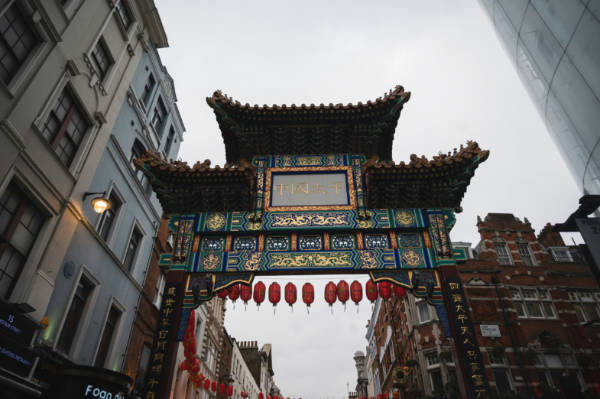
• Lunar New Year festivities will be held in Chinatown in central London this weekend including lion dances and the Chinese New Year Parade. Lion dances will be held throughout Chinatown on Saturday and Sunday while the parade kicks off at 10am on Sunday just east of Trafalgar Square reaching the square at 12 where an afternoon of festivities will be held. For more, see www.london.gov.uk/events/lunar-new-year-festival-spring-2026. Meanwhile, Lunar New Year celebrations will also be held in Greenwich on Saturday. The celebrations include lion dances, musical and dance performances, a martial arts demonstration, workshops including one on Tibetan dance and another on lantern making and the chance to sample Asian food. For more, see www.rmg.co.uk/lunarnewyear.
• A new exhibition at the Young V&A in Bethnal Green takes a look behind the scenes of stop-motion classics such as Wallace & Gromit, Chicken Run and Shaun the Sheep. Inside Aardman: Wallace & Gromit and Friends, created primarily for children and families and marking Aardman’s 50th annversary, features some 150 objects including never-seen-before models, sets and storyboards from Aardman’s archives as well as interactive activities ranging from designing characters and experimenting with lighting through to creating live action videos. Among the items on show are early sketches of Wallace & Gromit, a hand-drawn storyboard from The Wrong Trousers (1993) train chase, Wallace & Gromit’s motorbike and sidecar from Vengeance Most Fowl (2024), and the airship model from The Pirates! (2012). Admission charge applies. Runs until 15th November. For more, see vam.ac.uk/young.
• The women who influenced Charles Dickens are at the centre of a new exhibition at the Charles Dickens Museum. Extra/Ordinary Women features a portrait of Dickens’ daughters, Katey and Mamie, on display for the first time, Catherine Dickens’s cookbook, and a draft preface to an 1857 manual for educating working class children written by penned by Angela Burdett Coutts and including edits by Dickens in blue ink as well as items owned by Ellen Ternan, best known for her 12-year extra-marital relationship with Dickens. Admission charge applies. Runs until 6th September. For more, see https://dickensmuseum.com/blogs/all-events/extra-ordinary-women.
Send all items for inclusion to exploringlondon@gmail.com
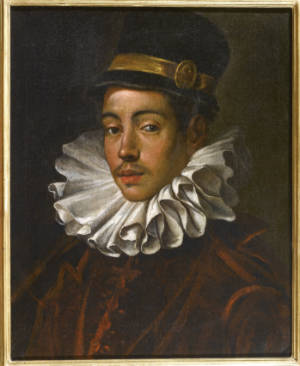
• The evolution of the samurai over the past 1,000 years is the subject of a new exhibition at The British Museum. Samurai brings together around 280 objects and digital media as it explores the role of samurai as warrior as well as the later roles they fulfilled, during a prolonged peace after 1615, as government officials, scholars and patrons of the arts with women making up half of the samurai class. On display will be a suit of samurai armour, complete with helmet and golden standard, which was recently acquired by the museum as well as a vermillion red woman’s firefighting jacket, a rare portrait of Itō Mancio, a 13-year-old samurai who led an embassy to the Vatican in 1582, by Domenico Tintoretto (pictured), and a portrait of Henry, Count of Bourbon, which portrays him as a samurai warrior and which was commissioned by him while visiting Japan in 1889. The exhibition, which opens on 3rd February, runs until 4th May in The Sainsbury Exhibitions Gallery. Admission charge applies. For more, see www.britishmuseum.org/exhibitions/samurai.
• Tickets are now on sale for the V&E East Museum’s first exhibition, The Music is Black: A British Story. The multi-sensory exhibition features more than 200 objects ranging from musical instruments to soundtracks,
artworks, fashion, and personal belongings of world-famed artists including Winifred Atwell’s piano, the Nintendo Jme used for early music experiments, fashion worn by Little Simz, Seal, Dame Shirley Bassey and Skin and newly acquired photographs of Kemistry and Storm, Mis-Teeq, and Skepta. The exhibition opens on 18th April. Admission charge applies. For more, see www.vam.ac.uk/exhibitions/the-music-is-black-a-british-story
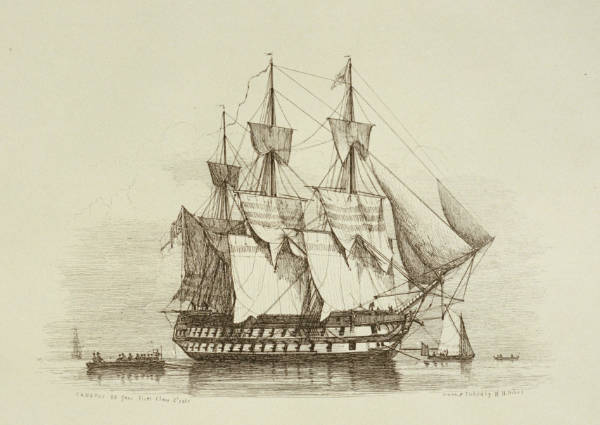
• On Now: Jane Austen and the Royal Navy. This display at the National Maritime Museum marks the 250th anniversary of Jane Austen’s birth and features manuscripts relating to her youngest brothers Francis and Charles Austen, both of whom had naval careers, and explores Jane’s connections to the Royal Navy and the influence her brothers had in her works. Francis – known as Frank (born in 1774) – entered the Royal Navy at the age of 12 and rose through the ranks to eventually captain the HMS Canopus during the Napoleonic Wars while Charles (born in 1779) also entered the Navy at age 12, was on board the Endymion when it captured the French ship Le Scipio, was captain of the Phoenix when it was wrecked at sea and ended his career as commander-in-chief of the East Indies and China Station. The display in the Caird Library can be seen until March. Admission is free. For more, see www.rmg.co.uk/national-maritime-museum.
Send all items to exploringlondon@gmail.com.
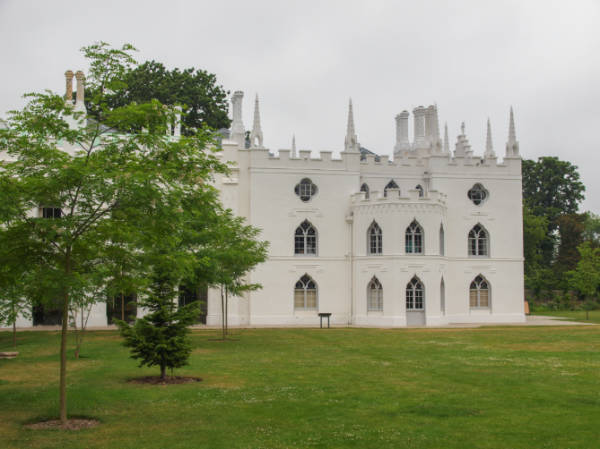
• The disappearance of a jewelled Ottoman dagger which is believed to have once belonged to King Henry VIII has inspired a new exhibition at Strawberry Hill House, Horace Walpole’s former home in Twickenham in London’s west. Henry VIII’s Lost Dagger: From the Tudor Court to the Victorian Stage looks at the history of the 16th century dagger which, said to have been richly decorated with “a profusion of rubies and diamonds”, was once part of Horace Walpole’s collection. When the collection was sold in 1842, the dagger passed into ownership of the Shakespearean actor Charles John Kean who directed private theatricals for Queen Victoria at Windsor Castle. Kean (1811-1868) pioneered what critics dubbed “living museums” on the Victorian stage by using real artifacts, including the dagger, during performances. But after Kean’s death the dagger vanished without a trace. Dr Silvia Davoli, the principal curator at Strawberry Hill House, launched an investigation to find the dagger and instead found six almost identical daggers scattered around the globe. Two of these daggers – known as the Vienna and Welbeck Abbey examples – are featured in the exhibition alongside reproductions of 18th century materials which related to Walpole’s lost dagger from Yale University’s Lewis Walpole Library. The exhibition can be seen from Saturday until 16th February. Admission charge applies. For more, see www.strawberryhillhouse.org.uk.
• The role maps have played in preserving secrets for the benefit of their creators from the 14th century to the present day is the subject of a new exhibition at the British Library. Secret Maps features more than 100 items ranging from hand-drawn naval charts given to Henry VIII to maps of cable networks used to intercept messages between the world wars; and the satellite tracking technology used by apps today. Among highlights are a map from 1596 attributed to Sir Walter Raleigh on an expedition in search of the mythical city of El Dorado in what is now Guyana in South America; a map produced in 1946 of British India (modern-day India, Pakistan and Bangladesh) with a ‘top secret’ report investigating the potential economic and military impact of partition for the proposed state of Pakistan; one of only two known existing copies of a secret map produced by Ordnance Survey during the General Strike of 1926 amid fears of a public uprising; and a 1927 Cable Map of the world which reveals a global network of censorship stations and was used by the British government to intercept messages sent via submarine and overland cables. Runs until 18th January (and accompanied by a programme of events). Admission charge applies. For more, see https://events.bl.uk/exhibitions/secretmaps.
• Staffordshire-based artist Peter Walker’s large scale interactive artworks, Connection and Identity, can be seen in the Painted Hall at the Old Royal Naval College in Greenwich from Friday. Identity features eight columns suspended within the hall which shift in colour and light while Connection showcases “a dramatic and modern reinterpretation of Michelangelo’s Creation of Adam“. The installation, which is located in the hall sometimes described as “Britain’s Sistine Chapel”, is accompanied by music specially composed by David Harper. Runs until 25th January. Admission charge applies. For more, see https://ornc.org/whats-on/connection-and-identity/.
Send all items for inclusion to exploringlondon@gmail.com.
Exploring London spoke to Dr Louise Devoy about her role at the observatory, her new book, Royal Observatory Greenwich: A History in Objects, and her “must-see” for those visiting the observatory…
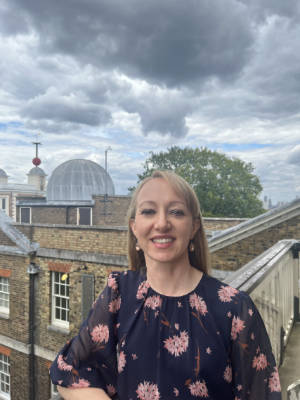
How long have you worked as senior curator at the Royal Observatory Greenwich and what was your pathway into the job?
“I’ve been working here for 12 years now and it’s been quite a journey! I originally studied physics with astrophysics at the University of Leicester and intended to continue with scientific research but my ideas changed after an inspirational internship working at a museum in the US. I really enjoyed learning about the history of astronomy – how our ideas have changed over time and the incredible stories of the people who were involved – and I continued my studies in the history of science. I’ve since worked at the Science Museum and British Museum and came here in 2013.”
Have you always been interested in astronomy?
“Yes, I have vivid memories of building a space rocket in primary school from cereal packets and yogurt pots that quite literally fired my imagination! I’ve still got The Night Sky Ladybird book that I bought and later in my teens my parents kindly bought me a telescope so I could learn more about practical astronomy. I don’t have much time for stargazing these days but I’ve recently purchased a compact smart telescope that you can put in your hand luggage and I’m looking forward to taking it on my travels.”
What does your job at the Royal Observatory entail?
“My job consists of two main parts; one based on research and one focused on communication. As a curator, I’m responsible for doing research on our collections, identifying objects for display and collaborating with researchers from other museums and observatories. Once I’ve done the detective work, I like to share these ideas and stories with our visitors through displays, talks and writing books and articles.”
What’s your favourite part of the day at the Observatory?
“For me, I enjoy seeing the sunset as I’m leaving the office, especially as the lights start to come on across London and you get a great view of the city from our hilltop location. It also makes me smile that sunset means going home for me, whereas for Greenwich astronomers in the past, it would have been the start of their working ‘day’!”

What prompted the writing of the book?
“It’s difficult to say but I definitely remember working on this during lockdown in 2020 and being inspired by similar books such as Neil MacGregor’s A History of the World in 100 Objects. Most books about the history of the Royal Observatory focus on the story of longitude, John Harrison’s marine timekeepers and Greenwich Mean Time (GMT) but I wanted to show how the Observatory has a much broader, richer history that encompasses many more people, subjects, stories and objects.
How did you decide which objects to feature in the book?
“I knew that we would be celebrating our 350th anniversary in 2025 and so I decided to choose objects that spanned the full chronology from 1675. I also wanted to expand the scope beyond the well-known clocks and telescopes to include books, paintings, manuscripts, watercolours, and even items of clothing previously worn by the Astronomer Royal and his family. In addition, I selected a few mystery objects to give me a good excuse to dig into the archives and piece together their stories.”
Do you have a favourite among them?
“I really like the story of the hole punch from the 1840s because it’s indicative of the paperwork and number-crunching that is an important but often overlooked aspect of astronomy. Once astronomers have done their observations, they have to apply mathematical corrections (‘reductions’) to account for atmospheric effects that might affect the results. It’s very tedious, repetitive work that was traditionally done by teenage boys known as ‘computers’. The seventh Astronomer Royal, George Biddell Airy (1801–1892) tried to make the process more efficient and less prone to errors by creating a template known as a ‘skeleton form’. The system worked well but generated vast amounts of paper, leading Airy to design a hole punch to organise the work. He was so proud of his idea that he encouraged other observatories to do the same and that’s why you’ll find another example of this hole punch over 8,000 miles away at the South African Astronomical Observatory in Cape Town. Airy invented his hole punch several decades before the standard office hole punch was patented, making our gadget one of the oldest in the world!”
What did you learn during the process of writing the book that you didn’t already know about the history of the Royal Observatory?
“The story of the secret binocular testing during the First World War really surprised me. The Observatory had already been involved in testing chronometers – portable, accurate timekeepers for navigation at sea – since the 1820s but the binocular testing was a new task. For security reasons, it was not mentioned in the Observatory’s Annual Reports and remained an unknown story for decades. I was intrigued by a one-line mention to it in the archives and dug a little further to uncover the full facts.”
It’s official, a new Guinness World Record was set in Greenwich on the weekend when some 874 people gathered at the Old Royal Naval College on Saturday dressed as their favourite characters from the big (and little) screen. The Old Royal Naval College team partnered with Elstree Studios for the event, part of the festivities being held to mark 100 years of film and TV at the site, which featured everyone from Stormtroopers to Jack Sparrow, Batman to characters from Bridgerton and Sherlock Holmes. The record, which was verified by Guinness, is officially known as the ‘largest gathering of people dressed as screen characters’.

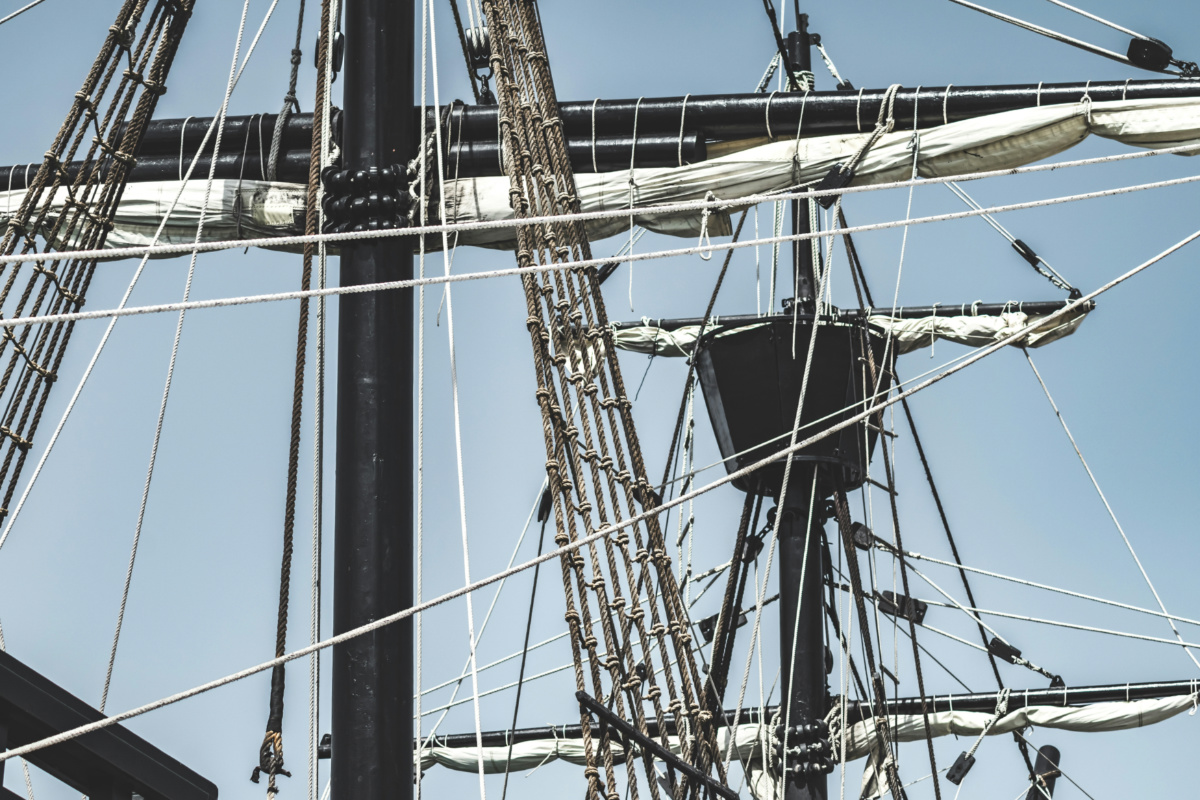
• A major exhibition tracing the changing depictions of pirates through the ages and revealing their often brutal role in history opens at the National Maritime Museum in Greenwich on Saturday. Pirates deconstructs some of the myths which have developed around buccaneers as it reveals the real-life stories of the likes of Edward ‘Blackbeard’ Teach, William Kidd, Anne Bonny and Mary Read. The exhibition features almost 200 objects ranging from the costume worn by Orlando Bloom in Pirates of the Caribbean: The Curse of the Black Pearl, to copies of A General History of the Pyrates by Captain Charles Johnson (first published in 1724), a hanging believed to have been part of a shrine captured from a junk in the fleet of the mid-19th century Chinese pirate Shap Ng-tsai, and a silver centerpiece depicting the bombardment of Algiers, 1816, when a combined British Dutch force attacked Algiers in an attempt to resolve the longstanding issue of piracy on the North coast of Africa. Runs until 4th January. Admission charge applies. For more, see www.rmg.co.uk/pirates.
• The ‘design of swimming’ – covering everything from fashions to architecture – is the subject of a new exhibition opening at the Design Museum tomorrow. Splash! A Century of Swimming and Style is split across three sections focusing on three locations in which people swim – the pool, the lido and nature – and starts in the 1920s when beach holidays exploded in popularity. More than 200 objects are on display including Pamela Anderson’s Baywatch swimsuit, the first Olympic solo swimming gold medal won by a British woman, the banned ‘technical doping’ LZR Racer swimsuit, one of the earliest surviving examples of a bikini, and a detailed architectural model of the Zaha Hadid-designed London 2012 Aquatics Centre. Runs until 17th August. Admission charge applies. For more, see https://designmuseum.org.
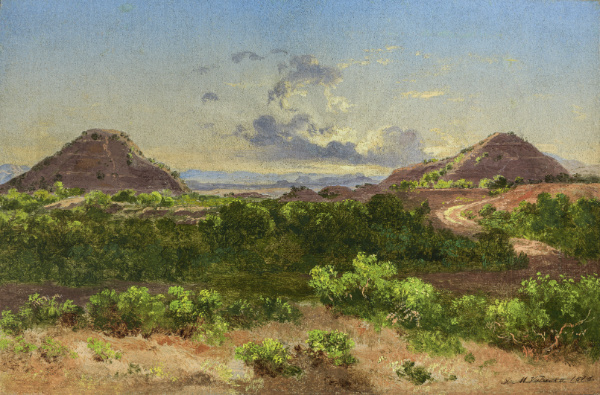
• Mexico’s most celebrated 19th century painter, José María Velasco (1840–1912), is the subject of a new exhibition opening at The National Gallery on Saturday. José María Velasco: A View of Mexico – which coincides with the 200th anniversary of the establishment of diplomatic relations between the UK and Mexico, explores how he approached drawing and painting and how he explored the relationship between different cultures, Mexico’s mountainous terrain, flora and fauna, and the impact of industrialisation on the landscape. The display also considers the links between Velasco’s work and paintings in the gallery’s collection, in particular Édouard Manet’s The Execution of Maximilian (1867–8), which depicts the execution of the Austrian ruler imposed on Mexico. Runs until 17th August. Admission charge applies. For more, see nationalgallery.org.uk.
Send all items for inclusion to exploringlondon@gmail.com.
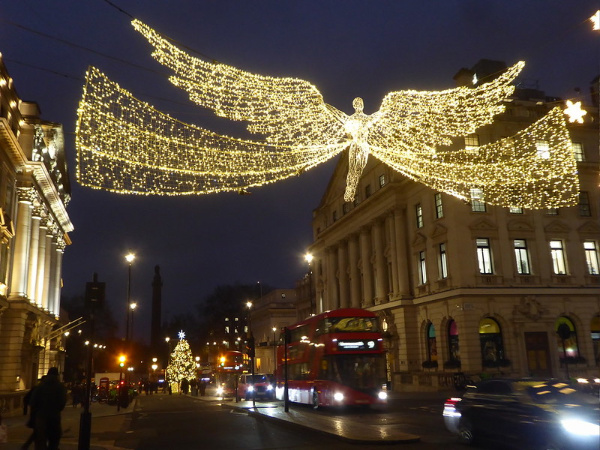
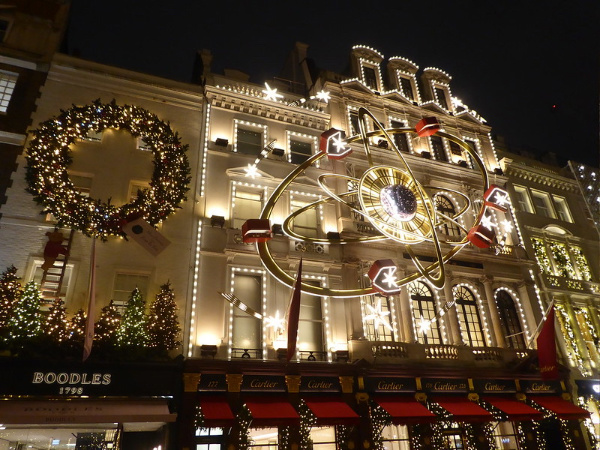
Cartier with a cosmic display in New Bond Street. PICTURE: JuliaC2006 (licensed under CC BY 2.0)
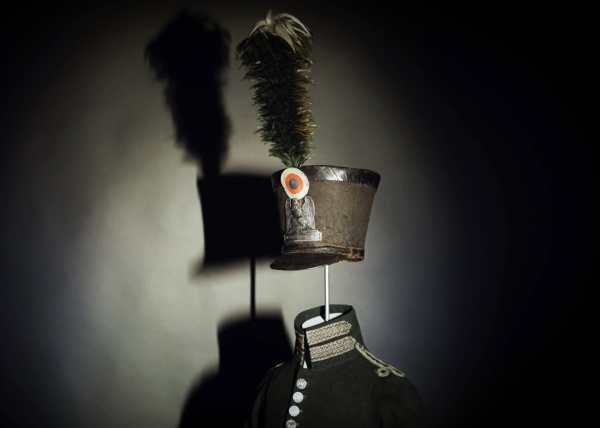
Newly acquired by the National Maritime Museum in Greenwich is the uniform of an officer in the French Imperial Customs Service (Les Douanes) worn by a Naval midshipman during his escape from Napoleonic France.
The son of a naval officer in Lincolnshire, Charles Hare had joined the Royal Navy at the age of 11 in 1801 and was serving as a naval midshipman on board the ship Minerva when it was captured off Cherbourg in 1803.
Along with the other officers, Hare, just 13-years-old, was sent to a the walled town of Verdun which served as a prison depot and allowed to live within the walls on parole. In 1806, however, he was transferred to the prison fortress of Sarre Libre (now Saarlouis in modern Germany).
On 12th August, 1809, Hare – now aged 19 and wearing the above mentioned uniform which includes a dark green coat with stripes of silver lace at the collar and a shako, a tall and cylindrical military cap featuring a plume of green and white feathers – made his escape from Sarre Libre.
He travelled by carriage to Mainz and then took a number of boats along the Rhine including on a barge hosting a wedding where he had to join in the drinking of brandy and singing. He eventually reached the port of Rotterdam in what is now The Netherlands.
On the 25th August, fishermen rowed Hare and his dog out to the British warship Royal Oak which was involved in a blockade of the Dutch coast. A few days later he sailed back to Britain where later that month Hare was reunited with his mother and sisters (his father had died in the year he joined the Navy) in the village of Fillingham, Lincolnshire.
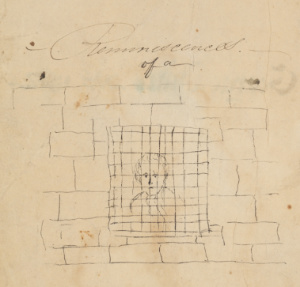
Astonishingly, along with the uniform, the museum was also able to acquire a hand-written account of Hare’s escape which he apparently wrote for his young son George.
In it, Hare talks about the risk he was taking in wearing a “military habit” (he could have been executed as a spy if discovered) and his pet English terrier dog which he had been given while at Verdun and which accompanied him throughout the escape.
Hare soon returned to his career in the navy and eventually settled in Canada.
Following conservation work, the uniform – the most complete surviving example of its type from the Napoleonic era – can be how seen in the Nelson, Navy, Nation gallery at the National Maritime Museum.
WHERE: Nelson, Navy, Nation gallery at the National Maritime Museum, Romney Road, Greenwich (nearest DLR is Cutty Sark; nearest train stations are Greenwich and Maze Hill); WHEN: 10am to 5pm daily; COST: Free (booking recommended): WEBSITE: rmg.co.uk.

• The largest survey of the development of photography in Britain across the 1980s to date goes on show at the Tate Britain today. The 80s: Photographing Britain draws on almost 350 images and archive materials from the period to explore how photographers responded to the “seismic social, political, and economic shifts around them” during the decade. It features the work of more than 70 lens-based artists and collectives and features images taken from across the UK – from John Davies’ post-industrial Welsh landscape to Tish Murtha’s portraits of youth unemployment in Newcastle and Don McCullin’s portraits of London’s disappearing East End. Along with documentary photography capturing key political events such as John Harris and Brenda Prince’s images of the miners’ strikes and
Syd Shelton and Paul Trevor’s images of anti-racism demonstrations, the exhibition also includes
a series of thematic displays, featuring works such as Roy Mehta and Vanley Burke images of their multicultural communities, which explore how photography became a compelling tool for representation. Other subjects covered include countercultural movements that took place in the 80s and the presence and visibility of the LGBTQ+ community during the period of the AIDS epidemic. Runs until 5th May. Admission charge applies. For more, see www.tate.org.uk.
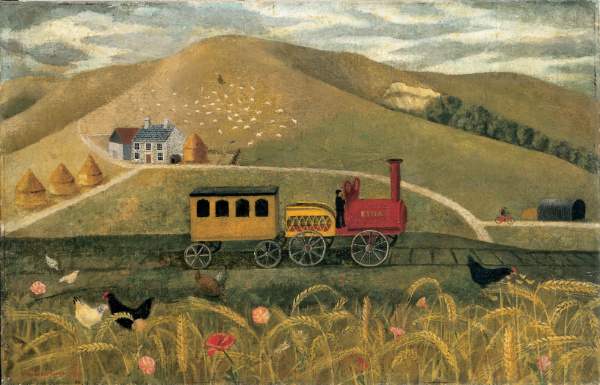
• The first major exhibition devoted to the British artist and designer Tirzah Garwood has opened at the Dulwich Picture Gallery. Tirzah Garwood: Beyond Ravilious comes 10 years after the critically acclaimed show celebrating the work of Eric Ravilious, husband of Garwood who was a celebrated artist and printmaker in her own right. More than 80 of Garwood’s work are on show including most of her existing oil paintings. Along with Garwood’s works – which include everything from woodgravings to a series of experimental marbled papers and collaged paper portraits – are 10 watercolours by her husband which draw out the couple’s “thematic similarities, shared interests and distinct artistic personalities”. Runs until 26th May. Admission charge applies. For more, see www.dulwichpicturegallery.org.uk.
• Luke Jerram’s massive travelling installation Mars is unveiled at the Painted Hall in Greenwich this Saturday. Measuring seven metres in diameter and internally lit, the work features detailed NASA imagery of the Martian surface, recreated to scale (but about a million times smaller than the actual planet). The installation, which follows on from Jerram’s earlier artworks Gaia and Museum of the Moon, features a surround sound composition by BAFTA-winning composer Dan Jones which includes clips from NASA missions to Mars. Can be seen until 28th January. Admission charge applies. For more, see https://ornc.org/whats-on/mars/.
Send all items to exploringlondon@gmail.com.
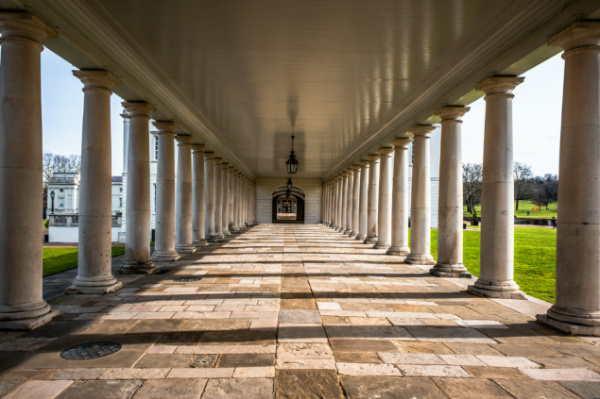
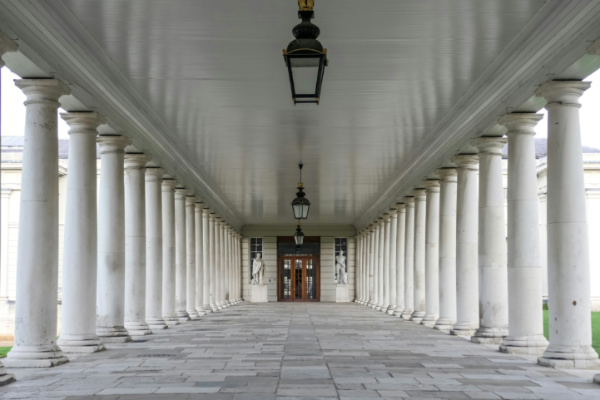
The Queen’s House Colonnade.
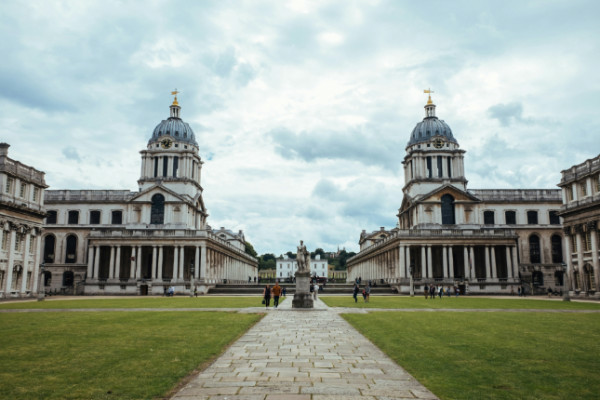
• ‘The Golden Age of Piracy’ will come to life in a living history weekend this Saturday and Sunday at the Old Royal Naval College in Greenwich. With the focus on the period between 1650 and 1720 (when more than 5,000 pirates were said to have been active), visitors will learn how to separate pirate fact from fiction, enjoy songs of the sea, witness sword and cutlass fights, and hear the tale of a real 18th-century mutiny. Each day culminates with a demonstration of the firepower of pirates and marines in the arena on the lawns overlooking the River Thames. There’s also the opportunity to wander through the pirate encampment and learn about the clothes and weapons of the period, listen to some love music and sample food from the Taste of History period kitchen. Runs from 11am to 4pm on Saturday and Sunday. Admission charge applies. For more, see https://ornc.org/whats-on/golden-age-of-piracy/.
• The world of sound below the surface of the River Thames is the subject of a new contemporary art installation at the Natural History Museum which opens tomorrow. The River, composed by Norwegian sound artist Jana Winderen in collaboration with spatial audio expert Tony Myatt, uses underwater audio recordings to immerse visitors in a 360 degree audio composition which spans the river from the source by Kemble through central London and on to the sprawling estuary leading into the North Sea. The River is free to visit. Bookings, to ensure entry, can be made at https://www.nhm.ac.uk/visit.html.

• Seven new and reimagined period rooms reflecting the stories of our East London community, past, present and future, have been unveiled at the Museum of the Home in Shoreditch. Thanks to the Real Rooms project, the expanded ‘Rooms Through Time: 1878-2049’ now includes a Jewish tenement flat from 1913, an Irish couple’s house in the 1950s, LGBTQ+ renters sharing an ex-council home in the 2005, a British-Vietnamese home in 2024, and the Innovo Room of the Future, which explores real homes amid challenges such as the climate crisis and technological advances. The scope of the existing 1870s Parlour and Front Room in 1976 have also both been expanded. Entry to the permanent display is free. For more, see https://www.museumofthehome.org.uk.
• A new public garden has been opened at the intersection of Cheapside and New Change in the City of London. Formerly known as the Sunken Garden, the area has undergone a transformation and now features benches created from 150-year-old-plus granite stones salvaged from the Thames River Wall and recycled timber from fallen London Plane trees. There’s also new permeable paving which lets rain drain freely into the ground and stores it for trees to use later, reducing pressure on the sewer system while new plant species have been selected with local wildlife in mind.
Send all items for inclusion to exploringlondon@gmail.com.
We’ll kick off a new series next week, but, in the meantime, here’s a recap…
1. Queen Elizabeth’s Oak, Greenwich…
4. The Royal Oak, Richmond Park…
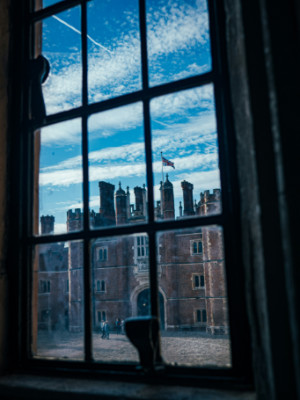
• The oldest surviving rooms at Hampton Court Palace – the Wolsey Rooms which King Henry VIII and Thomas Wolsey once used – are the location of a new display opening today exploring the early years of Henry VIII’s reign and the lives of the ‘ordinary’ men and women who shaped the Tudor dynasty. The Tudor World has, at its centre, rare surviving paintings from the Royal Collection including The Embarkation of Dover – depicting the Tudor navy – and The Field of Cloth of Gold which details Henry VIII’s summit with King Francis I of France in 1520. Also on show is a gold ring believed to have belonged to the Boleyn family, a brightly coloured silk hat linked to King Henry VIII, Wolsey’s portable sundial, a wooden chest used to hide religious contraband by Catholic priests during the reign of Queen Elizabeth I, and, an original Tudor chain pump used to help empty the Hampton Court cesspool. Among the stories of “ordinary” Tudor people being shared is that of Anne Harris, Henry VIII’s personal laundry woman who washed the bandages for his leg ulcers and, Jacques Francis, a free-diver from West Africa who was involved in the expedition to salvage guns from the sunken Mary Rose and who later became one of the first Black African voices heard in an English court, when he was called to testify in a case concerning his employer, Paulo Corsi. Included in palace admission. For more, see www.hrp.org.uk/hampton-court-palace/.
• Crossing Borders, a day of free activities, performances and workshops run by local newly arrived people, will be held at the Horniman Museum Gardens in Forest Hill this Saturday. The day will feature arts and crafts workshops led by IRMO, dance performances by Miski Ayllu and the Honduran Folkloric Pride Group, the chance to learn circus skills with young people from Da’aro Youth Project and South London Refugee Association, and the opportunity to make kites with Southwark Day Centre for Asylum Seekers. The free event runs from 11am to 4pm. For more, see https://www.horniman.ac.uk/event/crossing-borders/.
• Transport for London customers can save 30 per cent on entry to the Painted Hall at the Old Royal Naval College when using the TfL network until 17th November. Simply show customers show your TfL journey on the day of your visit via the TfL Oyster and Contactless app and receive the discount, taking the adult entry price, when booked online to just £11.55. For bookings, head to https://londonblog.tfl.gov.uk/2022/07/27/in-the-city/.
Send all items for inclusion to exploringlondon@gmail.com.
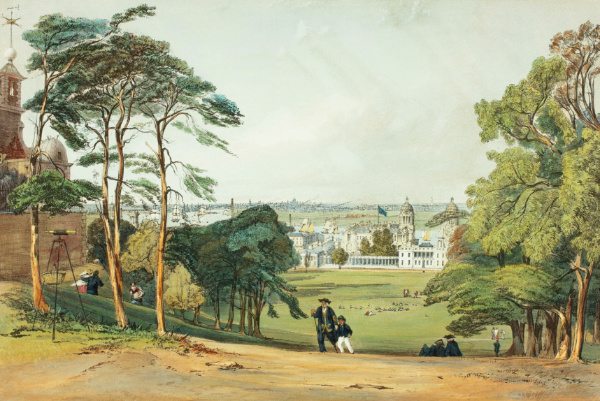
Spring is upon us, so we thought it an appropriate time to consider some of London’s greatest natural assets – its trees. But, as well as being significant for their environmental impact, each of these trees (or, in some cases, the remains of them), are significant for historic reasons (we’ve previously mentioned a couple including what’s believed to be the oldest tree and the unusual – and sadly now deceased – Hardy Tree).
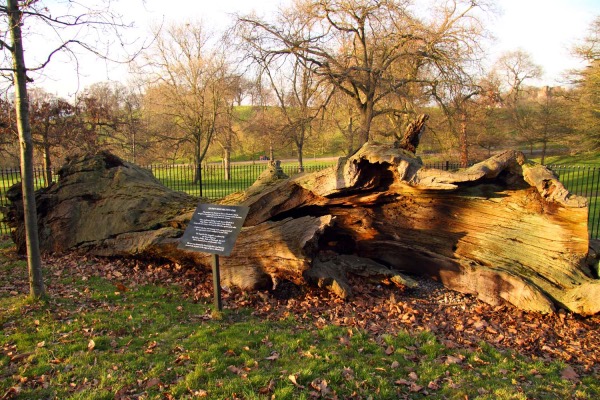
First up, it’s the tree known as Queen Elizabeth’s Oak in Greenwich. Thought to date from possibly as far back as the late 13th century, this tree survived until the 19th century before its carcass finally fell to the ground during a storm in 1991. It has lain in Greenwich Park ever since.
The tree, which is located at the end of what is now Lover’s Walk close to the Maze Hill Gate, was located in the grounds of Greenwich Palace (also known as the Palace of Placentia) and was there when King Henry VIII resided at the palace.
In fact, it’s said that he and Anne Boleyn danced around the oak while courting, and (and here’s where the name comes from) that Elizabeth, their daughter (and later Queen Elizabeth I), picnicked under its canopy (some accounts suggest she actually picnicked in the tree’s hollow – but still then upright – trunk).
Following the creation of what is now Greenwich Park, the hollow tree was apparently used as a prison for those caught illicitly on the grounds. They were secured behind a heavy wooden door fitted to the trunk (a park keeper’s lodge was built nearby in the 17th century; it was demolished in the 1850s).
The tree, one of 3,000 in the park, had died in the 19th century and was reduced to an eight metre high stump, partly supported by ivy, when it was blown over by the storm in June, 1991.
A replacement oak, which was donated by the Greenwich Historical Society was planted nearby by the Duke of Edinburgh on 3rd December, 1992, to mark Queen Elizabeth II’s 40 years on the throne.
A ring analysis carried out on the tree found in 2014 it dated back to at least 1569 but with the core missing a precise date of germination couldn’t be found. Estimates, however, place the date of germination to the last 13th or early 14th century. The analysis placed the tree’s death to between 1827 and 1842.
The tree is marked with a plaque and both it and the new tree are surrounded by an iron railing.
WHERE: Queen Elizabeth Oak, Greenwich Park (nearest DLR station is Greenwich); WHEN: 6am to 8pm daily; COST: Free; WEBSITE: https://www.royalparks.org.uk/visit/parks/greenwich-park.
This is an expanded version of a post first made in 2017.

Said to be the largest collection of Merchant Navy ship figureheads in the world, the figurehead collection was that of Sydney Cumbers, nicknamed “Long John Silver” due to the eye-patch he wore after a childhood accident.
A successful businessman, Cumbers built up a significant collection of more than 100 figureheads – carved wooden figures which decorated the prows of sailing ships, which he and his wife – The Mate – kept along with a larger collection of maritime memorabilia at their residence in Kent nicknamed ‘The Look-Out’ (which features rooms named after parts of a ship).
In 1953, he donated the collection to the Cutty Sark a restoration of which had recently been completed so it could be opened to the public.
The figureheads, which are made from a variety of woods including oak and teak, date mostly from the 19th century. They depict a range of characters, some anonymous, and others taken from history and myth.
The latter include everyone from Sir Lancelot, the classical warrior Thermopylae and Hiawatha to Elizabeth Fry, Florence Nightingale and William Wilberforce. Others feature political figures such as Benjamin Disraeli, William Pitt and William Gladstone.
The collection is dedicated to the merchant seamen of Great Britain and the flotilla of small ships that rescued the British Expeditionary Force from Dunkirk in 1940.

• The role of women in the Royal National Lifeboat Institution is being celebrated in a new exhibition at the National Maritime Museum in Greenwich. Women of the RNLI, which marks the bicentenary of the organisation, features a series of 42 photographs depicting women volunteers and the lifeboat stations’ slipways where they work. The images by photographer Jack Lowe are part of his ongoing ‘Lifeboat Station Project’, an attempt to photograph all 238 operational RNLI lifeboat stations and their crews.. Lowe uses a 12×10 inch (30×25cm) Thornton-Pickard field camera from about 1905 and develops the photos using a process called ‘wet collodion’, a technique invented in the mid-19th century. The display also features oral histories from some of the sitters. The display can be seen from Saturday until 1st December. For more, see www.rmg.co.uk.
• A new exhibition exploring the architectural style of Tropical Modernism in West Africa and India opens at the V&A on Saturday. Tropical Modernism: Architecture and Independence centres on the work of British architects Jane Drew and Maxwell Fry who developed Tropical Modernism in the 1940s, working primarily in Ghana and India. The style, which valued function over ornamentation, became a symbol of a post-colonial future. The exhibition includes models, drawings, letters, photographs, and archival ephemera as it documents the key figures and moments of the Tropical Modernist movement. There is also a half hour film installation displayed on three screens. Runs until 22nd September. Admission charge applies. For more, see vam.ac.uk.
• A new memorial stone dedicated to Antarctic explorer Sir Ernest Shackleton has been unveiled at Westminster Abbey. The triangular-shaped memorial, which can be found on a wall in the south cloister, was unveiled at a service earlier this month attended by Princess Anne and members of Shackleton’s family. Located close to tributes to pioneering sailors Captain James Cook, Sir Francis Chichester and Sir Francis Drake, it was designed and made by sculptor Will Davies and its shape reflects Shackleton’s preference to be at the apex of a triangle in group photographs. The memorial incorporates stones including Connemara marble and Kilkenny limestone in reflection of Shackleton’s Irish heritage, and the names of his expedition ships, Nimrod and Endurance, are inscribed upon it, along with the lifeboat The James Caird, and his family motto, ‘FORTITUDINE VINCIMUS’ (‘By Endurance We Conquer’). For more, see www.westminster-abbey.org.
Send all items to exploringlondon@gmail.com.
 Exploring London