It was 90 years ago this month – 6th and 7th January, 1928 – that the River Thames flooded disastrously in what was the last major flood in central London.
Fourteen people are reported to have died and some 4,000 made homeless when the river burst its banks and spilled over the top of the Thames Embankment. Part of the Chelsea Embankment collapsed.
The flood – which was blamed on a range of factors including a sudden thaw upstream, heavy rain, a tidal surge and the impact of dredging – peaked at about 1.30am on 7th January at a height of 18 foot, three inches (5.56 metres) above ordnance datum.
The city saw extensive flooding on the City of London itself as well as in Southwark and as far upriver as Putney and Hammersmith and downriver in Greenwich and Woolwich as well as beyond.
Most of the deaths occurred when the embankment gave way near Lambeth Bridge and a wall of water swept through the slums on the Westminster side of the bridge with 10 people losing their lives.
Among the buildings flooded were the Tate Gallery at Millbank – where many works including some by JMW Turner were damaged, parts of the Houses of Parliament including Westminster Hall and the House of Commons, numerous Underground stations and Blackwall and Rotherhithe tunnels. The moat of the Tower of London, dry for 80 years, was filled.
While the flood waters receded by the end of the day, the damage took years to repair with many buildings in Millbank, the worst affected area, demolished. Embankments were raised in the wake of the flooding but it wasn’t until after the North Sea flood of 1953 that authorities took action to build the Thames Barrier (it was eventually completed in 1982).
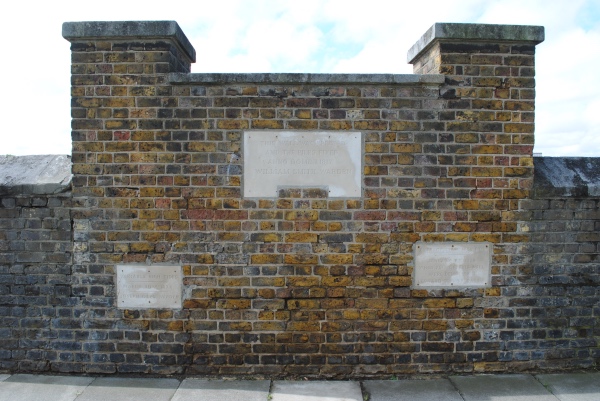
Above – A marker recording the height of the flood outside Trinity Hospital in Greenwich (the plaque below right records the details).




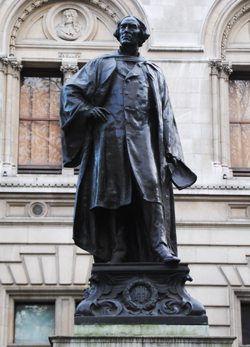

 conservationist and influential figure in the Arts and Crafts movement” as well as being the father of world famous writer Rudyard Kipling – opens at the V&A in South Kensington on Saturday. The exhibition is the first exploring the life and work of Kipling (1837-1911) who campaigned for the preservation of Indian crafts as well as being a craftsman himself (his terracotta panels can still be seen on the exterior of the V&A) and an illustrator of his son’s books. Lockwood Kipling: Arts and Crafts in the Punjab and London features paintings of the Indian section of the 1851 Great Exhibition as well as objects which were on display (the exhibition was visited by Kipling while a teenager), Kipling’s sketches of Indian craftspeople observed during his many years living in India as well as objects he selected for the V&A while there, designs and illustrations for books, and furniture he helped his former student architect Bhai Ram Singh design for royal residences Bagshot Park and Osborne. The free exhibition, a collaboration between the V&A and the Bard Graduate Centre in New York, runs until 2nd April (it will be on display at the Bard Graduate Center, New York, from 15th September this year). For more, see


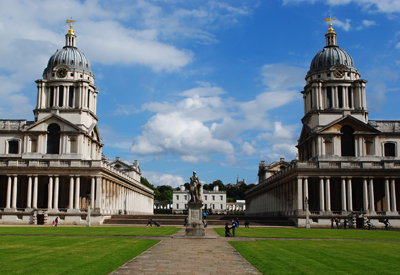
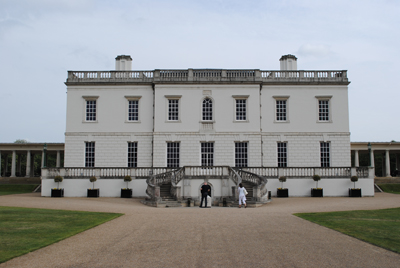
 • The largest exhibition ever mounted about the life of 17th century diarist Samuel Pepys opens at the National Maritime Museum in Greenwich tomorrow. Samuel Pepys: Plague, Fire, Revolution features more than 200 paintings and objects brought together from museums, galleries and private collections which explore the life of the famous diarist (depicted here in a bust outside the Guildhall Art Gallery) against the backdrop of the tumultuous events of Stuart London, from the execution London of King Charles I in 1649 through the Great Fire of London and the Glorious Revolution on 1688. Objects on show include the famous painting, Portrait of Charles II in Coronation Robes, objects connected to Pepys’ mistresses including one of his love letters to Louise de Kéroualle (aka ‘Fubbs’ or ‘chubby’) and other personal items such as a lute owned by Pepys. The exhibition is accompanied by a series of events including Pepys Show Late: Party like it’s 1669 (26th November) and a series of walks and talks. Admission charge applies. The exhibition runs until 28th March. For more, see
 Exploring London