Around London – Dickens and the foundlings; astronomy photographs at the Royal Observatory; Royal Parks allotments; and, Asian drinking vessels at the British Museum…

• A new exhibition exploring the relationship between author Charles Dickens, the Foundling Hospital and its secretary and former foundling, John Brownlow, opened at the Foundling Museum today. Received, a Blank Child: Dickens, Brownlow and the Foundling Hospital looks at how Dickens supported the institution in various ways including helping a young mother petition for a place for her child and publicising the work of the hospital through his writing – in particular the 1853 article Received, A Blank Child (the phrase comes from the wording used on the hospital’s entry forms). Among the items on display are never before displayed letters from Dickens relating to the hospital. The exhibition, which runs until 16th December, is free with the museum admission. And if you haven’t yet had a chance to see it, there’s still time to catch Dickens and the Foundling, in which six contributors including actor Gillian Anderson and journalist Jon Snow, have chosen objects to be displayed. This ends on 28th October. For more, see www.foundlingmuseum.org.uk.

Images from the Astronomy Photographer of the Year competition have gone on display at the Royal Observatory in Greenwich (which runs the competition in conjunction with Sky at Night Magazine). Among the winning images were The Whirlpool Galaxy taken by Martin Pugh of the UK/Australia, Star Icefall by Masahiro Miyasaka of Japan, and Venus-Jupiter Close Conjunction, by Laurent Laveder of France. The exhibition is free of charge and runs until February next year. For more (including an online gallery), see www.rmg.co.uk/visit/exhibitions/astronomy-photographer-of-the-year/2012-winners/.

It’s Harvest Festival time at London’s Royal Parks and this Sunday, between 11am and 4pm, people are invited to attend the Kensington Gardens’ allotment to see the fruits of the gardeners’ labour including the “big dig” of the potato crop as well as seasonal vegetables. There’s also the chance for families to see the allotment chickens being fed and children’s activities run by Ginger Cat. This week’s event follows one last weekend at Regent’s Park. For more, see www.royalparks.org.uk.

• On Now: Ritual and revelry: the art of drinking in Asia. This new free exhibition in room 91 of the British Museum features a display of objects which have been used in the consumption of liquids in various Asian contexts and the manner in which their use is intertwined with ritual, religious and otherwise. Among the vessels on display is a Tibetan skull-cap known as a kapala which is made from a human skull and used in religious rituals as well as a silver tea set from western India which features handles shaped like bamboo stems and a lacquered wooden sake bottle which was used as an altar piece. Runs until 6th January. For more, see www.britishmuseum.org.

Lost London – Princess Caroline’s bath, Greenwich Park

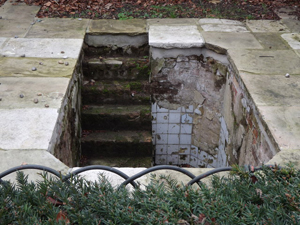
A white tiled plunge bath which once belonged to Princess Caroline of Brunswick, the estranged wife of George, Prince of Wales (later King George IV), still lies in the south-west corner of Greenwich Park between the Rose Garden and Chesterfield Gate.

Princess Caroline, a cousin of the prince, married him in 1795 in an arrangement made so he could get out of debt. Theirs was never a marriage of love – the prince is said to have spread rumours that she was adulterous, had bad breath and never washed – and after Princess Caroline gave birth to a daughter, Princess Charlotte, the couple separated.

Two years later, in 1798, Princess Caroline was banished to live at Montague House near Greenwich Park while the prince dallied with his mistress Maria Fitzherbert. The princess, known for her scandalous and indiscreet behaviour during her residence at the house, used the sunken bath, which the stood inside a bathhouse partly attached to the main building.

The house was demolished in 1815 on the orders of the king (a decision apparently prompted by a fit of pique at the Queen’s lifestyle), a year after Princess Caroline left England for the Continent plagued by rumours that she’d mothered an illegitimate child (a secret commission into her behaviour cleared her of a charge of adultery but did find her behaviour to be improper).

The sunken bath, meanwhile, was filled in during the 1980s and served as a flowerbed until, in 2001, it was re-excavated by Royal Parks in a dig funded by the Friends of Greenwich Park, Greenwich Society, the Friends of Ranger’s House and donations from individuals.

WHERE: Princess Caroline’s Bath, south-west corner of Greenwich Park (nearest DLR station is Cutty Sark – other nearby stations include Greenwich, Maze Hill and Blackheath); WHEN: 6am to at least 8pm (but beware, closing times vary depending on the month); COST: Free entry; WEBSITE: www.royalparks.gov.uk/Greenwich-Park.aspx

PICTURE: © Copyright Colin Smithwww.geograph.org.uk 

10 Historic Sporting Events in London – 8. The first London Marathon…

Now one of the world’s largest long distance running events, the first London Marathon was held on 29th March, 1981, and saw some 6,255 people lead across the finish line by American Dick Beardsley and Norwegian Inge Simonsen, who finished in a dead heat. The first woman to finish was the UK’s Joyce Smith.

The idea of holding such an event in London arose after John Disley and the late Chris Brasher (a former Olympian), both members of Richmond’s Raneleigh Harriers running club, decided to enter the New York Marathon in 1979. Returning to London exhilarated by their experience, they began investigating the possibly of holding such an event here and, meeting with a positive response from authorities, pushed ahead with it.

About 20,000 people applied to enter the first London Marathon but only 7,747 people were accepted to run. The course, which is still roughly the same, starts at various locations in Blackheath and passes through Charlton, Woolwich and Greenwich before crossing the Thames at Tower Bridge, looping around through the East End and Docklands before following the river into Westminster.

While the first race finished at Constitution Hill, between Green Park and Buckingham Palace, the race now finishes in The Mall (although for many years in between it finished on Westminster Bridge).

Such was the success of the first event – which was covered by the BBC – that the following year more than 90,000 people applied to run in the race from all around the world. Slightly more than 18,000 were accepted to run.

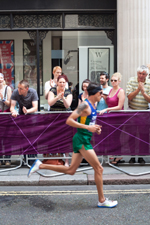
At the end of this year’s event – held on 22nd April (a runner from which is pictured) – more than 882,000 people have now completed the race. Now formally known as the Virgin London Marathon, a record high of 37,227 completed the run this year.

This year’s men’s race was won by Kenyan Wilson Kipsang who completed the race in  2:04:44 – the second fastest time over the London course – while the women’s was also won by a Kenyan – Mary Keitany – who, in taking back-to-back titles, completed the course in 2:18:37.

Since its inception, one of the key aspects of the race has been its fund-raising for a variety of charitable causes. Key among these is The London Marathon Charitable Trust which, established at the race’s outset, helps fund community sports facilities and develop recreational projects around the city.

For more on the Virgin London Marathon, see www.virginlondonmarathon.com.

PICTURE: © photocritical/istockphoto.com

LondonLife – A giant shot put hits Greenwich…

Another reminder of the Olympic and Paralympic Games in London can be found at the Old Royal Naval College in Greenwich. The sculpture, a three metre wide shot put embedded in the ground, is one of a series of three different Gifts from the Gods sculptures which have appeared around the city. As well as shot puts, the other sculptures – all of which look as though they’ve been dropped from a great height – depict a 10 metre high javelin and a seven metre long bow with arrows. The sculptures, which will remain in place until 10th September, are part of Wonder, a series of interactive installations put in place as part of the Mayor of London Presents program. For more, see www.molpresents.com/wonder. For more on the Old Royal Naval College, see www.ornc.orgPICTURE: Steve Bradbury/Courtesy of ORNC.

LondonLife – The Olympic Torch Relay (so far)…

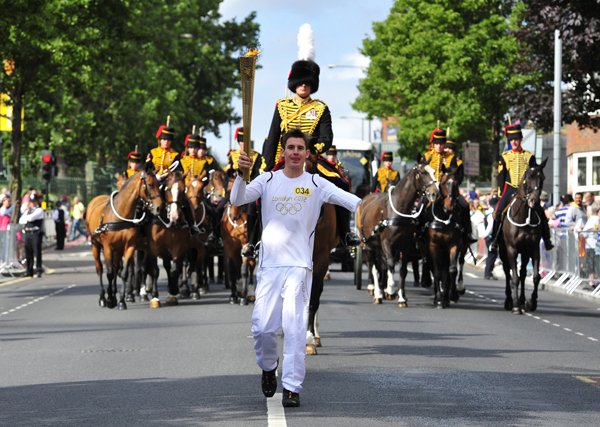
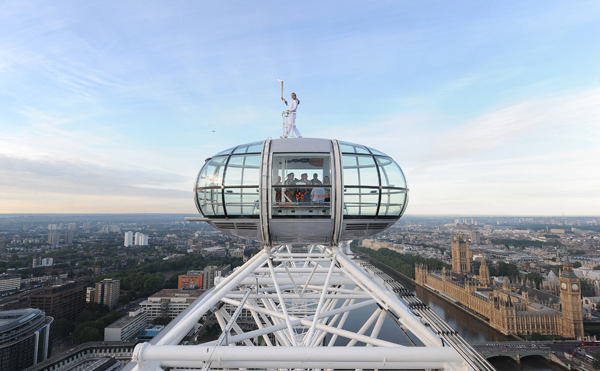
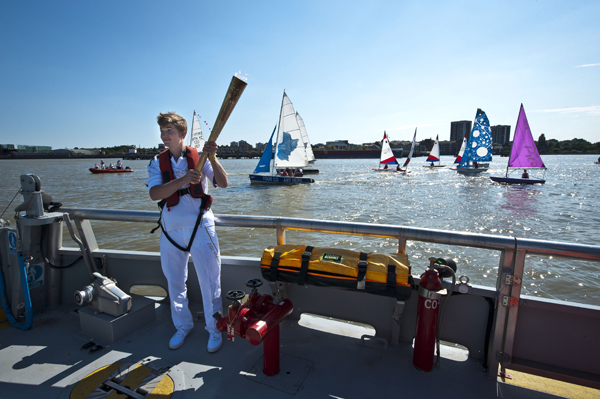
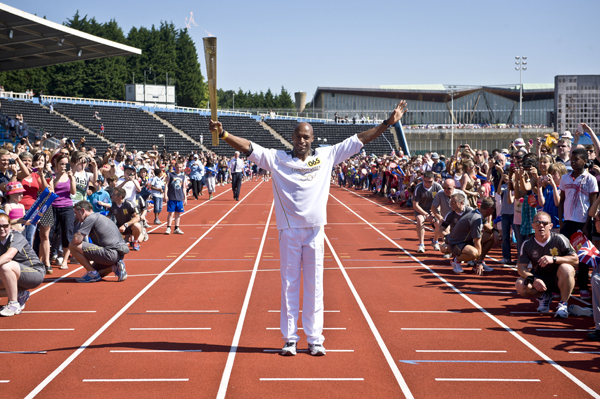
The Olympic Torch Relay arrived in London last Friday night and has been moving around the capital ever since. Here are some of the highlights so far (all images are courtesy of LOCOG)…

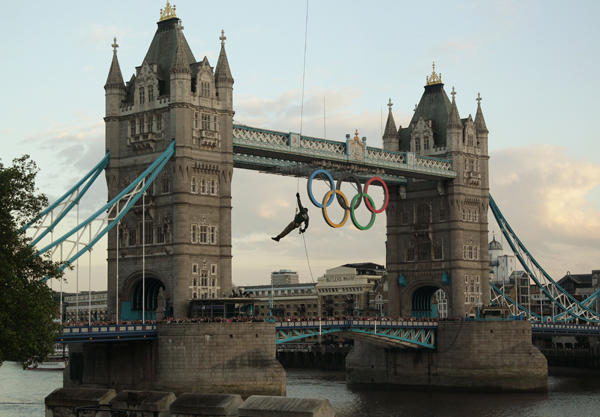
Day 63 (20th July): A Royal Marine, believed to be Martin Williams, is carrying the Olympic Flame as he abseils from a helicopter into the grounds of the Tower of London.

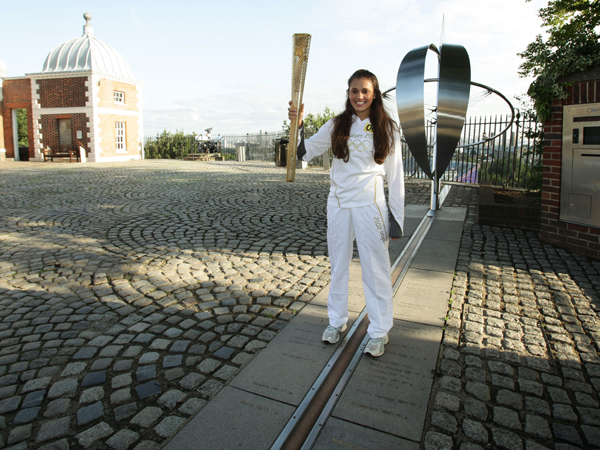
Day 64 (21st July): Swimmer Natasha Sinha holds the Olympic Flame on the Meridian Time Line outside the Royal Observatory in Greenwich.

Jaco-Albert Van Gass carries the Olympic Flame through Greenwich.

Day 65 (22nd July): Student explorer Amelia Hempleman-Adams poses with the Olympic Flame on top of a London Eye pod.

Sailor Aaron Reynolds carries the Olympic Flame on a London Fire Brigade Boat.

Day 66 (23rd July): Sprinter Marlon Devonish carries the Olympic Flame at Crystal Palace stadium in south London.

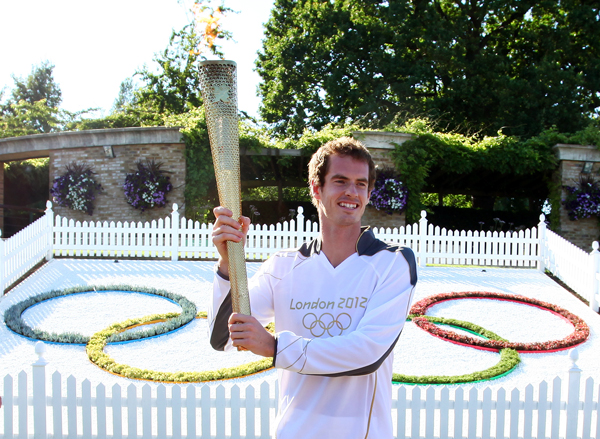
Tennis player Andy Murray carries the Olympic Flame at Wimbledon.

For more on the Torch Relay, see www.london2012.com/torch-relay/

ALL PICTURES: LOCOG.

Around London – Cutty Sark reopens; Genghis Khan at Marble Arch; New theatre for the West End; and, Shakespeare’s cash…

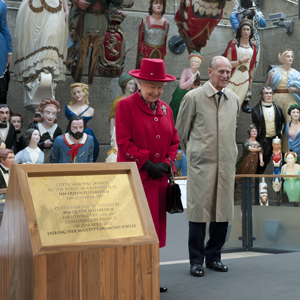
• The Cutty Sark, the world’s last surviving 19th century tea clipper, reopens to the public today following a £50 million, six year conservation project. The project to restore the Greenwich-docked ship has involved raising it more than three metres so visitors can walk underneath and see for themselves the sleek lines which helped the vessel set a then record-breaking speed of 17.5 knots or 20mph in sailing from Sydney to London. As well as raising the ship three metres, the project has involved encasing the ship’s hull in a glass casing to protect it from the weather – this area also contains the museum’s extensive collection of more than 80 ships’ figureheads, never been seen in its entirety on the site. The ship’s weather deck and rigging, meanwhile, have been restored to their original specification and new, interactive exhibitions on the vessel’s history have been installed below deck. Originally launched in 1869 in Dumbarton, Scotland, Cutty Sark visited most major ports around the world, carrying cargoes including tea, gunpowder, whiskey and buffalo horns and made its name as the fastest ship of the era when carrying wool between Australia and England. The ship became a training vessel in the 1920s and in 1954 took up her current position in the dry dock at Greenwich before opening to the public. In November 2006, the ship’s rig was dismantled in preparation for a restoration project – this received a setback on 21st May, 2007, when a fire broke out aboard the ship and almost destroyed it. The ship – which was officially reopened by Queen Elizabeth II and the Duke of Edinburgh (pictured) yesterday – is now under the operational management of the umbrella body, Royal Museums Greenwich. For more (including the online purchasing of tickets), see www.rmg.co.uk/cuttysark or www.cuttysark.org.uk. PICTURE: National Maritime Museum, London.

• A large statue of Genghis Khan has invaded Marble Arch. The 16 foot (five metre) tall sculpture of the Mongolian warlord, created by artist Dashi Namdakov, was erected by Westminster City Council as part of its ongoing City of Sculpture festival which is running in the lead-up to the Olympics. The statue has sparked some controversy – Labour councillors at Westminster have reportedly suggested Dambusters hero Guy Gibson would be a more suitable subject for a statue than the warlord Khan. The Russian artist, who has an exhibition opening at the Halcyon Gallery in Mayfair next month, told the Evening Standard he simply wanted to honor Khan on the 850th anniversary of his birth.

• Development of a new West End theatre, the first to be built in the area in 30 years, has been given the green light. The new 350 seat theatre will be part of a development project located between Charing Cross Road and Oxford Street which will also feature office and retail spaces. The site was occupied by a pickle factory in the 19th and 20th centuries and from 1927 was the home of the Astoria cinema, remodelled as a live venue in the 1980s. Live music was last presented there in 2009 when the site was compulsorily acquired for the Crossrail project.

• On Now: Crowns and Ducats: Shakespeare’s money and medals. This exhibition at the British Museum explores the role of money in Shakespeare’s world and looks at how coins – a frequently recurring motif in Shakespeare’s work – and medals were issued to mark major events. Objects in the display include Nich0las Hilliard’s ‘Dangers Averted’ medal of Elizabeth I and William Roper’s print of the Queen, the first to be signed and dated by a British artist, as well as a money box such as might have been used at the Globe and a hoard of coins, including a Venetian ducat, deposited in Essex around the time of Shakespeare’s birth. Almost every coin mentioned in Shakespeare’s plays will be on show – from ‘crack’d drachmas’ to ‘gilt twopences’. Runs until 28th October in room 69a. Entry is free. For more, see www.britishmuseum.org.

Treasures of London – The White Tower

It’s one of London’s most famous landmarks and, having just undergone a three year, £2 million restoration, we thought it was time to take a look at the origins of the White Tower.
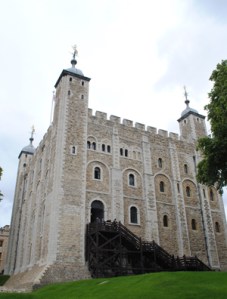
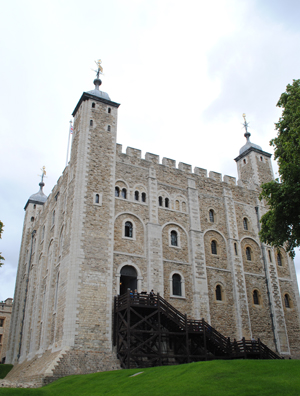
Now the keep of the Tower of London, the White Tower was first built by the Norman King William the Conqueror following his defeat of Saxon King Harold Godwinson and the cream of the Saxon army at the Battle of Hastings in 1066.

Following his coronation at Westminster Abbey on Christmas Day, King William then withdrew to Barking Abbey while his men built several temporary strongholds in the city to ensure it wouldn’t cause any trouble – this included an earth and timber keep standing on an artificial mound in the south-east corner of the city’s Roman-era walls.

The White Tower, a permanent structure, replaced this and although the exact date its construction started is unknown, building – under the watchful eye of Gundulf, the Bishop of Rochester, was well underway by the mid-1070s. While the labourers were English, the masons in charge of the building were Norman and then even used some Caen stone imported from William’s homeland (along with Kentish ragstone). By 1097 the tower was complete.

Primarily built as a fortress rather than for comfort, the size of the Tower was intimidating and, at 27.5 metres tall, it would have dominated the skyline for miles. Initial defences surrounding the White Tower included the Roman walls and two ditches although in later years outer walls were added to create the massive fortifications and series of towers one encounters at the site today.

The tower earned its moniker, the White Tower, from the whitewash used on its walls during the reign of King Henry II. The caps on the four turrets which stand at each corner of the tower were originally conical but were replaced with the current onion-shaped domes in the 1500s (the round tower was once home to the Royal Observatory before it moved out to Greenwich). The White Tower’s large external windows are also more modern innovations, these were added in the 1600s by Sir Christopher Wren.

The original entrance to the White Tower was on the first floor, reached by a wooden staircase (that could be removed if necessary), much as it is today while, for security reasons, the internal stone spiral staircase was placed as far from this entry as possible in the north-east turret. A stone forebuilding was later added during the reign of King Henry II but was later demolished.

Inside, accommodation for the king was provided on the second floor – it originally had a gallery above but an extra floor – still there today – was later added. Accommodation for the Tower’s constable was probably on the first floor. Both floors were divided in two – with a large hall on one side and smaller apartments on the other. These rooms now house displays on the Tower’s history – at the present these include the Royal Armouries’ exhibition ‘Power House’.

The White Tower is also home to the Chapel of St John the Evangelist which, made from Caen stone, still looks much the same as it did in Norman times. It was used by the royal family when in residence at the tower but by the reign of King Charles II had become a store for state records. These were removed in 1857. Among some of the events which took place here was the lying in state of Queen Elizabeth of York, wife to King Henry VII, after her death in 1503, and the betrothal of Queen Mary I to Philip of Spain in 1554 (by proxy, Philip was not present). Prince Charles received communion here on his 21st birthday.

Other historic events associated with the White Tower include the apparent murder in 1483 of the ‘Princes in the Tower’ – King Edward V and his younger brother, Richard, Duke of York – while legend says they were killed in the Bloody Tower, the discovery of two skeletons under stairs leading to the chapel during building works in 1674 has led some to believe that they may have been buried here.

It was also in the White Tower that King Richard II was forced to sign away his throne to King Henry IV in 1399 and it was from the White Tower that Gruffydd ap Llywelyn Fawr, the illegitimate son of  Welsh Prince Llywelyn the Great, apparently fell to his death while attempting to escape captivity in 1244.

There are tours of the White Tower daily at 10.45am, 12.45pm, and 2.15pm.

WHERE: Tower of London (nearest tube station Tower Hill); WHEN: 9am to 5.30pm, Tuesday to Saturday, 10am to 5.30pm Sunday to Monday (until 31st October); COST: Included in Tower of London admission – £19.80 adults; £10.45 children under 15; £17.05 concessions; £55 for a family (prices include a voluntary donation); WEBSITE: www.hrp.org.uk/toweroflondon/.
Around London…

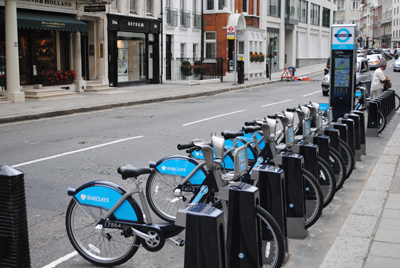
London’s bicycle hire scheme is up and running. The scheme was launched at the end of July and boasts 5,000 bikes which can be found at 315 docking stations. More than 21,000 people signed up in the first weeks and some of the early popular hire sites included Soho Square, Drury Lane in Covent Garden and Wardour Street. The bikes are available 24 hours a day, seven days a week. Members of the scheme must be 18 years old and you must be at least 14 years old to ride the bikes. A membership key costs £3 while the membership itself costs at £1 for a 24-hour membership, £5 for seven days and £45 for an annual membership. The first 30 minutes of any journey is then free (with fees applicable after that). As the bikes don’t come with a lock, it’s expected people will simply make a journey to another docking station before getting off. For more information on the Barclay’s Cycle Hire scheme, see Transport for London’s website at www.tfl.gov.uk. Meanwhile, in other transport news, the first air-conditioned Tube train is now in active service on the Metropolitan Line.

A cafe has been opened at Buckingham Palace, 173 years after Queen Victoria first moved in following her accession to the throne. Located on the West Terrace overlooking the lawn and lake, the Garden Café is open during visiting hours. The Palace’s State Rooms, meanwhile, are open to the public until 1st October. The palace this year hosts The Queen’s Year exhibition which features displays of ceremonial robes, gifts, uniforms, dresses and jewellery, as well as archive photography and film in an illustration of the monarch’s work throughout the year at everything from the State Opening of Parliament to the Garter Day ceremony at Windsor Castle and investitures, garden parties and State Visits. Entry to the State Rooms – which comprise just 19 of the palace’s 775 rooms – is £17.00 an adult, £15.50 concessions, £9.75 for under 17s and under fives are free. Family tickets are £45 and combined tickets – including the Royal Mews and the Queen’s Gallery – are also available. www.royalcollection.org.uk/default.asp?action=article&ID=30. For more on the special exhibition, see www.royalcollection.org.uk/microsites/thequeensyear/

The Tower of London was the most visited royal site in Britain last year, attracting 2.4 million tourists, according to a report from VisitBritain. The tourism agency found that while overseas tourists spent some £4.6 billion while in the UK last year, more than £500 million was spent on tourism associated with the Royal Family. The top 10 most visited sites included several royal attractions – Edinburgh Castle came in at number six with 1.2 million visitors, Windsor Castle at number seven with 987,000 and Buckingham Palace at number 11 with 402,000. Other top London sites included the National Maritime Museum in Greenwich (#2 – 2.4 million), the Victoria and Albert Museum in South Kensington (#3 – 2.3 million), St Paul’s Cathedral (#4 – 1.8 million), Westminster Abbey (#5 – 1.4 million) and Hampton Court Palace (#9 – 541,646).

The Tip – Walk under the Thames

Walk under the Thames. Heading to Greenwich for a day out? While the Docklands Light Railway (DLR) will take you from Tower Hill to Cutty Sark station in the heart of Greenwich itself, get off a station early at Island Gardens and you can walk to Greenwich instead, taking the foot tunnel under the Thames. Opened in 1902, the 387 metre long tunnel, which runs about 15 metres underneath the river, was built so labourers from south London could walk to work in the docks on the Isle of Dogs and surrounding areas. Signs mark the way to the tunnel which is marked at either end by a dome at each end containing stairs and a lift. http://bit.ly/aQMujS