London pub signs – The Phene…

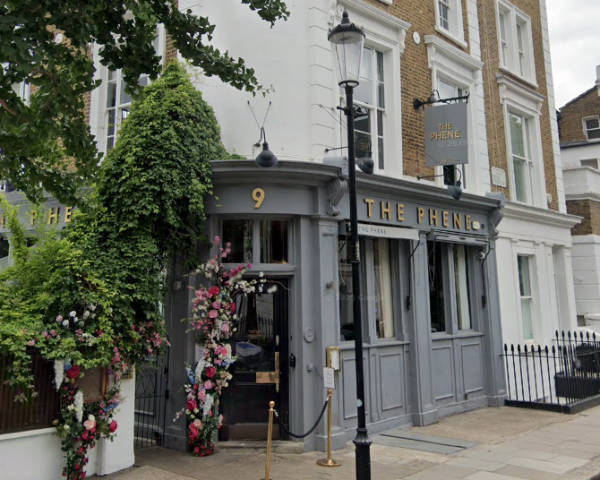
This Chelsea pub has a rather unusual name and it, like that of the street in which it can be found, comes John Samuel Phene, the architect who built it.

PICTURE: Courtesy of Google Maps

The pub dates from 1850 – Phene, who in 1903 constructed a now demolished five-storey house at in nearby Upper Cheyne Row which became known as “Gingerbread Castle” due to its elaborate decorations – had it constructed as a venue for servants and tenants to drink at.

It became known as a favourite of the likes of Northern Irish footballer George Best and the poet Dylan Thomas.

It was saved from being redeveloped in 2013 after a campaign by local residents backed by high profile celebrities such as Hugh Grant.

The pub at 9 Phene Street, which these days sports a rather plain sign, is now run by the City Pub Company.

For more, see www.thephene.com/

London pub signs – The Lord Clyde, Borough…

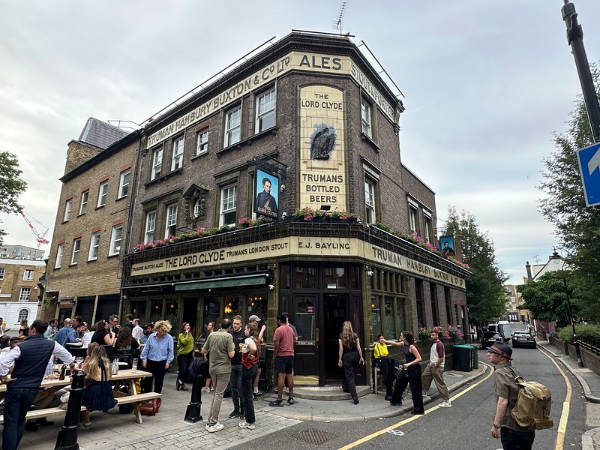
This Borough pub’s name comes from 19th century Field Marshall Colin Campbell Clyde (Lord Clyde).

The Lord Clyde. PICTURE: Matt Brown (licensed under CC BY 4.0)

Clyde (1792-1863) was a Scottish carpenter’s son who joined the military at age 16 and fought in many campaigns during the first half of the 19th century including the Peninsular War of 1808-1814, the War of 1812 in the United States, the First Opium War in China in 1842, and in India during the Second Anglo-Sikh War in 1848-49.

During the Crimean War, Clyde led the Highland Brigade at the Battle of the Alma and repulsed the Russian attack on Balaclava. He become Commander-in-Chief, India, during the Indian Mutiny in 1857 and relieved the siege of Lucknow in India the same year.

Clyde was raised to the peerage in 1858. Her died in Chatham on 14th August, 1863, and was buried in Westminster Abbey.

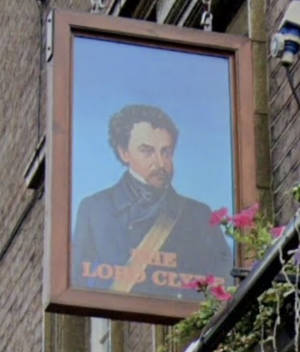
The Lord Clyde pub sign. PICTURE: Courtesy of Google Maps

A pub was first erected on the site at 27 Clennam Street (on the corner with Ayers Street) at the time of his death in 1863 by brewers in East London (originally known as the Black Eagle Brewery, the name Truman, Hanbury, Buxton & Co – which appears on the pub’s exterior – was being used for the brewery by 1889).

It was rebuilt in 1913 – the present frontage dates from that period – and is now Grade II-listed thanks to its architecture, which exemplifies the development of the ‘house style’ in pub architecture of the early 20th century.

The signage on the pub depicts Lord Clyde wearing the insignia of the Knight Commander of the Bath, an honour he was awarded in 1849 for his services in the Sikh War. There is a statue of him in Waterloo Place in London.

For more, head to https://www.facebook.com/lordclydeborough/.

London pub signs – The Shakespeare’s Head, Soho…

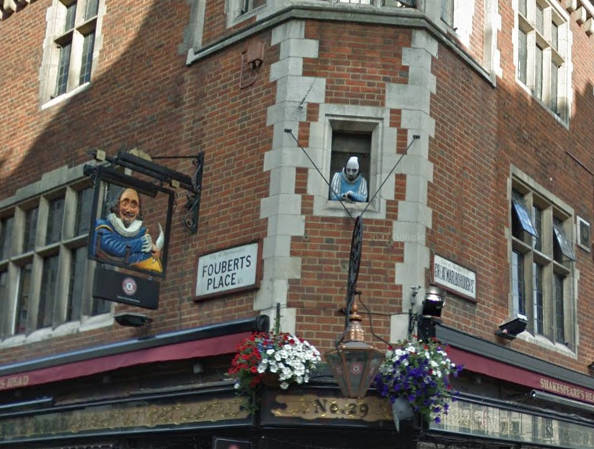
PICTURE: Courtesy of Google Maps

Located at the northern end of Carnaby Street, this Soho pub features a life-sized bust of the Bard looking out of a first floor window at the people passing by in the street below.

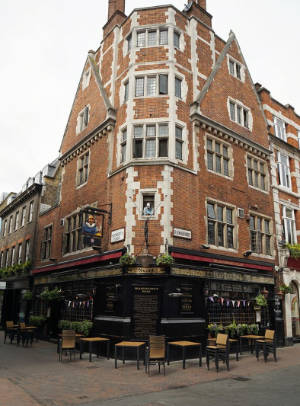
The pub in 2015. PICTURE: David (licensed under CC BY 2.0)

According to the pub’s signage, it was first constructed in 1735 and owned by Thomas and John Shakespeare, who were said to be distant relatives of William (and, if indeed they were the owners, no doubt keen to capitalise on his fame).

The current, rather ornate, building, designed in a faux-Tudor style, reportedly dates from the late 19th century.

As well as the bust, which features a missing hand due to damage from a bomb in World War II, the pub sign features an image of Shakespeare with his quill poised.

The pub, now part of the Greene King chain, is located on the corner of Fouberts Place and Carnaby Street (although its address is 29 Great Marlborough Street – it has a street sign for this on its facade – we’ll try and find out some more about why this is so). For more, see www.greeneking.co.uk/pubs/greater-london/shakespeares-head.

London pub signs – Three quirky pub names (briefly) explained…

We pause from our usual London pub names entries to mention three pub names which, while they don’t come from any association with important historical figures or events of the past, do have an interesting, if briefly explained, origin story.

First up its John the Unicorn, located in a former decorator’s shop at 157-159 Rye Lane in Peckham. The story goes that the pub’s first landlord (and it’s only been opened since 2016), named it after his child’s toy – a fluffy unicorn named, you guessed it, John.

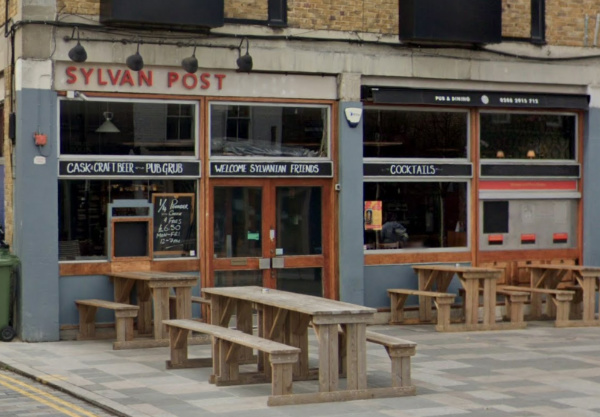
The Sylvan Post in Forest Hill in March, 2023. PICTURE: Courtesy of Google Maps

The Sylvan Post at 24-28 Dartmouth Road in Forest Hill is located – yes, you guessed it – in a former post office. The “Sylvan” part comes from the location in Forest Hill. Get it?

Then we come to The Pregnant Man at 40 Chancery Lane. Located under the headquarters of advertising behemoth Saatchi & Saatchi, the pub was named for one of their most memorable ad campaigns of the 1970s which, run on behalf the Family Planning Association, featured a pregnant man with the caption, “Would you be more careful if it was you who got pregnant?”.

London pub signs – The Mudlark…

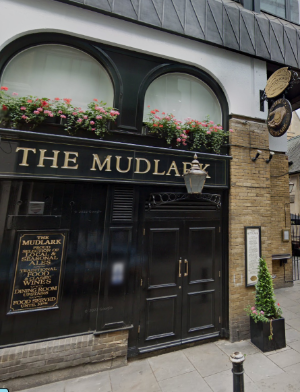
PICTURE: Courtesy of Google Maps

This pub, located in Southwark, just north of Borough Market (and Southwark Cathedral), owes its name to the proximity of the river and the traditional practice of mudlarking – a word used to describe the idea of scavanging the banks of the Thames for valuables.

Mudlarking rose to prominence in the 18th and 19th centuries and the mudlarks were often children, mostly boys, who would undertake the dangerous activity of scavanging the foreshore of the tidal Thames on a daily basis in an effort to supplement the family income.

The 19th century journalist Henry Mayhew wrote about mudlarks he encountered on the river, including a nine-year-old who, dressed in nothing but trousers that had been worn away to shorts, had apparently already been about the activity for three years.

The mudlarks were after anything that could be sold for a small income – coal, ropes, bones, iron and copper nails.

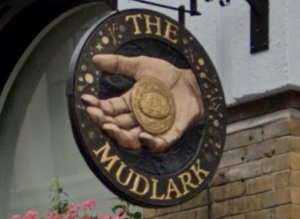
The pub sign as it is now. PICTURE: Google Maps

The practice continues today – and has unearthed some fascinating historic finds – but anyone wanting to do so needs a permit from the Port of London Authority (and must respect rules around their finds that are of an historical nature).

The pub, meanwhile, originally dates from the mid-1700s and used to feature child mudlarks on its sign (it now has a hand holding a mudlark’s find of a coin).

It is (unsurprisingly, given the location) said to be popular with market traders and attendees.

The pub, located on Montague Close, is these days part of the Nicholson’s chain. For more, see https://www.nicholsonspubs.co.uk/restaurants/london/themudlarklondonbridge#/

London pub signs – The Ship Tavern, Holborn…

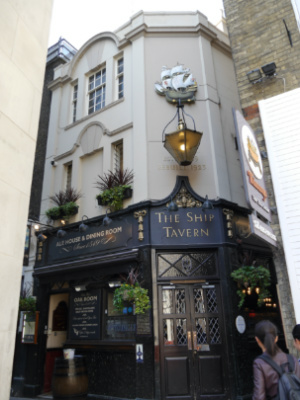
This Holborn pub apparently has a history dating back to 1549.

It is believed to have been established to cater to farm labourers working in nearby Lincoln’s Inn Fields.

PICTURE: Edwardx (licensed under CC BY-SA 3.0)

Its name, however, is said to be related to its proximity to the now-underground River Fleet which runs through Holborn and linked the area with the River Thames. It’s said that the pub’s clientele soon included dock workers and that it may have even had connections to smuggling and pirates. It was apparently these connections that gave the pub the name it still has today.

These days tucked down a narrow alleyway at 12 Gate Street in a building dating from 1923 (apparently considerably bigger than the original), the pub, which features wood panelled walls and leaded windows, has a storied history.

Having been established during the reign of King Edward VI, the pub is known to have provided a space for banned Catholic worship (complete with spotters to warn if officials were seen in the area and hiding places for the priests should the officials decide to raid the premises).

Indeed, the pub would have also served those who attended executions of Catholics such as Robert Morton and Hugh More who were executed in 1588 in the nearby Lincoln’s Inn Fields (other executions there included that of Anthony Babington, executed in 1586 after being convicted of plotting against Queen Elizabeth I, and Lord Russell, executed in 1683 for his involvement in the Rye House Plot).

Other clientele, meanwhile, may have come from the nearby thoroughfare of Whetstone Park which was once notorious for gambling houses and other illicit behaviours.

The Ship also has Freemason connections, being officially consecrated as a Masonic Lodge in 1736 by the then-Grand Master, the Earl of Antrim.

Famous figures said to have been associated with this pub include Richard “Trusty Dick” Penderell, who aided Charles I’s escape after the Battle of Worcester in September, 1651, the antiquarian John Bagford, the French diplomat and spy Chevalier d’Eon who lived both as a man and, later in life, as a woman, and John Smeaton, the builder of a lighthouse once located at Eddystone in Cornwell. It’s even been suggested Shakespeare visited.

There’s also said to be a number supernatural clients at the pub with mysterious figures seen sitting at tables and glasses being moved around (it’s been suggested some of these relate to the persecution of Catholics on the site).

For more, visit theshiptavern.co.uk.
London pub signs – The Betjeman Arms…

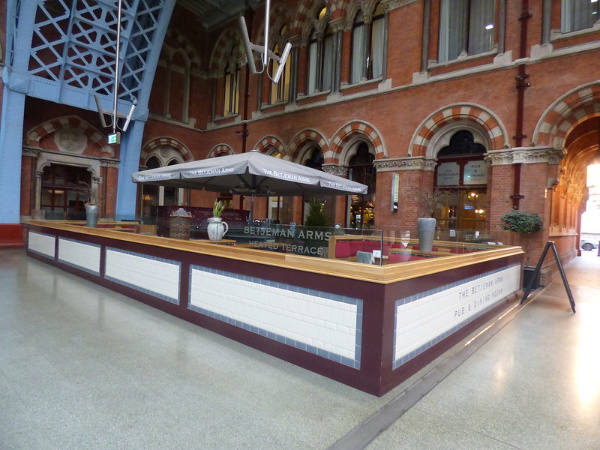
This St Pancras pub – located inside St Pancras International Station itself – bears the name of poet, writer, broadcaster and activist Sir John Betjeman.

The Betjeman Arms seen in 2016. PICTURE: Elliott Brown (licensed under CC BY-SA 2.0)

Betjeman, who was Poet Laureate from 1972 until his death in 1984, did have a particular connection to this location: he helped save the George Gilbert Scott-designed station from demolition in the 1960s with the station eventually awarded Grade I listed status in 1967.

The campaign to save St Pancras was just one of the many to save historic buildings that Betjeman was involved in, although not all were successful.

Betjeman is also remembered in a larger-than-life statue of the man which is located on the station concourse. Martin Jennings’ bronze statue depicts the poet and stands on a slate roundel featuring a selection of his writings.

The pub, which features a Betjeman ale, is now part of the Young’s group. For more, head to www.thebetjemanarms.co.uk/.

London pub signs – The Dean Swift…

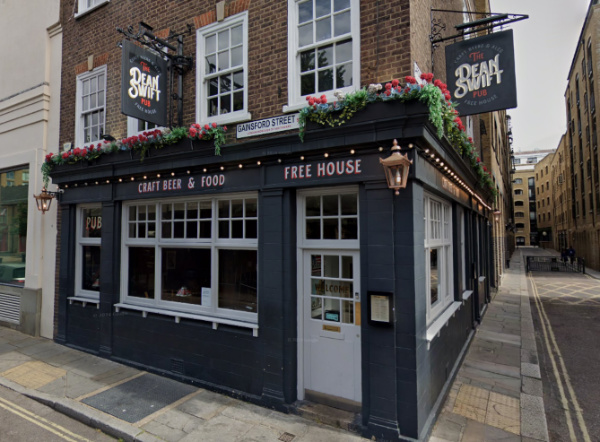
The Dean Swift. PICTURE: Google Maps

This pub in Bermondsey – just to the east of the southern end of the Tower of London – is named for the famous satirist and clergyman, Jonathan Swift (who was also appointed Dean of St Patrick’s Cathedral in Dublin in 1713).

Located at 10 Gainsford Street (on the corner with Lafone Street), the pub originally dates from the 1850s and was formerly known as The Bricklayer’s Arms.

While Swift spent much of his life in Ireland, he visited London on numerous occasions, particularly between 1701 and 1714, and was widely recognised in the city for his writings and wit.

Swift’s most famous work – Gulliver’s Travels – was published in 1726.

For more, see https://www.thedeanswift.com.

London pub signs – Fountains Abbey, Paddington…

The Fountains Abbey in late 2022. PICTURE: Google Maps

This unusually named pub dates from the early 19th century and is known for its connections with Sir Alexander Fleming.

PICTURE: Google Maps

The pub was founded in 1824 and it’s name, according to a former signboard, apparently comes from two sources – “fountains” which relates to nearby springs and wells and “abbey” which relates to Westminster Abbey which formerly possessed the Manor of Paddington (on the land of which the pub is located).

The current signboard, however, has a picture of the medieval ruins of the former Cistercian monastery of Fountains Abbey, located near Ripon in North Yorkshire, so it may be that the name actually relates to that. Or perhaps both explanations can be true.

Sir Alexander was apparently a regular at the pub – in fact, there’s a story that mould spores from this establishment blew through Fleming’s window and lead him to discover penicillin in 1928.

The pub is located at 109 Praed Street. For more, see www.greeneking.co.uk/pubs/greater-london/fountains-abbey

London pub signs – Horse and Groom, Belgravia…

PICTURE: Google Maps

The name of this pub, one assumes, is all about its location.

It’s located on one of Belgravia’s many cobbled mews, the back-streets or courtyards that were traditionally lined by stables and carriage houses located at the back of expansive homes. Hence the pub’s name (a name also associated with its address at 7 Groom Place).

The pub is believed to date from at least as far back as the 1850s and has apparently seen many famous faces over the years including The Beatles and, more recently, Gwyneth Paltrow and Rihanna. It also appeared in the recent Julian Fellowes’ TV drama Belgravia.

For more, see www.horseandgroombelgravia.co.uk.

London pub signs – Hamilton Hall….

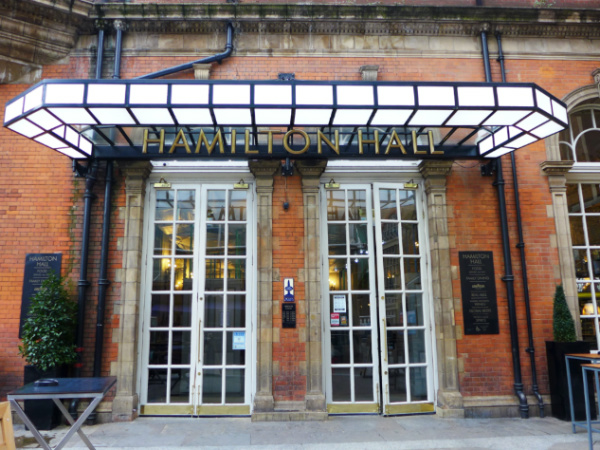
PICTURE: Ewan Munro (licensed under CC BY-SA 2.0)

This pub’s location on the street level concourse of Liverpool Street Station is a clue to the origins of its name.

The Hamilton refers to Lord Claud Hamilton, the chairman of the Great Eastern Railway Company, which originally built Liverpool Street Station (itself named after early 19th century Prime Minister, Lord Liverpool).

The pub itself is actually located in what was the ballroom of the Great Eastern Hotel which originally dates from the 1880s. The now II*-listed hotel – minus its ballroom – still exists in the same location, these days as Andaz London Liverpool Street, part of the Hyatt Group.

The pub features many of the ballroom’s original features and is partly decorated in the 18th century French style.

For more, see www.jdwetherspoon.com/pubs/all-pubs/england/london/hamilton-hall-city-of-london

London pub signs – The Sir John Hawkshaw…

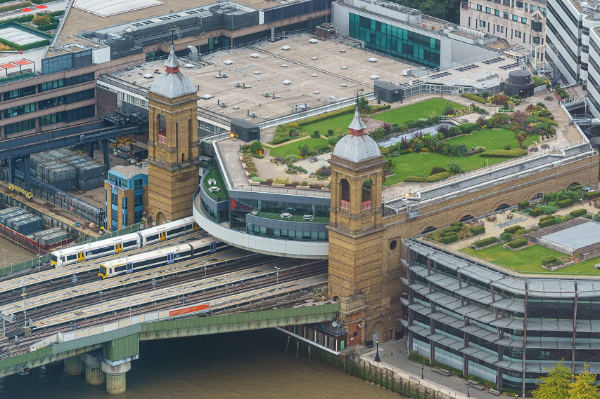
The Sir John Hawkshaw is located inside the Cannon Street Station (with good reason). PICTURE:© User:Colin / Wikimedia Commons / CC BY-SA 4.0.

This establishment in the Cannon Street Station in the City of London is a modern take on the pub but thanks to the name and location comes with built-in history.

Sir John Hawkshaw (1811-1891) was a railway engineer who, importantly given this pub’s location, is recognised for his work on the original Cannon Street railway station – which he designed with JW Barry – as well as the adjoining Cannon Street Railway Bridge over the Thames (it was originally named ‘Alexandra Bridge’ in honour of Princess Alexandra of Denmark, wife of Edward, the Prince of Wales)

The original Cannon Street station, which opened on 1st September, 1866, featured two “Wren-style” towers which stand 135 feet high and faced the Thames (these two towers, now Grade II listed, are still there today). They helped support the station’s single arched iron and glass roof which stretched some 700 feet in length to cover the railway platforms (an adjoining Italianate-style hotel and forecourt designed by Barry opened the following year).

While Hawkshaw’s two towers remain (and it should be noted that the engineer was also famous for his work on other projects including, among others, the Severn Tunnel and Suez Canal), the current Cannon Street Station is a much more modern structure dating originally from the 1980s with some works being completed in the last decade or so.

The site’s known history, meanwhile, goes back much further, however. Prior to Hawkshaw’s station, since 1690 the site had been occupied by the livery hall of the Worshipful Company of Plumbers. Prior to that it was the site of the Steelyard and, much further back in time, the remains of a Roman palace have been found beneath the site which date from the 1st century.

The modern pub, located in the station, is part of the JD Wetherspoon chain.

For more on the pub, see https://www.jdwetherspoon.com/pub-histories/england/london/the-sir-john-hawkshaw-cannon-street.

London pub signs – The Pyrotechnists Arms…

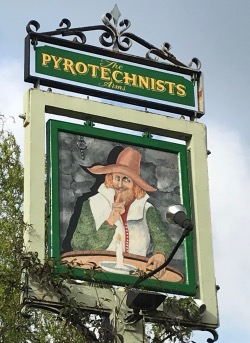
Guy Fawkes depicted on The Pyrotechnists Arms sign. PICTURE: Matt Brown (licensed under CC BY 2.0)

A rather unusual name for a pub, this Nunhead establishment owes its name to the past history of the area in which it’s built.

The pub’s name apparently comes from the fireworks factory, Brocks Fireworks, which was built nearby in 1868.

The pub’s sign features images of Guy Fawkes and other Gunpowder Plot conspirators – apparently some believe Fawkes imbibed at an establishment in the area (though clearly not this one given it’s relatively recent origins).

The building originally dates from 1874 and underwent a refit in the 1930s, of which many features – including the bar counters – still remain.

The ‘Pyro’ is located at 39 Nunhead Green. For more, see https://www.facebook.com/thepyronunhead.

London Pub Signs – The King’s Head, Mayfair…

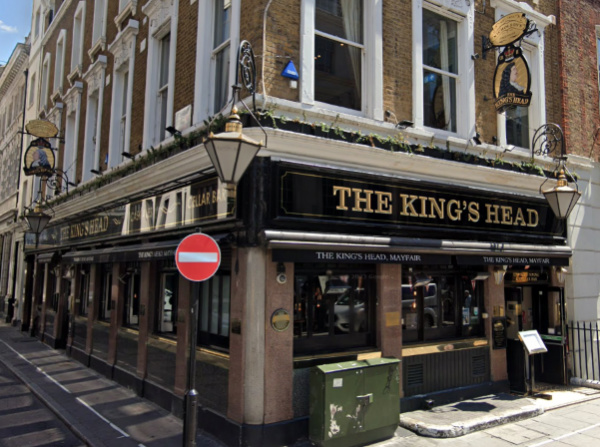
Ignore the rather large no entry sign and look closely to see King George II on the sign to the left of the picture and King Charles II on the sign to the right. PICTURE: Google Maps

It’s a pub dedicated to a king – but which one?

Located at 10 Stafford Street (within walking distance of current royal residences at Buckingham and St James’s Palace), this pub dates back to at least 1710 and has gone through several name changes including, apparently, Shelley’s Hotel and The King John’s Head, but has now returned to its original name of the King’s Head.

While some believe the name refers to King Charles II, there’s another school of thought that says the pub was named for King George II.

With the dispute still apparently live, the owners have cleverly opted to depict the heads of both kings on the pub’s signs.

The pub, which features a cellar bar, is one of a number named The King’s Head in London (we’ll take a look at some others in upcoming posts).

Now part of the Nicholson’s chain. For more, see https://www.nicholsonspubs.co.uk/restaurants/london/thekingsheadmayfairlondon.

London Pub Signs – The Spanish Galleon…

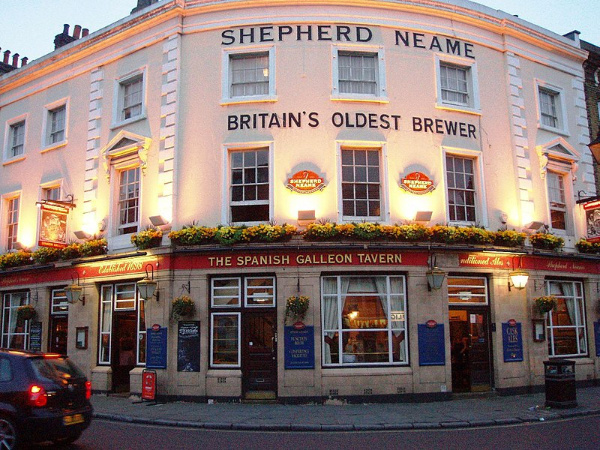
PICTURE: Ewan Munro (licensed under CC BY-SA 2.0)

This early 19th century pub was built in the Regency style as part of a redevelopment of central Greenwich.

The redevelopment was undertaken by architect Joseph Kay in the 1830s while he served as clerk of works to what was then Greenwich Hospital (now known as the Old Royal Naval College).

Its name, one of a number of nautical names for pubs in the area, purportedly comes from the pictures of British naval victories at the hospital.

The pub received minor damage during the Blitz.

Located at 1 College Approach, the pub has been Grade II-listed since 1973. In 2012, the pub underwent a refurbishment.

Part of the Shepherd Neame chain. For more, see www.spanishgalleon.co.uk.

London pub signs – Aragon House…

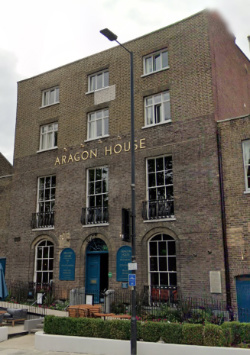
Aragon House in 2019. PICTURE: Courtesy of Google Maps

This brown brick pub (and boutique hotel) in Parson’s Green, west London, was built just after the start of the 19th century. But its name comes from a much earlier historic connection.

The site where the four storey pub now stands was once a dower house which belonged to Queen Catherine of Aragon, the first wife of King Henry VIII.

It’s believed that the property was given to Catherine by King Henry VII, father of her first husband, Prince Arthur – who died in April, 1502 – and her second husband and his younger brother, King Henry VIII, whom she married in 1509.

The site was later part of a parcel of land upon which was located the home of novelist Samuel Richardson. Richardson, famed for his works Pamela and Clarissa, lived there from 1756 until his death in 1761. The property was subsequently known as ‘Richardson’s Villa’.

The Grade II-listed pub is located at 247 New King’s Road. For more, see www.aragonhousesw6.com.

London Pub Signs – The Tally Ho, North Finchley

PICTURE: Google Maps

The name of this pub in London’s north comes from its location at the corner of Ballards Lane and the High Road, a location known as Tally Ho Corner.

While the pub only dates from 1927, the name of the corner goes back further. The story goes that it originated with the Tally Ho Coach Company, which ran coaches from London to Birmingham and which kept 16 horses in a stable on the site since the 1830s.

But there has been some doubt cast on that claim – it’s been suggested the site was too close to London to warrant a change of horses and there’s apparently little evidence of such a company.

The pub replaced the Park Road Hotel which was built the site in the 1860s. It changed hands only a few years ago and is now run by the Stonegate Pub Company.

The phrase ‘Tally Ho’ was traditionally used as a hunting call who cried it out when they sighted their quarry. It apparently became used to describe a fast coach.

For more, see www.greatukpubs.co.uk/tallyholondon.

London Pub Signs – The Admiralty…

PICTURE: Ewan Munro (licensed under CC BY-SA 2.0)

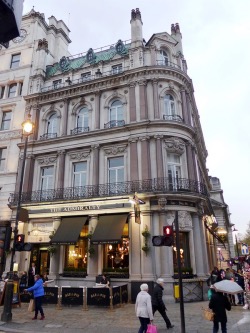
With a claim to be the most central pub in London, this Trafalgar Square pub takes its name from its proximity to…well, all things naval.

This includes Trafalgar Square itself, of course, and its centrepiece of Nelson’s Column (commemorating the victory at the Battle of Trafalgar and Vice-Admiral Lord Nelson) as well as the the location of Admiralty Arch behind the building and the Old Admiralty Building just down Whitehall.

The Grade II-listed Italianate building, which was designed by FW Porter and dates from 1871, has only been a pub since 2014 when it was acquired by Fullers.

It was originally constructed for the Union Bank and later became a branch of the National Westminster Bank. In 2005, the building became home to Scottish restaurant Albannach before becoming a pub almost 10 years later.

Fittingly, the pub – officially located at 66 Trafalgar Square – features an interior inspired by HMS Victory, Nelson’s flagship at the Battle of Trafalgar.

It was opened on 23rd October, 2014, just two days after Trafalgar Day by former First Sea Lord Admiral Lord West of Spithead and Fuller’s chief executive Simon Emeny. A magnum of beer was reportedly ceremonially smashed on the pub’s exterior in keeping with naval tradition.

For more, see www.admiraltytrafalgar.co.uk.

London pub signs – The Bear & Staff…

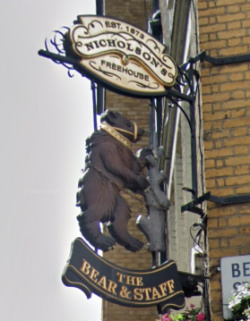
The Bear & Staff sign. PICTURE: Google Maps

This storied central London pub, located close to Leicester Square, dates back to 1714 although the current building dates from 1878.

The name comes from the crest of the Neville family, who were Earls of Warwick (most famous among them was Richard Neville, the “King-Maker”). It depicts a rampant bear chained to a ragged staff. (There is apparently an alternative explanation for the name with some believing the pub is named after a glazier named Augustus Beare who worked in the area in the late 17th century).

Among the stories associated with the pub, which is located on the corner of Charing Cross Road and Bear Street, is that of one 19th century landlord, William Heartwell, who lost his licence in 1858 after being found trading on a Sunday and (perhaps more significantly) robbery. The pub is also believed to have been frequented by early 20th century actor Charlie Chaplin – its restaurant is named in his honour.

For more, see www.nicholsonspubs.co.uk/restaurants/london/thebearandstaffleicestersquarelondon.

London Pub Signs – The Churchill Arms, Kensington…

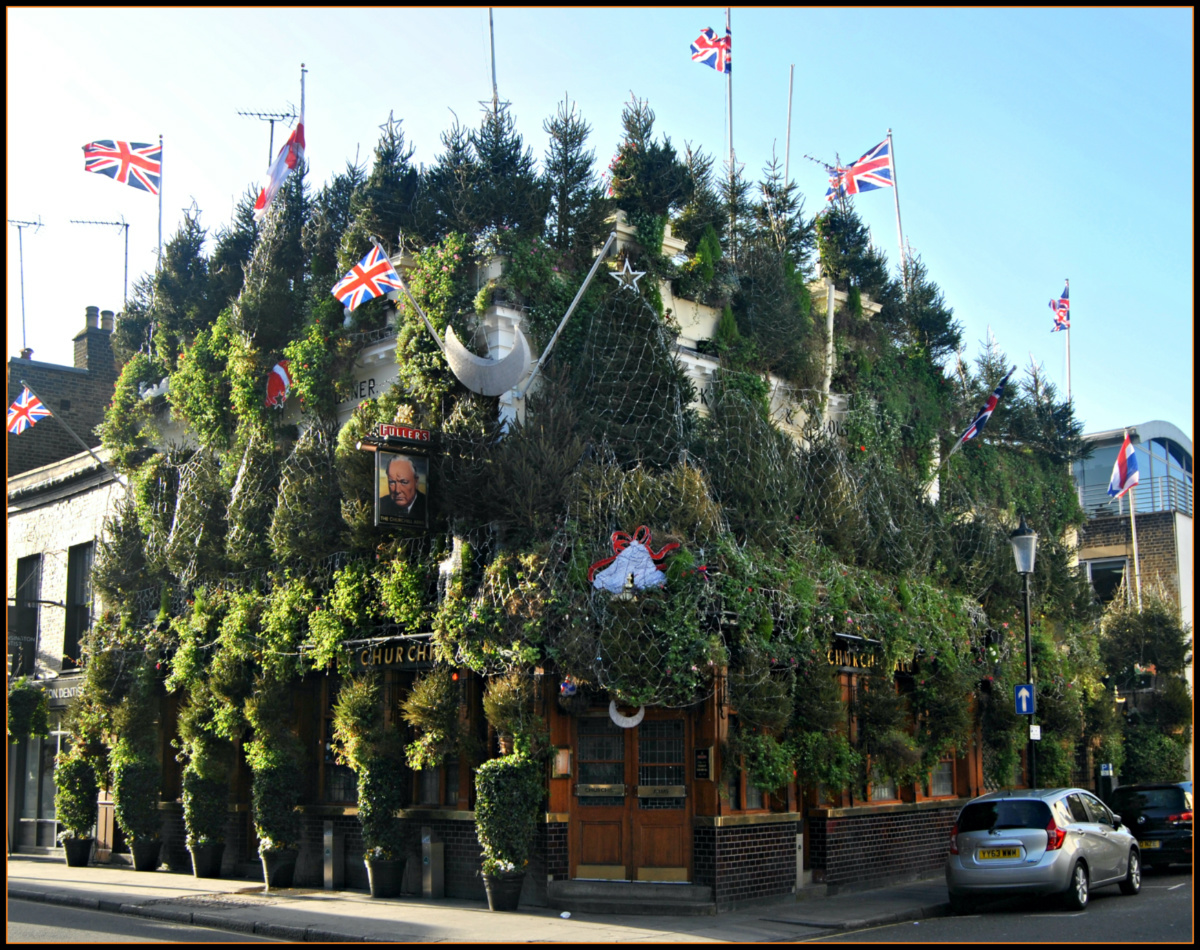
The Churchill Arms decorated for Christmas in 2015. PICTURE: Loco Steve (licensed under CC BY-SA 2.0)

It’s Christmas in London and for such a festive occasion, one pub immediately springs to mind – The Churchill Arms.

The name is certainly not a mystery and doesn’t really have anything to do with the Christmas theme. It stems from, of course, wartime Prime Minister Winston Churchill – or rather, his grandparents, the Duke and Duchess of Marlborough, John and Frances Anne Spencer-Churchill, who were patrons here and which, in honour of Churchill and them, saw the pub so-named after World War II.

Churchill remains a theme in the interior where a good deal of related memorabilia can be found – including wartime posters, pictures of the man himself and a (fake) plaque commemorating Churchill’s use of the pub for his wartime broadcasts (there’s even a celebratory night held each year around Churchill’s birthday).

The pub, which is located at 119 Kensington Church Street, dates from 1750.

But in recent times, it’s become famous for its stunning Christmas light displays which this year reportedly feature some 80 Christmas trees and 22,000 lights. The pub is also known for its extraordinarily profuse flower displays which cost thousands of pounds each year and which have even won at none other than the Chelsea Flower Show.

It also holds the claim to fame of being the first London pub to serve Thai food when it did so as far back as 1988.

A Fullers pub, for more head to www.churchillarmskensington.co.uk.