Famous Londoners – US founding fathers…

The US is celebrating the 250th anniversary of the signing of the Declaration of Independence with celebrations taking place across the weekend just passed.

We thought it a good time to take a quick look at which of the seven founding fathers lived in London…
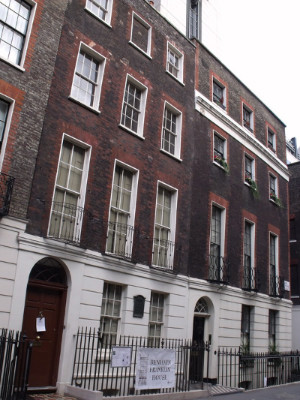
Benjamin Franklin House. PICTURE:
Elliott Brown (licensed under CC BY 2.0)

1. Benjamin Franklin. Franklin, perhaps the founding father most associated with London, lived in the city for two periods in his life. The first was when he was working as a printer’s apprentice between 1724-26 and the second was when he was representing the interests of the American colonies to the British Government from 1757 to 1775. It was during the latter period that he lived at 36 Craven Street – now a Grade I-listed property known as Benjamin Franklin House and the only remaining residence in the world still standing in which Franklin lived (and one which carried a fascinating past).

2. John Adams. Adams, who was to go on to succeed George Washington as president, lived in London between 1785 and 1788 in the role of first American Minister to Great Britain (actually to the Court of St James), charged by Congress with establishing trade and diplomatic contacts. He lived in a property at 9 Grosvenor Square in Mayfair, a location which remains connected to the US today, housing the US embassy and numerous US memorials. A plaque marks the location of the property.

3. John Jay. The first Chief Justice of the US Supreme Court, he lived in London from June to November, 1794, while, as an envoy of the first US President George Washington, he was negotiating the controversial Jay Treaty with the British Government which dealt with some of the lingering issues of the Revolutionary War.

4. Thomas Jefferson. To say Jefferson lived in London may be a stretch but he did visit for an extended period in March and April, 1786 when, serving as the American minister in France, he crossed the channel and spent a month-and-a-half largely based in the city with John Adams as trade treaties were being negotiated. During his visit he is known to have taken in the gardens at Chiswick House and the Royal Botanic Gardens in Kew (as well as some further afield such as at Blenheim Palace).
Famous Londoners – Yes, (Prime) Minister…

OK, this is an unusual one – a TV show instead of a person, but given it’s 30 years this month since the last episode was broadcast on 28th January, 1988, we thought we’d pause to remember a landmark couple of TV series.

Yes Minister, which starred Paul Eddington as the hapless newly-elevated first time government minister Jim Hacker, first aired on BBC on 25th February, 1980.

The show centred on the trials and tribulations of Mr Hacker as he tried to bring about the sort of changes he had dreamed about as a candidate, opposed by an obstructionist civil service – in particular the Permanent Secretary to the Minister for Administrative Affairs, Sir Humphrey Appleby (played by Sir Nigel Hawthorne). Caught between the two – with loyalties to both – was Mr Hacker’s Principal Private Secretary Bernard Woolley, played by Derek Fowlds.

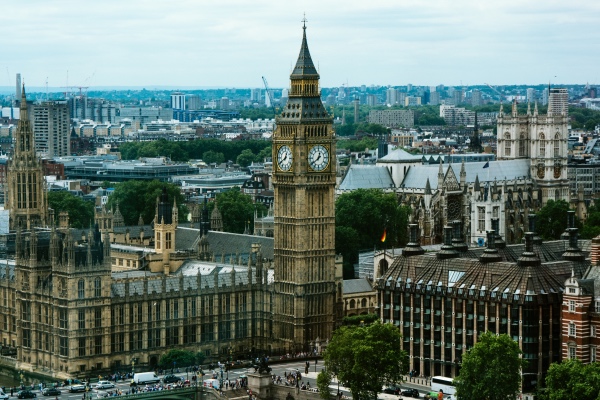
While the Houses of Parliament (pictured above) are shown as a drawing on the opening credits, the action rarely moves to the House of Commons but largely takes place in Mr Hacker’s Whitehall office and other offices and private clubs in the Westminster area under the premise that it’s behind the scenes where the real work of politics does (or doesn’t) get done.

The show was famous for almost always finishing with Sir Humphrey muttering those immortal words “Yes, Minister”, even as he has thwarted another of the minister’s plans.

Three series of seven episodes were made which ran until 1984 (there were also two Christmas specials) . A follow-up series, Yes Prime Minister, first aired in 1986 and centred once again on Jim Hacker, this time following his elevation to the role of PM. Sir Humphrey continued to be a thorn in his side.

The show, which was also adapted for radio, won several BAFTAs and was said to be a favourite of British PM Margaret Thatcher. It was later made into a stage play and this in turn lead to a “revival” series being produced.

The show has been referenced numerous times in popular culture as well as real-life politics – Australian Prime Minister Bob Hawke was a fan and even Humphrey, a former Chief Mouser to the Cabinet Office, was named after Sir Humphrey.

PICTURE: Jamie Street/Unsplash