Famous for its herd of Red and Fallow deer, the expansive Bushy Park in south-west London is also a haven for many other kinds of wildlife – from birds and fish to insects and small mammals.
Royal Parks
10 places to encounter London’s animal life…1. Deer in Richmond Park…
We start a new series looking at places to encounter (at a distance, for some), London’s wildfire and we start by heading west to Richmond Park.
Subscribe for just £3 a month to access all of Exploring London’s articles – and support our work!
LondonLife – Bold play in Hyde Park…
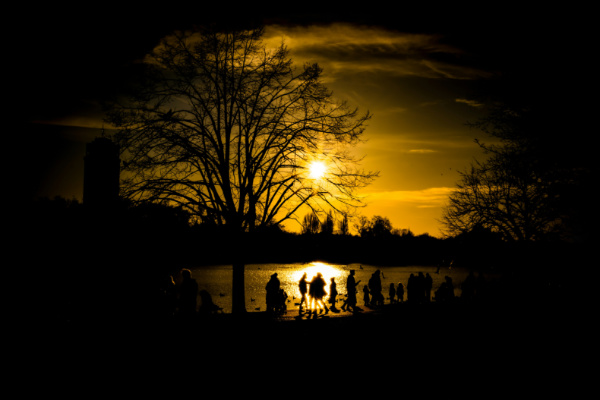
LondonLife – Sunset, Hyde Park…
This Week in London – Marking Turner’s 250th; ‘Helios’ at the Painted Hall; Churchill in cartoons; and, Royal Parks’ new Elizabeth II garden wins grant…
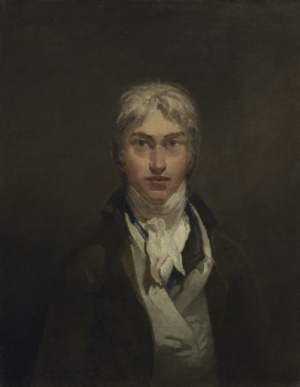
Image courtesy of Tate
• Cultural institutions across the UK have announced a year long celebration of renowned painter JMW Turner in honour of the 250th anniversary of his birth. Turner 250 includes more than 30 events with Turner’s birthday on 23rd April a particular focus. Events on the day include the opening of an exhibition of Turner’s rarely-seen images of wildlife at Turner’s House in Twickenham, and the opening of a newly refreshed room in Tate Britain’s Clore Gallery which will be home to a permanent free display of 100 works by the artist. More information will be forthcoming.
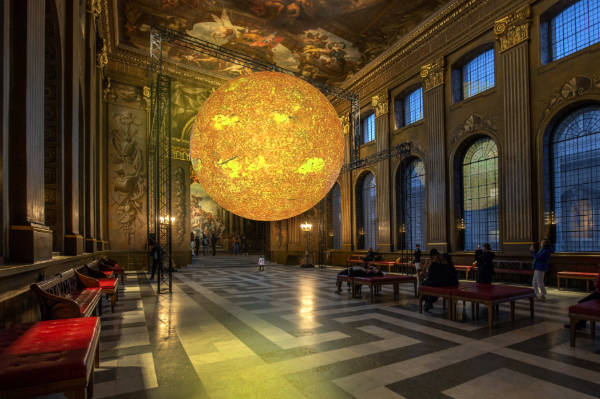
• Luke Jerram’s newest and most ambitious large scale artwork, Helios, is making its London premiere at the Old Royal Naval College. Co-commissioned by the Old Royal Naval College, this new seven-metre celestial artwork depicts the Sun in all its glory at a scale of 1:200 million. The imagery for the artwork has been compiled using photographs of the Sun provided by astrophotographer Dr Stuart Green (taken between May, 2018, to June, 2024) and NASA observations of the Sun along with guidance from solar scientist, Professor Lucie Green of University College London (UCL). The sculptural work is accompanied by a specially created surround sound composition created by acclaimed artists Duncan Speakman and Sarah Anderson. Runs from Saturday until 25th March. Admission charge applies. For more, see https://ornc.org/whats-on/helios/
• On Now: Churchill in Cartoons: Satirising a Statesman. The Imperial War Museum in Lambeth is marking the 150th anniversary of the birth of Sir Winston Churchill with this exhibition examining how Churchill is represented in political cartoons, both during his life and after. The display features 24 original artworks spanning the period from 1909 to 2003 and examines how these portrayals influenced public perception of the statesman, from his early career as an MP to the role he played in both World Wars, the “Wilderness Years” between and after he lost the 1945 General Election. Among the works are
a cartoon from Punch magazine in 1914 depicting Churchill supporting the Roman sea god Neptune with aircraft (representing the establishment of the Royal Naval Air Service), a 1941 David Low cartoon shows a cigar-smoking Churchill with US President Franklin D Roosevelt during their Atlantic Conference, and, a cartoon by US cartoonist Jim Berryman marking Churchill’s defeat in the 1945 election. The free exhibition closes on 23rd February. For more, see www.iwm.org.uk/events/churchill-in-cartoons-satirising-a-statesman.
• Royal Parks have been awarded a £450,000 grant to support the creation of a new, two-acre garden in The Regent’s Park. The garden, to be funded with the grant from the Garfield Weston Foundation, will commemorate the life and legacy of Queen Elizabeth II and will feature a circular pond enhancing wildlife habitats, a central promenade with an accessible platform over the pond, and a vibrant flower garden showcasing species which were significant to the late Queen, such as the specially bred Narcissus ‘Diamond Jubilee’ or Tulipa ‘Royal Celebration’. The new garden is set to open in 2026.
Send all items for inclusion to exploringlondon@gmail.com.
This Week in London – Memorial to Victims of Transatlantic Slavery designs; and, images of the Royal Parks in spring…
• Members of the public are invited to view a shortlist of ideas for the proposed Memorial to Victims of Transatlantic Slavery to be located in West India Quay. Mayor of London Sadiq Khan pledged £500,000 to fund the memorial which will be the first of its kind in the UK. Short-listed works include Alberta Whittle”s Echoes from beneath the deep and in between the canes (a Caribbean-style pavilion alongside a sugarcane field and cowrie shells which are synonymous with the trade in enslaved people); Zak Ové’s Nana Buluku (an 11 metre tall and richly decorated representation of an African Queen, Nana Buluku); Grada Kilomba’s Archaeology of Contemplation (this uses the image of a boat as a metaphor of remembrance, remembering those who were transported as cargo by the British and other nations); Helen Cammock’s Ripple (a large-scale, circular stone structure with six discoverable engraved texts in West African wood); Hew Locke’s Memorial for the victims of the transatlantic slave trade (bronze sculptures of boys and girls carrying buildings which were built in London from money earned by the trade in enslaved people); and, Khaleb Brooks – The Wake (a large scale cowrie shell which represents the perseverance, prosperity and beauty rooted in African and African diasporic heritage). An online exhibition of the shortlisted work is available to view on https://www.london.gov.uk/transatlantic-slavery-memorial and the public is invited to give their feedback.
• Winning entries from the Royal Parks’ photographic competition Creating Spaces for Life can be seen online. Take a gander, which features four goslings under the protective wing of a parent, won the competition which invited visitors to photograph the new life emerging in the eight Royal Parks during the springtime. Other entries among the winners included a swan taking flight, a silhouetted coot appearing to walk on water and a common blue butterfly pictured in the spring sunshine. To see the winning images, head to www.royalparks.org.uk/photography-competition-creating-spaces-for-life.
Send all items to exploringlondon@gmail.com.
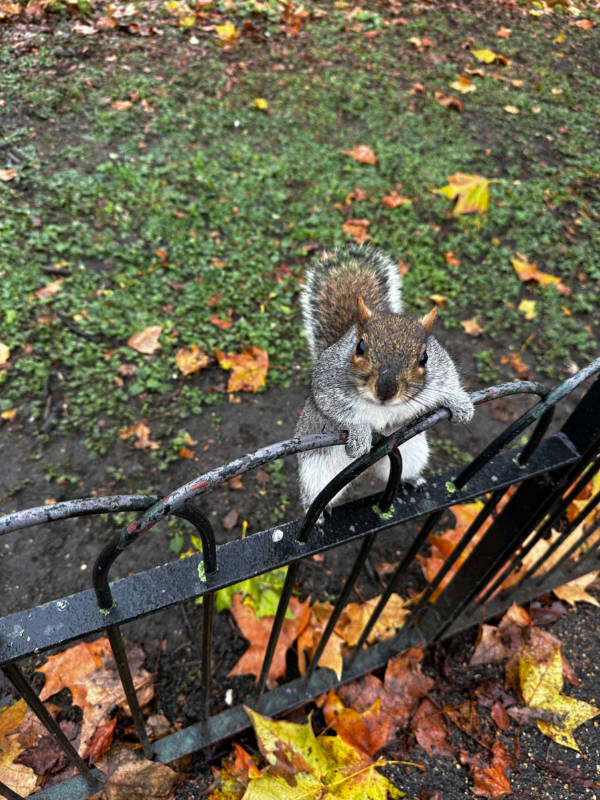
LondonLife – Autumnal walk…
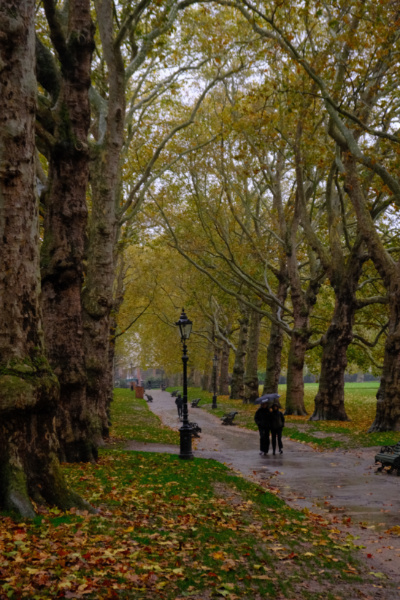
Seen in Green Park on a wet day.
This Week in London – Stephen Lawrence and Dick Whittington remembered; Museum of London seeks Jewish-fashion items for new display; and, become a volunteer ranger at The Regent’s Park…
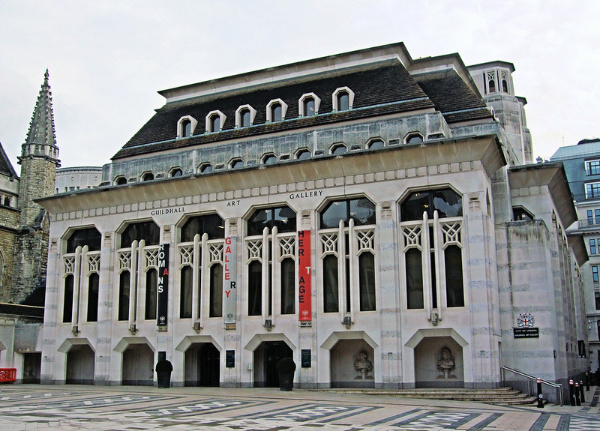
• Stephen Lawrence, a London teenager who was killed in a racially motivated murder in 1993, and four-times medieval Mayor of London, Richard Whittington, are both remembered in a new display at the City of London Heritage Gallery. Among the items on show is a report by the headteacher of John Roan School in Greenwich which was created following Lawrence’s death along with the last will and testament of Whittington and a book recording his third election as mayor in 1406 and showing his decorated coat of arms. Also on show in the gallery is a Bomb Damage Map which, produced by London County Council, shows the extent of damage to Rotherhithe and part of the Isle of Dogs following a German Luftwaffe raid in September, 1940. The display can be seen until 28th April. Admission is free but booking is recommended. For more, see www.cityoflondon.gov.uk/events/heritage-gallery-exhibition.
• The Museum of London is seeking information on high-profile items of clothing created by leading Jewish fashion designers ahead of an exhibition running later this year. Fashion City: How Jewish Londoners Shaped Global Style, scheduled to open in October, will explore the major contribution of Jewish designers had in making London an iconic fashion city during the 20th century. It will feature pieces from the museum’s own collections but those behind the exhibition are also looking for a range of other high profile items. These include menswear made by Mr Fish and Cecil Gee which were worn by famous names such as Sean Connery, David Bowie, Mick Jagger, Muhammad Ali, Michael Caine and The Beatles, womenswear made by Rahvis in the 1930s and 1940s and worn by Hollywood film stars, hats made by Otto Lucas and worn by the likes of Greta Garbo and Wallis Simpson, a theatre costume made by Neymar for Cecil Landau’s 1949 production of Sauce Tartare, and 1930s gowns made by dressmaker Madame Isobel (Isobel Spevak Harris). Anyone who has information about the location of these objects are asked to email fashioncity@museumoflondon.org.uk with any information. More information on the exhibition will be provided closer to the date.
• The Royal Parks is looking for volunteer rangers in The Regent’s Park this spring. Following the success of volunteer ranger programmes in Richmond, Bushy and Greenwich Parks, the charity is seeking “friendly and chatty people who are passionate about The Regent’s Park, and keen to inspire and educate visitors”. Volunteers, who need to commit to a minimum of three hours per month, will work in pairs and share facts about the park’s heritage as well as provide tips on the best walking and cycling routes and inform visitors on how everyone can help nature thrive in the parks. Rangers can choose from a range of 90-minute volunteering sessions across weekdays and weekends. Applications close on 26th February. Full training will be provided. To apply, visit www.royalparks.org.uk/rangers.
Send all items for inclusion to exploringlondon@gmail.com
LondonLife – Greenwich Park restoration…
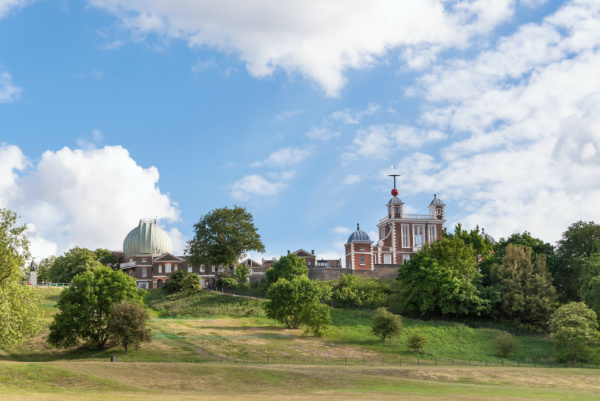
The Royal Parks announced recently Greenwich Park, here pictured showing the view up to the Royal Observatory, was to undergo a three year project to restore its 17th century landscape. The formal landscape of the park was commissioned by King Charles II and, designed by French landscape architect André Le Nôtre (who also designed the world-famous Versailles gardens), features tree-lined avenues which frame the view up the hill from the Queen’s House as well as “The Grand Ascent”, a series of giant, grass steps leading up the hill, and a terraced layout – known as a parterre. Massive numbers of visitors – some five million annually – have, however, seen the landscape features erode and slump while the trees – Turkey oaks planted in the 1970s to replace the elms wiped out by Dutch elm disease – are now in decline. The restoration work, which begins next month, will see the terraces restored and the declining tree avenues recreated with 92 new, more resilient trees. The work is scheduled to be completed by March, 2025. For more on Greenwich Park, see www.royalparks.org.uk/parks/greenwich-park.
Lost London – The Maharajah’s Fountain…
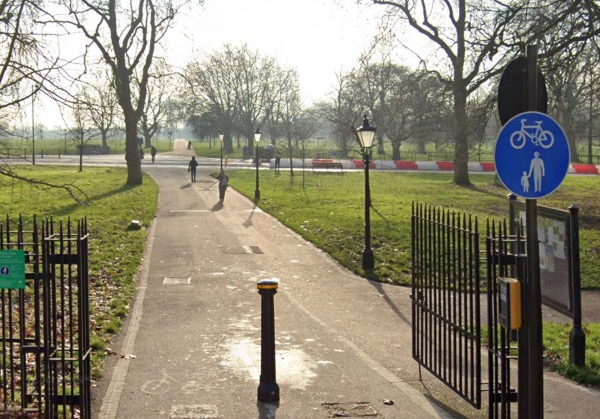
Once located in Hyde Park, this drinking fountain was a gift from Maharajah Meerza Vijiaram Gajapati Raj Manea Sooltan Bahadoor of Vijianagram (a small princely state once located in what is now the Indian state of Andhra Pradesh).
Installed in 1867 by the Metropolitan Drinking Fountain and Cattle Trough Association, the towering structure in the neo-Gothic style was apparently designed by the architect Robert Keirle (also the designer of the Readymoney Fountain in The Regent’s Park).
It was installed close to the park’s north-east corner (between North Carriage Drive and Bayswater Road, not far west of Marble Arch).
The fountain was eventually removed in 1964 (apparently due to the prohibitive cost of repairing it). A plaque these days marks its location.
Lost London – The Reformers’ Tree…
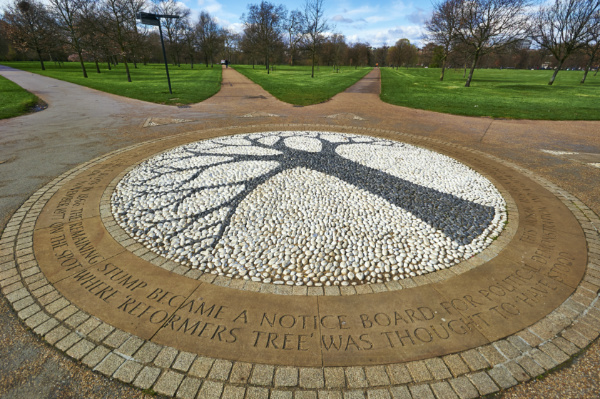
This large oak tree, planted in Hyde Park, was a focal point for protests in 1866 by the Reform League, a group which campaigned for all men to have the right to vote.
The tree was set alight during one protest (on what date and whether it was as an act of protest or simply an act of mischief by some boys during an otherwise orderly rally apparently remains a matter of debate).
The blackened stump was subsequently used a site for people to post notices, as a podium at meetings (including by the Reform League) and, more broadly, as a symbol of the right for people to assemble.
The tree was something of a precursor to Speaker’s Corner in Hyde Park. That owes its formal establishment to an Act of Parliament, passed in 1872, that designated the north-east corner of Hyde Park as a site for public speaking and is now known – and emulated across the world – as Speaker’s Corner.
A circular mosaic depicting the blackened tree – the work of sculptor Harry Gray – now stands at the junction of numerous pathways close to the eastern end of Hyde Park. It was unveiled in the year 2000 by politician Tony Benn.
Whether it stands on the actual site of the original tree is also a matter of debate. The inscription on the memorial mentions that on 7th November, 1977, then Prime Minister James Callaghan planted a new oak tree on the spot where the Reformers’ Tree was thought to have stood. But there’s obviously no oak now where the mosaic is laid.
LondonLife – Just watching the world go by…
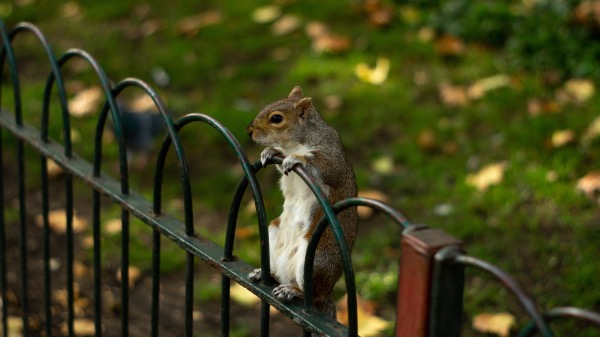
Spotted in St James’s Park. PICTURE: Alexandru Vicol/Unsplash
Treasures of London – The Diana Fountain…
No, it’s not a memorial to that Diana, but a bronze statue depicting a mythological figure which forms the centrepiece of the Great Basin in Bushy Park.
Commissioned by King Charles I for his wife Queen Henrietta Maria, the statue (and other statuary on the monument) was the work of sculptor Hubert Le Sueur (he was also the sculptor of the famous equestrian statue of King Charles I which sits at the top of Whitehall).
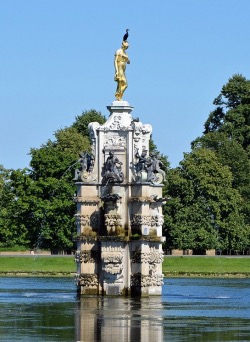
While the 2.38 metre tall bronze statue, which weighs some 924 kilograms, is commonly referred to as Diana – the Roman goddess of hunting, she has none of the usual attributes of Diana, such as a bow, and is believed by some to actually represent Arethusa, a nereid or sea nymph from Greek mythology.
The statue is set on a marble and stone fountain carved with depictions of shells and sea life, and is surrounded, at a lower level, by groups of bronze statues -depicting boys holding fish or dolphins and water nymphs or mermaids astride sea monsters – through which water is discharged into four bronze basins.
The bronze figures were originally commissioned for a fountain, designed by Inigo Jones and built in the 1630s, in the Queen’s garden at Somerset House. Oliver Cromwell had the statues moved to the Hampton Court Palace’s Privy Garden in 1656 where they were incorporated into a fountain designed by Edward Pearce the Younger in 1689-90.
In 1713 the ensemble was moved again, this time to onto a new purpose-built podium in the middle of the Great Basin, located at the end of Bushy Park’s Chestnut Avenue, a grand avenue of trees designed by Sir Christopher Wren. While most of the statuary is believed to be from the original fountain designed by Inigo Jones, it’s thought some of the statues of the boys were recast for the new fountain.
The Grade I-listed monument was restored in 2009 and and during this process a stone which uncovered on its base which had a crown and the date AR 1712 (AR for ‘Anne Regis’) which would have been added when the statue and fountain were installed in the basin.
WHERE: The park lies north of Hampton Court Palace, just west of Kingston and Hampton Wick and south of Teddington (nearest train station is Hampton Wick or Hampton Court). WHEN: 24 hours except in September and November when it’s open between 8am and dusk; COST: Free; WEBSITE: www.royalparks.org.uk/parks/bushy-park
PICTURE: The Diana Fountain. PICTURE: It’s No Game (licensed under CC BY 2.0)
Treasures of London – King Henry’s Mound…
Having recently been granted protection as a scheduled monument, the landscape feature known as King Henry’s Mound is located in Richmond Park in south-west London.
It is believed to be a prehistoric round barrow, possibly dating from between 2,400 and 1,500 BC – a period spanning the Late Neolithic to the Late Bronze Age.
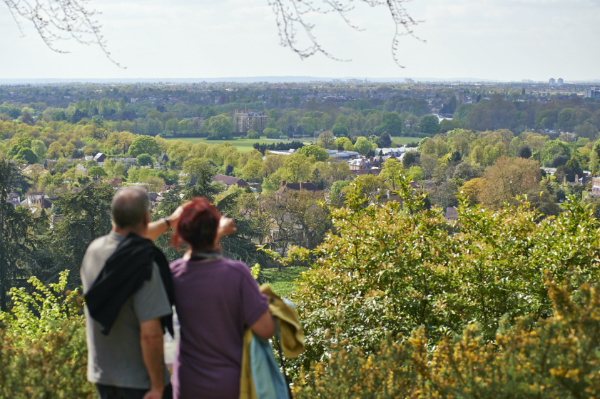
Its name, however, comes from the legend that King Henry VIII waited on top of the mound on 19th May, 1536, watching for a rocket to be launched from the Tower of London that would confirm his wife Anne Boleyn had been executed for treason (and so allow him to marry Jane Seymour).
The truth of that is unlikely – although it is possible to see St Paul’s Cathedral from the mound (it’s a view that is protected, as well as, to the west Windsor Castle and the Thames Valley), King Henry VIII was apparently in Wiltshire at the time.
The mound, however, was linked to kings as far back as 1630 when a map was published listing it as ‘Kings Standinge’, ‘standinge’ being a reference to a platform on which those not involved in a hunt could stand and watch.
Both King Henry VIII and his daughter Queen Elizabeth I are known to have hunted here – in fact, it was King Henry VIII’s father, King Henry VII, who built a royal palace at Richmond and named it after his estate in Yorkshire.
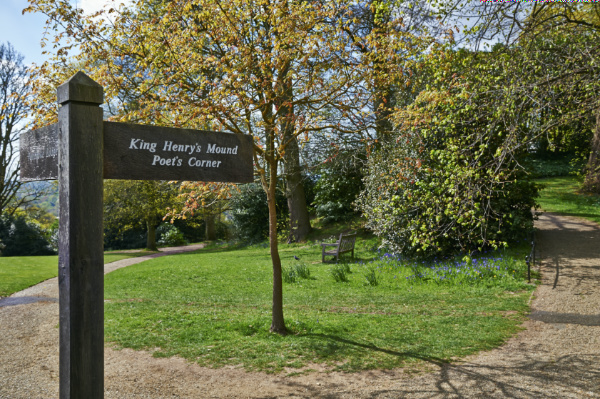
The mound was later incorporated into the gardens of Pembroke Lodge in the 19th century, during much of the latter half of which the property was home to Prime Minister Lord John Russell.
Today the Grade I-listed Richmond Park is managed by the Royal Parks.
For more on Richmond Park, head to www.royalparks.org.uk/parks/richmond-park.
PICTURES: The Royal Parks
This Week in London – Princess Beatrice’s bouquet; Technicolour Dickens; and, the Royal Parks’ ‘Summer of Kindness’…
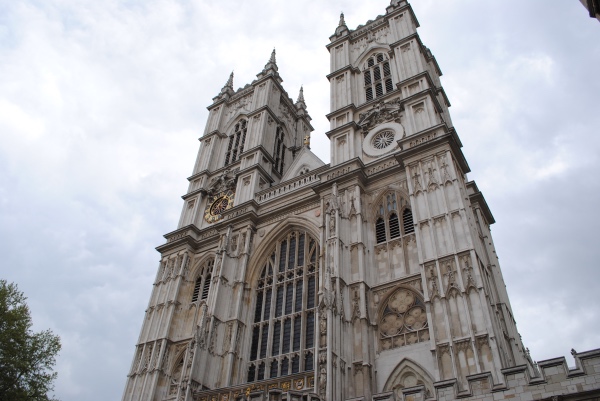 • Princess Beatrice, who married Edoardo Mapelli Mozzi in a private ceremony in The Royal Chapel of All Saints at Windsor’s Royal Lodge last week, has sent the bouquet she carried during the wedding to rest on the Grave of the Unknown Warrior in Westminster Abbey. The tradition of royal brides sending their bouquets to rest on the grave was started by Queen Elizabeth, the Queen Mother, when she lay her bridal bouquet on the grave in memory of her brother Fergus who was killed in 1915 at the Battle of Loos during World War I. Brides including Queen Elizabeth II, the Duchess of Cambridge and Princess Beatrice’s sister, Princess Eugenie, have since continued the tradition. The grave commemorates the fallen of World War I and all those who have since died in international conflicts.
• The Charles Dickens Museum in Bloomsbury reopens on Saturday, 25th July, with a new exhibition marking the 150th anniversary of the author’s death. Technicolour Dickens: The Living Image of Charles Dickens explores the power of the writer’s image and features paintings by the likes of William Powell Frith, Victorian-era photographs, ink drawings by “Automatons”, and letters from Dickens in which he explains what he really thought of sitting for portraits. The museum has also commissioned artist and photographer Oliver Clyde to create eight colourised portraits based on images taken from its collection. For more see www.dickensmuseum.com. Other reopenings this coming week include the Horniman Museum (Thursday, 30th July).
• The Royal Parks are launching a ‘Summer of Kindness’ campaign to keep the parks clean after unprecedented levels of rubbish were left in the parks during the coronavirus lockdown. The Royal Parks, which played a key role in the physical and mental wellbeing of many people during the lockdown, report that some 258.4 tonnes of rubbish – the equivalent in weight of 20 new London buses or 74 elephants – were collected from London’s eight Royal Parks in June alone with staff having to spend more than 11,000 hours to clear up. And, with groups now able to gather, the littering has continued, prompting The Royal Parks to call for visitors to care for the parks by binning litter or taking it home. So, please, #BeKindToYourParks.
Send all items for inclusion to exploringlondon@gmail.com.
LondonLife – Summers day in Richmond Park…
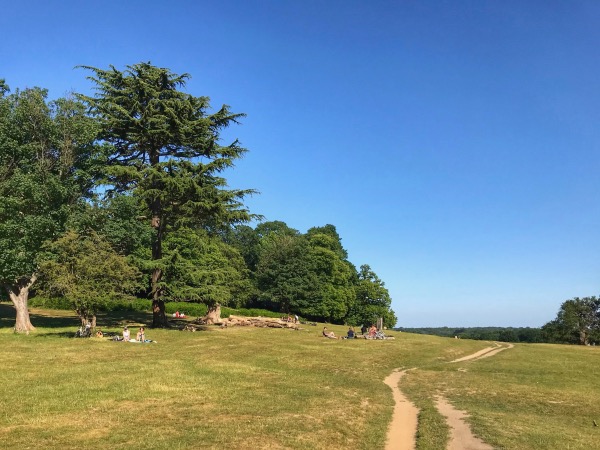
PICTURE: Guillermo Bresciano/Unsplash
LondonLife – A roof in the park…
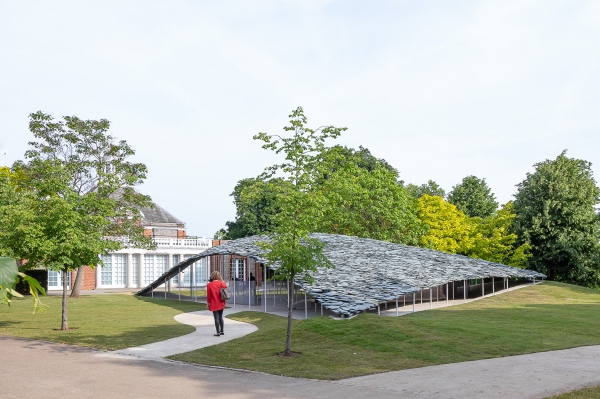
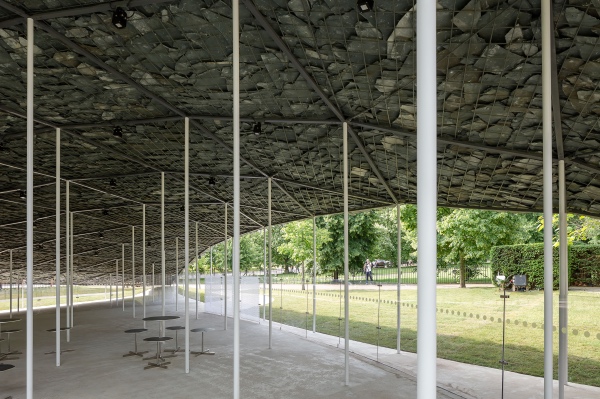
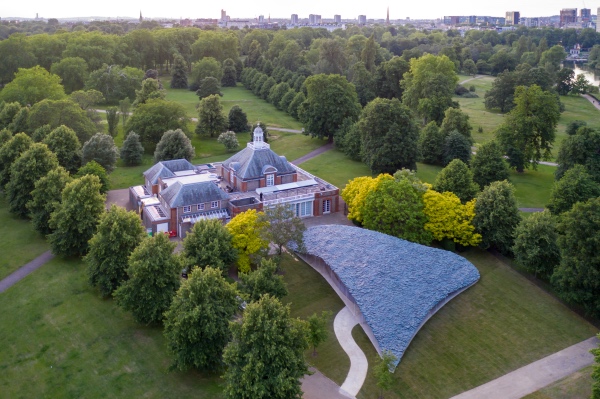
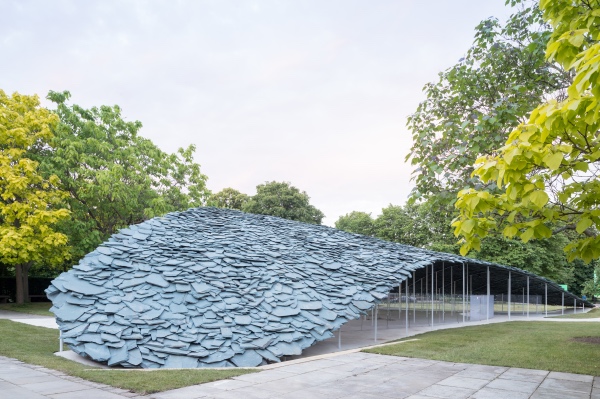
Japanese architect Junya Ishigami’s design for this year Serpentine Pavilion takes inspiration from architecture’s most common feature – the roof – and features an arrangement of slates positioned to form a single large canopy with a cave-like space beneath. The pavilion features 61 tonnes of Cumbrian slate tiles and 106 steel columns and, says Ishigami, is designed to play “with our perspectives of the built environment against the backdrop of a natural landscape, emphasising a natural and organic feel as though it had grown out of the lawn, resembling a hill made out of rocks”. “Possessing the weighty presence of slate roofs seen around the world, and simultaneously appearing so light it could blow away in the breeze, the cluster of scattered rock levitates, like a billowing piece of fabric,” he says. Ishigami is the 19th architect to design a pavilion for the Serpentine. His pavilion, which is located near the Serpentine Galleries in Kensington Gardens, can be visited until 6th October. It’s open 10am to 6pm daily. OS x Serpentine Park Nights, a programme of talks, films and performances, takes place on selected Friday nights. For more, head to this link. ALL PICTURES: © Junya Ishigami + Associates/Photography – Top and immediately below © 2019 Norbert Tukaj; Others below – © 2019 Iwan Baan.
Treasures of London – Queen Victoria outside Kensington Palace…
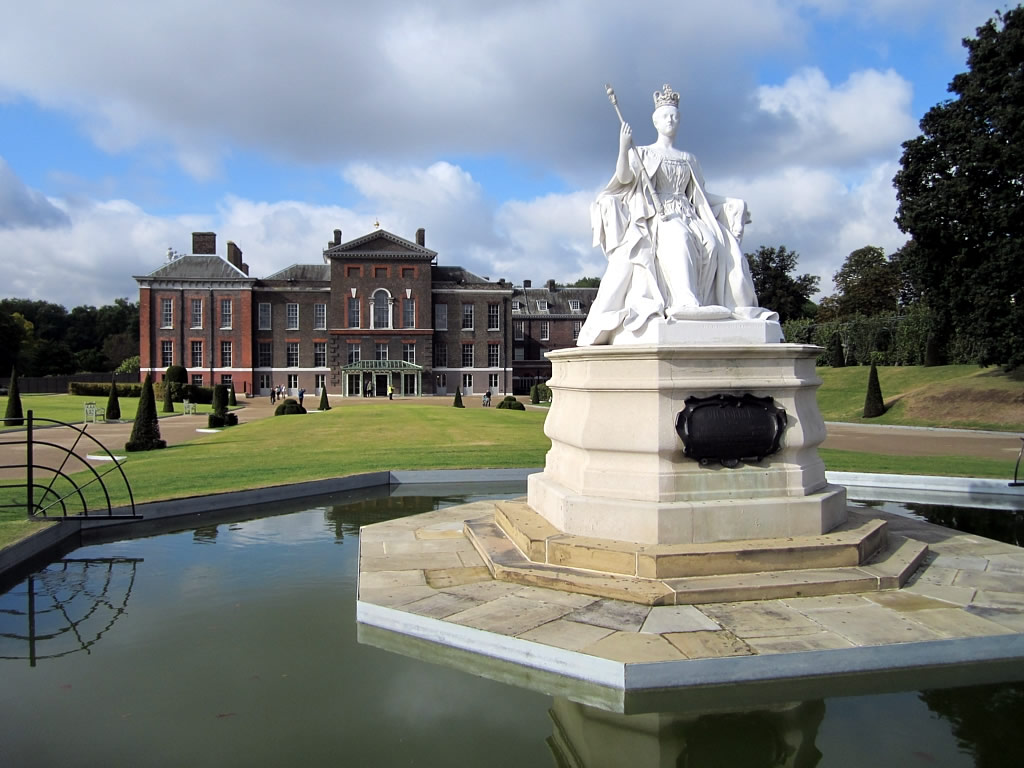
This statue in Kensington Gardens, just to the east of Kensington Palace, is one of numerous depicting the Queen located around London. But what sets this one apart is the sculptor – none other than the Queen’s daughter, Princess Louise.
The statue was erected in 1893 and funded by the citizens of Kensington – officially the Kensington Golden Jubilee Memorial Executive Committee – to commemorate the Queen’s Golden Jubilee (actually held in 1887).
Kensington Palace was, of course, where the Queen was born and lived until her accession to the throne.
Made of marble, the statue depicts Victoria, seated and wearing her coronation robes in 1837 at the age of just 18. It sits on a plinth in the middle of a small ornamental pond.
Princess Louise, the Duchess of Argyll, had been taught by sculptor Mary Thornycroft and and Sir Edgar Boehm and was widely known among artists. She was apparently approached by her friend, painter Alma Tadema, about making the work and initially refused before later agreeing to make it.
Other works she created include a memorial commemorating those who fought in the South African War in St Paul’s Cathedral and another statue of Queen Victoria, this one located in Montreal, Canada.
Princess Louise married John, Marquess of Lorne, heir of the Duke of Argyll, who went on to serve as Governor-General of Canada from 1878-1884.
PICTURE: David Stanley (licensed under CC BY 2.0)
LondonLife – Brompton’s new memorial for those lost in World War I…
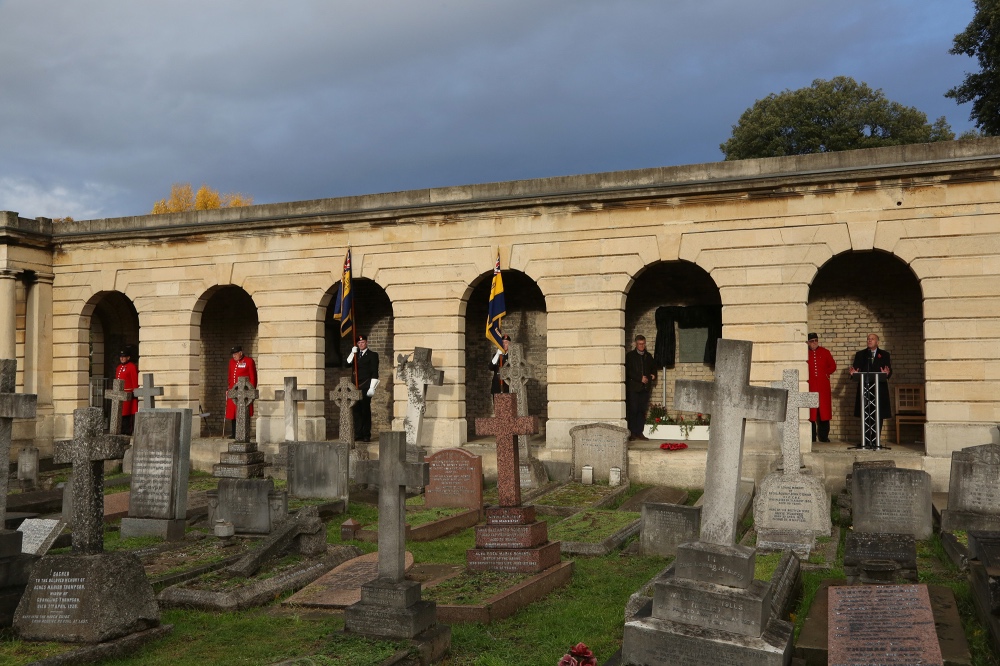
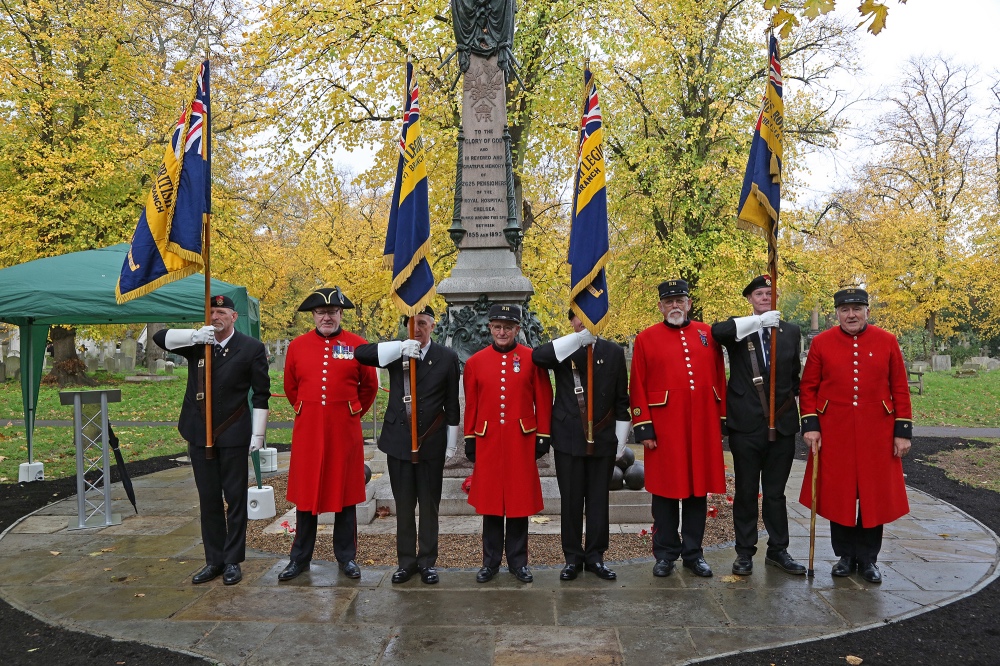
A new permanent World War I memorial was unveiled at Brompton Cemetery earlier this month dedicated to the 24 members of the Royal Parks and Palaces staff who died in the Great War. The inscribed memorial stone, placed on one of the chapel’s colonnades (pictured above), also commemorates all the parks, gardens and grounds staff from across the UK who never returned from the war. It was unveiled at a service conducted by Reverend Canon Anthony Howe, Chaplain to the Chapel Royal at Hampton Court Palace, the gardens of which were managed by the Royal Parks during World War I. Meanwhile, the foundations for a new permanent wildflower meadow honouring the 2,625 Chelsea Pensioners buried in the cemetery were also laid near the Chelsea Pensioners’ monument (pictured below). The meadow will feature flowers which appeared in French fields after the Battle of the Somme including poppies, cornflowers, loosestrife, mallow and cranesbill. Two benches, positioned to either side of the Grade II-listed memorial, have been donated by the Royal Hospital Chelsea as a place for quite reflection. For more on the cemetery, see www.royalparks.org.uk/parks/brompton-cemetery. PICTURE: The Royal Parks/Paul Keene.
Treasures of London – Cavalry Memorial…

With World War I commemorations taking place last weekend, so we thought it fitting to take a look at one of the city’s memorials.
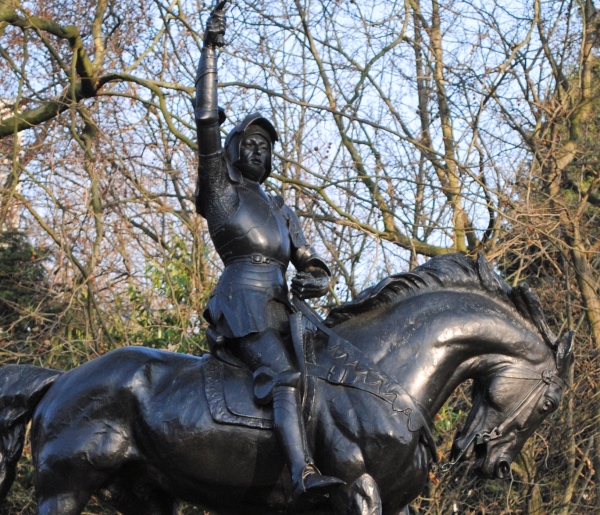
Located in Hyde Park, the Cavalry Memorial (also known as the Cavalry of the Empire Memorial), which commemorates the more than 4,000 members of the cavalry regiments killed during the “Great War”, depicts St George (patron saint of cavalry), shown as a knight, triumphing over the defeated dragon coiled beneath his horse’s hooves.
It’s said that St George was modelled on 1454 bronze effigy of Richard de Beauchamp, 13th Earl of Warwick, and that the horse was adapted from a 15th century engraving by Albrecht Dürer.
The pedestal underneath is decorated with a frieze of galloping horsemen from different countries within the Empire and the statue is accompanied by a stone backdrop, originally designed to shield the statue from Park Lane, upon which are bronze plates listing cavalry units from across the British Empire that served in World War I along with the names of the four cavalry officers who became field marshals – Haig, French, Allenby and Robertson.
Designed by army vet Captain Adrian Jones, the bronze sculpture was made from guns captured during the war (Jones also sculpted the Quadriga atop Wellington Arch on Hyde Park Corner). The Portland stone pedestal was designed by Sir John Burnet.
The Grade II*-listed memorial, which was proposed in 1920, was originally unveiled by Field Marshal John French, 1st Earl of Ypres and the Prince of Wales (later Edward VIII) on 21st May, 1924.
It was originally located at Stanhope Gate but was moved to its present site to the west, near the bandstand, in 1961 after Park Lane was widened.
For more on Hyde Park, see www.royalparks.org.uk/parks/hyde-park.
For more World War I memorials in London, see our previous special series here.
 Exploring London