This Week in London – Marie Antoinette; ‘Theatre Picasso’, ‘Exploring Space’ at the Science Museum; and Talk Like A Pirate Day…

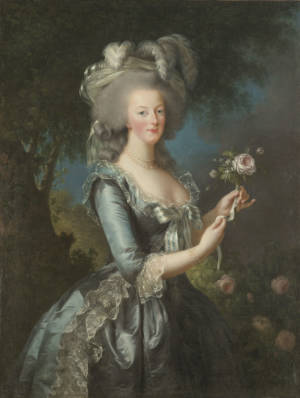
Portrait de Marie-Antoinette à la rose, Élisabeth-Louise Vigée Le Brun © Château de Versailles, Dist. Grand Palais RMN / Christophe Fouin.

The UK’s first exhibition to focus on the French Queen, Marie Antionette, opens at the V&A on Saturday. Marie Antoinette Style explores the dress and interiors adopted by the Queen, an early modern “celebrity”, during the final decades of the 18th century. It features some 250 objects including loans from Versailles which have never before been seen outside of France. There are personal items worn by the Queen including fragments of court dress, her silk slippers and jewels from her private collection as well as items from the Queen’s dinner service at the Petit Trianon, accessories and intimate items from her toilette case and even recreated scents from the court and a perfume which was favoured by the Queen. There also contemporary couture pieces by designers such as Moschino, Dior, Chanel, Erdem, Vivienne Westwood and Valentino and costumes, including shoes, made for screen, such as for Sofia Coppola’s Oscar winning film Marie Antoinette. The exhibition can be seen in Galleries 38 and 39 until 22nd March. Admission charge applies. For more, see vam.ac.uk/exhibitions/marie-antoinette.

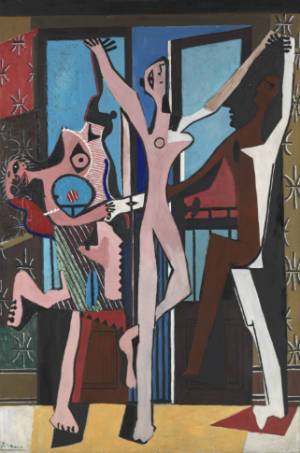
Pablo Picasso, The Three Dancers (1925) Tate. © Succession Picasso/DACS, London 2025.

Around 50 works by famed artist Pablo Picasso have been brought together for a new exhibition at the Tate Modern to mark the centenary of the artist’s work The Three Dancers (1925). Staged by contemporary artist Wu Tsang and write and curator Enrique Fuenteblanca, Theatre Picasso explores aspects of performance in his works and features the Tate’s entire collection of Picassos which, alongside The Three Dancers, also includes Weeping Woman (1937) and Nude Woman in a Red Armchair (1932). There are also loans from key museums in France as well as prints, drawings, sculptures, textile works and collages. These include the wool and silk tapestry Minotaur (1935) which is being displayed in the UK for the first time. Accompanying the works is Henri-George Clouzot’s 1959 film The Mystery of􏰱Picasso. Admission charge applies. Runs until 12th April. For more, see

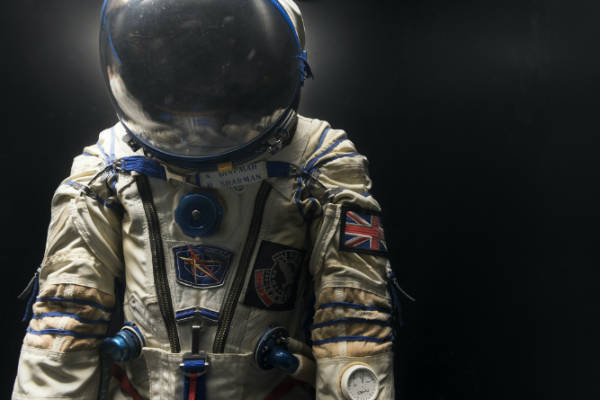
A new free gallery revealing the stories behind space exploration opens at the Science Museum in South Kensington on Saturday. The gallery – Exploring Space – showcases iconic items from the history of space exploration including a chunk of Moon rock nicknamed ‘Great Scott’ which was collected in 1971, the Soyuz TMA-19M descent module that carried astronaut Tim Peake, and the Sokol KV-2 rescue suit worn by Helen Sharman in 1991. There are also new technologies from the space sector including prototype electric propulsion technology from Magdrive and the ‘rolly-polly’ LEV-2 Moon rover, the result of the first collaboration between a space agency (JAXA) and a toy company (Takara Tomy). For more, see www.sciencemuseum.org.uk/see-and-do/space.

British astronaut, Helen Sharman’s Sokol spacesuit made by Zvezda. Sharman wore this rescue suit during the space flight on board the SOYUZ-TM-12 and MIR spacecraft in May 1991. Space suit model number KV-2 No. 167.

“Ahoy me hearties!” It’s International Talk Like A Pirate Day on Friday and the National Maritime Museum in Greenwich is celebrating from Friday across the weekend with talks about everything from Barbary corsairs to sea shanties, character actors and two-for-one discounts on tickets to the Pirates exhibition. Visitors over the weekend who dress like a pirate will be in the chance to win prizes including Cutty Sark rig climb tickets, annual passes to the Old Royal Naval College, and a family tour of The Golden Hinde. And to brush-up on your pirate lingo, “Abbey-Lubber” means a lazy sailor avoiding work, and ‘Jack Ketch’ a hangman or executioner. For more, see rmg.co.uk/whats-on/national-maritime-museum/international-talk-pirate-day.

Send all items to exploringlondon@gmail.com.

This Week in London – Wildlife Photographer of the Year is coming; ‘Vanishing Africa’; and, ‘Black Chiswick Though History’…

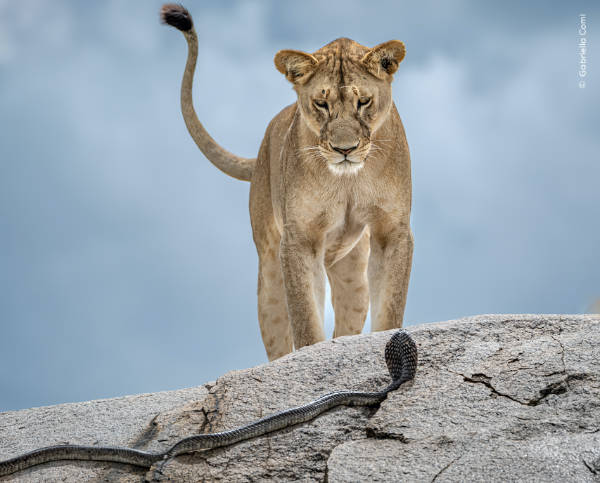
‘Wake-up Call’ by Gabriella Comi, Italy, (Highly Commended, Behaviour: Mammals). PICTURE: Courtesy of the Wildlife Photographer of the Year, Natural History Museum

Depicting a dramatic stand-off between a lion and a cobra in the Serengeti National Park in Tanzania, Gabriella Comi’s impressive image is among the 60,636 entries, from across 113 countries and territories, received in the Natural History Museum’s 61st annual Wildlife Photographer of the Year competition. The competition’s category winners and the prestigious ‘Grand Title’ and ‘Young Grand Title’ awards will be announced on 14th October, 2025, after which, from 17th October, 100 of the images will go on show at the museum in South Kensington. Other images revealed this week include Amit Eshel’s portrait of an inquisitive pack of Arctic wolves and photographs of flamingoes, coyotes and red deer by emerging young photographers as young as nine-years-old. For more, see https://bit.ly/WPY61Exhibition.

One of the images in ‘Vanishing Africa’. PICTURE: © Mirella Ricciardi

The Science Museum has launched a new online exhibition, Vanishing Africa, which features images by Kenyan-born photographer Mirella Ricciardi and reveal how much climate change is changing the continent. Taken in East Africa over two years in the 1960s, the photographs are a visual record of the Indigenous peoples of the region, including the Maasai, Samburu, Turkana, Orma, Pokot and Rendille people, and “capture a land of untamed wilderness, diverse wildlife, and Indigenous communities attuned to nature”, an East Africa which many no longer recognise. The exhibition has been published to celebrate the ‘UK/Africa Season of Culture’ and launches ahead of the international climate summit, COP30. To view it, head to www.sciencemuseum.org.uk/objects-and-stories/vanishing-africa-through-mirella-ricciardis-lens.

On Now: Black Chiswick Through History. This project, launched in 2011, looks at how the history of Chiswick House is connected to Black history and people of colour. This year’s installation explores the life of 18th-century Chiswick House resident James Cumberlidge – one of the few people of African heritage in Britain whose likeness was captured and preserved for posterity – and traces his journey from  page boy at Chiswick House to trumpeter in the Royal Court of King George III. There’s also a painting dating from the 1870s which depicts Queen Victoria attending a fashionable garden party right here at Chiswick House in July, 1875. Runs until 28th September. Admission charge applies. For more, see https://chiswickhouseandgardens.org.uk/event/visit-chiswick-house/.

Send all items for inclusion to exploringlondon@gmail.com.

This Week in London – Showtime! at the Charles Dickens Museum; the ‘Future of Food’; and, Peter Rabbit hops to Hampton Court…

PICTURE: VV Shots/iStockphoto

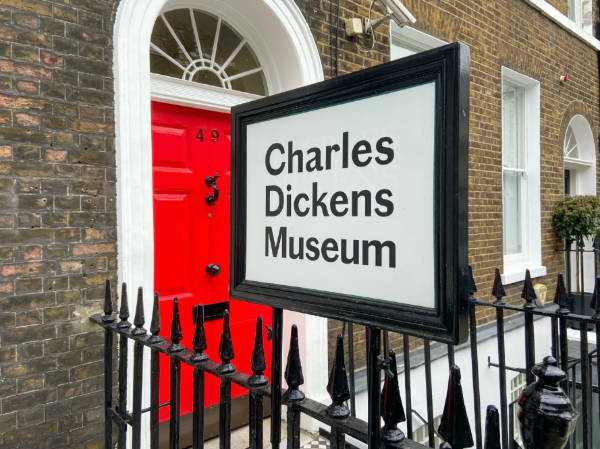
The enduring appeal of Charles Dickens’ works and how they have been adapted for the stage, screen and radio is the focus of a new exhibition at the Charles Dickens Museum in Bloomsbury. Showtime! looks at productions starting from as far back as 1837 and including such classics as The Muppets Christmas Carol and Oliver! the musical with objects on show including original playbills, posters, programmes, photographs and props. There’s also the opportunity to hear from actors and writers about what makes Dickens so adaptable and see Dickens’ own works which he annotated with stage directions. The display can be seen until 26th January. Admission charge applies. For more, see www.dickensmuseum.com.

A major new exhibition on the future of food – how science is creating more sustainable ways of producing and consuming food – opens at the Science Museum today. Future of Food reveals how the way we grow food and eat impacts the climate, nature, and society. Among the more than 100 objects on show are cricket burgers and cell-grown salmon as well as 3,500-year-old fermented sourdough bread, the first Quorn burger dating from 1981 and the first beef steak grown outside a cow. There is also the chance to join a multiplayer interactive game and create your own “future for food”. Runs until 4th January. Admission is free. For more, see https://www.sciencemuseum.org.uk/see-and-do/future-of-food.

The Peter Rabbit Adventure at Hampton Court Palace. PICTURE: Courtesy of Historic Royal Palaces.

Peter Rabbit is hopping over to Hampton Court Palace to take part in a new family trail that brings Beatrix Potter’s beloved characters to life in the palace gardens from tomorrow. The Peter Rabbit Adventure, included as part of the palace admission, is spread over the Kitchen Garden, Tiltyard, and Wilderness and the activities on the trail will introduce little ones to the plants, vegetables and wildlife that inhabit the gardens. These include the chance to use Mrs Tiggy-winkle’s washing equipment to make music among the trees, to join in a search for Peter Rabbit under wheelbarrows and flowerpots in the Tiltyard, and to try to hop, skip and jump as high as Peter and his friends. A larger-than-life Peter Rabbit will be greeting families in the Kitchen Gardens. Runs until 7th September. For more, see https://www.hrp.org.uk/hampton-court-palace/whats-on/the-peter-rabbit-adventure/.

Send all inclusions to exploringlondon@gmail.com

This Week in London – ‘Making Egypt’ at the Young V&A; new memorial to humanitarian aid workers; and, Science Museum’s ‘Exploring Space’ gallery to close soon…

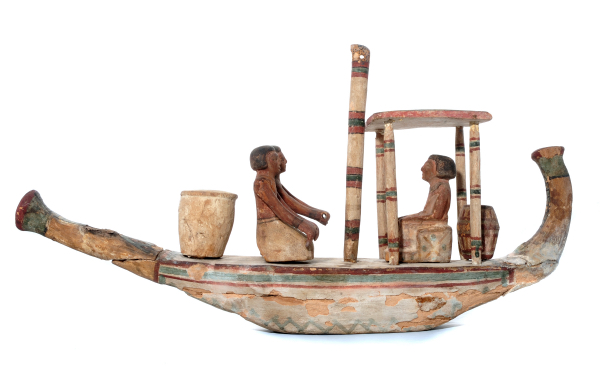
Wooden Funerary Boat approx. 3000 years old. PICTURE: Courtesy of Chiddingstone Castle

A new exhibition exploring how stories and images from ancient Egypt continue to influence art, design and popular culture today opens at the Young V&A in Bethnal Green on Saturday. Making Egypt is divided into three sections – Storytelling, Communicating and Making – and features more than 200 objects which, as well as ancient artifacts, include contemporary responses from jewellery and fashion designers, graphic novelists and ceramic artists throughout. Highlights include everything from a 4000-year-old small wooden painted model funerary boat and an amulet of Taweret, goddess of childbirth and fertility, dating from between 664 BC to 332 BC to a rare carved wooden scribe’s palette which was used to hold ink and brushes, and Egyptian faience shabtis dating from between 380 BC to 343 BC which represent just a handful of more than 300 small funerary figures discovered in the tomb of Djedhor. Runs until 2nd November. Admission charge applies. For more, see vam.ac.uk/young.

A new plaque commemorating humanitarian aid workers has been unveiled in the crypt of St Paul’s Cathedral. Located near the memorial to Florence Nightingale, the plaque “celebrates the bravery of those who dedicate their lives to helping others and remembers those who have been murdered or injured while delivering humanitarian assistance”. Hand-carved by stonemason Martin Gwilliams, the plaque reads: “In celebration of Humanitarian Aid Workers. Helping those in need whoever and wherever they are. And in remembrance of those who have died in the pursuit of their calling.” The plaque is the first in the UK in a public space to honour humanitarian aid workers and their work in conflict zones and disaster-stricken areas around the world. For more, see www.stpauls.co.uk.

After almost 40 years, the Science Museum’s ‘Exploring Space’ gallery at the South Kensington institution will partially close on 22nd April and fully close in early June as part of preparations for the museum’s new ‘Space’ gallery. Key objects on display include the Soyuz spacecraft that carried astronaut Tim Peake back to Earth, the spacesuit worn by Helen Sharman, the first Briton in space, during a 1991 spaceflight and a three-billion-year-old piece of the Moon. Other items include a British Black Arrow rocket and a United States Scout rocket suspended from the gallery’s ceiling, a RL10 rocket engine and a J-2 rocket engine which powered the Apollo astronauts to the Moon. For more, see www.sciencemuseum.org.uk

Send all items to exploringlondon@gmail.com

This Week in London – One of the world’s most valuable watches at Science Museum; medieval silk bag (with a story) goes on show at Westminster Abbey; and, new electric bus display at London Transport Museum…

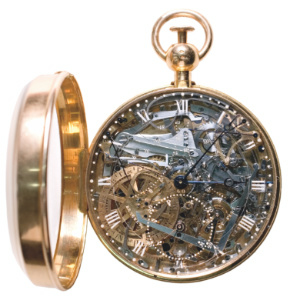
The ‘Marie Antoinette’ perpetuelle, Breguet, No 160, Paris, 1783-1820
© The Museum for Islamic Art, Jerusalem

One of the world’s most valuable watches – the No 160 watch which Abraham-Louis Breguet designed for Marie Antoinette but which wasn’t completed until the 1820s, well after her death – is the star of the show at the Science Museum’s new exhibition Versailles: Science and Splendour. Opening today, the exhibition, created in partnership with the Palace of Versailles, takes visitors on “a 120-year journey through the evolution of science at Versailles” and explores how Louis XIV, Louis XV and Louis XVI encouraged the pursuit of scientific knowledge and harnessed that knowledge as a tool of power. More than 100 objects are on display and, along with Breguet’s watch, they include Louis XV’s rhinoceros, a detailed map of the moon by Jean-Dominique Cassini, and Claude-Siméon Passemant’s Clock of the Creation of the World (1754). The watch, meanwhile, has its own fascinating history, including two decades in which its whereabouts were unknown after it was stolen in 1983 (in fact, its display in this exhibition marks the first time the timepiece has travelled abroad since its safe return to the LA Mayer Museum for Islamic Art in 2008). Runs until 21st April. Admission charge applies. For more, see sciencemuseum.org.uk/see-and-do/versailles.

• A medieval silk seal bag, which dates from the reign of King Henry III, has gone on public display for the first time in the Queen’s Diamond Jubilee Galleries at Westminster Abbey. The display follows the discovery by scholars that the bag’s material is a perfect match to the silk cloth used to wrap the remains of the Emperor Charlemagne when he was buried in Germany’s Aachen Cathedral (Charlemagne, seen as the first Holy Roman Emperor, died in 814 but was re-buried in the karlsschrein (Charles’s shrine) at Aachen in 1215). The bag at the abbey contains a wax seal, the Great Seal of King Henry III, which was attached to an inventory of the jewels and precious items on Edward the Confessor’s shrine located in the heart of the abbey. It was drawn up in 1267 when Henry III was in financial difficulties and forced to pawn items from the shrine to Italian merchants to raise funds (it is believed the items were all returned within 18 months). The silk used for Charlemagne’s shroud is believed to have been spun in the 12th century in Spain or the eastern Mediterranean and, while the small piece at the Abbey originates from a separate silk, it is understood that it would have been produced by the same weavers on the same loom. The bag can been seen until Easter next year. Admission charge applies. For more, see www.westminster-abbey.org/visit-us/plan-your-visit/the-queens-diamond-jubilee-galleries/.

A new interactive electric bus display has opened at the London Transport Museum in Covent Garden. The Wrightbus Electroliner display – which has been provided by Transport UK London Bus – is based on an electric vehicle bus type which has been part of the fleet of buses operating in London since 2023. The new display features the front of the bus and includes an interactive driver cab and passenger space. Admission charge applies. For more, see www.ltmuseum.co.uk.

Send all items for inclusion to exploringlondon@gmail.com.

London Explained – Albertopolis…

An aerial view of the area known as Albertopolis. PICTURE: Andreas Praefcke/Public Domain

A nickname, connected to Prince Albert (beloved husband of Queen Victoria), which was given to an area of South Kensington centred on Exhibition Road which is packed with various cultural and educational institutions.

The land, which had been the Kensington Gore Estate, was purchased by the Royal Commission for the Exhibition of 1851 on the suggestion of Prince Albert using the profits made from the Great Exhibition which had been held just to the north in Hyde Park. His vision was for arts and science quarter which included schools, colleges and libraries as well as museums, exhibition rooms and spaces for events.

Among the buildings subsequently constructed upon it were those bearing Prince Albert’s name including Royal Albert Hall and the Victoria and Albert Museum along with the huge Albert Memorial.

Other institutions on the land include the Natural History Museum, Imperial College London, the Royal College of Music, the Royal College of Art, the Science Museum, the Royal Geographical Society and the since removed Royal Horticultural Society Gardens.

The area gained its nickname in the 1850s due to the Prince’s role in the Great Exhibition and its subsequent purchase and was seen to both celebrate, but also by some, to satirise him. It fell out of use after the Prince’s death in 1861 but was subsequently revived in the 1960s and since to bring attention to buildings in the area threatened with demolition.

A pedestrian subway under Exhibition Road runs north from South Kensington Station and gives access to the museums (when it was built in 1885, a toll of one penny was charged to use it).

This Week in London – ‘Lucky Jim’ reunited with historic plane; Banksy work related to Guildhall Yard; and, a new Kew audio tour…

‘Lucky Jim’, a toy cat mascot belong to Jim Alcock – pilot of the first trans-Atlantic flight, has been reunited with the Vickers Vimy biplane aircraft that made the flight for the first time since 1919. The cat accompanied the famous aviator and his navigator Arthur Whitten Brown on their historic 17 hour, 1,880 mile journey. Following preservation efforts is now displayed alongside the aircraft in the Flight gallery at the Science Museum in South Kensington. Lucky Jim was previously displayed at the Science and Industry Museum in Manchester until 2019. A cartoon version of the cat is also the star of a new family trail around the gallery. For more, see https://www.sciencemuseum.org.uk/see-and-do/flight.

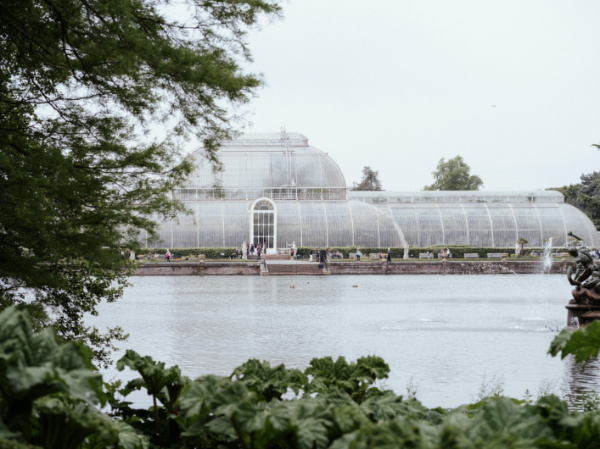
The Palm House at Kew Gardens. PICTURE: Annie Spratt/Unsplash

Explore the plants of Kew Gardens’ historic Palm House with a new audio tour. Created by Kew’s Community Horticulture Programme in collaboration with outreach participants, Pollinators of the Palm House puts a spotlight on some of the remarkable stories and pollination tricks of incredible plants inside the 175-year-old structure. These include the giant cycad (Encephalartos altensteinii) – officially the oldest pot plant in the world, and the traveller’s palm (Ravenala madagascariensis), which is pollinated by lemurs in the wild on Madagascar. For more, see www.kew.org.

An artwork by Banksy has been relocated to Guildhall Yard for its protection. The work, which depicts swimming piranhas, appeared on a sentry box near Ludgate Hill earlier this month. A City of London Corporation spokesperson saying a permanent home would be found “in due course”.

Send all items for inclusion to exploringlondon@gmail.com.

This Week in London – Life in the Roman army explored; clockwork treasures from China; and, Kew Gardens’ Orchid Festival…

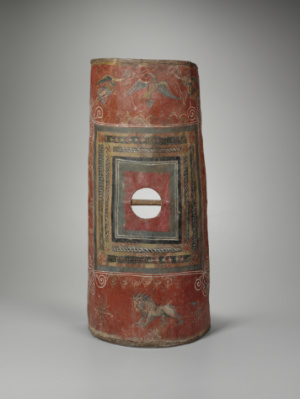
A major new exhibition on life as a Roman legionary opens at the British Museum today. Legion: Life in the Roman army shares stories of real legionaries and shows how the army was as much an “engine of social change” as it was a war machine. More than 200 objects, many of which are on display in the UK for the first time, are on show including the world’s only intact legionary shield, on loan from Yale (pictured), and the oldest and most complete classic Roman segmental body armour, found in Kalkriese, Germany, in 2018. There are also the remains of a soldier found at Herculaneum, reunited with his belt and equipment for the first time outside of Italy, as well as the Crosby Garrett mask helmet – found in Cumbria in 2010, and a unique dragon standard found in Germany. The exhibition, which can be seen in the Sainsbury Exhibitions Gallery until 23rd June, also features a specially designed Horrible Histories themed trail of the exhibition with interactive family stations. Admission charge applies. For more, see www.britishmuseum.org.

More than 20 mechanical clocks collected by Chinese emperors are being displayed together for the first time in the UK in a new exhibition opening today at the Science Museum. Among those on display in Zimingzhong 凝时聚珍Clockwork Treasures from China’s Forbidden City is the ‘Pagoda Zimingzhong’ which, was made in London in the 1700s during the Qing Dynasty in China, ‘Zimingzhong with Turbaned Figure’ which mixes imagery associated with China, Japan and India to present a generalised European view of an imagined East, and the Zimingzhong with mechanical lotus flowers’, which, when wound, reveals a flock of miniature birds swimming on a glistening pond as potted lotus flowers open. Runs until 2nd June. Visitors are invited to pay what they can to visit the exhibition, with a minimum ticket cost of £1 per person. For more, see www.sciencemuseum.org.uk/see-and-do/zimingzhong.

Kew Gardens’ Orchid Festival returns from this Saturday, this year drawing inspiration from the unique flora and fauna of Madagascar. The display features a specially commissioned film showcasing the beauty of Madagascar – the world’s fourth largest island – as well as themed floral displays and living installations in the Princess of Wales Conservatory. The latter include ‘Lovers Baobab’ on the waterlily pond, floral sculptures recreating some of Madagascar’s most iconic wildlife, including ring-tailed lemurs, chameleons and the aye-aye, the world’s largest nocturnal primate, and a small selection of Madagascan orchids including Angraecum sesquipedale (also known as Darwin’s orchid). Visitors will also hear Malagasy music composed by the Boriza Borothers and be able to purchase food made according to a range of authentic Malagasy recipes, thanks to a menu curated by Malagasy chef Lilia Andrianovy of Lilia’s Kitchen. Orchids After Hours will also return for this year’s festival. Runs until 3rd March. Admission charge applies. For more, see www.kew.org.

Send all items for inclusion to exploringlondon@gmail.com
This Week in London – 695th Lord Mayor’s Show; Peruvian and Andean culture at the British Museum; and, a ‘virtual heart’ at the Science Museum…

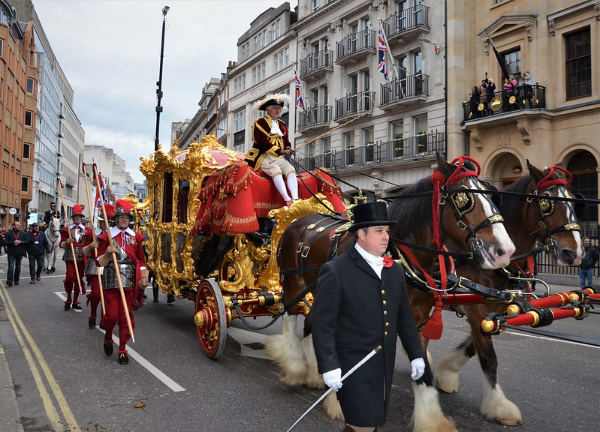
The Lord Mayor’s Show in 2019. PICTURE: It’s No Game (licensed under CC BY 2.0)

The 695th Lord Mayor’s Show – the oldest and longest civic procession in the world – will be held in the City of London this weekend. The three mile-long parade, which dates back to the 13th century, will feature Lord Mayor of London, Michael Mainelli (who will take office during the Silent Ceremony on Friday), who will process through the City streets to swear allegiance to the Crown in Westminster. Accompanying him will be a procession featuring some 7,000 people, 200 horses and around 150 floats and will include representatives of the City’s livery companies as well as military groups, bands and community organisations. The procession leaves from Mansion House at 11am and rolls down Poultry and Cheapside to St Paul’s Cathedral and then via Ludgate Hill and Fleet Street to the Royal Courts of Justice before returning, from 1:10pm, via Queen Victoria Street to Mansion House. For more, see https://lordmayorsshow.london.

The first permanent display of Peruvian and Andean culture at the British Museum has opened in the Wellcome Trust Gallery. Part of the Living and Dying exhibition is divided into two sections – the first exploring the culture’s relationship with the sea and the second with the land. The displays includes digital elements as well as objects ranging from pottery and textiles to metalwork and conch shells. For more, see www.britishmuseum.org.

A “compelling, complex and beautiful” large-scale virtual model of a human heart has gone on display in the Science Museum in South Kensington. The model was created by bioengineer Dr Jazmín Aguado Sierra using scans of her own heart and functions just as her real heart does. The ‘Virtual Heart’ display, which is introduced by Dr Aguado Sierra, can be seen in the Engineers gallery, in a section which explores collaborations between clinicians, medical engineers and patients and showcases real-world health solutions. The display is free to see. For more, see sciencemuseum.org.uk/engineers.

Send all items to exploringlondon@gmail.com.

This Week in London – Myanmar explored; Hockney portraits; and the world’s fastest all-electric aircraft…

The Golden Letter of Alaungpaya, Konbaung period, 18th century © Gottfried Wilhelm Leibniz Bibliothek –Niedersächsische Landesbibliothek, Hannover, Ms IV 751a
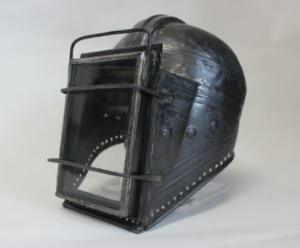
Oil Workers Helmet, 1900s © Calderdale Museums Services

A new exhibition exploring the history of Myanmar, also known as Burma, opens at the British Museum today. Burma to Myanmar, the first major exhibition in the UK to focus on the country’s history, features more than 110 objects and spans the period from around 450 AD through today. Highlights include: a golden letter sent from King Alaungpaya to George II which, made of gold, is set with 24 rubies and placed in an elephant tusk case; a wall hanging (a ‘shwe-chi-doe’ or ‘kalaga’) illustrating scenes from the Ramayana; a gold Buddhist reliquary from the 1400s; a late 19th or early 20th century blanket from the Nung-Rawang people; an oil worker’s helmet from the early 1900s; a map of several Shan states from the 1880s made to assist the British in the process of drawing hard borders with China; and, a bust of General Aung San (1915–47), leader of the Burma Independence Army. The exhibition in the Joseph Hotung Great Court Gallery can be seen until 11th February. Admission charge applies. For more, see http://www.britishmuseum.org/exhibitions/burma-myanmar

More than 30 portraits painted by British artist David Hockney at his Normandy studio between 2021 and 2022 can be seen for the first time in an exhibition of the artist’s works at the National Portrait Gallery. David Hockney: Drawing from Life was open for just 20 days prior to the gallery’s closure due to COVID-19 in 2020. It has now returned in an expanded form, featuring 160 works which trace the trajectory of Hockey’s practice largely through his intimate portraits of five sitters – Celia Birtwell, Hockney’s mother Laura Hockney; his former partner and curator Gregory Evans; master printer Maurice Payne and himself. The newly added portraits include depictions of the likes of actor and singer Harry Styles and people from the Normandy community in which he works. The exhibition can be seen until 21st January. Admission charge applies. For more, see ngp.org.uk/whatson/exhibitions/2023/hockney-drawing-from-life.

Rolls Royce’s Spirit of Innovation electric aircraft © Science Museum Group

The world’s fastest all-electric aircraft, Spirit of Innovation, has gone on show at the Science Museum in South Kensington. Suspended as if in mid-flight, the aircraft is the final object in Making the Modern World, a major gallery which presents advances in science and technology from the birth of the Industrial Revolution to the present day. Powered by a lightweight and energy efficient 400kW electric powertrain, Spirit of Innovation holds the all-electric aircraft world record for highest top speed over three kilometres, with an average of 555.9km/h (345.4 mph), breaking the previous record by over 200 kilometres per hour. The plane also set a new record for the fastest climb by an electric aircraft to three kilometres. Rolls-Royce created the aircraft as part of the Accelerating the Electrification of Flight (ACCEL) project, in collaboration with Electroflight (now part of Evolito), YASA, and the Aerospace Technology Institute. The gallery is free to visit. For more, see www.sciencemuseum.org.uk.

Send all items for inclusion to exploringlondon@gmail.com
This Week in London – London’s transport posters on show; a musical exploration at the Science Museum; and, ‘Petrichor’ at Kew…

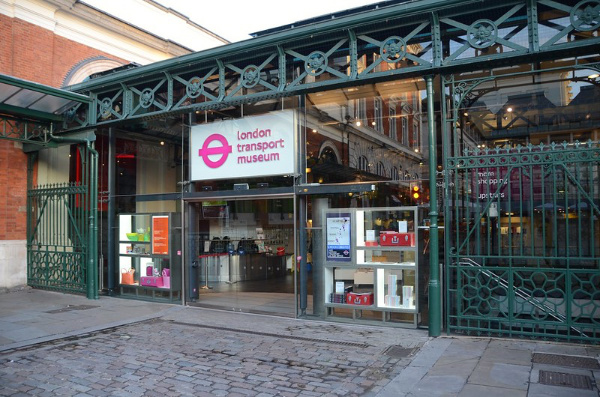
London Transport Museum in Covent Garden. PICTURE: Marcus Meissner (licensed under CC BY 2.0)

The first permanent gallery dedicated to the history of poster art and design at the London Transport Museum in Covent Garden opens tomorrow. The new Global Poster Gallery, sponsored by Global, the Media & Entertainment Group, showcases the museum’s collection of 20th century graphic art and design – one of the world’s largest. The new gallery, which is set over two floors, launches with the exhibition, How to Make a Poster, and an accompanying programme of events. The exhibition visually explores the process of creating posters from the pre-digital age from 1900 and features more than 110 poster artworks and posters including the Underground’s very first pictorial poster titled No need to ask a p’liceman by John Hassall, dating from 1908. Admission charge applies. The exhibition runs until 2025. For more, see www.ltmuseum.co.uk.

A new interactive exhibition exploring the mysterious hold music can have over us opens at the Science Museum today. Turn It Up: The power of music features historic music players, inventions and unusual instruments. Among the inventions on show are the MiMU gloves invented by Imogen Heap and used by Ariana Grande and Kris Halpin which use gestures to control electronic music-making software, and a virtual instrument called Headspace, created by professional trumpeter Clarence Adoo and inventor Rolf Gelhar after Adoo was paralysed from the shoulders down in a car accident while among the unusual instruments are the pyrophone organ powered by flames to the Anarchestra satellite dish which can be played in multiple new ways to make music. The exhibition can be seen until 6th May at the South Kensington premises. Admission charges apply. For more, see www.sciencemuseum.org.uk.

The work of acclaimed contemporary artist Mat Collishaw goes on show tomorrow at Kew Garden’s Shirley Sherwood Gallery of Botanical Art on Saturday. Highlights of the exhibition – Petrichor – include the UK premieres of Alluvion, a series of six new AI artworks inspired by Dutch Old Masters, and the large-scale projected work Even to the End. Other works include Heterosis – a collection of dynamic NFT’s which combine genetic algorithms with blockchain technology to facilitate the hybridisation of mutable digital flowers, The Centrifugal Soul – a zoetrope which creates a stunning illusion of motion, and Albion – a large-scale piece in the form of an intricate 19th-century ‘Pepper’s Ghost’ illusion which depicts the Major Oak in Sherwood Forest. Runs until 7th April. Admission charge applies. For more, see www.kew.org.

Send all items for inclusion to exploringlondon@gmail.com.

This Week in London – George III pocket watch at heart of new exhibition; Tommy Flowers honoured; and, Sara Shamma at Dulwich…

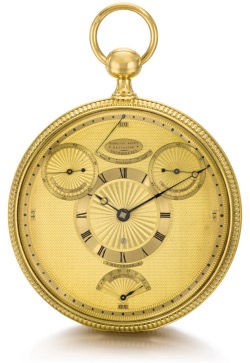
A gold pocket watch made for King George III. PICTURE: Courtesy of the Clockmakers’ Museum/Science Museum

A new display featuring timepieces by one of the greatest watchmakers of all time, Abraham-Louis Breguet, opens in Clockmakers’ Museum at the Science Museum on Tuesday. Marking the bicentenary of Breguet’s death on 17th September, 1823, Abraham-Louis Breguet: The English Connection features 25 items seldom seen in public before. They include an exceptionally rare gold four-minute tourbillon pocket watch made for George III in 1808, a ‘Simple à 2 aiguilles equation’ pocket watch made for politician Thomas Noel Hill, 2nd Baron Berwick of Attingham, and, a gilt bronze carriage clock ‘Pendule de voyage petite’ which originally belonged to Robert Henry Herbert, the 12th Earl Pembroke. The museum is located on level 2 of the Science Museum. Entry is free. For more, see www.sciencemuseum.org.uk/clocks.

An electrical engineer whose ground-breaking work in engineering culminated in the creation of the world’s first ever large-scale programmable digital computer has been honoured with an English Heritage Blue Plaque. The plaque is located at the former workplace of Tommy Flowers at Chartwell Court, in Dollis Hill. Now flats, the property was the former Post Office Research Station where Flowers designed, built and tested the computer known as ‘Colossus’. Flowers, who spent a brief period at Bletchley Park working the code-breakers in 1941, successfully demonstrated Colossus at the research station in 1943 after just 11 months of work. For more, see www.english-heritage.org.uk/visit/blue-plaques/. Meanwhile, news this week that the UK Government, inspired by London’s Blue Plaques, is introducing a national blue plaques scheme. Historic England will work together with English Heritage, local partners, and current plaque schemes to develop and roll out the national programme.

Artist Sara Shamma’s thought-provoking interpretations of works by artists including Rembrandt van Rijn, Peter Lely, Anthony van Dyck and Peter Paul Rubens go on display at Dulwich Picture Gallery from Saturday. With a focus on women, Bold Spirits addresses themes including identity, death, motherhood and unexpected beauty. Runs until 25th February. Admission charge applies. For more, see www.dulwichpicturegallery.org.uk.

Send all items to exploringlondon@gmail.com

This Week in London – Joshua Reynolds at Kenwood; ‘Power Up’ at the Science Museum; and ‘Crivelli’s Garden’…

Seventeen of Joshua Reynolds’ paintings – from one of his earliest portraits to the last painting he ever completed – have gone on show at Kenwood House. Marking the 300th anniversary of the artist’s birth (on 16th July, 1723), Spotlight on Reynolds: Lord Iveagh’s Favourite Artist at 300 features works including Catherine Moore (painted in Paris in 1752 when he was returning from his studies in Italy), Miss Cocks and her Niece (one of the last paintings begun by Reynolds before the loss of his sight around 1790), and a self-portrait he completed in 1788 when aged around 65 (the only self-portrait to show Reynolds wearing spectacles). Also on show in the display are three full-length works that span the early 1770s to the early 1780s: Mrs Tollemache as MirandaLady Louisa Manners and Mrs Musters as Hebe. Runs until 19th November. For more, see www.english-heritage.org.uk/visit/places/kenwood/.

Power Up at the Science Museum PICTURE: © Benjamin Ealovega

After five successful temporary seasons, Power Up, the popular hands-on video gaming gallery, returns permanently to the Science Museum from today. Visitors will be able to play on more than 160 consoles and hundreds of video games, as well as undertake a journey through five decades of gaming, from Pong and Mario Kart to the PlayStation 5 and Xbox and the latest in VR technology. The exhibition is divided into 14 themes and sections including a physical games area and a dedicated PC-area. Admission charge applies (daily and annual passes are available). The opening is accompanied by the return of adults-only Gaming Lates. For more, see www.sciencemuseum.org.uk.

Dame Paula Rego’s public commission, Crivelli’s Garden, is the subject of a new display at The National Gallery. Planned in collaboration with Rego, who died on 8th June last year, the display unites the monumental 10-metre-long artwork with the 15th-century altarpiece by Carlo Crivelli that inspired it, alongside life studies Rego produced of the gallery colleagues that feature in the painting. The display can be seen until 29th October. Admission is free. For more, see https://www.nationalgallery.org.uk.

• Send all items for inclusion to exploringlondon@gmail.com.

This Week in London – Bonfire Night; Treason at The National Archives; two Turner’s return after 100+ years; and, science fiction at the Science Museum…

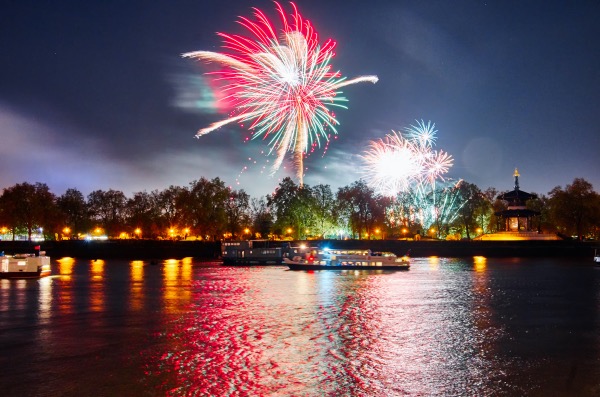
A previous Bonfire Night in London. PICTURE: teo73/iStockphoto

“Remember, remember, the 5th of November…” It’s Bonfire Night this Saturday night and fireworks displays will be held across London with key displays at Alexandra Palace, Battersea Park and Wimbledon Park. Rather than list them all here, Visit London has put together a handy guide which you’ll find here.

A section of the Treason Act. PICTURE: Courtesy of The National Archives (Open Government Licence)

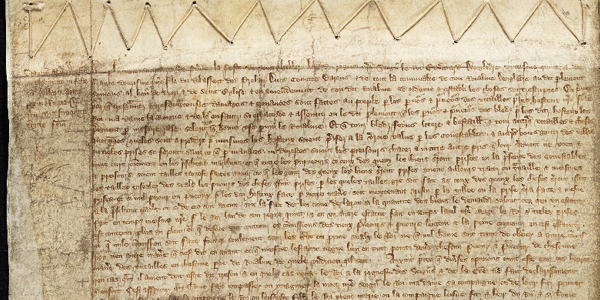
What did the abolition of the transatlantic slave trade, the establishment of the Church of England, the creation of the United States of America and the extension of UK voting rights have to do with acts of treason? Treason: People, Power & Plot, a new exhibition at The National Archives in Kew, examines the role treason has played across the span of 700 years of history. On display will be the original Treason Act, passed in 1352 during the reign of King Edward III (pictured), and the Monteagle Letter – which suggested the recipient should not attend parliament on 5th November, 1605 (effectively tipping them off about the Gunpowder Plot) as well as Guy Fawkes’ confession, a document containing the charges levelled against King Henry VIII’s ill fated wife, Anne Boleyn, and the United States’ Declaration of Independence. Accompanying the display will be a range of online and on-site events. The free exhibition opens on Saturday and runs until 6th April. For more, see www.nationalarchives.gov.uk/treason/.

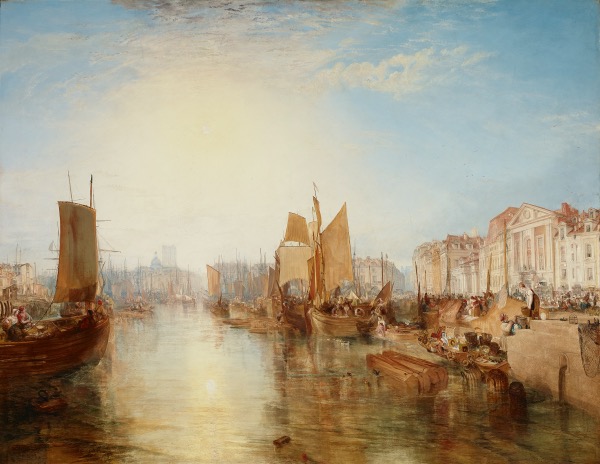
Joseph Mallord William Turner (1775 – 1851) The Harbor of Dieppe, 1826 oil on canvas 68 3/8 in. x 88 3/4 in. (173.67 cm x 225.43 cm) Henry Clay Frick Bequest. Accession number: 1914.1.122

Two ground-breaking JMW Turner paintings – Harbour of Dieppe: Changement de Domicile and Cologne, the Arrival of a Packet-Boat: Evening – have returned to the UK for the first time in more than 100 years as part of a new exhibition at The National Gallery. The Turner on Tour exhibition looks at the artist’s life-long fascination with ports and harbours and highlights the regular sketching tours he took within Europe that were central to his fame as an artist-traveller, as well as his “radical approach to colour, light and brushwork”. The two paintings, which have not been since in the UK since 1911, were exhibited in New York in 1914 at the Knoedler Gallery. They were subsequently acquired by the American industrialist Henry Clay Frick and have remained in the United States ever since but are now being generously lent by The Frick Collection. Can be seen until 19th February in Room 46. Admission is free. For more, see nationalgallery.org.uk.

On Now: Science Fiction: Voyage to the Edge of Imagination. This exhibition at the Science Museum in South Kensington features more than 70 objects and uncovers connections between significant scientific innovations and celebrated science fiction works. On display is classic literature that has inspired new understandings of the world as well as set-pieces and props from iconic films and TV – everything from a Lieutenant Uhura costume from Star Trek: The Motion Picture, to the Dalek from Doctor Who and a Darth Vader helmet created for Star Wars: Episode V – The Empire Strikes Back. There are also contemporary artworks from across the globe that explore alternative futures for humanity. The exhibition is accompanied by an events programme. Runs until 4th May. Admission charges apply. For more, see sciencemuseum.org.uk/science-fiction.

Send all items for inclusion to exploringlondon@gmail.com
This Week in London – Natural History Museum unveils a new ‘Urban Nature Project’; BBC at 100; and, UK sculpture goes online…

The Natural History Museum’s five acre site in South Kensington will be transformed into a free-to-visit green space under a new project. The Urban Nature Project will feature new outdoor galleries telling the story of life on Earth from 540 million years ago to the present day as it follows an immersive timeline of plants, trees, reptiles, birds and mammals. Children will come face-to-face with a giant bronze diplodocus surrounded by plants from the Jurassic period. The garden will also be home to scientific sensors gathering environmental DNA and acoustic data, to monitor, understand and protect urban nature. You can find out more and donate at www.nhm.ac.uk/support-us/urban-nature-project/donate.html.

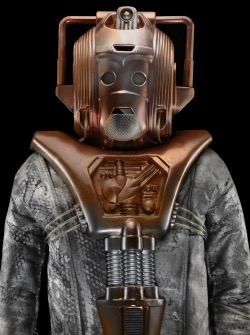
Cyberman costume as used in the T.V. series ‘Dr Who’ made by the BBC, London, c1988

• A new display exploring how the BBC developed and popularised new media has opened at the Science Museum in South Kensington. BBC at 100 features five iconic items from broadcast history that have influenced how we interact wth modern media platforms. They include a six foot tall 1988 Cyberman costume from Doctor Who, a World War II “Midget” Portable Disc Recorder developed to bring listeners close to the reality of conflict, and the BBC microcomputer developed during the Computer Literacy Project in the 1980s. The display, which is part of the Science Museum Group’s  Broadcast 100  activities marking the 100th anniversary of the BBC and the 40th anniversary of Channel 4, to free to visit. For more, see www.sciencemuseum.org.uk/see-and-do/bbc-100.

More than 36,000 sculptures on public display across the UK can be seen online. Art UK has photographed and digitised more than 13,500 outdoor sculptures as well as almost every sculpture inside public collections from the last 1,000 years. The project, which was funded with a £2.8million Heritage Fund grant and involved more than 500 photography and data volunteers, can be accessed at Art UK website

Send all items for inclusion to exploringlondon@gmail.com.

This Week in London – The Queen in wartime; Dippy returns; and, ‘Cancer Revolution’ at the Science Museum…

A new exhibition exploring the Queen’s role during wartime opens at IWM London in Lambeth tomorrow. Part of a suite of events at IWM venues celebrating the Queen Elizabeth II’s Platinum Jubilee, Crown and Conflict: Portraits of a Queen in Wartime features 18 images drawn from the museum’s image archive which chart the Queen’s experience of war – from growing up during World War II when she served in the Auxiliary Territorial Service to her role in carrying out important public duties involving the armed forces, including at the annual Service of Remembrance. Among newly digitised photographs included in the display are an image of the Queen dressed in overalls and cap while working on a vehicle during her time in the ATS, and another showing her with her father, King George VI, and mother, Queen Elizabeth, during a visit to airborne forces in 1944. IWM London is also launching a dedicated trail of historic objects spread across five gallery spaces which explores the Royal Family’s long-standing association with the British armed forces. Objects include a Princess Mary Gift Fund box which was sent to those serving at Christmas in 1914. Runs until 8th January. Admission charge applies. For more, see www.iwm.org.uk/events/queens-platinum-jubilee-iwm-london.

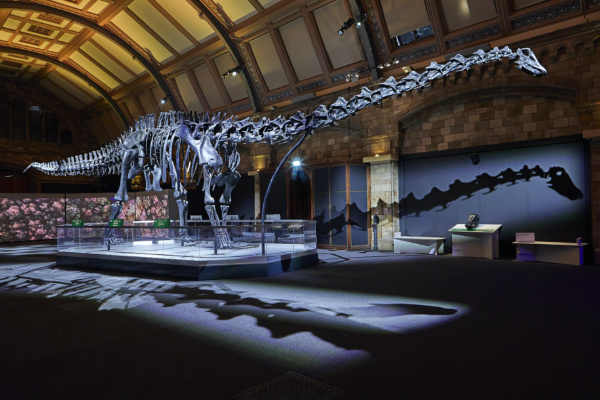
Dippy at the Natural History Museum. © Trustees of the Natural History Museum, London

• Dippy the dinosaur is back for a limited time at the Natural History Museum in South Kensington from tomorrow. A free, temporary exhibition – Dippy Returns: the nation’s favourite dinosaur – gives visitors the chance to get up close and personal with the 26 metre-long dinosaur which first went on display at the museum in 1905. The display comes at the end of a record-breaking tour of the UK in which Dippy was seen by more than two million people. Can be seen until 2nd January. To book tickets, head to www.nhm.ac.uk.

The first major exhibition to explore the history and future of cancer treatment and research opened at the Science Museum in South Kensington this week. Cancer Revolution: Science, innovation and hope features more than 100 objects including some never-before seen as well as information on cutting edge treatment and research, new artist commissions and installations, interactive exhibits and a breadth of personal stories. Runs until January, 2023. Admission is free but bookings required. For more, see www.sciencemuseum.org.uk/see-and-do/cancer-revolution-science-innovation-and-hope.

Send all items to exploringlondon@gmail.com for inclusion.

This Week in London – Beatrix Potter and nature; a tribute to Stephen Hawking; and, illuminated trails and free performances in central London…

The Tale of Benjamin Bunny, Peter with handkerchief by Beatrix Potter, 1904. Watercolour and pencil on paper. © National Trust Images/ From Beatrix Potter: Drawn to Nature at the Victoria and Albert Museum, London, 12 February 2022 – 8 January 2023.

• Artworks from some of Beatrix Potter’s most famous storybooks and sketches of the real-life animals, places, art and literature that inspired them are at the heart of a new exhibition opening at the V&A in South Kensington on Saturday. Beatrix Potter: Drawn to Nature, which is being run in partnership with the National Trust, features more than 240 personal objects which also include rarely seen personal letters, family photographs, early sketchbooks, manuscripts and scientific drawings in a family friendly display exploring Potter’s passion for animals and the natural world. The display is spread across four sections: ‘Town and Country’ which provides the backdrop to her childhood in South Kensington in London; ‘Under the Microscope’ which highlights Potter’s interest in natural science; ‘A Natural Storyteller’ which reveals her “almost accidental journey to becoming a best-selling author”; and, ‘Living Nature’ which follows Potter to the Lake District and celebrates her profound impact on the natural landscape. The exhibition can be seen until 8th January next year. Admission charge applies. For more, see vam.ac.uk/exhibitions/beatrix-potter-drawn-to-nature.

A rare copy of renowned theoretical physicist Stephen Hawking’s PhD thesis (one of only five known copies), his Permobil F3 model wheelchair and a blackboard which hung on his office wall have gone on show at the Science Museum as part of a new exhibition on his working life. Stephen Hawking at Work also features his spectacles which were adapted to aid communication, a photograph from the set of Star Trek: The Next Generation where Hawking made a guest appearance, the insignia given to him on becoming a member of the Pontifical Academy of Sciences in 1986, and an invitation to a time travellers’ party Hawking hosted. The blackboard, one of Hawking’s most treasured possessions, came from a 1980 conference – Superspace and Supergravity – at which delegates covered it in equations, cartoons and jokes about each other. Hawking’s subsequently had the blackboard framed and hung in his office. The free display can be seen until 12th June. For more, see www.sciencemuseum.org.uk/stephen-hawking.

• Free immersive outdoor light installations and pop-up performances can be seen in the city’s centre over this half-term as part of the Mayor of London’s ongoing ‘Let’s Do London’ campaign. The events include ‘City Lights’ – an illuminated light trail in the City of London by internationally renowned artists including Colour by Light which invites people to use their smartphones to turn the city into a colourful canvas (11th to 20th February), free pop-up performances in the streets of central London including storytelling, puppetry, dance, and music (17th to 20th February) as well as discounts to West End shows and dining out. For other events and more information, head to www.visitlondon.com/things-to-do/lets-do-london.

Send all items for inclusion to exploringlondon@gmail.com.

This Week in London – Borealis at Guildhall Yard; princess panto costumes; and ancient Greeks at the Science Museum…

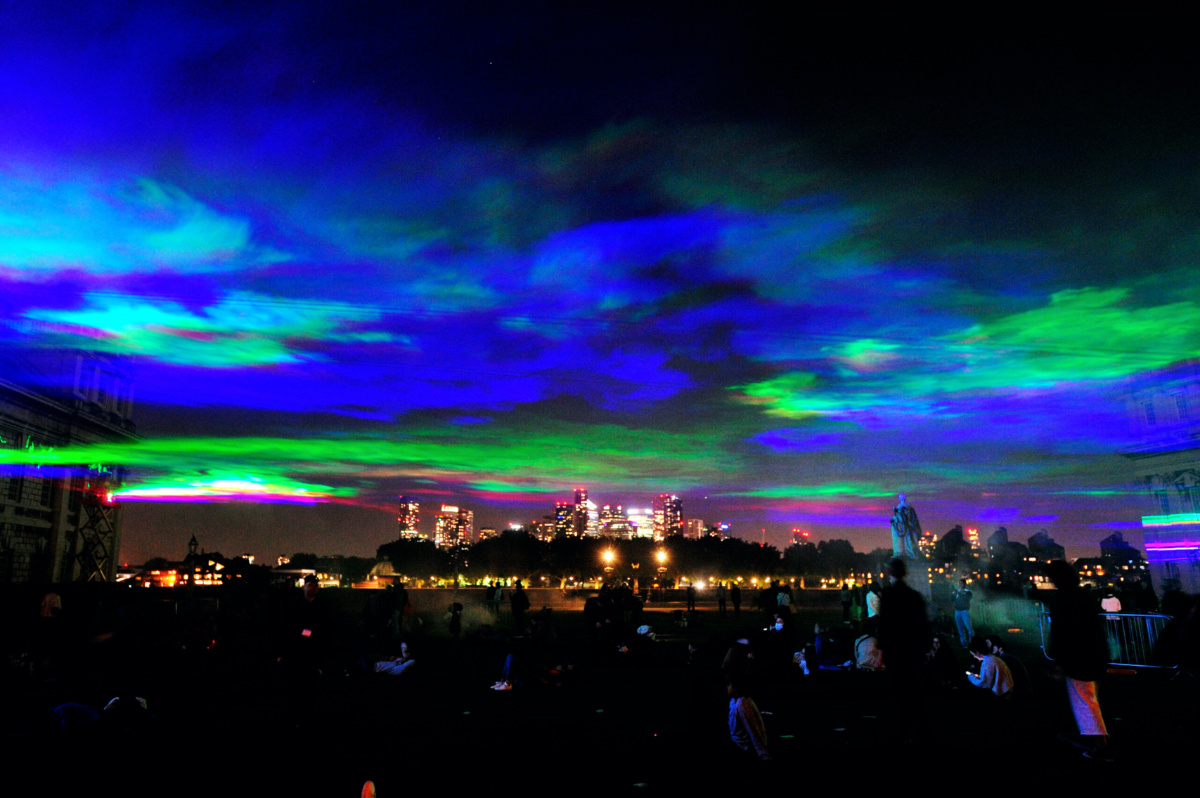
Borealis. PICTURE: Doug Southall

A dazzling light show inspired by the Northern Lights – one of the seven natural wonders of the world – can be seen in the Guildhall Yard this December. Borealis – which can be seen between 11th and 22nd December – is the work of artist Dan Acher and is one of a number of light displays which is illuminating London this winter as part of Mayor Sadiq Khan’s ‘Winter Lights’ campaign. Others include an animal-themed display bringing to life the beasts that once lived at the Tower of London, an outdoor programme of installations and video art projections illuminating the Southbank Centre’s site, the ‘Illuminated River’ display lighting up nine of London’s bridges in what is be the longest public art project in the world, and a free Canary Wharf ‘Winter Lights Spectacular’ in January which will feature 20 new light commissions by some of the most innovative artists across the globe. In Grosvenor Square, Mayfair, thousands of illuminated white roses will form an ‘Ever After Garden’ designed by fashion designer Anya Hindmarch while traditional favourites like the Hyde Park Winter Wonderland as well as winter markets and ice rinks at locations like the Natural History Museum and Somerset House are also once again returning to the city. London’s red buses are an easy way to see the Christmas lights this year with routes 12, 94, 98, 139 and 390 all travelling through Oxford Circus. Free tickets to Borealis can be booked at www.visitlondon.com/Borealis while, for more on the best bus routes, see https://londonblog.tfl.gov.uk/festive-bus-routes/. For more information on all the light shows and events (some of which are already underway), see visitlondon.com    .

Costumes worn by then Princess Elizabeth and her sister Princess Margaret in wartime-era pantomimes are at the heart of a new display at Windsor Castle this Christmas. The princesses spent much of their time at Windsor during World War II – away from the Blitz in London – and, between 1941 and 1944, they performed in and helped to stage a series of pantomimes to raise money for the Royal Household Wool Fund which supplied knitting wool to make comforters for soldiers fighting at the front. Six of the costumes they wore have been brought together for the first time and are being displayed in the castle’s Waterloo Chamber where the pantos were originally performed. The costumes on show were worn in the last two pantos – Aladdin, which was performed in 1943, and Old Mother Red Riding Boots which was performed in 1944. Also on show are 16 large scale pictures of fairy-tale characters that were pasted around the walls to create the space for the performances. Visitors to Windsor this Christmas will also see State Apartments decorated for the festive season and a 20 foot high Christmas tree in St George’s Hall. The Semi-State Rooms, created for King George IV and now used for official entertaining, are also now open to visitors. The costumes can be seen until 31st January. Admission charges apply. For more on the Christmas activities at Windsor, including a ‘Mary, Queen of Scots at Christmas Family Activity Day’ on 18th December, see www.rct.uk/whatson/. Meanwhile, Buckingham Palace is offering guided tours of the State Rooms over winter with special family guided tours available for the first time. The tours run until 30th January. Admission charge applies. For more on the guided tours, head here and for more on the family tours, head here.

• The ancient Greeks’ pursuit of knowledge is the subject of a new exhibition which has opened at the Science Museum in South Kensington. Ancient Greeks: Science and Wisdom takes visitors on a journey in which they will sail the perilous seas with a statue of Hermes that was discovered on a shipwreck off the island of Antikythera, experience the lost music of the aulos instrument through interactive displays and an exclusive video that reimagines its ancient sounds, and gaze at the starry cosmos through ancient Greek eyes via a beautiful and rare silver globe depicting the known constellations and a Byzantine sundial-calendar – the second oldest known geared mechanism in the world. The free display can be seen until 5th June. Tickets are required – to book head to sciencemuseum.org.uk/ancient-greeks.

Send all items for inclusion to exploringlondon@gmail.com.

This Week in London – The ‘RRS Sir David Attenborough’ at Greenwich; the Amazon explored at the Science Museum; and, Christmas at The National Gallery…

The RRS Sir David Attenborough in Liverpool. PICTURE: By Phil Nash from Wikimedia Commons CC BY-SA 4.0 & GFDL.

Find out what it’s like to live and work in the Earth’s polar extremes at Greenwich from today. The three day ‘Ice World Festival’ centres on the British Antarctic Survey’s vessel, the RRS Sir David Attenborough, which is visiting Greenwich before beginning its first mission to the Antarctic. Visitors will also be able to meet real polar scientists and explorers and see the Boaty McBoatface submersible as well as treasures from the National Maritime Museum’s polar collection including relics from HMS Erebus and Terror and items belonging to Captain Scott and Ernest Shackleton. While the ship can be seen from the dockside, a limited number of tickets are available for walk-up visitors to the festival (advanced booking tickets have sold out). Runs from today until 30th October. Admission is free. For more information, head here.

More than 200 images – captured by Brazilian photographer Sebastião Salgado over seven years – explore the rich diversity of the Amazon in an exhibition at the Science Museum. Amazônia provides a close-up look at one of the most unique environments on the planet through Salgado’s eyes, including panoramic scenery and the Indigenous peoples of the region (Salgado spent time with 12 different Indigenous groups over his period in the Amazon). Runs until March next year. Admission charge applies. For more, see www.sciencemuseum.org.uk/see-and-do/amazonia.

Father Christmas with return to The National Gallery for selected dates in November and December. The gallery’s Christmas experience will provide children with the chance to have their photo taken with Santa in his grotto, listen to an elven story in the winter forest set and receive a special token which they can exchange for a gift at the Elven Sorting Office. Meanwhile, Hendrick Avercamp’s painting A Winter Scene with Skaters near a Castle (about 1608–9) will be enlarged and reproduced on a canvas to provide a scenic backdrop for the activities. Admission charge applies. Bookings are now open. For more, head to www.nationalgallery.org.uk/whats-on/meet-father-christmas.

Send all items for inclusion to exploringlondon@gmail.com.

This Week in London – Nero at the British Museum; Stephen Hawking’s office to be recreated at the Science Museum; and, Blue Plaque for Indian engineer Ardaseer Cursetjee Wadia…

This image has an empty alt attribute; its file name is head-of-nero-bm.jpg
Head from a bronze statue of the emperor Nero. Found in England, AD 54– 61. PICTURE: © The Trustees of the British Museum.

A bronze head of the Roman Emperor Nero found in the River Alde in Suffolk – long wrongly identified as being that of the Emperor Claudius – and the Fenwick Hoard – which includes Roman coins, military armlets and jewellery – are among the star sights at a new exhibition on Nero at the British Museum. Nero: the man behind the myth is the first major exhibition in the UK which takes Rome’s fifth emperor as its subject. The display features more than 200 objects charting Nero’s rise to power and his actions during a period of profound social change and range from graffiti and sculptures to manuscripts and slave chains. Other highlights include gladiatorial weapons from Pompeii, a warped iron window grating burnt during the Great Fire of Rome of 64 AD, and frescoes and wall decorations which give some insight into the opulent palace he built after the fire. The exhibition, which opens today, runs until 24th October in the Sainsbury Exhibitions Gallery. Admission charge applies. For more, see www.britishmuseum.org/whats_on/exhibitions/nero/events.aspx.

The office of late theoretical physicist Professor Stephen Hawking will be recreated at the Science Museum, it was announced this week. The contents of the office, which Hawking, the author of the best-selling A Brief History of Time, occupied at Cambridge’s department of applied mathematics and theoretical physics from 2002 until shortly before his death in 2018, includes reference books, blackboards, medals, a coffee maker and Star Trek mementoes as well as six of his wheelchairs and the innovative equipment he used to communicate. The museum, which reportedly initially plans to put the objects on display in 2022 and later recreate the office itself, has acquired the contents through the Acceptance in Lieu scheme, which allows families to offset tax (his archive will go to the Cambridge University Library under the same scheme).

Nineteenth century civil engineer Ardaseer Cursetjee Wadia – the first Indian Fellow of the Royal Society – has been honoured with an English Heritage Blue Plaque at his former Richmond home. The plaque, which can be found on 55 Sheen Road – the villa Cursetjee and his British family moved to upon his retirement in 1868, was installed to mark the 180th anniversary of his election as a Fellow of the Royal Society. Cursetjee is considered the first modern engineer of India and was the first Indian at the East India Company to be placed in charge of Europeans. He was at the forefront of introducing technological innovations to Mumbai including gaslight, photography, electro-plating and the sewing machine. Cursetjee first visited London in 1839 and travelled regularly been Mumbai (formerly Bombay) and London until his retirement. For more, see www.english-heritage.org.uk/visit/blue-plaques.

Send all items for inclusion to exploringlondon@gmail.com.