 Looking from Kensington Gardens to the Albert Memorial and Royal Albert Hall in South Kensington.
Looking from Kensington Gardens to the Albert Memorial and Royal Albert Hall in South Kensington.
• The role of objects as tools of social change will be explored at a new exhibition opening at the V&A on Saturday. Disobedient Objects will feature everything from Chilean folk art textiles that document political violence and a graffiti-writing robot to defaced currency, giant inflatable cobblestones thrown during demonstrations in Barcelona and a video game about the making of mobile phones. Spanning the period from the 1970s to today, it aims to illustrate how political activism has driven creativity with most of the objects on display made by amateurs. Many of the exhibits have been loaned from activist groups around the world. The free exhibition runs at the South Kensington museum until 1st February. For more, see www.vam.ac.uk/disobedientobjects.
• A new exhibition of three large scale works in oil by artist Hughie O’Donoghue has opened in the Westminster Abbey Chapter House. The three works featured in The Measure of All Things exhibition are a reflection on both world wars and influenced by his father’s service in the British Army, his own visits to battlefields and a photo album he found in France depicting a young woman’s holidays in the north of that country in 1903-04. The exhibition, part of the abbey’s efforts to mark the centenary of the start of World War I, is open until 30th November. Admittance with general abbey admission. For more, see www.westminster-abbey.org.
• Reality and fiction come together in a new photographic exhibition which opened at the Science Museum in South Kensington this week. Stranger Than Fiction is the first major UK exhibition by Catalan artist Joan Fontcuberta and is a collaboration between the Science Museum and the National Media Museum in Bradford. The second show to be held in the Science Museum’s Media Space gallery, it features some of Fontcuberta’s best known works including photography, film, dioramas and scientific reports presented through six independent narratives which combine the real and imagined. Runs until 9th November after which it will move to the National Media Museum in Bradford. For more, see www.sciencemuseum.org.uk.
Send all items for inclusion to exploringlondon@gmail.com.
• London Open Garden Squares Weekend will see more than 200 “hidden and little known” gardens swing their gates open to the public this Saturday and Sunday. Featuring 20 more gardens than last year’s event, the gardens range from classic London square parks to rooftop gardens, community allotments and ecology centres as well as gardens attached to restaurants and historic properties. They include Highbury Square – former home of the Arsenal Football Club, Barnsbury Wood – London’s smallest nature reserve, the Cordwainers community garden in Hackney, Garden Barge Square which will see a floating garden created on the decks of barges, the garden at the PM’s home of number 10 Downing Street, and The Roof Gardens, located above the former Derry & Toms department store in Kensington. One £12 ticket gains access to all gardens (excepting those with special conditions) while National Trust members are half-price and children under 12 go free. For more and a full programme of open gardens, head to www.opensquares.org.
• Comics created during World War I are the focus of a new exhibition which opened at the Cartoon Museum in Bloomsbury this week. Never Again! World War I in Cartoon and Comic Art features works by British cartoonists Alfred Leete, Bruce Bairnsfather, William Heath Robinson and Donald McGill and includes more than 300 images ranging from political and joke cartoons taken from newspapers and periodicals and children’s comics to comic cigarette cards and publications produced in the trenches by serving soldiers. There are also some more recent works such as the 1980s comic strip Charley’s War and drawings from the Horrible Histories series. The exhibition runs until 19th October. Admission charge applies. For more, see www.cartoonmuseum.org.
• Explore the world of garbage in this new exhibition opening at the Science Museum in South Kensington on Monday. The Rubbish Collection aims to use 30 days worth of the Science Museum’s waste to “expose the beauty, value and volume of what we call ‘rubbish'”. Visitors are able to take part by collecting, sorting and documenting the rubbish generated by the museum which will then be photographed by artist Joshua Sofaer before going on to be processed for recycling or to generate electricity. During a second phase of the exhibition, Sofaer will bring the rubbish back into the museum at different stages of processing. The exhibition is part of the museum’s Climate Changing programme. Runs until 14th September. For more, see www.sciencemuseum.org.uk.
• The most complete woolly mammoth ever found is the star attraction at a new exhibition opening at the Natural History Museum tomorrow. Lyuba – a one month old mammoth – was found by a reindeer herder in Siberia in 2007 and was named after the reindeer herder’s wife. Thought to be 42,000-years-old, the young mammoth was thought to be healthy when it died and still has remnants of its mother’s milk in its stomach. It is the first time the mammoth – normally housed at the Shemanovsky Museum-Exhibition Complex in Salekhard, Russia, is being shown in Western Europe. Mammoths: Ice Age Giants will also feature life-sized models and skeletons of mammoths. Runs until 7th September. Admission charge applies. For more, see www.nhm.ac.uk.
• The German naval ship FGS Niedersachsen will take part in the Ceremony of the Constable’s Dues at the Tower of London tomorrow, having saluted the Tower with a gun salute yesterday – the first time a gun salute has taken place in honour of the ceremony in 40 years. The ceremony dates back to the 24th century and while past offerings have included barrels of rum, oysters, cockles and mussels, this year the Tower’s constable, General the Lord Dannatt, will be presented with a barrel of wine. The ceremony will see the ship’s Commander Kurt Leonards led his crew to the Tower’s West Gate where they will be challenged by the axe wielding Yeoman Gaoler before marching on to Tower Green to “present the dues” or deliver the wine, to the Constable. The ceremony takes place at noon. For more on the Tower, see www.hrp.org.uk/TowerOfLondon/.
• A new exhibition about ancient lives in Egypt and Sudan has kicks off at the British Museum today. Ancient lives, new discoveries will reveal new research about one of the museum’s most popular collections – that of ancient Egyptian and Sudanese mummies – and uses state-of-the-art technology to take you inside the mummy cases and bring you face-to-face with eight people who lived in the Nile Valley thousands of years ago. The selected mummies come from a period spanning 4,000 years, from the Predynastic period to the Christian era, and come from sites in both Egypt and Sudan. They include an adult male from Thebes mummified about 600 BC and a female singer called Tamut who lived in Thebes around 900 BC. The museum received its first mummy in 1756 and hasn’t unwrapped any of them relying on increasingly advanced technologies to see inside. The exhibition runs until 30th November. Admission charge applies. For more, see www.britishmuseum.org.
• On Now – The World of Rupert Potter: Photographs of Beatrix, Millais and Friends. The amateur photography of Rupert Potter, father of children’s author Beatrix Potter, is on show in his exhibition at the National Portrait Gallery. The display features selected works from the gallery’s extensive collection of his works including two new acquisitions which show Beatrix Potter on holidays both before and after her publishing success. Other photos depict the sitters and paintings of artist Sir John Everett Millais, who was a friend of Rupert Potter’s. The free exhibition runs until 16th November in Room 28. For more, see www.npg.org.uk.
Send all items of interest for inclusion to exploringlondon@gmail.com.
• Opening tomorrow, a major exhibition at the London Transport Museum will take an in-depth look at the role transport played in London during World War I – from how London bus drivers took their vehicles to the front lines to the advance of women into the transport workforce for the first time and, of course, how Londoners fared under the deadly aerial attack of the Luftwaffe. Key among the objects on display as part of Goodbye Piccadilly at the Covent Garden site will be ‘Ole’ Bill’ – a 1911 bus on loan from the Imperial War Museum which was requisitioned for the front and, taking its name from Bruce Bairsfather’s popular cartoon character, featured regularly in Armistice Day parades until the 1960s. Other highlights include World War I recruitment posters, a 1914 female bus conductor’s uniform and a newly acquired piece of ‘trench art’ – a decorated Daimler bus steering wheel. Runs until 8th March. Admission charge applies. For more, see www.ltmuseum.co.uk.
• The annual Museums at Night event kicks off tonight and runs until Saturday night. Among the premises participating this year is the Hunterian Museum at the Royal College of Surgeons in Lincoln’s Inn Fields which is showing a selection of rarely seen materials from its archives, the Banqueting House in Whitehall, Keat’s House in Hampstead and the Petrie Museum of Egyptian Archaeology at University College London which is running a murder mystery event Friday night. Some events are ticketed and some have an admission charge so check out the website before you go. For more, see www.culture24.org.uk/places-to-go/museums-at-night.
• The late comedian Tony Hancock was honoured with an English Heritage Blue Plaque at his former home in South Kensington on Monday on what would have been his 90th birthday. Hancock, famous for Hancock’s Half Hour on radio and TV, lived on the fourth floor of a Grade II-listed building at 20 Queen’s Gate Place with his wife Cicely Romanis between 1952 and 1958. It was the longest time he lived at any property in London and coincided with the most creative and successful period of his career with the show first board cast on BBC radio in 1954 and also appearing on TV from 1956 onwards. Hancock died in 1968. For more, see www.english-heritage.org.uk/discover/blue-plaques/.
Send all items of interest for inclusion to exploringlondon@gmail.com.
 London isn’t particularly known for its association with the space program – at least, not that we know of – but the Science Museum in South Kensington gives you the chance to get up close and personal with a piece of NASA’s history.
Located in the Making the Modern World gallery is the Apollo 10 command module, on long-term loan from the Smithsonian in the US. Launched in May, 1969, it carried three astronauts – Tom Stafford, John Young and Gene Cernan – around the moon in what was a dress rehearsal for the Apollo 11 moon landing which followed in July that year.
Stafford and Cernan descended in the accompanying lunar module to within 14 kilometres of the moon’s surface before rejoining the command module. The command module had the call sign ‘Charlie Brown’ (named for the character created by Charles M Schulz) while the lunar module was ‘Snoopy’.
The command module travelled some 500,000 miles during its eight day mission and reached a speed in excess of 24,790 mph on its return to earth, faster than any crewed vehicle since. The module splashed down in the Pacific Ocean on 26th May and the crew were recovered by the USS Princeton.
WHERE: Science Museum, Exhibition Road, South Kensington (nearest Tube station South Kensington); WHEN: 10am to 6pm daily (7pm during school holidays); COST: free; WEBSITE: www.sciencemuseum.org.uk.
PICTURE: © Science Museum and the National Air and Space Museum, Smithsonian Institution
 The Brompton Road tube station, which closed in 1934 after being made redundant following the opening of other stations, sold for a reported £53 million over the weekend. The former Piccadilly Line station, located between South Kensington and Knightsbridge stations, opened in 1906 and was designed by architect Leslie Green for the Great Northern, Piccadilly and Brompton Railway. It was used as a command centre for anti-aircraft guns during World War II and the story goes was where Nazi Rudolf Hess was interrogated after being captured in 1941. Owned up until the sale by the Ministry of Defence, it was most recently used as a training centre for air cadets and naval reservists. It will reportedly be converted into residential flats.

Joey, the puppet horse used in the West End play War Horse, has taken up a new home at the V&A in South Kensington. Created by the Handspring Puppet Company for the National Theatre’s adaption of Michael Morpurgo’s novel, Joey appeared in more than 1,640 shows since his debut at the New London Theatre on 28th March, 2009. He will now be housed in the V&A’s Theatre and Performance Gallery in a specially created display which shows how the puppet was operated on stage and features three mannequin puppeteers to illustrate the process. Joey was donated by Adrian Kohler and Basil Jones of South Africa’s Handspring Puppet Company who designed and created the puppets used in War Horse. War Horse, which continues its run at the New London Theatre, has been seen by more than four million people. For more, see www.vam.ac.uk. PICTURE: Joey at the V&A operated by Nicholas Hart (Head), Stuart Angell (Heart), Thomas Goodridge (Hind). © Victoria and Albert Museum, London.
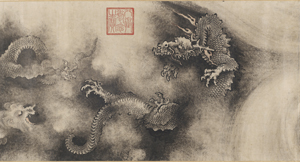 • Chinese masterpieces are the focus of a new exhibition opening at the V&A in South Kensington on Saturday. Masterpieces of Chinese Painting 700-1900 will feature more than 70 works including some of the earliest surviving Chinese paintings and many shown in Europe for the first time. Organised chronologically in six successive periods, the works in the display range from intimate works by monks to a 14-metre long scroll painting. As well as examining the tensions between tradition and innovation, the exhibition will look at the variety of settings for which the paintings were created – from tombs and temples to banners, portable handscrolls and hanging scrolls – and the materials used. The exhibition runs until 19th January. Admission charge applies. Meanwhile, from 2nd November, celebrated Chinese artist Xu Bing will transform the museum’s John Madejeski Garden into an “ethereal Arcadia” inspired by the Chinese fable Tao Hua Yuan (The Peach Spring Blossom) in an installation to coincide with the exhibition. Runs until 2nd March. For more, see www.vam.ac.uk/chinesepainting. PICTURE: Nine Dragons (detail), Chen Rong (1244), © 2013 Museum of Fine Arts, Boston
• A new exhibition of photography marking the 10th anniversary of the start of the second Iraq war opens today at the Imperial War Museum. Featuring the work of photographers Mike Moore, a former Fleet Street photographer who was the first press photographer to be officially embedded with the British Army, and Lee Craker, an American photographer who specialises in documentary photography, the exhibition examines the impact of the war on the Iraqi people and the US and British troops who served there. The exhibit is the first photography show to be exhibited as part of the IWM Contemporary programme. Runs until 5th January. Meanwhile one of Britain’s leading contemporary photographers, Donovan Wylie, explores the effects of modern day military surveillance programs in a new exhibition, at the IWM, Vision as Power. The display includes five works. Runs until 21st April. Admission to both exhibitions is free. For more, see www.iwm.org.uk.
• The Age of Glamour: RS Sherriffs’ Stars of Stage & Screen. This exhibition at the Cartoon Museum in Bloomsbury features the work of Sheriffs, whose caricatures of the likes of Charlie Chaplin, Greta Garbo and Douglas Fairbanks were published in magazines including Radio Times, London Calling and The Sketch. As well as individual portraits, the works include ensemble drawings such as one featuring Laurence Olivier and Peggy Ashcroft in Romeo and Juliette. Runs until Christmas Eve. Admission charge applies. For more, check out www.cartoonmuseum.org.
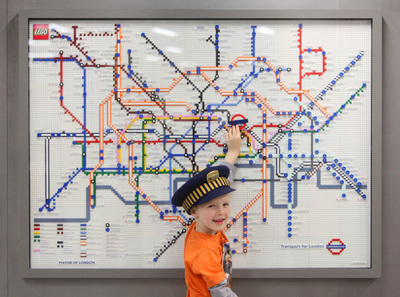
Six-year-old James Apps gets a close-up look at a map of the Tube as it will look in 2020, one of five LEGO Tube maps currently on display in London. The maps depict the evolution of the Tube network from 1927 through what it will look like in 2020, including Crossrail, and the proposed Northern Line extension and proposed Croxley Rail Link. The maps – each of which contains more than 1,000 bricks and took professional LEGO builder Duncan Titmarsh four days to build – can be found in the ticket halls of the following stations – South Kensington (1927), Piccadilly Circus (1933), Green Park (1968), Stratford (2013) and King’s Cross (2020). Visit the Transport for London website for more on the Underground’s 150th anniversary here (the website includes downloadable instructions for building your own Underground roundel out of LEGO bricks). PICTURE: Transport for London.
Apologies for the delay in posting this piece – next week we’ll post the final in this series!
The first underground railway system in the world, the London Underground – fondly known as the ‘Tube’ – is this year celebrating the 150th anniversary of its creation.
Born out of an idea to link the inner city with the various large rail termini on the outskirts, the first section of what is now the underground system – a six kilometre stretch between Paddington and Farringdon – opened on 9th January, 1863, and was run by the Metropolitan Railway, known less formally as the ‘Met’.
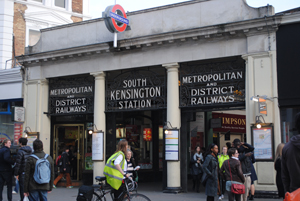 It was constructed using the ‘cut and cover’ method in which streets were dug up and tracks laid in a trench before being covered by brick-lined tunnels and the street above replaced (the method was later abandoned, apparently due to the disruption it caused to traffic). The first trains were steam-driven locomotives and drew gas-lit wooden carriages behind them (the first journey was re-enacted earlier this year – see our earlier post here. Other events commemorating the 150th included a visit to Baker Street Station by Queen Elizabeth II, Prince Philip and the Duchess of Cambridge).
The idea proved a success – 26,000 people used the new railway every day during the first six months of its operation – and the Metropolitan District Railway opened a new line between Westminster and South Kensington (station is pictured) in December, 1868, while the first Tube tunnel under the Thames, from the Tower of London to Bermondsey, opened in 1880, and what is now the Circle Line was completed in 1884.
In December 1890, the world’s first deep-level electric railway opened, running between King William Street in the City and passing under the Thames to Stockwell. Ten years later the ‘Twopenny Tube’, more formally known as the Central London Railway, opened between Shepherd’s Bush and Bank (it was from this that the use of the word ‘Tube’ to describe the Underground system caught on).
The uniting of the system began the following year with the creation of the Underground Electric Railway Company of London and by World War I, all but the Met were within a single group organisation. The name Underground first appeared on stations in 1908, the same year electric ticket machines were introduced.
In 1933, the Underground came under the control of the London Passenger Transport Board – the same year that Harry Beck’s first diagrammatic map of the underground system appeared.
Stations in the system were used as air raid shelters during World War II – part of the Piccadilly Line was closed and used as a storage site for treasures from the British Museum. Following the war, the organisation running the system went through various name changes until the formation of London Underground in 1985.
The system has since expanded – the Victoria Line was opened in the late 1960s and the Jubilee Line a decade later – and now consists of more than 408 kilometres of railway lines and 275 stations which serve more than three million passengers a day – equating to more than a billion a year, the same as the entire national rail network.
For more on the history of the Underground, see our earlier 10 Questions with London Transport Museum curator Simon Murphy. Poster Art 150 – London Underground’s Greatest Designs runs at the London Transport Museum until October. Admission charge applies. For more (including the many events around the exhibition), see www.ltmuseum.co.uk/whats-on/events/events-calendar#posterart150.
For more, check out David Bownes’ Underground: How the Tube Shaped London

 • A new exhibition opens at the V&A in South Kensington this Saturday which charts the development of cultural trade and diplomacy between Britain and Russia from the founding of the Muscovy Company in 1555 until the end of King Charles II’s reign in 1685. Treasures of the Royal Courts: Tudors, Stuarts and the Russian Tsars reveals the “majesty and pageantry” of the royal courts of both countries – from that of King Henry VIII to King Charles II in Britain and from that of Ivan the Terrible (Ivan IV) to the early Romanovs in Russia. The display features more than 150 objects including heraldry and processional armour, furnishings, clothing, jewellery and portraiture including paintings and miniatures painted by court artists. Highlights include a rarely viewed portrait of Queen Elizabeth I, the Barbor Jewel – a pendant set with an onyx cameo of the queen; a hand-colored map of ‘Muscovy’ dating from 1570, and literature including Shakespeare’s First Folio as well as a showcase of British and French silver given to the Tsars by British merchants and kept in the Kremlin. The 20 pieces include the Dolphin Basin, made by Christiaen van Vianen – said to be a favoured silversmith of King Charles I and II – in 1635. The exhibition marks the 400th anniversary of the Romanov dynasty. Admission charge applies. Runs from Saturday, 9th March, until 14th July. For more, see www.vam.ac.uk. PICTURE: Water pot (1604-05), Historic collectino of the Armoury, © The Moscow Kremlin Museums.
• The life and work of Sir Michael Caine – who turns 80 this month – is the focus of a new free exhibition at the Museum of London. Michael Caine, which opens tomorrow, features photographs including some never exhibited before as well as iconic portraits by the likes of David Bailey and Terry O’Neill as well as a selection of audio and film clips from movies such as Alfie, The Italian Job, Get Carter, Hannah and Her Sisters and Educating Rita. The exhibition follows Sir Michael’s life from “Cockney rebel, through to Hollywood legend and inspirational Londoner” and looks at how the city influenced his life and career. Runs until 14th July. To coincide with the exhibition, the Museum of London Docklands is running Caine on Screen, a selection of free films which can been voted for by the public (see our earlier post here). The schedule of films will be announced after 14th March. For voting details and more information, see www.museumoflondon.org.uk.
• A bullet-pierced military tunic worn during the Indian Mutiny in the mid 19th century has been donated to the National Army Museum in Chelsea. The tunic, worn by Lieutenant Campbell Clark, of the 2nd Bengal European Fusiliers, at Cawnpore in 1857. The lieutenant was ambushed by rebels Indian infantry and shot at point-blank range. Despite being grievously wounded (the musket ball had passed through his stomach and remained in the wound), he survived the injury and the military hospital he was taken to and went on to have a long career, rising to the rank of colonel. He died in 1896 in Sussex. The tunic was donated to the museum by Clark’s great-great-nephew, John Gordon Clark. For more, see www.nam.ac.uk.
• On Now: George Catlin: American Indian Portraits. Opening today, this exhibition at the National Portrait Gallery is the first major exhibition of the American artist’s works to be held in Europe since the 1840s and has been designed to demonstrate to the viewer how Catlin constructed a particular view of Native Americans in the minds of his audiences. Catlin made five trips into the western United States in the 1830s before the Native American peoples had been subsumed into the United States and, inspired by those trips, went on to create an Indian Gallery which featured 500 portraits, pictures and indigenous artefacts. He subsequently toured with the gallery in both the US and Europe. The exhibition is organised in collaboration with the Smithsonian American Art Museum in Washington. Runs until 23rd June. Admission charge applies. For more, see www.npg.org.uk.
Simon Murphy is a curator at the London Transport Museum in Covent Garden – the museum is currently celebrating the 150th birthday of the Underground with a series of events including a landmark exhibition on the art of the Tube (Poster Art 150 – London Underground’s Greatest Designs)…
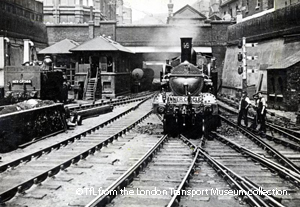 How significant was the construction of the London Underground in world terms? And how does it stack up 150 years later? “The Metropolitan Railway was a true world class pioneer, but like all pioneers it made mistakes that subsequent operators learned from. Similarly the first tube railways tested the ground for others to follow. But these pioneering lines are still part of today’s world class Tube network, and some of the original stations, like King’s Cross, are still amongst the busiest, so they must have been on the right track.”
I understand the initial stretch of line ran between Farringdon and Paddington. How quickly were other sections opened? “The Metropolitan Railway’s first extension was authorised by Parliament in 1861, two years before the original line even opened. The railway made a profit in its first year, so financial backing was relatively easy to find, and the extension east to Moorgate opened in 1865, with a westward extension to South Kensington following in 1868. The Met’s main competitor, the Metropolitan District Railway, opened its first section from South Ken to Westminster in 1868. The plan was for the two companies to work together to create an Inner Circle service, but their respective directors fell out and the Circle was not completed until 1884.”
How many miles of line is the Underground composed of today? “The first underground started with less than four miles of track and seven stations; today’s system has 250 miles of track, serving 270 stations.”
When were steam trains on the Underground replaced? “Steam trains worked in central London until 1905, but were still used on the furthest reaches of the Met until 1961.”
When did the Underground take on the name ‘Tube’? “The Central London Railway opened with a flat fare of 2d in 1900, and was promoted as the Twopenny Tube – the name caught on, although the Underground has only been referring to itself officially as the Tube since the 1990s.”
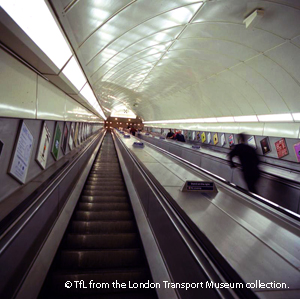 It’s fairly widely known that Underground stations and tunnels were used as air raid shelters during World War II. Do you know of any other different uses they have been put to? “The station at South Kentish Town on the Northern Line closed in 1924, but the surface building, still looking very much like a station is now occupied by a branch of Cash Converters. During the war unfinished tunnels on the Central line were occupied by a secret factory run by Plessey Components. Also during the war, paintings from the Tate Gallery were stored in a disused part of Piccadilly Circus station for safe keeping.”
Stylish design has always been an important part of the Underground’s appeal. What’s your favourite era stylistically when it comes to the Underground and why? “Most people admire the golden age of the 1920s and 30s when the Underground’s corporate identity and personality reached its peak with Charles Holden’s architecture, the roundel, Harry Beck’s diagrammatic map and the amazing posters issued in that era, but personally I find the earlier period from 1908 to 1920 more interesting. You can trace the roots of each element of today’s brand being developed at this time, under Frank Pick’s critical eye, starting with the early solid-disc station name roundels, the joint promotion of the individual tube railways under the UndergrounD brand and the introduction of Edward Johnston’s typeface. You can see the company gaining confidence and momentum, especially in relation to the increasingly sophisticated posters and promotion that Pick commissioned.”
Can you tell us a bit about how the London Transport Museum is marking the 150th anniversary? “We started the year by bringing steam back to the Circle line, after restoring an original Metropolitan Railway carriage and overhauling an original Met steam locomotive, and have just opened our fabulous overview of the 150 best Underground posters at the museum in Covent Garden, which runs until October. We are opening our Depot store, near Acton Town station in April for a steam weekend, and have a range of lectures and evening events at Covent Garden linking to the history of the Underground and its poster art heritage. There’s also our comprehensive new history of the Tube published last year and a wide range of new products and souvenirs in our amazing shop.”
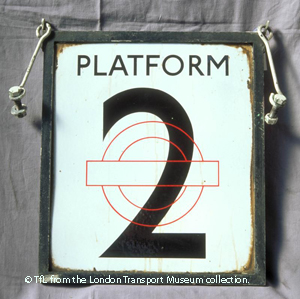 What are some of your favourite Underground-related objects on display at the museum? “The Design for Travel gallery on the ground floor is the literal and metaphorical heart of the Museum for me. Packed with close to 300 objects including signs, posters, models, leaflets and other documents, it’s hard to single out individual items, but I love the simplicity of the small ‘Platform 2’ hanging sign (pictured right) – it’s a real example of the design consistency and attention to detail that I associate with the Underground.”
And lastly, can you tell us a couple of little-known facts about the Underground? History is more than a chronological list of facts, and what one person finds fascinating sends another to sleep, so it’s quite a challenge to choose something that is little known, but genuinely interesting, but I’ll try: I grew up near Brent Cross station so I might be biased, but I reckon that if there was a top trumps for Underground lines, the Northern line would win. It has the longest escalators (at Euston), the deepest lift shaft (at Hampstead), the highest point ve sea level (on a viaduct near Mill Hill East), the longest tunnels (between East Finchley and Morden – 17 miles) and has had more names than any other line – it only became the Northern line in 1937.”
IMAGES: Top: Steam engine at Aldgate (1902); Middle: Platform 2 sign, 1930s design; and Bottom, Angel Underground Station (1990s). © TfL from the London Transport Museum collection.
Poster Art 150 – London Underground’s Greatest Designs runs at the London Transport Museum until October. Admission charge applies. For more (including the many events around the exhibition), see www.ltmuseum.co.uk/whats-on/events/events-calendar#posterart150.
Located in the South Kensington estate – known to some during the Victorian era as Albertopolis (see previous entry in this series) – each of the two museums mentioned here represents an architectural and cultural feat in its own right, for the sake of space (and to allow us to explore a wider range of buildings as part of this series) we’re grouping them together…
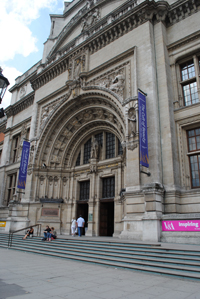 • Victoria and Albert Museum: Following on from the success of the Great Exhibition of 1851, the V&A as it’s popularly known, was established in 1852 and funded by the profits from the exhibition.
Initially known as the Museum of Manufactures, it was founded with the three aims of making art accessible, educating people and inspiring British designers and manufacturers.
Renamed the South Kensington Museum after moving to its current site in 1857, its collections – which now include everything from metalwork, furniture and textiles to fine art such as paintings, drawings and sculptures from a range of contemporary and historical periods – continued to expand.
Located in what were only meant to be temporary exhibition buildings – factory-like structures which become known as the ‘Brompton Boilers’, in 1899 Queen Victoria laid the foundation stone for the grand new facade and entrance that we see today (it was at this point that that the museum took on its current name).
The Science Museum – the third major museum of Albertopolis – initially formed part of this museum and only gained its independent status in 1909.
WHERE: Victoria and Albert Museum (nearest Tube stations are South Kensington and Knightsbridge); WHEN: 10am to 5.45pm daily (late opening Fridays); COST: Free (apart from special exhibitions); WEBSITE: www.vam.ac.uk.
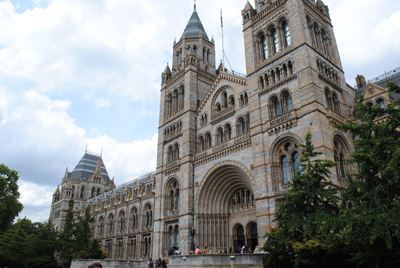 • Natural History Museum: Created to house what was previously the natural history collection of the British Museum (itself founded out of the collections of Sir Hans Sloane), the museum was founded thanks largely to the efforts of Sir Richard Owen.
The superintendent of the natural history department at the British Museum and later the founder of the NHM, it was he led the campaign for a separate premises for the museum’s natural history collections which had outgrown the museum’s home in Bloomsbury.
It first opened its doors on Easter Monday, 1881, but the museum legally remained part of the British Museum until 1963 and continued to be known as British Museum (Natural History) until 1992.
Known as the Waterhouse Building (after Alfred Waterhouse, the young architect who designed it following the death of the original designer, engineer Captain Francis Fowke, who was also involved in the initial design of Royal Albert Hall), the museum’s main structure – faced in terracotta – is said to be one of the finest examples of a Romanesque structure in Britain.
The premises and collections of the Geological Museum – now the ‘red zone’ of the NHM – merged with the Natural History Museum in 1985.
WHERE: Natural History Museum (nearest Tube stations are South Kensington and Knightsbridge); WHEN: 10am to 5.50pm daily; COST: Free (apart from special exhibitions); WEBSITE: www.nhm.ac.uk.
The London Underground’s first railway journey took place on 9th January, 1863, and to celebrate we’re taking a look at 10 great Victorian-era projects in London. First up is Royal Albert Hall in South Kensington.
 Opened on 29th March, 1871 (and in continuous use ever since), Royal Albert Hall was built in fulfilment of Prince Albert’s dream of creating a hall that would stand in the heart of the South Kensington estate and provide a focal point for the promotion of the arts and sciences.
It was on the back of the success of the Great Exhibition held in Hyde Park in 1851, that Prince Albert, Prince Consort to Queen Victoria, proposed the creation of a permanent arts and sciences precinct in South Kensington and advised the purchase of land for that purpose (the hall is located on land once occupied by Gore House). But it wasn’t until after his death in 1861 that his vision was actually realised.
Construction of the hall – which was to serve as the centrepoint of the cultural precinct which became known, somewhat derisively, as Albertopolis – started in April 1867 (initially to be known as The Central Hall of Arts and Sciences, the hall apparently had its named changed to the Royal Albert Hall of Arts and Sciences by Queen Victoria while she was laying the foundation stone on 20th May that year – around 7,000 people attended the event). It was designed by engineers Captain Francis Fowke and, after his death, Lieutenant Colonel Harry Darracott Scott, based on concepts put forward by the man described as the “driving force” behind the project, Henry Cole (later the first director of what is now the Victoria and Albert Museum). He had been inspired by the Roman amphitheatres he had seen while touring in southern France.
While initial proposals had suggested the hall would accommodate as many as 30,000 people, this was later scaled back to about 7,000 (and today the figure is apparently about 5,500 thanks to fire regulations).
The central auditorium, measuring 185 feet by 219 feet, is covered by a glazed dome constructed of wrought iron girders and was the largest structure of its kind in the world at the time of its building. The hall’s exterior was built from about six million red bricks and features an 800 foot long terracotta frieze showing figures engaged in a range of cultural pursuits. Much of the interior decorative detail was added later.
So overcome was Queen Victoria at the building’s opening in 1871 that Edward, the Prince of Wales, had to speak in her place, declaring it open on her behalf before a crowd which included then Prime Minister Benjamin Disraeli. Her only reported comment on the hall was that it reminded her of the British constitution.
The Grade One listed hall – which thankfully only suffered minor damage during World War II bombing raids (the German pilots apparently used its bulk as a navigation aid) – has since undergone substantial modifications including works undertaken to improve the hall’s acoustics, the replacement of gas lighting (electricity was first demonstrated in the hall in 1873) and demolition in 1889 of an adjoining glass conservatory to its south. A massive programme of improvements was carried out between 1996 and 2004 at the cost of more than £69 million.
The list of those who have performed or spoken at the hall reads something like a who’s who – among them are classical composers Wagner, Verdi, Elgar and Rachmaninov, singers and musicians including Frank Sinatra, Jimi Hendrix, The Beatles, The Who, Eric Clapton, Elton John, Adele, and Jay Z as well as sports personalities including boxer Mohammed Ali and tennis player John McEnroe, explorers like Sir Ernest Shackleton, world figures such as Queen Elizabeth II, Sir Winston Churchill, former South African president Nelson Mandela, the Dalai Lama and former US president Bill Clinton and other high profile personalities such as Albert Einstein, Alan Ginsberg and Paul Robeson.
Among the other events held in the hall have been a marathon race, Greco-Roman wrestling and two Welsh National Eisteddfod’s (in 1887 and 1909). One of the most popular series of events now held there each year are the BBC Promenade Concerts, known as The Proms they include more than 70 events, which have been held in the hall since World War II.
A Victorian masterpiece. For more on the hall, see www.royalalberthall.com.
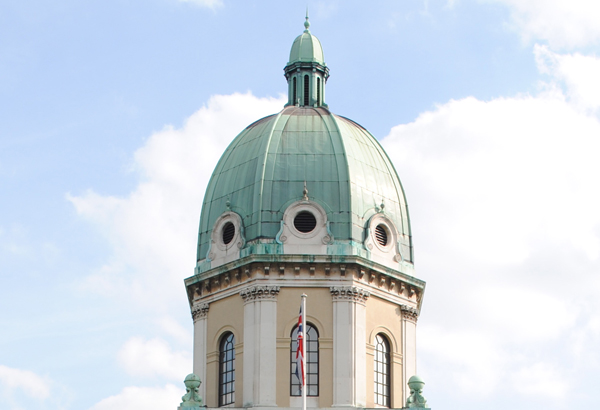
The latest in the series in which we ask you to identify where in London this picture was taken and what it’s of. If you think you can identify this picture, leave a comment below. We’ll reveal the answer early next week. Good luck!
Well done to Martine Poupaux, this is indeed the dome on top of the Imperial War Museum in Lambeth Road, London. The museum, which was formally established by an Act of Parliament in 1920, was initially based in the Crystal Palace and then from 1924 to 1935 in two galleries adjoining the former Imperial Institute, South Kensington. It reopened at its current home in 1936 at a ceremony attended by King George VI. The building was formerly the central portion of Bethlem Royal Hospital, or ‘Bedlam’, which have moved to the site in 1815 (the dome wasn’t part of the original building – it was added later). We’ll be exploring more this history in upcoming posts. For more on the Imperial War Museum, see www.iwm.org.uk/visits/iwm-london.
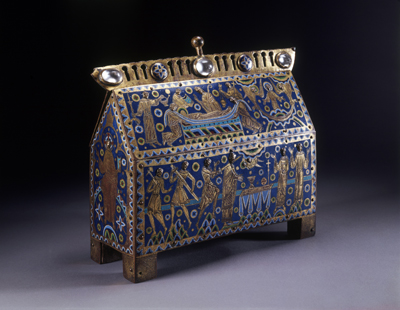 This stunning early medieval casket, dating from around 1180-1190, commemorates one of the most infamous events of the Angevin era – the death of Thomas Becket, Archbishop of Canterbury, who was murdered in Canterbury Cathedral on 29th December, 1170, by four knights of King Henry II.
The murder – for which the king undertook public penance (although whether he ordered the death of Becket, his former chancellor and friend, remains a matter of some dispute) – provoked outrage across Europe and pilgrims soon started flocking to Becket’s tomb.
So much so that the Archbishop was canonised in 1173 and in 1220 a richly decorated shrine was created to house Becket’s remains and serve as a focal point for pilgrims (a pilgrimage to Becket’s shrine is at the heart of Geoffrey Chaucer’s A Canterbury Tale). The shrine was eventually destroyed in 1538 on the orders of King Henry VIII during the Dissolution of the Monasteries.
The beautiful Becket Casket, made of Limoges enamel, depicts, among other things, Becket’s murder, subsequent burial and the ascension of his soul to heaven. On the rear are four long-haired figures who may represent saints or the Cardinal Virtues of Prudence, Justice, Fortitude and Temperance.
One of more than 40 examples still in existence (the British Museum also has one), it was probably made for an important religious house and may have been used to contain relics of the dead saint.
It can now be found in the collection of the V&A’s Medieval and Renaissance Gallery at the museum’s premises in South Kensington.
WHERE: Room 8 (case 20), Victoria & Albert Museum, Cromwell Road, South Kensington (nearest Tube Stations are South Kensington and Knightsbridge). WHEN: 10am to 5.45pm daily (Fridays until 10pm – select galleries after 6pm); COST: Free; WEBSITE: www.vam.ac.uk.
For more on Thomas Becket, see John Guy’s book Thomas Becket: Warrior, Priest, Rebel, Victim: A 900-Year-Old Story Retold
PICTURE: V&A images
 Exploring London