This Week in London – Art deco at the London Transport Museum; art storage during WWII commemorated; and, William Dobson’s self-portrait…

An exhibition exploring the influence of the art deco movement on graphic poster design in on now at the London Transport Museum in Covent Garden. Art deco: the golden age of poster design features more than a hundred original 1920s and 1930s transport posters and poster artworks alongside photography, short films, ceramics and other objects to mark the centenary of the 1925 Paris exhibition where art deco originated. In the UK, Frank Pick, then-chief executive of London Transport, was the individual most responsible for advancing this form of graphic style, master-minding the publicity for the Underground and LT from 1908 onwards. A number of the posters in the exhibition in the Global Poster Gallery have never been put on public display before. Admission charge applies. For more, see www.ltmuseum.co.uk/whats-on/art-deco.

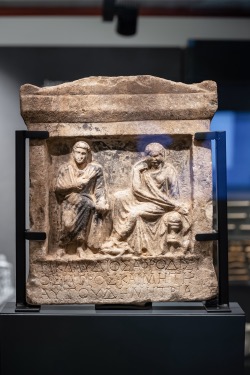
Jeremy Deller, designed and carved by John Neilson ‘Manod Slate Tablet’, 2025 © Jeremy Deller / John Neilson
Photo: The National Gallery, London

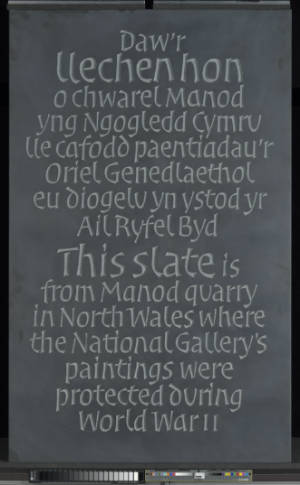
An inscribed stone tablet commemorating the Welsh quarry where The National Gallery’s art was protected during World War II has been put on permanent display in the gallery. The tablet, made from slate taken from the Manod quarry in Eryri (Snowdonia), was conceived by the artist Jeremy Deller and designed and carved by letter-carver John Neilson. The work, which was commissioned by Mostyn, an art gallery in Llandudno and supported by CELF – the national contemporary art gallery for Wales, can be seen in the Portico Vestibule, close to Boris Anrep’s floor mosaic of Sir Winston Churchill depicted in war time. The Manod slate mine in north Wales was chosen to store the art after an earlier proposal to evacuate the works to Canada was vetoed over fears of U-boat attacks. At the mine, explosives were used to enlarge the entrance to allow access for the the largest paintings and several small brick ‘bungalows’ were built within the caverns to protect the paintings from variations in humidity and temperature. What was known as an ‘elephant’ case was constructed to transport the paintings on trucks from London and, by the summer of 1941, the entire collection had moved to its new subterranean home, where it was to remain for four years, returning to London only after the end of the war in 1945. For more see www.nationalgallery.org.uk/.

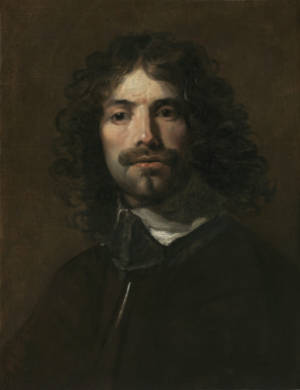
William Dobson, ‘Self-Portrait’, c1635-40. Image courtesy of Tate and the National Portrait Gallery

A self-portrait by William Dobson, widely considered to be the first great painter born in Britain, has gone on display at Tate Britain alongside a Dobson’s portrait of his wife. Dobson’s painting, which was acquired by the Tate and the National Portrait Gallery, was made between 1635 and 1640 and is said to be a “groundbreaking example of English self-portraiture”. His Portrait of the Artist’s Wife (c1635-40), which joined Tate’s collection in 1992, depicts Dobson’s second wife Judith and would have been conceived around the time of their marriage in December, 1637. Dobson rose to the role of King Charles I’s official painter before his career was cut tragically short when he died at the age of 35. For more, see tate.org.uk/visit/tate-britain.

• Send items for inclusion to exploringlondon@gmail.com.

This Week in London – Wes Anderson’s archive explored; Edwin Austin Abbey at The National Gallery; and, Christmas at the Tower…

• The first retrospective of the work of film-maker Wes Anderson has opened at the Design Museum in South Kensington. Wes Anderson: The Archives draws on the director’s own archives to chart the evolution of his films from early experiments in the 1990s and collaborations to an exploration of the design stories behind films such as The Royal Tenenbaums, The Grand Budapest Hotel, Fantastic Mr Fox and Isle of Dogs. The display features more than 700 objects including original storyboards, polaroids, sketches, paintings, handwritten notebooks, puppets, miniature models and costumes. Highlights include a candy-pink model of the Grand Budapest Hotel, vending machines from Asteroid City, a FENDI fur coat worn by Gwyneth Paltrow as Margot Tenenbaum in The Royal Tenenbaums, stop motion puppets used to depict the fantastical sea creatures in The Life Aquatic with Steve Zissou and Mr Fox wearing his signature corduroy suit and show dog Nutmeg alongside miniature sets. There’s also a screening of Bottle Rocket, Anderson’s first short film, created in 1993. Runs until 26th July. Admission charge applies. For more, see https://designmuseum.org/exhibitions/wes-anderson-the-archives.

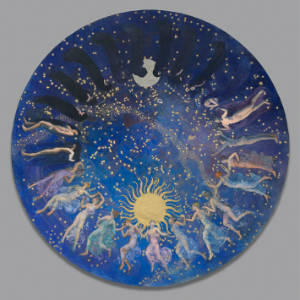
Edwin Austin Abbey, ‘Study for The Hours in the Pennsylvania State Capitol’ (about 1909–11), oil on canvas, 381 × 381 cm Yale University Art Gallery, Edwin Austin Abbey Memorial Collection. PICTURE: Courtesy of Yale University Art Gallery

A design for the ceiling of the House of Representatives in the Pennsylvania State Capitol in the US has gone on show at The National Gallery as part of a new exhibition dedicated to its creator Edwin Austin Abbey (1852-1911). The 12-feet diameter half-scale design for The Hours, newly conserved by the Yale University Art Gallery, depicts 24 female figures representing the 24 hours of the day. The display, Edwin Austin Abbey: By the Dawn’s Early Light, also features six preparatory drawings for his work, The Apotheosis of Pennsylvania, a vast wall mural featuring representations of 16th and 17th century English explorer Sir Walter Raleigh and American frontiersman Daniel Boone behind the Speaker’s dais. Abbey, who lived and worked in the UK, displayed the first of his Harrisburg murals at the University of London in 1908 prior to shipping them to the US – guests included King Edward VII and Queen Alexandria. The free display can be seen in the HJ Hyams Room (Room 1) until 15th February. For more, see www.nationalgallery.org.uk/exhibitions/edwin-austin-abbey-by-the-dawn-s-early-light

The Tower of London is being transformed into a “magical storybook world” to mark Christmas this year. A Storybook Christmas at the Tower of London features royal romances, legendary figures and treasured traditions which include animals who once lived in the Tower’s royal menagerie, the famous tower ravens, the chance to step onto a regal throne for a family portrait and find storybook backdrops among Christmas trees and wreaths, and an opportunity to explore the story of the Tower’s Royal Observatory where the first Royal Astronomer was appointed in 1675. The “storybook Christmas” opens on Sunday and runs until 4th January. Included in general admission. For more, see www.hrp.org.uk/tower-of-london/.

Send all items to exploringlondon@gmail.com

This Week in London – The first Lady Mayor’s Show; Joseph Wright ‘of Derby’ at the National Portrait Gallery; and, Audrey Hepburn’s Blue Plaque…

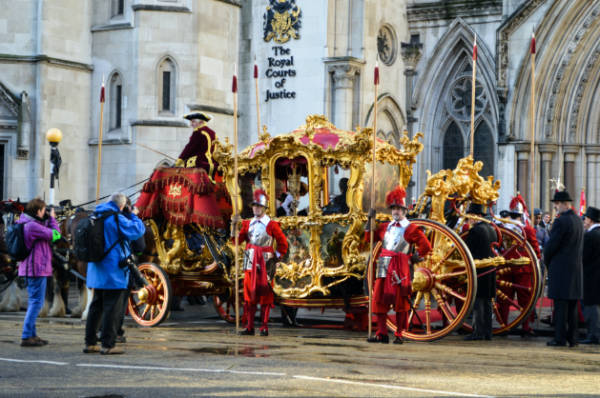
The State Coach at the Royal Courts of Justice in the 2013 Lord Mayor’s Show. PICTURE: S Pinter/iStockphoto.

The Lord Mayor’s Show – or this year, for the first time in its 800 year history, the Lady Mayor’s Show – takes place on Saturday as Dame Susan Langley is celebrated as the City of London’s 697th Lord Mayor of London. Langley, who takes office at Guildhall on Friday in the ancient ‘Silent Ceremony’, is the third woman to hold the role and the first to adopt the title “Lady Mayor”. The more than three mile-long procession, which kicks off at 11am, features around 7,000 participants, 200 horses and more than 50 decorated floats and travels from the Mansion House, the official mayoral residence, through the City to the Royal Courts of Justice, via St Paul’s Cathedral, before returning. The centrepiece as always is the State Coach carrying the Lady Mayor as she fulfills the dual purpose of showing herself to residents and swearing allegiance to the crown. For more – including details of the procession’s route, head to https://lordmayorsshow.london/.

The first exhibition dedicated to the work of 18th century artist Joseph Wright ‘of Derby’ opens at The National Gallery tomorrow. Wright of Derby: From the Shadows focuses on his career between 1765 and 1773 when he created his candlelight series. On show are a number of works from this series including Three Persons Viewing the Gladiator by Candlelight (1765), A Philosopher giving that Lecture on the Orrery in which a lamp is put in place of the Sun (1766), and the gallery’s own An Experiment on a Bird in the Air Pump (1768). Mezzotint prints of Wright’s works – key to the establishment of his international reputation – will also be on display. The exhibition, in the Sunley Room, runs until 10th May. Admission charge applies. For more, see www.nationalgallery.org.uk/exhibitions/wright-of-derby-from-the-shadows.

Hollywood icon Audrey Hepburn has been honoured with an English Heritage Blue Plaque on her former home in Mayfair. The plaque at 65 South Audley Street was where Hepburn lived in a flat with her mother between 1949 to 1954 as she launched her career as an actor. It was from here that she travelled to the West End to perform in chorus lines, appeared in British films such as 1951’s The Lavender Hill Mob and while living here that she was cast as the lead in Gigi on Broadway – a key stepping stone towards her breakthrough performance in 1953’s Roman Holiday. Hepburn was born in Brussels but had strong ties to London, training at the Ballet Rambert and working as a dancer and model before moving on to acting. Of course, as well as Roman Holiday, Hepburn performed notable roles SabrinaFunny FaceBreakfast at Tiffany’sMy Fair Lady, and Charade. She later dedicated herself to humanitarian work, serving as a UNICEF Goodwill Ambassador, and was awarded the Presidential Medal of Freedom shortly before her death in 1993. For more on English Heritage Blue Plaques, see www.english-heritage.org.uk/visit/blue-plaques/.

Send all items to exploringlondon@gmail.com

This Week in London – Open House London; Georges Seurat and the Neo-Impressionists; and, the Burma campaign remembered…

The week-long Open House London kicks off this Saturday and features a range of activities across all 33 London boroughs – from “drop-ins” at and guided tours of buildings to talks, exhibitions, workshops and, of course, walking tours. Highlights include architect guided tours of Rana Begum’s Little Citadel retreat compound in Stoke Newington, rare access to the Islip and Nurses’ Chapels in Westminster Abbey, tours of several facilities at Queen Elizabeth Olympic Park including the new Sadler’s Wells theatre, the Lee Valley VeloPark and the Hackney Wick Fish Island Creative Enterprise Zone, and walking tours exploring Roman London. For the full programme, head to https://programme.openhouse.org.uk/.

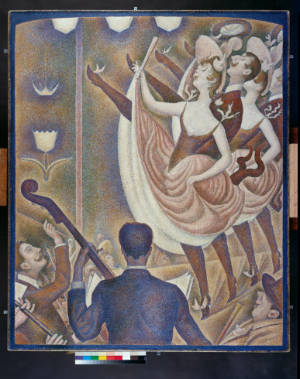
Georges Seurat, Le Chahut (1889-90), Oil on canvas, 141 x 170 cm © Collection Kröller-Müller Museum, Otterlo, the Netherlands

Georges Seurat’s painting of cancan dancers Let Chahut (1889-90) goes on display in the Sainsbury Wing of The National Gallery on Saturday. Radical Harmony: Helene Kröller-Müller’s Neo-Impressionists, which draws on the collection of the German art collector Helene Kröller-Müller (1869‒ 1939), at the Kröller-Müller Museum, Otterlo, in the Netherlands, also features several other works by Seurat as well as other radical works of French, Belgian and Dutch artists, painted from 1886 to the early 20th century. Among the highlights are Seurat’s Sunday at Port-en-Bessin (1888) and The Canal of Gravelines, in the Direction of the Sea (1890), Théo van Rysselberghe’s In July – before Noon (1890), Jan Toorop’s Sea (1899), Henry van de Velde’s Twilight (about 1889) and Paul Signac’s The Dining Room (1886-87). Runs until 8th February. Admission charge applies. For more, see www.nationalgallery.org.uk/exhibitions/radical-harmony-neo-impressionists

Marking 60 years since VJ (Victory over Japan) Day, the National Army Museum is hosting the first national museum exhibition on the Burma campaign during World War II in the 21st century. Beyond Burma: Forgotten Armies features more than 180 objects including artworks, weapons, uniforms and photographs and explores the retreat from Burma in 1942, the transformation and resurgence of British and Indian forces in India in 1943 and the campaign against the Imperial Japanese Army during 1944-45. Highlights include the abstract painting And the World was covered in darkness by Major Conrad ‘Dick’ Richardson Romyn who experienced intense fighting in Burma, a bottle of Army anti-mosquito cream and a vial of anti-malarial tablets representing the treatment of soldiers, a tin identity bracelet and food bowl used by Gunner Moss Simon, who spent three years as a prisoner of war, and a military medal awarded to Corporal Dogo Manga who served with 1st Battalion, the Nigeria Regiment, Royal West African Frontier Force. Opens on Tuesday and runs until 13th April next year. Admission is free. For more, see www.nam.ac.uk/whats-on/beyond-burma.

Send all items for inclusion to exploringlondon@gmail.com
This Week in London – Millet at The National Gallery; exploring Great Ormond Street Hospital’s new children’s cancer centre; and, a Banksy at the London Transport Museum…

The first UK exhibition in almost 50 years dedicated to the works of 19th century French artist Jean-François Millet (1814-1875) opens at The National Gallery today. Millet: Life on the Land, which coincides with the 150th anniversary of his death, features around 13 drawings and paintings from British public collections including The National Gallery’s The Winnower (about 1847‒8) as well as L’Angelus (1857‒9) from the Musée d’Orsay, Paris. The exhibition can be seen in Room 1 until 19th October. Admission is free. For more, see www.nationalgallery.org.uk/exhibitions/millet-life-on-the-land.

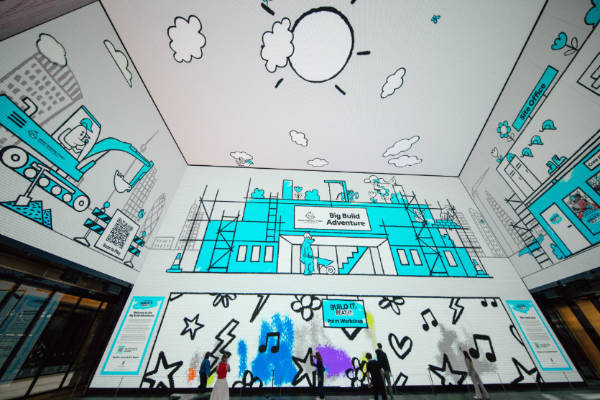
The Big Build Adventure at Outernet London.

An immersive digital experience which brings to life the Great Ormond Street Hospital’s new Children’s Cancer Centre opened at Outernet London off Tottenham Court Road this week. The Big Build Adventure, a partnership between the Great Ormond Street Hospital Charity and Outernet London, features a giant virtual paint wall, building themed games, a construction site selfie station and the chance to symbolically buy a brick to help build the centre. The free experience can be experienced until 31st August. Admission is free. For more, see www.outernet.com/news/great-ormond-street-hospital-charity-and-outernet-studios-launch-the-big-build-adventure.

An artwork by Banksy – depicting a rat hanging from the arm of a clock – has gone on show at the London Transport Museum in Covent Garden. The artwork first appeared on the door of a Transport for London signal controller cabinet in Croydon in October, 2019, which was located in front of the artist’s pop-up showroom installation, Gross Domestic Product. The work, which was preserved by the museum, has been mounted onto an identical cabinet body to provide context for its original appearance. Admission charge applies. For more, see www.ltmuseum.co.uk.

Send all items for inclusion to exploringlondon@gmail.com
This Week in London – VE Day commemorated at St Paul’s; the National Gallery redisplayed; and, Tate Modern celebrates its 25th…

VE Day commemorations continue in London this week with an Evensong service to be held outside St Paul’s Cathedral this evening. The service to commemorate the 80th anniversary of the end of the war in Europe will be held between 5pm and 6pm. Following the service will be a lamp-lighting ceremony and blessing on the cathedral’s west steps with the cathedral bells being tolled as part of a national bell-ringing at 6:30pm. A replica of a World War II Spitfire can also be seen in front of the West Steps. The service is free and unticketed – entry is via Paternoster Square. For more, see www.stpauls.co.uk/whats-on/special-evensong-to-commemorate-80th-anniversary-of-end-of-second-world-war-in-europe-ve80.

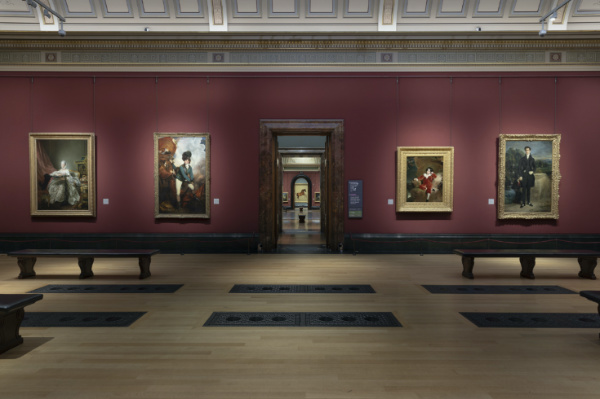
Central Hall, The National Gallery. Image and Identity: Full-Length Portraits 1550-1900. Part of ‘C C Land: The Wonder of Art’. PICTURE: © The National Gallery, London

A major redisplay of the National Gallery’s collection – created as part of its bicentenary celebrations – can be seen from Saturday. C C Land: The Wonder of Art, which coincides with the opening of the transformed Sainsbury Wing after more than two years of building works, features more than 1,000 works and traces the development of painting in the Western European tradition from the 13th to 20th centuries. Among the works displayed are the Coronation State Portraits, commissioned from the artists Peter Kuhfeld and Paul S Benney and unveiled by King Charles III and Queen Camilla this week, which will be on display until 5th June when they will be moved to the Throne Room at Buckingham Palace. There are also newly restored works including the Pollaiuolo brothers’ The Martyrdom of San Sebastian and Jan van Eyck’s Portrait of a Man (Self Portrait?) and newly acquired works such as Eva Gonzalès’ The Full-length Mirror (about 1869‒70), Sir Lawrence Alma-Tadema’s After the Audience (1879) and Nicolas Poussin’s Eucharist (about 1637‒40) – one of the greatest paintings of the Last Supper. Meanwhile, a series of rooms have been dedicated to the work of individual artists including the likes of Titian (active about 1506‒1576), Rembrandt (1606‒1669) and Monet (1840‒1926) and one part of the new display focuses on King Charles I (1600‒1649) as a collector of art and includes major loans from the Royal Collection. Finally, in a first for the gallery, Segna di Bonaventura’s Crucifix (about 1310‒15) has been suspended from the gallery’s ceiling, enabling today’s audiences to view the work in the way it would have been seen in the 14th century. Entry to the gallery is free. For more, see nationalgallery.org.uk.

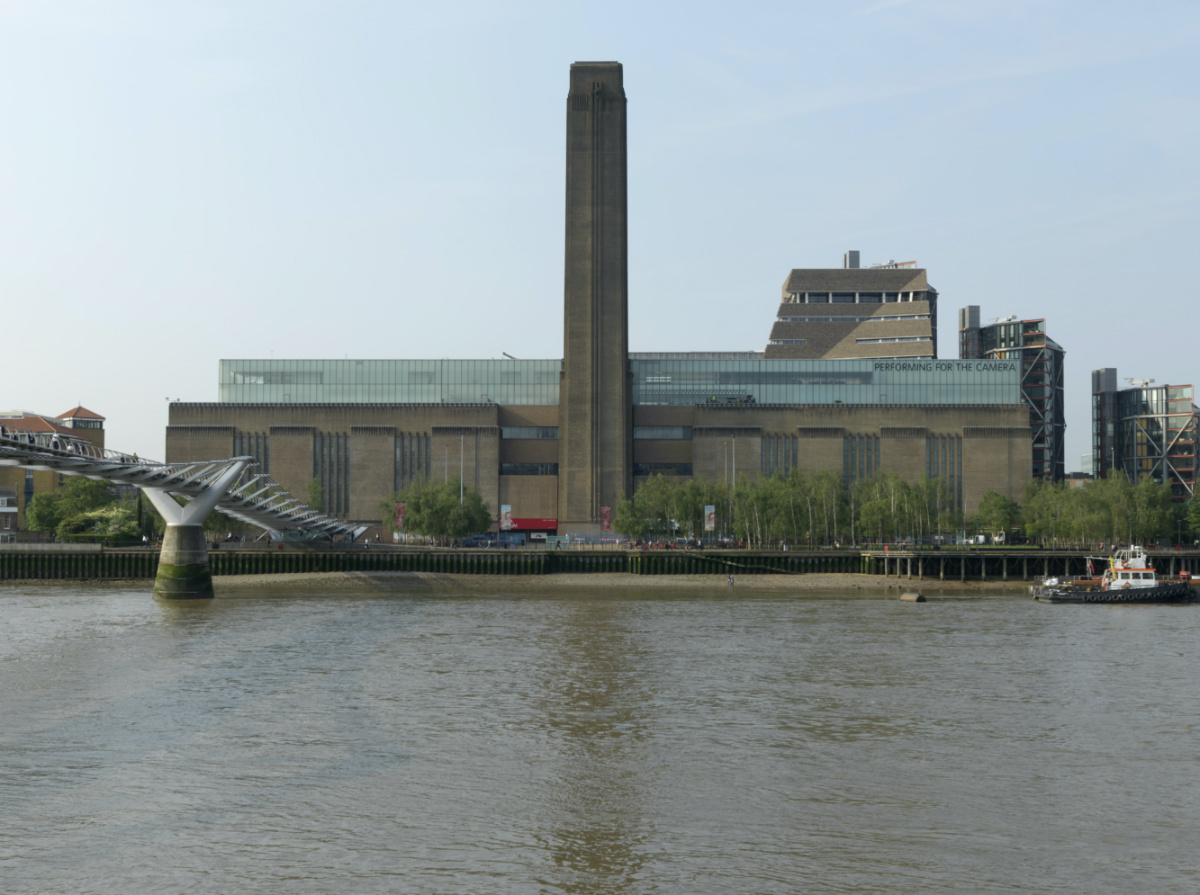
Tate Modern. PICTURE: Courtesy of the Tate Modern.

The Tate Modern is celebrating 25 years this weekend with four days of festivities starting from tomorrow (Friday). A number of recent additions to Tate’s collection will go on display around the building for the anniversary and some of the most iconic works from Tate Modern’s history are coming back including Louise Bourgeois’s 10 metre high bronze spider Maman which was the first work to greet visitors when Tate Modern opened in 2000. Other returning works include Mark Rothko’s Seagram murals and Dorothea Tanning’s Eine Kleine Nachtmusik while among contemporary works being highlighted over the weekend is an immersive multi-screen film installation by Nalini Malani. Two new exhibitions are also open for the anniversary weekend – A Year in Art: 2050 which explores how artists imagine possible futures, and, Gathering Ground which features international contemporary art united by a deep connection to land and community. The weekend also features live music and performances, pop-up talks and tours, and special food and drink offers. For more, see https://www.tate.org.uk/whats-on/tate-modern/birthday-weekender.

Send all items for inclusion to exploringlondon@gmail.com
This Week in London – ‘Pirates’ at the National Maritime Museum; the ‘design of swimming’; and, José María Velasco explored…

PICTURE: Frames For Your Heart/Unsplash

A major exhibition tracing the changing depictions of pirates through the ages and revealing their often brutal role in history opens at the National Maritime Museum in Greenwich on Saturday. Pirates deconstructs some of the myths which have developed around buccaneers as it reveals the real-life stories of the likes of Edward ‘Blackbeard’ Teach, William Kidd, Anne Bonny and Mary Read. The exhibition features almost 200 objects ranging from the costume worn by Orlando Bloom in Pirates of the Caribbean: The Curse of the Black Pearl, to copies of A General History of the Pyrates by Captain Charles Johnson (first published in 1724), a hanging believed to have been part of a shrine captured from a junk in the fleet of the mid-19th century Chinese pirate Shap Ng-tsai, and a silver centerpiece depicting the bombardment of Algiers, 1816, when a combined British Dutch force attacked Algiers in an attempt to resolve the longstanding issue of piracy on the North coast of Africa. Runs until 4th January. Admission charge applies. For more, see www.rmg.co.uk/pirates.

The ‘design of swimming’ – covering everything from fashions to architecture – is the subject of a new exhibition opening at the Design Museum tomorrow. Splash! A Century of Swimming and Style is split across three sections focusing on three locations in which people swim – the pool, the lido and nature – and starts in the 1920s when beach holidays exploded in popularity. More than 200 objects are on display including Pamela Anderson’s Baywatch swimsuit, the first Olympic solo swimming gold medal won by a British woman, the banned ‘technical doping’ LZR Racer swimsuit, one of the earliest surviving examples of a bikini, and a detailed architectural model of the Zaha Hadid-designed London 2012 Aquatics Centre. Runs until 17th August. Admission charge applies. For more, see https://designmuseum.org.

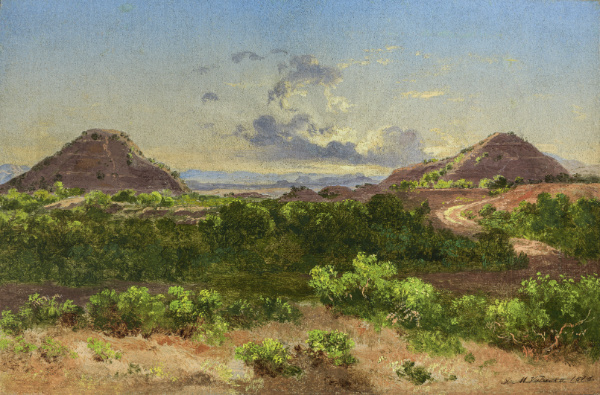
José María Velasco, ‘Pirámides del sol y de la luna’, 1878, Oil on canvas, 18.5 x 26.3 cm, Colección Pérez Simón, Mexico © Oliver Santana

• Mexico’s most celebrated 19th century painter, José María Velasco (1840–1912), is the subject of a new exhibition opening at The National Gallery on Saturday. José María Velasco: A View of Mexico – which coincides with the 200th anniversary of the establishment of diplomatic relations between the UK and Mexico, explores how he approached drawing and painting and how he explored the relationship between different cultures, Mexico’s mountainous terrain, flora and fauna, and the impact of industrialisation on the landscape. The display also considers the links between Velasco’s work and paintings in the gallery’s collection, in particular Édouard Manet’s The Execution of Maximilian (1867–8), which depicts the execution of the Austrian ruler imposed on Mexico. Runs until 17th August. Admission charge applies. For more, see nationalgallery.org.uk.

Send all items for inclusion to exploringlondon@gmail.com.

This Week in London – A celebration of 14th century Siena works; ‘The Hedge of Halomancy’ at Tate Britain; and, ‘Unfolding Time’ at Lambeth Palace…

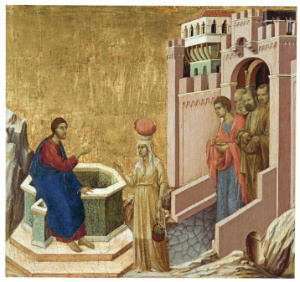
Duccio Maestà – Panels, 1308-11, Christ and the Woman of Samaria (Tempera and gold on panel 43.5 x 46 cm), Museo Thyssen-Bornemisza, Madrid (133 (1971.7)), © Copyright Museo Thyssen-Bornemisza, Madrid

Paintings by some of the greatest Italian artists of the 14th century have been reunited in a new exhibition opening at the National Gallery on Saturday. Siena: The Rise of Painting 1300‒1350, which is being held to mark the gallery’s 200th anniversary, features around 100 works including some of the most innovative in the Western tradition. Highlights include Maestà, painted by Sienese artist Duccio di Buoninsegna (active 1278, died 1319). The first double-sided altarpiece in Western painting, it was dismantled in the 18th century and the National Gallery’s own three panels are now reunited with others from the original ensemble including Christ and the Woman of Samaria from the Museo Thyssen- Bornemisza in Madrid, and The Calling of the Apostles Peter and Andrew from the National Gallery of Art in Washington DC. Another work being reunited for the exhibition is the Orsini Polyptych by Sienese artist Simone Martini (1284‒1344). A folding work of art made for private devotion, probably for Cardinal Napoleone Orsini, it is today divided into six works held by the Louvre, Paris, the Royal Museum of Fine Arts, Antwerp and the Gemäldegalerie, Berlin. All six panels are being brought together for the National Gallery’s exhibition. Two triptychs by Duccio which seem to have been conceived as a single work are also being reunited and the display also features works by Pietro Lorenzetti (active possibly 1306; died probably 1348) and his brother Ambrogio Lorenzetti (active 1319; died 1348/9) as well as Sienese works in a variety of media (metalwork, enamel, gilded glass, wood, marble, and manuscript illumination). The display runs until 22nd June. Admission charge applies. For more, see www.nationalgallery.org.uk.

Hylozoic/Desires, ‘The Hedge of Halomancy’, 2025. PICTURE: Courtesy the artists

An installation featuring new work by artist duo Hylozoic/Desires (Himali Singh Soin & David Soin Tappeser) has opened at Tate Britain. In The Hedge of Halomancy, which runs in parallel with a large-scale new commission by Hylozoic/Desires at Somerset House, the artists excavate the lost archive of the Inland Customs Line, a 4,000 kilometre-longe barrier which comprised 2,500 kilometres of planted hedge and was created by the British Empire in the 19th century to prevent salt smuggling between British-occupied territories and neighbouring independent states. A 23-minute film at the heart of the installation focuses on Mayalee, a character inspired by a courtesan who defied the British Empire’s attempts to cut off her stipends of salt. Alongside it sits an embroidered tapestry, entitled Mokshapat (Snakes and Ladders) which was woven as mashru fabric – cotton on one side and silk on the other. Runs until 25th August. Admission is free. For more, see www.tate.org.uk.

On Now: Unfolding Time: The Medieval Pocket Calendar. A “remarkable” set of medieval concertina-fold almanacs grappling with the concept of time is on display at the Lambeth Palace library. Less than 30 such manuscripts are known to exist and the display brings a group of the works, in which time is expressed in colourful pictures, poems, tables and devices, together for the first time. Runs until 15th May. For more, see https://www.lambethpalacelibrary.info.

Send all items for inclusion to exploringlondon@gmail.com.

This Week in London – Constable and ‘The Hay Wain’; Hew Locke at the British Museum; and, first NYE tickets on sale…

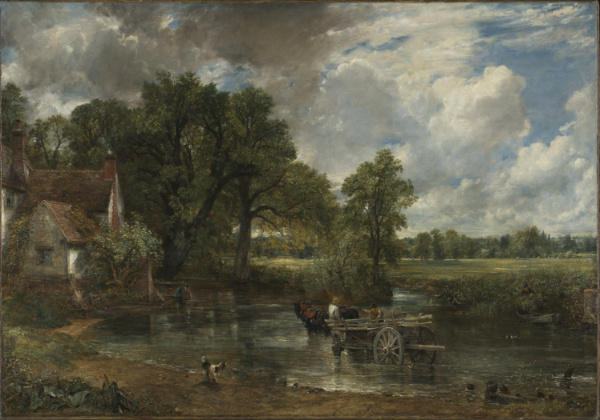
NG1207, John Constable, ‘The Hay Wain’, 1821, Oil on canvas 130.2 × 185.4 cm © The National Gallery, London

John Constable’s iconic work The Hay Wain is the focus of a new free exhibition opening at The National Gallery. Discover Constable and The Hay Wain, which is being held as part of the gallery’s 200th anniversary celebrations, will look at the innovative nature of the painting when it was first exhibited at the Royal Academy in 1821 and show how Constable came to be established as a master in the history of British art. It will also examine the subsequent ownership of the painting, its acquisition by the National Gallery in 1886, and the rise in popularity of both Constable and The Hay Wain in the years since. The free exhibition in the Sunley Room opens today. Runs until 2nd February. For more, see www.nationalgallery.org.uk/exhibitions/discover-constable-and-the-hay-wain.

A new exhibition examining how the British Museum’s collection reflects the legacies of British imperial power opens today. A collaboration with renowned Guyanese-British artist Hew Locke, Hew Locke: what have we here? is Locke’s “personal and emotive exploration” of the collection and features well-known objects from across the museum’s collection alongside specially commissioned new works by Locke. Can be seen until 9th February in the The Joseph Hotung Great Court Gallery (Room 35). For more, see www.britishmuseum.org.

The first tickets for London’s New Year’s Eve fireworks celebration go on sale at noon tomorrow (Friday 18th October). The tickets, which cost between £20 and £50 depending on the viewing area (London residents pay £15 less on each ticket), represent the first of two batches of tickets to go on sale. Tickets must be purchased to watch the fireworks in person and only tickets bought from the authorised outlet Ticketmaster will be accepted. For those who can’t get tickets, the fireworks show is being broadcast live on the BBC. www.london.gov.uk/nye.

Send all items to exploringlondon@gmail.com.

This Week in London – Photographers honoured with Blue Plaques; David Hockney meets Piero dell Francesca; and ‘Taylor on Strings’ at Wembley Park…

Two pioneering photographers are being commemorated with English Heritage Blue Plaques today. Christina Broom (1862-1939) is believed to have been Britain’s first female press photographer while John Thomson (1837-1921) was a ground-breaking photo-journalist working at the advent of the medium. Broom’s plaque – the first to be located in Fulham – is being placed on 92 Munster Road, a terraced house of 1896, where she lived and worked for 26 years. Thomson’s plaque, meanwhile, will be located at what is now 15 Effra Road in Brixton where he and his family were living when one of his best-known and influential works, Street Life in London (1877-8), was published. For more, see www.english-heritage.org.uk/visit/blue-plaques/.

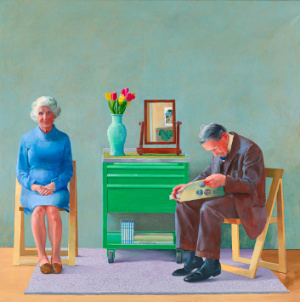
My Parents’ (1977), David Hockney/© David Hockney. Photo: Tate, London

Two of David Hockney’s key works – My Parents (1977) and Looking at Pictures on a Screen (1977) – which feature reproductions of 15th-century Italian painter Piero della Francesca’s The Baptism of Christ (probably about 1437–45) have gone on display alongside the Renaissance work at The National Gallery. Hockney and Piero: A Longer Look explores Hockney’s “lifelong association” with the National Gallery and its collections, particularly in the works of Piero della Francesca (1415/20–1492). Hockney once confessed that he would love to have The Baptism of Christ so he could look at it for an hour each day. My Parents features a reproduction of Piero’s work shown reflected in a mirror on a trolley behind the sitters while Looking at Pictures on a Screen depicts Hockney’s friend Henry Geldzahler, the Belgian-born American curator of 20th-century art at The Metropolitan Museum of Art in New York, peering at a folding screen in the artist’s studio on which are stuck four posters of National Gallery pictures including The Baptism of Christ. The display in Room 46 is free. Runs until 27th October. For more, see www.nationalgallery.org.uk.

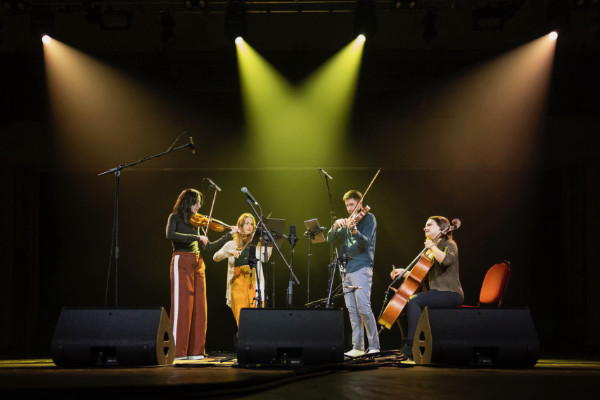
The City String Ensemble. PICTURE: Catherine Frawley

Experience a prelude of Taylor Swift at Wembley Park with with City String Ensemble playing more than a dozen interpretations of Taylor Swift songs. The free open air concert comes ahead of Swift’s return to Wembley Stadium later this month. ‘Taylor on Strings’ will be held at the Sound Shell from 6:30pm on 13th August. Tickets are free but must be booked with 30 released at 10am each day in the lead-up to the concert. For more, head to wembleypark.com/taylor-on-strings.

Send all items for inclusion to exploringlondon@gmail.com
This Week in London – Degas and Miss La La; World Oceans Day in Greenwich; and life at the Old Royal Naval College captured…

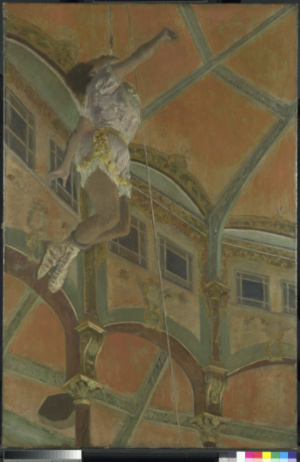
Hilaire-Germain-Edgar Degas,
‘Miss La La at the Cirque Fernando’ (1879) © The National Gallery, London

• Edgar Degas’ Miss La La at the Cirque Fernando (1879) takes centre stage in a new free exhibition at The National Gallery. Part of the free ‘Discover’ series of displays, Discover Degas & Miss La La takes a close look at the painting and reveals new information about the sitter, circus artist Miss La La, or Anna Albertine Olga Brown (1858‒1945). The display features new material, from rare, hitherto untraced drawings of her by Degas and entirely unpublished photographic portraits. In the Sunley Room until 1st September. For more, see www.nationalgallery.org.uk.

Daily life at the Old Royal Naval College has been captured in a series of photographic images now on show at the Greenwich institution. A Year in the Life: People and places of the Old Royal Naval College features 12 images snapped by award-winning photographer Hugh Fox over the past 12 months and includes some portraits of staff show alongside short interviews. Visitors are encouraged to bring their own headphones to better experience the audio-visual display in the Ripley Tunnel. Free to attend, the display can be seen until 1st September. For more, see https://ornc.org/whats-on/.

Send information for inclusion to exploringlondon@gmail.com.

This Week in London – Caravaggio’s last painting; Hampton Court’s Tulip Festival; and, ‘Beyond the Bassline’….

Caravaggio’s last painting – the 1610 work known as The Martyrdom of Saint Ursula – has gone on display in the UK for the first time in almost 20 years. The National Gallery is displaying the work – lent by the Intesa Sanpaolo Collection (Gallerie d’Italia – Naples) – alongside another late work by the Italian artist from the gallery own collection – Salome receives the Head of John the Baptist (about 1609–10). The Martyrdom of Saint Ursula, which features a self-portrait of the artist, was only reattributed to Caravaggio in 1980 following the discovery of an archival letter describing its commission. The letter – which is being displayed along with the painting – was sent from Naples, where Caravaggio created the work, to Genoa, where his patron, Marcantonio Doria, lived. Caravaggio died in Porto Ercole on 18th July, 1610, less than two months after finishing the work. He was attempting to return to Rome where he believed he would be pardoned for a 1606 murder at the time. Admission to the display is free. Runs until 21st July. For more, see www.nationalgallery.org.uk.

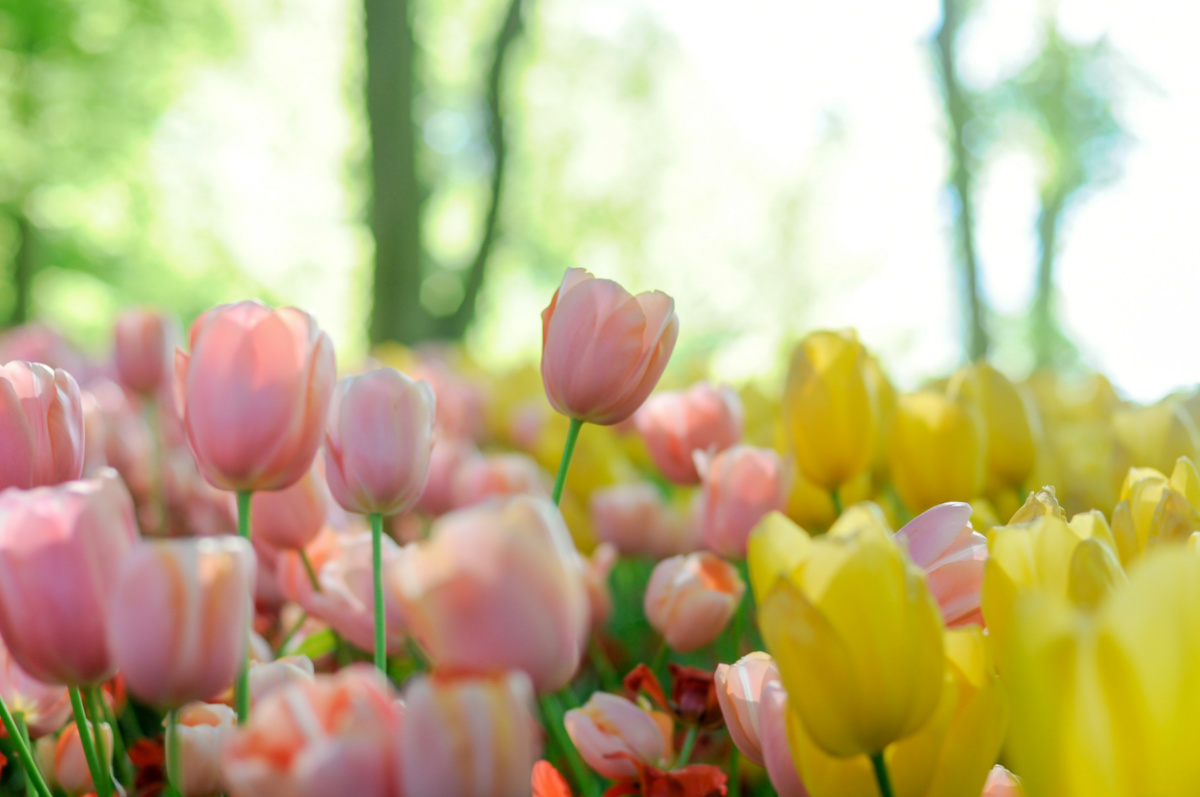
Tulips in the Netherlands. PICTURE: Giu Vicente/Unsplash

Hampton Court Palace’s Tulip Festival is on again. Displays include thousands of tulips spilling from a Victorian horse cart in the heart of the palace courtyards, giving the appearance of a Dutch flower seller’s cart, ‘floating’ bowls in the Great Fountain, free-style plantings in the kitchen gardens and more than 10,000 tulips in a display in Fountain Court. There are also daily ‘Tulip Talks’ sharing the history of the flower and Queen Mary II, who was responsible for introducing them to Hampton Court. Runs until 6th May (including in palace admission). For more, see www.hrp.org.uk/hampton-court-palace/whats-on/tulip-festival/.

Five hundred years of Black British music is being celebrated in a new exhibition at the British Library. Beyond the Bassline: 500 Years of Black British Music features soundscapes, artworks and films along with costumes, interactive displays, and of course, music. Highlights among the more than 200 exhibits include letters from 18th-century composer Ignatius Sancho, records by likes of Fela Kuti and Shirley Bassey, a nostalgic video archive of grime’s golden era captured on Risky Roadz DVD, and the equipment that Jamal Edwards used to start SB.TV, theYouTube channel dedicated to Black British music. The display concludes with a multi-screen film installation by South London-based musical movement and curatorial platform Touching Bass. Admission charge applies (with Pay What You Can days on the first Wednesday of each month). Runs until 26th August. For more, see https://beyondthebassline.seetickets.com/timeslots/filter/beyond-the-bassline.

Send all items to exploringlondon@gmail.com
This Week in London – New section of London’s Wall revealed; ‘Summer on the Square’; and, Heath Robinson’s fairy tale illustrations…

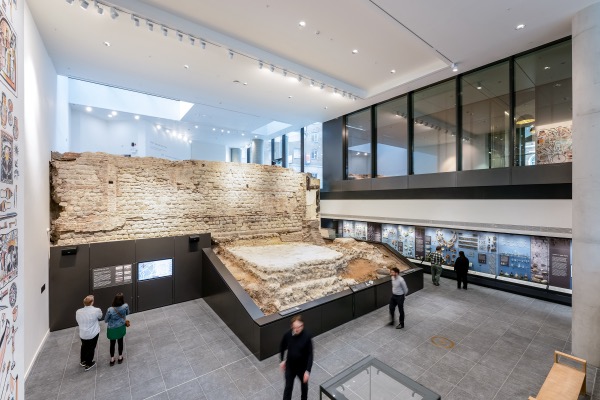
PICTURES: Courtesy of Urbanest.

A large section of London’s Roman wall had gone on show to the public thanks to an innovative collaboration between Urbanest, the City of London Corporation, Historic England, and the Museum of London. A new free display – The City Wall at Vine Street – has been created by Urbanest as part of a redevelopment of the site. At its heart is a segment of London’s Roman wall, including the foundations of a bastion or tower. Alongside the wall is a permanent display of artefacts from the Museum of London ranging from a tile marked with a cat’s paw print to Roman coins and ceramics. Completed between AD 190 and 230, the Roman wall was between two and three metres thick and faced with blocks of Kentish ragstone. This section of the wall was first rediscovered in 1905 when a new building – Roman Wall House – was constructed on the site and the inner face of the wall was exposed and preserved in the basement. In 1979, the outer face of the wall and the bastian foundations were also uncovered – but the wall was still left largely forgotten in the building’s basement. The site was acquired by Urbanest in 2016 and during the subsequent construction of Urbanest City in 2018, the wall was protected by a timber enclosure. Tickets to The City Wall at Vine Street, located at 12 Jewry Street in the City of London, can be booked for free. For more head to https://citywallvinestreet.org.

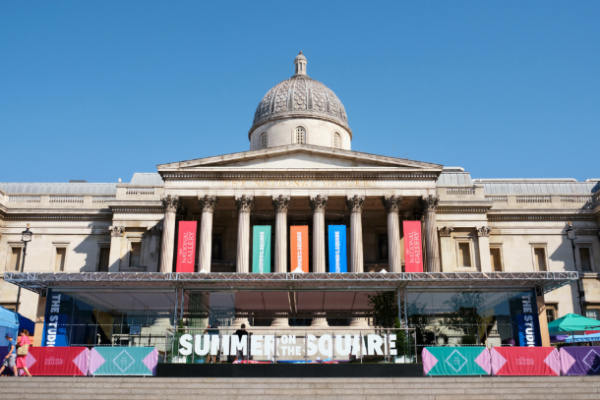
Summer on the Square PICTURE: © James Ross, courtesy The National Gallery, London

‘Summer on the Square’ has returned to The National Gallery’s North Terrace with a series of workshops aimed at inspiring the local community and visitors to engage with themes around the gallery’s collection. The programme sees the gallery work with a variety of artists and creative practitioners in a shared focus of creating child-led art, design and play activities. The workshops – which range from a session on discovering what you can do with bamboo to discovering movement and shapes in the National Gallery paintings – are free, drop-in and open to all ages and abilities. Summer on the Square, which runs until 28th August, is supported by and part of Westminster City Council’s Inside Out Programme. For the full programme, see www.nationalgallery.org.uk/whats-on/summer-on-the-square.

On Now: Happily Ever After? Illustrating Andersen & Perrault. This exhibition at the Heath Robinson Museum in Pinner focuses on works Heath Robinson created for the fairy tale collections of Hans Christian Andersen, which he illustrated three times, and Charles Perrault’s Old Time Stories published in 1921. The display, which also features works on the same subjects by Michael Foreman, shows how Heath Robinson was able to explore subjects and characters which ranged from sleeping princesses to adventurers and monsters in some of his lesser known works. Runs until 17th September. Admission charge applies. For more, see www.heathrobinsonmuseum.org.

This Week in London – Joshua Reynolds at Kenwood; ‘Power Up’ at the Science Museum; and ‘Crivelli’s Garden’…

Seventeen of Joshua Reynolds’ paintings – from one of his earliest portraits to the last painting he ever completed – have gone on show at Kenwood House. Marking the 300th anniversary of the artist’s birth (on 16th July, 1723), Spotlight on Reynolds: Lord Iveagh’s Favourite Artist at 300 features works including Catherine Moore (painted in Paris in 1752 when he was returning from his studies in Italy), Miss Cocks and her Niece (one of the last paintings begun by Reynolds before the loss of his sight around 1790), and a self-portrait he completed in 1788 when aged around 65 (the only self-portrait to show Reynolds wearing spectacles). Also on show in the display are three full-length works that span the early 1770s to the early 1780s: Mrs Tollemache as MirandaLady Louisa Manners and Mrs Musters as Hebe. Runs until 19th November. For more, see www.english-heritage.org.uk/visit/places/kenwood/.

Power Up at the Science Museum PICTURE: © Benjamin Ealovega

After five successful temporary seasons, Power Up, the popular hands-on video gaming gallery, returns permanently to the Science Museum from today. Visitors will be able to play on more than 160 consoles and hundreds of video games, as well as undertake a journey through five decades of gaming, from Pong and Mario Kart to the PlayStation 5 and Xbox and the latest in VR technology. The exhibition is divided into 14 themes and sections including a physical games area and a dedicated PC-area. Admission charge applies (daily and annual passes are available). The opening is accompanied by the return of adults-only Gaming Lates. For more, see www.sciencemuseum.org.uk.

Dame Paula Rego’s public commission, Crivelli’s Garden, is the subject of a new display at The National Gallery. Planned in collaboration with Rego, who died on 8th June last year, the display unites the monumental 10-metre-long artwork with the 15th-century altarpiece by Carlo Crivelli that inspired it, alongside life studies Rego produced of the gallery colleagues that feature in the painting. The display can be seen until 29th October. Admission is free. For more, see https://www.nationalgallery.org.uk.

• Send all items for inclusion to exploringlondon@gmail.com.

This Week in London – Luxury and power in the ancient world; St Francis of Assisi; and, St Bart’s 900 year history…

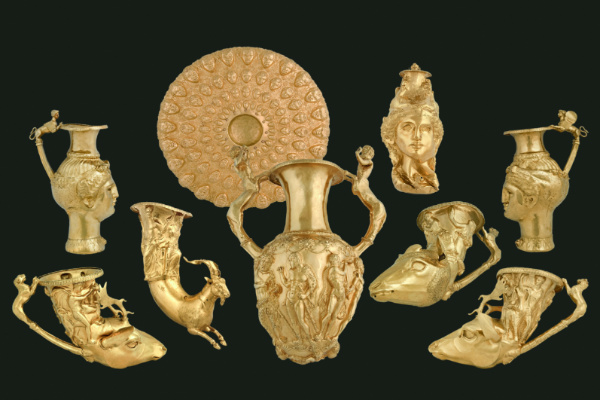
Panagyurishte Treasure

The relationship between luxury and power in the ancient world is explored in a new exhibition at the British Museum. Luxury and power: Persia to Greece focuses on the period between 550-30 BC in the Middle East and south-east Europe, a period during which the Persian empire of ancient Iran clashed with the cities and kingdoms of Greece before it was conquered by Alexander the Great. Highlights include Bulgaria’s Panagyurishte Treasure which, on loan, consists of nine richly decorated Persian gold vessels including eight rhyta used to pour wine and one bowl to drink it. There’s also a Persian gilt silver rhyton shaped as a griffin, Athenian examples of drinking vessels, and, a gold wreath from Turkey which consists of two branches with a bee with two cicadas and showcases how styles evolved into the period after the death of Alexander in 323 BC. The exhibition in the Joseph Hotung Great Court Gallery can be seen until 13th August. Admission charge applies. For more, see www.britishmuseum.org/luxuryandpower.

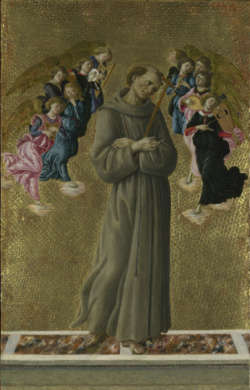
Sandro Botticelli, ‘Saint Francis of Assisi with Angels’ (about 1475-80)/Tempera and oil on wood/
© The National Gallery, London

The first major art exhibition to explore the life and legacy of Saint Francis of Assisi has opened at The National Gallery. Saint Francis of Assisi, which features works spanning the period from the 13th century to today, includes 40 works, ranging from medieval painted panels to relics, manuscripts and even a Marvel comic book. Highlights include Francisco de Zurbarán’s Saint Francis in Meditation (1635‒9), Antony Gormley’s Untitled (for Francis) (1985), Sandro Botticelli’s Saint Francis of Assisi with Angels (about 1475‒80 – pictured), El Greco’s Saint Francis Receiving the Stigmata (1590‒5), Giovanni Costa’s Frate Francesco e Frate Sole (1878‒86), and Matthew Paris’ drawings in the Chronica maiora, which present some of the earliest English depictions of Saint Francis. There’s also a relic of Francis’s habit from Santa Croce, Florence, and a small section of the exhibition is dedicated to Saint Clare, one of the first followers of Francis. The exhibition in the Ground Floor Galleries can be seen until 30th June. Admission is free. For more, see nationalgallery.org.uk.

England’s oldest hospital, St Bartholomew’s Hospital, is being celebrated in an outdoor exhibition in the City of London. Founded in 1123 – 900 years ago this year, the history of the hospital is being being told using photographs, art, and history drawn from Barts Health NHS Trust Archives’ extensive collections. The display can be seen in Guildhall Yard until 6th June after which it will move to Aldgate Square until 5th July before finally moving to St Bartholomew’s Hospital Square until 1st August. The exhibition is part of Barts900. For more on the programme of events, see Barts900 website.

Send all items to exploringlondon@gmail.com

This Week in London – Coronations at Westminster Abbey; tulips at Hampton Court; St Bartholomew at The National Gallery; and, Food Season at the British Library…

A new exhibition exploring the 1,000-year history of coronations at Westminster Abbey has opened in the abbey’s medieval chapter house. The exhibition, which has opened ahead of the coronation of King Charles III on 6th May, draws on historic illustrations and archive photography to explore the elements of the coronation service including the oath-taking, anointing, investing and crowning and takes a closer look any some of key artefacts present in the ceremony including the Coronation Chair. The exhibition, which is free with admission to the abbey and which runs until the end of September, is part of a season of events celebrating the coronation including themed late evenings, family activities and special afternoon teas at the Cellarium Café. Meanwhile, the abbey has also announced that visitors will be able to view the ‘Coronation Theatre’ – the special area which will be built for the historic occasion, from the Abbey’s North and South Transepts – following the coronation. Tickets for the special viewing – which will include the chance to see key elements from the coronation service including the Coronation Chair still in position on the Cosmati Pavement – can be purchased for timed slots between 8th and 13th May. For more on the abbey’s events surrounding the coronation, see www.westminster-abbey.org/events.

Tulips at Hampton Court Palace in 2021. PICTURE: Derek Winterburn (licensed under CC BY-ND 2.0)

Hampton Court Palace bursts into colour from Friday with its annual Tulip Festival. More than 110,000 bulbs have been planted to creat dramatic displays in the formal gardens and cobbled courtyards, among them a selection of heirloom bulbs on display in the Lower Orangery Garden which presents visitors with the chance to see tulips as they would have looked during the time of King William III and Queen Mary II, soon after the flowers were first introduced to Britain. Thanks to a special relationship with Netherlands-based Hortus Bulborum, the bulbs on display include Sylvestris (1595) and Rubella Broken (1700) as well as the Orange King (1903) and Queen of the Night (1940). Other highlights of the festival include 3,000 wine-toned tulips, including the merlot variety, flowing down from the steps and parapet of the Wine Fountain, as well as a floral fantasy in the palace’s courtyards in which tulips such as Raspberry Ripple, Apricot Emperor and Purple Prince flow out of wheelbarrows, barrels and a horse cart, and a free-style tulip planting in the Kitchen Garden inspired by Van Gogh’s 1883 painting, Bulb Fields. Runs until 1st May. Admission charge applies. For more, see https://www.hrp.org.uk/hampton-court-palace/whats-on/tulip-festival/.

Bernardo Cavallino (1616 ‑ 1656?), Saint Bartholomew (about 1640-1645), oil on canvas H x W: 176 x 125.5 cm; The National Gallery, London. Bought with the support of the American Friends of the National Gallery, 2023
PICTURE: © The National Gallery, London

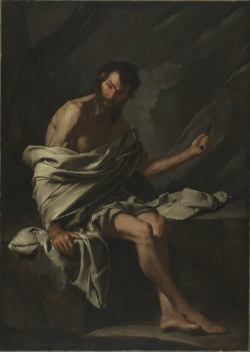
The recently acquired Bernardo Cavallino work, Saint Bartholomew has gone on show at The National Gallery. The painting, which dates from 1640-45 and which was last exhibited at The Metropolitan Museum of Art in New York in 1993, is being displayed alongside other 17th century works by artists such as Caravaggio, Artemisia and Orazio Gentileschi, Guercino, Reni and Ribera in the Hans and Julia Rausing Room (Room 32). The National Gallery has one other work by Cavallino – Christ driving the Traders from the Temple – but his depiction of Saint Bartholomew is considered one of his most splendid works. Admission is free. For more, see nationalgallery.org.uk.

Featuring everything from a celebration of African Caribbean takeaways to a “deep-dive” into the issues surrounding food production and access, Food Season kicks off at the British Library Monday. Highlights include a discussion of the sandwich by food writers Nigella Lawson, Jonathan Nunn and Rebecca May Johnson, a day-long celebration of African Caribbean cuisine featuring chefs and broadcasters Jimi Famurewa, Fatmata Binta and Andi Oliver, and, an exploration of the big challenges in food, land use and food production featuring author Henry Dimbleby alongside Dr Tara Garnett, Nick Saltmarsh, Abby Allen and Dimitri Houtart. Runs until 7th June. Admission charges apply. For the full programme, see www.bl.uk/events/food-season.

Send all items to exploringlondon@gmail.com
This Week in London – ‘After Impressionism’; a new woodland for Richmond Park; and, a new exhibition at the Heath Robinson…

Paintings and sculptures by artists including Cézanne, Van Gogh, Rodin, Picasso, Matisse, Klimt, Kandinsky and Mondrian opens at The National Gallery on Saturday. After Impressionism: Inventing Modern Art features more than 100 paintings and sculptures from museums and private collections around the world spanning the period between 1886 and 1914. Highlights include André Derain’s La Danse, Edgar Degas’s Dancers in the Foyer, Paul Cézanne’s Grandes Baigneuses, Edvard Munch’s The Death Bed, Paul Gauguin’s Vision of the Sermon, Camille Claudel’s Imploration / l’Implorante, and Lovis Corinth’s Nana, Female Nude. Admission charge applies. Runs until 13th August. For more, see www.nationalgallery.org.uk/exhibitions/after-impressionism-inventing-modern-art.

Sir David Attenborough has planted an English oak tree to officially open the Platinum Jubilee Woodland, a new woodland in Richmond Park. The woodland has been created as part of The Queen’s Green Canopy initiative to celebrate and honour the late Queen Elizabeth II’s lifetime of service. Some 70 young trees have been planted in the woodland, including oak, Dutch elm-disease-resistant elm, small-leaved lime, and sweet chestnut trees, planted around a focal point which will later incorporate a seating area. Sir David’s tree is one of the last to be planted as part of The Queen’s Green Canopy initiative which concludes on 31st March. The project invited people from across the nation to plant trees in honour of Queen Elizabeth II to mark the Platinum Jubilee and benefit future generations. For more on the park, see www.royalparks.org.uk/parks/richmond-park.

Illustrative works by William Heath Robinson, Charles Robinson and Thomas Health Robinson, many of which have not be exhibited before, are on show in a new exhibition at the Heath Robinson Museum in Pinner. The works, which come from the collection of Martin and Joanne Verden, include original drawings for Railway Ribaldry and William Heath Robinson’s How to… series of books. Admission charge applies. Runs until 21st May. For more, see www.heathrobinsonmuseum.org.

Send all items for inclusion to exploringlondon@gmail.com.

This Week in London – Wren letter in the Painted Hall; art from America’s South; and, ‘Finding Family’ at the Foundling Museum…

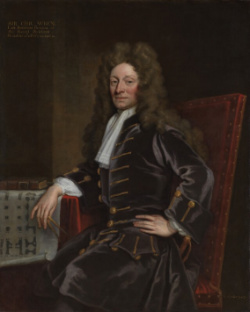
Sir Christopher Wren, by Sir Godfrey Kneller, Bt, oil on canvas, 1711 NPG 113

A letter written by Sir Christopher Wren requesting stone for the construction of the Royal Hospital for Seamen in Greenwich is on display in the Painted Hall vestibule. Wren wrote the letter requesting 2,000 tonnes of Portland stone to Thomas Gilbert, overseer of the King’s Quarries of the Isle of Portland, on 11th October, 1700. It is being displayed along with information explaining how the stone was brought from Dorset to London. The display is one of a series of events taking place at the Old Royal Naval College marking the 300th anniversary of Wren’s death on 25th February, 1723. Can be seen until January, 2024. An admission charge applies. For more, see https://ornc.org/whats-on/painted-hall-display-letter-written-by-sir-christopher-wren/. For more on events surrounding the 300th anniversary of Wren’s death, head to https://ornc.org/celebrating-wren300/.

Slavery, the cruel segregationist policies of the Jim Crow era, and the civil rights movement in the southern United States are all explored in a new exhibition at the Royal Academy. Souls Grown Deep like the Rivers: Black Artists from the American South, features around 64 works – including assemblages, sculpture, paintings, reliefs, and drawings – by 34 artists spanning the period from the mid-20th century to the present. Drawn mostly from the collection of the Souls Grown Deep Foundation in Atlanta, Georgia, many of the works are being seen in Europe for the first time. The display in the Gabrielle Jungels-Winkler Galleries also features quilts by the celebrated quiltmakers of Gee’s Bend, Alabama, and the neighbouring communities of Rehoboth and Alberta. Opening on Friday, the exhibition can be seen until 18th June. Admission charge applies. For more, see royalacademy.org.uk.

Three masterpieces from The National Gallery’s collection – by Hogarth, Gainsborough and the Le Nain Brothers – have gone on show at The Foundling Museum in Bloomsbury as part of a new exhibition exploring what family is and can be. Finding Family examines the ways in which artists have represented and responded to ideas of family with reference to the historic paintings as well as contemporary works of art. The art is accompanied by creative writing created by participants in ‘Tracing Our Tales’ – the museum’s award-winning programme for young care leavers – who have responded to the exhibition’s themes. Opens on Friday and runs until 27th August. Admission charge applies. For more, see https://foundlingmuseum.org.uk/event/finding-family/.

Send items for inclusion to exploringlondon@gmail.com.

This Week in London – Newly restored ‘Nativity’ back on display for Christmas; Tutankhamun 100 years on; and, ‘Museum of the Moon’ at Greenwich…

Following a restoration, early Renaissance artist Piero Della Francesca’s The Nativity has gone on display in The National Gallery in time for Christmas. The painting, created circa 1470, had been in the possession of Piero’s family until it came to London in the 1860s. Then in a poor condition, it was acquired by The National Gallery in 1874. It has now been restored by the gallery’s senior restorer Jill Dunkerton with panel work by Britta New in a process which has shed new light on the painting. This includes the understanding that while it was previously framed and displayed as an altarpiece, instead the work is now believed to have been a very grand, domestic painting which Piero may even have painted for himself. To complement this new interpretation, the gallery has been able to acquire a carved walnut frame, of almost exactly the correct dimensions, date and probable origin. You can see a video of the conservation process below. For more, see www.nationalgallery.org.uk.

• Marking the 100th anniversary of the discovery of Tutankhamun’s tomb in Egypt in November, 1922, the British Museum has opened a new display looking at the way the ancient Egyptian pharaoh was viewed, both by his contemporaries and by people today. The free Asahi Shimbun Display Tutankhamun Reimagined features artwork by contemporary Egyptian graffiti artist Ahmed Nofal alongside a statue of Tutankhamun which was discovered before his tomb was even found. Accompanying the display is a trail through the Egyptian Sculpture Gallery (Room 4) in which visitors can learn more about Tutankhamun and his times. Can be seen until 29th January. For more, see www.britishmuseum.org.

Artist Luke Jerram – of Gaia fame – is returning to the Old Royal Naval College in Greenwich next week with his artwork Museum of the Moon. The large scale installation, which will hang in the Painted Hall, features NASA imagery of the lunar surface. Visitors are invited to lean back on daybeds to experience the installation which is accompanied by a surround sound composition by BAFTA-winning composer Dan Jones. Runs from Tuesday, 13th December, to 2nd February. Admission charge applies. For more, see https://ornc.org/whats-on/museum-of-the-moon/.

Send all items to exploringlondon@gmail.com.

This Week in London – Bonfire Night; Treason at The National Archives; two Turner’s return after 100+ years; and, science fiction at the Science Museum…

A previous Bonfire Night in London. PICTURE: teo73/iStockphoto

“Remember, remember, the 5th of November…” It’s Bonfire Night this Saturday night and fireworks displays will be held across London with key displays at Alexandra Palace, Battersea Park and Wimbledon Park. Rather than list them all here, Visit London has put together a handy guide which you’ll find here.

A section of the Treason Act. PICTURE: Courtesy of The National Archives (Open Government Licence)

What did the abolition of the transatlantic slave trade, the establishment of the Church of England, the creation of the United States of America and the extension of UK voting rights have to do with acts of treason? Treason: People, Power & Plot, a new exhibition at The National Archives in Kew, examines the role treason has played across the span of 700 years of history. On display will be the original Treason Act, passed in 1352 during the reign of King Edward III (pictured), and the Monteagle Letter – which suggested the recipient should not attend parliament on 5th November, 1605 (effectively tipping them off about the Gunpowder Plot) as well as Guy Fawkes’ confession, a document containing the charges levelled against King Henry VIII’s ill fated wife, Anne Boleyn, and the United States’ Declaration of Independence. Accompanying the display will be a range of online and on-site events. The free exhibition opens on Saturday and runs until 6th April. For more, see www.nationalarchives.gov.uk/treason/.

Joseph Mallord William Turner (1775 – 1851) The Harbor of Dieppe, 1826 oil on canvas 68 3/8 in. x 88 3/4 in. (173.67 cm x 225.43 cm) Henry Clay Frick Bequest. Accession number: 1914.1.122

Two ground-breaking JMW Turner paintings – Harbour of Dieppe: Changement de Domicile and Cologne, the Arrival of a Packet-Boat: Evening – have returned to the UK for the first time in more than 100 years as part of a new exhibition at The National Gallery. The Turner on Tour exhibition looks at the artist’s life-long fascination with ports and harbours and highlights the regular sketching tours he took within Europe that were central to his fame as an artist-traveller, as well as his “radical approach to colour, light and brushwork”. The two paintings, which have not been since in the UK since 1911, were exhibited in New York in 1914 at the Knoedler Gallery. They were subsequently acquired by the American industrialist Henry Clay Frick and have remained in the United States ever since but are now being generously lent by The Frick Collection. Can be seen until 19th February in Room 46. Admission is free. For more, see nationalgallery.org.uk.

On Now: Science Fiction: Voyage to the Edge of Imagination. This exhibition at the Science Museum in South Kensington features more than 70 objects and uncovers connections between significant scientific innovations and celebrated science fiction works. On display is classic literature that has inspired new understandings of the world as well as set-pieces and props from iconic films and TV – everything from a Lieutenant Uhura costume from Star Trek: The Motion Picture, to the Dalek from Doctor Who and a Darth Vader helmet created for Star Wars: Episode V – The Empire Strikes Back. There are also contemporary artworks from across the globe that explore alternative futures for humanity. The exhibition is accompanied by an events programme. Runs until 4th May. Admission charges apply. For more, see sciencemuseum.org.uk/science-fiction.

Send all items for inclusion to exploringlondon@gmail.com