The subject of a recent fund-raising campaign by the British Museum, the unique 24 carat gold heart-shaped pendant is linked to King Henry VIII and his first wife Queen Katherine of Aragon.
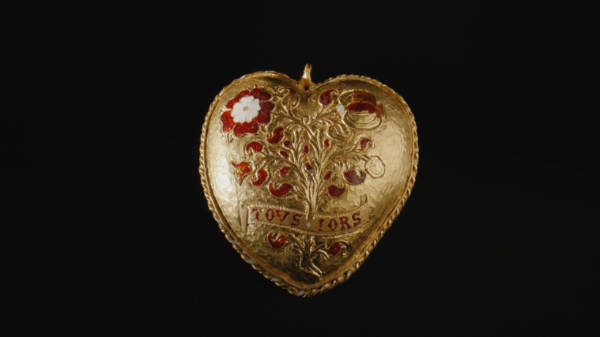
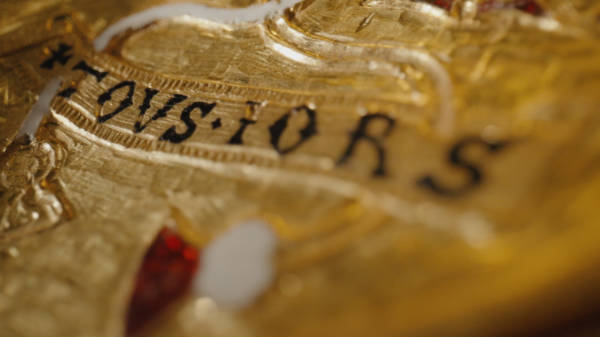
The pendant was discovered by a metal detectorist in Warwickshire in 2019. It features enamelled motifs depicting a Tudor rose intertwined with a pomegranate tree – the personal emblem of Katherine. Beneath them is a banner containing the word ‘touriors’, old French for ‘always’.
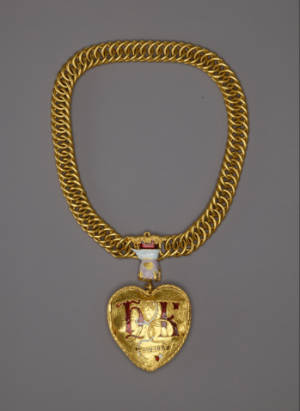
The obverse side is decorated with the initials ‘H’ and ‘K’ united by a tasselled cord and it also features a banner with the word ‘touriers’.
The jewel is attached to a 75 link gold chain by a clasp in the form of a hand emerging from a cloud.
The pendant is a rare surviving object celebrating Henry and Katherine’s marriage which was the longest of his life, lasting some 24 years before he ultimately had it annulled in 1533.
British Museum research has suggested that it may have been created for a tournament held in October, 1518, to mark the betrothal of the couple’s daughter, Princess Mary (late Queen Mary I), to the French heir. King Henry VIII was known to have frequently commissioned London goldsmiths to create jewellery peces for major celebrations and state occasions.
The museum announced that it had raised its target of £3.5 million to acquire the pendant on Valentine’s Day following a £1.75 million grant from the National Heritage Memorial Fund.
Other major donations made during the campaign, which was championed by actor Damian Lewis (who played King Henry VIII in the series Wolf Hall: The Mirror and The Light), included £500,000 from the Julia Rausing Trust, £400,000 from the Art Fund including a contribution from The Rought Fund, and £300,000 from the American Friends of the British Museum.
Meanwhile, more than 45,000 people gave individual donations to the campaign, totalling £380,000.
The pendant can be seen in the British Museum’s Collecting the world gallery.

 Exploring London