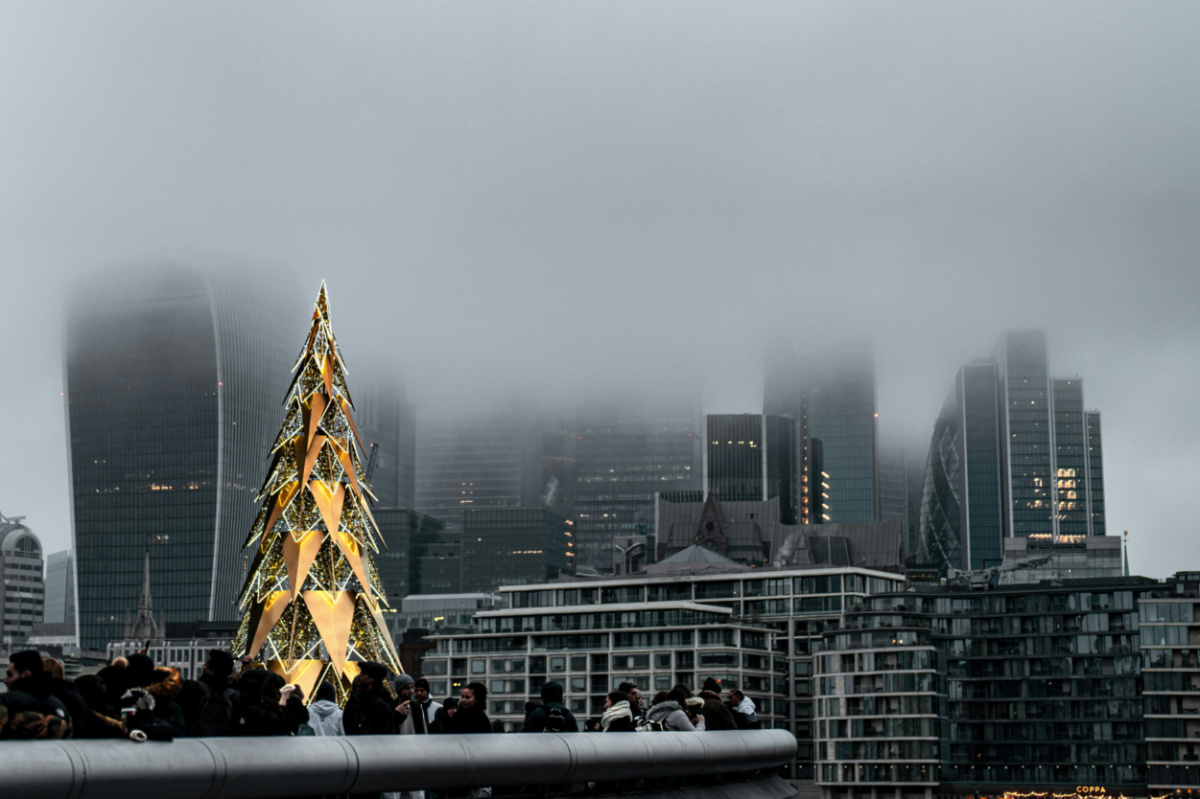
LondonLife – Christmas fog…

They’re one of the most iconic and enduring symbols of London – the once ubiquitous red phone boxes. But what are their origins and how did they come to be red?
The phone boxes went through several iterations with the first standardised kiosk to house public telephones – a concrete box appropriately designated K1 – introduced by the General Post Office, manager of the telephone network, in 1921. It was usually painted cream with a red door.
The classically-styled domed kiosk known as K2 followed in 1924 after a design competition which was won by Sir Giles Gilbert Scott (the wooden prototype can still be found under the gateway entrance into the Royal Academy of the Arts in Piccadilly).
These were subsequently produced in cast iron and while Scott had apparently suggested they be painted silver with a green-blue interior, they were painted red. The Post Office’s pillar boxes were already painted this colour which was thought to be good for visibility, so it followed the colour could be used for phone boxes as well.
The K3, made of reinforced concrete and again designed by Scott, was introduced in 1929. Various other iterations were also produced including the K6 which Scott designed to commemorate the Silver Jubilee of King George VI (it was the most in-use across the UK).
New designs continued to be rolled out in the ensuing decades and appeared in a range of colours.
The number of BT-operated telephone boxes in the UK is, according to BT, said to have peaked at about 92,000 in 1992.
While many of the traditional boxes have disappeared, some have been converted for other uses – everything from mini libraries and art galleries to housing defibrillators – and BT continues to sell them, both to communities and private buyers.
While call volumes from public phone boxes have continued to decline in recent years, it was reported that about five million calls were made in the year to May, 2020, illustrating the ongoing need for some to remain.
The wait is over and here’s the final four in our countdown…
4. 10 atmospheric ruins in London – 8. Coldharbour Gate…
3. What’s in a name?…Basinghall Street…
2. 10 atmospheric ruins in London – 4. Spitalfields Charnel House…
1. London Explained – The Common Cryer and Sergeant-at-Arms…
Our usual coverage will resume next week!

Wishing all our readers a great start to 2025!
To mark the end of 2024, we’re taking a look at some of our most read posts during the past year*. So without further ado…
12. 10 significant (and historic) London trees…7. D-Day Tree…
11. 10 significant (and historic) London trees…8. The Old Lions…
10. What’s in a name?…Barons Court…
9. 10 atmospheric ruins in London – 7. London Wall, Noble Street
* The calculation is based on the number of people that clicked on the post URL (it doesn’t include people who read the post on the main page). So it’s an indication rather than a decisive list!
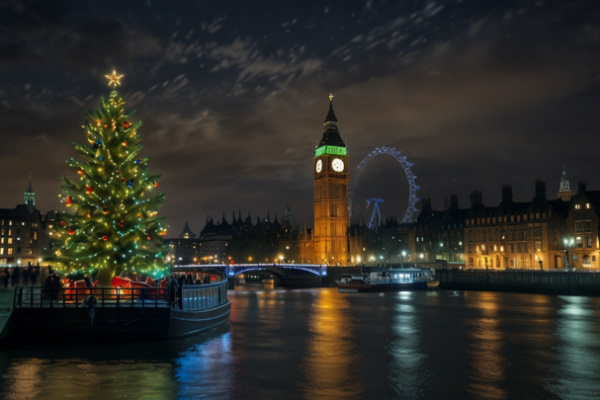
We’re taking a break for Christmas but will be back before the New Year.
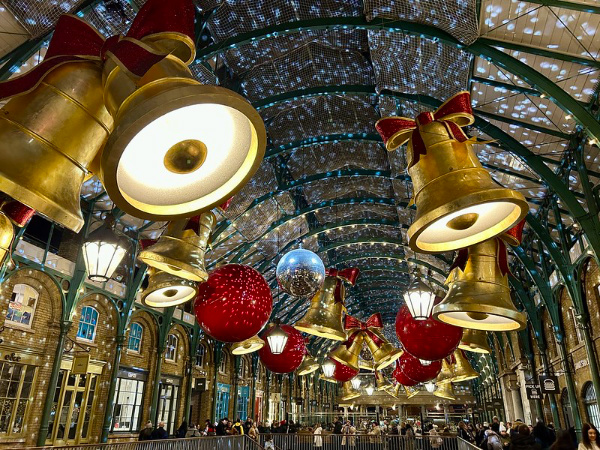
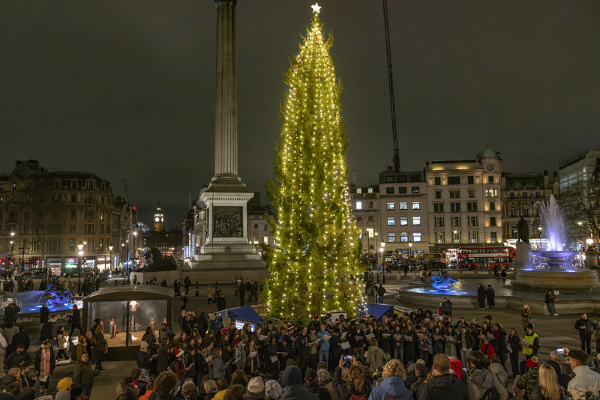
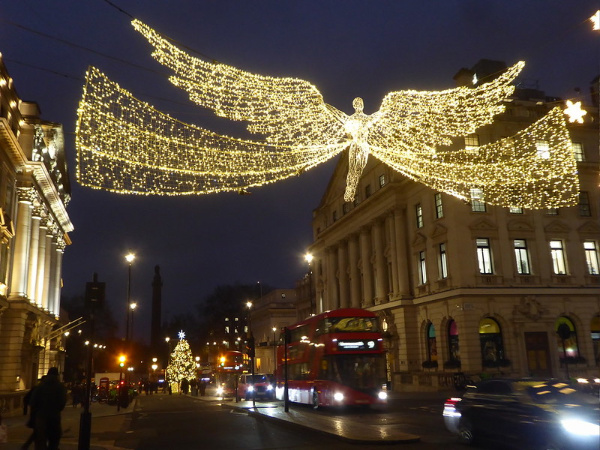
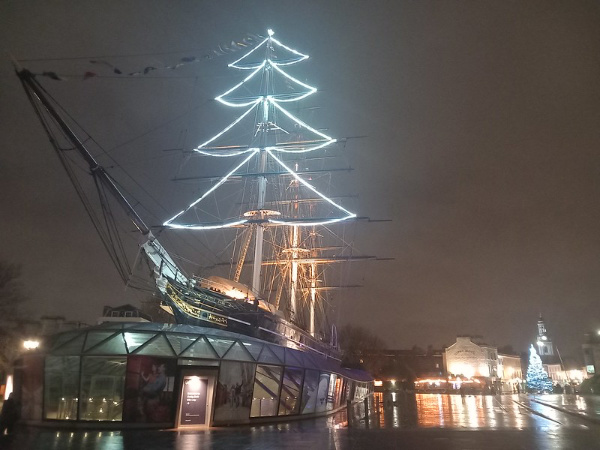
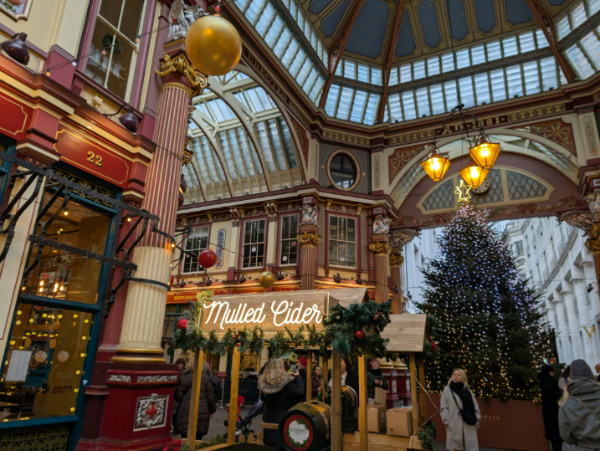
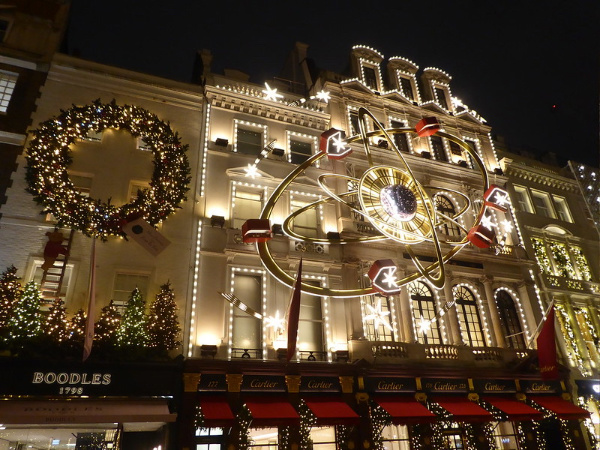
Cartier with a cosmic display in New Bond Street. PICTURE: JuliaC2006 (licensed under CC BY 2.0)

• The Museum of the Home in Shoreditch has once again redressed its ‘Rooms through Time’ display for the festive season. Located in the Grade I-listed Almshouses and adjoining Branson Coates Wing, the display spans the some 400 years and explores how seasonal festivals, culture and personal traditions” have shaped our lives at home during the winter months. This year the redressing also includes seven new period homes which reflecting the stories of East London. See everything from a Midwinter Celebration in 1630 to a Midnight Mass in 1956, a Christmas Party in 1978, and a futuristic New Year’s Eve in 2049. Runs until 12th January. Admission is free. For more, see www.museumofthehome.org.uk/whats-on/rooms-through-time/winter-past-2024-2025/.
• Join the Dickens family for Christmas. The Charles Dickens Museum in Bloomsbury is holding a special Christmas Eve opening with the house decorated in a traditional Victorian style. Guests, who each receive a free mince pie and mulled wine or soft drink alternative, will be able to watch adaptations of A Christmas Carol, including The Muppet Christmas Carol, throughout the day in ‘The Smallest Theatre in the World.’ Admission charge applies. To book, head to https://dickensmuseum.com/blogs/all-events/christmas-eve-at-the-charles-dickens-museum.
On Now: Women & Freud: Patients, Pioneers, Artists. This display at the Freud Museum in South Hampstead draws on manuscripts, images, objects, visuals, and film footage to bring to life the many women who shaped Freud’s life including everyone from the early “hysterics”, who Freud called “his teachers” to later patients such as Princesse Marie Bonaparte (who went on to become an analyst) through to his daughter Anna Freud and her partner Dorothy Burlingham, to artists such as Marie-Louise von Motesiczky, Louise Bourgeois, Paula Rego, Alice Anderson and Tracey Emin. The exhibition also celebrates the 100th anniversary of the first publication of Sigmund Freud’s work by Hogarth Press, founded and owned by Virginia and Leonard Woolf and a key feature in Bloomsbury life. Admission charge applies. Runs until 5th May. For more, see www.freud.org.uk/exhibitions/freuds-women/
Send all items for inclusion to exploringlondon@gmail.com.
Archaeologists were excavating the former St Pancras Old Church burial ground ahead of the expansion of St Pancras Railway Station to accommodate the Eurostar in 2003 when they came across a rather unusual coffin.
It’s that time of year and while it seems less people are these days sending Christmas cards, there are many who still do.
While we’ve previously written about the origins of greeting cards at Christmas (and who first sent them), today we’re taking a look at the oldest shop in which they’re still sold in London – often said to be the Medici Gallery in South Kensington.
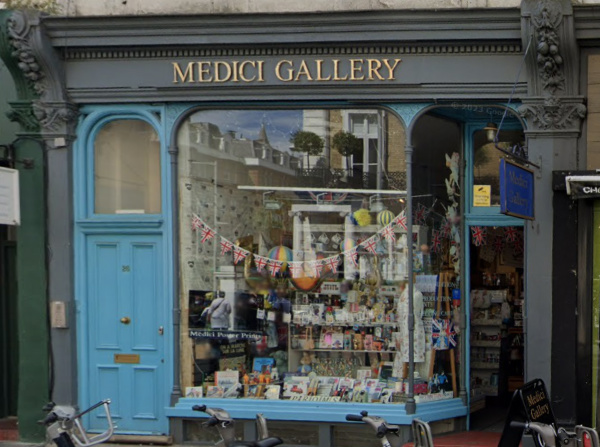
The gallery was opened by the Medici Society in 1908. This organisation had been founded by Philip Lee Warner and Eustace Gurney with the intention of promoting the work of artists to a wider audience. It initially operated on a subscription basis under which subscribers pay a set rate and then obtain copies of prints but later became a limited company.
The name Medici was said to have been chosen as a homage to the Medici family known for, among other things, the promotion of the arts in Florence during the Renaissance.
The gallery first started selling greeting cards in the 1930s and continues to do so today.
For more on the shop at 26 Thurloe Street, see www.medici.co.uk/.
Located close to the River Thames, Richmond Lodge was a royal hunting lodge before becoming a favoured residence for Hanoverian royals for several decades in the 18th century.
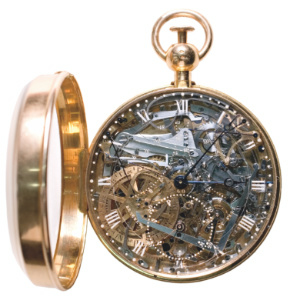
• One of the world’s most valuable watches – the No 160 watch which Abraham-Louis Breguet designed for Marie Antoinette but which wasn’t completed until the 1820s, well after her death – is the star of the show at the Science Museum’s new exhibition Versailles: Science and Splendour. Opening today, the exhibition, created in partnership with the Palace of Versailles, takes visitors on “a 120-year journey through the evolution of science at Versailles” and explores how Louis XIV, Louis XV and Louis XVI encouraged the pursuit of scientific knowledge and harnessed that knowledge as a tool of power. More than 100 objects are on display and, along with Breguet’s watch, they include Louis XV’s rhinoceros, a detailed map of the moon by Jean-Dominique Cassini, and Claude-Siméon Passemant’s Clock of the Creation of the World (1754). The watch, meanwhile, has its own fascinating history, including two decades in which its whereabouts were unknown after it was stolen in 1983 (in fact, its display in this exhibition marks the first time the timepiece has travelled abroad since its safe return to the LA Mayer Museum for Islamic Art in 2008). Runs until 21st April. Admission charge applies. For more, see sciencemuseum.org.uk/see-and-do/versailles.
• A medieval silk seal bag, which dates from the reign of King Henry III, has gone on public display for the first time in the Queen’s Diamond Jubilee Galleries at Westminster Abbey. The display follows the discovery by scholars that the bag’s material is a perfect match to the silk cloth used to wrap the remains of the Emperor Charlemagne when he was buried in Germany’s Aachen Cathedral (Charlemagne, seen as the first Holy Roman Emperor, died in 814 but was re-buried in the karlsschrein (Charles’s shrine) at Aachen in 1215). The bag at the abbey contains a wax seal, the Great Seal of King Henry III, which was attached to an inventory of the jewels and precious items on Edward the Confessor’s shrine located in the heart of the abbey. It was drawn up in 1267 when Henry III was in financial difficulties and forced to pawn items from the shrine to Italian merchants to raise funds (it is believed the items were all returned within 18 months). The silk used for Charlemagne’s shroud is believed to have been spun in the 12th century in Spain or the eastern Mediterranean and, while the small piece at the Abbey originates from a separate silk, it is understood that it would have been produced by the same weavers on the same loom. The bag can been seen until Easter next year. Admission charge applies. For more, see www.westminster-abbey.org/visit-us/plan-your-visit/the-queens-diamond-jubilee-galleries/.
• A new interactive electric bus display has opened at the London Transport Museum in Covent Garden. The Wrightbus Electroliner display – which has been provided by Transport UK London Bus – is based on an electric vehicle bus type which has been part of the fleet of buses operating in London since 2023. The new display features the front of the bus and includes an interactive driver cab and passenger space. Admission charge applies. For more, see www.ltmuseum.co.uk.
Send all items for inclusion to exploringlondon@gmail.com.
The Tower of London is known for many mysteries – the most famous, perhaps, being the fate of the two ‘Princes in the Tower’. But among the other mysterious deaths which took place behind the closed doors of the fortress is the death of the deposed King Henry VI.
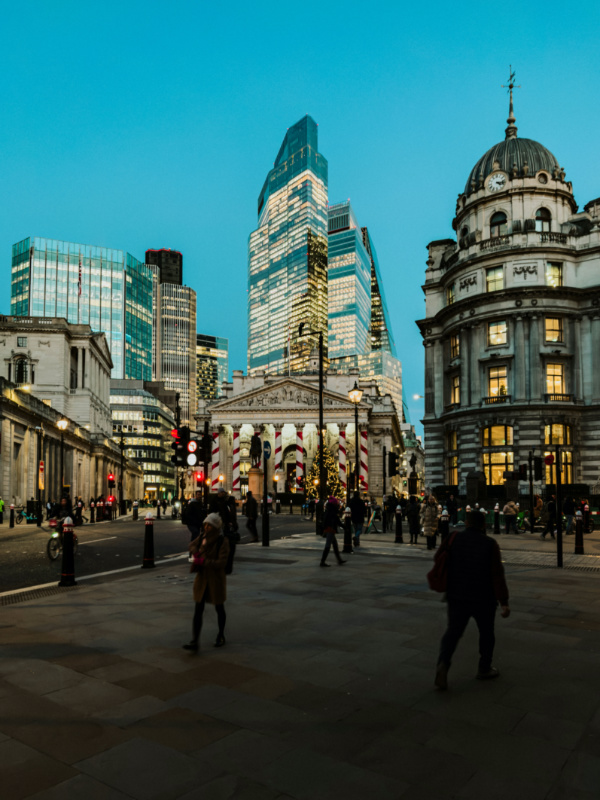
Looking toward the Royal Exchange in the City of London.
• Step back in time at Kensington Palace this Christmas with an experience inspired by Queen’s Victoria’s childhood at the palace. Victoria’s Childhood Christmas features intricately designed installations – everything from trees hung with sugar ornaments and handmade paper decorations to bespoke illustrations and period-style gifts – as well as an exploration of how some of the traditions still celebrated today – such as arranging numerous Christmas trees on table tops and displaying unwrapped presents around them – can be traced back to the 1830s at Kensington Palace. There’s also a pop-up theatre set which captures the magic of Victoria’s winter trips to London opera houses and a festive-themed afternoon tea inspired by Princess Victoria’s Christmas traditions served in The Orangery. The experience, which is included in general admission, can be seen until 5th January. For more, see www.hrp.org.uk/kensington-palace/
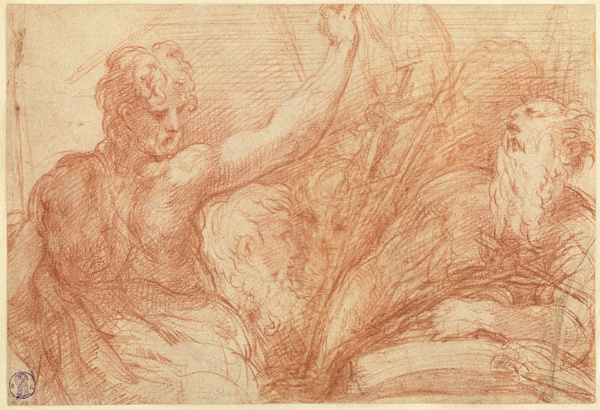
• Parmigianino’s Madonna and Child with Saints (1526‒7) returns to display in The National Gallery for the first time in a decade in honour of the gallery’s 200th anniversary. The work, which is also known as The Vision of Saint Jerome, was presented to the gallery in 1826 and is being displayed with a selection of some of the most important preparatory drawings providing a rare opportunity to follow the artist’s creative process. The painting can be seen in Room 46 until 9th March. Entry is free. For more, see nationalgallery.org.uk.
• The Buckingham Palace State Rooms are open for one hour tours on select dates throughout winter. Led by an expert guide, the tours, which have a maximum of 30 people, include a complimentary guide. For more, see https://www.rct.uk/whatson
Send all items to exploringlondon@gmail.com
The location of Queen Boudicca’s grave has remained a mystery for almost 2,000 years and, dare we say it (yes, thinking of you, King Richard III), is likely to remain so.
Subscribe for just £3 a month to gain access to all Exploring London’s content (and know that you’re helping to support our work!)
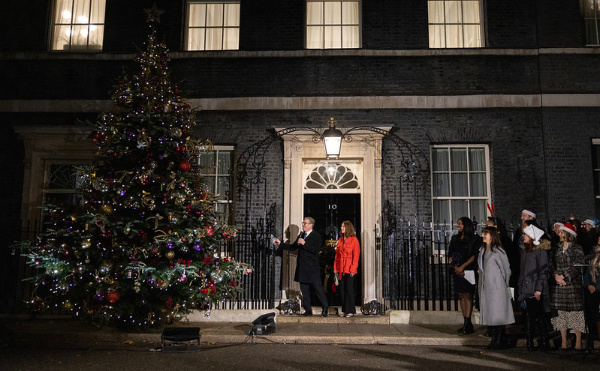
Prime Minister Keir Starmer and his wife Victoria Starmer turned on lights on the Christmas tree outside 10 Downing Street on 2nd December. The couple were joined by NHS workers, military personnel and members of the police. The Christmas tree is the winner of a competition run by the British Christmas Tree Growers Association, chosen for showcasing “the finest dedication, craftsmanship and commitment of British Christmas tree growers”. This year’s Nordmann Fir was grown by Evergreen Christmas Trees – a family run business based on the Welsh border who have been growing Christmas trees since 1992. The runner-up in the Christmas tree competition – Cadeby Tree Trust from Warwickshire – have supplied two Christmas trees for inside Downing Street. The wreath for the famous door at Number 10, meanwhile, was provided by Santa Trees, a Christmas tree farm from Cornwall. Lights on London’s most famous Christmas tree – that in Trafalgar Square – are being turned on this Thursday (5th December).
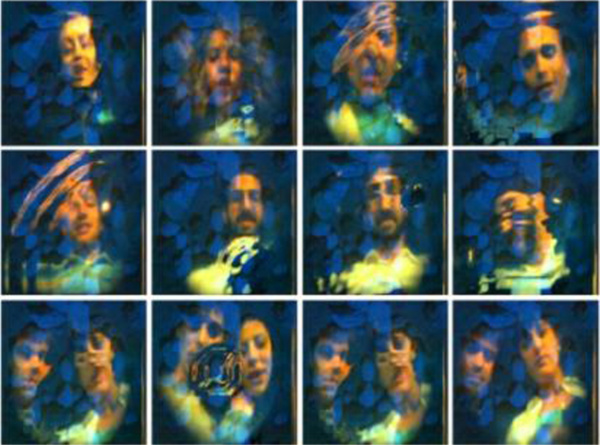
• Early innovators of optical, kinetic, programmed and digital art are being celebrated in a new exhibition which opens today at Tate Modern. Electric Dreams: Art and Technology Before the Internet features the work of more than 70 artists who worked between the 1950s and the dawn of the internet age and “who took inspiration from science to create art that expands and tests the senses”. Works on show include Electric Dress (1957) by Japanese artist Atsuko Tanaka of the Gutai group which is being shown alongside her circuit-like drawings, German artist Otto Piene’s Light Room (Jena) which surrounds viewers in a continuous light ‘ballet’, British-Canadian Brion Gysin’s homemade mechanical device, Dreamachine no.9 (1960-76) which creates kaleidoscopic patterns, and Tatsuo Miyajima’s eight-metre-long wall installation of flashing LED lights, Lattice B (1990), which is a meditation on time. A series of rooms, meanwhile, explores the art shows which played a key role in the development of digital art including London’s groundbreaking ‘Cybernetic Serendipity’ exhibition held at the ICA in 1968, and the exhibition also features the work of early adopters including US artist Rebecca Allen and Palestinian Samia Halaby as well as some of the earliest artistic experiments in virtual reality such as Monika Fleischmann and Wolfgang Strauss’ interactive installation Liquid Views (1992). Runs until 1st June. Admission charge applies. For more, see tate.org.uk.
• The Museum of London Docklands is launching The Reflection Room, a new display space for artists on Friday. The new space, which the museum says will offer “room to explore a range of ideas and perspectives that foreground emotions and human experiences connected to London’s history”, will open with British-Caribbean artist Zak Ové’s mixed media installation Exodus. The installation, which is said to suggest a “reflection on today’s discourse around migration” will be accompanied by a wall of historic maps that present a visual sense of data on international migration, agricultural trade, and tourism between 1500 and 2005. Exodus can be seen until May. Admission is free. For more, see www.londonmuseum.org.uk/docklands/.
• The final tranche of tickets for London’s New Year’s Eve fireworks display go on sale on Monday, 2nd December, at noon. Tickets must be bought in advance to attend and cost between £20 and £50 depending on the viewing area while Londoners will pay £15 less on each ticket booked than those living outside of the capital. Tickets will be available at www.ticketmaster.co.uk. For more on the event, see www.london.gov.uk/nye.
Send items for inclusion to exploringlondon@gmail.com.
 Exploring London