A Moment in London’s History – The coronation of King Edward IV…

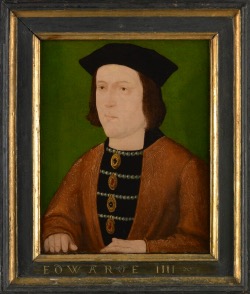
It’s 560 years ago this month that the Yorkist King Edward IV was crowned at Westminster Abbey.
This image has an empty alt attribute; its file name is king-edward-iv.jpg
King Edward IV by Unknown English artist, oil on panel, circa 1540 (NPG 3542). PICTURE: Courtesy of National Portrait Gallery

Only three months earlier, on 4th March, 1461, the 19-year-old Edward had been declared King at Westminster in London. He had then gone on to defeat the Lancastrian forces at the Battle of Towton in North Yorkshire during a snowstorm on 29th March, said to have been the bloodiest single day battle ever fought on English soil with an estimated 28,000 men dying.

While his coronation was first set for July, ongoing trouble from the Lancastrians saw him bring the date forward (his predecessor, Henry VI, was in exile at the time).

Edward arrived at the Tower of London on Friday, 26th June, and then retired to Lambeth for the night. The following day – Saturday, 27th June – he crossed London Bridge and made his state entrance into the City.

Accompanied by the Lord Mayor and Aldermen and some 400 of the elite citizens of the City, Edward, said to be an impressive figure at six foot, four inches tall, then processed through the City streets to the Tower of London.

Once at the Tower, he created some 28 new Knights of the Bath, including his younger brothers George and Richard. They then rode ahead of him as he rode through the streets to Westminster.

The following morning, Sunday, 28th June, Edward went to Westminster Abbey where he was crowned King. Thomas Bourchier, the Archbishop of Canterbury, presided over the ceremony, assisted by William Booth, the Archbishop of York.

After the coronation, a banquet was held in Westminster Hall with the King sitting under a cloth of gold. One of the highlights was apparently the moment when Sir Thomas Dymoke, the King’s champion, rode into the hall in full armour. Flinging down his mail gauntlet, he is said to have challenged anyone who disputed Edward’s right to be king to do battle with him. No-one took up the offer.

A further banquet was held the following day at the Bishop of London’s Palace – in honour of his brother George who was created Duke of Clarence, and on the Tuesday, King Edward, wearing his crown, attended St Paul’s Cathedral.

Edward’s first reign ended in 1470 when on 30th October, he was forced into exile and King Henry VI. But it was only to be for a brief period – Edward IV reclaimed the throne on 11th April, 1471, defeating the Lancastrians in a decisive battle at Barnet on 14th April (April marked the 550th anniversary of that battle).
Lost London – The Reformers’ Tree…

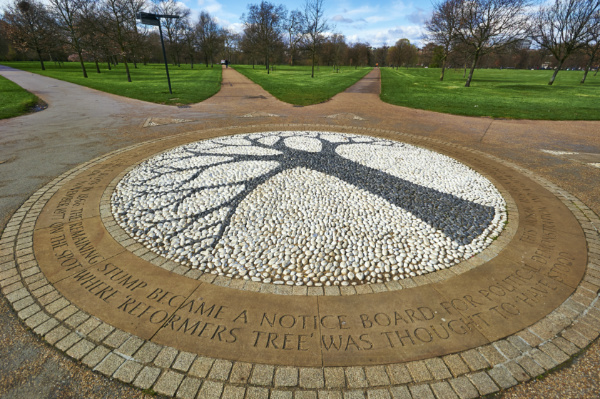
A mosaic commemorating the former Reformers’ Tree in Hyde Park. PICTURE: Courtesy of Royal Parks.

This large oak tree, planted in Hyde Park, was a focal point for protests in 1866 by the Reform League, a group which campaigned for all men to have the right to vote.

The tree was set alight during one protest (on what date and whether it was as an act of protest or simply an act of mischief by some boys during an otherwise orderly rally apparently remains a matter of debate).

The blackened stump was subsequently used a site for people to post notices, as a podium at meetings (including by the Reform League) and, more broadly, as a symbol of the right for people to assemble.

The tree was something of a precursor to Speaker’s Corner in Hyde Park. That owes its formal establishment to an Act of Parliament, passed in 1872, that designated the north-east corner of Hyde Park as a site for public speaking and is now known – and emulated across the world – as Speaker’s Corner.

A circular mosaic depicting the blackened tree – the work of sculptor Harry Gray – now stands at the junction of numerous pathways close to the eastern end of Hyde Park. It was unveiled in the year 2000 by politician Tony Benn.

Whether it stands on the actual site of the original tree is also a matter of debate. The inscription on the memorial mentions that on 7th November, 1977, then Prime Minister James Callaghan planted a new oak tree on the spot where the Reformers’ Tree was thought to have stood. But there’s obviously no oak now where the mosaic is laid.

This Week in London – Royal gowns; first ‘blossom garden’; and, the brightest colours ever created…

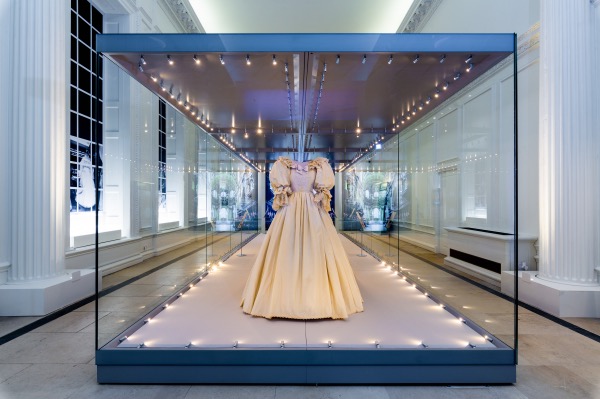
A view of the Royal Style in the Making exhibition. PICTURE © Historic Royal Palaces.

A stunning wedding dress worn by Diana, the Princess of Wales – including its 25 foot long sequin encrusted train – and a rare surviving ‘toile’ – a working pattern – of the 1937 coronation gown of Queen Elizabeth, The Queen Mother, are among star items on display in a new exhibition in Kensington Palace’s Orangery. Royal Style in the Making features some never-before-seen items from the archives of some of the most celebrated royal couturiers of the 20th century as well as original sketches, fabric swatches and unseen photographs from the Royal Ceremonial Dress Collection, a treasure trove of more than 10,000 items of dress and design history cared for by Historic Royal Palaces. Admission charge applies. The display can be seen until 2nd January. For more, see www.hrp.org.uk.

• The first in a series of ‘blossom gardens’ has been opened by the National Trust in Queen Elizabeth Olympic Park in London’s east. The garden features 33 trees including cherry, plum, hawthorn and crab apple which represent the city’s 32 boroughs and the City of London itself. The garden, which was opened last month by the Mayor of London, Sadiq Khan, will be followed by further gardens planted over the next five years across England, Wales and Northern Ireland.

The brightest colours ever created are dazzling eyes at Kew Gardens. Naturally Brilliant Colour, an exhibition in the Shirley Sherwood Gallery of Botanical Art, explores the origins of colour and vision and showcases how botanical artists have depicted the brightest and most intense colours found in nature. Works by Robert John Thornton (1768-1837) and contemporary artist Julia Trickey are on show as well as the world’s first botanical artwork to accurately reproduce natural structural colour (it features flakes of ‘Pure Structural Colour’ which artificially replicates how microscopic structures within the surface layers of plants and animals reflect sunlight in a specific way to generate bright colours). Runs until 26th September. Admission charge applies. For more, see www.kew.org.

Send all items for inclusion to exploringlondon@gmail.com.

10 London hills – 8. Harrow Hill…

The Harrow School (left) and St Mary’s Church on top of Harrow Hill. PICTURE: Google Maps

This hill in outer north-west London, which rises 124 metres (408 feet) above sea level, is the location of the village Harrow-on-the-Hill.

The hill’s name is said to refer to a Saxon place of worship and was later taken to mean the Christian church that stood upon it.

That church – the historic St Mary’s, the latest incarnation of a Christian church which has stood on the hill since the Norman Conquest – dominates the hill to this day. Nearby is a spot called King Charles’ Well where King Charles I is said to have stopped and taken one last look at London as he made his way from Oxford to surrender to the Scottish army in Nottinghamshire.

The other famous landmark atop the hill, opposite the church, is the world renowned Harrow School, founded under a Royal Charter by John Lyon in 1572, during the reign of Queen Elizabeth I.

The hill is also host to a Grade II-listed war memorial and a fine array of historic homes dating from the Georgian period to the early 20th century. Among this who have lived on the hill are 19th. century critic and writer Matthew Arnold and 19th century Scottish author RM Ballantyne.

Panoramic views of Central London can be seen from the top of the hill and there is a famous viewpoint in the churchyard known as Lord Byron’s View, which looks away to the north-west. It’s so-called because Byron, while a schoolboy at Harrow, was a frequent visitor to the spot by a tombstone – called the “Peachy Tomb”- where he would apparently spend time “dreaming”.

Byron’s View atop Harrow on the Hill. PICTURE: Google Maps

LondonLife – The Bow Street Police Museum opens its doors…

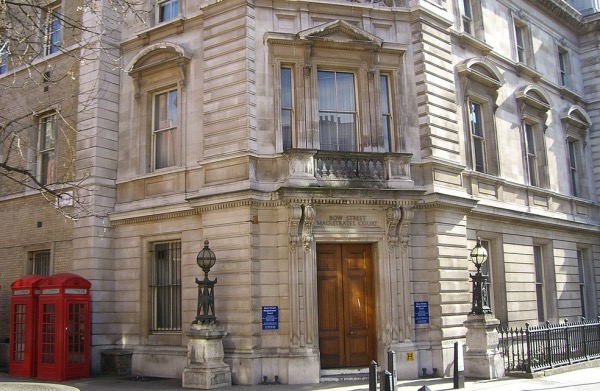
The Bow Street Magistrates’ Court in 2006, the year of its closure. PICTURE: Edward (public domain)

The Bow Street Police Museum, located on the site of the 1881 Bow Street Magistrates’ Court and Police Station, has opened its doors in Covent Garden. The museum tells the story of the early Bow Street Runners, the first official law enforcement service in the city, and the Metropolitan Police officers who came after. Visitors can explore the former cells and hear the stories of those who once worked in the building. The connections between Bow Street and the constabulary dates back to 1740 when Thomas de Veil opened a Magistrates’ Court in his family home at number four Bow Street in the 18th century and continued until the closure of the Bow Street Magistrates’ Court in 2006. Among the famous faces who passed through Bow Street’s police station and court over that time were Oscar Wilde, Suffragettes Sylvia Pankhurst, Christabel Pankhurst and Mrs Drummond, and the Kray twins. For more, head to https://bowstreetpolicemuseum.org.uk.

London Pub Signs – The Pilot…

PICTURE: Matt Brown (licensed under CC BY 2.0)

The former sign of this Greenwich pub made the origins of its name pretty obvious – it depicted the orange boat of the Thames pilot, one of the navigators who helped ships make their way down London’s great river (the current sign is a bit more subtle, depicting a gull flying over the river).

But there is an alternate theory for the pub’s name. William Pitt the Younger, Prime Minister from 1783 to 1801 and then again from 1804 to 1806, is said to have once owned the land on which the pub was built. His nickname? The “Pilot”.

The timing for the latter fits, given that the pub dates from 1801 when it opened under the name ‘The Pilot Inn and Ferry’ (and is thus believed by many to be the oldest surviving building on the Greenwich Peninsula).

The front of the pub bears a plaque which features the names Ceylon Place and New East Greenwich and the date 1801 – Ceylon Place refers the row of terraced houses to which the pub is joined and New East Greenwich which was the name given to this development overall when it was built (in the apparently unrealised hopes that it would be at the heart of a much larger estate).

This atmospheric pub, which features exposed beams and a rear terrace, can be found at 68 River Way, a short walk from the O2 Arena. Acquired by the Fuller’s chain in 2006, it offers accomodation as well as meals. For more, see www.pilotgreenwich.co.uk.

Treasures of London – The St Katharine Cree rose window…

The Rose Window in St Katharine Cree. PICTURE: John Salmon (licensed under CC BY-SA 2.0)

Said to have been modelled on a rose window once inside Old St Paul’s Cathedral (which was destroyed in the Great Fire of London), the window, also known as Catherine (Katharine) Wheel, features some beautiful examples of 17th century stained glass.

The window, which is located in the chancel of the church of St Katharine Cree in Leadenhall Street in the City not far from Leadenhall Market, was installed when the church was rebuilt in the early 1630s (replacing an earlier medieval church – the church’s tower, however, dates from 1504 and was part of the earlier church on the site). It is abstract in design but

The window, which was removed to ensure its protection during World War II, has undergone repairs and the centre of the wheel was replaced after it was blown out in 1992 when a massive truck bomb went off at the nearby Baltic Exchange.

The Catherine Wheel, incidentally, was an execution device associated with the martyrdom of St Catherine of Alexandria. Catherine had upset the Emperor Maxentius in the early 4th century by speaking out against his persecution of Christians in the early fourth century. Tradition has it that after failing to break her spirit through torture (and, so say some, a marriage proposal which she refused), Maxentius ordered her to be put to death on a spiked wheel, it broke at her touch and she was later beheaded.

This Week in London – Nero at the British Museum; Stephen Hawking’s office to be recreated at the Science Museum; and, Blue Plaque for Indian engineer Ardaseer Cursetjee Wadia…

This image has an empty alt attribute; its file name is head-of-nero-bm.jpg
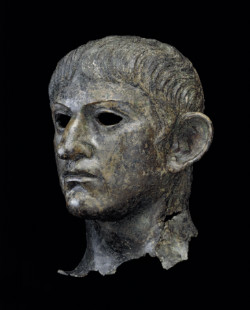
Head from a bronze statue of the emperor Nero. Found in England, AD 54– 61. PICTURE: © The Trustees of the British Museum.

A bronze head of the Roman Emperor Nero found in the River Alde in Suffolk – long wrongly identified as being that of the Emperor Claudius – and the Fenwick Hoard – which includes Roman coins, military armlets and jewellery – are among the star sights at a new exhibition on Nero at the British Museum. Nero: the man behind the myth is the first major exhibition in the UK which takes Rome’s fifth emperor as its subject. The display features more than 200 objects charting Nero’s rise to power and his actions during a period of profound social change and range from graffiti and sculptures to manuscripts and slave chains. Other highlights include gladiatorial weapons from Pompeii, a warped iron window grating burnt during the Great Fire of Rome of 64 AD, and frescoes and wall decorations which give some insight into the opulent palace he built after the fire. The exhibition, which opens today, runs until 24th October in the Sainsbury Exhibitions Gallery. Admission charge applies. For more, see www.britishmuseum.org/whats_on/exhibitions/nero/events.aspx.

The office of late theoretical physicist Professor Stephen Hawking will be recreated at the Science Museum, it was announced this week. The contents of the office, which Hawking, the author of the best-selling A Brief History of Time, occupied at Cambridge’s department of applied mathematics and theoretical physics from 2002 until shortly before his death in 2018, includes reference books, blackboards, medals, a coffee maker and Star Trek mementoes as well as six of his wheelchairs and the innovative equipment he used to communicate. The museum, which reportedly initially plans to put the objects on display in 2022 and later recreate the office itself, has acquired the contents through the Acceptance in Lieu scheme, which allows families to offset tax (his archive will go to the Cambridge University Library under the same scheme).

Nineteenth century civil engineer Ardaseer Cursetjee Wadia – the first Indian Fellow of the Royal Society – has been honoured with an English Heritage Blue Plaque at his former Richmond home. The plaque, which can be found on 55 Sheen Road – the villa Cursetjee and his British family moved to upon his retirement in 1868, was installed to mark the 180th anniversary of his election as a Fellow of the Royal Society. Cursetjee is considered the first modern engineer of India and was the first Indian at the East India Company to be placed in charge of Europeans. He was at the forefront of introducing technological innovations to Mumbai including gaslight, photography, electro-plating and the sewing machine. Cursetjee first visited London in 1839 and travelled regularly been Mumbai (formerly Bombay) and London until his retirement. For more, see www.english-heritage.org.uk/visit/blue-plaques.

Send all items for inclusion to exploringlondon@gmail.com.

10 London hills – 7. Brockley Hill…

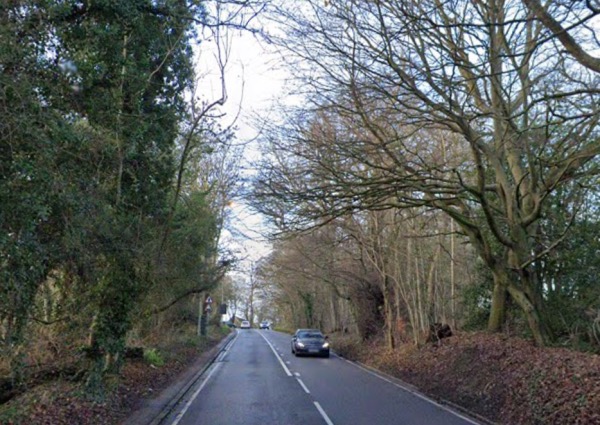
Looking north along the A5 as it passes over Brockley Hill. PICTURE: Google Maps

Located in Stanmore in London’s northern outskirts, Brockley Hill has an elevation of 136 metres above sea level.

The name apparently comes from an Old English word for badger holes (the sandy soil on top of the hill being easier for them to dig than the surrounding clay).

The Celtic tribe the Catuvellauni is believed to have had a settlement on the hill top and legend says that it was on the hill that a battle was fought between the Catuvellauni, under their leader Cassivellanus, and the Roman Julius Caesar in 54 BC.

The Romans later are understood to have established their own settlement on the hill – Sulloniacae – which was served as an imperial posting station on Watling Street as it made its way north from Marble Arch to Verulamium (St Albans).

The sandy soil also meant the area was a centre for pottery making during the Roman period, in particular flagons and vessels known as mortaria (bricks were made here in more recent centuries). There’s a plaque commemorating the Roman pottery on the A5 (just pass the junction with Wood Lane)

There is an obelisk commemorating the battle on top of the hill which was erected in 1750 (which can still be seen although it suggests the Catuvellauni won the battle when historians today believe the reverse). It stands now in the grounds of the Royal National Orthopaedic Hospital which moved into the site of an earlier hospital in the late 1920s.

LondonLife – A facelift for a dinosaur…

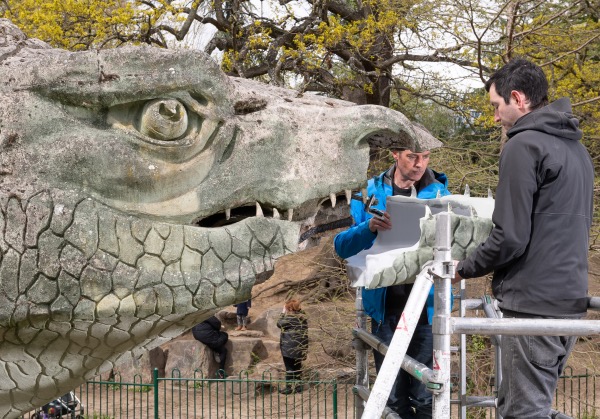
Fitting the new jaw to the Grade I-listed Megalosaurus in Crystal Palace Park. PICTURE: Courtesy of Historic England.

The Megalosaurus dinosaur at Crystal Palace Park recently underwent an emergency face-lift to ensure it’s still looking its best for visitors following the lifting of lockdowns. The 167-year-old, Grade I-listed statue is said to be a favourite among the 30 sculptures in the collection at the park. Skilled craftsmen had to make and fit 22 new teeth on the 3.5 metre high and 10 metre long sculpture as well as a new nose and light-weight ‘prosthetic’ jaw. The work – which was supported by a grant from the Culture Recovery Fund (awarded by Historic England), the Friends of Crystal Palace Dinosaurs and Bromley Council – was carried out by conservation company Taylor Pearce. It was needed after the jaw on the beast collapsed last May and comes after all 30 of the life-sized sculptures were added to Historic England’s Heritage at Risk Register early last year. First unveiled in 1854 (just 10 years after the term ‘dinosaur’ had been coined), the sculptures were made by renowned artist Benjamin Waterhouse Hawkins. For more on the dinosaurs and the 80 hectare park in which they stand, see www.bromley.gov.uk/crystalpalacepark.

The restored Megalosaurus back to all its glory after its recent facelift. PICTURE: Courtesy of Historic England.

Famous Londoners – Thomas Crapper…

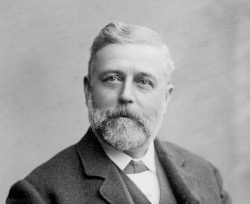
One of the most famous plumbers in the world, Thomas Crapper was the founder of London-based sanitary equipment company, Thomas Crapper & Co, and a man whose name has become synonymous with toilets (although he was not, contrary to popular belief, the inventor of the flushing toilet).

A portrait of Thomas Crapper. PICTURE: Via Wikipedia.

Crapper was born in the town of Thorne in Yorkshire in 1836, the son of Charles Crapper, a sailor (his exact birthday is unknown but he was baptised on 28th September, so it’s thought to have been around that time).

In 1853, he was apprenticed to his brother George, a master plumber based in Chelsea, and, having subsequently gained his own credentials, established himself as a sanitary engineer in Marlborough Road in 1861 (he had married his cousin, Maria Green, the previous year).

Sometime in the late 1860s, in a move some saw as scandalous, his company became the first to open public showrooms displaying sanitary-related products. He was also a strong advocate for the installation of flushing toilets in private homes.

While not the inventor of the modern flushing toilet (that is often credited to Sir John Harington, godson of Queen Elizabeth I, in 1595, although there are even earlier examples), he was responsible for a number of advances in the field including making design improvements to the floating ballcock, a tank-filling mechanism, and the U-bend, an improvement on the S-bend.

Crapper’s company did have some high profile clients – in the 1880s it supplied the plumbing at Sandringham House in Norfolk for then Prince Albert (later King Edward VII). This resulted in Crapper’s first Royal Warrant and the company would go on to receive others from both Albert, when king, and King George V.

Crapper’s branded manhole covers, meanwhile, can still be seen in various parts of London, including around Westminster Abbey where he laid drains. His name can also be found on what are said to be London’s oldest public toilets.

Thomas Crapper & Company logo. PICTURE: Oxyman (licensed under CC-BY-SA 3.0).

Crapper retired in 1904 (his wife had died two years earlier) and the firm passed to his nephew George (son of his plumber brother George) and his business partner Robert Marr Wharam (the firm, Thomas Crapper & Company, continues to this day – now based in Huddersfield, it still sells a range of vintage bathroom products).

Having spent some time commuting from Brighton, Thomas lived the last six years of his life at 12 Thornsett Road, Anerley, in south-east London (the house now bears a plaque). He died on 27th January, 1910, of colon cancer and was buried at Elmer’s End Cemetery nearby.

While it is often claimed that it’s thanks to Thomas Crapper and his toilets that the word ‘crap’ came to mean excrement, the word is actually of Middle English origin and was already recorded as being associated with human waste when Crapper was just a young boy.

But there is apparently more truth to the claim that toilets became known as ‘crappers’ thanks to Thomas Crapper’s firm. It was apparently American servicemen who, when stationed overseas during World War I, encountered Crapper’s seemingly ubiquitous branding on toilets in England and France and, as a result, started referring to toilets as such.

This Week in London – V&A celebrates Alice; life under Nazi air raids; and, carbon capture at the Science Museum…

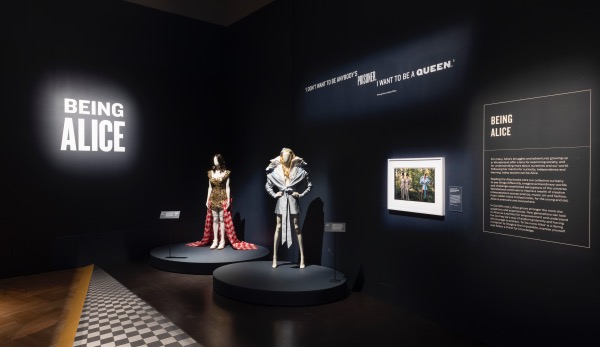
A view of the Alice: Curiouser and Curiouser exhibition at the V&A. PICTURE: Courtesy of the V&A

A landmark exhibition focusing on the iconic work of literature, Alice in Wonderland, opens at the V&A on Saturday. Alice: Curiouser and Curiouser features more than 300 objects encompassing film, performance, fashion, art, music and photography and explores the cultural impact of Alice in Wonderland and its ongoing inspiration for everyone from Salvador Dalí to The Beatles, Vivienne Westwood and Little Simz. Highlights of the exhibition, which boasts theatrical sets and immersive environments including a special VR experience, include Lewis Carroll’s handwritten manuscript, illustrations by John Tenniel, Ralph Steadman and Mary Blair for Walt Disney’s iconic 1951 film adaptation, Royal Opera House stage costumes, fashion from Iris van Herpen and photography from Tim Walker. Admission charges apply. Runs in The Sainsbury Gallery until 31st December. For more, see vam.ac.uk/alice.

Artworks which shine a new light on the experience of ordinary people forced into new patterns of living by Nazi air raids during World War II are the subject of a new exhibition which opened in the Churchill War Rooms this week. Wartime London: The Art of the Blitz includes newly acquired drawings from Henry Moore, as well as works from other British artists including William Matvyn Wright, Eric Ravilious, Ernest Boye Uden, Mabel Hutchinson, Evelyn Gibbs, Evelyn Dunbar, and Leila Faithfull. Admission charge applies. Runs until 12th September. For www.iwm.org.uk/events/wartime-london-art-of-the-blitz.

A prototype mechanical tree that absorbs carbon dioxide from the atmosphere is among objects on display in a new exhibition Our Future Planet – at the Science Museum. The exhibition offers visitors a look at the cutting-edge technologies and natural solutions being used to mitigate the impacts of climate change and, as well as Klaus Lackner’s Mechanical Tree – on display in the UK for the first time, it features experts including leading ecologists studying ancient forests, engineers at Arizona State University who developed the earliest versions of carbon capture machines, and chemists at C-Capture who are working to remove carbon dioxide from emissions at the UK’s largest power plant. This free exhibition runs until 4th September, 2022. For more, see www.sciencemuseum.org.uk/see-and-do/our-future-planet.

Send all items to exploringlondon@gmail.com.

10 London hills – 6. Shooter’s Hill…

Sunset from Shooters Hill. PICTURE: matbickle (licensed under CC BY 2.0)

The highest point in the Borough of Greenwich in London’s south-east, Shooter’s Hill rises to 433 feet (132 metres) above sea level and provides views over the Thames to the north and London to the west as well as Kent and Essex.

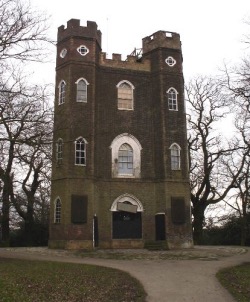
Severndroog Castle. PICTURE: Public Domain

The name, which is also that of the surrounding district, apparently comes from the fact that archery was practiced there in the Middle Ages.

But the area – which still is reasonably well wooded – was also the haunt of highwaymen (in response, there was a gallows at the crossroads at the bottom of the hill and a gibbet on the summit where bodies were displayed).

The modern road known as Shooters Hill Road, part of the A2 and later the A207, follows part of the route of the ancient roadway known as Watling Street.

Landmarks on the hill include a Gothic revival water tower dating from 1910 and a rather impressive folly known as Severndroog Castle which was built in in 1784 by Lady James in honour of her husband, Commodore Sir William James, who captured a pirate fortress at Suvarnadurg on India’s west coast in 1755.

Other landmarks include Christ Church Shooters Hill which features a Grade II-listed milestone and a Bronze Age mound known as Shrewsbury Barrow.

Literary mentions include one in Samuel Pepys’ famous diary – he rode past a body on the gibbet in 1661 – and in Charles Dickens’ A Tale of Two Cities.

LondonLife – On Barnes Pond…

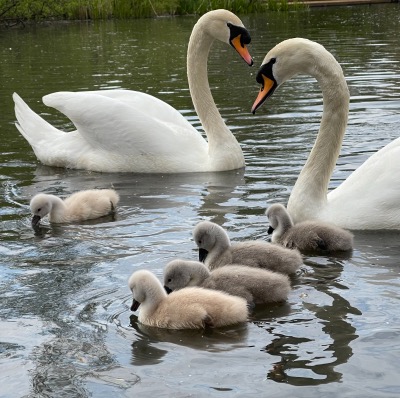
Swans on Barnes Pond, West London. PICTURE: John Cameron/Unsplash

Famous Londoners – Napoleon?

We know, we know – Napoleon Bonaparte never visited London. But given this month marks the bicentenary of his death on 5th May, 1821, we thought we’d mention a couple of places where you can find traces of the French Emperor in the British capital…

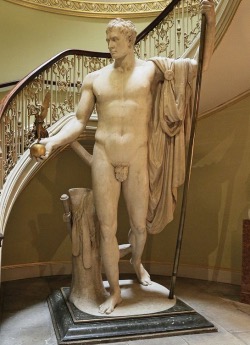
Napoleon as Mars the Peacemaker. PICTURE: Jörg Bittner Unna (licensed under CC BY-SA 3.0;image cropped)

1. Napoleon As Mars The Peacemaker. This larger than life statue – it stands 11 feet tall – is the work of Italian artist Antonio Canova and depicts Napoleon as the Roman God. Napoleon didn’t like the almost naked statue – when he saw it in 1811, he declared it “too athletic” and as a result, it was never displayed in public. Following the defeat of Napoleon at the Battle of Waterloo in 1815, the British Government purchased the statue and presented it to the Duke of Wellington as a gift. Recently cleaned, it is now on display in the Iron Duke’s former home, Apsley House at Hyde Park Corner (and can be seen there when it reopens to the public this week). The house also counts a recently restored bronze death mask of Napoleon among its treasures. The bronze is a copy of a plaster mask modelled on Napoleon’s corpse. For more, see www.english-heritage.org.uk/visit/places/apsley-house/.

2. Napoleon’s horse Marengo. A small grey Arab, Marengo was named after Napoleon’s victory at the Battle of Marengo in Italy in 1800 and apparently served the Emperor between 1800 and 1815. Marengo was captured on the battlefield after Napoleon’s defeat at Waterloo and transported to England. After its death, the horse’s skeleton was preserved and initially displayed at the Royal United Services Institute, moving to the National Army Museum in Chelsea in the 1960s. The skeleton is currently undergoing conservation work at the Natural History Museum before returning to the National Army Museum where it will be displayed in the Battle gallery. For more on the National Army Museum, see www.nam.ac.uk.

3. Portrait of Napoleon. A small image of a young Napoleon, this portrait – which arrived in England in 1797 – was the first many British people had seen of the Emperor (it was copied in engravings which were published across Britain). It was painted in a campaign tent on the road from Verona to Vienna in March, 1797, by Venetian artist named Francesco Cossia. Cossia had been commissioned by Francophile Maria Cosway, an artist then living in Oxford Street, London, to paint likenesses of several French Revolutionary generals including Napoleon. It is believed to have entered the collection of Sir John Soane somewhere between 1827 and 1830 and can now be seen in the Breakfast Room at the Sir John Soane’s Museum in Lincoln’s Inn Fields (reopening on 19th May). For more, see www.soane.org.

This Week in London – Rodin at the Tate; life-sized Monopoly; and, a floral tribute to John Keats…

Many London institutions reopen in the coming week – while some are continuing with exhibitions which were already on before lockdowns lead to closures, there are also some new exhibitions being launched and these we’ll feature in coming weeks…

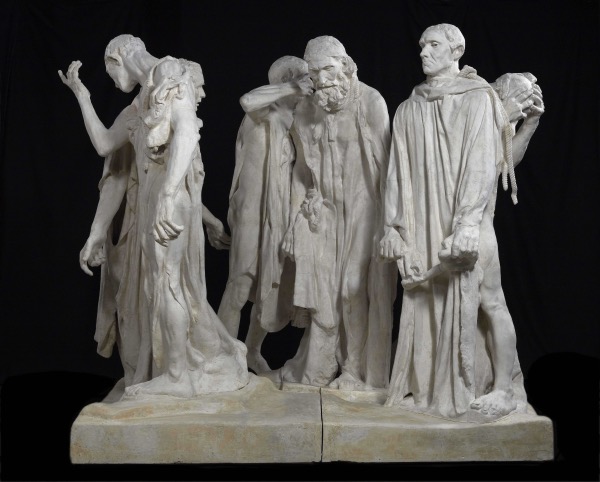
Auguste Rodin Monument to the Burghers of Calais, 1889 Musée Rodin, S.00153. PICTURE: Courtesy of the Tate Gallery.

A major new exhibition on the work of French sculptor Auguste Rodin opens at the Tate Modern on Monday. The EY Exhibition: The Making of Rodin features more than 200 works including the Thinker (1881) and The Three Shades (1886) as well as a newly restored plaster made in preparation for The Burghers of Calais (1889). The exhibition is the first show to focus in-depth on Rodin’s use of plaster and takes inspiration from the artist’s landmark self-organised exhibition at the Pavillon de l’Alma in 1900. It also explores the complex dynamics with different models – including his onetime studio assistant and collaborator Camille Claudel – and looks at his use of photography and watercolours. Located in the Eyal Ofer Galleries, the exhibition runs until 21st November. Admission charges applies. For more, see www.tate.org.uk.

The world’s first life-sized Monopoly-based attraction will be opening in Tottenham Court Road in August, it was revealed this week. Hasbro, Inc and Gamepath, a new division of international theatre producer Selladoor Worldwide, are behind the attraction which the City of London Corporation says will “bring together the best of the iconic board game, escape rooms and team challenge”. The premises at 213-215 Tottenham Court Road will house individually designed and unique main gameplay boards including Classic, The Vault, and City as well as a Junior Board. There will also be a retail outlet and a Monopoly-themed bar and restaurant. Stay tuned for more.

A new floral display featuring flowers from John Keats’ graveside in Rome and his home in London’s Hampstead form part of a new indoor art installation at the Hampstead property, Keats House, when it reopens Monday. The display, created by London artist Elaine Duigenan, is part of the Keats200 commemorations marking the bicentenary of his death. “Flowers are embedded in John Keats’s life story and are a vehicle for expressing something both transitory and lasting, and my installation seeks to honour his legacy by alluding to human frailty and resilience,” says Duigenan. “As an artist, I understand both the desire for recognition and the fear of leaving no mark, so I have crowned him laureate and wreathed him as though for oblivion.” For more (to check opening times before attending), see  www.cityoflondon.gov.uk/keats.

Send all items for inclusion to exploringlondon@gmail.com.

10 London hills – 5. Primrose Hill…

View from the top of Primrose Hill. PICTURE: Steve Cadman (licensed under CC BY-SA 2.0)

Standing in a park located just to the north of Regent’s Park in the city’s inner north-west, Primrose Hill stands 63 metres above sea level and, like Parliament Hill, provides panoramic views of the city skyline.

The hill, which features one of six protected views in London, was once part of a chase (unenclosed hunting land) owned by King Henry VIII and was Crown property until 1842 when it became part of a public park through an Act of Parliament.

The name has been in use for at least 500 years and is thought to refer to the flowers that grew here profusely (which it means it can’t have been named for Archibald Primrose, Prime Minister between 1894 and 1895).

The hill forms part of one of Mother Shipton’s “prophecies” – she apparently proclaimed that when London surrounded the hill, its streets would run with blood.

It was for a time known as Greenberry Hill after three labourers – Robert Green, Henry Berry and Lawrence Hill – were found guilty of the murder of magistrate Sir Edmund Berry Godfrey (he had heard Titus Oates’ evidence in the so-called Popish Plot). Sir Edmund was found impaled on his own sword on the hill in October, 1678 – convicted of his murder the three men were hanged on its summit in 1679 (they were later exonerated and the death of Sir Edmund remains something of a mystery).

The hill, which has also apparently been known as Battle Hill, was also the location where the poet and antiquarian Iolo Morganwg (Edward Williams) founded the Gorsedd, a community of Welsh bards, on 21st June in 1792.

In 1838, a railway tunnel under the hill was completed by the North Western Railway – it was the first in London and connected Chalk Farm and Swiss Cottage. In the 1840s, a proposal to create a cemetery here was put to Parliament but never went ahead. There were also plans to develop the entire hill as a housing estate but nothing came of it.

On top of the hill is York stone edging with an inscription by William Blake: “I have conversed with the spiritual sun. I saw him on Primrose Hill.” There’s also the remains of an anti-aircraft battery from World War II.

On the hill’s slope, meanwhile, is a tree planted in 1964 to mark the 400th anniversary of Shakespeare’s birth (it replaced once planted 100 years earlier in honour of the Bard’s 300th).

Primrose Hill gives its name to part of the surrounding area, which remains a sought-after residential district.

For details on when to visit, head to www.royalparks.org.uk/parks/the-regents-park/things-to-see-and-do/primrose-hill.

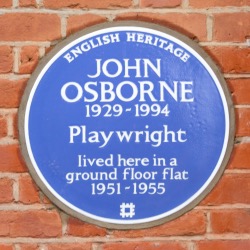
LondonLife – A Blue Plaque for John Osborne…

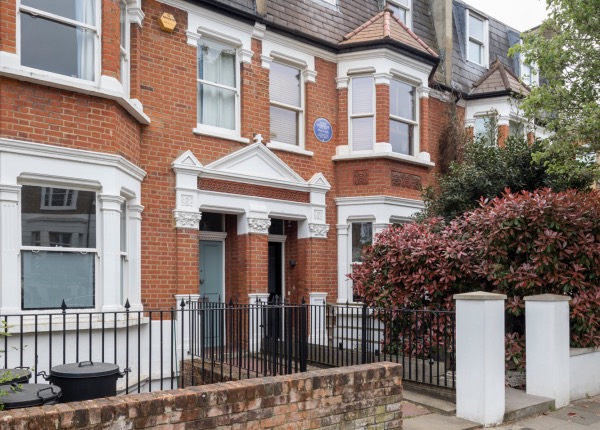
Blue Plaque to John Osborne at 53 Caithness Road in Hammersmith. PICTURE: Courtesy of English Heritage.
Blue Plaque to John Osborne. PICTURE: Courtesy of English Heritage.

Post-war playwright John Osborne (1929-1994) was honoured with an English Heritage Blue Plaque last week at his former Hammersmith home. The announcement came 65 years after his seminal play, Look Back in Anger, was first performed at the Royal Court Theatre on 8th May, 1956. The terraced red brick property at 53 Caithness Road was his London base when he wrote Look Back in Anger, arguably his best known work. Playwright and director Sir David Hare said Osborne “had the most sensational London debut of any playwright in the English language in the 20th century”. “It was John’s brilliance and originality which led so many to help relocate the theatre at the centre of Britain’s cultural and intellectual life. Everyone who followed owes him a debt.” For more on Blue Plaques, see www.english-heritage.org.uk/visit/blue-plaques.

London Explained – Beefeaters…

A nickname for the Yeoman Warders of the Tower of London, its origins are somewhat obscure but apparently related to a penchant for beef and was presumably meant as an insult (hence they prefer being called by their proper title). It was apparently first used of the English population in general and is said to have first been applied to the Yeoman Warders in the second half of the 17th century.

A Yeoman Warder in everyday “undress” uniform. PICTURE: PRA (licensed under CC BY-SA 3.0/image cropped)

The Yeoman Warders of the Tower of London (not to be confused with the Yeomen Warders of The Guard, the Sovereign’s Bodyguard, who are also referred to as “beefeaters”), are charged with guarding of the Tower of London and its contents including the prisoners of state who were formerly held within its walls (the last was during World War II).

With a history dating back to the reign of King Henry VII and first present at the Tower during the reign of King Henry VIII, they were made extraordinary members of the Sovereign’s Bodyguard during the reign of King Edward VI in 1552 (meaning they wear scarlet livery and carry partizans on state occasions).

The Chief Yeoman Warder is their commander and second-in-command is a Yeomen Gaoler (who still carries an axe on state occasions). There are also three Sergeant Yeoman and a Yeoman Ravenmaster. A Yeoman Warder (along with a detachment of soldiers) carries out the Ceremony of the Keys every night – formally locking the Tower.

These days (drawing on innovations introduced by the Duke of Wellington when he was Constable of the Tower between 1826 and 1852), the Yeoman Warders must be warrant officers who have served at least 22 years (and have been awarded the long service and good conduct medal) in the British Army, Royal Air Force and Royal Marines.

The Yeoman Warders – and there were 38 (although we’re not sure how cutbacks due to COVID may affect this) – live within the Tower under the authority of the Resident Governor. They wear the red state dress uniform on state occasions and a dark blue “undress” uniform for everyday use. Moira Cameron became the first female Yeoman Warder in 2007.

As well as carrying out state duties, since Victorian times the Yeoman Warders have conducted towers of the Tower and assisted visitors with their inquiries.

Lost London – Bear Garden, Southwark

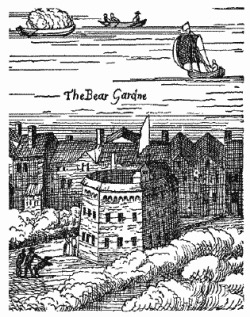
The Bear Garden as depicted in Visscher’s Map of London which was published in 1616 but represented the city as it was several years earlier.

The Bear Garden was among numerous structures built in Southwark during the Elizabethan era for public amusement: in this case the “amusement” being what we now see as the rather cruel activities of bear and bull baiting and other “sports” involving animals.

Built sometime prior to the 1560s, the Bear Garden (also written as Beargarden) itself was a polygonal wooden, donut-shaped structure, much like the theatres such as the Rose and Globe, where the activities took part on the floor in the middle while the audience sat around the donut’s ring.

While it’s known it was located in Bankside (among several other premises showing animal sports), its exact location continues to be a matter of debate (and it is thought to have moved location at least once).

The Bear Garden was patronised by royalty – Queen Elizabeth I apparently visited with the French and Spanish ambassador – but it was also marked by tragedy when part of the tiered seating collapsed in 1583, killing eight people and forcing the premises to close down for a brief period.

It was torn down in 1614 and replaced with the Hope Theatre with the intention of it serving as a dual purpose premises, providing both stage plays and animal sports like bear-baiting, but the latter eventually won out and it simply became known once again as the Bear Garden.

The Hope may have pulled down in the 1650s after animal sports were banned by the Puritans (the Commonwealth commander Thomas Pride was apparently responsible for putting down or shooting the last seven bears). Whether it was demolished or not, it was again in use after the Restoration – Samuel Pepys and John Evelyn both visited during this period – but the last mention of it was in the 1680s.

The street named Bear Gardens in modern Southwark stands today in the approximate area where the Bear Garden is generally thought to have been located.