London Pub Signs – The Edgar Wallace…

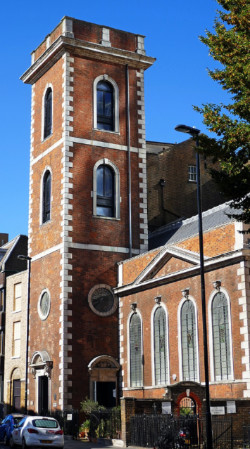
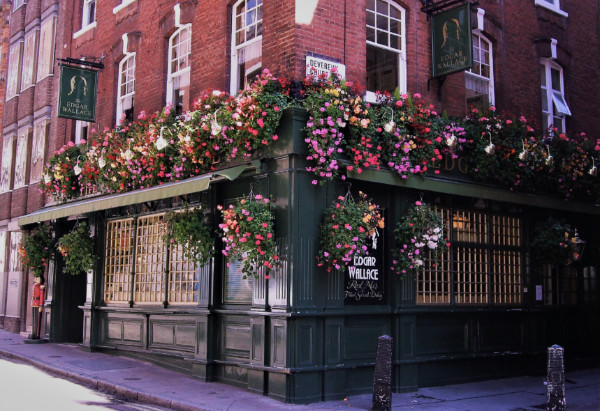
The Edgar Wallace pub in 2018. PICTURE: Jim Linwood (licensed under CC BY 2.0)

Formerly named The Essex Head, this West End pub was established as far back as 1777.

Perhaps its greatest claim to fame (in its earliest incarnation, at least) was that it was the location where, in 1783, lexicographer Samuel Johnson and his friend and physician Richard Brocklesby established the Essex Head Club.

James Boswell was a member and the club apparently met at the pub three times a week as a favour to the landlord, Sam Greaves, a former servant of the Thrale family, friends of Johnson (who also lived with them for some years). It apparently lived on for some time even after Johnson’s death in 1784

The original name of the pub, located at the corner of Essex Street and Devereux Court in the Temple district, referred to Robert Devereaux, Earl of Essex and favourite of Queen Elizabeth I, whose London home, Essex House, was previously located nearby (the house was largely demolished in the 1670s).

The pub, meanwhile, took on its current name in 1975. It was done to commemorate the 100th anniversary of the birth of celebrated crime writer Edgar Wallace.

Wallace, who was known for wearing a trilby and apparently driving a yellow Rolls Royce (and whose claims to fame include initially drafting the screenplay for the film King Kong – he died before it was completed), is credited as being the inventor of the modern thriller novel.

While he was born in Greenwich, Wallace had spent his childhood in the area where the pub now stands (there’s also a plaque to him in Fleet Street commemorating the time he spent working as a reporter before he found fame as an author – we’ll being telling more of his story in an upcoming ‘Famous Londoners’).


Lost London – The Dome of Discovery…

The Skylon and the Dome of Discovery at the 1951 Festival of Britain PICTURE: Peter Benton (licensed under CC BY-SA 2.0/image cropped)

Built for the post-war Festival of Britain in 1951, the Dome of Discovery was a temporary exhibition building located in South Bank.

Designed by architect Ralph Tubbs, the dome was, with a diameter of 365 feet and a height of 93 feet, the largest in the world at the time. It was located next to the Skylon, another iconic structure built for the festival.

The prefabricated dome, which was made from aluminium and concrete, was filled with galleries which housed exhibitions around the overarching theme of discovery. The display was grouped under eight different sections including “the land”, “the sea”, “sky” and “outer space”. The dome also contained a 50 foot long mural on the theme of discovery by artist Keith Vaughan.

The dome was dismantled just 11 months after it was installed and sold for scrap metal (despite pleas from Tubbs and proposals for it to be relocated to places as diverse as Sao Paulo in Brazil and Coventry in England). Some of the metal was apparently made into souvenirs including commemorative paper knives.

This Week in London – Dennis & Gnasher at Kew; ‘Now Play This’; and, work starts on ‘Gateway to Soho’…

A Beano Studios product © DC Thomson Ltd (2021)

Characters from the popular Beano comic and TV series, Dennis & Gnasher: Unleashed! will be at Kew this Easter. Marking 70 years of Dennis, Dennis and Gnasher’s Big Bonanza at Kew will feature an exclusive giant 3D comic strip – the largest ever created by Beano – with the chance to take part in all sorts of tricks and jokes and, of course, learn about some of Kew’s plants including their slimy, sticky, smelly and deceptive powers. Runs from 31st March to 18th April. Admission charge applies. For more, see www.kew.org.

A four day “festival of experimental games”  kicks off today with a virtual programme featuring  interactive games, workshops, and conversations. Now Play This, part of the London Games Festival, explores the climate crisis through games and play, and features a discussion within games designer Hosni Auji’s Airplane Modesimulator, a live role-play simulation of UN climate change negotiations in World Climate Simulation and the new interactive design game Among Ripples whichoffers players the chance to experiment with building and maintaining their own lake ecosystem. The free online festival runs until Sunday, 28th March. It can be found at www.nowplaythis.net.

• Work has begun this week to create an open-air gallery in part of Soho as part of a £150 million project aimed at transforming Oxford Street and surrounds. The project will see Ramillies Street, Ramillies Place, Hills Place and a small section of Great Marlborough Street made into a ‘Gateway to Soho’ and the site of an annual ‘Photographers’ Gallery’ programme featuring light projections and large-scale art.

Send all items for inclusion to exploringlondon@gmail.com

  ​

LondonLife Special – Marking a year since the first national lockdown…

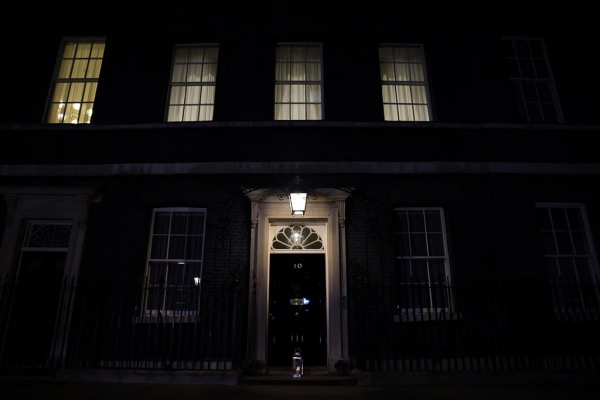
Remembering the more than 126,000 lost. A candle is lit outside 10 Downing Street on Tuesday night to mark the first anniversary of the first national lockdown. PICTURE: Pippa Fowles/No 10 Downing Street.

LondonLife – Inspiring stories from a pandemic…

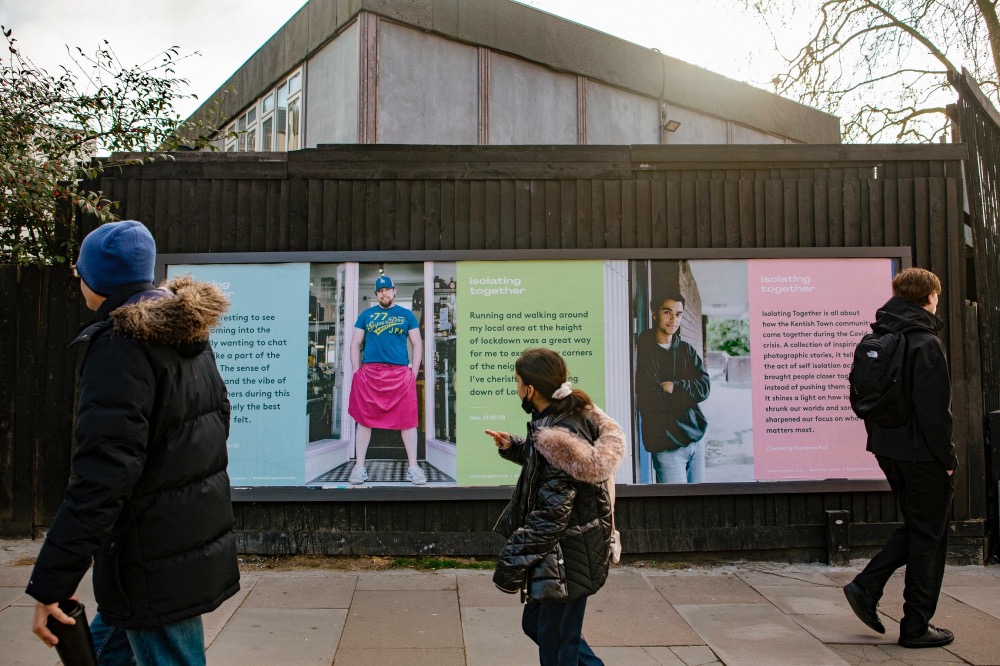
Artist Karishma Puri at one of the 18 sites in ‘Isolating Together’. PICTURES: Supplied.

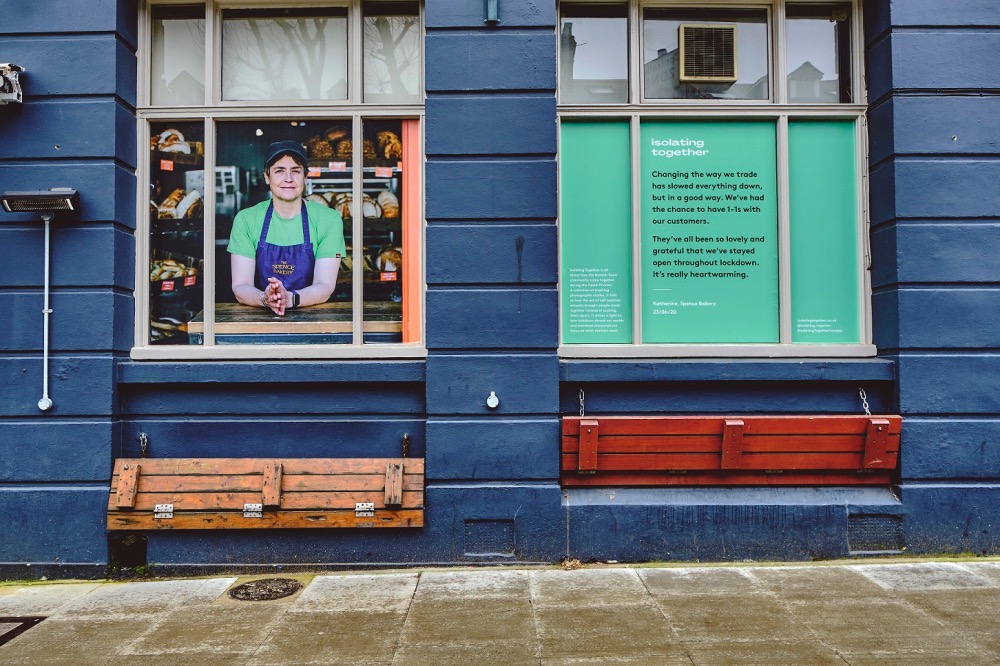
A new outdoor exhibition celebrating inspiring stories of community, action and solidarity during the year of the COVID-19 pandemic can be seen in Camden. Created to mark a year since the pandemic began, Isolating Together features the work of artist Karishma Puri who was inspired to capture the images after establishing Covid Mutual Aid – a WhatsApp-based community group – in Kentish Town to help neighbours support one another and overcome isolation. The images, seen at 18 locations across Camden, highlight the vital role that local businesses like Truffles Deli have played in the community during the pandemic as well as personal stories like that of Nafisa who started a support system that ensured people in the local Somali community had a steady supply of free fruit and vegetables during the pandemic. Run in collaboration with Jack Arts and No Ordinary Experience, Isolating Together uses billboards, community spaces and local shop windows to create a vast outdoor gallery with its centrepiece displayed across a 14 metre wall at Number 19, the home of community action in Camden. The exhibition can be seen on a self-guided walk until 31st March. A map and more information is available at https://isolatingtogether.co.uk/exhibition.

‘Isolating Together’ installation at Swiss Cottage.
Isolating Together’ installation at Aces & Eights.

Famous Londoners – Old Martin…

A grizzly bear (not Old Martin). PICTURE: Joshua J Cotten/Unsplash

A large, fully grown, grizzly bear presented to King George III by the Hudson’s Bay Company in 1811, Old Martin was one of the scarier residents of the Tower of London’s menagerie.

The bear, who was apparently named after a famous bear in Europe (the “old” was added because he spent so long in resident at the Tower), is said to have been the first grizzly in London.

He was not, however, the first bear to live there – King Henry III had been given a polar bear by King Haakon IV Haakonsson of Norway in 1251 (George, however, was apparently unimpressed with his gift, said to have commented in private that he would have preferred a tie or pair of socks).

Despite his many years in the menagerie, Old Martin apparently refused to be tamed and remained fierce towards both strangers and his keepers alike.

When the Duke of Wellington closed the menagerie in the early 1830s (King William IV apparently had little interest in the animals), Old Martin was moved to the London Zoo in Regent’s Park. He died there in 1838.

His skin and skull were subsequently sent to the Natural History Museum and rediscovered there in 1999 for an exhibition at the Tower.

There’s a rather odd story associated with Old Martin. It’s said that in 1816 – when Old Martin was living in the Tower’s menagerie – a Yeoman Warder saw a ghostly bear while on night duty near the Martin Tower. He apparently attempted to run it through with a bayonet but the blade went straight through and struck the door frame behind it. The somewhat dubious story goes that the poor Yeoman Warder died of shock just a few hours later.

This Week in London – Famous faces take in history, and, the Tudor world brought to life…

Famous faces from TV and radio including Strictly Come Dancing champion Oti Mabuse and her partner Marius Iepure, Radio 2’s Reverend Kate Bottley and TV presenter Monty Halls, are visiting dramatic historic locations that are special to them in a new series of videos launched by Historic England. In each film in the #UncoverMore campaign, the personalities “discover a thread through time that brings to life the stories of people, places and spaces that have survived through the decades”. In their film, Oti and Marius dance at two of England’s oldest ballrooms (at Powderham Castle and Hampton Court Place), while Rev Bottley visits Loughborough Bellfoundry, and Monty Halls takes in ‘The Lost Gardens of Heligan’. To watch the videos, head to https://historicengland.org.uk/coronavirus/culturerecoveryfund/uncover-more/.

The magnificence of the Tudor world will be bought to life in an online talk featuring Historic Royal Palace’s Chief Curator Dr Lucy Worsley next Wednesday. Worsley will be joined by Professor Glenn Richardson from St Mary’s University and fellow Historic Royal Palaces curators Dr Alden Gregory and Brett Dolman in an hour long talk that will focus one of “the most spectacular examples of royal showmanship”, the Field of Cloth of Gold, the 1520 event when Henry VIII met near Calais with his great rival François I of France. The talk will also feature a sneak preview of Hampton Court Palace’s upcoming exhibition Gold and Glory: Henry VIII and the French King. The event is free (although donations of £10 are encouraged). To register, head here.

Send all items for inclusion to exploringlondon@gmail.com.

10 London sites related to St Thomas Becket – 10. The Pilgrim’s Way…

The final in our series on St Thomas Becket’s London is not about a static site but a pathway, one that people have been walking since the Middle Ages as pilgrims to the shrine of St Thomas Becket in Canterbury.

A Pilgrim’s Way signpost near Chaldon in Surrey. PICTURE: G Travels (licensed under CC BY-NC 2.0)

Famous today through its association with Geoffrey Chaucer’s The Canterbury Tales, the Pilgrim’s Way actually refers to not one path but a series of routes taken by pilgrims as they made their way from London to Canterbury, linking up along the way with another route originating in Winchester.

The pilgrimage from London typically started at the now long lost St Thomas Becket Chapel in the middle of Old London Bridge and then headed south through Southwark where the Tabard Inn – where Chaucer has his pilgrims staying at the start of his journey – was located.

These days, there’s several routes – the official Pilgrim’s Way website has a couple of different routes through London. Both start at Southwark Cathedral and one then follows the line of A2 south before heading east to the Thames through Deptford where it joins up with a second route. This route, on leaving Southwark Cathedral, follows the south bank of the Thames east.

On becoming one route at Deptford, the Pilgrim’s Way then follows the Thames through Greenwich and Woolwich before turning southward to Dartford and eventually linking up with the Pilgrim’s Way from Winchester in the village of Otford in Kent (and then on to Canterbury).

Other versions of the pilgrimage route start at Westminster Abbey and take in St Paul’s Cathedral before crossing over the Thames and heading east to Gravesend and on to the Medway towns and eventually Canterbury.

Interestingly, some believe that King Henry II took the route from London to Canterbury when performing his very public act of atonement for his role in the saint’s death (although others believe he made the pilgrimage from Winchester).

LondonLife – Tunnel of colour…

Adams Plaza Bridge, Canary Wharf, Docklands. The colourful crossing, which links Crossrail Place and One Canada Square, was created by artist Camille Walala as part of last year’s London Mural Festival. PICTURE: Samuel Regan-Assante/Unsplash

London Explained – The Tube…

Commonly used as a nickname to describe the London Underground, the “Tube” is an obvious reference to shape of the tunnels themselves.

Construction of the Tube at Mile End (c1946). PICTURE: The National Archives UK (London Transport Museum © Transport for London)

The word is believed to have been first popularised around 1890. Underground lines had previously been constructed using the ‘cut and cover’ method – that is, digging out the trench for the Underground line, lining the tunnel with iron and them covering it.

Thanks to its depth (due to the fact it had to pass under the Thames), City and South London Railway’s line from King William Street (a now disused station) to Stockwell was the first to be created by boring a tunnel through the earth and then lining it to create a tube. The line, a forerunner of what is now the Northern Line, opened in December, 1890. It was the first true ‘tube’ of the Underground system.

The construction of the line was followed in 1900 by the opening of the Central London Railway’s line from Shepherd’s Bush to Bank (now part of the Central Line) which was given the nickname the “Twopenny Tube”.

The name stayed and was soon applied to the entire network of Underground lines (and interestingly, it wasn’t until 1908 that the word “Underground” first appeared in stations).

Treasures of London – St Thomas Becket pilgrim badges…

The Museum of London is currently closed due to the coronavirus pandemic but we run this story in the hope you’ll be able to visit soon.

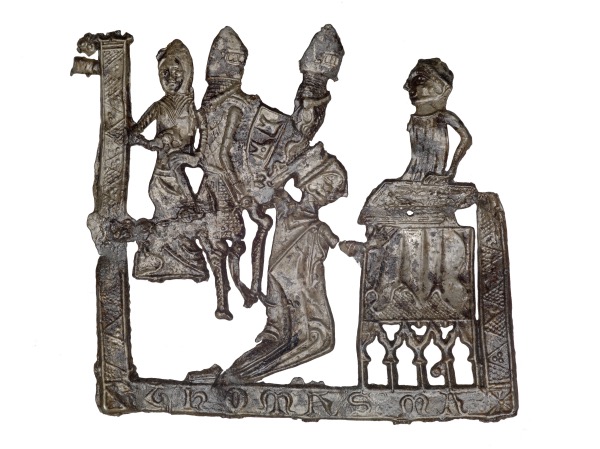
This pilgrim badge depicts the scene of Becket’s martyrdom. An inscription at the base of the badge reads ‘THOMAS MA’ (meaning ‘Thomas Martyr’). Becket is on his knees in front of an altar with a number of knights attacking him. Behind the altar stands the figure of Edward Grim, a clerk who tried to stop Becket’s murder. One of the knights carries a shield with two bears’ heads on it, identifying him as Reginald Fitzurse (through the visual pun on the Latin ‘ursus’, meaning ‘bear’). Fitzurse was the knight popularly believed to have struck final blow that killed Becket. PICTURE: © Museum of London.
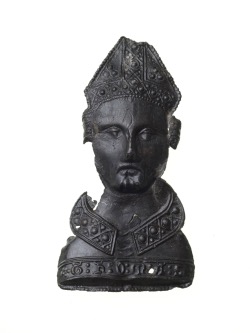
Pilgrim badge in the shape of a bust of St Thomas Becket wearing a mitre and inscribed ‘T:H:O:M:A:S’. PICTURE: © Museum of London.

The Museum of London contains a large collection – in fact, it’s said to be the largest in the UK – of pilgrim badges relating to the commemoration of the Archbishop of Canterbury, St Thomas Becket, who was brutally murdered in 1170.

Produced largely in Canterbury (possibly some in London), the lead-alloy badges were worn, typically on a hat or staff, by pilgrims as a means of commemorating their pilgrimage to the Shrine of St Thomas Becket in Canterbury.

They came in various shapes and sizes. Many simply depict a bust of Becket’s head wearing the Archbishop of Canterbury’s mitre (see picture right).

But others are more elaborate and depict the full-length figure of the archbishop, scenes of his martyrdom at the hands of King Henry II’s knights (see picture above) and even the elaborate bejewelled shrine housing St Thomas’ remains that was erected in about 1220 in Canterbury Cathedral (the endpoint of the pilgrimage).

The museum also has small tin ampullae which were created to hold “Canterbury Water” or “St Thomas’ Water” – water into which drops of the martyred archbishop’s blood were dripped before it was blessed – which was given to pilgrims to take home as a kind of “cure all”.

The collection of badges can be seen when the museum reopens. Keep an eye out for the reopening at www.museumoflondon.org.uk.

This Week in London – English Heritage sets out timetable for reopening; Westminster Abbey a vaccination clinic; and, rare meteorite arrives at Natural History Museum…

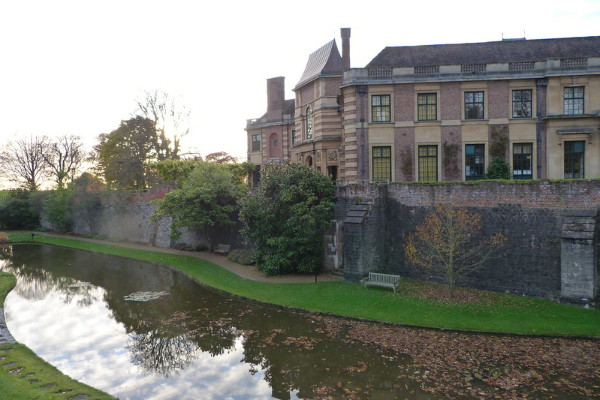
Eltham Palace grounds in south-east London. PICTURE: Gordon Joly (licensed under CC BY SA 2.0)

English Heritage – which manages a number of historic properties in London including Eltham Palace, Kenwood House and Marble Hill House – has announced they will reopen progressively from 29th March. Initially only the grounds of more than 60 properties across England will be open with building interiors to open from 17th May. A summer events programme is scheduled to start on 21st June. Visits must be booked in advance and the organisation has asked that people bear in mind the government’s latest advice, and be aware that they shouldn’t travel outside of your local area. For a full list of properties that are reopening, see www.english-heritage.org.uk/visit/plan-your-visit/.

It’s a unique place to receive a coronavirus vaccine. The NHS announced this week that a new COVID-19 vaccination clinic has opened in Westminster Abbey’s South Transept, home to Poet’s Corner. Run by Chelsea and Westminster Hospital NHS Foundation Trust, on behalf of the local GP network, the location is expected to provide up to 2,000 inoculations each week. The clinic is only open for those with an appointment. Invitation letters will explain how people can book a slot and NHS leaders are urging people not to turn up at the centres without an appointment.

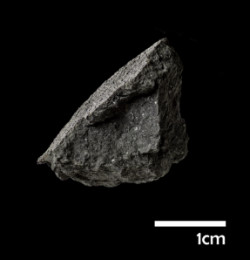
Meteorite recovered from Winchcombe PICTURE: Trustees of the Natural History Museum

A fragment of a meteorite which was located in Gloucestershire after recently falling to Earth in a rather spectacular fireball has been brought to the Natural History Museum in South Kensington. The 300 gram chunk of meteorite, which is known as a carbonaceous chondrite, was discovered on a driveway in the Cotswold town on Winchcombe. It’s path tracked by specialised cameras across the country as part of the UK Fireball Alliance, the meteorite was retrieved in such a good condition and so quickly after its fall that scientists say it is comparable to the samples returned from space missions, both in quality and size. Other pieces of the meteorite have also been recovered in the area. The rare meteorite – it is the first known carbonaceous chondrite to have been found in the UK and the first meteorite to be recovered in the UK in 30 years – will now undergo further study.

Send all items for inclusion to exploringlondon@gmail.com.

10 London sites related to St Thomas Becket – 9. St Thomas’ Hospital…

Following Thomas Becket’s brutal murder in Canterbury Cathedral in 1170, King Henry II is ordered by Pope Alexander III to perform acts of penance for his death, going on a public pilgrimage to Canterbury where he spent a night in prayer at Becket’s tomb and was whipped by monks.

The Old Operating Theatre & Herb Garrett Museum now resides in the former St Thomas’ Church which probably started life (in a previous version) as the chapel for the medieval hospital. PICTURE: Calstanhope (licensed under CC BY-SA 4.0).

Becket’s renown, meanwhile, quickly grew in the aftermath of his death and miracles soon began to be attributed to him. And then, little over two years after he was killed, the Pope declared him a saint. It’s believed that soon after that, in 1173, St Thomas’ Hospital in Southwark- which had been founded a couple of years earlier – was named in commemoration of him.

The hospital was run by a mixed-gendered order of Augustinian canons and canonesses, believed to be of the Priory of St Mary Overie, and provided shelter and treatment for the poor, sick, and homeless. Following a fire in the early 13th century, the hospital was relocated to a site on what is now St Thomas Street.

In the 15th century, Dick Whittington endowed a ward for expectant unmarried mothers at the hospital and in 1537, it was the location for the printing of one of the first English Bibles – which is commemorated in a plaque at the former site of the hospital.

When the monastery at Southwark, which oversaw the hospital – also referred to as the Hospital of St Thomas the Martyr, was closed in 1539 during the Dissolution, the hospital too was closed. It did reopen a decade later but was dedicated to St Thomas the Apostle instead of St Thomas Becket (and has remained so since). The name change was political – King Henry VIII had ‘decanonised” St Thomas Becket as part of his reform of the church in England.

The hospital was rebuilt from the end of the 17th century (the long-deconsecrated Church of St Thomas in St Thomas Street, home to the Old Operating Theatre & Herb Garrett, is the oldest surviving part of this rebuild) but it left Southwark in 1862 when the site was compulsorily acquired to make way for the construction of the Charing Cross railway viaduct from London Bridge Station.

Following a temporary relocation to Royal Surrey Gardens in Newington, it moved into new premises at Lambeth – across the river from the Houses of Parliament – in 1871. It has since been rebuilt and merged with Guy’s Hospital.

Correction: Apologies – we had typo in the copy – the date Becket was made a saint was, of course, 1173!

LondonLife – Women’s history inspires comedians for International Women’s Day…

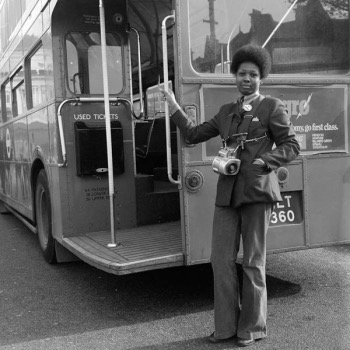
Female bus conductor. March 1975 © Henry Grant Collection – Museum of London

The world observed International Women’s Day on Monday and to mark the occasion, the Museum of London has launched an original video series featuring five female comedians performing short original pieces inspired by objects in the museum’s women’s history archives. The first of the videos features comedian Thanyia Moore responding to a Henry Grant photograph of a female bus conductor from the mid-1970s when London Underground first officially employed women as bus drivers (pictured right). Further videos – which will be rolled out over Women’s History Month – feature comedians Samantha Baines, Jenny Bede, Jen Ives and Leila Navabi responding to objects ranging from a commemorative toilet roll created by First 100 Years to mark a century since the Sex Disqualification (Removal) Act made it illegal to ban people from jobs based on their sex in 1919 (pictured below) to a recruitment letter from Sainsbury’s seeking female staff to work in their shops during World War I. To watch the first of the series head here.

Commemorative toilet roll, 2017 © Museum of London

What’s in a name?…London Wall…

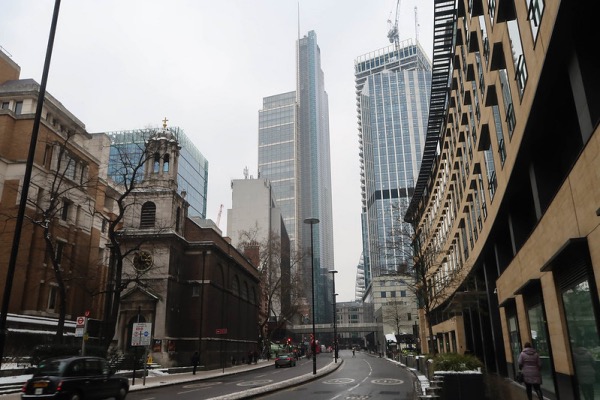
The name of this street is self-explanatory – it follows the line of part of the wall that once surrounded the City of London, of which only fragments now remain.

The wall dates from as far back as Roman times and this street – which runs from the intersection with Aldersgate Street to the west to Old Broad Street in the east – broadly follows the course of its northern edge.

View from the west end of London Wall. PICTURE: Romazur (licensed under CC BY-SA 3.0)

The road was re-laid out – it features dual carriageways at the east and west ends – after the area was devastated by bombing during World War II.

A roundabout at the western end of London Wall – named the Rotunda – provides a link with Aldersgate Street, which runs perpendicular, and in the centre was built the Museum of London (which is now being relocated to West Smithfield).

Looking toward the eastern end of London Wall with All Hallows on the Wall to the left. PICTURE: Keith Murray (licensed under CC BY-NC-ND 2.0)

The western end of the street, part of which is straddled by the hulking early 1990s building known as Alban Gate, has until recent years also featured a series of raised walkways which were part of the post war redevelopment of the area (and partly integrated with office buildings).

Known as ‘pedways’, some of them are now in the process of being replaced with a more modern take on the idea (such as can be seen at London Wall Place).

Part of the Roman gate, known as Bastion 14, near the western end of London Wall. PICTURE: Ethan Doyle White (licensed under CC BY-SA 4.0)

The street features a number of remnants of the actual wall along its length including the remains of a Roman gate close to the western end (on the street’s north side, it’s known as Bastion 14) and in St Alphage Gardens (St Alphage, London Wall is one of several now lost churches along the street – St Olave, Silver Street is another).

Close to the eastern end of the street is the church of All Hallows-on-the-Wall which dates from 1767 (replacing an earlier church that had survived the Great Fire of London).

Other prominent buildings on London Wall include the Brewer’s Hall, the Carpenter’s Hall and the Plaisterer’s Hall.

This Week in London – Take One Picture images hit giant screens; Old Royal Naval College to reopen; and, women at the Jewish Museum…

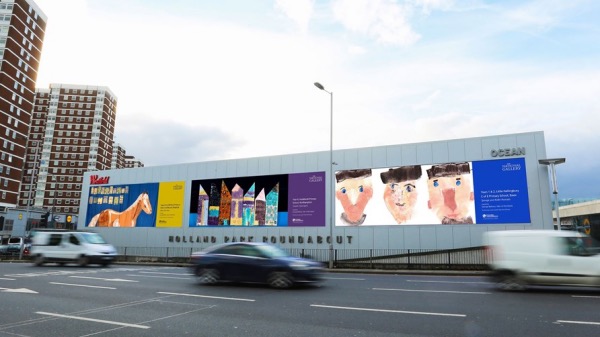
‘Take One Picture’ exhibition artwork displayed on Ocean Outdoor’s screen at Holland Park Roundabout, London. PICTURE: © The National Gallery, London

Artworks created by primary school children have taken centrestage on giant screens around the country including in London. The gallery’s 25th annual ‘Take One Picture’ exhibition, being run in partnership with Ocean Outdoor, sees the artworks appear on the large format screens until 15th March. Each year schools taking part in the initiative are invited to have students respond to a particular National Gallery collection work in creating their own works. This year’s focus painting is American painter George Bellows’ 1912 work Men of the Docks which depicts a group of longshoremen waiting to unload an ocean liner against the backdrop of a wintry river landscape in New York. For more, see www.nationalgallery.org.uk/take-one-picture.

The grounds of the Old Royal Naval College in Greenwich will be open from 12th April in line with government guidelines. Meanwhile, a route through the college grounds – along College Way via the East and West Gates – will continue to be open to pedestrians and cyclists between 7am and 7pm Monday to Friday and 8am and 4pm over the weekends.

The Jewish Museum has announced a new virtual tour focusing on the pioneering women whose stories are told in its collection. The tour, which will be delivered via Zoom on 8th March to mark International Women’s Day (as well as later dates), looks at the various ways women have contributed to Jewish history and culture in Britain over the centuries. Admission charge applies. For more, see https://jewishmuseum.org.uk/event/women-of-worth/.

Send all items for inclusion to exploringlondon@gmail.com.

10 London sites related to St Thomas Becket – 8. St Thomas Becket memorial…

PICTURE: Morgaine (licensed under CC BY-SA 2.0)

High profile and influential though he was during his lifetime – serving as Chancellor and Archbishop of Canterbury, it was the brutal and shocking nature of Thomas Becket’s death that ensured he would be remembered down through the ages.

Already strained, relations between King Henry II and Becket took a further downturn after the Archbishop excommunicated Roger de Pont L’Évêque, the Archbishop of York, Gilbert Foliot, the Bishop of London, and Josceline de Bohon, the Bishop of Salisbury, thanks to their role in crowning Henry, the Young King, in York, without the Archbishop’s permission.

On hearing the news of the excommunication, King Henry II is said to have uttered those immortal words, “Will no one rid me of this turbulent priest?” (although there is considerable dispute over exactly what he said – contemporary biographer (and Canterbury monk) Edward Grim, for example, has the quote as: “What miserable drones and traitors have I nourished and brought up in my household, who let their lord be treated with such shameful contempt by a low-born cleric?”).

Whatever the exact words, the King’s utterance – made while he was at Bur-le-Roi near Bayeaux in modern France – was interpreted as a command by four knights who were present – Reginald FitzUrse, Hugh de Morville, William de Tracy and Richard le Breton. Leaving the castle, they set out for England to confront the Archbishop.

The knights arrived at Canterbury Cathedral on 29th December, 1170, and informed Becket that he was commanded to go to Winchester to answer for his actions. Becket refused and the knights, retrieving weapons and armour they had stashed outside the cathedral, returned to the cathedral and hunted down Becket (who had apparently ordered the doors to remain open) with swords in their hands.

They found him at a door to the cloister near the stairs leading up to the cathedral quire where monks were chanting vespers. Becket is reported to have said “I am no traitor and I am ready to die” before one of the knights tried to pull him inside. Grabbing a pillar, he refused to go. The knights then struck him with a series of blows on the head which proved fatal.

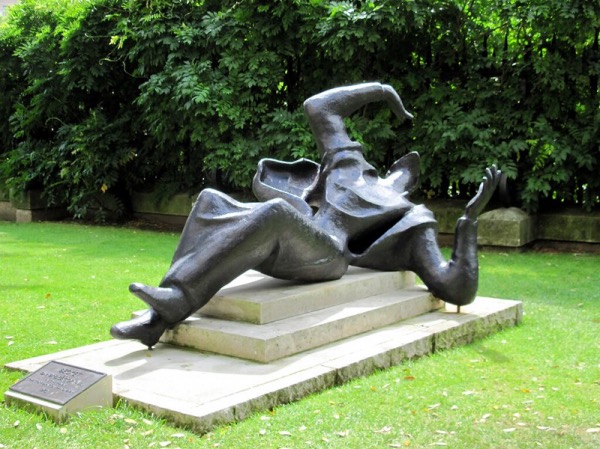
A modern memorial to Becket which features a statue depicting him lying back with his hand raised as though to ward off blows as he is attacked, is located in St Paul’s Churchyard. The statue, which is made from resin coloured to appear as bronze, is the work of Bainbridge Copnall and was created in 1970 as part of commemorations marking 800 years since his death. It was acquired by the City of London Corporation in 1973.

It was damaged by a falling cherry tree in 1987 but was restored by a student of Copnall.

LondonLife – Award-winning Thames views…

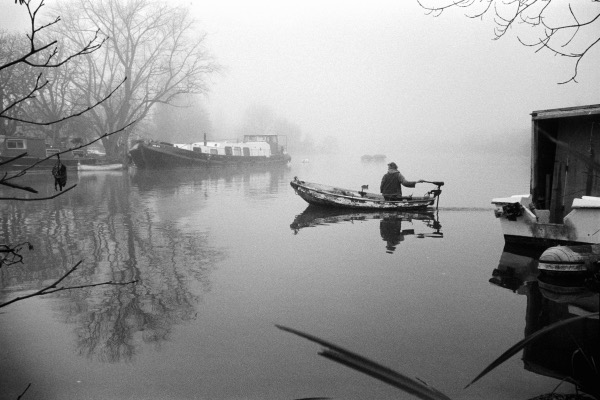
Overall winner – Andy Sillett’s Misty Morning

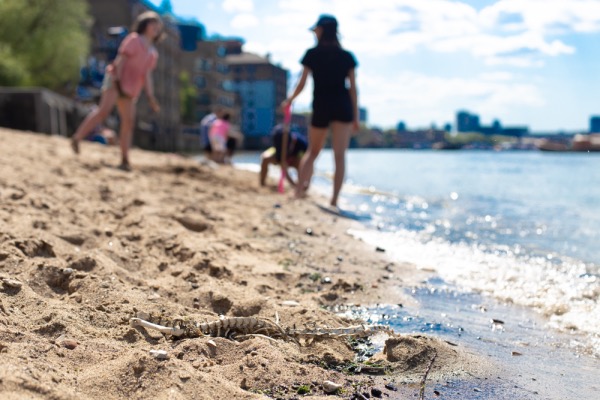
Andy Sillett’s Misty Morning was the overall winner of this year’s Thames Lens competition. The Thames Festival Trust received more than 350 entries to the competition between July last year and January this year which was held under the theme of ‘Thames Unlocked’. As well as submitting new images, photographers were encouraged to consider past photos for submission given the impact of coronavirus related restrictions. Other notable images, which were selected by representatives of the Thames Festival Trust and Port of London Authority, included Fraser Gray’s LV 21 and Royal Terrace Pier Gravesend (the runner-up – pictured below), and Sarah Gannon’s highly commended image Costa del Rotherhithe (pictured far below). For more, see https://thamesfestivaltrust.org/read-watch-listen/thames-lens-2020/.

Runner-up – Fraser Gray’s Royal Terrace Pier and LV 21 Light Vessel in the early morning fog.
Highly commended – Sarah Gannon’s Costa del Rotherhithe

Where’s London’s oldest…livery company?

There are 110 livery companies in London, representing various “ancient” and modern trades. But the oldest is said to be the Worshipful Company of Weavers.

What was then known as the Weavers’ Guild was granted a charter by King Henry II in 1155 (although the organisation has an even older origins – there is an entry in the Pipe Rolls as far back as 1130 recording a payment of £16 made on the weaver’s behalf to the Exchequer).

Saddler’s Hall in Gutter Lane where the Worshipful Company of Weavers is based out of.

In 1490, the Weaver’s Guild obtained a Grant of Arms, in the early 16th century it claimed the status of an incorporated craft, and, in 1577 it obtained ratification of its ordinances from the City of London.

By the late 16th century, the company – its numbers swollen by foreign weavers including Protestants fleeing persecution in Europe – built a hall on land it owned in Basinghall Street. A casualty of the Great Fire of London, the hall was rebuilt by 1669 but by the mid-1850s had fallen into disrepair and was pulled down and replaced by an office block.

After the office building was destroyed during World War II (fortunately some of the company’s treasures which had been stored there had already been moved), the company considered rebuilding the hall but decided its money could be better used, including on charitable works.

For many years, the company’s business was run from various clerk’s offices outside the City of London but since 1994 it has been run from Saddlers’ House.

The company, which ranks 42nd in the order of precedence for livery companies, has the motto ‘Weave Truth With Trust’.

For more, see www.weavers.org.uk.

Lost London – Gunter’s Tea Shop…

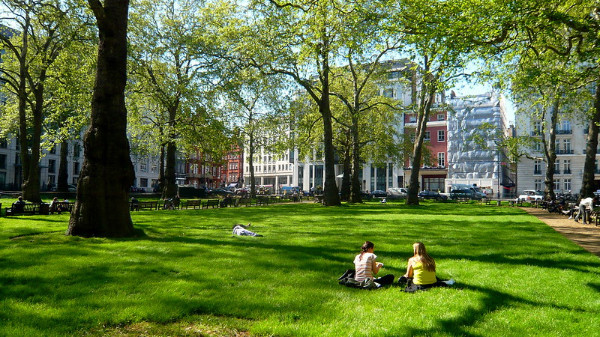
Berkeley Square, one time home to Gunter’s Tea Shop, as it is in more modern times. PICTURE: Herry Lawford (licensed under CC BY-SA 2.0)

This origins of this Mayfair establishment go back to 1757 when it was first opened by an Italian pastry cook, Domenico Negri, who sold all sorts of English, French and Italian wet and dry sweetmeats under the sign of the ‘Pot and Pineapple’.

The name Gunter became attached after Negri formed a partnership with James Gunter, whose family came from Wales, in 1777. By 1799 Gunter was running the place alone (henceforth Gunter’s Tea Shop). His son Robert took over the business on his father’s death in 1819, having previously spent time studying the confectionary trade in Paris.

Located on the east side of Berkeley Square at numbers seven and eight, Gunter’s had, by the early 19th century, become particularly famous for its ices and sorbets which were said to be made from a secret recipe. It become popular among the beau monde and Gunter operated something of a takeaway service for well-do-ladies so they could attend without a chaperone – waiters would dodge traffic to take ices out to their open-topped carriages parked by the square. All very respectable!

Gunter’s also became noted for their multi-tiered wedding cakes among Mayfair families – in 1889, they even made the cake for the marriage of Queen Victoria’s grand-daughter, Princess Louise.

Gunter’s moved to Curzon Street when the east side of Berkeley Square was demolished and rebuilt in the mid-1930s. It finally closed 20 years later although the business’s catering arm continued for another 20 years operating out of Bryanston Square.