This Week in London – Astronomical wonders; Lambeth Mayor’s homemade chain; a gift for conservation; and, a Darwinian donation…

Winner of the People’s Choice Awards 2020 – The Cave of the Wild Horses © Bryony Richards (Winner)

A photograph of the Milky Way taken from the Cave of the Wild Horses in the southern Utah desert has won the Insight Investment Astronomy Photographer of the Year: People’s Choice Awards 2020. The stunning image by Bryony Richards was captured in the cave after a long hike through the desert. It was selected from 25 images short-listed by the Royal Observatory Greenwich. ‘Reflection of the Stars’ by Linh Nguyen won second place award and Qiqige (Nina) Zhao won third for ‘Anniversary of Apollo 11 Mission’. Meanwhile, the deadline for the Astronomy Photographer of the Year 13 competition run by the Royal Observatory Greenwich in association with BBC Sky at Night Magazine is looming – photographers need to have submitted their images by 12pm on 5th March. The overall winner of the competition will take home a top prize of £10,000 and see their image in the accompanying exhibition, which is scheduled to open at the National Maritime Museum on 18th September. For more details, see www.rmg.co.uk/astrocomp.

The Mayor of Lambeth’s homemade ceremonial chain has been acquired by the Museum of London as part of its ‘Collecting COVID’ initiative. The chain was made by the mayor, Councillor Philip Normal, for the virtual ceremony in which he was created mayor on 22nd April, 2020, during the first national lockdown. Made of card and plaited t-shirt fabric, it features Lambeth’s coat of arms painted within a fluorescent pink oval with the words ‘Spectemur Agendo’ meaning, ‘Let us be judged by our acts’. For more on ‘Collecting COVID’, see www.museumoflondon.org.uk.

An oil painting of Sir John Maitland by an unknown Anglo-Dutch artist, part of the art collection at Ham House in London’s south-west, is among artworks which are to undergo restoration thanks to a £3 million gift to the National Trust from American charity, the Royal Oak Foundation. The gift will support the Trust’s conservation work for the next five years mainly based at its specialist conservation studio in Knole, Kent. It was made in honour of the 125th anniversary of the National Trust, which cares for more than 200 historic properties containing more than a million objects – everything from artworks to furniture, textiles and ceramics. The painting of Sir John came to public attention in 2017 when X-ray analysis revealed what is believed to be an unfinished portrait of Mary, Queen of Scots, hidden underneath it. For more, see www.nationaltrust.org.uk.

• Looking further afield and a keepsake box containing mementos associated with Charles Darwin – including shells gathered on his famous voyage in the HMS Beagle – have been donated to English Heritage. The charity announced the gift this week to mark the 150th anniversary of the 1871 publication of his book, The Descent of Man and Selection in Relation to Sex. The red leather box and its contents will go on display at Down House in Kent later this year following conservation work. Charles and Emma Darwin initially gave the box to their eldest daughter Annie but, following her death at the age of 10 in 1851, it passed to her sister Henrietta, known as “Etty”. Among the souvenirs placed in it were locks of hair belonging to different members of the Darwin family (including Emma and Henrietta), a silk handkerchief embroidered with Charles’ initials CD, and the shells which his daughters later carefully labelled using scrap paper from the naturalist’s draft manuscripts. English Heritage is appealing for donations for the care and display of the box. To support the work, head to www.english-heritage.org.uk/support-us/.

Send all items for inclusion to exploringlondon@gmail.com.
10 London sites related to St Thomas Becket – 7. Southwark…

Thomas Becket spent eight years in role of Archbishop of Canterbury, including almost two based at a Cistercian abbey in Pontigny, France, while in exile following his dispute with King Henry II over the Constitutions of Clarendon.

Thomas returned to England in 1170 but his relationship with King Henry remained acrimonious, particularly after the Archbishop excommunicated Roger de Pont L’Évêque, the Archbishop of York, Gilbert Foliot, the Bishop of London, and Josceline de Bohon, the Bishop of Salisbury, who had crowned King Henry’s heir, Henry, the Young King, at York in June of that year without his approval.

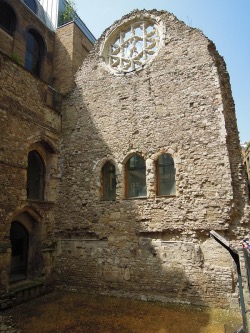
Ruins of Winchester Palace in Southwark. PICTURE: Aaron Bradley (licensed under CC BY-SA 2.0)

It’s that event that led to Becket’s infamous death at the hands of four knights in late December (more about that next week). But a few weeks before that Becket was in Southwark and there he met representatives of the Priory of St Mary Overie (of which what is now Southwark Cathedral was part) and visited Winchester Palace, London residence of the Bishop of Winchester (which now stands in ruins – see picture).

In what was to be Becket’s last visit to London before his death, he paused overnight at at the palace as he travelled to seek an audience with Henry, the Young King, in Winchester, in a bid to reconcile with the 15-year-old.

It was apparently quite an occasion – crowds estimated by one probable eyewitness to number some 3,000 came out to meet him as did a procession of singing monks from St Mary’s. Becket is said to have distributed alms to the poor and it’s said that a woman named Matilda, who apparently was known for making a spectacle of herself at public occasions, kept telling the Archbishop to “Beware of the knife” (which appears a little too conveniently prescient perhaps to ring true).

While at the palace, messengers arrived to inform Becket that the Young King did not wish to see him and instead ordered him back to Canterbury. Becket didn’t immediately obey – first headed further wet to Croydon and his manor at Harrow before eventually arriving back in Canterbury on about 18th December.

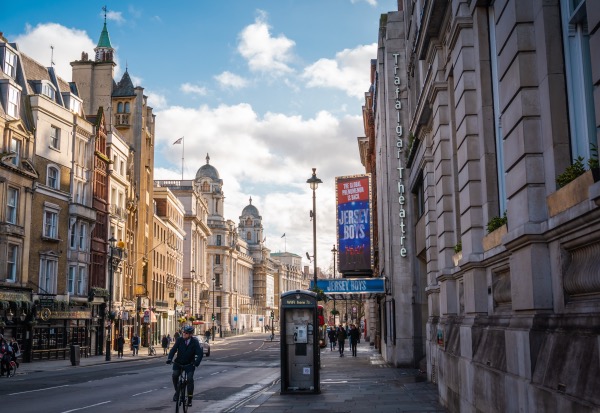
LondonLife – Looking down Whitehall…

From the Trafalgar Square end. PICTURE: Johen Redman/Unsplash

A Moment in London’s History – The “execution” of Oliver Cromwell…

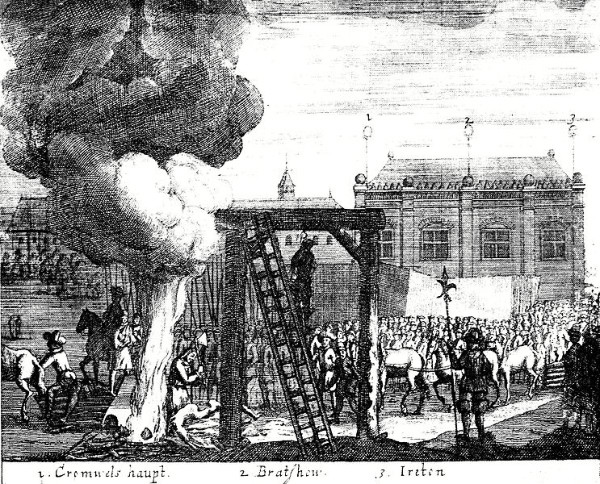
It was 360 years ago late last month that the body of Oliver Cromwell, one time Lord Protector of the Commonwealth, was, having previously been exhumed from his grave in Westminster Abbey, hanged from a gallows at Tyburn before being beheaded.

Cromwell had died two years previously on 3rd September, 1658, at the age of 59. It’s thought he died of septicaemia brought on by a urinary infection (although the death of his favourite daughter Elizabeth a month before is also believed to have been a significant factor in his own demise).

He (and his daughter) were buried in an elaborate funeral ceremony in a newly created vault in King Henry VII’s chapel at Westminster Abbey.

Cromwell’s son Richard had succeeded him as Lord Protector but he was forced to resign in May, 1659, and divisions among the Commonwealth’s leadership soon saw Parliament restored and the monarchy restored under King Charles II in 1660.

In late January, 1661, on Parliament’s order, Cromwell’s body as well as those of John Bradshaw, President of the High Court of Justice for the trial of King Charles I, and Henry Ireton, Cromwell’s son-in-law and a general in the Parliamentary army during the English Civil War, were all exhumed from their graves.

A contemporary engraving of the execution of Cromwell, Ireton and Bradshaw. PICTURE: Via Wikipedia.

The bodies of Cromwell and Ireton were taken to the Red Lion Inn in Holborn where they lay under guard overnight and were joined by that of Bradshaw the following day.

That morning – the 30th January, a date which coincided with the 12th anniversary of the execution of King Charles I in 1649 – the shrouded bodies in various states of decomposition and laying in open coffins were dragged on a sledge to gallows at Tyburn were they were publicly hanged.

The bodies remained on the gallows until sunset when they were removed and beheaded (Cromwell’s beheading apparently took eight blows). The bodies were believed to have been subsequently thrown into a common grave at Tyburn (although there’s all sorts of speculation surrounding the fate of Cromwell’s – indeed some believe his body had already been removed from Westminster Abbey before the exhumation took place and that it was the body of someone else which was hanged and beheaded).

The decapitated heads, however, were kept. They were placed on 20 foot long spikes at Westminster Hall for public display (Samuel Pepys was among those who saw them).

In 1685, however, the spike holding Cromwell’s head broke in a storm. Cromwell’s head is said to have ended up in the possession of a soldier who took it and hid it in his chimney (a reward was offered but searches were unsuccessful). The fate of the head then remains somewhat clouded but in 1710 it was being displayed in the London museum of Swiss-French collector Claudius Du Puy.

It subsequently passed through various hands until it was eventually bought by Dr Josiah Henry Wilkinson in the early 19th century. It remained in the possession of his family until, following tests which concluded it was indeed Cromwell’s head, it was offered to Sydney Sussex College, Cromwell alma mater, where, in 1960, it was buried in a secret location.

Treasures of London – Sutton Hoo helmet…

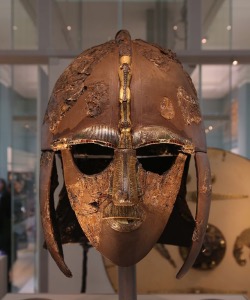
This spectacular Anglo-Saxon helmet – perhaps the most famous Anglo-Saxon object in a museum today – was among the finds made at the Sutton Hoo burial site in Suffolk in the late 1930s, the story of which is told in the current Netflix film, The Dig.

The Sutton Hoo helmet in the British Museum in 2016. PICTURE: Geni (licensed under CC BY-SA 2.0)

The ornately decorated helmet, the manufacture of which is dated to the late 6th or early 7th century, was found buried in the grave mound of an important figure whom some believe was an East Anglian king named Rædwald. The grave mound had been constructed over a ship containing the body and artefacts including the helmet. The ship itself had disintegrated but its imprint was uncovered during the excavation.

Excavated in hundreds of corroded fragments, the iron and bronze helmet, which is believed to have weighed about 2.5 kilograms, was painstakingly reassembled in the mid-1940s to reveal a helmet featuring cheek and neck guards and a mask with sculpted facial features including a nose, eyebrows and moustache as well as holes for the eyes. It features a number of other decorative elements including representations of dragons and warriors as well as geometric patterns. Gold and silver were used in the decorations.

The helmet underwent a second reconstruction in the early 1970s after issues were identified with the first.

The helmet, along with other artefacts found at the site, were deemed to be the property of Suffolk landowner Edith Pretty who subsequently donated it to the British Museum. It is on permanent display in Room 41 of the museum.

This Week in London – A 10 year ‘Larryversary’; Westminster street sign auction; and, recalling the Cichociemni…

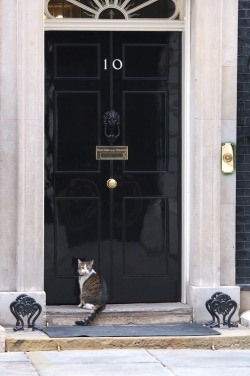
Larry the cat outside Number 10 in 2014. PICTURE: Andy Thornley (licensed under CC BY 2.0)

Larry the cat celebrated his 10th anniversary in Downing Street this week. Officially the “Chief Mouser to the Cabinet Office”, Larry first came to Number 10 on 15th February, 2011, from the Battersea Dogs & Cats Home and has since been spotted many times in and around the property going about his duties (or seeing off rivals like the now retired Palmerston, the Foreign Office cat). Larry has served three Prime Ministers during his time in the seat of power – David Cameron, Theresa May and now Boris Johnson – and met with various world leaders (famously apparently taking a liking to US President Barack Obama and being spotted sleeping under Donald Trump’s car). Larry tweeted on Tuesday – the day of his “Larryversary” – that he has no plans of retiring at this stage.

A series of auctions involving a collection of 260 London street signs started this week. Westminster City Council is selling the signs – which include Abbey Road NW8 (estimated price tag of £1,000-£2,000), Pimlico Road SW1 (£100-£200), Westbourne Park Road W2 (£100-£200) and Belgrave Place SW1 (£80-£120) – through Catherine Southon Auctioneers until 3rd March. The distinct signs were first created by Sir Misha Black in 1967. Head here for details.

Looking further afield and English Heritage has put out a call for people with connections to the Cichociemni – the name for a group of Polish Home Army parachutists, many of whom trained at Audley End House, who were dropped behind enemy lines in Poland to begin fighting for the liberation of their homeland – to share their stories. Monday marked the 80th anniversary of the operation involving the elite fighters. Some 527 of them completed their training at the Jacobean stately home in Essex where their presence is today remembered in a memorial and fragmentary remains such as a scrap of graffiti in the coal gallery candle store, remnants of a timetable in a former briefing room and insulators for telephone wires which remain in some trees. “We’d love to hear from the public who have a connection or story to share about the Cichociemni at Audley,” said Andrew Hann, an historian with English Heritage which looks after Audley End House. “We’re particularly interested in hearing from those in the local area at the time, who may remember hearing bangs in the night, or seeing troops crossing fields in the darkness. Perhaps unsurprisingly, given that they were highly trained to be both ‘silent and unseen’ they left little obvious trace.”

Send items for inclusion to exploringlondon@gmail.com

10 London sites related to St Thomas Becket – 6. Westminster Abbey…

Theobold of Bec, the Archbishop of Canterbury, in whose household Becket had previously served before becoming Lord Chancellor, died on 18th April, 1161. King Henry II, apparently hoping to install a friendly face in the post, ensured Becket was nominated to replace him several months later.

In keeping with tradition, the monks of Christ Church, Canterbury, apparently somewhat reluctantly, were persuaded to elect Becket, who was merely an archdeacon, to the post.

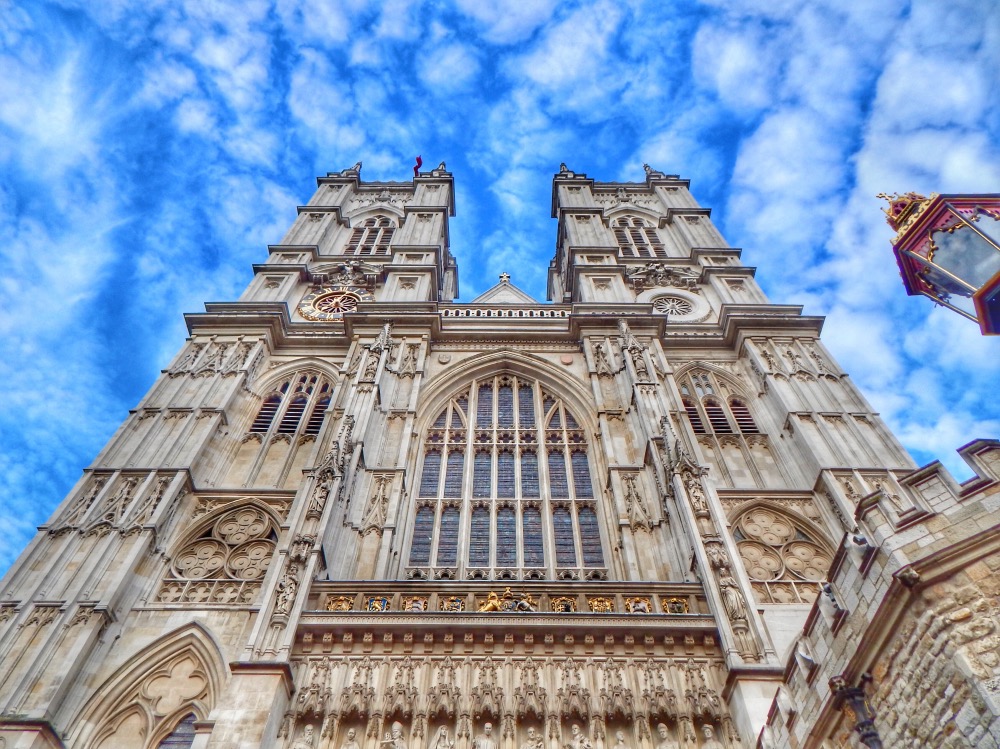
And it was at Westminster Abbey, on 23rd May, 1162, that a council of clergy and noblemen was convened to ratify the decision.

Sitting under the chairmanship of Bishop Henry of Winchester, who had only recently returned from exile, the council was told by the Prior of Christ Church that Thomas had been “unanimously and canonically” elected as Archbishop. The council, despite a lonely objection from Gilbert Foliot, the Bishop of Hereford, had then confirmed the decision and Bishop Henry read out the formal election result in the refectory or monk’s dining hall.

Becket, who was present, was then presented to the seven-year-old Prince Henry (later known as Henry, the Young King), the ill-fated eldest son of King Henry II who had been empowered by his father to give royal consent to the decision.

Becket headed for Canterbury soon after and there was ordained a priest on 2nd June and consecrated as Archbishop the following day. The stage was set for one of English history’s most infamous clashes of church and state.

Westminster Abbey, meanwhile, was also to play a key role in the antipathy that developed between King Henry II and Archbishop Thomas over the coming years. It was here that King Henry II had his aforementioned son Henry crowned as King of England in 1170 – against the wishes of Archbishop Thomas. It was that coronation which brought the simmering tension which had grown between them to a head.

And, in an footnote, in May, 2016, a relic of St Thomas, said to be a bone fragment from his elbow, stayed overnight in the Abbey’s Shrine of St Edward the Confessor. Usually kept at the Basilica of Esztergom in Hungary, the relic’s visit was part of a week-long tour of locations in London and Canterbury – the first time it had visited the UK in more than 800 years.

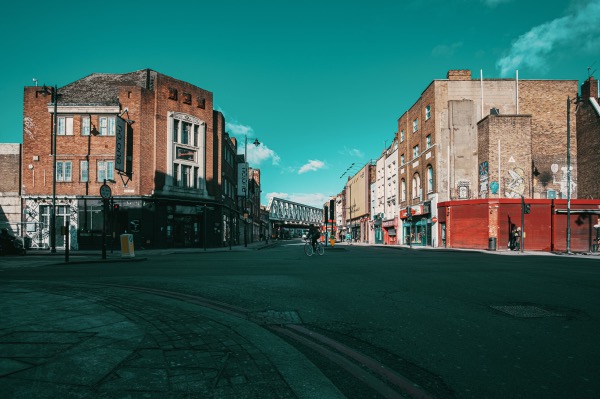
LondonLife – Shoreditch High Street…

PICTURE: Samuel Regan-Asante/Unsplash.

London pub signs – The Town of Ramsgate…

This storied Thames-side pub in Wapping has a history dating back centuries although much of the current premises dates from renovation works carried out in the late 1930s.

PICTURE: Fin Fahey (licensed under CC BY-SA 2.0)

According to the pub’s website, the first of its predecessors was probably established in the Wars of the Roses in the 1460s and was known as The Hostel.

In the 1530s, it was known as The Red Cow, and it wasn’t until 1766 it became known as Ramsgate Old Town, finally becoming The Town of Ramsgate by 1811.

The name apparently relates to its location on Wapping Old Stairs. It was there that the fisherman of the seaside town of Ramsgate would apparently land their catch to avoid the taxes they’d have to pay if they did so at Billingsgate.

The now Grade II-listed pub is famous for its connections to the notorious “Hanging Judge” George Jeffreys who presided over the ‘Bloody Assizes’ and sent hundreds to their death following the unsuccessful attempt by James Scott, 1st Duke of Monmouth and illegitimate son of the late King Charles II, to overthrow King James II. Following the Glorious Revolution of 1688, Jeffreys is said to have been captured outside the premises while attempting to escape, disguised as a sailor, on a collier bound for Hamburg. He subsequently died in the Tower of London.

There’s also said to be a close connection with piracy – at the base of Wapping Old Stairs is what some say was the site of Execution Dock where pirates were tied up to be drowned by the rising tide.

The front area of the pub – which features an etching on a mirror of Ramsgate Harbour – is the oldest part of the building. A depiction of Ramsgate Harbour can also be seen on the pub sign.

For more on the pub, see http://townoframsgate.pub.

Correction – We accidentally dropped an I off James II’s title. Our apology!

Lost London – William Blake’s birthplace, Soho…

William Blake’s house in Soho, an illustration by  Frederick Adcock, published in ‘Famous houses and literary shrines of London’ (1912) and written by Arthur St John Adcock.

William Blake, one of the UK’s most lauded artists and poets, was born in a property at 28 Broad Street (now Broadwick Street) in Carnaby Market, Soho, on 28th November, 1757.

Blake was the third of seven children (although two died in infancy) born to James and Catherine (he was baptised at nearby St James’s Church, Piccadilly, on 11th December). His father ran a hosiery store and the residence was located above his father’s shop (Blake worked as a delivery boy while a child).

Behind the premises was a workhouse and Blake’s memories of this flavoured some of his later works including Nurse’s Song.

Blake lived in the property until he was 25-years-old, during which time he completed an apprenticeship to engraver James Basire located in Great Queen Street and became a student at the Royal Academy in Old Somerset House in The Strand.

He moved to Green Street with his new wife, Catherine Boucher, in 1782.

His oldest brother James took over his father’s shop following his death in 1784 and, in 1809, the first floor of the premises hosted Blake’s only – and unsuccessful – solo exhibition.

The house survived until the 1960s but despite its famous heritage, the property was razed and a block of flats – William Blake House – was erected in its place. A plaque commemorating Blake’s birth in the former property is all that remains.

This Week in London – V&A reimagines its online experience; ‘Wildlife Photographer of the Year’; and, most viewed works at The National Gallery…

More than 1.2 million items from the V&A’s vast collections can now be seen online in a new digital platform, Explore the Collections. The new platform, which launched in beta form this week and brings together previous online options in a single site, reimagines the online experience of the V&A in a story-led approach with users able to search for specific objects or allow the site to recommend options based on their interests. The platform will be continually developed and updated over the coming months. You can access it here –  www.vam.ac.uk/collections.

‘Bushfire’ by Robert Irwin, Australia. Winner 2020, Wildlife Photographer of the Year People’s Choice Award.

Australian photographer Robert Irwin has won the 56th Natural History Museum’s ‘Wildlife Photographer of the Year People’s Choice Award’ with an image of bushfire in northern Australia. More than 55,000 people voted for one of 25 short-listed images selected from the more than 49,000 submitted works. Irwin, who used a drone to take the aerial image near the Steve Irwin Wildlife Reserve in Cape York, Queensland, said he was incredibly excited by the win. “For me, nature photography is about telling a story to make a difference for the environment and our planet,” he said. “I feel it is particularly special for this image to be awarded, not only as a profound personal honour but also as a reminder of our effect on the natural world and our responsibility to care for it.” Irwin’s and four other highly commended images will be shown at the Wildlife Photographer of the Year exhibition at the Natural History Museum when the museum reopens. For more, see nhm.ac.uk/visit/exhibitions/wildlife-photographer-of-the-year.html.

Jan van Eyck’s masterpiece, The Arnolfini Portrait, has topped a list of the National Gallery’s most viewed paintings since March last year. Others in the top 10 included Holbein’s The Ambassadors and Van Gogh’s Sunflowers along with works by Turner, Leonardo, Velázquez, Titian, Constable, Botticelli, Monet, Caravaggio and Vermeer. The data was collected between 19th March last year – when the gallery first closed in a lockdown – and the start of February. The gallery houses more than 2,300 works. For more, see www.nationalgallery.org.uk.

Send all items for inclusion to exploringlondon@gmail.com

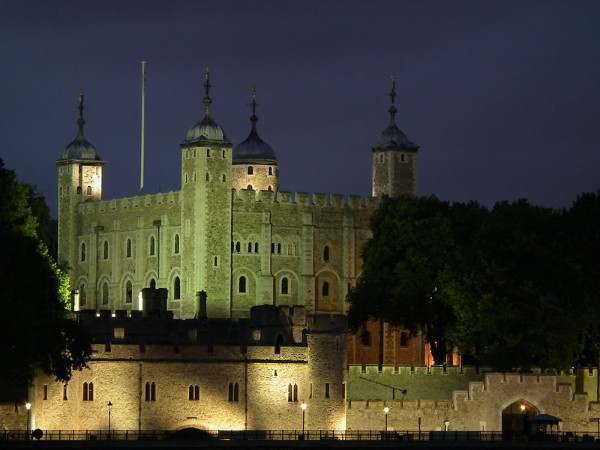
10 London sites related to St Thomas Becket – 5. The Tower of London…

Thomas left the employ of Theobold, Archbishop of Canterbury, in 1154 when he took up the role of Chancellor for the newly crowned King Henry II (on Theobold’s recommendation).

The new role meant he wasn’t much in London over the next eight years – King Henry II spent less than two-and-a-half years in England during that period and Becket’s new role meant he was expected to be with the King.

The Tower of London (the expansive St Thomas’s Tower is on the front left). PICTURE: flicksmores (licensed under CC BY-NC-ND 2.0)

One London connection during this period came about, however, when King Henry II awarded him the custody of the Tower of London (the role which is now known as Constable of the Tower and was apparently then referred to as Keeper of the Tower).

Interestingly, Becket is just one of four Archbishops of Canterbury who held the post (although he was Archbishop later) but is the only saint to have done so.

During his time as Constable of the Tower, Becket did carry our substantial repairs on the complex (while Chancellor he also oversaw repairs to other buildings including the Palace of Westminster).

There is a further connection between Becket and the Tower – King Edward I, during his rather dramatic renovations and expansion of the fortress, included a chapel dedicated to the martyred St Thomas in the royal quarters. To this day, the tower which fronts the Thames is known as St Thomas’s Tower (the naming of Traitor’s Gate, formerly known as Water Gate, under it occurred much later and had nothing to do with him).

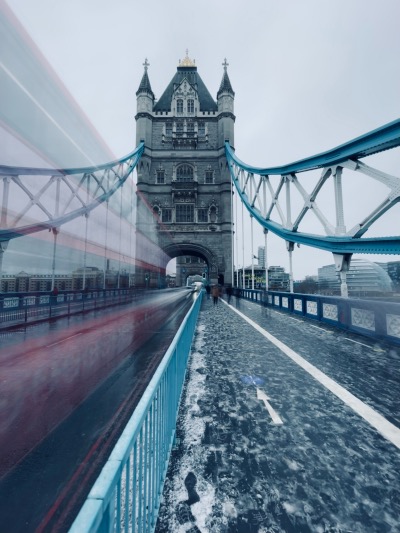
LondonLife – Tower Bridge crossing…

Crossing the Thames on a cold winter’s day. PICTURE: Lubo Minar/Unsplash

Famous Londoners – John Keats…

This month marks 200 years since the death of Romantic poet and London resident John Keats – famous for poems including Ode to a Grecian Urn and Ode to the Nightingale – at the age of just 25.

Born on 31st October, 1795, Keats was the eldest of Thomas Keats and Frances Jennings’ four children. The story goes that he was born in the stable – owned by his mother’s father and managed by his father, located near Finsbury Circus.

John Keats by William Hilton, after Joseph Severn (based on a work of circa 1822) National Portrait Gallery (NPG 194)

At the age of eight, Keats attended the boy’s academy at Enfield (his brothers George and Tom would also attend). He had been at the school for less than a year when, on the night of 15th April, 1804, his father was seriously injured in a horse-riding accident and died the following day.

Within a couple of months, his mother entered an ill-fated marriage and eventually left her family to live with another man. She returned to her family by 1808 but, now ill, she died of tuberculosis in March, 1809. following his mother’s death, his grandmother appointed two London merchants including tea broker Richard Abbey as Keats’ guardians.

Keats, meanwhile, built up a close friendship with headmaster John Clarke and his older son Charles Cowden Clarke at Enfield and through them really began to foster a love of literature (in particular Edmund Spenser‘s Faerie Queene is said to have helped awakened his love of poetry).

But at Abbey’s instruction he left Enfield in 1811 and began to work toward a career as a surgeon, apprenticed to surgeon Thomas Hammond, in nearby Edmonton.

In October, 1815, he left his apprenticeship with Dr Hammond, apparently after a quarrel between them. Moving into London, he registered at Guy’s Hospital for the six-month course of study which was required for him to become a licensed surgeon and apothecary. Lodging with two older students at 28 St Thomas Street, he progressed quickly and was soon promoted to “dresser”, a role which saw him involved dressing wounds daily to prevent or minimize infection, setting bones, and assisting with surgery.

Poetry, however, continued to occupy his mind and his sonnet O Solitude! became his first published poem when it appeared in The Examiner on 5th May, 1816 (editor Leigh Hunt, who was introduced to Keats by Clarke later that year, also went on to publish other works including his sonnet On First Looking into Chapman’s Home).

Keats, who became a certified apothecary in late 1816 (he’d holidayed in Margate with his brother Tom after passing his exams earlier that year), now faced further studies to become a surgeon. But he instead decided to give up medicine and devote himself entirely to his poetry (a move which apparently infuriated his now sole guardian Abbey). About the same time he moved into lodgings at 76 Cheapside with his two brothers, George and Tom (there was also a sister Fanny), having previously lived with that at 8 Dean Street in Southwark.

His circle of artistic acquaintances – which included fellow Romantic poet Percy Bysshe Shelley and painter Benjamin Robert Haydon – now growing, in March, 1817, Keats’ first book of poetry – Poems – was published. It was also around that time that he moved with his brothers to a property at 1 Well Walk in Hampstead, no longer needing to be near the hospitals where he had worked and studied.

In May, 1818, Keats published his 4,000 line allegorical romance, Endymion, but it received a rather scathing reception including by Blackwood’s Magazine which apparently declared the work nonsense and recommended Keats give up writing poetry.

In summer that year, Keats went on a walking tour of Scotland, Ireland and the Lake District with his friend Charles (Armitage) Brown. Following his return to Hampstead, Keats nursed his brother Tom who was ailing from tuberculosis (George having by now left for America) and who died on 1st December.

Following his brother’s death, Keats accepted Brown’s invitation to move into his property at Wentworth Place, located on the edge of Hampstead Heath (now the Keats House museum).

Keats’ House in Keats Grove, Hampstead. PICTURE: Spencer Means (licensed under CC BY-SA 2.0)

While living at Wentworth Place, Keats developed an intimate relationship with next-door neighbour Frances (Fanny) Brawne and the couple “came to an understanding” but his literary ambitions and failing health – by early 1820 he too had tuberculosis – meant it never came to marriage.

Keats third volume of poetry – containing his famous odes including Ode to a Nightingale and Ode to a Grecian Urn – was published in mid-1820 but now increasingly suffering from tuberculosis, he was advised by his doctors to head to a warmer climate. In September that year he left for Rome with his friend, the painter Joseph Severn (who painted a famous posthumous portrait of Keats), knowing he would probably never see Brawne again.

In Rome – having had to spend 10 days quarantine after the ship arrived in Naples due to a suspected cholera outbreak, he moved into a villa on the Spanish Steps (now home to the Keats-Shelley Memorial House museum) but, despite medical efforts, his health continued to deteriorate.

John Keats died on 23rd February, 1821, and was buried in the city’s Protestant cemetery. His tombstone bears no name or date, just the words “Here lies One whose Name was writ in Water” and an epitaph which speaks of a “young English poet”.

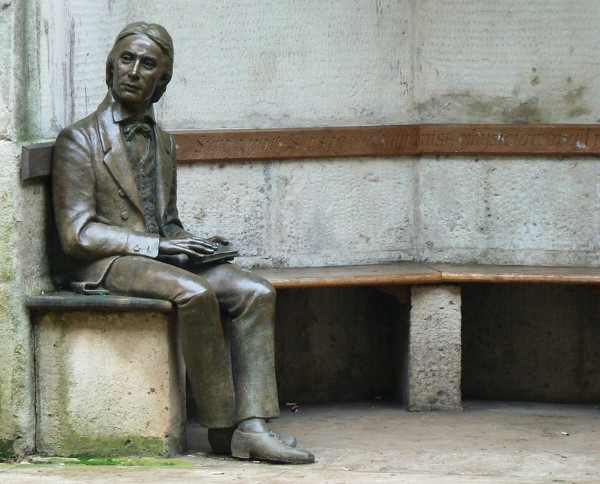
Keats, depicted in a 2007 bronze statue at Guy’s Hospital PICTURE: under_volcano (licensed under CC BY-SA 2.0)

Keats had only been a serious poet for some six years prior to his death and his three volumes of poetry had probably only amounted to some 200 copies. But his reputation continued to grow after his death with support from the likes of Shelley, Tennyson and the pre-Raphaelites, and he is now well-established in the literary canon as one of the greatest English poets.

As well as Keats’ House – which is managed by the City of London and which features an English Heritage Blue Plaque on the facade, Keats is memorialised with several other plaques in London and a famous statue at Guy’s Hospital which features him seated in a former alcove removed from London Bridge – see image above).

Treasures of London – Charles Dickens’ writing desk and chair…

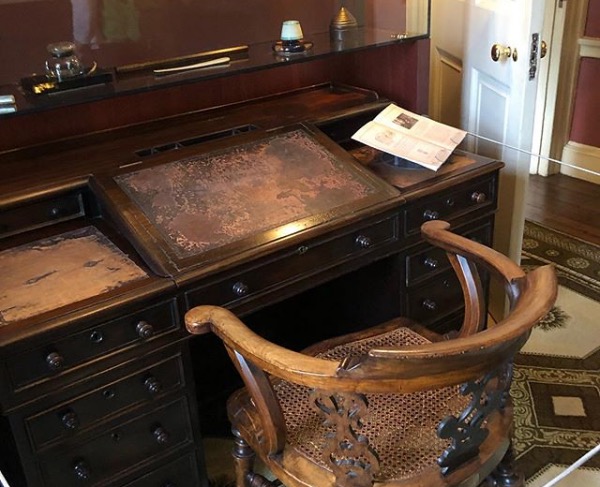
Charles Dickens’ desk and chair at the Charles Dickens Museum. PICTURE: Alyx Dellamonica (Licensed under CC BY-NC 2.0)

Among the treasures to be found at Dickens’ former house (and now the Charles Dickens Museum) in Doughty Street, Bloomsbury, is the desk and accompanying chair where Dickens’ wrote several of his later novels including Great ExpectationsOur Mutual Friend and the unfinished The Mystery of Edwin Drood.

Dickens purchased the mahogany pedestal writing desk as well as the walnut and fruitwood smoker’s armchair in 1859. He used them in the study of his final home at Gad’s Hill Place in Kent (Dickens also had an identical chair in his London office which is now in the New York State Library).

After the author’s death in 1870, the desk and chair – which feature in Luke Fildes’ 1870 work The Empty Chair and the RW Buss’ 1875 work Dickens’ Dream  – were passed down through the Dickens family until they was auctioned in the 2000s with the funds raised used to benefit the Great Ormond Street Hospital.

While the desk and chair had previously been loaned to the museum for display, in 2015 the establishment was able to purchase the desk and chair and make it part of its permanent collection thanks to a £780,000 grant from the National Heritage Memorial Fund.

While the museum is currently closed due to the coronavirus pandemic, we include these details for when it reopens.

WHERE: 48-49 Doughty Street, Bloomsbury (nearest Tube stations are Russell Square, Chancery Lane or Holborn). WHEN: Currently closedCOST: £9.50 adults/£7.50 concessions/£4.50 children (under six free); WEBSITE: www.dickensmuseum.com.

This Week in London – Exploring the ‘Raphael Cartoons’; using art to bridge Brexit divide; a 21st century police box; and, COVID’s viral tweets…

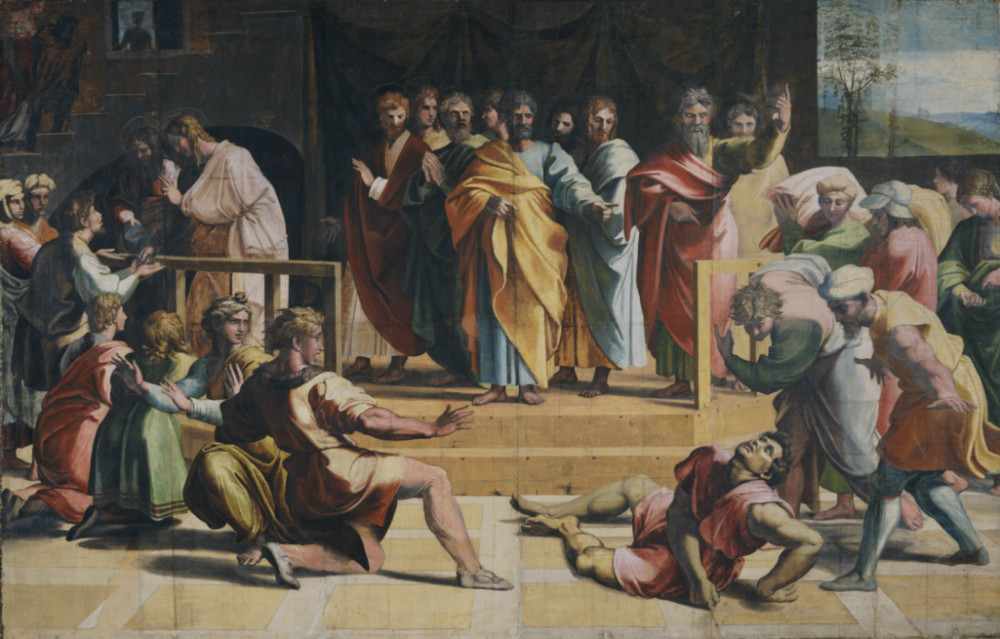
One of the Raphael Cartoons depicting ‘The Death of Ananias (Acts 5: 1-5)’, by Raphael, 1515 –16, Italy. Photo: © Victoria and Albert Museum, London. Courtesy Royal Collection Trust / Her Majesty Queen Elizabeth II 2021as.

An in-depth exploration of the so-called ‘Raphael Cartoons’ has gone online at the V&A ahead of the reopening of the newly transformed Raphael Court later this year. Among the greatest Renaissance treasures in the UK, the cartoons were commissioned by Pope Leo X for the Sistine Chapel in the Vatican shortly after his election in 1513. The Pope asked artist Raphael to create a series of 10 designs illustrating the lives of St Peter and St Paul which could then be turned into tapestries to grace the walls of the chapel. Created in the workshop of merchant-weaver Pieter van Aelst in Brussels, the 10 tapestries were each five metres wide and 3.5 metres high. Seven of Raphael’s original cartoons survive – they were brought to Britain in the early 17th century by the Prince of Wales (later King Charles I) and remained behind closed doors in the Royal Collection until they were lent to the South Kensington Museum – now the V&A – by Queen Victoria in 1865 in memory of Prince Albert. The cartoons have been on public display in the museum ever since. The new online offering traces the story of the cartoons and using ultra- high-resolution photography, infrared imagery, and 3D scans, and is the first time people have been able to explore the cartoons in such detail. It was produced as part of the V&A’s ‘Raphael Project’, marking the 500th anniversary of Raphael’s death in 2020, which includes a landmark renovation of the Raphael Court – home to the cartoons. The refurbished gallery will be unveiled when the museum reopens. To see the new online display, head to vam.ac.uk/raphael-cartoons.

A participatory art project exploring the relationship between the UK and France in a post-Brexit world has commenced this week. I Love You, Moi Non Plus – presented in partnership by Somerset House, Dover Street Market London, The Adonyeva Foundation, Collectif Coulanges, Eurostar and coordinated by Sabir, invites artists to share their interpretation of what the British-French relationship means to them with works to be displayed in a new online gallery alongside bespoke pieces from “project ambassadors” including Chinese artist Ai Weiwei, fashion designer Stella McCartney, English electronic musician Brian Eno, English National Ballet artistic director Tamara Rojo,and British artist Bob and Roberta Smith. The project seeks to highlight how art and creativity can “maintain connections between communities across the channels, unifying voices from across Britain and the EU”. Participants are asked to contribute either by sharing their creations on social media with hashtags #ILoveYouMoiNonPlus, #ILYMNP and #LifeAfterBrexit or submit them directly to the website here

Does this mean a new Tardis for Dr Who? The City of London Corporation is calling on architects, landscape architects, designers and artists to submit ideas for the design of a “21st century police box”. The competition, which is being run by the City in conjunction with the City of London Police, New London Architecture (NLA) and Bloomberg Associates, aims to provide “a modern and engaging way to provide information and safety” to the Square Mile’s residents, workers and visitors. Up to six shortlisted teams will be awarded funding to develop their idea into a design proposal and the winning design will be unveiled in the summer. For more, head to nla.london/submissions/digital-service-point-open-call-competition.

The Museum of London has acquired 13 tweets shared by Londoners during the initial coronavirus-related lockdown as part of its ongoing ‘Collecting COVID’ project. The tweets, which were collected under the ‘Going Viral’ strand of the Collecting COVID project, now form part of the museum’s permanent collection and lay bare what people were experiencing during 2020. The Going Viral project focused on collecting text, memes, videos and images that were ‘shared’ or ‘liked’ on Twitter more than 30,000 times. Additional tweets will be considered for acquisition this year.

Send all items for inclusion to exploringlondon@gmail.com.
10 London sites related to St Thomas Becket – 4. London churches…

Around 1145, Thomas Becket left the household of the financier Osbert Huitdeniers and entered the household of Theobold, the Archbishop of Canterbury.

It’s unclear how he made the transition, although it has been speculated it was possibly through family connections, but by the following year, he was well-ensconced as a clerk in the archbishop’s household.

Like many great households, the Archbishop’s moved between various residences including his palace beside Canterbury Cathedral, various manors and the royal court (Lambeth Palace, the current home of the Archbishop of Canterbury in London was constructed after Becket’s death).

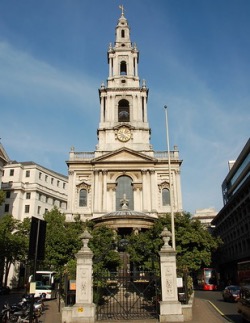
St Mary le Strand as it is today. PICTURE: James Stringer (licensed under CC BY-NC 2.0)

Becket rose in the Archbishop’s favour and while serving in his household was given the living of churches including St Mary le Strand in London and Otford in Kent as well as being made a canon of St Paul’s Cathedral (he wasn’t expected to attend the churches to receive the incomes).

The current St Mary le Strand dates from the early 18th century; the church from which Thomas drew an income was an earlier versions and stood a little to the south of the current building.

St Paul’s, meanwhile, was an early version of the pre-Great Fire of London version of the building. During Becket’s time, the grand structure was still under construction (building had been disrupted by a fire in 1135 and the cathedral wasn’t consecrated until 1240, well after Becket’s death).

The present cathedral has a rather spectacular statue of Becket in the churchyard (but we’ll deal with that separately in a later post in this series).

LondonLife – A splash of colour in Docklands…

Cabot Square, Docklands. PICTURE: Tom Podmore/Unsplash

London Explained – ‘Cockney’…

The bell tower of St Mary-le-Bow. PICTURE: lonpicman (licensed under CC BY-SA 3.0))

A new regular section in which we explain some of the city’s language. First up, we’re taking a quick look at the word ‘Cockney’.

The word, which has been used as far back as the Middle Ages to describe a ‘cock’s egg’ or weird egg, was apparently once used to refer to “weak” urbanite men (as opposed to the tougher men of the country).

But in more recent times, it was used to refer to someone born within hearing distance of the ‘Bow bells’ – the bells of the church of St Mary-le-Bow in the City.

This meant it came to be particularly associated with people from the city’s East End (although the bells can apparently be heard for at least a couple of miles in any direction – legend has Dick Whittington apparently hearing them calling to him more than four miles away in Highgate).

As well as referring to the people, the word is also used for the distinctive dialect, known as Cockney Rhyming slang, of those who lived in the area.

Interestingly, thanks to World War II preparations, the bells of St Mary-le-Bow were silent from 13th June, 1940, and, following their destruction in an air-raid the following year, were not replaced until 1961. This has led some to conclude that because no bells were rung during this 21 year period, no Cockneys were born then.

Lost London – ‘Canute’s Canal’…

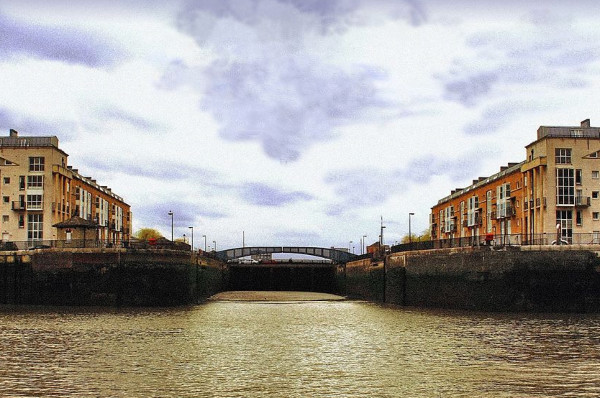
A waterway said to have been cut by the Viking Canute (also spelled Cnut) in the 11th century, the canal, according to the story, was constructed so his fleet of ships – blocked by London Bridge – could get upstream.

The entrance to Greenland Dock from The Thames in 2012 – one of the many places posited as the location where Canute’s Canal started. PICTURE: Public Domain

The story goes that in May, 1016, the Dane Canute (and future King of England), led an army of invasion into England to reclaim the throne his father, Sweyn Forkbeard, had first won three years earlier.

Canute needed to get his ships upriver of London Bridge to besiege the city which was held by the Saxons under Edmund Ironside (made king in April after his father Athelred’s death) but was blocked by the fortified, although then wooden, London Bridge.

So Canute gave orders for the digging of a trench or canal across some part of Southwark so his ships could pass into the river to the west of the bridge and he could encircle the city.

The canal – also known as ‘Canute’s Trench’ – was duly dug and the city was besieged – although the Vikings lifted the siege without taking the city (which does seems like a lot of work for not much result in the end) and the war was eventually decided elsewhere.

Various routes of the canal have been posited as possibilities – including the suggestion that there was an entry at Rotherhithe (Greenland Dock has been sited as one location) and exit somewhere near Lambeth or further south at Vauxhall (and one possibility is that Canute, rather than digging a long canal, simply cut through the bank holding back the Thames on either side of London Bridge and flooded the lands behind).

Various waterways have also been identified with it including the River Neckinger, parts of which survive, and the now lost stream known as the Tigris.

Whether the canal actually existed – and what form it took – remains a matter of some debate (although the low-lying, marshy land of Southwark at the time surely would have helped with any such project). But whether lost or simply mythical, the truth of ‘Canute’s Canal’ remains something of a mystery. For the moment at least.