Famous Londoners – William Marshal (part I)…

We’ve decided to tell William Marshal’s fascinating story over two weeks – tune in next Monday for part II, the latter part of Marshal’s life, when the connections of Marshal to London are more fully spelt out …

A knight who served five English kings and rose to become a significant force in late 12th and early 13th century England, William Marshal was one of the towering figures of his time and seen by many as a paragon of what a knight could be.
Marshal – who died 800 years ago last May, was born in about 1147, the second son from the second marriage of a minor noble, John Marshal, during the 15 year conflict between King Stephen and his cousin, the Empress Matilda.

Marshal had ascended to become Marshal to the King in the court of King Henry I but during the subsequent conflict which erupted after the king’s death in 1135 had, like many, attempted to exploit the situation for his own benefit (he is said to have initially supported Stephen but was, however, among the Empress’ forces during a battle at Wherwall in 1141, during which he lost an eye and suffered significant injuries after the lead roof of a church melted onto him).

Late in King Stephen’s reign, he personally attracted the ire of the King upon himself by building a new fortified outpost, Newbury Castle, to the west of London, leading the king to marshal his forces against him. Marshal apparently begged for a truce ahead of the surrender of the castle and it was here that William enters the story, offered up as a hostage for his father.

But John Marshal decided, having handed over the boy, that he would not surrender and abandoned William to his fate. Stephen, angered at the deception, ordered the boy William to the gallows but, in what was a seminal moment in William’s childhood, the king relented and Marshal was spared – the story goes that it was William’s innocence which stayed the King’s hand.

King Stephen eventually won the day – although John Marshal escaped, leaving his son with the King. William was to remain a captive for more than a year – only after peace was agreed between King Stephen and Empress Matilda in 1153 was he to return to his family.

Little else is known of Marshal’s early childhood but in around 1160, at the age of about 13, he went to live in the household of William of Tancarville in Normandy – a distant relative – to acquire skill at arms in order to become a knight. He was knighted at the age of about 20 by Tancarville and was soon involved in fighting to protect Normandy’s borders but shortly after that, found his time under Tancarville’s patronage at an end (although the exact reasons why he was let go are unclear).

Rather than returning to his family in England, the penniless Marshal instead spent the next year or so travelling Europe on the tournament circuit to try and make some money and indeed had some success before he did eventually return to England and enter the house of his uncle, Earl Patrick of Salisbury. When Patrick and his men were called up to campaign with King Henry II in south-western France in early 1168, William was among his men.

In April, William was with the Earl serving as a guard for King Henry II’s wife, Eleanor of Aquitaine, when they were attacked. The Queen hastened to safety while Patrick and his men held back the attackers but during the fighting, the earl was killed while Marshal, despite his skill, was eventually run through the thigh was lance and taken prisoner.

Recovering from his wound, Queen Eleanor eventually paid a ransom for his release and he was subsequently offered a place in her retinue in what was to his first post in a long life of royal service. After just a couple of years in the Queen’s service, her husband, King Henry II, appointed William as tutor-in-arms to his son and heir, Henry “the Young King” who had already been crowned at Westminster Abbey despite his father still holding the reigns of power.

When Henry rebelled against his father in 1173, William remained among his men, and, after an uneasy peace between the Young King and King Henry II was restored, William was with the young Henry when he spent three years on the tournament circuit from 1176 to about 1179. The Young King and his men saw considerable success in tournaments before William branched out on his own, his skill with weaponry bringing him both fame and wealth in his own right to the degree that by the early 1180s, he was regarded as one of Europe’s greatest knights.

With thanks to Thomas Asbridge’s The Greatest Knight: The Remarkable Life of William Marshal, the Power Behind Five English Thrones

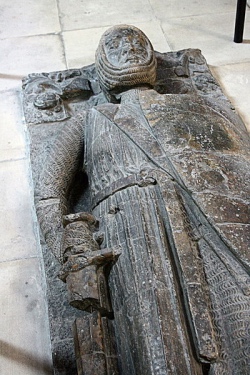
An effigy believed to be that of William Marshal in the Temple Church, London. PICTURE: Michael Wal  (licensed under CC BY-SA 2.0)
Treasures of London – King George III’s military maps…

King George III’s massive collection of military maps, views and prints forms a key part of the Royal Collection and to mark the 200th anniversary of the King’s death, more than 3,000 of which have been published online.

The publication of the selection from the more than 55,000 items in the collection marks the culmination of 10 years of research by Dr Yolande Hodson who has catalogued the contents of the collection which dates from the 16th to the 18th centuries and provides a contemporary account of theatres of war in Britain, Europe and America.

The collection includes everything from so-called “presentation maps” of sieges, battles and marches to rough sketches drawn in the field, depictions of uniforms and fortification plans.

Highlights include two-metre-wide maps of the American War of Independence (1775–83) which designed to hang on purpose-made mahogany stands in Buckingham House – among them is a map of the final British defeat at the Battle of Yorktown in 1781, the only known copy to survive outside the US.

There’s also a memorandum written by Scottish military engineer William Roy to the king in 1766 in which Roy proposes a national survey of Britain based on his map and survey experience during the Seven Years War (1756–63) – it’s regarded as the founding document of the Ordnance Survey.

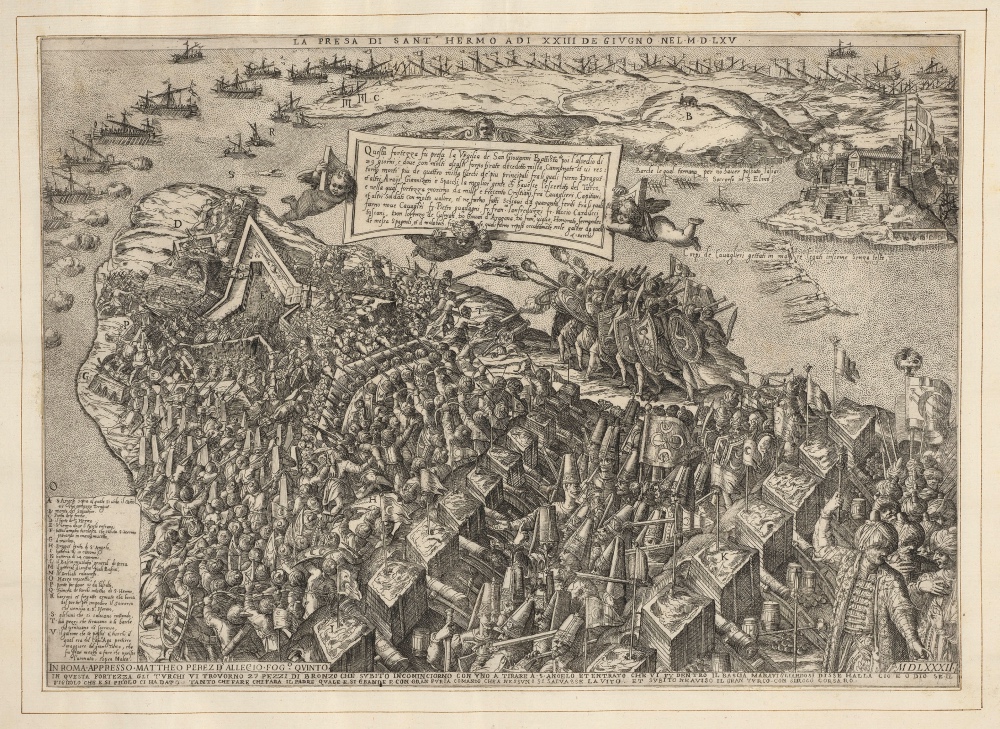
And there’s a rare engraving of the Siege of Malta (1565) showing how the Fort of St Elmo was overrun Turkish forces, resulting in the death of 1,300 Christian knights, captains and soldiers (pictured).

The collection can be found at militarymaps.rct.uk.

PICTURE: Matteo Perez d’Aleccio, A view of the Turkish assault on the Fort of St Elmo, Malta, on 23 June 1565. From the collection of Cassiano dal Pozzo. (Royal Collection Trust / © Her Majesty Queen Elizabeth II 2020)


This Week in London – Britain’s Baroque culture; a celebration of orchids and Indonesia; and, London’s “hidden” Underground…

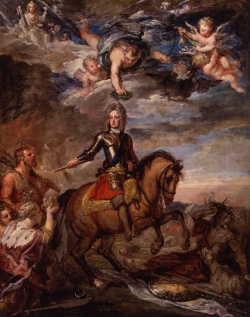
Britain’s Baroque culture – spanning the period from the Restoration of King Charles II to the death of Queen Anne in 1714 – is the subject of a new exhibition which opened this week at Tate Britain. British Baroque: Power and Illusion – the first major exhibition on the subject – shows how magnificence was used to express status and influence and features works by painters including Sir Peter Lely, Sir Godfrey Kneller, and Sir James Thornhill as well as designs, prints and wooden models of the works of architects like Sir Christopher Wren, Nicholas Hawksmoor and Sir John Vanbrugh. The importance of portraiture, the visual differences in Protestant and Catholic worship and the illusions contained in painted baroque interiors are all explored in the display along with how the subject of war was dealt with through heroic equestrian portraiture, panoramic battle scenes and accompanying propaganda. The exhibition, which is being accompanied by a programme of events, runs until 19th April. Admission charge applies. For more, see www.tate.org.uk. PICTURE: Godfrey Kneller, John Churchill, 1st Duke of Marlborough, c1706, National Portrait Gallery, London.

The 25th Kew Orchid Festival kicks off at Kew Gardens on Saturday in a celebration of the wildlife and culture of Indonesia. Located in the Princess of Wales Conservatory, the festival will take visitors on an immersive journey evoking the sights, smells and sounds of Indonesia though a series of orchid displays which include a life-sized animals such as orang-utans, a tiger and a rhinoceros, an archway made of hundreds of carnivorous pitcher plants and an erupting volcano. A programme of evening events featuring gamelan music and traditional dancers as well as cooking demonstrations by renowned author and chef Petty Elliott is also planned – these must be booked online in advance. Admission charge applies. Runs until 8th March. For more, see www.kew.org.

On Now: Hidden London: The Exhibition. This display at the London Transport Museum in Covent Garden takes visitors on an immersive journey to some of the secret places in the Tube network. Featuring rare archive photos, objects, vintage posters, secret diagrams and decorative tiles from disused stations, it uncovers stories such as how Churchill took shelter in the Railway Executive Committee’s bomb-proof headquarters deep underground at Down Street station at the height of the Blitz during World War II and how almost 2,000 members of staff, mostly women, worked in the Plessey aircraft underground factory located in two 2.5 mile-long tunnels on the eastern section of the Central line. The exhibition is being accompanied by a series of events including late openings and tours. Runs until next January. For more, see www.ltmuseum.co.uk/whats-on/exhibitions/hidden-london#.

Send all items for inclusion to exploringlondon@gmail.com

10 (lesser known) monuments featuring animals in London – 8. The elephants of the Tower…

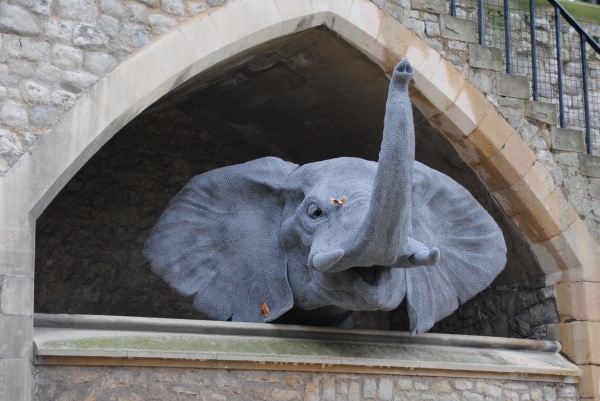
Sadly, we don’t know the name of this pachyderm – if it had one – but we do know that a couple of elephants lived in the Tower of London during the Middle Ages.

The first elephant to arrive was presented to King Henry III as a gift by King Louis IX of France.

The animal was apparently shipped across the Channel in 1255 and brought to the Tower of London by boat. A special 40 foot long wooden elephant house was built to accommodate it at the Tower.

It’s no surprise that such an exotic species attracted widespread interest. The medieval chronicler Matthew Paris was so intrigued he travelled from his monastery in St Albans to see it, noting that it was “the only elephant ever seen in England” (although it’s said that the Roman Emperor Claudius, when he arrived in Britain, came with elephants).

The elephant didn’t survive long – it died just two years after arriving in England and was buried in the Tower’s bailey. Its bones were apparently later dug up; it’s speculated this was so they could be made into receptacles for holy relics.

The elephant depicted could also represent one sent to King James I by the Spanish King in 1623 along with instructions that the poor creature should only drink wine between the months of September and April.

Made with galvanised wire, the sculpture of the elephant’s head – located in the courtyard between the Lantern and Salt Towers – is one of 13 representing some of the animal inhabitants of the Tower over the centuries. On display until 2021, ‘Royal Beasts’ is the work of artist Kendra Haste.

WHERE: Tower of London (nearest Tube station Tower Hill); WHEN: 9am to 4.30pm, Tuesday to Saturday, 10am to 4.30pm Sunday to Monday; COST: £24.70 adults; £11.70 children 5 to 15; £19.30 concessions (family tickets available; discounts for online purchases/memberships); WEBSITE: www.hrp.org.uk/toweroflondon/.

LondonLife – And so Brexit Day passes…an ending or a new beginning?…

PICTURE: Marcus Lenk/Unsplash

Lost London – The Holbein Gate…

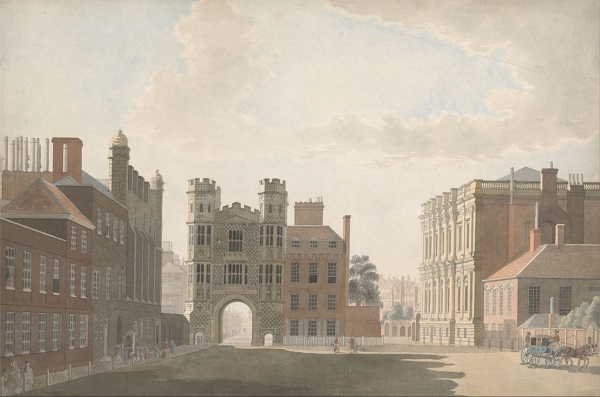
The most grand of the entrances to the now demolished Whitehall Palace, this monumental gateway – located in what is now Whitehall, at the south end of and on the other side of the road to the Banqueting House – was built in 1531-32 on the orders of King Henry VIII.

The name apparently comes from the tradition that the three story gate was designed by Hans Holbein but there is apparently some doubt that was the case.

The gate had rooms on the first and second floor with small flanking turrets to either side. It boasted a Royal Coat of Arms over the archway under the gate along with other royal emblems including the Tudor rose. There were also several busts set into roundels on the black and white chequerboard facade, possibly by Giovanni da Maiano.

King Henry VIII apparently used the chambers as a study and library (and later, it’s said, to store the wheelchairs he required late in life). Most famously, the upper room is also believed to have been the location where he secretly married Anne Boleyn on 25th January, 1533.

The upper floor was used as the Paper Office between 1672 until 1756 while the lower floor was used as lodgings with residents including the Ludovic Stewart, 2nd Duke of Lennox and Barbara Villiers, Lady Castlemaine, famed as one of the mistresses of King Charles II.

Remarkably, the building, along with the Banqueting House, survived the fire of January 1698 which destroyed most of the palace. Proposals were subsequently put forward to demolish the gate to allow better flow of traffic but these were fended off until August, 1759, when it was destroyed along with an adjacent house.

PICTURE: Whitehall Showing Holbein’s Gate and Banqueting Hall by Thomas Sandby, c1760 (now at the Yale Center for British Art)

This Week in London – Inside the world of mushrooms; Tower Bridge ‘sings’; and, ‘La Ghirlandata’ restored…

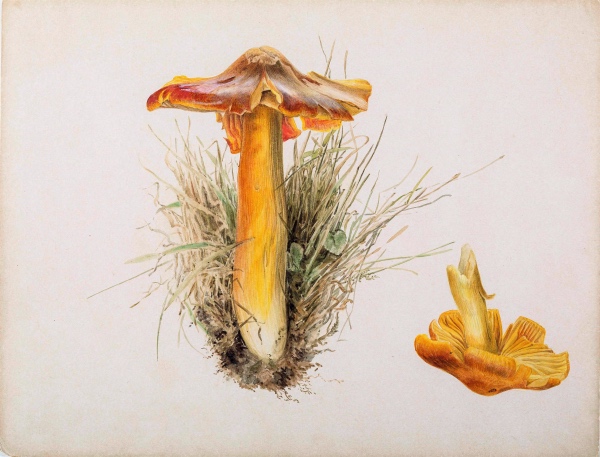
The world of mushrooms is explored in a new exhibition opening tomorrow at Somerset House. Part of the Charles Russell Speechly’s Terrace Rooms Series, Mushrooms: The art, design and future of fungi is curated by writer Francesca Gavin and features works by more than 35 artists, designers and musicians in an exploration of “the rich legacy and incredible potential of the remarkable organism, the ideas it inspires in the poetic, spiritual and psychedelic, and the powerful promise it offers to reimagine society’s relationship with the planet, inspiring new thinking around design and architecture”. Highlights include watercolours by renowned author Beatrix Potter (one of which is pictured), American artist Cy Twombly’s quasi-scientific portfolio Natural History Part I, Mushrooms (1974), and a spectacular floral display, featuring mushrooms grown in Somerset House’s former coalholes, by the London Flower School. The free exhibition, which runs until 26th April, is accompanied by a series of events. For more, see somersethouse.org.uk/mushrooms. PICTURE: Beatrix Potter, Hygrophorus puniceus, pencil and watercolour, 7.10.1894, collected at Smailholm Tower, Kelso, courtesy of the Armitt Trust

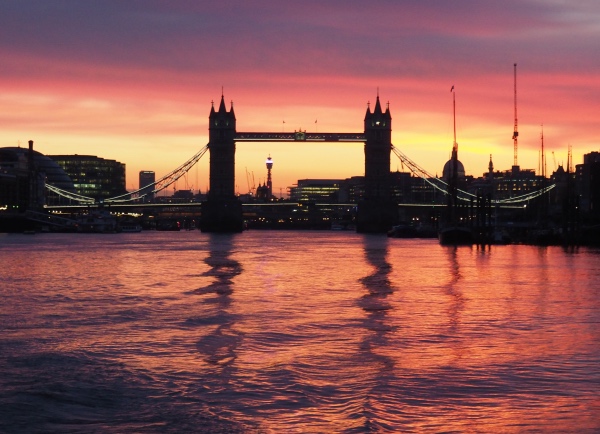
A newly commissioned film which reimagines Tower Bridge as a musical instrument is at the heart of a new exhibition which opened in the bridge’s Victorian Engine Rooms this week. Created by internationally acclaimed artist, inventor and filmmaker Di Mainstone to mark the bridge’s 125th anniversary, Time Bascule draws inspiration from Hannah Griggs, one of the first women to work at the bridge (in her case as a cook for the Bridge Master and his family between 1911-1915). The display also includes behind-the-scenes footage, storyboards and early sketches, as well as the opportunity for visitors to play a range of specially created musical instruments. Runs until March. Included in admission to the bridge. For more, see www.towerbridge.org.uk.

Dante Gabriel Rossetti’s Pre-Raphaelite masterpiece, La Ghirlandata, is being unveiled at the Guildhall Art Gallery today following a year-long restoration. William Russell, Lord Mayor of the City of London, is unveiling the portrait which was painted in 1873. Conversation work undertaken included cleaning the painting to reveal a “brighter, fresher scene with a cooler tonality”, repairing and cleaning Rossetti’s original frame, and replaced the deteriorating living canvas. The restoration was made possible thanks to a grant from the Bank of America.

Send all items for inclusion to exploringlondon@gmail.com.

10 (lesser known) monuments featuring animals in London – 7. Jim and Tycho…

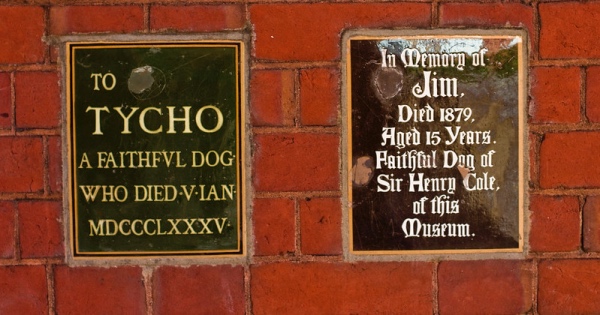
Set into a wall of the V&A’s John Madejski Garden in South Kensington are two small plaques – one dedicated to “Jim” and another to “Tycho”. Both, as one of the plaques records, were dogs, at least one of which belonged to the museum’s first director, Sir Henry Cole.

Jim was a Yorkshire terrier who died at Sir Henry’s home on 30th January, 1879, at the age of (as the plaque records) 15 years.

Sir Henry wrote in his diary on that day that “Jimmy”, who died very quietly apparently of “asthma and cold”, had been portrayed in Punch with him (although it was actually in Vanity Fair in 1871) and “was a character in the Museum”.

While Jim’s story is fairly well known, there’s a little more mystery surrounding the identity of Tycho, which the plaques records as a “faithful dog” who who died in 1885.

But according to Nicholas Smith, an archivist based at the V&A Archive and his meticulously researched blog post on the matter, Tycho is also mentioned in Cole’s diary – not as his own dog but as that of his son Alan. Indeed, one diary entry records Tycho fighting with another dog (presumably Cole senior’s) named Pickle. Which as Smith points out, begs the question of why no plaque for Pickle?

Both Jim and Tycho are believed to be buried in the garden where the plaques can be seen (which may explain the lack of a plaque for Pickle).

PICTURE: Steve and Sara Emry (licensed under CC BY-NC-SA 2.0)


LondonLife – Return of the VAULT…

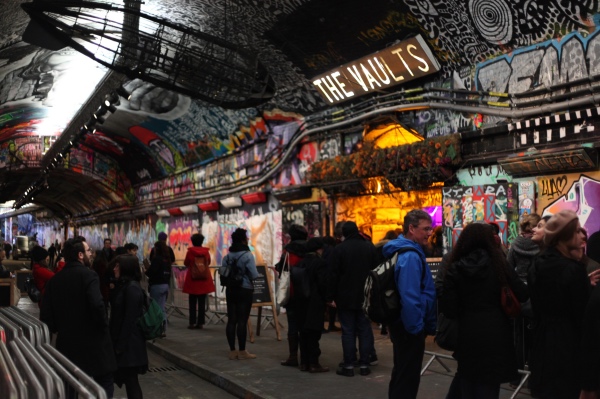
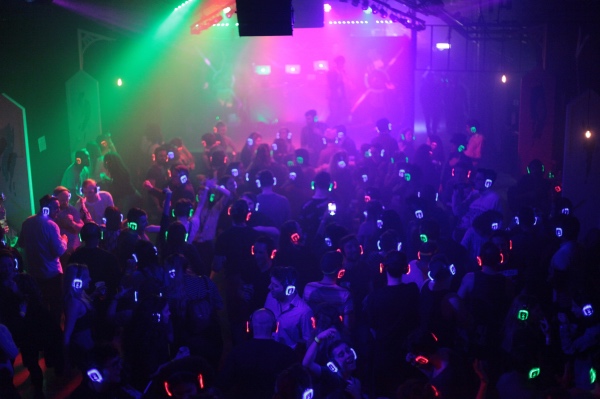
Looking for something to brighten up those grey wintry days? The VAULT Festival returns to Waterloo from today with the launch of eight weeks of shows including everything from theatre and comedy, to cabaret, immersive experiences and late night parties. One of the largest curated arts festivals in the world, it takes place over 18 different spaces located across Waterloo and South Bank with the central hub located underground in The Vaults on Leake Street. This year’s festival, which runs until 22nd March, features more than 600 shows including a diverse range of both experienced and emerging artists and, according to directors and producers Mat Burt and Andy George, “offers a platform for “underrepresented voices and stories to be heard”. The full programme and tickets are available at vaultfestival.com. PICTURES: Images fro VAULT Festival 2019.

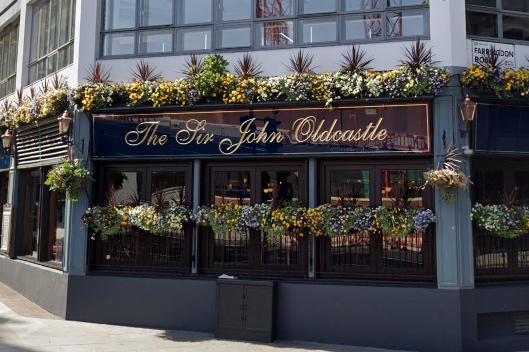
London Pub Signs – The Sir John Oldcastle…

This Farringdon pub is named after a previous tavern which stood in what had been the grounds of Sir John Oldcastle’s nearby mansion and dated back at least to the mid 17th century. 

Sir John, thought to have been the model for the Shakespearean character Sir John Falstaff, was a leader of the Lollards in the late 14th and early 15th centuries.

A trusted friend of Henry, Prince of Wales (later King Henry V), he accompanied the Prince on a military expedition to France 1411 but on returning to England was accused of heresy for his Lollard beliefs and eventually prosecuted.

Imprisoned in the Tower of London, Oldcastle escaped and launched a rebellion against the King but after the rebellion was put down was forced to live in hiding until he was eventually, in 1417, captured and subsequently executed in London.

Housed in a modern building, the pub at 29-35 Farringdon Road, which has a wealth of historical information about the area adorning its walls, is part of the Wetherspoons chain. For more, see www.jdwetherspoon.com/pubs/all-pubs/england/london/the-sir-john-oldcastle-farringdon.

Exploring London’s 100 most popular posts of all time! – Numbers 92 and 91…

And this week’s “best of” posts are:

92. Famous Londoners – Sir Robert Peel

91. LondonLife – Florence Nightingale remembered…


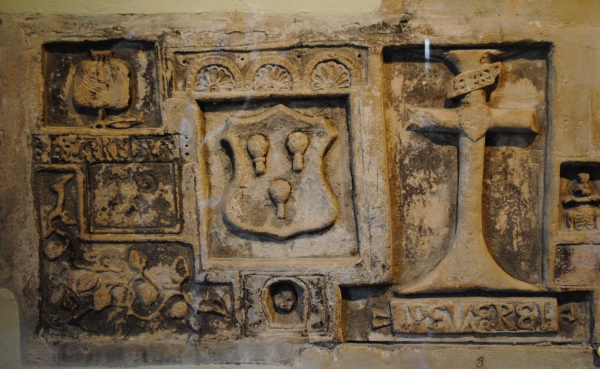
Treasures of London – “Graffito” in the Tower of London’s Beauchamp Tower…

Part of the inner defensive wall built around the White Tower during the reign of King Edward I, the Tower of London’s Beauchamp Tower was used to house prisoners at various times in its history (in fact, it’s name comes from one of them – Thomas Beauchamp, the Earl of Warwick, who was imprisoned here by King Richard II at the end of the 14th century). 

Carved into the walls of the tower’s chambers are a series of inscriptions, known as ‘graffito’ (known to you and I as graffiti), which were carved by some of the prisoners, mostly between the years 1532 and 1672.

The include an elaborate family memorial carved for John Dudley, eldest son of the Duke of Northumberland. He and his three brothers (including a young Robert Dudley, later the Earl of Leicester) were imprisoned by Queen Mary I for their father’s attempt to put Lady Jane Grey on the throne.

Interestingly there’s a simple inscription which just says ‘Jane’ nearby, one of a couple in the tower, although its not generally believed she carved this.

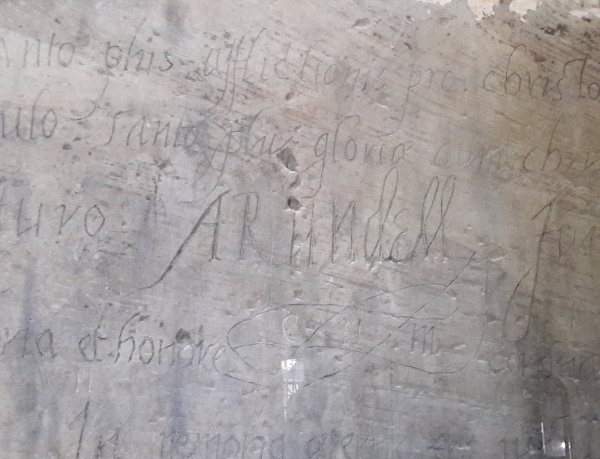
The name ‘Arundell’ is another of the inscriptions – it refers to Philip Howard, the Earl of Arundel, who was imprisoned here by Queen Elizabeth I for 10 years. Along with his name are the words “The more affliction we endure for Christ in this world, the more glory we shall get with Christ in the world to come”.

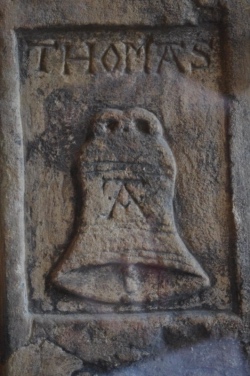
The name Thomas can be seen carved above a bell bearing the letter ‘A’. It’s believed to refer to Thomas Abel, chaplain to Katherine of Aragon, the ill-fated first wife of King Henry VIII. The king has Abel imprisoned here after he declared the King’s divorce of the Katherine unlawful.

The Beauchamp Tower isn’t the only location of graffiti in the Tower of London – in the Salt Tower, for example, can be found the image of a wounded foot, a Catholic symbol representing the sacrifice of Jesus Christ.

WHERE: Tower of London (nearest Tube station Tower Hill); WHEN: 9am to 4.30pm, Tuesday to Saturday, 10am to 4.30pm Sunday to Monday; COST: £24.70 adults; £11.70 children 5 to 15; £19.30 concessions (family tickets available; discounts for online purchases/memberships); WEBSITE: www.hrp.org.uk/toweroflondon/.

PICTURES:  Above – some of the graffiti seen on the Beauchamp Tower walls (David Adams); Middle – An ‘A’ carved on a bell with the word ‘Thomas’, said to refer to Thomas Abel, chaplain to Queen Katherine of Aragon (dvdbramhall – licensed under CC-BY-NC-ND 2.0); Below – The name Arundel (Pjposullivan1 – licensed under CC BY-SA 2.0/imaged cropped)

This Week in London – 500 years of pregnancy portraits; Picasso and Paper; and, The Cato Street Conspiracy explored…

Representations of the pregnant female body across 500 years of portraiture are the subject of a major new exhibition opening at the Foundling Museum on Friday. Portraying Pregnancy: From Holbein to Social Media features paintings, prints, photographs, objects and clothing from the 15th century to the present day as it explores the different ways in which pregnancy was – or wasn’t – represented as well as how shifting social attitudes have impacted on depictions of pregnant women. Highlights include Holbein’s portrait of Thomas More’s daughter Cicely Heron, the maternity dress that Princess Charlotte wore for an 1817 portrait painted by George Dawe shortly before her death and William Hogarth’s The March of the Guards to Finchley (1750), which features a heavily pregnant woman. There’s also a previously unseen work by Jenny Saville, Electra (2012-2019), Marc Quinn’s Alison Lapper (8 Months) (2000) and Lucien Freud’s Girl with Roses (1947-8) which depicts his first wife Kitty. Runs until 26th April. Admission charge applies. For more, see www.foundlingmuseum.org.uk.

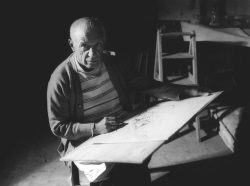
The most comprehensive exhibition ever held focused on Pablo Picasso’s imaginative and original uses of paper opens at the Royal Academy of Arts this Saturday. Held in the Main Galleries, Picasso and Paper features more than 300 works from across the span of the artist’s career as it explores the “universe of art” he invented involving paper. Highlights include Women at Their Toilette (winter 1937-38) –  an extraordinary collage of cut and pasted papers measuring 4.5 metres in length (being exhibited in the UK for the first time in more than 50 years), outstanding Cubist papiers-collés such as Violin (1912), and studies for Les Demoiselles d’Avignon (1908) such as Bust of Woman or Sailor as well as drawings like Self-portrait (1918) and Seated Woman (Dora) (1938). His masterpiece of the Blue Period, La Vie (1903) will also be in the display as well as his Cubist bronze Head of a Woman (Fernande) (1909) and monumental sculpture Man with a Sheep (1943), and the 1955 film Le Mystère Picasso, which records Picasso drawing with felt-tip pens on blank newsprint. Runs until 13th April. Admission charge applies. For more, see www.royalacademy.org.uk. PICTURE: Key 486, Pablo Picasso drawing in Antibes, summer 1946. Black-and-white photograph, Photo © Michel Sima / Bridgeman Images © Succession Picasso/DACS 2019

On Now – The Cato Street Conspiracy: A Terrorist Plot in Georgian London. This exhibition at the City of London’s Guildhall Library draws on contemporary accounts and pictures to tell the story of the conspiracy and its participants. The conspiracy, which was uncovered in early 1820, involved a plot to kill the British Prime Minister and Cabinet Ministers. Thirteen of the conspirators were arrested and five executed while five others were transported to Australia. A policeman was killed in the operation to arrest those responsible. This free exhibition runs until 30th April. For more follow this link.

Send all items for inclusion to exploringlondon@gmail.com.

10 (lesser known) monuments featuring animals in London – 6. Sam the cat…

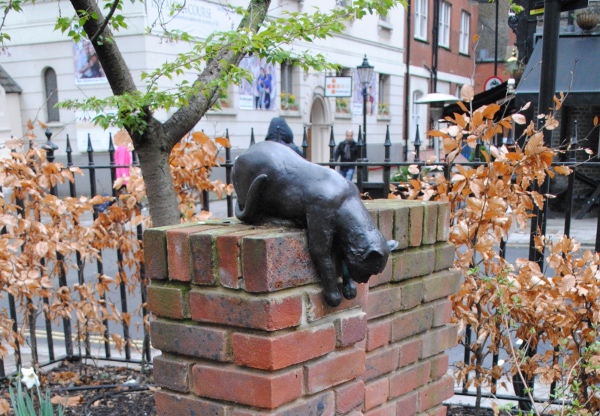
Captured preparing to jump off a red brick wall, this small playful statue of a domestic cat named Sam can be found in the south-west corner of Queen Square Gardens in Holborn. 

The bronze statue actually commemorates Patricia Penn (1914-1992), a former resident in the square who was a nurse, “champion of local causes” and member of the Queen Square Resident’s Association. The statue was donated by the local community in Penn’s memory.

As is clear from the monument, Penn was also a cat lover. Sam was, of course, one of her pet cats.

Sadly, the original version of Sam – which was installed in 2002 to mark the 10th anniversary of Penn’s death, was stolen in 2007. But a replacement was installed in 2009 – this time with steel rods running into the bricks to prevent it being taken again.


LondonLife – Four London sites heritage listed in 2019…

We’ve entered a new year but before we leave 2019 completely behind, here’s quick look at four sites in London that were put on the National Heritage List for England last year…

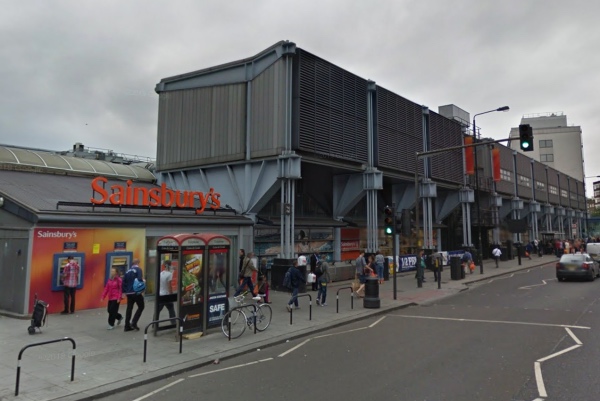
1. Sainsbury Supermarket, Camden TownListed at Grade II, it was the first purpose-built supermarket to be placed on the National Heritage List. The store was built in 1986-88 as part of Grand Union Complex designed by architectural practice Nicholas Grimshaw & Partners.

2. The Curtain Playhouse, Shoreditch. A scheduled monument, the theatre dates from about 1577 and hosted performances of Romeo and Juliet during Shakespeare’s lifetime, as well as Ben Jonson’s Every Man in His Humour with Shakespeare himself listed as a performer. Archaeological investigations in the years from 2011-16 revealed parts of the stage as well as the wings, galleries and yards and 17th century structures which showed the later use of the site as tenement housing.

3. Nursemaid’s Tunnel, Regent’s Park. Grade II listed, this is one of the earliest surviving pedestrian subways in London. It was built under New Road (now Marylebone Road) – linking Park Crescent with gardens in Park Square – in 1821 after residents campaigned for its construction due to the dangers of navigating the busy road (especially for children being taken to the playground by their nursemaids).

4. Cabman’s Shelter, corner Northumberland Avenue and Embankment Place. Grade II-listed, this still-in-use shelter was built in 1915 on the orders of the Cabmen’s Shelter Fund. It was based on Maximilian Clarke’s original design of 1882 and is one of just 13 examples to survive in London.

PICTURE: Google Maps.

A Moment in London’s History – The National Trust acquires Eastbury Manor House…

This month (12th January to be exact) marks 125 years since the National Trust was founded by Octavia Hill, Sir Robert Hunter and Canon Hardwicke Rawnsley. So we’re taking a quick look at another, somewhat related, milestone – the acquisition of the Trust’s first London property.

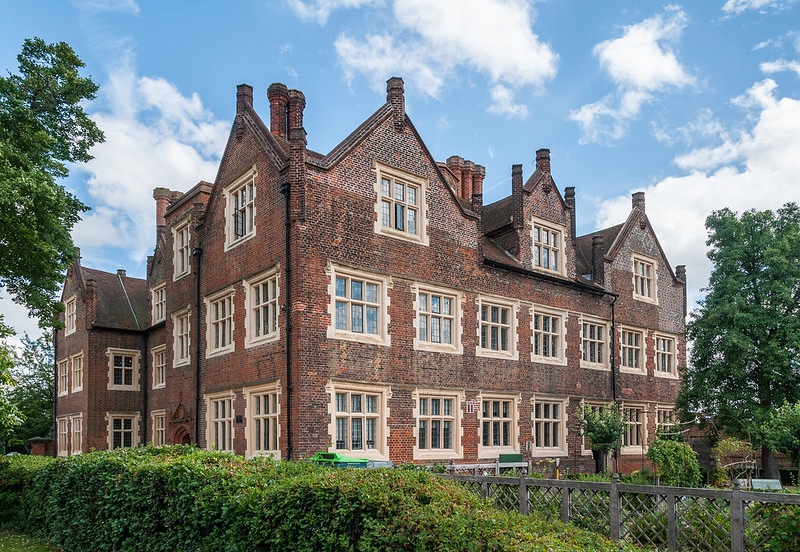
Located in Barking, Eastbury Manor House, initially known as Eastbury Hall, was built between 1560 and 1573 (during the reign of Queen Elizabeth I) for Clement Sisley on land which once belonged to Barking Abbey.

The H-shaped house and surrounding estate remained in the family until 1629 after which it passed through the hands of a number of well-to-do families, gradually falling into disrepair.

By the early 19th century, decay had led to one of the property’s unique octagonal stair turrets being pulled down and wooden flooring and fireplaces removed. The ground floor was being used as a stable and dairy.

The property struggled on into the early 20th century when it was threatened with demolition. The Society for the Protection of Ancient Buildings, recognising its significance as a rare example of mid-16th century brick built gentry house, lobbied for it to be saved and, working alongside the National Trust, ran a campaign to raise funds for its acquisition.

The house – and surrounding gardens – were acquired by the Trust for the nation in 1918 and then, in 1934, leased to Barking Borough Council. The following year the property became the home of Barking Museum.

It was awarded Grade I-listed status in 1954 and is now managed by the Borough of Barking and Dagenham. A restoration program in recent years has seen the addition of a permanent exhibition on the property’s history.

WHERE: Eastbury Manor House, Eastbury Square, Barking (nearest Tube station is Upney); WHEN: From 13th  February, 10am to 4pm Thursdays and Fridays and, from 22nd March, 11am to 4pm Sundays; COST: £5.20 adults/£2.60 children and concessions/£9.30 family (LBBD residents, SPAB and National Trust members free); WEBSITE: www.eastburymanorhouse.org.uk.

PICTURE: David Nicholls (licensed under CC BY-NC 2.0)

Exploring London’s 100 most popular posts of all time! – Numbers 94 and 93…

Our countdown continues…

94. Lost London – York Watergate

93. A Moment in London’s History – The execution of William Wallace…


Lost London – Button’s Coffee House…

This Covent Garden establishment was founded by Daniel Button, a former servant in the household of the Countess of Warwick, in about 1712.

Button was apparently set up in the Russell Street business, located close to the Covent Garden Market, by newspaper writer and publisher Joseph Addison (who would marry the countess, Charlotte, in 1716) who, setting the example by giving the new premises his personal patronage, ensured it attracted a clientele of “wits” and intellectuals.

These had apparently previously frequented Will’s Coffee House which was located across the street from it but after the death of John Dryden, who was at the centre of this cloud, in 1700, the reputation of Will’s dropped. Enter Button’s.

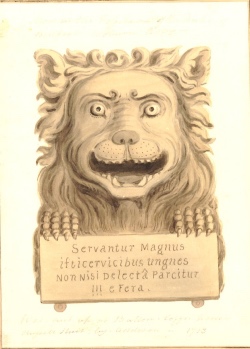
The coffee house was particularly famous for a white marble letterbox in the shape of a lion’s head, said to have been designed by William Hogarth, which was nailed to the wall.

The concept had been imported from Venice where stone letterboxes, often carved into the shape of grotesque heads, were used by the governing body known as the Council of Ten to gather intelligence (and which informers would use to accuse fellow citizens of misdeeds).

People were encouraged to throw letters, limericks and other witty ephemera into the lion’s mouth, the best of which were then selected and published in Addison’s Guardian newspaper each week (Addison was also, famously, co-founder of The Spectator).

Daniel Button died in 1730 and the coffee house closed in 1751 after which the lion’s head was taken to the Shakespeare Tavern before going on to grace several establishments before the Duke of Bedford apparently took it to his country house at Woburn.

PICTURE: A carved lion’s head, with a tablet on which is engraved “Servantur Magnus ifticerbicibus ungues non nisi Delectâ Parcitur !!! e Fera”; originally displayed at Button’s coffee house. c1850 Watercolour, possibly by Thomas Hosmer Shepherd © The Trustees of the British Museum (licensed under CC BY-NC-SA 4.0)

This Week in London – The British Museum gets arty; music festivals in Georgian Britain; the story of Tangerine Dream; and, migration at Dulwich…

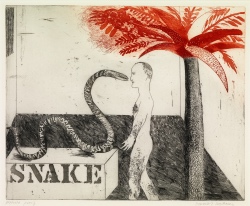
• Artworks by the likes of Pablo Picasso, Henri Matisse, Lucian Freud, Bridget Riley, David Hockney and Visa Celmins are on show in a new exhibition at the British Museum. Reflecting artistic developments in the past 100 years of modern art, Living with art: Picasso to Celmins features 30 prints and drawings. It showcases highlights from the wide-ranging collection of Alexander Walker (1930–2003), a longstanding film critic for London’s Evening Standard newspaper, which was bequeathed to the British Museum in 2004. The exhibition can be seen at the museum until 5th March before heading off on tour. Admission charge applies. For more, see www.britishmuseum.org. PICTURE: David Hockney (b. 1937), ‘Jungle Boy’ (1964) Etching and aquatint in black and red on mould-made paper © David Hockney Photo Credit: Richard Schmidt.

Music festivals in Georgian Britain – from the Handel Commemoration of 1784 to the Crystal Palace concerts of the late 19th century – are explored in a new exhibition at the Foundling Museum in Bloomsbury. Music Festivals in Georgian Britain looks at the logistics behind the organisation of the concerts which followed on in the tradition of benefit concerts for charities as well as the expectations of audiences. Runs until 14th September. Admission charge applies. For more, see https://foundlingmuseum.org.uk.

The “extraordinary story” of German band Tangerine Dream is told in a new exhibition opening at the City of London’s Barbican Music Library today. Tangerine Dream: Zeitraffer features photographs, previously unpublished articles, video clips, and original synthesizers as it tells the story of the band – credited with laying the foundation for the Ambient and Trance music styles – from its founding in 1967 and the release of its first album, Electronic Meditation, in 1970 through to the latest album, Recurring Dreams, last year. The band, which has released more than 160 albums, has also composed the scores for more than 60 Hollywood films including Michael Mann’s Risky Business and Ridley Scott’s Legend as well as Firestarter, based on the Stephen King novel. In 2013, they also wrote the score for the record-breaking video game, Grand Theft Auto V, and their music has appeared in recent Netflix series, Stranger Things, Black Mirror and Mr Robot. Runs until 2nd May. Admission is free.

The stories of six “community curators” – each of whom has personal experience of migration – are at the centre of a new display at the Dulwich Picture Gallery. Journeys, which explores themes of identity, belonging, migration and London’s multiculturalism, examines the contemporary relevance of works by the likes of Poussin, Rubens, Canaletto and Van Dyck against the backdrop of the life stories of the curators who, aged between 29 and 69, have a combined heritage spanning eight countries including Yemen, Sri Lanka, Italy, Pakistan and Ireland. Opens next Tuesday (21st January) and runs until 24th June with a special free late opening on 19th June during the final week which coincides with Refugee Week. For more, see www.dulwichpicturegallery.org.uk.

Send all items for inclusion to exploringlondon@gmail.com.

10 (lesser known) monuments featuring animals in London – 5. Jamrach’s Tiger…

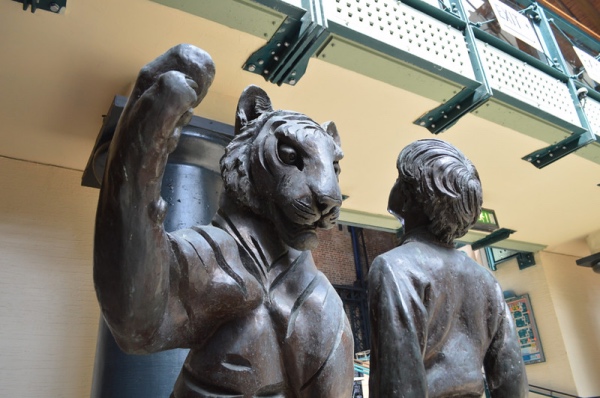
This bronze statue located at Tobacco Dock in Wapping commemorates an incident in 1857 in which a newly arrived Bengal tiger escaped from its wooden crate, terrorised the local population and absconded with a boy in its mouth.

The tiger, along with various other animals, had just arrived at a premises on Betts Street, just off the Ratcliffe Highway, which was owned by exotic animal trader Charles Jamrach, the man behind Jamrach’s Animal Emporium, when it made its break for freedom.

The boy, variously said to be seven, eight or nine-years-old, had apparently approached the tiger to pet it when the tiger took the boy by his jacket and carried him off in its mouth, presumably looking for a quiet place to consume its prey.

Jamrach followed, subsequently bailing up the tiger and, thrusting his cane into the big cat’s throat, forcing it to let go of the no-doubt terrified boy.

The tiger, which was guided back to its cage after the event, was subsequently sold for £300 to George Wombwell and went on to become a popular tourist attraction in his travelling menagerie.

Despite being relatively unharmed, the boy (variously described as seven, eight or nine, however, sued Jamrach and was awarded some £300 in damages – the same amount Jamrach had sold the animal for.

The statue is located near where the event happened by Tobacco Dock’s Pennington Street entrance.

PICTURE: Matt Brown (licensed under CC BY 2.0)