10 sites from Victoria and Albert’s London – A recap…

Before we launch a new Wednesday series, we pause to recap our recent look at significant sites in Queen Victoria and Prince Albert’s London, a series we ran in commemoration of the 200th anniversary of both the royal couple’s births…

1. Chapel Royal, St James’s Palace…

2. Buckingham Palace…

3. Constitution Hill…

4. Hyde Park…

5. West End theatres…

6. The South Kensington Museum…

7. The Palace of Westminster…

8. Paddington Railway Station…

9. Prince Consort’s Model Lodge, Kennington

10. Mount Street busts…


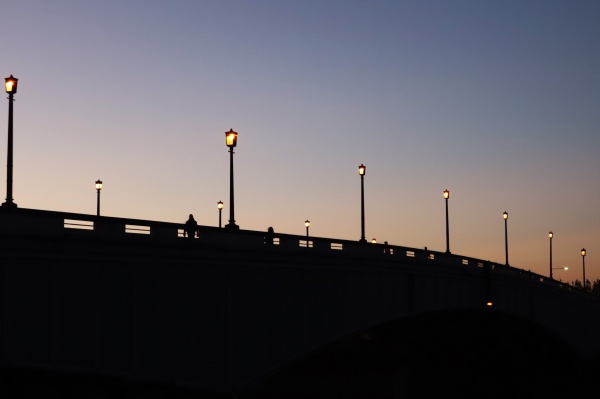
LondonLife – Wandsworth Bridge at sunset…

Wandsworth Bridge over the River Thames in west London. It was opened in 1940, replacing an earlier bridge which was demolished a couple of years before. PICTURE: Frederick Tubiermont/Unsplash

Famous Londoners – Nicholas Hawksmoor…

Architect Nicholas Hawksmoor was a key figure in the creation of the fabric of London as we know it, working alongside Sir Christopher Wren as well as alone, and responsible for numerous works with can still be seen in London today.

Hawksmoor was born into a yeoman farming family in Nottinghamshire in around 1661-62 but little else is known of his early life. He probably received a fairly basic education but is believed to have been taken on a clerk to a justice in Yorkshire before, thanks to encountering a decorative plasterer by the name of Edward Gouge, travelling to London.

There, Hawksmoor was introduced to Wren who, agreed to take on the young man as his personal clerk at just the age of 18. He moved through a number of junior positions in Wren’s household before becoming deputy surveyor at Winchester Palace – between 1683 and 1685 – under Wren.

He went on to work with his mentor on numerous further projects; these included Chelsea Hospital, St Paul’s Cathedral, Hampton Court Palace and Greenwich Hospital as well as Kensington Palace where, thanks to Wren’s support, he was named clerk of works in 1689 (as well as deputy surveyor of works at Greenwich). He remained in these posts for some 25 years before he was removed thanks to political machinations (although he later returned to the secretaryship).
Hawksmoor also worked with Sir John Vanbrugh, assisting him in building Blenheim Palace, taking over command of the job in 1705. Vanbrugh made him his deputy and Hawksmoor later succeeded him as architect at Castle Howard in Yorkshire, designing a number of monuments in the gardens, including the great mausoleum.

Hawksmoor is described as one of the masters of the English Baroque style – Easton Nelson in Northamptonshire, which he designed for Sir William Fermor, is an exemplar of his work (and the only country house for which he was sole architect, although it remain uncompleted).

Hawksmoor also worked on buildings for the university at Oxford and while All Soul’s College was among buildings he completed, many of his proposed designs were not implemented for various reasons (as were grand plans he had for the redesign of central Oxford).

From 1711, Hawksmoor was busy again in London where, following the passing of an Act of Parliament, he was appointed as one of the surveyors to a commission charged with overseeing the building of 50 new churches in London.

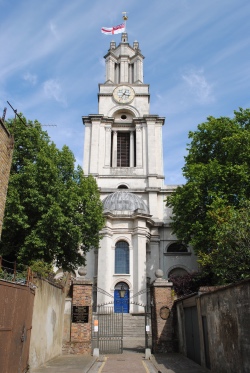
The commission only completed 12 churches, but half of them were designed by Hawksmoor (and he collaborated with fellow surveyor John James on two more). Hawksmoor’s completed churches include St Alfege in Greenwich, St George’s, Bloomsbury, Christ Church in Spitalfields, St George in the East in Wapping, St Mary Woolnoth, and St Anne’s Limehouse (the churches he collaborated on include James are St Luke Old Street and the now demolished St John Horsleydown).

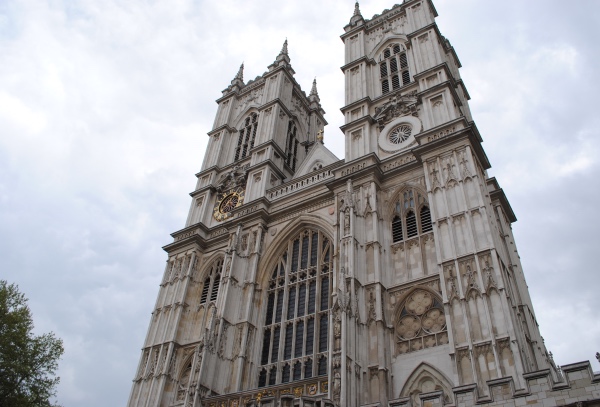
In 1723, following Wren’s death, he was appointed Surveyor to Westminster Abbey and, as well as aspects of the interior (some of which still survive to this day) designed the landmark west towers (although they weren’t completed until after his death).

Hawksmoor died at his home in Millbank on 25th March, 1736, from what was described as “gout of the stomach”, having struggled with his health for a couple of decades previously. He was buried at the now deconsecrated church in Shenley, Hertsfordshire.

Hawksmoor was survived by his wife Hester by a year, and a daughter, Elizabeth.

PICTURES: Top – The West Towers of Westminster Abbey; Right – St Anne’s, Limehouse. (David Adams)
This Week in London – Prince Albert explored; sheep at Hampstead Heath; and, the Tate’s own show their works…

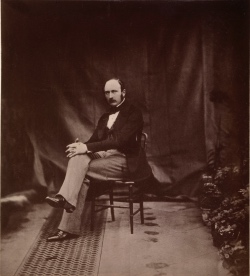
More than 17,500 photographs, prints and private and official papers relating to Prince Albert, consort of Queen Victoria, have been published online. Launched last week, the new website Prince Albert: His Life and Legacy sheds fresh light on Albert’s role as Queen Victoria’s unofficial private secretary and as guide and mentor to some of the greatest national projects of his day as well as his various roles as a university chancellor, art historian, collector, and art and architecture patron. The website is part of the Prince Albert Digitisation Project which, by the end of 2020, will see some 23,500 items from the Royal Archives, the Royal Collection and the Royal Commission for the Exhibition of 1851 published online. PICTURE: After Roger Fenton, Prince Albert, May, 1854, 1889 copy of the original (Royal Collection Trust/ © Her Majesty Queen Elizabeth II 2019).

Sheep have returned to Hampstead Heath for a week-long trial of an initiative aimed at replacing mowing with more natural grazing. The pilot project, which is being managed by the City of London Corporation in partnership with Heath & Hampstead Society, Heath Hands, Historic England, Mudchute Park & Farm and Rare Breeds Survival Trust, involves five sheep and will focus on The Tumulus on the Heath, an ancient Roman monument. If successful, the sheep – which include Oxford Down and Norfolk Horn – will take their grazing talents to other areas.

Staff from the Tate galleries are showcasing their own artworks in a new free exhibition at the Tate Modern. The first Tate Staff Biennale, which can be seen for free in Tate Exchange on level five of the Blavatnik Building, features the work of 133 staff members from all four Tate Galleries – Tate Britain, Tate Modern, Tate Liverpool and Tate St Ives – and has been curated by the Inside Job Collective – a group of Tate staff dedicated to championing the work of colleagues who are also practicing artists. The biennale is inspired by ‘movement’, the theme of this year’s Tate Exchange, an experimental platform at the Tate Modern and Tate Liverpool which brings together the public, artists and associate partner organisations. Can be seen until 3rd September. For more, see www.tate.org.uk.

Send all emails for inclusion to exploringlondon@gmail.com.

10 sites from Victoria and Albert’s London – 10. Mount Street busts…

There are numerous monuments commemorating Queen Victoria and Prince Albert in London, including the well-known Albert Memorial and Queen Victoria Memorial outside Buckingham Palace

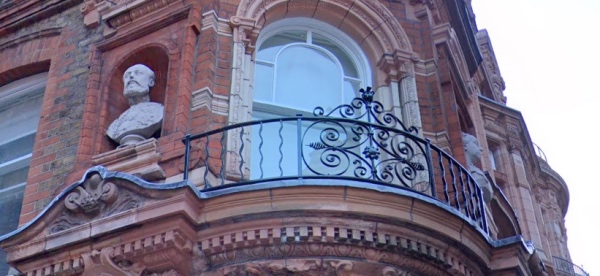
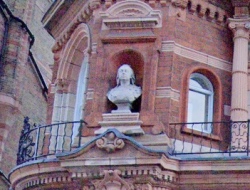
But for this series, we’re finishing with a look at a couple of much lesser – and certainly less grand – surviving monuments which adorn a Mayfair building. But it is one of the rare memorials in London which feature both the Queen and the Prince (albeit looking in different directions).

Located at 121 Mount Street (on the corner with Mount Street Mews), is a Victoria-era building now housing the Delfino Pizzeria. The facade, on the first floor, features a bust of Queen Victoria looking down on Mount Street and a bust of Prince Albert looking down on Mount Street Mews.

The Grade II-listed building on which the busts are located is part of a development constructed in the mid-1880s by James Trant Smith. The sculptor is apparently unknown.

Obviously, Prince Albert died in late 1861, well before the building was constructed, but Queen Victoria lived until 1901.

PICTURES: Google Maps.

That’s it for the current series – we’ll be launching a new Wednesday series in a couple of weeks.

This Week in London – Beasts at Smithfield; Food at Hampton Court; and ‘The Barking Stink’…

Smithfield will play host to a “fantastical” free street party in which animals take centrestage this Bank Holiday Sunday. Curated by the Museum of London, Culture Mile’s Smithfield Street Party: A Beastly Adventure features music, performances, workshops, and games with families able to bring their four legged canine friends to join in the fun. Highlights include aerialists swinging from the rafters of the markets, a ‘beastly den’ in the Rotunda Garden, food, both local and global, in a ‘watering hole’ located in Long Lane and a host of free activities around the West Smithfield Rotunda including London’s biggest ‘play street’. The event runs from 11am to 7pm. Head to www.culturemile.london/festivals/smithfield-street-party.

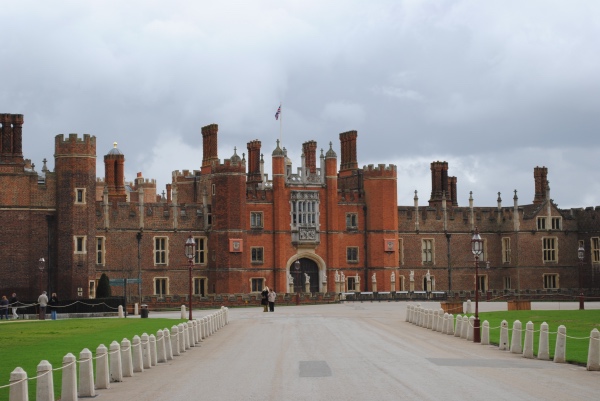
The Hampton Court Palace Food Festival is on this weekend featuring plenty of mouth-watering opportunities for your tastebuds. As well as an array of street food from more than 100 artisan producers and companies, there will be cookery demonstrations from chefs and experts including Michel Roux Jr, Nadiya Hussain and Rhiannon Lambert and live music, all set in the palace’s East Front Gardens. Admission is included in palace entry. The festival runs over Saturday, Sunday and Monday from 10am to 6pm. For more, including the programme of events, head to www.hrpfoodfestivals.com/hampton-court-palace/whats-on/the-kitchen.

The smells and stenches that tell the story of Barking’s industrial past are the subject of outdoor exhibitions opening at Valence House Museum in Dagenham and outside the National Theatre on South Bank this Saturday. The Barking Stink, being held as part of this year’s Totally Thames festival, takes a journey into the past through smell when, from the mid-19th century factories including those producing bitumen, asphalt, paint, chemicals and fertiliser joined with the iron foundries, breweries, soap factories and timber mills, not to mention the smell of fish, already found around Barking Creek. Runs at Valence House until 6th November and on South Bank until 5th October. For more, head here.

Send all items for inclusion to exploringlondon@gmail.com.

10 sites from Victoria and Albert’s London – 9. Prince Consort’s Model Lodge, Kennington

The Crystal Palace was the most famous remnant of the 1851 Great Exhibition but there is another less grand monument – and both Prince Albert and Queen Victoria had a connection to it.

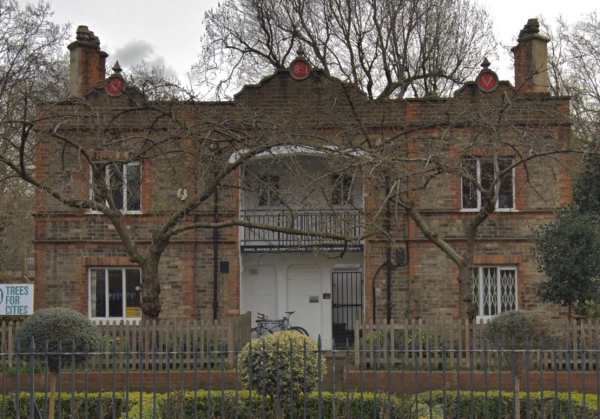
Originally constructed for display at the 1851 Great Exhibition in Hyde Park, the Prince Consort Model Lodge, also known as Prince Albert’s Model Cottage, was designed by architect Henry Roberts for the Society for Improving the Conditions of the Labouring Classes.

Prince Albert was president of the society which turned to him for support when it was initially refused permission to build the model home in the exhibition’s grounds and, as a result, it was eventually agreed it could be build close to them at the Knightsbridge Cavalry Barracks.

The two storey red brick cottage (the bricks were hollow, an innovation aimed at making the homes sound-proof and fire-proof as well as cheaper to build) actually contained homes for four families – each with a living room, a scullery, a parent’s bedroom and two other bedrooms as well as a water closet.

Among the estimated 250,000 people who visited the homes were Queen Victoria – who did so on 12th July, 1851, lavishing praise on her husband’s project – as well as writer Charles Dickens and philanthropist Angela Burdett Coutts.

Following the closure of the exhibition, the home was dismantled and rebuilt on the edge of Kennington Park in 1853 (the park became a public recreation ground the following year and was subsequently the first public park in south London). It can still be seen on the Kennington Park Road side of the park today with improvements including the addition of a porch on the rear.

Interestingly, the cottage is decorated with mosaic tiles featuring intertwined ‘V’s’ and ‘A’s’ – the initials of the royal couple, a motif which is repeated in brickwork on the cottage’s sides. There’s also an inscription on the front which reads ‘Model houses for families • Erected by HRH Prince Albert’.

The model cottage, which has previously served as a home for the park’s superintendent, has been the headquarters of Trees for Cities since 2003. It’s also been featured on a new British stamp this year, among a series marking the 200th anniversary of the birth of the Prince.

And, yes, the design was adopted for homes built in several other locations including Stepney and Kensington in London and Hertfordshire as well as in locations overseas including The Hague, St Petersburg and Brussels.

PICTURE: Google Maps


LondonLife – Album hunt…

Taken in Lewis Cubitt Square, King’s Cross. PICTURE: Clem Onojeghuo/Unsplash

London Pub Signs – The Fitzroy Tavern…

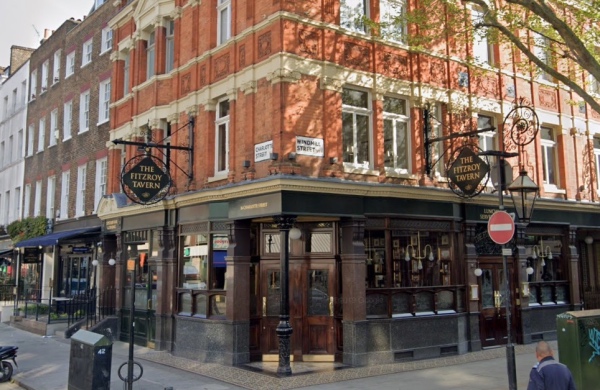
This London institution, located at 16 Charlotte Street in Fitzrovia, is famous for its association with Bohemians and intellectuals including artists Augustus John and Jacob Epstein, and writers Dylan Thomas and George Orwell, all of whom frequented the pub.

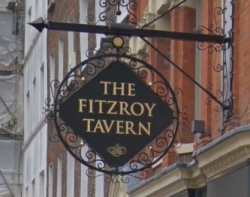
The name of the pub, which is from where Fitzrovia gets its name, comes from the Fitzroy family, the Dukes of Grafton, who owned much of the land in the area.

More specifically it was Charles Fitzroy, 1st Baron Southampton and the great-grandson of the first duke (Henry Fitzroy, an illegitimate son of King Charles II), who first developed the northern part of the area, building Fitzroy Square (Fitzroy Street also carries the family name as does Grafton Way).

The pub apparently started life as a coffee house in the early 1880s but had been converted into an establishment where stronger drinks were served in 1897. It was originally known as The Hundred Marks but rebranded The Fitzroy Tavern in 1919.

Other luminaries associated with the pub have included Nina Hamnett, the so-called ‘Queen of Bohemia’, her friend American poet Ezra Pound, MPs Michael Foot and Barbara Castle, and, the infamous occultist Aleister Crowley.

Thanks to the man responsible for converting the establishment into a pub, proprietor Judah ‘Pop’ Kleinfeld, the establishment was also the birthplace of a charity called Pennies from Heaven which raised money for underprivileged children.

The story goes that having witnessed the loser of a darts match throw his dart into the ceiling in exasperation, Kleinfeld came up with the idea of providing customers with darts which had little paper bags attached for people to put small change in before throwing them at the ceiling (and the money then collected for the charity).

Now part of the Samuel Smith chain, the pub which sits on the corner with Windmill Street, has undergone an award-winning refurbishment in recent years with its original Victorian-era look restored including polish mahogany partitions with etched glass.

PICTURES: Courtesy of Google Maps.

This Week in London – Extinction Rebellion at the V&A; and, helping the homeless in the City of London…

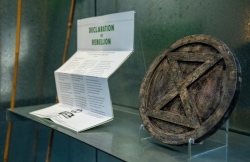
Objects relating to climate change protest group Extinction Rebellion have gone on display at the V&A. The items, which can be seen in the V&A’s Rapid Response Collecting Gallery, range from the open source ‘Extinction Symbol’ created by street artist ESP in 2011 and adopted by the group, known as XR, in 2018 through to the first ‘Declaration of Rebellion’ pamphlet and flags carried during demonstrations. The objects – which also include a child’s high-vis jacket worn during a peaceful XR protest which has gone on display at the V&A Museum of Childhood in Bethnal Green – were given by the Extinction Rebellion Arts Group, a coalition of graphic designers, artists and activists responsible for XR’s design programme. The exhibition is free. For more, see www.vam.ac.uk. PICTURE: © V&A London

The City of London has launched an alternative giving campaign aimed at helping the City’s homeless and rough sleepers, establishing four contactless card points where people can donate £3 a time. The contactless devices, which donate the money to homelessness charity Beam, are located at the City of London Information Centre in St Paul’s Churchyard, the Barbican Library, the Tower Bridge’s engine room and the Guildhall West Wing reception window. The campaign will run for three months.

Send all items for inclusion to exploringlondon@gmail.com.

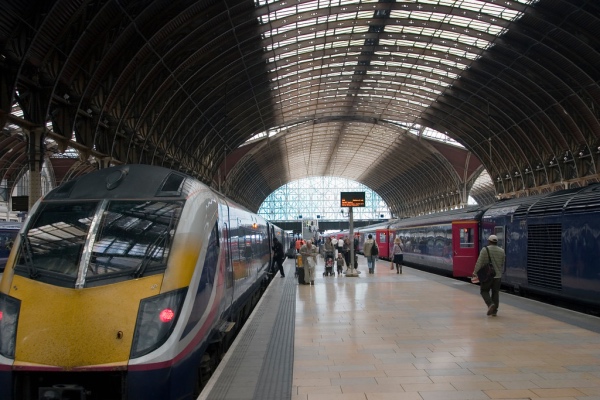
10 sites from Victoria and Albert’s London – 8. Paddington Railway Station…

Queen Victoria was a monarch known for breaking records and, thanks to her rule being in an age when technology was advancing at an incredible pace, performing royal-related “firsts”.

Among the latter is the fact that the Queen was the first British monarch to travel by train – a feat she performed with Prince Albert by her side on 13th June, 1842. It was he, who having first travelled on a train in 1839, had encouraged the rather nervous 23-year-old to make the journey (which she apparently agreed to undertake only two days before she actually did).

Travelling in a specially adapted “royal saloon” decorated with flowers, the royal couple travelled on the Great Western Railway, leaving Slough, which they had travelled to from Windsor Castle, at noon and arriving at London’s Paddington Station some 25 minutes later. Queen Victoria later wrote that there was no dust or great heat during the journey which, in fact, was “delightful and so quick”.

The train – which was pulled by the Firefly-class steam engine Phlegethon – was driven by Sir Daniel Gooch who was assisted by engineer Isambard Kingdom Brunel, builder of the railway. The Queen’s carriage was sandwiched in between six other carriages and trucks to act as a buffer in case of an accident.

On arriving at Paddington (at a temporary building which had been opened in 1838 and which would be replaced in 1854), the Queen was greeted by railway officials and their families along with a detachment of hussars on a platform covered with a red carpet. Crowds quickly grew and the royal couple were then escorted to Buckingham Palace.

The Queen would go on to regularly use railways as she travelled about Britain and even had a special signal installed on the roof of the royal carriage so the driver could be instructed to slow down as required.

Interestingly, the current Queen – Elizabeth II – and Prince Philip re-enacted the journey in 2017 to mark its 175th anniversary. They were accompanied by Isambard Thomas, the great, great, great grandson of Brunel and Gillian White, great, great grand-daughter of Gooch.

PICTURE: Inside Paddington Station today (Jimmy Harris/licensed under CC BY 2.0)

LondonLife – ‘Ship of Tolerance’ docks in the Thames…

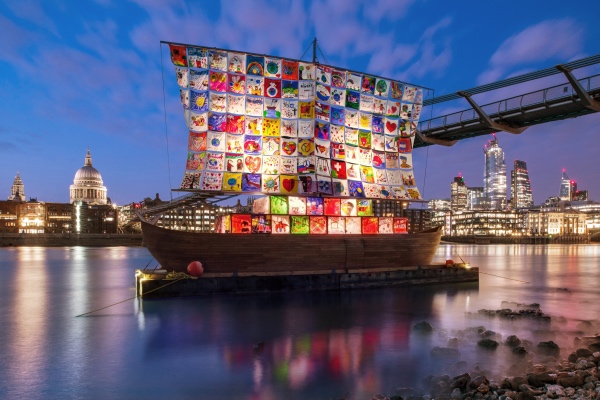
Ilya and Emilia Kabakov’s Ship of Tolerance is moored at Royal Docks this month ahead of the annual celebration of London’s river, Totally Thames, in September. The 60 foot long, hand-crafted wooden ship is dedicated to educating and inspiring young people and features sails made by children from 40 London primary schools, Great Ormond Street Hospital and refugee centres in Birmingham, Leeds, Peterborough and Calais. The award-winning ship was first launched in Egypt in 2005 and has since appeared in numerous cities around the world including Venice, Havana, Moscow, New York and Rome. It can be seen at Royal Docks until 31st August and then outside the Tate Modern from 4th September to 6th October. For more on the ship and Totally Thames, see www.totallythames.orgPICTURE: Courtesy of Totally Thames.

A Moment in London’s History – An iconic image of Abbey Road is taken…

It’s 50 years this month – it was last Thursday, 8th August, in fact – when an iconic photograph featuring the Fab Four on a zebra crossing was taken for cover of the Abbey Road album.

The photograph – which featured (in order) George Harrison, Paul McCartney, Ringo Starr and John Lennon striding across the pedestrian walk in St John’s Wood – was taken by the late Scottish photographer Iain Macmillan.

He apparently climbed onto a ladder in the middle of the street while a policeman held back traffic briefly (there are vehicles driving down the road in the distance in the image).

The entire shoot – which was apparently McCartney’s idea – reportedly took just 10 minutes and saw the band walk across the road six times (the chosen image – said to have been taken at 11:38am – was number five; the only one in which all their legs were in a perfect V shape).

The image carries a particular poignancy for Beatles fans because of the fact that they “officially” broke up less than a year later (the album it featured on, Abbey Road, was released on 26th September, 1969, and was the last recorded by the group even though it was released prior to Let It Be).

As well as being recreated by tourists at the site itself, the image has been reproduced and adapted countless times – including its reproduction on a 64p Royal Mail stamp in 2007 and an adaption involving the Simpsons for a Rolling Stone cover in 2002.

Abbey Road Studios – where the Abbey Road album was recorded – is located just a hop, skip and jump away and has operated a live webcam of the crossing since 2002. (For more on Abbey Road and the origins of its name, see our previous post here).

PICTURE: Via Wikipedia.

This Week in London – 16th century altar piece on display for first time in a century; Tudor sports at Hampton Court; and, the most expensive British-made watch…

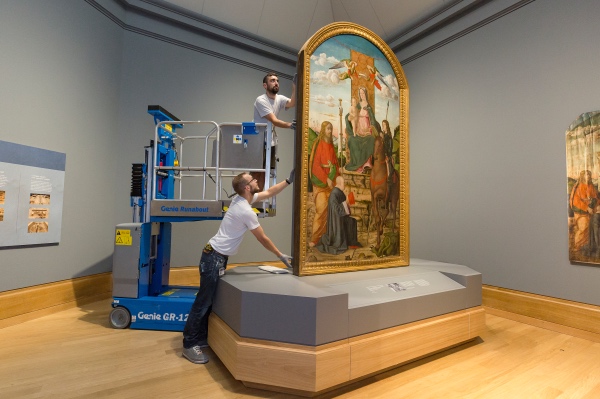
One of the major surviving altarpieces created by Italian Renaissance painter and sculptor Giovanni Martini da Udine in the early 16th century has gone on display at The National Gallery. The Virgin and Child with Saints, said to date from about 1500–25, has undergone an extensive seven year conservation process – described as one of the longest and most complex in the gallery’s history – prior to going on show for the first time in 100 years. The process involved removing old varnish and repaints, dividing the altarpiece into its original three boards and cleaning and repairing them before putting them back together with an additional support and then finally filling and retouching the original paintwork and adding a frame to ensure it can be moved in the future. The painting depicts the Virgin and Child with St James on one side and St George on the other while a man, most likely the artist’s patron, kneels in front. Known as a ‘sacra conversazione’ (holy conversation), this type of painting become increasingly popular over the course of the 15th century. The work can be seen in Room 56. Admission is free. For more, see www.nationalgallery.org.uk. PICTURE: Installation of The Virgin and Child with Saints by Giovanni Martini da Udine in Room 56./©The National Gallery, London

Join in some Tudor sports this weekend at Hampton Court Palace. Until Sunday, families are invited to head to the East Front Gardens where they can try their hand at shooting a crossbow or a bow and arrow, practice some traditional sword fight, and watch demonstrations in hand to hand combat by King Henry VIII and his courtiers. There will also be some falconry displays. Admission to ‘Henry VIII’s Sporting Academy’ is included in general admission charge. For more, check out www.hrp.org.uk/hampton-court-palace/.

The most expensive British watch ever made has gone on show at the Science Museum in South Kensington. The 18ct gold-cased watch, known as the Space Traveller II, was handmade by George Daniels in 1982 and named in honour of the Moon landings. It sold for £3.2 million at auction in 2017. The watch, which has been loaned by a private donor, is being displayed in the Clockmakers’ Museum and sits in an exhibit about Daniels, a former master of the Worshipful Company of Clockmakers who is credited with helping to revive independent watchmaking in the late 20th century. While Space Traveller I was sold soon after its completion, Space Traveller II was used by Daniels until his death in 2011. It displays both solar and sidereal (star) time and also shows the phase of the Moon, an annular calendar, the equation of time and features a stopwatch which functions with either solar or sidereal time. Entry to the Clockmakers’ Museum is free. For more, see www.sciencemuseum.org.uk.

Send all items for inclusion to exploringlondon@gmail.com.

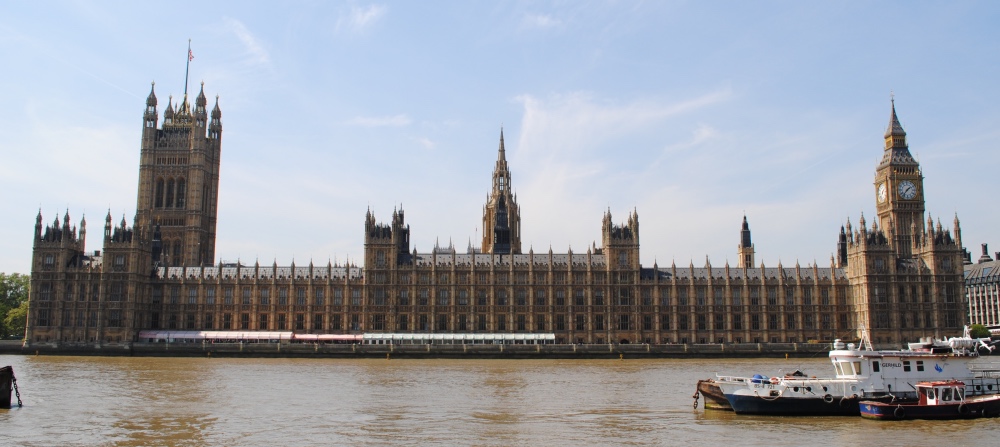
10 sites from Victoria and Albert’s London – 7. The Palace of Westminster…


Following the destruction of much of the Palace of Westminster in a fire which broke out on 16th October, 1834, work was launched on a new building to house both the House of Commons and the House of Lords – a building to which both Queen Victoria and Prince Albert had strong connections.

Rebuilding commenced in earnest for the new building 27th August, 1840, when Sarah Barry, wife of architect Charles Barry (his plans for a new Perpendicular Gothic-style Parliament building had been selected from some 97 submissions), laid the foundation stone of the new complex.

Work, to the designs of Barry with the aid of Augustus Pugin, progressed (although a lot slower than was originally envisaged – and a lot more expensively) and the new House of Lords was opened in 1847 followed by the new House of Commons in 1852 (when Barry received a knighthood).

The Clock Tower, meanwhile, now renamed the Elizabeth Tower, was not completed until 1858, but when the Victoria Tower was roofed in 1860, the work was largely complete (although construction wasn’t officially completed until 10 years later – Barry died in 1860 and the work was continued by his son, Edward Middleton Barry).

In 1852, Queen Victoria became the first monarch to take the route since used by all sovereigns at the State Opening of Parliament – arriving in the Irish State Coach (still used by Queen Elizabeth II today) she entered the entrance at the base of the Victoria Tower (now known as the Sovereign’s Entrance) and proceeded to the Robing Room where she was dressed in the Imperial State Crown and the Robe of State before processing through the Royal Gallery to the chamber of the House of Lords where she took her seat on the Throne (located opposite the door leading to the House of Commons).

Prince Albert, known for his passion for the arts, chief connection came when he was appointed chair of the Royal Fine Arts Commission in 1835. It oversaw the placement of paintings and sculptures in the building, including five vast frescoes by William Dyce depicting the Arthurian legend which can be seen in the Robing Room.

The prince tragically died on 14th December, 1861, and while the structural work had largely been completed, much of the decorative schemes the commission had envisaged for the palace hadn’t been finished. As a result, many of the decorative aspects Prince Albert had overseen the planning of were never completed.

Portrayals of the Queen and Prince in the building today include a white marble statue of Queen Victoria holding a sceptre and laurel crown in the Prince’s Chamber and portraits of the Queen and Prince Albert by Franz Xaver Winterhalter which flank the Chair of State in the Robing Room.

WHERE: Houses of Parliament (nearest Tube stations are Westminster, St James’s Park and Embankment); WHEN: Tours are held on Saturdays until 25th January 2020 and Monday to Friday between until 30th August 2019 (except 26th August); COST: £26.50 adults/£22 concessions/£11.50 children five to 15 years (children under five are free); WEBSITE: www.parliament.uk.

LondonLife – A roof in the park…

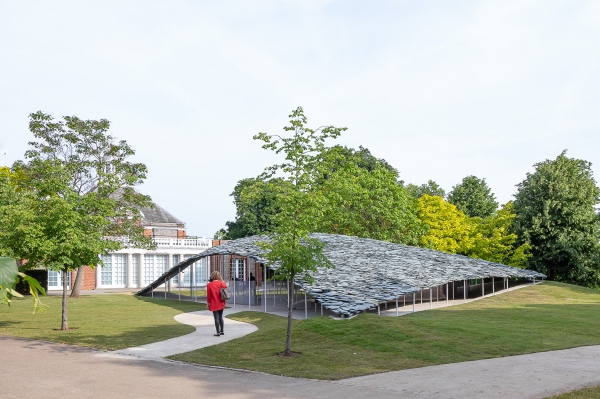
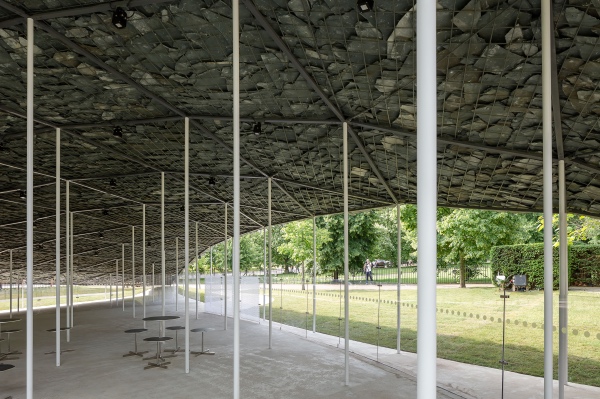
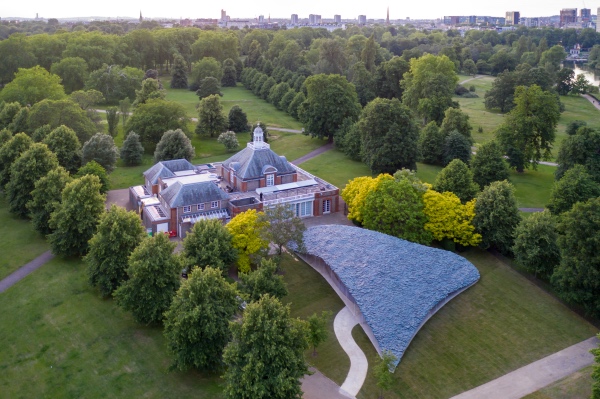
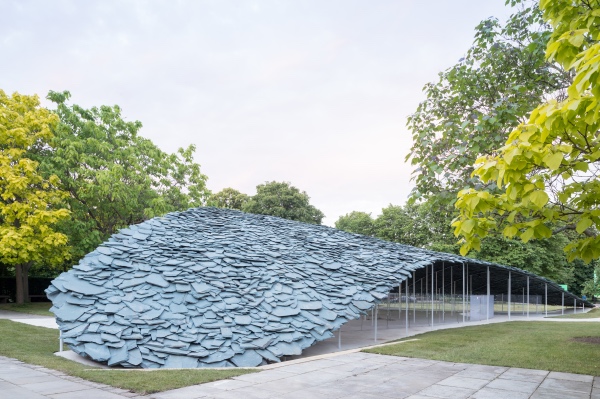
Japanese architect Junya Ishigami’s design for this year Serpentine Pavilion takes inspiration from architecture’s most common feature – the roof – and features an arrangement of slates positioned to form a single large canopy with a cave-like space beneath. The pavilion features 61 tonnes of Cumbrian slate tiles and 106 steel columns and, says Ishigami, is designed to play “with our perspectives of the built environment against the backdrop of a natural landscape, emphasising a natural and organic feel as though it had grown out of the lawn, resembling a hill made out of rocks”. “Possessing the weighty presence of slate roofs seen around the world, and simultaneously appearing so light it could blow away in the breeze, the cluster of scattered rock levitates, like a billowing piece of fabric,” he says. Ishigami is the 19th architect to design a pavilion for the Serpentine. His pavilion, which is located near the Serpentine Galleries in Kensington Gardens, can be visited until 6th October. It’s open 10am to 6pm daily. OS x Serpentine Park Nights, a programme of talks, films and performances, takes place on selected Friday nights. For more, head to this linkALL PICTURES: © Junya Ishigami + Associates/Photography – Top and immediately below © 2019 Norbert Tukaj; Others below – © 2019 Iwan Baan.


What’s in a name?…Great Queen Street…

Wondering which ‘great’ Queen this street name is referring to? Perhaps Queen Victoria, our own Queen Elizabeth or even her namesake, Queen Elizabeth I?

None of the above – the West End thoroughfare which runs between Drury Lane and Kingsway, is named for Queen Anne (of Denmark), consort of King James I (and the ‘great’ in Great Queen Street, we imagine, refers to the size of the thoroughfare and not the ‘greatness’ of the Queen).

Originally a residential street dating from the first half of the 17th century (one of which apparently sported a statue of another queen, Henrietta Maria, wife of King Charles I, on its facade), the houses were gradually replaced  over the years but some early 18th century abodes do remain.

Famous residents include everyone from Civil War Parliamentarian General Thomas Fairfax and 18th century composer Thomas Arne to late 17th and early 18th century portrait painter Sir Godfrey Kneller and James Boswell, biographer of Samuel Johnson.

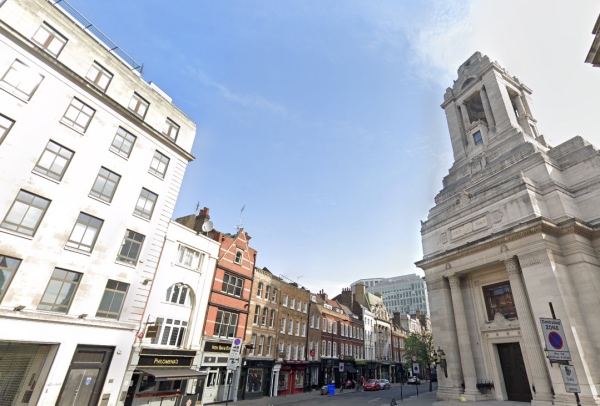
Freemason’s Hall, home of the United Grand Lodge of England, is located on the corner with Wild Street and the De Vere Grand Connaught Rooms next door stand on the site of the former Freemasons Tavern where, in 1863, the Football Association was founded.

PICTURE: View down Great Queen Street with the edifice of Freemason’s Hall on the right. (Google Street View)

This Week in London – Women in the British Army; communications secrets exposed; and, cinema at Somerset House…

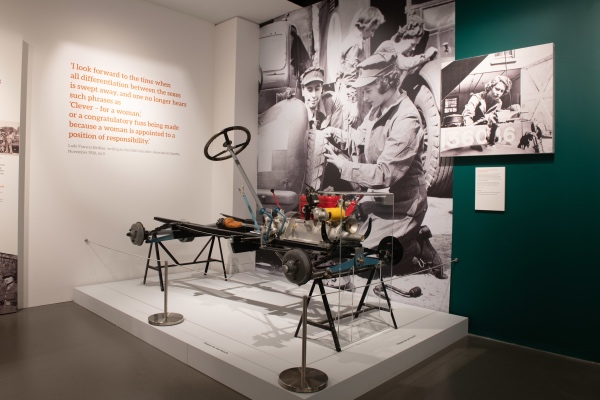
An exhibition exploring the changing roles of women in the British Army from 1917 to the present day has opened at the National Army Museum in Chelsea. Rise of the Lionesses, which is being held in partnership with the WRAC Association, charts the major contributions women have made to the Army’s history as well as how perceptions of “appropriate” roles for females have affected these contributions and how women have fought to redefine those roles. Highlights include the combat shirt and medical kit belonging to Sergeant Chantelle Taylor – the first female British soldier to kill in combat, the first Army-issue bra, and the vehicle chassis used to train Princess Elizabeth (now Queen Elizabeth II) while she served in the Auxiliary Territorial Service during World War II (pictured above). The free display can be seen until 20th October and is accompanied by a programme of public events. For more, head to this link. PICTURE: Courtesy of National Army Museum.

• Communications intelligence and cyber security are explored in an exhibition at the Science Museum, making the centenary of UK intelligence, security and cyber agency,  GCHQ. Top Secret: From ciphers to cyber security features more than 100 objects including cipher machines used during World War II, secure telephones of the type used by British Prime Ministers, and an encryption key used by the Queen. There’s also encryption technology used by Peter and Helen Kroger who, until their arrest in the 1960s, were part of the most successful Soviet spy ring in Cold War Britain, and the remains of the crushed hard drive alleged to contain top secret information which was given by Edward Snowden to The Guardian in 2013 while the work of GCHQ’s National Cyber Security Centre is also explored with visitors able to see a computer infected with the WannaCry ransomware which, in 2017, affected thousands of people and organisations including the NHS. Runs until 23rd February. Admission is free. For more, head to www.sciencemuseum.org.uk.

The pioneering work of Hungarian avant garde artist Dóra Maurer goes on show at the Tate Modern on South Bank next Monday in the first UK exhibition celebrating her five decade career. The free display brings together 35 of her works – from conceptual photographic series and experimental films to colourful graphic works and striking geometric paintings – with highlights including Seven Foldings (1975), Triolets (1981), Timing (1973/1980) and the six-metre-long Stage II (2016). The year-long display is one of several free displays opening at the Tate Modern this month. Others include an exhibition of Sol LeWitt’s graphic woodcut prints, a show featuring photograms, films, painting and drawings by Polish émigré artists Franciszka Themerson and Stefan Themerson, and photography displays by Mitch Epstein, Naoya Hatakeyama and David Goldblatt. For more, see www.tate.org.uk.

Cinema is being celebrated at Somerset House this month with the launch of Film4 Summer Screen at Somerset House. The event includes courtyard screenings, specially curated DJ sets and live performances, and panel discussions from industry insiders. Actor Antonio Banderas will join Spanish director Pedro Almodóvar to introduce the festival’s opening night premiere, Pain and Glory, with other special guests including the cast of Shane Meadows’ BAFTA-award winning film This is England, Francis Lee, the director and writer of God’s Own Country, and  the film’s lead actor Josh O’Connor as well as Peter Webber, director of Inna de Yard. Runs from 8th to 21st August. For more, see www.somersethouse.org.uk.

Send all items for inclusion to exploringlondon@gmail.com.

10 sites from Victoria and Albert’s London – 6. The South Kensington Museum…

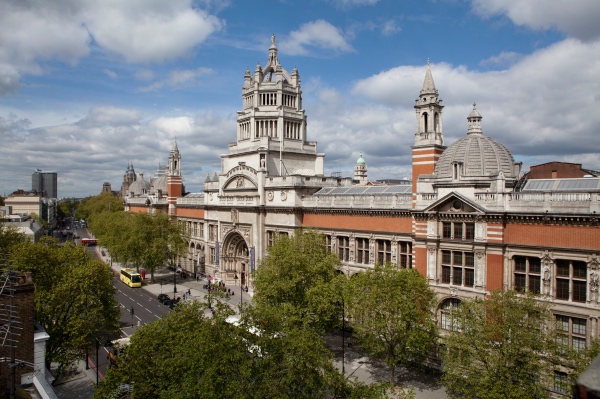
Better known today as the Victoria and Albert Museum following its renaming in 1899, the South Kensington Museum was created in the aftermath of the success of the Great Exhibition of 1851.

Initially located in Marlborough House on the Mall, it moved to its South Kensington site in 1857, opening to the public on 22nd June that year. Recorded among the visitors in the initial couple of years was Queen Victoria – who visited twice in February, 1858, and then again open 14th April when she was accompanied by Prince Albert.

The purpose of the later visit was to open the Art Rooms on the ground floor of Sheepshanks Gallery, a building which had been specifically constructed to house paintings given by John Sheepshanks (the building, located on the eastern side of the John Madejski Garden now contains sculptures on the ground floor and silver and stained glass on the first floor).

One interesting connection between the Queen and the museum can be found in a six metre tall plaster cast of Michelangelo’s David. The cast was given to Queen Victoria as a gift from the Grand Duke of Tuscany in 1857 but she didn’t want the trouble of housing the giant figure (and she was apparently shocked by its nudity – more on that in a moment). So the Queen gave the statue to the museum where it was installed in a prominent position (and can today be seen in Room 46b).

But ah, yes, the nudity. The story goes that in response to the Queen’s shock, a proportionally accurate plaster fig leaf was commissioned to cover David‘s nether regions whenever the Queen visited (apparently by being hung on two small hooks on the cast). The fig leaf, like the statue, can still be seen – it’s housed in a small case on the back of the plinth David‘s standing on.

David is one of only a few items in the V&A’s collection today which once belonged to the Queen or Prince Albert. Others include the Raphael cartoons which she loaned to the museum in 1865 (and are still on loan from the current Queen).

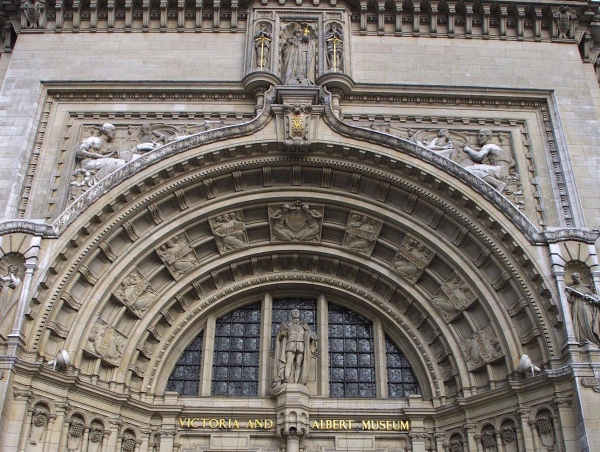
As part of the redevelopment of the museum in the late 19th and early 20th centuries (when it was also renamed the Victoria and Albert Museum despite the Queen’s wishes it be called the Albert Museum), statues of the royal couple were installed above the museum’s main entrance in Cromwell Road with Prince Albert positioned just below the Queen who is flanked  by St George and St Michael (see above).

PICTURES: Courtesy V&A

WHERE: Victoria and Albert Museum, Cromwell Road (nearest Tube stations are South Kensington and Gloucester Road); WHEN: 10am to 5.45pm daily (Fridays to 10pm); COST: Free; WEBSITE: www.vam.ac.uk

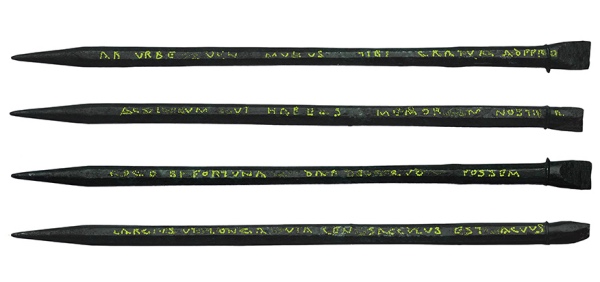
LondonLife – Roman “pen” souvenir among thousands of finds on Bloomberg site…

An iron stylus bearing an inscription – described as the sort of cheap souvenir you might bring back for a friend after visiting a foreign city – is among thousands of Roman-era artefacts discovered during excavations for Bloomberg’s new European headquarters in Cannon Street. The stylus, which is about the length of a modern pen, dates from about AD70 and was used to write on wax-filled wooden writing tablets. It is inscribed in Latin text which, translated by classicist and epigrapher Dr Roger Tomlin, reads: “I have come from the city. I bring you a welcome gift with a sharp point that you may remember me. I ask, if fortune allowed, that I might be able [to give] as generously as the way is long [and] as my purse is empty”. It is believed the “city” referred to is Rome. The stylus is one of some 14,000 items Museum of London Archaeology archaeologists unearthed on the dig – including 200 styli (although only one bears an inscription) – which took place on what was the bank of the (now lost) Thames tributary, the Walbrook, between 2010 and 2014. It is among items on show in an exhibition now on at the Ashmolean Museum in Oxford called Last Supper in Pompeii. Head here for more details. Other finds from the excavations can be seen at the recently opened London Mithraeum Bloomberg SPACE. PICTURE: © MOLA