Famous Londoners – Matthew Flinders…

News last month that the remains of early 19th century explorer Matthew Flinders had been found beneath Euston railway station. But just who was Flinders and what, aside from being the location of his burial, were his connections to London?

Flinders was not a native Londoner by birth – he was born on 16th March, 1774, in Donington, Lincolnshire, the son of a surgeon-apothecary and educated in local schools. He joined the Royal Navy at the age of 15, serving first on HMS Alert as a lieutenant’s servant and several other ships including the HMS Providence, captained by William Bligh (of mutiny on the Bounty fame) on a voyage taking breadfruit from Tahiti to Jamaica. He also subsequently saw action while on the HMS Bellerophon in 1794, when the ship was involved in the Battle of the Glorious First of June against the French in the English Channel.
In 1795, he served as a master’s mate on the HMS Reliance which sailed to New South Wales with the mission of delivering its new governor, John Hunter.

As well as establishing a reputation as a navigator and cartographer on the voyage, he became friends with the ship’s surgeon George Bass. After arriving at Port Jackson in New South Wales, Flinders undertook two expeditions with Bass in small boats dubbed the Tom Thumb and Tom Thumb II – the first to Botany Bay and the Georges River and the second to Lake Illawarra.

In 1798, now a lieutenant and based in New South Wales, Flinders was given command of the sloop Norfolk with the aim of proving Van Diemen’s Land (now the state of Tasmania) was an island. He did so and named the strait between it and the Australian mainland after his friend Bass (the largest island in the strait would later be named Flinders Island).

In 1799, he sailed the Norfolk north to Moreton Bay before in March, 1800, returning to England on the Reliance.

Thanks to the advocacy of Sir Joseph Banks, to whom Flinders had dedicated his text Observations on the Coasts of Van Diemen’s Land, on Bass’s Strait, etc, in January, 1801, Flinders was given command of HMS Investigator and, subsequently promoted to commander, given the mission of charting the coastline of the Australian continent, then known as New Holland.

Having married his longtime friend Ann Chappelle on 17th April, 1801, he set sail for New Holland on 18th July of that year (without Ann – he had intended taking her on the journey but ordered to remove her from the ship by the Admiralty).

Flinders reached and named Cape Leeuwin in what is now Western Australia on 6th December and then proceeded eastward along the continent’s southern coast. He met the French explorer Nicolas Baudin, aboard the Geographe, in what he named Encounter Bay, named Port Lincoln and Kangaroo Island in what is now South Australia and further to the east spent time exploring the environs of Port Philip Bay (around the modern city of Melbourne). He proceeded north to Sydney, arriving on 9th May, 1802, setting sail again on 22nd July.

Heading northward, he surveyed the coast of what is now Queensland before, having charted the Gulf of Carpentaria, discovering his ship was badly leaking. Unable to undertake repairs, he decided to return to Sydney but did so via the west coast of the continent, thus completing the first documented circumnavigation of it. Back in Sydney, the Investigator was found to be unseaworthy and condemned.

Unable to find another vessel to continue his explorations and hearing of his father’s death and wife’s illness back in England, Flinders looked return home as a passenger aboard the HMS Porpoise. But the Porpoise was wrecked on the Great Barrier Reef and Flinders undertook the role of navigating the ship’s cutter back across open sea to Sydney so the remainder of the ship’s crew could be rescued.

He was then given command of the HMS Cumberland to return to England but the poor condition of that ship forced him to put into the French controlled Isle de France (Mauritius) for repairs on 17th December, 1803. War had broken out between England and France and Flinders was detained (it was during his period of detainment – he was allowed to venture around the island after the first few months – that he sent back to England a map of the Australian continent, the only one in which he used the name “Australia” for the title. While he wasn’t the first to use the name Australia, he is credited with popularising it).

Flinders wasn’t released until June, 1810, after a Royal Navy blockade of the island (despite being granted his release by the French Government in 1806, authorities on Mauritius decided to keep holding him). Travelling via the Cape of Good Hope, he returned to England where he was promoted to post-captain.

On returning to home, Flinders, now in poor health, and his wife Ann lived at several rental properties in London – there’s an English Heritage Blue Plaque on one former property at 56 Fitzroy Street in Fitzrovia, central London – and had a daughter Anna (her son Matthew Flinders Petrie, later Sir Flinders Petrie, would go on to become a famous archaeologist and Egyptologist).

It was during this period that Flinders wrote a book about his voyages, A Voyage to Terra Australis. It was published on 18th July. Remarkably, Flinders died of kidney failure just a day later. He was buried on 23rd July in the graveyard of St James’s Church, Piccadilly, which was located up in Camden.

The location of his grave was later forgotten when the headstone was removed and the site became gardens, part of which were subsequently built over by Euston station. Famously, of course, his body was found last month during excavations conducted ahead of the construction of the Euston terminus for the high-speed rail link, HS2, between London and Bristol.

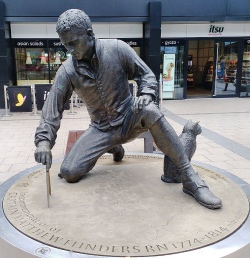
Flinders legacy lives on in the more than 100 geographical place names bearing his moniker in Australia including the iconic Flinders Street Railway Station in Victoria and the Flinders Ranges in South Australia. There’s also a statue of him in his home town of Donington and in July, 2014, the 200th anniversary of his death, a large bronze statue by Mark Richards depicting Flinders and his cat Trim (we’ll deal with Trim’s story in an upcoming post) was unveiled at Australia House by Prince William. It was later installed at Euston Station near where his grave was assumed to be (pictured above).

PICTURE: AndyScott (licensed under CC BY-SA 4.0)

This Week in London – Dior at the V&A, and, Don McCullin at the Tate…

The UK’s largest ever exhibition focusing on fashion designer Christian Dior and his work opens at the V&A on Saturday. Christian Dior: Designer of Dreams spans his career and legacy from 1947 – the year he hosted his first UK fashion show at the Savoy Hotel in London, to the present day. Based on an exhibition shown at the Musée des Arts Décoratifs in Paris, it will also include a section on the world renowned designer’s fascination with British culture. The more than 500 objects on show – revealed in 11 sections – include more than 200 rare haute couture garments as well as accessories, photography, film, perfume and make-up, illustrations, magazines and personal possessions. Alongside gowns worn by the likes of Princess Margaret, Margot Fonteyn and Jennifer Lawrence, highlights include the iconic Bar Suit, given to the V&A by the House of Dior in 1960. Runs until 14th July in The Sainsbury Gallery. Admission charge applies. For more, see www.vam.ac.uk. PICTURE: © Adrien Dirand (V&A).

The work of Sir Don McCullin – regarded as one of Britain’s greatest living photographers and perhaps best known as a photojournalist and war correspondent – is the subject of a new show opening at Tate Britain next Tuesday. Don McCullin features more than 250 photographs dating from the 1950s – when he started documenting the community in his native Finsbury Park – to 2017, when he visited Syria to document the destruction undertaken by the so-called Islamic State. Among the iconic photographs on show are The Guvnors, a portrait of a notorious local gang in Finsbury Park which launched his career as a photojournalist in 1958, Shell-shocked US Marine, The Battle of Hue (1968), Starving Twenty Four Year Old Mother with Child, Biafra (1968), Northern Ireland, The Bogside, Londonderry (1971), and The theatre on the Roman city of Palmyra, partly destroyed by Islamic State fighters (2017). Also on show are photographs depicting the changing social conditions in the UK, landscapes and still lifes as well as the photographer’s magazine spreads, contact sheets, McCullin’s helmet and the Nikon camera which took a bullet for him in Cambodia. Runs until 6th May. Admission charge applies. For more, see www.tate.org.uk.

Send all items for inclusion to exploringlondon@gmail.com.

10 historic London hotels…5. The Great Western Hotel (Hilton London Paddington)…


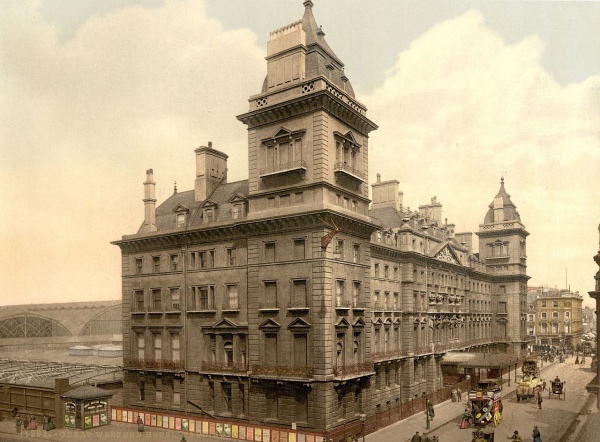
This grand Victorian hotel – originally known as the Great Western Royal Hotel – was among the first large hotels constructed in London in proximity to railway termini – in this case Paddington Station.

Located 146 Praed Street, it was constructed in the 1850s to the designs of Philip Charles Hardwick and apparently cost some £60,000. The interior was designed in the Louis XIV style and the building as a whole was built with the intention of rivalling the great hotels of Europe.

Isambard Kingdom Brunel, who conceived the project to provide accommodation for people travelling on the Great Western Railway to Bristol and the West Country (and so managed to convince the directors of the GWR to invest), was the hotel’s first managing director.

The now Grade II-listed hotel was officially opened on 9th June, 1854, by Prince Albert and, apparently, the King of Portugal.

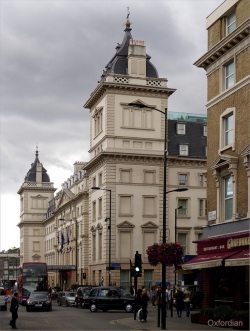
The main block, which effectively forms the facade of the railway station behind it, is book-ended by two towers which are said to house two storey bedrooms.

It boasts a sculpted pediment above the main entrance which was designed by John Thomas and features allegorical figures representing peace, plenty, industry and science.

The railway company took over the hotel late in the 19th century and in 1907 it was apparently updated with electric lighting, telephones and a pneumatic messaging service.

Much of the original ornamentation was lost when it was extensively modernised and extended in the 1930s in the art deco style under the eye of architect Percy Emerson Culverhouse.

The hotel was sold off as part of the privatisation of the railways in 1983 and reopened as part of the Hilton hotel chain in 2001. It remains part of that chain today.

For more, see www.hilton.co.uk/paddington.

PICTURES: The Great Western old and new – Top – via Wikipedia; Right -Oxfordian (licensed under CC BY-ND 2.0); 


LondonLife – A look inside The India Club…

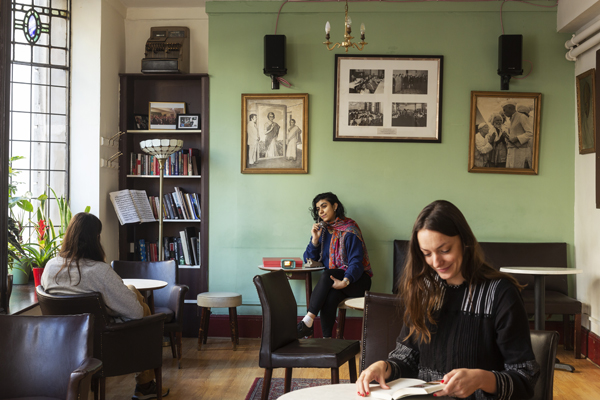
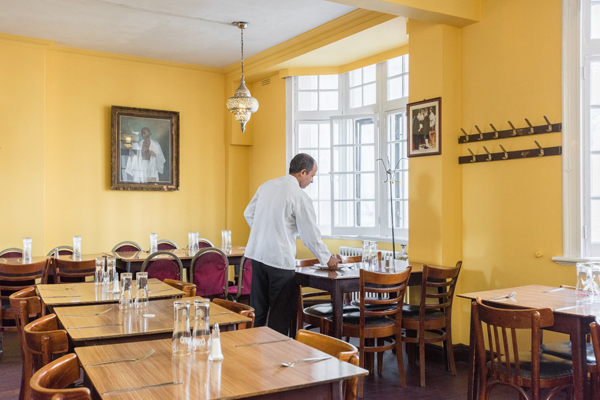
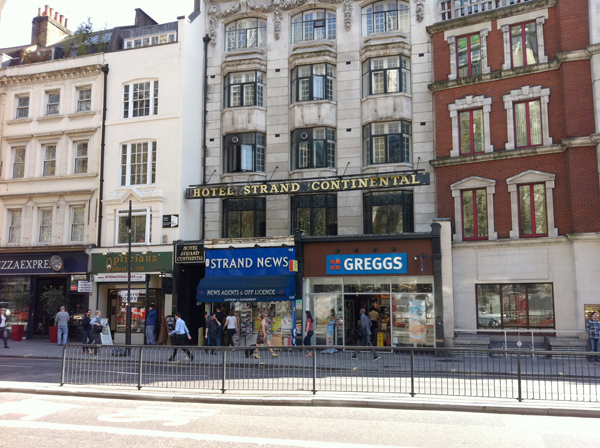
The rich and tapestried history of The India Club forms the heart of a new exhibition by the National Trust which opens at the Strand-based club this week. A Home Away from Home: The India Club is an audio-based exhibition – featuring interviews with everyone from former staff, freedom fighters, BBC reporters, artists and writers – and highlights the club’s history and its ongoing significance among the British South-Asian community. Borne out of the Indian League which had campaigned for India’s independence, the club was founded in 1951 under the leadership of Krishna Menon, the first High Commissioner to India, with founding members including Jawaharlal Nehru, India’s first Prime Minister, and Lady Mountbatten. Originally located at 41 Craven Street, it moved to 143 Strand, the premises of the Hotel Strand Continental, in 1964. The club, site of what was one of the UK’s first Indian restaurants, remains an important hub for a range of Anglo-Indian organisations and the community of journalists, writers, artists, academics and students who regularly meet in the premises. The exhibition comes as more than 26,000 people have signed a petition to prevent the club’s redevelopment as part of plans to refurbish the building in which its located. Opening tomorrow and running until 1st March, the display is being accompanied by a programme of supper clubs, artist talks, screenings and conversations. The exhibition is free but ticketed. For more, see
www.nationaltrust.org.uk/features/a-home-away-from-home-the-india-club.

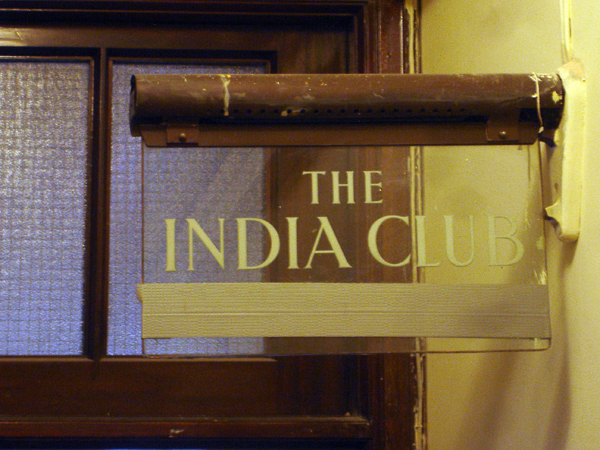
PICTURES: Top – Enjoying the new exhibition in The India Club (courtesy of National Trust); Below – The India Club sign (courtesy of Jake Tilson); the restaurant in The India Club (courtesy of The India Club); the Strand Continental Hotel in which the club is located (courtesy of Jake Tilson).

Where’s London’s oldest…public building with electric lighting?

The Savoy Theatre, located next to the Savoy Hotel just off the Strand in the West End, was the first public building in London to feature electric lighting.

Built to the designs of CJ Phipps and decorated by Collinson and Locke, its construction was instigated and financed by Richard D’Oyly Carte with the specific intention of hosting WS Gilbert and Arthur Sullivan‘s operas.

Opening on 10th October, 1881, the first show at the new premises was Gilbert and Sullivan’s Patience, which had been previously playing at the Opera Comique. It continued to solely show Gilbert and Sullivan’s works until 1886 when a falling out led to the end of the partnership between Gilbert and Sullivan.

The theatre subsequently hosted comedic operas by other composers as well as productions of Shakespeare (Henry Irving was among those who trod the boards here in the early 20th century).

It was rebuilt in just 135 days in 1929 and the new premises featured an exterior designed by Frank Tugwell and interior designed by Art Deco expert Basil Ionides.

A fire caused considerable damage in 1990 after which the theatre was again renovated, this time under the guidance of the theatre’s then chairman Sir Hugh Wontner and architect Sir William Whitfield, with the public areas returned to how they had looked under Tugwell and Ionides’ scheme from the 1920s. It reopened in July, 1993, with a Royal Gala performance by the English National Ballet (Diana, Princess of Wales, was among those in attendance).

Now owned by the The Ambassador Theatre Group, the Savoy these days it shows a range of different productions. It’s currently hosting Dolly Parton’s 9 to 5: The Musical. For more, see www.thesavoytheatre.com.

PICTURES: Above – Neon sign for The Savoy Theatre advertising a previous production with the hotel and theatre entrance (Loren Javier/image cropped/licensed under CC BY-ND 2.0); The Savoy Theatre with a Westminster City Council Green Plaque commemorating it being the first public building with electric lighting in London (David Adams).

Found London – Matthew Flinders’ remains found…

The remains of Captain Matthew Flinders, a Royal Navy explorer who led the first circumnavigation of Australia and is credited with popularising the name the country now bears, have been found by archaeologists working on the HS2 rail project in Euston. While the general area in which he was buried – the former St James’s burial ground – has long been known, archaeologists were able to narrow down the location of his grave among the 40,000 on the site thanks to a lead breast plate placed on top of his coffin upon which, conveniently, his name was written. The HS2 project will see a high speed rail link constructed between London and Birmingham and as part of the preparations for the project, the largest archaeological dig ever to take place in the UK is underway on the site of what will be the London terminus. Flinders was buried in St James’s burial ground in 1814 but when Euston station expanded westward into the burial ground in 1840s, his headstone was removed and the location of his grave thought lost (despite a persistent myth that he was buried under Platform 15). There is already a statue of Captain Flinders at Euston Station – unveiled on the bicentenary of his death in 2014 (originally at Australia House), it depicts both Flinders, busy charting Australia’s coastline, and his cat, Trim. There is now talk of a memorial marking the site of the grave.

This Week in London – Recalling Sir Joseph Bazalgette; Pierre Bonnard retrospective; and Bill Viola meets Michelangelo…

A plan of the Deptford Pumping Station signed by Sir Joseph Bazalgette is going on display at the City of London Heritage Gallery on Saturday to mark 200 years since the Victorian engineer’s birth. Other items in the new display include the Shakespeare Deed – only one of six documents to bear the signature of William Shakespeare, and one of the City of London’s earliest charters – granted by King Richard I in 1197. Admission to the gallery, located in the Guildhall Art Gallery, is free. Runs until 16th May. For more, follow this link.

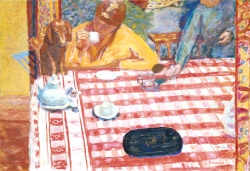
The first major retrospective of French painter Pierre Bonnard in 20 years has kicked off at the Tate Modern on South Bank. The CC Land Exhibition, Pierre Bonnard: The Colour of Memory, features about 100 of his most celebrated works from public and private collections spanning the period from 1912 to his death in 1947. Bonnard, like his friend Henri Matisse, had a profound impact on modern painting and went on to influence the likes of Mark Rothko and Patrick Heron. Works on show include Dining Room in the Country (1913), The Lane at Vernonnet (1912-14), Coffee (1915), Summer (1917), Piazza del Popolo, Rome (1922), Nude in an interior (c1935), and Studio with Mimosa (1939-46). Runs to 6th May; admission charge applies. For more, see http://www.tate.org.uk. PICTURE: Pierre Bonnard (1867–1947), Coffee (Le Café), 1915,  Oil paint on canvas (via Tate Modern)

The work of pioneering video artist Bill Viola has been brought together with drawings buy Michelangelo in a new exhibition opening at the Royal Academy on Saturday. Bill Viola/Michelangelo features 12 major video installations by Viola, an honorary Royal Academician, which span the period 1977 to 2013 as well as 15 works by Michelangelo including 14 highly finished drawings as well as the Academy’s Taddei Tondo. It proposes a “dialogue” between the two artists with Viola, who first encountered Michelangelo’s works in the 1970s in Florence, considered an heir to the long tradition of spiritual and affective art which uses emotion to connect viewers with the subject depicted. Runs until 31st March. Admission charge applies. For more, see www.royalacademy.org.uk.

Send all items for inclusion to exploringlondon@gmail.com.

10 historic London hotels…4. The Langham Hotel…

This sprawling London hotel in Portland Place – just past the top end of Regent Street – has spent much of its life as a hotel but was also once part of the BBC.

Built in 1863-65 to the plans of John Giles and James Murray, the £300,000 Langham Hotel – claimed as Europe’s first “grand hotel” – was deliberately designed to be on a scale and with a level of magnificence the city had not yet seen.

Spread over 10 floors – including those below ground – and designed in the style of an Italian palace, it boasted 600 rooms including numerous suites and featured mod-cons including the city’s first hydraulic lifts (electric lighting and air-conditioning would follow).

Features included its celebrated Palm Court, said to be the birthplace of the traditional afternoon tea.

It opened in a rather spectacular celebration on 10th June, 1865, with more than 2,000 guests including the Prince of Wales (later King Edward VII).

It soon gained a reputation among the rich and influential. Along with exiled members of European royal families including the Emperor Napoleon III of France and exiled Ethiopian Emperor Haile Selassie, those who stayed here included the likes of American writer Mark Twain, Italian conductor Arturo Toscanini, Czech composer Antonin Dvorak, explorer Henry Morton Stanley and romantic novelist Ouida.

Charles Dickens believed there was no better place for dinner parties and Sir Arthur Conan Doyle, another guest, used it as a setting in his Sherlock Holmes novels.

Its proximity to All Soul’s in Langham Place – the scene of many a fashionable wedding – saw it host many wedding receptions and the servants at Langham were led in prayers each morning by a clergyman from the church.

It was also popular with international musicians and artists thanks to the location of Queen’s Hall nearby.

The Langham declined in popularity during the two World Wars as the social centre of London moved west. Having served as a first aid and military post during World War II, it was badly damaged during the Blitz with much destruction caused when its massive water tank ruptured.

After the war, the BBC bought the hotel and used it for offices, studios and the BBC Club.

The BBC sold the building in the mid-Eighties and in 1991 after a £100 million renovation, it reopened as the Langham Hilton Hotel with Diana, Princess of Wales, a regular visitor.

It was sold again in 1995 and extended and refurbished. It again underwent a five year, £80 million, refurbishment in the mid 2000s, reopening in 2009.

The five star Langham – now the flagship of a group of hotels, celebrated its 150th anniversary in 2015 with the opening of the Regent Wing as well as The Sterling Suite, a luxurious six bedroom suite, and a new Langham Club Lounge.

Now a Grade II-listed building, it contains some 380 suites and rooms as well as The Grand Ballroom, the aforementioned Palm Court, restaurants including Roux at The Landau and Artesian, a British tavern, The Wigmore, and a spa.

It has appeared in numerous films, including the 1995 James Bond film, GoldenEye, in which it doubled for a hotel in St Petersburg. It also features a City of Westminster Green Plaque commemorating a meeting there between Oscar Wilde, Conan Doyle and Joseph Marshall Stoddart who commissioned the two writers to write stories for his magazine.

For more, see www.langhamhotels.com/en/the-langham/london.

PICTURE: Top – Sheep”R”Us (licensed under CC BY-NC-ND 2.0); Right – David Adams

Correction – this is actually number four in our special series, not three!

LondonLife – A Sunday morning in Canary Wharf…

PICTURE: Roman Fox/Unsplash.

What’s in a name?…Hanover Square…

This west London square was laid out in the early years of the reign of King George I and therein lies the clue to its name.

King George I, formerly Elector of Hanover in what is now Germany, was the first king of the British House of Hanover, and had been invited to take the Crown after the last of the Stuarts – Queen Anne – died in 1714 without leaving behind any surviving children (despite the fact that she’d had 14 pregnancies and given birth to five live children, all of whom died before her).

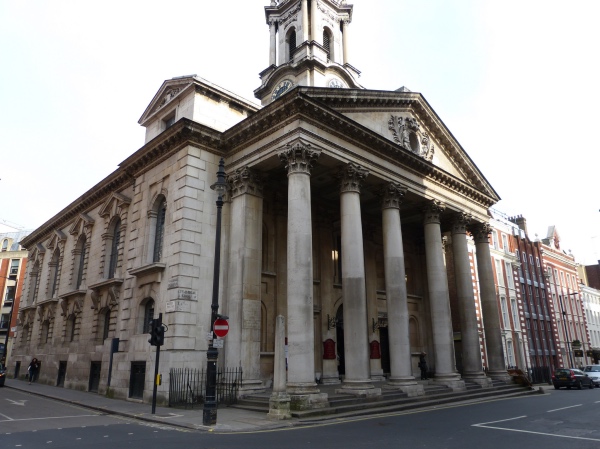
And so it was only logical – if not a bit sycophantic – that developer Richard Lumley, the 1st Earl of Scarborough – a keen supporter of the Hanoverian succession, named Hanover Square after the new king’s royal house. Thanks to the new king sharing his name with England’s patron saint, the nearby church was also named St George’s, Hanover Square (located just to the south – pictured below) as was the street that leads to it – St George Street.

Early residents in this Mayfair square included military figures like the generals Earl Cadogan and Sir Charles Wills. The square, which features a central park, was also home to the renowned concert venue, the Hanover Square Rooms (later the Queen’s Concert Rooms) until 1900 when they were demolished (JC Bach, Haydn, Paganini and Liszt all performed here as did Mark Twain who spoke on ‘Our Fellow Savages of the Sandwich Islands’ in 1873).

The square has been pretty comprehensively reconstructed since those days and is now home almost exclusively to offices including that of the UK offices of Vogue.

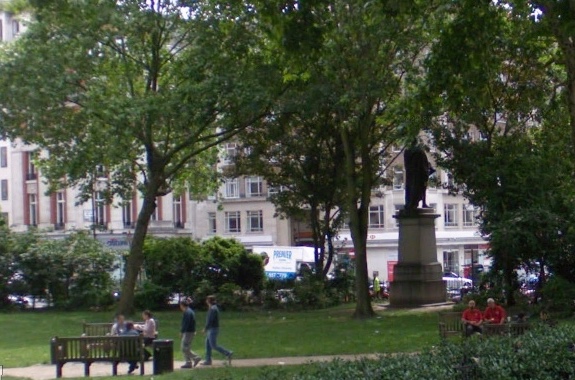
Monuments in the square include a statue of former PM, William Pitt the Younger.

PICTURES: Top – Google Maps/Below – Regency History (licensed under CC BY-NC 2.0)


Treasures of London – The Armada Portrait of Elizabeth I…

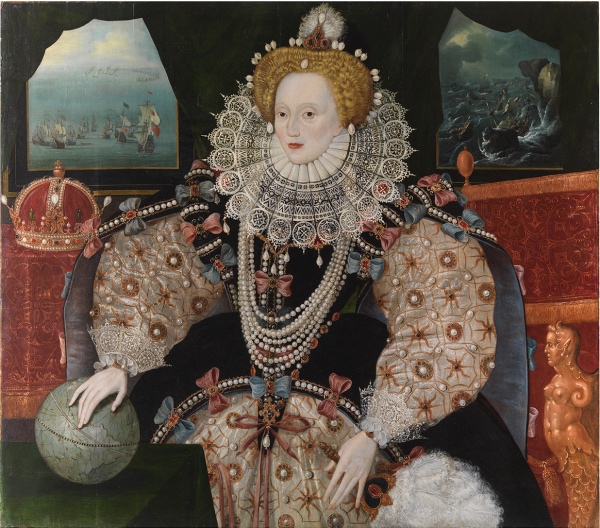
Saved for the nation following a public appeal by the Art Fund and Royal Museums Greenwich in 2016 and subsequently having undergone an extensive conservation and restoration process, the ‘Armada Portrait of Elizabeth I’ now hangs in the 400-year-old Inigo Jones-designed Queen’s House in Greenwich.

The life-sized portrait, which is unusually presented in a landscape format, commemorates the failed invasion of England by the Spanish Armada in the summer of 1588. It was painted in about 1590 by an unknown artist when the queen was aged in her mid-50s and may have been commissioned by Sir Francis Drake, second-in-command of the English fleet assembled to defend England from the Spanish.

Up until its £10.3 million acquisition (which was funded by various donations including a £1 million donation from the Art Fund, £400,000 from the Royal Museums of Greenwich, some 8,000 individual donations from members of the public totalling £1.5 million, and a Heritage Lottery Find grant of £7.4 million), it had been owned by Drake’s descendants – now known as the Tyrwhitt-Drakes – who have had possession since at least 1775. It spent much of its life hanging at Shardeloes, a Buckinghamshire country house built for William Drake in the late 18th century.

Designed to inspire a sense of awe in its viewers, the portrait contains numerous references which would have conveyed specific meanings to the Tudor mind. The Queen’s upright posture, open arms and clear gaze, for example, convey vitality and strength while her pearls are symbols or chastity and the Moon. The gold suns embroidered on her skirt and sleeves are said to symbolise power and enlightenment and the queen rests her hands on a globe with her fingers seeming tapping on the new world with the imperial crown sitting overhead in fairly obvious statement of her ambitions overseas.

Two maritime scenes in the background, both of which are actually early 18th century reworking over late 16th century originals, depict firstly the English fleet preparing to engage the Spanish Armada in the English Channel and, secondly, Spanish ships being wrecked on the Irish coast during their passage home.

One of the best known images from English history, the portrait has inspired countless portrayals of Elizabeth on stage and screen, including Cate Blanchett’s in two ‘Elizabeth’ films.

The Queen’s House, where the painting is being displayed, is built on the site of what was once Greenwich Palace, birthplace of Queen Elizabeth I.

WHERE: Queen’s House, Romney Road, Greenwich (nearest overground station is Greenwich/DLR is Cutty Sark for Maritime Greenwich); WHEN: 10am to 5pm daily; COST: free; WEBSITE: www.rmg.co.uk/queens-house.

PICTURE: © National Maritime Museum, London

This Week in London – VAULT returns to Waterloo, and, ‘Making Music’ at the Barbican…

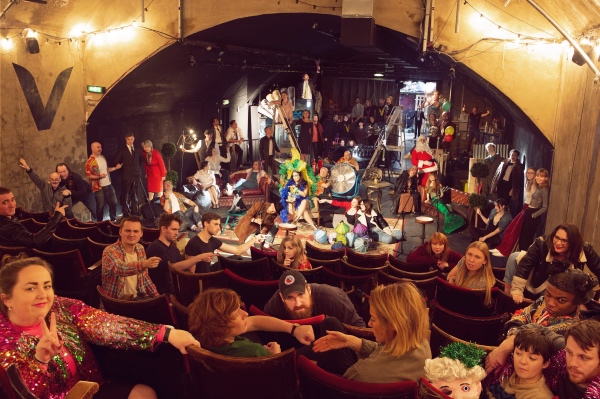
London’s largest arts festival, VAULT, kicks off next Wednesday in Waterloo with more than 400 shows on offer. Taking place across a range of venues including the main festival hub, The Vaults below Waterloo Station, as well as pop-ups in shipping containers, caravans and escape rooms and the festival’s new space for immersive events – Unit 9, highlights of the seventh festival include the Belarus Free Theatre’s production of the immersive Ukrainian folk opera Counting Sheep, the Lucy Jane Atkinson-directed play Vespertilio, and the comedy of Ciarán Dowd – winner of “best newcomer” at the Edinburgh Comedy Awards. There’s also a twilight program – featuring the VAULT Comedy Showcase – from 10pm on Thursdays and Fridays and a series of Lates including Launch Party: Hype Time featuring the eight-piece New Orleans band Brass Funkeys,  blues band Slow Mojo and special guest DJs including Hazel Marimba. The festival runs from 23rd January to 17th March, from Wednesdays to Sundays (times vary). For a full programme of events and tickets, head to vaultfestival.com. PICTURE: VAULT Festival’s 2019 “class photo” (courtesy of VAULT)

• The joy found in communities making music together is explored in a new exhibition which opened at the Barbican Music Library in the City of London this week. Making Music Together: A celebration of leisure-time music in the UK shows how 13,000 leisure-time groups gather to play and perform a wide range of music – from jazz and folk to classical and barbershop – in locations ranging from houses and garages to halls, theatres and fields across the country. The exhibition, held in conjunction with Making Music – the UK’s largest organisation for leisure-time music, will feature posters, films and quotes by contributing Making Music member groups as well as specially commissioned portraits of leisure-time musicians. Runs until 23rd March. Free admission. For more, see www.barbican.org.uk/your-visit/general-info/library.

Send all emails for inclusion to exploringlondon@gmail.com.

LondonLife – Georgian ice house (re)discovered…

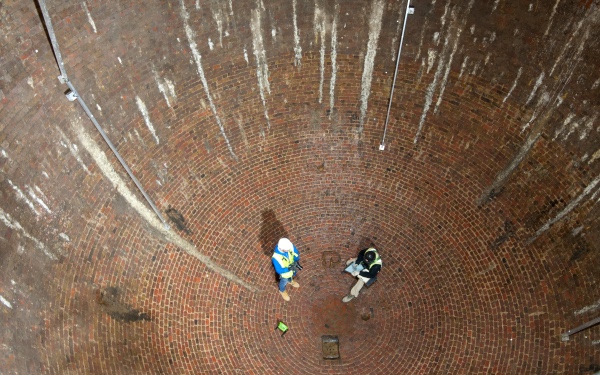
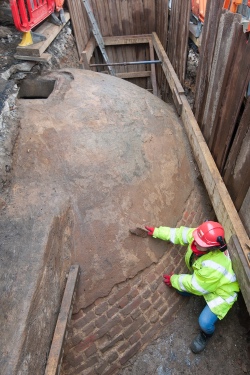
An 18th century ice house has been (re)discovered beneath the streets of Marylebone during a residential development project known as Regent’s Crescent. The subterranean red brick ice house – which measures 7.5 metres wide and 9.5 metres deep and was built in the 1780s – was used by pioneering ice-merchant William Leftwich during the 1820s to bring high quality ice to wealthy households and service the trend to serve frozen treats to guests as well as supply increasing demand from food retailers and medical institutions. Leftwich, seeing a niche for clean, quality ice (ice sourced from local canals and lakes during winter was often dirty), shipped ice collected in Norway’s frozen lakes and then transported it into London via Regent’s Canal. Now listed as a scheduled monument by Historic England, the egg-shaped ice house was rediscovered by MOLA archaeologists who were working on the site on behalf of property developer Great Marlborough Estates. It will now be incorporated into the gardens of Regent’s Crescent which have been newly designed by Kim Wilkie as part of the £500 million development project. The Grade I-listed crescent was originally designed by John Nash (of Buckingham Palace and Brighton Pavilion fame) and built in 1819. The houses were destroyed during the Blitz and replica properties were built in the 1960s. But the ice house, an entrance tunnel and ante-chamber all survived the bombing and remain in what MOLA has called “excellent condition”. It is anticipated that the ice house chamber will be open to public viewing via a special corridor during archaeological and architectural festivals.

PICTURES: Top – Buildings archaeologists from MOLA record the interior of the ice house/A MOLA archaeologist brushes the near perfect exterior of the ice house exposed during excavation in 2015 (Images© MOLA).

A Moment in London’s History – The Beatles play a final rooftop concert…

This month marks 50 years since The Beatles’ final public performance – a seemingly impromptu concert which took place on a Savile Row rooftop on a freezing day in 1969 (but was actually held to record the final scenes of a film they were making).

The unannounced concert on 30th January was only 42 minutes long and featured five songs – including Get Back, I’ve Got A Feeling, One After 909, Dig A Pony and Don’t Let Me Down, some of which were played more than once (as well as various other song snippets).

As well as band members John Lennon, Paul McCartney, George Harrison and Ringo Starr, Billy Preston had been brought in as a keyboardist.

The event, described in RollingStone as the band’s first “truly live” performance in more than two years, took place on the roof of the headquarters Apple Corps, then located at 3 Savile Road, which was the corporation the group had founded as an umbrella organisation for its various business ventures including Apple Records.

The performance, which famously ended with John Lennon saying “I’d like to say thank you on behalf of the group and ourselves, and I hope we passed the audition”, was filmed and recorded and 21 minutes of the footage featured in the 1970 documentary, Let It Be.

The Fab Four’s concert was eventually shut down by the Metropolitan Police – located just up the street at number 27 – over noise and traffic issues but no arrests were made (Ringo later wrote about his regret at not being dragged off by them).


Lost London – Domus Conversorum…

Located in Chancery Lane, this “House for Converts” – for Jews who converted to Christianity – was founded in 1232 by King Henry III.

The buildings, which included a chapel as well as living quarters, provided a communal home for residents – needed because when they converted, they forfeited all their possessions to the king.

Chaplains were employed to teach the new converts and a warden appointed to manage their day-to-day living.

The Royal Treasury bore the expenses of the institution which included paying its residents a small income (although the annual grant from treasury apparently wasn’t always forthcoming leaving the residents destitute) and it was supplemented with a poll tax called the “chevage” levied on all Jews over the age of 12.

In 1290, King Edward I expelled the Jews from England. Residence here was officially the only way Jewish people could remain and some 80 residents apparently did so.

It’s said that apart from these original 80 residents (the last of whom – said to be a woman called Claricia of Exeter – died in 1356), only some 50 further converts were admitted between 1331 and 1608.

By the early 17th century, records of the buildings’ use as a house for Jewish converts had come to an end. The main residential building was destroyed in 1717 to make room for a new house for the Master of the Rolls – the chapel was at this stage being used as a storehouse for the rolls of Chancery.

Subsequently known as the ‘Rolls Chapel’, it was eventually largely demolished to make way for an extension to the Public Records Office which had been built on the site in 1851.

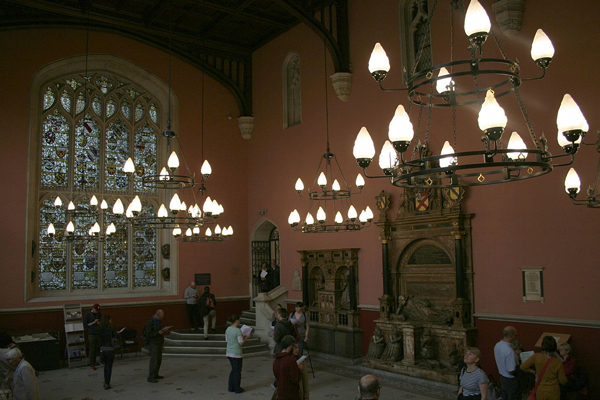
But some monuments from it are preserved in part of the former PRO known as the ‘Weston Room’ (pictured below).

In the late 1990s, the PRO moved out to Kew where it formed part of the National Archives. The building was acquired by King’s College London in 2000 and is now the Maughan Library.

PICTURES: Top – The Maughan Library (FormerBBC; licensed under CC BY-SA 4.0); Below – The Weston Room in what is now the Maughan Library (Cmglee; licensed under CC BY-SA 3.0)

10 historic London hotels…3. Claridge’s…

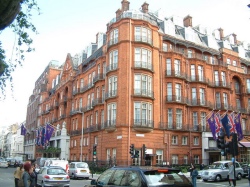
This five star Mayfair establishment owes its origins and name to William Claridge, possibly a former butler, and his wife Marianne, who took over management of a small hotel at 51 Brook Street in 1853.

In 1854, they purchased the adjoining Mivart’s Hotel, first established in 1812, and substantially expanded the premises. It apparently combined the two names – Mivart’s and Claridge’s – for a short time before the reference to Mivart’s was dropped.

The hotel, which stands on the corner with Davies Street, was bought by Richard D’Oyly Carte (owner of The Savoy) in 1893 and subsequently rebuilt in red brick to the designs of CW Stephens (of Harrods fame) with interiors by Sir Ernest George and the inclusion of modern amenities including en suite bathrooms and lifts. The hotel, which is now Grade II-listed, reopened in 1898, with some 203 rooms and suites.

It was extended in the late 1920s with the addition of 80 new rooms and a ballroom while the lobby was redesigned by art deco pioneer Oswald Milne (much of that decoration, including work by Basil Ionides, remains).

The hotel’s reputation as a place to stay among the well-to-do was given a significant boost when Empress Eugenie, wife of French Emperor Napoleon III stayed in 1860 and entertained Queen Victoria and Prince Albert.

It was also favoured by exiled royals during World War II including King Peter II and Queen Alexandria of Yugoslavia all staying here. In fact, their son, Crown Prince Alexander II, was born in suite 212 in 1945 (now named the Prince Alexander Suite).

The story goes that Prime Minister Winston Churchill declared the suite Yugoslav territory for a day (although evidence supporting the story about Churchill’s involvement is apparently scarce). It’s also said that a spadeful of dirt from Yugoslavia was placed under the bed so the Crown Prince could literally be born on Yugoslav soil (but there’s no mention of this aspect of the story on Crown Prince Alexander II’s official website).

Churchill and Clementine stayed in a suite here on the sixth floor after the wartime PM’s unexpected defeat in the general election of 1945.

Other luminaries to have stayed here include American actors Cary Grant, Katharine (and Audrey) Hepburn, Yul Brynner and Bing Crosby (Spencer Tracey famously said he didn’t want to go to heaven when he died but to Claridge’s) as well as director Alfred Hitchcock, Aristotle and Jackie Onassis, and, more recently, everyone from Mick Jagger and Madonna to Brad Pitt and Tom Cruise. Kate Moss celebrated her 30th birthday here.

And, of course, royals including the late Queen Mother, Queen Elizabeth II and Prince Phillip have all been regular diners.

The hotel, which underwent a major restoration from 1996 and saw 25 new suites designed by David Linley opened in 2012, is now part of the Maybourne Hotel Group, having parted ways with the Savoy Hotel in the mid-noughties.

Current facilities include the restaurant Fera at Claridge’s (this opened in 2014 after the closure of Gordon Ramsay at Claridge’s in 2013) as well as The Foyer & Reading Room (where afternoon tea is served), The Fumoir cocktail bar, Claridge’s Bar and a health club and spa.

The Claridge’s Christmas Tree is a much anticipated part of London’s festive season, with recent years seeing a different world-renowned designer taking on the task of decorating it, including the likes of John Galliano, Domenico Dolce and Stefano Gabbana, and Christopher Bailey of Burberry.

The hotel was the subject of a three part documentary, Inside Claridges, in December, 2012.

For more, see www.claridges.co.uk.

PICTURE: Tim Westcott (licensed under CC BY-SA 2.0)


LondonLife – Millennium Bridge by night…

Looking across the Thames toward South Bank and the Tate Modern. PICTURE: JJ Jordan/Unsplash

London Pub Signs – The Blue Posts…

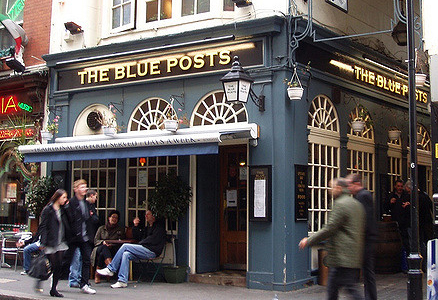
This Soho pub, located not far from Piccadilly Circus, takes its name from the blue posts which once stood out front.

A pub is believed to have stood on this site at 28 Rupert Street – now in Chinatown – since at least 1739 and is believed to have been updated substantially in about 1850. While the blue posts themselves are long gone, the building itself is now painted blue.

It has been suggested that the blue posts were simply placed out the front to mark the pub’s location before street numbering systems were introduced – as in, “it’s the place with the blue posts out the front”, but there are a number of other suggestions for the origins of the name.

One is that the blue posts were used as border markers for the royal hunting ground which once stood or Soho. Another, perhaps more likely than the aforementioned, that they marked locations where you could hire sedan chairs from in times gone by.

Whatever the reason for its name, this small, Grade II-listed pub, which is located on the corner with Rupert Close, underwent a complete transformation in early 2018 by the team behind the Israeli eatery, The Palomar.

As well as a small pub in ground floor of the building, it also boasts a cocktail lounge on the upper floor called the Mulwray (apparently named for the character, Evelyn Mulwray, played by Faye Dunaway in the movie Chinatown) and a small restaurant in the cellar called Evelyn’s Table (another Chinatown reference).

The Rupert Street establishment is one of several pubs with the same name in West End – others include one located nearby in Berwick Street, another in Newman Street, and yet another in Bennet Street in St James’s. And that’s just those in near proximity. So whatever the blue posts represented, it was clearly a relatively common feature in the area.

For more, see http://theblueposts.co.uk.

PICTURE: Ewan Munro (licensed under CC BY-SA 2.0)

Treasures of London – The Hardy Tree…

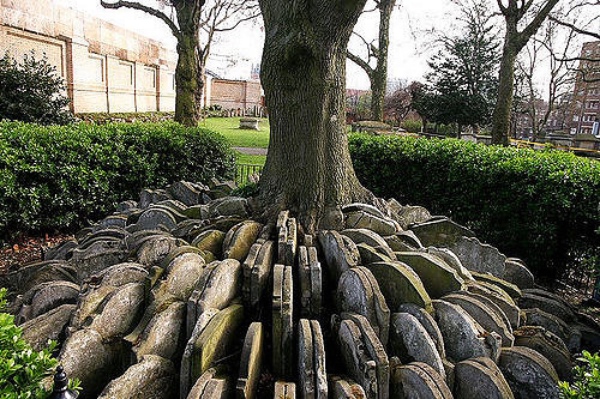
Located in the churchyard of St Pancras Old Church, the Hardy Tree takes its name from its association with novelist Thomas Hardy.

Before Hardy found fame as the author of such novels as Tess of the D’Urbervilles, The Mayor of Casterbridge and Far from the Madding Crowd, in the 1860s he worked as an assistant to a West End-based architect, Arthur Blomfield.

Blomfield’s firm, in order to make way for a new line for the Midland Railway, was commissioned by the Bishop of London to exhume bodies from their graves in the churchyard and relocate them.

Hardy was given the job of supervising the removal of the corpses – apparently among those exhumed was a coffin containing a man with two heads!

It’s said that after he had removed the bodies, Hardy had to decide what to do with the headstones which remained and came up with the idea of placing them in a rather lovely fanned collar around an ash tree growing in a part of the churchyard unaffected by the railway line.

Whether Hardy was actually responsible for the placement of the gravestones remains somewhat uncertain (although it’s a nice story). But his work in the graveyard is believed to have at least partly inspired his poem, The Levelled Churchyard.

The moss-covered gravestones and tree have since merged and now make a fascinating monument to the churchyard’s past life, attracting Hardy pilgrims from across the world. And, of course, the churchyard is also famous as the site where Mary Shelley, author of Frankenstein, planned her elopement with poet Percy Bysshe Shelley, while she was visiting the grave of her mother, Mary Wollstonecraft not to mention Charles Dickens’ famous reference to it in A Tale of Two Cities and its association with so-called ‘resurrection men’ or ‘bodysnatchers’ in the 19th century.

PICTURE: Stef (licensed under CC BY-NC-ND 2.0)


This Week in London – Good grief, Charlie Brown!; Captain Cook and the Pacific; and the Kindertransport remembered…

Eighty original comic strips hand-drawn by Charles M Schulz, of Peanuts fame, are on show at Somerset House on the Strand along with many of his personal effects and interactive installations in an exhibition marking the 70th anniversary of the creation of iconic character Charlie Brown. Good Grief, Charlie Brown! Celebrating Snoopy and the Enduring Power of Peanuts looks at the impact of the comics on the cultural landscape, from 1950 to now, and, alongside works by Schultz, features responses to them by 20 figures from the worlds of art, fashion and music. The comic strips are showcased in their original state and size – complete with inky thumbprints and correction marks – and sit alongside vintage Peanuts products and publications as well as correspondence between Schultz and people such as Billie Jean King and Hillary Rodham (now Clinton). Along with interactive displays including a real-life re-imagination of Lucy’s Psychiatric Help booth, light boxes where people can learn to draw the Peanuts characters and a Snoopy Cinema, here are also three large-scale lights installations illuminating the entrance to the exhibition. This landmark exhibition can be seen until 3rd March. Admission charge applies. For more, see www.somerset.org.uk.

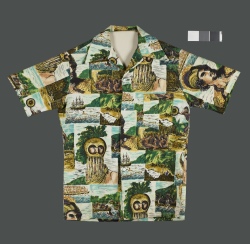
Newly acquired contemporary artworks by Pacific Island artists are at the centre of an exhibition re-examining the relationship between Captain James Cook and the peoples of the Pacific Ocean which is running at the British Museum. Reimagining Captain Cook: Pacific Perspectives also features historic artefacts including Cook’s personal possessions and the British Museum’s oldest example of a Hawaiian shirt (pictured). Among the 14 contemporary artworks are eight specially acquired for the exhibition and all are in some way a response to Cook’s voyages to places including Australia, New Zealand, New Caledonia, Hawaii, Vanuatu and Tahiti. They include Maori artist Steve Gibbs’ Name Changer – an attempt to restore awareness of the traditional Maori names for the region around Gisborne in New Zealand, and a work by the Aboriginal photographer and artist Michael Cook, Civilised #12, which reflects on the legacy of William Dampier, the first Briton to visit Australia (before Cook). The display can be seen in Room 91 until 4th August. Admission is free. For more, see www.britishmuseum.org. PICTURE: ‘Hawaiian’ style vintage cotton shirt, decorated with designs from drawings done on Captain Cook’s voyages, Hawaii, 1970-1980. © Image The Trustees of the British Museum.

An exhibition marking the 80th anniversary of the Kindertransport is running at the Jewish Museum London in Camden. Remembering the Kindertransport: 80 Years On tells the story of how in 1938-39, the British Government allowed 10,000 Jewish and other ‘non-Aryan’ children from Nazi-occupied Europe to come to Britain in a rescue operation which became known as the ‘Kindertransport’. It features the children, now in their 80s and 90s, telling their stories on film as well as personal objects and artefacts they brought with them from their homelands. Also on show is a photographic exhibition – Still in Our Hands: Kinder Life Portraits – featuring archival photographs and portraits of former Kindertransportees and another – My Home and Me – which, held in partnership with the British Red Cross, explores the journey of young refugees arriving in Britain today. The exhibition, which is being accompanied by a series of events, runs until 10th February. Admission is free. For more, see www.jewishmuseum.org.uk/kindertransport.

Send all items for inclusion to exploringlondon@gmail.com.