
PICTURE: Tom Eversley/Unsplash
PICTURE: Tom Eversley/Unsplash
Albemarle Street in Mayfair is generally believed to be the first street in London made into a one-way street.
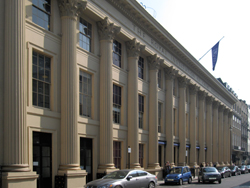 The decision to make the street one-way apparently stems from the popularity of a series of science-oriented lectures at The Royal Institution of Great Britain given in the early 19th century by Sir Humphry Davy, inventor of the miner’s lamp and the first lecturer appointed at the RI following its inception in 1799.
Such was the crush of carriages in Piccadilly to attend Davy’s lectures that in response, the powers that be at The Royal Institution gave instructions to coach drivers about the direction of travel in the street and paid for constables to enforce their ruling.
The concept of the one-way street, however, does apparently go back much further. The Spectator reports that in 1617, Pudding Lane – the site of the start of the famous Great Fire of London in 1666, was among numerous laneways around Thames Street which were designated as one-way only for carts to ease congestion.
Above: The Royal Institution as it is today, where Friday night lectures caused the introduction of one-way traffic in the street. PICTURE: Gryffindor /CC BY-SA 3.0
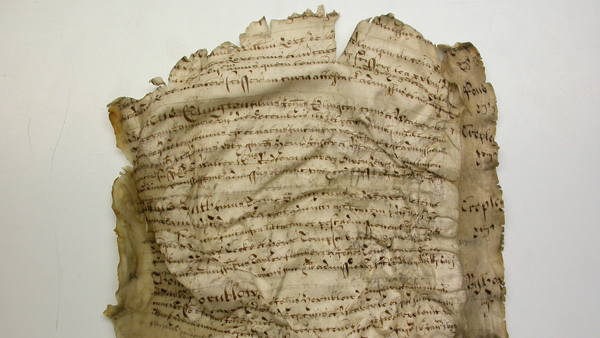
• The Great Parchment Book, known as the ‘Domesday Book’ of the Ulster Plantation (now part of Northern Ireland), has gone on display at the City of London’s Heritage Gallery, located in the Guildhall Art Gallery. The book was compiled in 1639 and documents the period following King James I’s settlement of English and Scottish Protestants in Ulster. It came about after King Charles I seized estates around Derry which were managed by the Irish Society on behalf of the City of London and City livery companies and a survey was done to gather information about the lands. Stored at Guildhall, The Great Parchment Book was damaged in a fire in 1786 but following conservation is now on display. Runs until 10th August. Admission is free. For more, see www.greatparchmentbook.org. PICTURE: Courtesy City of London Corporation.
• Works by Damien Hirst and David Hockney are among those on show in #LondonTrending which opens at the Guildhall Art Gallery today. A selection of limited edition prints on loan from British Land’s collection charts how collectives of London-based artists created some of the 20th century’s most innovative art. The display will also feature prints by pop artists Peter Blake, who created the sleeve design for The Beatles’ Sgt Pepper’s Lonely Hearts Club Band album, and Eduardo Paolozzi, who designed the mosaic patterned walls at Tottenham Court Road tube station as well as works by Richard Hamilton, Patrick Procktor, Jan Dibbets, Richard Long, Bruce McLean, Michael Lady, Simon Patterson, Gary Hume and Ian Davenport. Runs until 28th August in the Temple Room. Admission is free. A series of curator talks are scheduled. For more, see www.cityoflondon.gov.uk/londontrending.
• Sheila Rock’s iconic portraits of musicians ranging from Sir Simon Rattle to Siouxsie Sioux are on show at the City of London’s Barbican Music Library. Picture This includes a wide range of her vintage prints including her work for album and vinyl 12” releases such as the shot of Debbie Harry used in 1978 for Blondie’s Denis’ 12. Other images included in the display feature Irish band U2 and conductor Daniel Barenboim. Rock, who has been based in London since 1970, was introduced to music photography by her ex-husband (and renowned rock photographer) Mick Rock and became known as a highly influential photographer during the punk and post-punk scene, later helping to shape the look of creative magazines such as The Face. Runs until 4th July. Entry is free. For more, follow this link.
Send all items for inclusion to exploringlondon@gmail.com.
 Another of London’s protected views is that from the Grade II-listed statue of General Wolfe in Greenwich Park.
The panoramic scene takes in much of the park itself as well as The Queen’s House and the Old Royal Naval College and across the River Thames to London’s Docklands and around to St Paul’s Cathedral (the key point in London when it comes to protected views).
The bronze statue, which stands on a terrace just outside The Royal Observatory (home of Greenwich Mean Time) atop a stone plinth, was created in 1930 and commemorates General James Wolfe (1727-1759), whose victory in the Battle of Quebec (also known as the Battle of the Plains of Abraham) with the French secured Canada for the British.
Wolfe has local links – he and his father apparently lived in a house on the edge of the park and he is buried in St Alfege’s Church. The statue, unveiled by the Marquis de Montcalm, a descendant of the commander-in-chief of French forces who also died at the Battle of Quebec, was a gift from the Canadians and was designed by Dr Tait Mackenzie.
The statue’s plinth incidentally is pitted with bomb fragments from a bomb which exploded at the Royal Observatory during World War II.
WHERE: Greenwich Park (nearest DLR station is Cutty Sark – other nearby stations include Greenwich, Maze Hill and Blackheath); WHEN: 6am to at least 6pm (closing times vary depending on the month); COST: Free entry; WEBSITE: www.royalparks.gov.uk/Greenwich-Park.aspx
PICTURES: Views from the statue of General Wolfe via Flickr (top – Roman Hobler/CC BY 2.0/image cropped; bottom – Garry Knight/CC BY 2.0)

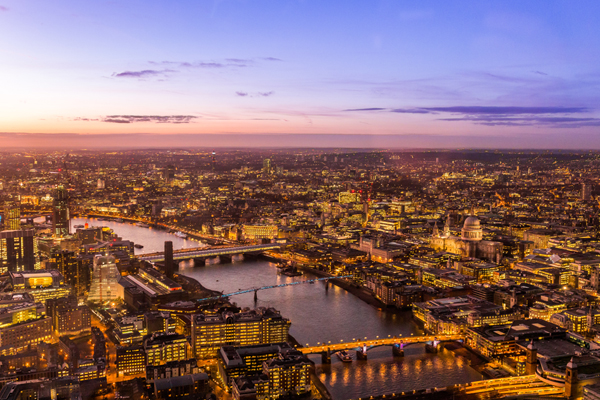
PICTURE: Negative Space/CC0. Taken in 2015.
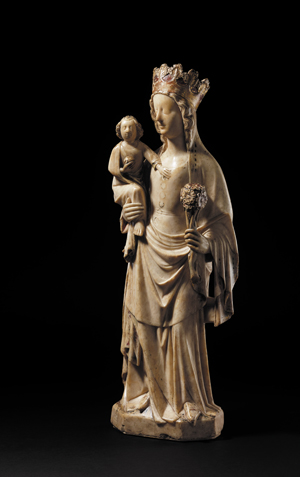 Recently acquired by the British Museum, this 14th century alabaster figure of the Virgin and Child is the best preserved of its kind on display in any UK national collection. The sculpture, which was probably created in the Midlands, is a rare survivor of the Reformation when almost all religious imagery was lost or destroyed. It is speculated that it escaped destruction by being exported to the Continent, whether shortly after its creation or when imagery of its kind was no longer permitted. The work of an unknown master, the figure bears the marks where people have repeatedly touched or kissed it as an act of devotion with the face of the Virgin and the foot of Christ both worn as a result. Having suffered no major breakages, it still bears large portions of the original decoration including imitation jewels on the chest of the Virgins and traces of the original red and green painting and gilding. Kept at the Redemptorist monastery in Saint-Truiden, Belgium, for many years, it was purchased by a famous collector, Dr Albert Figdor, in the late 19th century. Sold at auction after his death, it entered a European private collection where it remained until it was sold to Sam Fogg from whom the British Museum, thanks to support from the Art Fund, National Heritage Memorial Fund and private donations, acquired it. The sculpture is on display in the Sir Paul and Lady Jill Ruddock Gallery of Medieval Europe. PICTURE: Alabaster Figure of the Virgin and Child, 14th century, England, © The Trustees of the British Museum.
WHERE: British Museum (nearest Tube stations are Tottenham Court Road, Holborn, Russell Square and Goodge Street); WHEN: 10am to 5.30pm, daily (open to 8.30pm Friday); COST: Free; WEBSITE: www.britishmuseum.org
 • The Tower of London’s dry moat will be transformed into a 15th century medieval court gathered to welcome a new Queen, Margaret of Anjou, for the May bank holiday this long weekend. The world of 1445 is being reimagined in a series of festivities – under the banner of Go Medieval at the Tower – which will include sword-fighting knights, hands-on experiences for kids such as the chance to fire a real crossbow, the “scents, sights and sounds” of a medieval encampment, and the chance to witness trades such as armoury and coin-striking. As well as, of course, opportunities to meet King Henry VI and his 15-year-old queen, Margaret who, upon her coronation, was honoured with a lavish pageant from Westminster Abbey to the Tower in which she received extravagant gifts including a lion. Runs from 10am to 5pm from Saturday to Monday. Admission charge applies. For more, see www.hrp.org.uk/tower-of-london/. PICTURE: © Historic Royal Palaces.
• Working Londoners from the past 500 years are the subject of an open air exhibition opening in Guildhall Yard on Saturday. Londoners: Portraits of a Working City, 1447 to 1980 features a range of photographs, prints and drawings – many displayed for the first time – from the London Metropolitan Archives. The exhibition – which includes images of Jack Black of Battersea, Queen Victoria’s rat-catcher, and Charles Rouse, believed to be the last nightwatchman in 19th century London as well as pictures of Savoy Hotel page boys, a brick dust seller, a farrier in 1980s Deptford and a 15th century Lord Mayor – complements The Londoners exhibition currently running at the LMA in Clerkenwell which features 50 portraits not included in the Guildhall display. The free outdoor exhibition can be seen into 23rd May – for more, see www.cityoflondon.gov.uk/thelondoners. The Clerkenwell display can be seen until 5th July – for more, follow this link.
• The life of the butler will be up for examination at Apsley House, home of the Duke of Wellington, this long weekend in an event which will also see the duke’s Prussian Dinner Service laid out in all its glory. Butlers and Banquets will feature talks about the history of the service – commissioned by King Frederick William III of Prussia and presented as a gift to the 1st Duke of Wellington after his victory over Napoleon at the Battle of Waterloo in 1815 – with younger visitors also having the chance to meet the butler of the house and find out what running a grand home like Apsley House was like as well as learning skills such as how to lay a table. Runs between 11am and 4pm from Saturday to Monday. Admission charge applies. For more, see www.english-heritage.org.uk/apsley.
• A new exhibition marking the 100th anniversary of the Russian Revolution opens at the British Library in King’s Cross on Friday. Russian Revolution: Hope, Tragedy, Myths tells how the revolution unfolded during the reign of the last tsar, exploring the growth of the revolutionary movements with a special focus on key figures such as Tsar Nicholas II and revolutionary leaders such as Vladimir Lenin. Among the items on display is a letter Lenin wrote in April, 1902, applying to become a reader at the British Museum Library which he signed with his pseudonym, Jacob Richter, to evade the tsarist police. Other items on display include a souvenir album of the Tsar’s coronation and wallpaper hand-painted by women factory workers propaganda along with posters, letters, photographs, banners, weapons, uniform items, recordings and films. Runs until 29th August. Admission charge applies. For more, follow this link.
Send all items for inclusion to exploringlondon@gmail.com.
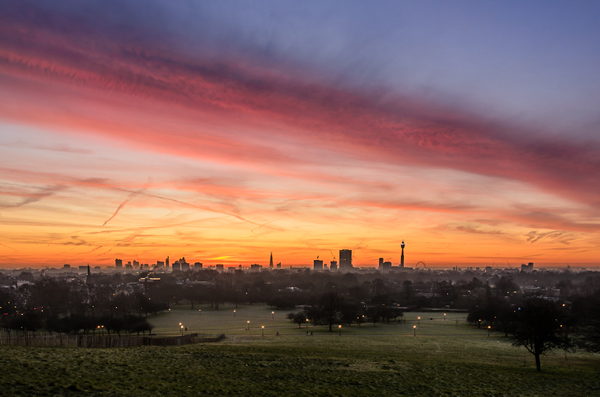
Standing some 200 feet above sea level (almost 63 metres), this rounded grassy hill, just to the north of The Regent’s Park proper, has long held a fascination for Londoners partly, at least, for the panoramic views it offers of the city skyline.
Once part of a hunting ground used by King Henry VIII, the hill – which has also been known as Battle and Greenberry Hill – was purchased in 1841 from Eton College to provide more public space for Londoners.
It has served as the site of a famous unsolved murder (that of magistrate Sir Edmund Berry Godfrey whose mysterious death, exploited by anti-Catholic plotter Titus Oates, caused considerable uproar) as well as duels, prize fights, mass gatherings and mystic happenings.
The latter have included it being the location where Edward Williams (Iolo Morganwg) first organised a gathering of druids, known as a Gorsedd of Bards, in 1792, as well as it being the subject of a prophecy by 16th century ‘soothsayer’ Mother Shipton warning that the streets would “run with blood” if the hill should become surrounded by urban sprawl.
Around the summit of the hill stands a York Stone edging feature bearing an inscription from poet William Blake – “I have conversed with the spiritual sun. I saw him on Primrose Hill” – while standing on the slope below is the famous Shakespeare’s Tree which was originally planted in 1864 to mark the 300th anniversary of the Bard’s birth (but was replaced in 1964).
The view over London is one of a number of protected views in the city (meaning you can’t build anything block it) and the trees below the summit are kept deliberately low so as not to impede sightlines.
The nearby residential district known as Primrose Hill is noted for being home to numerous famous figures including the likes of Jude Law, Kate Moss and the Gallagher brothers. It is also where the aliens in HG Well’s book, War of the Worlds, intended making their headquarters.
WHERE: Primrose Hill, The Regent’s Park (nearest tube stations are Chalk Farm, Swiss Cottage, St John’s Wood and Mornington Crescent); WHEN: Usually always; COST: free; WEBSITE: www.royalparks.org.uk/parks/the-regents-park/things-to-see-and-do/primrose-hill.
PICTURE: Mike Rolls/Flickr/CC BY-SA 2.0 (taken in 2012).
This narrow City of London passageway which runs between Whitefriars Street and Salisbury Square, just south of Fleet Street, is located in what was the precinct of the former Whitefriars monastery (what later became part of a somewhat lawless area known as Alsatia).
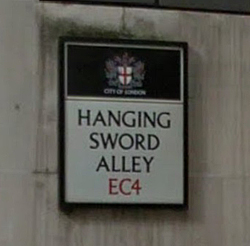 The name of the alley, which can be traced back to the mid-16th century, apparently relates to a hanging sign depicting a sword – hence “hanging sword” – and probably refers to a fencing school (the area was known for them) but it’s also been speculated the name could refer to a public house or brothel.
The alley was previously known as Blood Bowl Alley, a moniker derived from Blood Bowl House, a house of ill repute which once stood in the laneway (and featured in a William Hogarth’s Industry and Idleness series, in a plate depicting the Idle Apprentice, betrayed by a prostitute, being arrested).
The alleyway does get a mention in Dickens’ A Tale of Two Cities – it was here that he located the lodgings of Jerry Cruncher, the messenger for Tellsun’s Bank who makes money on the side as a ‘resurrection man’.
PICTURE: Google Maps
• The fourth annual ‘Performance Festival’ opens at the V&A in South Kensington tomorrow. Highlights include a preview of the V&A’s exclusive virtual reality recording of David Bowie’s musical Lazarus, the museum’s first ever stand-up comedy night and a premiere screening of the film Lady Macbeth followed by a Q&A with director William Oldroyd, actress Florence Pugh and costume designer Holly Waddington. The festival, which runs until Sunday, 30th April, is being run in conjunction with the display The History of Europe – Told by its Theatres currently in the museum’s Theatre and Performance Gallery. Admission free to most events/selected events are ticketed in advance. For more, see vam.ac.uk/exhibitions/performance-festival.
• The secrets and hidden spaces of the London Underground will be laid bare in an open day at the London Transport Museum’s Acton Depot this weekend. Activities include art and poster tours, a program of talks including discussions of the finds made during the Crossrail excavations, London’s mail rail and the Thames Tunnel, miniature railway rides and the chance to see heritage vehicles including the restored 1892 ‘Carriage 353’ . There’s also plenty of options for eating and shopping. Runs Saturday and Sunday (22nd and 23rd April). Admission charge applies but kids are free. For more, see www.ltmuseum.co.uk/whats-on/museum-depot/open-weekends
• Turner Prize-winning artist Gillian Wearing has been commissioned to create a statue of suffragist leader Millicent Fawcett for Parliament Square, it was announced last week. The statue will be the first female statue to stand in the square when it’s unveiled next year as well as the first to do so which was created by a woman.
Send all items for inclusion to exploringlondon@gmail.com
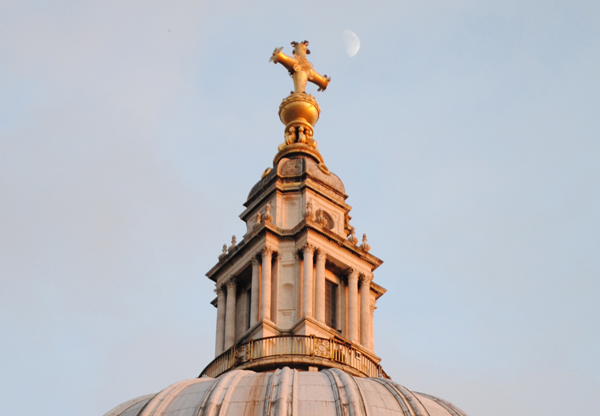
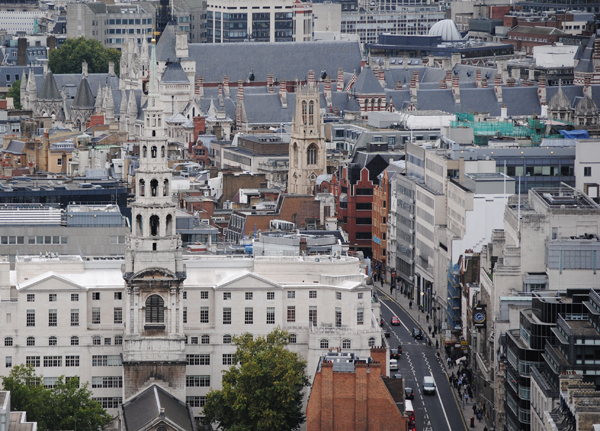
We kick off a new series this week looking at 10 of most memorable (and historic) views of London and to kick it off, we’re looking at the views from one of London’s most prominent historic institutions, St Paul’s Cathedral.
There are two external galleries at St Paul’s – the first is the Stone Gallery which stands at 173 feet (53.4 metres) above ground level. Encircling the dome, it is reached, via a route which takes the visitor through the internal Whispering Gallery, upon climbing some 378 steps.
Located above it, encircling the cathedral’s famous lantern (which sits on top of the dome), is the Golden Gallery. It stands some 280 ft (85.4 metres) above the cathedral floor, and can be reached by a climb of 528 steps.
From it – and the Stone Gallery below it – can be seen panoramic views of the City of London and across the Thames to Southwark.
The lantern above, meanwhile, weighs some 850 tonnes and on its top sits a golden ball and cross – the current ball and cross, which weigh about seven tonnes, were put there in 1821, replacing the original ball and cross which had been erected in 1708.
St Paul’s Cathedral was the tallest building in London from 1710 into the 1960s (when it was surpassed by Millbank Tower and what is now known as the BT Tower). Sir Christopher Wren’s St Paul’s is not as tall as the original medieval cathedral which reportedly had a spire reaching 489 feet (149 metres) into the sky compared to St Paul’s as it is now, standing to a height of some 365 feet (111.3 metres) above ground level.
WHERE: St Paul’s Cathedral, St Paul’s Churchyard (nearest tube station is St Paul’s); WHEN: The galleries are open from 9.30am to 4.15pm, Monday to Saturday; COST: £18 an adult/£16 concessions and students/£8 a child (6-18 years)/£44 a family of four; WEBSITE: www.stpauls.co.uk
PICTURES: Top – Looking up at the lantern with the Golden Gallery around the base; Below – View looking west from St Paul’s down Fleet Street (the spires of St Brides and St Dunstan-in-the-West can be seen).
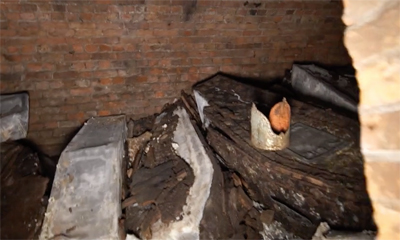
The remains of several archbishops of Canterbury are believed to have been found beneath a former parish church in Lambeth. Workers were carrying out renovation works at the deconsecrated St Mary-at-Lambeth, removing flagstone, when they found a hitherto unknown crypt containing some 20 lead coffins one of 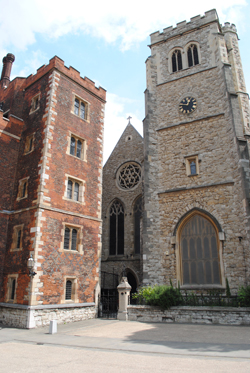 which had a small gold archbishops’ mitre resting on top of it. Among those whose coffins have been identified are those of Archbishop Richard Bancroft (in office 1604-1610), who played an important role in the creation of the King James Bible, and Archbishop John Moore (1783-1805) as well as Moore’s wife Catherine and that of John Bettesworth, Dean of Arches, Judge of the Archbishop Prerogative court. It is also believed that archbishops Frederick Cornwallis (1768-1783), Matthew Hutton (1757-1758) and Thomas Tenison (1694-1715) were buried in the tomb under the church’s chancel. The church, which is located beside the River Thames adjacent to Lambeth Palace – London home of the archbishops of Canterbury, originally dates from the 11th century and was deconsecrated in the 1960s. The burial place of John Tradescant (c1570-1638), described as the first “great gardener” in British history, it was subsequently transformed into what is now known as the Garden Museum, the world’s first museum of garden history. The museum closed in 2015 for a £7.5 million redevelopment project and is expected to reopen in late May. PICTURE: Top – the lead coffins with metallic bishop’s mitre; a still taken from video posted on the Garden Museum website/Right – St Mary-at-Lambeth (right side of image).
Wishing all our readers a very happy Easter!
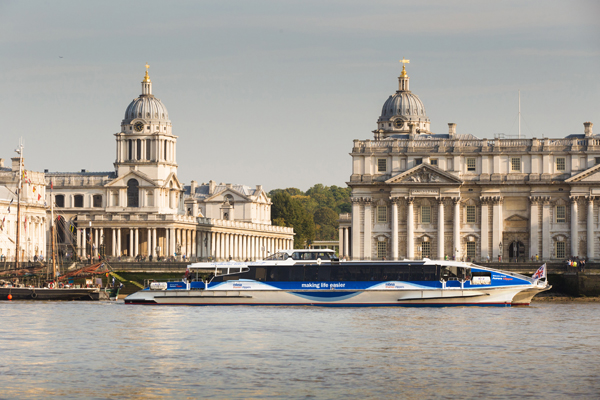 • Maritime Greenwich will celebrate 20 years of UNESCO World Heritage Listing with a “spectacular” lighting event next Tuesday night. The lights will be switched on at 8.30pm on 18th April, illuminating landmarks including the Cutty Sark, the Queen’s House, National Maritime Museum and Royal Observatory as well as the Old Royal Naval College. The event, the first in a series to mark the 20 year anniversary this year, is the first time all the buildings have been lit up in unison and is a one night only event. Greenwich Park and the grounds of the National Maritime Museum and Old Royal Naval College will be kept open until 10pm to give visitors more time to witness the historic event. Maritime Greenwich was inscribed on the World Heritage List in 1997 due to its role in the progression of English artistic and scientific endeavour in the 17th and 18th centuries. The event takes place from 8.30pm to 11pm (Cutty Sark will be lit until 11pm) and is free to attend. For more, see www.rmg.co.uk. PICTURE: RMG
• A memorial garden to Princess Diana has opened at Kensington Palace, marking 20 years since her death. The temporary ‘White Garden’ – located in what was formerly the Sunken Garden which often featured floral displays admired by the Princess – features flowers and foliage inspired by memories of the Princess’s life, image and style. The garden, which can be seen from a public walkway, complements the exhibition, Diana: Her Fashion Story, currently on show in the palace. For more, see www.hrp.org.uk/kensington-palace/.
• Mark Wallinger’s work, Ecce Homo – a life-sized sculpture of Jesus Christ with his hands bound behind his back and a crown of barbed wire on his head, has been placed at the top of St Paul’s Cathedral’s west steps for Easter. The sculpture, which will be at the cathedral for six weeks, represents Christ as he stands alone, waiting for judgement and a sentence of death. The sculpture is being presented by the cathedral in partnership with Amnesty International and the Turner Prize winning artist to highlight the plight of all those currently in prison, suffering torture or facing execution because of their political, religious or other conscientiously-held beliefs. The statue first appeared on the Trafalgar Square Fourth Plinth in 1999. For more, see www.stpauls.co.uk.
Send all items for inclusion to exploringlondon@gmail.com.
We’ve come to the end of our latest series on fictional character addresses in London. So here’s a recap (ahead of the launch of our new series next week)…
10 (more) fictional character addresses in London – 1. Fetter Lane, Old Jewry and Wapping…
10 (more) fictional character addresses in London – 2. 27a Wimpole Street…
10 (more) fictional character addresses in London – 3. 32 Brett Street, Soho…
10 (more) fictional character addresses in London – 4. 138 Piccadilly…
10 (more) fictional character addresses in London – 5. 27b Canonbury Square…
10 (more) fictional character addresses in London – 6. 9 Bywater Street, Chelsea…
10 (more) fictional character addresses in London – 7. Outer Circle, The Regent’s Park…
10 (more) fictional character addresses in London – 8. A square in Soho?…
10 (more) fictional character addresses in London – 9. Holland Park or Borough Market?…
10 (more) fictional character addresses in London – 10. 30 Wellington Square, Chelsea…
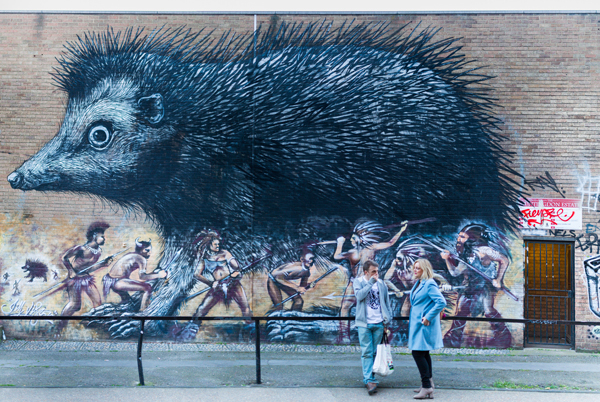
Located in Chance Street in Shoreditch, the hedgehog mural was created in 2012 by Belgian street artist ROA. It’s recently had a make over by Jim Vision who added cavemen along the base attacking the poor creature with spears (as well as a self-referencing caveman version of the artwork).
PICTURE: Davide D’Amico/Flickr/CC BY-SA 2.0
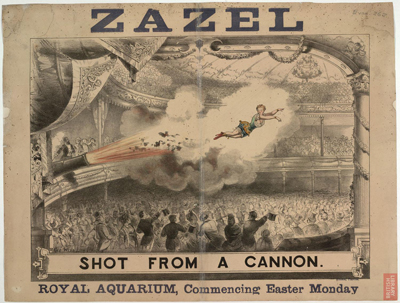
Yes, this is a rather odd one but it was 140 years ago this month that, on the 10th April, 1877, 14-year-old acrobat Rossa Matilda Pitcher (stage name Zazel), became the world’s first “human cannonball”.
‘Zazel’ was launched into the air by a special ‘cannon’ – invented by Canadian William Leonard Hunt (aka ‘The Great Farini, he was a famous tightrope walker), it used rubber springs to propel the person forward – in an event at the Royal Aquarium in Westminster.
She apparently flew some 6.1 metres before landing in a net.
Zazel later went on to perform in PT Barnum’s circus but sadly, in 1891 she was forced to retire after an accident in New Mexico during which, thanks to a net mishap, she landed badly and broke her back.
It’s worth noting that there is another claimant to the title of first human cannonball – some accounts have the “Australian Marvels”, a couple named Ella Zuila and George Loyal, first performing such an act in Sydney in 1872 (which, if true, would predate Zazel). Guinness World Records, however, has awarded the title to Zazel.
The Royal Aquarium, meanwhile, opened in 1876 in Tothill Street, west of Westminster Abbey, and was demolished in 1903 (we’ll look at its further in an upcoming Lost London post).
PICTURE: Via British Library/Public domain
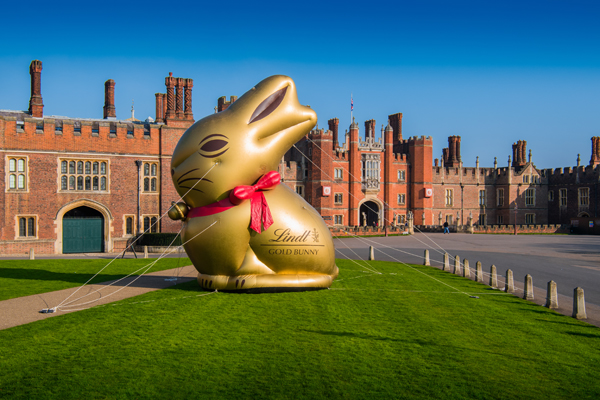 • Join in the hunt for Lindt gold bunnies at Hampton Court Palace this Easter. The bunny hunt is just one of the many chocolate-related activities taking place at the palace over the Easter period – visitors can also explore the history of chocolate and discover how it was made in the palace’s 18th century ‘chocolate kitchen’ by Thomas Tosier, King George I’s private chocolate chef while attractions outside also include the reopened ‘Magic Garden’. An imaginative play garden first opened in spring last year, it invites visitors to explore the world of Tudor tournaments on what was the site of King Henry VIII’s former tiltyard. The Palace Lindt Gold Bunny Hunt runs until 17th April (the Magic Garden is open until 27th October). Admission charges apply. For more, see www.hrp.org.uk/hampton-court-palace/. PICTURE: Lindt & Sprungli (UK) Ltd.
• Joseph Dalton Hooker – dubbed the ‘king of Kew’ – is the subject of a new exhibition in The Shirley Sherwood Gallery of Botanical Art in Kew Gardens. Joseph Hooker: Putting plants in their place explores the life of the botanist, charting his travels to many parts of the world – including Antarctica and Mt Everest – and how he helped to transform Kew Gardens from a “rather run-down royal pleasure garden” into a world class scientific establishment. The exhibition features an array of drawings, photographs, artefacts and journals including 80 paintings by British botanical artists and an illustration of Mt Everest by Hooker, the earliest such work by a Westerner. Runs until 17th September. Admission charge applies. For more, see www.kew.org.
• On Now – The Private Made Public: The First Visitors. The first in a series of public events and exhibitions celebrating Dulwich Picture Gallery’s bicentenary year, this display features the first handbook to the gallery, a 1908 visitor book which includes the signatures of Vanessa and Clive Bell and Virginia Woolf, and James Stephanoff’s watercolour, The Viewing at Dulwich Picture Gallery, which depicts the gallery’s enfilade as it would have been in the 1830s. The exhibition also looks back at some of the gallery’s first visitors and features quotes from notable artists, writers and critics shown next to works in the permanent collection. Can be seen until 4th June. Admission charge applies. For more, see www.dulwichpicturegallery.org.uk.
Send all items for inclusion to exploringlondon@gmail.com.
We finish this series on fictional London with the home of another of London’s most famous fictional spies – James Bond.
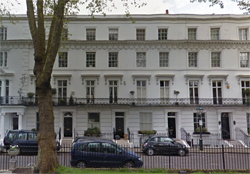 In Ian Fleming’s books about the adventures of 007, he has the spy living in a ground-floor flat in a “converted Regency house” in a “plane tree’d square” off the King’s Road.
While several possibilities have been identified over the years (including in Markham Square), it was Fleming’s former assistant to The Sunday Times, biographer and friend, John Pearson, who is credited with having identified this terrace in Wellington Square as the property Fleming probably had in mind (Pearson apparently had a friend from his college days who lived there at some point).
The five storey terrace, which dates from the early 1830s, was actually close by the address where Fleming lived – number 24 Cheyne Walk – when he commenced writing the first Bond novel, Casino Royale, in 1952.
The property was on the market not that long ago for a reported asking price of £6.35 million.
PICTURE: The terraces where James Bond is said to have lived in Wellington Square.
This Smithfield institution owes its sign to its close association with the cloth fair once held nearby.
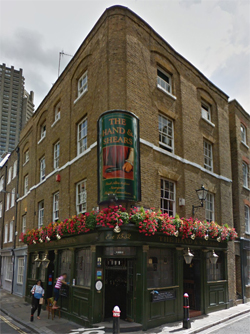 The current Grade II-listed pub at the corner of Middle and Kinghorn Streets dates from the early 19th century but there has apparently been a succession of taverns on the site since the 12th century (the sign on the pub proclaims the date 1532).
Thanks to its location within the precincts of St Bartholomew’s Priory, it became a focal point for the cloth fair which was held nearby between the 12th century and 1855 (the street Cloth Fair is named for it).
As well as being a favoured location for those attending the fair to obtain refreshment, it was also the location of a ‘Court of Pie Powder’ (from French pied poudreux for ‘dusty feet’ ) relating to travelling traders.
The pub’s name, meanwhile, is said to be a reference to the Lord Mayor of London’s practice of officially declaring the fair open by using shears to cut a piece of cloth on the tavern’s doorstep.
The pub also has some association with executions and, legend has it, was a popular spot for people to seek refreshment as they made their way to Newgate Prison where, between 1783 and 1868, executions were held outside the walls in the thoroughfare now known as Old Bailey.
For more, see the pub’s Facebook page.
PICTURE: Google Maps
Described by the Theatres Trust as a “key building” in music hall history, the Canterbury Music Hall was first erected in Westminster Bridge Road in 1852 on the site of an old skittles alley which had been attached to the Canterbury Tavern.
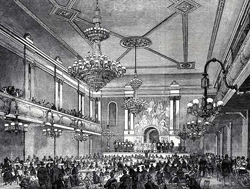 It was the tavern owner, Charles Morton, who erected the building which he apparently paid for out of the profits he made on selling drink while offering the entertainment for free.
Morton built upon the “song and supper room” tradition by employing a resident group of singers and such was its popularity that only a couple of years after the doors to the first hall opened, Morton was able to build a second, much larger music hall on the same site complete with a grand staircase, supper room and art gallery as well as seating for some 1,500 people.
Among stars to perform there was French acrobat Charles Blondin, who apparently made his way across the hall on a tightrope tied between the balconies.
In 1867 William Holland took a lease from Morton and the programmes then began to move away from the light music and ballads it was known for toward a more varied program with comedy prevailing. The art gallery was converted into a bar and a proscenium stage may have been added at this time.
RE Villiers took over management in 1876 and the building was again largely rebuilt – this time as a three tier theatre with a sliding roof. The venue hosted regular ballet performances and these proved popular with royalty – the Prince of Wales (later King Edward VII) was said to be a regular patron. The interior was again remodelled, this time with an Indian theme, in 1890.
The decline of the popularity of music halls saw it start to show films from 1914 and eventually to become a dedicated cinema. It survived until it was destroyed during a World War II bombing raid in 1942.
PICTURE: A print showing the hall after its 1856 rebuild (via Wikipedia)
 Exploring London