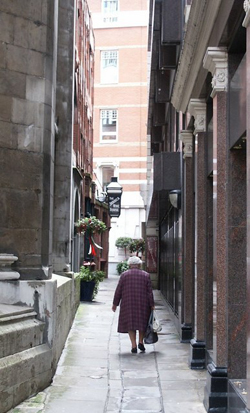
The first coffee house to be located in London, this premises was opened by a Greek, Pasqua Rosée, in 1652 and is believed to have been located in St Michael’s Alley off Cornhill.
 Rosée had come to England as the manservant of Daniel Edwards, a member of the Levant Company who had first encountered him in Smyrna (in modern Turkey) and returned with him. One story says that Rosée decided to start the business after a falling out with Edwards on their return to England; another that Edwards helped Rosée start the business when they realised the interest people had in trying the new drink.
The establishment, which was originally located in a shed in the churchyard of St Michael’s Cornhill, was advertised by a sign which was apparently a portrait of Rosée – hence the name ‘The Sign of Pasqua Rosee’s Head’ – but it was also referred to as ‘The Turk’s Head’. Such was its success that Rosée was apparently selling up to 600 dishes of coffee a day.
Not everyone, however, was a fan of Rosée’s business – in particular tavern owners who saw it as a threat to their own – and aware of his status as an outsider, he is said to have decided to forge a partnership with a freeman of the City of London so there could be no dispute over his right to trade. He found just such a partner in a grocer, Christopher Bowman, in 1654.
The business was relocated following the creation of their partnership across the alley out of the shed and into a rather ruinous house but the new lease was signed only by Bowman. There is a suggestion that Rosée had to flee for some misdemeanour but for whatever reason, his name is no longer mentioned and Bowman was now apparently the sole owner of the business.
Despite the change of ownership, the business continued to trade under Rosée’s sign and it is said to have been Bowman who authored the handbill The Vertue of the Coffee Drink (sic) – an advertising document which credits its creation to Rosée and is filled with some rather dubious claims about the miraculous powers of the drink.
Notable visitors included Samuel Pepys who visited the famous coffee house in 1660, mentioning it in his famous diary.
Bowman apparently died in 1662 and the business went into decline before any trace of it was wiped away in the conflagration of the Great Fire of 1666. The Jamaica Wine House, which features a blue plaque to Rosée’s coffee house apparently erected by the Corporation of London in 1952, now stands near the site Rosée’s original shed.
PICTURE: View down St Michael’s Alley with the church on the left looking toward’s the Jamaica Wine House. © Copyright Paul Collins/CC BY-SA 2.0

 conservationist and influential figure in the Arts and Crafts movement” as well as being the father of world famous writer Rudyard Kipling – opens at the V&A in South Kensington on Saturday. The exhibition is the first exploring the life and work of Kipling (1837-1911) who campaigned for the preservation of Indian crafts as well as being a craftsman himself (his terracotta panels can still be seen on the exterior of the V&A) and an illustrator of his son’s books. Lockwood Kipling: Arts and Crafts in the Punjab and London features paintings of the Indian section of the 1851 Great Exhibition as well as objects which were on display (the exhibition was visited by Kipling while a teenager), Kipling’s sketches of Indian craftspeople observed during his many years living in India as well as objects he selected for the V&A while there, designs and illustrations for books, and furniture he helped his former student architect Bhai Ram Singh design for royal residences Bagshot Park and Osborne. The free exhibition, a collaboration between the V&A and the Bard Graduate Centre in New York, runs until 2nd April (it will be on display at the Bard Graduate Center, New York, from 15th September this year). For more, see

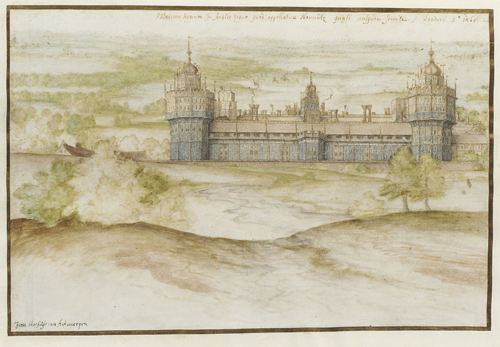
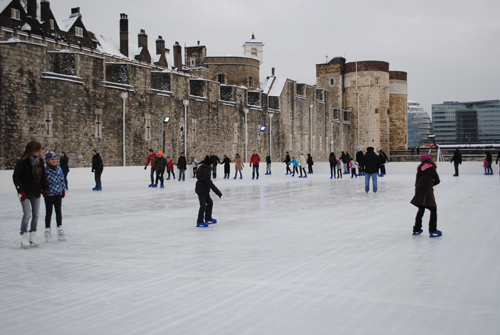

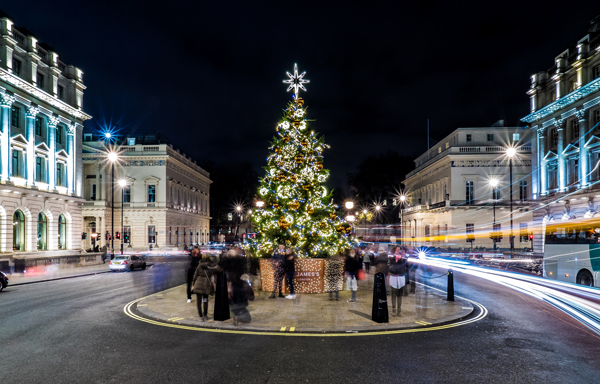


 This pub’s name isn’t too mysterious – it is, of course, named after Albert, Prince Consort to Queen Victoria, and given the date on which the building that now occupies the site was built – between 1862 and 1867, nor is the motivation to name it so – Prince Albert died on 14th December, 1861, leaving a bereft queen and a nation in mourning.
 Exploring London
