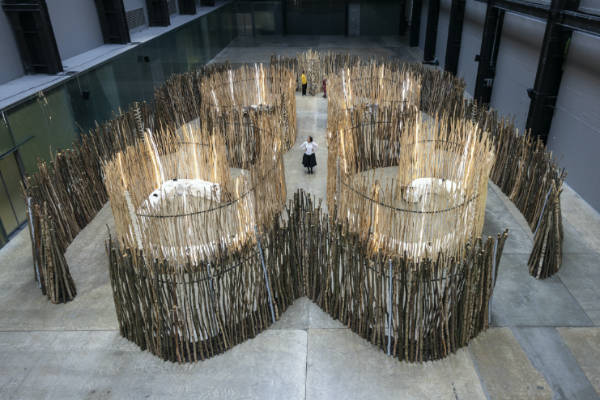
LondonLife – ‘Goavve-Geabbil’ at the Tate Modern…

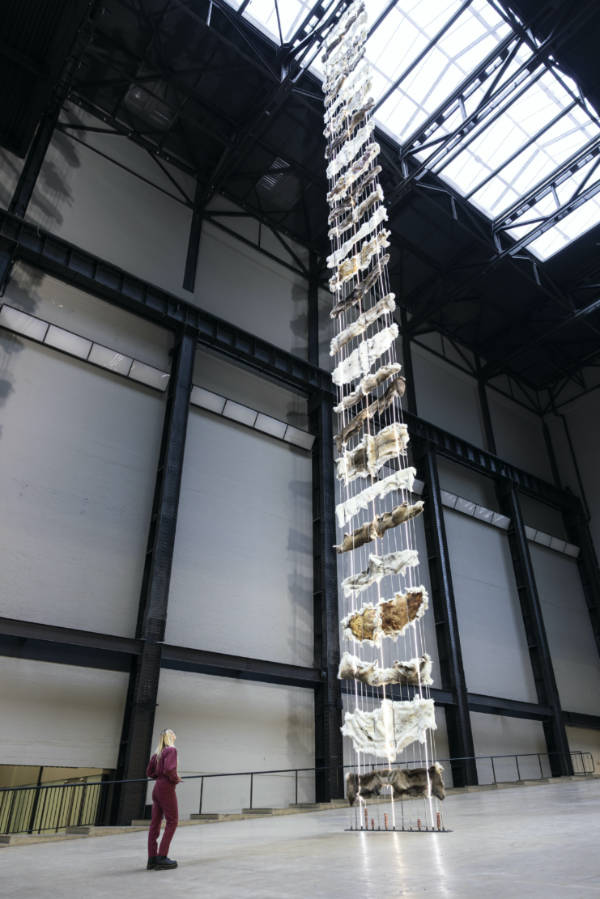
Hyundai Commission: Máret Ánne Sara: Goavve-Geabbil installation view featuring -Geabbil at Tate Modern 2025. © Máret Ánne Sara. PICTURE: © Tate/Larina Fernandez.

Described as an “immersive work honouring the reciprocal relationship between the Sámi people, the reindeer, and the land”, the Goavve-Geabbil is a monumental new sculptural installation by Sámi artist Máret Ánne Sara and has been made using materials which sustain her community in Sápmi, the territory of the Indigenous Sámi people which spans the countries of Norway, Sweden, Finland and Russia.

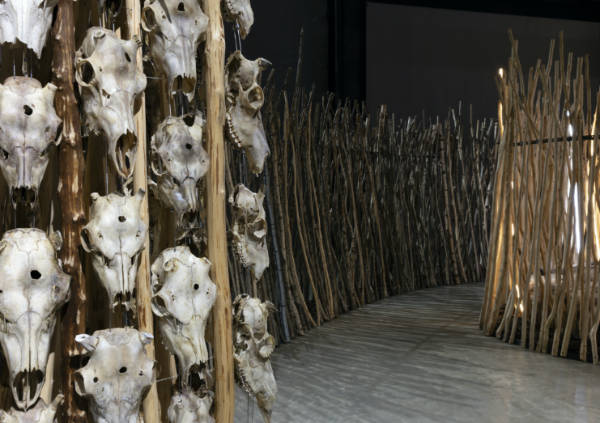
In this, Sara’s first major work in the UK, the artist draws on her experience as member of a reindeer herding family to highlight ecological issues impacting Sámi life and has combined hides and bones derived from traditional reindeer herding practices along with wood, industrial materials, sound and scent.

The Hyundai Commission: Máret Ánne Sara: Goavve-Geabbil can be seen in the Turbine Hall at the Bankside institution until 6th April. Admission is free. For more, see tate.org.uk/visit/tate-modern.

Hyundai Commission: Máret Ánne Sara: Goavve-Geabbil installation view featuring -Geabbil at Tate Modern 2025. © Máret Ánne Sara. PICTURE: © Tate/Sonal Bakrania.
Hyundai Commission: Máret Ánne Sara: Goavve-Geabbil installation view featuring Goavve- at Tate Modern 2025. © Máret Ánne Sara. PICTURE: © Tate (Larina Fernandez).

This Week in London – Wildlife Photographer of the Year exhibition; 20th century conflicts; Jennie Baptiste at Somerset House; and Nigerian Modernism…

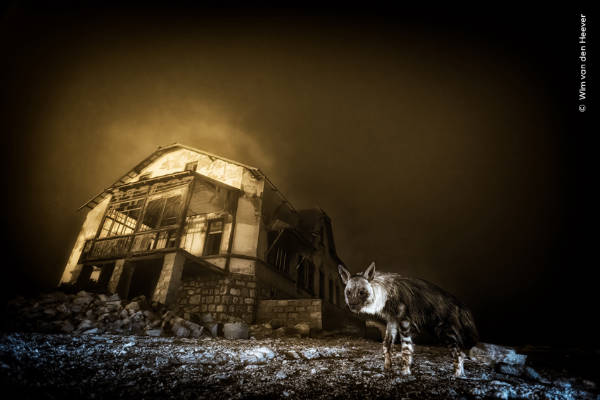
Wim van den Heever’s winning entry, Ghost Town Visitor.

An exhibition of entries into the annual Wildlife Photographer of the Year competition opens tomorrow at the National History Museum in South Kensington. The exhibition features 100 images selected from a record-breaking 60,636 entries and follows from this week’s announcement of the winners at a ceremony held at the museum earlier this week. The display includes the winning image – ‘Ghost Town Visitor’ which, captured by South African wildlife photographer Wim van den Heever depicts a brown hyena near the ruins of a long-abandoned diamond mining town in Kolmanskop, Namibia – as well as the winner of the Young Wildlife Photographer of the Year 2025 – 17-year-old Italian Andrea Dominizi’s After the Destruction which spotlights a longhorn beetle in the Lepini Mountains of central Italy, an area once logged for old beech trees, with a background of abandoned machinery. Other images on show include the winner of the Impact Award – Brazilian photographer, Fernando Faciole’s Orphan of the Road depicting an orphaned giant anteater pup following its caregiver after an evening feed at a rehabilitation centre – as well as category winners. The exhibition can be seen until 12th July next year. Admission charge applies. For more, head here.

Three 20th century conflicts which broke out in Malaya, Kenya and Cyprus after World War II are the subject of a new exhibition at the Imperial War Museum in Lambeth. Emergency Exits: The Fight for Independence in Malaya, Kenya and Cyprus looks at how these three conflicts, known as “emergencies” to the British Government, shaped and continues to shape Britain, its former territories and the wider world today. The display includes more than 70 objects such as propaganda posters, flags and artworks as well as oral histories and personal belongings which belonged to those impacted by them. As well as telling the stories of the three conflicts, Emergency Exits also explores Operation Legacy, the British Government’s attempt to prevent publication of sensitive documents related to the conflicts which included evidence of human rights abuses. The free exhibition, which opens on Friday, runs until 26th March. For more, see iwm.org.uk/events/emergency-exits-the-fight-for-independence-in-malaya-kenya-and-cyprus.

The first major solo exhibition focusing on the work of pioneering Black British photographer Jennie Baptiste opens in the Terrace Rooms at Somerset House on Friday. Jennie Baptiste: Rhythm & Roots, which is a highlights of Somerset House’s 25th birthday programme, charts how Baptiste used her lens to capture youth culture, music, fashion, and urban life within the Black British diaspora in London in the past few decades. The exhibition can be entered under a “pay what you can” model. Runs until 4th January. For more, see www.somersethouse.org.uk/whats-on/jennie-baptiste-rhythm-and-roots.

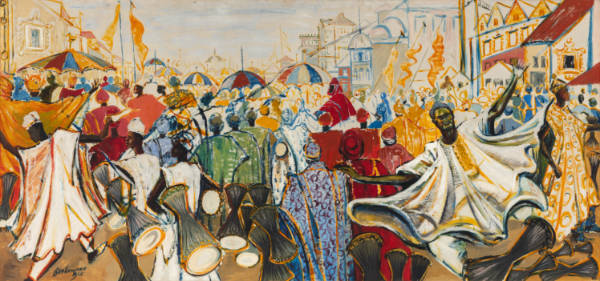
Ben Enwonwu, ‘The Durbar of Eid-ul-Fitr, Kano’, Nigeria 1955. © Ben Enwonwu Foundation. Private Collection

On Now: Nigerian Modernism. The Tate Modern is hosting the first UK exhibition to trace the development of modern art in Nigeria with more than 250 works by more than 50 artists on display. The exhibition, which spans the period from the 1940s to today, features works by globally celebrated artists of the 1940s, Ben Enwonwu and Ladi Kwali, as well as works by The Zaria Arts Society members Uche Okeke, Demas Nwoko, Yusuf Grillo, Bruce Onobrakpeya, and Jimo Akolo, Nsukka Art School members including Obiora Udechukwu, Tayo Adenaike and Ndidi Dike, and concludes with a spotlight on the work of Uzo Egonu. The display can be seen until 10th May. Admission charge applies. For more, see www.tate.org.uk/whats-on/tate-modern/nigerian-modernism.

Send all items for inclusion to exploringlondon@gmail.com.

This Week in London – Marie Antoinette; ‘Theatre Picasso’, ‘Exploring Space’ at the Science Museum; and Talk Like A Pirate Day…

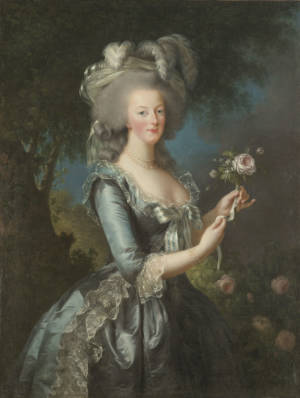
Portrait de Marie-Antoinette à la rose, Élisabeth-Louise Vigée Le Brun © Château de Versailles, Dist. Grand Palais RMN / Christophe Fouin.

The UK’s first exhibition to focus on the French Queen, Marie Antionette, opens at the V&A on Saturday. Marie Antoinette Style explores the dress and interiors adopted by the Queen, an early modern “celebrity”, during the final decades of the 18th century. It features some 250 objects including loans from Versailles which have never before been seen outside of France. There are personal items worn by the Queen including fragments of court dress, her silk slippers and jewels from her private collection as well as items from the Queen’s dinner service at the Petit Trianon, accessories and intimate items from her toilette case and even recreated scents from the court and a perfume which was favoured by the Queen. There also contemporary couture pieces by designers such as Moschino, Dior, Chanel, Erdem, Vivienne Westwood and Valentino and costumes, including shoes, made for screen, such as for Sofia Coppola’s Oscar winning film Marie Antoinette. The exhibition can be seen in Galleries 38 and 39 until 22nd March. Admission charge applies. For more, see vam.ac.uk/exhibitions/marie-antoinette.

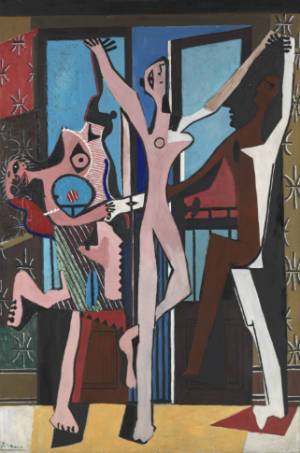
Pablo Picasso, The Three Dancers (1925) Tate. © Succession Picasso/DACS, London 2025.

Around 50 works by famed artist Pablo Picasso have been brought together for a new exhibition at the Tate Modern to mark the centenary of the artist’s work The Three Dancers (1925). Staged by contemporary artist Wu Tsang and write and curator Enrique Fuenteblanca, Theatre Picasso explores aspects of performance in his works and features the Tate’s entire collection of Picassos which, alongside The Three Dancers, also includes Weeping Woman (1937) and Nude Woman in a Red Armchair (1932). There are also loans from key museums in France as well as prints, drawings, sculptures, textile works and collages. These include the wool and silk tapestry Minotaur (1935) which is being displayed in the UK for the first time. Accompanying the works is Henri-George Clouzot’s 1959 film The Mystery of􏰱Picasso. Admission charge applies. Runs until 12th April. For more, see

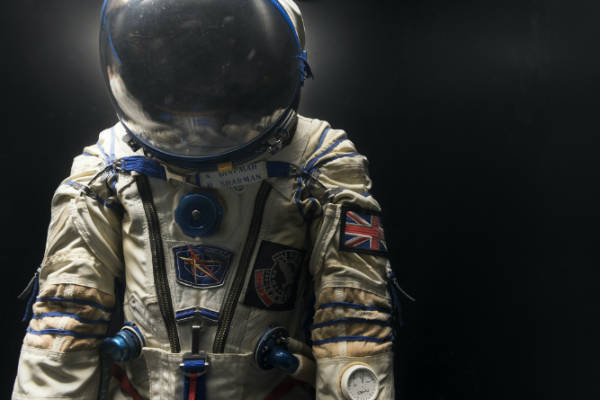
A new free gallery revealing the stories behind space exploration opens at the Science Museum in South Kensington on Saturday. The gallery – Exploring Space – showcases iconic items from the history of space exploration including a chunk of Moon rock nicknamed ‘Great Scott’ which was collected in 1971, the Soyuz TMA-19M descent module that carried astronaut Tim Peake, and the Sokol KV-2 rescue suit worn by Helen Sharman in 1991. There are also new technologies from the space sector including prototype electric propulsion technology from Magdrive and the ‘rolly-polly’ LEV-2 Moon rover, the result of the first collaboration between a space agency (JAXA) and a toy company (Takara Tomy). For more, see www.sciencemuseum.org.uk/see-and-do/space.

British astronaut, Helen Sharman’s Sokol spacesuit made by Zvezda. Sharman wore this rescue suit during the space flight on board the SOYUZ-TM-12 and MIR spacecraft in May 1991. Space suit model number KV-2 No. 167.

“Ahoy me hearties!” It’s International Talk Like A Pirate Day on Friday and the National Maritime Museum in Greenwich is celebrating from Friday across the weekend with talks about everything from Barbary corsairs to sea shanties, character actors and two-for-one discounts on tickets to the Pirates exhibition. Visitors over the weekend who dress like a pirate will be in the chance to win prizes including Cutty Sark rig climb tickets, annual passes to the Old Royal Naval College, and a family tour of The Golden Hinde. And to brush-up on your pirate lingo, “Abbey-Lubber” means a lazy sailor avoiding work, and ‘Jack Ketch’ a hangman or executioner. For more, see rmg.co.uk/whats-on/national-maritime-museum/international-talk-pirate-day.

Send all items to exploringlondon@gmail.com.

This Week in London – VE Day commemorated at St Paul’s; the National Gallery redisplayed; and, Tate Modern celebrates its 25th…

VE Day commemorations continue in London this week with an Evensong service to be held outside St Paul’s Cathedral this evening. The service to commemorate the 80th anniversary of the end of the war in Europe will be held between 5pm and 6pm. Following the service will be a lamp-lighting ceremony and blessing on the cathedral’s west steps with the cathedral bells being tolled as part of a national bell-ringing at 6:30pm. A replica of a World War II Spitfire can also be seen in front of the West Steps. The service is free and unticketed – entry is via Paternoster Square. For more, see www.stpauls.co.uk/whats-on/special-evensong-to-commemorate-80th-anniversary-of-end-of-second-world-war-in-europe-ve80.

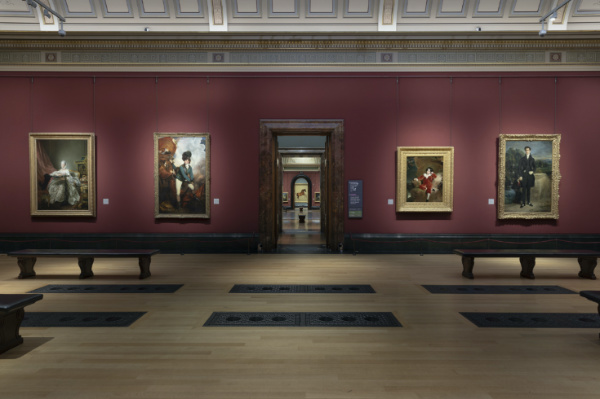
Central Hall, The National Gallery. Image and Identity: Full-Length Portraits 1550-1900. Part of ‘C C Land: The Wonder of Art’. PICTURE: © The National Gallery, London

A major redisplay of the National Gallery’s collection – created as part of its bicentenary celebrations – can be seen from Saturday. C C Land: The Wonder of Art, which coincides with the opening of the transformed Sainsbury Wing after more than two years of building works, features more than 1,000 works and traces the development of painting in the Western European tradition from the 13th to 20th centuries. Among the works displayed are the Coronation State Portraits, commissioned from the artists Peter Kuhfeld and Paul S Benney and unveiled by King Charles III and Queen Camilla this week, which will be on display until 5th June when they will be moved to the Throne Room at Buckingham Palace. There are also newly restored works including the Pollaiuolo brothers’ The Martyrdom of San Sebastian and Jan van Eyck’s Portrait of a Man (Self Portrait?) and newly acquired works such as Eva Gonzalès’ The Full-length Mirror (about 1869‒70), Sir Lawrence Alma-Tadema’s After the Audience (1879) and Nicolas Poussin’s Eucharist (about 1637‒40) – one of the greatest paintings of the Last Supper. Meanwhile, a series of rooms have been dedicated to the work of individual artists including the likes of Titian (active about 1506‒1576), Rembrandt (1606‒1669) and Monet (1840‒1926) and one part of the new display focuses on King Charles I (1600‒1649) as a collector of art and includes major loans from the Royal Collection. Finally, in a first for the gallery, Segna di Bonaventura’s Crucifix (about 1310‒15) has been suspended from the gallery’s ceiling, enabling today’s audiences to view the work in the way it would have been seen in the 14th century. Entry to the gallery is free. For more, see nationalgallery.org.uk.

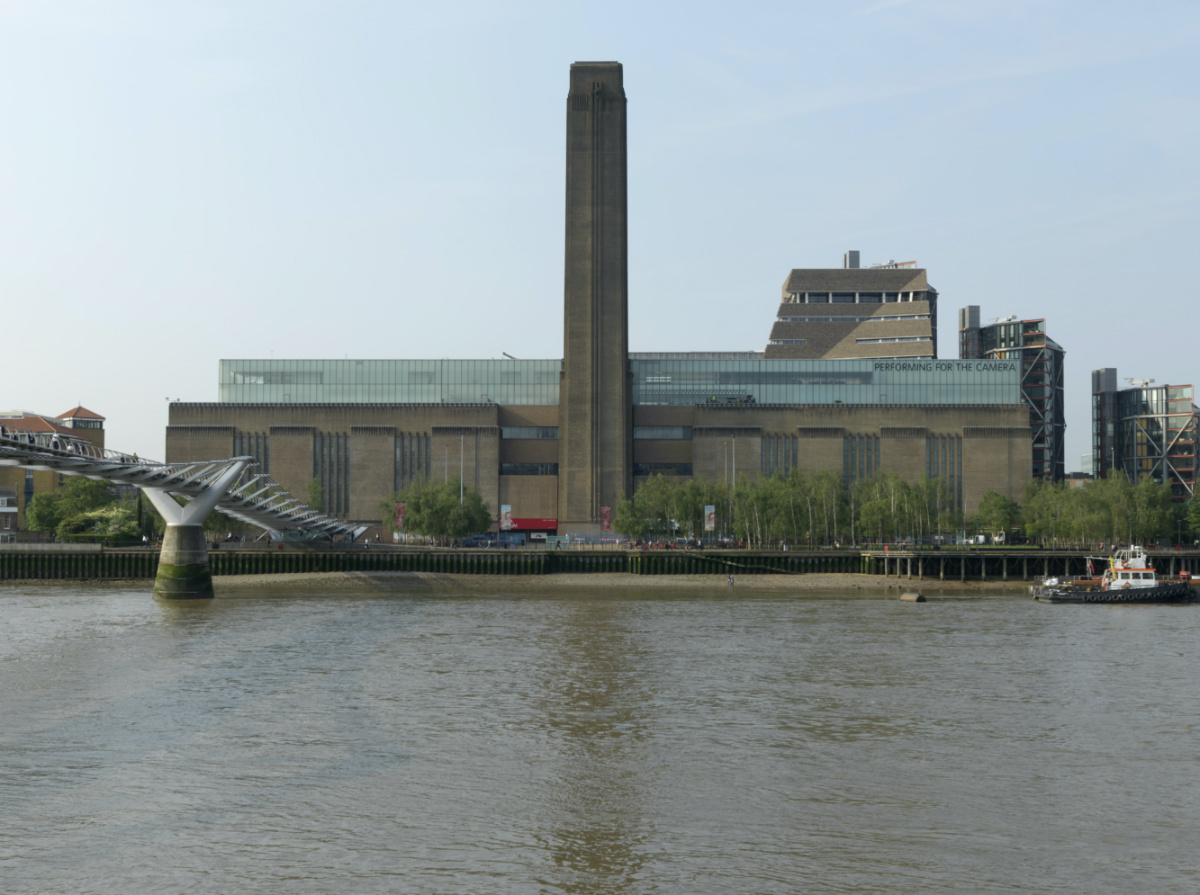
Tate Modern. PICTURE: Courtesy of the Tate Modern.

The Tate Modern is celebrating 25 years this weekend with four days of festivities starting from tomorrow (Friday). A number of recent additions to Tate’s collection will go on display around the building for the anniversary and some of the most iconic works from Tate Modern’s history are coming back including Louise Bourgeois’s 10 metre high bronze spider Maman which was the first work to greet visitors when Tate Modern opened in 2000. Other returning works include Mark Rothko’s Seagram murals and Dorothea Tanning’s Eine Kleine Nachtmusik while among contemporary works being highlighted over the weekend is an immersive multi-screen film installation by Nalini Malani. Two new exhibitions are also open for the anniversary weekend – A Year in Art: 2050 which explores how artists imagine possible futures, and, Gathering Ground which features international contemporary art united by a deep connection to land and community. The weekend also features live music and performances, pop-up talks and tours, and special food and drink offers. For more, see https://www.tate.org.uk/whats-on/tate-modern/birthday-weekender.

Send all items for inclusion to exploringlondon@gmail.com

This Week in London – Hiroshige at the British Museum; poppies return to Tower for VE Day commemoration; and, Do Ho Suh at the Tate Modern…

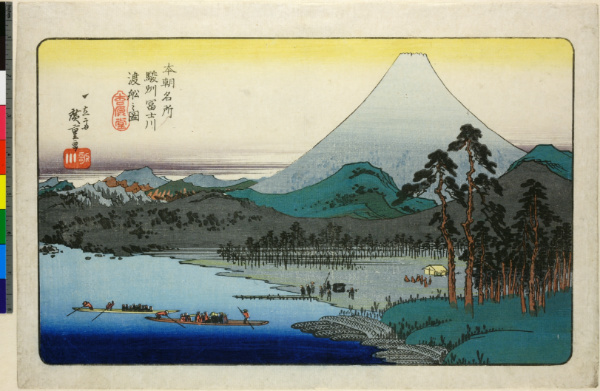
Ferry on the Fuji River. From Famous Places in Japan, Utagawa Hiroshige (1797 – 1858). Colour -woodblock print, about 1832. © The Trustees of the British Museum

An exhibition exploring the art and legacy of Japanese artist Hiroshige opens at the British Museum today. Hiroshige: artist of the open road takes visitors on a “lyrical journey” through Edo-period Japan, exploring both natural landscapes and urban life as well as considering Utagawa Hiroshige’s (1797– 1858) lasting influence on modern and contemporary art. The display marks the major gift of 35 Hiroshige prints to the American Friends of the British Museum from the collection of Alan Medaugh, a leading US collector of the artist’s work with these works being shown alongside 82 Hiroshige prints loaned by Medaugh and other works. Among them are the series Fifty-three Stations of the Tōkaidō Highway (1833–35), One Hundred Famous Views of Edo (1856–58) and Eight Views of Stations along the Main and Secondary Roads (about 1839) as well as examples of his famous bird-and-flower prints Runs in the Joseph Hotung Great Court Gallery (Room 35) until 7th September. Admission charge applies. For more, see britishmuseum.org/hiroshige.

• The 80th anniversary of World War II is being marked with a new display of ceramic poppies in the Tower of London. Almost 30,000 poppies, previously seen in Paul Cummins’ 2014 artwork, Blood Swept Lands and Seas of Red, are being used in the new installation designed by Tom Piper. Opens on 6th May in advance of the 80th anniversary of VE Day, marking the official end of the World War II in Europe, on 8th May. Included in admission with a small section visible from the public footpath. For more, see www.hrp.org.uk/tower-of-london/whats-on/tower-remembers-2025.

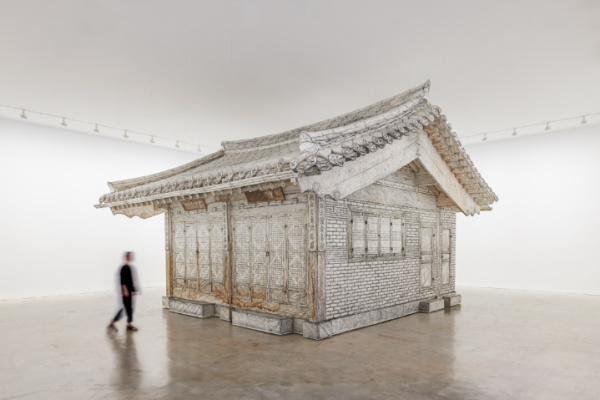
Do Ho Suh, Rubbing/Loving Project: Seoul Home, 2013-2022. Installation view at Museum of Contemporary Art Australia, Sydney, Australia. Photography by Sebastian Mrugalski Courtesy of the artist, Lehmann Maupin, New York, Seoul and London and Victoria Miro. © Do Ho Suh

• The large-scale installations, sculptures, videos and drawings of artist Do Ho Suh are going on show at the Tate Modern from today. The Genesis Exhibition: Do Ho Suh: Walk the House, the title of which comes from a Korean expression referring to the hanok – a house that could theoretically be disassembled, transported and reassembled at a new site, includes works from across three decades. They include the new installation Nest/s (2024) and Perfect Home: London, Horsham, New York, Berlin, Providence, Seoul (2024), Who Am We? (2000_ – a mosaic of tens of thousands of tiny portrait photographs collected from sources including school yearbooks, and his major Rubbing/Loving Project: Seoul Home (2013-22) project. Runs at the Bankside institution until 19th October. Admission charge applies. For more, see tate.org.uk.

Send all items for inclusion to exploringlondon@gmail.com

10 historic London docks…6. St Mary Overie’s Dock…

This small but historic London dock is located at Bankside on the south bank of the Thames.

Subscribe to get access

Read more of this content when you subscribe today.

This Week in London – Michelangelo’s last decades; expressionists on show; and, Dinosaur rEvolution…

Michelangelo Buonarro (1475–1564) – study for the ‘Last Judgment’ (Black chalk on paper, about 1534–36); the fall of Phaeton (Black chalk, over stylus underdrawing, on paper, about 1533); and, Christ on the Cross between the Virgin and St John (Black chalk and white lead on paper, about 1555–64.) All images © The Trustees of the British Museum

A landmark exhibition exploring the final three decades of the life of Renaissance master Michelangelo has opened at the British Museum. Michelangelo: the last decades focuses on how his art and faith evolved and centres on the two metre high Epifania (about 1550–53), which is being displayed for the first time since conservation work on it began in 2018. Showing alongside it is a painting made from it by Michelangelo’s biographer, Ascanio Condivi, as well as preparatory drawings from the Last Judgment, which chart how Michelangelo invented a fresh vision of how the human form would be refashioned at the end of the world, and works created as part of his correspondence with his friends Tommaso de’ Cavalieri and the poet Vittoria Colonna. The latter include The Punishment of Tityus (about 1532) showing an eagle tearing out the liver of a bound naked man which was gifted to Tommaso as moral guidance for the young man. Other highlights include a group of drawings of Christ’s crucifixion which he made during the last 10 years of his life and through which he explored his feelings about mortality, sacrifice, faith, and the prospect of redemption. Runs until 28th July in the Joseph Hotung Great Court Gallery. Admission charge applies. For more, see www.britishmuseum.org/michelangelo.

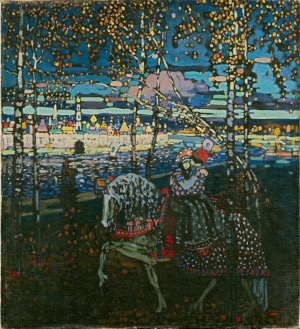
Wassily Kandinsky, ‘Riding Couple’, 1906-1907, Lenbachhaus Munich, Donation of Gabriele Münter, 1957

• A new exhibition has opened celebrating the expressionists’ radical experimentations with form, colour, sound and performance at the Tate Modern. Expressionists: Kandinsky, Münter and the Blue Rider features masterpieces from the Lenbachhaus in Munich and includes some works never previously seen in the UK. Among the artists whose work is on display are everyone from renowned artists like Wassily Kandinsky, Gabriele Münter, Franz Marc and Paul Klee, through to lesser known figures like Wladimir Burliuk and Maria Franck-Marc. Highlights include Marianne Werefkin’s Self-Portrait (c1910), Münter’s Listening (Portrait of Jawlensky) (1909), Erma Bossi’s Circus (1909), Kandinsky’s Impression III (Concert) (1911), Franz-Marc’s Deer in the Snow II (1911), Klee’s Legend of the Swamp (1919), and a selection of photographs from the Masterpieces of Muhammadan Art exhibition staged in Munich in 1910. Runs until 20th October. Admission charge applies. For more, see tate.org.uk.

On Now – Dinosaur rEvolution. This exhibition at the Horniman Museum in Forest Hill highlights discoveries from recent decades which have changed the way we envisage dinosaurs – not all as scaly green reptiles but many with an array of colours, feathers, quills and spikes. At the centre of the display are five large animatronic dinosaur models – including a seven metre-long Tyrannosaurus rex – as well as well as artworks by artist and exhibition curator Luis V Rey. The exhibition also features fossil casts including the horned skull of a Diabloceratops, the claw of a Therizinosaurus, and skeletons of Velociraptor and Compsognathus – a chicken-sized, feathered dinosaur. Runs until 3rd November. Admission charge applies. For more, see www.horniman.ac.uk.

Send all inclusions to exploringlondon@gmail.com.

10 London locations related to Sir Christopher Wren – A recap…

We finish our series on Christopher Wren by providing a quick recap…

1. The Old Court House, Hampton Court Palace Green…

2. St Martin-in-the-Fields…

3. Scotland Yard…

4. Gresham College…

5. London coffee houses…

6. Westminster Abbey…

7. St Stephen Walbrook…

8. The Bankside Plaque…

9. St James’s Street, Piccadilly…

10. St Paul’s Cathedral…

We’ll start a new series in the New Year!

10 London locations related to Sir Christopher Wren…8. The Bankside Plaque…

PICTURE: Robin Sones (licensed under CC BY-SA 2.0)

Sir Christopher Wren’s name is one which pops up in association with buildings all over London – some authentically so, others less so.

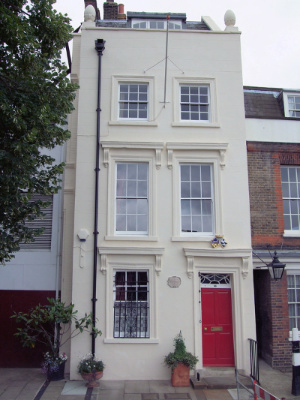
The house at 49 Bankside with the plaque to the left of the door. PICTURE: Jim Linwood (licensed under CC BY 2.0)

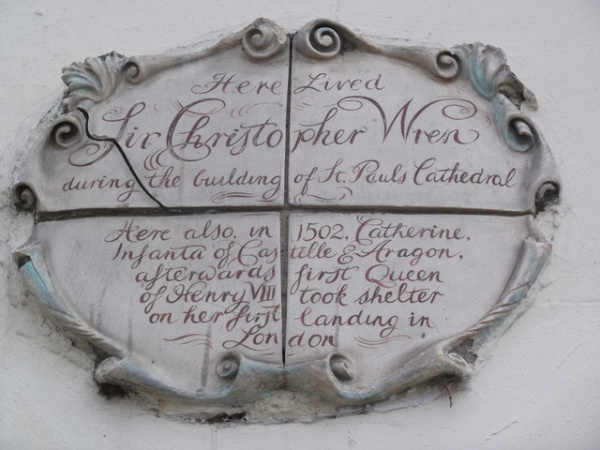
One of the more talked about locations where it can be physically seen is on a plaque attached to the front of a house overlooking the Thames at 49 Bankside, on the corner with Cardinal Cap Alley.

The plaque, written in a flowery script, claims that “Here lived Sir Christopher Wren during the building of St Pauls Cathedral” before going on to state that the property was also where in 1502, Catherine of Aragon, “took shelter” on first arriving in London before her marriage to King Henry VIII.

But author and historian Gillian Tyndall debunks the claim in her 2006 book The House by the Thames and the People who Lived There.

Tyndall explains that the property apparently dates from 1710 – St Paul’s was officially declared complete in 1711, leaving little cross-over (and certainly ruling out any residence by Queen Catherine who actually landed in Plymouth). She says that while it’s true the present house stands in the footprint of an older one, the house where Wren may have actually lodged during the 1670s is located further west along Bankside.

London Remembers notes that this property was apparently marked with an 18th century plaque commemorating Wren. But when that house was demolished in 1906, the plaque was saved and subsequently attached to a power station’s outer wall. When that was redeveloped in the post-war period, the plaque disappeared.

It was apparently that plaque which inspired the creation of the current plaque which was created by Major Malcolm Munthe, who acquired the property in 1945, and subsequently had the plaque made for the home’s exterior.

So it seems the plaque, despite what it says, does not commemorate a Wren residence (although perhaps it may commemorate the residence of Wren in the area). And, it’s been suggested, that while the plaque may not actually have marked a Wren home, its presence may have been enough to protect the building it adorns from threatened redevelopment in the mid-20th century.

LondonLife – View across the Thames…

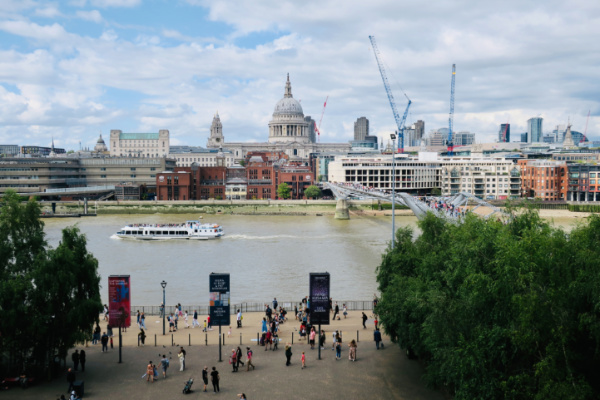
Looking from Bankside to the City of London. PICTURE: Rose Galloway Green/Unsplash

This Week in London – Young V&A opens its doors; contemporary African photography; and, Yehudi Menuhin honoured…

The Young V&A’s Town Square PICTURE: © Luke Hayes courtesy of Victoria and Albert Museum, London.

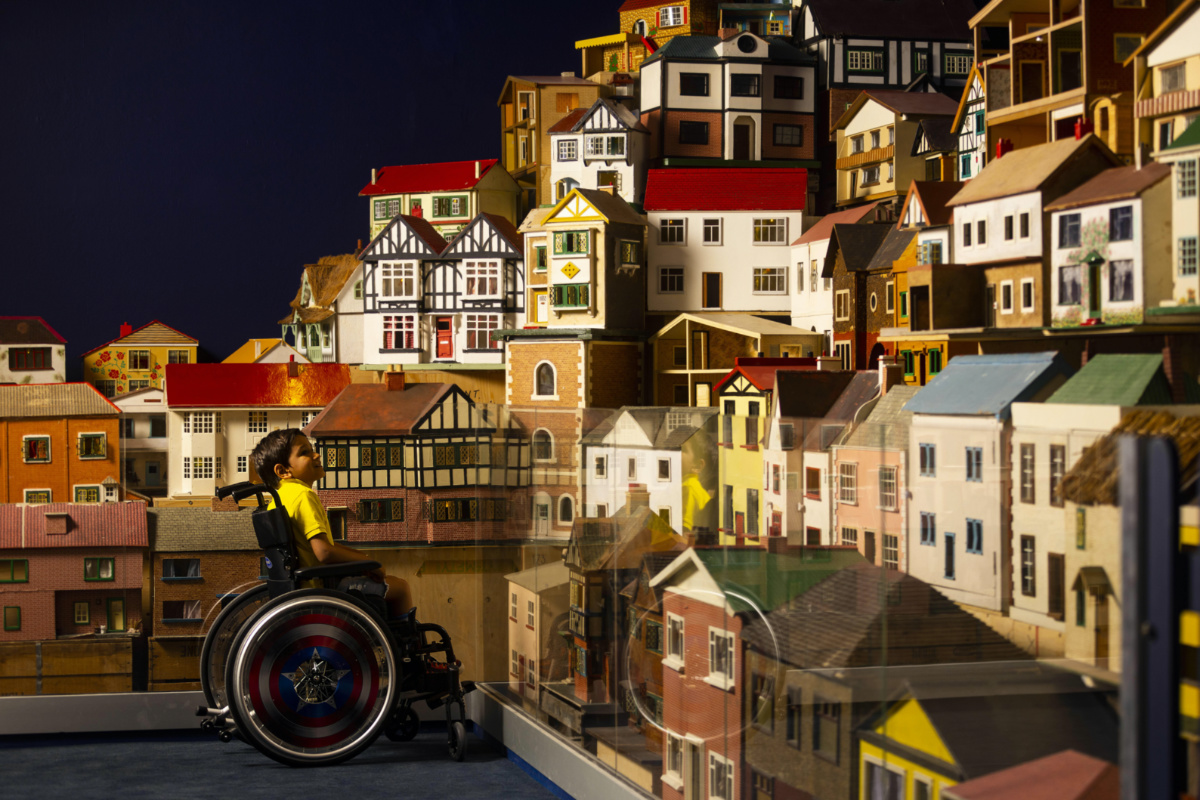
The new Young V&A in Bethnal Green has opened its doors and a free summer festival takes place this weekend. Designed with and for children aged up to 14-year-olds, the Young V&A features more than 2,000 objects, dating from 2,300 BC to today, found across three galleries – ‘Play’, ‘Imagine’ and ‘Design’. The ‘Play’ gallery includes a ‘Mini Museum’ as well as a construction zone called Imagination Playground in which children can build dens, The Arcade in which they can explore Minecraft worlds and Adventure in which they can create stories inspired by objects on show. The ‘Imagine’ gallery features a new performance space, portraits of local children and luminaries such as Quentin Blake, Kenneth Branagh and Linda McCartney, while ‘Design’ showcases innovative objects and case studies that explore how things are designed, made and used, and the ways in which design can change the world. Among the objects on show at the museum is everything from a life-size Joey the War Horse puppet to a Microline car suspended from the ceiling, Harry Potter’s Nimbus 2000 broomstick, Christopher Reeve’s original Superman costume and a large-scale installation of doll’s houses – Place (Village) – by Rachel Whiteread. Meanwhile, the free Summer Festival, which takes place on Saturday and Sunday, invites visitors to explore the museum as well as join in free and creative activities and see performances from young talent including Britain’s Got Talent finalists IMD Legion, the east London-based Grand Union Orchestra, and hula-hoop performance group Marawa’s Majorettes. There’s also the chance help create a large-scale art installation with Leap then Look. For more see vam.ac.uk/young.

‘The Place (Village)’ installation in Imagine Gallery at the Young V&A PICTURE: © David Parry, courtesy of Victoria and Albert Museum, London
Aïda Muluneh, ‘Star Shine Moon Glow, Water Life’, 2018 Photograph, inkjet print on paper; 800 x 800mm Commissioned by WaterAid. ©  Aïda Mulune

A major new exhibition celebrating contemporary African photography has opened at the Tate Modern. Featuring works by 36 artists, A World in Common: Contemporary African Photography is spread across seven thematic sections and highlights contemporary perspectives on cultural heritage, spirituality, urbanisation and climate change. As well as illuminating alternative visions of Africa’s many histories, cultures and identities, the display also explores the rise of studio photography across the continent during the 1950s and 1960s – a time when many African nations gained independence – before moving on to document the expansion and transformation of cities today as well as exploring themes of migration and climate activism. Runs until 14th January, 2024. Admission charge applies. For more, see tate.org.uk.

Celebrated 20th century violinist and conductor Yehudi Menuhin has been honoured with an English Heritage Blue Plaque at his former home in Belgravia. The six-storey house at 65 Chester Square, built by Thomas Cubitt in 1838, was where Menuhin lived and worked for the last 16 years of his life. The lower-ground floor vaults provided space for his collection of violins while an open space on the fourth floor served as his studio, a place which hosted much of his teaching and mentoring and where he also practiced yoga – including his famous headstand.

Send all items to exploringlondon@gmail.com.

This Week in London – 5,000-year-old chalk sculpture in British Museum exhibition; Surrealism’s influence explored; and, new sculpture at St Paul’s…

Burton Agnes chalk drum, chalk ball and bone pin (3005 – 2890BC). PICTURE: © The Trustees of the British Museum 

• A 5,000-year-old chalk sculpture – described as “the most important piece of prehistoric art to be found in Britain in the last 100 years” – has gone on show at The British Museum as part of its The world of Stonehenge exhibition. The sculpture was unearthed by members of Allen Archaeology during a routine excavation on a country estate near the village of Burton Agnes in East Yorkshire in 2015. Uncovered alongside the burial of three children (it had been placed near the head of the eldest child and included three hastily added holes possibly to represent the children), the sculpture is decorated with elaborate motifs that the museum said “reaffirms a British and Irish artistic style that flourished at exactly the same time as Stonehenge was built”. The sculpture is similar to three barrel-shaped cylinders made of solid chalk – dubbed the ‘Folkton drums’ due to their shape – which have been in the museum’s collection since they were unearthed in the excavation of a child burial in North Yorkshire in 1889. It is thought the items are works of sculptural art rather than intended to serve a practical purpose and were perhaps intended as talismans to protect the children they accompanied. Radiocarbon dating of the Burton Agnes child’s bones identifies the burial as from 3005–2890 BC. The world of Stonehenge can be seen until 17th July. Admission charge applies. For more, see www.britishmuseum.org/stonehenge.

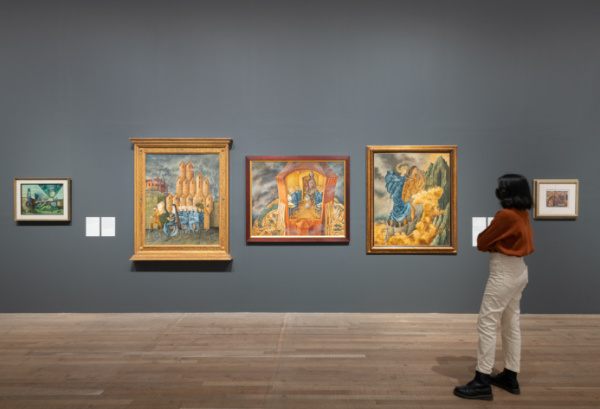
The Surrealism Beyond Borders exhibition at Tate Modern, 2022, ©Tate

Spanning 80 years and 50 countries, a new exhibition opening at the Tate Modern today takes an in-depth look at how Surrealism has inspired and united artists around the globe. Surrealism Beyond Borders, running at the Tate in partnership with New York’s Metropolitan Museum of Art, features more than 150 works ranging from painting and photography to sculpture and film, many of which have never been seen in the UK before. Among the highlights Cecilia Porras and Enrique Grau’s photographs, which defied the conservative social conventions of 1950s Colombia, and paintings by exiled Spanish artist Eugenio Granell, whose radical political commitments made him a target for censorship and persecution. There’s also iconic works such as Max Ernst’s Two Children are Threatened by a Nightingale (1924) and lesser known, but significant, pieces such as Antonio Berni’s Landru in the Hotel, Paris (1932), and Toshiko Okanoue’s Yobi-goe (The Call) (1954). Runs until 29th August in the Eyal Ofer Galleries. Admission charge applies. For more, see www.tate.org.uk/whats-on/tate-modern/exhibition/surrealism-beyond-borders.

A “bold” new artwork by Nigerian-born artist, Victor Ehikhamenor, has gone on display in the crypt of St Paul’s Cathedral. The specially-commissioned mixed-media work is part of 50 Monuments in 50 Voices, a partnership between St Paul’s Cathedral and the Department of History of Art at the University of York which involves inviting contemporary artists, poets, musicians, theologians, performers and academics to respond to 50 historic monuments across the cathedral. Still Standing combines rosary beads and Benin bronze hip ornament masks to depict an Oba (King) of Benin and was made in response to a 1913 brass memorial panel commemorating Admiral Sir Harry Holdsworth Rawson (1843-1910) which is in the Nelson Chamber of the Cathedral’s Crypt. Rawson had a long career in the Royal Navy which culminated in his commanding the Benin Expedition of 1897. The work is on show until 14th May. Admission charge applies. For more, head to https://pantheons-st-pauls.york.ac.uk/50-monuments-in-50-voices/.

Send all items to exploringlondon@gmail.com

This Week in London – Noël Coward’s glittering world; figures from the African diaspora; and, reflections on land rights and colonialism in Australia…

The glittering world of playwright and songwriter Noël Coward is on show in a new exhibition opening at the Guildhall Art Gallery this Monday. The much delayed Noël Coward: Art & Style, which marks the 100th anniversary of Coward’s West End debut as a 19-year-old earlier this year, brings together never-before-seen materials from the Coward Archive and demonstrates the impact he and his creative circle had on the culture of his time – and today. Highlights include an original page of Coward’s handwritten lyrics for Mad Dogs and Englishmen, the chocolate brown evening suit he wore in the film Boom!, two of his signature silk dressing gowns, his iconic ‘Hamlet’ chair, and several of his own paintings. There’s also a specially commissioned new reconstruction of the iconic white satin dress that Molyneux designed in 1930 for Gertrude Lawrence in Private Lives and a never-before-exhibited gold lamé theatre cape by Lucile (Titanic survivor Lady Duff Gordon) from 1920. The exhibition, which is free, runs until 23rd December. Tickets must be booked in advance. For more, see www.cityoflondon.gov.uk/noelcoward.

A new portrait depicting Dido Belle (1761-1804) has gone on display at Kenwood House – one of six works depicting historic figures from the African diaspora now on show at English Heritage properties across the nation. Belle, who is depicted by artist Mikéla Henry-Lowe, was the illegitimate daughter of a young black woman named Maria Bell and a Royal Naval officer, Sir John Lindsay. She spent much of her life at Kenwood House with her great-uncle William Murray, 1st Earl of Mansfield, the Lord Chief Justice. Other portraits in the series depict the likes of African-born Roman Emperor Septimius Severus (the work of Elena Onwochei-Garcia, it’s on display at Corbridge Roman Town on Hadrian’s Wall, Northumberland), North African-born 7th century Abbot Hadrian (the work of Clifton Powell, it’s on display at St Augustine’s Abbey in Kent) and Queen Victoria’s god-daughter Sarah Forbes Bonetta (the work of Hannah Uzor, it’s on display at Osborne House on the Isle of Wight). For more, see www.english-heritage.org.uk/learn/histories/black-history/.

More than 25 works by Australian artists exploring debates around land rights and colonialism have gone on show in a new exhibition at the Tate Modern. A Year in Art: Australia 1992 takes as its starting point the High Court of Australia’s landmark 1992 Mabo ruling which overturned the doctrine of terra nullius. Works on show include Emily Kame Kngwarreye’s 1989 Untitled (Alhalkere) – an expression of her cultural life as an Anmatyerre elder, Gordon Bennett’s 1991 work Possession Island (Abstraction) which is presented in dialogue with Algernon Talmage’s 1937 work The Founding of Australia 1788, and Tracey Moffatt’s 1997 photographic series Up in the Sky, which speaks to the ‘Stolen Generations’ – the forced separation of Aboriginal families by government agencies. At the heart of the display is Vernon Ah Kee’s 2010 four-screen video installation tall man which shows footage of the protests and riots following the death in custody of Mulrunji Doomadgee on Palm Island in 2004. The exhibition is free. For more, see www.tate.org.uk.

Send all items for inclusion to exploringlondon@gmail..com

This Week in London – Rodin at the Tate; life-sized Monopoly; and, a floral tribute to John Keats…

Many London institutions reopen in the coming week – while some are continuing with exhibitions which were already on before lockdowns lead to closures, there are also some new exhibitions being launched and these we’ll feature in coming weeks…

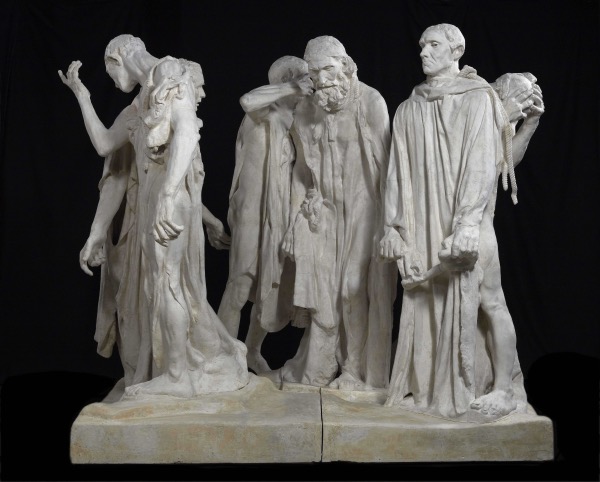
Auguste Rodin Monument to the Burghers of Calais, 1889 Musée Rodin, S.00153. PICTURE: Courtesy of the Tate Gallery.

A major new exhibition on the work of French sculptor Auguste Rodin opens at the Tate Modern on Monday. The EY Exhibition: The Making of Rodin features more than 200 works including the Thinker (1881) and The Three Shades (1886) as well as a newly restored plaster made in preparation for The Burghers of Calais (1889). The exhibition is the first show to focus in-depth on Rodin’s use of plaster and takes inspiration from the artist’s landmark self-organised exhibition at the Pavillon de l’Alma in 1900. It also explores the complex dynamics with different models – including his onetime studio assistant and collaborator Camille Claudel – and looks at his use of photography and watercolours. Located in the Eyal Ofer Galleries, the exhibition runs until 21st November. Admission charges applies. For more, see www.tate.org.uk.
The world’s first life-sized Monopoly-based attraction will be opening in Tottenham Court Road in August, it was revealed this week. Hasbro, Inc and Gamepath, a new division of international theatre producer Selladoor Worldwide, are behind the attraction which the City of London Corporation says will “bring together the best of the iconic board game, escape rooms and team challenge”. The premises at 213-215 Tottenham Court Road will house individually designed and unique main gameplay boards including Classic, The Vault, and City as well as a Junior Board. There will also be a retail outlet and a Monopoly-themed bar and restaurant. Stay tuned for more.

A new floral display featuring flowers from John Keats’ graveside in Rome and his home in London’s Hampstead form part of a new indoor art installation at the Hampstead property, Keats House, when it reopens Monday. The display, created by London artist Elaine Duigenan, is part of the Keats200 commemorations marking the bicentenary of his death. “Flowers are embedded in John Keats’s life story and are a vehicle for expressing something both transitory and lasting, and my installation seeks to honour his legacy by alluding to human frailty and resilience,” says Duigenan. “As an artist, I understand both the desire for recognition and the fear of leaving no mark, so I have crowned him laureate and wreathed him as though for oblivion.” For more (to check opening times before attending), see  www.cityoflondon.gov.uk/keats.

Send all items for inclusion to exploringlondon@gmail.com.
This Week in London – Cecil Beaton and the ‘Bright Young Things’; ‘The Enchanted Interior’; and Andy Warhol at the Tate…

World famous British photographer Cecil Beaton’s portraits from the “golden age” of the 1920s and 1930s are being celebrated in a shiny new exhibition at the National Portrait Gallery. Cecil Beaton’s Bright Young Things features some 150 works, many rarely exhibited, which Beaton took in the 1920s and 1930s depicting the “extravagant world of the glamorous and stylish”. The subjects include the likes of artists Rex Whistler and Stephen Tennant, modernist poets Iris Tree and Nancy Cunard, the glamorous socialites Edwina Mountbatten and Diana Guinness (née Mitford), and actresses Tallulah Bankhead and Anna May Wong as well as less well-known figures like eccentric composer and aesthete Lord Berners, the artist and Irish patriot Hazel, Lady Lavery, and Lady Alexander, whose husband produced Oscar Wilde’s comedies and who became an early patron of Beaton’s. Beaton’s own life story and his relationship with the sitters is woven into the exhibition including through self-portraits and images of him  taken by contemporaries. Runs until 7th June. Admission charges apply. For more, see www.npg.org.uk. PICTURE:  The Bright Young Things at Wilsford by Cecil Beaton, 1927. © The Cecil Beaton Studio Archive.

The theme of female subjects depicted in ornate, enclosed interiors – one prevalent in 19th century British painting – is at the centre of a new exhibition opening at the Guildhall Art Gallery on Friday. The Enchanted Interior, being presented in partnership with Laing Art Gallery in Newcastle, showcases works in styles ranging from the high Victorian through to Art Nouveau, Aestheticism, Surrealism, and pieces by contemporary female artists which ‘speak back’ to the historic tradition. Artists whose work is represented include Edward Burne-Jones, Evelyn De Morgan, James Abbot McNeill Whistler, Emily Sandys, Jessica Woodman, Fiona Tan, John William Waterhouse and Clementina Hawarden. Admission charge applies. Runs until 14th June. For more, follow this link.

The works of iconic 20th century American artist Andy Warhol are being showcased in a new exhibition at Tate Modern. Andy Warhol, the first exhibition on the artist at the gallery in 20 years, features more than 100 works. Among them are key pieces from the pop period – Marilyn Diptych (1962), Elvis I and II (1963/1964) and Race Riot (1964) – as well as Screen Tests (1964–6), the floating Silver Clouds (1966) installation, and a recreation of the psychedelic multimedia environment of Exploding Plastic Inevitable (1966) originally produced for the Velvet Underground rock shows. Also included are later works like his 1975 Ladies and Gentlemen series and Sixty Last Suppers (1986). Runs until 6th September. Admission charge applies. For more, see www.tate.org.uk.

Send all items for inclusion to exploringlondon@gmail.com.
This Week in London – Christmas at the Royal Palaces; Aldgate Lantern Parade; and, Dora Maar

Hampton Court Palace is once again holding its ‘Festive Fayre’ this weekend. More than 80 stalls will fill the palace’s historic courtyards serving Christmas-related treats like mince pies and mulled wine. Included in entry price. Hampton Court will also host carol singing in the courtyards between 6pm and 7pm, 8pm and 9pm on 16th, 22nd and 23rd of December. Meanwhile, Kensington Palace is offering the visitors on select dates between 7th December and 5th January to take part in Princess Victoria’s Christmas by assisting her in staging a Christmas panto, joining in the type of seasonal crafts she enjoyed as a child and discovering the history of the festive food Victoria would have enjoyed growing up at Kensington. Included in palace admission. And, of course, the ice rinks at Hampton Court Palace and in the Tower of London’s moat are now open. For more, see www.hrp.org.uk.

More than 500 lanterns made by local children and adults will feature in this year’s Aldgate Lantern Parade tomorrow afternoon. The parade will launch from Sir John Cass’s Foundation Primary School at about 4.45pm and through streets north of Aldgate High Street to the beat of the Barbican’s Drum Works ending in a festive fete in the new Aldgate Square. A Winter Fair will simultaneously take place between Aldgate Square and St Botolph without Aldgate, complete with an array of performances, art, food, drink and festive activities.

On Now: Dora Maar. The first UK retrospective of the artist Dora Maar (1907-97) whose provocative photographs and photomontages became celebrated icons of surrealism is on at the Tate Modern. It features more than 200 works spanning the six decades of her career. Among highlights are The years lie in wait for you (c1935), Portrait of Ubu (1936), photomontages 29, rue d’Astorg (c1936) and The Pretender (1935), rarely seen works like The Conversation (1937) and The Cage (1943), and a substantial group of camera-less photographs that she made in the 1980s. Runs until 15th March. Admission charge applies. For more, see www.tate.org.uk.

Send all items for inclusion to exploringlondon@gmail.com.
This Week in London – The world’s largest medicine galleries; David Bomberg at the National Gallery; last NYE tickets…

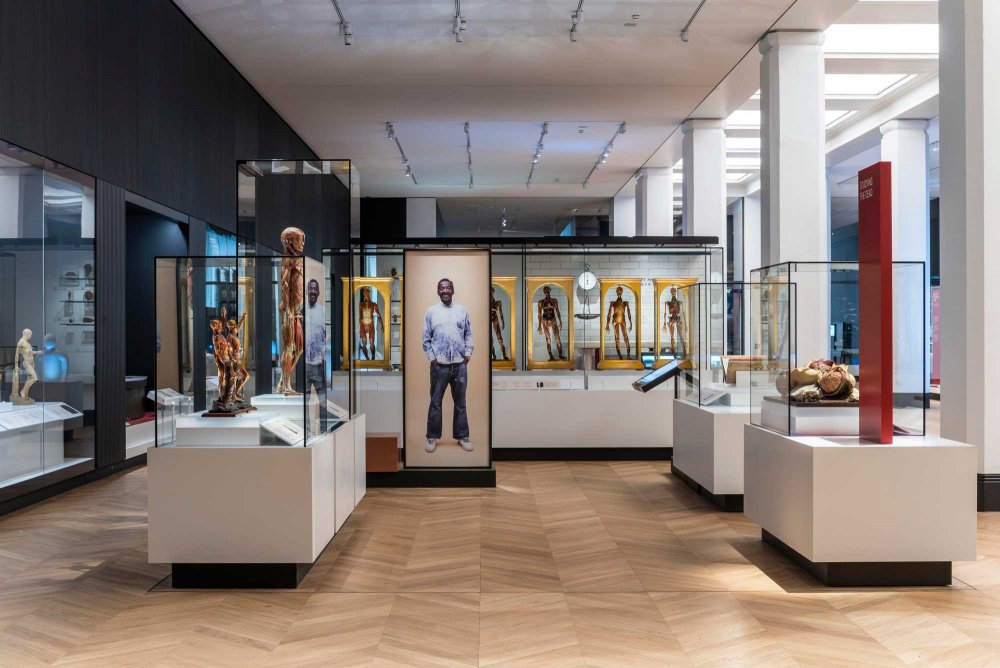
The world’s largest museum galleries devoted to the history of medicine have opened at the Science Museum. The £24 million ‘Medicine: The Wellcome Galleries’ cover more than 3000 square metres across five galleries with exhibits all aimed at better understanding how the human body has transformed medicine. More than 3,000 artefacts from the collections of Henry Wellcome and the Science Museum Group are on display including 200-year-old wax anatomical models, the first stethoscope, lancets used by Edward Jenner in his smallpox vaccinations and medicine chests used on expeditions to Mount Everest and Antarctica. There’s also an intricate model of a 1930s hospital, a rare iron lung used by patients with polio and the world’s first MRI scanner, protein model and paramedic bicycle. Visitors also have the chance to step inside a Victorian-era pharmacy, discover what it takes to heart transplant surgery and treat a critically ill patient. There are also four specially commissioned artworks including life-sized portraits by Siân Davey presented along with the stories of individuals impacted by how medicine defines ‘normal’, Marc Quinn’s monumental bronze Self-Conscious Gene – inspired by inspired the tattooed body of model Rick Genest, Bloom – Studio Roso’s aerial sculpture representing the spread of diseases through populations and Santa Medicina, Eleanor Crook’s bronze sculpture of a figure that is both surgeon and saint and which encourages visitors to contemplate their relationship with mortality.  Entry is free. For more, see www.sciencemuseum.org.uk. PICTURE: The Medicine and Bodies gallery in Medicine: The Wellcome Galleries © Science Museum Group.  

Nine of British modernist artist David Bomberg’s key works are being shown alongside images that influenced him in a new exhibition at the National Gallery. Young Bomberg and the Old Masters showcases Bomberg’s works including The Mud Bath (1914), Vision of Ezekiel (1912) and the first version of his war painting Sappers at Work: A Canadian Tunnelling Company, Hill 60, St Eloi (c1918-19) alongside the likes of Botticelli’s Portrait of a Young Man and the studio of El Greco’s The Agony in the Garden of Gethsemane. The display can be seen in Room 1 until 1st March. Admission is free. For more, see www.nationalgallery.org.uk.

The final 20,000 tickets for London’s New Year’s Eve fireworks are being released from noon today. This year’s display features more than 12,000 fireworks and 2,000 lighting cues choreographed to music and will start with the sound of Big Ben’s chimes (despite them  being silent due to renovation works this year). Tickets, priced at £10, must be purchased in advance to attend the event and those who aren’t lucky enough to get one can watch live on BBC One. To purchase tickets, head to www.london.gov.uk/nye.

Send all items for inclusion to exploringlondon@gmail.com.
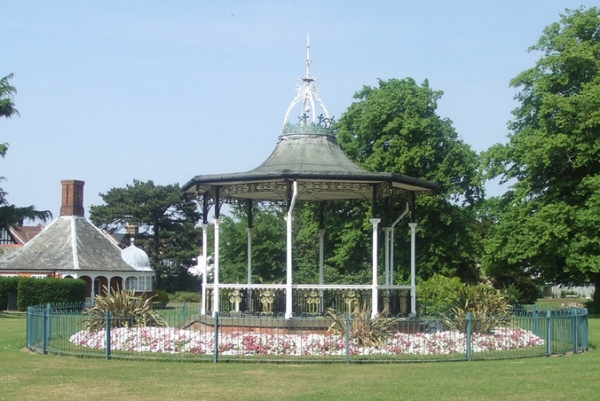
Treasures of London – Beckenham’s ‘Bowie Bandstand’…

Built in 1905, this south London bandstand, which was recently awarded Grade II heritage status, is famous for being the site where David Bowie performed at the Growth Summer Festival in August, 1969. Bowie and friends had organised the free festival soon after his first hit single, Space Oddity, and the bandstand, located in Croydon Road Recreation Ground, was used as the stage for the day. As well as compering the festival, Bowie was among the performers who played here to a crowd of several hundred people. The festival, which was inspired by the feel of Woodstock and is believed to have been the first of its kind in Britain, inspired Bowie to write the seven minute long Memory of a Free Festival for his second album which was released later that year. It’s also suggested that he may have penned the lyrics to Life on Mars from the bandstand steps. The ironwork bandstand, which is referred to locally as the ‘Bowie Bandstand’, is thought to be the last bandstand from the foundry of Glasgow’s McCallum and Hope Iron Foundry still standing in Britain today. The Borough of Bromley, which owns the bandstand, is currently raising funds for its restoration.

PICTURE: Graham C99 (licensed under CC BY-SA 2.0/image cropped)

This Week in London – I am London; Gerrit Dou’s women reunited; and, Georgia O’Keeffe…

A new free exhibition featuring 60 Londoners photographed in front of an historic building or special place to them opens in Kings Cross on Monday. The Historic England exhibition I am London features well-known Londoners, such as reproductive health expert Professor Lord Robert Winston, philosopher AC Grayling, feminist activist and journalist Caroline Criado Perez, artist Bob and Roberta Smith, designer Morag Myerscough and performer Amy Lamé as well as “unsung Londoners” – everyone from a Yeoman Warder at the Tower of London and the park manager at Kensington Gardens to a 7/7 paramedic, an apprentice at a Savile Row tailors and a student at the Royal School of Needlework – in telling stories which illustrate how the city’s heritage can be “inspirational, provocative, frustrating, fun, familiar, humbling and home”. Taken by Historic England photographer Chris Redgrave, the photographs will be displayed in the UAL Window Galleries at Central Saint Martins along with a selection of objects the sitters chose to be photographed with, including the Pearly King of Finsbury’s jacket, Bob and Roberta Smith’s ‘Vote Bob Smith’ badge and a submarine once owned by Morag Myerscough’s father. Can be seen until 4th September. For more, see https://historicengland.org.uk/get-involved/visit/exhibitions/i-am-london/.

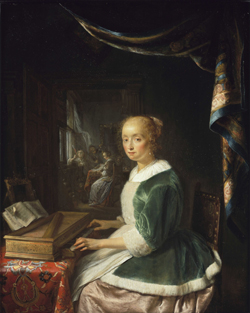
Gerrit-Dou Two of 17th century Dutch painter Gerrit Dou’s finest works – Woman playing a Clavichord and Lady Playing a Virginal (pictured), both dating from about 1665 – have been reunited for the first time in 350 years at the Dulwich Picture Gallery in south London. Opening this week, Dou in Harmony examines how Dou created two distinctly different takes on a similar subject and will be accompanied by a contemporary sound installation in the Mausoleum. Composed and played on the viola da gamba by Liam Byrne, the modern piece takes its cue from 17th century music and aims to evoke the mood of Dou’s paintings. The display is the latest in the Making Discoveries: Dutch and Flemish Masterpieces series which showcases four artists from the gallery’s collection: Van Dyck, Rubens, Dou and Rembrandt (whose work will be featured in an upcoming display in November). Runs until 6th November. Admission charge applies. For more, see www.dulwichpicturegallery.org.uk.

Georgia O’Keeffe’s celebrated work, Jimsyn Weed, White Flower No 1 (1932), is among highlights at the major retrospective of the US artist’s work which opened at the Tate Modern this week. The display marks a century since O’Keeffe’s debut in New York in 1916 and, with none of her works in public collections in the UK, provides a “once-in-a-generation opportunity” for audiences outside the US to view her portfolio of works in such depth. The display features more than 100 major works and charts the progression of O’Keeffe as an artist over a span of six decades. Runs until 30th October. For more, see www.tate.org.uk.

Send all items for inclusion to exploringlondon@gmail.com.
What’s in a name?…St Mary Overie…

The-Legend-of-St-Mary-Overie

Now the name of a dock on Bankside (pictured below), St Mary Overie (also spelt as Overy) also forms part of the formal name of Southwark Cathedral, more properly known as The Cathedral and Collegiate Church of St Saviour and St Mary Overie.

St-Mary-OverieThe simple version of the name’s origins is that it simply means St Mary “over the river” (that is, St Mary on the south side of the Thames) which was used in relation to a priory founded there in the Norman era by two knights (it’s to this foundation that what is now Southwark Cathedral owes its origins, something we’ll take a more detailed look at the nunnery in an upcoming Lost London post).

But there’s also another, more romantic version, of the name’s origins. That story, as it’s told on a plaque located at the dock (pictured above), goes back to before the Norman founding of priory, back to the days when, before the building of London Bridge, a ferry ran between the two banks of the River Thames.

The man responsible for the ferry was John Overs, a “notorious miser”, who decided to save money by feigning his death and thus plunging his household into mourning, saving that day’s provisions. As one may imagine, however, Overs was not a popular man and his servants, instead of fasting in their mourning, held a feast in celebration of his death.

In rage, the old master leapt out of his bed and a servant, terrified and imaging some sort of demonic manifestation, struck him fatally with an oar on the head.

Overs’ daughter, Mary, sent for her lover so that he may come and together with her claim her father’s inheritance but such was his haste, he fell from his horse and broke his neck. So overcome was Mary by her misfortunes that she founded a convent into which she subsequently retired (this was subsequently ‘refounded’ by the two Norman knights).

The dock, meanwhile, is today the berthing place of the Golden Hinde II, a sea-worthy replica of the flagship in which Elizabethan explorer Sir Francis Drake circumnavigated the globe (for more on the ship, see our earlier post here).