Famous Londoners – Sir Edwin Lutyens…

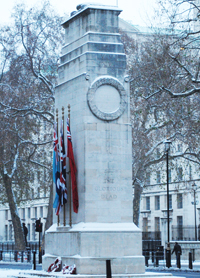
We’re looking at some of London’s World War I memorials so it’s only fitting we look at the life of acclaimed architect Sir Edwin Lutyens, the man credited with designing the Cenotaph – the UK’s national war memorial – in Whitehall (pictured below).

Lutyens was born in London at 16 Onslow Square, South Kensington, on 29th March, 1869, and – the ninth son and 10th of 13 children of soldier Captain Charles Lutyens and his wife Mary – was named for painter and sculptor Edwin Henry Landseer, a friend of his father’s. He grew up in London and Surrey and in 1885 commenced studying architecture at the South Kensington School of Art. In 1887, he left before completing the course, briefly joining the practice of Ernest George and Harold Peto before starting his own practice in 1889.

Cenotaph-in-LondonEarly commissions included country houses and it was during this period that he met with mentor and landscape gardener Gertrude Jekyll, a relationship which led him to design her home, Munstead Wood near Godalming in Surrey.

In 1897, Lutyens, known familiarly as ‘Ned’, married Emily Lytton – daughter of the late Viceroy of India and first earl of Lytton, Edward Buller-Lytton – and by 1908 the couple had five children. The family’s London addresses included 29 Bloomsbury Square (which also served as his office), 31 Bedford Square and 13 Mansfield Street, Marylebone, while his offices were located in numerous places including at 17 Queen Anne’s Gate.

Lutyens continued designing country houses – he eventually designed more than 35 major properties and altered and added many more – and among his commissions were Castle Drogo in Devon and the refurbishment of Northumberland’s spectacularly sited Lindisfarne Castle – both now National Trust properties. He was also involved in helping to plan and design Hampstead Garden Suburb in London, work which included designing two churches.

In 1912, Lutyens was invited to advise on the planning of the new Indian capital in New Delhi and his most important contribution was the design of the Viceroy’s House which combined elements of classical architecture with traditional Indian decoration. He was knighted in 1918 for his contributions in India and for his advice to the Imperial War Graves Commission.

It was his role in this latter effort which led to his becoming a national figure. He was involved in the creation of numerous monuments to commemorate the war dead, the best known of which are the Cenotaph in Whitehall – initially commissioned as a temporary structure (see our earlier post here) –  and the Memorial to the Missing of the Somme in Thiepval in northern France as well as the Australian War Memorial at Villers-Bretonneux and the Anglo-Boer War Memorial in Johannesburg.

He also designed more than 100 war cemeteries in France and Belgium and other war memorials – including overseas in places like Dublin – as well as London’s Tower Hill Memorial (see our earlier post here). Other London buildings he designed included the headquarters of Country Life magazine in Tavistock Street, Britannic House in Finsbury Square, the head office of the Midland Bank in Poultry and the Reuters and Press Association headquarters at 85 Fleet Street (now home to the Lutyens Restaurant, Bar and Private Rooms).

Lutyens was elected a fellow of the Royal Academy in 1920 (he was later president) and in 1924 was appointed a founding member of the Royal Fine Arts Commission. Even as he continued work in Delhi, he took on other commissions – such as the British Embassy in Washington, DC – and in 1924 he completed one of his most lauded – and smallest – designs: that of the one twelfth scale Queen Mary’s Dolls’ House which was shown at the 1924 British Empire Exhibition at Wembley and which can still be seen at Windsor Castle.

In 1929 Lutyens was commissioned to design a new Roman Catholic Cathedral for Liverpool but when he died on 1st January, 1944, this work was still unfinished with only the crypt completed thanks to the outbreak of World War II broke. Lutyens’ funeral was held in Westminster Abbey a few days later and his ashes were subsequently placed in the crypt of St Paul’s Cathedral.

For more information on Lutyens’ life and works, check out The Lutyens Trust, founded in 1984 to preserve and protect his legacy.

This Week in London – St Paul’s marks WWI centenary; Eid at Trafalgar Square; Suffragettes at the NPG; and, early Egypt gallery reopens at the British Museum…

An altar frontal created by more than 100 soldiers wounded in World War I will go on display at St Paul’s Cathedral this weekend. Made by 138 soldiers from the UK, Australia, Canada and South Africa, the restored altar frontal was created for the national service of thanksgiving at the end of the war and it forms the centerpiece of the cathedral’s commemoration of its centenary. The altar frontal will be used for the first time during a special service of Eucharist at 6pm this Sunday which will be attended by relatives of the men who made it. It will then be on display until 11th November, 2018, in the cathedral’s north transept. For more see www.stpauls.co.uk/WW1.

Trafalgar Square will host the annual Eid Festival this Saturday. It will feature stage entertainment including a catwalk show, arts and crafts, exhibitions, calligraphy, henna and face painting as well as a global food festival – including Turkish, Egyptian, Indonesian, Lebanese and Moroccan food – and a Malaysian food market. The free festival runs from noon to 6pm. For more, see www.london.gov.uk/eid.

A newly acquired portrait of suffragette Christabel Pankhurst has gone on display in the National Portrait Gallery for the first time in 80 years. The portrait, by Ethel Wright, was first shown at an exhibition staged in Kensington in 1909. It is part of a new display, Suffragettes: Deeds not Words, which also features photographs and archive material. It marks 100 years since the campaigners’ “final and most violent” protests which included an attack on paintings in the National Portrait Gallery. The display is on show in Room 31 of the gallery until 10th May next year. For more, see www.npg.org.uk.

The British Museum has reopened a gallery space dedicated to early Egypt as part of its refurbishment of the Ancient Egyptian galleries. The new Early Egypt gallery focuses on the development of Egypt between 8,500 BC and 3,100 BC – the beginning of the Pyramid Age – and features a redisplay of objects from the museum’s collection as well as materials only acquired recently; these include objects taken from a site in northern Sudan which were donated in 2002. Highlights of the new gallery include a series of female figurines which are among the oldest known Egyptian sculptures in human form, the Gebelein Man – the best preserved example of mummification dating to around  3,500 BC, and the Hunter’s Palette and the Battlefield Palette – two temple objects on which Egyptian rulers recorded their victories. The gallery is in Room 64. Admission is free. For more, see www.britishmuseum.org.

Send all items for inclusion to exploringlondon@gmail.com.
LondonLife – A ‘rainforest’ in Bedford Square…

Rainforest

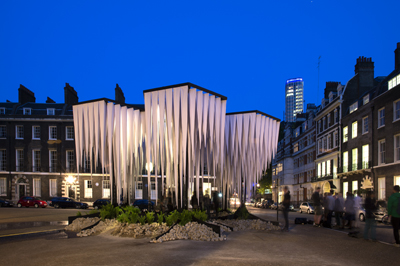
Rainforest by GUN Architects, located in Bedford Square in Bloomsbury outside the offices of the Architectural Association, has been one of the highlights of the London Festival of Architecture, now into its final week. The five metre high tree-like structures, created by the German-Chilean architectural practice, feature fabric stalactites which drip water into pools below. As well as installations like Rainforest, the festival features debates, exhibitions, film screenings, walks, cycle rides, open studios and family events which focus on the importance of architecture and design under this year’s central theme of ‘capital’. The festival runs until 30th June. For more details and a full programme of events still to run, see www.londonfestivalofarchitecture.org.

PICTURE: © Valerie Bennett

This Week in London – London’s garden squares open their gates; World War I comics; and, exploring the Science Museum’s garbage…

London Open Garden Squares Weekend will see more than 200 “hidden and little known” gardens swing their gates open to the public this Saturday and Sunday. Featuring 20 more gardens than last year’s event, the gardens range from classic London square parks to rooftop gardens, community allotments and ecology centres as well as gardens attached to restaurants and historic properties. They include Highbury Square – former home of the Arsenal Football Club, Barnsbury Wood – London’s smallest nature reserve, the Cordwainers community garden in Hackney, Garden Barge Square which will see a floating garden created on the decks of barges, the garden at the PM’s home of number 10 Downing Street, and The Roof Gardens, located above the former Derry & Toms department store in Kensington. One £12 ticket gains access to all gardens (excepting those with special conditions) while National Trust members are half-price and children under 12 go free. For more and a full programme of open gardens, head to www.opensquares.org.

Comics created during World War I are the focus of a new exhibition which opened at the Cartoon Museum in Bloomsbury this week. Never Again! World War I in Cartoon and Comic Art features works by British cartoonists Alfred Leete, Bruce Bairnsfather, William Heath Robinson and Donald McGill and includes more than 300 images ranging from political and joke cartoons taken from newspapers and periodicals and children’s comics to comic cigarette cards and publications produced in the trenches by serving soldiers. There are also some more recent works such as the 1980s comic strip Charley’s War and drawings from the Horrible Histories series. The exhibition runs until 19th October. Admission charge applies. For more, see www.cartoonmuseum.org.

Explore the world of garbage in this new exhibition opening at the Science Museum in South Kensington on Monday. The Rubbish Collection aims to use 30 days worth of the Science Museum’s waste to “expose the beauty, value and volume of what we call ‘rubbish'”. Visitors are able to take part by collecting, sorting and documenting the rubbish generated by the museum which will then be photographed by artist Joshua Sofaer before going on to be processed for recycling or to generate electricity. During a second phase of the exhibition, Sofaer will bring the rubbish back into the museum at different stages of processing. The exhibition is part of the museum’s Climate Changing programme. Runs until 14th September. For more, see www.sciencemuseum.org.uk.

This Week in London – Norman Shaw’s drawings on display; Tower Bridge art; and, German medals from World War I…

Drawings by the renowned Victorian-era British architect Norman Shaw (1831-1912) are the subject of a new display at the Royal Academy of Arts. Shaw’s building works included New Scotland Yard on Embankment and renovations and additions to the likes of Burlington House, home of the RA. The display Dream, Draw, Work will explore the materials, draughtsmanship and design practices of Shaw and his staff and many of the works in the display bear the marks of extensive handling. As well as the drawings, photographs of Shaw’s London buildings will be displayed in the Royal Academy’s Architecture Space. Opens in the Tennant Gallery tomorrow and runs until October 26. Entry is free. For more, see www.royalacademy.org.uk.

An exhibition of artworks depicting Tower Bridge over its 120 year history opens at the Guildhall Art Gallery on Saturday. Tower Bridge: A Celebration of 120 Years includes paintings from the gallery’s permanent collection, contemporary interpretations and archive material. For more, follow this link.

On Now: The other side of the medal: how Germany saw the First World War. This free display in Room 69a of the British Museum focuses on medals made by artists who lived and worked in Germany from 1914-1919. While smaller struck ‘medalets’ were mass produced, the larger cast medals – such as those featured in this display – were produced in smaller numbers and mostly cast in iron because bronze was required for shell casings. While some of the medals, unusually modernist in style, were used to influence opinion against Germany’s enemies, others provided what the museum describes as a “more universal criticism about the futility of war and waste of human life”. Among the motifs used was that of Death who can be seen killing soldiers and attacking ships or giant Zeppelin airships. The medals were not officially produced or sanctioned and attracted their fair share of controversy (one depicts the passenger ship Lusitania, sunk by a German U-boat in 1915, as laden with armaments). The display can be seen until 23rd November. For more, see www.britishmuseum.org.

Send all items of interest for inclusion to exploringlondon@gmail.com.
 

This Week in London – Woolly mammoths star at the NHM; the Ceremony of the Constable’s Dues; mummies at the British Museum; and, Rupert Potter’s photographs…

The most complete woolly mammoth ever found is the star attraction at a new exhibition opening at the Natural History Museum tomorrow. Lyuba – a one month old mammoth – was found by a reindeer herder in Siberia in 2007 and was named after the reindeer herder’s wife. Thought to be 42,000-years-old, the young mammoth was thought to be healthy when it died and still has remnants of its mother’s milk in its stomach. It is the first time the mammoth – normally housed at the Shemanovsky Museum-Exhibition Complex in Salekhard, Russia, is being shown in Western Europe. Mammoths: Ice Age Giants will also feature life-sized models and skeletons of mammoths. Runs until 7th September. Admission charge applies. For more, see www.nhm.ac.uk.

The German naval ship FGS Niedersachsen will take part in the Ceremony of the Constable’s Dues at the Tower of London tomorrow, having saluted the Tower with a gun salute yesterday – the first time a gun salute has taken place in honour of the ceremony in 40 years. The ceremony dates back to the 24th century and while past offerings have included barrels of rum, oysters, cockles and mussels, this year the Tower’s constable, General the Lord Dannatt, will be presented with a barrel of wine. The ceremony will see the ship’s Commander Kurt Leonards led his crew to the Tower’s West Gate where they will be challenged by the axe wielding Yeoman Gaoler before marching on to Tower Green to “present the dues” or deliver the wine, to the Constable. The ceremony takes place at noon. For more on the Tower, see www.hrp.org.uk/TowerOfLondon/.

A new exhibition about ancient lives in Egypt and Sudan has kicks off at the British Museum today. Ancient lives, new discoveries will reveal new research about one of the museum’s most popular collections – that of ancient Egyptian and Sudanese mummies – and uses state-of-the-art technology to take you inside the mummy cases and bring you face-to-face with eight people who lived in the Nile Valley thousands of years ago. The selected mummies come from a period spanning 4,000 years, from the Predynastic period to the Christian era, and come from sites in both Egypt and Sudan. They include an adult male from Thebes mummified about 600 BC and a female singer called Tamut who lived in Thebes around 900 BC. The museum received its first mummy in 1756 and hasn’t unwrapped any of them relying on increasingly advanced technologies to see inside. The exhibition runs until 30th November. Admission charge applies. For more, see www.britishmuseum.org.

On Now – The World of Rupert Potter: Photographs of Beatrix, Millais and Friends. The amateur photography of Rupert Potter, father of children’s author Beatrix Potter, is on show in his exhibition at the National Portrait Gallery. The display features selected works from the gallery’s extensive collection of his works including two new acquisitions which show Beatrix Potter on holidays both before and after her publishing success. Other photos depict the sitters and paintings of artist Sir John Everett Millais, who was a friend of Rupert Potter’s. The free exhibition runs until 16th November in Room 28. For more, see www.npg.org.uk.

Send all items of interest for inclusion to exploringlondon@gmail.com.

Famous Londoners – Dido Elizabeth Belle…

Having had an extended May Bank Holiday, Exploring London returns with our usual coverage this week…

The subject of the new film Belle, the life of Georgian-era Dido Elizabeth Belle was nothing short of extraordinary.

Belle2Born in 1761, Belle was the illegitimate daughter of Admiral Sir John Lindsay and Maria Belle, an African woman who had apparently been captured from a Spanish ship when Havana was captured from the Spanish in 1762 (Lindsay had captained a ship in the fight).

Baptised at St George’s Church, Bloomsbury, in 1766, Lindsay subsequently sent Dido to live with his uncle William Murray, the Earl of Mansfield – Lord Chief Justice of England and Wales. Initially residing at the family house in Bloomsbury Square and later at Kenwood House in Hampstead, she was raised alongside her orphaned cousin Lady Elizabeth Murray who was also in the earl’s care.

She spent some 30 years living at the property and while her status remains something of a mystery, it is thought she was treated more as a companion to Lady Murray than a servant – indeed her familiarity with Lady Murray did prove somewhat shocking to some. Her presence in the house also led to some criticism of Lord Mansfield’s judgements in cases related to slavery.

Following the Earl of Mansfield’s death in 1793, Belle – who has acted as his secretary later in his life – was awarded £500 outright and a £100 annuity and had her freedom confirmed in Mansfield’s will. In December that year she married a Frenchman and gentleman’s steward (possibly at Kenwood House), John Davinier, at St George’s Hanover Square, London. The couple are believed to have had at least three sons and lived in Pimlico before Belle’s death in 1804. She was buried in St George’s Fields and her remains were later moved when the area was redeveloped in the mid-20th century.

A turbaned Belle is famously depicted in a portrait with Lady Murray which now hangs in Scone Palace at Perth in Scotland (property of the current Earl of Mansfield). The portrait was formerly attributed to Johann Zoffany but it’s now generally accepted it was not created by him.

Belle, which stars Gugu Mbatha-Raw as Belle, opens in the UK next month.

This Week in London – A rare chance to walk through a Thames tunnel; Matisse at the Tate; and, Spitting Image on show…

It’s a rare chance to walk the historic Thames Tunnel between Wapping and Rotherhithe – the first tunnel ever dug under a navigable waterway. Transport for London and London Overground are offering the chance to purchase tickets to walk the tunnel – built by Marc Brunel, it’s now used by the London Overground – over the May Bank Holiday weekend on 24th to 26th May. Tickets, which cost £18 plus booking fee, go on sale today at 10am via the London Transport Museum in Covent Garden and are strictly limited (with no on the day admissions allowed). Proceeds from the day will go to the Railway Children’s Charity and the Brunel Museum. Also, worth noting is that the London Transport Museum is offering tours of its depot this Friday and Saturday. Admission charge applies. For more, see www.ltmuseum.co.uk.

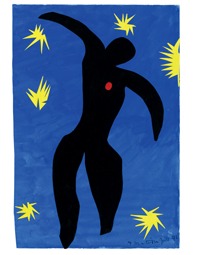
MatisseThe paper cut-outs of Henri Matisse are the focus of a landmark exhibition which opened at Tate Modern last week. Henri Matisse: The Cut-Outs features about 130 works created between 1937 and 1954 with many seen together for the first time. Highlights include maquettes featured in the 1947 book Jazz, The Snail and its sister work Memory of Oceania (both 1953) and the largest number of the Blue Nudes ever shown together. The display takes an in-depth look at the methods and materials Matisse used in the production of the cut-outs. Runs until 7th September (and keep an eye out for the accompanying film, Matisse: Live in cinemas). Admission charge applies. For more, see www.tate.org.uk. PICTURE: Henri Matisse, Icarus 1946, Maquette for plate VIII of the illustrated book Jazz 1947, Digital image: © Centre Pompidou, MNAMCCI, Dist. RMN-Grand Palais / Jean-Claude Planchet, Artwork: © Succession Henri Matisse/DACS 2014.

On Now: Spitting Image. This exhibition at the Cartoon Museum in Bloomsbury centres on the partnership of three dimensional artists Peter Fluck and Roger Law and their key role in the creation of what became known as Spitting Image. It features caricature drawings and photographs created for magazines in the 1970s and 1980s of the likes of Paul McCartney, Michael Jackson, Kate Moss, Saddam Hussein, Billy Connolly, Rupert Murdoch, Jo Brand and John Paul II as well as members of the Royal Family and politicians including Margaret Thatcher. Also present are some of the puppets used in the TV show which ran for 18 series between 1984 and 1996 – these include those of Thatcher, The Queen, Princess Diana and Mr Spock. Runs until 8th June (with selected late opening nights). Admission charge applies. For more, see www.cartoonmuseum.org.

Send all items of interest for inclusion to exploringlondon@gmail.com.
Lost London – Montagu House…

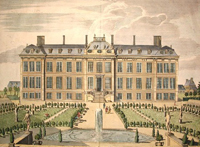
Montagu-HouseThe first home of the British Museum, Montagu House was originally built on what is now the site of the museum in Great Russell Street for courtier and diplomat Ralph Montagu, the 1st Duke of Montagu (among other titles), in the late 1670s.

The Bloomsbury property, which was designed by Robert Hooke and had both French and Dutch influences, had a central block and two service blocks built around a courtyard and featured murals by the Italian artist Antonio Verrio and wall paintings by Frenchman Jacques Rousseau.

In 1686, only a few years after it was completed, the house was gutted in a fire. But the duke had it rebuilt to the designs of French architect Pierre Pouget. It featured a prominent Mansard roof, had interiors created by French artists and formal, much admired, French-inspired gardens (see picture).

In the early 1700s, the 2nd Duke, John Montagu, relocated to the then more fashionable district of Whitehall where he constructed a more modest residence which was later replaced with a mansion.

In 1754, the now neglected Montagu House in Bloomsbury was sold to the trustees of the British Museum and both the gardens and house were restored. The museum, which was officially founded by an Act of Parliament in 1753, opened to the public in the property on 15th January, 1759, with free entry to “all studious and curious persons” (the gardens had opened two years earlier).

The collection was initially based on that of physician, naturalist and collector, Sir Hans Sloane (see our earlier post here), who has bequeathed the 71,000 objects he had collected to King George II (in return for a payment of £20,000 for his heirs).

Montagu House remained the museum’s home until it was replaced by the current museum building, designed by Sir Robert Smirke, which was completed in 1850s.

PICTURE: Wikipedia/James Simon c 1715

This Week in London – Sutton Hoo rediscovered; The Sixties at Tower Bridge; and, the British Library celebrates spring…

• Celebrating 75 years since its discovery this year, the Anglo-Saxon treasure of Sutton Hoo has a new home from this week with the reopening of the renovated gallery housing early medieval artefacts at the British Museum. Excavated at a site in Suffolk in 1939, the Sutton Hoo ship burial is described as the richest intact burial to survive from Europe. It featured a 27 metre long ship and objects including an iconic helmet and is thought to be linked to the death of an Anglo-Saxon king in the early 600s. The treasure now forms the centrepiece of the gallery – Room 41 – which was last renovated in 1985. Other objects in the gallery – which covers Europe during the period from 300 to 1100 – include the Kells Crozier, the Lycurgus Cup, and the Fuller Brooch as well as new objects never shown before such as late Roman mosaics, a copper alloy necklace from the Baltic Sea region and a gilded mount found in a lump of material taken from a Viking woman’s grave. Admission to the gallery – the refurbishment of which was made possible through a donation from Sir Paul and Lady Jill Ruddock – is free. For more, see www.britishmuseum.org.

Twiggy The Sixties are the focus of a new photographic exhibition at Tower Bridge which opens tomorrow. The Sixties features more than 60 iconic images of everyone from actors like Peter Sellers and Elizabeth Taylor to Prime Minister Harold Wilson, fashion icons like Twiggy (pictured), racing car driver Jackie Stewart and activists like the Aldermaston marchers. A rare photograph of comic pair Dudley Moore and Peter Cook – taken as a publicity still for the film The Wrong Box – is a highlight. The images can be seen on the bridge’s West Walkway – located 42 metres above the River Thames – and admission is included in the entry fee to Tower Bridge. Runs until 31st December. For more, see www.towerbridge.org.uk. PICTURE: © Getty Images 

The British Library’s annual celebration of fashion, film and design kicks off today. Now in its third year, the Spring Festival, which runs over the weekend, will give people the chance to see selected material from the newly acquired archive of screenwriter, novelist and playwright Hanif Kureishi (he will also be present, speaking with writer Rachel Holmes about his career). Other events celebrate fashion and film in the Jazz Age, the British newspaper archive and the resources the library has for film-makers. For full details, see www.bl.uk/whatson/exhibitions/spring-festival-2014/events/index.html.

Send all items of interest for inclusion to exploringlondon@gmail.com.
 

Vikings at the British Museum; World War I portraits; and, Ruin Lust…

RoskildeThe Vikings come to the British Museum from today with the first major exhibition in more than 30 years. Vikings: life and legend, the first exhibition to be held in the new Sainsbury Exhibition Gallery, was developed with the National Museum of Denmark and the Staatliche Museen zu Berlin (National Museums in Berlin) and looks at the Viking period from the late 8th century to the early 11th century. Featuring many new archaeological discoveries and objects never seen before in the UK alongside items from the British Museum’s own collection, the exhibition is centred on the surviving timbers of a 37 metre long Viking warship excavated from the banks of the Roskilde fjord in Denmark (pictured). Other items include skeletons recently excavated from a mass grave of executed Vikings in Dorset, the Vale of York Hoard (discovered in 2007) and a stunning hoard of silver from Gnezdovo in Russia. A unique live broadcast event presented by historian Michael Wood taking cinema audiences around the exhibition will be shown in cinemas across the nation on 24th April. Admission charge applies. Runs until 22nd June. For more, see www.britishmuseum.org/whats_on/exhibitions/vikings.aspx. PICTURE: Copyright of the National Museum of Denmark. 

The commemorations of the World War I centenary have commenced at the National Portrait Gallery with The Great War in Portraits. The first of a four year programme of events and displays at the gallery, the exhibition features iconic portraits of figures such as Winston Churchill, Kaiser Wilhelm, Siegfried Sassoon and Wilfred Owen as well as major art works by the likes of Lovis Corinth, Max Beckmann, and Kirchner, whose painting Selbstbildnis als Soldat (Self-portrait as a Soldier) is featured, and Harold Gillies’ photographs of facially injured soldiers from the Royal College of Surgeons. Among the highlights are Jacob Epstein’s The Rock Drill, a contrasting pair of British and German films about the Battle of the Somme, and a press photograph of Gavrilo Princip, the student who sparked the flames of war when he assassinated Archduke Franz Ferdinand. Elsewhere among the 80 works on display are portraits of war heroes such as VC winners are contrasted with those of soldiers disfigured by war, POWs and those shot for cowardice. Admission is free. Runs until 15th June. For more, see www.npg.org.uk/whatson/firstworldwarcentenary/exhibition.php.

Our fascination with ruins is the subject of a new exhibition which opened this week at Tate Britain. Including more than 100 works from the likes of JMW Turner, John Constable, John Martin, Eduardo Paolozzi, Rachel Whiteread and Tacita Dean, Ruin Lust examines the craze for ruins that overtook creative types in the eighteenth century and the subsequent revisiting – and at times mocking – of this fascination by later figures. Works on show include Turner’s Tintern Abbey: The Crossing and Chancel, Looking towards the East Window 1794, Constable’s Sketch for ‘Hadleigh Castle’ c 1828-9, Graham Sutherland’s Devastation series 1940-1 – showing the aftermath of the Blitz, Jon Savage’s images of London in the late 1970s, and Whitehead’s Demolished – B: Clapton Park Estate 1996, showing the demolition of Hackney tower blocks. Runs until 18th May. Admission charge applies. For more, see www.tate.org.uk/whats-on/tate-britain/exhibition/ruin-lust.

This Week in London – Handel and the royals; David Bailey; and, redefining German art…

• A new exhibition exploring German-born George Frideric Handel and his association with the royal family opens at the Foundling Museum in Bloomsbury tomorrow to mark the 300th anniversary of the coronation of King George I. The museum says no composer has been more closely associated with the British monarchy than Handel, whose anthem Zadok the Priest has been performed at every coronation since King George II in 1727 and whose Water Music was performed on the River Thames during the Diamond Jubilee for Queen Elizabeth II in 2012. By George! Handel’s Music for Royal Occasions features treasures from the Gerald Coke Handel Collection and loans from the British Library, the National Portrait Gallery, the British Museum and Westminster Abbey. Runs until 18th May. For more, see www.foundlingmuseum.org.uk.

A landmark exhibition of David Bailey photographs opens at the National Portrait Gallery today. Bailey’s Stardust – one of the gallery’s largest scale photographic exhibitions, it occupies most of the gallery’s ground floor – features more than 250 portraits including a new portrait of Kate Moss and previously unseen images from Bailey’s travels to the Naga Hills in India in 2012. There’s also rooms devoted to portraits of the Rolling Stones and Catherine Bailey, images from Bailey’s trip to Papua New Guinea in 1974 and from east Africa which Bailey visited in 1985 in support of Band Aid. Admission charge applies. Runs until 1st June. For more, see www.npg.org.uk.

A new exhibition at the British Museum explores how six key artists redefined the notion of art in Germany in the Sixties and Seventies. Germany divided: Baselitz and his generation features some 90 works including some 45 by George Baselitz as well as works by Markus Lupertz, Blinky Palermo, AR Penck, Sigmar Polke and Gerhard Richter. Thirty-four of the works, including 17 by Baselitz, have been donated by Count Christian Duerckheim while a loan of some 60 additional works from the Duerckheim Collection makes up the rest of the exhibition. Runs in Room 90 until 31st August. For more, see www.britishmuseum.org.

Send all items of interest for inclusion to exploringlondon@gmail.com.

10 fictional character addresses in London – 8. The Darling’s House…

Peter-Pan2In JM Barrie’s 1911 novel, Peter and Wendy (based on the stage play Peter Pan; or, the Boy Who Wouldn’t Grow Up), the adventure begins when Peter Pan visits the home of the Darling family.

He secretly listens in – via an open window – while Mrs Darling tells bedtime stories to her children – Wendy, John and Michael – but during one visit loses his shadow and it’s on returning to claim it that he meets Wendy and, well, you know the rest…

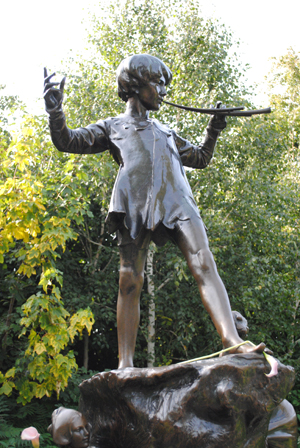
Peter Pan is most famously associated with Kensington Gardens – it’s here that we are first introduced to the character of Peter in the book Peter Pan in Kensington Gardens (in fact there’s a rather famous statue of him there to this day, pictured above) – it’s most often assumed that the Darling’s house must be nearby.

But, in fact, the book Peter and Wendy never states where the Darlings’ house is located exactly  – just that it is at number 14 in the street in which they live – while in the 1904 play the address is given as “a rather depressed street” in Bloomsbury. Barrie explains that he placed the Darlings’ house in Bloomsbury because Mr Roget (of Thesaurus fame) once lived there and “we whom he has helped to wend our way through life have always wanted to pay him a little compliment”.

Worth noting, however, is a property at 31 Kensington Park Gardens. Once the home of the Llewellyn Davies family, family friend Barrie was a frequent visitor here and in fact went on to adopt the five Llewellyn Davies children following the death of their parents in the early 1900s. The property, which is divided into a series of flats, is, as a result, said to have been something of a model for the Darling’s house.

Barrie, himself, meanwhile, owned a house at 100 Bayswater Road – not far from Kensington Gardens where he first meet the Llewellyn Davies family – but, interestingly, had previously lived in Bloomsbury. The house is marked with a blue plaque.

Another Peter Pan-related address we have to mention is that of the Great Ormond Street Hospital for Children to which Barrie gave the rights to receive royalties from Peter Pan in perpetuity. You can arrange for a tour of the hospital’s Peter Pan-related memorabilia.

For more on the story behind the writing of Peter Pan, see Andrew Birkin’s book, J.M.Barrie and the Lost Boys.

Treasures of London – The Mostyn Tompion Clock…

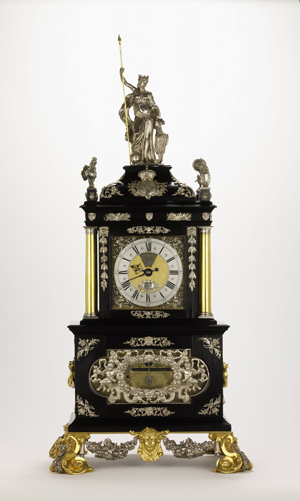
Mostyn-ClockCreated by celebrated London clock-maker, Thomas Mostyn, the Mostyn Tompion Clock was produced to celebrate the coronation of joint monarchs King William III and Queen Mary II in 1689.

Currently on display in the British Museum in an exhibition coinciding with the 300th anniversary of Mostyn’s death, the clock – which shows the hours and minutes as well as the days of the week – continues to keep good time and runs for more than a year on a single wind.

Noted as much for being a work of art as for its mechanical works, the case features an ebony veneer, silver and gilt brass mounts and is crowned with a statuette of Britannia and a shield combining the crosses of St George and St Andrew while decorations on the four corners commemorate the union of the United Kingdom and depict a rose, thistle, lion and unicorn.

The clock was kept in the Royal Bedchamber until the death of King William III in 1702 after which it passed to Henry Sydney, the Earl of Romney and Gentleman of the Bedchamber and Groom of the Stole. It was later inherited by Lord Mostyn (hence the ‘Mostyn’ Tompion) and remained in that family until acquired by the British Museum in 1982.

Keep an eye out for upcoming famous Londoners on Thomas Tompion.

The clock, featured in the The Asahi Shimbun Display, is on display in Room 3 of the British Museum until 2nd February, 2014. Entry is free. 

WHERE: British Museum, Great Russell Street (nearest Tube stations are Russell Square, Tottenham Court Road, Goodge Street and Holborn); WHEN: 10am to 5.30pm daily; COST: Free; WEBSITE: www.britishmuseum.org.

PICTURE:  © The Trustees of the British Museum

This Week in London – The Hadron Collider at the Science Museum; John Richard Arthur honoured; Christmas at Carnaby; and South American gold at the British Museum…

First up, we’ve changed the name of the Thursday update of what’s happening in London to This Week in London which we think better describes what the column’s about. So, to some events we think you might be interested in…

• An exhibition that transports visitors to the heart of the Large Hadron Collider (LHC) opened at the Science Museum yesterday. In the first exhibition of its kind, Collider offers visitors the closest thing to actually being at the CERN particle physics laboratory, blending theatre, video and sound to enable visitors to explore the control room, meet virtual scientists and engineers and see inside a huge underground ‘detector’ cavern. There’s also the chance to follow the journey of particle beams as they race around the 27 kilometre long LHC tunnel (incidentally about the same length as the Circle Line) and the exhibition’s highlight is a wrap around projection which takes watchers from an enormous experiment cavern to the heart of a particle collision. On show will be artefacts from the actual LHC including a 15 metre magnet used to steer the particle beam and objects from the museum’s collection including the accelerator used by Cockcroft and Walton to split the atom in 1932. Admission charge applies. Runs until 6th March. For more, see www.sciencemuseum.org.uk.

John Richard Arthur, a former Mayor of Battersea and the first black man to hold senior public office in London, was honoured with an English Heritage Blue Plaque this week. The plaque was unveiled by Cr Angela Graham, the Mayor of Wandsworth, at his former home at 55 Brynmaer Road in Battersea – his residence during the major milestones of his political career. Elected on 10th November 1913, Archer lived at the home from about 1898 to about 1918. He has been described as a “key figure in the story of the Black contribution in Britain in the early part of the Twentieth century”. For more, see www.english-heritage.org.uk/discover/blue-plaques/.

Christmas comes to the West End this afternoon with the Carnaby Christmas Shopping Party taking place in 13 streets around the iconic fashion strip. More than 100 shops, restaurants and bars are delivering 20 per cent discounts and there’s also complimentary drinks, music, talks on fashion trends and the chance for the “best dressed” to win goodie bags. The party runs from 5pm to 9pm with the Christmas lights turned on at 6pm. Head to www.carnaby.co.uk for more.

El-Dorado• On Now: Beyond El Dorado: power and gold in ancient Colombia. This exhibition in Room 35 of the British Museum features items including ceramics and stone necklaces taken from Lake Guatavita near modern Bogota (The phrase El Dorado, “the golden one”, actually refers to a ritual which took place at the lake in which a newly elected leader of the Muisca people was covered in powdered gold before diving into the lake and washing it off to emerge as the new leader). They are just some of the more than 300 items in the display which come from the Museo del Oro Bogata – one of the best collections of pre-Hispanic gold in the world – as well as the British Museum’s own collection. Other objects include large scale gold masks, a painted Muisca textile, avian pectorals and necklaces with feline claws and one of the few San Agustin stone sculptures held outside Colombia. The exhibition, sponsored by Julius Baer, runs until 23rd March. Admission charge applies. For more, see www.britishmuseum.orgPICTURE: Anthropomorphic bat pectoral, Tairona, gold alloy, AD900-1600. Copyright Museo del Oro, Banco de la Republica, Colombia.

Around London – Chinese masterpieces at the V&A; Iraq war photography; and, The Age of Glamour at the Cartoon Museum…

Chen_Rong_Nine_DragonsChinese masterpieces are the focus of a new exhibition opening at the V&A in South Kensington on Saturday. Masterpieces of Chinese Painting 700-1900 will feature more than 70 works including some of the earliest surviving Chinese paintings and many shown in Europe for the first time. Organised chronologically in six successive periods, the works in the display range from intimate works by monks to a 14-metre long scroll painting. As well as examining the tensions between tradition and innovation, the exhibition will look at the variety of settings for which the paintings were created – from tombs and temples to banners, portable handscrolls and hanging scrolls – and the materials used. The exhibition runs until 19th January. Admission charge applies. Meanwhile, from 2nd November, celebrated Chinese artist Xu Bing will transform the museum’s John  Madejeski Garden into an “ethereal Arcadia” inspired by the Chinese fable Tao Hua Yuan (The Peach Spring Blossom) in an installation to coincide with the exhibition. Runs until 2nd March. For more, see www.vam.ac.uk/chinesepainting. PICTURE: Nine Dragons (detail), Chen Rong (1244), © 2013 Museum of Fine Arts, Boston

A new exhibition of photography marking the 10th anniversary of the start of the second Iraq war opens today at the Imperial War Museum. Featuring the work of photographers Mike Moore, a former Fleet Street photographer who was the first press photographer to be officially embedded with the British Army, and Lee Craker, an American photographer who specialises in documentary photography, the exhibition examines the impact of the war on the Iraqi people and the US and British troops who served there.  The exhibit is the first photography show to be exhibited as part of the IWM Contemporary programme. Runs until 5th January. Meanwhile one of Britain’s leading contemporary photographers, Donovan Wylie, explores the effects of modern day military surveillance programs in a new exhibition, at the IWM, Vision as Power. The display includes five works. Runs until 21st April. Admission to both exhibitions is free. For more, see www.iwm.org.uk.

The Age of Glamour: RS Sherriffs’ Stars of Stage & Screen. This exhibition at the Cartoon Museum in Bloomsbury features the work of Sheriffs, whose caricatures of the likes of Charlie Chaplin, Greta Garbo and Douglas Fairbanks were published in magazines including Radio Times, London Calling and The Sketch. As well as individual portraits, the works include ensemble drawings such as one featuring Laurence Olivier and Peggy Ashcroft in Romeo and Juliette. Runs until Christmas Eve. Admission charge applies. For more, check out www.cartoonmuseum.org.

Around London – The Bard is back; Foundling Museum displays; and, exhibitions on iconoclasm and explicit Japanese art…

The Bard is back in Leicester Square with the announcement last week that restoration work on the square’s 19th century Grade II listed statue of William Shakespeare – the only full-length statue the playwright in central London – has been completed. The 11 month restoration was carried out as part of £17 million revamp of the square which has seen the installation of a new fountain. The statue, which was the work of James Knowles, has been in the square since it was completed in its current configuration in 1874. Meanwhile, in other sculpture-related news, Sorry, Sorry Sarajevo – a life-size statue of a man holding  a dead or badly injured man in his arms has been placed in St Paul’s Cathedral where it will remain for the rest of the year. The work by Nicola Hicks dates from 1993 – when the Bosnian war was at its height – and has been placed opposite Henry Moore’s 1983 sculpture, Mother and Child: Hood as part of the cathedral’s approach to next year’s World War I centenary.

Two new displays opened at the Foundling Museum in Bloomsbury last month. Hogarth and Copyright, which runs until 5th January, looks at the role the artist William Hogarth played in the passing of the 1735 Engravers’ Copyright Act (also known as Hogarth’s Act – it was the first law to protect artist’s rights over their work) while Handel and Lucretia, presented in conjunction with The Sir Denis Mahon Charitable Trust and running until 26th January, shows Guercino’s painting Lucretia alongside two early manuscripts of Handel’s cantata La Lucretia. Entry is part of admission price. For more, see www.foundlingmuseum.org.uk.

A new exhibition tracing the history of attacks on artworks in Britain from the 16th century to today opened at Tate Britain in Millbank this week. Art under Attack: Histories of British Iconoclasm looks at why and how monuments have been damaged over the past 500 years. The display includes the remarkable pre-Reformation sculpture, the Statue of the Dead Christ (about 1500-1520), which was discovered in 1954 beneath the chapel floor at the Mercer’s Hall. Already damaged – most likely at the hands of Protestant iconoclasts – it may have been buried there to protect it. Also displayed are fragments of monuments destroyed in Ireland last century, paintings including Edward Burne-Jones’ 1898 painting Sibylla Delphica which was attacked by suffragettes in 1913-14, and Allen Jones’ 1969 work Chair – damaged in a feminist attack in 1986. Runs until 5th January. Admission charge applies. For more, see www.tate.org.uk.

A controversial exhibition of sexually explicit Japanese works of art created between 1600-1900 opened at the British Museum this week. Shunga: sex and pleasure in Japanese Art – which carries a warning of “parental guidance for visitors under 16 years – features 170 works including paintings, prints and illustrated books. Drawn from collections in the UK, Japan, Europe and the US, the exhibition of explores the phenomena of what are known as shunga (‘spring pictures’), looking at why it was produced and to whom it was circulated. Admission charge applies. Runs until 5th January. For more, see www.britishmuseum.org.

10 Historic London Garden Squares…9. Queen Square…

Queen-Charlotte

This rectangular-shaped square in Bloomsbury, known for its association with the medical profession, was first laid out in the early 1700s and was named for Queen Anne.

Originally known as Devonshire Square, the space was largely laid out between 1716 and 1725 on land owned by Sir Nathaniel Curzon of Kedlestone and, as with so many of London’s squares, attracted it’s fair share of the well-to-do. Among early residents were several bishops and members of the aristocracy.

Queen-SquareOne of the most interesting early associations with Queen Square is that of King George III and his consort Queen Charlotte. The king – better known to many as ‘Mad King George’ – was treated for mental illness in a house on the square and there’s a tradition that Queen Charlotte, stored some of the food to be consumed by the king during his treatment in the base of what is now the pub known as the Queen’s Larder (see our previous entry on the pub here).

There’s a statue of a queen in the central gardens which was thought to be of Queen Charlotte. Since it was erected in 1775, there has been some confusion over the statue’s identity – it has been thought at different stages to be of Queen Anne, Queen Mary (co-ruler with King William III), and Queen Caroline (consort of King George II) – a fact which has led to some confusion as to which queen the square was named after (although general consensus now seems to be that it was indeed Queen Anne whom the square was named after).

The houses in Queen Square – which was later associated with artists and literary types – were gradually replaced by institutional buildings relating to, among other things, education and the practice of medicine and today it remains a hub for the medical establishment – the National Hospital for Neurology and Neurosurgery and the Royal London Hospital for Integrated Medicine (formerly known as the Royal London Homoeopathic Hospital) are both located on the east side of the square and there are several other medical-related buildings located around it including the former Italian Hospital (Ospedale Italiano) which was founded by Italian businessman Giovanni Battista Ortelli in 1884 for poor Italian immigrants and since about 1990 has been part of the Great Ormond Street Hospital.

SamOther prominent buildings located on the square include the Church of St George the Martyr Holborn (number 44) which, built in 1706, predates the square’s formation. The church is known as the ‘sweep’s church’ due to the practice of a parishioner who provided Christmas dinners for 100 chimney sweep apprentices each year.

The gardens themselves are protected by an Act of Parliament passed in the 1830s and the gardens are to this day maintained by trustees appointed under that act. Aside from the statue of the queen, monuments in the gardens include a small plaque commemorating the bomb which landed in the square during a Zeppelin raid in World War I (no one was killed), benches commemorating 16 doctors from the homeopathic hospital who died in the Trident air disaster of 1972, and some lines of poetry on a flower bowl and surrounds by Philip Larkin and Ted Hughes in honor of the Queen’s Silver Jubilee of 1977. Statues include a 2001 bronze of Mother and Child and, (this one we love), a sculpture of Sam the cat, apparently a local resident (pictured)!

10 Historic London Garden Squares…8. Russell Square

The largest garden square in Bloomsbury (and one of the largest in London), Russell Square was first laid out by Humphry Repton in 1806 and was located on what were the gardens of the home of the Dukes of Bedford, Bedford House.

Duke-of-BedfordIts name is that family name of the 5th Duke of Bedford, Francis Russell, who initially ordered the creation of the square and owned the land upon which it stands. The Russell family still hold the title today – the current duke, the 15th, is Andrew Russell – and still run the Bedford Estates upon which the square still stands.

The square was originally lined with grand terraced homes aimed at the upper middle class – the survivors, which can be found largely on the southern and western side of the square, are these days occupied by offices and the University of London. The eastern side of the square is these days dominated by the French Gothic Hotel Russell – designed by Charles Fitzroy Doll, it was built in 1898.

Famous residents and inhabitants have included TS Eliot, who worked at a building in the square’s north-west corner when he was poetry editor at Faber & Faber, 19th century painter Sir Thomas Lawrence who had a studio at number 67, poet William Cowper, who lived at number 62 in the 1830s as a schoolboy, and George Williams, founder of the YMCA, who lived at number 13 in the late 19th and early 20th centuries. It also appears in William Thackeray’s novel, Vanity Fair, and Virginia Woolf’s Night and Day.

The gardens were overhauled in 2002 in view of Repton’s original design and a new ornamental fountain installed in the middle. A cafe was also added.

Russell Square still houses one of London’s 13 extant Cabmen’s Shelters while monuments within the gardens include a small memorial to the 7th July, 2005, bombings – two of which occurred nearby – and a statue of the 5th Duke of Bedford, another which is the work of Sir Richard Westmacott and which was erected in 1807-08 (pictured).

Hampton Court Palace Festival; good deeds at the Foundling Museum; Harold Wilson’s memorial; and, the RA’s summer exhibition…

The 2013 Hampton Court Palace Festival kicks off tonight. Highlights include a performance by the Royal Philharmonic Concert Orchestra and fireworks on Saturday night while other artists featured include Jools Holland, Lisa Stansfield, Frank Valli and the Four Seasons, Imeda May, Bjorn Again, Russell Watson, Cliff Richard and Joe Bonamassa and Beth Hart. For the full programme of events over the next couple of weeks, check out www.hamptoncourtpalacefestival.com.

It’s all about good deeds at the Foundling Museum. Opening at the museum in Bloomsbury tomorrow, a ceramic artist Clare Twomey’s exhibition – Exchange: 1,000 Good Deeds at the Foundling Museum – features more than 1,000 cups and saucers with each cup hiding instructions for a good deed underneath. The instructions are only revealed when a visitor selects a cup – they either agree to do the good deed, leaving it exposed and taking home the cup, or, if they’re not able to, can return the cup to its saucer. There is a limit of 10 cups available for exchange each day – ring or check the website for times when the exchanges may take place. Entry is free with museum admission. Runs until 15th September. For more, see www.foundlingmuseum.org.uk.

A memorial ledger stone to former Labour PM, Harold Wilson (later Lord Wilson of Rievaulx), was dedicated in Westminster Abbey this week. Lord Wilson (1916-1995) was PM from 1964 to 1970 and 1974 to 1976. The stone is placed near where Earl Attlee’s ashes were interred at a memorial service attended by Lord Wilson when Prime Minister in 1967. For more, see www.westminster-abbey.org.

On Now: Royal Academy of Arts Summer Exhibition 2013. Coordinated by Royal Academicians printmaker Norman Ackroyd and Eva Jiricna, this year’s exhibition at the Royal Academy in Piccadilly features more than 1,000 artworks with many going on display for the first time. Among the works on display will be Grayson Perry’s series of six tapestries entitled The Vanity of Small Differences – inspired by Hogarth’s A Rake’s Progress, it tells the story of Tom Rakewell. Other highlights include a room dedicated to portraiture – including photographs and works on paper – and a new large scale sculpture by Anthony Caro. Runs until 18th August. Admission charge applies. For more, see www.royalacademy.org.uk.