This Week in London – China and South Asia gallery reopens at British Museum; Historic US letters on show at Heritage Gallery; and, two new works for Tate’s Tanks…

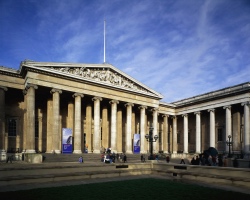
The renovated Sir Joseph Hotung Gallery of China and South Asia has reopened at the British Museum, bringing the displays for China and South Asia up-to-date. The gallery presents the histories of China from 5000BC to the present with objects on show including Ming dynasty dragon tiles and the earliest scroll to reach Britain (it arrived at the end of the 18th century). The South Asia exhibition, meanwhile, includes a new display covering the Mughal period, the Rajput rulers, India under British rule and the region since independence in 1947. Featured objects include the stone sculptures from the Buddhist shrine at Amaravati and newly acquired works of art including a 6th century sculpture of Lakshmi from Kashmir. Entry to the gallery in Room 33 is free. For more, see www.britishmuseum.org. PICTURE: Courtesy of British Museum.

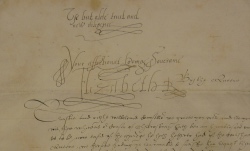
Historic letters sent between the City of London and the United States of America during the American War of Independence have gone on show at the City of London’s Heritage Gallery within the Guildhall Art Gallery. The letters include some authored by notable Americans John Hancock and Isaac Roosevelt, written at a time when, in defiance of the British Government, the City championed the cause of the colonists. Also on show are documents relating to the life and work of Elizabeth Garrett Anderson – the first women to qualify as a surgeon and physician in Britain and to serve as a magistrate and mayor – and, in a nod to the approaching centenary of the Royal Air Force, a display on the career of World War II pilot Cy Grant. The documents, which are all drawn from the collection of the London Metropolitan Archives, can be seen until 18th April. For more, follow this link.

Two major new works have been opened in the Tanks at the Tate Modern. Emeka Ogboh’s, The Way Earthly Things Are Going 2017 – on display for the first time in the UK after debuting in Athens – fills the subterranean East Tank in the Blavatnik Building while Indian artist Amar Kanwar’s The Lightning Testimonies 2007 can be seen in the South Tank. Both works are on display until 4th February. For more, see www.tate.org.uk.

Send all items for inclusion to exploringlondon@gmail.com.

Famous Londoners – Ebenezer Scrooge…

OK, so infamous may be a better label but the journey of Scrooge – the star of Charles Dickens’ A Christmas Carol, is one of redemption.

Christmas is almost upon us so we thought he was an appropriate figure to look at for our Famous Londoners series this week (and yes, we know he’s a fictional figure!)

Scrooge, who first appeared in 1843 when Dickens’ novel was published, runs a London-based counting-house and subjects his clerk, the hapless Bob Cratchit, to a gruelling workload on low pay (even complaining about him having Christmas Day off).

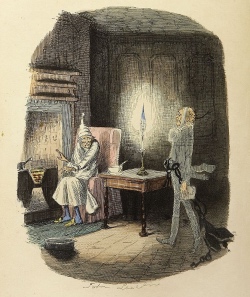
Refusing to give anything for the relief of the poor, the incorrigible Scrooge retires for Christmas Eve and is subsequently visited by the ghost of his former business partner, Jacob Marley, who thanks to his own greed and lack of charity is damned to wander the Earth for eternity. Marley then warns Scrooge that he risks the same fate and that, in a final chance for redemption, he will be visited by three spirits of Christmas – past, present and yet-to-come.

It’s not giving too much away to say that Scrooge, then experiencing these visions, repents and becomes a model of love and generosity, offering his help and support to Bob Cratchit and his family – particularly his ailing son, Tiny Tim (one of the best versions of the story is that of The Muppet Christmas Carol!)

There’s been much speculation over the years who was Dickens’ inspiration for the character with possible subjects including Edinburgh banker Ebenezer Lennox Scroggie, the theory being that while in the Scottish city to deliver a lecture on 1841,  Dickens misread Scroggie’s gravestone as being a “mean man” instead of a “meal man” (corn merchant).

Another theory says the character was based on John Elwes, born as John Meggot in 1714, who was noted for his miserliness. He apparently preferred, despite inheriting a fortune, to spend his nights in the kitchen with the servants so he didn’t have to light a fire in another room (although perhaps he just preferred their company), refused to pay for the maintenance on his house, dressed in ragged clothes and ate rotten food. Such was his thriftiness that Elwes, who was elected MP for Berkshire in 1772, apparently left some £500,000 to his two sons when he died in 1789.

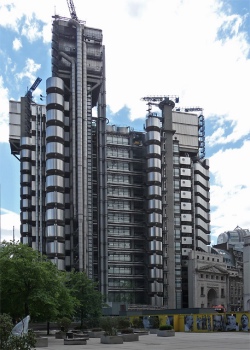
As to where Scrooge’s counting house was located? The book never precisely locates it but there’s a few clues including that Bob Cratchit went on an ice slide in Cornhill, in the City of London, when making his way from work to his home in Camden and that Scrooge’s business was near a church tower. These two pieces of evidence have led some to place it alongside the church of St Michael’s, Cornhill, in Newman’s Court. Scrooge’s house, meanwhile, lies not too far away and is also close to a church leading some to place it at 45 Lime Street (now the home of Lloyds).

PICTURE: Marley’s ghost visits Scrooge in an original illustration by John Leech.


10 subterranean sites in London – 6. Guildhall crypts…

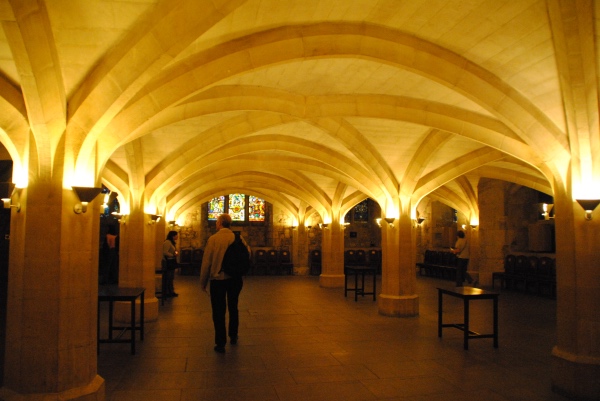
Located beneath Guildhall’s Great Hall is the oldest surviving part of the structure, the largest of London’s medieval crypts.

Dating from the reign of King Edward the Confessor in the 11th century, the vaulted East Crypt is considered to be one of the finest examples of its kind in England with a ceiling featuring a series of carved bosses depicting heads, shields and flowers.

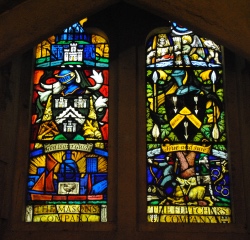
It features a series of stained glass windows depicting five famous Londoners – Geoffrey Chaucer, William Caxton, Sir Thomas More, Sir Christopher Wren and Samuel Pepys.

The pillars holding up the roof, meanwhile – once located at ground level – show signs of where horses were once tied up while their riders went about their business.

The West Crypt, which is believed to date from the 13th century, was sealed off after collapsing under the weight of the roof of the Great Hall which fell down during the Great Fire of London in 1666. It was reopened in 1973.

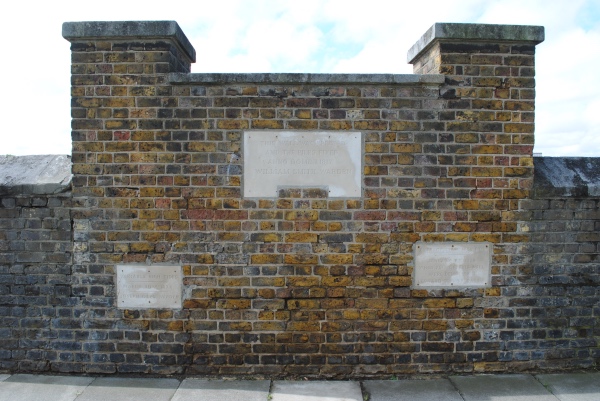
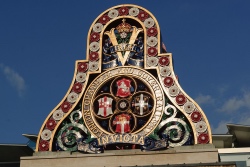
The windows of the West Crypt represent some of the City of London’s livery companies (pictured above, right).

One of the most famous incidents took place in the crypts on 9th July, 1851, when Queen Victoria attended a banquet here during a state visit.

The crypts today are available to hire for atmospheric events.

WHERE: Guildhall, Guildhall Yard, City of London (nearest Tube stations are Bank, Mansion House and Moorgate); WHEN: 10am to 4.30pm daily (when not being used for events); COST: Free; WEBSITE: www.cityoflondon.gov.uk/things-to-do/visit-the-city/attractions/guildhall-galleries/Pages/guildhall.aspx.

10 subterranean sites in London – 5. Whitefriars Priory crypt…

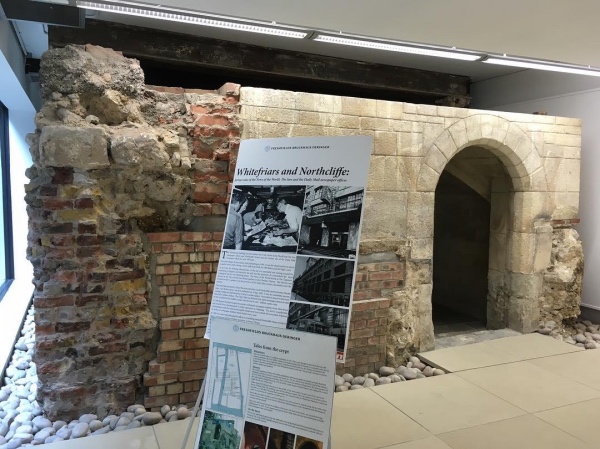
Located in the basement of a modern office building (and visible through glass) are the remains of a 700-year-old crypt that once lay beneath Whitefriars Priory.

Reached via Magpie Alley (off Bouverie Street which runs south from Fleet Street), the remains are all that is visibly left of the priory, founded here in the 13th century.

Known as ‘White Friars’ because of the white mantle they wore over their brown habits, the Carmelites (their proper name) were founded in what is now Israel in the mid-12th century. After the region fell to the Saracens in the mid-13th century, some members of the order made their way to England with the aid of Richard, Earl of Cornwall, brother of King Henry III. In  1241, Sir Richard Grey of Codnor founded the Priory of Our Lady of Mount Carmel on this site.

The priory – which counted towering medieval figure John of Gaunt among its patrons – once stretched from Fleet Street to the Thames and to the Temple in the west and what is now Whitefriars Street in the east. It included a church – enlarged in the 14th century – as well as cloisters, a garden and cemetery.

The priory survived until the Dissolution after which King Henry VIII granted various buildings to the King’s Physician and the King’s Armourer and the great hall become the famous Whitefriars Playhouse.

Whitefriars became part of the rather infamous slum known as Alsatia, a ‘liberty’ seen as a place of sanctuary for those fleeing the law. The priory was gradually subsumed into the slum – there’s a suggestion that the crypt may have been used as a coal cellar.

The remains of the 14th century vaulted crypt, which had been located beneath the prior’s house on the east side of the former priory site, were apparently found in the late 19th century and restored in the 1920s when the now defunct newspaper News of the World was expanding. During a redevelopment in the 1980s (which came after News International moved out to Wapping), the remains were moved to their current location.

WHERE: Whitefriars Crypt, Ashentree Court, City of London (nearest Tube stations are Temple and Blackfriars); WHEN: Daily; COST: Free; WEBSITE: None.

PICTURE: The crypt at seen at this year’s Open House London event. (Andrea Vail licensed under CC BY-ND 2.0.)

This Week in London – The Lord Mayor’s Show; Cézanne’s portraits; venom and its uses; and, Russia’s visual revolution…

The Lord Mayor’s Show takes place this Saturday as the new Lord Mayor of London, Charles Bowman, takes office with the event once again culminating in a spectacular fireworks display over the Thames. The Lord Mayor will arrive in the City at 9am via a flotilla which includes the QRB Gloriana and other traditional Thames barges. Riding in the splendid State Coach, the Lord Mayor then joins in the world famous procession which sets off from Mansion House at 11am, pausing at the Royal Courts where he swears allegiance to the monarch before returning via Victoria Embankment at 1pm. The fireworks display will start at 5.15pm from a barge moored between Blackfriars and Waterloo Bridges. For more details, head to https://lordmayorsshow.london. Meanwhile, on Sunday, annual Remembrance Sunday services will be held around the country centred on the Cenotaph in Whitehall where, in a break with tradition, Prince Charles is expected to lay a wreath on behalf of the Queen who, along with Prince Philip, will be watching from the balcony of the Foreign and Commonwealth Office building.

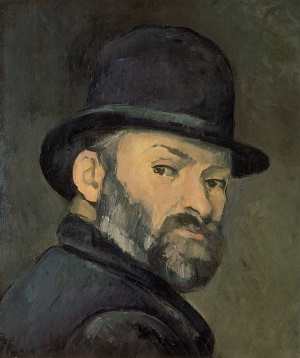
More than 50 portraits by Paul Cézanne have gone on show in a landmark exhibition at the National Portrait Gallery. Cézanne Portraits features works previously unseen in the UK including three self-portraits – one of which is Self Portrait in a Bowler Hat (1885-86) –  and two portraits of his wife –  Madame Cézanne Sewing (1877) and Madame Cézanne (1886–7) – as well as Boy in a Red Waistcoat (1888-90) and Madame Cézanne in a Yellow Chair, both of which haven’t been seen in London since the 1930s. The exhibition, which includes paintings spanning the period from the 1860s until shortly before Cézanne’s death in 1906, explores the special pictorial and thematic characteristics of the artist’s portraiture work such as his use of complementary pairs and his creation of multiple versions of works featuring the same subject. The exhibition, which has already been on show at the Musée d’Orsay and will be at the National Gallery of Art in Washington DC from late March next year, runs until 11th February. Admission charge applies. For more, see www.npg.org.uk. PICTURE: Self-Portrait with Bowler Hat by Paul Cézanne, 1885-6, © Private Collection 

The use of venom as the ultimate natural weapon is the subject of a new exhibition opening at the Natural History Museum on Friday. Venom: Killer and Cure explores how the use and effects of venom, the different biological roles it plays and how humans have attempted to harness and neutralise its power, with the former including some remarkable medical innovations. Specimens on show include everything from snakes to spiders, wasps, scorpions and the duck-billed platypus as well as live example of a venomous creature. Highlights include a gaboon viper head – a snake species with the largest known venom fangs, an emperor scorpion which engages in unusual mating behaviour known as “sexual stingings”, a flower urchin which can inject venom that causes muscular paralysis in humans for up to six hours, a tarantula hawk wasp which has one of the most painful venomous stings, and a box jellyfish, larger specimens of which can cause death in humans in two to five minutes. Admission charge applies. For more, see www.nhm.ac.uk.

Coinciding with the centenary of the Russian Revolution comes a new exhibition at the Tate Modern which offers a visual history of Russia and the Soviet Union. Red Star Over Russia: A Revolution in Visual Culture 1905-55 is based around the collection of late graphic designer David King (1943-2016) and charts how seismic events such as the overthrow of the last Tsar, the revolutionary risings of 1917 and Stalin’s campaign of terror inspired a wave of art and graphic design across the country. The display includes more than 250 posters, paintings, photographs, books and other ephemera by artists such as El Lissitzky, Aleksandr Rodchenko and Nina Vatolina. Runs until 18th February. Admission charge applies. For more, see www.tate.org.uk.

Send all items for inclusion to exploringlondon@gmail.com.

10 subterranean sites in London – 4. St Paul’s Cathedral Crypt…

A highlight of any journey through subterranean London is spending some time in the St Paul’s Cathedral crypt, famously the resting place of, among others, Admiral Lord Nelson and Arthur Wellesley, the Duke of Wellington.

Built as an integral part of Sir Christopher Wren’s masterpiece, the crypt is said to be the largest in Europe and runs the complete length of the building above. It features some 200 memorials.

Nelson’s resting place is under the centre of the dome – his remains, brought back from the 1805 Battle of Trafalgar in a keg of naval brandy, are entombed inside a wooden coffin made from one of the French ships he defeated at the Battle of the Nile which is then contained in a black sarcophagus. Originally made for Cardinal Wolsey in the 1520s but left unused when the Cardinal fell from favour, it’s now topped with Nelson’s viscount coronet in place of where the cardinal’s hat would have stood.

The Duke of Wellington, meanwhile, lies just to the east in a tomb of Cornish porphyritic granite set atop a block of Peterhead granite carved with four sleeping lions at its four corners. The coffin was lowered through a specially created hole in the cathedral floor above Nelson’s tomb and then moved into the sarcophagus.

Other memorials – not all of which commemorate people actually buried here – include one to the architect, Sir Christopher Wren, which features the words, written in Latin, ‘Reader, if you seek his monument, look around you’.

There’s also memorials to everyone from artist Sir Joshua Reynolds and William Blake to Crimean War nurse Florence Nightingale, architect Sir Edwin Lutyens, Lawrence of Arabia and, more recently, one for Gordon Hamilton Fairley, killed by a terrorist bomb in 1975. There’s even a bust of the first US President, George Washington.

The crypt also contains a number of war memorials and is the location of the OBE Chapel, dedicated at a service attended by Queen Elizabeth II in 1960, honouring those who have given distinguished service to the nation.

Other features of the crypt include the Treasury where more than 200 items are on display including some of the cathedral’s plate and vestments (much of which has been lost over the years including when a major robbery took place in 1810), liturgical plate from other churches in the diocese and some Wren memorabilia including his penknife, measuring rod and death mask.

The crypt is also home to the cathedral’s gift shop and cafe where you can stop for a refreshment before heading back out into the streets above.

WHERE: The Crypt, St Paul’s Cathedral, City of London (nearest Tube stations are St Paul’s and Mansion House); WHEN: 8.30am to 4.30pm Monday to Saturday; COST: £18 adults (18+)/£8 children (aged 6 to 17)/£16 concessions/£44 family ticket; WEBSITE: www.stpauls.co.uk.

PICTURE: Admiral Lord Nelson’s tomb (Marcus Holland-Moritz/ licensed under CC BY-NC-ND 2.o)

This Week in London – Marking 20 years since Harry Potter; Paddington 2 at the Museum of London; and, Communist currencies…

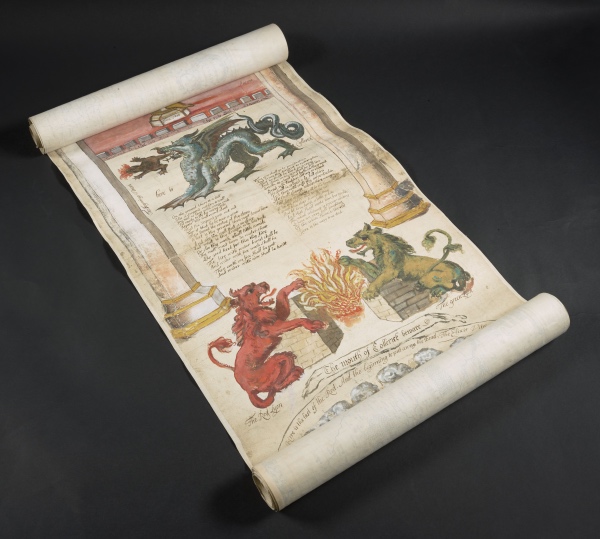
Twenty years after the publication of JK Rowling’s Harry Potter and the Philosopher Stone, a new exhibition is opening today at the British Library featuring centuries old treasures. Harry Potter: A History of Magic features Harry Potter-related objects as well as rare books, manuscripts and ‘magic’-related objects from across the world. Highlights include original artwork for the Harry Potter books, the 16th century Ripley Scroll – a six metre long scroll which purportedly describes how to make a philosopher’s stone, Chinese ‘oracle bones’ (the oldest dateable objects in the library’s collection), a celestial globe dating from 1693 which has been brought to life using augmented reality technology, the tombstone of Nicolas Flamel (an historical figure who also features in the first Harry Potter book), and a mermaid, allegedly caught in Japan in the 18th century. Specially designed panels inspired by the exhibition have gone on display at 20 public libraries across the UK to coincide with the opening. The exhibition can be seen at the King’s Cross institution until 28th February after which it will travel to the New York Historical Society for display late next year. Admission charge applies. A series of events accompanies the display. For more, see www.bl.uk. PICTURE: The Ripley Scroll, England, 16th century © British Library Board.

Original costumes and props from the film Paddington 2, have gone on sh0w at the Museum of London ahead of the movie’s opening next month. Behind the Scenes of PADDINGTON 2 provides a close-up look at the film with highlights including a Paddington outfit, the London pop-up book that Paddington is trying to buy for his Aunt Lucy’s 100th birthday, and costume designer sketches. The display is accompanied by a series of events for half-term which include the chance to meet Paddington, some of the actors from the film and children’s author Katherine Woodfine as well as a talk and book reading with Michael Bond’s daughter, Karen Jankel. There’s also a chance to win four tickets to the world premiere of the film which opens on 10th November. The free display can be seen until 19th December. For more, see www.museumoflondon.org.uk/paddington.

A new display exploring how money works and what it looks like under communism has opened at the British Museum. Drawing on the museum’s extensive collections, The currency of communism features a series of posters advertising financial products along with other objects – including a medal commemorating the fall of the Berlin Wall – which explore concepts behind money in communist societies around the world, both historically and in the present day. The display has been made possible through an Art Fund grant which has enabled the museum’s curator of modern money, Thomas Hockenhull, to build a collection of numismatic material from socialist and socialist governed countries, some of which will be seen here. On view on Room 69a, the display can be seen until 18th March. For more, see www.britishmuseum.org.

Send all items for inclusion to exploringlondon@gmail.com.

10 subterranean sites in London – 2. The London Silver Vaults…

Located on (or should that be under?) Chancery Lane in the City of London, the subterranean complex of underground chambers now known the London Silver Vaults was initially opened by the Chancery Lane Safe Deposit Co in 1876.

Originally intended to provide strong rooms for Londoners to store their valuables – things like jewellery, household silver and important documents, the vaults also proved popular with businesses, such as jewellers and diamond and silver dealers from nearby Hatton Garden, both for storage and eventually for selling directly out of.

The building above was bomb damaged during World War II and when it was rebuilt, the vaults  – at the request of the silver dealers who had previously rented space there – were reconfigured as retail units and re-opened in its current form in 1953.

Featuring 3.9 foot (1.2 metre) thick walls, the vaults proved popular among US servicemen who purchased silver to take home to their families, and film and music stars as well as royalty have all apparently shopped here.

There are just under 30 specialist shops in the complex, claimed to be home to the largest collection of antique silver in the world including everything from cutlery to jewellery and candlesticks. Many of the businesses housed within have been passed down within families.

And, according to the management, the vaults have never been burgled.

WHERE: London Silver Vaults, Chancery Lane (nearest Tube is Chancery Lane); WHEN: 9am to 5.30pm Monday to Friday/0am to 1pm Saturday; COST: free; WEBSITE: silvervaultslondon.com

PICTURES: Matt Brown under license CC BY 2.0.

What’s in a name?…Garlick Hill…

The name of this City of London street – which leads from Upper Thames Street to the intersection of Queen Victoria and Cannon Streets – speaks to the City’s past when it originated at the now-lost dock or jetty known as Garlickhithe. 

Garlickhithe was, not surprisingly, where garlic was landed and sold in a tradition dating back to at least the 13th century. It’s one of numerous thoroughfares in the City named for what was traded there.

The name is also remembered in the church which still stands at the bottom of the hill, St James, Garlickhythe, and which once stood right on the back of the Thames. The church was founded in the 12th century, rebuilt several times – the last time after the Great Fire of London under the direction of Sir Christopher Wren.


This Week in London – Open House London’s 25th; the London Design Festival; the ‘discovery’ of Roman London; and, the story of the Scythians retold…

Open House London marks its 25th anniversary this weekend, with free entry into more than 800 of the city’s buildings. For the first time, every London borough is participating in the event which sees the doors flung wide on buildings including the recently revamped New Scotland Yard (right), the skyscraper One Blackfriars nick-named ‘The Vase’ (above), an urban farm in Waterloo and the Francis Crick Institute at King’s Cross as well as traditional crowd-pleasers like BT Tower, William Morris’s Red House and the office towers known as the Cheesegrater and the Gherkin.  The weekend also features some 66 walks and talks. Open House have this year  launched a free app which, available for both Android and Apple, allows users to plan their weekend, view nearby buildings, and filter results by day, architectural type and period. To download the app and to see the full programme of events, head to www.openhouselondon.org.uk. PICTURES: Top – CGI/Right – Tim Soar (Open House London).

The London Design Festival, now in its 15th year, also kicks off this weekend with a programme of 450 projects and events across the coming week. The V&A will once again form the festival hub with iconic spaces within the museum transformed by a series of special commissions and displays including an immersive coloured light experienced known as Reflection Room and a 21.3-metre-long uid and free-standing three dimensional tapestry called Transmission. Somerset House will host a new group exhibition called Design Frontiers featuring 30 leading international designers while the Oxo Tower Wharf Courtyard will host a specially created micro house, called URBAN CABIN – one of many ‘landmark projects’ to be seen during the week. The festival runs until 24th September. For more – including the full programme of events, see www.londondesignfestival.com.

The rediscovery of Roman London under the modern city is the subject of a new exhibition which opened at the Guildhall Library in the City this week. The Discovery of Roman London, with a display of objects, archives and 19th century illustrations, looks at the early pioneers of Roman London archaeology over the past three centuries and the establishment of the Guildhall Museum – the precursor to the Museum of London – in 1826 to provide a suitable place for the found artefacts. Runs until 30th November. Entry is free. For more, follow this link.

The story of ancient nomadic tribes known as the Scythians is told in a new exhibition at the British Museum. Scythians: warriors of ancient Siberia features more than 200 objects, many of which have been preserved under permafrost, providing fascinating insights into the lives of the Scythian tribes who lived between 900 and 200 BC. The objects include fur-lined clothes, headgear for horses, gold jewellery, weapons, wooden drinking bowls and even tattooed human remains. There are also a series of painted clay death masks decorated to resemble the faces of the dead which are being shown alongside a reconstructed log-cabin tomb in which they were found. Runs until 14th January in the Sainsbury Exhibition Gallery. Supported by BP, the exhibition has been organised in partnership with the State Hermitage Museum in St Petersburg. Admission charge applies. For more, see www.britishmuseum.org.

Send all items for inclusion to exploringlondon@gmail.

This Week in London – Totally Thames; RAF Kenley Airfield celebration; win a Quentin Blake poster; and ‘Nature Morte’ at Guildhall…

Totally Thames, the annual month long celebration of London’s river, is once again in swing with a host of events to join in on. The packed programme includes walks and talks such as Friday’s walk exploring the maritime heritage of Deptford, visual arts installations including Maria Arceo’s Future Dust (pictured), and on-river events such as this weekend’s Classic Boat Festival at St Katharine Docks and the marathon Great River Race involving traditional boats as well as a host of musical performances, film screenings, exhibitions and pop-up festivals. Events run over September. For more information on the programme, visit totallythames.org. PICTURE: Courtesy of Thames Festival Trust. © Hydar Dewachi.

The role RAF Kenley Airfield played in the Battle of Britain will be highlighted in a “Sky Heroes” event at the site this Sunday. RAF Kenley Airfield, which is where Winston Churchill learned to fly, is the most intact fighter airfield from World War II and played a unique role in defending Britain from the German Luftwaffe. Celebrating its centenary, it was one of three main fighter stations, along with Croydon and Biggin Hill, charged with the air defence of London. The day, which is free to attend, will feature guided tours, museum and archaeology stands and replica Spitfire and Hurricane planes in which visitors can sit and have their photos taken. A free shuttle bus service will be operating from nearby stations. The day is being held under the auspices of the Heritage Lottery funded Kenley Revival Project, a partnership between the City of London Corporation, Kenley Airfield Friends Group and Historic England. For more, see www.kenleyrevival.org.

Win one of 20 London is Open for Summer posters signed by the artist Quentin Blake. The limited edition posters went on sale this week for £10 with all proceeds going to the Red Cross UK Solidarity Fund and to mark that event, the Mayor of London, Sadiq Khan, has launched a social media competition, giving away 20 of them. For details of how to take part, head to www.london.gov.uk/londonisopen. The winners will be announced next week. To purchase one of the posters, head to www.ltmuseumshop.co.uk/new-in.

The 16th tradition of still life meets modern art at the Guildhall Art Gallery’s latest exhibition, Nature Morte. Featuring 100 words of art covering themes ranging from flora and fauna to domestic objects and food, the display features works by major international contemporary artists like Michael Craig-Martin and Gabriel Orozco as well as works by London-based artists and from the City of London’s own historic collection. The exhibition, which is being put on by MOCA London in partnership with the gallery, runs until 2nd April. Admission charge applies and there’s a series of talks to accompany the display. For more, follow this link.

Send all items for inclusion to exploringlondon@gmail.com.
This Week in London – Exploring The Forum; VC recipients commemorated; and, Samuel Fosso’s self-portraits…

Nineteenth century Scottish painter David Robert’s painting, The Forum, is at the heart of a new display at the Guildhall Art Gallery exploring the concept of the Roman forum. The display looks at why the forum played such an important role in the Roman world, how it would have looked and what happened there. It also examines the painting in the context of the Robert’s Roman series, his wider body of work and depictions of the ‘grand tour’ by other artists. Admission is free. The exhibition, which is part of Londonium, a series of events, talks and displays focusing on London’s Roman past, runs until 1st January. For more, follow this link. PICTURE: A model of Londinium’s Roman forum in the Museum of London.

Two young Londoners who were posthumously awarded Victoria Crosses after they were killed on the first day of the Battle of Passchendaele have been honoured with commemoration stones in Victoria Embankment Gardens. Captain Thomas Riversdale Colyer-Fergusson, accompanied by a sergeant and just five men, managed to capture an enemy trench and a machine gun which he turned on his assailants. The 21-year-old attacked again, this time with just his sergeant, and captured another enemy machine gun but soon afterwards was killed by a sniper. Second Lieutenant Dennis George Wyldbore Hewitt, meanwhile, led his company under heavy machine-gun fire while seriously wounded and in pain. The 19-year-old successfully captured and consolidated his objective but he too was killed by a sniper soon after. The two men died on 31st July, 1917. The memorials were erected as part of World War I centenary commemorations which is seeing all 628 Victoria Cross recipients from the war being honoured in their birthplaces.

On Now: Samuel Fosso: Self-portraits. This exhibition at the National Portrait Gallery features a selection of images from 666 self-portraits taken by Cameroonian-born artist Samuel Fosso in 2015. Each of the shots were taken against the same red backdrop with Fosso adopting an identical head and shoulders pose in each. Photographed every day during October and November, 2015, each work is intended to reflect Fosso’s particular mood at that moment. The photographs, the artist’s first solo display in the UK, are displayed alongside some of the earliest self-portraits that he made while a teenager working in Bangui in the Central African Republic in the 1970s.  In these works, Fosso adopted personas which reflected popular West African culture, from musicians and the latest youth fashions to political advertising.  He employed special cloth backgrounds, in front of which he dressed up in a range of outfits from authentic European costumes and African folk costumes to navy uniforms, karate keikogis and boxer shorts. Runs until 24th September. Admission is free. For more, see www.npg.org.uk.

Send all items for inclusion to exploringlondon@gmail.com.
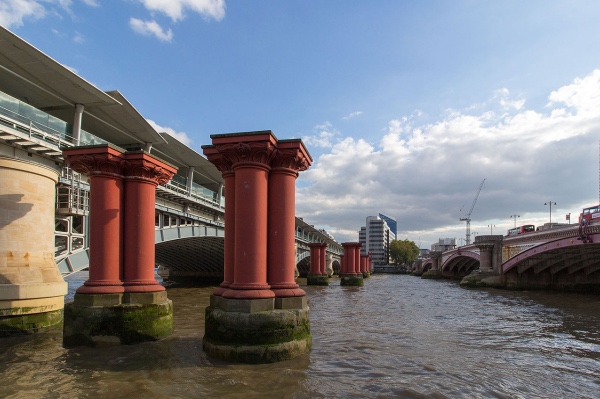
This Week in London – Carnival time in Notting Hill!; free tickets at the Tate Modern; and, The City is Ours…

The world famous Notting Hill Carnival takes places in London’s west this weekend. The biggest event of its kind in Europe, the programme kicks off Saturday evening (from 6pm to 10pm) with a steel band music competition and more Caribbean-themed outdoor entertainment in Emslie Horniman Pleasance Park. Sunday features the Children’s Parade, performances at the World Music Stage in Powis Square and static sound systems and food stalls at Emslie Horniman Pleasance Park (from 9am to 8.30pm). The Grand Finale parade on Monday features dancers, performers, 60 steel bands and mobile sound systems with more music and food stalls in the parade area as well as on the World Music Stage in Powis Square. This year’s event will also feature a minute’s silence at 3pm on both Sunday and Monday to remember the victims of the Grenfell Tower fire disaster. For more, see www.thelondonnottinghillcarnival.com or Visit London’s special guide. PICTURE: Eddie Starck/Flickr/CC-BY-2.0

Tate Modern is offering a limited number of free tickets to Soul of a Nation: Art in an Age of Black Power exhibition this Friday night (August’s Uniqlo Tate Late event) to coincide with the Notting Hill Carnival weekend. The tickets will be offered a first come, first serve basis from 6pm. The exhibition, which explores what is meant to be an African American artist during the civil rights movement and at the birth of the Black Power movement, runs until 22nd October. For more, see www.tate.org.uk.

On Now: The City is Ours. This major interactive exhibition at the Museum of London explores some of the key issues that affect Londoners and city dwellers elsewhere the world – from housing affordability and urban planning to transport, green spaces and air quality. Spread across three of the museum’s temporary exhibition spaces, key exhibits include a nine metre wide film, Urban Earth, which visualises and compares data from major cities around the world, an Oculus Rift headset which delivers a virtual view from the top of a Hong Kong skyscraper illustrating the impact of building upwards instead of outwards, and an exhibit which allows visitors to control and monitor CCTV cameras as they reflect on the impacts of increased surveillance. The free exhibition – at the heart of the museum’s year long focus on City Now City Future – can be seen until 2nd January. For more, see www.museumoflondon.org.uk/thecityisours.

Send all items for inclusion to exploringlondon@gmail.

LondonLife – Night lights…

PICTURE: Gordon Williams/Unsplash

This Week in London – Londinium’s gladiators unearthed; black artists in the US; and, the future of the world’s cities…

The life of gladiators in Roman Londinium and that of those who watched them are explored in a new exhibition opening in the remains of the city’s 7000 seat amphitheatre under the Guildhall Art Gallery. Featured as part of the display will be a Roman skull uncovered during excavations in the Walbrook Stream which, dated to around 150 AD, shows evidence of substantial head trauma at the time of death and is the closest archaeologists have come to identifying a potential gladiator in Londinium. Trauma, which is free to enter, opens tomorrow and runs until 29th October. For more, see www.cityoflondon.gov.uk/guildhallartgallery.

A landmark exhibition examining what it was like to be a black artist in the US during the civil rights movement and the purpose and audience of art during the emergence of ‘black power’ has opened at the Tate Modern. Soul of a Nation: Art in the Age of Black Power spans the era from 1963 to 1983, a time when race and identity become major issues across many spheres of society including music, sports and literature thanks to the likes of Aretha Franklin, Muhammad Ali and Toni Morrison. The display features more than 150 works by more than 60 artists, many of which are on display in the UK for the first time. Running until 22nd October, it is accompanied by a programme of talks and events. Admission charge applies. For more, see www.tate.org.ukPICTURE: Muhammad Ali by Andy Warhol/Tate Modern

The future of the world’s major cities – including London – is the subject of a new major exhibition which has opened at the Museum of London. The City is Ours is split into three sections: ‘Urban Earth’, centred on a 12 minute infographic film with comparative data about megacities such as London, Sydney, Tokyo, New York and Sao Paolo; ‘Cities Under Pressure’, which provides an overview of the risks, challenges and demands facing global cities through digital and physical interactive displays; and, ‘Urban Futures’, which presents solutions to the challenges increasing urbanisation poses. In addition, the exhibition takes a look at 25 innovative projects which are now taking place across London to improve life for its inhabitants. The free exhibition, part of the year-long City Now City Future season, can be viewed until 2nd January. For more, check out www.museumoflondon.org.uk/thecityisours.

Send all items for inclusion to exploringlondon@gmail.com.
Recap – 10 of the most memorable (and historic) views of London

We have finished our series on 10 of the most memorable (and historic) views of London. And while there’s plenty of views we didn’t mention (we’ll be featuring more in an upcoming series at some point), we think we have captured 10 worth seeing. So, in case you missed any, here they are again…

1. View from St Paul’s Cathedral’s dome…

2. The city skyline from Primrose Hill…

3. View from General Wolfe, Greenwich…

4. View from King Henry’s Mound, Richmond Park…

5. View from the top of The Monument…

6. View from Parliament Hill…

7. View of the Houses of Parliament from across the Thames…

8. View from Point Hill, Greenwich…

9. High level views from Tower Bridge…

10. View of Maritime Greenwich…

We’ll kick off our new special Wednesday series next week…

Lost London – St Benet Gracechurch…

Located in Gracechurch Street in the City of London, this church was first recorded in the late 12th century (although there had apparently been a church here for some time earlier) and was named for St Benedict of Nursia, the founder of Western monasticism (St Benet is apparently a short form of that name).

The church, which stood on the intersection with Fenchurch Street and is among a number of London churches dedicated to that particular saint, is sometimes called St Benet Grass Church – that name apparently relates to a nearby haymarket (see our earlier post on Gracechurch Street).

Records apparently show that during the reign of the Catholic Queen Mary I, Biblical texts which had been added to the interior walls during the earlier reign of her brother, the Protestant King Edward VI, were removed.

The church was repaired in the early 17th century but subsequently destroyed in the Great Fire of London. It was among 51 churches rebuilt in the aftermath to the designs of the office of Sir Christopher Wren.

It continued on until 1864 when the parish was united with All Hallows, Lombard Street, which was later among a number of churches united with St Edmund the King and Martyr in Lombard Street.

The church building – its spire had come in for some criticism – was demolished just a couple of years later in 1867-68 (its removal helped to widen Fenchurch Street) and the site apparently sold for £24,000.

The pulpit is now in St Olave, Hart Street, and the plate was split between St Benet in Mile End Road – which was built with the proceeds of the sale of the church land – and St Paul’s Shadwell. (St Benet Gracechurch was apparently only one of two of Wren’s churches never to have an organ).

There’s a plaque marking the location of the church at 60 Gracechurch Street. The narrow street St Benet’s Place also references the former church.

PICTURE: St Benet Gracechurch in the 1820s from The Churches of London by George Godwin (1839)/Via Wikipedia.


10 of the most memorable (and historic) views of London – 8. View from Point Hill, Greenwich…

Another of London’s protected views, though perhaps lesser known, is the panoramic vista from the top of Point Hill in Blackheath towards the City.

The view from a small park known as The Point (reached via Point Hill, just to the west of Blackheath) takes in modern City skyscrapers as well as Tower Bridge, St Paul’s Cathedral and even the dome of the Old Bailey.

While there is a danger the growth of plants along the brow of the hill can partially block the view (which stretches as far as Essex), it remains a splendid site from which to view the city and no doubt was a vantage point for those, such as the leaders of the Peasant’s Revolt of 1381, who historically gathered on Blackheath before marching to London.

The park, meanwhile, is host to a memorial stone erected to mark the site where an Australian-born RAF pilot, Flight Lieutenant Richard Carew Reynell, fell to his death on 7th September, 1940, after his Hurricane fighter was shot down over Blackheath on the first day of the Blitz.

PICTURE: © Mike Mojopin/Flickr

This Week in London – Giovanni da Rimini on (rare) display; Dulwich ‘lates’; and, a history of City stationers…

We pause for a moment before our regular coverage to remember all those affected by the Grenfell Tower fire in north Kensington.

• Giovanni da Rimini’s 700-year-old work, Scenes from the Lives of the Virgin and Other Saints, has gone open show at The National Gallery. Acquired by the gallery in 2015 on the understanding that the panel will largely remain with New York collector and philanthropist Ronald S Lauder during his lifetime but for limited exceptions such as this, the panel forms the centrepiece of the exhibition Giovanni da Rimini: A 14th Century Masterpiece Unveiled. It brings together Giovanni da Rimini’s three easel works – also including Scenes from the Life of Christ (on loan from the Galleria Nazionale d’Arte Antica, Palazzo Barberini in Rome) and The Virgin and Child with Five Saints (on loan from the Pinacoteca Communal, Faenza, Italy) – for the first time in the UK. There are seven panel paintings in the display in total as well as two ivory panels and a fragment of an illuminated leaf. Alongside works by Giovanni da Rimini are those by Neri da Rimini, Francesco da Rimini/Master of Verruchio, Giovanni Baronzio and the great Florentine painter Giotto. The display can be seen in Room 1 until 8th October. Admission is free. For more, see www.nationalgallery.org.uk. PICTURE: Scenes from the Lives of the Virgin and other Saints (c 1300-1305), Giovanni da Rimini 1300-1305. © The National Gallery, London.

Dulwich Picture Gallery is celebrating the 200th anniversary of its public opening with a series of free late openings on Friday nights. Running until the end of July, the themed evenings feature performance, talks, and music with food and drink in the pavilion bar supplied by The Camberwell Arms. The nights include one of exploring how the memory of people, buildings, places and experiences influences and impacts architecture (16th June), tours of the gallery in which dancers are the guides (23rd June and 14th July), and a botanical themed evening with flower workshops, infused cocktails and other “green-fingered creativity” (28th July). For the full programme, see www.dulwichpicturegallery.org.uk/whats-on/.

An exhibition focusing on the 600 year history of the Worshipful Company of Stationers and Newspaper Makers has opened at the Guildhall Library in the City of London. The free exhibition joins the existing photographic display, Books and Publishing in the City, which features the work of artist-in-residence Simon Gregor and includes images of streets, buildings and documents with a particular focus on Stationers’ Hall. Both run until 31st August. For more, follow this link.

Send all items for inclusion to exploringlondon@gmail.com.
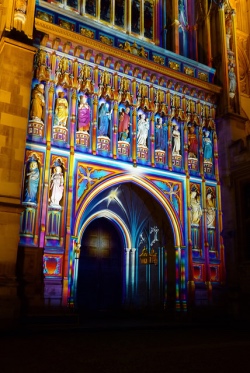
LondonLife – The City rising into the clouds…


PICTURE: Rob Bye/Unsplash