This Week in London – Kew Gardens celebrates its herbaceous borders; the global ‘War on Terror’ at the IWM; Bobby Moore honoured; exposing the camera; and, 60 years of fanzines…

The first of three weekends celebrating the creation of the world’s longest double herbaceous borders – known as the Great Broad Walk Borders – will be held at Kew Gardens this weekend. Made up of 30,000 plants, the borders run along 320 metres of the Broad Walk which was originally landscaped in the 1840s by William Nesfield to provide a more dramatic approach to the newly constructed Palm House (completed in 1848). The spirit of the formal colourful beds he created along either side of the walk have been recreated using a range of plants. To celebrate, Kew are holding three themed weekends, the first of which, carrying a history and gardens theme, is this Saturday and Sunday. As well as talks and drop-in events, there will be a range of family-related activities as well as craft workshops, tours, and shopping. Further weekends will be held on 13th and 14th August (around the theme of the excellence of horticulture at Kew) and the bank holiday weekend of 27th to 29th August (around the theme of a celebration of beauty). For more, head to www.kew.org.

A new exhibition centring on the experiences of UK citizens and residents suspected but never convicted of terrorism-related activities and the role of the British Government in the ‘Global War on Terror’ opens at the Imperial War Museum in Lambeth today. Edmund Clark: War on Terror, Clark’s first major solo show in the UK, looks at the measures taken by states to protect their citizens from the threat of international terrorism and their far-reaching effects, exploring issues like security, secrecy, legality and ethics. Among the photographs, films and documents on display are highlights from five series of Clark’s work including Negative Publicity: Artefacts of Extraordinary Rendition, created in collaboration with counter-terrorism investigator Crofton Black, and other works including the film Section 4 Part 20: One Day on a Saturday, photographs and images from the series Guantanamo: If the Light Goes Out and Letter to Omar as well as the first major display of the work Control Order House. Runs until 28th August, 2017. Admission is free. For more, see www.iwm.org.uk/exhibitions/iwm-london/edmund-clark-war-of-terror.

The only English football captain to win a World Cup, Bobby Moore, has become the first footballer to be honoured with an English Heritage blue plaque. The plaque was unveiled at the footballer’s childhood home at 43 Waverley Gardens in Barking, East London, this week. Moore is best remembered for leading England to a 4-2 win over West Germany in the 1966 World Cup. For more, see www.english-heritage.org.uk/visit/blue-plaques/.

The camera is the subject of a new photography display which opened at the V&A in South Kensington last weekend. The Camera Exposed features more than 120 photographs, including works by more than 57 known artists as well as unknown amateurs. Each work features at least one camera and include formal portraits, casual snapshots, still-lifes, and cityscapes. Among the images are pictures of photographers such as Bill Brandt, Paul Strand and Weegee with their cameras along with self-portraits by Eve Arnold, Lee Friedlander and André Kertész in which the camera appears as a reflection or shadow. The display includes several new acquisitions including a Christmas card by portrait photographer Philippe Halsman, an image of photojournalist W Eugene Smith testing cameras and a self-portrait, taken by French photojournalist Pierre Jahan using a mirror. Runs in gallery 38A until 5th March. Free admission. For more, see www.vam.ac.uk/exhibitions/the-camera-exposed.

Sixty years of fanzines – from the development of zine-making back in the 1940s through to today’s – go on show at the Barbican Music Library in the City on Monday. FANZINES: a Cut-and-Paste Revolution features zines including VAGUE, Sniffing’ Glue, Bam Balam, Fatal Visions, Hysteria and Third Foundation among others. The exhibition, which runs until 31st August, is being held in conjunction with this year’s PUNK LONDON festival. For more, see www.cityoflondon.gov.uk/services/libraries-and-archives/our-libraries/Pages/Barbican-Music-Library.aspx.

Send all items for inclusion to exploringlondon@gmail.com.

LondonLife – Sculpture returns to the City…

Sculpture1
Sculpture in the City has returned to the Square Mile for summer with 17 contemporary artworks by internationally renowned artists located in public spaces across the City of London.
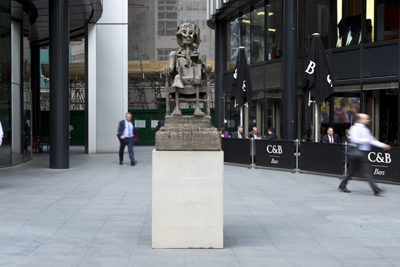
 With the event now in its sixth year, this year’s sculptures include Jaume Plensa’s seven metre high cast iron work Laura (located at 30 St Mary Axe (aka The Gherkin), it’s pictured above), Matt Collishaw’s work, Magic Lantern Small – a grand scale “zoetrope”, one of the earliest moving image machines (located in Bury Court, it’s pictured below), and Huma Bhabha’s work, The Orientalist (located in Fenchurch Avenue, it’s pictured far below). Other works can be found in locations including St Botolph-without-Bishopsgate Gardens, The Leadenhall Building and St Helen’s Bishopsgate Churchyard. A map of the SITC trail and extra commentary on the individual artworks can be accessed by downloading the SMARTIFY app for Apple and Android devices and then scanning any of the sculptures. There’s also a map and information available at www.cityoflondon.gov.uk/sculptureinthecity. PICTURES: Nick Turpin

Sculpture2

Sculpture3

This Week in London – Remembering the Great Fire of 1666; rediscovering the Palace of Whitehall; and, the Queen’s dresses go on show…

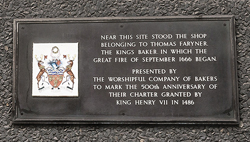
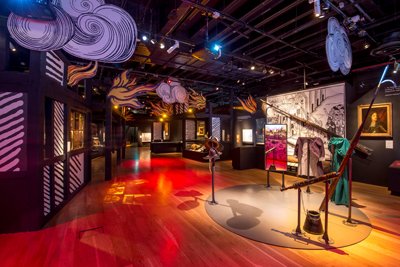
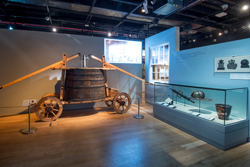
Fire2• A new “theatrical” exhibition marking the 350th anniversary of the Great Fire of London is opening at the Museum of London on Saturday. Fire! Fire! takes visitors on an interactive journey from before, during and after the great fire, looking at how the fire started and spread and the personal stories of Fire1Londoners present at the time. Visitors will be able to step in Pudding Lane and see what life was like for 17th century Londoners, walk into the bakery where the fire started, and identify objects melted by the flames. Exhibits on show include a restored 17th century fire engine, originally built in London in the last 1670s, other firefighting equipment including a squirt, a leather bucket and fire hook, a pair of bed hangings, a burnt Geneva Bible, and letters written in the fire’s aftermath. Admission charges apply. Can be seen until 17th April next year. A series of events, including walks, tours, lectures, workshop and family activities, accompanies the exhibition. For more, see www.museumoflondon.org.uk/fire-fire.  The museum has also commissioned a Minecraft building group recreate London as it was in 1666 with the first of three interactive maps to be released next week (available for free download from www.museumoflondon.org.uk) and further maps to follow in September and February. For more information on other events surrounding the anniversary, see www.visitlondon.com/greatfire350.
The long lost Palace of Whitehall is the subject of a new visitor experience which kicks off at the last surviving part of the palace – the Banqueting House – today. Handheld devices, binaural 3D sound and haptic technology is being made available to guests as they stroll around the streets of modern Whitehall, allowing them to immerse themselves in the former palace during the time of the Tudors and the Stuarts. The Lost Palace experience, created in a collaboration between Historic Royal Palaces and Chomko & Rosier and Uninvited Guests, includes a chance to see the jousts which so delighted Queen Elizabeth I at Horse Guards Parade, accompany King Charles I as he walks through St James’s Park to his execution at the Banqueting House, meet Guy Fawkes following his arrest in the Gunpowder Plot, take part in a performance of King Lear and eavesdrop on an encounter between King Henry VIII and Anne Boleyn before their doomed love affair began. The Palace of Whitehall was once the largest palace in Europe with 1,500 rooms spread across 23 acres. Tickets can be purchased at the Banqueting House. Runs until 4th September. For more details, see www.hrp.org.uk/thelostpalace.
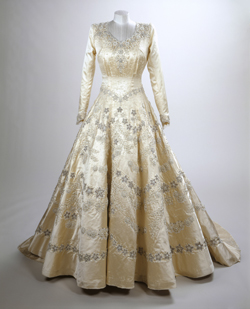
DressDresses worn by Queen Elizabeth II during two of the most significant events in Her Majesty’s life – her wedding and her coronation – can be seen as part of the Summer Opening of the State Rooms at Buckingham Palace from Saturday. The two dresses will form part of a special exhibition – Fashioning a Reign: 90 Years of Style from The Queen’s Wardrobe, the largest display of the Queen’s dress ever held. Alongside the two feature dresses, both designed by British couturier Sir Norman Hartnell, are around 150 outfits created by designers including Hartnell, Hardy Amies and Ian Thomas. The then Princess Elizabeth’s wedding dress (pictured), made for her marriage to the Duke of Edinburgh on 20th November, 1947, was made in ivory silk, decorated with crystals and 10,000 seed pearls and attached to a 15 foot long train, while the Queen’s Coronation dress – created for the event on 2nd June, 1953, is made of white duchesse satin and encrusted with seed pearls, sequins and crystals (along with an extra four-leaf shamrock on the left side of the skirt, added secretly by Sir Norman, to bring her good luck). The exhibition, open to 2nd October, is being accompanied by special displays at both Windsor Castle and Holyroodhouse in Edinburgh. Admission charges apply. For more, see www.royalcollection.org.uk. PICTURE: Royal Collection Trust/© Her Majesty Queen Elizabeth II 2016. 

The world’s largest collection of London images – more than 250,000, dating from 1450 to now – are being made available on a free-to-access website hosted by the London Metropolitan Archives from today. Collage – The London Picture Archive features more than 8,000 historical photographs of capital’s streets as well as images of the Great Fire of London in 1666 and photographs of the construction of Tower Bridge along with maps, prints, paintings and films, all drawn from the collections at the City of London Corporation’s Guildhall Art Gallery and the Clerkenwell-based London Metropolitan Archives. The collection can be accessed at www.collage.cityoflondon.gov.uk.

It’s hands-on gaming at the Science Museum for two weeks from Friday with more than 160 systems and hundreds of games available to play on. Power UP spans 40 years of gaming with games ranging from classics like Pong and Pac-Man to modern games like Halo and systems from Atari and SEGA to PS4 and Xbox One. Ninety minute sessions are being held four times daily from 11am tomorrow until 7th August. Ticket charges apply. For more , see www.sciencemuseum.org.uk/powerup.

Send all items for inclusion to exploringlondon@gmail.com.
This Week in London – Festival of Archaeology; exploring colour and vision at the NHM; and the City’s Summer Community Fair…

The 25th annual Festival of Archaeology has kicked off across the UK this week and, of course, there’s events taking place across London. They include a walk exploring the moat at Fulham Palace this Sunday, the opportunity to join Inspector of Ancient Monuments Jane Siddell on a walk along the route of the former London wall in the City of London next Thursday, a tour of the remains of London’s Roman amphitheatre beneath Guildhall Yard on 28th July, and the chance to investigate ancient poo at the Museum of London Docklands over the week from 25th to 29th July. Some of the events are free to attend and require no booking; others charge an admission price and require advance booking. For all details, head to www.archaeologyfestival.org.uk.

Giant-Jewel-Beetle Explore how colour and vision have shaped the natural world in a new exhibition which opens at the Natural History Museum in South Kensington tomorrow. Colour and Vision features more than 350 rarely seen specimens and uses immersive arts and digital imaging to highlight how colour and vision influence life on the planet, providing insights into how humans and animals perceive the world and how colour-shifters, stealth experts and mimics use colour to survive. They include specimens from the rarely-displayed national eye collection, some of nature’s finest examples of structural colour – including Jewel beetles and hummingbirds, cochineal insects which show how nature can be used to create pigments for dyes and paints, and some rose-ringed parrots, whose different colours reveal the visible impact of a mutation in their pigment genes. The exhibition also features a newly commissioned light installation – Our Spectral Vision – by artist Liz West which has been inspired by Sir Isaac Newton’s investigation of the colour spectrum and blue morphs butterflies. Runs to 6th November. Admission charges apply. For more, see www.nhm.ac.uk. PICTURE: Giant jewel beetles/© Trustees of NHM.
The City of London Corporation’s Community Fair will be held on Sunday in Guildhall Yard, featuring entertainment, food stalls and activities for all ages. The free event will see the yard lined with market stalls run by local clubs, faith groups, learning providers and cultural partners who will be offering games and activities as well as information and handmade items for sale. Special guest broadcaster and author Charlie Dimmick will be giving planting workshops throughout the afternoon and will take part in a special Q&A session. Runs from noon to 4pm. For more details, see www.cityoflondon.gov.uk/communityfair.
Send all items for inclusion to exploringlondon@gmail.com.

10 notable blue plaques of London – 5. Five Londoners with more than one blue plaque…

There’s quite a few whose London residence (or otherwise) is commemorated by more than one blue plaque. So, breaking away from our usual ‘one plaque’ format, here were listing five of those who have made the grade…

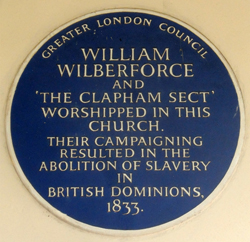
William-Wilberforce-blue-plaque1. William Wilberforce (1759-1833). The late 18th century and early 19th century politician and anti-slavery campaigner tops our list with three English Heritage blue plaques. The first is at 111 Brookwood Road in Battersea – the site of Brookwood House where Wilberforce resided during his anti-slavery campaign. The second is on Holy Trinity Church on Clapham Common, the church where Wilberforce and the Clapham Sect with whom he is associated worshipped. And the third is on a property at 44 Cadogan Place in Chelsea where Wilberforce died.

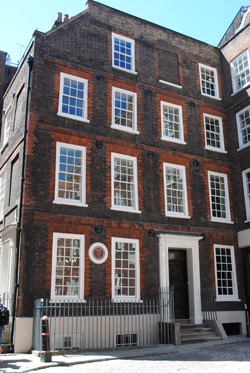
2. Dr Samuel Johnson (1709-1784). Like Wilberforce, the 18th century lexicographer Dr Johnson has three English Heritage blue plaques to his name. The first, on his famous Gough Square property in the City of London we’ve already mentioned (see our earlier post here), while the second is on a property at 8 Russell Street, Covent Garden, then occupied by bookseller Thomas Davies, which was where Dr Johnson famously first met James Boswell in 1763. The third time Dr Johnson’s name appears, more unusually, is on a plaque commemorating Essex Street – Dr Johnson is among a number of names listed on it for his role in establishing an “evening club” at the pub, the Essex Head, in the street in 1783.

3. Samuel Pepys (1633-1703): The 17th century diarist seems to pop-up everywhere in central London so it’s not surprising there are two plaques in the English Heritage blue plaques scheme dedicated to him (although both are located in the same street – one he apparently liked very much). The plaques are located at number 12 and number 14 Buckingham Street in Covent Garden and both mark the site of a Pepys residence.

4. Virginia Woolf (1882-1941): The writer, publisher and literary critic’s name appears on two properties – at 29 Fitzroy Square in Fitzrovia where Woolf lived between 1907-1911 and on Hogarth House at 34 Paradise Road in Richmond where she and Leonard Woolf lived between 1915-1924 (and also where they founded the Hogarth Press in 1917).

5. William Morris (1834-1896): The poet and artist has two English Heritage blue plaques to his credit – the first on 17 Red Lion Square in Holborn where Morris lived in a flat from 1856-1859 with Sir Edward C Burne-Jones, and the second on Red House in Bexleyheath where he and his wife Jane Burden lived from 1860-1865.

PICTURE: Spudgun67/Wikimedia/CC BY-SA 4.0 (image cropped)

This Week in London – Architecture on show; designing London’s transport system; and, the Battle of the Somme commemorated…

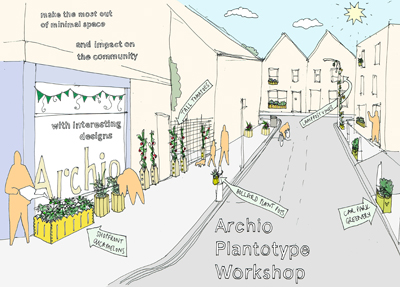
Archio-Plantotype-Workshop-1The London Festival of Architecture kicked off this week with more than 200 events planned for the capital across the month of June. Highlights include “open studios” in which 50 architectural practices across London open their doors to the public, a series of film showing at the BFI concerning the portrayal of the built environment in documentaries and hosted tours through some of London council estate’s green spaces and private gardens. The festival, which centres around three key themes – housing renewal and regeneration, creative workspaces and community engagement, also features a range of exhibitions, installations, talks and workshops including the Archio Plantotype Workshop on 25th June in which participants are asked to help design and build model prototype planters to grow compact and hybrid plants (pictured). For the full programme, check out www.londonfestivalofarchitecture.org.

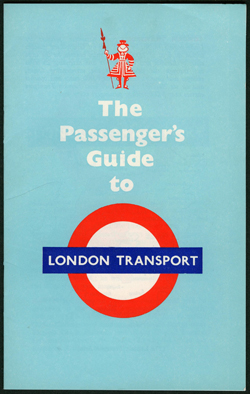
1997-14154-Booklet;-The-Passenger's-Guide-to-London-Transport,-issued-by-London-Transport,-March-1962The design of London’s transport system – from posters, maps and signage to the styling of trains and stations – is the subject of a new exhibition at the London Transport Museum in Covent Garden. Designology – Shaping London explores the role design has played in London’s public transportation systems, spanning the period from the system’s Victorian origins to today. Among the objects on display are an 1834 Shillibeer Woolwich Omnibus timetable, original architectural drawings by Charles Holden of Arnos Grove and Sudbury art deco stations, and a 1994 magnetic ticket hall station model. There are also case studies on key design features found across the transport network such as the New Johnston typeface and the design of Moquette fabric used on the Underground and buses. Visitors are also encouraged to design their own bus stop sign (and share it on social media with the hashtag #pimpmybusstop) and visit a pop-up design studio to find out more about contemporary design innovation. There’s an accompanying programme of events. Admission charges apply. For more, see www.ltmuseum.co.uk. PICTURE: The Passenger’s Guide to London Transport, issued by London Transport, March, 1962./The London Transport Museum.
The “worst day” in the history of the British Army – 1st July, 1916, when almost 60,000 died during the Battle of the Somme – is being commemorated in an exhibition marking the battle’s centenary in Guildhall Yard. Fields of Battle, Lands of Peace: Somme 1916, features a series of evocative photographs by Michael St Maur Sheil of the battlefields as they look today contrasted with images taken at the time. The outdoor exhibition is being accompanied by a display of Somme-related artefacts in the City of London Heritage Gallery at the Guildhall Art Gallery. Admission to the display is free. Runs until 5th July.

Send all items for inclusion to exploringlondon@gmail.com.

10 notable blue plaques of London – 3. The City of London’s only ‘blue plaque’ (and it’s not even blue)…

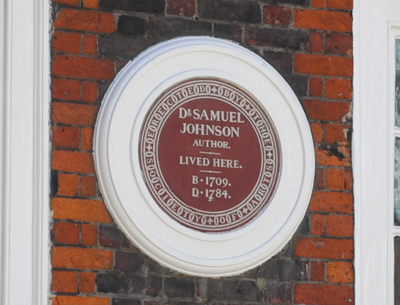
Samuel-Johnson-plaqueThere is only one official blue plaque in the square miles of the City of London – that which marks the property of lexicographer Dr Samuel Johnson in Gough Square (he always did like to stand out from the crowd) – and, like many of the plaques in the scheme, it’s not even blue.

Samuel-Johnson-plaque2The plaque was among the 35 erected in the first 35 years of the scheme – this one in 1876 – and was done so by the Society of Arts which then ran the scheme (later the Royal Society of Arts). In common with most of the first 35 plaques, it is brown in colour.

In 1879, just three years after this plaque was erected, the Society of Arts came to an agreement with the Corporation of the City of London that the corporation – the governing body of the square mile – would commemorate sites of historic significance within its boundaries and the agreement has stood ever since.

The hundreds of “blue plaques” since erected by the City of London Corporation are rectangular in nature and commemorate everything from structures like the long-gone historic gate of Aldgate (88 Aldgate High Street) to homes of the notable such as martyred Archbishop of Canterbury Thomas á Becket (86 Cheapside).

There’s a searchable database of all the City of London plaques which can be found here.

And, of course, Dr Johnson’s house, which he lived in from 1748-59 which compiling his famous A Dictionary of the English Language (the first comprehensive English language dictionary), is now a museum – for details of that, see our earlier post here.

This Week in London – Photography and art at the Tate; punk’s 40th birthday; and, Sunday dome openings at St Paul’s…

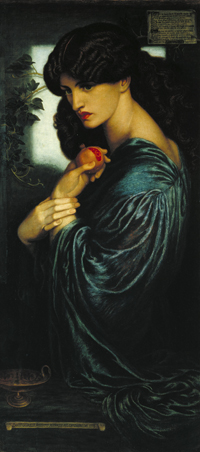
proserpineThe “dynamic dialogue” between British painters and photographers is the subject of a new exhibition which opened at Tate Britain in Millbank this week. Painting with Light: Art and Photography from the Pre-Raphaelites to the Modern Age features almost 200 works, revealing their common influences and showing how photography adapted many of the “Old Master traditions” to create new works. Among those whose works are featured in the exhibition are everyone from David Octavius Hill and Robert Adamson to JMW Turner, John Everett Millais, Dante Gabriel Rosetti and photographer Julia Margaret Cameron. Highlights include examples of three-dimensional photography which used models and props to recreate popular works of the time, including a previously unseen private album in which the Royal Family re-enact famous paintings. Runs until 25th September in the Linbury Galleries. For more, see www.tate.org.uk. PICTURE: Dante Gabriel Rossetti (1828-1882),  Proserpine 1874. Tate.

The 40th anniversary of punk is being commemorated in a new exhibition which opens at the British Library tomorrow. Punk 1976-78 traces the impact of punk from its roots in the French Situationist movement and New York City art-rock scene through to the rise and fall of the Sex Pistols and looks at the impact punk had on music, fashion and design in the mid-Seventies. Located in the library’s Entrance Hall Gallery, the free display – which includes materials from the UK’s biggest punk-related archive held at Liverpool John Moores University – features a rare copy of the Sex Pistol’s God Save the Queen single, fanzines such as the first punk fanzine Sniffin’ Glue, flyers, posters and gig tickets from venues including the Roxy Club, Covent Garden and Eric’s Club, audio recordings, and original record sleeves such as John Peel’s personal copy of the Undertones’ single Teenage Kicks. There’s a full calendar of events to accompany the exhibition including John Lydon’s only live interview of the year. Runs until 2nd October. For more, see www.bl.uk/events/punk-1976-78.

Climb St Paul Cathedral’s dome on special Sunday openings during May. And in order not to disturb Sunday services, visitors who wish to climb to the dome’s Stone Gallery and Golden Gallery will see parts of the cathedral not normally open to the public as they enter through a not-normally used side door and climb 22 extra steps. Admission charge applies. For more, see www.stpauls.co.uk.

Send all items for inclusion exploringlondon@gmail.com.

A Moment in London’s history…The ‘longest night’…

FirefightersIt was 75 years ago this year – on the night of 10th/11th May, 1941 – that the German Luftwaffe launched an unprecedented attacked on London, an event that has since become known as the ‘Longest Night’ (it’s also been referred to as ‘The Hardest Night’).

Air raid sirens echoed across the city as the first bombs fells at about 11pm and by the following morning, some 1,436 Londoners had been killed and more than that number injured while more than 11,000 houses had been destroyed along and landmark buildings including the Palace of Westminster (the Commons Chamber was entirely destroyed and the roof of Westminster Hall was set alight), Waterloo Station, the British Museum and the Old Bailey were, in some cases substantially, damaged.

The Royal Air Force Museum records that some 571 sorties were flown by German air crews over the course of the night and morning, dropping 711 tons of high explosive bombs and more than 86,000 incendiaries. The planes were helped in their mission – ordered in retaliation for RAF bombings of German cities – by the full moon reflecting off the river below.

The London Fire Brigade recorded more than 2,100 fires in the city and together these caused more than 700 acres of the urban environment, more than double that of the Great Fire of London in 1666 (the costs of the destruction were also estimated at more than double that of the Great Fire – some £20 million).

Fighter Command sent some 326 aircraft into the fight that night, not all of them over London, and, according to the RAF Museum, the Luftwaffe officially lost 12 aircraft (although others put the figure at more than 30).

By the time the all-clear siren sounded just before 6am on 11th May, it was clear the raid – which turned out to be the last major raid of The Blitz – had been the most damaging ever undertaken upon the city.

Along with the landmarks mentioned above, other prominent buildings which suffered in the attack include Westminster Abbey, St Clement Danes (the official chapel of the Royal Air Force, it was rebuilt but still bears the scars of the attack), and the Queen’s Hall.

Pictured above is a statue of firefighters in action in London during the Blitz, taken from the National Firefighters Memorial near St Paul’s Cathedral – for more on that, see our earlier post here.

For more on The Longest Night, see Gavin Mortimer’s The Longest Night: Voices from the London Blitz: The Worst Night of the London Blitz.

This Week in London – Talking Shakespeare; Dickens’ letter in support of ‘fallen women’; and, wallpaper at the Geffrye…

William-Shakespeare6• Guildhall is hosting an “open mic” Shakespeare day this Tuesday as part of commemorations marking the 400th anniversary of his death. Speeches, Soliloquies and Songs from Shakespeare will be opened with recitals from actors Simon Russell Beale and John Heffernan before members of the public will have their chance to recite their favourite piece from Shakespeare. Participants are invited to sign up by emailing ghlevents@cityoflondon.gov.uk or calling 020 7332 1868. The event will run between 10am to 12pm and 1.30pm to 3.30pm at the Basinghall Suite in the Guildhall Art Gallery. For more, see www.cityoflondon.gov.uk/things-to-do/visit-the-city/attractions/guildhall-galleries/Pages/guildhall-art-gallery.aspx.

A letter written by author Charles Dickens to the governors of the Foundling Hospital has gone on display at the Foundling Museum in Bloomsbury. The letter was written to the governors in support of an application for a new matron and touches on Dickens’ belief that the downward path of a ‘fallen woman’ wasn’t irreversible and inevitable but that reform was possible. Tempted to Virtue: Dickens and the Fallen Woman can be seen until 22nd May. In a related event, Lynda Nead, curator of the recent exhibition, The Fallen Woman, will join Jenny Earle, programme director at the Prison Reform Trust, in discussing the hidden stories of vulnerable women in the 19th century and today on 21st May. This event is free but booking is essential. For more, see www.foundlingmuseum.org.uk.

An exhibition celebrating how wallpaper is made is running at the Geffrye Museum in Shoreditch as part of London Craft Week. The Craft of Wallpaper demonstrates the variety of processes being used to make wallpaper in today’s world and features papers by some of the UK’s most innovative makers including Claire Coles, Elise Menghini, Helen Morley, Identity Paper, Juliet Chadwick, Linda Florence, Erica Wakerly, Fromental, CUSTHOM, Tracey Kendall and Graham & Brown who are showcasing six of their most successful wallpaper designs: from its first design in 1946, Original, to the 2016 Wallpaper of the Year, Marble. You’ll have to be quick – only runs until Sunday. For more, see www.londoncraftweek.com.

Send all items for inclusion to exploringlondon@gmail.com.

10 iconic London film locations…10. A bridge, a park, and a round church…

OK, we’ve reached the last in our series of London film locations so this week we’re taking a quick look at three more…

Millennium-FootbridgeThe Millennium Bridge. Initially nicknamed the “wobbly bridge” due to its propensity to move underfoot, this footbridge over the River Thames first opened in June, 2000, for only couple of days before it was closed for almost two years so its movement could be fixed and eventually reopened again in 2002. But despite its young age, the bridge has appeared not just in a Harry Potter film – 2009’s Harry Potter and the Half-Blood Prince – where it gets destroyed but also in the break-out 2014 Marvel film, Guardians of the Galaxy in which it plays the role of a bridge in the city of Xandar (embedded in the rest if the CGI-created city). Among other London locations featured in that film is the modern Lloyd’s Building in Lime Street (again, it makes part of Xandar).

The Regent’s Park. The 2010 film The King’s Speech features numerous London locations – among them is the Avenue Garden in the south-east corner of the park where speech therapist Lionel Logue (played by Geoffrey Rush) takes a stroll with Bertie, the future King George VI (played by Colin Firth), which turns a little uncomfortable. Other locations include 33 Portland Place (which plays the role of the Duke and Duchess’ Piccadilly home as well as that of the interior of Logue’s consulting rooms in the famous Harley Street), and the Draper’s Hall in the City, the interior of which plays the role of St James’s Palace.

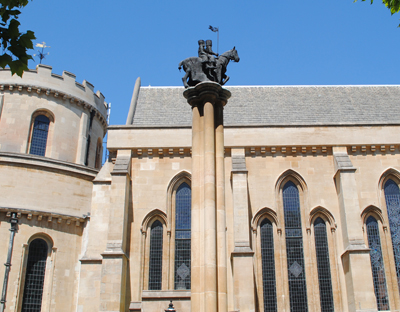
The Temple Church. This famous – and beautiful – City of London church made its starring performance in the Tom Hanks movie of 2006, The Da Vinci Code. The church enters the movie when symbology professor Robert Langton (played by Hanks) and cryptologist Sophie Neveu (played by Audrey Tautou) come here in search for a knight’s tomb. Other London locations featured in the film (alongside those in France and Scotland), include Westminster Abbey (although the interiors were actually shot at Lincoln Cathedral). For more on the history of the church, see our earlier post here or on the tomb effigies, see our post here.

Our next special series kicks of next Wednesday.

Lost London – The Three Tuns, Guildhall Yard…

Guildhall-Yard

A medieval tavern, The Three Tuns once stood in Guildhall Yard in the City (picture above).

The tavern, which was located by Guildhall Gate, is noted for having served as lodgings for the Royalist military commander General George Monck when he arrived in the city in early 1660 in the lead-up to the Restoration of the monarchy later that year. It was also, according to poet Robert Herrick, a haunt of playwright Ben Jonson.

The Three Tuns – meaning three great wine casks – was incidentally a popular name for taverns and there were several others in London which bore the same name including, in the 17th century, one in Ludgate Hill, another in Cheapside and another in Gracechurch Street.

The Museum of London has a trade token, which was worth half a penny, and was issued by the tavern’s proprietor, Thomas Ailay, in the mid-17th century for use at the business.

10 iconic London film locations…9. A chapel of many faces…

There’s an ancient church in London which has taken on the role of various other cathedrals and churches in many recent historic films, most notably in the 1998 film Shakespeare in Love (a fitting reference this week, given the 400th anniversary of the Bard’s death last weekend).

St-BartsBut the church – location of the scene in the film in which Shakespeare’s begs forgiveness after the death of Kit Marlowe – has also been seen in everything from the 1991 Kevin Costner-vehicle, Robin Hood: Prince of Thieves (where it represented the interior of Nottingham Cathedral) to Guy Ritchie’s 2009 film Sherlock Holmes (where it represented St Paul’s Cathedral, location of a ritual sacrifice being conducted by the evil Lord Blackwood).

It has also appeared in the 1996 Victorian-era drama Jude, 2006’s Amazing Grace – the story of William Wilberforce’s effort to combat the slave trade, 2007’s Elizabeth: The Golden Age (where it hosts the execution of Mary, Queen of Scots), 2008’s The Other Boleyn Girl, and the 2012 fantasy epic, Snow White and the Huntsman.

Oh, and the church? The priory church of St Bartholomew The Great (St Bart’s) located in West Smithfield, which has a history dating back 900 years (for more on the history of the church, see our earlier post here).

But the church hasn’t just been seen in films of the historic genre – it’s also played roles in more contemporary movies as well, from 1994’s Four Weddings and Funeral (St Julian’s where a wedding doesn’t take place) to 1999’s The End of the Affair and, more recently, the 2014 film Muppets: Most Wanted.

It’s doubtful there’s a church interior in London that’s been in so many movies in recent times. For more on the church itself, see www.greatstbarts.com.

LondonLife – Hang on a minute! City gardens turned upside down…

The-City-Garden

A showcase of flora inspired by the gardens of the City of London, The City Garden features fresh flowers which, entwined with copper wire, hang from the ceiling of the newly opened gallery and exhibition space known as The City Centre. The work of East London-based artist Rebecca Louise Law, the display is the first public art installation at the premises – located next to the Guildhall at 80 Basinghall Street, it’s being managed by New London Architecture on behalf of the City of London Corporation – and the flowers can be seen there as they dry out until 25th September. The exhibition also features two films on the City of London’s gardens as well as a map of those that inspired the artwork (this is also available in an app which details some of the history, horticulture and design of some of the Square Mile’s most iconic gardens). For more, see www.thecitycentre.londonPICTURE: Courtesy of The City Centre.

London Pub Signs – The Punch Tavern…

This Fleet Street institution was originally known as The Crown & Sugarloaf, but took on the name Punch thanks to its connection with the famous satirical magazine (and not, despite the sign, the notorious thug, Mr Punch).

The-Punch-TavernThe now defunct Punch magazine – its name apparently comes from a comment at the first meeting of staff that a magazine should be like a good punch mixture – was apparently founded in 1841 at the Edinburgh Castle Tavern in the Strand, just up the road.

Following its launch, the staff apparently began to meet at The Crown & Sugarloaf and it was this fact which apparently led the to the name change.

While there has apparently been a pub here since the 17th century, in 1890s, the property at 99 Fleet Street was rebuilt and the pub, under the guidance of architects Saville and Martin, was transformed into a gin palace.

Now located in a Grade II listed building, the pub has retained much of its original Victorian character – with etched mirrors, a marble bar, dark oak panelling, banquette seating and a series of original Punch and Judy paintings dating from 1897.

The pub is now owned by Punch Taverns – the company took its name from this famous pub.

Incidentally, the name The Crown & Sugarloaf lives on just around the corner in Bride Lane – this small pub, which has a rather complicated history but is now part of the Samuel Smith chain, was once connected to the Punch Tavern.

For more, see www.punchtavern.com.

This Week in London – Beacons to mark Queen Elizabeth II’s 90th; 4,000 years of Sicilian history; underwear’s history exposed; a Shakespearean banknote remembered…

• Queen Elizabeth II’s 90th birthday is being marked in various ways across the capital today. Along with street parties, gun salutes in Hyde Park and at the Tower of London, beacons will be lit in numerous locations across the city (as well as around the country and even internationally) tonight. Further celebrations will be held across May and June.

Sicily

More than 4,000 years of Sicily’s history is being explored in a new exhibition opening at the British Museum in Bloomsbury today. Sicily: culture and conquest features more than 200 objects and focuses on two major eras: the arrival of the Greeks in the latter half of the 7th century BC and their subsequent encounters with earlier settlers and the Phoenicians; and, the period under Norman rule between 1100 and 1250 AD. Highlights include a spectacularly well preserved terracotta altar from about 500 BC, a terracotta sculpture of a Greek Gorgon, an iconic marble sculpture of a warrior from ancient Akragas, a bronze battering ram used by the Romans to sink enemy ships, a 12th century Byzantine-style mosaic and marble, and wooden Islamic-influenced architectural decorations along with ceremonial glassware and ivory, gold pendants and intricate enamel mosaics and cameos from the Norman period. The exhibition, being run in conjunction with Regione Siciliana, Assessorato dei Beni Culturati e dell’Identita Siciliana, runs in Room 35 until 14th August. Admission charges apply and a programme of events accompanies the exhibition. For more, see www.britishmuseum.org/sicily.

• The largest ever museum exhibition of underwear has opened at the V&A in South Kensington. Undressed: A Brief History of Underwear charts the history of underwear from the 18th century to today and features some of the more than 60 individual pieces of mostly contemporary underwear the museum recently acquired for its permanent collection as well as loaned objects. Among the objects on display are an “austerity corset” dating from 1917-18 which has been made from woven paper twine, a man’s waist belt used on the wearer’s wedding day which dates from 1842, a late 19th century corset designed for cycling as well as a rare surviving example of a 1978 panty thong designed by Rudi Gernreich (credited with giving the thong its name) and numerous contemporary pieces – everything from a butt lifter and waist trainer for women to a pair of EnlargetIt briefs designed by aussieBum to add volume to a man’s crotch and a mastectomy bra and prosthesis. The exhibition can be seen until 12th March next year. For more, see www.vam.ac.uk/undressed.

Banknote designer Harry Norman Eccleston’s Shakespearean-related design for the now out of circulation £20 banknote is the subject of an exhibition at the Bank of England Museum in the City. Held as part of commemorations marking 400 years since the Bard’s death, Eccleston’s Shakespeare explores the design elements used in the note, first issued in July, 1970, from his rendering of William Kent’s statue of Shakespeare to his drawing of the balcony scene of Romeo and Juliet. Entry is free. For more, see www.bankofengland.co.uk.

Send all items for inclusion t0 exploringlondon@gmail.com.

LondonLife – The ‘Walkie-Talkie’…

Walkie-Talkie-building

Designed by Rafael Viñoly, this £200 million commercial building at 20 Fenchurch Street was completed in 2014 with its ‘sky garden’ opening on the top levels last year. The nickname of the controversial 37 storey building – which has attracted its fair share of opprobrium for all manner of reasons, not least the way it reflected the sun’s rays and wind onto those below as well as its place in the City’s skyline – comes from its rather distinctive shape. PICTURE: Marcela Andrade/Unsplash.

This Week in London – The Venetian Renaissance on show; Art at the Bridge; and, Martin Parr’s London…

Giorgione A survey of some 50 works from the Venetian Renaissance will go on show at the Royal Academy of Arts in Piccadilly on Saturday. In the Age of Giorgione features works from the first decade of the 16th century by artists including Giorgione, Titian, Giovanni Bellini, Sebastian del Piombo and Lorenzo Lotto as well as those of lesser known painters like Giovanni Mariani. Highlights include Giorgione’s paintings Portrait of a Man – only one of two known painting bearing a contemporary inscription identifying the artist (from The San Diego Museum of Art) and Il Tramonto (The Sunset) (from London’s National Gallery) as well as Titian’s works Christ and the Adultress (Glasgow Museums), and Jacopo Pesaro being Presenting By Pope Alexander VI to Saint Peter (Koninklijk Museum voor Schone Kunsten, Antwerp). The exhibition will be divided into four sections. Runs until 5th June. Admission charge applies. For more, see Cwww.royalacademy.org.uk. PICTURE: Attributed to Giorgione, Portrait of a Young Man, c. 1505.

Art at the Bridge returned to Tower Bridge this week with an all-female exhibition launched on International Women’s Day. Building Bridges: The Female Perspective, which is being run in collaboration with the Southwark Arts Forum and represents the 7th ‘edition’ of Art at the Bridge, features the work of 15 artists in a variety of media. They include Charlotte Timms, a mixed media artist who takes her inspiration from living on an historic barge on the Thames, print artist Donna Leighton whose work The New Baby is a commentary on the bridges a mother must build with a new baby, and photographer Pauline Etim-Ubah who explores the career of civil engineering through a series of images. Exhibition runs until 31st July. Included in normal bridge admission price. For more, see www.towerbridge.org.uk.

Gain new insights into life inside the City of London Corporation in photographs taken by Martin Parr, the City of London’s photographer-in-residence. Opening at the Guildhall Art Gallery last week, Unseen City: Photos by Martin Parr provides insight into the City of London Corporation’s private ceremonies, ancient and modern traditions, processions, banquets and other public occasions as well as more informal times. Twenty of the works on show will be acquired for the gallery’s permanent collection following the closure of the exhibition on 31st July. Admission charge applies. For more, see www.cityoflondon.gov.uk/things-to-do/visit-the-city/attractions/guildhall-galleries/Pages/guildhall-art-gallery.aspx.

Send all items for inclusion to exploringlondon@gmail.com.

This Week in London – Botticelli at the V&A; Shakespeare recalled in free sound and light show; and, ‘punk’ captured on film…

VenusA major new exhibition opening at the V&A this Saturday will feature more than 150 works from around the world in a display exploring how artists and designers have responded to the artistic legacy of Botticelli. Italian artist Sandro Botticelli (1445-1510) was largely forgotten for more than 300 years after his death but is now widely recognised as one of the greatest artists of all time. Botticelli Reimagined features painting, fashion, film, drawing, photography, tapestry, sculpture and print with works by Dante Gabriel Rossetti, Edward Burne-Jones, William Morris, René Magritte, Elsa Schiaparelli, Andy Warhol and Cindy Sherman. The exhibition is divided into three sections: ‘Global, Modern, Contemporary’, ‘Rediscovery’, and ‘Botticelli in his own Time’. Runs until 3rd July. Admission charge applies. For more, see www.vam.ac.uk/Botticelli. PICTURE: Venus, after Botticelli by Yin Xin (2008). Private collection, courtesy Duhamel Fine Art, Paris. (Name of artist corrected)

The historic facade of Guildhall in the City of London will become a canvas for a free son et lumiére show on Friday and Saturday nights to mark the 400th anniversary of the death of William Shakespeare. The display, which runs on a 20 minute loop between 6.45pm and 8.45pm, will feature period images and music from the City’s extensive archives and use 3D projection mapping techniques to transform the Dance Porch of the 15th century building. The Guildhall Art Gallery will be open from 6pm to 9pm and, as well as allowing people to view a property deed for a house in Blackfriars which was signed by the Bard, will feature a pop-up bar with a Shakespeare-themed cocktail. For more on this and other events, see www.cityoflondon.gov.uk/shakespeare400.

The 40th anniversary of punk is the subject of a new photographic exhibition drawn from the archives of world renowned music photographer and rockarchive.com founder Jill Furmanovsky which opened at the City of London Corporation’s Barbican Music Library this week. Chunk of Punk, which runs until 28th April, features many of Furmanovsky’s well-known punk-related images as well as hitherto unseen pictures with The Ramones, Buzzcocks, The Clash, The Sex Pistols, Blondie, The Undertones, Siouxsie and the Banshees, Blondie and Iggy Pop among the bands featured. The exhibition forms part of Punk.London: 40 Years of Subversive Culture. For more, see www.cityoflondon.gov.uk.

Send all items for inclusion to exploringlondon@gmail.com.

A Moment in London’s History – Sir Walter Raleigh leaves the Tower…

Bloody-TowerIt was in February, 1616 – 400 years ago this year – that the adventurer and courtier Sir Walter Raleigh (Ralegh) was released from the Tower of London where he had spent the last 13 years of his life. Sadly, his freedom was to be short-lived.

Raleigh had been imprisoned in 1603 by King James I – not his biggest fan – after being accused of plotting against the king and subsequently sentenced to death for treason (a sentence which was then commuted to life imprisonment).

The Tower, where he’d been imprisoned a couple of times before – most notably by Queen Elizabeth I for secretly marrying Bessy Throckmorton, one of her maids-of-honour, was to be his home for the next 13 years.

It was in Bloody Tower (in left of picture) that his rather luxurious ‘cell’ was located. Originally known as the Garden Tower, it was renamed for the tradition that the two ‘Princes in the Tower’, King Edward V and his brother Richard, had been murdered here in 1483.

The tower’s top floor was added specifically to provide more room for his family in 1605-06 (and Raleigh’s son Carew was conceived and born while he was imprisoned here). It was also during this time of imprisonment that he wrote his History of the World (published in 1614).

Raleigh was released in 1616 to lead an expedition to the New World – he’d previously been on a couple of expeditions there including one with his half-brother Sir Humphrey Gilbert aimed at finding the Northwest Passage (but which deteriorated into privateering and led to his brief imprisonment following his return to England), and one aimed at finding the legendary ‘golden land’ of El Dorado (which he failed to do). It was again with the purpose of finding gold that he now returned to the Orinoco River region of South America.

Failure, however, was once more the outcome, and on Raleigh’s return to England, the death sentence issued on 1603 was reimposed (for his failure but also for attacking the Spanish in defiance of the king’s instructions to specifically not do so, although the blame was not all his). He would be executed in Old Palace Yard at Westminster on 29th October, 1618.