Before we move on to our next Wednesday series, here’s a recap…
Hampstead
This Week in London – Lee Miller at the Tate; the Hallelujah Chorus’ origins and impact, and conkers on Hampstead Heath…
• The UK’s largest retrospective of trail-blazing 20th century surrealist photographer Lee Miller opens at Tate Britain today. Lee Miller features around 230 vintage and modern prints, some of which are on display for the first time, which reveal how her approach pushed boundaries and led to the creation of some of the most iconic images of last century. Highlights include the newly discovered solarisation exemplar, Sirène (Nimet Eloui Bey) (c1930-32), her celebrated surrealist image of Egypt’s Siwa Oasis, Portraitof Space (1937), London-based works such as You will not lunch in Charlotte Street today (1940) and Fire Masks(1941) which convey the “pathos and absurdity” of the city in wartime, and war-related images including portraits of Miller and David E Scherman in Hitler’s private bath in April, 1945, as well as a rare 1950 self-portrait showing Miller posed in Oskar Kokoschka’s London studio flanked by artworks. Runs until 15th February. Admission charge applies. For more, see www.tate.org.uk/whats-on/tate-britain/lee-miller
• The initial and enduring impact of the Hallelujah Chorus is the subject of a new display at the Foundling Museum in Bloomsbury. A Grand Chorus explores the profound impact music can have on listeners and performers and brings together musical scores, librettos, and musical instruments as well as paintings, photographs, audio, video, personal testimonies, and other archival material spanning three centuries. Originallycomposed as part of his famous Messiah oratorio, George Frideric Handel later incorporated the Hallelujah Chorus into an anthem he created speciallyfor the Foundling Hospital that premiered in 1749 as a fund-raising exercise. The exhibition also showcases a major sound and video installation byMikhail Karikis – We are Together Because (2025), described as a modern counterpart to the Hallelujah Chorus. Runs until 29th March. Admission charge applies. For more, see https://foundlingmuseum.org.uk/event/a-grand-chorus-the-power-of-music/.
• Swing a conker at the Hampstead Heath Conker Championships this Sunday. People are all ages are invited to join in, whether a conker veteran or a newcomer, with competitions held in a range of age categories. The competition is being held near the Parliament Hill Bandstand from 1pm to 4pm. Entry is free. For more, see www.cityoflondon.gov.uk/events/go-conkers-on-hampstead-heath-5-october.
Send all items for inclusion to exploringlondon@gmail.com
10 places to encounter London’s animal life…5. Golders Hill Park Zoo…
Not to be confused with the much larger ZSL London Zoo, this small zoo in Golders Hill Park on the north-western side of Hampstead Heath is home to a number of exotic species including ring-tailed lemurs, red-necked wallabies and kookaburras.
Subscribe to get access
Read more of this content when you subscribe today.
This Week in London – John Singer Sargent’s American portraits; Story Explorers at the British Library; and, narrative, humour and nostalgia at the Heath Robinson Museum…
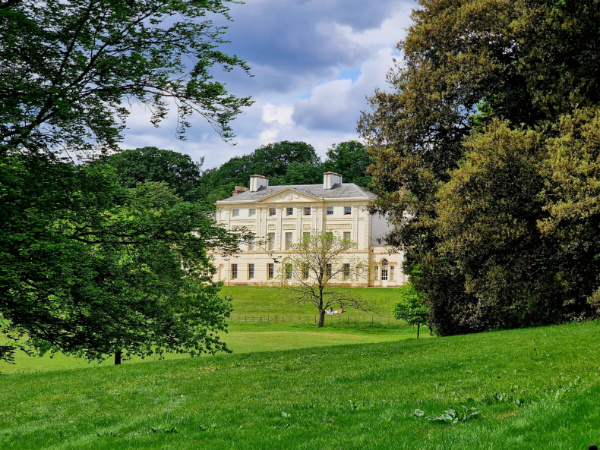
• An exhibition marking the centenary of the death of painter John Singer Sargent
(1856-1925) opens at Kenwood House tomorrow. Heiress: Sargent’s American Portraits focuses on a series of portraits of women who married into British and European aristocracy and who were once dismissively referred to as the “Dollar Princesses’. They include a war-time nurse, a helicopter pilot and the first sitting female MP. Among the works on show are Kenwood House’s portrait of Daisy Leiter, a Chicago heiress who married the Earl of Suffolk and Berkshire; a portrait of Edith, Lady Playfair, from the Museum of Fine Art, Boston; and a portrait of Mrs Joseph Chamberlain from the National Gallery of Art in Washington, DC. Runs until 5th October. Admission charge applies. For more, see https://www.english-heritage.org.uk/visit/whats-on/kenwood-heiress-exhibition-16-may–5-oct-2025/.
• A new experiential space to help children and their families journey through the British Library’s collection opens tomorrow. Story Explorers takes children on a journey, directed by Daisy the library cat, through four distinct environments – a library, the far reaches of outer space, a jungle and the bottom of the ocean floor – and features sound recordings, artworks, prints and books from across the world. Among the objects they’ll encounter are Victorian record from the Library’s Sound Archive featuring animal sounds, one of the first photographs taken of the Moon, an Arabic astrological and astronomical handbook from the Middle Ages and one of the earliest printed Japanese works that captures the anatomy of a whale. The free space is open for children aged two to nine and their families until 18th January. Booking is essential. For more, see https://events.bl.uk/exhibitions/story-explorers.
• Narrative, humour and nostalgia are explored into a new display at the Heath Robinson Museum in Pinner. Ways of seeing; Narrative-Humour-Nostalgia, which opens on Saturday, features painting, sculpture, video, soundscapes, and augmented reality to show how artists continue to use storytelling, satire, and memory to “provoke thought, entertain, and challenge perceptions”. Artists represented include Glenn Baxter, Sir Peter Blake, Chila Burman, Peter Coyte, Adam Dant, David van Eyssen, Nicky Hirst, Patrick Hughes, John Humphreys, Harland Miller, Heath Robinson, Richard Wilson, and Ronnie Wood. Runs until 19th July. Admission charge applies. For more, see https://www.heathrobinsonmuseum.org/whats-on/ways-of-seeing-narrative-humour-nostalgia/
Send all items for inclusion to exploringlondon@gmail.com
What’s in a name?…Archway…
This north London district in the London Borough of Islington owes its name to a bridge which straddles Archway Road (part of the Great North Road or A1).
The bridge’s origins go back to the early 19th century when work began on a 230 metre-long tunnel underneath Highgate Hill which would allow users to bypass the hill’s steep gradient. If completed, it’s said it would have been the earliest road tunnel in Britain.
But in April, 1812, the tunnel collapsed and a cutting through the hill, utilising the work done on the collapsed tunnel, was then proposed. It would become Archway Road.
Hornsey Lane, however, ran across the top of the hill linking Highgate to its west to Crouch End in the east, and to ensure the lane remained when the cutting was completed, it was decided to build a viaduct to carry the lane across the cutting.
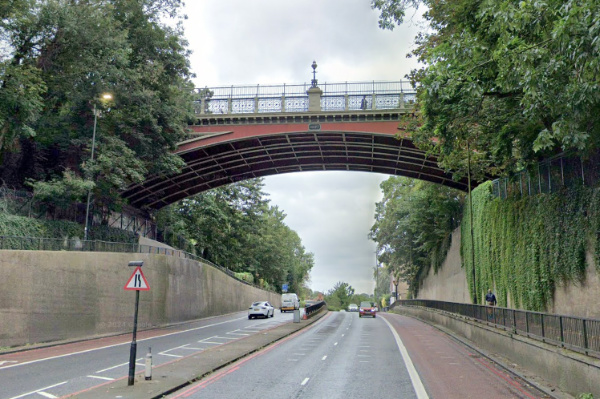
The resultant structure was designed by none other than John Nash in the style of a Roman aqueduct and opened in 1813.
Archway Road, which ran underneath the arch, was operated as a toll road until 1871.
The bridge, meanwhile, was demolished in 1900 and replaced by a cast iron bridge, designed by Alexander Binnie, which still stands.
The area was referred to as Highgate Archway but gradually the Highgate was dropped and plain Archway adopted.
This was reinforced by the naming of the Tube station in Junction Road which was originally named Highgate when it opened in 1907 as the terminus of the Northern Line but was renamed Archway (Highgate) in 1939 and then just Archway in 1947.
Landmarks in this predominantly leafy residential area include the Whittington Hospital, originally built as the Holborn Union Infirmary 1877-79, on Highgate Hill.
On a similar theme, the Whittington Stone can also be found at the bottom end of Highgate Hill. It is said to commemorate the spot where Dick Whittington, having decided to leave London after failing to make his fortune, heard the Bow Bells ringing and turned back (the stone is topped with a statue of Whittington’s famous cat).
The green expanse of Hampstead Heath lies just to the west.
10 London mysteries – 3. Where is Boudicca buried?
The location of Queen Boudicca’s grave has remained a mystery for almost 2,000 years and, dare we say it (yes, thinking of you, King Richard III), is likely to remain so.
Subscribe for just £3 a month to gain access to all Exploring London’s content (and know that you’re helping to support our work!)
This Week in London – Joshua Reynolds at Kenwood; ‘Power Up’ at the Science Museum; and ‘Crivelli’s Garden’…
• Seventeen of Joshua Reynolds’ paintings – from one of his earliest portraits to the last painting he ever completed – have gone on show at Kenwood House. Marking the 300th anniversary of the artist’s birth (on 16th July, 1723), Spotlight on Reynolds: Lord Iveagh’s Favourite Artist at 300 features works including Catherine Moore (painted in Paris in 1752 when he was returning from his studies in Italy), Miss Cocks and her Niece (one of the last paintings begun by Reynolds before the loss of his sight around 1790), and a self-portrait he completed in 1788 when aged around 65 (the only self-portrait to show Reynolds wearing spectacles). Also on show in the display are three full-length works that span the early 1770s to the early 1780s: Mrs Tollemache as Miranda, Lady Louisa Manners and Mrs Musters as Hebe. Runs until 19th November. For more, see www.english-heritage.org.uk/visit/places/kenwood/.

• After five successful temporary seasons, Power Up, the popular hands-on video gaming gallery, returns permanently to the Science Museum from today. Visitors will be able to play on more than 160 consoles and hundreds of video games, as well as undertake a journey through five decades of gaming, from Pong and Mario Kart to the PlayStation 5 and Xbox and the latest in VR technology. The exhibition is divided into 14 themes and sections including a physical games area and a dedicated PC-area. Admission charge applies (daily and annual passes are available). The opening is accompanied by the return of adults-only Gaming Lates. For more, see www.sciencemuseum.org.uk.
• Dame Paula Rego’s public commission, Crivelli’s Garden, is the subject of a new display at The National Gallery. Planned in collaboration with Rego, who died on 8th June last year, the display unites the monumental 10-metre-long artwork with the 15th-century altarpiece by Carlo Crivelli that inspired it, alongside life studies Rego produced of the gallery colleagues that feature in the painting. The display can be seen until 29th October. Admission is free. For more, see https://www.nationalgallery.org.uk.
• Send all items for inclusion to exploringlondon@gmail.com.
This Week in London – Freud’s antiquities; how design can help the aging; and, new home for the Migration Museum…
• Sigmund Freud’s collection of ancient antiquities and books inspired by them are the subject of a new exhibition at the Freud Museum London in Hampstead. Freud’s Antiquity: Object, Idea, Desire, which opens Saturday, explores the crucial role the collection played Freud’s development of the concepts and methods of psychoanalysis. The display, which is co-curated by Professor Miriam Leonard of UCL, Professor Daniel Orrells of Kings College London, and Professor Richard Armstrong, of the University of Houston, discusses six separate aspects of Freudian theory alongside representative objects from the collection and spans his entire psychoanalytic career from 1896 to 1939. Alongside the physical objects is a comprehensive digital multimedia resource, containing video recordings, podcasts, photographs of rarely seen objects from the collection, and a list of suggested reading. A series of events accompanies the exhibition. Runs until 16th July. Admission charge applies. For more, see www.freud.org.uk/exhibitions/freuds-antiquity-object-idea-desire/.
• A new display at the Design Museum will showcase how cutting-edge design can help people live “more independently, sustainably and healthily but also with joy and fulfilment” as they age. Designing for our Future Selves, which opens on Friday, follows on from last Future of Ageing exhibition and will feature 10 design initiatives currently being developed by Design Age Institute and its partners which aim to positively impact the way we live and work as we grow older. The exhibition is free to visit. Runs until 26th March. For more, head here.
• A permanent home for the Migration Museum, currently based in Lewisham, will be built in the Square Mile following planning approval this week. The new facility at 65 Crutched Friars will be located in a 21-storey building and will consist of three floors featuring space for exhibitions and events, a cafe and a shop. The City of London Corporation said the developer had agreed to provide the museum space rent-free for 60 years and to cover its operating costs for three years, and has also donated £500,000 to support its fund-raising campaign.
Send all items from inclusion to exploringlondon@gmail.com.
10 historic London homes that are now museums…5. The Freud Museum…

The last residence of Sigmund Freud, the founder of psychoanalysis, is located in Hampstead and is now a museum dedicated to his work and that of his daughter, pioneering child psychoanalyst Anna Freud.
The Freuds moved into the property at 20 Maresfield Gardens (having initially briefly stayed at a flat at 39 Elsworthy Road, Primrose Hill) in September, 1938, having left their home in Vienna to escape the Nazi annexation of Austria earlier in the year.
The house dates from 1920 and was built in the Queen Anne Revival Style. A small sun room was added a year after to the rear of the property.
Freud finished his final works Moses and Monotheism and An Outline of Psychoanalysis while at the property and also saw patients there as well as some high profile visitors including Princess Marie Bonaparte, writer HG Wells and literary couple Leonard and Virginia Woolf. Already aged in his 80s when they moved in, he died in the home just a year after on 23rd September, 1939. But his daughter Anna remained in the property until her death in 1982.
As per her wishes, it was subsequently turned into a museum and opened to the public in July, 1986, as The Freud Museum.
Among the rooms which can be visited today are Freud’s study, the library, hall and dining room but some areas – such as Anna Freud’s consulting room – are used as offices and not open to the public.
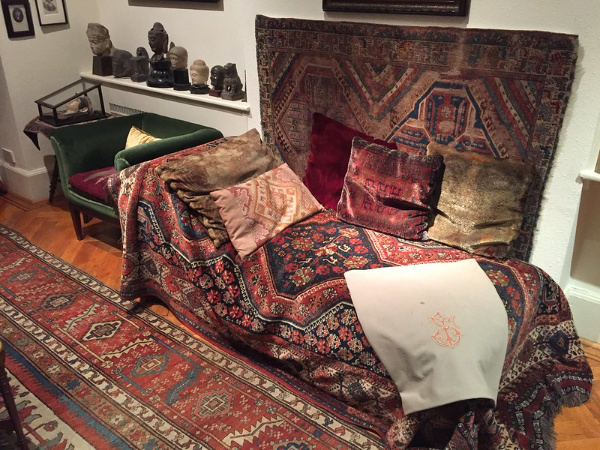
The star sight inside is undoubtedly Freud’s famous couch. Located in the study, it was originally the gift of a patient, Madame Benvenisti, in 1890, and is covered with a Qashqa’i carpet which Freud added.
Other items which can be seen in the house include several paintings collected by Freud and a series of photographs by Edmund Engelman which depicted Freud’s apartment in Vienna just weeks before he fled. There’s also a portrait of Freud by Salvador Dali who visited him in London, his collection of antiquities and his painted Austrian furnishings as well as many mementoes related to Anna Freud.
The premises also hosts temporary exhibitions and a range of other events.
The garden outside – much loved by the Freuds – has been left largely as Sigmund Freud would have known it.
The house is one of the rare properties in London which features two English Heritage Blue Plaques – one commemorating Sigmund and the other Anna.
There’s a famous statue of Sigmund Freud by Oscar Nemon just a couple of minutes walk away at the corner of Fitzjohns Avenue and Belsize Lane.
WHERE: The Freud Museum, 20 Maresfield Gardens, Hampstead (nearest Tube stations are Finchley Road, Finchley Road & Frognal and Belsize Park); WHEN: 10:30am to 5pm, Wednesday to Sunday; COST: £14 adults/£12 concessions/£9 young persons (aged 12 to 16, under 12s free); WEBSITE: www.freud.org.uk.
10 historic London homes that are now museums…3. Keats House…
Briefly the home of Romantic poet John Keats, this Hampstead premises is a now a museum dedicated to the writer and exhibition space.
Constructed in around 1815 as a pair of semi-detached dwellings, the now Grade I-listed house was one of the first to be built in the area. The two residences were initially occupied by critic Charles Wentworth Dilke and his family, and by the writer Charles Armitage Brown.

Keats, a friend of Dilke and Brown, began visiting the Regency-era villa, then named Wentworth Place, soon after. He was then living with his two younger brothers nearby in Well Walk but after George married and emigrated to America and Tom died of tuberculosis and, Brown invited Keats to move in as a lodger.
He did so in December, 1818, and it was while living at the property that he composed La Belle Dame sans Mercians, completed The Eve of St Agnes and write his famous odes, including Ode to a Nightingale.
The Dilkes family moved out in April, 1819, and Mrs Brawne and her daughter moved in. Keats developed an intimate relationship with the daughter, Fanny, and the couple were secretly engaged but owing to his premature death, never married.
In September, 1820, with his health failing, Keats left the property and headed to Rome (the trip was funded by friends who hoped the warm climate would help improve his health). He died in the eternal city on 23rd February, 1821, and was buried in the city’s Protestant cemetery.
Brown, meanwhile, left the property in June, 1822 (he also left for Italy) and Keats’ sister Fanny – who had become friends with Fanny Brawne – moved into Brown’s half of the house with her husband Valentin Llanos between 1828 and 1831. The Brawnes left in early 1830.
Subsequent occupants included actor Eliza Chester who converted the two residences into one.
The property was threatened with demolition in the early 20th century but saved by public subscription. It opened to the Keats Memorial House on 9th May, 1925. In 1931, a new building was erected nearby house artefacts related to Keats.
Since 1998 the property has been under the management of the City of London Corporation. It underwent a restoration project in the mid-1970s and again between 2007 and 2009. The Keats Foundation was established in November, 2010, and is involved in educational initiatives, both at Keats House and elsewhere.
Visitors to the house today are taken on a journey through Keats’ short life and legacy. Among the artefacts which can be seen there are items related to his time as a medical student, portraits of some of the famous people Keats met while living at the property including the poets Samuel Taylor Coleridge and Percy Bysshe Shelley as well as Shelley’s wife Mary (author of Frankenstein), a bust of Keats which stands at his actual height – just over five feet tall, and a mask of Keats’ face made by his artist friend Benjamin Haydon.
There’s also portraits of both Keats and Fanny, Fanny’s engagement ring, and a volume of Shakespeare’s plays Keats gave her before leaving for Rome as well as busts of Charles Brown and editor Leigh Hunt (it was through Hunt that Keats met Dilke and Brown).
The garden features a 200-year-old mulberry tree and a plum tree which was planted to commemorate Ode to A Nightingale.
A Blue Plaque (although it’s actually brown) was unveiled at the house at 10 Keats Grove by representatives of the Royal Society of Arts on the property as far back as 1896 to commemorate Keats.
WHERE: Keats House, 10 Keats Grove, Hampstead (nearest Overground station is Hampstead Heath; nearest Tube stations are Hampstead and Belsize Park); WHEN: 11am to 1pm and 2pm to 4pm, Thursday, Friday and Sunday; COST: £8 adults/£4.75 concession; 18 and under free; WEBSITE: www.cityoflondon.gov.uk/things-to-do/attractions-museums-entertainment/keats-house/visit-keats-house.
10 unusual parks or gardens in London…6. The Hill Garden and Pergola, Hampstead…
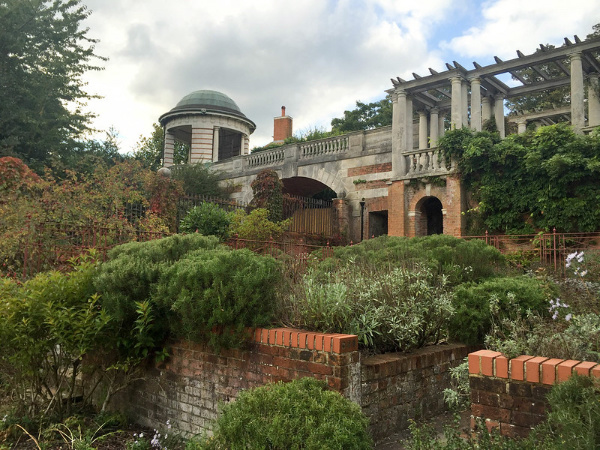
Tucked away in the north-west of Hampstead Heath is a Edwardian-era garden and extravagant pergola that were originally created for a mansion but are now open to the public.
The garden and pergola were created on the orders of the wealthy William H Lever, later Lord Leverhulme, who in 1904 purchased a sizeable Georgian townhouse on the Heath called “The Hill”. Remodelling the house extensively, Lever wanted to also create a garden where he could entertain and sought the help of renowned landscape architect Thomas Mawson to design one on what was steeply sloping land.
Mawson’s plan involved raising the level of the gardens by up to 30 feet and creating a series of terraces. This was made possible due in part to the close proximity of the Hampstead extension of the Northern Line of the Tube – Lever paid to have the spoil which had been dug out to make the Tube tunnels transported the short distance to his garden so it could be used to build it up.
An Italianate pergola was constructed on the boundary between 1905 and 1906, providing views over West Heath while at the same time preventing the general public from looking into the garden. The gardens and pergola were subsequently extended after he bought the neighbouring property in 1911 – the same year Lever was made a baronet – and again in with further works completed in 1925 just months before the now-Lord Leverhulme’s death.

The property was sold to Scots shipping magnate Lord Inverforth and, on his death in 1955, was bequeathed it to the private Manor House Hospital. Following a long period of neglect, London County Council bought the pergola and the gardens which had once been those of the neighbouring property, Heath Lodge, and opened them to the public in 1963 as the Hill Garden.
The City of London Corporation took over management with the abolition of the GLC in 1986 and restoration work was carried out. When the hospital closed in 1998 and the house was sold for luxury housing, further works were carried out and the public part of the gardens took on their current form.
WHERE: The Hill Garden and Pergola, Inverforth Close, North End Way, Hampstead (nearest Tube stations are Golders Green or Hampstead Heath); WHEN: 8:30am to 8pm daily; Daily; COST: Free; WEBSITE: www.cityoflondon.gov.uk/things-to-do/green-spaces/hampstead-heath/where-to-go-at-hampstead-heath/hill-garden-and-pergola.
This Week in London – Totally Thames turns 25; Muppeteer Jim Henson honoured; and, Beerfest-Lite…

• Totally Thames, the annual month-long celebration of London’s river, is celebrating its 25th iteration this month. Highlights this year include Leo Villareal’s Illuminated River which lights up the Thames every night (along with a special three-day celebration including guided tours, talks, sketching workshops and a one-off illumination event on 23rd September) as well as the chance to explore the foreshore with ‘Mudlarking’ at St Paul’s Cathedral, take a deep dive into the history of dockside communities with ‘The Islanders’ and see river-themed art from children across the globe
come together at the National Maritime Museum in Rivers of the World. More than 80 events are included in the programme which runs until the end of the night. For more, see https://thamesfestivaltrust.org/whats-on.
• Muppet creator Jim Henson was honoured with an English Heritage Blue Plaque at his former Hampstead home this week. Henson lived in the home at 50 Downshire Hill between 1979 and 1982 and continued to use it as his base until his death in 1990. It stands opposite the former ‘Jim Henson’s Creature Shop’, where creatures from fantasy films including The Dark Crystal, The Storyteller and Labyrinth were created. Henson’s son Brian, chairman of the board at The Jim Henson Company, said it was an honour to have the property recognised, “knowing that he so admired and respected the talent in London, and that this is the place he called home when creating some of his most memorable productions.” For more, see www.english-heritage.org.uk/visit/blue-plaques/.
• Beerfest-Lite takes place in Guildhall Yard in the City of London today. The event , which runs from noon to 9pm – features beers from the Meantime, Windsor and Eaton, Hook Norton and Shepherd Neame breweries and a street vendor menu including paella, hot dogs, souvlaki and Caribbean dishes as well as a jazz performance from the Alvar Tree Frogs and Bavarian Oompah band Würst Brass. For more, see www.citybeerfest.org.
Send all inclusions to exploringlondon@gmail.com.
Famous Londoners – Sir Rowland Hill…
Famous for his reform of the postal system, Sir Rowland Hill was a national celebrity during the Victorian era.
Born in Kidderminster, Worcestershire, on 3rd December, 1795, Rowland was the son of schoolmaster Thomas Wright Hill. Educated in his father’s school, Hill Top, in a Birmingham suburb, it was determined he would follow in his father’s footsteps at an early age and by the age of 12 had become a student teacher and in 1819 helped his family establish new model school, Hazelwood, in Edgbaston near Birmingham. In 1827, he was also involved with his family in establishing another new school, Bruce Castle School, in Tottenham, Middlesex.
That same year, Hill married Caroline Pearson, who originally came from Wolverhampton, and together they had four children – three daughters Eleanor, Clara and Louisa and a son Pearson.
In the following years, Hill became involved in campaigns to colonise South Australia and in 1835 he joined the South Australian Colonisation Commission as Secretary, a role which he held until 1839 (interestingly and perhaps not surprisingly given his interest, Hill’s sister Caroline would later emigrate to South Australia with her family).
Hill was in his early 40s when he became interested in reforming the postal system – what to be his life’s great work. In 1837, he published his influential pamphlet, Post Office Reform: Its Importance and Practicability, in which he argued for consistency in the system including pre-payment of standardised charges for sending mail.
Hill believed that if letters were cheap to send, more people – including the poorer classes – would send more and thus the profitability of the system would increase (a thought which proved true). It’s said, although whether it’s true or not is uncertain, that Hill became interested in reforming the postal system after he noticed a young woman who too poor to claim a letter sent to her by her fiancé (at the time it was usually the recipients who paid for the letter’s mailing).
Only three years later, Parliament passed the Penny Postage Act which saw the world’s first official postage stamps – the penny black and the two-penny black – issued. Hill and his family had by then moved to Orme Square in Bayswater (there’s now an English Heritage Blue Plaque on the property).
After the new government of Sir Robert Peel took office in 1841, Hill was dismissed and, joining the London and Brighton Railway as a director in 1843, relocated to Brighton.
But Hill was able to resume his postal reform efforts in 1846 after another change of government saw him appointed Secretary to the Postmaster-General. In 1854, he was appointed Secretary to the Post Office, a job he held until his retirement in 1864 due to ill health.
Hill was knighted in 1860. He spent the last 30 years of his life at Bartram House, Hampstead, and it was there he died 27th August, 1879 (a plaque now marks the house). He was buried in Westminster Abbey.
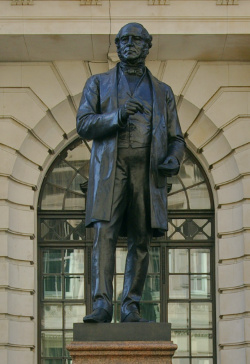
There are several public statues commemorating Hill include a bronze which, created in 1881, stands in King Edward Street in London (pictured).
LondonLife – Hampstead Heath Act turns 150…
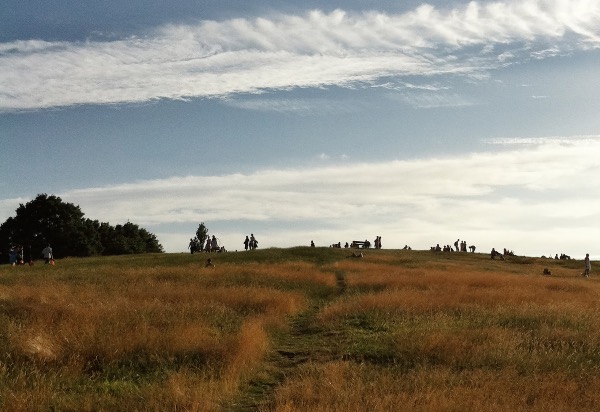
This month marks 150 years since the passing of the Hampstead Heath Act, which confirmed the heath as a public open space, and, to celebrate, the City of London Corporation, the Heath & Hampstead Society and other partners have launched a year of commemorations. Upcoming planned highlights include an outdoor exhibition showcasing the heath’s history and the significance of the 1871 Act which will be launched on the heath (on the main path leading onto the heath from the Hampstead Heath Overground Station) on 23rd June, a community fun day (27th June), an outdoor cinema screening (8th September), a summer music event (tentatively scheduled for 5th September) and historic walks as well as an Historic Postcard Project featuring an interactive online map with historic images of the heath. For more, see www.cityoflondon.gov.uk/things-to-do/green-spaces/hampstead-heath.
This Week in London – Noël Coward’s glittering world; figures from the African diaspora; and, reflections on land rights and colonialism in Australia…
• The glittering world of playwright and songwriter Noël Coward is on show in a new exhibition opening at the Guildhall Art Gallery this Monday. The much delayed Noël Coward: Art & Style, which marks the 100th anniversary of Coward’s West End debut as a 19-year-old earlier this year, brings together never-before-seen materials from the Coward Archive and demonstrates the impact he and his creative circle had on the culture of his time – and today. Highlights include an original page of Coward’s handwritten lyrics for Mad Dogs and Englishmen, the chocolate brown evening suit he wore in the film Boom!, two of his signature silk dressing gowns, his iconic ‘Hamlet’ chair, and several of his own paintings. There’s also a specially commissioned new reconstruction of the iconic white satin dress that Molyneux designed in 1930 for Gertrude Lawrence in Private Lives and a never-before-exhibited gold lamé theatre cape by Lucile (Titanic survivor Lady Duff Gordon) from 1920. The exhibition, which is free, runs until 23rd December. Tickets must be booked in advance. For more, see www.cityoflondon.gov.uk/noelcoward.
• A new portrait depicting Dido Belle (1761-1804) has gone on display at Kenwood House – one of six works depicting historic figures from the African diaspora now on show at English Heritage properties across the nation. Belle, who is depicted by artist Mikéla Henry-Lowe, was the illegitimate daughter of a young black woman named Maria Bell and a Royal Naval officer, Sir John Lindsay. She spent much of her life at Kenwood House with her great-uncle William Murray, 1st Earl of Mansfield, the Lord Chief Justice. Other portraits in the series depict the likes of African-born Roman Emperor Septimius Severus (the work of Elena Onwochei-Garcia, it’s on display at Corbridge Roman Town on Hadrian’s Wall, Northumberland), North African-born 7th century Abbot Hadrian (the work of Clifton Powell, it’s on display at St Augustine’s Abbey in Kent) and Queen Victoria’s god-daughter Sarah Forbes Bonetta (the work of Hannah Uzor, it’s on display at Osborne House on the Isle of Wight). For more, see www.english-heritage.org.uk/learn/histories/black-history/.
• More than 25 works by Australian artists exploring debates around land rights and colonialism have gone on show in a new exhibition at the Tate Modern. A Year in Art: Australia 1992 takes as its starting point the High Court of Australia’s landmark 1992 Mabo ruling which overturned the doctrine of terra nullius. Works on show include Emily Kame Kngwarreye’s 1989 Untitled (Alhalkere) – an expression of her cultural life as an Anmatyerre elder, Gordon Bennett’s 1991 work Possession Island (Abstraction) which is presented in dialogue with Algernon Talmage’s 1937 work The Founding of Australia 1788, and Tracey Moffatt’s 1997 photographic series Up in the Sky, which speaks to the ‘Stolen Generations’ – the forced separation of Aboriginal families by government agencies. At the heart of the display is Vernon Ah Kee’s 2010 four-screen video installation tall man which shows footage of the protests and riots following the death in custody of Mulrunji Doomadgee on Palm Island in 2004. The exhibition is free. For more, see www.tate.org.uk.
Send all items for inclusion to exploringlondon@gmail..com
10 London hills – 9. Highgate Hill…
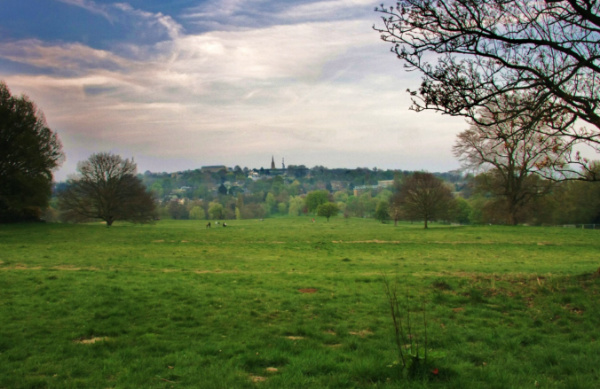
This hill in the city’s north rises 136 metres (446 feet) above sea level and is said to take its name from a tollgate the Bishop of London once erected on the summit.
The hill, which stands to the northeast of the expansive Hampstead Heath and south of Highgate Wood, is topped by Highgate Village, long a fashionable residential district which features some significant 18th century buildings. It boasts views of central London.
Landmarks include the famous Highgate Cemetery – resting place to everyone from Karl Max to George Eliot and Douglas Adams – and the Highgate School, established on 1565 to educate the poor and now a rather exclusive – and expensive – establishment (the school, incidentally, was built on the site of an earlier hermitage). TS Eliot was a former master there and students included Poet Laureate Sir John Betjeman.
Other buildings of note include The Flask pub, St Michael’s Church (dating from 1831) and St Joseph’s Roman Catholic Church (dating from 1888).
Famous residents have included Romantic poet Samuel Taylor Coleridge (he was originally buried in a crypt below the school’s chapel but his remains were relocated to St Michael’s Church in 1961) while 16th and early 17th century philosopher and statesman Sir Francis Bacon died in what was then called Arundel House (now The Old Hall) in 1626. Classical scholar and poet AE Housman’s former house at 17 North Road is marked with an English Heritage Blue Plaque.
Highgate Hill is also famous for being where, so the story goes, Dick Whittington, who was accompanied by his cat, heard the Bow bells and felt called back to London (there’s a monument to Whittington and his cat close to the bottom of Highgate Hill Road).
This Week in London – Rodin at the Tate; life-sized Monopoly; and, a floral tribute to John Keats…
Many London institutions reopen in the coming week – while some are continuing with exhibitions which were already on before lockdowns lead to closures, there are also some new exhibitions being launched and these we’ll feature in coming weeks…
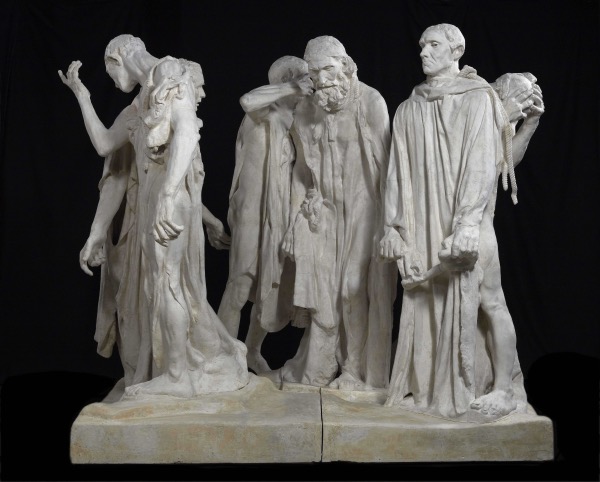
• A major new exhibition on the work of French sculptor Auguste Rodin opens at the Tate Modern on Monday. The EY Exhibition: The Making of Rodin features more than 200 works including the Thinker (1881) and The Three Shades (1886) as well as a newly restored plaster made in preparation for The Burghers of Calais (1889). The exhibition is the first show to focus in-depth on Rodin’s use of plaster and takes inspiration from the artist’s landmark self-organised exhibition at the Pavillon de l’Alma in 1900. It also explores the complex dynamics with different models – including his onetime studio assistant and collaborator Camille Claudel – and looks at his use of photography and watercolours. Located in the Eyal Ofer Galleries, the exhibition runs until 21st November. Admission charges applies. For more, see www.tate.org.uk.
• The world’s first life-sized Monopoly-based attraction will be opening in Tottenham Court Road in August, it was revealed this week. Hasbro, Inc and Gamepath, a new division of international theatre producer Selladoor Worldwide, are behind the attraction which the City of London Corporation says will “bring together the best of the iconic board game, escape rooms and team challenge”. The premises at 213-215 Tottenham Court Road will house individually designed and unique main gameplay boards including Classic, The Vault, and City as well as a Junior Board. There will also be a retail outlet and a Monopoly-themed bar and restaurant. Stay tuned for more.
• A new floral display featuring flowers from John Keats’ graveside in Rome and his home in London’s Hampstead form part of a new indoor art installation at the Hampstead property, Keats House, when it reopens Monday. The display, created by London artist Elaine Duigenan, is part of the Keats200 commemorations marking the bicentenary of his death. “Flowers are embedded in John Keats’s life story and are a vehicle for expressing something both transitory and lasting, and my installation seeks to honour his legacy by alluding to human frailty and resilience,” says Duigenan. “As an artist, I understand both the desire for recognition and the fear of leaving no mark, so I have crowned him laureate and wreathed him as though for oblivion.” For more (to check opening times before attending), see www.cityoflondon.gov.uk/keats.
Send all items for inclusion to exploringlondon@gmail.com.
10 London hills – 4. Parliament Hill…
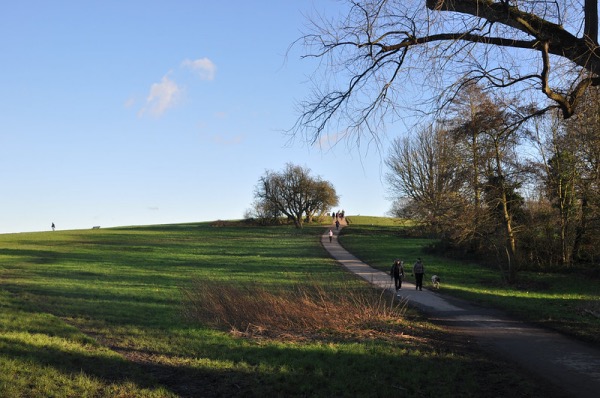
Located to the north-west of the city, Parliament Hill – with its elevation of 98 metres above sea level – offers expansive views of the city skyline including The Shard, St Paul’s Cathedral and the Houses of Parliament.
The hill, which can be found in the south-east of Hampstead Heath, was once part of the manor of Hampstead. It was apparently previously known as Traitor’s Hill – some believe it was so-named because it was from here that those involved in the (as it turned out, unsuccessful) Gunpowder Plot of 1605 were to gather to watch Parliament explode.
The current name may also come from that association, or the hill’s association with Parliamentarians who saw it as a defensive strongpoint during the English Civil War.
A tumulus on the north side of the hill, which some have believed to be the grave of Queen Boadicea, was excavated in the 1890s and is thought to be a Bronze Age burial mound.
The hill – which is known to have been a favourite of Romantic poets including Shelley, Keats and Coleridge – was acquired for the public in 1889.
Traditionally used for livestock grazing (and, according to some, having an ancient association with druids), it has also been a popular site for kite-flying. There’s various sporting facilities including a lido, located on the lower slopes of the hill as well as a monument called the Stone of Free Speech which was apparently previously used as a site for public meetings in the past.
The hill is managed by the City of London Corporation.

Famous Londoners – John Keats…
This month marks 200 years since the death of Romantic poet and London resident John Keats – famous for poems including Ode to a Grecian Urn and Ode to the Nightingale – at the age of just 25.
Born on 31st October, 1795, Keats was the eldest of Thomas Keats and Frances Jennings’ four children. The story goes that he was born in the stable – owned by his mother’s father and managed by his father, located near Finsbury Circus.

At the age of eight, Keats attended the boy’s academy at Enfield (his brothers George and Tom would also attend). He had been at the school for less than a year when, on the night of 15th April, 1804, his father was seriously injured in a horse-riding accident and died the following day.
Within a couple of months, his mother entered an ill-fated marriage and eventually left her family to live with another man. She returned to her family by 1808 but, now ill, she died of tuberculosis in March, 1809. following his mother’s death, his grandmother appointed two London merchants including tea broker Richard Abbey as Keats’ guardians.
Keats, meanwhile, built up a close friendship with headmaster John Clarke and his older son Charles Cowden Clarke at Enfield and through them really began to foster a love of literature (in particular Edmund Spenser‘s Faerie Queene is said to have helped awakened his love of poetry).
But at Abbey’s instruction he left Enfield in 1811 and began to work toward a career as a surgeon, apprenticed to surgeon Thomas Hammond, in nearby Edmonton.
In October, 1815, he left his apprenticeship with Dr Hammond, apparently after a quarrel between them. Moving into London, he registered at Guy’s Hospital for the six-month course of study which was required for him to become a licensed surgeon and apothecary. Lodging with two older students at 28 St Thomas Street, he progressed quickly and was soon promoted to “dresser”, a role which saw him involved dressing wounds daily to prevent or minimize infection, setting bones, and assisting with surgery.
Poetry, however, continued to occupy his mind and his sonnet O Solitude! became his first published poem when it appeared in The Examiner on 5th May, 1816 (editor Leigh Hunt, who was introduced to Keats by Clarke later that year, also went on to publish other works including his sonnet On First Looking into Chapman’s Home).
Keats, who became a certified apothecary in late 1816 (he’d holidayed in Margate with his brother Tom after passing his exams earlier that year), now faced further studies to become a surgeon. But he instead decided to give up medicine and devote himself entirely to his poetry (a move which apparently infuriated his now sole guardian Abbey). About the same time he moved into lodgings at 76 Cheapside with his two brothers, George and Tom (there was also a sister Fanny), having previously lived with that at 8 Dean Street in Southwark.
His circle of artistic acquaintances – which included fellow Romantic poet Percy Bysshe Shelley and painter Benjamin Robert Haydon – now growing, in March, 1817, Keats’ first book of poetry – Poems – was published. It was also around that time that he moved with his brothers to a property at 1 Well Walk in Hampstead, no longer needing to be near the hospitals where he had worked and studied.
In May, 1818, Keats published his 4,000 line allegorical romance, Endymion, but it received a rather scathing reception including by Blackwood’s Magazine which apparently declared the work nonsense and recommended Keats give up writing poetry.
In summer that year, Keats went on a walking tour of Scotland, Ireland and the Lake District with his friend Charles (Armitage) Brown. Following his return to Hampstead, Keats nursed his brother Tom who was ailing from tuberculosis (George having by now left for America) and who died on 1st December.
Following his brother’s death, Keats accepted Brown’s invitation to move into his property at Wentworth Place, located on the edge of Hampstead Heath (now the Keats House museum).

While living at Wentworth Place, Keats developed an intimate relationship with next-door neighbour Frances (Fanny) Brawne and the couple “came to an understanding” but his literary ambitions and failing health – by early 1820 he too had tuberculosis – meant it never came to marriage.
Keats third volume of poetry – containing his famous odes including Ode to a Nightingale and Ode to a Grecian Urn – was published in mid-1820 but now increasingly suffering from tuberculosis, he was advised by his doctors to head to a warmer climate. In September that year he left for Rome with his friend, the painter Joseph Severn (who painted a famous posthumous portrait of Keats), knowing he would probably never see Brawne again.
In Rome – having had to spend 10 days quarantine after the ship arrived in Naples due to a suspected cholera outbreak, he moved into a villa on the Spanish Steps (now home to the Keats-Shelley Memorial House museum) but, despite medical efforts, his health continued to deteriorate.
John Keats died on 23rd February, 1821, and was buried in the city’s Protestant cemetery. His tombstone bears no name or date, just the words “Here lies One whose Name was writ in Water” and an epitaph which speaks of a “young English poet”.
Keats had only been a serious poet for some six years prior to his death and his three volumes of poetry had probably only amounted to some 200 copies. But his reputation continued to grow after his death with support from the likes of Shelley, Tennyson and the pre-Raphaelites, and he is now well-established in the literary canon as one of the greatest English poets.
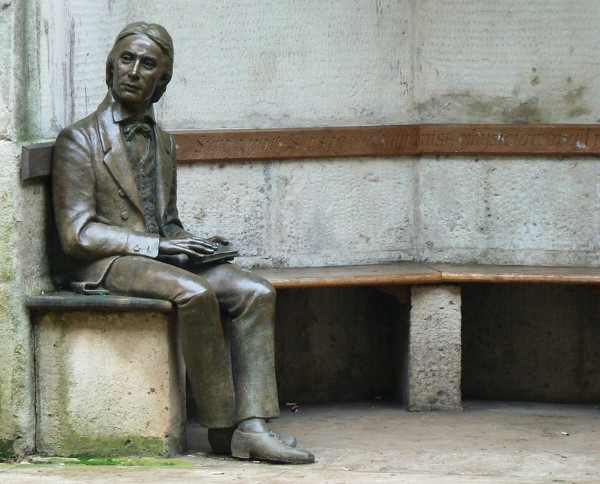
As well as Keats’ House – which is managed by the City of London and which features an English Heritage Blue Plaque on the facade, Keats is memorialised with several other plaques in London and a famous statue at Guy’s Hospital which features him seated in a former alcove removed from London Bridge – see image above).
Exploring London’s 100 most popular posts of all time! – Numbers 26, 25, 24 and 23…
The next four in our countdown…
26. 10 iconic London film locations…5. Belle at Kenwood House (but not as you know it)…
25. 10 fictional character addresses in London – 6. Wimbledon Common…
24. Where’s London’s oldest…department store?
23. LondonLife – A rare glimpse inside King Henry V’s chantry chapel…
 Exploring London