10 London buildings that were relocated…4. The tower of All Hallows Lombard Street…

One of the lost churches of the City of London, All Hallows Lombard Street once stood on the corner of this famous City street and Ball Alley.

Dating from medieval times, the church was badly damaged in the Great Fire of London and, while the parishioners initially tried their own repairs, it was subsequently rebuilt by the office of Sir Christopher Wren and completed by 1679.
All Hallows Twickenham
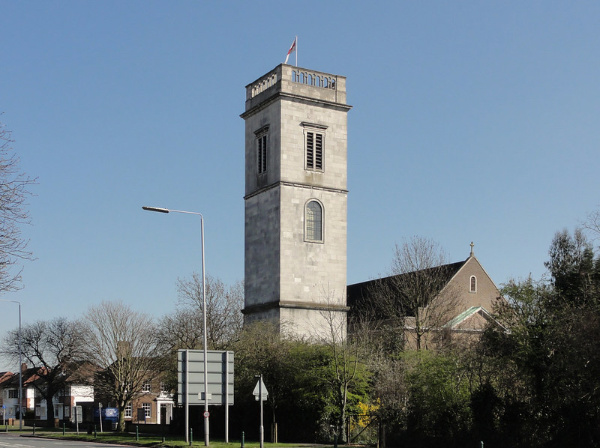
All Hallows Twickenham on Chertsey Road. PICTURE: Maxwell Hamilton (licensed under CC BY 2.0

The result was apparently a rather plan building but it did feature a three storey tower (in fact, so hemmed in by other buildings did it become that some called it the “invisible church”). The church also featured a porch which had come from the dissolved Priory of St John in Clerkenwell and had, from what we can gather, been part of the previous building.

Among those who preached in the rebuilt church was John Wesley in 1789 (he apparently forgot his notes and, after some heckling from the congregation, it’s said he never used notes again).

The parish of St Dionis Backchurch was merged with All Hallows when the latter was demolished in 1878 (All Hallows has already been merged with St Benet Gracechurch when that church was demolished in 1868 and St Leonard Eastcheap in 1876). Bells from St Dionis Backchurch were brought to All Hallows following the merger.

The declining residential population in the City saw the consolidation of churches and following World War I, All Hallows Lombard Street was listed for demolition. There was considerable opposition to the decision but structural defects were found in the building’s fabric and demolition eventually took place in 1937.

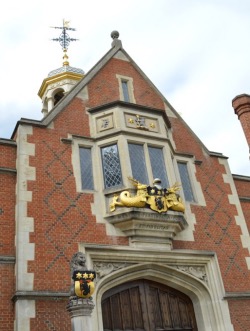
But there was to be a second life of sorts for the church. The square, stone tower, including the porch and fittings from the church such as the pulpit, pews, organ and stunning carved altarpiece, were all used in the construction of a new church, All Hallows Twickenham in Chertsey Road.

Designed by architect Robert Atkinson, it was one of a couple of new churches built with proceeds from the sale of the land on which All Hallows Lombard Street had stood.

Replacing an earlier chapel, the new Twickenham church was consecrated on 9th November, 1940 by the Bishop of London, Geoffrey Fisher (apparently with the sound of anti-aircraft fire in the background).

The 32 metre high tower houses a peal of 10 bells, including some of those from St Dionis Backchurch, as well as an oak framed gate decorated with memento mori carvings – including skulls and crossbones – which came from All Hallows Lombard Street.
Famous Londoners – Dr Thomas Barnardo…

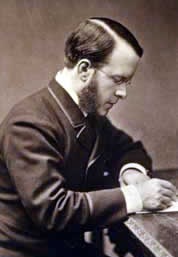
Famed as the founder of homes for disadvantaged children, Dr Thomas Barnardo’s impact is still making a difference to the lives of children today.

Barnardo was born in Dublin, Ireland, on 4th July, 1845, the son of a furrier, John Michealis Barnardo, who had emigrated from Hamburg, and his second wife Abigail, an Englishwoman who was a member of the Plymouth Brethren.

Largely brought up by a half-sister due to his mother’s ill-health, he was educated in Dublin before, at the age of 14, becoming apprenticed to a wine merchant.

Barnardo had a life-changing experience of faith in 1862, was baptised and eventually, working with a local mission, started preaching and visiting people.

Inspired by Hudson Taylor’s reports of the work of the China Inland Mission, Barnardo – against his father’s wishes – left for London in 1866 with the intention of joining the mission’s work.

In London, while he waited for the mission’s leaders to consider his candidacy, Barnardo enrolled to study at the London Hospital (studies he would never complete, despite taking the title of ‘Dr’).

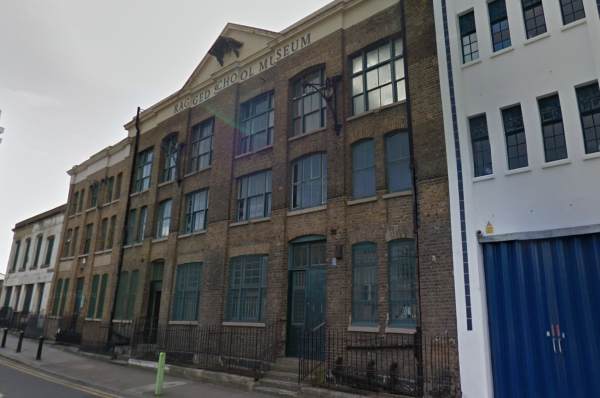
But faced with the poverty he encountered on arriving in London – poverty which had been exacerbated by a recent cholera outbreak in the East End in which 3,000 had died, he put aside his intentions and instead, in 1867, founded a “ragged school” in two cottages in Hope Place Stepney – the East End Juvenile Mission.

After one of the school’s pupils – Jim Jarvis – showed him some of the ‘lays’ where some of the children were passing their nights, he set about fundraising (donors include Lord Shaftesbury) and in 1870, opened a home for boys.

Two years later, in 1672, Barnardo, who was an adovcate for the temperance movement, bought a notorious pub – the Edinburgh Castle in Limehouse – and transformed it into the British Working Men’s Coffee Palace. He would later open another coffee house in Mile End Road.

Barnardo married Sara Louise Elmslie, known as ‘Syrie’, in June, 1873, who shared her husband’s interests in evangelism and social work.

As a wedding present they were given a 60 acre site in Barkingside and it was on this land that they made a home at Mossford Lodge. It was also on that property where they, after an initial less-than-successful experiment with dormitory-style accommodation, opened a home for girls based on a village model.

This grew over the following years so that by 1900 the “garden village” had 65 cottages, a school, a hospital and a church, and provided a home – and training – to some 1,500 girls.

The family, meanwhile, later left the property for a home in Bow Street, Hackney. In 1879, they moved to The Cedars in Banbury Road, Hackney and later lived in Buckhurst Hill, Essex, and Surbiton.

More homes and schools followed the first – Barnardo had adopted an “ever open door” policy after the death of a boy who had been turned away for lack of room – and by his death in 1905, it was said that his institutions cared for more than 8,500 children in 96 locations across the country.

The “ragged school” in Mile End, now a museum. PICTURE: Google Maps.
Barnardo’s efforts were not without controversy – he introduced a scheme whereby poor children were sent overseas to live, primarily to Canada as well as Australia, New Zealand and South Africa – a practice which went on until the 1970s and for which then-Prime Minister Gordon Brown issued a public apology in 2010.

Barnardo and his wife had seven children, of whom only four survived. One of the children – Marjorie – had Down syndrome and it’s said that she strongly influenced his care for disabled children.

Barnardo died of a heart attack at his home – St Leonard’s Lodge in Surbiton – on 19th September, 1905. He was buried on the property at Barkingside which is now where the head office of Barnardo’s, the charity he founded, is located. His tomb features a memorial by Sir George Frampton.

At the time of his death, Barnardos was caring for more than 8,500 children in 96 homes. It’s said that from 1867 until his death, the charity had taken in almost 60,000 children, most them trained and placed out in life.

Interestingly, one of Barnardo’s daughters – Gwendolyn Maud Syrie – first married wealthy businessman Henry Wellcome and, then to the writer Somerset Maugham.

There are two English Heritage Blue Plaques commemorating Barnardo in London – one at a property in Bow Road, Hackney, where the Barnardos lived between 1875 and 1879 and another in Stepney commemorating where he began his work in 1866.

This Week in London – ‘Dub London’; exploring Sin; and, COVID-19 explored at Science Museum Late…

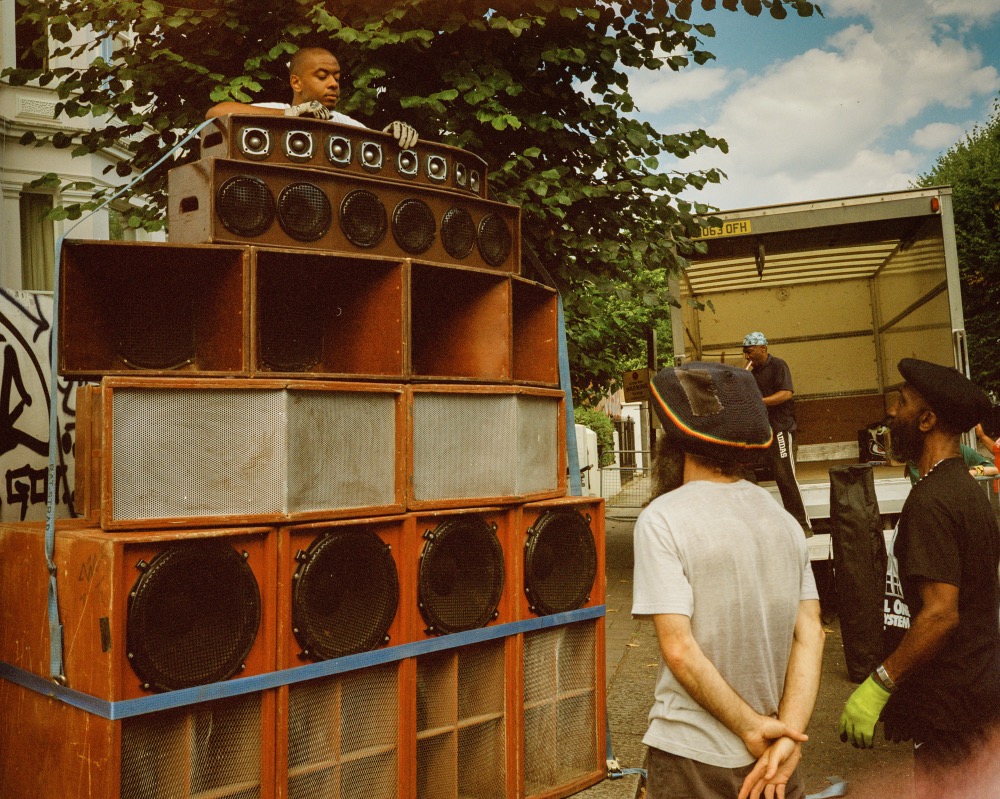
Channel One Sound System at Notting Hill Carnival 2019. PICTURE © Eddie Otchere / Museum of London

Dub music and the impact it’s had on London’s identity and people is the subject of a new, long delayed, exhibition which opened at the Museum of London late last week. Dub London: Bassline of a City, which had been postponed due to the coronavirus pandemic, charts how, from its roots in Jamaican reggae, dub music went on to influence multiple genres and played a key role in the development of punk bands like The Clash. The display includes the iconic speaker stack belonging to Channel One Sound System that has appeared yearly at Notting Hill Carnival since 1983 (pictured above) and a specially created bespoke record shop with a selection of 150 vinyl records chosen by 15 London based independent record shops which can be listened to. Runs until 31st January. Admission is free but must be booked in advance (and bring your own headphones). For more, see www.museumoflondon.org.uk/museum-london/whats-on/exhibitions/dub-london.

The concept of sin is at the heart of a new free exhibition at The National Gallery. Sin brings together 14 works dating from the 16th century to now by artists ranging from Jan Brueghel the Elder and William Hogarth to Andy Warhol and Ron Mueck. Among the paintings on show are Lucas Cranach the Elder’s Adam and Eve (1526), Hogarth’s The Tête à Tête and Marriage A-la-Mode, Diego Velázquez’s Immaculate Conception, William Holman Hunt’s The Scapegoat (1854-55), and Ron Mueck’s sculpture Youth (2009). The display can be seen in Room 1. For more, see nationalgallery.org.uk.

The science of the coronavirus is explored in a special night event at the Science Museum next Wednesday, 14th October. Staff from the Francis Crick Institute will be joining with those from the Science Museum in exploring how the immune system remembers and evolves and how the Crick was turned from a biomedical research centre into a COVID-19 testing facility. Visitors can also hear from NHS transplant surgeon Pankaj Chandak who has been using 3D printing tech to make life-saving PPE for frontline staff while the Leonard Cheshire charity shows how assistive eyegaze technology has played a vital role in helping to keep people with access needs connected. There will also be a chance to make a facemask as part of the museum’s #MaskSelfie campaign and the opportunity to explore the museum’s new Medicine: The Wellcome Galleries. Admission charge applies and pre-booking is essential. Head to sciencemuseum.org.uk/see-and-do/lates.

Send all items for inclusion to exploringlondon@gmail.com.

10 London buildings that were relocated…3. St Mary Aldermanbury…

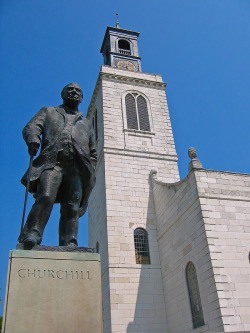
This church – not to be confused with the similarly named but still existing St Mary Aldermary – once stood at the corner of Love Lane and Aldermanbury in the City of London.

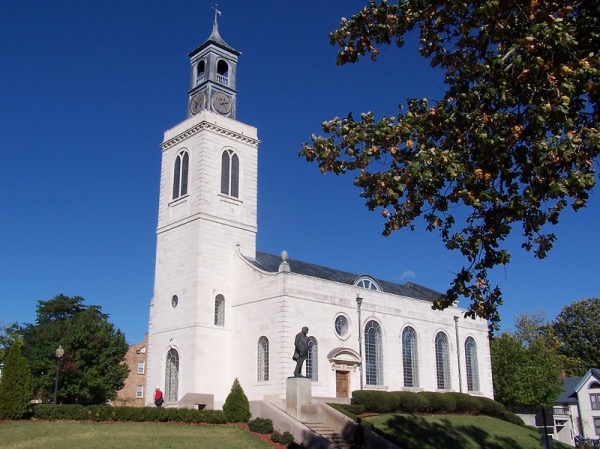
St Mary Aldermanbury, now part of the National Churchill Museum on the campus of Westminster College, Fulton, Missouri, in the US. PICTURE: J. Stephen Conn (licensed under CC BY-NC 2.0)

Founded in the 11th or early 12th century, the church – the name of which apparently relates to an endowment it received from an Alderman Bury, was destroyed in the Great Fire of London in 1666 and rebuilt by Sir Christopher Wren in a simple form with no spire.

It was gutted during the Blitz – one of 13 Wren churches hit on the night of 13th December, 1940 – and the ruins were not rebuilt. Instead, in the 1960s (and this is where we get to the relocation part) a plan was put into action to relocate the church so it could form part of a memorial to Winston Churchill in the grounds of Westminster College in Fulton, Missouri.

It was only after four years of planning and fundraising (the project apparently cost some $US1.5 million with the money raised from donors including actor Richard Burton) that the relocation process finally began in 1965.

PICTURE: Jonathan Pearson
(licensed under CC BY-NC-ND 2.0)

It started with workers in London cleaning, removing and labelling each of the church’s 7,000 stones so they could be reconstructed correctly on the other side of the Atlantic.

They were shipped free-of-charge – the US Shipping Board moved them as ship’s ballast – and then taken by rail to Fulton.

By the time the stones reached Fulton they had been jumbled. And so began the painstaking process of reassembling what was described as the “biggest jigsaw puzzle in the history of architecture” (with the stones spread over an acre, it apparently took a day just to find the first two stones).

While the first shovel on the project had been turned by former US President Harry S Truman on 19th April, 1964 (his connection to the project will become clear), the foundation stone was laid in October, 1966, 300 years after the Great Fire of London.

The shell of the church was completed by May, 1967. Two more years of work saw the church’s interior recreated with English woodcarvers, working from pre-war photographs, to make the pulpit, baptismal font, and balcony (new glass was also manufactured and five new bronze bells cast for the tower). The finished church, which was rededicated in May, 1969, was almost an exact replica of the original but apparently for a new organ gallery and a tower window.

Why Fulton for a tribute to Churchill? The connection between Churchill and Westminster College went back to the post war period – it was in the college’s historic gymnasium building that, thanks to a connection the institution had with President Truman, Churchill was to give one of his most famous speeches – the 1946 speech known as ‘Sinews of Peace’ in which he first put forward the concept of an “Iron Curtain” descending between Eastern and Western Europe.

The church is now one part of the National Churchill Museum, which also includes a museum building and the ‘Breakthrough’ sculpture made from eight sections of the Berlin Wall. It was selected for the memorial – planned to mark the 20th anniversary of Churchill’s speech – thanks to its destruction in the Blitz, commemorating in particular the inspiring role Churchill had played in ensuring the British people remained stalwart despite the air raids.

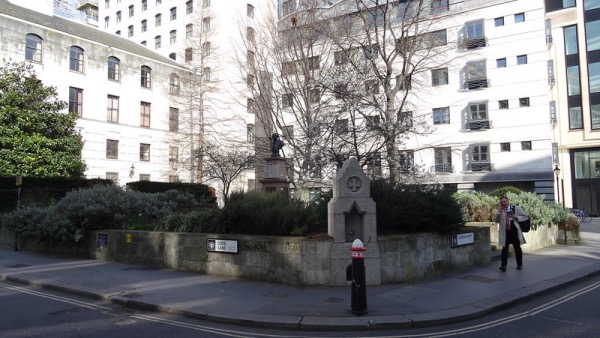
St Mary Aldermanbury Gardens in London. PICTURE: Bogdan Tapu (licensed under CC BY-NC 2.0)

Meanwhile, back in London the site of the church has been turned into a garden. It contains a memorial to John Heminges and Henry Condell, two Shakespearean actors who published the first folio of the Bard’s works and were buried in the former church. The footings upon which the church once stood can still be seen in the garden and have been Grade II-listed since 1972.

LondonLife – Frieze Sculpture at The Regent’s Park…

Arne Quinze, Lupine Tower, 2020, Aluminium, Maruani Mercier Gallery. PICTURE: Stephen White.

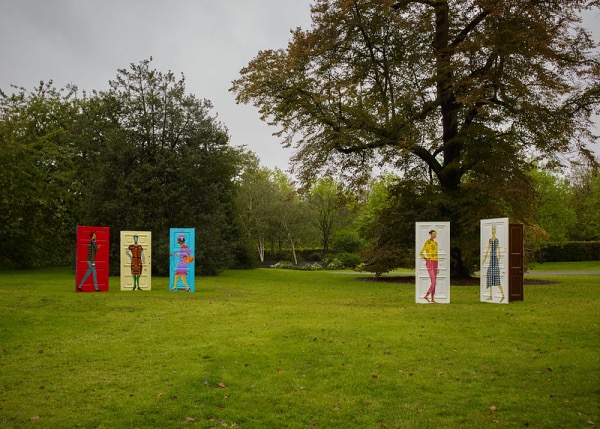
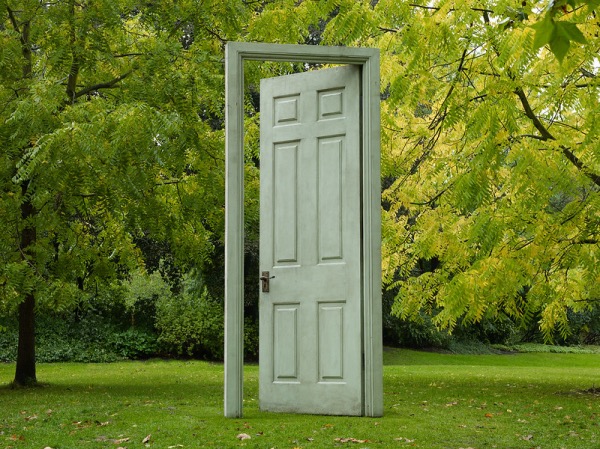
Twelve works by leading international artists have gone on show in the English Gardens, The Regent’s Park, in this year’s Frieze Sculpture display. The works, which can be seen until 18th October and form part of an expanded Frieze Week programme, includes pieces from Patrick Goddard, Kalliopi Lemos and Arne Quinze as well as a recent commission by Lubaina Himid which is being exhibited in the UK for the first time. The works touch on a range of themes – from civil rights and ecology to the role of the artist as a disruptor. The display is accompanied by a free audio tour by curator Clare Lilley, director of programme at Yorkshire Sculpture Park, and can also be seen virtually in the Frieze
Viewing Room. For more, see www.frieze.com/FriezeSculpture.

Sarah Lucas, Sandwich, 2011 – 2020, Concrete, Sadie Coles HQ. PICTURE: Stephen White.
Lubaina Himid, Five Conversations, 2019, Acrylic paint on five reclaimed wooden doors from traditional Georgian townhouses, Hollybush Gardens. PICTURE: Stephen White.
Gavin Turk, L’Âge d’Or (Green & Red), 2019, Painted Bronze, MARUANI MERCIER. PICTURE: Stephen White.
Kalliopi Lemos, The Plait, 2020, Mild steel, Gazelli Art House. PICTURE: Stephen White.

London Pub Signs – The Hoop and Grapes, Farringdon…

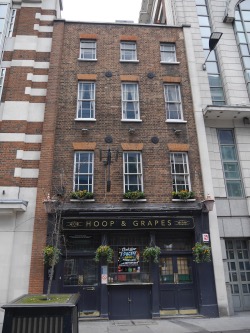
This historic pub in Farringdon bears a common enough name (and it’s not to be confused with the Hoop and Grapes located in Aldgate which we’ll look at in an upcoming post).

PICTURE: Edwardx (licensed under CC BY-SA 4.0)

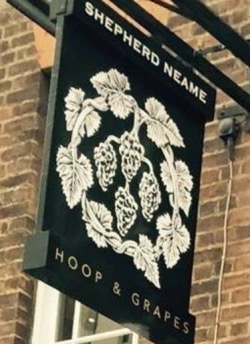
The hoop in the name refers to the metal bands binding together barrels staves and the grapes are obviously a reference to wine. But the ‘hoop’ could be a corruption of hops with the sign possibly once featuring a garland of hops and a bunch of grapes.

The pub, the current sign of which depicts grapes wrapped around a hoop (pictured below), is located in a four storey building first constructed for a vintner in about 1720 as a terraced house and converted to a pub more than a century later in the early 1830s.

Located on ground which one formed part of the St Bride’s Burial Ground, the brick vaults underneath are said to pre-date the rest of the building, having been built as warehouse vaults in the 17th century.

Its location on 80 Farringdon Street means it stood near the Fleet River (now covered) and close by to the former Fleet Prison (largely used as a debtor’s prison before its demolition in 1864).

As a result, it has been claimed that it was one of a number of pubs which hosted so-called ‘Fleet Marriages’, secret ceremonies performed by dodgy clergymen – for a fee – and without an official marriage license. But, as has been pointed out to us, the timing of the passing of the Marriage Act in 1753 outlawing such activities – and this only becoming a pub, according to its Historic England listing, much later – does make this seem unlikely (we’d welcome any further information on this claim).

The location also meant it was popular with printers who worked in nearby Fleet Street (in fact, it was apparently given a special licence to serve such customers at night or in the early morning).

The pub was scheduled for demolition in the early 1990s but saved with a Grade II-listing in 1991.

A rare survivor from an earlier time among the street’s more modern buildings, it is now part of the Shepherd Neame chain and it’s during renovations held after this purchase that burials were uncovered (the remains were moved into the British Museum). This has apparently led to rumours that the pub is haunted.

For more, see www.hoopandgrapes.co.uk.

Sorry for the confusion – We’ve corrected references to grapes in the second paragraph (and amended our comments on the current sign). And we’ve also clarified comments that the pub was used for Fleet Marriages given the timing discrepancy.

This Week in London – ‘Artemisia’ at The National Gallery, ‘Black Greenwich Pensioners’, and, Bruce Nauman at the Tate…

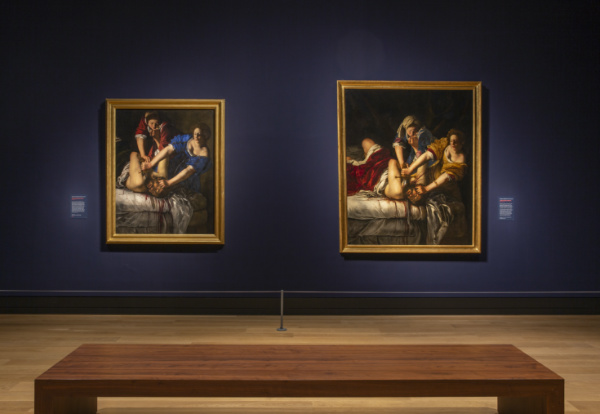
• The original transcript of the trial in which 17th century Italian artist Agostino Tassi faced charges of ‘deflowering’ female artist Artemisia Gentileschi will be public display for the first time as part of an exhibition on Gentileschi’s work opening at The National Gallery on Saturday. The rescheduled exhibition Artemisia, the first major monographic exhibition of Artemisia Gentileschi (1593–1654 or later), was inspired by the gallery’s recent acquisition of Self Portrait as Saint Catherine of Alexandria (about 1615–17), the first painting by the artist to enter a UK public collection. Gentileschi, the first women to gain membership of the artists’ academy in Florence, had a career spanning more than 40 years and is now widely recognised as one of the most gifted painters of the Italian Baroque period. Alongside her artistic achievements, elements of her biography have also attracted considerable attention including her rape as a young woman and the torture she choose to endure as part of the trial that followed (seen at the time as an accepted means by which testimony could be validated). As well as the trial transcript, written in Latin and Italian, the exhibition will include recently discovered personal letters and works such as two versions of Susannah and the Elders – one painted in 1610 when Gentileschi was just 17 and the other, her last known painting, dating from 1652. There’s also self portraits including Self Portrait as a Female Martyr (mid 1610s), and her two versions of Judith beheading Holofernes – one dating from 1612-13 and the other from 1613-14. Runs until 24th January. Admission charge applies. For more, see www.nationalgallery.org.uk. PICTURE: Installation view of Artemisia at the National Gallery. © The National Gallery, London.

The history of Black British mariners is the subject of a new exhibition opening at the Old Royal Naval College in Greenwich on Saturday. Marking Black History Month, Black Greenwich Pensioners explores the history of the Black Royal Navy personnel and how they formed one of Britain’s earliest Black communities when they became pensioners at the Royal Hospital for Seaman on the site where the Old Royal Naval College stands today. Through paintings, prints, photographs and a small selection of objects, the display looks at the role Black mariners played in British naval conflicts as well as the personal histories of prominent Greenwich pensioners including John Thomas, who escaped slavery and was later returned to enslavement in Barbados, John Simmonds, a Jamaican veteran of the 1805 Battle of Trafalgar whose descendants still reside in the UK, and Briton Hammon, author of the first slave narrative. Entry is free. Runs until 21st February in the mezzanine gallery at the Visitor Centre. For more, see https://ornc.org/uncovering-the-history-of-black-british-mariners/

The first exhibition to showcase the full spectrum of American artist Bruce Nauman’s work in more than 20 years opens at the Tate Modern on Wednesday. Bruce Nauman features more than 40 works and “unfolds” over a sequence of immersive installations. Highlights include a selection of early works such as Henry Moore Bound to Fail (1967/70) and A Cast of the Space Under My Chair (1965/68), the moving image installation MAPPING THE STUDIO II with color shift, flip, flop & flip/flop (Fat Chance John Cage) (2001), ground-breaking neon signs like The True Artist Helps the World by Revealing Mystic Truth (Window or Wall Sign) (1967), Human Nature Knows/Doesn’t Know (1983/86) and One Hundred Live and Die (1984) and large scale works such as Going Around the Corner Piece with Live and Taped Monitors (1970) and Double Steel Cage Piece (1974) as well as the whole-room installation, Shadow Puppets and Instructed Mime (1990). Runs until 21st February. Admission charge applies. For more, see www.tate.org.uk.

Send all items for inclusion to exploringlondon@gmail.com.

10 London buildings that were relocated…2. Crosby Hall, Chelsea…

This hall was originally constructed in Bishopsgate as the great hall at the heart Crosby Place, the mansion of wealthy merchant and courtier Sir John Crosby.

Built over the decade from 1466 to 1475 on land which had previously been part of St Helen’s Convent, the property became famous for royal connections.

Richard, Duke of Gloucester, had apparently acquired the property from Sir John’s widow by 1483 and it was one of his homes when the Princes in the Tower – Edward V and his younger brother Richard – were murdered, leading to his coronation as King Richard III (as a result the hall is the setting for several scenes in Shakespeare’s Richard III).

Catherine of Aragon, meanwhile, resided in the hall with her retinue after she arrived from Spain on her way to marry Prince Arthur, King Henry VII’s eldest son and then heir (and King Henry VIII’s older brother).

The property was later – in the 1530s – owned by Sir Thomas More (although he probably never lived here), and subsequently, from about 1576 to 1610 by Sir John Spencer, a Lord Mayor of London (Queen Elizabeth I was apparently among his guests) while Sir Walter Raleigh had lodgings here in 1601.

It served as head office of the East India Company from 1621 to 1638 and, having survived the Great Fire of London, was used in various capacities including as a Presbyterian Meeting House and for various commercial uses, including as a warehouse and restaurant.

In 1908, it was bought by the Chartered Bank of India, Australia and China who wanted to build new offices on the site. The hall was saved from demolition and in 1910 moved stone-by-stone and, under the eye of Walter Godfrey, reconstructed on its present location in Cheyne Walk in Chelsea, a Thames-side site which had formerly been part of Sir Thomas More’s Chelsea garden which was provided by the London County Council.

Having been used to house Belgian refugees during World War I, it was formerly opened by Elizabeth, Duchess of York (later the Queen Mother), in 1926.

Around that time, the property was leased by the British Federation of University Women which had WH Godfrey build a tall Arts and Crafts residential block at right angles to the great hall (the residential block has subsequently bene adapted to appear Jacobean to fit with the hall).

The now Grade II*-listed hall – which, although not complete, is the only surviving example of a City of London medieval merchant’s house – was purchased by philanthropist and businessman Sir Christopher Moran in 1988 and is now part of an expansive private residence designed with the hall as its centrepiece (recent visitors have included Prime Minister Boris Johnson).

PICTURES: Top – sarflondondunc (licensed under CC BY-ND-NC 2.0/Image cropped); Right- Matt Brown (CC BY 2.0/Image cropped)

LondonLife – Angles through the ages…

PICTURE: Robert Keane/Unsplash.

Lost London – The Cocoa Tree Chocolate House…

This delightfully named establishment – one of the most well-known chocolate houses in London – was apparently opened on the back of the opening of myriad coffee houses in London. 

With a sign depicting the cocoa tree, this premises occupied several different locations in Pall Mall including number 46, occupied by an annexe of the Army and Navy Club, and number 89, the site where the Royal Automobile Club now stands.

It is said to have been first mentioned in 1698 – chocolate was first brought to England in the 1650s and the first “chocolate houses” opened soon after.

It was popular among Tories in the early 1700s serving as something as a defacto headquarters and later, apparently, a hotbed for those with Jacobite sympathies. Around the middle of the 18th century, it was converted into a private club and become notorious for the gambling conducted therein.

Among those said to have dined there during this later period was 18th century historian Edward Gibbon.

The Cocoa Tree later relocated to 64 St James’s Street, where it stood between 1799 and 1835. The property apparently finally closed in 1932.

PICTURE: Maddi Bazzocco/Unsplash


This Week in London – Richard Leveridge in the spotlight; ‘Paradise Lost’ at Kew; and, Princess Beatrice’s wedding dress at Windsor…

The life and work of Richard Leveridge, a leading singer of the London stage during the 18th century, is the subject of a new display opening at the Foundling Museum in Bloomsbury tomorrow. The display, which can be seen in the Handel Gallery, charts the life of this popular theatre singer who became the lead bass singer at Drury Lane Theatre in 1695 and sang for Purcell in many of his stage works as well as, later, singing in the first performances of Handel’s early London operas. It also includes a look at Leveridge’s work as a composer and coffee shop owner and among items on show are manuscripts, early printed music, artworks, copies of drinking songs and stage works, contemporary accounts and formal portraits. Runs until 28th March. Admission charge applies. For more, see https://foundlingmuseum.org.uk

The first solo exhibition by Dutch-born, Mexico-based visual artist Jan Hendrix to be held in the UK opens in Kew Gardens’ Shirley Sherwood Gallery of Botanical Art next week. Paradise Lost features new works in a number of mediums created as a responser to the transformation of the landscape known as Kamay Botany Bay, in Sydney, Australia (which gained its English name – Botany Bay – from plants collected and recorded there in 1770 by European botanists Sir Joseph Banks – Kew Gardens’ first director – and Daniel Solander abroad the HMS Endeavour). Reflecting on how the visit of the Endeavour sparked a transformation of the region – from a pristine environment to what is now a suburban and industrial landscape, the exhibition explores themes including the destruction of the natural world in the wake of colonial industrialisation, contemporary urbanisation and climate change. New works include a vast monochrome tapestry evoking the dynamic texture and beauty of an Australian landscape threatened by wildfire – which ravaged the region in 2019 – as well as the display’s centrepiece – a huge walk-through mirrored pavilion inspired by two plant species that grow in Kamay Botany Bay – Banksia serrata or Wiriyagan (Cadigal) and Banksia solandri, and a moving image work created by Hendrix in collaboration with filmmaker Michael Leggett. A visual tour narrated by the artist will be made available online for those not able to visit in person. Runs from 3rd October until 13th March. Admission charge applies. For more, head to www.kew.org. PICTURE: Mirror Pavilion III, 2020, Stainless Steel by Jan Hendrix/Kew Gardens

• FURTHER AFIELD: Princess Beatrice of York’s wedding dress, first worn by Queen Elizabeth II in the 1960s, goes on display at Windsor Castle from today. Designed by Sir Norman Hartnell, the dress was first worn by the Queen during a State Visit to Rome in 1961 and was altered for Princess Beatrice for her marriage to Edoardo Mapelli Mozzi on 17th July this year. The display, which can be seen in the State Dining Room, also features Princess Beatrice’s wedding shoes, made by Valentino, and a replica of her bouquet. Can be seen until 22nd November. Admission charge applies. For more, see www.rct.uk.

Send all items for inclusion to exploringlondon@gmail.com

10 London buildings that were relocated…1. Marble Arch…

It’s well known that John Rennie’s London Bridge was purchased from the City of London by American entrepreneur Robert P McCulloch and in 1967 relocated to Lake Havasu City in Arizona. But what other London buildings have been relocated from their original site, either to elsewhere in the city or further afield?

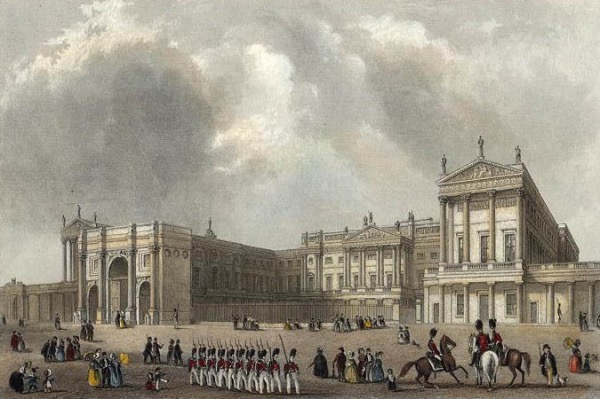
First up is Marble Arch, originally built as a grand entrance to Buckingham Palace. Designed by John Nash, the arch was constructed from 1827 and completed in 1833 (there was a break in construction as Nash was replaced by Edward Blore) on the east side of Buckingham Palace for a cost of some £10,000.

Inspired by the Arch of Constantine in Rome (and, it has to be said, some envy over the Arc de Triomphe du Carrousel in Paris, built to commemorate Napoleon’s military victories), the 45 foot high structure is clad in white Carrara marble and decorated with sculptural reliefs by Sir Richard Westmacott and Edward Hodges Baily.

An equestrian statue of King George IV was designed for the top by Francis Leggatt Chantrey but it was never put there (instead, it ended up in Trafalgar Square). The bronze gates which bear the lion of England, cypher of King George IV and image of St George and the Dragon – were designed by Samuel Parker.

The arch, said to be on the initiative of Nash’s former pupil, Decimus Burton, was dismantled and rebuilt, apparently by Thomas Cubitt, in its present location on the north-east corner of Hyde Park, close to Speaker’s Corner, in 1851.

There’s a popular story that the arch was relocated after it was found to be too narrow for the wide new coaches – this seems highly unlikely as the Gold State Coach passed under it during Queen Elizabeth II’s coronation in 1952. Actually, it was moved to create room for Buckingham Palace’s new east facade (meaning the palace’s famous balcony, where the Royal Family gather to wave, now stands where the arch once did).

Whatever the reasons, it replaced Cumberland Gate as the new ornamental entrance to Hyde Park, complementing the arch Decimus Burton had designed for Hyde Park Corner in the park’s south-east.

Subsequent roadworks left the arch in its current position on a traffic island. It stands close to where the notorious gallows known as the “Tyburn Tree” once stood.

The rebuilt, now Grade I-listed, arch contains three small rooms which, until the middle of the 20th century, housed what has been described as “one of the smallest police stations in the world”. Only senior members of the Royal family and the King’s Troop Royal Horse Artillery are permitted to pass through the central gates.

PICTURES: Top – Marble Arch in its current location and; Middle – and an 1837 engraving showing the arch outside Buckingham Palace.

LondonLife – The Battle of Britain remembered…

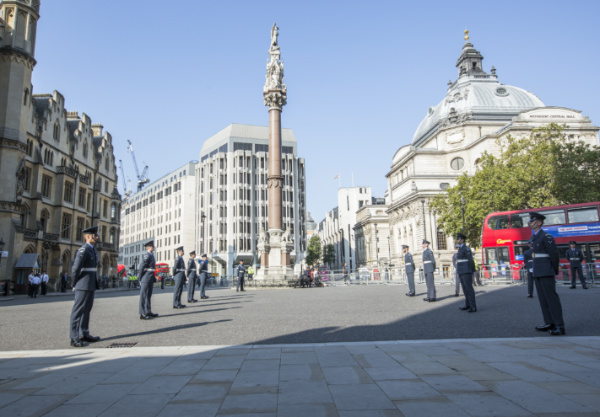
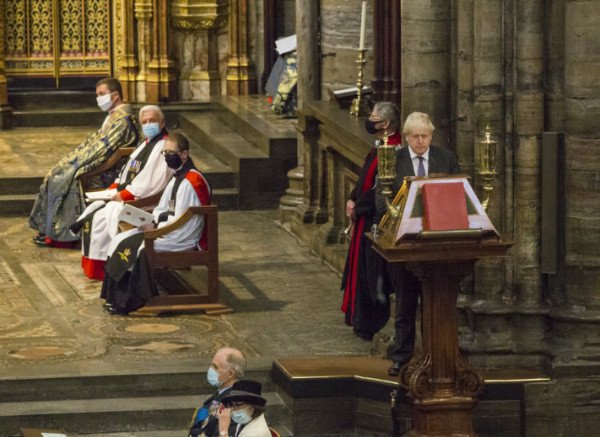
Dignitaries including Prime Minister Boris Johnson and the Chief of the Air Staff, Air Chief Marshal Michael Wigston, were among those attending a service commemorating the 80th anniversary of the Battle of Britain in Westminster Abbey on Sunday. The service, which was witnessed by fewer people than would normally have been the case due to the coronavirus pandemic, included an Act of Remembrance during which the Battle of Britain Roll of Honour – containing the names of the 1,497 pilots and aircrew killed or mortally wounded during the 112 days of fighting – was carried through the church and placed beside the High Altar. After the service three Spitfires and a Hurricane from the Battle of Britain Memorial Flight took part in a flypast over the Abbey. Pictured above are the standard bearers formed up on the altar at the service (all pictures via MOD © Crown copyright 2020)

Above: The Queen’s Colour Squadron lining the entrance to Westminster Abbey.

Above: Prime Minister Boris Johnson carrying out a reading during the service.

Above: FO Buckingham saluting the Battle of Britain memorial stained glass window at Westminster Abbey.

Above: The four planes from the Battle of Britain Memorial Flight fly above the Abbey.

A Moment in London’s History…First air raid of the London Blitz…

It was on 7th September, 1940, that the German bombers raided London in what was to be the first of 57 consecutive nights of bombings and the start of the air attacks on the city known as the Blitz (short for ‘Blitzkrieg’ meaning ‘lightning war’ in German).

Almost 350 German bombers, escorted by more than 600 Messerschmitt fighters, were involved in the raid on what became known as “Black Saturday”.

This first wave of bombing, which ended just after 6pm on what had been a hot day, largely targeted London’s docks in attempt to destroy the city’s infrastructure and industrial sites including the munitions factories of the Woolwich Arsenal, gasworks at Beckton, West Ham power station and oil storage tanks at Thameshaven.

A second wave, which lasted eight hours and involved another 400 bombers, arrived from 8pm striking Millwall, commercial docks at Tilbury and Thameshaven, and the heavily populated slums of the East End in localities including Silvertown, Canning Town, East Ham, Poplar, Stratford, Wapping, and Whitechapel.

Hundreds of tons of bombs were dropped in the raids during which some 448 of London’s civilians were killed and 1,600 injured. Some of the fires started in the bombing burned for five days with the flames visible for miles.

While the attack was the first day of the Blitz, it was actually the 60th day of the Battle of Britain in which the German Luftwaffe had targeted air fields, oil installations and other war-related infrastructure.

While Nazi Reichsmarschall Hermann Göring had gone on radio on the day of the raid, describing it as an “historic hour, in which for the first time the German Luftwaffe has struck at the heart of the enemy”, the strategy shift – to target London instead of the air defence-related installations – proved to be what Hugh Dowding, chief of Fighter Command described as a “mistake”, giving the defences time to rebuild.

But at the time, the attack on London was believed at the time to herald the start of a full invasion. It’s known that as the Luftwaffe attacked the East End, the military chiefs of staff were meeting in Whitehall – at 8pm that night, just as the second wave of planes was starting to bomb the city, they issued the code word ‘Cromwell’ which indicated that invasion was imminent and defending troops need to prepare.

The planned invasion – Operation Sea Lion – never eventuated but the Blitz was to continue until May the following year.

PICTURE: The London docks ablaze during the Blitz on 7th September, 1940. Palls of smoke rise in the docks beyond the Tower of London with the Surrey Docks to the right of the bridge and the West India Docks on the Isle of Dogs in the distance. PICTURE: © Port of London Authority Collection / Museum of London. For more on the ‘Docklands at War’, head to www.museumoflondon.org.uk/museum-london-docklands/permanent-galleries/docklands-war.

Exploring London’s 100 most popular posts of all time! – Numbers 54 and 53…

The next two entries in Exploring London’s 100 most popular posts countdown…

54. 10 (more) fictional character addresses in London – 6. 9 Bywater Street, Chelsea…

53. Where’s London’s oldest…outdoor statue?

This Week in London – Open House London; The British Army in Germany; and, Christine Granville’s Blue Plaque…

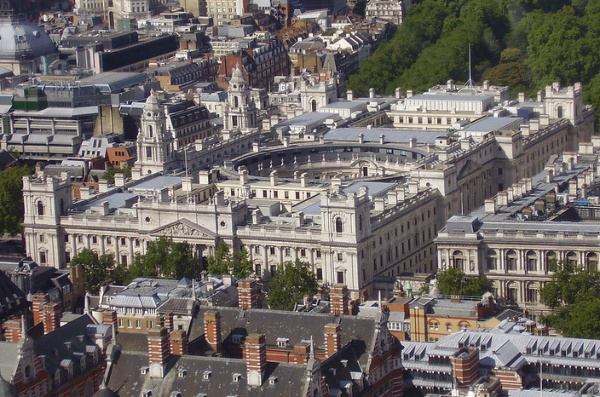
• It’s Open House London this weekend and, thanks to the coronavirus pandemic, this programme features a host of documentary films, online events and self-led walking tours. Highlights from the festival, which runs over Saturday and Sunday with some additional events taking place until 27th September, include online tours of the HM Treasury in Whitehall (pictured) and Dorich House Museum in Kingston-upon-Thames, a self-guided walking tour of Fosters + Partners buildings in London’s centre, and the chance to visit Rochester Square in Marylebone. The programme features a series of collections of related events – such as those related to ‘colonial histories’ or ‘architecture for the climate emergency’ – to help make it easier for people to access. For the full programme of events, head to https://openhouselondon.open-city.org.uk. PICTURE: HM Treasury Building taken from the London Eye (Dave Kirkham/licensed under CC BY-ND 2.0/Image cropped)

The work and lives of the more than million British Army soldiers who have served in Germany following World War II is the subject of a new exhibition opening at the National Army Museum in Chelsea next Tuesday. Foe to Friend: The British Army in Germany since 1945 charts how the Army helped to rebuild a broken nation in the aftermath of the war, provide protection during the Cold War and, later, how they used Germany as a base to deploy troops all around the world. It will include stories of family life as well as those involving espionage and massive military training exercises. The free exhibition can be seen until 1st July, 2021. For more, see www.nam.ac.uk.

Christine Granville, Britain’s first and longest-serving female special agent, has been honoured with an English Heritage Blue Plaque. The plaque is located at the 1 Lexham Gardens hotel (previously known as the Shelbourne Hotel) in Kensington which was Granville’s base after the war. Granville, who was once described by Churchill as his “favourite spy”, was born in Warsaw as Krystyna Skarbek. She joined  British intelligence after Germany invaded Poland in 1939 and undertook missions including skiing over the snow-bound Polish border in temperatures of -30 degrees Celsius, smuggling microfilm revealing Hitler’s plans to invade the Soviet Union across Europe and rescuing French Resistance agents from the Gestapo (in fact, it’s said she was also the inspiration for Vesper Lynd, a spy in Ian Fleming’s first James Bond novel, Casino Royale). Christine Granville was one of her aliases she had been given during her time with intelligence and it was a name she decided to keep after the war. For more, see www.english-heritage.org.uk/visit/blue-plaques/.

Send all items for consideration to exploringlondon@gmail.com.

LondonLife – ‘Rivers of the World’…

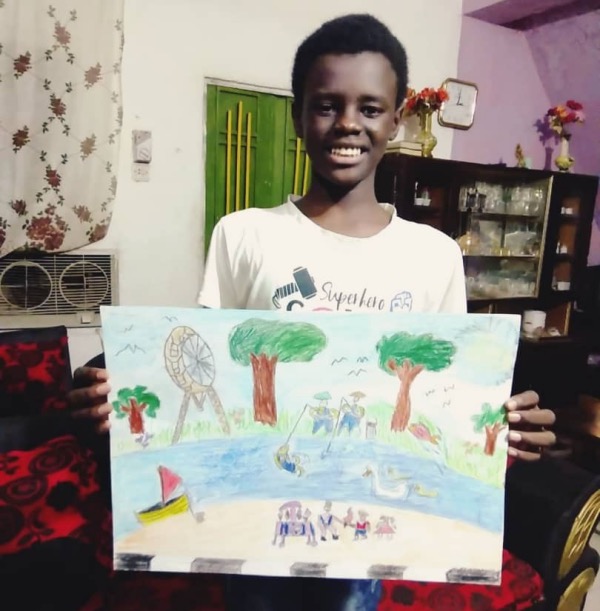
River inspired artwork created by young people from across London, the UK and around the world is one show on South Bank as part of the Totally Thames festival. The art for Rivers of the World was created during the coronavirus lockdown under the guidance of professional artists who provided briefs and films to help the young artists. The outdoor exhibition, on Riverside Walkway near the Tate Modern, is free to visit. For more on Totally Thames, London’s annual month-long celebration of its river, head to https://thamesfestivaltrust.org. PICTURES: Young artists with work created as part of ‘Rivers of the World’ (Courtesy of Totally Thames).

What’s in a name?…Gunnersbury…

There is a tradition which holds that this tiny district in west London was named after Gunhilda, a niece of King Canute.

While that story may be merely apocryphal, the name Gunnersbury does apparently mean the ‘manor of Gunhilda’, so it follows there was a Gunhilda who once lived here.

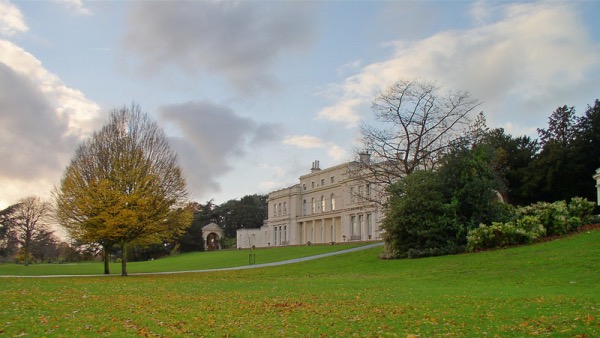
The manor – said to have been held by Alice Perrers, mistress to King Edward III, for a time as well as by the bishops of London – was located in what is now Gunnersbury Park.

It was rebuilt in the Palladian-style in the mid 17th century for Sir John Maynard, legal advisor to King Charles II, and a century later was used by Princess Amelia, the daughter of King George II as a summer residence (during which time William Kent is said to have improved the gardens; a ‘Temple’ built in the gardens during that time survives today).

The house was demolished in 1801 and the estate divided into two with two new properties built – Gunnersbury Park and Gunnersbury House. Both properties subsequently passed into the hands of the Rothschild banking family and, after part of the estate was sold off for housing, the houses and surviving estates were acquired by local municipalities.

These days 185 acres, the park – jointly run by the Boroughs of Houslow and Ealing – is now open to the public and since 1929, the Grade II-listed house, Gunnersbury Park, has contained a museum dedicated to local history.

The area also lends its name to the Gunnersbury Triangle, a three hectare nature reserve which was saved from development in the early 1980s.

Gunnersbury previously had its own Church of England parish church – built in 1886, St James’s was located on Chiswick High Road until it was demolished in the late 1980s (another church, Gunnersbury Baptist Church stands in Wellesley Road and a Russian Orthodox Cathedral stands on Harvard Road).

There is also a Gunnersbury Tube station which offers a link to both the Underground and Overground. Located on the District Line, it sits under the 18 story high British Standards Institution building.

PICTURE: The large mansion in Gunnersbury Park in 2006 (Lancey/licensed under CC BY-NC 2.0)

This Week in London – The Havering Hoard on show; and, Totally Thames returns…

With the impact of the new rules being put in place to counter the coronavirus outbreak still being assessed, some scheduled events may be subject to change. As we would always advise anyway, please check with organisations before making any plans…

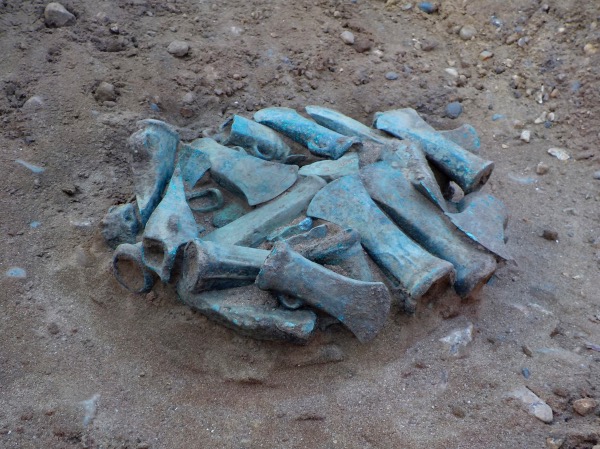
The ‘Havering Hoard’ goes on display at the Museum of London Docklands on Friday, the first time it’s ever been on public display. Havering Hoard: A Bronze Age Mystery features all 453 objects found during an archaeological investigation in Havering in London’s east, in September, 2018. Dating from between c900 and c800 BC, the cache of items – the largest Bronze Age hoard ever found in London and the third largest find in the UK – includes fragments of swords and spears as well as tools including axeheads, sickles, gouges and awls, and terret rings, believed to prevent reins from tangling when horses were pulling a cart (these are the first examples found in England). There are also bracelet fragments, part of a double-sided razor, a ceramic loomweight and bronze pin decorated with amber which may have been used to secure a cloak. The display will explore questions surrounding who buried the hoard and why as well as why it was never recovered. Runs until 18th April. Admission charge applies. For more – including how to prebook tickets to the museum – see www.museumoflondon.org.uk/haveringhoard. PICTURE: Part of the hoard found in Havering (© Archaeological Solutions).

Totally Thames – London’s annual celebration of its river is once again underway with a program featuring art exhibitions and installations, tours and online performances. The events include an online performance of Whittington about the life of the City’s famous mayor, ‘Words on the Wind’ – an outdoor art installation in Kingston featuring a soundscape of recorded poets, and online tours of The Golden Hinde, a replica of Sir Francis Drake’s famous ship. Many events are free and the festival runs to the end of the month. For more, see https://thamesfestivaltrust.org.

Send all items for inclusion to exploringlondon@gmail.com.

LondonLife – ‘THE END’ at Trafalgar Square…

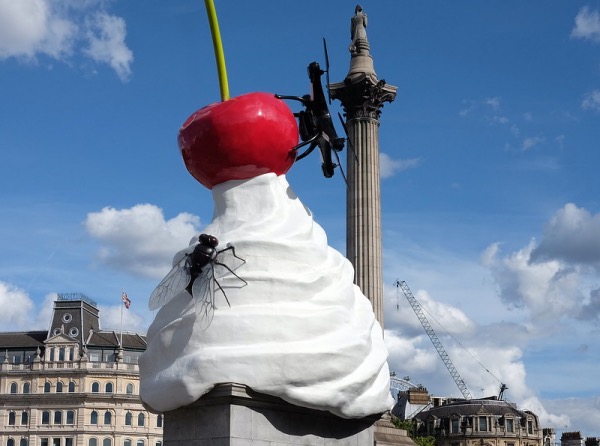
The 13th sculpture to occupy Trafalgar Square’s famous Fourth Plinth is a nine tonne, 9.4 metre high swirl of cream topped with a cherry. Unveiled in late July, THE END is the work of Heather Phillipson and also features a giant fly as well as a drone that transmits a live feed of Trafalgar Square to a specially created website, www.theend.today. The sculpture, which plays on the idea of the square as a site of celebration and protest, replaced Michael Rakowitz’s The Invisible Enemy Should Not Exist and both Phillipson and Rakowitz were selected by the Fourth Plinth Commission Group in 2017 following an exhibition at the National Gallery where 10,000 people voted for their favourite shortlisted artwork. PICTURE: astonishme (licensed under CC BY 2.0)