LondonLife – The Boar’s Head Playhouse excavations…

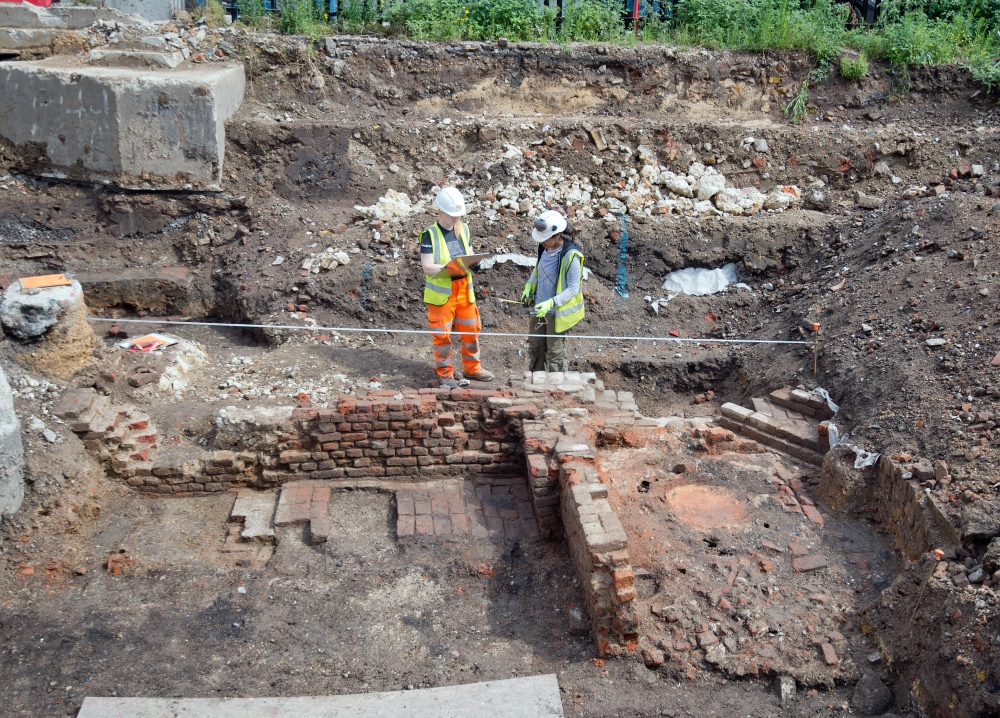
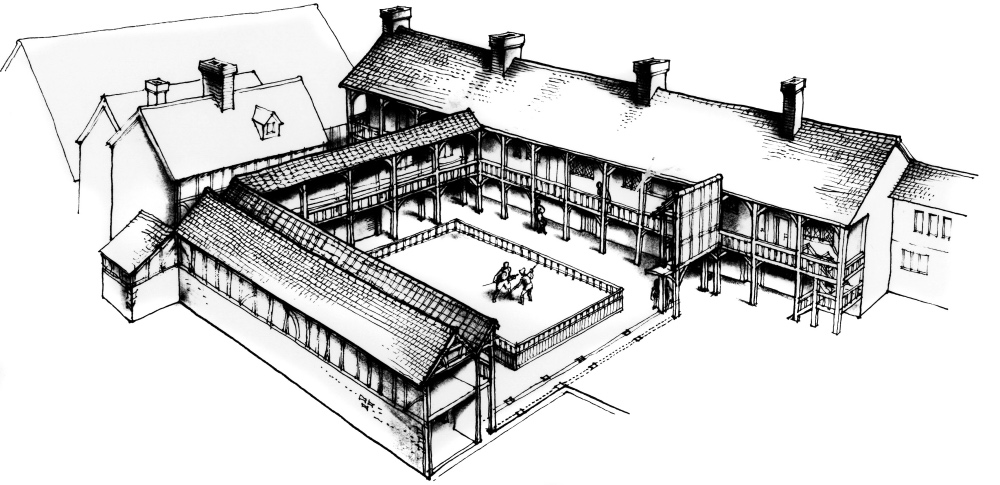
MOLA archaeologists have started excavating the site of The Boar’s Head Playhouse in Middlesex Street, Whitechapel, before construction of a new student housing complex. The playhouse, the location of which is known from historical accounts, was created in 1598 when inn owner Oliver Woodliffe converted his establishment by adding tiered galleries, a stage and central open air yard (extra galleries and a roof over the stage were added a year later). The playhouse hosted popular acting troupes including Lord Derby’s Men and the Lord Worcester’s Men, later the Queen’s Men, led by the famous actor and playwright Thomas Greene, and among the plays performed was the comedy No-body and Some-body as well as a chronicle of the life and reign of Elizabeth I, If You Know Not Me, You Know No Bodie. It is hoped the excavations will provide new insights into the theatre. The accommodation, being developed by Unite Students, will provide housing for 915 students and is expected to open in 2021. PICTURES: Top – Archaeologists record an 18th century clay tobacco pipe kiln built against 16th century walls associated with the Boar’s Head playhouse © MOLA; Below – Reconstruction of the Boar’s Head Playhouse from 1598, by C Walter Hodges.


What’s in a name?…Denmark Hill

This area in the south-east of London derives its name from a royal connection – Prince George of Denmark, the husband of Queen Anne, is said to have owned a hunting lodge on the east side of the hill.

Originally named Dulwich Hill (given its proximity to Dulwich), its name was changed in honour of the prince after his marriage to Queen Anne in 1683. The residential area centres on the street of the same name – Denmark Hill.

Landmarks include Ruskin Park, named after Victorian art critic John Ruskin, who lived the street, as well as Maudsley Hospital – built in 1915 – and King’s College Hospital, which moved here in 1913.

The Salvation Army’s iconic William Booth Training College, designed by Sir Giles Gilbert Scott and completed in 1932, is also located here.

PICTURE: View from the top of William Booth Tower looking north towards the City of London (diamond geezer/licensed under CC BY-NC-ND 2.0


This Week in London – Flying cars and iconic vehicles at V&A; 150th anniversary of the Cutty Sark’s launch; and, Eco-Visionaries at the RA…

An autonomous flying car is among exhibits at a new exhibition focusing on the automobile at the V&A on Saturday. The flying car is one of 15 vehicles in Cars: Accelerating the Modern World which also features the first production car in existence – a 1925 Ford Model-T, a converted low-rider and a Firebird I concept car from 1953 (pictured). There’s also 250 associated objects to see – everything from a 1920s cloche hat designed for car travel to a series of hood ornaments produced by René Jules Lalique in the 1920s and a Michelin travel guide from 1900 –  in an examination of how the car changed our relationship to speed, the way we make and sell, and the landscape around us. Runs until 19th April. Admission charge applies. For more, see www.vam.ac.uk. PICTURE: General Motors Firebird I (XP-21) © General Motors Company, LLC

The 150th anniversary of the launch of tea clipper, Cutty Sark, is being celebrated in Greenwich this weekend. Along with family friendly events including face painting, storytelling and craft, there will be an after dark anniversary classical concert and bespoke birthday cupcakes in the cafe. Admission charge applies (except for the 150th visitor who will go free as well as residents of Greenwich and Dumbarton, where the ship was built in 1869 – provided they have ID). For more, see www.rmg.co.uk/cuttysark

Artists, designers and architects from across the globe come together in a new exhibition at the Royal Academy addressing humanity’s ecological impact on the planet. Eco-Visionaries features works by 21 international practitioners in a range of media including film, sculpture, immersive installation, architectural models and full-scale prototypes. Highlights include the UK debut of the Rimini Protokol’s win > < win (2017) featuring a tank of live jellyfish, Alexandra Daisy Ginsberg’s The Substitute (2019) in which visitors come face-to-face with a life-size digital reproduction of the now extinct northern white rhinoceros, Danish-Icelandic artist Olafur Eliasson’s The ice melting series (2002), and New York-based architecture studio WORKac’s 3.C.City: Climate, Convention, Cruise (2015). Admission charge applies. Runs until 23rd February. For more, see www.royalacademy.org.uk.

Send all items for inclusion to exploringlondon@gmail.com.

LondonLife – A Greenwich streetscene…

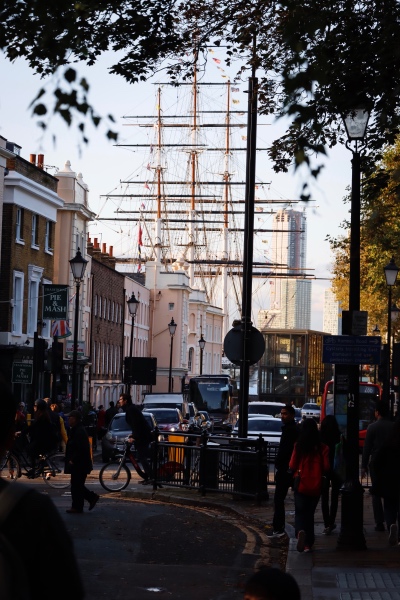
Greenwich with the masts of the Cutty Sark in the background. PICTURE: Robert Likovski/Unsplash

Where’s London’s oldest…door?

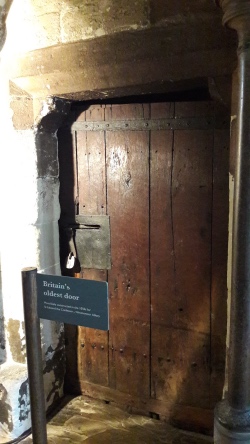
Yes, London has an officially dated oldest door. In fact, it’s the oldest door in Britain.

The door is located in Westminster Abbey and is believed to date from the time of King Edward the Confessor, who founded the abbey which was inaugurated in 1065.

Made of five vertical oak planks – all cut from the same tree, most likely felled on abbey lands, possibly in Essex – and held in place by three horizontal iron straps, it opens from the Abbey Cloisters into the octagonal Chapter House’s outer vestibule. In 2005 it was dated, using ring-patterns in the wood, to around 1050.

The door now stands six-and-a-half feet high and four foot wide but it has been cut down. It’s believed the original door was nine foot high and slightly wider.

It’s thought to be probable that both faces were originally covered with animal hide (the iron straps are, unusually recessed into the wood on both sides to enable this, and were covered with decorative iron straps and hinges – only one of decorative straps remains today).

The door may have originally served as the door to the chapter house built for Edward the Confessor’s abbey. It is believed to have been moved into its current location in about 1250 when King Henry III’s Chapter House was built as part of extravagant reconstruction of the abbey.

WHERE: Westminster Abbey (nearest Tube stations are Westminster and St James’s Park); WHEN: Times vary – see the website for details; COST: £23 adults/£20 concession/£10 children (discounts for buying online; family rates available); WEBSITE: www.westminster-abbey.org

PICTURE: Pjposullivan1 (licensed under CC- BY-SA 2.0)

This Week in London – King George IV on display; The Clash’s ‘London Calling’ hits 40; and, Skate at Somerset House…

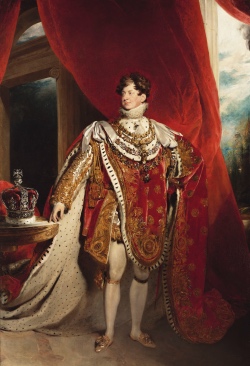
• King George IV’s public image and his taste for the theatrical and exotic as well as his passion for collecting are all the subject of a new exhibition opening at The Queen’s Gallery, Buckingham Palace, on Friday. Set against the tumultuous backdrop of his times (which included the French Revolution and Napoleonic Wars as well as a period of unprecedented global exploration), George IV: Art & Spectacle shows the contrasts of his character – on the one hand “a recklessly profligate showman” and, on the other, a “connoisseur with intellectual interests whose endless acquisitions made him one of the most important figures in the formation of the Royal Collection”. The display features artworks including Rembrandt’s The Shipbuilder and his Wife (1633) – at 5,000 guineas it was the most expensive artwork he ever purchased (pictured), as well as works by the likes of Jan Steen, Aelbert Cuyp and David Teniers. There’s also portraits the King commissioned from Sir Thomas Gainsborough,  a Louis XVI service created by Sevres (1783-92) and the great Shield of Achilles (1821) – designed by John Flaxman, it was on display at his Coronation banquet. Other items include diplomatic gifts sent to the King – such as a red and yellow feather cape (‘ahu’ula) from King Kamehameha II and Queen Kamamalu of the Sandwich Islands (now Hawaii) and a Maori club brought from Hawaii by Captain Cook’s ship Resolution – and a copy of Emma sent to him by Jane Austen’s publisher. Runs until 4th May. Admission charge applies. For more, head to www.rct.uk/visit/the-queens-gallery-buckingham-palace. PICTURE: Sir Thomas Lawrence, George IV (1762-1830), 1821 (Royal Collection Trust/© Her Majesty Queen Elizabeth II 2019)

A new exhibition commemorating the release of The Clash’s third album, London Calling, 40 years ago opens at Museum of London tomorrow.  The display features items from the group’s personal archive such as Paul Simonon’s broken Fender Precision Bass, which Simonon smashed while on stage in New York City on 21st September, 1979, a handwritten album sequence by Mick Jones showing the final order for the four sides of the double album London Calling, one of Joe Strummer’s notebooks from 1979 and the typewriter he used to document his ideas, lyrics and other writing, and Topper Headon’s drumsticks. To coincide with the opening, Sony Music is releasing the London Calling Scrapbook, a hardback companion to the display which comes with the album, on CD. The free display can be seen until next spring. For more, see www.museumoflondon.org.uk.

Skate at Somerset House with Fortnum & Mason is celebrating its 20th anniversary this year. The ice-skating rink, which opened this week, is being accompanied by the major exhibition 24/7 exploring the non-stop nature of modern life, as well as a programme of events including Somerset’s first skating ‘all-nighter’ on 7th December and special ‘Skate Lates’. There’s also Fortnum’s Christmas Arcade which, along with dining venue Fortnum’s Lodge has been created in Somerset House’s West Wing, as well as the rinkside Skate Lounge – home to the Bailey’s Treat Bar, and the Museum of Architecture’s Gingerbread City, now in its fourth year. Until 12th January. Admission charges apply. Head here for more.

Send all items for inclusion to exploringlondon@gmail.com.

10 (more) historic London garden squares…10. Fitzroy Square…

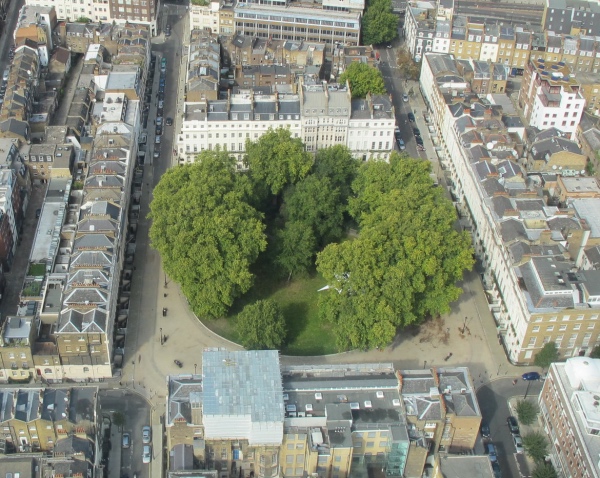
This Georgian square, like the nearby (and famous) Fitzroy Tavern, Fitzroy Street and Fitzrovia itself, owes its names to the FitzRoy family who owned the land on which it was built.

It was Charles FitzRoy, 1st Baron Southampton, who had the area developed in the late 18th and early 19th centuries with the aim of creating a desirable location for aristocratic families to live.

It was completed in stages with residences along the eastern and southern sides built first – from the 1790s – by Robert and James Adam (the southern side was destroyed in the Blitz but has been rebuilt).

The Napoleonic Wars then interrupted construction and it wasn’t until the late 1820s and early 1830s that the northern and western sides were completed.

Notable residents included painter James McNeill Whistler (number eight), Sir Charles Eastlake, first director of the National Gallery (number seven), Prime Minister Lord Salisbury (number 21 – now home to the High Commission of Mozambique), George Bernard Shaw (number 29 – later also briefly home to Virginia Woolf), and artists Ford Madox Brown (number 37) and Roger Fry (number 33)

In more recent times, the square has been home to the likes of the late media tycoon Robert Maxwell (number six), and novelist Ian McEwan (number 11 – he made the square the main location for his 2005 novel, Saturday).

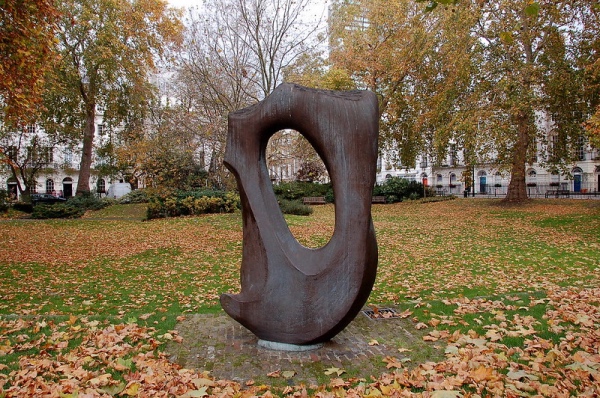
The garden was first laid out in about 1790, initially just for the use of residents. Monuments now include Naomi Blake’s View, erected for the Queen Elizabeth II’s Silver Jubilee in 1977.

The square was largely pedestrianised in the 1970s and upgraded in 2008.

PICTURES: Top – View of Fitzroy Square from the former BT Tower (Rain Rabbit/CC BY-NC 2.0/image cropped); Below – View (James Stringer/CC BY-NC 2.0/)

LondonLife – Gertrude Bell and Ronnie Scott commemorated…

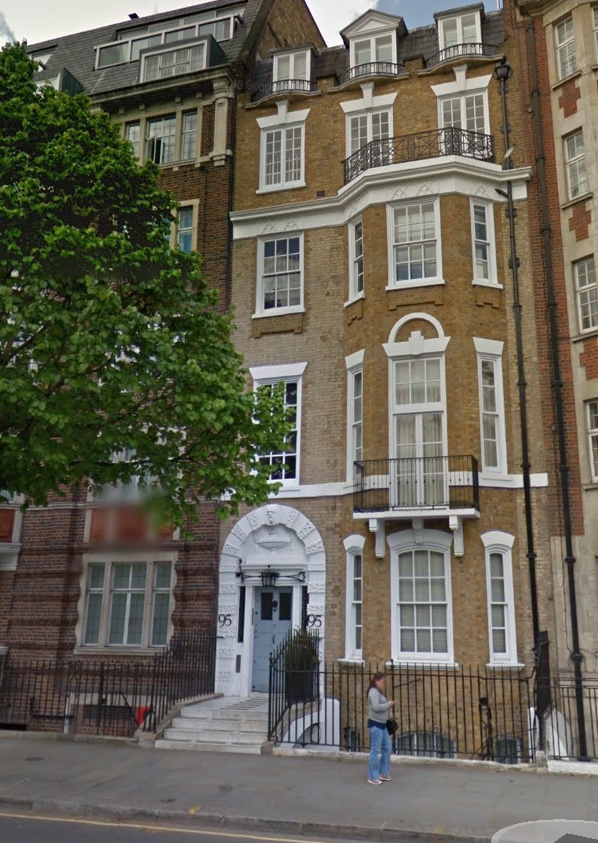
Gertrude Bell – an adventurer, archaeologist, mountaineer and diplomat (who was at least partially responsible for the creation of the nation of Iraq) – has been honoured with an English Heritage Blue Plaque on the Chelsea home that served as her London based for some 40 years. The three storey Georgian residence at 95 Sloane Street (pictured) belonged to Lady Olliffe, the mother of Bell’s step-mother Florence. Bell, who spent much of her time in the Middle East, used the home as her London base between 1884, when she graduated from Queen’s College, through to her last visit to London in 1925, including during an extended period in 1915 when she managed the Red Cross’s Wounded and Missing Enquiry Department’s office in Arlington Street. Meanwhile, jazz musician Ronnie Scott has also been honoured with a Blue Plaque which marks the site of his first club in Soho. Scott and fellow saxophonist Pete King opened jazz club in the basement of 39 Gerrard Street in Chinatown on 30th October, 1959 – 60 years ago this year. The club remained there for six years before moving to 47 Frith Street in 1965. Musicians including Zoot Sims, Johnny Griffin, Roland Kirk, Dexter Gordon, Sonny Stitt, Stan Getz, Benny Golson, Ben Webster, and Al Cohn all performed at the club while patrons included Harold Pinter, the Beatles, Peter O’Toole, and Spike Milligan. For more on English Heritage Blue Plaques, visit www.english-heritage.org.uk/visit/blue-plaques/. PICTURE: Google Maps

Famous Londoners – Rip…


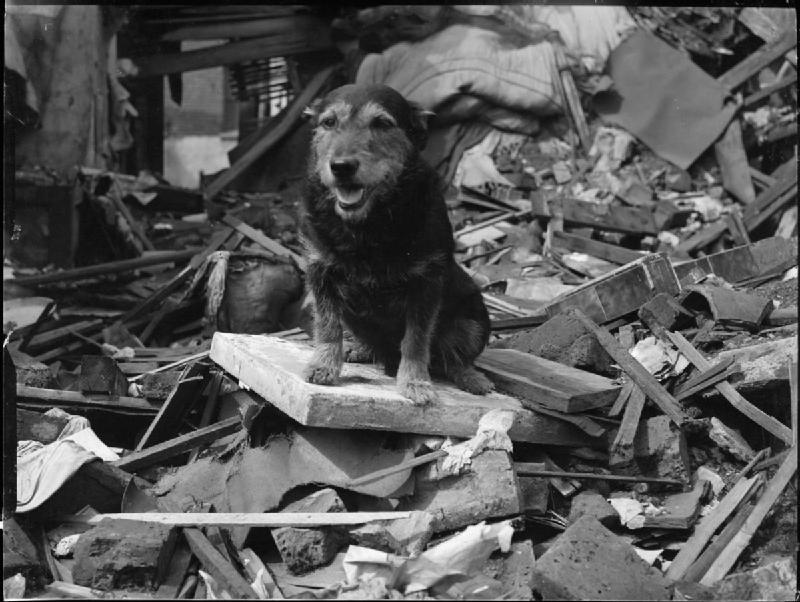
A hero of the Blitz during World War II, Rip was a stray dog who was
adopted by the Southill Street Air Raid Patrol in Poplar, east London. 

Found in the aftermath of a bombing by Air Raid Warden E King, he became the mascot of the air raid patrol and an unofficial rescue dog.

The mongrel terrier’s task was to help locate people and animals buried in rubble after an air raid and despite his lack of formal training, he is reported to have saved more than 100 lives as well as recovered many bodies.

In fact, such was his success that it was partially responsible for prompting authorities to start officially training dogs to find casualties in debris towards the end of the war.

Rip survived the war and was awarded a PDSA Dickin Medal in July, 1945. Created in 1943, the award is described as Victoria Cross for animals.

Rip apparently wore on his collar until his death 1946 and was buried in the PDSA cemetery in Ilford, Essex.

In 2009 his medal was sold at auction for £24,250, well above expectations of £10,000.

PICTURE: © IWM (D 5937)

This Week in London – Children’s literary rebels; immerse yourself in Leonardo; and, a rare Jubilee Line journey…

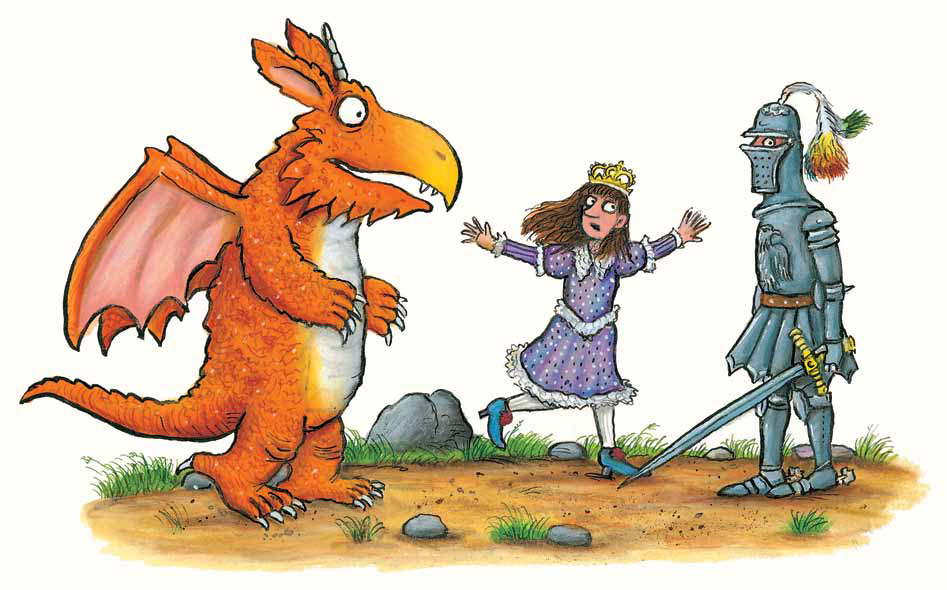
Pippi Longstocking, Matilda and the Zog are among a pantheon of beloved children’s literary characters at the heart of a new exhibition opening at the British Library tomorrow. Marvellous and Mischievous: Literature’s Young Rebels features about 40 books, manuscripts and original artworks spanning a period of 300 years and puts a spotlight on the “rebels, outsiders and spirited survivors” within the library’s collection of children’s literature. Highlights include a UK first edition of Anne of Green Gables, the first version of Cruikshank’s coloured illustrations of Oliver Twist as well as original artworks for books including Tracy Beaker, What Planet Are You From, Clarice Bean?, Zog (pictured above), When Hitler Stole Pink Rabbit and Azzi in Between. The free exhibition, which can be seen until 1st March, is accompanied by a programme of events. For more, see www.bl.uk. PICTURE: © Zog by Julia Donaldson, illustrated by Axel Scheffler 2010 (Alison Green Books).

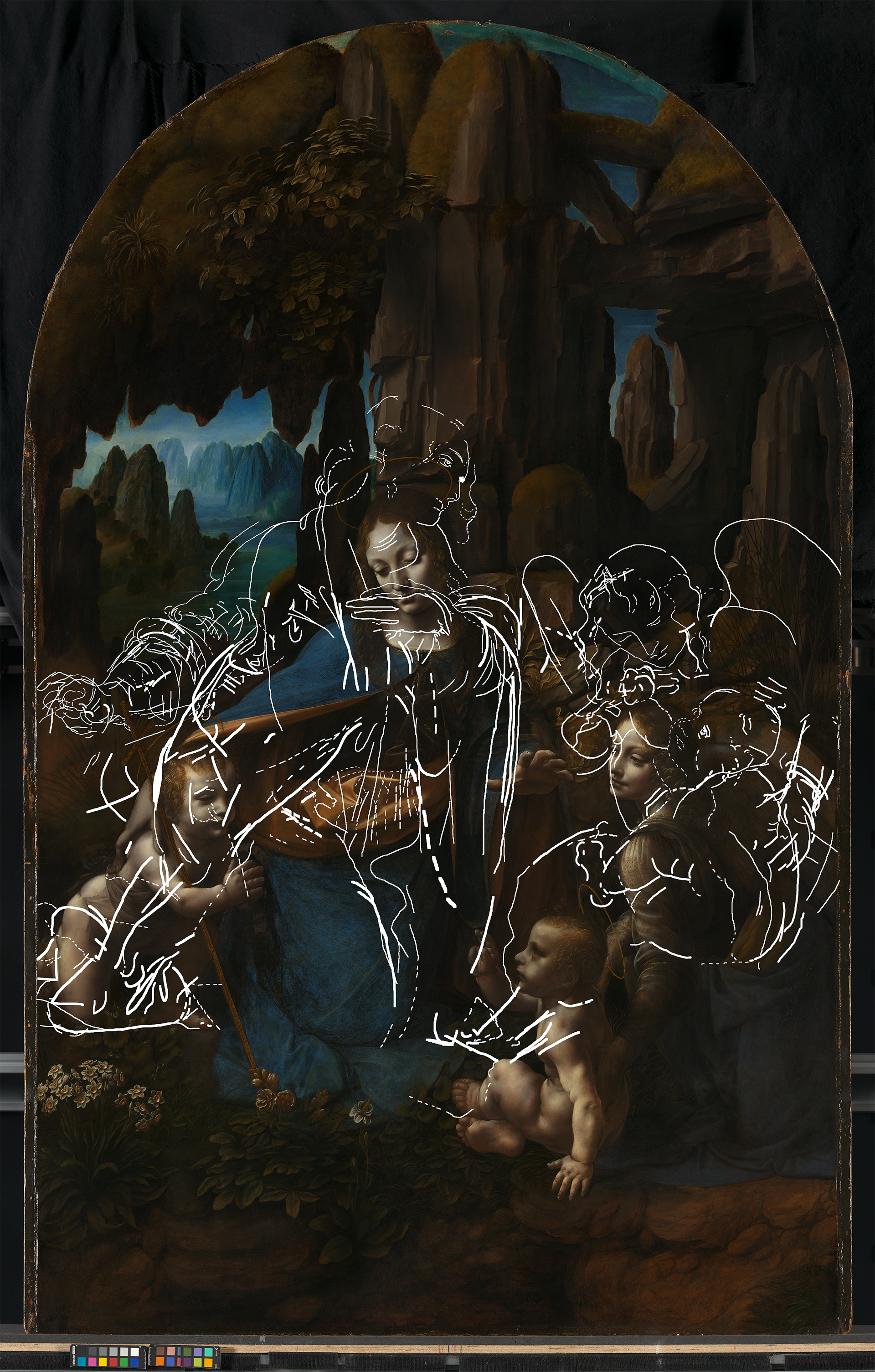
A new immersive exploration of the work of Leonardo da Vinci, centred on The Virgin of the Rocks, opens at the National Gallery on Saturday. Leonardo: Experience a Masterpiece encompasses a range of multi-sensory experiences presented across four rooms, allowing visitors to step into the painting’s setting, explore Leonardo’s own research and how he employed science in his effects of light and shadow in the painting and even visit a modern conservation studio and see how recent search revealed the previously hidden drawings behind the masterpiece. The experience, which is the work of 59 Productions, can be enjoyed until 12th January. Admission charge applies. For more, see www.nationalgallery.org.uk. PICTURE: Virgin of the Rocks (about 1491/2-9 and 1506-8) – tracing of the lines relating to underdrawing for the first composition, incorporating information from all technical images. © The National Gallery, London

The Jubilee Line has turned 40 and to mark the occasion, the Jubilee Line in conjunction with London Transport Museum’s Hidden London programme are offering the chance to travel on the original route of the train. The trip includes a section of the track now not open to the public. The 96 stock train leaves from Stanmore station at 9am Sunday, terminating at Charing Cross, or from Charing Cross at 1pm, terminating at Stanmore. When Exploring London looked this week, only tickets for the 9am trip were still available. To buy tickets (which must be purchased in advance), head to www.ltmuseum.co.uk/whats-on/heritage-vehicles-outings.

Send all items for inclusion to exploringlondon@gmail.com.

10 (more) historic London garden squares…9. Manchester Square…

This Marylebone square is one of the better preserved Georgian-era squares in London. 

Located on the Portman Estate, it was laid out in the 1770s as a residential square with the north side of the square dominated by Manchester House, built in the 1770s as the home of the 4th Duke of Manchester (from whom the house and square, now derive their name).

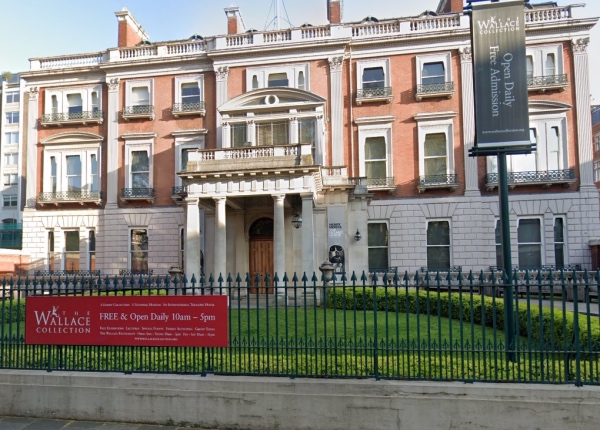
The house, meanwhile, changed its name when the 2nd Marquess of Hertford took over the lease in 1797. It became known as Hertford House and now houses The Wallace Collection (pictured below), a collection of artworks left to the nation – along with the house – by Lady Wallace, widow of Sir Richard Wallace, illegitimate son of 4th Marquess, in 1897, and opened to the public as a museum in 1900.

The almost circular private gardens in the centre were laid out in the mid-1770s with garden beds and railings (there was apparently a church planned for the centre of the square on which the gardens were located, but it was never built).

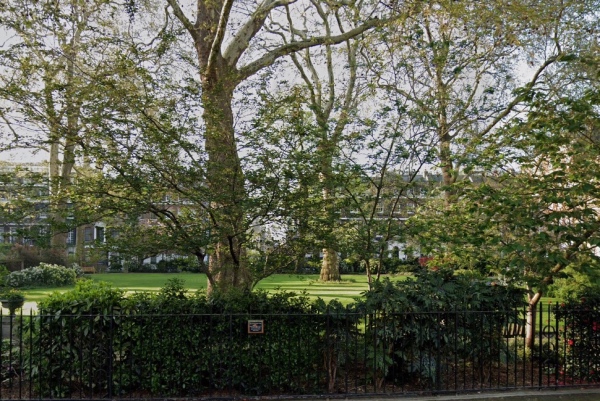
During World War II, trenches were dug in the garden and railings removed and the gardens did receive some bomb damage but they were restored in the 1960s and then extensively replanted in the mid-Noughties. The garden (pictured above, looking south) features mature London plane and lime trees.

Famous residents in the square, which has now largely been converted to offices, have included German-born composer Sir Julius Benedict (he lived at number two), surgeon and neurologist John Hughlings Jackson (number three) and colonial administrator Alfred, Lord Milner (number 14) – all of which have English Heritage Blue Plaques on their former properties – as well as Admiral Sir Thomas Foley (number one).

The square, which, along with Portman Square is Grade II-listed, also become briefly famous in around 1815 when it was reported a “pig-faced woman” lived there.

It is also known for being the former site of record label EMI – the cover shot for the Beatles’ first LP, Please Please Me, was shot in the modernist building’s stairwell in 1963 (the building has since been demolished but EMI took part of the staircase with them when they left in 1995).

Interestingly, Manchester Square Fire Station, which was decommissioned in 2005, was actually located a few blocks away in Chiltern Street (it was also known as the Chiltern Firehouse).

PICTURES: Google Maps

LondonLife – St Bride’s among historic sites “rescued” in 2019…

St Bride’s Church in Fleet Street was among the hundreds of historic sites removed from Historic England’s Heritage at Risk Register this year. Published last month, the register is an annual inventory of historic sites “most at risk of being lost forever as a result of neglect, decay or inappropriate development”. It shows that while some 310 items have been removed from the list over the past year, some 247 were added, meaning there were 5,073 entries on the list this year, 87 less than the previous year. The Grade I-listed St Bride’s, which was designed by Sir Christopher Wren after the Great Fire of 1666, had needed repairs to both its famous steeple – said to have inspired the tiered wedding cake design – and the body of the church itself. Historic England spent almost £8.5 million on grants to help restore some of the country’s most historic sites over the past year. Among London sites still on the list are the Grade II*-listed Crystal Palace Park, the Grade I-listed St Pancras Church and sections of what remains of London’s Roman and medieval wall. For more, see www.historicengland.org.uk/advice/heritage-at-risk/.

London Pub Signs – The Museum Tavern, Bloomsbury…

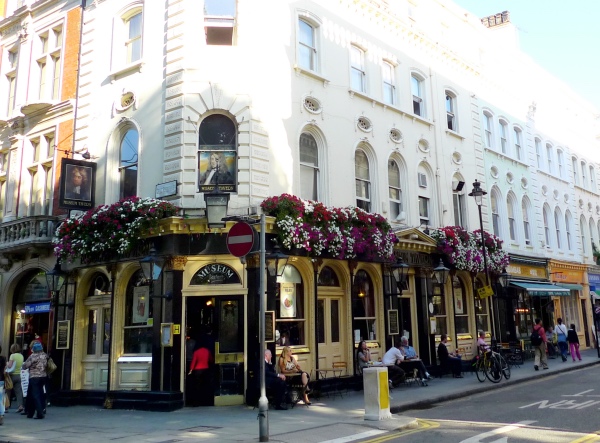
This Bloomsbury pub, not surprisingly, takes its name from its proximity to the British Museum (it’s directly opposite).

Located at 49 Great Russell Street, the Grade II-listed, four storey building was refurbished under the eye of theatre and music hall architect William Finch Hill (and possibly Edward Lewis Paraire) in the mid-1850s in modified French Renaissance style. Along with the exterior, the interior also contains some elements dating from this period.

There has apparently been a pub on the site since the 1720s – it was previously called the Dog & Duck, a reference to the rural nature of the location back then, and was renamed the British Museum Tavern in the mid-18th century before taking its current name when the refurbishment took place in the 1750s.

Famous patrons have apparently included Karl Marx, who frequented it while writing Das Kapital in the British Museum Reading Room. Other famous figures associated with it are Sherlock Holmes creator Sir Arthur Conan Doyle and JB Priestley.

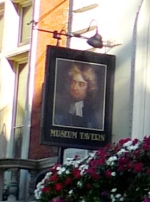
Ah, and the sign itself (pictured right). It depicts Sir Hans Sloane, a royal physician and MP whose collections formed the basis of the British Museum when it first opened its doors.

Now part of the Greene King franchise. For more, see www.greeneking-pubs.co.uk/pubs/greater-london/museum-tavern/.

PICTURE: Ewan Munro (licensed under CC BY-SA 2.0)


This Week in London – Saint Agatha returns to Osterley; Lucian Freud’s self-portraits; and, the collection of Sir Stamford Raffles…

A painting of early Christian martyr Saint Agatha by 17th century Italian artist Carlo Dolci is the highlight of a new exhibition opening at Osterley House in London’s west on Monday. The painting, which has been acquired by the National Trust for the house thanks to an Art Fund grant and other donations, is at the heart of Treasures of Osterley –  Rise of a Banking Family which explores the rise to fame and fortune of the Child family. Sir Robert Child had originally purchased the picture at the start of the 18th century but it was later sold with other family heirlooms in the 1930s. The painting depicts the miraculous moment with St Peter appeared to St Agatha in a vision and healed her wounds. The exhibition can be seen until 23rd February. Admission charge applies. For more, see www.nationaltrust.org.uk/osterley-park-and-house.

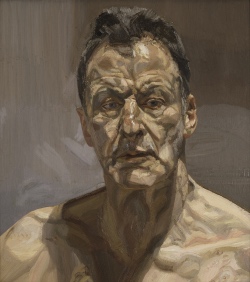
The first exhibition to focus on the “visceral and unflinching” self-portraits of artist Lucian Freud (1922-2011) has opened at the Royal Academy in Piccadilly. Lucian Freud: The Self-portraits features about 50 works that chart his artistic development from early graphic works to the fleshy, painterly style of his later work. The display is organised into six sections, starting with first major self-portrait, Man with a Feather (1943), which is juxtaposed with his late work, Self-portrait, Reflection (2000). It ends with two self-portraits he painted in 2002 and 2003. The exhibition can be seen in The Jillian and Arthur M Sackler Wing of Galleries until 26th January. Admission charge applies. For more, see www.royalacademy.org.uk. PICTURE: Reflection (Self-portrait), 1985 Oil on canvas, 55.9 x 55.3 cm Private collection, on loan to the Irish Museum of Modern Art © The Lucian Freud Archive / Bridgeman Images

• On Now: Sir Stamford Raffles: collecting in Southeast Asia 1811-1824. Controversial figure Sir Thomas Stamford Raffles spent most of his career as an official with the East India Company in South-East Asia during which he was an avid collector of objects from the region. His collection, one of the first large collections from the region, was eventually donated to the British Museum. This display at the museum showcases an important selection of 130 objects from that collection including Hindu-Buddhist antiquities, different types of theatrical puppets, masks, musical instruments and stone and metal sculpture. A collaboration with Asian Civilisations Museum in Singapore, the exhibition can be seen until 12th January in Room 91. It’s free to enter. For more, see www.britishmuseum.org.

Send all items for inclusion to exploringlondon@gmail.com

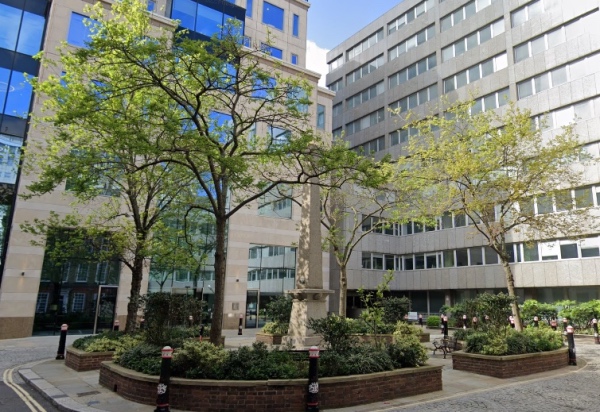
10 (more) historic London garden squares…8. Salisbury Square…

This City of London square sits on the part of the site of what had been Salisbury House, the town house of the bishops of Salisbury.

The house, which later became known as Dorset House, burned down in the Great Fire of London of 1666 and the square, now at the southern end of Salisbury Court, developed in its aftermath.

Lying just to the south of Fleet Street, the square was once home to the Salisbury Court Theatre in the mid-17th century and John Dryden lived here from 1673 to 1682, a period during which he wrote works including Amboyna (1673), All for Love (1678) and The Spanish Fryar (1681). It was also a popular place for actors to reside given its proximity to the Dorset Garden Theatre which was also built on part of the site of Salisbury House.

There was an alehouse here when King George I acceded to the throne – known as a locale frequented by his supporters, it was famous for an incident in 1716 in which it was stormed by a Jacobite mob during which the landlord shot a weaver (he was acquitted but five rioters were hanged at the end of the court.

Samuel Richardson ran a printing shop lived here from 1723 – Pamela was among the works he wrote here. He later pulled down some old residences to expand his printing operations (and it was in his house that Dr Samuel Johnson and William Hogarth first met).

In 1863, all the houses on the south side were replaced by the Salisbury Hotel and this was replaced in  the 1960s by Salisbury Square House when the square was remodelled and the central area laid out. Only number one remains of the early 18th century houses which once stood here.

The now largely paved square features garden boxes in the middle along with an obelisk commemorating Robert Waithman, Lord Mayor of London between 1823-24. It had apparently originally been erected in Farringdon Street but was moved here in the 1970s.

PICTURE: Google Maps.


LondonLife – Misty day at St Katharine Docks…

PICTURE: Robert Bye/Unsplash

A Moment in London’s History…Greenwich is established as the prime meridian for all nations…

It was 135 years ago this month that the International Meridian Conference held in Washington, DC, declared the Greenwich meridian to be the prime meridian of the world.

The conference had been held at the request US President Chester A Arthur with the aim of finding a “common zero of longitude and standard of time reckoning throughout the world”.

Pressure to designate such a prime meridian had been building thanks to the need for navigation purposes as well as the need to create uniform train timetables.

Twenty-six nations were represented at the 1884 conference including Great Britain and the US as well as France, Russia, Germany, Japan, and the Ottoman Empire.

The resolution, fixing Greenwich as the Prime Meridian, was passed on 22nd October. The delegations voted 22 in favour to one against. San Domingo, now called the Dominican Republic, voted against while France and Brazil abstained.

As a result of the decision, the International Date Line was drawn up and the world’s 24 time zones were created.

North America and most European nations had aligned their clocks with Greenwich with 10 years.

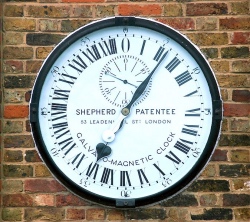
The official mean time clock at the Royal Observatory, Greenwich, is known as the Shepherd Gate Clock.

PICTURE: The Shepherd Gate Clock at the Royal Observatory (Alvesgaspar/licensed under CC BY-SA 3.0)

This Week in London – St Paul’s Watch remembered in digital projections; Buddhism at the British Library; and, Elizabeth Peyton at the National Portrait Gallery…

The story of the St Paul’s Watch, the volunteers who worked to protect St Paul’s Cathedral during the Blitz, will be told in a digital display projected onto the cathedral’s facade this weekend. Where The Light Falls is being held in partnership with Historic England and is part of Fantastic Feats: the building of London – the City of London’s six-month cultural events season. It will see a display of poetry, visuals and photography, created by Poetry Society and Double Take Projections, projected onto the cathedral’s south side, north side and main facade in honour of those men and women who, armed with sandbags and water pumps, risked their lives to save the cathedral. The free show lasts for about 20 minutes and can be seen between 6.30pm and 10pm from tonight until Saturday night and then from 8pm to 10pm on Sunday. Meanwhile, St Paul’s is also open for a special late opening on Friday night during which poets from the Poetry Society will be bringing to life accounts of loss, bravery and sacrifice. Admission charge applies. For more on both events, head here.

The history, teachings and contemporary relevance of Buddhism are being explored in a major new exhibition opening at the British Library on Friday. Buddhism features rare and colourful scrolls, painted wall hangings and folding books and will highlight the theory, practice and art of Buddhism, examine the enduring iconography of Buddha and consider what it means to be Buddhist today. The exhibition, which is accompanied by a program of events, runs until 23rd February. For more, see www.bl.uk.

On Now: Elizabeth Peyton: Aire and Angels. This exhibition at the National Portrait Gallery is the first to situate the work of contemporary artist Elizabeth Peyton within the historical tradition of portraiture. In additional to the more than 40 works on display in the exhibition, Peyton has been honoured by being first artist to be given the run of the entire gallery with a series of displays within the permanent collection which juxtapose Peyton’s art with historic portraits from the Tudor period onwards. Among her portraits on show are those of Napoleon, Queen Elizabeth II, Yuzuru Hanyu, Frida Kahlo, Tyler the Creator, Isa Genzken, David Bowie, Elias Bender Rønnenfelt, David Fray, and Louis XIV. Runs until 5th January. Entry is free. For more, see www.npg.org.uk/elizabethpeyton.

Send all items for inclusion to exploringlondon@gmail.com.

10 (more) historic London garden squares…7. Belgrave Square…

This expansive square in the centre of Belgravia is one of the largest 19th century squares in London.

The square, which along with nearby Chester Square, Eaton Square and Wilton Crescent stands on land once known as Five Fields, was laid out in the 1820s on the orders of Robert Grosvenor, 2nd Earl Grosvenor, whose subsidiary title was Viscount Belgrave and who later become the first Marquess of Westminster (and whose family seat is Eaton Hall in Cheshire, close to the village of Belgrave from whence the name comes).

Property contractor Thomas Cubitt was responsible for the masterplan and architect George Basevi, a pupil of Sir John Soane and cousin of Benjamin Disraeli, had the task of designing the original four terraces which surrounded the square.
Most of the houses were occupied by 1840. Today, the buildings – many of which are listed – are home to numerous embassies and official residences of ambassadors.

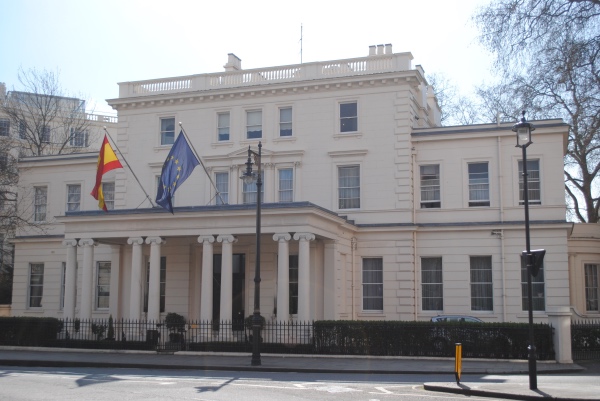
These include the Portuguese Embassy (11 to 12), the Austrian Ambassador’s official residence (18 – the Austrians have been there since 1866 when it was used by members of the Austro-Hungarian Empire’s Foreign Service), the High Commission of Brunei (20), the German Embassy (21-23), the Spanish Embassy (number 24), the Norwegian Embassy (25), the Serbian Embassy (28) and the Turkish Embassy (43).

Famous residents have included the currently Duke of Kent – he was born at number three in 1935, Victorian politician Sir George Murray, Secretary of State for War and the Colonies, who lived at number five up until his death in 1846, and shipbuilder, Lord Pirrie, chairman of Belfast-based Harland and Wolff – builder of the RMS Titanic (in fact it’s said that it was at a dinner here which Lord Pirrie hosted and J Bruce Ismay, owner of the White Star Line, attended where plans to build the ship were first discussed).

The two hectare garden in the centre, which remains closed to the public and is Grade II listed, had gravel walks laid out in the 1850s (the current design is a restoration of what was there in the 1860s). Behind the railings, the gardens features wooden pergolas and shelters and a tennis court.

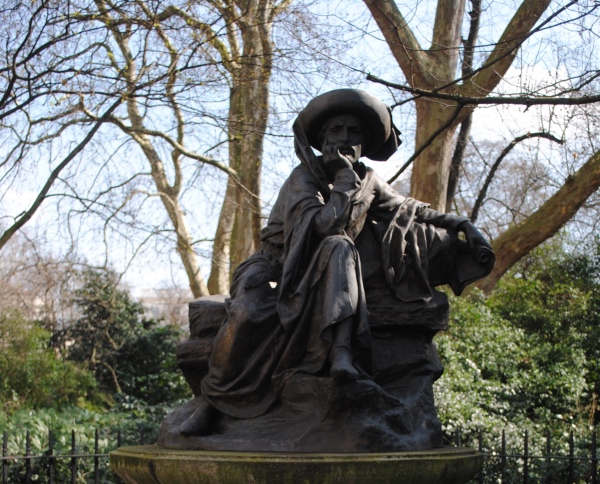
Among the monuments around the external perimeter of the square are statues of of South American revolutionary leader Simon Bolivar (1783-1830), Argentinean national hero General Jose de San Martin (1778-1850), Christopher Columbus (1451-1506) and Prince Henry the Navigator. There’s also a 1998 statue of Robert Grosvenor by Jonathan Wylder on the corner of Wilton Crescent.

Within the gardens are Homage to Leonardo da Vinci, erected in 1982, and a bust of George Basevi, the architect of Belgrave Square.

Top – Statue of Prince Henry the Navigator; Below – The Spanish Embassy. PICTURES: David Adams
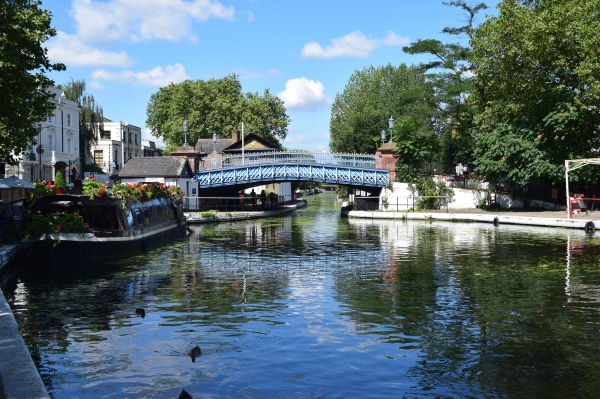
LondonLife – Tranquil waters at Little Venice…

Little Venice, Paddington. PICTURE: Matthew Waring/Unsplash