10 sites commemorating the Great Fire of London – 10. Two mysterious mice…

To end our series on memorials in London commemorating the Great Fire of 1666 – marking the event’s 350th anniversary – we’re taking a look at what is one of the smallest monuments in the City (and, despite all rumour, possibly not a memorial to the Great Fire at all).

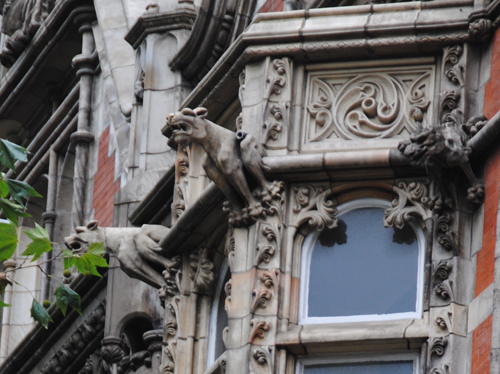
philpot-lane-miceMidway up the wall of a building at the corner of Eastcheap and Philpot Lane, not far from The Monument (for more on its history, see our earlier post here), can be seen two brown mice fighting over a piece of cheese.

The mice are commonly said to be a memorial, not to anyone who died during the fire, but to two men who died while building The Monument itself.

The cheese apparently relates to the story in that the two men fell to the deaths while fighting after one accused the other of eating his cheese sandwich. The two mice, one for each of the men, relate to the fact that it was apparently mice who were later found to be the culprits.

But we need to point out that not all agree on the memorial aspect of the mice, which have apparently been decorating the building’s cornice since the mid-1800s – and there are legitimate questions: why, for example, would the Victorians when constructing the property commemorate two long dead workers and how had the story even reached them of their deaths?

One theory is that the mice do commemorate two men who died in the circumstances described, but while building the property they are located upon and not The Monument at all.

The building, meanwhile, is said to have been constructed as offices and warehouses for spice merchants Hunt & Crombie – it’s been suggested the mice were merely part of the decorations made for the building and not a memorial at all.

Whatever the origins of the mice – and whether they represent a memorial or not – we thought they were a nice way to close out the special series on Great Fire of London commemorative sites. We’ll kick off a new Wednesday series shortly.
PICTURE: Spudgun67/Flickr/CC BY 2.0

LondonLife – Decorative Bloomsbury…

decorative-bloomsbury

This Week in London – Saxons camp out in Hyde Park on the way to battle; “ordinary punks” at Museum of London; and, Bridget Riley meets Seurat…

battle-of-hastings

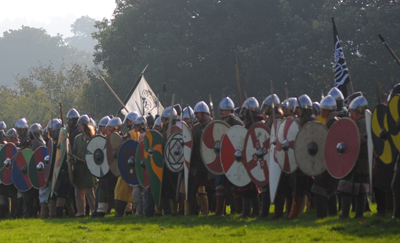
A temporary ‘Saxon’ camp will appear in Hyde Park this Saturday as Battle of Hastings’ re-enactors pause on their journey south to meet the forces of William, the Duke of Normandy, in an event marking the battle’s 950th anniversary. English Heritage is recreating the hurried march south of the Saxon King Harald and his followers following the Battle of Stamford Bridge in Yorkshire to Battle Abbey where they will join in an annual re-enactment of the world famous Battle of Hastings on 15th and 16th October. Having already visiting British landmarks like Lincoln’s Roman arch, Peterborough Cathedral, and Waltham Abbey, they will be found at a free “pop-up living history encampment” near Apsley House in Hyde Park between 11am and 3pm on Saturday. People are invited to visit the encampment and meet the re-enactors, learn how the armies lived and ate while on the march, discover which weapons they used and play some Norman games as well as see the Battle of Hastings recreated using vegetables. Later on Saturday, the re-enactors will head across London to the Jewel Tower in Westminster and then on, Sunday, on to Eltham Palace in the city’s south-east, before setting off for Battle to the south. For more – including a day-by-day calendar of the march – head to www.english-heritage.org.uk/learn/1066-and-the-norman-conquest/the-1066-march/. PICTURE: An earlier re-enactment of the Battle of Hastings/David Adams.

A free exhibition celebrating all things punk has opened at the Museum of London to mark the end of a year long festival commemorating 40 years of the movement’s influence. Punks, which tells the stories of “ordinary punks” living in London in the late 1970s, features artefacts like handmade mixtape sleeves, DIY fanzines and the radical clothes sold on the King’s Road. The exhibition, which runs until 15th January, is accompanied by what is promised to be a “no holds barred” debate centred on the punk phenomena in November. For more information, see www.museumoflondon.org.uk and for more about other events related to the 40th anniversary of punk, see www.punk.london.

On Now – Bridget Riley: Learning from Seurat. This exhibition at The Courtauld Gallery explores Riley’s breakthrough encounter with Georges Seurat’s 1887 work Bridge at Courbevoie. For the first time, it brings together a copy Riley made of the painting in 1959 with the original work as well as presenting a small group of Riley’s seminal works to show how her understanding of Seurat’s art led her to create what are described as “some of the most radical and original abstract works of the past five decades”. Part of the gallery’s ongoing series of displays focusing on major contemporary artists, it runs until 17th January. Admission charge applies. For more, see www.courtauld.ac.uk/gallery.

Send all items for inclusion to exploringlondon@gmail.com.

10 sites commemorating the Great Fire of London – 9. A memorial to a fire prevention breakthrough (erected on the Great Fire’s 110th)…

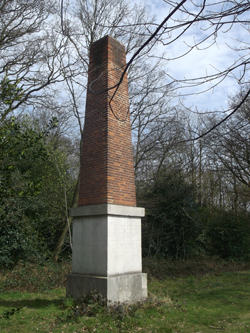
This rather unremarkable obelisk on Putney Heath actually commemorates the invention of ‘Fireproof House’ and was erected, not coincidentally, on the 110th anniversary of the great conflagration.

hartley-obeliskThe rather eccentric David Hartley, an inventor and MP, came up with the idea of sheathing joists under floorboards with thin layers of what were initially iron and later iron and copper plating to prevent the spread of fire in homes and ships and was granted a patent for his system in 1773.

Known as ‘Hartley’s Fire Plates’, he claimed in a pamphlet that a single fireplate might have prevented the Great Fire – a claim which got other MPs excited and led them to grant him cash – £2,500 – to continue his experiments as well as an extension on his patent, from the usual 15 to 31 years.

His experiments included building homes for the express purpose of setting them alight to test his invention, one of which he built on Wimbledon Common. Known as the ‘Fireproof House’, the property was repeatedly set alight in front of prominent witnesses.

These included MPs, the Lord Mayor of London and Aldermen of the City of London – who granted Hartley the Freedom of the City and encouraged fire plates to be included in all new buildings in London – and, of course, King George III and his wife Queen Charlotte. One of the tests was apparently carried out while the royal family was eating breakfast in an upstairs room inside (they survived unscathed – one hates to think of Hartley’s fate should they not have).

The house is now gone but the Hartley Memorial Obelisk, erected just off Wildcroft Road in what were formerly the grounds of Wildcroft Manor, remains.

The red brick and stone Grade II-listed structure was erected by the City of London Corporation in 1776, the 110th anniversary of the Great Fire of London, to commemorate Hartley’s invention of fire plates. The first stone in the monument – which is attributed to George Dance – was laid by the then Lord Mayor, John Sawbridge.

PICTURE: David Antis/Geograph/CC BY-SA 2.0

LondonLife – ‘Really Good’…

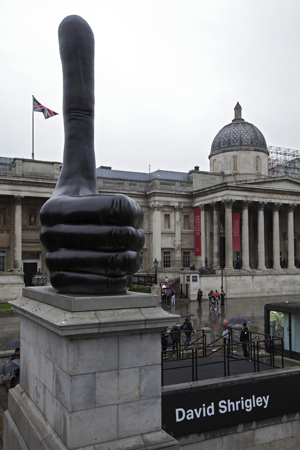
really-good-by-david-shrigley-c-gautier-deblondeA giant hand giving a thumbs-up, the latest commission to grace Trafalgar Square’s famous Fourth Plinth, was unveiled late last month. Really Good, by UK artist David Shrigley stands seven metres high and features a disproportionately long thumb arising from a closed fist. The sculpture is the latest in a string of artworks to have graced the plinth which was built in 1841 and originally designed to hold a statue of King William IV but, thanks to a lack of money, remained empty until recent times. Speaking at the launch of the new work last month, the artist said the work was about “making the world a better place or it purports to actually make the world a better place”. “Obviously, this is a ridiculous proposition, but I think it’s a good proposition,” The Independent reports him saying. “Artworks on their own are inanimate objects so they can’t make the world a better place. It is us, so I guess we have to ask ourselves how we can do this.” For more on the Fourth Plinth program, see www.london.gov.uk/what-we-do/arts-and-culture/art-and-design/fourth-plinth-2016

PICTURE: © Gautier Deblonde

London Pub Signs – The Coal Hole…

the-coal-holeThis pub’s name is fairly self-explanatorily related to coal but there’s a couple of different versions floating around as to why.

One story, mentioned on the pub’s website, says the name comes from the legend that the pub occupies the space which once contained the coal cellar for the Savoy Hotel – not a great leap given its location on the corner of Carting Lane and the Strand, with the Savoy Hotel just behind.

The other is that it takes its name from the “coal heavers” – men who moved coal – who worked nearby on the River Thames. Again, not too much of a stretch.

Which-ever is true (or maybe both), the current Grade II-listed building at 91-92 Strand dates from just after the turn of the 19th century and, according to a plaque on the property, was apparently briefly known as as the New Strand Wine Lodge.

During Edwardian times it was apparently a ‘song and supper’ club where patrons were encouraged to sing (something like the karaoke bars of today).

Gilbert and Sullivan apparently regularly performed here regularly during Edwardian times and the great Shakespearean thespian, Edmund Keane, apparently started the Wolf Club – ostensibly “for oppressed husbands forbidden to sing in the bath” but apparently as a pretence for considerably more debauched activities – in the basement.

Now part of the Nicholson’s chain. For more, see www.nicholsonspubs.co.uk/restaurants/london/thecoalholestrandlondon

PICTURE: Ewan Munro/Flickr/CC BY-SA 2.0/Cropped

Treasures of London – ‘The Fighting Temeraire’

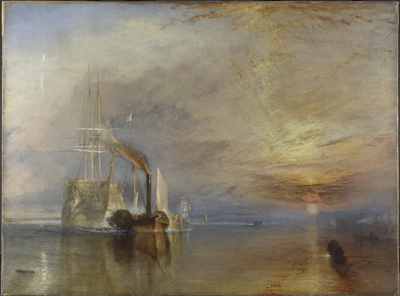
fighting-temeraireIt’s an atmospheric image – both literally and metaphorically – that will soon be sitting in wallets and purses across the UK. Painter JMW Turner’s The Fighting Temeraire tugged to her last berth to be broken up, 1838 is among the most famous artworks hanging in The National Gallery and, as the Bank of England has announced earlier this year, will adorn newly produced £20 notes from 2020 onwards. It commemorates the end of the famous ship, the 98 gun HMS Temeraire, which had played a heroic role in Lord Nelson’s victory at the Battle of Trafalgar in 1805 and, say reports, had been dubbed the “Fighting” Temeraire ever since (although it’s also suggested the ship was actually known by the crew as the “Saucy” Temeraire) . The oil painting, which Turner created in 1839, depicts the ship being towed away to be broken up (although, while it was actually towed from Sheerness to Rotherhithe in London –  a westerly trip, the painting depicts it going eastward). The Temeraire itself is drawn romantically, almost spectrally, while in front of it is a steam tug shown in hard modernity and, of course, in the backdrop is the majestic setting sun, evoking a sense of the end. The painting, which was bequeathed to the gallery by the artist in the 1850s, and which incidentally appeared in the James Bond film Skyfall in a scene in which 007 (Daniel Craig) meets Q (Ben Wishaw) in front of it, can be found in Room 34 of gallery.

WHERE: The National Gallery, Trafalgar Square (nearest Tube stations are Charing Cross and Leicester Square); WHEN: 10am to 6pm daily (open to 9pm Saturdays); COST: free; WEBSITE: www.nationalgallery.org.uk.

PICTURE:  Joseph Mallord William Turner, The Fighting Temeraire tugged to her last berth to be broken up, 1838, © National Gallery, London

This Week in London – Medieval embroidery; Maino on show; former toilet block becomes Kensington Garden’s newest eatery; and, a new Lord Mayor…

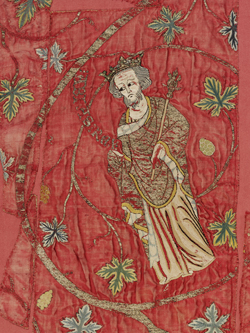
the_jesse_cope_detail_ca-_1310-25_c_victoria_and_albert_museum_londonObjects associated with some of the most notable personages of the Middle Ages – from King Edward I and his wife, Queen Eleanor of Castile through to Edward, the Black Prince, and martyred archbishop, Thomas Becket – will go on show at the V&A in South Kensington as part of a display of medieval embroidery. Opening Saturday, Opus Anglicanum: Masterpieces of English Medieval Embroidery features embroidered treasures such as a seal-bag which, dating from the early 12th century, was made to hold the foundation document of Westminster Abbey, the Toledo Cope which has been brought back to England from Spain for the first time since its creation in the 14th century and an embroidered vestment associated with Thomas Becket. There’s also the Hólar Vestments from Iceland, the Jesse Cope from the V&A’s own collections (pictured), the Daroca Cope from Madrid and an embroidered tunic worn by Edward, the Black Prince. As well as embroidery, the display features panel paintings, manuscripts, metalwork and sculpture. Runs until 5th February along with a season of events. Admission charges apply. See www.vam.ac.uk/opus for more. PICTURE: © Victoria and Albert Museum, London.

Two works by Spanish painter Fray Juan Bautista Maino have gone on exhibition for the first time in the UK at The National Gallery, off Trafalgar Square. The Adoration of the Shepherds and The Adoration of the Kings, dating from 1612-14, have been loaned from the Museo Nacional del Prado in Madrid, Spain, and can be seen for free in a display being held in conjunction with the upcoming exhibition Beyond Caravaggio. Each of the paintings measures more than three metres in height and were originally part of a retable (altarpiece) created for the altar of the Dominican church of San Pedro Martir in Toledo. The work took three years to complete and it was while he was doing so that Maino took religious vows and joined the Dominican Order (there’s also a chance he included a self portrait in the work in the form of a pilgrim on the altar’s far left). Can be seen until 29th January. For more, see www.nationalgallery.org.uk.

A former disused toilet block has been converted into a new cafe overlooking the 150-year-old Italian Gardens in the Kensington Gardens. Formally opened by Loyd Grossman, chairman of the Royal Parks charity, earlier this month, the cafe has a “living roof” aimed at supporting the biodiversity and wildlife of the gardens and has been designed in sympathy with the gardens and the nearby Grade 2* listed Queen Anne’s Alcove, currently being restored. The Italian Gardens were a gift from Prince Albert to Queen Victoria. For more on the cafe, including opening times, head here.

Alderman Andrew Parmley has been elected as the 689th Lord Mayor of London. In keeping with tradition, he will take up the office after the ‘Silent Ceremony’ in Guildhall on 11th November followed by the annual Lord Mayor’s Show parade through the City the following day.

Send all items to exploringlondon@gmail.com for inclusion.

10 sites commemorating the Great Fire of London – 8. St Paul’s memorial to John Donne…

As mentioned earlier, there are several memorials to the Great Fire of London at St Paul’s Cathedral – we’ve already mentioned one of them, the Resurgam, which can be found on the south side of the cathedral’s exterior. 

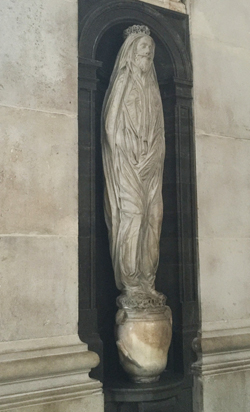
john-donneAnother can be found in a monument which actually commemorates the poet and priest, John Donne, a dean of St Paul’s who died in 1631 (incidentally, it’s not the only place he’s commemorated – there’s also a bronze bust of him outside the cathedral, placed there in 2012).

The marble effigy inside the cathedral, however, is significant because, erected within 18 months of his death,  it is among the few monuments to survive the Great Fire of London. Located in the south quire aisle, the effigy, the work of Nicholas Stone, depicts Donne in his funeral shroud (he apparently posed for it while still alive, wrapped in a sheet).

The effigy was apparently saved by the fact that when the fire raged through the cathedral, it fell into the crypt. And, in a poignant reminder of the fire’s destructive power, if you look closely at the base you can still see scorch marks from the blaze.

It lay in the crypt among other remains of the Great Fire until the late 19th century when it was recovered and restored to its place in the cathedral above in a position close to where it had formerly stood in the Old Cathedral.

PICTURE: Victor Keegan/Flickr/CC BY 2.0/image cropped and lightened.

LondonLife – Rooftop view…

london-skyline

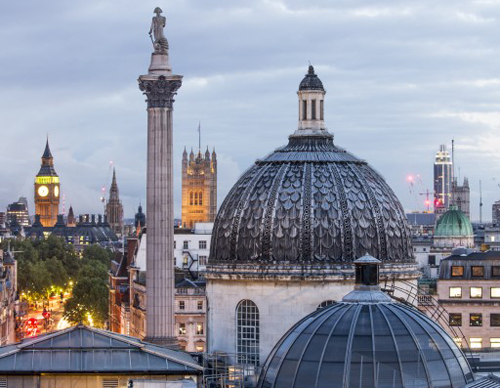
Looking across the roof of the National Gallery past Nelson’s Column to Westminster. PICTURE: London & Partners.

Famous Londoners – Sir Thomas Bludworth…

fireSir Thomas Bludworth (also spelt Bloodworth) is usually only remembered as the man who had the unfortunate job of being Lord Mayor of London when the Great Fire broke out in 1666. So, given the fire’s 350th anniversary this month, we thought it timely to take a more in-depth look at his life and career.

Bludworth was born in London in February, in about 1620, the second surviving son of John Bludworth, master of the Vintner’s Company and a wealthy merchant. Trained to succeed his father – his elder brother having joined the clergy, Bludworth was himself admitted to the Vintner’s Company in the 1640s and joined the Levant Company in 1648.

First elected an alderman in 1658, he was discharged when he refused to serve as a sheriff and the following year served as the master of the Vintner’s Company. In 1660, he was briefly arrested along with 10 other members of City of London’s common council after the body refused to pay taxes until a representative parliament was convened.

Elected MP for Southwark later that year, Bludworth among city and parliamentary representatives who sailed to The Netherlands to attend the king, Charles II, in exile, and invite him to return to England. It was while attending the king in The Hague that he was knighted. Re-elected in 1661, he was an active parliamentarian who served in numerous different capacities.

Sir Thomas was twice married and had a number of children including a formidable daughter Anne who eventually married the historically unpopular George Jeffreys, (later King James II’s Lord Chief Justice and Lord Chancellor).

In mid-1662, he was once again made a City of London alderman and appointed one of two sheriffs for the following year. He became Lord Mayor of London in November, 1665, but apparently there was no pageant as was customary due to the plague.

During his year in the office – “the severest year any man had” – he faced both the plague and the Great Fire and his reputation has been largely formed out of his response to the latter thanks in large part his alleged response when woken and told of the fire as being: “Pish, a woman might piss it out!”.

Bludworth was heavily criticised at the time and over the years since his reaction to the fire – including not pulling down homes to create a firebreak and thus prevent the spread of the fire, but it should be noted that had he done so before he had received the king’s permission, he would have found himself personally liable.

Diarist Samuel Pepys’ who, following two encounters in the months before the fire had already described Bludworth as “mean man of understanding and despatch of any public business”, recorded that when he finally brought a message from the king ordering the creation of a firebreak, Sir Thomas seemed like “a man spent”.

“To the King’s message (to create a firebreak by pulling down houses), he cried, like a fainting woman, ‘Lord, what can I do? I am spent: people will not obey me. I have been pulling down houses, but the fire overtakes us faster than we can do it’.”

Another eyewitness describes him as looking like he was “frighted out of his wits” during the fire.

Sir Thomas’ own property at Gracechurch Street was among the casualties of the fire but he later built a new mansion in Maiden Lane.

He continued to serve as an MP after the fire and was, perhaps ironically, appointed to a committee working on a bill to provide “utensils” for the “speedy quenching of fire”. In the mid-1670s, he become one of the governing members of the Royal African Company.

Sir Thomas died on 12th May, 1682, aged around 60. He was apparently buried in Leatherhead.

This Week in London – Marking the transatlantic cable’s 150th; Sir James Thornhill celebrated; and, food at the Foundling Museum…

commerce-and-sea-power_william-lionel-wyllie

• This year marks the 150th anniversary of the transatlantic cable connecting Europe and America and in celebration of the event, the City of London Corporation’s Guildhall Art Gallery is holding an exhibition looking at the impact of cable telegraphy on people’s understanding of time, space and the speed of communication. Victorians Decoded: Art and Telegraphy, a collaboration between the gallery, King’s College London, The Courtauld Institute of Art and the Institute of Making at University College London, features never-before-seen paintings from the gallery’s collection as well as rare artefacts such as code books, communication devices, samples of transatlantic telegraph sales and ‘The Great Grammatizor’, a messaging machine that will enable the public to create a coded message of their own. It took nine years, four attempts and the then largest ship in the world, the Great Eastern, to lay the cable which stretched from Valentia Island in Ireland to Newfoundland in Canada and enabled same-day messaging across the continents for the first time. Displayed over four themed rooms – ‘Distance’, ‘Resistance’, ‘Transmission’ and ‘Coding’, the exhibition features works by artists including Edward John Pointer, Edwin Landseer, James Clarke Hook, William Logsdail, William Lionel Wyllie and James Tissot. The free exhibition, which runs until 22nd January, is accompanied by a series of special curator talks. For more information, see www.cityoflondon.gov.uk/victoriansdecoded. PICTURE: Commerce and Sea Power, William Lionel Wyllie/Courtesy Guildhall Art Gallery.

• The life of artist Sir James Thornhill – the painter behind the remarkable Painted Hall at the Old Royal Naval College in Greenwich, has opened at The Stephen Lawrence Gallery in Greenwich. A Great and Noble Design: Sir James Thornhill’s Painted Hall explores the story behind the commissioning of the Painted Hall, painted between 1708 and 1727, through a series of preparatory sketches made by the artist, including three newly-conserved original sketches by Thornhill. Also on show will be the results of new research undertaken into the paintings in the light of upcoming conservation work on the hall’s ceiling. The free exhibition runs at the centre at Stockwell Street until 28th October. For more, see www.ornc.org.

The food served at the Foundling Hospital comes under scrutiny in a new show at The Foundling Museum in Bloomsbury. Based on new research, Feeding the 400 looks at the impact food and eating regimes had on children at the hospital between 1740 and 1950 through an examination of art, photographs, objects including tableware and the voices of former student captured in the museum’s extensive sound archive. Guest curated by Jane Levi, the exhibition also includes a newly commissioned sound work which evokes the experience of communal eating. A programme of events accompanies the exhibition which runs until the 8th January. Admission charge applies. For more, see www.foundlingmuseum.org.

Send all items for inclusion to exploringlondon@gmail.com.

10 sites commemorating the Great Fire of London – 7. The ancient plaque commemorating St Olave Silver Street…

st-olave-silver-streetMany of the monuments commemorating the Great Fire of London, date from succeeding centuries (the Monument being a notable exception), one of the earliest can apparently commemorating the site of the Church of St Olave Silver Street.

The church dated from at least the 12th century and is one of a number in London which were apparently named after King Olaf, the first Christian King of Norway who fought alongside the Anglo-Saxon King Ethelred II against the Danes in England in the 11th century.

The church served as the parish church of the silversmiths and apparently in recognition of that boasted a figure of Christ on the cross which had silver shoes.

The church had been rebuilt in the early 1600s but was completely destroyed in the Great Fire of London and never rebuilt, the parish united with that of St Alban Wood Street.

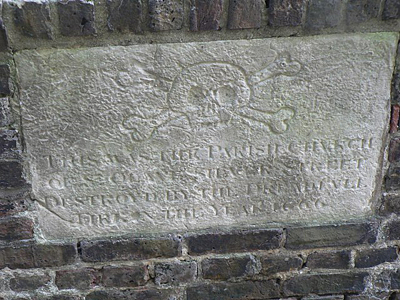
The site of the church, now on the corner of London Wall and Noble Street, is now a garden and boasts an almost illegible plaque featuring a skull and crossbones, which is believed to date from the late 17th century, and which commemorates the destruction of the church in the Great Fire.

PICTURE: © Chris Downer/CC BY-SA 2.0

LondonLife – ‘Floating Dreams’ on the Thames

floating-dreams1

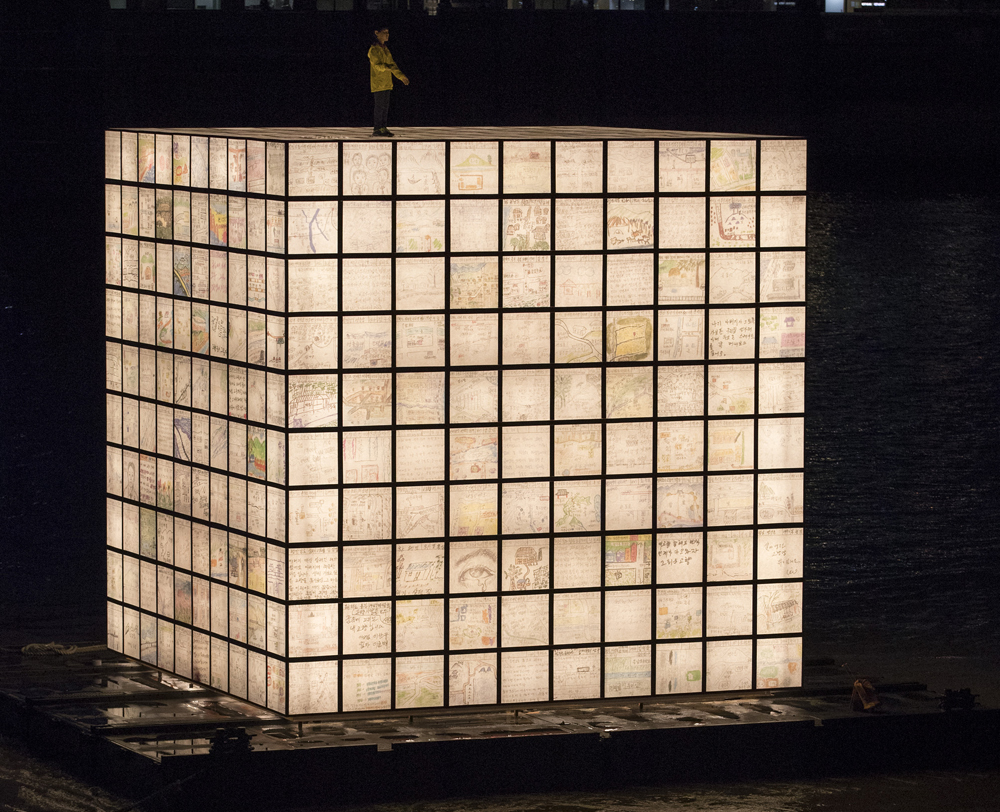
Part of the Totally Thames festival, South Korean artist Ik-Joong Kang’s eye-catching installation, Floating Dreams, acts a memorial to the millions of people who were displaced and divided during the Korean War (1950-53) as well as symbolising the hopes that North and South Korea will once again be unified. The three-storey high installation, which sits on the river alongside Millennium Bridge, is constructed from 500 drawings created by the generation, now aged in their 80s and 90s, who had fled North Korea for South Korea during the war. Their images have been transferred on pieces of a traditional Korean rice paper known as Hanji and then compiled into the cube. The illuminated installation can be seen throughout the festival which runs until 30th September. For more on what’s happening throughout Totally Thames, see http://totallythames.org.

totally-thames-2

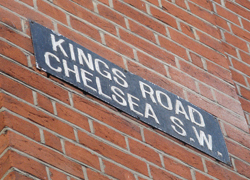
What’s in a name?…Kings Road, Chelsea

Sure, it’s quite obvious that this well-known thoroughfare through Chelsea and Fulham in west London was named for a king but which king and why?

kings-roadIt was the Stuart king Charles II who first starting using the road’s course as part of his route to Hampton Court which meant it was closed to the public.

Access was granted only to those whom the monarch permitted – initially via ticket and from the 1720s via a copper pass stamped with the king’s monogram. Entry was controlled by a series of gates located along its length.

King George III was also known to use the route to travel to his palace at Kew and it was only in 1830 that it was finally opened to the public.

The road, which now runs west from Sloane Square for two miles through Chelsea, transforming into the New King’s Road after entering Fulham, is now known for its shopping (not to mention the site of the UK’s first Starbucks in 1999) although in the 1960s and 1970s it served as something of a hub for London’s counter-culture.

The road has been associated with many famous figures over the years – the king aside. Composer Thomas Arne lived at number 215 and apparently composed Rule Britannia while he did, actress Ellen Terry lived in the same property from 1904-1920 and bon vivant Peter Ustinov after her.

Other famous associations include one with Mary Quant, who opened her ground-breaking boutique Bazaar at number 138a in 1955 and Thomas Crapper, toilet entrepreneur, who had a premises at number 120.

PICTURE: Secret Pilgrim/Flickr/CC BY-SA 2.0

This Week in London – GPO’s archaeological finds on show; Flora Japonica at Kew; and, a blue plaque for Freddie Mercury…

roman-mortarium-made-by-albinus The most prized archaeological finds from a 1975 excavation of the General Post Office on Newgate Street, one of the largest archaeological sites ever excavated in London, are on show in a new exhibition at the Museum of London. Delivering the Past, the free display features objects from across a 3,000 year period and include everything from Roman era finds such as a dog skull, a rare amber die, a spoon and mortar with the makers’ names of Albinus, Sollus and Cassarius stamped on the side (pictured) to floor tiles and architectural fragments from the medieval parish church of St Nicholas Shambles. There’s also a 17th century Bellarmine beer bottle (these were widely imported from Germany in the 1600s), the only 19th century twisted clay tobacco pipe ever excavated in London, and a 19th/20th century ceramic fragment showing General Post Office branding. The exhibition runs until 8th January. The museum is also offering free 45 minute walks to notable excavation sites around Newgate Street every weekday until the end of October. For more, see www.museumoflondon.org.uk.

• Japan’s native flora comes to Kew from this weekend with a new exhibition in the Shirley Sherwood Gallery of Botanical Art. Flora Japonica features paintings from 30 of the Asian nation’s best contemporary artists as they attempt to capture the beauty of everything from camellias to cherry trees and the delicate Japanese maple. The watercolours have been produced based specimens collected from across Japan as well as, in a couple of cases, specimens found within Kew Gardens. Also on display are works never before seen outside Japan including historic drawings and paintings by revered botanists and artists such as Dr Tomitaro Makino (1863-1957), Sessai Hattori and Chikusai Kato (both Edo period artists), artefacts from Kew’s Economic Botany Collection including traditional Japanese lacquerware collected in the 1880s and wooden panels from 1874, and  illustrations from Kew’s collections such as a 17th century illustrated manual of medicinal plants. Runs from Saturday until 5th March after which the exhibition will move to Japan. Admission charge applies. For more, see www.kew.org.

An English Heritage blue plaque honouring late Queen frontman Freddie Mercury was unveiled at his childhood home in Feltham, in London’s west, earlier this month. Mercury’s parents bought the house in Gladstone Avenue in 1964 after the family had left Zanzibar for the UK. He was still living in the home when he met Queen band mates Brian May and Roger Taylor. The new plaque was revealed on 1st September, on what would have been the singer’s 70th birthday.  For more, see www.english-heritage.org.uk/visit/blue-plaques/.

Send all items for inclusion to exploringlondon@gmail.com.

10 sites commemorating the Great Fire of London – 6. A rare survivor…

Walk around the streets of the City of London and it’s hard to miss the myriad of plaques commemorating many buildings lost in the Great Fire of London. On the Strand, however, can be found a plaque which commemorates a building that survived the fire.

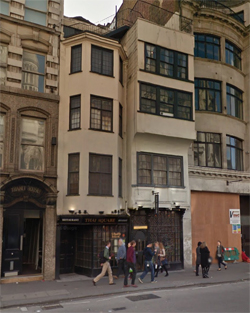
strand-buildingLocated at 230 Strand (opposite the Royal Courts of Justice), the narrow four storey building, complete with projecting second floor, dates from 1625 and was apparently originally built as the home of the gatekeeper of Temple Bar.

According to the sign upon it, the now Grade II* building was the only structure on the Strand to survive the fire of 1666.

Now a rather plain-looking building, it has been much altered over the years and for much of the 20th century housed the Wig and Pen Club for journalists and lawyers – running from at least 1908, it closed in 2003.

Along with the late 17th century building next door (the two are pictured above with number 230 on the right), it’s now part of a Thai restaurant.

PICTURE: Google Street View

LondonLife – West End street scene…

shaftesbury-avenue-london

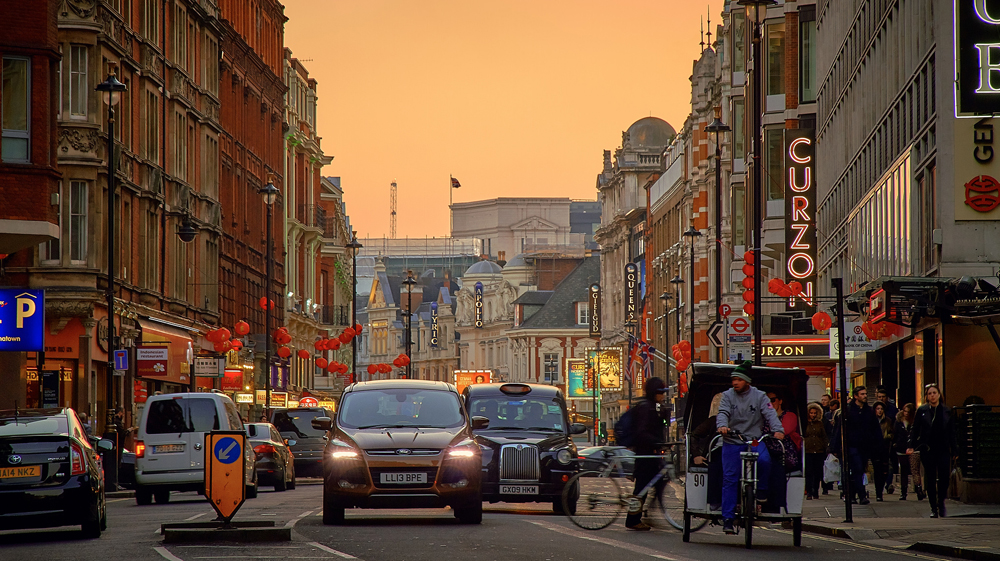
Looking down Shaftesbury Avenue, the heart of London’s Theatreland, in the West End. PICTURE: Pedro Szekely/Flickr/CC BY-SA 2.0

A Moment in London’s History – The ‘Great Tea Race’ crosses the finish line…

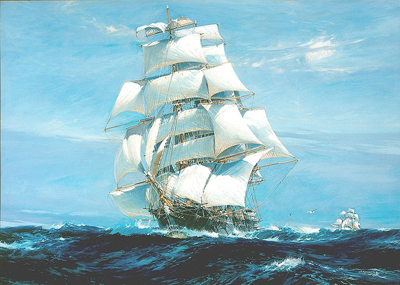
great-tea-raceIt’s 150 years ago this month that the ‘Great Tea Race’  of 1866 ended in London with the clipper ship Taeping taking the honours followed just 28 minutes later by the Ariel.

The race, which had started in China, was part of a tradition for ships carrying cargoes of tea from the east to engage in a race to be the first to dock in London – and quite a lucrative one, for it was common for the first ship to arrive to receive a premium of at least 10 per cent (although 1866 was apparently the last time this was offered).

At least 57 ships apparently sailed in the 1866-67 ‘tea season’, departing for Britain from a range of ports including Shanghai, Canton and Hong Kong. But it was the fastest which gathered the most attention – these chosen clippers set sail for Britain from the Min River, downriver from Foochow (now Fuzhou), in late May, 1866.

As well as the Taeping, launched in 1863 and captained by Donald MacKinnon, and the Ariel, launched only the previous year and captained by John Keay, other favourites in the 1866 race included Fiery CrossSerica and Taitsing.

The race was followed breathlessly in the London press although details were limited – largely due to the time it took for the news to reach London – as the ships set a course which took them through Indonesia via the Sunda Strait and around the southern tip of Africa and up via the Atlantic to the UK.

The Taeping, the race winner, reached London Docks at 9.47pm on 6th September while Ariel arrived at the East India Dock at 10.15pm. The Serica, meanwhile, reached West India Docks at 11.30pm. (It wasn’t to be too unfortunate for the runner-up – Captains McKinnon and Keay had apparently agreed to split the premium of 10 shillings a ton).

Amazingly, this means the three ships – which had all left China on the same tide – had sailed more than 14,000 miles in a race of 99 days yet had managed to dock with just two hours between them.

PICTURE: The Ariel and Taeping, by Jack Spurling (1926)/Wikimedia Commons

Treasures of London – Lighthouse at Trinity Buoy Wharf…

trinity-buoy-wharf-lighthouse

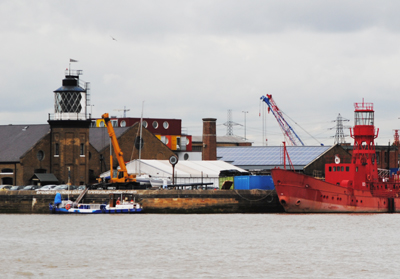
September is the month of ‘Totally Thames’, London’s celebration of its mighty river, so we thought it only fitting that we look at one of the city’s riverside treasures.

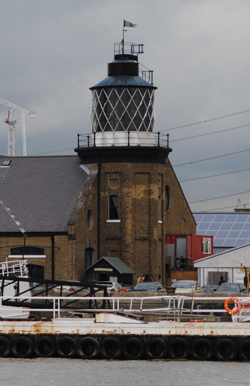
Located to the east of the City at Trinity Buoy Wharf on the north bank of the Thames can be found London’s only lighthouse (pictured left). No longer operational, it was built between 1864-66 for what became known as the Corporation of Trinity House, an association of shipmen and mariners.

trinity-wharf-lighthouseGranted its charter by King Henry VIII in 1514, in 1573 it was given the authority to erect and maintain beacons, mark and signs to help sea navigation. It’s since been the provider of buoys, lighthouses and lightships and, while headquartered at Trinity House in the City of London, established Trinity Bouy Wharf, located at the confluence of the Bow and Thames Rivers, as its Thames-side workshop in 1803.

The wharf was originally used to make and store wooden buoys and sea marks and as a mooring site for the Trinity House yacht which laid and collected buoys.

The lighthouse is the second on the site – the first was built in 1854 by the then chief engineer of Trinity House James Walker. The second, existing, lighthouse was built James Douglass – Walker’s successor – and as an “experimental lighthouse” was used for testing equipment and training lighthouse keepers.

The wharf, meanwhile, continued to be used until 1988 when it was purchased by the London Docklands Development Corporation and the site is now leased to Urban Space Management who have developed it as a centre for art and cultural activities. The area around the wharf also now features two prototype “cities” made out of shipping containers.