This Week in London – Seminal moments in Shakespearean performance; Maria Merian’s Butterflies; and, British conceptual art…

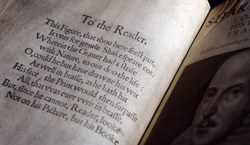
ShakespearesFirstFolio1623BritishLibraryPhotobyClareKendall It’s the 400th anniversary of Shakespeare’s death (in case you missed that), and among the many events marking the occasion comes a major exhibition at the British Library focusing on 10 key performances that it says have made the Bard the “cultural icon” he is today. Shakespeare in Ten Acts, which opens on Friday, focuses on performances which may not be the most famous but which represent key moments in shaping his legacy. They span the period the first performance of Hamlet at the Globe theatre in around 1600 to a radical interpretation of the same play from US theatre company The Wooster Group in 2013. Among the exhibition highlights are a human skull which was given to the actress Sarah Bernhardt by writer Victor Hugo (and which she used as Yorik’s skull when she played Hamlet in 1899), a dress worn by Vivien Leigh playing Lady Macbeth in the 1955 production of Macbeth at the Royal Shakespeare Company, the only surviving play script written in the Bard’s own hand and rare printed editions including Shakespeare’s First Folio and the earliest printed edition of Hamlet from 1603 (one of only two copies in the world). The exhibition, which runs until 6th September, is accompanied by a season of events. Admission charge applies. For more, see www.bl.uk. PICTURE: Shakespeare’s First Folio 1623 British Library Photo by Clare Kendall.

Still talking exhibitions commemorating Shakespeare’s death and a manuscript of William Boyce’s Ode to the Memory of Shakespeare will be on display at The Foundling Museum’s Handel Gallery from tomorrow. The work, which was composed in 1756, was performed annually at the Theatre Royal in Drury Lane. The manuscript, the first page of which was thought to be lost until it was acquired in 2006, formerly belonged to Samuel Arnold, who compiled the first complete edition of Handel’s works. Runs at the Bloomsbury-based museum until 30th May. Admission charge applies. For more, see www.foundlingmuseum.org.uk.

 Exquisite watercolours depicting the natural world go on show in The Queen’s Gallery at Buckingham Palace from tomorrow. Maria Merian’s Butterflies features 50 works produced by the eighteenth century German artist and entomologist Maria Sibylla Merian. The works – many of which record the flora and fauna of the then Dutch colony of Suriname in South America, were published in the 1706 work Metamorphosis Insectorum Surinamensium (The Metamorphosis of the Insects of Suriname) and partially printed, partially hand-painted versions of the plates were purchased by King George III for his library at Buckingham House (later Buckingham Palace). As well as insects, the works – which were based on a visit Merian made to the colony in 1699, depict lizards, crocodiles and snakes as well as tropical plants such as the pineapple. The exhibition runs until 9th October. Admission charge applies. For more, see www.royalcollection.org.uk/visit/the-queens-gallery-buckingham-palace.

The evolution of conceptual art in Britain is the subject of a new exhibition at Tate Britain in Milbank  Conceptual Art in Britain 1964-1979 features 70 works by 21 artists and positions conceptual art “not as a style but rather a game-changing shift in the way we think about art, how it is made and what it is for”. Highlights include Michael Craig-Martin’s An Oak Tree (1973) and Roelof Louw’s Soul City (Pyramid of Oranges) (1987) as well as Victor Burgin’s Possession (1976), Mary Kelly’s Post-Partum Document (1974-78) and Conrad Atkinson’s Northern Ireland 1968 – May Day 1975 (1975-76). Admission charge applies. Runs until 29th August. For more, see www.tate.org.uk.

Send all items for inclusion to exploringlondon@gmail.com.
LondonLife – Gothic spires…

Houses-of-Parliament3

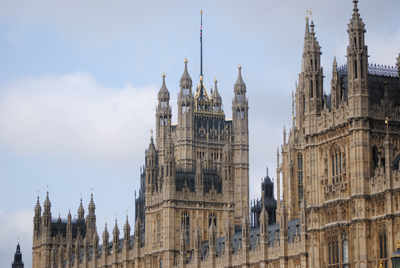
The Houses of Parliament in the early morning light. For more on their history, see our earlier post here.

What’s in a name…Hatton Garden…

A street and small district based just to the north of Holborn in the Borough of Camden, the origins of Hatton Garden’s name stem from the Elizabethan-era courtier Sir Christopher Hatton.

Hatton_Garden_Road_SignSir Christopher, Lord Chancellor during the reign of Queen Elizabeth I and one of her favourites, acquired land here in the 1570s after the Queen forced the bishops of Ely to rent him some of the land they owned which was attached to their London residence, Ely Palace (commemorated today in nearby Ely Place, still home to London’s oldest Catholic church).

Hatton, whose annual rent was apparently fixed at £10, 10 stacks of hay and a red rose at midsummer, subsequently built a property, Hatton House, on the garden.

This survived until the mid-1600s when a series of properties were laid out on the site, centred on what is now the street known as Hatton Garden (Sir Christopher, who was buried in Old St Paul’s Cathedral, had died in 1591). Wren House, originally apparently a chapel and later a charity school, which still stands in Hatton Garden, was built around this time.

The houses were mostly replaced in the mid 18th century with new homes built for prosperous merchants but, as the years passed, while the street itself remained home to some of the wealthy, the same could not be said of some other streets nearby, like Saffron Hill, which became notorious slums.

In the early 1800s artisans started moving into Hatton Garden – London’s Little Italy was born around this time just to the north when Italian craftsmen started moving in (the St Peter’s Italian Church opened in 1863 in Clerkenwell Road) – and the area was gradually transformed into a commercial district.

Jewellery and watch-makers, who had long been based in Clerkenwell, started moving in and the street soon became particularly noted as a centre for cutting diamonds, initially those from India. It was an association which only grew stronger following the discovery of diamonds in South Africa’s Kimberley diamond field in the 1870s.

Today, the street known as Hatton Garden – which runs between Holborn and Clerkenwell Road – still contains the most concentrated cluster of jewellery retailers in the UK (as well as apparently an extensive subterranean network of tunnels and passageways as well as many heavily guarded underground vaults) and is still the centre of London’s diamond trade.

Incidentally, the street was also home to workshops at number 57 which, from 1881, produced the rapid firing Maxim Gun following its invention by Sir Hiram Maxim (and, of course, it was also the location of last year’s safe depository robbery and another famous jewellery robbery back in 1993).

A short side note – it was the wife of Sir Christopher Hatton’s nephew, Lady Elizabeth Hatton, who become associated with Bleeding Heart Yard (you can revisit that story in our earlier post here).

This Week in London – Hampton Court’s Magic Garden; the Stones on show; and, Dutch Flowers at the National Gallery…

The-Magic-Garden
PICTURE: Historic Royal Palaces

 Inspired by myths and legends of the Tudor Court, The Magic Garden has opened at Hampton Court Palace. The garden – located in King Henry VIII’s former tiltyard – has been designed by award-winning landscape architect Robert Myers and has been six years in the making. Features include the famous five lost tiltyard towers which have been recreated with each reflecting a different aspect of the Tudor era – from the King’s and Queen’s Towers which offer the best vantage point over the area, to the Discovery Tower which represents the Tudor fascination with exploration, the Battle Tower which symbolises King Henry VIII’s warlike spirit and the Lost Tower which brings to mind the eventual fate of the towers. There’s also a ‘wild wood’ – evoking the hunting grounds loved by the Tudors, a winding pathway of strange topiary and a ‘jungle’ of tree ferns and fatsias as well as a 25 foot long sleeping dragon who wakes as the clock strikes the hour. The garden, which is open until 30th October, is aimed at children of all ages, particularly those between two and 13 years-of-age. Admission charge applies. For more, see www.hrp.org.uk/hampton-court-palace/.

More than 500 artefacts related to the Rolling Stones have gone on display at the Saatchi Gallery in the first international exhibition on the group. EXHIBITIONISM: The Rolling Stones spans two floors and nine thematic galleries and charts the history of the Stones from the early 1960s to cultural icons as well as considering the band’s influence on popular culture. It features never-before-seen dressing room and backstage paraphernalia, instruments and costumes, original stage designs, audio tracks and video footage, personal diaries and album cover artwork. Works by an array of artists, designers, musicians and writers – everyone from Andy Warhol to Tom Stoppard and Martin Scorsese – are also included. Admission charge applies. Runs at the Kings Road gallery near Sloane Square until 4th September. For more, see www.saatchigallery.com.

The evolution of Dutch flower painting from the turn of the 17th century is the subject of a free exhibition which opened at the National Gallery off Trafalgar Square this week. Dutch Flowers features 22 works, about half of which come from the gallery’s collection while the other half come from private holdings. Artists whose works are featured include Jan Brueghel the Elder, Ambrosias Bosschaert and Roelandt Savoy – all among the first to produce paintings that exclusively depicted flowers. The exhibition – the first display of its kind for more than 20 years – is in Room 1 until 29th August. Admission is free. For more, see www.nationalgallery.org.uk.

Send all items for inclusion to exploringlondon@gmail.com.

A Moment in London’s History – Birth of a future queen…

17-Bruton-StreetQueen Elizabeth II, the oldest British monarch, celebrates her 90th birthday later this month and, although we’ve run a piece on the Queen’s birth before, we thought it only fitting to take a second look at what proved to be a momentous birth.

The then Princess Elizabeth (Elizabeth Alexandra Mary) was born at 17 Bruton Street in Mayfair – the London home of her maternal grandparents, the Earl and Countess of Strathmore (they also owned Glamis Castle in Scotland) – at 2.40am on 21st April, 1926.

She was apparently delivered by Caesarian section and the Home Secretary, Sir William Joynson-Hicks, was in attendance to ensure everything was above board (the custom, which has since been dropped, was apparently adopted after what was known as the ‘Warming Pan Scandal’ when, following the birth of Prince James Francis Edward, son of King James II and Queen Mary of Modena, in June, 1688, rumours spread that the baby had been stillborn and replaced by an imposter brought into the chamber inside a warming pan).

The first child of the Prince Albert, the Duke of York (Bertie) and Elizabeth Bowes-Lyon, the Duchess of York (later King George VI and Queen Elizabeth), she was third in line to the throne at her birth but thanks to the abdication of King Edward VIII, became her father’s heir.

The event apparently drew a crowd to the property (although none could yet suspect how important this princess was to become) and among the well-wishers who visited the newborn that afternoon were her paternal grandparents, King George V and Queen Mary, who had apparently been woken at 4am to be informed of the birth of their second grandchild.

The property was to be Princess Elizabeth’s home for the first few months of her life (named after her mother, paternal great-grandmother, Queen Alexandra, and paternal grandmother, Queen Mary, she was christened in the private chapel at Buckingham Palace five weeks after her birth).

The home of her birth and a neighbouring townhouse have both since been demolished and replaced by an office building. A plaque commemorating it as the Queen’s birthplace was installed in the Queen’s Silver Jubilee Year of 1977 and another to mark the Diamond Jubilee in 2012.

The Queen’s birthday will be officially commemorated in June.

PICTURE: Via London Remembers


This Week in London – On the education of Georgian princesses; servant’s lives on show; and, 100 years of Vogue…

Kew-Palace-2 The education of the daughters of King George III and Queen Charlotte is the subject of a new display which has opened at Kew Palace in Kew Gardens. The queen’s progressive approach to learning meant the princesses received a “thoroughly modern” schooling covering everything from geography to art, upholstery to tackling brain-teasers as well as botany and music. The latter, in particular the harpsichord, was a particular passion of Princess Augusta, and to instruct her and the other girls, JC Bach, son of world-renowned composer JS Bach, was employed as music master (the display features a hand-written copy of his father’s Well-Tempered Clavier – designed to train and test the skills of harpsichord players). Other items on show include a copy of Queen Charlotte’s own tortoiseshell notebook embellished with gold and diamonds, a letter the queen wrote to the princesses’ governess – reputedly the first letter she wrote in English, and a series of newly acquired satirical prints from the Baker Collection depicting Queen Charlotte and her daughters. The new display can be seen from today. Admission charges apply. For more, see www.hrp.org.uk/kew-palace/. PICTURE: Newsteam/Historic Royal Palaces.

The lives of servants working in middle-class houses in London over the last 400 years are the subject of an exhibition which opened at the Geffrye Museum in Shoreditch earlier this month. Swept Under The Carpet? Servants in London Households, 1600-2000 illustrates the dynamic nature of the relationship between servants and their employers – from the intimacy of a maid checking her master’s hair for nits in the late 17th century to an ayah caring for an Anglo-Indian family’s children in the late 19th century and an au-pair picking up after the children in the middle of the 20th century. It explores their story through an examination of the places in which they worked – the middle class parlour, drawing room and living room. Entry to the exhibition, which runs until 4th September, is free. For more, www.geffrye-museum.org.uk.

On Now – Vogue 100: A Century of Style. This exhibition currently running at the National Portrait Gallery off Trafalgar Square features iconic images of some of the 20th century’s most famous faces. Included are rarely seen images of the Beatles and Jude Law as well as portraits of everyone from artists Henri Matisse and Francis Bacon, actors Marlene Dietrich and Gwyneth Paltrow, Lady Diana Spencer and soccer player David Beckham. There’s also complete set of prints from Corinne Day’s controversial Kate Moss 1993 underwear shoot, Peter Lindbergh’s famous 1990 cover shot – said to define the ‘supermodel era’, a series of World War II photographs by Vogue‘s official war correspondent Lee Miller and vintage prints from the first professional fashion photographer, Baron de Meyer. The display can be seen until 22nd May. Admission charge applies. For more, see www.npg.org.uk.

Send all items for inclusion to exploringlondon@gmail.com.
10 iconic London film locations…7. The London Eye is saved by the Fantastic Four…

London-Eye

The London Eye features in the background of numerous recent films – everything from 2002’s 28 Days Later to 2004’s Thunderbirds and 2007’s Harry Potter and the Order of the Phoenix.

But the structure, which was built in 1999 and is currently known formally as the Coca-Cola London Eye, has a bigger role in another 2007 film – Fantastic Four: Rise of the Silver Surfer in which the film’s heroes must prevent it toppling into the Thames and a gaping hole that opens up in the river.

Thankfully, in the 2007 film, The Thing (played by Michael Chiklis), Mr Fantastic (Ioan Gruffudd) and the Invisible Woman (Jessica Alba) manage to do so, using their unique powers to save all the people being thrown around inside the Eye’s many pods.

Of course, as an iconic symbol of the city today, the London Eye has also been recreated in several animated films – from Flushed Away to Cars – and is even recreated, tongue-in-cheek, in wood for A Knight’s Tale.

There’s also quite a few films and TV shows which have featured scenes filmed inside the Eye’s pods, including Wimbledon in which one of them plays host to a punch-up.

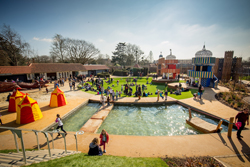
The area of South Bank around where the Eye is located is a popular spot for films. The OXO Brasserie in the OXO Tower, for example, features in Thor: The Dark World, Millennium Bridge, linking South Bank to St Paul’s Cathedral, can be seen as part of the (imaginary) city on Xander in the film Guardians of the Galaxy and Jubilee Gardens, next to the Eye, was used as a landing pad in Thunderbirds for the T2.

Treasures of London – The Knowledge of London…

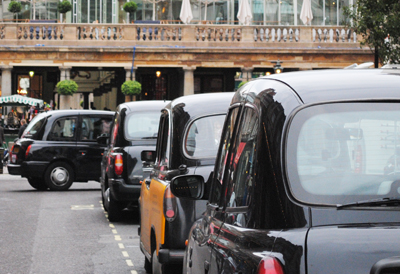
Black-cabsHaving celebrated its 150th anniversary last year, The Knowledge of London is the world famous test given to the city’s black cab drivers.

The test dates back to 1865 and involves drivers memorising 320 routes, 25,000 street names and some 20,000 landmarks and places of public interest including museums, theatres, churches, police stations, schools and parks within a six mile radius of Charing Cross.

The routes through central London – which previously numbered as many as 468 – are contained within the Blue Book (there’s also a series of ‘Knowledge schools’ to help would-be drivers prepare for the test).

The test includes a written exam and a series of one-to-one interviews, known as appearances, in which the prospective driver is given start and finish points and expected to describe the shortest route between them. It is overseen by the Public Carriage Office, once part of the Metropolitan Police Force, but now part of Transport for London.

It was introduced by Sir Richard Mayne, First Joint Commissioner of the Metropolitan Police Service, after thousands of complaints were received about the lack of knowledge of London cabbies from visitors to the Great Exhibition in Hyde Park in 1851.

It apparently takes on average between two and four years to learn all you need to know to pass the test and you can often spot what are fondly known as ‘knowledge boys (or girls)’ riding scooters around the city with a clipboard attached to the handlebars as they learn what they need to know for the test.

This Week in London – Russia’s finest portraiture on show, Scottish art from the Royal Collection; and photographer/film-maker Paul Strand revisited…

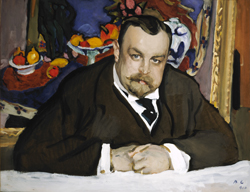
Russia The “most important exhibition of Russian portraits ever to take place at a British museum” opens at the National Portrait Gallery off Trafalgar Square today. The portraits of key figures from Russia spanning the period from 1867 to 1914 come from Moscow’s State Tretyakov Gallery which is simultaneously displaying a selection of portraits of famous Britons from the National Portrait Gallery in a joint event being held to mark the 160th anniversary of both institutions. Russia and the Arts: The Age of Tolstoy and Tchaikovsky features portraits of the likes of Akhmatova, Chekhov, Dostoevsky, Mussorgsky, Rimsky-Korsakov, Rubinstein, Tchaikovsky, Tolstoy and Turgenev by artists including Nikolai Ge, Ivan Kramskoy, Vasily Perov, Ilia Repin, Valentin Serov and Mikhail Vrubel. The majority of the works featured were commissioned directly from the artists by Pavel Tretyakov, a merchant, philanthropist and founder of the State Tretyakov Gallery, whose own portrait by Repin opens the exhibition. The exhibition at the National Portrait Gallery runs until 26th June. Admission charge applies. For more, see www.npg.org.uk/russia. PICTURE: Ivan Morozov by Valentin Serov (1910) © State Tretyakov Gallery, Moscow.

The best Scottish art in the Royal Collection goes on show at The Queen’s Gallery, Buckingham Palace, from tomorrow. Scottish Artists 1750-1900: From Caledonia to the Continent brings together more than 80 works collected by monarchs since King George III. It tells the story of the emergence of a distinctly Scottish school of art through works painted by the likes of Allan Ramsay – who in 1760 was commissioned to paint King George III’s State portrait and subsequently became the first Scot appointed to the role of Principal Painter in Ordinary to His Majesty, and Sir David Wilkie – whose works depicting small-scale scenes of everyday life attracted the attention of the Prince Regent (later King George IV) in the early 17th century. Other artists represented in the collection include Sir Joseph Noel Paton, David Roberts, James Giles, John Phillip, William Leighton Leith, and William Dyce. Runs until 9th October. Admission charge applies. For more, see www.royalcollection.org.uk.

The work of American photographer Paul Strand is on show at the V&A from Saturday in the first retrospective showing of his art in the UK in 40 years. One of the greatest photographers of the 20th century, Strand (1890-1976) was instrumental in defining the way fine art and documentary photography is understood and practiced today. He is also credited with creating the first avant-garde film, Manhatta. The exhibition, Paul Strand: Photography and Film for the 20th Century, features more than 200 objects including vintage photographic prints, films, books, notebooks, sketches and Strand’s cameras and includes newly acquired photographs from his only UK project – a 1954 study of the island of South Uist in the Scottish Hebrides. Can be seen until 3rd July. Admission charge applies. For more, see www.vam.ac.uk/paulstrand.

Send all items for inclusion to exploringlondon@gmail.com.

10 iconic London film locations…6. Notting Hill in…Notting Hill…

It’s the quintessential London film – the story of a bookshop owner, William Thacker (played by Hugh Grant), whose life takes a romantic turn when a famous American actress Anna Scott (played by Julia Roberts) comes into his shop. And, as the name suggests, it’s set in the west London district known as Notting Hill. 

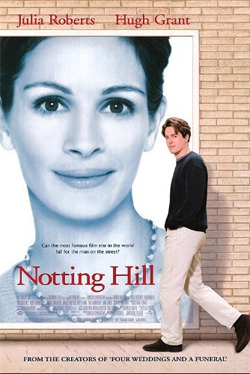
Notting-Hill-posterThe centrepiece of the 1999 film, which was directed by Richard Curtis, is the Portobello Road Market (pictured above, see more on the history of the market here) but the film also depicts other aspects of the area.

These include the Coronet Cinema, and, of course, the now famous blue door in Westbourne Park Road which represents the entry to Thacker’s flat (it was apparently actually Curtis’ home).

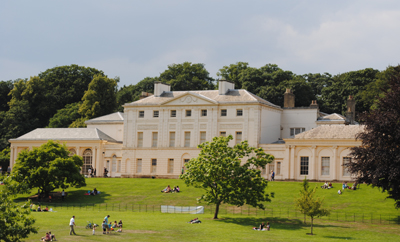
There’s plenty of other London sites in Notting Hill as well – The Ritz hotel in Piccadilly where Anna Scott stays, the Savoy Hotel where a press conference is held and the historic Hampstead Heath home featured (or rather not) in last week’s film Belle, Kenwood House – this time as a film set in a movie Anna is making.

Notting Hill, meanwhile, has long been a popular site for films – everything from The Italian Job (the Michael Caine version) through to another recent Richard Curtis film About Time (2013) has been filmed here.

LondonLife – An odd couple take a breather…

Cabot-Square

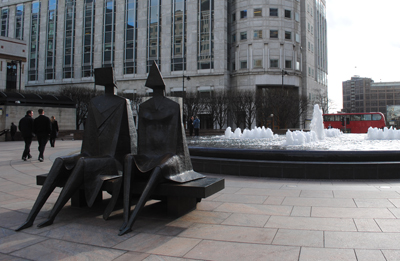
Couple on seat, Cabot Square, Canary Wharf. The much wondered at (who are the couple?; why do their heads have such odd shapes?) bronze sculpture is by Lynn Chadwick (2000).

London Pub Signs – The Cutty Sark…

Cutty-Sark-pubAnother Greenwich pub whose name references an aspect of maritime history (see our previous posts on the The Gipsy Moth and the Trafalgar Tavern), this riverside establishment takes its name from a former tea clipper (which, not coincidentally, is on display nearby).

The clipper Cutty Sark was constructed in Dumbarton in 1869 to facilitate the transport of tea from China to Britain in as short a time span as possible. It made its maiden voyage the following year and but only ended up working the tea route for a few years before being used to bring wool from Australia.

Later sold to a Portuguese company, the vessel continued to be used as a cargo ship until she was sold in 1922 and used as training ship, first in Cornwall, and later at Greenhithe in Kent.

In 1954, the vessel found a new permanent dry dock at Greenwich and was put on public display. Damaged by fire in 2007, the ship underwent extensive restoration and is now displayed in a state-of-the-art purpose-built facility which allows you to walk underneath the vessel.

The three level Cutty Sark pub, located at 4-6 Ballast Quay (formerly known as Union Wharf), features a Georgian-style bow windows on the first and second floors (the first floor is home to the Willis Dining Room which has great views of the Thames).

The present Grade II-listed building apparently dates from the early 19th century (although the sign out the front suggests 1795 and it’s been suggested the building was substantially altered in the mid-19th century) but there is evidence of a public house on the location by the early 18th century.

Known at one stage at the Green Man, in 1810 it became the Union Tavern – a reference, apparently, to the union of England and Ireland which took effect in 1801. It took its current name after the Cutty Sark arrived in Greenwich in the 1950s.

For more on the pub, see www.cuttysarkse10.co.uk. For more on the ship, see www.rmg.co.uk/cutty-sark.

Lost London – The Hindoostanee Coffee House…

Hindoostane_Coffee_House_(7599806070)Described as the first dedicated Indian restaurant in Britain, the Hindoostanee (also spelt Hindoostane) Coffee House was established by Dean Mahomet (later Sheikh or ‘Sake’ Dean Mahomet), an Indian who served with the East India Company Army before coming to Britain.

Accompanying East India Company man Godfrey Baker to Ireland, he lived initially with the Baker family before meeting and marrying a young woman while learning English and subsequently establishing his own household in Cork.

In 1794, he published a book, The Travels of Dean Mahomet, which, written as a series of letters to an imaginary friend, described his own life and Indian customs. It is credited as the first book to be written and published in English by an Indian.

Around 1807, he and his wife and son moved to London where he initially found employment with Sir Basil Cochrane at a “vapour spa” Sir Basil had established in Portman Square. While Mahomet introduced Indian innovations such as “shampooing” to the spa, he was given little credit for his work, however, and so decided to break out on his own.

In 1810, he set-up the coffee house at 34 George Street, Portman Square, just behind Sir Basil’s house.

The establishment was aimed at Anglo-Indians who had spent time in India and offered them Indian-style foods – such as curries and spiced dishes – along with other reminders of the sub-Continent such as a room set up for the use of the hookah with “real Chilm tobacco”  – all in an Indian-style setting.

Sadly, the establishment was only rather short-lived and, despite taking on a partner, Mahomet was forced to declare bankruptcy in 1812. But he did go on to establish a very successful Indian-style baths in Brighton, Mahomet’s Baths (and later even opened a second branch in St James’s London which would be managed by his son).

A plaque was erected by the City of Westminster close to the site of the former coffee house in 2005.

PICTURE: Simon Harriyott from Uckfield, England [CC BY 2.0 (http://creativecommons.org/licenses/by/2.0)%5D, via Wikimedia Commons.

This Week in London – The Venetian Renaissance on show; Art at the Bridge; and, Martin Parr’s London…

Giorgione A survey of some 50 works from the Venetian Renaissance will go on show at the Royal Academy of Arts in Piccadilly on Saturday. In the Age of Giorgione features works from the first decade of the 16th century by artists including Giorgione, Titian, Giovanni Bellini, Sebastian del Piombo and Lorenzo Lotto as well as those of lesser known painters like Giovanni Mariani. Highlights include Giorgione’s paintings Portrait of a Man – only one of two known painting bearing a contemporary inscription identifying the artist (from The San Diego Museum of Art) and Il Tramonto (The Sunset) (from London’s National Gallery) as well as Titian’s works Christ and the Adultress (Glasgow Museums), and Jacopo Pesaro being Presenting By Pope Alexander VI to Saint Peter (Koninklijk Museum voor Schone Kunsten, Antwerp). The exhibition will be divided into four sections. Runs until 5th June. Admission charge applies. For more, see Cwww.royalacademy.org.uk. PICTURE: Attributed to Giorgione, Portrait of a Young Man, c. 1505.

Art at the Bridge returned to Tower Bridge this week with an all-female exhibition launched on International Women’s Day. Building Bridges: The Female Perspective, which is being run in collaboration with the Southwark Arts Forum and represents the 7th ‘edition’ of Art at the Bridge, features the work of 15 artists in a variety of media. They include Charlotte Timms, a mixed media artist who takes her inspiration from living on an historic barge on the Thames, print artist Donna Leighton whose work The New Baby is a commentary on the bridges a mother must build with a new baby, and photographer Pauline Etim-Ubah who explores the career of civil engineering through a series of images. Exhibition runs until 31st July. Included in normal bridge admission price. For more, see www.towerbridge.org.uk.

Gain new insights into life inside the City of London Corporation in photographs taken by Martin Parr, the City of London’s photographer-in-residence. Opening at the Guildhall Art Gallery last week, Unseen City: Photos by Martin Parr provides insight into the City of London Corporation’s private ceremonies, ancient and modern traditions, processions, banquets and other public occasions as well as more informal times. Twenty of the works on show will be acquired for the gallery’s permanent collection following the closure of the exhibition on 31st July. Admission charge applies. For more, see www.cityoflondon.gov.uk/things-to-do/visit-the-city/attractions/guildhall-galleries/Pages/guildhall-art-gallery.aspx.

Send all items for inclusion to exploringlondon@gmail.com.
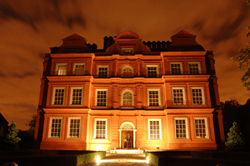
10 iconic London film locations…5. Belle at Kenwood House (but not as you know it)…

Kenwood-HouseThis is the case of a movie stand-in. While Kenwood House on Hampstead Heath in north London (pictured above) was the real life home of late 18th century figure Dido Elizabeth Belle, the subject of the 2014 Amma Asante-directed film Belle – the movie wasn’t actually shot there.

Thanks to the fact that parts of Kenwood House – in particular the famed Robert Adam interiors – were undergoing restoration at the time, the scenes representing the home’s interiors were instead shot at three other London properties – Chiswick House, Syon Park and Osterley Park, all located in London’s west (West Wycombe Park in Buckinghamshire, meanwhile, was used for the exterior).

While some other scenes were also filmed in London – Bedford Square represented Bloomsbury Square where the London home of Lord Mansfield was located, for example, other locations were also used to represent London – scenes depicting Kentish Town, Vauxhall Gardens and the bank of the River Thames were all actually shot on the Isle of Man, for example.

When the real life Belle – the illegitimate mixed race daughter of an English naval captain who was raised by her great-uncle William Murray, Lord Mansfield (she was played by Gugu Mbatha-Raw in the film; Lord Mansfield by Tom Wilkinson)  – is believed to have lived at Kenwood, it was the weekend retreat of Lord Mansfield, then Lord Chief Justice of England (for more on her life, see our previous post here).

Interestingly, the property was also once home to a 1779 painting (previously attributed to Johann Zoffany but now said to be “unsigned”) which depicts Belle and which was apparently the inspiration for the movie. While a copy of the painting still hands at Kenwood, the original now lives at Scone Palace in Scotland.

For more on Belle’s story, see Paula Byrne’s Belle: The True Story of Dido Belle.

LondonLife – Celebrating International Women’s Day…

Cavell

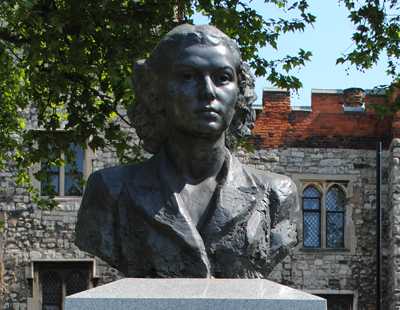
It’s International Women’s Day, so we’re celebrating by remembering two heroic women immortalised in statues in central London. Above is Edith Cavell, a British nurse who was trapped in Brussels by advancing German armies in 1914 and then subsequently arrested for aiding French and British soldiers to escape before being executed by firing squad on 12th October, 1915 – an event widely condemned around the world. The marble statue, located in St Martin’s Place at the intersection of Charing Cross Road and St Martin’s Lane, is by George Frampton and was erected in 1920. Below, meanwhile, is a bust of Violette Szabo which tops a memorial to the Special Operations Executive (SOE). Szabo, who was posthumously awarded the George Cross and the Croix de Guerre after she was captured and eventually executed by the German Army in early 1945, was among 117 SOE agents who did not return from their missions to France. Located on Albert Embankment, the statue – which is the work of Karen Newman – was unveiled in 2009.
Szabo

This Week in London – Botticelli at the V&A; Shakespeare recalled in free sound and light show; and, ‘punk’ captured on film…

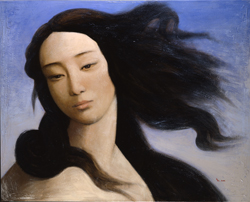
VenusA major new exhibition opening at the V&A this Saturday will feature more than 150 works from around the world in a display exploring how artists and designers have responded to the artistic legacy of Botticelli. Italian artist Sandro Botticelli (1445-1510) was largely forgotten for more than 300 years after his death but is now widely recognised as one of the greatest artists of all time. Botticelli Reimagined features painting, fashion, film, drawing, photography, tapestry, sculpture and print with works by Dante Gabriel Rossetti, Edward Burne-Jones, William Morris, René Magritte, Elsa Schiaparelli, Andy Warhol and Cindy Sherman. The exhibition is divided into three sections: ‘Global, Modern, Contemporary’, ‘Rediscovery’, and ‘Botticelli in his own Time’. Runs until 3rd July. Admission charge applies. For more, see www.vam.ac.uk/Botticelli. PICTURE: Venus, after Botticelli by Yin Xin (2008). Private collection, courtesy Duhamel Fine Art, Paris. (Name of artist corrected)

The historic facade of Guildhall in the City of London will become a canvas for a free son et lumiére show on Friday and Saturday nights to mark the 400th anniversary of the death of William Shakespeare. The display, which runs on a 20 minute loop between 6.45pm and 8.45pm, will feature period images and music from the City’s extensive archives and use 3D projection mapping techniques to transform the Dance Porch of the 15th century building. The Guildhall Art Gallery will be open from 6pm to 9pm and, as well as allowing people to view a property deed for a house in Blackfriars which was signed by the Bard, will feature a pop-up bar with a Shakespeare-themed cocktail. For more on this and other events, see www.cityoflondon.gov.uk/shakespeare400.

The 40th anniversary of punk is the subject of a new photographic exhibition drawn from the archives of world renowned music photographer and rockarchive.com founder Jill Furmanovsky which opened at the City of London Corporation’s Barbican Music Library this week. Chunk of Punk, which runs until 28th April, features many of Furmanovsky’s well-known punk-related images as well as hitherto unseen pictures with The Ramones, Buzzcocks, The Clash, The Sex Pistols, Blondie, The Undertones, Siouxsie and the Banshees, Blondie and Iggy Pop among the bands featured. The exhibition forms part of Punk.London: 40 Years of Subversive Culture. For more, see www.cityoflondon.gov.uk.

Send all items for inclusion to exploringlondon@gmail.com.
A Moment in London’s History – Sir Walter Raleigh leaves the Tower…

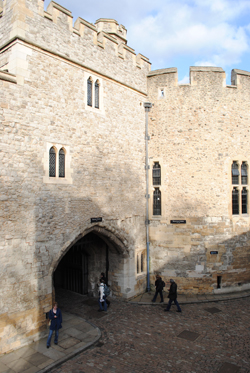
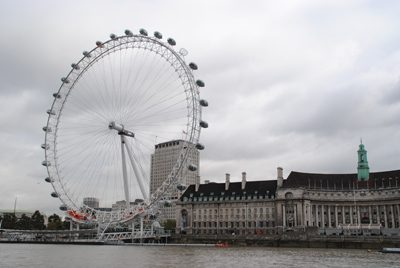
Bloody-TowerIt was in February, 1616 – 400 years ago this year – that the adventurer and courtier Sir Walter Raleigh (Ralegh) was released from the Tower of London where he had spent the last 13 years of his life. Sadly, his freedom was to be short-lived.

Raleigh had been imprisoned in 1603 by King James I – not his biggest fan – after being accused of plotting against the king and subsequently sentenced to death for treason (a sentence which was then commuted to life imprisonment).

The Tower, where he’d been imprisoned a couple of times before – most notably by Queen Elizabeth I for secretly marrying Bessy Throckmorton, one of her maids-of-honour, was to be his home for the next 13 years.

It was in Bloody Tower (in left of picture) that his rather luxurious ‘cell’ was located. Originally known as the Garden Tower, it was renamed for the tradition that the two ‘Princes in the Tower’, King Edward V and his brother Richard, had been murdered here in 1483.

The tower’s top floor was added specifically to provide more room for his family in 1605-06 (and Raleigh’s son Carew was conceived and born while he was imprisoned here). It was also during this time of imprisonment that he wrote his History of the World (published in 1614).

Raleigh was released in 1616 to lead an expedition to the New World – he’d previously been on a couple of expeditions there including one with his half-brother Sir Humphrey Gilbert aimed at finding the Northwest Passage (but which deteriorated into privateering and led to his brief imprisonment following his return to England), and one aimed at finding the legendary ‘golden land’ of El Dorado (which he failed to do). It was again with the purpose of finding gold that he now returned to the Orinoco River region of South America.

Failure, however, was once more the outcome, and on Raleigh’s return to England, the death sentence issued on 1603 was reimposed (for his failure but also for attacking the Spanish in defiance of the king’s instructions to specifically not do so, although the blame was not all his). He would be executed in Old Palace Yard at Westminster on 29th October, 1618.

Treasures of London – William Shakespeare’s last will and testament…

William-Shakespeares-Will

Recently conserved by the National Archives, Shakespeare’s last will and testament is at the heart of a new exhibition on show at Somerset House.

By Me William Shakespeare: A Life In Writing, the first joint exhibition of the National Archives and King’s College London, features four of the six known signatures of Shakespeare still in existence and, along with his last will and testament, shows some of the most significant Shakespeare-related documents in the world tracking his existence as everything from a London citizen, businessman, family man, servant to possibly even a thief and subversive.

But back to the will. While not written in the Bard’s hand, the will is signed by him in three places and indicates the wealth and status he had garnered by the time of his death on 23rd April, 1616.

Evidence shows that Shakespeare revised his will as his estate changed, and just before his death, he added personal bequests including that a silver bowl be given to his second eldest daughter Judith, memorial rings to actor friends in London and his second best bed to his wife Anne. He left most of his property to his eldest daughter, Susanna, although his will, according to the National Archives, indicates that he had hoped to establish a male legacy.

Other beneficiaries named in the will include his sister Joan and her sons and his grand-daughter Elizabeth Hall while Susanna and her husband John Hall were named as his executors.

The exhibition, which is being held in the Inigo Jones Rooms in Somerset House’s East Wing as part of the series of events being held to mark the 400th anniversary of Shakespeare’s death, runs until 29th May. Admission charge applies.

Other documents featured in the display – all of which are registered with UNESCO – include accounts listing the grant of four-and-half yards of red cloth to Shakespeare by King James I for participation in his coronation procession in 1604, accounts from the Master of Revels showing when plays were performed at court (useful for helping to date when Shakespeare wrote particular plays), and a document recording testimony Shakespeare gave in court when his landlord, Christopher Mountjoy, failed to provide his son-in-law with a dowry for his daughter’s hand (Shakespeare is likely to have played a role in arranging the marriage).

For more on the exhibition, see www.bymewilliamshakespeare.org.

This Week in London – John Dee’s library; Botticelli and Dante; and, women in war at the IWM…

John Dee (1527-1609), the enigmatic Elizabethan “mathematician, magician, astronomer, astrologer, imperialist, alchemist and spy”, is the subject of an exhibition currently running at the Royal College of Physicians Museum in Regent’s Park. Scholar, courtier, magician: the lost library of John Dee explores his life through remnants of his personal library and features mathematical, astronomical and alchemical texts, many of which he elaborately annotated and even illustrated. The texts are drawn from the collection of the college library which has more than 100 of the doctor’s volumes and which forms the largest collection of Dee’s books in the world. The books represent only a fraction of the more than 3,000 books and 1,000 manuscripts he claimed to own before his library was, so Dee claimed, sold off illicitly by his brother-in-law Nicholas Fromond after he gave them into his care when he travelled to Europe in the 1580s. Many of them apparently fell into the hands of Nicholas Saunder, possibly a former student of Dee’s and later passed into the hands of book collector Henry Pierrepont, the Marquis of Dorchester, whose family gave his entire library to the Royal College of Physicians after his death in 1680. The free exhibition runs until 29th July. For more, see www.rcplondon.ac.uk.

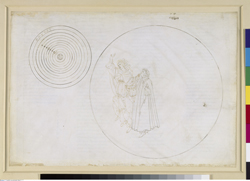
Image_2_Paradiso-II• Botticelli’s drawings for Dante’s epic poem, the Divine Comedy, are at the heart of a new exhibition which opened earlier this month at the Courtauld Gallery in Somerset House. Botticelli and Treasures from the Hamilton Collection, which is being run in collaboration with the Kuperferstichkabinett (Prints and Drawings Museum) in Berlin, features treasures which were sold to Berlin by the 12th Duke of Hamilton in 1882 despite efforts by Queen Victoria to prevent the transaction. They include a selection of 30 of Botticelli’s drawings – which date from about 1480-95 – as well as illuminated manuscripts including the Hamilton Bible. Said to be one of the most important illuminated manuscripts in the world, it is being returned to the UK for the first time since 1882. The exhibition, which coincides with Botticelli Reimagined opening at the V&A next month, runs until 15th May. Admission charge applies. For more, see www.courtauld.ac.uk. PICTURE: Sandro Botticelli – Beatrice explains to Dante the order of the cosmos (Divine Comedy, Paradiso II), around 1481-1495/© Staatliche Museen zu Berlin, Kupferstichkabinett/Philipp Allard.

The stories of women in times of war form the heart of a new display on show at the Imperial War Museum in Lambeth. Eleven Women Facing War features photographs and films taken by award-winning British photographer and film-maker Nick Danziger. He first photographed the 11 women, who all lived in conflict zones, in 2001 for an International Committee of the Red Cross study documenting the needs of women facing war before setting out 10 years later to find each of the women and see what had become of their lives. The exhibition features 33 photographs and 11 short films from conflict zones including Bosnia, Kosovo, Israel, Gaza, Hebron (West Bank), Sierra Leone, Colombia and Argentina. Among the stories told are those of Mah Bibi, a 10-year-old orphan who was begging for food for herself and two brothers when first photographed in Afghanistan and who, 10 years later, had vanished and is believed to have died in 2006. Another is that of Mariatu, who was struggling to rebuild her life in Sierra Leone after her hands had been forcibly amputated by guerrilla soldiers at the age of 13 when she was photographed in 2001 and who 10 years later had moved to Canada. The exhibition runs until 24th April. Admission is free. For more, see www.iwm.org.uk.

Send all items for inclusion to exploringlondon@gmail.com.