This Week in London – Downton Abbey in London; new evening street market for Rupert Street; and, ‘Virtual Beauty’ at Somerset House…

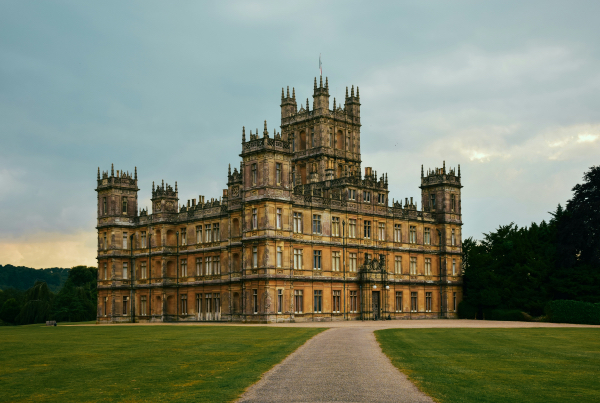
Highclere Castle in Hampshire which doubles as Downton Abbey in the TV series and movies. PICTURE: Tim Alex/Unsplash

Downton Abbey has popped up in London. With the final Downton Abbey movie, Downton Abbey: The Grand Finale next month, Bonhams auction house are auctioning off some iconic props, costumes and set pieces from across the series and is accompanying it with a preview exhibition which is open to the public. Among the items up for sale in Downton Abbey: The Auction are everything from a 1925 Sunbeam saloon car and various dresses and costumes including Lady Mary Crawley’s wedding dress (as worn by Michelle Dockery) to a George III oak dresser (seen in the Servant’s Hall in season 1), a silver pocket watch worn by Mr Carson (played by Jim Carter) and an autographed script from episode one, season one. The display can be seen at Bonham’s salesroom at 101 New Bond Street until 16th September. Admission is free but bookings are essential. For more head to https://www.eventbrite.co.uk/e/downton-abbey-the-auction-tickets-1555891024939

• A new evening market opens in Rupert Street, Soho, tomorrow night. The market – said to be the city’s first evening market – will be open from Mondays to Saturdays between 3pm and 10pm and will feature different themes on different days including artisan food on Wednesdays, world street food on Thursdays, vintage clothing on Fridays, and arts, crafts and jewellery on Saturday. Monday and Tuesday will be a general market. For more, see https://www.westminster.gov.uk/licensing/markets-and-street-trading/markets-westminster/rupert-street-w1.

On Now: Virtual Beauty. This exhibition at Somerset House explores the impact of digital culture and technologies on the traditional definitions of beauty today. It features the work of more than 20 artists with highlights including ORLAN’s Omniprésence (1993), a groundbreaking performance in which the artist live-streamed her own facial aesthetic surgery, and Amalia Ulman’s Excellences & Perfections, a powerful commentary on the authenticity of social media personas. There are also AI-generated portraits by Minnie Atairu, Ben Cullen Williams, and Isamaya Ffrench, and Harriet Davey, Frederik Heyman, and Andrew Thomas Huang explore digital self-expression and the creation of avatars beyond human boundaries. Not suitable for under 15s. Admission is pay what you can. Runs until 28th September. For more, see https://www.somersethouse.org.uk/whats-on/virtual-beauty.

Send all items to exploringlondon@gmail.com

London pub signs – The Shakespeare’s Head, Soho…

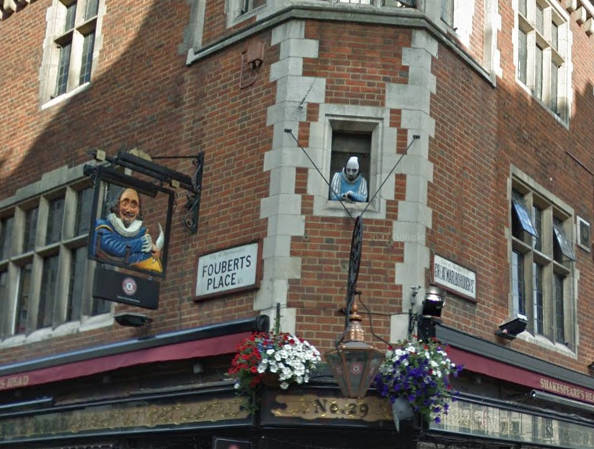
PICTURE: Courtesy of Google Maps

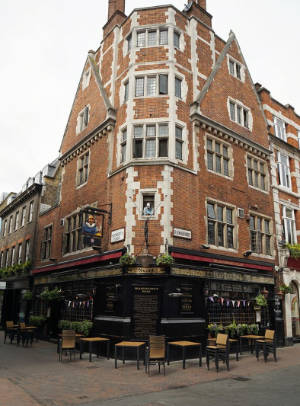
Located at the northern end of Carnaby Street, this Soho pub features a life-sized bust of the Bard looking out of a first floor window at the people passing by in the street below.

The pub in 2015. PICTURE: David (licensed under CC BY 2.0)

According to the pub’s signage, it was first constructed in 1735 and owned by Thomas and John Shakespeare, who were said to be distant relatives of William (and, if indeed they were the owners, no doubt keen to capitalise on his fame).

The current, rather ornate, building, designed in a faux-Tudor style, reportedly dates from the late 19th century.

As well as the bust, which features a missing hand due to damage from a bomb in World War II, the pub sign features an image of Shakespeare with his quill poised.

The pub, now part of the Greene King chain, is located on the corner of Fouberts Place and Carnaby Street (although its address is 29 Great Marlborough Street – it has a street sign for this on its facade – we’ll try and find out some more about why this is so). For more, see www.greeneking.co.uk/pubs/greater-london/shakespeares-head.

What’s in a name?….Poland Street

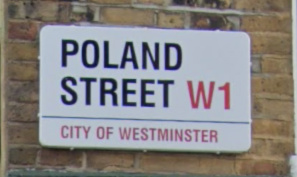
This Soho thoroughfare, which runs from Broadwick Street north to Oxford Street, isn’t directly named after Poland.

PICTURE: Courtesy of Google Maps

Instead its name comes from a tavern which once stood at the Oxford end of the street – the King of Poland, said to have been named in honour of King John III Sobieski who led a coalition of forces which defeated the Ottoman Empire at the Battle of Vienna in 1683.

Polish Protestants settled around the area in the 18th century, fleeing the Polish Counter-Reformation.

Famous residents have included Romantic poet Percy Bysshe Shelley (number 15; it’s marked with an English Heritage Blue Plaque) and William Blake (number 28).

The pub, incidentally, is said to have changed its name a couple of times – most latterly to the Dickens Wine House – before it was destroyed by a bomb in 1940.

Another pub in the street – the Kings Arms – stands on the site of an earlier tavern where the “Ancient Order of Druids” was revived in 1781.

The Poland Street Garage, meanwhile, opened here in 1934 and is said to have been the first multi-storey car park in London.

Where (was) London’s oldest…pizzeria?

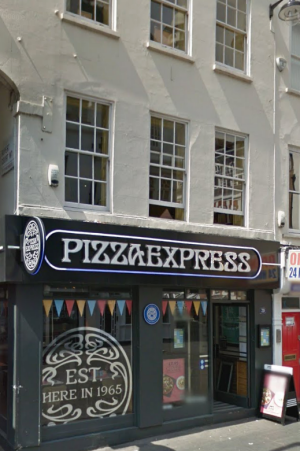
London’s first Pizza Express in Soho, taken prior to its closure in July, 2014. PICTURE: Google Maps.

While pizza had been available in London restaurants some time before, the first dedicated pizzeria is said to have been the first Pizza Express located in Wardour Street in Soho.

The premises on the corner of Rupert Court and Wardour Street was established by Peter Boizot, who has reportedly first discovered pizza while in Italy in the 1940s, and, having witnessed the appearance of pizzerias elsewhere in Europe, decided to bring the concept to London.

Opening its doors on 27th March, 1965, the establishment was modelled on Italian pizzerias. Boizot had partnered with Italian designer, Enzo Apicella, to create an authentic Italian experience which included an open kitchen, simple furnishings and a wine menu (he also brought in a pizza chef from Sicily).

While the concept apparently wasn’t an instant success, it soon did catch on and Pizza Express opened further branches across the city – the first in Coptic Street next to the British Museum in 1967.

Sadly the Wardour Street premises was among dozens that the chain closed during the coronavirus pandemic in 2020.

This Week in London – Coining the Queen’s portrait; the UK’s first Stolperstein; pioneering female landscape gardener honoured; and Picasso and Ingres…

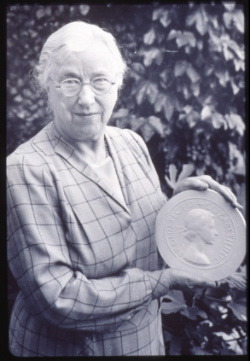
Plaster model for the obverse of a coin.  Mary Gillick, 1952.  Bust of Queen Elizabeth II r., wearing laurel wreath. © The Trustees of the British Mu

A free display featuring the first coin bearing a portrait of Queen Elizabeth II has opened at the British Museum. Part of the celebrations marking the Queen’s Platinum Jubilee, The Asahi Shimbun Display Mary Gillick: modelling The Queen’s portrait showcases the production and reception of the coin which was designed in 1952 and released the following year. Gillick’s portrait – which remained in circulation on coins in the UK until the 1990s and was also adapted for use on commemorative stamps – combined modern design with Italian Renaissance influences. Can be seen until 31st July. For more, see www.britishmuseum.org.

The UK’s first Stolperstein or “stumbling stone” has been installed in Soho as part of an initiative to remember the victims of the Nazis. The small brass plaque commemorates former resident Ada van Dantzig, a Dutch-Jewish paintings conservator for the National Gallery who came to London in the 1930s and worked and resided in Golden Square in Soho (where the plaque has been installed). She later re-joined her family in the Netherlands and was arrested in France in early 1943 along with her mother, father, sister and brother. Deported to Auschwitz, Ada, along with her parents, was murdered there on 14th February, 1943. Artist Gunter Demnig created the project almost 25 years ago to commemorate victims of Nazi Persecution during the Holocaust. More than 100,000 of stones have now been laid in 26 countries throughout Europe with the location of the stones the last address of those being remembered.

A pioneering female landscape gardener has been honoured with an English Heritage Blue Plaque at her former flat in Shaftesbury Avenue. Fanny Wilkinson, who is believed to be Britain’s first professional female landscape gardener, was also a campaigner for the protection of open space in London. She lived and worked at the flat, which overlooks an open space she laid out herself, between 1885 and 1896. Wilkinson began her career as an honorary landscape gardener to the Metropolitan Public Boulevards, Gardens and Playgrounds Association – an organisation whose mission was the formation of gardens and public parks that would create playgrounds and green ‘lungs’, especially in poor districts of the capital. In June, 1885, it was agreed that she could charge five per cent on all her MPGA payments, leading her to drop the ‘honorary’ title and become Britain’s first professional female landscape gardener. For more, see www.english-heritage.org.uk/visit/blue-plaques/.

A painting by Pablo Picasso – Woman with a Book (1932) from the Norton Simon Museum in Pasadena, California – and a painting by Jean-Auguste-Dominique Ingres – Madame Moitessier (1856) – are being shown together for the first time at The National Gallery. Picasso admired Ingres and referred to him throughout his career and this connection can be seen not only in his paintings but in drawings and studies he made during his ‘neoclassical’ phase in the 1920s. He encountered Madame Moitessie at an exhibition in Paris in 1921 and 11 years later painted Woman with a Book. The paintings, which are being show under a collaborative initiative between the two institutions, can be seen in Room 1 until 9th October. Admission is free. For more, see www.nationalgallery.org.uk.

Send all items for inclusion to exploringlondon@gmail.com

This Week in London – ‘Westminster Elves’; a song for Nelson; and, Caribbean-British art…

Christmas is fast approaching and, to add to the festivities, Westminster City Council has created an augmented reality experience for families to enjoy at four landmark locations. Under the ‘Westminister Elves’ initiative, families are invited to scan a QR code at Piccadilly Circus, Marble Arch Mound, Soho Square and Hanover Square which will lead them to a microsite which, in turn, will transport them into the elves’ world. There, they can throw snowballs, share a moment with Santa’s reminder and glimpse inside Santa’s workshop as well as, of course, seeing the man himself. Those taking part are also invited to take a selfie or picture of a family member or friend alongside the elves at one of the four locations and post it on Twitter, Instagram or Facebook using the #WestminsterElves and tagging @CityWestminster. They’ll then be entered into a competition to win a £50 Love to Shop voucher. The competition closes at midnight next Wednesday with the winner announced on Christmas Eve. For more, see www.westminster-elves.co.uk.

A recording of old sea song paying tribute to Horatio Nelson was released by the Museum of London this week. The song, which was  thought to have been sung after the battle of Cape St Vincent in 1797 and subsequently transcribed by Nelson, was brought to life by musicians from the Guildhall School of Music & Drama. The recording marked the first performance of the piece in more than 200 years. While th song’s existence had previously been known about – it was referred to in a letter from Nelson to William Douglas, 4th Duke of Queensberry, which was was sold at auction in 2013 – it was one of four rediscovered last year among songbooks belonging to Nelson’s lover, actress and model Emma Hamilton. “The song was written by Nelson’s crew in one of his early victories,” said Lluis Tembleque Teres, the Museum of London librarian who found the songs. “It is fascinating how, some four years later and already a national hero, he recovers the lyrics and sends them to the Duke of Queensberry, almost as if showing off his early successes. The Duke then adds music and a chorus, and gifts the manuscript to Emma Hamilton, thus allowing us exactly 220 years later to relive Nelson’s fame while performing it.” The song’s release follows a special one-off live performance of all four songs at the Museum of London Docklands on 11th December, which will be available to watch in full as an online event – DIGITAL Emma’s Songbooks: rediscovered music for Nelson – next Tuesday, 21st December. Admission charge applies. For more, see museumoflondon.org.uk 

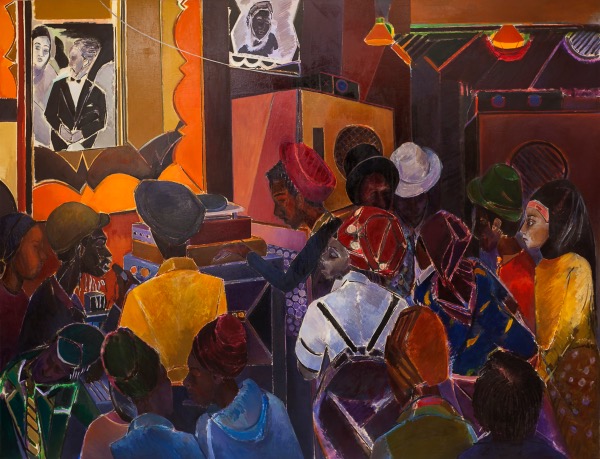
Denzil Forrester Jah Shaka, 1983. Collection Shane Akeroyd, London © Denzil Forrester

A landmark exhibition exploring the extraordinary breadth of Caribbean-British art over four generations can be seen at Tate Britain. Life Between Islands  spans 70 years of culture, experiences and ideas expressed through art and features more than 40 artists, including those of Caribbean heritage as well as those inspired by the Caribbean, such as Ronald Moody, Frank Bowling, Sonia Boyce, Claudette Johnson, Peter Doig, Hew Locke, Steve McQueen, Grace Wales Bonner and Alberta Whittle. Highlights include Neil Kenlock’s Black Panther school bags (1970), Denzil Forrester’s Death Walk (1983) – a tribute to Winston Rose who died in police custody, Lisa Brice’s After Ophelia (2018) – a work inspired by her time on Trinidad and new works including designs by Grace Wales Bonner evoking the brass bands and parades of the Commonwealth Caribbean. Runs until 3rd April. Admission charge applies. For more, see www.tate.org.uk.

Send all items for inclusion to exploringlondon@gmail.com.

10 sites of (historic) musical significance in London – 9. Site of 2i’s Coffee Bar, Soho… 

PICTURE: zoer (licensed under CC BY-NC 2.0)

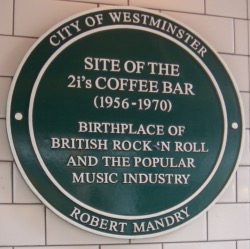
Located at 59 Old Compton Street in Soho, the 2i’s Coffee Bar is crediting with playing a key role in the development of Britain’s modern music culture during the mid-20th century with stars including Tommy Steele – described as the first British rock ‘n roll star – and Sir Cliff Richard among those who performed there.

Opened in April, 1956, the coffee house (which was named for the two men Freddie and Sammy Irani who owned building), was run by Australian wrestlers Paul Lincoln and Ray Hunter.

Its basement had a small stage and was used as a live music venue, initially with skiffle groups such as the Vipers and then as a rock ‘n roll venue. Along with Steele and Sir Cliff, others who performed there included Johnny Kidd, Tony Sheridan, Hank Marvin, Rory Blackwell and Screaming Lord Sutch as well as American acts such as Jerry Lee Lewis.

Among those who patronised the venue, meanwhile, was everyone from Beatles producer Sir George Martin to actor Sir Michael Caine and painter Francis Bacon.

The 2i’s closed in 1970. A Westminster City Council Green Plaque was unveiled at the site in 2006, marking 50 years of British rock ‘n roll.

10 sites of (historic) musical significance in London – 8. The home where Mozart composed his first symphony…

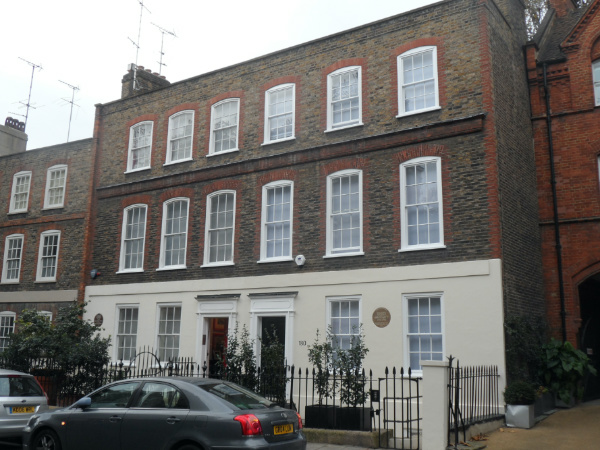
180 Ebury Street, Belgravia. PICTURE: Spudgun67 (licensed under CC BY-SA 4.0)

Think of Austrian composer Wolfgang Amadeus Mozart and chances are it isn’t London which immediately comes to mind. But it was in a home in Belgravia that the then-precocious eight-year-old composed his first symphony.

Mozart, his father Leopold, mother Anna Maria and his elder sister Maria Anna spent almost a year-and-a-half in London, between April, 1764, and July, 1765, as part of a European grand tour. Having initially taken lodgings above a barber’s shop in Cecil Court in Soho, they moved to the more rural setting of 180 Ebury Street, then known as Five Fields Row, in August so his father could recover from a serious illness which apparently developed after he caught a cold.

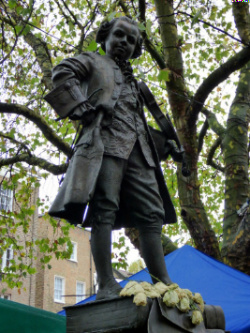
Philip Jackson’s statue of Wolfgang Amadeus Mozart in Orange Square. PICTURE: Peter O’Connor (licensed under CC BY-SA 2.0)

Mozart and his sister were both child prodigies and during their London sojourner performed in various London theatres and for King George III and Queen Charlotte at Buckingham Palace on several occasions. But, with his father now needing quiet, they were forbidden to play instruments in the house and so, according to his sister’s writings, in order to keep himself busy it was there that he composed his “first symphony for all the instruments of the orchestra, especially for trumpets and kettledrums”.

While the work she was referring to is now lost, Mozart did go on to compose the symphony that is now seen as his first at the same time. Known as K.16 in E flat major, it was first performed at the Haymarket Little Theatre in February, 1765.

Leopold did recover and so the family moved back to Soho – lodging at 20 Frith Street to be précise – in September, 1764. It was there that Mozart met the youngest son of Johann Sebastian Bach, Johann Christian, who was to be a key influence on his musical style. They left the property – and brought their time in England to an end in July, 1765, amid waning public interest in their performances (they gone from performing for the Royal Family to entertaining pub patrons). The family continued with their European tour before eventually returning to their home town of Salzburg (Mozart later settled in Vienna where he died at the young age of 35).

Mozart’s time at the Ebury Street residence (and the composition he wrote there) is commemorated with an English Heritage Blue Plaque (albeit this one is brown) which was erected by the then London County Council in 1939. Following damage in the war, it was reinstated in 1951. There’s also a statue commemorating Wolfgang Amadeus Mozart in nearby Orange Square. Designed by Philip Jackson, it was erected in 1994.

10 sites of (historic) musical significance in London – 7. Ronnie Scott’s Jazz Club… 

PICTURE: Google Maps

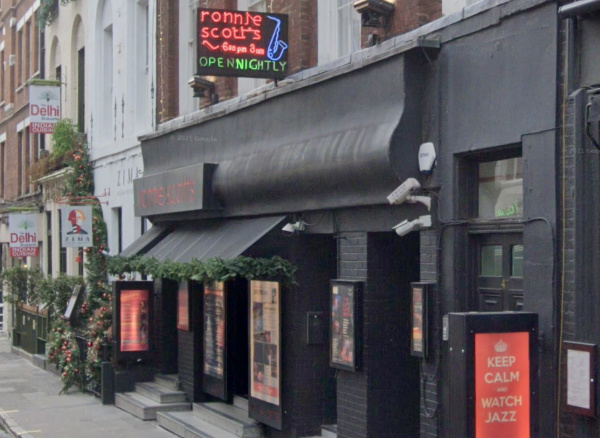
Tenor saxophonists Ronnie Scott and Pete King opened their jazz club in Soho in 1959.

Located in the basement of 39 Gerrard Street in Chinatown, the club was initially created as a place where local jazz musicians could jam but was soon attracting a who’s who of jazz to the stage.

The 1965, the club moved to 47 Frith Street where remains today (it took over the building next door in 1968).

Over the years, the club has played host to jazz greats including Zoot Sims, Sarah Vaughn and Count Basie to Miles Davis, Ella Fitzgerald and Wynton Marsalis as well as musicians such as Jimi Hendrix, Tom Waits, The Who and Mark Knopfler with the Notting Hillbillies.

Patrons, meanwhile, have included everyone from Harold Pinter and the Beatles to Peter O’Toole and Spike Milligan.

Scott died on 23rd December, 1996, and King continued to run the club for another nine years before selling it to theatre impresario Sally Greene.

The club celebrated its 50th anniversary in 2019 and was honoured that year with an English Heritage Blue Plaque commemorating the original site.

10 sites of (historic) musical significance in London – 3. Denmark Street…

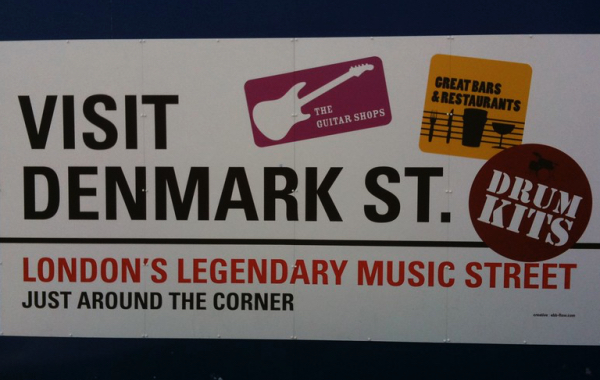
A sign promoting Denmark Street in 2009. PICTURE: Ged Carroll (licensed under CC BY 2.0)

Nicknamed ‘Tin Pan Alley’ after a famous New York City area associated with music publishers and songwriters, Denmark Street in Soho is famous for its 20th century music connections.

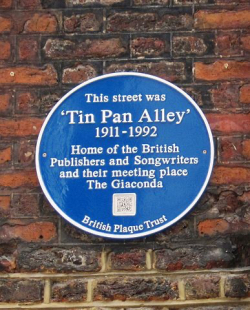
The British Plaque Trust plaque in Denmark Street. PICTURE: Andrew Davidson (licensed under CC BY-SA 3.0)

The street, which is just 100 yards long, was home to most major music publishing and management companies during the 1950s and 1960s as well as recording studios while publications Melody Maker and New Musical Express (better known to some as the NME) were also founded there.

Artists with a connection include David Bowie, Paul Simon, The Rolling Stones, The Kinks, and The Sex Pistols (who reportedly left a considerable amount of graffiti at number six), while two members of Bananarama apparently lived there in the 1970s. Lionel Bart, writer of the musical Oliver!, also started out here and was later known as the “King of Denmark Street”.

The street was also home to the famous Gioconda Cafe – whose patrons have included Bowie, Jimi Hendrix and Elton John.

These days home to many musical instrument shops, the future of the Denmark Street has been a matter of some controversy in recent years with a planned redevelopment attracting considerable protest.

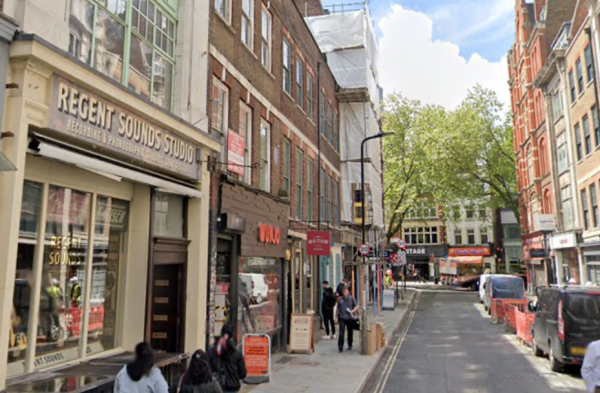
Looking west down Denmark Street in May, 2021. PICTURE: Google Maps.

A plaque – put in place by the British Plaque Trust (pictured above; it’s not to be confused with the English Heritage Blue Plaque commemorating dive helmet pioneer Augustus Siebe on number five) – was unveiled at number nine in 2014 commemorating the street’s musical connections between 1911 and 1992. It reads “Home of the British Publishers and Songwriters and their meeting place The Giaconda.”

Sixties pop singer Donovan, who recorded here, performed a song he’d written specifically for the occasion – appropriately named Tin Pan Alley.

This Week in London – Dennis & Gnasher at Kew; ‘Now Play This’; and, work starts on ‘Gateway to Soho’…

A Beano Studios product © DC Thomson Ltd (2021)

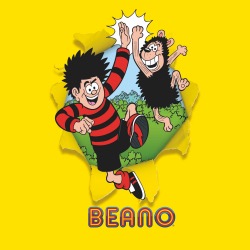
Characters from the popular Beano comic and TV series, Dennis & Gnasher: Unleashed! will be at Kew this Easter. Marking 70 years of Dennis, Dennis and Gnasher’s Big Bonanza at Kew will feature an exclusive giant 3D comic strip – the largest ever created by Beano – with the chance to take part in all sorts of tricks and jokes and, of course, learn about some of Kew’s plants including their slimy, sticky, smelly and deceptive powers. Runs from 31st March to 18th April. Admission charge applies. For more, see www.kew.org.

A four day “festival of experimental games”  kicks off today with a virtual programme featuring  interactive games, workshops, and conversations. Now Play This, part of the London Games Festival, explores the climate crisis through games and play, and features a discussion within games designer Hosni Auji’s Airplane Modesimulator, a live role-play simulation of UN climate change negotiations in World Climate Simulation and the new interactive design game Among Ripples whichoffers players the chance to experiment with building and maintaining their own lake ecosystem. The free online festival runs until Sunday, 28th March. It can be found at www.nowplaythis.net.

• Work has begun this week to create an open-air gallery in part of Soho as part of a £150 million project aimed at transforming Oxford Street and surrounds. The project will see Ramillies Street, Ramillies Place, Hills Place and a small section of Great Marlborough Street made into a ‘Gateway to Soho’ and the site of an annual ‘Photographers’ Gallery’ programme featuring light projections and large-scale art.

Send all items for inclusion to exploringlondon@gmail.com

  ​

Lost London – William Blake’s birthplace, Soho…

William Blake’s house in Soho, an illustration by  Frederick Adcock, published in ‘Famous houses and literary shrines of London’ (1912) and written by Arthur St John Adcock.

William Blake, one of the UK’s most lauded artists and poets, was born in a property at 28 Broad Street (now Broadwick Street) in Carnaby Market, Soho, on 28th November, 1757.

Blake was the third of seven children (although two died in infancy) born to James and Catherine (he was baptised at nearby St James’s Church, Piccadilly, on 11th December). His father ran a hosiery store and the residence was located above his father’s shop (Blake worked as a delivery boy while a child).

Behind the premises was a workhouse and Blake’s memories of this flavoured some of his later works including Nurse’s Song.

Blake lived in the property until he was 25-years-old, during which time he completed an apprenticeship to engraver James Basire located in Great Queen Street and became a student at the Royal Academy in Old Somerset House in The Strand.

He moved to Green Street with his new wife, Catherine Boucher, in 1782.

His oldest brother James took over his father’s shop following his death in 1784 and, in 1809, the first floor of the premises hosted Blake’s only – and unsuccessful – solo exhibition.

The house survived until the 1960s but despite its famous heritage, the property was razed and a block of flats – William Blake House – was erected in its place. A plaque commemorating Blake’s birth in the former property is all that remains.

LondonLife – Signs of the times (III)…

Spotted in Old Compton Street, Soho. PICTURE: Kevin Grieve/Unsplash

10 disease-related memorials in London – A recap…

We’ve reached the end of our series on disease-related memorials in London. But, before we jump into the next Wednesday series, here’s a recap…

1. The Broad Street pump…

2. Commemorating the monks who died in the Black Death…

3. The Lambeth cholera epidemic memorial…

4. Edward Jenner statue…

5. Sir Ronald Ross…

6. Human BSE (vCJD) memorial…

7. The Great Plague of 1665…

8. Former site of the Hospital for Tropical Diseases…

9. The Imperial Camel Corps Memorial…

10. Thomas Hodgkin…

10 disease-related memorials in London…1. The Broad Street pump…

With 2020 to be sadly remembered as the year of COVID-19 (and St Paul’s plans to commemorate those who have died in a permanent memorial in the cathedral), we thought we’d take a look memorials and monuments related to disease outbreaks of the past.

First up is a pump in Soho, a replica of the original Broad Street hand pump which lay at the centre of a cholera outbreak in 1854. Its commemorates the efforts of Dr John Snow, whose work in mapping the course of the outbreak lead to him identifying the pump as the source of the outbreak with the well beneath contaminated by human waste from an old cesspit.

The Yorkshire-born doctor’s work, which subsequently led him to have the pump handle removed and thus prevent further spread of the disease, was a breakthrough in preventing the spread of cholera by showing the source was contaminated water (many people had previously thought was spread through the air, the so-called “miasma theory”).

The replica pump was installed in what is now Broadwick Street, just outside The John Snow pub, in 1992 at the behest of the John Snow Society and Westminster Council. It was removed in 2015  as the area was redeveloped and was then re-installed – along with an explanatory plaque – in 2018.

It stands alongside a red granite block in the pavement which is said to mark the exact spot where the original pump was located (there’s another plaque mentioning that on the pub).

There’s also a blue plaque on the pub commemorating Snow’s work to determine cholera was a water-born disease which was erected by the Royal Society of Chemistry in 2008.

PICTURE: The memorial pump with the John Snow pub behind and the Royal Society of Chemistry blue plaque (Matt Brown/licensed under CC BY 2.0)

LondonLife – Gertrude Bell and Ronnie Scott commemorated…

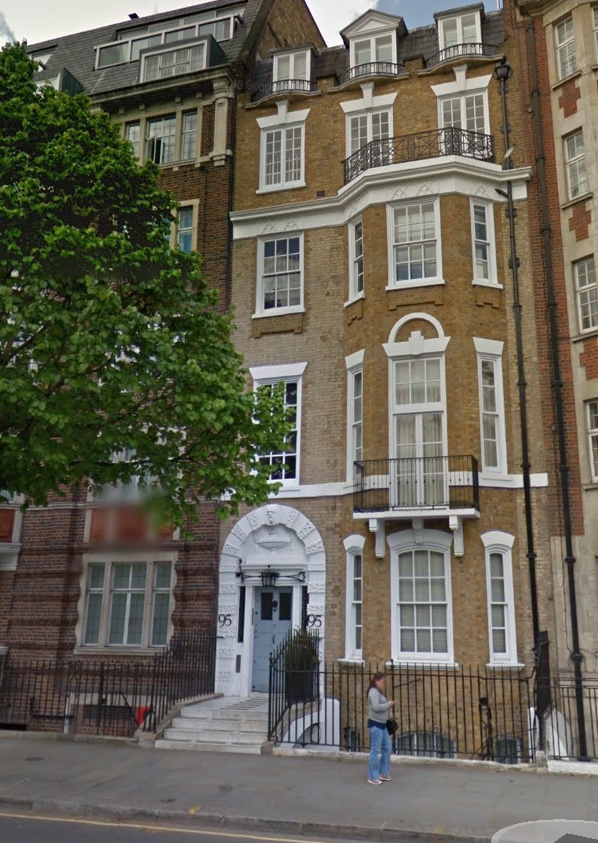
Gertrude Bell – an adventurer, archaeologist, mountaineer and diplomat (who was at least partially responsible for the creation of the nation of Iraq) – has been honoured with an English Heritage Blue Plaque on the Chelsea home that served as her London based for some 40 years. The three storey Georgian residence at 95 Sloane Street (pictured) belonged to Lady Olliffe, the mother of Bell’s step-mother Florence. Bell, who spent much of her time in the Middle East, used the home as her London base between 1884, when she graduated from Queen’s College, through to her last visit to London in 1925, including during an extended period in 1915 when she managed the Red Cross’s Wounded and Missing Enquiry Department’s office in Arlington Street. Meanwhile, jazz musician Ronnie Scott has also been honoured with a Blue Plaque which marks the site of his first club in Soho. Scott and fellow saxophonist Pete King opened jazz club in the basement of 39 Gerrard Street in Chinatown on 30th October, 1959 – 60 years ago this year. The club remained there for six years before moving to 47 Frith Street in 1965. Musicians including Zoot Sims, Johnny Griffin, Roland Kirk, Dexter Gordon, Sonny Stitt, Stan Getz, Benny Golson, Ben Webster, and Al Cohn all performed at the club while patrons included Harold Pinter, the Beatles, Peter O’Toole, and Spike Milligan. For more on English Heritage Blue Plaques, visit www.english-heritage.org.uk/visit/blue-plaques/. PICTURE: Google Maps

What’s in a name?…Great Windmill Street…

This West End thoroughfare obviously, now associated with London’s nightlife, owes its name to a windmill which once stood in the vicinity.

The windmill stood for at least 100 years before it was demolished in the late 17th or early 18th century – the rural land on which it stood was known as Windmill fields.

As the area now known as Soho was developed, the street, which runs between Brewer Street and Coventry Street (albeit split into two sections by Shaftesbury Avenue), was gradually constructed and by the early 1680s both sides of it had been developed.

Famous residents include the Scottish anatomist and physician William Hunter, who, built a large house at number 16 in 1767 which featured an anatomical theatre, dissecting rooms, library and museum. It now forms part of the Lyric Theatre and is recognised with an English Heritage Blue Plaque.

An upstairs room in the former Red Lion pub, located on the corner with Archer Street, is famous for being where Karl Marx and Frederick Engels were asked to write a program of action for the Communist League, published in 1848 as The Communist Manifesto.

Meanwhile, the former Windmill Theatre, which first opened in the 1930s and famously “never closed” during the Blitz, was known for its “Windmill Girls” in which nude girls posed motionless in what were known as “tableaux vivants”, has long been associated with risqué entertainment. The establishment was owned by Laura Henderson, the subject of the 2005 film starring Dame Judi Dench, Mrs Henderson Presents.

The street is also home to the Trocadero complex, originally built in 1896 as a restaurant by J Lyons and Co – of Lyon’s Corner Houses fame – to cater for theatre crowds on the site of what had been the Argyll Assembly Rooms, an establishment which become notorious as a meeting place for prostitutes and their customers. The Trocadero was redeveloped in the 1980s into a shopping and entertainment complex. There are now plans to build a hotel on the site.

Other landmarks include the Soho Parish School – the only school in Soho – which, located at number 23, traces its origins back to 1699 as well as St James Tavern, said to be built in the late 1890s on the site of an earlier tavern, The Catherine Wheel.

View down Great Windmill Street with The Lyric pub on the right and the former Windmill Theatre on the left (Pedro Szekely/licensed under CC BY-SA 2.0)

This Week in London – A rare surviving piece of Queen Elizabeth’s dress on show?; Inside Ronnie Scott’s Jazz Club, and, Islamic influences on art…

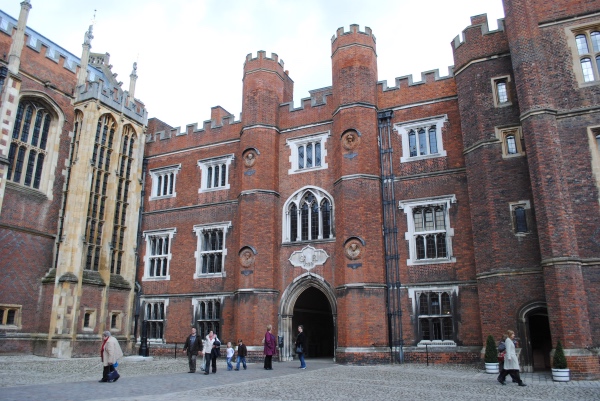
An altar cloth which may have once been part of a dress worn by Queen Elizabeth I goes on show at Hampton Court Palace (pictured) this Saturday. The Bacton Altar Cloth, which was discovered in a church in Bacton in rural Hertfordshire, has undergone two years of conservation work and will be displayed alongside a portrait of the “Virgin Queen” featuring a dress of similar design. The altar cloth has long been associated with Bacton-born Blanche Parry, one of Queen Elizabeth’s servants who became her Chief Gentlewoman of the Bedchamber. Records show the Queen regularly gave her discarded clothing to Parry and for years there has been speculation that the altar cloth was part of one such discarded item. Historic Royal Palaces curator Eleri Lynn, an expert in Tudor court dress, was able to identify previously unseen features and studied the seams of the fabric to show it had once been part of a skirt. Further research – including an examination of the dyes used in the item – have added weight to the theory it was once part of a dress. The altar cloth, on loan from St Faith’s Church in Bacton, can be seen until 23rd February. Admission charges apply. For more, see www.hrp.org.uk. PICTURE: David Adams.

A photographic exhibition of the first ‘golden’ decade of Ronnie Scott’s Jazz Club – featuring images of legendary British and American jazz singers – opens at the Barbican Music Library on Saturday. Ronnie Scott’s 1959-1969: Photographs by Freddy Warren, which marks the club’s 60th anniversary, features Warren’s photographs of the likes of Miles Davis, Duke Ellington, Dizzy Gillespie, Count Basie, Ella Fitzgerald, Zoot Sims, Cleo Laine and Tony Bennett. Warren was the in-house photographer at the Soho club from the opening night in 1959, when it was based in Gerrard Street, and documented the construction of the new site in Frith Street in the mid-1960s along with the arrival in London of big American stars. The exhibition includes rare vintage prints – some which were salvaged from the walls when the club was renovated in 2006, Freddy Warren’s original contact sheets, and previously unseen prints specially produced from the original negatives. The exhibition is free. Runs until 4th January. For more, see www.barbican.org.uk/your-visit/during-your-visit/library.

An exhibition exploring how western artists have been inspired by the Islamic world opens at the British Museum today. Inspired by the east: how the Islamic world influenced western art features paintings by leading ‘Orientalists’ including Eugène Delacroix, John Frederick Lewis and Frederick Arthur Bridgman as well as less well-known pieces like British artist Edmund Dulac’s original illustrations for a 1907 edition of the Arabian Nights, and ceramics by Frenchman Théodore Deck, who in the late 19th century created a range of pieces directly inspired by Islamic originals. The display also includes contemporary reactions to the imagery of Orientalism by Middle Eastern and North African female artists such as Lalla Essaydi’s Women of Morocco triptych and Inci Eviner’s 2009 video work Harem. The display can be seen in The Sir Joseph Hotung Exhibition Gallery until 26th January. Admission charge applies. For more, see www.britishmuseum.org.

Send all items for inclusion to exploringlondon@gmail.com.

10 (more) historic London garden squares…2. Golden Square…


This Soho square was laid out in the late 17th century, possibly by Sir Christopher Wren, and by the early 1700s most of the buildings surrounding the square were complete.

The name of the square is said to be a corruption of ‘gelding’ – the area, once apparently known as Gelding Close, was previously used for the grazing of geldings (there’s also a story that the gelding was featured on a nearby inn sign which locals objected to, renaming it ‘golden’).

It was, at first, the place to be among the well-to-do – among early residents were Barbara Villiers, the Duchess of Cleveland and mistress of King Charles II, James Bridges, who became the 1st Duke of Chandos, and Henry St John, 1st Viscount Bolingbroke, a favourite of Queen Anne.

By the mid 18th century, however, the trendy crowd had moved to developments further west and the square subsequently became noted for the high number of foreign delegations which made their base here, including those of Bavaria, Russia, Genoa and Portugal, as well as foreign artists including Swiss painter Angelica Kauffmann – the first female member of the Royal Academy, and Anglo-Irish painter (and later Royal Academy president) Martin Archer Shee.

Other famous residents have included dancer Elizabeth Gamberini, singer Caterina Gabrielli and Scottish anatomist John Hunter (his former home is one of two marked with English Heritage Blue Plaques in the square). Thomas Jefferson, later a US president, stayed in Golden Square during March and April, 1786, in his only visit to London.

A couple of houses in the square – then occupied by the Bavarian minister Count Haslang – were attacked during the anti-Catholic Gordon Riots. These properties were bought by James Talbot, the Roman Catholic Bishop for London, in 1788, so the Roman Catholic Church in Warwick Street could be build in the gardens behind.

The square had deteriorated somewhat by the time Charles Dickens placed it in his late 1830s story Nicholas Nickleby as the home of Ralph Nickleby, and it become the location of numerous boarding houses and small hotels as well as various professionals.

By 1900 the square had become closely connected with the wool trade with as many as 70 firms connected with it located here. Several such firms are apparently still located here but the square is better known these days for companies associated with the movie business.

The middle of the square was dug up for an air raid shelter in World War II but it was paved afterwards and the statue of King George II, attributed to John Van Nost and erected here in 1753 as part of beautification project (it has been suggested the statue actually represents King Charles II but that remains a matter of conjecture), returned to its place in the middle.

None of the original houses now remain but there are a number of residences which still have at least elements dating from late 18th century rebuilds including numbers 11, 21, 23 and 24.

PICTURE: Top – David Iliff (licensed under CC BY-SA 3.0); Right – David Adams; Below – RozSheffield (licensed under CC BY-NC-ND 2.0)

Where’s London’s oldest…French patisserie?

The oldest existing French patisserie in London is said to be Maison Bertaux, based in Greek Street in Soho. 

The premises, where you can still indulge in delights including eclairs, croissants and delectable fruit tarts, was founded in 1871 by one Monsieur Bertaux, apparently a French communard from Paris.

It lies at the heart of what was then the city’s French community and located at number 28, stands next door to another Soho landmark, the Coach and Horses pub.

Bertaux apparently ran the business until 1909 and it’s since passed through a number of hands with current owners, sisters Michele and Tania Wade, reported as having taken over in 1988.

Famous patrons have reportedly included writers Virginia Woolf and Karl Marx,  actors Steve McQueen and Nicole Kidman, artist Grayson Perry and musician Bob Geldof. The patisserie also famously made Lily Allen’s wedding cake and hosted the late fashion designer Alexander McQueen’s 25th birthday party.

Bastille Day celebrations are, of course, a highlight of the year.

For more, see www.maisonbertaux.com.

PICTURE: Google Maps.