Now long gone, this central London property was once the residence of the, you guessed it, bishops of Durham.
West End
Three places to remember Agatha Christie…
Before we get back to our current Wednesday series on bishop’s palaces, we pause to remember the death of celebrated crime writer Agatha Christie, 50 years ago this week (she died on 12th January, 1976).
• First up, we head to 58 Sheffield Terrace in Holland Park where Christie lived with her second husband, archaeologist Max Mallowan, between 1934 and 1941 (one of several homes she lived in in the area), and where she wrote books including Murder on the Orient Express (1934) and Death on the Nile (1937). The house is marked with an English Heritage Blue Plaque.
• Then it’s over to University College Hospital in Bloomsbury where Christie worked during World War II as a volunteer dispenser (and where she added to her expertise on poisons). Christie had in 1917 sat three exams to become a qualified pharmaceutical assistant at the Apothecaries Hall in London.
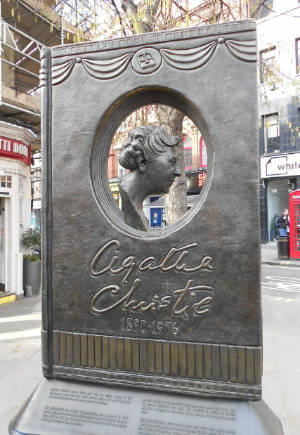
• Finally, we head to the West End and St Martin’s Theatre where Christie’s play, The Mousetrap, continues to be performed nightly, notching up more than 30,000 performances. Outside is the Agatha Christie Memorial (pictured) depicting a book with a bust of Christie set into the centre.
We’ll be taking a more detailed look at Agatha Christie’s London in a series soon…
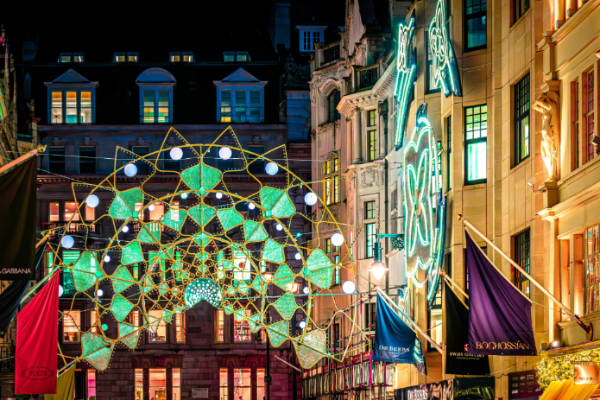
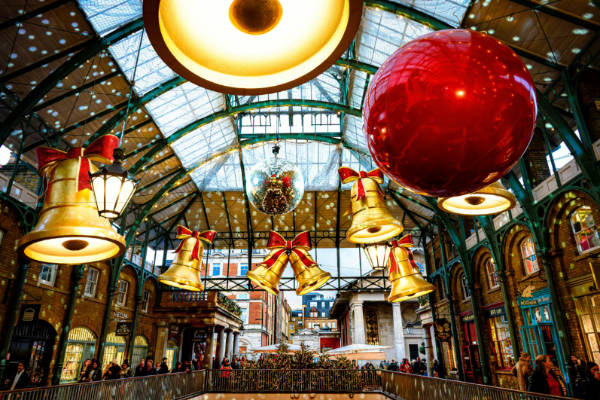
LondonLife – Streets aglow for Christmas…
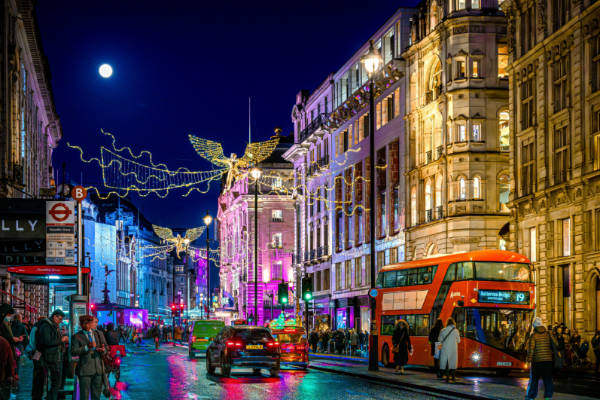
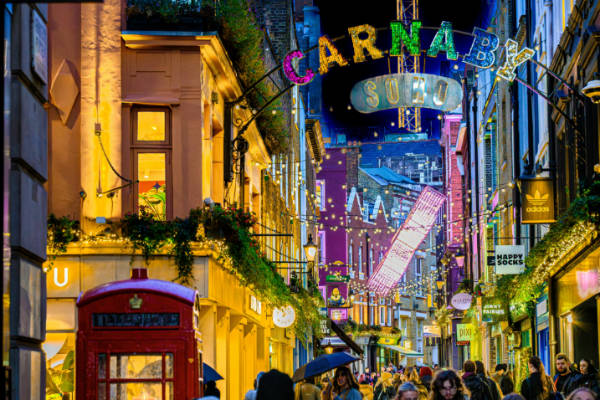
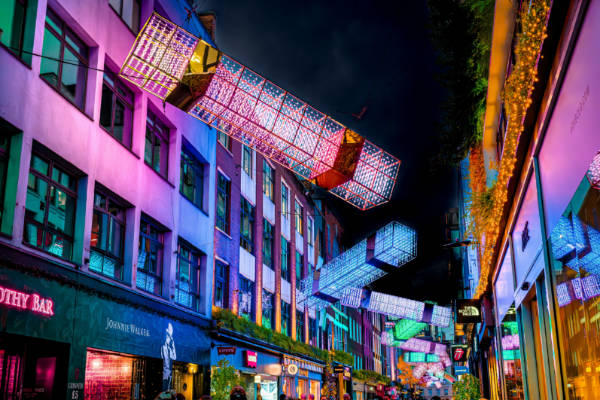
This Week in London – Wildlife Photographer of the Year exhibition; 20th century conflicts; Jennie Baptiste at Somerset House; and Nigerian Modernism…
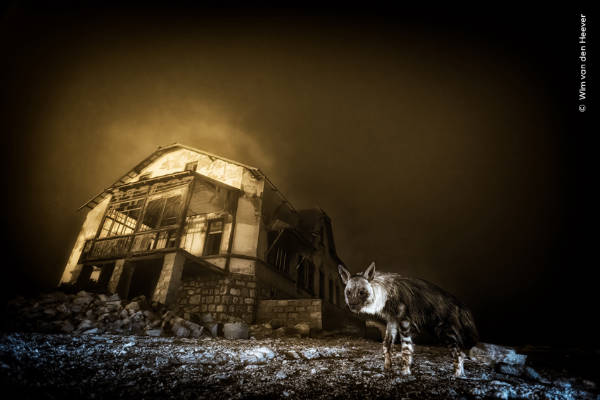
• An exhibition of entries into the annual Wildlife Photographer of the Year competition opens tomorrow at the National History Museum in South Kensington. The exhibition features 100 images selected from a record-breaking 60,636 entries and follows from this week’s announcement of the winners at a ceremony held at the museum earlier this week. The display includes the winning image – ‘Ghost Town Visitor’ which, captured by South African wildlife photographer Wim van den Heever depicts a brown hyena near the ruins of a long-abandoned diamond mining town in Kolmanskop, Namibia – as well as the winner of the Young Wildlife Photographer of the Year 2025 – 17-year-old Italian Andrea Dominizi’s After the Destruction which spotlights a longhorn beetle in the Lepini Mountains of central Italy, an area once logged for old beech trees, with a background of abandoned machinery. Other images on show include the winner of the Impact Award – Brazilian photographer, Fernando Faciole’s Orphan of the Road depicting an orphaned giant anteater pup following its caregiver after an evening feed at a rehabilitation centre – as well as category winners. The exhibition can be seen until 12th July next year. Admission charge applies. For more, head here.
• Three 20th century conflicts which broke out in Malaya, Kenya and Cyprus after World War II are the subject of a new exhibition at the Imperial War Museum in Lambeth. Emergency Exits: The Fight for Independence in Malaya, Kenya and Cyprus looks at how these three conflicts, known as “emergencies” to the British Government, shaped and continues to shape Britain, its former territories and the wider world today. The display includes more than 70 objects such as propaganda posters, flags and artworks as well as oral histories and personal belongings which belonged to those impacted by them. As well as telling the stories of the three conflicts, Emergency Exits also explores Operation Legacy, the British Government’s attempt to prevent publication of sensitive documents related to the conflicts which included evidence of human rights abuses. The free exhibition, which opens on Friday, runs until 26th March. For more, see iwm.org.uk/events/emergency-exits-the-fight-for-independence-in-malaya-kenya-and-cyprus.
• The first major solo exhibition focusing on the work of pioneering Black British photographer Jennie Baptiste opens in the Terrace Rooms at Somerset House on Friday. Jennie Baptiste: Rhythm & Roots, which is a highlights of Somerset House’s 25th birthday programme, charts how Baptiste used her lens to capture youth culture, music, fashion, and urban life within the Black British diaspora in London in the past few decades. The exhibition can be entered under a “pay what you can” model. Runs until 4th January. For more, see www.somersethouse.org.uk/whats-on/jennie-baptiste-rhythm-and-roots.
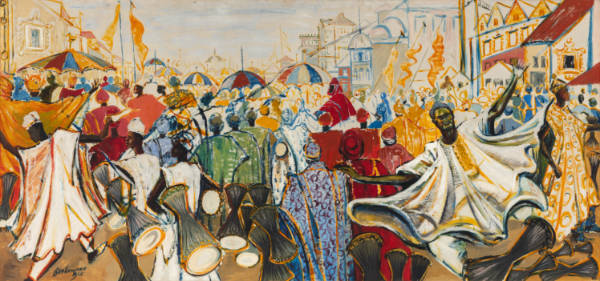
• On Now: Nigerian Modernism. The Tate Modern is hosting the first UK exhibition to trace the development of modern art in Nigeria with more than 250 works by more than 50 artists on display. The exhibition, which spans the period from the 1940s to today, features works by globally celebrated artists of the 1940s, Ben Enwonwu and Ladi Kwali, as well as works by The Zaria Arts Society members Uche Okeke, Demas Nwoko, Yusuf Grillo, Bruce Onobrakpeya, and Jimo Akolo, Nsukka Art School members including Obiora Udechukwu, Tayo Adenaike and Ndidi Dike, and concludes with a spotlight on the work of Uzo Egonu. The display can be seen until 10th May. Admission charge applies. For more, see www.tate.org.uk/whats-on/tate-modern/nigerian-modernism.
Send all items for inclusion to exploringlondon@gmail.com.
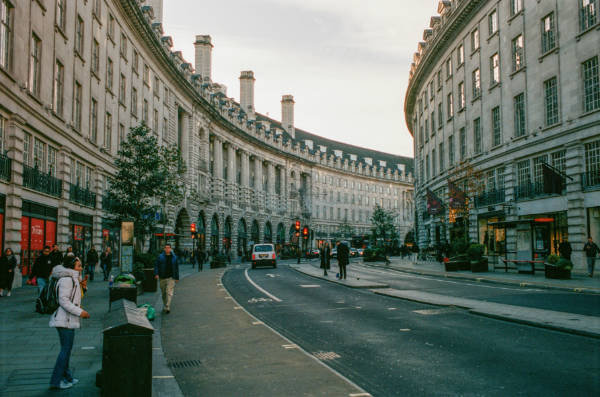
LondonLife – Regent Street curve…
This Week in London – Downton Abbey in London; new evening street market for Rupert Street; and, ‘Virtual Beauty’ at Somerset House…
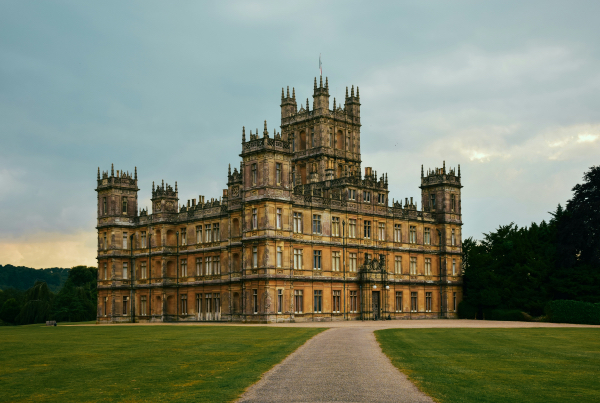
• Downton Abbey has popped up in London. With the final Downton Abbey movie, Downton Abbey: The Grand Finale next month, Bonhams auction house are auctioning off some iconic props, costumes and set pieces from across the series and is accompanying it with a preview exhibition which is open to the public. Among the items up for sale in Downton Abbey: The Auction are everything from a 1925 Sunbeam saloon car and various dresses and costumes including Lady Mary Crawley’s wedding dress (as worn by Michelle Dockery) to a George III oak dresser (seen in the Servant’s Hall in season 1), a silver pocket watch worn by Mr Carson (played by Jim Carter) and an autographed script from episode one, season one. The display can be seen at Bonham’s salesroom at 101 New Bond Street until 16th September. Admission is free but bookings are essential. For more head to https://www.eventbrite.co.uk/e/downton-abbey-the-auction-tickets-1555891024939
• A new evening market opens in Rupert Street, Soho, tomorrow night. The market – said to be the city’s first evening market – will be open from Mondays to Saturdays between 3pm and 10pm and will feature different themes on different days including artisan food on Wednesdays, world street food on Thursdays, vintage clothing on Fridays, and arts, crafts and jewellery on Saturday. Monday and Tuesday will be a general market. For more, see https://www.westminster.gov.uk/licensing/markets-and-street-trading/markets-westminster/rupert-street-w1.
• On Now: Virtual Beauty. This exhibition at Somerset House explores the impact of digital culture and technologies on the traditional definitions of beauty today. It features the work of more than 20 artists with highlights including ORLAN’s Omniprésence (1993), a groundbreaking performance in which the artist live-streamed her own facial aesthetic surgery, and Amalia Ulman’s Excellences & Perfections, a powerful commentary on the authenticity of social media personas. There are also AI-generated portraits by Minnie Atairu, Ben Cullen Williams, and Isamaya Ffrench, and Harriet Davey, Frederik Heyman, and Andrew Thomas Huang explore digital self-expression and the creation of avatars beyond human boundaries. Not suitable for under 15s. Admission is pay what you can. Runs until 28th September. For more, see https://www.somersethouse.org.uk/whats-on/virtual-beauty.
Send all items to exploringlondon@gmail.com
This Week in London – Red Lion Playhouse excavation explored; a restored Victoria Embankment Gardens fountain; and, a blue plaque for the first female civil servant…
• An exhibition of items unearthed at the site of the former Red Lion Playhouse and the subsequent inn – the White Raven Tavern – built on the site in Whitechapel has opened at UCL East Culture Lab. Patterns Beneath Our Feet tells the story of a 2015-19 excavation on the site and features some of the discoveries made there – everything from clay pipe fragments to Bellarmine jugs and sugar moulds. The White Raven has particular associations with the history of Black Londoners and was one of the taverns from where members of London’s Black community began coerced journeys of resettlement to West Africa in 1786. The free exhibition is open Wednesdays and Saturdays by appointment. Members of the excavation team will be at the Culture Lab (UCL East Marshgate, 7 Sidings Street, Stratford) this Monday (21st July) to guide people through the exhibition as well as answer questions as part of the Festival of Archaeology. There will be a parallel event at the excavation site. For more, see https://www.ucl.ac.uk/archaeology-south-east/research-projects/2025/jul/whitechapel.
• A 1950s fountain in Victoria Embankment Gardens is once again flowing after more than 20 years of silence. The fountain, located at the end of Villiers Street, is octagonal in design and was inspired by a pumping station erected nearby in 1675-76. Standing at more than 70 feet tall, the water tower used to be a major landmark on the London skyline and had provided water pressure for houses along the Strand by using a heavy weight on the top of the tower. The bandstand which surrounds the fountain dates from the 1870s, when it was used to host midday concerts for workers from the neighbouring printing works. The £85,000 restoration project preserved the fountain’s original teak finish and involved replacing the sprinkler system and water treatment as well as adding LED lighting to each tier of the fountain.
• Britain’s first female civil servant has been honoured with a blue plaque at the site of her former home in Battersea. Jeanie Senior became the first female civil servant in 1873 when she was appointed as the first female inspector for girls being educated in pauper schools and workhouses (and later went to work with soldiers returning from the Franco-Prussian War, which contributed to the foundation of the National Society for Aid to Sick and Wounded in War, a predecessor to the British Red Cross, as well as being a co-founder of the Metropolitan Association for Befriending Young Servants). The plaque, funded by The Battersea Society and the FDA union, is located on the Battersea Arts Centre where the property named Elm House was once located.
Send all items for inclusion to exploringlondon@gmail.com.
Lost London – Hotel Cecil…
Once the biggest hotel in Europe, the opulent Hotel Cecil opened in 1896 on a prominent site overlooking the Thames. But it only survived for little more than three decades.
Subscribe for just £3 a month to support our work and access all of our articles.
London pub signs – Three quirky pub names (briefly) explained…
We pause from our usual London pub names entries to mention three pub names which, while they don’t come from any association with important historical figures or events of the past, do have an interesting, if briefly explained, origin story.
First up its John the Unicorn, located in a former decorator’s shop at 157-159 Rye Lane in Peckham. The story goes that the pub’s first landlord (and it’s only been opened since 2016), named it after his child’s toy – a fluffy unicorn named, you guessed it, John.
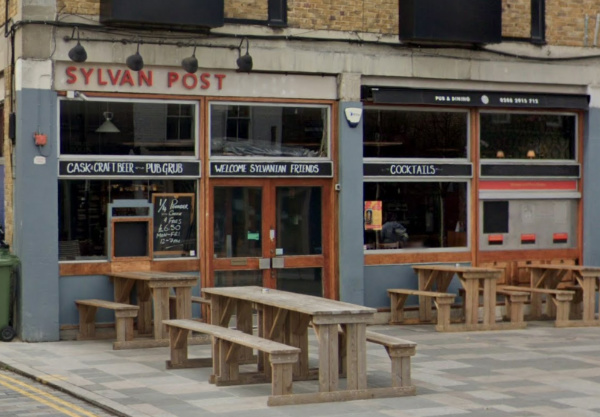
The Sylvan Post at 24-28 Dartmouth Road in Forest Hill is located – yes, you guessed it – in a former post office. The “Sylvan” part comes from the location in Forest Hill. Get it?
Then we come to The Pregnant Man at 40 Chancery Lane. Located under the headquarters of advertising behemoth Saatchi & Saatchi, the pub was named for one of their most memorable ad campaigns of the 1970s which, run on behalf the Family Planning Association, featured a pregnant man with the caption, “Would you be more careful if it was you who got pregnant?”.
London Explained – London Theatreland…
Said to be the largest theatre district in the world, London’s Theatreland is located in the West End (and some say synonymous with it) and features some 40 playhouses.
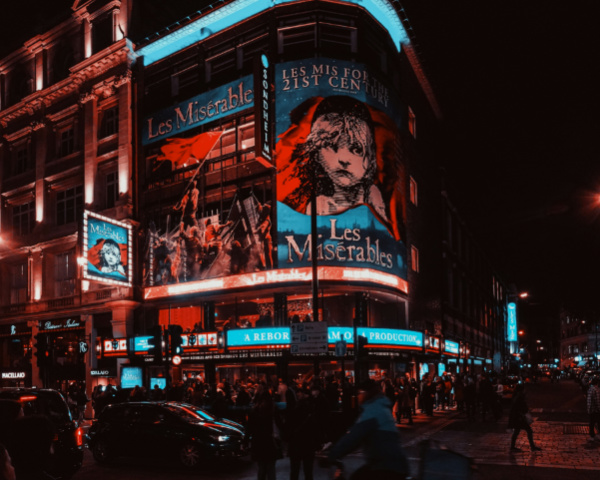
The theatres are primarily located in Covent Garden, around Leicester Square and Piccadilly Circus and in Soho. The street most associated with today’s Theatreland is perhaps Shaftsbury Avenue.
Many of the privately owned theatres date from the Victorian or Edwardian period and are protected against inappropriate development (although this means they also sometimes lack more modern amenities)
Among the theatres in the district is the Theatre Royal, Drury Lane (the oldest theatre in London, it opened in 1663) as well as the Savoy Theatre (which in 1881 became the first to be lit by electricity), the London Palladium in Soho (which has hosted the Royal Variety Performance 43 times), and the Lyceum Theatre (where Bram Stoker was once manager).
The longest-running production in the world – Agatha Christie’s play The Mousetrap – has been running at St Martin’s Theatre since 1952 (though it was interrupted during the COVID-19 pandemic). The longest-running musical in the West End – Les Miserables – has been running since 1985 (first at the Palace Theatre and now at the Sondheim Theatre (formerly Queens Theatre)).
Where’s London’s oldest…(still running) Indian restaurant)?
The oldest Indian restaurant in London – and, according to the website, the UK – Veeraswamy was founded in 1926, at 99 Regent Street.
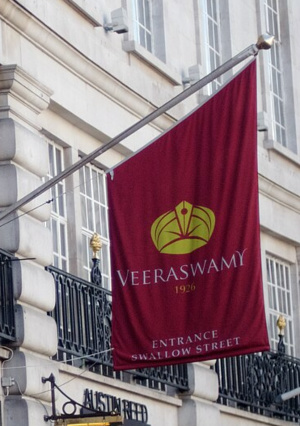
The restaurant was opened by Edward Palmer, the great-grandson of General William Palmer, who was secretary to Warren Hastings, the first Governor General of India and the Moghul Princess Faisan Nissa Begum.
It’s name is said to have come from his mother’s family and Palmer is said to have been greatly influenced by the princess in the creation of the menu.
The restaurant – located in Victory House and entered from Swallow Street – was taken over by the MP William Steward in 1934. He sold it in 1967 and the restaurant later passed through several hands.
The current owners – Namita Panjabi & Ranjit Mathrani of MW Eat – bought it in 1996. They have since modernised the menu and interiors.
Over the years, the restaurant has attracted a star-studded clientele which included royalty including Edward, Prince of Wales (later King Edward VIII), King Abdullah of Jordan, and the Maharajah of Cooch-Behar as well as Winston Churchill, actor Marlon Brando and Princess Anne.
In 2016, the restaurant was awarded a Michelin star.
The restaurant, which is located on the Crown Estate, is currently collecting signatures for a petition asking King Charles III to intercede with the Crown Commissioners, asking them to renew its lease after the commissioner served a notice to vacate. The matter is currently before the courts.
For more, see www.veeraswamy.com/.
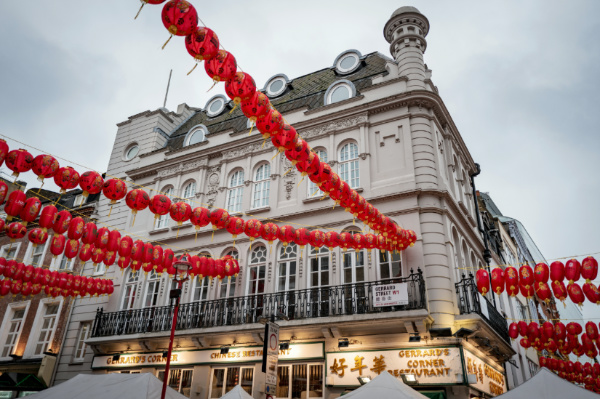
LondonLife – Celebrating Lunar New Year…
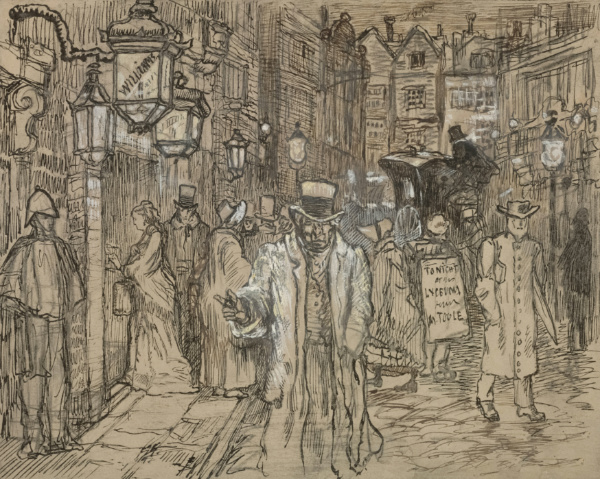
LondonLife – London, 1879…
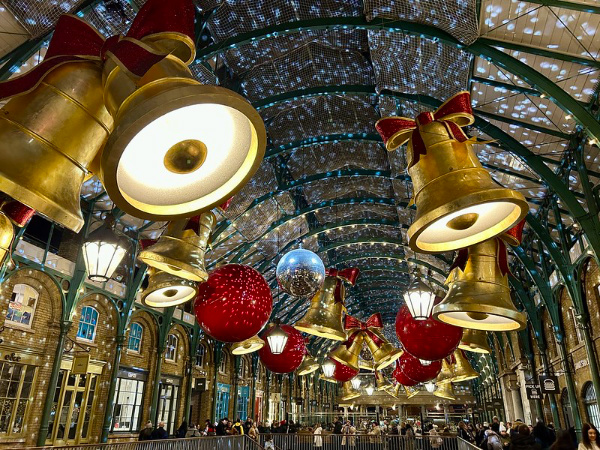
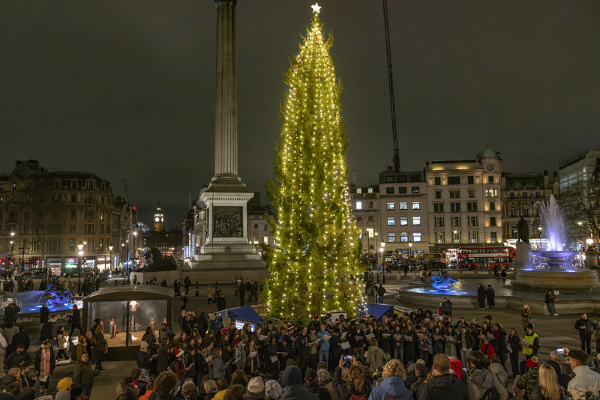
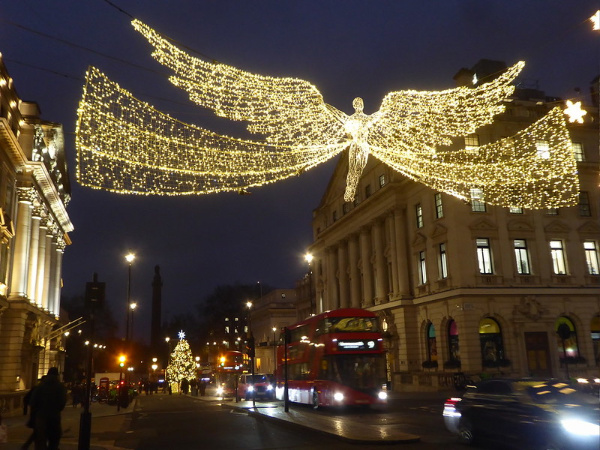
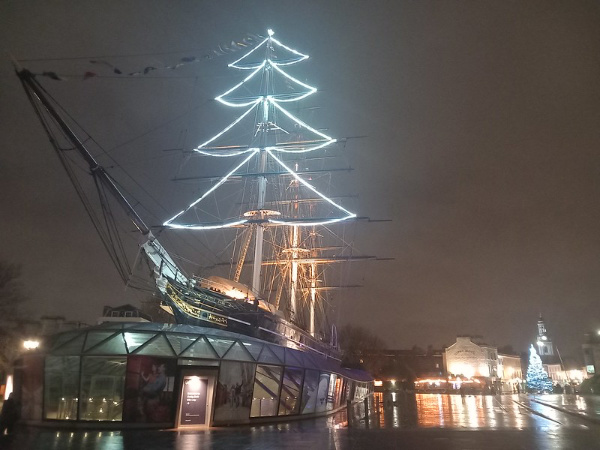
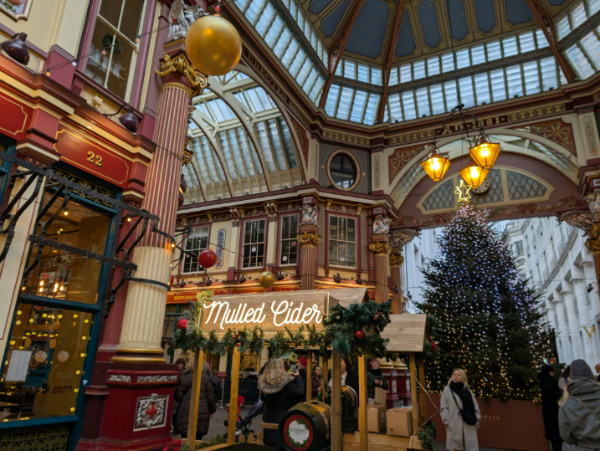
LondonLife – London, wrapped for Christmas …
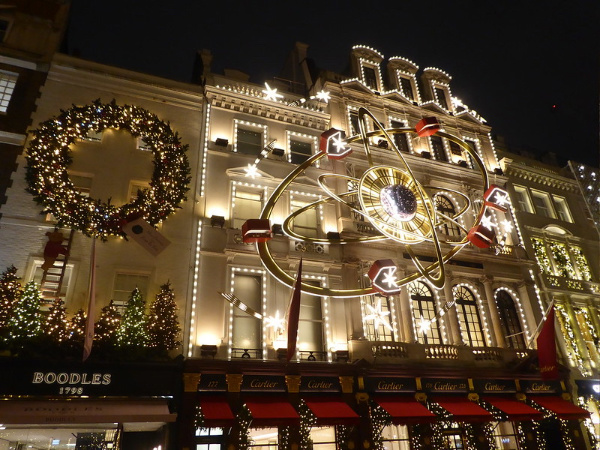
Cartier with a cosmic display in New Bond Street. PICTURE: JuliaC2006 (licensed under CC BY 2.0)
LondonLife – ‘Nature’s Confetti’…
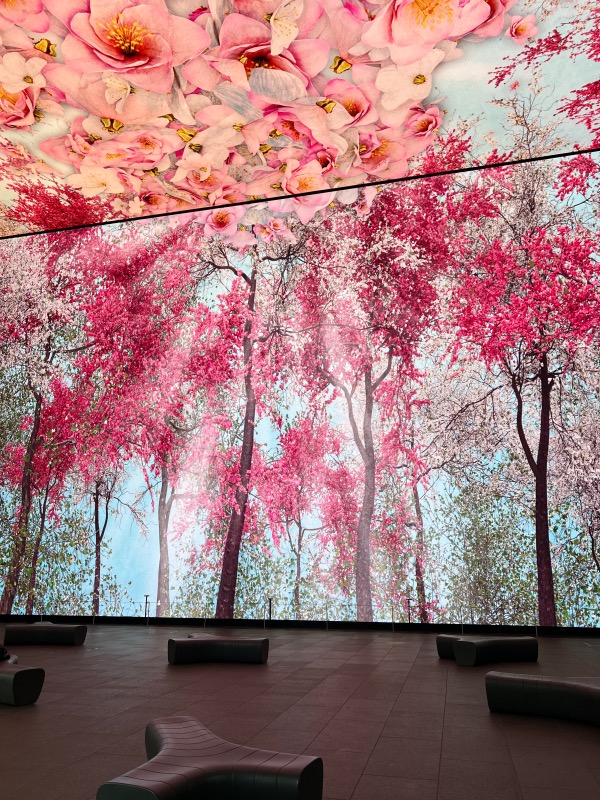
Experience blossoms in all their glory at ‘Nature’s Confetti’ a new installation at Outernet London. Created in partnership with the National Trust as part of its annual “blossom” campaign, this immersive experience in the Now Building at the intersection of Charing Cross and Tottenham Court Roads has been created using shots switching between city vistas and close ups of blossoms accompanied by sound recordings replicating those in nature captured at National Trust properties such as Petworth House and Park in West Sussex. Visitors also have the opportunity to donate to the Trust’s ‘Plant a Tree’ appeal, which will help plant and establish 20 million trees by 2030, four million of which are expected to be blossom varieties. But you’ll have to be quick – Nature’s Confetti only runs until 28th April. Entry is free. For more, see www.outernet.com/news/outernet-and-the-national-trust-launch-natures-confetti-experience.
A Moment in London’s history – The first Selfridges Christmas windows display…
Oxford Street department store Selfridges is known for many firsts and among them is that it was the first department store in the UK to have window displays for Christmas.
It was in 1909, having opened the store in March that year, that American Harry Gordon Selfridge, drawing on his experience in the states where Macy’s in New York had featured Christmas window displays since the 1870s, decided to illuminate the display windows at his store in a bid to allow passersby to see the goods on display.

The windows were just one of the many innovations aimed at celebrating Christmas Selfridge – who is credited with having been the first to use the line “only (x) number of shopping days till Christmas” while working at Marshall Field’s in Chicago – embraced in the store.
Christmas displays were said to almost cover an entire floor and there were mince pies for customers, a chance to visit with Santa Claus, and a gift advice service as well as men-only tours of the store to help them with buying gifts for the females in their lives.
This year’s Christmas display at Selfridges was created around the theme of ‘showtime’ and reportedly took 100 hours to put together. It features characters including Santa Claus and the elves in a workshop.
LondonLife – Gathered round Eros…
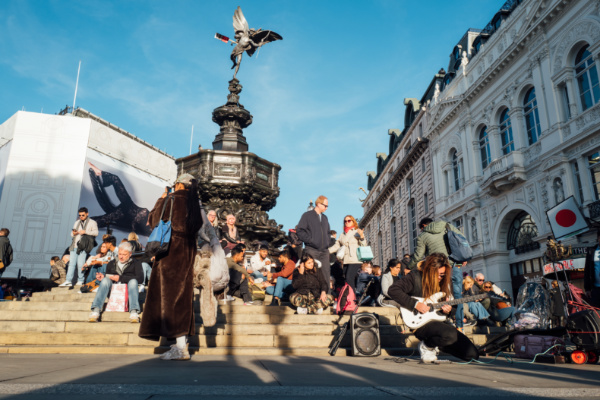
The statue of Eros at the heart of Piccadilly Circus.
This Week in London – London Design Biennale; canal wildlife; a suffragette princess honoured; and, the ‘Polar Silk Road’ explored…
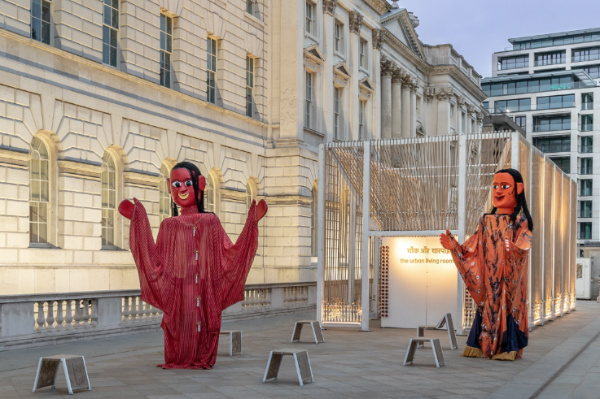
• The almost month-long London Design Biennale kicks off at Somerset House today under the theme of ‘The Global Game: Remapping Collaborations’. The fourth edition of the biennale is artistically directed by the Nieuwe Instituut – the Dutch national museum and institute for architecture, design and digital culture – and takes over the entirety of Somerset House. Among the exhibits is the India pavilion (pictured above) featuring a multi-sensory evocation of the essence of a contemporary Indian city chowk – an open market at the junction of streets – through the visual metaphor of a charpai – a traditional woven daybed, Malta’s large-scale ‘village-square’ installation that merges traditional city planning with the Phoenician-Maltese tradition of fabric production and dyeing of the multiple colours of Phoenician purple, the Ukrainian Pavilion which features am interior construction symbolising the country’s industrial, natural resource, and creative richness and a series of external projects which tell stories about new design collaborations in times of crisis for Ukraine and the vital role of design in creating new progressive connections. There’s also the chance to see the Ai-Da Robot, the world’s first humanoid robot artist, which will make history by showing her unique ability to design objects. Running alongside is the EUREKA exhibition which will share design-led innovation from leading research centres. Runs until 25th June. Admission charge applies. For more, see www.somersethouse.org.uk/whats-on/london-design-biennale-eureka-2023.
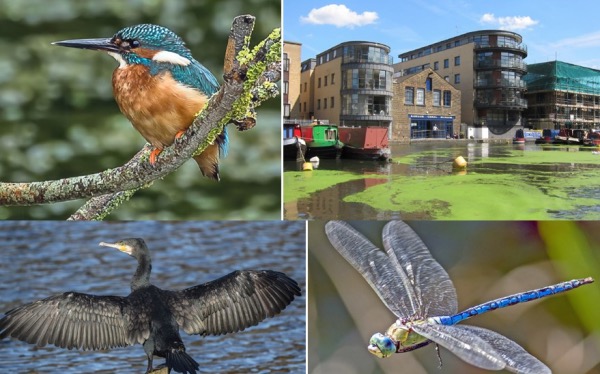
• A new exhibition highlighting the flora and fauna of London’s canals has opened at the London Canal Museum in King’s Cross. Many of the canals were derelict by the end of the 20th century but have received a new lease of life in recent times as leisure destinations. These days, they provide a “highway” for fauna including birds, fish and mammals to move in and out of the capital, some of which is showcased in this new display. Entry with general admission and for an extra fee, guided narrowboat trips along The Regent’s Canal are available on selected days. For more, see www.canalmuseum.org.uk.
• Princess Sophia Duleep Singh, a suffragette, daughter of the last Maharajah of the Punjab, and god-daughter to Queen Victoria, has been commemorated with an English Heritage Blue Plaque. The plaque marks Faraday House in Hampton Court, granted to the princess and her sisters as a grace and favour apartment by Queen Victoria. Also known as ‘Apartment 41’, the property – which was named after scientist Michael Faraday – was home to Princess Sophia for more than 40 years and her base when she was campaigning for women’s suffrage. For more, see www.english-heritage.org.uk/visit/blue-plaques/.

• The ‘Polar Silk Road’ – a channel opened up thanks to melting Arctic Sea ice – is the subject of a new exhibition at the Natural History Museum. Gregor Sailer: The Polar Silk Road features 67 photographs taken by acclaimed Austrian artist and photographer Gregor Sailer showcasing manmade structures – from isolated research centres to Icelandic geothermal power stations – captured across four countries in the Arctic circle. There’s also a short film discussing the impacts of the climate crisis. The exhibition is free to visit. For more, see www.nhm.ac.uk/visit/exhibitions/the-polar-silk-road.html.
Send all items for inclusion to exploringlondon@gmail.com.
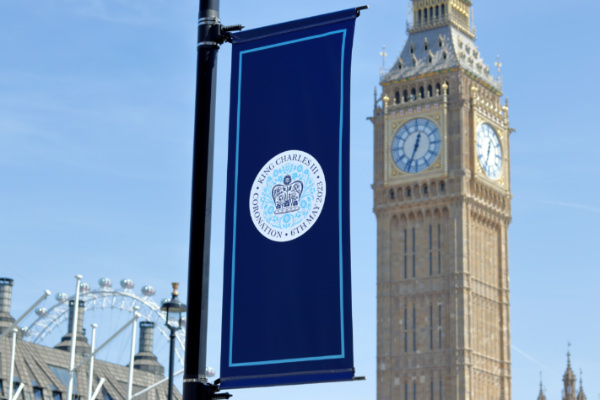
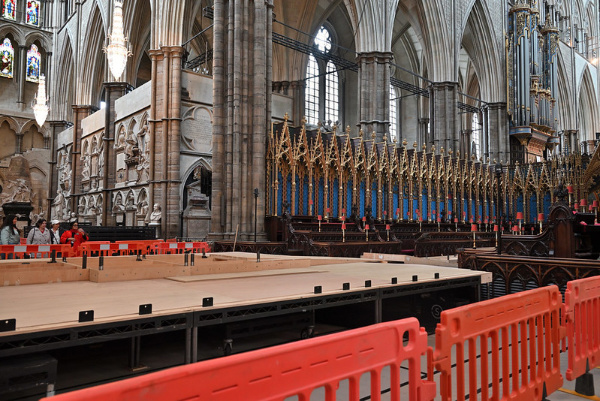
LondonLife Special – (More) coronation preparations…
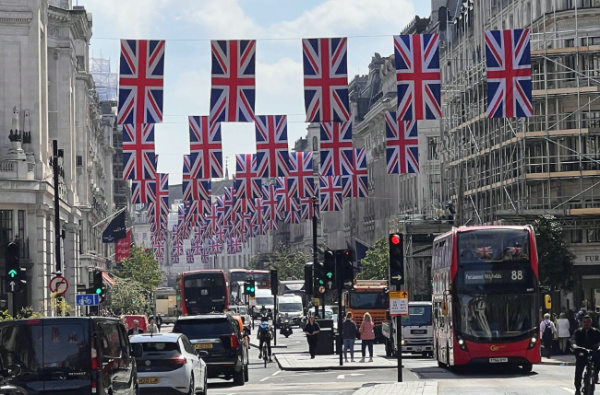
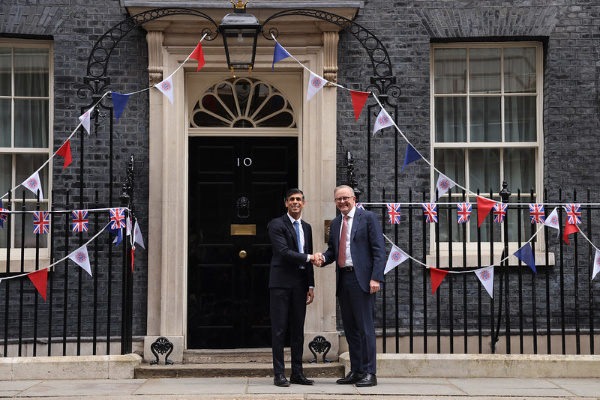
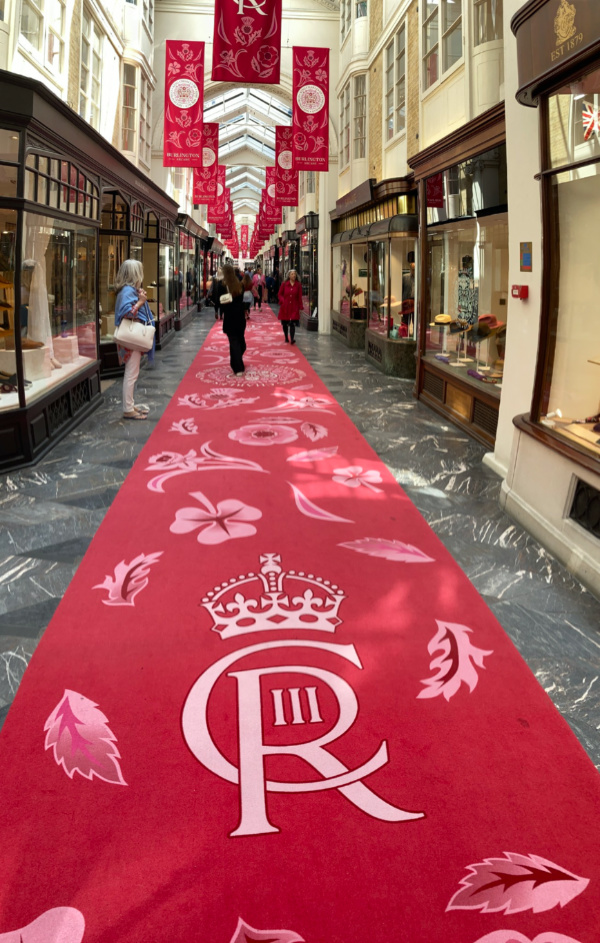
The Burlington Arcade rolls out the red carpet with the new King’s cipher. PICTURE: Matt Brown (licensed under CC BY 2.0)
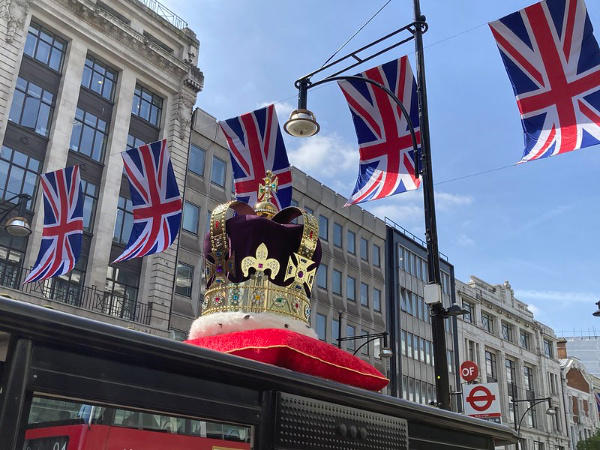
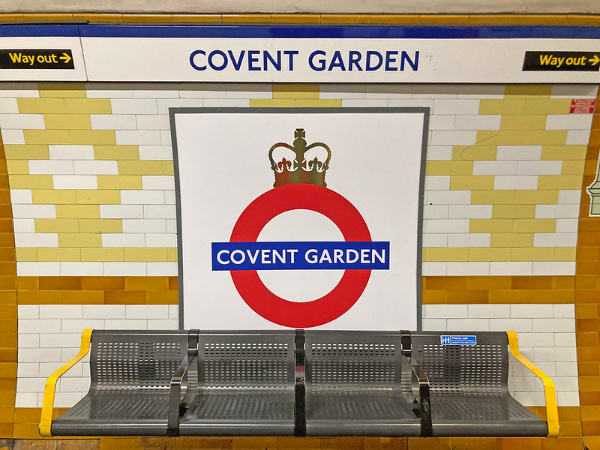
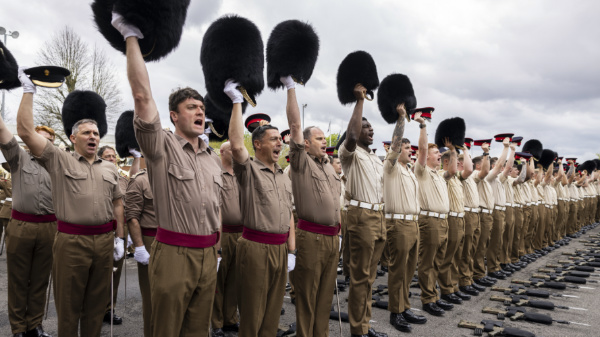
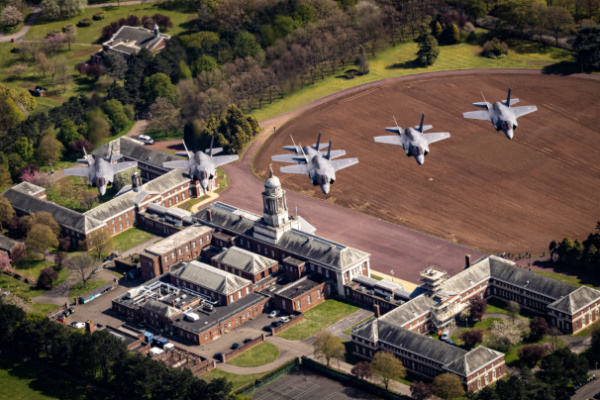
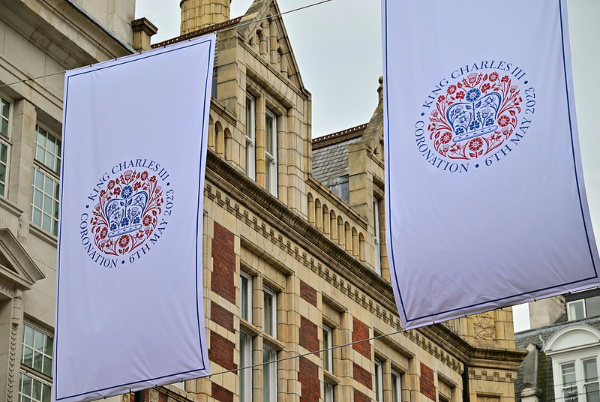
LondonLife – Coronation preparations…

 Exploring London
.jpg)