LondonLife – Downing Street’s Christmas lights…


Earlier…


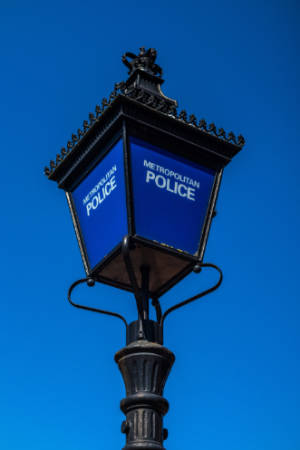
London has several police forces so let’s explain.
The largest police force in London (and the UK as a whole) is the Metropolitan Police. They are responsible for policing the Greater London area and its 8.6 million residents (with some exceptions – more on that in a moment).
The Met, currently led by Commissioner Sir Mark Rowley, was founded by Sir Robert Peel in 1829 and across the almost 200 years since has grown to a service of more than 33,000 police officers, 11,000 staff, almost 1500 police community support officers and more than 1,100 special officers.
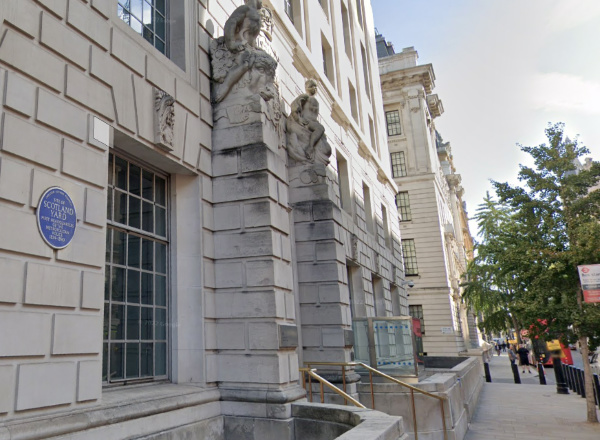
They are headquartered at New Scotland Yard on Victoria Embankment in Westminster.
The Met’s jurisdiction comprises some 620 square miles – the 32 boroughs of Greater London.
An exception within Greater London is within the Square Mile of the City of London, home to some 8,000 residents but host to an additional 500,000 workers, tourists and others each day. This falls under the jurisdiction of the much smaller City of London Police.
The London City Police officially formed in 1832 but became the City of London Police with the passing of the City of London Police Act 1839.
Led by Commissioner Peter O’Doherty, the 17th City of London police commissioner, the service consists of more than 1,000 officers and staff and as well as providing policing services locally, the City of London Police also leads policing efforts nationally on fraud and cyber-crime.
They are currently temporarily headquartered at Guildhall.
A number of other police services also operate in London. They include the British Transport Police, responsible for policing the railway network including track and stations as well as the London Underground and Docklands Light Railway.
The Ministry of Defence Police, meanwhile, are responsible for policing Ministry of Defence property in London including the ministry itself in Whitehall while the tiny Kew Constabulary is responsible for policing Kew Gardens (the former Royal Parks Constabulary merged with the Met in 2004 – the parks are now policed through a specialist unit in the Met).

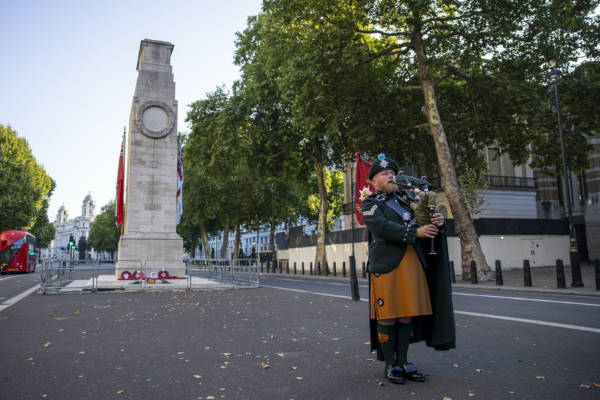
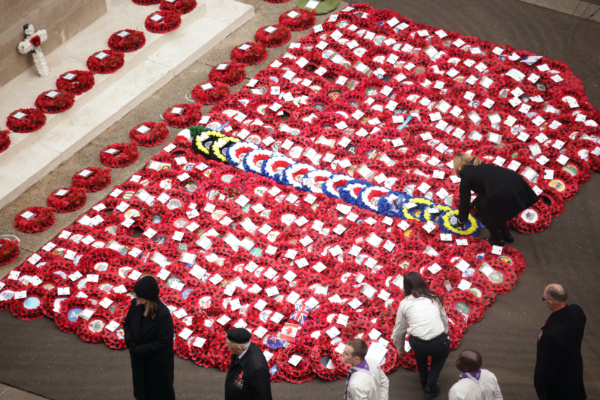
Lance Corporal James Bell plays the bag pipes in front of the Cenotaph to commemorate the 80th anniversary of Victory in Japan Day on Friday, 15th August. Lance Corporal Bell was one of six military pipers who performed solemn laments across the UK, the Far East, and aboard HMS Prince of Wales at sea, to honour the end of World War II and the sacrifices of the Commonwealth forces.

London commenced four days of national commemorations for the 80th anniversary of the end of World War II in Europe – known as Victory in Europe (VE) Day – on Monday.
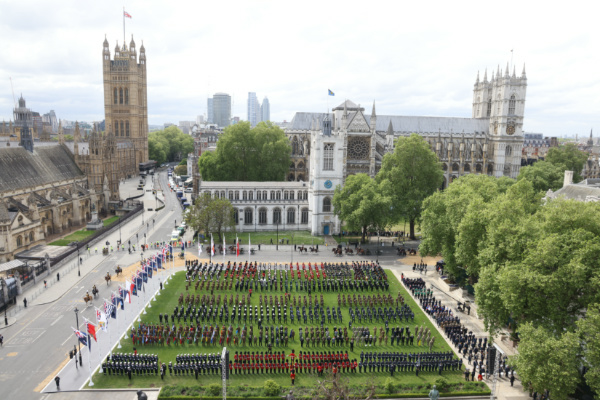
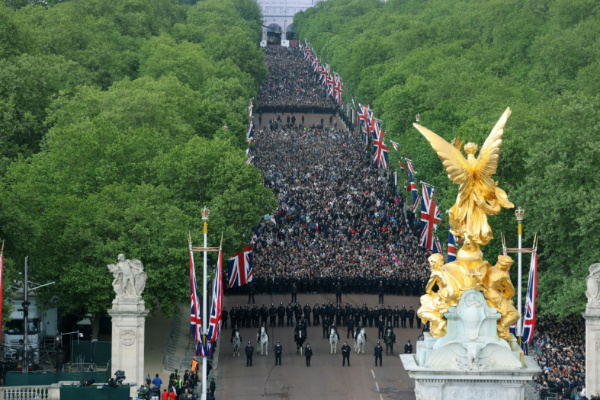
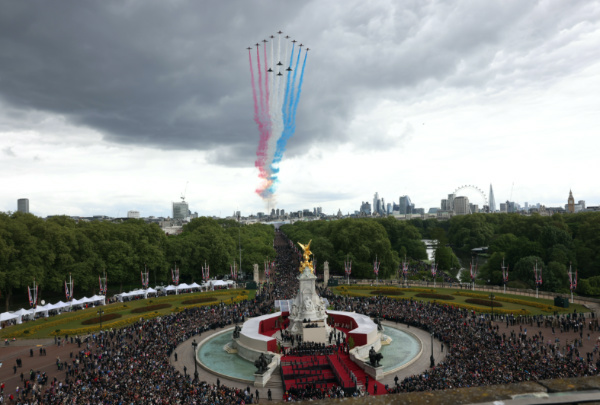
A military processions of about 1000 members of the Royal Navy, British Army and Royal Air Force made its way from Parliament Gardens along Whitehall before turning through Admiralty Arch and down the Mall to Buckingham Palace. Some 23 aircraft were involved in a flypast.
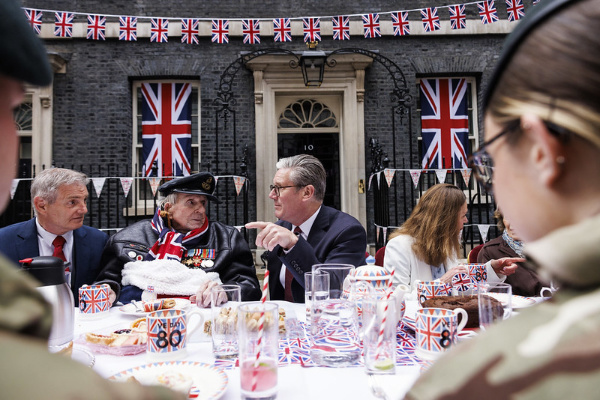
Tea parties were also held across the country to mark the event, including at Buckingham Palace and 10 Downing Street.


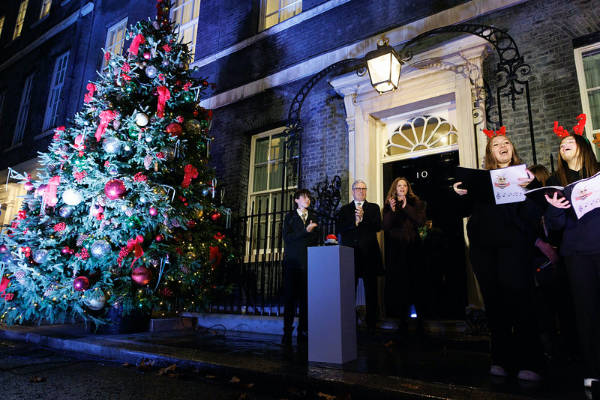
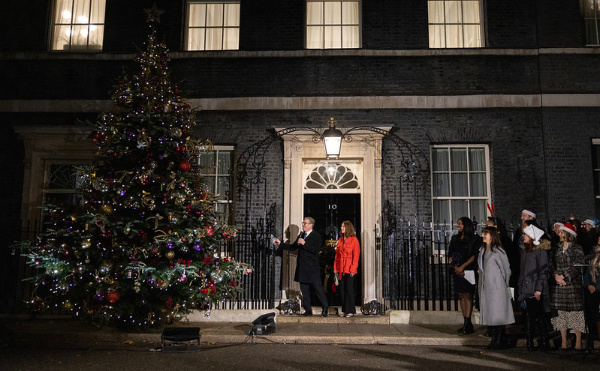
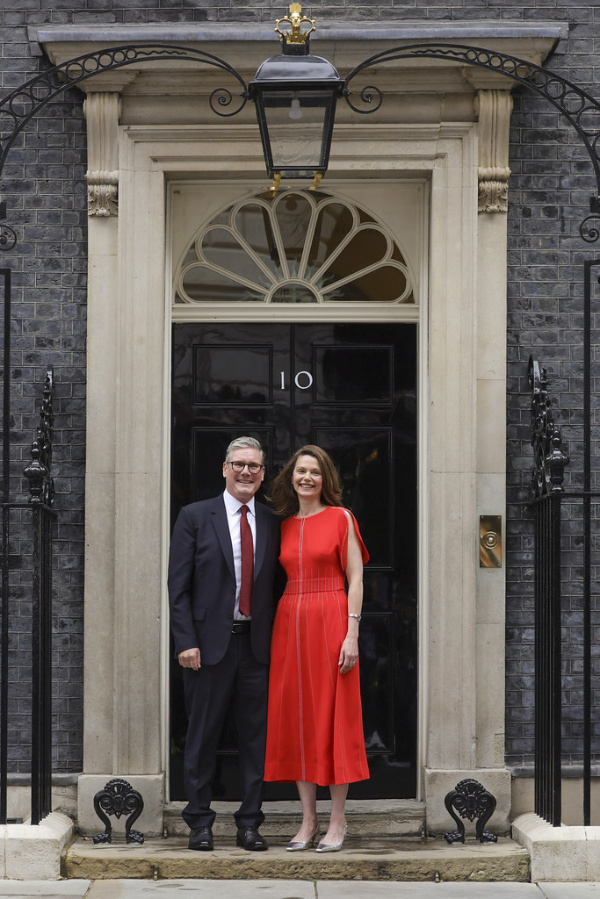
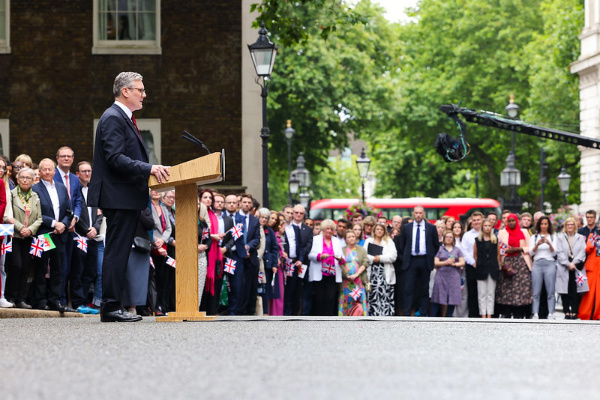
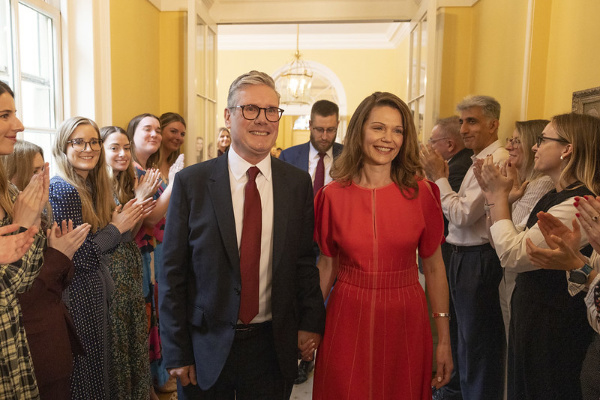
Prime Minister Keir Starmer and his wife Victoria Starmer turned on lights on the Christmas tree outside 10 Downing Street on 2nd December. The couple were joined by NHS workers, military personnel and members of the police. The Christmas tree is the winner of a competition run by the British Christmas Tree Growers Association, chosen for showcasing “the finest dedication, craftsmanship and commitment of British Christmas tree growers”. This year’s Nordmann Fir was grown by Evergreen Christmas Trees – a family run business based on the Welsh border who have been growing Christmas trees since 1992. The runner-up in the Christmas tree competition – Cadeby Tree Trust from Warwickshire – have supplied two Christmas trees for inside Downing Street. The wreath for the famous door at Number 10, meanwhile, was provided by Santa Trees, a Christmas tree farm from Cornwall. Lights on London’s most famous Christmas tree – that in Trafalgar Square – are being turned on this Thursday (5th December).
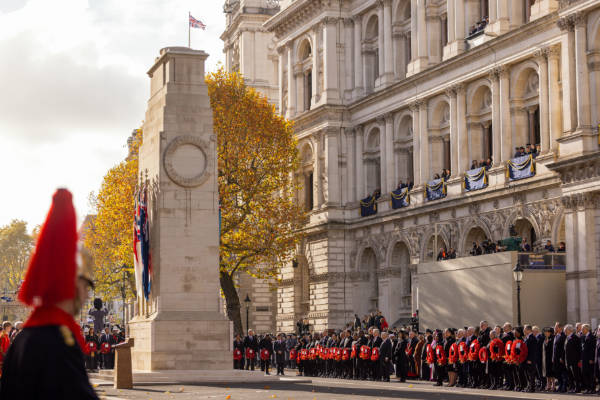
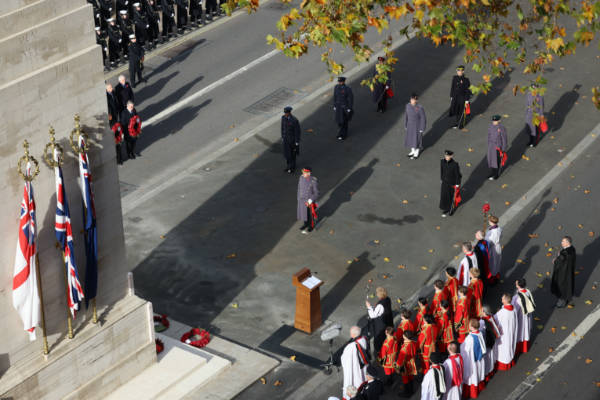
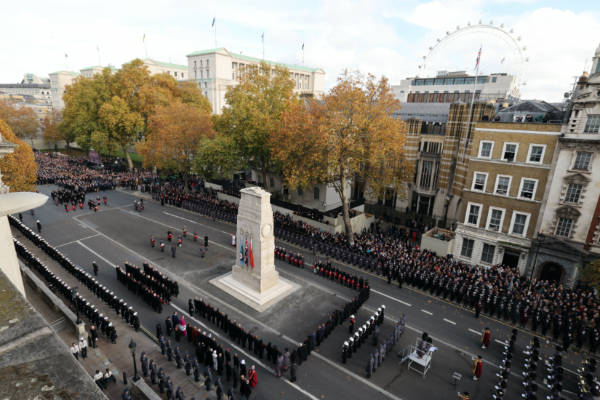
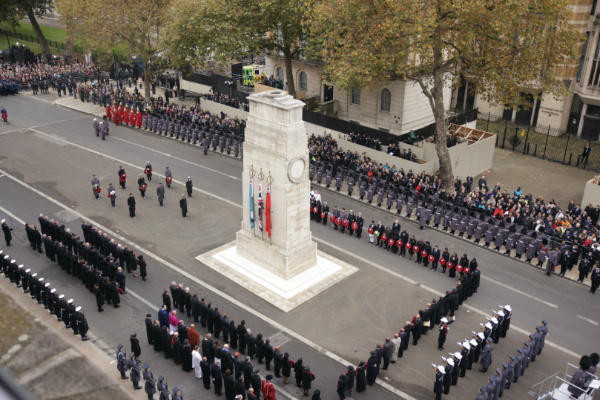
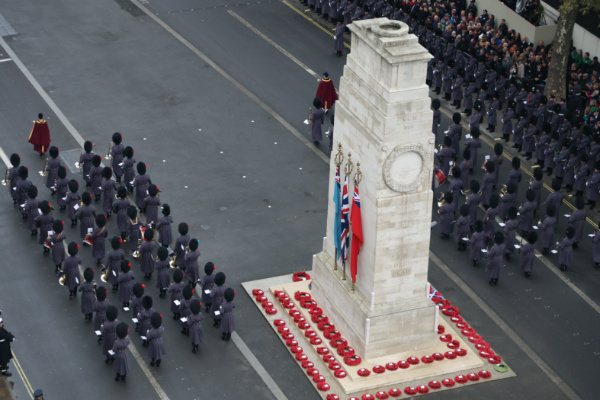
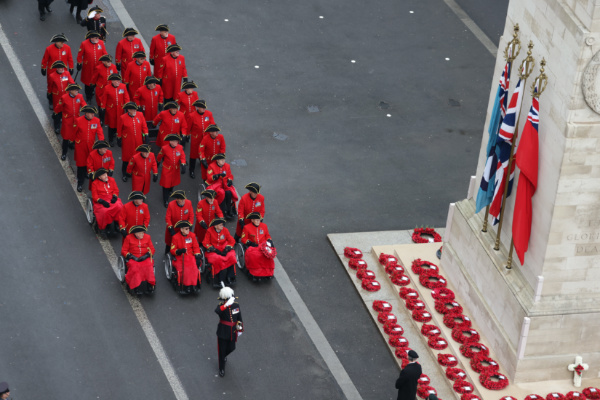
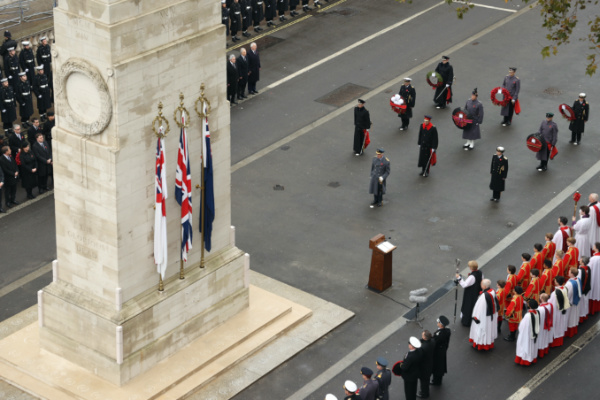
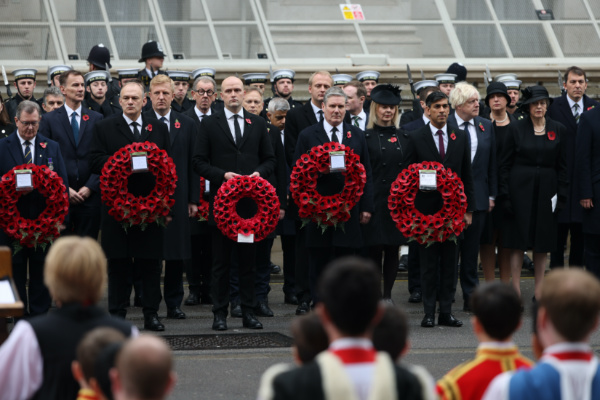
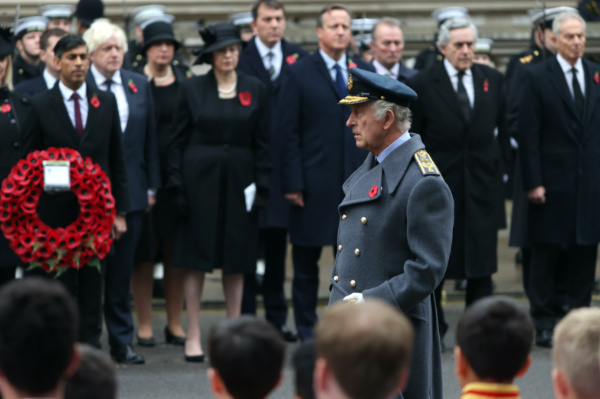
Some 10,000 people lined Whitehall to watch the The Royal British Legion’s Veterans Parade and take part in the annual two-minute silence at the Cenotaph on Sunday…


Now found in the Churchill War Rooms, the original black door from the Prime Minister’s residence at 10 Downing Street dates from the 1770s.
Subscribe for just £3 a month to gain access to all Exploring London’s content.


A famous “ordinary” where meals could be obtained at preset prices, Locket’s was founded by Adam Locket just south of Charing Cross in the 17th century.
A popular meeting place after attending the theatre, the establishment was known for the quality of its food. It was frequented by the well-to-do as well as dramatists like Sir George Etherege (who apparently didn’t pay his bill).
Following Adam Locket’s death in about 1688, he was succeeded by his son Edward who ran it until about 1702. It survived through the reign of Queen Anne but contemporary references – it had been mentioned by writers such as John Vanbrugh and William Congreve – became increasingly scanty and then disappeared altogether after her death in 1714.
Drummond’s Bank later occupied the site where Locket’s had stood.


OK, so there’s not much left to see here – at least not from Wren’s time. But it was in Scotland Yard that Wren spent much of his time after being appointed Surveyor-General of the King’s Works.
The yard, which was located just north of the kitchens serving the Palace of Whitehall and to the south of aristocratic mansions built along the Strand, was the location of the Office of Works. It served as a workplace for Wren and was also the location of his main residence between 1669 and 1718 when he lived in a house built by his predecessor in the office, John Denham.
According to a recent lecture by Professor Simon Thurley at Gresham College, newly identified plans of the house show the ground floor contained a hall, with a kitchen and scullery to the rear while on the first floor was a great dining room, a smaller private dining room, bedroom and dressing room. A floor above contains quarters for servants and possibly the nursery for his children. There were cellars below, two yards and a long narrow walled garden (he also had a stable nearby for his horses and carriage). Most importantly, a door connected the house directly with the Office of Works next door.
Said Thurley: “Although slightly further [from] the royal lodgings than some apartments, Wren’s house was amongst the largest and best appointed of all the houses allocated to senior courtiers.”
Wren lived here with his two wives – his first wife Faith Coghill died of smallpox here in 1675 and his second wife Jane Fitzwilliam died of tuberculosis in 1680 as well as their children – Christopher, William and Elizabeth. Both William and Elizabeth never left their father’s care and died before him.
The origins of the name of Scotland Yard – which has since become synonymous with the Metropolitan Police (now based at New Scotland Yard) – apparently come from the fact the site contained lodgings where the Kings of Scotland stayed when visiting London (the last Scottish royal to stay here did so before Wren’s time, apparently in the reign of King Henry VIII).
From the Stuart period onward, the site was used for government offices – as well as Wren, other famous residents included Inigo Jones, one of Wren’s predecessors as Surveyor of Works, and, during the Commonwealth, John Milton, while serving as Latin Secretary to Oliver Cromwell.
The location of Scotland Yard is these days commemorated in the name of Great Scotland Street and Scotland Place, just off Whitehall. There’s also an English Heritage Blue Plaque marking the site in Whitehall Place, although Wren doesn’t get a mention on that (it’s entirely devoted to the former police presence).

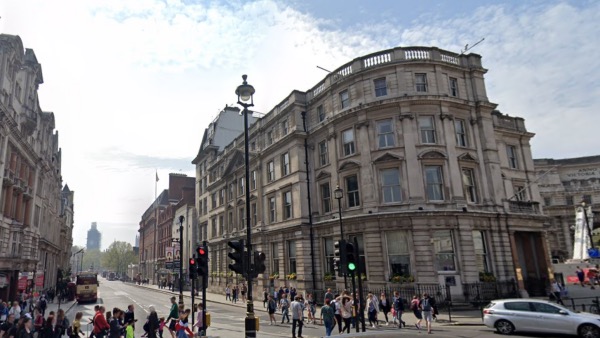
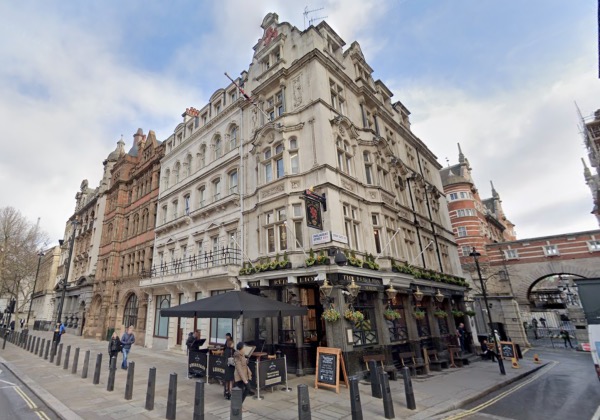
There has been a pub on this storied Whitehall location, located between conveniently for politicians between the Houses of Parliament and Downing Street, since at least the 15th century.

Then named Hopping Hall, a pub is recorded on this site at 48 Parliament Street (on the corner with Derby Gate) as early as 1434. It passed into the hands of the Crown by 1531 and by the early 19th century it had taken on the name of the Red Lion (at the time, it was visited by Charles Dickens as a young man). The current, now Grade II-listed, building was erected on the site in 1890.
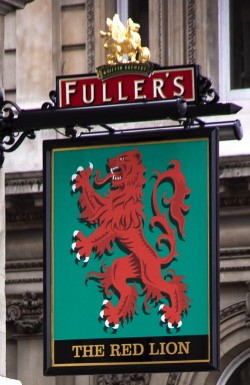
The pub’s name – one of the most common in England (there’s several more in London alone) – apparently originated at the ascension of the Scottish King James I to the throne in 1603. The King ordered that all significant buildings display the red heraldic lion of Scotland and that included pubs. Hence the Red Lion.
The four storey pub has been popular among politicians (and journalists interviewing politicians) including Prime Ministers – indeed, it’s claimed to have served every PM up until Edward Heath in the 1970s (as such it’s one of the many pubs in London which features division bells, although the function of these has apparently been replaced by an app).
For more, see www.redlionwestminster.co.uk.

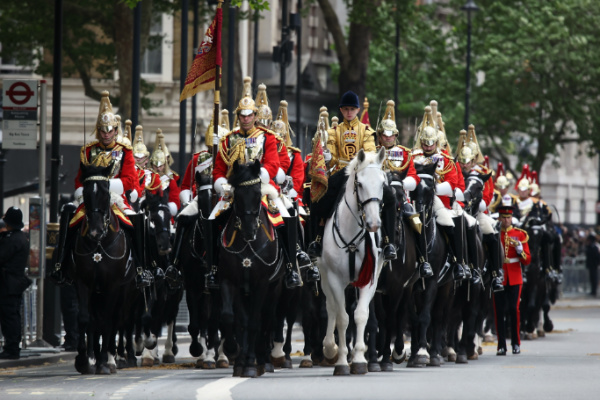
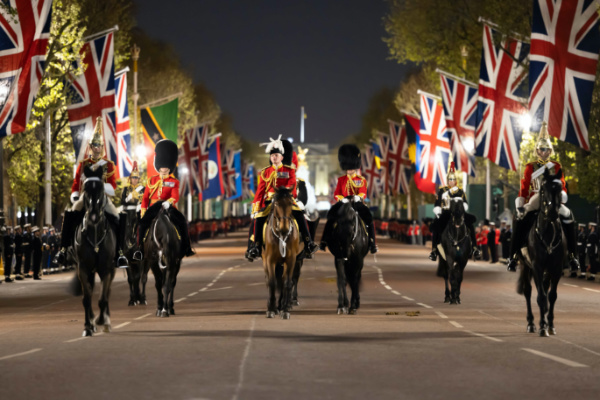
• It’s Coronation weekend in London, so first up it’s a look at the Coronation Procession. The 1.42 mile route from Buckingham Palace to Westminster Abbey, which opens for viewers at 6am on Saturday, will see the procession – with King Charles III and Queen Camilla travelling in the Diamond Jubilee State Coach – leave Buckingham Palace at 10:20am. Known as The King’s Procession, the coach, which will be accompanied by The Sovereign’s Escort of the Household Cavalry, will travel down The Mall, through Admiralty Arch and past Trafalgar Square, before turning down Whitehall. The procession will then make its way down to the Houses of Parliament and around the east and south sides of Parliament Square to Broad Sanctuary and Westminster Abbey.
• The ceremony is scheduled to begin at 11am and is expected to run for two hours. There is, of course, no access to the abbey for uninvited guests but the ceremony will be broadcast live by the BBC and big screens are being set up to watch in St James’s Park, Green Park and Hyde Park as well as Holland Park, Valence Park in Dagenham and Walpole Park in Ealing.
• At 1pm, the King and Queen will return from Westminster Abbey to Buckingham Palace in The Coronation Procession. They will be riding in the 260-year-old Gold State Coach that has been used in every coronation since that of William IV and accompanied by almost 4,000 members of the armed forces in what’s been called the largest ceremonial military operation in recent decades. Representatives of Commonwealth nations and British Overseas Territories will also take part in the return procession. The route will be the reverse of the outgoing route and see the procession travel back through Parliament Square (lined with an honour guard of 100 members of the Royal British Legion) and up Whitehall to Trafalgar Square, turning left to travel through Admiralty Arch and back down The Mall. Reaching Buckingham Palace, the King and Queen will receive a Royal Salute from the armed forces who have been escorting them followed by three cheers.
• The balcony appearance and flypast. The newly crowned King and Queen Consort are scheduled to appear on the famous balcony on Buckingham Palace at 2.30pm accompanied by members of the royal family. They will watch a six minute flypast of military planes, ending with a display by the Red Arrows.
• On Sunday, communities are invited to join in the Coronation Big Lunch (communities will also be holding street parties throughout the weekend). On Sunday night, the BBC will broadcast The Coronation Concert from Windsor Castle. The concert will feature the Coronation Choir as well as ‘Lighting Up The Nation’ in which locations across the UK will take part. For details on where events are being held, head to https://coronation.gov.uk/events/.
• On Monday, people are encouraged to join in The Big Help Out by volunteering time to help out in your local community. To find out where your local events are, head to https://thebighelpout.org.uk.

As London swelters, the Troopers of the Household Cavalry Mounted Regiment conducting the Queen’s Life Guard at Horse Guards take care to ensure their loyal horses are well looked after. That includes a hose off in the shade after duty to help them cool down, bobbing for in the water trough to help ensure they’re drinking enough and providing fans in the stables.