This Week in London – Coronations at Westminster Abbey; tulips at Hampton Court; St Bartholomew at The National Gallery; and, Food Season at the British Library…

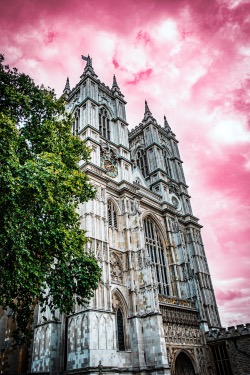
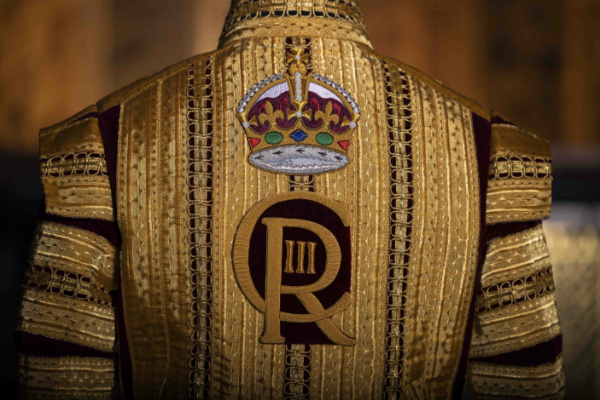
A new exhibition exploring the 1,000-year history of coronations at Westminster Abbey has opened in the abbey’s medieval chapter house. The exhibition, which has opened ahead of the coronation of King Charles III on 6th May, draws on historic illustrations and archive photography to explore the elements of the coronation service including the oath-taking, anointing, investing and crowning and takes a closer look any some of key artefacts present in the ceremony including the Coronation Chair. The exhibition, which is free with admission to the abbey and which runs until the end of September, is part of a season of events celebrating the coronation including themed late evenings, family activities and special afternoon teas at the Cellarium Café. Meanwhile, the abbey has also announced that visitors will be able to view the ‘Coronation Theatre’ – the special area which will be built for the historic occasion, from the Abbey’s North and South Transepts – following the coronation. Tickets for the special viewing – which will include the chance to see key elements from the coronation service including the Coronation Chair still in position on the Cosmati Pavement – can be purchased for timed slots between 8th and 13th May. For more on the abbey’s events surrounding the coronation, see www.westminster-abbey.org/events.

Tulips at Hampton Court Palace in 2021. PICTURE: Derek Winterburn (licensed under CC BY-ND 2.0)

Hampton Court Palace bursts into colour from Friday with its annual Tulip Festival. More than 110,000 bulbs have been planted to creat dramatic displays in the formal gardens and cobbled courtyards, among them a selection of heirloom bulbs on display in the Lower Orangery Garden which presents visitors with the chance to see tulips as they would have looked during the time of King William III and Queen Mary II, soon after the flowers were first introduced to Britain. Thanks to a special relationship with Netherlands-based Hortus Bulborum, the bulbs on display include Sylvestris (1595) and Rubella Broken (1700) as well as the Orange King (1903) and Queen of the Night (1940). Other highlights of the festival include 3,000 wine-toned tulips, including the merlot variety, flowing down from the steps and parapet of the Wine Fountain, as well as a floral fantasy in the palace’s courtyards in which tulips such as Raspberry Ripple, Apricot Emperor and Purple Prince flow out of wheelbarrows, barrels and a horse cart, and a free-style tulip planting in the Kitchen Garden inspired by Van Gogh’s 1883 painting, Bulb Fields. Runs until 1st May. Admission charge applies. For more, see https://www.hrp.org.uk/hampton-court-palace/whats-on/tulip-festival/.

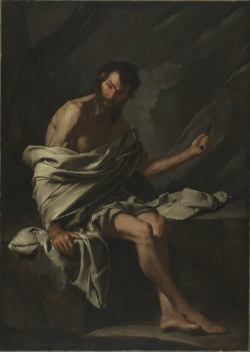
Bernardo Cavallino (1616 ‑ 1656?), Saint Bartholomew (about 1640-1645), oil on canvas H x W: 176 x 125.5 cm; The National Gallery, London. Bought with the support of the American Friends of the National Gallery, 2023
PICTURE: © The National Gallery, London

The recently acquired Bernardo Cavallino work, Saint Bartholomew has gone on show at The National Gallery. The painting, which dates from 1640-45 and which was last exhibited at The Metropolitan Museum of Art in New York in 1993, is being displayed alongside other 17th century works by artists such as Caravaggio, Artemisia and Orazio Gentileschi, Guercino, Reni and Ribera in the Hans and Julia Rausing Room (Room 32). The National Gallery has one other work by Cavallino – Christ driving the Traders from the Temple – but his depiction of Saint Bartholomew is considered one of his most splendid works. Admission is free. For more, see nationalgallery.org.uk.

Featuring everything from a celebration of African Caribbean takeaways to a “deep-dive” into the issues surrounding food production and access, Food Season kicks off at the British Library Monday. Highlights include a discussion of the sandwich by food writers Nigella Lawson, Jonathan Nunn and Rebecca May Johnson, a day-long celebration of African Caribbean cuisine featuring chefs and broadcasters Jimi Famurewa, Fatmata Binta and Andi Oliver, and, an exploration of the big challenges in food, land use and food production featuring author Henry Dimbleby alongside Dr Tara Garnett, Nick Saltmarsh, Abby Allen and Dimitri Houtart. Runs until 7th June. Admission charges apply. For the full programme, see www.bl.uk/events/food-season.

Send all items to exploringlondon@gmail.com

Four sites related to royal coronations in London – 1. The Jewel House…

In the lead-up to the coronation of King Charles III and Queen Consort Camilla on 6th May, we’re taking a look at sites in London which have played an important role in coronations past (and, mostly, in this coronation as well).

First up, it’s the Tower of London’s Jewel House which is linked to the coronation through the role it plays in housing the Crown Jewels and, more specifically, the Coronation Regalia.

The entrance to the Jewel House in the Waterloo Block. PICTURE: Dave Campbell (licensed under CC BY-NC-ND 2.0)

The centrepiece of the Crown Jewels is St Edward’s Crown, with which King Charles will be crowned in Westminster Abbey.

The crown, which has already been removed from the Tower of London so it could be resized for the occasion, is made from 22 carat gold and adorned with some 444 precious and semi-precious gems. Named for St Edward the Confessor, it dates from 1661 when it was made for the coronation of King Charles II and replaces an earlier version melted down after Parliament abolished the monarchy in 1649.

The crown was subsequently used in 1689 in the coronation of joint monarchs King William III and Queen Mary II and then not used again until 1911 when as used to crown King George V. It was also used to crown King George VI and Queen Elizabeth II in 1953.

St Edward’s Crown is not the only crown that will be used in the coronation ceremony – the King will also wear the Imperial State Crown at the end of the service.

Made by Garrard and Company for the coronation of King George VI in 1937 (replacing a crown made for Queen Victoria in 1838), it features the Black Prince’s Ruby in the front – said to have been a gift to Edward, the Black Prince, in 1357 from the King of Castile.

Further gems in the crown include the Stuart Sapphire, the Cullinan II Diamond and St Edward’s Sapphire, said to have been worn in a ring by St Edward the Confessor and found in his tomb in 1163.

Among other items which will be used in the coronation are the Sovereign’s Sceptre with Cross, the Sovereign’s Orb, and the Coronation Spoon.

The sceptre was made for King Charles II and now features the world’s largest diamond, the Cullinan Diamond, which was added to it in 1911. The orb was also made for King Charles II’s coronation and is topped with a cross.

The spoon, meanwhile, is one of the oldest items in the Crown Jewels, dating from the 12th century. It is used for anointing the new sovereign with holy oil – which comes from the Church of the Holy Sepulchre in Jerusalem – during the ceremony. It survived the abolition of the monarchy after it was purchased by a member of King Charles I’s wardrobe and later returned to King Charles II after the monarchy. The oil is held in a golden vessel known as an ampulla which is shaped like an eagle.

Other items to be used in the coronation are a series of swords – among them the Sword of State, the Sword of Temporal Justice, the Sword of Spiritual Justice, and the Sword of Mercy (this has its tip blunted to represent the Sovereign’s mercy).

The regalia was housed at Westminster Abbey until 1649. They have been kept at the Tower of London since the Restoration (even surviving a theft attempt by Colonel Thomas Blood and accomplices in 1671).

The Crown Jewels, which are now held under armed guard, have been housed in several different locations during their time at the Tower of London including in the Martin Tower and the Wakefield Tower. They were moved into a subterranean vault in the western end of the Waterloo Block (formerly the Waterloo Barracks), now known as the Jewel House (and not to be confused with The Jewel Tower in Westminster), in 1967.

A new Jewel House was opened by Queen Elizabeth II on the ground floor of the former barracks in 1994. The exhibit was revamped in 2012 and following King Charles III’s coronation, the display is again being transformed with a new exhibition exploring the origins of some of the objects for the first time.

WHERE: The Jewel House, Tower of London (nearest Tube station Tower Hill); WHEN: 9am to 4.30pm (last admission), Tuesday to Saturday, 10am to 4.30pm (last admission) Sunday to Monday; COST: £29.90 adults; £14.90 children 5 to 15; £24 concessions (family tickets available; discounts for online purchases/memberships); WEBSITE: https://www.hrp.org.uk/tower-of-london/whats-on/the-crown-jewels/.

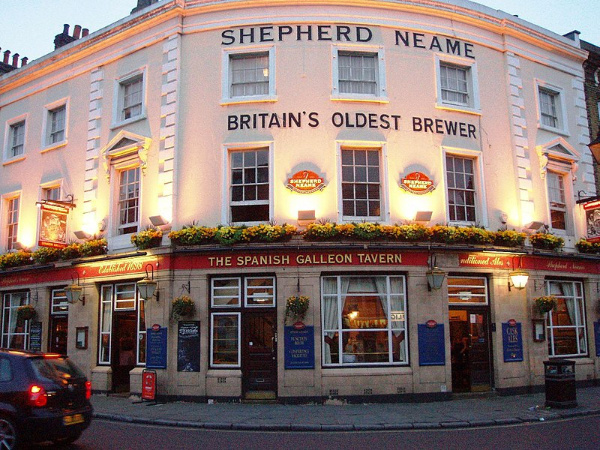
London Pub Signs – The Spanish Galleon…

PICTURE: Ewan Munro (licensed under CC BY-SA 2.0)

This early 19th century pub was built in the Regency style as part of a redevelopment of central Greenwich.

The redevelopment was undertaken by architect Joseph Kay in the 1830s while he served as clerk of works to what was then Greenwich Hospital (now known as the Old Royal Naval College).

Its name, one of a number of nautical names for pubs in the area, purportedly comes from the pictures of British naval victories at the hospital.

The pub received minor damage during the Blitz.

Located at 1 College Approach, the pub has been Grade II-listed since 1973. In 2012, the pub underwent a refurbishment.

Part of the Shepherd Neame chain. For more, see www.spanishgalleon.co.uk.

Treasures of London – Coalbrookdale Gates…

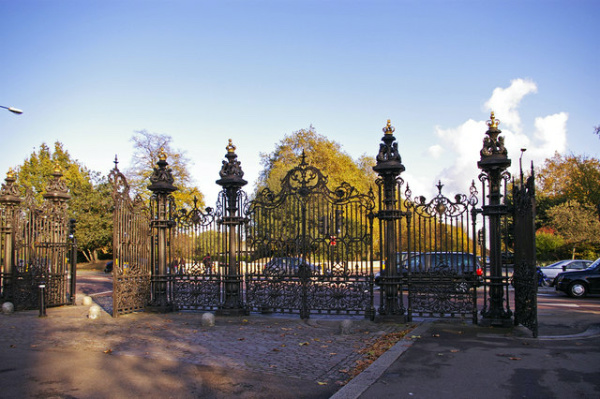
Christine Matthews (licensed under CC BY-SA 2.0)

Located at the southern end of West Carriage Drive – the road which divides Kensington Gardens and Hyde Park – are bronze-painted cast iron gates which were made for the Great Exhibition of 1851.

The gates are named for their manufacturer, the Coalbrookdale Company in Shropshire, and were designed by Charles Crookes.

Each of the gates were cast in one piece and feature cherubs or mer-children below gold crowns atop the finials. There are stags head urns sitting atop Portland stone pillars bearing Queen Victoria’s monograms at either end.

The gates were originally positioned as an entrance to the Great Exhibition and were known as the Queen’s Gate (due to their being through which Queen Victoria entered).

The gates were moved here from their original position during the construction of the Albert Memorial in 1871.

The now Grade II-listed gates were damaged by a bomb during World War II. They were restored in 2000.

What’s in a name?…Shoe Lane…

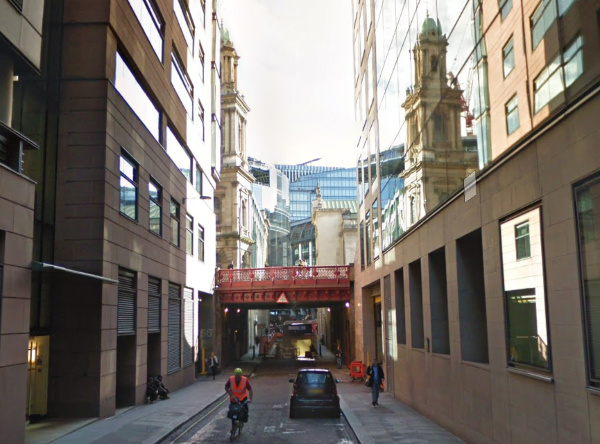
Looking south down Shoe Lane from near Charterhouse Street where it passes under the Holborn Viaduct. PICTURE: Courtesy of Google Maps.

This name of this rather long laneway, which runs from Charterhouse Street, under Holborn Viaduct, all the way south to Fleet Street, doesn’t have anything to do with footwear.

The name is actually a corruption of the Sho Well which once stood at the north end of the thoroughfare (and which itself may have been named after a tract of land known as Shoeland Farm thanks to it resembling a shoe in shape).

In the 13th century the lane was the London home of the Dominican Black Friars – after they left in the late 13th century, the property became the London home of the Earl of Lincoln and later became known as Holborn Manor.

In the 17th century, the lane was known as for its signwriters and broadsheet creators as well as for a famous cockpit which was visited by none other than diarist Samuel Pepys in 1663. It was also the location of a workhouse.

Prominent buildings which have survived also include St Andrew Holborn, designed by Sir Christopher Wren (it actually survived the Great Fire of London but was in such a bad state of repair that it was rebuilt anyway). The street these days is lined with office buildings.

Famous residents have included John de Critz, Serjeant Painter to King James I and King Charles I, preacher Praise-God Barebone who gave his name to Barebone’s Parliament held in 1653 during the English Commonwealth, and Paul Lovell, who, so the story goes, refused to leave his house during the Great Fire of 1666 and so died in his residence.

This Week in London – A celebration of Spain and the Hispanic world; Lunar New Year at Greenwich; and, RA gifts at The Queen’s Gallery…

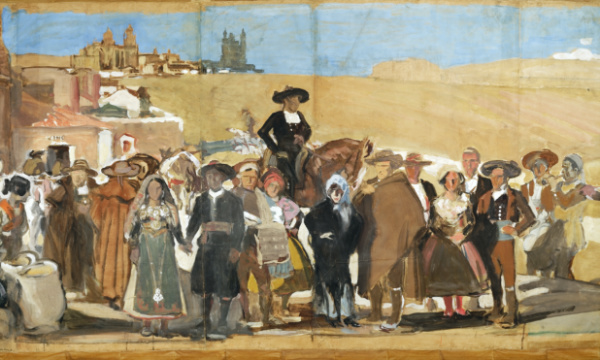
Joaquín Antonio de Basarás y Garaygorta, ‘Indian Wedding, in Origen, costumbres y estado presente de mexicanos y filipinos’ (1763); Illustrated manuscript on paper (41 x 65.7 cm). On loan from The Hispanic Society of America, New York, NY

• The collection of the Hispanic Society Museum & Library in New York is being celebrated in a new exhibition opening at the Royal Academy of Arts. Opening Saturday, Spain and the Hispanic World: Treasures from the Hispanic Society Museum & Library features more than 150 works from the collection – founded in 1904 by Archer M Huntington – which range from paintings and sculptures to jewellery, maps and illuminated manuscripts. Highlights include Francisco de Goya’s painting The Duchess of Alba (1797), Pedro de Mena’s reliquary bust, Saint Acisclus (c1680), earthenware bowls from the Bell Beaker culture (c2400-1900 BC), Celtiberian jewellery from the Palencia Hoard (c150-72 BC), and Hispano-Islamic silk textiles including the Alhambra Silk (c1400). There’s also a beautifully illuminated Hebrew Bible (after 1450-97), an exceptionally rare Black Book of Hours (c1458), and, Giovanni Vespucci’s celebrated world map from 1526. The exhibition runs until 10th April. Admission charge applies. For more, see www.royalacademy.org.uk.

The Lunar New Year is being celebrated in Greenwich this Saturday with a series of events at the National Maritime Museum. Activities range from Mahjong workshops to seeing a traditional lion dance, lantern making, a tea ceremony demonstration and, of course, the chance to find out about the items in the museum’s collection with Asian connections. For more, see www.rmg.co.uk/whats-on/national-maritime-museum/lunar-new-year.

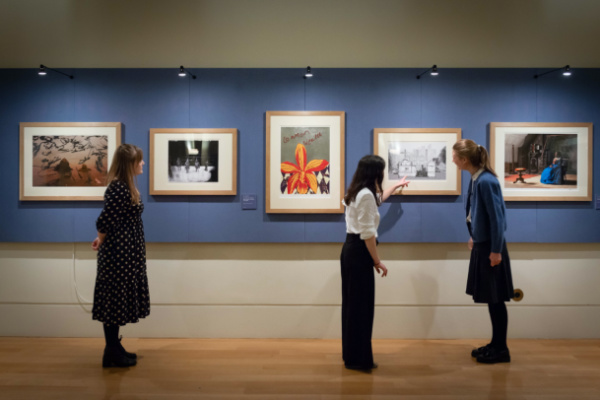
Royal Collection Trust staff conduct final checks of a display opening today at The Queen’s Gallery, Buckingham Palace, showcasing 20 contemporary artworks gifted to Queen Elizabeth II to mark the Platinum Jubilee. PICTURE: Royal Collection Trust / © His Majesty King Charles III 2023.

Twenty contemporary artworks gifted by the Royal Academy of Arts to Queen Elizabeth II ar on display at The Queen’s Gallery in Buckingham Palace. The works on paper – created by Royal Academicians elected in the past decade – were presented to the Queen to mark her Platinum Jubilee in 2022. They include Wolfgang Tillmans’ Regina – a photograph taken during Queen Elizabeth II’s Golden Jubilee celebrations in 2002 depicting the Queen in the Gold State Coach passing along Fleet Street, Yinka Shonibare’s Common Wealth – a digital print of an orchid against a collage of platinum leaf and Dutch wax printed fabric, and Sir Isaac Julien’s Lady of the Lake – a fictionalised portrait of the American abolitionist Anna Murray Douglass as well as a digital print of Thomas Heatherwick’s design for the Tree of Trees project. This 21-foot sculpture incorporates 350 saplings and was erected outside Buckingham Palace as part of The Queen’s Green Canopy and was illuminated during a special Platinum Jubilee ceremony on 2nd June last year. The works can be seen until 26th February. Admission charge applies. For more, see www.rct.uk.

Send all items for inclusion to exploringlondon@gmail.com.

Happy New Year 2023!

ILLUSTRATION: extravagantni/iStockphoto.

Wishing all our readers a great start to 2023!

Have a wonderful Christmas!

PICTURE: Deep Trivedi/Unsplash

We’ll be back next week with our annual most popular posts countdown…

Five locations located to Charles Dickens’ ‘A Christmas Carol’…

Charles Dickens’ A Christmas Carol is forever linked to Christmas in London. So, with Christmas almost upon us, here’s a quick look at five locations mentioned or alluded to in the famous book…

1. 16 Bayham Street, Camden Town. Bob Cratchit’s house is described as being in Camden Town but what’s interesting is that as a child Dickins’ himself lived here at this property. So whether or not it’s the actual address Dickens had in mind for Cratchit’s property, it’s certainly in the vicinity.

The Royal Exchange today. PICTURE: Klaudia Piaskowska/Unsplash

2. The Royal Exchange. Referenced in regard to Ebenezer Scrooge who did business there. The current building was still being completed when Dickens wrote A Christmas Carol in 1843 following a fire at the premises several years before. It was opened in 1844.

3. Simpsons Tavern. Scrooge is said to have taken his “melancholy dinner in his usual melancholy tavern” which has been suggested could refers to Simpsons. Located in Ball Court, the current premises opened in 1757. The George & Vulture in Michael’s Alley is also mentioned as a possibility.

4. Newman’s Court. Located near Cornhill (which is mentioned in the book as the site where Bob Cratchit goes on a slide after leaving Scrooge’s office), it’s been suggested more than once that while the location of Scrooge’s counting house is not specified in the text, a location in Newman’s Court would fit the bill.

5. Leadenhall Market. Following Scrooge’s transformation, he sends a boy out to buy a turkey- commentators suggest the poulterer the boy attends was located in Leadenhall Market which would have been a predecessor to the current building which dates from 1881.

LondonLife – Christmas in London…

Ice skating at Somerset House. PICTURE: Owen Harvey
South Bank Winter Market. PICTURE: David Ogle
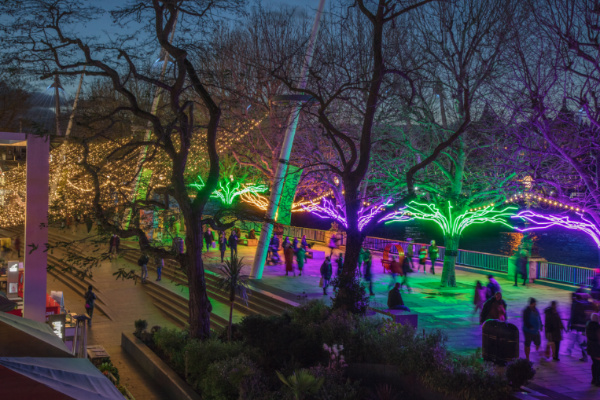
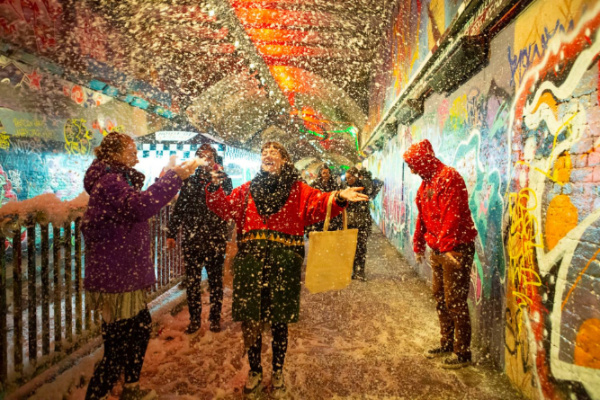
Part of the Miracle on Leake Street event in Waterloo. PICTURE: Leake Street
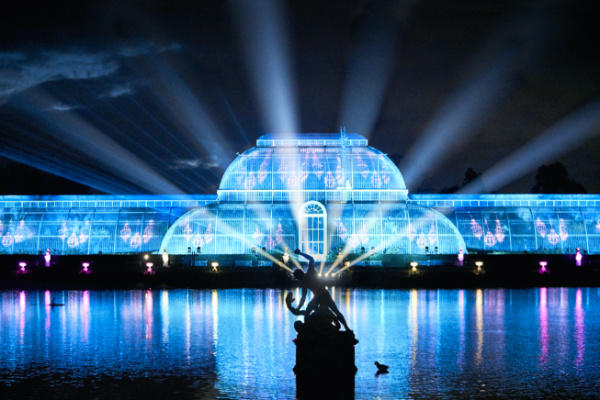
Christmas at Kew. PICTURE: Royal Botanic Gardens
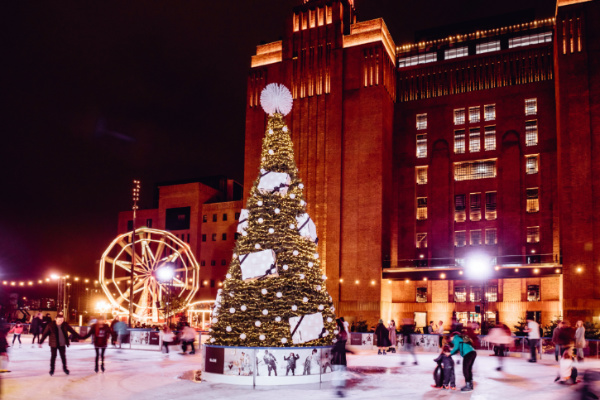
Glide at Battersea Power Station. PICTURE: Joshua Atkins

Four unusual London Christmas traditions (redux)…

1. The Ceremony of the Christmas Cheeses…

2. The Smithfield Meat Auction…

3. The Peter Pan Cup…

4. The Boy Bishop of St Paul’s…

This Week in London – Carols at Westminster Abbey; cathedrals at St Paul’s; and, ‘Making Modernism’ at the Tate…

PICTURE: Manuel Weber/Unsplash

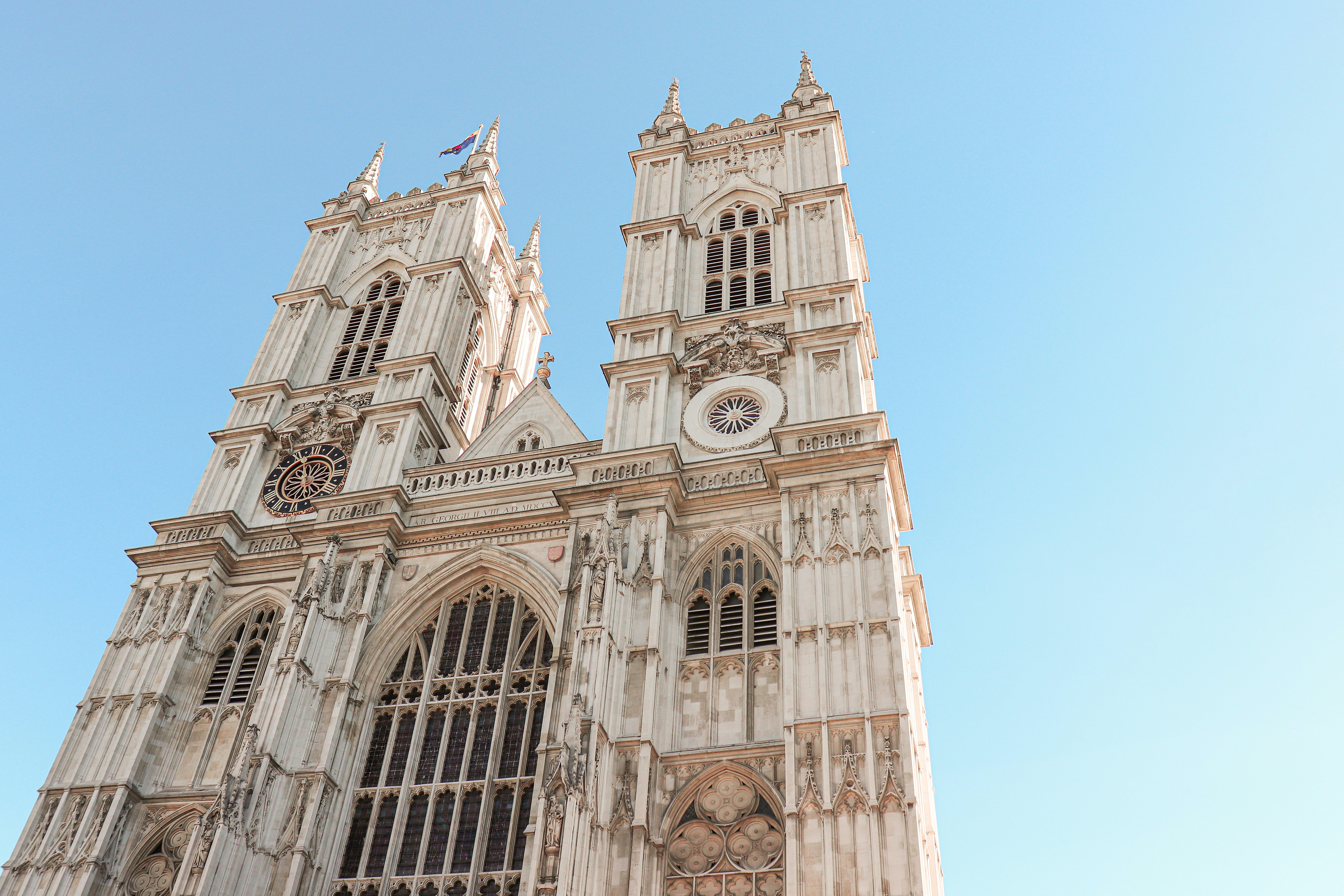
The Princess of Wales will host a Christmas carol service at Westminster Abbey today. The service, which will be attended by members of the Royal Family, will recognise the selfless efforts of individuals, families and communities across the UK as well as paying tribute to Queen Elizabeth II and the values she demonstrated at Christmas and throughout her life, including empathy, compassion and support for others. The service will be broadcast on ITV One in the UK on Christmas Eve. Meanwhile, a special Christmas episode of Westminster Abbey: Behind Closed Doors will be shown on Channel 5 next Wednesday, 21st December. For more, see My5: Westminster Abbey: Behind Closed Doors.

An exhibition show-casing the work of photographer Peter Marlow, who has photographed all 42 Church of England cathedrals, can be seen at St Paul’s Cathedral. Commissioned in 2008 by Royal Mail to photograph six cathedrals – images of which were used on commemorative stamps marking the 300th anniversary of the completion of St Paul’s Cathedral, Marlow went on to continue taking pictures of cathedrals using just natural light. The display, which is touring all 42 cathedrals, can be found in the South Nave aisle until 26th January. Included in admission charge. For more, see www.stpauls.co.uk/whats-on/exhibition-peter-marlows-english-cathedral.

On Now: Making Modernism. The first major UK exhibition devoted to women artists working in Germany in the early 20th century, this exhibition at the Royal Academy’s Gabrielle Jungels-Winkler Galleries includes 67 paintings and works on paper. The artists featured include Paula Modersohn-Becker, Käthe Kollwitz, Gabriele Münter and Marianne Werefkin, with additional works by Erma Bossi, Ottilie Reylaender and Jacoba van Heemskerck. Runs until 12th February. Admission charge applies. For more, see www.royalacademy.org.uk.

Send all items to exploringlondon@gmail.com

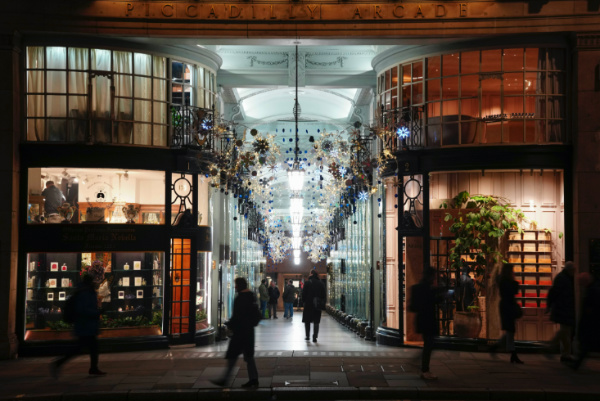
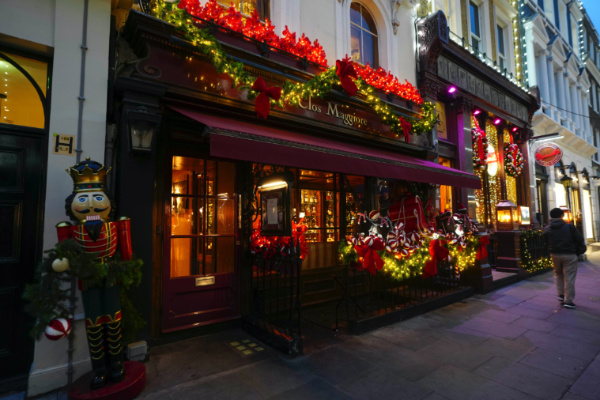
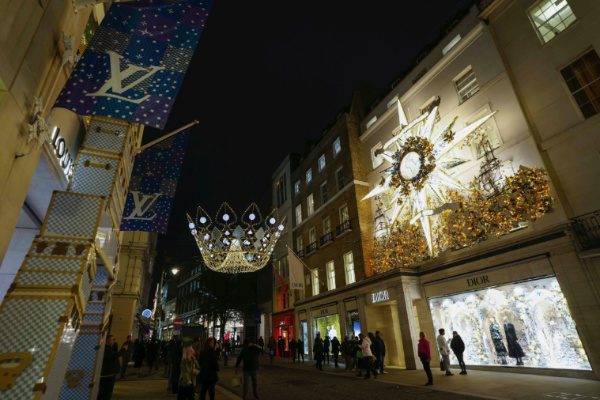
LondonLife – Christmas lights in the West End (part II)…

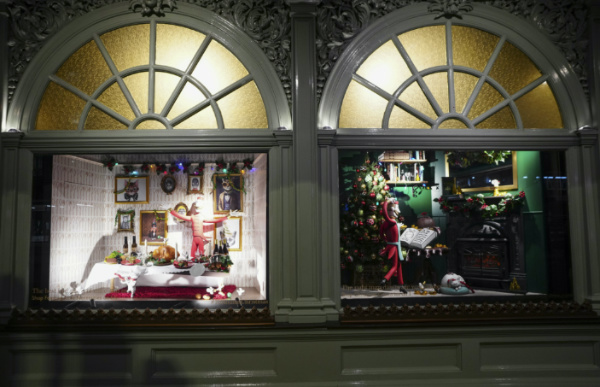
Christmas windows at Fortnum & Mason on Piccadilly. ALL PICTURES: Jed Leicester/PinP
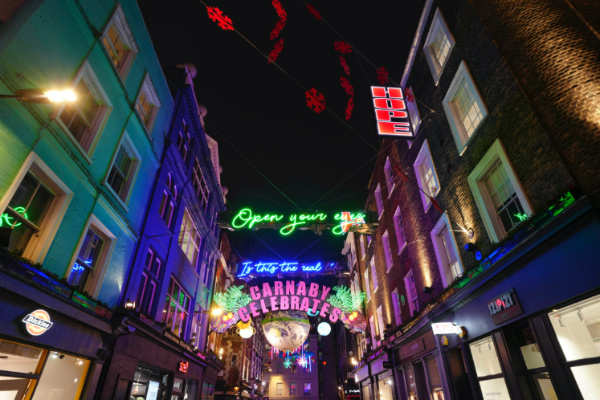
Carnaby Street lights.
Piccadilly Arcade decorated for Christmas.
Clos Maggiore shopfront in Covent Garden
New Bond Street.

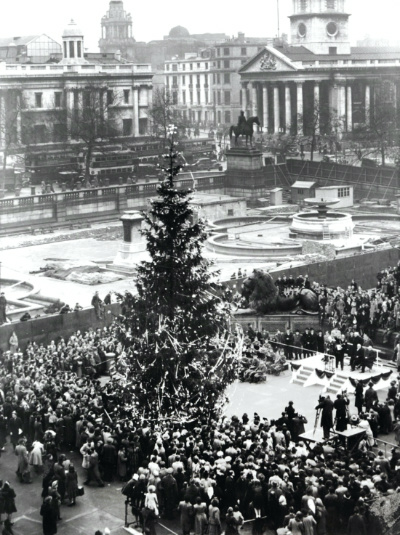
A Moment in London’s History – The first Trafalgar Square Christmas Tree…

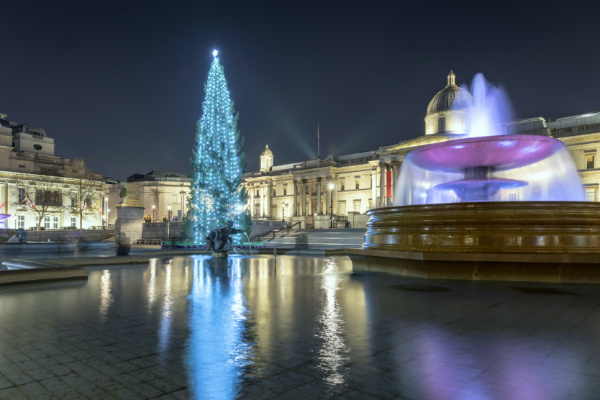
The Trafalgar Square tree in 2019. PICTURE: SHansche/iStockphoto.
The 1947 Christmas Tree in Trafalgar Square. PICTURE: Open Government Licence/National Archives.

This year marks the 75th anniversary of the first Trafalgar Square Christmas Tree.

The native spruce has been a gift from the people of the city of Oslo – the capital of Norway – to the people of Britain since 1947, presented as a thank you for the support given Norway during World War II.

Special permission had to be given for the 40 foot high tree to be illuminated. The Ministry of Fuel decided to do so on the basis that “the lighting will not be for business purposes: the tree is classed as ‘a charitable gift’ – a goodwill gift to cheer London.”

A sizeable crowd gathered to witness the lights being turned on.

Among the official party was the Ambassador of Norway. He told the crowd that the tradition of a Norwegian Christmas Tree in London started when King Haakon VII was residing in London during World War II.

The ambassador said that each year during the king’s residency, the Norwegian Navy undertook an operation to bring a tree from Norway for the King so he could celebrate Christmas “looking on a Christmas tree grown on Norwegian soil”.

In 2016, UCL academic Ingrid A Medby described the annual presenting of the tree as a “diplomatic gesture”, “a token of gratitude” and a “symbol of geopolitical ties”.

This year’s 21 metre-high tree had its 500 lights illuminated on 1st December (the tree is traditionally lit on the first Thursday in December), It had been chopped down on 19th November in the Nordmarka forests near Oslo and travelled 1,000 miles by land and sea to reach Trafalgar Square.

Treasures of London – The first (commercial) Christmas card…

Christmas cards have been a staple of Christmases (although a declining one these days) since at least as far back as 1843.

It was then that Sir Henry Cole, a civil servant, inventor and the first director of the Victoria & Albert Museum, came up with the idea of sending out a card bearing Christmas greetings to a large number of people as a means of coping with the substantial volume of correspondence he was receiving (and would have to send to greet family and friends at Christmas).

Sir Henry commissioned his friend, painter John Callcott Horsley, to design the card and an initial run of 1,000 cards were printed by Jobbins of Warwick Court in Holborn (a further thousands cards were printed in a second run).

Having sent the cards he required, Sir Henry sold the rest for a shilling each under his literary pseudonym of Felix Summerly from the premises of his publisher Joseph Cundall in Old Bond Street (the introduction of the uniform Penny Post in 1840 having made sending them affordable – Cole had been an important figure in its establishment as assistant to the idea’s main instigator Rowland Hill).

The card, which were hand-coloured by professional colourer Mason, depicts a family gathered for Christmas and imbibing wine with side panels depicting two acts of charity – “feeding the hungry” and “clothing the naked”. On it were printed the words “A Merry Christmas and a Happy New Year to You”.

The card was apparently controversial for its depiction of drinking wine (temperance advocates argued it promoted drunkenness) and particularly for its images of children drinking wine.

The idea didn’t also catch on immediately – the cost of a shilling was rather steep. But new designs soon began to appear in the following years and by the mid-1850s, the idea had finally taken hold.

WHERE: The Postal Museum, 15-20 Phoenix Place (nearest Tube stations are Farringdon, Russell Square, King’s Cross St Pancras and Chancery Lane); WHEN: 10am to 5pm Wednesday to Sunday (booking in advance suggested); COST: Adult £17/Young person (16-24) £12/Child (3-15) £10 (discounts apply for booking online/other ticket types available; WEBSITE: www.postalmuseum.org

LondonLife – Christmas lights in the West End…

Christmas is looming so here’s our first look at some of London’s Christmas light displays…

Christmas lights in Regent Street. ALL PICTURES: Jed Leicester/PinP
Christmas lights in South Moulton Street, Mayfair…
Christmas tree and lights at Covent Garden.
One of the Selfridges Christmas windows on Oxford Street.
Harrods Brompton Road frontage decorated for Christmas.

This Week in London – Christmas at Hampton Court Palace; the V&A’s couture Christmas Tree; and, the stories of Asian and African foundlings…

Festive Fayre returns to Hampton Court Palace this weekend with visitors having the chance to do some Christmas shopping, sample some festive treats and enjoy live music. The festival, which runs from Friday to Sunday, takes place ahead of the launch of the palace’s Christmas light trail – Palace of Light – next Wednesday (7th December). Inspired by Henry VIII’s heraldic beasts, it features an array of installations, ranging from a sea-monster lurking in the Great Fountain Garden to polka-dot panther lanterns in the Wilderness. Created by the award-winning outdoor event producers Wild Rumpus, the light trail can be visited until 2nd January. For more, see www.hrp.org.uk/hampton-court-palace/.

Christmas tree installation, designed by Miss Sohee PICTURE: © Victoria and Albert Museum, London

The V&A has unveiled its couture Christmas Tree installation for this year – a work by London-based Korean fashion designer Miss Sohee. On display in the Cromwell Road Grand Entrance, the installation reimagines the traditional Christmas tree as a three metre long couture gown, which combines Sohee’s signature style of vibrant silhouettes and intricate embroidery with religious statuary found around the museum. The installation can be seen until 5th January. For more, see www.vam.ac.uk.

On Now – Tiny Traces: African & Asian Children at London’s Foundling Hospital. This exhibition at The Foundling Museum in Bloomsbury explores the newly discovered stories of African and Asian children in the care of the hospital in the 18th century, following the stories of more than a dozen children through personal items, physical artefacts, works of art and archival documents. In a parallel thread, works of art by artists including Zarina Bhimji, Hew Locke, Kehinde Wiley, Alexis Peskine, Deborah Roberts and Shanti Panchal form a dialogue with the historic narratives. Admission charge applies. Runs until 19th February. For more, see https://foundlingmuseum.org.uk.

Send all items to exploringlondon@gmail.com

This Week in London – 12 Days of Christmas at the Tower; Museum of London celebrates its London Wall closing; and, William Beatty at the Old Royal Naval College…

The Tower of London is getting into the festive spirit with a celebration of the Twelve Days of Christmas. Twelve installations have been installed at the Tower, each representing as different aspect of the fortress’s unique history – from nine wreaths representing “nine rowdy ravens” to five gold coins representing the Mint once housed there. There’s also the six Queens of King Henry VIII and three “lordly lions” – a reference to a gift presented to King Henry III and housed in a Lion Pit at the tower. Visitors will have the chance to collect a map at the start of their visit and follow a trail to find the installations at they explore the Tower. Christmas at the Tower of London runs daily until 3rd January. Admission charge applies. For more, see www.hrp.org.uk/tower-of-london/.

The Museum of London is preparing to close its doors at its London Wall site as it moves to its new location in Smithfield and to celebrate it’s holding two free weekend festivals. The first, to be held this weekend, will feature family-friendly activities including arts and crafts, dance, face painting and theatrical performances while the second, to be held on the weekend of 3rd and 4th December (after which the museum will close), will feature a celebration of London’s music scene from the 70s to the present day with a DJ sets, a late night film festival and museum’s first ever 24 hour opening. Visitors on both weekends can also take part in London Biggest Table Football competition for a chance to win an England shirt signed by Harry Kane and to see the museum’s collection in a new light thanks to an illuminated display. For more on the festivals, see www.museumoflondon.org.uk/museum-london.

Now On: Blood and Battle: Dissecting the life of William Beatty. The life and work of renowned 19th-century naval surgeon and physician, Sir William Beatty, is explored in this exhibition at the Old Royal Naval College in Greenwich. The display – which marks 200 years since Beatty, who had served as ship’s surgeon on HMS Victory during the Battle of Trafalgar (and who wore the musket ball that killed Nelson in a locket on his watch chain for the rest of his life afterwards) – took up the post of Physician to the Royal Hospital for Seamen – explores Beatty’s work as a ship’s surgeon, his time at Greenwich Hospital and how he was honoured by being knighted and appointed Physician Extraordinary to George IV and the Duke of Clarence (later William IV) as well as his outside interests including his involvement in developing the London – Greenwich Railway. Admission charge applies. For more, see https://ornc.org.

Send all items for inclusion to exploringlondon@gmail.com.

This Week in London – 10 years of Christmas at Kew; British and Chinese at the British Library; and, The Horror Show! at Somerset House…

Christmas returned to Kew this week with the launch of its 10th festive light trail. This year’s display features some past favourites as well as new light installations including Feathers by Pyrite Creative which features 16 floating UV feathers which sway in the breeze, LuminARTi’s Willow Hives which illuminate natural forms, and Illusion Hole by UxU Studio, a geometrically arranged pattern situated on the lake which presents visitors with an optical illusion in which water formed by light appears to flow into an unknown abyss. The popular Fire Garden has returned along with the Christmas Cathedral and a series of breath-taking projections dance across the surface of the Palm House and adjacent lake, set to a memorable soundtrack of much-loved Christmas classics. The display can be seen until 8th January. Admission charge applies. For more, see www.kew.org/christmas.

Frank Soo at the Victoria Ground, Stoke, 1933. PICTURE: The Sentinel & StokeonTrentLive

A free exhibition exploring British Chinese communities and culture opens at the British Library tomorrow. Chinese and British celebrates the lasting impact of Chinese communities in the UK and presents personal stories and artefacts. Highlights include a hand-drawn map of China by Shen Fuzong – the first recorded Chinese person to visit the UK in 1687, a detailed doll’s house model of a Chinese takeaway, Ling Shuhua’s 1953 autobiography, Ancient Melodies, which was dedicated to Virginia Woolf who offered advice on drafts of her memoir, a fan made of bamboo slats and paper from mulberry bark in Hangzhou and pair of hand-embroidered shoes belonging to Kathy Hall, a London-based practitioner of traditional Chinese opera. There’s also trench art produced by Chinese Labour Corps workers during World War I, cigarette cards featuring Frank Soo, the first player of Chinese origin to play in the English Football League, and Rosanna Lee’s 2022 film Parallel which follows a family during their weekly ritual of going out for dim sum at the Pearl Dragon restaurant in Southend-on-Sea. The exhibition can be seen until 23rd April. For more, see www.bl.uk.

On Now: The Horror Show!: A Twisted Tale of Modern Britain. This display at Somersert House, divided into three acts – ‘Monster’, ‘Ghost’ and ‘Witch’, explores how exploring how ideas rooted in horror have informed the last 50 years of creative rebellion, looking beyond horror as a genre and instead “taking it as a reaction and provocation to our most troubling times”. The display features more than 200 artworks and culturally significant objects including Chila Burman’s If There is No Struggle, There is no Progress – Uprising (1981), Derek Jarman’s last feature and magnum opus, Blue (1993), and a striking presentation of Turner Prize winning-artist Tai Shani’s The Neon Hieroglyph (2021). Admission charges apply. Runs until 19th February. For more, see somersethouse.org.uk. ​

Send all items to exploringlondon@gmail.com

LondonLife – Marking the King’s birthday; remembering the sacrifice of those who gave their lives in war; and, welcoming a new Lord Mayor…

Members of the King’s Troop Royal Horse Artillery arrive at Green Park for the 41 gun salute to celebrate King Charles III’s 74th birthday on Monday. In London, The King’s Troop Royal Horse Artillery and The Honourable Artillery Company each fired celebratory Royal Salutes at 12 noon and 1pm respectively in what was the first formal birthday salute for King Charles III since he became monarch. PICTURE: Giles Anderson/UK MOD © Crown copyright 2022.
Members of the King’s Troop Royal Horse Artillery firing a 41-gun salute to celebrate King Charles III’s 74th birthday. PICTURE: Giles Anderson/UK MOD © Crown copyright 2022.
King Charles III leads the royal party to their position at the Cenotaph on Sunday as armed forces personnel from the Royal Navy, British Army and Royal Air Force came together for Remembrance Sunday and the National Service of Remembrance. Joining the King and members of the Royal Family, more than 600 members of the Armed Forces honoured the brave servicemen and women killed in all conflicts since the First World War. PICTURE: Simon Walker / No10 Downing Street/UK MOD © Crown copyright 2022.
Armed Forces personnel from the Royal Navy, British Army and Royal Air Force gathered at the Cenotaph on Remembrance Sunday, for the National Service of Remembrance. PICTURE: Cpl Tim Hammond/UK MOD © Crown copyright 2022.
Pikeman march through the streets of the City of London for the Lord Mayor’s Show on Saturday. Some 6,500 people, 250 horses, more than 50 decorated floats, and a flying pig, took part in the parade. PICTURE: Corporal Rob Kane/UK MOD © Crown copyright 2022.
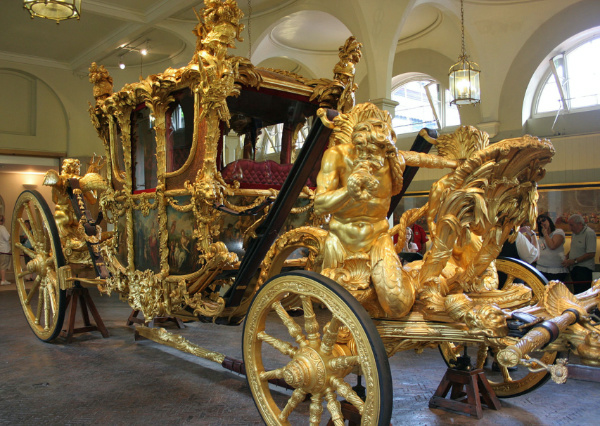
Nicholas Lyons, elected as the 694th Lord Mayor of the City of London, waves from the golden State Coach, which has been used in every Lord Mayor’s Show since 1757 and is the oldest ceremonial vehicle in regular use in the world. PICTURE: Lt Reilly AGC (ETS)/UK MOD © Crown copyright 2022