This Week in London – It’s Open House weekend; World War I remembered; and, science and the Romanovs…


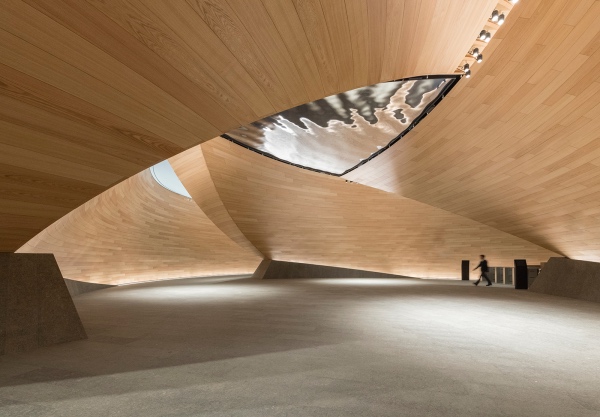
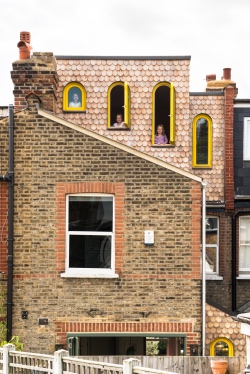
More than 800 buildings of all kinds open their doors to the public this weekend as part of the 26th Open House London. Highlights of this year’s event include new entries such as the US Embassy, the Royal Opera House and Bloomberg’s new HQ as well as returning favourites such as the BT Tower, The Shard and 10 Downing Street. There’s also a programme of activities “lifting the lid” of Old Oak and Park Royal – the heart of ‘making’ in London, explorations of new London districts such as Wembley Park, Hackney Wick and Barking Riverside, the chance to view RIBA Award-winners including the Belvue School Woodland Classrooms, Hackney Town Hall and No.1 New Oxford Street, the new COS HQ, and 100 “must-see” homes. The full programme of events – which also highlights the contribution women have made in shaping today’s London – can be found at www.openhouselondon.org.uk and there’s a free app to download. PICTURED: Top – Bloomberg European Headquarters (Nigel Young/Foster + Partners) and right – Valetta House (French & Tye) are among properties open to the public.

A multi-screen art installation remembering the millions of African men and women who served in World War I and an immersive sound installation featuring personal reflections on the Armistice are among four exhibitions opening at the Imperial War Museum in Lambeth on Friday. Projected onto three screens, African Soldier combines a powerful sound score, historic footage and newly created film which has been shot by artist John Akomfrah in various locations around the world to speak to the African experience of World War I while the sound installation, I Was There: Room of Voices, features 32 people who fought and lived through war sharing their personal stories of the Armistice. The exhibitions also include Renewal: Life after the First World War in Photographs – a display of more than 100 black and white photographs showing how lives, landscapes and national identities recovered, evolved and flourished after the war – and Moments of Silence, an immersive installation commissioned from 59 Productions. The exhibitions, which can be seen until 31st March, are part of the IWM’s Making A New World, “a season of art, photography, film, live music, dance and conversations exploring how the First World War has shaped today’s society”. For more see www.iwm.org.uk.

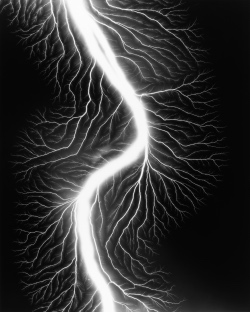
The role of science in the lives – and deaths – of the last Russian Tsar, Nicholas II, and his family is explored in a new exhibition opening at the Science Museum in South Kensington which marks 100 years since the end of the Romanov dynasty. The Last Tsar: Blood and Revolution explores the influence of medicine on the Imperial Family –  everything from how they treated conditions such as the heir Alexei’s haemophilia through to the Tsarina’s fertility and the Red Cross medical training the Tsar’s daughters received – as well as recent advances in medicine and forensic science which have been deployed to transform the investigation into their disappearance. Objects on show include personal diaries, an Imperial Fabergé Egg presented to the Tsar by his wife a year before the fall of the Imperial house and photograph albums created by an  English tutor to the Imperial Family. There’s also evidence from the scene of the family’s execution including the dentures of the Imperial physician, a diamond earring belonging to the Tsarina and an icon peppered with bullet holes. Opening on Friday, the exhibition runs until 24th March. For more, see www.sciencemuseum.org.uk/thelasttsar.

 Send all items for inclusion to exploringlondon@gmail.com.
This Week in London – Courtauld’s Impressionists visit the National Gallery; the British Library’s ‘Season of Sound’; and, Renzo Piano at the Royal Academy…

For the first time in 70 years, key Impressionist and Post-Impressionist works from the Courtauld Gallery are going on display at The National Gallery. The 26 works, which include pieces by Daumier, Manet, Renoir, Cézanne, Seurat and Bonnard, were all purchased by Samuel Courtauld in the 1920s and are being displayed alongside paintings from the National Gallery’s own collection which he helped acquire. The works are being loaned as the Courtauld Gallery closes this month for a major transformation project, dubbed Courtauld Connect. The exhibition, Courtauld Impressionists: From Manet to Cézanne, traces the development of modern French painting from the 1860s to the turn of the 20th century and reveals the vision, taste and motivation of Courtauld as he acquired the pieces. Highlights from the Courtauld Gallery’s collection include Renoir’s La Loge (Theatre Box) (1874), Cézanne’s The Card Players (about 1892–6) and Lac d’Annecy (1896 – pictured), Toulouse-Lautrec’s Jane Avril in the Entrance to the Moulin Rouge (about 1892), Manet’s A Bar at the Folies-Bergère (1882), and Seurat’s Young Woman Powdering Herself (about 1888–90). Among the works from The National Gallery’s collection being displayed alongside them are Renoir’s At the Theatre (La Première Sortie) (1876–7); as well as Seurat’s Bathers at Asnières (1884), Cézanne’s Self Portrait (about 1880–1) and Van Gogh’s A WheatKeld with Cypresses (1889) – the first paintings by the latter three artists to enter a British public collection. The display can be seen in The Wohl Galleries from next Monday until 20th January. Admission charge applies. For more, see www.nationalgallery.org.uk. PICTURE: © The Samuel Courtauld Trust, The Courtauld Gallery, London.

The British Library’s second ‘Season of Sound’ kicks off this month with a series of events celebrating the library’s vast Sound Archive. Among highlights are the pop group Saint Etienne’s only UK performance this year, a live orchestra celebration of ‘library music’ by KPM All Stars and a silent disco. The programme of events at the King’s Cross venue kicks off next Monday. Admission charges apply. For the full programme, see www.bl.uk/events/season-of-sound.

The work of internationally-renowned architect and honorary Royal Academician, Renzo Piano, goes on show at the Royal Academy in Piccadilly from Saturday. Renzo Piano: The Art of Making Buildings is the first comprehensive survey of Piano’s career to be held in London since 1989 and presents 16 of his most important projects. They include the Centre Pompidou in Paris (1971), the Jean-Marie Tjibaou Cultural Centre in Nouméa (1998), The New York Times Building in New York City (2007), The Shard in London (2012), the Jérôme Seydoux Pathé Foundation in Paris (2014) and the Whitney Museum of American Art in New York City (2015). Among events being held to mark the RA’s 250th anniversary, the display in the Gabrielle Jungles-Winkler Galleries can be seen until 20th January. Admission charge applies. For more, see www.royalacademy.org.uk.

Send all items for inclusion to exploringlondon@gmail.com.
This Week in London – Video games explored; NHM celebrates ‘James and the Giant Peach’; and Thames Mudlarks’ finds on show…

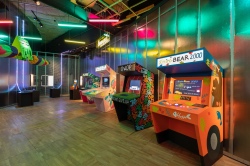
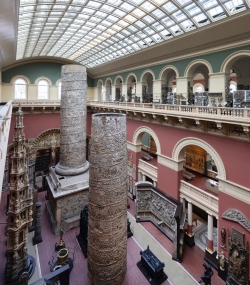
Video games – their design and use both in terms of gaming but also in pushing boundaries – are the subject of a new exhibition opening at the V&A this Saturday. Videogames: Design/Play/Disrupt will provide rare glimpses into the creative process behind games like The Last of Us, Journey and Kentucky Route Zero through original prototypes, early character designs and notebooks as well as cultural inspirational material ranging from a Magritte painting to a viral cat video. The display also features large scale, interactive and immersive multimedia installations featuring games like Minecraft and League of Legends, and explore how major technological advancements have transformed the way games are designed, discussed and played. Runs in Room 39 and North Court until 24th February. Admission charge applies. For more, see vam.ac.uk/videogames. PICTURE: V&A.

The Natural History Museum is celebrating Roald Dahl Day (13th September) with a James and the Giant Peach weekend. The South Kensington museum will this weekend offer a range of James and the Giant Peach-inspired family-friendly events and activities including the chance to see insects up close in the Darwin Centre and the Wildlife Garden as well as specimens in the Attenborough Studio. There’s also the chance to take in a ‘Whizzbanging Words’ session with a team from the Roald Dahl Museum and Story Centre, and music from the three-piece band, Roald Dahl’s Giant Bugs. Runs from 11am to 4.50pm on Saturday and Sunday. Admission is free (but some events are ticketed – check website for details). For more, see www.nhm.ac.uk/events/james-and-the-giant-weekend.html

An exhibition revealing some of the historical artefacts found by some of London’s most prolific Mudlarks along the banks of the River Thames opens on Tuesday as part of Totally Thames. Hannah Smiles has been taking the pictures over the past year and they capture everything from Tudor-era pins to World War II shells, medieval pottery, human teeth and even messages in bottles. The photographs and artefacts themselves both form part of the display. A series of talks by Mudlarks accompanies the free display. It can be viewed at the Art Hub Studios, 5-9 Creekside, in Deptford until 16th September. For more information, head to www.totallythames.org.

Send all items for inclusion to exploringlondon@gmail.com.
This Week in London – Smithfield Market celebration; Hampton Court’s annual food festival; and, Edwardian illustrators…

The 150th anniversary of the Smithfield Market will be celebrated at a street party this weekend. The Museum of London and Smithfield Market are joining in offering the free event which, reminiscent of St Bartholomew’s Fair, will feature food, music and historical re-enactments. Performers include Nadia Rose, Stealing Sheep, Girls Rock London, Gandini Juggling and Horrible Histories. Designed by Sir Horace Jones, the redesigned market – which is owned and managed by the City of London Corporation, was officially opened on 24th November, 1868. Runs from 11am to 8pm on Saturday and Sunday. For more, see www.culturemile.london/festival/smithfield-150/.

Hampton Court Palace is hosting its annual food festival over the August Bank Holiday weekend. Highlights include The Kitchen theatre featuring live cookery demonstrations from top chefs and gastronomic experts including Nadiya Hussain, Melissa Hemsley, Dr Rupy Aujla, Rhiannon Lambert, Lisa Faulkner and Michel Roux, Jr and The Classroom, which will be offering hands-on masterclasses such as sourdough workshops and ‘naked cake’ decorating with the BBC Good Food Cookery Team, gin and cocktail masterclasses and kids’ cookery. There will be stalls from more than 100 food providers offering everything from oysters to sausages, sweet treats and ales as well as a bandstand with live music and activities including vintage games, shire horses and a circus school. The festival runs from 25th to 27th August. Free entry to the palace and gardens is included with the ticket. For more, see www.hrpfoodfestivals.com.

• The work of largely forgotten Edwardian female illustrators Alice Bolingbroke Woodward and Edith Farmiloe is going on show in a new exhibition at the Heath Robinson Museum in Pinner. Peter Pan and the Other Lost Children, which opens Saturday, has been designed around 19 of Woodward’s original watercolour drawings from the first Peter Pan and also includes seven watercolours from her drawings from a 1930s edition of Alice in Wonderland. The display, which also includes works by Farmiloe, has been timed to coincide with the centenary of the Representation of the People Act of 1918. For more, see www.heathrobinsonmuseum.org.

Send all items for inclusion to exploringlondon@gmail.com.

This Week in London – The Ranger’s House reopens; dragons return to Kew; and the art of the Weimar Republic…

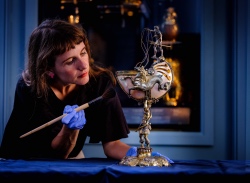
The Ranger’s House in Greenwich – home to a world class art collection known as the Wernher Collection – reopened to the public this week after a makeover by English Heritage. The property – a Georgian villa located on the edge of Greenwich Park – displays the collection – which includes more than 700 works gathered by diamond magnate Julius Wernher in the late 1800s – across 11 period rooms. Highlights include a gold earring in the shape of Victory (the Greek goddess of war) which dates from 2BC, a carved pendant in the shape of a skull from around 1500, a silver gilt, steel and nautilus shell cup dating from 1660 (pictured) and an enamelled jug depicting the Greek god Triton. The collection was originally displayed at Wernher’s London townhouse – Bath House in Piccadilly – and at his country estate, Luton Hoo in Bedfordshire, but after Luton Hoo closed in the 1990s, English Heritage agreed to display the collection at the Ranger’s House (which it had acquired in 1986) on a 125 year loan. Photographs showing how Wernher displayed his collection in his own homes have informed how the objects are presented in the house today. The house is open from Sunday to Wednesday until the end of September. Admission charge applies. For more, see www.english-heritage.org.uk/rangershouse. PICTURE: © English Heritage

 The Great Pagoda at Kew has been reopened to visitors for the first time in years following a four year restoration project. Built in 1762, the pagoda was used by the Georgian Royal Family to entertain visitors and was for the first 20 years famously adorned with 80 brightly coloured wooden dragons (until, that is, they disappeared in the 1780s when they were rumoured to have been used as payment for the Prince Regent’s gambling debts). Thanks to a major restoration project by Historic Royal Palaces in conjunction with the Royal Botanic Gardens, Kew, dragons have returned to the structure and for the first time in decades visitors are being allowed access to the upper floors from where they can gain a birds-eye view of the gardens. They will also be able to learn about the role the pagoda played in planning for the D-Day landings and try out the automata on the ground floor for a tour in miniature of Kew’s Georgian ‘royal route’. Admission charge applies. For more, see www.hrp.org.uk.

The art of Germany’s Weimar Republic goes on show at Tate Modern on South Bank from Monday. Magic Realism: Art in Weimar Germany 1919-1933 features about 70 paintings and works on paper drawn from The George Economou Collection – some of which have never seen in the UK before – and the Tate’s own collection. The display explores the “paradoxes” of the Weimar era, a time when liberalisation and anti-militarism flourished amid political and economic uncertainty (the title draws on the coining of the phrase ‘magic realism’ – today often associated with the literature of Latin America – by artist and critic Franz Roh in 1925 in an effort to describe the shift from the emotional art of the expressionist era, toward the unsettling imagery of this inter-war period). Works by artists like Otto Dix, George Grosz and Max Beckmann will be presented alongside those of under recognised artists such as Albert Birkle, Jeanne Mammen and Rudolf Schlichter and others whose careers were curtailed thanks to the rise of Nationalist Socialism and its agenda to promote art that celebrated its political ideologies. Admission is free. Runs until 14th July, 2019. For more, see www.tate.org.uk.

Send all items for inclusion to exploringlondon@gmail.com.
This Week in London – ‘Prince and Patron’ opening at Buckingham Palace; International Busking Day; and Pacific portraits at the British Library…

Buckingham Palace’s annual Summer Opening of the State Rooms kicks off this Saturday and this year, to mark the 70th birthday of Prince Charles, it features a special exhibition of more than 100 works of art – all personally selected by His Royal Highness. Prince and Patron features some of the Prince of Wales’ favourite works of art from the Royal Collection as well as works created by young artists supported by three of charities he’s founded to encourage the revival of dying arts and the maintenance of traditional skills – The Royal Drawing School, The Prince’s Foundation School of Traditional Arts and Turquoise Mountain. Among items featured from the Royal Collection are Johan Joseph Zoffany’s painting The Tribuna of the Uffizi (1772–77), and a cloak of Napoleon Bonaparte which, made of felt and embroidered in silk, was removed from the Emperor’s baggage train in the aftermath of the Battle of Waterloo in 1815 and presented to the future George IV by Field Marshal Blücher. There are also works from his personal collection including Michael Noakes’ oil sketches HM The Queen (1972-73) and Queen Elizabeth The Queen Mother (1973) as well as two preparatory oil sketches of the first official double portrait of Prince William and Prince Harry (the work of Nicky Philipps, they’re on show for the first time) and a previously unseen sketch in pencil on paper by Bryan Organ for the portrait HRH The Duke of EdinburghPrince and Patron can be seen as part of the Summer Opening of the State Rooms until 30th September. Admission charge applies. For more, see www.royalcollection.org.uk. PICTURE: Michael Noakes, Queen Elizabeth The Queen Mother (1973), © Anya and Jonathan Noakes/Royal Collection Trust.

Buskers will be descending on Wembley Park this Saturday as London becomes one of numerous cities around the world marking the third International Busking Day. Multiple Grammy Award-winning composer, producer and guitarist Nile Rodgers will launch the day at 11.30am before performances – including by internationally renowned singer-songwriter Newton Faulkner, Nina Nesbitt and folk/rock band Keywest – kick off 12.30pm. The day, which runs until 7.30pm, will include music, magic, comedy, physical theatre and dance. For more, see http://wembleypark.com/international-busking-day-2018/.

A free display of Pacific portraits has gone on show at the British Library in what’s described as a “creative response” to its exhibition James Cook: The Voyages. Created by New Zealand Māori photographer Crystal Te Moananui-Squares and New Zealand Māori producer Jo Walsh, Tūhuratanga: Voyage of Discovery features 20 portraits documenting the people of Te-Moananui-a-Kiwa (the Pacific Ocean) who are living in the United Kingdom today. The display can be seen in the Second Floor Gallery until 23rd September. For more, see www.bl.uk/events/tuhuratanga-voyages-of-discovery-photographs-by-crystal-te-moananui-squares.

Send all items for inclusion to exploringlondon@gmail.com.
This Week in London – 40 years of IVF; City Beerfest; and, ‘The Great British Seaside’…

The Science Museum is marking the 40th anniversary of IVF (in vitro fertilisation) with a special exhibition opening today. IVF: 6 Million Babies Later tells the story of the development of IVF from the work of early pioneers like Robert Edwards, Patrick Steptoe and Jean Purdy through to the birth of Louise Brown on 25th July, 1978, and on to the latest research in reproductive science. Items on show include one of the ‘Oldham Notebooks’ in which the scientific data collected by Purdy and Edwards between 1969 and 1978 was recorded along with examples of the equipment they used such as the glass desiccator used by Edwards to incubate embryos. The display also includes press coverage and personal correspondence and gifts received by Louise’s parents from around the world. A special late night opening will take place on 25th July. Runs at the South Kensington museum until November. Admission is free. For more, see www.sciencemuseum.org.uk/ivf.

The City of London Beerfest returns to Guildhall Yard today with musical performances and the chance to enjoy some of the UK’s finest ales, beers and ciders. Now in its sixth year, City Beerfest runs from 12.30pm to 9pm with proceeds going toward The Lord Mayor’s Appeal, which supports the Lord Mayor’s dedicated charities, and the City Music Foundation, which helps young musicians gain valuable entrepreneurial skills for successful careers. For more, see www.citybeerfest.org.

On Now: The Great British Seaside. This major exhibition of photography at the National Maritime Museum in Greenwich features more than 100 photographs taken by some of Britain’s most popular photographers, including Tony Ray-Jones, David Hurn and Simon Roberts, as well as new works by Martin Parr. Runs until 30th September. Admission charge applies. For more, see www.rmg.co.uk/see-do/Great-British-seaside.

Send all information for inclusion to exploringlondon@gmail.com.
LondonLife – ‘The London Mastaba’ floats on the Serpentine…

The work of internationally renowned artist Christo, The London Mastaba floats serenely on Hyde Park’s Serpentine, despite the reported ruffled feathers of some swimmers upset over its installation in their pool.

The floating sculpture, which takes up about one per cent of the lake’s surface, is Christo’s first public sculpture created for show in the UK.

Made up of 7,506 multi-coloured and stacked barrels reaching 20 metres high, the sculpture sits on a floating platform of high-density polyethylene cubes which has been anchored into place.

The artwork’s installation coincides with an exhibition of the work of Christo and his late wife Jeanne-Claude’s at the nearby Serpentine Gallery in Kensington Gardens.

Christo & Jeanne-Claude: Barrels and The Mastaba 1958-2018 features sculptures, drawings, collages and photographs spanning more than 60 years and, according to Christo will provide “important context” for The London Mastaba.

The exhibition can be seen at the gallery until 9th September. Meanwhile, the sculpture will be floating on the Serpentine, weather permitting, until 23rd September.

And finally, the Serpentine Gallery’s annual temporary pavilion – this year the work of Mexican architect Frida Escobedo, of Taller de Arquitectura – can be seen until 7th October at the Kensington Gardens’ gallery. For more information on all three projects, see www.serpentinegalleries.org.

PICTURES: Top – The London Mastaba (pinn/licensed under CC BY-NC-ND-2.0); Right – Christo, The Mastaba (Project for London, Hyde Park, Serpentine Lake), Collage 2018: 43.1 x 55.9, Pencil, wax crayon, enamel paint, colour photograph by Wolfgang Volz, map, technical data, mylar and tape, Photo: André Grossmann © Christo 2018; Below – Serpentine Pavilion 2018, designed by Frida Escobedo, Serpentine Gallery, London © Frida Escobedo, Taller de Arquitectura, Photography © 2018 Iwan Baan

This Week in London – Royal Academy’s Summer Exhibition; a Blue Plaque for Mary Poppins’ creator; and, Egypt – past and present…

The Royal Academy of Art’s Summer Exhibition – coordinated by Grayson Perry in this, the institution’s  250th anniversary year – opened this week. The world’s largest open submission contemporary art show, this year’s display features more than 1,300 hand-picked artworks in an array of mediums including a monumental sculpture by Anish Kapoor, large scale works by David Hockney and Joana Vasconcelos as well as others by the likes of Mona Hatoum, Tal R, Wolfgang Tillmans, Mike Nelson, Tracey Emin, Rose Wylie, Ed Ruscha and Bruce Nauman. The display extends across the newly extended campus off Piccadilly and can be seen until 19th August. For more, see www.royalacademy.org.uk. PICTURE: Grayson Perry, Selfie with Political Causes (Woodcut
200 x 300cm The artist and Paragon | Contemporary Editions Ltd.)

Beloved children’s author, PL Travers – she of Mary Poppins fame – has been commemorated with an English Heritage Blue Plaque. The plaque was installed at 50 Smith Street in Chelsea where the Australian-born Travers lived for 17 years and which is said to have been the inspiration for the Banks’ family home in the Disney film, Mary Poppins. Travers took up residence in the house in 1946, after returning to the UK from the US where she’d lived during World War II. It was here that she raised her adopted son, John Camillus Hone, and it was the property she was living in when she negotiated with Walt Disney for the rights to make a film about her famous book. She left the premises in 1962. For more, see www.english-heritage.org.uk/visit/blue-plaques/.

An exploration of how symbols encapsulating Egypt’s ancient past have been appropriated in more modern times has opened at the British Museum. The Past is Present: becoming Egyptian in the 20th Century brings together 31 objects gathered through the museum’s ‘Modern Egypt Project’ as it explores how the nation has branded itself by drawing on the past. The items on show include pasta packaging and cigarette boxes depicting the pyramids, milk bottles with a Cleopatra logo, and the emblem of the Banque Misr (Bank of Egypt), the first bank owned and operated by Egyptians. This Asahi Shimbun Display is free to see and can be viewed in Room 3 until 30th September. For more, see www.britishmuseum.org.

Send all items for inclusion to exploringlondon@gmail.com.
This Week in London – Queen’s Diamond Jubilee Galleries to open at Westminster Abbey; Royal Collection’s Indian treasures on show; and, Thomas Cole…

The new Queen’s Diamond Jubilee Galleries at Westminster Abbey open to the public on Monday. The museum galleries, located more than 50 feet above the abbey’s floor in the medieval Triforium, tell the 1,000 year history of the abbey through some of its greatest treasures. Entry to the Triforium – never before open to the public – is via the new Weston Tower, the first major addition to the abbey since 1745 which comes with previously unseen views of the neighbouring Palace of Westminster. The exhibition in the galleries, meanwhile, features some 300 objects and tells the abbey’s story around four major themes – building the abbey, worship and daily life, the abbey’s relationship to the monarchy and its role as a national place of commemoration and remembrance. Among the items on show are a column capital from the cloister of St Edward the Confessor’s Church (built around 1100), a scale model of the abbey commissioned by Sir Christopher Wren which features a never built massive central spire, The Westminster Retable (1259-69) – the oldest surviving altarpiece in England, the Litlyngton Missal – an illuminated 14th century service book, Queen Mary II’s Coronation Chair dating from 1689, the 2011 marriage licence of the Duke and Duchess of Cambridge, and early abbey guidebooks for visitors. The new galleries and tower were completed in a £22.9 million project funded through private donors and trusts. Admission charge applies. For more, see www.westminster-abbey.org/visit-us/plan-your-visit/the-queens-diamond-jubilee-galleries/.  PICTURES: Top – The Queen’s Diamond Jubilee Galleries; Right – The Weston Tower (Images courtesy of Westminster Abbey/Alan Williams).

The Royal Collection’s South Asian art goes on show at the Queen’s Gallery in Buckingham Palace from tomorrow. Splendours of the Subcontinent: A Prince’s Tour of India 1875-6 centres on the historic four month visit made by Albert Edward, Prince of Wales (later King Edward VIII) to the subcontinent prior to his mother, Queen Victoria, being formally declared Empress of India. It brings together some of the finest examples of Indian design and craftsmanship in the Royal Collection including some of the 2,000 gifts presented to the Prince on his tour. Highlights include an enamelled gold and diamond perfume holder given by Ram Singh II, Maharajah of Jaipur, a 10 piece gold service given by the Maharaja of Mysore, and a jewelled walking stick featuring a concealed gun, thought to have been the gift of Maharao Ram Singh of Bundi. There are also enamelled peacock feather fans, a gold and emerald turban ornament, and a brooch and necklace featuring a depiction of the Prince and Princess of Wales. The display can be seen until 14th October. Admission charge applies. The exhibition is being shown alongside Splendours of the Subcontinent: Four Centuries of South Asian Paintings and Manuscripts, which features highlights from the Royal Collection’s world-class holding of paintings and manuscripts from the region. For more, see www.royalcollection.org.uk.

British-born artist Thomas Cole’s depictions of the unspoiled American wilderness form the centre of a new exhibition at The National Gallery. Thomas Cole: Eden to Empire includes 58 works, mostly on loan from North American collections, including his iconic painting cycle The Course of Empire (1834-6), and the masterpiece that secured his reputation (and which has never been seen in the UK before), View from Mount Holyoke, Northampton, Massachusetts, after a Thunderstorm – The Oxbow (1836). Cole’s paintings will be shown alongside those of artists who had the greatest influence on him including JMW Turner and John Constable. Opens on 11th June and runs until 7th October. Admission charge applies. As a bonus, The National Gallery is also hosting a free exhibition of a series of 10 works created by Ed Ruscha in response to Cole’s The Course of Empire. These can be seen in Room 1. Admission is free. For more, see www.nationalgallery.org.uk.

Send all items for inclusion to exploringlondon@gmail.com.
This Week in London – WWI impact on art explored; recalling Windrush; ‘Sounds Like London’; and, John Thelwall commemorated…

Marking 100 years since the end of World War I, a new exhibition opening at the Tate Britain on Tuesday explores the immediate impact of the war on British, German and French art including an examination of how artists responded to Europe’s new physical and psychological scars. Aftermath: Art in the Wake of World War One features more than 150 works spanning the period from 1916 to 1932 by artists including George Grosz, Fernand Léger and CRW Nevinson. They range from battlefield landscapes and images of soldiers’ graves – such as William Orpen’s A Grave in a Trench (1917) and Paul Jouve’s Tombe d’un soldat serbe a Kenali (1917) – to sculptural public memorials commemorating the conflict by the likes of Käthe Kollwitz, André Mare and Charles Sargeant Jagger and more personal memorials created using battlefield relics like shrapnel and mortar shells as well as images depicting the wounded and disabled in the post-war world such as George Grosz’s Grey Day (1921) and Otto Dix’s Prostitute and Disabled War Veteran (1923). The display also features works relating to the birth of dada and surrealism – among those featured are Hannah Höch’s data photomontages – and looks at how the rebuilding of post war society inspired artists like Georges Braque, Christian Schad and Winifred Knights to return to classicism and tradition while pushing others, like Léger, Paul Citroen and Nevinson to create visions of a technological future. Opening on 5th June, it runs until 16th September at the Millbank site. For more, see www.tate.org.uk. PICTURE: George Grosz (1893-1959), Grey Day (1921), Oil paint on canvas, 1150 x 800 mm, Staatliche Museen zu Berlin, Nationalgalerie. Acquired by the Federal State of Berlin. © Estate of George Grosz, Princeton, N.J. 2018.

The story of Jamaican feminist poet Una Marson – the first black woman employed by the BBC, Trinidadian JJ Thomas’ scathing rebuttal of English colonialism, and, manuscripts of Andrea Levy’s novel Small Island are among highlights of a new exhibition at the British Library. Windrush: Songs in a Strange Land marks 70 years since the MV Empire Windrush first carried hundreds of migrants to London and explores why they came, what they left behind and how they came to shape Britain. The free exhibition in the library’s Entrance Hall on Euston Road, which opens Friday, also features Benjamin Zephaniah’s poem What Stephen Lawrence Has Taught Us, personal reflections from some of the first Caribbean nurses to join the NHS and sounds of the Caribbean including jazz to calypso music. Runs until 21st October. For more, see www.bl.uk.

Join in a celebration of London’s ‘grassroots music’ in June. Sounds Like London features more than 200 gigs across the capital including a series of gigs aimed at raising money for the Music Venue Trust’s Emergency Response service which supports grassroots music venues threatened by closure, 11 ‘Airbnb Concerts’ and X-pose, an event showcasing the capital’s leading deaf musicians and DJs. The full programme of events can be found at www.london.gov.uk/sounds-like-london.

The political orator, writer and elocutionist John Thelwall (1764-1834) has been commemorated with an English Heritage Blue Plaque located on the site of his pioneering institution of elocution. Thelwall, described as one of the most popular and effective orators of his day and known as a champion of free speech and universal suffrage as well as being a fierce critic of the French Revolution, opened his ‘Seminary for the cultivation of the science and practice of elocution, and the cure of impediments of speech’ at 40 Bedford Place in Bloomsbury in 1806. The Grade II-listed property, now in use as a hotel, was newly built at the time. The institution remained at the site for seven years before moving to Lincoln’s Inn Fields. For more, see www.english-heritage.org.uk/visit/blue-plaques/

Send all items for inclusion to exploringlondon@gmail.com.
This Week in London – Death and burials in Roman London; Edward Bawden retrospective; and, ‘Horrible Histories’ at Hampton Court…

Death and burials in Roman London are the focus of a new exhibition opening at the Museum of London Docklands on Friday with a rare sarcophagus discovered in Southwark last year one of the highlights. Roman Dead will look at the cemeteries of ancient London, the discoveries made there and their context in the modern cityscape. Alongside the sarcophagus discovered in Harper Road (which had possibly been disturbed by grave robbers), the exhibition features more than 200 objects including a multi-coloured glass dish found with cremated remains, a jet pendant in the form of a Medusa’s head and four men’s skulls which showed signs of violence and were buried in pits by the city’s wall as well as a tombstone of a 10-year-old girl named Marciana, found during excavations in 1979, and a pot decorated with a human face which was used as a cremation urn. The free exhibition can be seen until 28th October. For more, see www.museumofondon.org.uk/docklands.

The work of celebrated Twentieth century British artist and designer Edward Bawden (1903-89) has gone on display in a new exhibition at the Dulwich Picture Gallery. Edward Bawden is described as the “most wide-ranging” exhibition of his work since his death and the first to look at every aspect of his 60 year career. It features a number of previous unseen works as well as 18 rarely seen war portraits which are being displayed together for the first time. Some 170 works – half from private collections – are arranged thematically to follow the evolution of his style with rooms dedicated to leisure, architecture, animals, fantasy and gardens. Among the highlights are early designs for the London Underground, Rain (1926) – on display for the first time, portraits of places he visited in North Africa, the Middle East and Europe while working as an official war artist during World War II, and several linocuts from Aesop’s Fables. Runs until 9th September. Admission charge applies. For more, see www.dulwichpicturegallery.org.uk. PICTURE: Edward Bawden, St Paul’s, 1958 (Colour autolithograph/Trustees of the Cecil Higgins Art Gallery (The Higgins Bedford), © Estate of Edward Bawden).

Delve into the world of the ‘Gorgeous Georgians’ and ‘Vile Victorians’ at Hampton Court Palace this May half term. The Birmingham Stage Company will be uncovering centuries of grisly history in an hour long outdoor ‘Horrible Histories’ performance featuring characters including Georgian kings, Lord Horatio Nelson, the Duke of Wellington, Florence Nightingale, and Dr John Snow. Guests are encouraged to bring a blanket and some food for the “ultimate historical picnic”. Admission charge applies – check website for dates. For more, see www.hrp.org.uk/hampton-court-palace/explore/the-gorgeous-georgians-and-vile-victorians/.

Send all items for inclusion to exploringlondon@gmail.com.
Treasures of London Special – The “new” Royal Academy of Arts…

Celebrating its 250th anniversary this year, The Royal Academy of Arts opens its “new” expanded £56 million campus on Saturday.

Designed by Sir David Chipperfield, the new two acre Royal Academy campus features 70 per cent more public space than the RA’s original Burlington House blueprint which will enable the institution to expand its programs of exhibitions and events and create new free displays of art and architecture.

One of the key features of the redevelopment is the new Weston Bridge between the institution’s landmark property, Burlington House, and the RA’s formerly “unloved” building at 6 Burlington Gardens which unites the two-acre campus and creates a new route between Piccadilly and Mayfair.

The Grade II-listed building on Burlington Gardens, which the RA bought in 1991 and which was previously home to, among other things, the Museum of Mankind, has been refurbished and a 250 seat lecture theatre, the Benjamin West Lecture Theatre, inserted along with a new architecture studio within The Dorfman Senate Rooms – restored by architect Julian Harrap – for free architectural displays.

A new public route through the campus has integrated the Royal Academy Schools into the visitor experience with the new Weston Studio, a public project space for students and alumni, and provides views of the Schools’ Corridor and the newly landscaped Lovelace Courtyard, providing visitors with a “greater insight into Britain’s longest established art school”.

It also takes visitors through the Gabrielle Jungels-Winkler Galleries, a suite of three day-lit galleries for temporary exhibitions (Tacita Dean’s LANDSCAPE, the inaugural display, opens Saturday) and past the new Royal Academy Collection Gallery where works by the likes of Michelangelo, Reynolds, Kauffman, Thornhill, Constable, Gainsborough and Turner can be seen. There’s also a new Clore Learning Centre.

New places to eat and drink within the complex include the Senate Room bar and restaurant, and cafes and shops located on either side of the Burlington Gardens entrance.

The Royal Academy was founded by King George III in 1768 after he was presented with a petition by architect Sir William Chambers which had been signed by 36 artists and architects seeking to “establish a society for promoting the Arts of Design”. Initially based in Pall Mall, the institution’s first official home was in the new Somerset House. In the 1830s, it moved to Trafalgar Square where it shared premises with the newly created National Gallery and in 1867, the institution has moved to Burlington House where it’s been located ever since.

To celebrate the opening of the “new” Royal Academy, there will be a weekend-long “art party” this weekend with free workshops, tours, displays, late-night performances and DJs. Highlights will include performances by The Uncollective and Rachael Plays Disco; collaborative mural drawing, party hat making, architectural model making, RA Collection gallery tours, and a family printmaking workshop in the new Clore Learning Centre. The Annenberg Courtyard will host street food and cocktail bars.

For more, see www.royalacademy.org.uk/plan-your-visit.

PICTURES: Top – The Weston Bridge and The Lovelace Courtyard/Below – The Benjamin West Lecture Theatre. (Both images by Simon Menges).

This Week in London – ‘Picturing Forgotten London’; 1968 recalled; and, a posthumous VC newly on display…

From coaching inns to horse markets, riverside mansions to gin palaces – the ‘lost’ buildings of London form the focus of a new exhibition which opens at the City of London Corporation’s London Metropolitan Archives in Clerkenwell on Monday. Picturing Forgotten London features drawings, engravings, photographs, maps, films and contemporary recollections displayed under themes including entertainment, food, commerce and trade, and transport. Through the exhibition, visitors will discover frost fairs (pictured), ‘open-shout’ trading floors, pleasure gardens, almshouses, cabmen’s shelters, dockyards, farms and a 1960s supermarket. Among the highlights are a look at the notorious Westminster neighbourhood known as Devil’s Acre and images of such lost landmarks as Euston Arch and Crystal Palace as well as Geoffrey Fletcher’s observational drawings of 60s and 70s London and a large scale reproduction of an 1867 illustrated map of public buildings, theatres, music halls and other landmarks known as The Strangers Guide. Admission is free. Runs until 31st October. For more, follow this link. PICTURE: Courtesy of the City of London Corporation’s London Metropolitan Archives.

Marking 50 years since a series of significant protests took place around the world, a new display at Tate Britain in Millbank shows how artists responded to what it calls a “watershed moment in political and social history”. London: 1968 features a series of iconic agin-prop posters by the Camden Poster Workshop who moved their studio into the London School of Economics during the student occupation in October. They provide a visual record of some of the key issues of the time including industrial strikes, the Vietnam War, and civil rights movements in Ireland, America and South Africa. There’s also a Patricia Holland film looking at the occupation of the Hornsey School of Art and work by radical artists such as Barry Flanagan, Richard Long, Joseph Beuys and Mario Merz who all participated in a landmark exhibition at London’s ICA in 1969. The display, which is free to see, coincides with another free display at Tate Modern – 1968: Protest and the Photobook – which brings together politically engaged photobooks made during this period. London: 1968 runs until 31st October. For more, see www.tate.org.uk.

A posthumous Victoria Cross awarded to Corporal Bryan Budd for bravery in Afghanistan has gone on display at the Imperial War Museum London in Lambeth. Corporal Budd, who served in the 3rd Battalion, The Parachute Regiment, was awarded the VC on 14th December, 2006, for two separate acts of gallantry in Helmand Province – the first in an incident on 27th July that year when he initiated a daring attack on the enemy in order to evacuate a wounded comrade, and the second, on 20th August, when he led a surprise attack on a Taliban position, killing several enemy but sustaining wounds from which he died. The VC, which was purchased by Lord Ashcroft, is the most recent now in his collection – prior to its acquisition the most recent he had was awarded to Sergeant Ian McKay in October, 1982, for gallantry during the Falklands War. For more, see www.iwm.org.uk.

Send all items for inclusion to exploringlondon@gmail.com.

This Week in London – Commemorating WWI postal service; new acquisitions at the National Gallery; and, 50 Glorious Shows!

A ‘pop-up’ World War I mail sorting office will appear in The Regent’s Park this Saturday as part of centenary commemorations of the Great War. The office evokes the giant wooden building known as the ‘Home Depot’ which was located in the park and which handled all the mail from and to the front line during the war – some two billion letters and 140 million parcels. Believed to have been the largest wooden building in the world, it covered at its greatest extent more than five acres. The sorting office provides visitors with an immersive experience as it brings to life the story of the 2,500 people who worked there and visitors can even work a shift as part of an interactive session led by The Postal Museum. There’s a chance to write a postcard to a soldier or postal worker to give them your thoughts on the war and outdoors, there’s a display on the role the Post Office played in keeping the war running. The sorting office can be visited for free this Saturday, 12th May, and Saturday, 19th May. For more, follow this link.

Two new acquisitions – the first ever painting by Spaniard Juan de Zurbarán to enter a UK collection and a teenage work by portraitist John Singer Sargent – have gone on show at the The National Gallery on Trafalgar Square. The rather long titled Still Life with Lemons, Lilies, Carnations, Roses and a Lemon Blossom in a Wicker Basket, together with a Goldfinch perched on a Porcelain Bowl of Water, on top of a Silver Tray, all arranged upon a Stone Ledge was painted by Baroque artist de Zurbarán in about 1643–49 while Wineglasses was painted by Sargent at the age of 19, probably at St-Enogat in Brittany where he spent the summer of 1875 having just seen his first Impressionist exhibition in Paris. Still Life with Lemons in a Wicker Basket can be seen in Room 30 while Wineglasses is in Room 44. Admission is free. For more, see www.nationalgallery.org.uk. PICTURE: Wineglasses, John Singer Sargent, RA (1856–1925) Probably 1875  © The National Gallery, London.

On Now – 50 Glorious Shows! The Cartoon Museum is this year celebrating 12 years at 35 Little Russell Street in Bloomsbury and to mark the occasion, this display features more than 170 original works which have been highlights in previous exhibitions. Among those whose work is represented are masters of the British tradition of cartooning like Hogarth, Gillray, Tennial and EH Shepard as well as that of top comic artists and graphic novelists like Dudley D Watkins, Posy Simmonds and Bryan Talbot. There’s also a selection of political satire and caricature. The show runs until 2nd September. For more, see www.cartoonmuseum.org.

Send all items for inclusion to exploringlondon@gmail.com.
This Week in London – Hampton Court Palace breathes new life into Tudor kitchens; Kew’s Temperate House to reopen; and, World War I commemorated in Guildhall Yard…

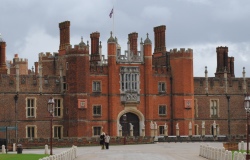
Hampton Court Palace will on Saturday launch a major representation of its Tudor kitchens with a new display designed to give visitors a ringside seat to preparations for a royal feast. Visitors will be immersed in the sights, sounds and smells of King Henry VIII’s kitchens as they explore the stories of everyone from cooks to liveried pages who made the great court feasts possible and meet the likes of Thomas Cromwell, right-hand man to the king, master cook John Dale and Michael Wentworth, clerk of the kitchen. A specially commissioned play will be launched for the summer and during holiday periods there will be workshops, games and competitions. Admission to the kitchens is included in the palace admission. For more information, head to www.hrp.org.uk/hampton-court-palace/.

Kew’s iconic Temperate House – the world’s largest Victorian glasshouse – will reopen on Saturday after the biggest renovation project in its history. The five year restoration project has seen its entire framework repaired and thousands of panes of glass replaced. Some 500 plants were taken out and housed in a temporary nursery and some 10,000 plants, consisting of 1,500 species, have gone back in. A programme of events will take place involving the Temperate House, which dates from 1863, over the summer and there are special preview openings on Friday and Saturday night. For more, see www.kew.org. PICTURE: Gareth Gardner/Kew.

The City of London Corporation is marking the centenary of the end of World War I with a new open-air exhibition highlighting the global nature of conflict. Fields of Battle, Lands of Peace: 1918-2018, which opened on Monday, is the third and final display by photographer Michael St Maur Sheil to go on show in Guildhall Yard. The display can be seen until 28th May. Accompanying the exhibition is a free guided walk – The City’s Great War Heroes – which enables people to walk in the footsteps of City men and women who went off to the Great War. It departs from Bishopsgate every Monday and Saturday at 11am and 2pm until 28th May with an extra walk at 1.30pm on the final day. For more, follow this link.

Send all items for inclusion to exploringlondon@gmail.com.
This Week in London – James Cook’s voyages; Diana’s landmine moment remembered; and, the influence of the Greeks on Rodin…

Marking 250 years since Captain James Cook set sail from Plymouth aboard the Endeavour in 1768 comes a new exhibition at the British Library focusing on the explorer’s three world-changing voyages aboard the Endeavour, the Resolution and the Discovery. Maps, artworks and journals from the voyages will be on show in James Cook: The Voyages alongside recently commissioned films bringing contemporary perspectives. The display features a collection of drawings by Polynesian high priest and navigator Tupaia – on display for the first time, as well as Sydney Parkinson’s natural history drawings including the first European depiction of a kangaroo, John Webber’s watercolour landscapes including the first European illustrations of Hawaii and works by William Hodges including the first artworks depicting the Antarctic. There’s also the first chart of New Zealand, specimens including the mouth parts of a squid from the first voyage, and, jewellery and musical instruments including a necklace from Tierra del Fuego, a ceremonial rate from Nootka Sound (Vancouver Island) and a bamboo flute from Tahiti. The display, which runs until 28th August, is being accompanied by a programme of public events. Admission charge applies. For more, see www.bl.ukPICTURE: Portrait of Captain James Cook (1728-79) © British Library Board.

A HALO Trust branded flak vest as well as a denim shirt and Armani chinos all worn by Diana, Princess of Wales, during a high profile visit to Angolan landmine fields in 1997 is among new items on show at Kensington Palace. Running since February last year, Diana: Her Fashion Story – which traces the evolution of the Princess’ style and her impact on British and global fashion – has been spruced up with the addition of new items including the landmine visit outfit as well as a pink Bellville Sassoon suit worn to board the train for her honeymoon, a Victor Edelstein evening gown worn for an official portrait by Terence Donovan (on public display for the first time), a floor length Yuki gown designed for the Prince and Princess of Wales’ visit to Japan, and a tartan dress by Caroline Charles worn to the 1982 Braemar Games in the Scottish Highlands. Admission charge applies. For more, see www.hrp.org.uk/Diana.

The influence of ancient Greek art on 19th century sculptor Rodin is the subject of a new exhibition opening at the British Museum today. Rodin and the art of ancient Greece displays his work alongside the Parthenon sculptures that inspired him. Thanks to a collaboration with the Musée Rodin in Paris, the exhibition features more than 80 of Rodin’s works in marble, bronze and plaster along with sketches. Key works on show include The Kiss (1882), which, like two female goddesses originally on the East Pediment of the Parthenon, was carved from a single block of stone. Runs until 29th July. Admission charge applies. For more, see www.britishmuseum.org.

Send all items to exploringlondon@gmail.com for inclusion.

This Week in London – Fashion and raw materials; music and museum; and, lates at Tate…

• The relationship between the glitzy world of fashion and the raw materials used to make it is the subject of a new exhibition opening at the V&A on Saturday. Fashioned from Nature features more than 300 “beautiful, intriguing and unsettling objects” spanning the period since 1600 and including everything from a a pineapple fibre clutch bag, a Calvin Klein dress made from recycled bottles worn by actor Emma Watson (pictured) and a cape of cockerel feathers. One focus of the exhibition is the damage done to the environment due to the demands of fashion and the display highlights some of the campaigners and groups which have been vocal in protesting about the issue. The display also looks at the role design has played in creating a more sustainable fashion industry. Runs until 27th January, 2019. Admission charge applies. For more, see vam.ac.uk/fashionedfromnature. PICTURE: Emma Watson wearing Calvin Klein at The Metropolitan Museum of Art’s Costume Institute Benefit Celebrating the Opening of Manus x Machina: Fashion in an Age of Technology, Arrivals, The Metropolitan Museum of Art, NYC, New York, America, 2nd May 2016 (Matt Baron/REX/Shutterstock).

The British Museum has kicked off a first-of-its-kind two week festival of musical performances exploring the idea of museums as “diplomats of the 21st century”. Running until 29th April, Europe and the world: a symphony of cultures explores Europe’s interactions with the world and looks to create a dialogue between works of classical and contemporary music and objects in the museum which have come from around the world. There’s 17 performances taking place over the two weeks which started last Monday as well as some panel discussions. The works include those of Ligeti, Berio, Stockhausen, Liszt, Messiaen, Strauss, Bartók, and Nono and are being performed along with pieces from historical musical traditions such as medieval temple music from China, classical music from India, Spanish colonial and flamenco music, Spiritual Japanese music from the 7th century and Byzantine choral music. Among those performing are London Sinfonietta, Ensemble für Intuitive Musik Weimar, Accademia del Piacere, Zhang Jun and his Kunqu Ensemble, Kaushikiji Charkraborty and Ensemble, and Reigakusha Ensemble Tokyo. Supported by the German Foreign Office, more details on the festival can be found at www.britishmuseum.org/whats_on/europe_and_the_world.aspx.

Tate Britain has launched a series of new night events curated by young people aged 15 to 25. The gallery, which already held the first event in early April, will open late on the first Friday evenings of June, August, October and December for a series of special events featuring music, live performances and workshops and inspired by displays, exhibitions and artworks in Tate’s collections including the current Art Now installation by Marguerite Humeau, John Constable’s Salisbury Cathedral from the Meadows, the upcoming Duveens Commission by Anthea Hamilton​ and the Turner Prize. Lates at Tate Britain are free, drop-in events with spaces available on a first come, first served basis. For more, head to www.tate.org.uk.

Send all items for inclusion to exploringlondon@gmail.com.
This Week in London – Monet and architecture; Abbey Road Studios on show; and, Maqdala recalled…

An exhibition showcasing the works of Impressionist artist Claude Monet with a focus on his depictions of architecture opens at the National Gallery on Monday. The Credit Suisse Exhibition: Monet & Architecture is the first exhibition concentrating solely on Monet’s works in London in more than 20 years. It spans his entire career from the mid-1860s to early 20th century and features more than 75 paintings depicting everything from villages to cities like Venice and London as well as individual structures and monuments. The display includes a rare gathering of some of Monet’s great ‘series’ paintings including five pictures from trips to Holland made in the early 1870s, 10 paintings of Argenteuil and the Parisian suburbs from the mid-1870s, seven pictures depicting the cathedral at Rouen from 1892–5, eight paintings of London from 1899–1904, and nine canvases showing Venice from 1908. Highlights include the Quai du Louvre (1867) (pictured), the Boulevard des Capucines (1873), and the flag-filled Rue Montorgeuil, 30 June 1878. Can be seen in the Sainsbury Wing until 29th July. Admission charge applies. For more, see www.nationalgallery.org.uk. PICTURE: The Quai du Louvre (Le Quai du Louvre), 1867, Claude Monet, Oil on canvas © Collection Gemeentemuseum Den Haag.

London’s Abbey Road Studios are celebrated in an exhibition of the work of rock photographer Jill Furmanovsky which opens at the Barbican Music Library on Monday. Inside Abbey Road Studios – Through the lens of Jill Furmanovsky is a showcase of her work since 1976 when she photographed Pink Floyd during the Wish You Were Here recording sessions and, as well as those images, includes more recent images of the likes of Nile Rodgers, Royal Blood, Novelist, and Mura Masa, as well as emerging musical talent. The display is a collaboration between Abbey Road Studios, Furmanovsky – who became artist-in-residence at the studios last year – and the Barbican Music Library. The exhibition, which is free to enter, can be seen until 27th June. For more, see www.barbican.org.uk/whats-on/2018/event/inside-abbey-road-studios.

Some 20 objects from Ethiopia are featured in new exhibition at the V&A marking the 150th anniversary of the siege and battle at Maqdala, culmination of the British Expedition to Abyssinia. Maqdala 1868, which focuses on the battle and its aftermath, features some of the earliest examples of military photography in Britain as well as a portrait of Emperor Tewodros II’s son Prince Alemayehu taken by Julia Margaret Cameron soon after the prince was brought to England by the British military. There’s also examples of metalwork and textiles including a gold crown with filigree designs and embossed images of the Evangelists and Apostles, a solid gold chalice, jewellery and a wedding dress believed to have belonged to the Emperor’s wife, Queen Terunesh. All of the objects were taken during Sir Robert Napier’s military expedition of 1867-68 which was aimed at securing the release of British hostages held by the Emperor and which culminated in the Emperor’s suicide and the destruction of his fortress. The exhibition, which is free to see, has been organised in consultation with the Ethiopian Embassy in London and an advisory group including members of the Orthodox Tewahedo Church, members of the Anglo-Ethiopian society and representatives from the Rastafarian community. Runs until July, 2019, in Room 66 of the Silver Galleries. There is a program of related events. For more, see www.vam.ac.uk.

Send all items for inclusion to exploringlondon@gmail.com.

This Week in London – Happy Easter!; Egg hunting at English Heritage properties; Peter Rabbit at Kew; and The Science Museum’s Frankenstein Festival…

Wishing all of our readers a very Happy Easter!

Six special eggs designed by six top children’s book illustrators have been hidden at English Heritage sites across the country for Easter. The illustrators – including Ian Beck, Polly Dunbar, Olivia Lomenech Gill, Trisha Kraus, Lydia Monks and Grahame Baker Smith – have all designed eggs inspired by English Heritage properties. Young visitors taking part in the Easter Adventure Quests – which will be held at 20 English Heritage properties including London’s Eltham Palace and Gardens and Down House – will need to hunt for a special “chicken token” hidden in the undergrowth with those who find one presented one of the six “eggsclusive” eggs. The tradition of decorating Easter eggs has been recorded as far back as 1290 in England when King Edward I purchased 450 of them to be decorated and covered in golf leaf for his courtiers. In the early 16th century, King Henry VIII received a silver-mounted egg as an Easter gift from the Pope. The Easter Egg Adventure Quest will be held from 30th March (Good Friday) through to 2nd April (Easter Monday). For more on what’s happening at Easter, see www.english-heritage.org.uk/easter/.

Peter Rabbit and his furry friends are visiting Kew Gardens this Easter. From tomorrow until 15th April, the Peter Rabbit themed festival – A big day out with Peter Rabbit – will see visitors presented with a copy of Mr McGregor’s garden notebook so they can follow a Peter Rabbit-themed trail to the Secluded Garden where they can find life-sized selfie boards of Peter and other characters and take part in a range of activities including games, craft activities and workshops (including how to build their own rabbit warren). The nearby Kitchen Garden will also be on display with mini-tours for families to show off the growing produce. Admission charge applies. For more, see www.kew.org.

An Easter Egg Hunt will take place at The Royal Mews, Buckingham Palace, on Saturday. Between 11am and 3pm, children are invited to hunt for pictures of Rex the corgi and the royal horses Majesty and Scout among the carriages as well as dress up as a footman, learn how to harness a horse, take part in art activities and find out what it’s like to ride in a royal carriage. Each child will be able to claim an Easter egg to take home. For more, see www.royalcollection.org.uk.

The Science Museum’s free Frankenstein Festival – celebrating the 200th anniversary of the publication of Mary Shelley’s Frankenstein or the Modern Prometheus – kicks off on 3rd April. Featuring immersive theatre, experiential story-telling and hands-on activities, the festival will encourage visitors to examine the ethical scientific questions surrounding the artificial creation of life and allow them to step into Dr Frankenstein’s shoes and create a creature which they can bring to life using stop-motion animation. There’s puzzles and experiments to do, a Frankenstein-themed audio tour of the museum called It’s Alive, a choose-you-own-adventure experience – Pandemic – in which visitors decide how far Dr Frankenstein should go to tackle a virus sweeping across the world, and, Humanity 2.0, a play performed by Emily Carding which examines what could happen if a benevolent AI recreated humanity in an apocalyptic future world. There’s also the opportunity to meet researchers at the cutting edge of science including bio chemists who manipulate DNA and engineers creating artificial intelligence. The festival runs daily between 3rd and 8th April (some activities have limited availability so tickets can be found at sciencemuseum.org.uk/Frankenstein). A Promethean Tales Weekend will be held on 27th to 28th April, featuring panel discussions and special screenings of Terminator 2: Judgement Day and The Curse of Frankenstein in the IMAX cinema. For more, head to sciencemuseum.org.uk/Frankenstein.

Send all items for inclusion to exploringlondon@gmail.com.