This Week in London – Lord Mayor’s Show marks 800 years; Dutch masters and Thomas Rowlandson at Queen’s Gallery; and, Alexander Calder on show at Tate…

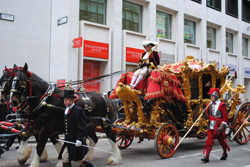
Lord-Mayor's-ShowThe Lord Mayor’s Show will mark its 800th anniversary on Saturday as the newly elected Jeffrey Mountevans – the 688th Lord Mayor of the City of London – makes his way through the City to Westminster to swear loyalty to the Crown. The procession of 7,000 people, some 180 horses and 140 vehicles will set off on its way along a three-and-a-half mile route at 11am, starting at Mansion House and traveling down Cheapside to pause at St Paul’s Cathedral (which is open for free all day) before heading on via Ludgate Hill and Fleet Street to the Royal Courts of Justice before returning the City via Queen Victoria Street from 1.10pm. In a special nod to the 800th anniversary, the famous bells of St Mary-le-Bow will ring out a special 800-change at noon. The day will conclude with fireworks over the River Thames kicking off at 5.15pm (for the best view head down to the riverside between Waterloo and Blackfriars Bridges, either on Victoria Embankment or on the South Bank). The show’s origins go back to 1215 when, in exchange for a Royal Charter granting the City of London the right to elect its own mayor, King John insisted the newly elected mayor travelled to Westminster each year to swear loyalty to the Crown. For more (including a map to print out), see https://lordmayorsshow.london. PICTURE: From a previous show.

Vermeer’s The Music Lesson is among 27 of the finest 17th and 18th century Dutch paintings in the Royal Collection which will go on display in a new exhibition at the Queen’s Gallery at Buckingham Palace from tomorrow. Masters of the Everyday: Dutch Artists in the Age of Vermeer also features works by the likes of Gerrit Dou, Pieter de Hooch and Jan Steen, all produced during what is known as the Dutch ‘Golden Age’. The exhibition is being shown alongside another display – High Spirits: The Comic Art of Thomas Rowlandson – which will focus on the work of 18th and early 19th century caricaturist Thomas Rowlandson. Around 100 of Rowlandson’s works feature in the display with highlights including The Two Kings of Terror featuring Napoleon and Death sitting face-to-face after Napoleon’s defeat at Leipzig in 1813, The Devonshire, or Most Approved Method of Securing Votes depicting Georgiana, Duchess of Devonshire, kissing a butcher (it was claimed she had claimed kisses for votes in the Westminster election of 1784), and A York Address to the Whale. Caught lately off Gravesend in which the Duke of York thanks a whale for distracting attention from accusations that his mistress was paid by army officers to secure promotions from the Duke. Admission charge applies. Both exhibitions run until 14th February, 2015. For more, see www.royalcollection.org.uk.

The first major UK exhibition of the works of kinetic sculpture pioneer Alexander Calder opened at the Tate Modern this week. Alexander Calder: Performing Sculpture features more than 100 of the ground-breaking 20th century artist’s works which trace how Calder turned sculpture from the idea of a static object to a continually changing work to be experienced in real time. Works on show include figurative wire portraits of artists – Joan Miró and Fernand Léger (both 1930), works exploring the idea of forms in space – Red Panel, White Panel and Snake and the Cross (1936), motorised mobiles such as Black Frame and A Universe (1934), and chiming mobiles such as Red Gongs (1950) and Streetcar (1951). It closes with the large scale Black Widow (c.1948), shown for the first time ever outside Brazil. Runs until 3rd April. Admission charge applies. For more, see www.tate.org.uk.

Send all items for inclusion to exploringlondon@gmail.com.


This Week in London – Gallery of Japanese art reopens; Botticini’s Assumption back on show; Bonfire Night; and, celebrating wildlife photography…

A Hello Kitty! rice cooker, a selection of mobile phones designed by Naoto Fukasawa and a group of kimono from the 1920s and 1930s are among recent acquisitions on show in the V&A’s Toshiba Gallery of Japanese Art which reopened to the public following a refurbishment this week. The gallery, which first opened at the South Kensington premises in 1986 and was the first major gallery of Japanese art in the UK, now has about 550 items on show including 30 or so recent acquisitions. Spanning the period from the sixth century to the present day, the display features swords and armour, lacquer, ceramics, cloisonné enamels, textiles and dress, inro and netsuke, painting, prints and illustrated books. They include everything from modern objects such as the first ever portable stereo Walkman designed and manufactured by Sony in 1979 and a pair of gravity-defying shoes designed by Noritaka Tatehana through to historic items such as the Mazarin Chest, made in Kyoto around 1640, a late 17th century six fold screen depicting the Nakamura-za Kabuki theatre in Edo (Tokyo), and a group of high quality cloisonné enamels dating from 1880 to 1910. Admission to the gallery is free. For more, see www.vam.ac.uk.

Francesco Botticini’s monumental Palmieri Altarpiece is at the centre of a new exhibition, Visions of Paradise: Botticini’s Palmieri Altarpiece, which opened in the National Gallery off Trafalgar Square yesterday. The altarpiece, depicting the Assumption of the Virgin, was completed in about 1477 for the funerary chapel of Matteo Palmieri (1406-1475) in the church of San Pier Maggiore in Florence, Italy. The exhibition, based on years of research, explores Palmieri’s life with special attention to his friendship with the Medici rulers of Florence and the King of Naples and his creative collaborations with Botticini including both the altarpiece and Palmieri’s epic poem of 1465, Citta di Vita (City of Life) –  which he had Bottinci provide illustrations for. Along with the altarpiece panel (which has been off display since 2011), the exhibition features around 30 works including paintings, sculpture, drawings, prints and manuscripts as well as a polyptych by Jacopo di Cione and his workshop made for the high altar of the same church in which Botticini’s altarpiece sat – Florence’s San Pier Maggiore. The polyptych includes a painted representation of the church and was later moved to the same chapel as Botticini’s Assumption. The exhibition is being held in the Sunley Room until 14th February. Admission is free. See www.nationalgallery.org.uk for more.

Bonfire Night will be celebrated across the UK tonight as we “Remember, remember, the fifth of November” and burn effigies of “the guy” (Guy Fawkes) (for more on the background, see our earlier story here). Find your local bonfire event in London via Visit London or Time Out.

On Now: Wildlife Photographer of the Year. This annual exhibition at the Natural History Museum features works selected out of the more than 42,000 entries to this year’s awards including the winning image, Tale of two foxes, taken by Canadian amateur photographer Don Gutoski at Cape Churchill in Canada. Other images on show include Fighting ruffs which won 14-year-old Ondrej Pelánek from the Czech Republic the Young Wildlife Photographer of the Year award. The exhibition at the museum in South Kensington runs until 10th April next year. Admission charge applies. Entries for next year’s competition open in December. For more, see www nhm.ac.uk.

Send all items for inclusion to exploringlondon@gmail.com.

Special – Museums at Night (second time round)…

This weekend London is once again taking part in the Museums at Night event (yes, this is the first year it’s being held over two weekends – the first was back in May). In honour of that milestone, we thought we’d take the time to list five of the quirkier places that are taking part this time around, either tonight or on Halloween itself…

The Marvellous Mysteries of Hackney Museum at Night. An interactive and “creative making” tour of the museum and local surroundings (be prepared for some walking!).

The Monument, City. Ascend the spiral staircase of 360 degree views of the City and hear stories about the Great Fire and its aftermath and Hookes’ telescopic column.

Osterley After DarkOsterley Park, Isleworth (pictured). Explore the Georgian house and discover some of the darker bits of Osterley’s 400-year-old history.

The Fan Museum, Greenwich. Take a look at its latest exhibition ‘Made in China’ which features a display of 8o fans and “traces the evolution of Chinese export fan design from its emergence toward the end of the seventeenth century to its eventual decline in the latter part of the nineteenth century”.

Severndroog Castle, Castle Wood. Take a candlelit tour on Halloween including the chance to take in the vistas from the viewing platform. The tearooms are also opening.

For details of all London events – some of which are free – check out www.museumsatnight.org.uk and search under ‘London’.

This Week in London – Life after the pharaohs in Egypt; Days of the Dead; horrible histories at two royal palaces; and Dickin and Gombrich honoured with Blue Plaques…

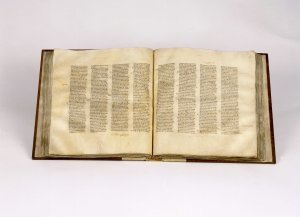
 •untitled 276.tif The first major exhibition to explore the history of Egypt after the pharaohs opens at the British Museum today. Egypt: Faith after the pharaohs spans 1,200 years of history – from 30 BC to 1171 AD – with 200 objects showing how Christian, Islamic and Jewish communities reinterpreted the pharaonic past of Egypt and interacted with each other. The exhibition opens with three significant examples of the Hebrew Bible, the Christian New Testament and the Islamic Qur’an – the texts include the New Testament part of the 4th century AD Codex Sinaiticus, the world’s oldest surviving Bible and the earliest complete copy of the New Testament, which is now part of the British Library’s collection. All three are juxtaposed with everyday stamps associated with each of the three religions in an illustration of the relationship between the institutional side of religion and its everyday practice, both key themes of the exhibition. Other exhibits include a pair of 6th-7th century door curtains featuring classical and Christian religious motifs, a 1st-2nd century statue of the Egyptian god Horus in Roman military costume, and a letter from the Roman Emperor Claudius (41-54 AD) concerning the cult of the divine emperor and the status of Jews in Alexandria. Admission charge applies. Runs until 7th February in Room 35. A programme of events accompanies the exhibition. For more, see www.britishmuseum.org/egypt. PICTURE: Codex Sinaiticus, open at John 5:6-6:23. Image courtesy of the British Library.
Still at the British Museum and a free four day festival of art, performance, storytelling and talks kicks off on Friday night to mark the Mexican tradition of the Days of the Dead. The annual celebration, which draws on both native and Catholic beliefs, is held on 1st and 2nd November and sees families gather to remember relatives and friends who have died. The festival, which is being conducted in association with the Mexican Government, includes a Friday evening event, a weekend of family activities featuring storytelling, films, music and dance, and a study day  on Monday featuring lectures, gallery talks and activities. The museum will feature elaborate decorations by Mexican artists – including Betsabeé Romero – throughout the festival with a particular focus on the Great Court and Forecourt. Events – which run from 30th October to 2nd November – are free. For more, see www.britishmuseum.org/dotd.

Horrible histories indeed! Hampton Court Palace and Kensington Palace are both hosting ghost tours from this weekend. The tours focus on some of the more grisly aspects of the history of the palaces with tours at Hampton Court featuring a visit to a shallow grave which was only uncovered in 1870 and those at Kensington Palace encountering the gruesome details of King William III’s fatal horse-riding accident and Queen Caroline’s horrific final hours. Admission charges apply. For more details, head to www.hrp.org.uk.

Animal welfare campaigner Maria Dickin (1870-1951) and art historian EH Gombrich (1909-2001) have been honoured with English Heritage Blue Plaques. The plaque commemorating Dickin – founder of the People’s Dispensary for Sick Animals (PDSA) and of the PDSA Dickin medal, awarded to animals associated with the armed forces or civil defence who have shown conspicuous gallantry and devotion to duty – has been placed on the Hackney house at 41 Cassland Road where she was born and spent the first few years of her life. Meanwhile the plaque to Gombrich was placed on the house at 19 Briardale Gardens in Hampstead where he lived for almost 50 years, from shortly after publication of his seminal work The Story of Art to his death in 2001. For more see www.english-heritage.org.uk/visit/blue-plaques/.

Send all items for inclusion to exploringlondon@gmail.com.

LondonLife – Giacometti’s works go on show at the National Portrait Gallery…

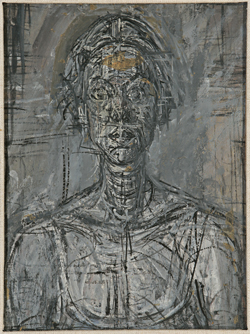
AnnetteBust of Annette is among more than 60 works by the 20th century Swiss artist Alberto Giacometti on display at the National Portrait Gallery in an exhibition which opened earlier this month. The first ever exhibition to consist solely of portraits by Giacometti (1901-66), Giacometti: Pure Presence features paintings, drawings and sculptures from across his entire career. While he is most famous for his tall, thin standing or walking figures – works which fueled his reputation as a leading surrealist sculptor, the exhibition focuses on his life-long preoccupation with portraiture. Apart from his wife Annette, subjects featured in his works include his brother Diego, friends such as the writers Louis Aragon and Jean Genet, retailer and philanthropist Lord Sainsbury, art writer James Lord, Isabel Nichol – who later become Francis Bacon’s muse, Isabel Rawsthorne, and a prostitute named Caroline with whom he worked for five years from 1960. Highlights of the exhibition include a portrait bust of his brother Diego created in 1914 when the artist was just 13, an Egyptian-inspired sculpture of Isabel’s head and his celebrated work, Women of Venice VIII, which stands at the centre of the exhibition. The exhibition, at the gallery just off Trafalgar Square, runs until 10th January. Admission charge applies. For more, see www.npg.org.uk. PICTURE: Bust of Annette by Alberto Giacometti, 1954 Private Collection/© The Estate of Alberto Giacometti (Fondation Giacometti, Paris and ADAGP, Paris) 2015.

This Week in London – MC Escher at Dulwich; West Africa’s literary history at the British Library; and, two new war-related exhibitions…

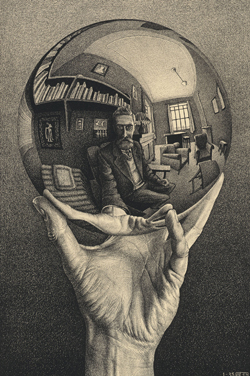
Escher_Hand-with-a-Reflecting-Sphere-1935The first major UK retrospective of the work of 20th century Dutch artist Maurits Cornelis (MC) Escher opened at Dulwich Picture Gallery in London’s south yesterday following its run at the Scottish National Gallery of Art. The Amazing World of MC Escher showcases more than 100 works – including original drawings, prints, lithographs, and woodcuts – as well as previously unseen archive material from the collection of Gemeentenmuseum Den Haag in The Netherlands. Arranged chronologically, highlights include 1934’s Still Life with Mirror – perhaps the first time the artist used surreal illusion, well-known 1948 lithograph Drawing Hands, the almost four metre long 1939-40 woodcut Metamorphosis II, the 1943 lithograph Reptiles and two of his most celebrated works, Ascending and Descending (1960) and Waterfall (1961). Runs until 17th January and is accompanied by a series of special events. Admission charge applies. For more, see www.dulwichpicturegallery.org.uk. PICTURE: M.C. Escher, Hand with Reflecting Sphere (Self-Portait in Spherical Mirror), January 1935, Collection Gemeentemuseum Den Haag, The Hague, The Netherlands/All M.C. Escher works © 2015 The M.C. Escher Company-The Netherlands. All rights reserved. http://www.mcescher.com.

West Africa’s literary history comes under examination in a new exhibition opening at the British Library at St Pancras on Friday. West Africa: Word, Symbol, Song features more than 200 manuscripts, books, sound and film recordings, artworks, masks and textiles taken from the library’s African collections and elsewhere. It explores how key figures – from Nobel Prize winning Nigerian author Professor Wole Soyinka through to human rights activist Fela Kuti, the creator of Afrobeat, and a generation of enslaved 18th century West Africans who agitated for the abolition of the slave trade – used words to both build society and fight injustice. Key items on show include a 1989 letter Kuti wrote to the president of Nigeria, General Ibrahim Babangida, in which he agitated for political change, a pair of atumpan ‘talking drums’ similar to those still used in Ghana, a carnival costume newly designed by Brixton-based artist Ray Mahabir, and letters, texts and life accounts written by the most famous 18th century British writer of African heritage, Olaudah Equiano, enslaved and freed scholar Ayuba Suleiman Diallo, and Phillis Wheatley, who, enslaved as a child, went on to write Romantic poetry. The exhibition, which will be accompanied by a major series of talks, events and performances, runs until 16th February. Admission charge applies. For more, see  www.bl.uk/west-africa-exhibition.

Two new war related exhibitions opened in London this week. Opened on Monday at the City of London’s Guildhall Library, Talbot House – An Oasis in a World Gone Crazy, recounts the story of army chaplains Philip ‘Tubby’ Clayton and Neville Talbot and their creation of an Everyman’s Club – where countless soldiers spent time away from the fighting – in a house in the Belgian town of Poperinge, a few miles from the frontline at Ypres. The exhibition, created to celebrate the centenary of the house’s creation in 1915, features items from Talbot House, the memoirs of ‘Tubby’ and part of the hut where he wrote them after fleeing the Germans. Runs until 8th January and the exhibition also features two ticketed events. Entry to the exhibition is free. For more, follow this link. Meanwhile, Lee Miller: A Woman’s War opens at the Imperial War Museum in Lambeth today, displaying 150 photographs depicting women’ experiences during World War II. The four part exhibition looks at women before the war, in wartime Britain, in wartime Europe and after the war. Runs until 24th April. Admission charge applies. For more, see www.iwm.org.uk.

Send all items for inclusion to exploringlondon@gmail.com.

LondonLife – Soiling the Tate Modern’s Turbine Hall…

cruzvillegas0025

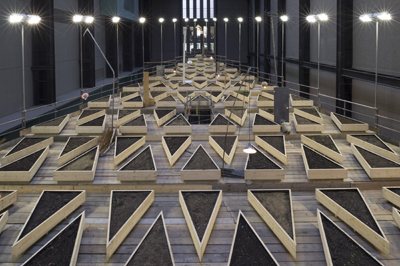
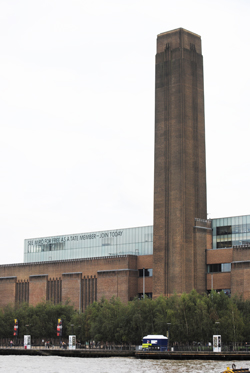
A grid containing 240 wooden planters filled with 23 tonnes of soil collected from gardens across London – from Peckham Rye to Regent’s Park – has been unveiled in the Tate Modern’s Turbine Hall. Entitled Empty Lot, the work by Mexican artist Abraham Cruzvillegas will be lit by lamp-posts made using materials found in skips and building sites around the Tate. The artist has planted nothing in the boxes but flowers, mushrooms or other greenery may grow depending on what seeds may have found their way into the soil. The new installation – the first in the Hyundai Commission series of annual site-specific works by international artists – can be seen in the Turbine Hall on Bankside from today until 3rd April. Admission is free. For more, see www.tate.org.uk. PICTURE: Andrew Dunkley © Tate 2015

This Week in London – A look inside The Crime Museum; Goya at The National Gallery; and, Africa on the Square…

Objects and evidence from some of the UK’s most notorious crimes including the ‘Acid Bath Murder’ of 1949, the ‘Great Train Robbery’ of 1963 and the ‘Millennium Dome Diamond Heist’ of 2000 will go on show at the Museum of London from Saturday. Created with the support of the Metropolitan Police Service and the Mayor’s Office for Policing and Crime, The Crime Museum Uncovered exhibition features never-before-seen objects from the Metropolitan Police’s Crime Museum as it takes visitors through a series of real cases and tackles some of key challenges of policing in London – everything from terrorism and espionage through to counterfeiting and narcotics. The Crime Museum, which is now housed inside New Scotland Yard, was established in the mid-1870s as a teaching tool for police. Its Visitor’s Book contains some high profile names including that of King George V, Sir Arthur Conan Doyle – creator of Sherlock Holmes, illusionist Harry Houdini and comedians Stan Laurel and Oliver Hardy. Runs until 10th April. Admission charge applies. For more, see www.museumoflondon.org.uk.

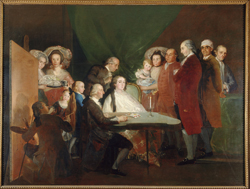
GoyaAlmost half of Goya’s surviving portraits are on show in The National Gallery in an exhibition which opened yesterday. Goya: The Portraits features more than 60 of the celebrated Spanish artist’s surviving portraits, borrowed from public and private collections around the world. Highlights include the Duchess of Alba (a 1797 work depicting one of Goya’s patrons which has only left the US once before), the immense group portrait The Family of the Infante Don Luis De Borbon (pictured), the never-seen-in-public work Don Valentin Bellvis de Moncada y Pizzaro, the rarely exhibited Countess-Duchess Benavente, and the recently conserved 1798 portrait Francisco de Saavedra, exhibited for the first time in 50 years alongside a pendant painted the same year of Gaspar Melchor de Jovellanos. There are also works of royals including Charles IV in Hunting Dress and more personal works such as self portraits and paintings of his family members. Runs until 10th January in the Sainsbury Wing near Trafalgar Square. Admission charge applies. For more, see www.nationalgallery.org.uk. PICTURE: © Fondazione Magnani Rocca, Parma, Italy.

Black History Month is being celebrated in Trafalgar Square this Saturday in Africa on the Square, a programme of events inspired by the traditions and cultures of the continent.  The line-up includes a musicians and singers, acrobats, dancers, a fashion show and a market selling African-themed products as well as a host of activities for families, from hair braiding and face painting to mosaics and batik making. There will also be a talent show giving aspiring performances aged between 16 and 25 the chance to perform in front of a live audience. The free event runs between noon and 6pm. For more, see www.london.gov.uk/africa.

Send all items for inclusion to exploringlondon@gmail.com.

LondonLife – The Australian coast comes to London…

Blue-PacificThe National Gallery has unveiled a coastal masterpiece by Australian painter Sir Arthur Streeton, Blue Pacific, lent to the gallery by a private collector for the next two years.

Painted in 1890, the painting – never seen before in the UK – depicts people strolling along the clifftops at Coogee in Sydney, looking eastward over the gleaming blue of the Pacific Ocean.

Christopher Riopelle, the gallery’s curator of post-1800 European paintings, says Streeton’s use of the vertical format was “brilliantly calculated to exploit the contrast between the azure sheet of water and the subtly observed depictions of rock face and sky”.

“Still young, but at the height of his powers, Streeton demonstrates here how impression was a capacious and flexible tool for confronting the awesome landscape unique to Australia.”

Streeton (1867-1943) was considered one of the most advanced landscape painters in Australia in the 1880s and 1890s and was one of the first to adopt an impressionist style. His masterpiece, Golden Summer (1889), was exhibited at the Royal Academy of Arts in 1891.

Blue Pacific is now on show in Room 43 at the gallery off Trafalgar Square alongside Monet’s Water-Lilies and Manet’s The Execution of Maximilian.  Entry is free. For more on the gallery, see www.nationalgallery.org.uk.

PICTURE: Blue Pacific, 1890, Sir Arthur Streeton (1867 – 1943), oil on canvas, © on loan from a private collection/via National Gallery.

This Week in London – Indian textiles at the V&A; a “typical London street” on show; and, Nobel laureate given Blue Plaque…

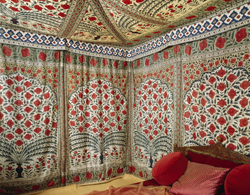
Tipus_Tent_c_National_Trust_ImagesA spectacular tent used by the Tipu Sultan, ruler of the 18th century Kingdom of Mysore (pictured), is among highlights in an exhibition exploring the “incomparably rich world” of handmade textiles from India which opens at the V&A in South Kensington on Saturday. Part of the V&A’s India Festival marking the 25th anniversary of the opening of the museum’s Nehru Gallery, The Fabric of India has exhibits ranging from the earliest known Indian textile fragments (dating from the 3rd century) through to contemporary fashions. Among the around 200 handmade objects – which include everything from ancient ceremonial banners and sacred temple hangings to modern saris and bandanna handkerchiefs – are a Hindu narrative cloth depicting avatars of Vishnu dating from about 1570, an 18th century crucifixion scene made for an Armenian Christian church in south-east India, block-printed ceremonial textiles from Gujarat – made in the 14th century for the Indonesian market, bed-hangings originally belonging to the Austrian Prince Eugene (1663-1736), and a selection of clothing made using Khadi, a cloth which Mahatma Gandhi promoted using in the 1930s when he asked people to make the fabric as a symbol of resistance to colonial rule. Admission charges apply. Runs until 10th January. For more see, www.vam.ac.uk/fabricofindia. PICTURE: © National Trust Images.

Westbury Road in Bounds Green, Haringey, is the subject of a new photographic and art exhibit which opened at the Geffrye Museum in Shoreditch this week. A Street Seen: The Residents of Westbury Road is a collaborative exhibition featuring the works of photographer Andrew Buurman and artist Gabriela Schutz as they document the homes, gardens and residents of what is described as a “typical London street”. The display includes a six metre long panoramic drawing of Victorian houses by Schutz and a series of photographs depicting residents in their back gardens taken over a two year period by Buurman. Runs until 3rd April. For more, see www.geffrye-museum.org.uk.

One of the founding fathers of sports medicine, Nobel Prize winner AV Hill, has been honoured with an English Heritage blue plaque unveiled at his former home in Highgate in London’s north last month. Hill, as well as being noted for his work in the field of physiology, was also an independent MP during World War II and a humanitarian who is credited with helping more than 900 academics – including 18 Nobel laureates – escape persecution by the Nazis. He lived at the property at 16 Bishopswood Road for 44 years, between 1923 and 1967, 10 years before his death. For more on blue plaques, see www.english-heritage.org.uk/visit/blue-plaques/.

Send all items for inclusion to exploringlondon@gmail.com.


This Week in London – Celts at the British Museum; the Fallen Woman at the Foundling; and Ai Weiwei…

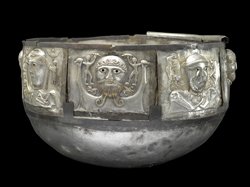
Gundestrup_Whole-ImageThe story of the Celts and their culture is being explored in a new exhibition which opens at the British Museum in Bloomsbury today. Celts: Art and Identity, being run in partnership with National Museums Scotland, is the first British exhibition on the Celts in 40 years. Highlights of the display include a hoard of four gold torcs found at Blair Drummond in Stirling in 2009, Christian artefacts including iron handbells used to call people to prayer, elaborately illustrated Gospels, carved stone crosses and, a gilded bronze processional cross which, dating from 700-800 AD and coming from Tully Lough in Ireland, will be on show for the first time in Britain. Also present will be the Gundestrup cauldron, which dates from 100 BC-1 AD and comes from Denmark (pictured), London artefacts such as the Waterloo helmet and Battersea shield, and works created more recently which reflect on an often mythical Celtic past such as George Henry and Edward Atkinson Homel’s 1890 painting The Druids: Bringing in the Mistletoe. Runs until 31st January in the Sainsbury Exhibition Gallery (Room 30). Admission charge applies. For more, see www.britishmuseum.org. PICTURE: © The National Museum of Denmark.

A new exhibition exploring the myth and reality of the ‘fallen woman’ in Victorian Britain opens at the Foundling Museum in Bloomsbury tomorrow. The Fallen Woman features works by artists including Dante Gabriel Rossetti, Richard Redgrave, George Frederic Watts and George Cruikshank, displayed alongside stereoscopes and depictions of the fallen woman in the era’s popular media. It also looks at the petitions of women applying to the Foundling Hospital, bringing to life the real ‘fallen women’ of the period through a specially-commissioned sound installation by artist and musician Steve Lewinson. The exhibition runs until 3rd January. Admission charge applies. For more, see www.foundlingmuseum.org.uk.

The London Transport Museum’s Depot in Acton hosts its autumn open days this weekend. The day includes the chance to see the original printing blocks used for the Johnston font – London Transport’s iconic typeface, expert talks on transport vehicles, a chance to see how the moquette – the seat covering on the tube – is made and film screenings from the LTM archive. From 11am to 5pm Saturday and Sunday. Admission charge applies. For more, see www.ltmuseum.co.uk.

The Worshipful Company of Woolmen will be holding their annual  sheep drive across London bridge this Sunday. The event, free to watch, kicks off at 10am and runs until 5pm. For more, see www.woolmen.com.

• On Now: Ai Weiwei. This landmark exhibition at the Royal Academy of Arts in Piccadilly celebrates the work of Honorary Royal Academician and leading Chinese artist Ai Weiwei with significant works from 1993 onwards and new, site specific installations. Among the key exhibits is Straight (2008-12), a body of work related to the Sichuan earthquake of 2008, fabricated from 90 tonnes of bent and twisted rebar which was collected by the artist and straightened by hand. Runs until 13th December.  Admission charge applies. For more, see www.royalacademy.org.uk.

Send all items for inclusion to exploringlondon@gmail.com.

This Week in London – The Waterloo Cartoon on show; see inside a former Huguenot’s home; and, Royal Parks’ harvest festivals…

A monumental Victorian-era drawing of the Battle of Waterloo has gone on display in London for the first time since 1972. The Waterloo Cartoon, more formally known as The Meeting of Wellington and Blucher after the Battle of Waterloo, measures more than 13 metres long and three metres high. A preparatory drawing for a wall painting which still exists in the House of Lords’ Royal Gallery, it took artist Daniel Maclise more than a year to complete in 1858-59 and was based on eye-witness accounts (the artist even recruited Queen Victoria and Prince Albert to use their German contacts to gather information from Prussian officers present on the day). Long considered a masterpiece, it was bought by the Royal Academy in 1870 – the year of Maclise’s death – and was on show at Burlington House until the 1920s. It has been in storage for much of last century and, newly restored following a grant from Arts Council England, has now gone on display to mark the 200th anniversary of the Battle of Waterloo. The newly conserved drawing is the focus of a new exhibition – Daniel Maclise: The Waterloo Cartoon, which opened at the Royal Academy in Piccadilly yesterday (between May and August, it was on show as part of a Waterloo exhibition at the Royal Armouries in Leeds). Runs until 3rd January. Admission charge applies. For more, see www.royalacademy.org.uk.

There’s a rare chance to see inside a former Huguenot merchant’s house dating from 1719 in Spitalfields this weekend. The property at 19 Princelet Street was the home of the Ogier family, who had come to London escaping persecution in France and worked in the silk weaving trade. It was later subdivided into lodgings and workshops with later occupants following a range of trades and professionals while a synagogue was opened in the garden in 1869. The site – which the Spitalfields Centre charity hopes to establish as a museum of immigration – is not generally open to the public but will be open this Saturday and Sunday – from 2pm to 6pm. Entry is free (but donations would be welcome) and there may be queues so its suggested you arrive early. For more, see www.19princeletstreet.org.uk.

Watch a bee keeping demonstrations, help dig up some potatoes and introduce the children to some farm animals. The Kensington Gardens’ Harvest Festival will be held this Sunday, between 11am and 4pm, and will also include a range of children’ activities, experts from the Royal Parks Guild on hand to answer your questions about food growing and complimentary hot and cold drinks available throughout the day while stocks last. It’s the first of three harvest festivals to be held in Royal Parks this month with Greenwich Park set to host its inaugural harvest festival on 13th September (11am to 4pm) and The Regent’s Park Allotment Garden to host one on 19th September (11am to 5pm). For more, see www.royalparks.org.uk.

Send all items for inclusion to exploringlondon@gmail.com.

This Week in London – Tall ships at Greenwich; immersive art at Tate Britain; and, ‘Nature’s Bounty’ at Kew…

It’s all about big masted ships at Greenwich this Bank Holiday weekend as up to 15 ships drop anchor at the Royal Greenwich Tall Ships Festival. Two tall ships, the Dar Mlodziezy and Santa Maria Manuela, will be moored on Tall Ships Island in the river at Maritime Greenwich (accessed via MBNA Thames Clippers) while an additional 13 ships will be taking people on cruises from their base at Royal Arsenal Woolwich (tickets can be booked via Sail Royal Greenwich). On Saturday, a free family festival will be held in Woolwich Town Centre and at Royal Arsenal Riverside with music, roving entertainers, food and other activities including a fireworks display on the river at 10pm (fireworks can also be seen on Thursday, Friday and Sunday nights on the river at Maritime Greenwich at around 9.15pm). For more information – including how and where to book tickets, see www.royalgreenwich.gov.uk/tallships2015.

An immersive art project allowing visitors to engage with paintings in a multi sensory experience opened at Tate Britain on Milbank yesterday. Tate Sensorium has won this year’s annual IK Prize, presented by the Tate and supported by the Porter Foundation, awarded for a project which uses innovative technology to enable the public to explore the gallery’s collection in new ways. The display features four works by celebrated figures in 20th century painting: Francis Bacon’s Figure in a Landscape (1945), David Bomberg’s In the Hold (c 1913-1914), Richard Hamilton’s Interior II (1964) and John Latham’s Full Stop (1961). As part of the experience, which has been produced by creative studio Flying Object in conjunction with a cross-disciplinary team, visitors are offered the chance to wear biometric measurement wristbands to record the emotional impact of the experience. Admission to exhibition in gallery 34 is free but tickets are limited. Runs until 20th September. For more, see www.tate.org.uk/sensorium.

A series of detailed paintings of fruit, vegetables and edible plants from all over the world goes on show at the Shirley Sherwood Gallery of Botanical Art at Kew Gardens on Saturday. Nature’s Bounty features works from the Shirley Sherwood and Kew collections including works from the 19th century text, Fleurs, Fruits et Feuillages Chosis de la Flore et de la Pomona de L’ile de Java drawn by botanical artist Berthe Hoola Van Nooten as well as works from the Shirley Sherwood and Kew collections. The exhibition runs until 31st January. Admission charge applies. For more, see www.kew.org.

Send all items for inclusion to exploringlondon@gmail.com.

This Week in London – Virtual reality at the British Museum; British Library’s Grade I listing; and, Deptford’s cardboard tower…

Get an up close and in-depth look at the Bronze Age as virtual reality comes to the British Museum this weekend. For the first time, families including children aged 13 or over will be able to wear Samsung Gear VR devices to virtually explore a Bronze Age site designed by Soluis Heritage which features objects from the museum’s collections. They will also be able to enter an “immersive fulldome” where they can explore a virtual reality world featuring a Bronze Age roundhouse and objects. The event will take place in the Samsung Digital Discovery Centre on Saturday and Sunday. For more, see www.britishmuseum.org.

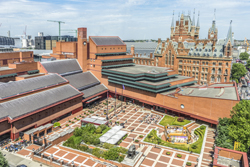
british-library-aerial-shotThe British Library at St Pancras has been given Grade I heritage status, joining the top 2.5 per cent of listed buildings in England. Designed by architect Sir Colin St John Wilson and his partner MJ Long and completed in the late Nineties, the library is the largest public building to have been built in the UK in the 20th century. At the heart of the library is the King’s Library tower which houses the library of George III as well as the Treasures Gallery where national treasures such as the Magna Carta, Lindisfarne Gospels and original Beatles lyrics are displayed. The library was listed along with seven other libraries in England, all of which have been given Grade II status. Meanwhile the record-breaking exhibition Magna Carta: Law, Liberty, Legacy has entered its final month before closing on 1st September. The display features two of the four surviving Magna Cartas as well as the US Declaration of Independence and Bill of Rights – in the UK for the first time – and more than 200 objects including medieval manuscripts, artworks, 800-year-old garments and esoterica such as King John’s teeth and thumb bone. Admission charge applies. For more, see www.bl.uk/magna-carta. PICTURE: Tony Antoniou/British Library.

Help build The People’s Tower in Douglas Square in Deptford, south east London, this weekend. French artist Olivier Grossetete has been invited by the Albany to build the tower – with your help – out of cardboard boxes. Tower assembly takes place between 10am and 3pm on Saturday and then between 11am and 5pm on Sunday, there will be free live music and family entertainment in the Albany Garden as the tower is finished and then knocked down. No booking is required. For more, check out www.thealbany.org.uk.

Send all items for inclusion to exploringlondon@gmail.com.

This Week in London – Buckingham Palace offers a “Royal Welcome”; exploring London’s outdoor spaces; and contemporary portraiture at the V&A…

Buckingham-PalaceBuckingham Palace opened its 19 State Rooms to the public last weekend under the theme of ‘A Royal Welcome’. As well as the chance to see the State Rooms themselves, a series of displays and films are located throughout the palace which show how Royal Household staff are involved in welcoming the tens of thousands of guests who come to the palace each year for receptions, State Banquets, garden parties and investitures. And, for the first time, the public can enter the palace through the Grand Entrance where the Australian State Coach will be displayed. Other highlights include the Palace Ballroom – set up for a State Banquet with silver gilt candelabra and centrepieces from King George IV’s grand service, displays recreating part of the dresser’s workroom and the palace kitchens, pantries and wine cellars in the throes of preparing for a State Banquet, and some of the gifts received during State Visits to the palace. Items of Queen Elizabeth II’s personal jewellery are also on display including the Kokoshnik Tiara, worn at a State Banquet in honour of the President of Mexico this year, Queen Mary’s Dorset bow brooch and the diamond Coronation necklace and earrings. The palace is open until 27th September. Admission charge applies. For more, see www.royalcollection.org.uk.

A new interactive map of public outdoor areas in London has been created to help encourage the city’s residents and tourists to make the most of the great outdoors this summer. The map details more than 200 public spaces including squares, green spaces and public street amenities, many of which have been improved as part of the Mayor of London, Boris Johnson’s Great Outdoors initiative which has seen more than £400 million invested in 242 projects since 2009. To check out the map, follow this link.

A new exhibition examining contemporary portraiture – and its inspiration from traditional modes of portraiture such as miniatures, medals and death masks – opened at the V&A in South Kensington this week. Facing History: Contemporary Portraiture features more than 80 prints and photographs drawn from the V&A’s collection and created by artists including Julian Opie, Grayson Perry, Thomas Ruff, Maud Sulter and Gavin Turk. Works featured include self-referential pieces like Grayson Perry’s pair of prints, Mr and Mrs Perry and Gavin Turk’s Portrait of Something that I’ll Never Really See, portraits of real and fictional characters like Brian D Cohen’s Man with Eyes Closed (Walter White) whose subject is both a character from US TV series Breaking Bad and Bryan Cranston, the actor who played him, Cecilia Mandrile’s identity-card inspired ID-Intensively Displaced series, and 11 pieces from Ellen Heck’s Forty Fridas. Exhibition runs until 24th April. Admission is free. For more, see www.vam.ac.uk.

Send all items for inclusion to exploringlondon@gmail.com

LondonLife – Artistic eyes gaze upon us…

V&A

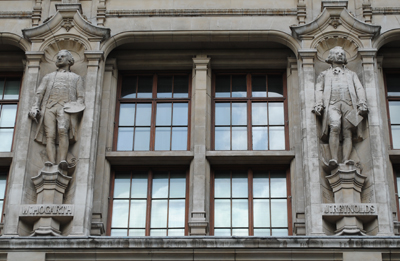
Eighteenth century artists William Hogarth and Joshua Reynolds gaze down from the facade of the V&A in South Kensington. The Victoria and Albert Museum was established in 1852 – capitalising on the success of the Great Exhibition the previous year – and moved to its current site in 1857. The foundation stone for the current building was laid by Queen Victoria herself in 1899 and it was to mark this occasion that the museum was renamed the Victoria and Albert Museum after the queen and late Prince Albert (although the queen really just wanted it to be the Albert Museum). For more on the V&A, see www.vam.ac.uk.

This Week in London – Celebrate summer at the Tate; Titian revealed at Apsley House; and, exploring the unconscious at The Freud Museum…

Turbine-HallOn Saturday, the Tate Modern’s Turbine Hall on South Bank will host an “audio-visual feast” of music, performances, art installations and activities. The free Turbine Festival will feature everything from an alternative hair salon and a London bus built on the day by artist John Costi to a pop-up juice bar where you can make your own drinks and a record shop where you can design your own vinyl record sleeve. The day will also feature performances by Grime/HipHop/AfroPop artist Afrikan Boy, Felix’s Machines – who will transform live music and sound into a 3D visual show, and poet Jacob Sam-La Rose, as well as a programme of “bite-sized” films running in collaboration with the London Short Film Festival, and a series of interactive workshops covering everything from beatboxing to crafting. Visitors to the festival, sponsored by Hyundai, are also encouraged to contribute to a special project by My Culture Museum by submitting photographs or bringing objects to be archived and curated. Runs from 12.30pm to 9.30pm. For more, see www.tate.org.uk.

•  Three paintings previously attributed to later followers of 16th century Venetian artist Titian but subsequently found to be by the artist himself and his studio have gone on display together for the first time at Apsley House. The three paintings – which include Titian’s Mistress (c1560), A Young Woman Holding Rose Garlands (c1550) and Danae (c1553) – were all in poor condition before conservation and cleaning by experts from English Heritage, the Museo del Prado in Madrid and the Hamilton Kerr Institute revealed their true quality (and Titian’s signature on two of the paintings). All three works were held in the Spanish Royal Collection and among 160 that Joseph Bonaparte, brother of Napoleon and King of Spain, tried to take out of the country following his defeat by the Duke of Wellington at the Battle of Vittoria in 1813. Wellington was subsequently given the paintings by a grateful King Ferdinand VII. The Titian at Apsley House exhibition, which opened earlier this month, runs at the Duke of Wellington’s home at Hyde Park Corner until 31st October. Admission charges apply. For more, see www.english-heritage.org.uk/visit/places/wellington-arch/.

On Now: Festival of the Unconscious. This festival at Sigmund Freud’s former London home and now home to The Freud Museum sees artists, designers, writers and performers taking another look at Freud’s seminar 1915 paper, The Unconscious. Features of the festival, which runs until 4th October, include specially commissioned films by animators from Kingston University running throughout the house, sound and video installations by London-based art project Disinformation in the dining room and an installation from stage designers at the Royal Central School of Speech and Drama in Freud’s study. There’s also a display by Julian Rothenstein, co-author of Psychobox, and a chance to recline and “free-associate” on a psycho-analytic couch in Freud’s bedroom. An extensive programme of events accompanies the displays. Admission charges apply. For more, see www.freud.org.uk.

Send all items for inclusion to exploringlondon@gmail.com.

This Week in London – Exploring London’s archaeology; Alice in Bloomsbury; and, ‘Soundscapes’ at the National Gallery…

Canal-MuseumDescend into ice wells at the London Canal Museum; delve into the archaeological archives of the Egypt Exploration Society; discover the history of the Spitalfields Charnel House; and, tour the remains of London’s Roman military fort with experts from the Museum of London. The British Festival of Archaeology kicked off last weekend and there’s a plethora of events happening across London as part of the more than 1,000 taking place across the country. For a full programme of events – many of which are free – head to www.archaeologyfestival.org.uk. The festival runs until 26th July.

Follow Alice down the rabbit hole in a new exhibition which opened at the Cartoon Museum in Bloomsbury yesterday. Marking the 150th anniversary of the book’s publication, Alice in Cartoonland looks at how cartoonists, caricaturists, satirists, animators and graphic artists adapted and used author Lewis Carroll (aka Charles Lutwidge Dodson) and original illustrator John Tenniel’s work in social and political commentaries as well as just to have fun. The display features posters, cartoon strips, comic and graphic novels and artwork from TV and film versions of Alice with Low, Vicky, Shepard, Steadman and Gilroy among the artists represented. Runs until 1st November (with some events held in conjunction with it). Admission charge applies. For more, see www.cartoonmuseum.org.

Exploring the National Gallery’s art collection is usually done with the eyes but thanks to an innovative project which kicked off last week, it’s now also about listening. A series of contemporary sound artists and musicians including Nico Muhly, Gabriel Yared, Susan Philipsz, Jamie xx, Chris WatsonJanet Cardiff and George Bures Miller have created sounds and musical pieces in response to works they have chosen from the gallery’s collection. Selected works include the late 14th century The Wilton Diptych (Muhly), Hans Holbein’s 1533 painting The Ambassadors (Philipsz) and Paul Cézanne’s painting Bathers (Les Grandes Baigneuses) (Yared). Soundscapes runs until 6th September in the Sainsbury Wing. Admission charge applies. For more, see www.nationalgallery.org.uk.

Send all items for inclusion to exploringlondon@gmail.com.

This Week in London – Audrey Hepburn, Barbara Hepworth and Joseph Cornell…

It’s all galleries this week- not a bad way to escape the heat!

NPG_959_1400_AudreyHepburnbThirty-five photographs of late actor Audrey Hepburn from the personal collection of her sons form the centrepiece of a new exhibition at the National Portrait Gallery. Audrey Hepburn: Portraits of an Icon, which opens today and is the first UK exhibition to be organised with the Audrey Hepburn Estate, explores the life and career of the celebrated film star. Among the images lent by her sons Sean Hepburn Ferrer and Luca Dotti are a portrait of the actor performing a dance recital at the age of 13 in 1942, a photograph of her taken while filming The Nun’s Story in Africa in 1958, and a behind-the-scenes photograph of Hepburn during a costume fitting for the 1954 film Sabrina. Other images in the display include those taken during the shooting of numerous films ranging from 1955’s War and Peace to 1967’s Two for the Road as well as vintage magazine covers. Runs until 18th October. Admission charge applies. For more, see www.npg.org.uk/hepburn. PICTURE: Audrey Hepburn by Philippe Halsman for LIFE magazine, 1954. © Philipe Halsman/Magnum Photos.

The works of Barbara Hepworth, one of the UK’s greatest artists, are on show at the Tate Britain on Millbank. Barbara Hepworth: Sculpture for a Modern World features more than 100 works, from major carvings and bronzes to less familiar pieces. Juxtaposed with works of other great artists – including paintings, prints and drawings of her second husband Ben Nicholson, they include her earliest surviving carvings, her more purely abstract works of the late 1930s, wooden sculptures made while Hepworth lived in Cornwall in the mid-1940s and four large carvings made in the mid-1950s in African hardwood guarea which, reunited for this exhibition, arguably represent the highpoint of her carving career. There are also bronzes from her 1965 retrospective at the Kroller-Muller Museum. Runs until 25th October. Admission charge applies. For more, see www.tate.org.uk.

American artist Joseph Cornell’s art is the subject of an exhibition at the Royal Academy of Arts in Piccadilly which opens on Saturday. Joseph Cornell: Wanderlust, organised in conjunction with Kunsthistoriches Museum in Vienna, features about 80 of the artist’s box constructions, assemblages, collages and films including rarely seen masterpieces lent from public and private collections in the US, Europe and Japan. Arranged in four sections, the display features works from his major series including Museums, Aviaries, Soap Bubble Sets, Palaces, Medici Slot Machines, Hotels and Dovecotes. Runs until 27th September. Admission charge applies. For more, see www.royalacademy.org.uk.

• Send all items for inclusion to exploringlondon@gmail.com.

LondonLife – The Serpentine’s 2015 Pavilion…

Serpentine-2015This year’s Serpentine Pavilion, marking the 15th anniversary of the annual summer commission by the Serpentine Galleries in Kensington Gardens, is a polygonal multi-coloured structure designed by Spanish architects selgascano. Made from a fluorine-based polymer, the pavilion has multiple entry and exit points and takes as its inspiration the site itself as well as the way in which people move through London, notably via the web-like network of the London Underground. Say selgascano: “We sought a way to allow the public to experience architecture through simple elements: structure, light, transparency, shadows, lightness, form, sensitivity, change, surprise, colour and materials. We have therefore designed a pavilion which incorporates all of these elements.” The architects say the pavilion was also designed as a tribute to the previous pavilion commissions, designed by the likes of Frank Gehry, Oscar Niemeyer and Zaha Hadid. For more, see www.serpentinegalleries.orgPICTURE: © Iwan Baan