Now long gone, this central London property was once the residence of the, you guessed it, bishops of Durham.
Elizabethan
What’s in a name?…Theobolds Road…
This north London thoroughfare, which runs north-east from Southampton Row through Holborn to Gray’s Inn Road is named for the destination it once led to – a country house in Hertfordshire known as Theobolds which once belonged to King James I.
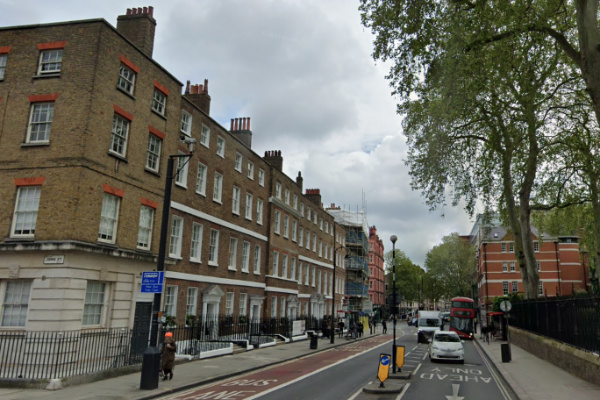
The house, which has been rebuilt many times and is now a conference centre, was actually where King James I died. Prior to his residency, it was home to Queen Elizabeth I’s advisor, William Cecil, Lord Burghley, and then his son, Robert Cecil, the first Earl of Salisbury.
The road, which the modern Theobolds Road forms part of, was apparently also known as the King’s Way due to its royal traveller – this royal connection is still retained in the nearby roadway known as Kingsway.
Among the famous residents of Theobolds Road was Prime Minister Benjamin Disraeli who was born at number 22 in 1804 (and is now commemorated with an English Heritage Blue Plaque, although this one is actually brown).
Lost London – Arundel House…
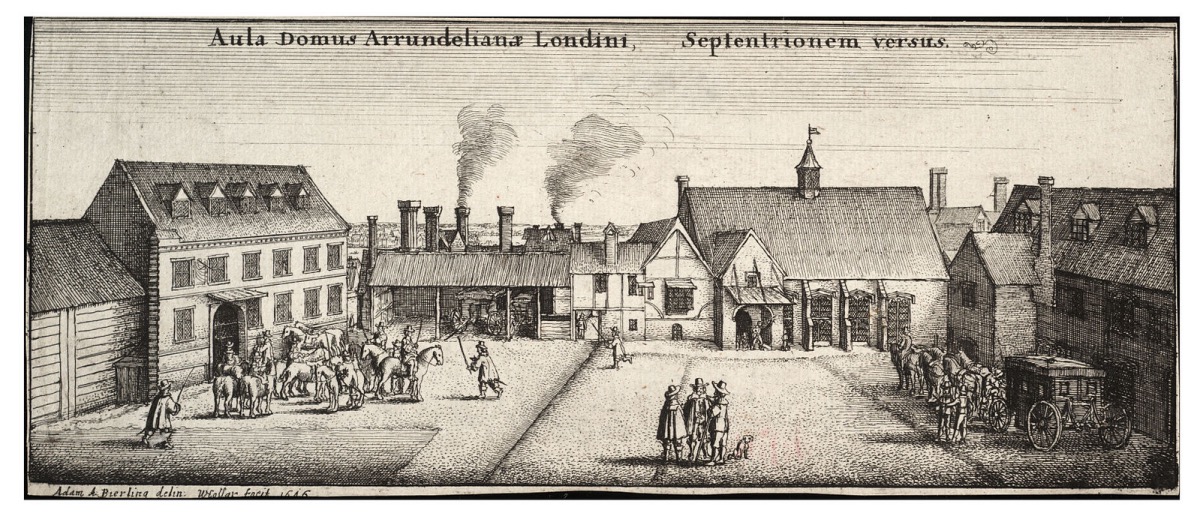
One of a string of massive residences built along the Strand during the Middle Ages, Arundel House was previously the London townhouse of the Bishops of Bath and Wells (it was then known as ‘Bath Inn’ and Cardinal Thomas Wolsey was among those who resided here during this period).
Following the Dissolution, in 1539 King Henry VIII granted the property to William Fitzwilliam, Earl of Southampton (it was then known as Hampton Place). After reverting to the Crown on his death on 1542, it was subsequently given to Thomas Seymour, 1st Baron Seymour of Sudeley, a younger brother of Queen Jane Seymour, Henry VIII’s third wife, and known as ‘Seymour Place’. Then Princess Elizabeth (late Queen Elizabeth I) stayed at the property during this period (in fact, it’s said her alleged affair with Thomas Seymour took place here).
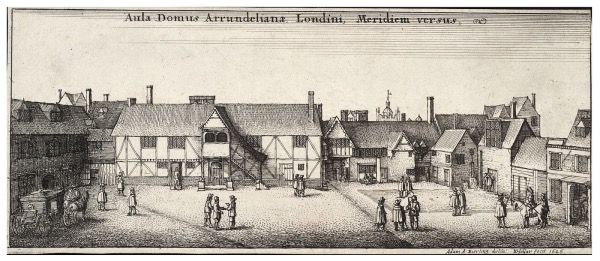
Seymour significantly remodelled the property, before in 1549, he was executed for treason. The house was subsequently sold to Henry Fitz Alan, 12th Earl of Arundel, for slightly more than £40. He was succeeded by his grandson, Philip Howard, but he was tried for treason and died in the Tower of London in 1595. In 1603, the house was granted to Charles, Earl of Nottingham, but his possession was short-lived.
Just four years later it was repurchased by the Howard family – in particular Philip’s son, Thomas Howard, 14th Earl of Arundel – who had been restored to the earldom.
Howard, who was also the 4th Earl of Surrey, housed his famous collection of sculptures, known as the ‘Arundel Marbles’, here (much of his collection, described as England’s first great art collection, is now in Oxford’s Ashmolean Museum).
During this period, guests included Inigo Jones (who designed a number of updates to the property) and artist Wenceslas Hollar who resided in an apartment (in fact, it’s believed he drew his famous view of London, published in 1647, while on the roof).
Howard, known as the “Collector Earl”, died in Italy in 1646. Following his death, the property was used as a garrison and later, during the Commonwealth, used as a place to receive important guests
It was restored to Thomas’ grandson, Henry Howard, 6th Duke of Norfolk, following the Restoration. Following the Great Fire of London in 1666, for several years the property was used as the location for Royal Society meetings.
The house was demolished in the 1678. It’s commemorated today by the streets named Surrey, Howard, Norfolk and Arundel (and a late 19th century property on the corner of Arundel Street and Temple Place now bears its name).
Treasures of London – Great Seal of Queen Elizabeth I…
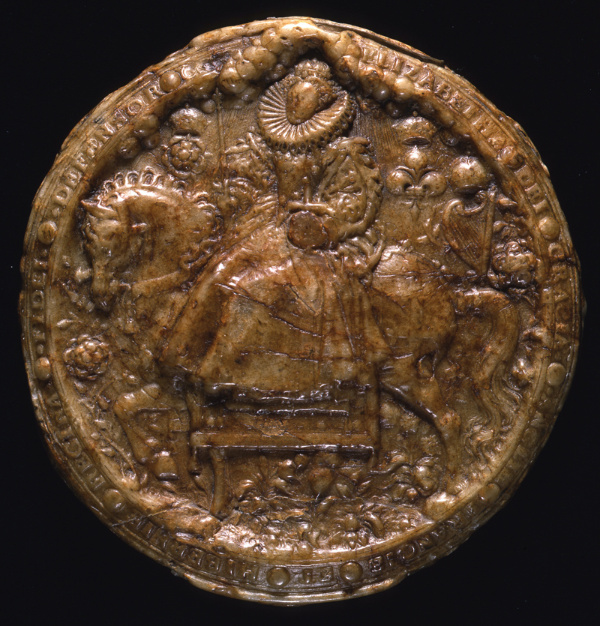
Held in the National Archives at Kew, this great seal was used during the second half of Queen Elizabeth I’s reign – from 1586 to 1603.
The seal, which replaced an earlier one used by Queen Elizabeth I, was used by the Chancery to prove the document it was attached to was issued in the Queen’s name. The seal also acted as a security device, ensuring the document couldn’t be read before reaching the intended recipient. Made of wax, it was created using a metal pattern or matrix.
The metal pattern for this seal was created by court miniaturist Nicholas Hilliard.
The obverse or front side of the seal, which is made of resin and beeswax which turns brown with age, shows Queen Elizabeth I on her throne, her hands holding a sceptre and an orb – royal insignia – and accompanied by the Royal Coat of Arms. The reverse (pictured) shows Queen Elizabeth I mounted on a horse and surrounded by symbols including the Tudor Rose, a harp representing Ireland and fleur de lys representing France. The inscription around the seal reads: Elizabetha dei gracia Anglie Francie et Hibernie Regina Fidei Defensor (‘Elizabeth, by grace of God, Queen of England, France and Ireland, Defender of the Faith’).
The seal was traditionally carried before the Lord Chancellor and Keeper of the Great Seal in a purse or burse. One used to carry Queen Elizabeth I’s matrix is in the collection of the British Museum.
The matrix used to create the second seal was surrendered to King James I on his accession to the throne on 3rd May, 1603. James then used it for the next 11 weeks until his own was ready (at which time Queen Elizabeth I’s matrix was defaced).
This Week in London – Elizabeth I and Mary, Queen of Scots; Ellen and William Craft honoured; and, Kehinde Wiley’s ‘Portrait of Melissa Thompson’…
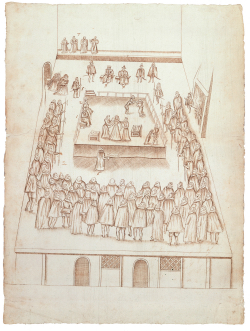
• The complex relationship between Queen Elizabeth I and Mary, Queen of Scots, is the subject of a new exhibition opening at the British Library in King’s Cross tomorrow. Highlights of Elizabeth and Mary: Royal Cousins, Rival Queens, the first major exhibition to consider both women together, include Queen Elizabeth I’s 1545 handwritten translation of her stepmother Katherine Parr’s Prayers and Meditations – a gift for her father King Henry VIII, a sonnet by Mary, Queen of Scots, which was handwritten the night before she was executed in 1587 (possibly the last thing she ever wrote), the ‘Penicuik Jewels’ which she is thought to have given away on the day of her death and Robert Beale’s eye-witness drawing depicting her entering the hall, disrobing, and placing her head on the block (pictured right). Other items on show include King Henry VIII’s Great Bible (dating from 1540, it was later inherited by Elizabeth I), Elizabeth I’s mother-of-pearl locket ring (c1575) containing miniature portraits of herself and her mother Anne Boleyn, and the warrant confining Mary, Queen of Scots, in Lochleven Castle in 1567. The exhibition is accompanied by a programme of events. Runs until 20th February. Admission charge applies. For more, see www.bl.uk/events/elizabeth-and-mary.
• Nineteenth century African-American abolitionists Ellen and William Craft have been honoured with an English Heritage Blue Plaque at their former Hammersmith home. The Crafts escaped from enslavement in Georgia in the US in December, 1848, and fled to Britain, settling in a mid-Victorian house at 26 Cambridge Grove where they raised a family and campaigned for an end to slavery. The Crafts returned to the US following the end of the American Civil War and the emancipation of enslaved people and settled in Boston with three of their children. In 1873, they established the Woodville Cooperative Farm School in Bryan County, Georgia, for the children of those who had been emancipated. Ellen died in Georgia in 1891 and William in Charleston in 1900.
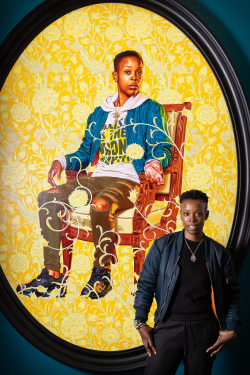
• American artist Kehinde Wiley’s monumental Portrait of Melissa Thompson has gone on display in the V&A’s British Galleries, alongside William Morris’s Wild Tulip designs that inspired it. The massive oil painting, which was created as part of Wiley’s series The Yellow Wallpaper and was first exhibited at the William Morris Gallery in Walthamstow in 2020, was acquired earlier this year and is being displayed as part of a series of initiatives marking the 125th anniversary of William Morris’s death this October. The painting will be displayed in the William Morris Room (room 125) until 2024, after which it will move to its permanent home at V&A East Museum in 2025. Admission is free. For more, head to vam.ac.uk.
Send all items to exploringlondon@gmail.com.
This Week in London – Royal portraits in Greenwich; Sir Roger Bannister to be honoured; and, drawing on the Tate’s Turbine Hall floor…
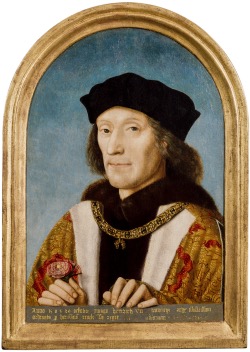
• More than 150 of the finest portraits of royal families over five dynasties are on show at the National Maritime Museum in Greenwich. Tudors to Windsors: British Royal Portraits, which is being run in conjunction with the National Portrait Gallery, features famous paintings, miniatures, sculpture, photographs, medals and stamps from the Tudor, Stuart, Georgian, Victorian and Windsor dynasties. Highlights include the earliest known portrait of Henry VII (also the oldest artwork in the exhibition) which was painted in 1505 by an unknown artist, Flemish artist Marcus Gheeraerts the Younger’s famous ‘Ditchley Portrait’ of Elizabeth I, portraits of Charles II and his mistresses, early 19th century domestic photographs of Queen Victoria and her family, and a selection of paintings and photographs of Queen Elizabeth II by Cecil Beaton and Annie Leibovitz. Runs until 31st October. Admission charge applies. For more, see www.rmg.co.uk/TudorsWindsors.
• Westminster Abbey has announced a new memorial to Sir Roger Bannister, the first man to run under a mile in four minutes. The abbey said the memorial ledger stone to Bannister, who later became a neurologist, will be placed in what is known as ‘Scientists’ Corner’ in the building’s nave, close to the graves of scientists Sir Isaac Newton and Charles Darwin as well as the ashes of Stephen Hawking. “Throughout his life Sir Roger Bannister reached out for that which lay beyond,” said the Dean of Westminster, the Very Reverend Dr David Hoyle, in a statement. “As a sportsman, pushing himself towards a prize some considered beyond human reach, as a scientist ever eager for deeper understanding of neurology. We are delighted that his memory and his achievement will be set in stone in the Abbey. He ran the race set before us all.” Bannister is famous for having run a mile in three minutes, 59.4 second at Oxford on 6th May, 1954 – a record which stood for almost nine years.
• Be among those transforming the Tate Modern’s Turbine Hall into an “ever changing work of art”. Visitors are invited to join in covering the hall’s floor with their own jottings using coloured drawing materials as part of artist Ei Arakawa’s interactive installation, Mega Please Draw Freely. The installation, which can be contributed to until 29th August, kicks off UNIQLO Tate Play – a new free programme of playful art-inspired activities for families, being in partnership with UNIQLO, at the Tate Modern. The project, which has seen the Turbine Hall floor covered with a temporary surface allowing it to be drawn upon, is inspired by the Gutai group, radical Japanese artists who wanted to change the world through painting, performance and children’s play and, in particular, the group’s ‘Outdoor Gutai Art Exhibition of 1956’ in which Yoshihara Jirō created the groundbreaking work Please Draw Freely, a large board on which people were free to draw and paint. Visitors can access Mega Please Draw Freely by booking a free collection display ticket online at www.tate.org.uk.
• Send all items for inclusion to exploringlondon@gmail.com.
Lost London – Bear Garden, Southwark
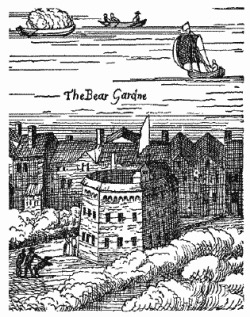
The Bear Garden was among numerous structures built in Southwark during the Elizabethan era for public amusement: in this case the “amusement” being what we now see as the rather cruel activities of bear and bull baiting and other “sports” involving animals.
Built sometime prior to the 1560s, the Bear Garden (also written as Beargarden) itself was a polygonal wooden, donut-shaped structure, much like the theatres such as the Rose and Globe, where the activities took part on the floor in the middle while the audience sat around the donut’s ring.
While it’s known it was located in Bankside (among several other premises showing animal sports), its exact location continues to be a matter of debate (and it is thought to have moved location at least once).
The Bear Garden was patronised by royalty – Queen Elizabeth I apparently visited with the French and Spanish ambassador – but it was also marked by tragedy when part of the tiered seating collapsed in 1583, killing eight people and forcing the premises to close down for a brief period.
It was torn down in 1614 and replaced with the Hope Theatre with the intention of it serving as a dual purpose premises, providing both stage plays and animal sports like bear-baiting, but the latter eventually won out and it simply became known once again as the Bear Garden.
The Hope may have pulled down in the 1650s after animal sports were banned by the Puritans (the Commonwealth commander Thomas Pride was apparently responsible for putting down or shooting the last seven bears). Whether it was demolished or not, it was again in use after the Restoration – Samuel Pepys and John Evelyn both visited during this period – but the last mention of it was in the 1680s.
The street named Bear Gardens in modern Southwark stands today in the approximate area where the Bear Garden is generally thought to have been located.
LondonLife – Four London sites heritage listed in 2019…
We’ve entered a new year but before we leave 2019 completely behind, here’s quick look at four sites in London that were put on the National Heritage List for England last year…
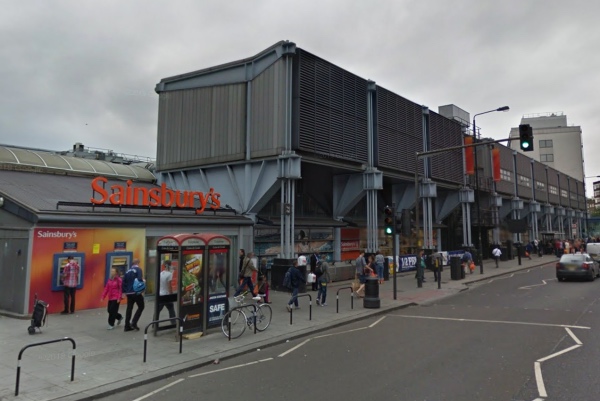
1. Sainsbury Supermarket, Camden Town. Listed at Grade II, it was the first purpose-built supermarket to be placed on the National Heritage List. The store was built in 1986-88 as part of Grand Union Complex designed by architectural practice Nicholas Grimshaw & Partners.
2. The Curtain Playhouse, Shoreditch. A scheduled monument, the theatre dates from about 1577 and hosted performances of Romeo and Juliet during Shakespeare’s lifetime, as well as Ben Jonson’s Every Man in His Humour with Shakespeare himself listed as a performer. Archaeological investigations in the years from 2011-16 revealed parts of the stage as well as the wings, galleries and yards and 17th century structures which showed the later use of the site as tenement housing.
3. Nursemaid’s Tunnel, Regent’s Park. Grade II listed, this is one of the earliest surviving pedestrian subways in London. It was built under New Road (now Marylebone Road) – linking Park Crescent with gardens in Park Square – in 1821 after residents campaigned for its construction due to the dangers of navigating the busy road (especially for children being taken to the playground by their nursemaids).
4. Cabman’s Shelter, corner Northumberland Avenue and Embankment Place. Grade II-listed, this still-in-use shelter was built in 1915 on the orders of the Cabmen’s Shelter Fund. It was based on Maximilian Clarke’s original design of 1882 and is one of just 13 examples to survive in London.
PICTURE: Google Maps.
A Moment in London’s History – The National Trust acquires Eastbury Manor House…
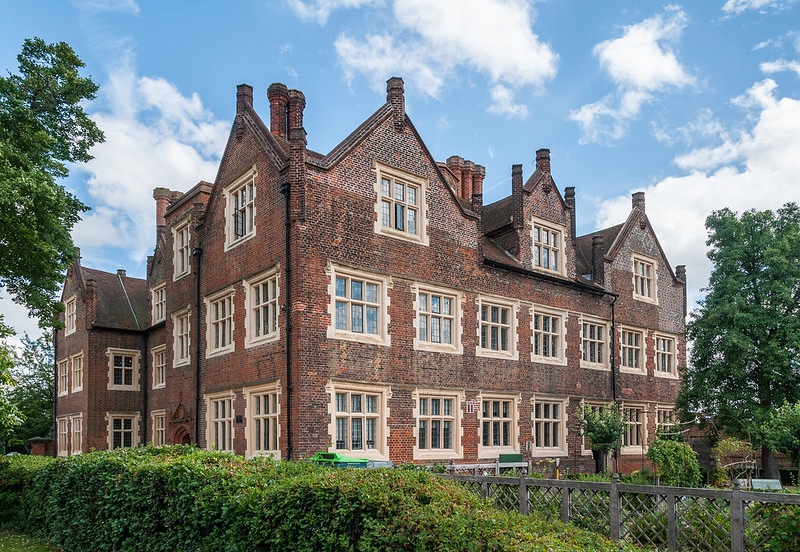
This month (12th January to be exact) marks 125 years since the National Trust was founded by Octavia Hill, Sir Robert Hunter and Canon Hardwicke Rawnsley. So we’re taking a quick look at another, somewhat related, milestone – the acquisition of the Trust’s first London property.
Located in Barking, Eastbury Manor House, initially known as Eastbury Hall, was built between 1560 and 1573 (during the reign of Queen Elizabeth I) for Clement Sisley on land which once belonged to Barking Abbey.
The H-shaped house and surrounding estate remained in the family until 1629 after which it passed through the hands of a number of well-to-do families, gradually falling into disrepair.
By the early 19th century, decay had led to one of the property’s unique octagonal stair turrets being pulled down and wooden flooring and fireplaces removed. The ground floor was being used as a stable and dairy.
The property struggled on into the early 20th century when it was threatened with demolition. The Society for the Protection of Ancient Buildings, recognising its significance as a rare example of mid-16th century brick built gentry house, lobbied for it to be saved and, working alongside the National Trust, ran a campaign to raise funds for its acquisition.
The house – and surrounding gardens – were acquired by the Trust for the nation in 1918 and then, in 1934, leased to Barking Borough Council. The following year the property became the home of Barking Museum.
It was awarded Grade I-listed status in 1954 and is now managed by the Borough of Barking and Dagenham. A restoration program in recent years has seen the addition of a permanent exhibition on the property’s history.
WHERE: Eastbury Manor House, Eastbury Square, Barking (nearest Tube station is Upney); WHEN: From 13th February, 10am to 4pm Thursdays and Fridays and, from 22nd March, 11am to 4pm Sundays; COST: £5.20 adults/£2.60 children and concessions/£9.30 family (LBBD residents, SPAB and National Trust members free); WEBSITE: www.eastburymanorhouse.org.uk.
PICTURE: David Nicholls (licensed under CC BY-NC 2.0)
This (Year) in London – Five exhibitions you won’t want to miss in 2020…
It’s our first ‘This Week in London’ for 2020 so instead of our usual programming, we thought we’d briefly look at five key exhibitions that you won’t want to miss this year…
 1. Thomas Becket at the British Museum. Marking the 850th anniversary of the murder of the medieval Archbishop of Canterbury on 29th December, 1170, the museum will host the first ever major exhibition on the life, death and legacy of the archbishop as part of a year-long programme of events which also includes performances, pageants, talks, film screenings and religious services. The exhibition will run from 15th October to 14th February, 2021. PICTURE: Alabaster sculpture, c 1450–1550, England. Here, Becket is shown kneeling at an altar, his eyes closed and his hands clasped in prayer, all the while four knights draw their swords behind him. To Becket’s right is the monk Edward Grim, whose arm was injured by one of the knight’s swords. © The Trustees of the British Museum.
2. Elizabeth and Mary at the British Library. This exhibition draws on original historic documents to take a fresh look at what’s described as the “extraordinary and fascinating story of two powerful queens, both with a right to the English throne: Elizabeth I and Mary, Queen of Scots”. Letters and other 16th century documents will show how their struggle for supremacy in the isles played out. Runs from 23rd October to 21st February, 2021.
3. Tudors to Windsors at the National Maritime Museum. This major exhibition promises to give visitors “the opportunity to come face-to-face with the kings, queens and their heirs who have shaped British history and were so central to Greenwich”. Including more than 150 works covering five royal dynasties, it will consider the development of royal portraiture over a period spanning 500 years and how they were impacted by the personalities of individual monarchs as well as wider historical changes. Will be held from April.
4. Gold and Glory: Henry VIII and the French King at Hampton Court Palace. Marking the 500th anniversary of the Field of Cloth of Gold – King Henry VIII’s landmark meeting with his great rival, the French King François I, the exhibition will feature a treasure trove of precious objects from the English and French courts as well as a never-before-seen tapestry, manufactured in the 1520s, which depicts a bout of wrestling at the meeting presided over by François and which also shows a black trumpeter among the many musicians depicted. Opens on 10th April. The palace will also play host this year to Henry VIII vs François I: The Rematch, a nine day festival of jousting, wrestling and foot combat complete with feasting, drinking and courtly entertainment. Runs from 23rd to 31st May.
5. Faces of a Queen: The Armada Portraits of Elizabeth I at the Queen’s House in Greenwich. This display brings together, for the first time, the three surviving versions of the iconic ‘Armada Portrait’ of Elizabeth I. The portrait commemorates the Spanish Armada’s failed attempt to invade England and the display will include the Royal Museums Greenwich’s own version of the painting along with that from the National Portrait Gallery and that which normally hangs in Woburn Abbey. Runs from 13th February to 31st August.
We’ll feature more details in stories throughout the coming year. But, of course, this is just a sample of what’s coming up this year – keep an eye on Exploring London for more…
LondonLife – The Boar’s Head Playhouse excavations…
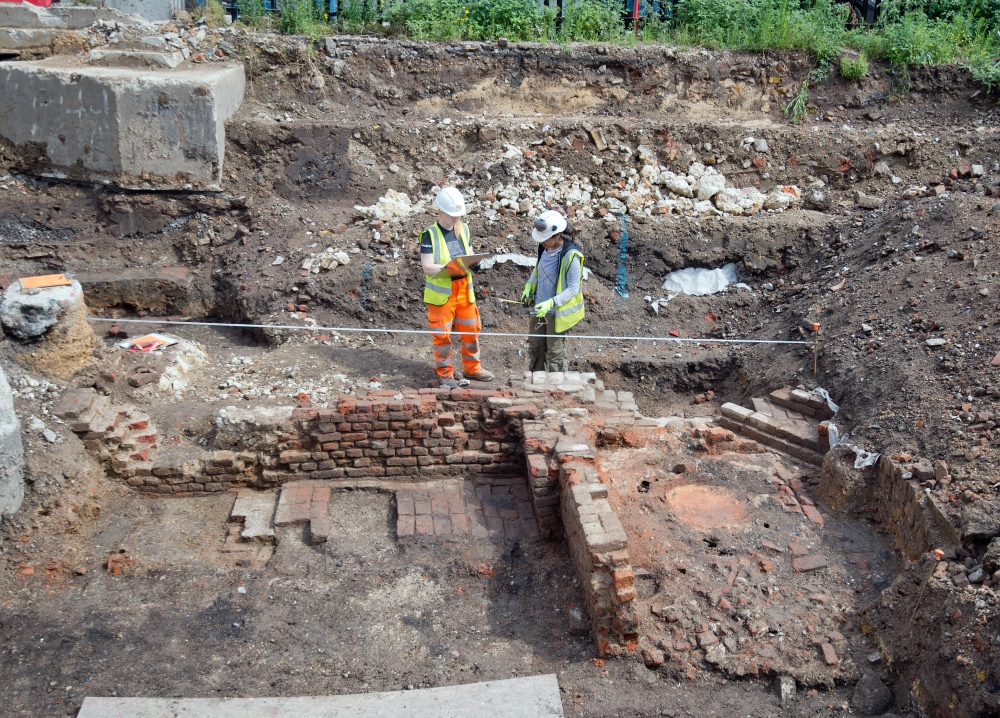
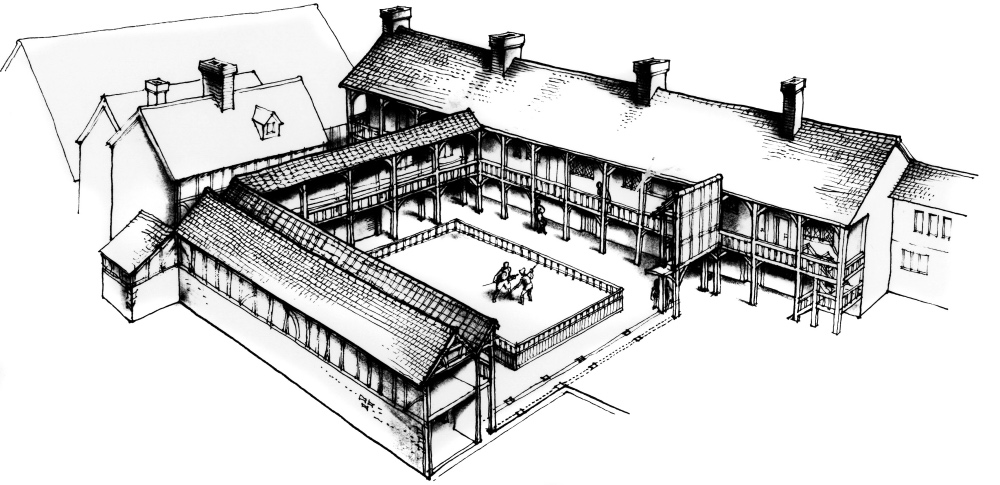
MOLA archaeologists have started excavating the site of The Boar’s Head Playhouse in Middlesex Street, Whitechapel, before construction of a new student housing complex. The playhouse, the location of which is known from historical accounts, was created in 1598 when inn owner Oliver Woodliffe converted his establishment by adding tiered galleries, a stage and central open air yard (extra galleries and a roof over the stage were added a year later). The playhouse hosted popular acting troupes including Lord Derby’s Men and the Lord Worcester’s Men, later the Queen’s Men, led by the famous actor and playwright Thomas Greene, and among the plays performed was the comedy No-body and Some-body as well as a chronicle of the life and reign of Elizabeth I, If You Know Not Me, You Know No Bodie. It is hoped the excavations will provide new insights into the theatre. The accommodation, being developed by Unite Students, will provide housing for 915 students and is expected to open in 2021. PICTURES: Top – Archaeologists record an 18th century clay tobacco pipe kiln built against 16th century walls associated with the Boar’s Head playhouse © MOLA; Below – Reconstruction of the Boar’s Head Playhouse from 1598, by C Walter Hodges.
This Week in London – A rare surviving piece of Queen Elizabeth’s dress on show?; Inside Ronnie Scott’s Jazz Club, and, Islamic influences on art…
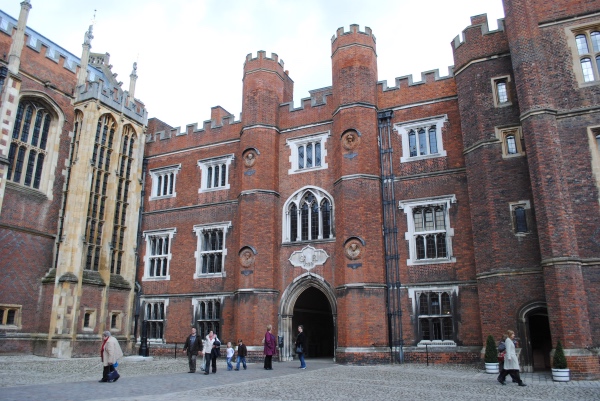
• An altar cloth which may have once been part of a dress worn by Queen Elizabeth I goes on show at Hampton Court Palace (pictured) this Saturday. The Bacton Altar Cloth, which was discovered in a church in Bacton in rural Hertfordshire, has undergone two years of conservation work and will be displayed alongside a portrait of the “Virgin Queen” featuring a dress of similar design. The altar cloth has long been associated with Bacton-born Blanche Parry, one of Queen Elizabeth’s servants who became her Chief Gentlewoman of the Bedchamber. Records show the Queen regularly gave her discarded clothing to Parry and for years there has been speculation that the altar cloth was part of one such discarded item. Historic Royal Palaces curator Eleri Lynn, an expert in Tudor court dress, was able to identify previously unseen features and studied the seams of the fabric to show it had once been part of a skirt. Further research – including an examination of the dyes used in the item – have added weight to the theory it was once part of a dress. The altar cloth, on loan from St Faith’s Church in Bacton, can be seen until 23rd February. Admission charges apply. For more, see www.hrp.org.uk. PICTURE: David Adams.
• A photographic exhibition of the first ‘golden’ decade of Ronnie Scott’s Jazz Club – featuring images of legendary British and American jazz singers – opens at the Barbican Music Library on Saturday. Ronnie Scott’s 1959-1969: Photographs by Freddy Warren, which marks the club’s 60th anniversary, features Warren’s photographs of the likes of Miles Davis, Duke Ellington, Dizzy Gillespie, Count Basie, Ella Fitzgerald, Zoot Sims, Cleo Laine and Tony Bennett. Warren was the in-house photographer at the Soho club from the opening night in 1959, when it was based in Gerrard Street, and documented the construction of the new site in Frith Street in the mid-1960s along with the arrival in London of big American stars. The exhibition includes rare vintage prints – some which were salvaged from the walls when the club was renovated in 2006, Freddy Warren’s original contact sheets, and previously unseen prints specially produced from the original negatives. The exhibition is free. Runs until 4th January. For more, see www.barbican.org.uk/your-visit/during-your-visit/library.
• An exhibition exploring how western artists have been inspired by the Islamic world opens at the British Museum today. Inspired by the east: how the Islamic world influenced western art features paintings by leading ‘Orientalists’ including Eugène Delacroix, John Frederick Lewis and Frederick Arthur Bridgman as well as less well-known pieces like British artist Edmund Dulac’s original illustrations for a 1907 edition of the Arabian Nights, and ceramics by Frenchman Théodore Deck, who in the late 19th century created a range of pieces directly inspired by Islamic originals. The display also includes contemporary reactions to the imagery of Orientalism by Middle Eastern and North African female artists such as Lalla Essaydi’s Women of Morocco triptych and Inci Eviner’s 2009 video work Harem. The display can be seen in The Sir Joseph Hotung Exhibition Gallery until 26th January. Admission charge applies. For more, see www.britishmuseum.org.
Send all items for inclusion to exploringlondon@gmail.com.
What’s in a name?…Cockfosters…

No more than the name of a Tube terminus (the north-east end of the Piccadilly Line) to many Londoners, Cockfosters has an interesting origin story.
The area in north London, which lies partly in the London Borough of Enfield and partly in the London Borough of Barnet, owes its name to its location on the edge of what was the royal forest of Enfield Chase.
In the 15th century, the forest was protected by foresters housed in three lodges – one of which was located where the West Lodge Park hotel, built in 1838, now stands.
(An interesting side note is that after the foresters stopped using the original lodge, it became, at one stage, the home of King Charles II’s Secretary of State, Henry Coventry. Diarist John Evelyn is among those who visited him.)
The ‘fosters’ part of the name is apparently derived from an Elizabethan-era variant of the word forester while ‘cock’ is a old word for leader or chief. Cockfosters, then, literally means the home of the chief or head forester.
The modernist Tube station, designed by Charles Holden and opened in 1933, is a key landmark as is the stately, Grade II-listed property Trent Park which is located on a remnant of Enfield Chase.
Other notable buildings include Christ Church Cockfosters, founded in 1839, and The Cock Inn, which opened in Chalk Lane in 1798.
PICTURED: Top – Trent Park House (© Christine Matthews/licensed under CC BY-SA 2.0; below – Cockfosters Tube Station (Steve Cadman/licensed under CC BY-SA 2.0).

This Week in London – The written word at the British Library; London below ground; and, women artists at Tate Britain…
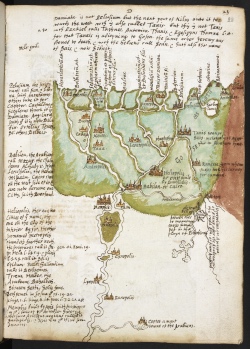 • Carved stone inscriptions, medieval manuscripts and early printed works are among items on display in a new exhibition looking at the act of writing and its impact on human civilisation at the British Library. Writing: Making Your Mark spans five millennia and five continents and includes writing examples from more than 30 writing systems including Greek, Chinese and Arabic. Highlights include an 1,800-year-old ancient wax tablet, early 19th century Burmese tattooing instruments, the final diary entry of Antarctic explorer Captain Robert Falcon Scott, James Joyce’s notes for Ulysses, Caxton’s 1476-7 printing of The Canterbury Tales – the first book printed in England, and the personal notebooks of Elizabethan explorer Sir Walter Raleigh (pictured). There’s also a 60,000 signature petition from 1905 protesting the first partition of Bengal, Mozart’s catalogue of his complete works from 1784-1791 featuring his handwriting and musical notation, and Alexander Fleming’s notebook in which he recorded his discovery of penicillin in 1928. A programme of events accompanies the exhibition which runs until 27th August. Admission charge applies. For more see www.bl.uk. PICTURE: © British Library.
• London’s forgotten rivers, tunnels, sewers, deep shelters, and the world’s first subterranean railway are all explored in a new free exhibition at the London Metropolitan Archives in Clerkenwell. Under Ground London in part celebrates the 200th anniversary of the birth of Victorian engineer Sir Joseph Bazalgette – who designed the scheme to overhaul the city’s sewers in the 19th century. As well as Bazalgette’s landmark work, the exhibition explores the legend of a cobbled street buried beneath today’s Oxford Street and tells the story of the Thames Tunnel which, when it opened in 1843, was the world’s first tunnel under a river. There’s also information on London’s ‘ghost stations’, including Strand and King William Street; and the Metropolitan Railway – the world’s first underground railway as well as images of the River Fleet, displayed for the first time. The display can be seen until 31st October. For more, follow this link.
• Women artists working in Britain in the past 60 years are being celebrated in a new display at the Tate Britain in Millbank. Sixty Years features about 60 works spanning painting, photography, sculpture, drawing and film and includes many recent acquisitions. Artists whose works are on show include Mona Hatoum, Sarah Lucas, Bridget Riley, Mary Martin and Anthea Hamilton. Highlights include Gillian Wearing’s film Sacha and Mum (1996), Susan Hiller’s large scale multimedia installation Belshazzar’s Feast, the Writing on Your Wall (1983-84), and two new mixed media works by Monster Chetwynd – Crazy Bat Lady (2018) and Jesus and Barabbas (Odd Man Out 2011) (2018). For more, see www.tate.org.uk/visit/tate-britain.
Send all items for inclusion to exploringlondon@gmail.com.
LondonLife – Shakespeare at home?
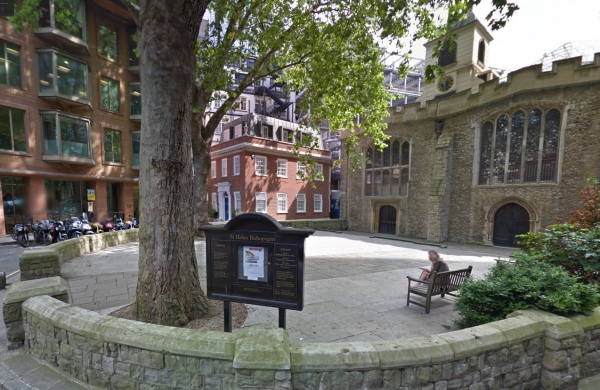
A theatre historian believes he has discovered where William Shakespeare lived while he was writing some of his most famous works including Romeo and Juliet and A Midsummer Night’s Dream. While it has long been known the playwright lived close to the site of Liverpool Street station in the late 1590s, Geoffrey Marsh says an examination of official records has pinpointed the location as being on the site of what is now an office block at 35 Great St Helen’s, only a stone’s throw from The Gherkin. The BBC reports that Marsh, who is also the director of the V&A’s department of theatre and performance, found Shakespeare was a tenant of the Company of Leatherworkers and most likely lived among dwellings overlooking the churchyard of St Helen’s Bishopsgate, pictured above. PICTURE: Via Google maps
Treasures of London – The Armada Portrait of Elizabeth I…
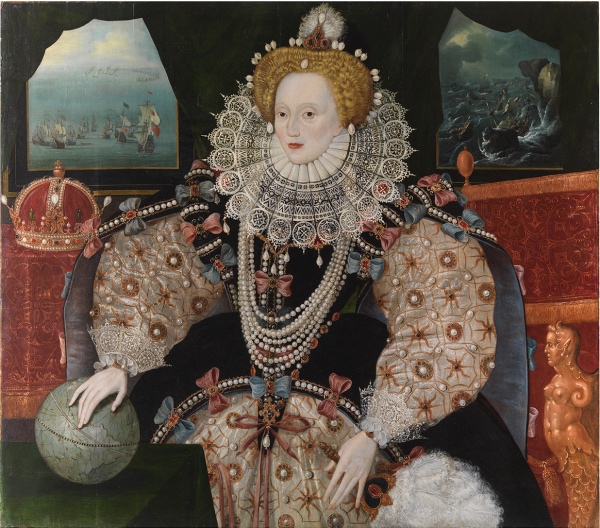
Saved for the nation following a public appeal by the Art Fund and Royal Museums Greenwich in 2016 and subsequently having undergone an extensive conservation and restoration process, the ‘Armada Portrait of Elizabeth I’ now hangs in the 400-year-old Inigo Jones-designed Queen’s House in Greenwich.
The life-sized portrait, which is unusually presented in a landscape format, commemorates the failed invasion of England by the Spanish Armada in the summer of 1588. It was painted in about 1590 by an unknown artist when the queen was aged in her mid-50s and may have been commissioned by Sir Francis Drake, second-in-command of the English fleet assembled to defend England from the Spanish.
Up until its £10.3 million acquisition (which was funded by various donations including a £1 million donation from the Art Fund, £400,000 from the Royal Museums of Greenwich, some 8,000 individual donations from members of the public totalling £1.5 million, and a Heritage Lottery Find grant of £7.4 million), it had been owned by Drake’s descendants – now known as the Tyrwhitt-Drakes – who have had possession since at least 1775. It spent much of its life hanging at Shardeloes, a Buckinghamshire country house built for William Drake in the late 18th century.
Designed to inspire a sense of awe in its viewers, the portrait contains numerous references which would have conveyed specific meanings to the Tudor mind. The Queen’s upright posture, open arms and clear gaze, for example, convey vitality and strength while her pearls are symbols or chastity and the Moon. The gold suns embroidered on her skirt and sleeves are said to symbolise power and enlightenment and the queen rests her hands on a globe with her fingers seeming tapping on the new world with the imperial crown sitting overhead in fairly obvious statement of her ambitions overseas.
Two maritime scenes in the background, both of which are actually early 18th century reworking over late 16th century originals, depict firstly the English fleet preparing to engage the Spanish Armada in the English Channel and, secondly, Spanish ships being wrecked on the Irish coast during their passage home.
One of the best known images from English history, the portrait has inspired countless portrayals of Elizabeth on stage and screen, including Cate Blanchett’s in two ‘Elizabeth’ films.
The Queen’s House, where the painting is being displayed, is built on the site of what was once Greenwich Palace, birthplace of Queen Elizabeth I.
WHERE: Queen’s House, Romney Road, Greenwich (nearest overground station is Greenwich/DLR is Cutty Sark for Maritime Greenwich); WHEN: 10am to 5pm daily; COST: free; WEBSITE: www.rmg.co.uk/queens-house.
PICTURE: © National Maritime Museum, London
This Week in London – Sir Walter Raleigh’s “lost garden”; Anglo-Saxon Kingdoms; artworks celebrate women’s stories; and, Beast Quest at Hampton Court…
• The “lost garden” of Sir Walter Raleigh opens at the Tower of London on Saturday, marking the 400th anniversary of the famous explorer’s death. Sir Walter, an adventurer who was a court favourite in the time of Queen Elizabeth I and enemy of King James I, was imprisoned in the tower on three occasions, at times living there with his wife and family, before he was eventually executed on 29th October, 1618. Held in the Bloody Tower, he used the courtyard outside to grow plants from the New World and experiment with ingredients from an “elixir of life”. The gardens, which occupy the spot where the original apothecary garden once stood and are now a new permanent display at the tower, features a range of fragrant herbs, fruit and flowers. There’s also information on how they were used by Raleigh and his wife, Bess Throckmorton, to create herbal remedies and the chance for green-fingered families to concoct their own elixir. Meanwhile, the Bloody Tower has been revamped with a combination of film, sound, graphics and tactile objects to provide an insight into Raleigh’s times of imprisonment at the tower. Sir Walter and his wife Bess will also be present, entertaining crowds on Tower Green with stories of his adventures. Included in the usual admission price. For more, see www.hrp.org.uk/toweroflondon.
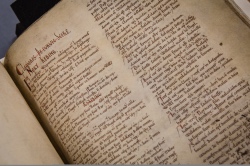 • The Domesday book, the earliest surviving public record in the UK, forms the centrepiece of a new exhibition looking at the history, art, literature and culture of Anglo-Saxon England which opens at the British Library tomorrow. Anglo-Saxon Kingdoms: Art, Word, War spans the six centuries from the end of Roman Britain to the Norman Conquest. As well as the Domesday documents – last displayed in London seven years ago and on loan from The National Archives, among the 180 treasures are the Lindisfarne Gospels, Beowulf and Bede’s Ecclesiastical History as well as finds from Sutton Hoo and the Staffordshire Hoard. The Codex Amiatinus, a giant Northumbrian Bible taken to Italy in 716, returns to England for the first time in 1,300 years. The exhibition, which runs until 19th February, is being accompanied by a series of talks and events. Admission charge applies. For more, see http://www.bl.uk. PICTURE: © The National Archives.
• A series of 20 new works by London women artists go on display in public spaces across the city from today. The free exhibition, LDN WMN, is being curated by the Tate Collective as part of the Mayor of London’s #BehindEveryGreatCity campaign marking the centenary of women’s suffrage in the UK. It features large installations, paintings and digital graphics in bringing the hidden stories of some of London’s pioneering and campaigning women to life. They include that of reporter and activist Jackie Foster, suffragist Lolita Roy, SOE operative Noor Inayat Khan and the women who built Waterloo Bridge. The artworks, by artists including Soofiya, Manjit That and Joey Yu, will be displayed in locations from Canning Town to Alexandra Palace, Brick Lane to Kings Cross. For locations, head to www.london.gov.uk/about-us/mayor-london/behindeverygreatcity/visit-ldn-wmn-series-free-public-artworks.
• Phoenixes, dragons, griffins and other fantastic beasts take over Hampton Court Palace this half-term, bringing the fantasy children’s book series and gaming brand Beast Quest to life. The interactive experience will see families pitted against strange and magical beasts in a quest which will require bravery, quick-thinking and new found skills. The Beast Quest experience is suitable for all the family and takes about one hour, 15 minutes to complete. Runs from Saturday to 28th October and is included in the usual palace admission price. For more, see www.hrp.org.uk/hampton-court-palace/.
Send all items for inclusion to exploringlondon@gmail.com.
What’s in a name?…Bishopsgate…
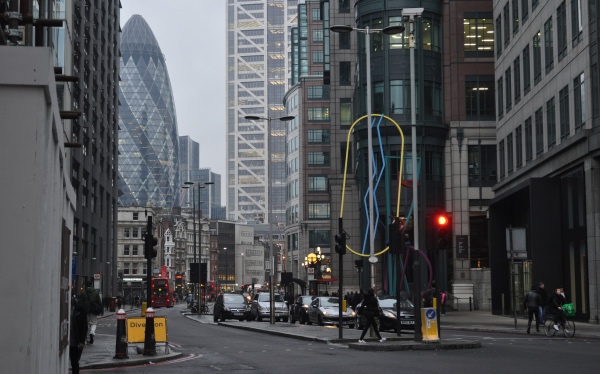 This major London thoroughfare (and ward of the City of London) owes its name to one of the eight former gates of the City of London – that’s right, Bishopsgate.
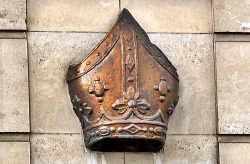
Located at what’s now the junction with Wormwood Street (and marked by a mitre which appears on a building there), the gate was the departure point for Ermine Street which ran from London to Lincoln and York.
 The gate and hence the road – which runs northward from the intersection of Gracechurch Street and Cornhill to where it becomes Norton Folgate Street (which links into Shoreditch High Street) – is believed to have been named for the 7th century Bishop Erkenwald (Earconwald). It was he who apparently first ordered its reconstruction on the site of a former Roman gate.
By Tudor times, the street had become known for the mansions of rich merchants – among those who had their homes here were Sir Thomas Gresham, Sir John Crosby and Sir Paul Pindar (Crosby Hall was later re-erected in Chelsea and the facade of Sir Paul Pindar’s house, is in the V&A). The street also become known for its many great coaching inns, all of which were eventually demolished.
Bishopsgate was the first street in London to have gas lighting when it was introduced about 1810 and, about 1932, became the first in Europe to have automated traffic lights (at the junction with Cornhill).
The City of London ward straddles the site of the old London wall and gate and is accordingly divided into “within” and “without” sections.
While there are a number of churches associated with the street – St Ethelburga Bishopsgate, St Helen’s Bishopsgate and St Botolph-without-Bishopsgate, these days it is largely lined by office buildings including the former NatWest Tower. Other notable buildings include that of the Bishopsgate Institute and the busy Liverpool Street Station is also accessible from Bishopsgate.
The name Bishopsgate is also synonymous with an IRA truck bombing which took place in the street on 24th April, 1993, in which one man was killed and 44 injured.
PICTURE: Top – Looking southward along Bishopsgate in 2014. (stevekeiretsu; licensed under CC BY-NC 2.0); Right – The Bishop’s mitre marking the location of the former gate (Eluveitie/ licensed under CC BY-SA 3.0).
This Week in London – The Sun explored; Darwin’s story on stage; Freud meets Dali; and, medallic art in Britain…
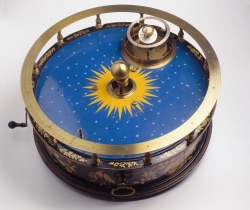 • The biggest ever exhibition exploring the Sun opens at the Science Museum in South Kensington this Saturday. The Sun: Living With Our Star features everything from Nordic Bronze Age artefacts revealing ancient beliefs about how the Sun was transported across the sky to details of upcoming NASA and European Space Agency solar missions. Highlights include the original ‘orrery’ (pictured), an instrument made for the Earl of Orrery in 1712 to demonstrate the motions of the Earth and Moon around the Sun, a rare concave mirror known as a yang-sui which was used for lighting fires in China and dates to between 202 BCE and 9 CE, and a Tokomak ST25-HTS, a prototype nuclear fusion reactor which successfully created and sustained plasma for a record-breaking 29 hours in 2015. There’s also an astronomical spectroscope made for Norman Lockyer, founder of the Science Museum, who used it to identify the element helium in 1868 – the exhibition actually coincides with the 150th anniversary of Lockyer’s discovery, the first of an “extra-terrestrial” element. The exhibition also includes interactive experiences including a huge illuminated wall display allowing visitors to see the Sun rise in different seasons and locations and another in which visitors are able to bask in the sun while sitting in deck chairs under palm trees with sand at their feet. Runs until 6th May next year. Admission charge applies. The exhibition is being accompanied by a programme of events including “family festivals” in early November and early March. For more, see www.sciencemuseum.org.uk/see-and-do/the-sun-living-with-our-star. PICTURE: Science Museum Group Collection/© © The Board of Trustees of the Science Museum.
• The story of Charles Darwin is told in a new two hour stage play featuring a cast of seven people and 30 hand-made puppets which opened at The Natural History Museum this week. The Wider Earth, which follows Darwin as he sets out on a daring five year journey aboard the HMS Beagle through uncharted landscapes, is being staged in the museum’s Jerwood Gallery following sold-out seasons in Australia and represents the first time a performance-based theatre has been constructed in the museum. Presented by Trish Wadley Productions and Dead Puppet Society in association with Glass Half Full Productions, the show runs until 30th December. To book tickets, head to www.thewiderearth.com.
• This year marks 80 years since Sigmund Freud and Salvador Dalí famously met in London on 19th July, 1938 – a meeting at which Dalí revealed to Freud his recently completed painting The Metamorphosis of Narcissus. The Freud Museum has launched a new exhibition – Freud, Dalí and the Metamorphosis of Narcissus – which explores the extensive influence of Freud on Dalí and on Surrealism as well as Freud’s own reaction to the painting. The painting forms the centrepiece of the exhibition which also includes drawings, photographs and prints as well as documents including letters, manuscripts, books and Freud’s appointment diary. The display is accompanied by a programme of events. Runs until 24th February. Admission charge applies. For more, see www.freud.org.uk.
• The “invaluable” role artists from abroad played in the development of British medallic art is the focus of a new display at the British Museum. Witnesses: émigré medallists in Britain features medals from six centuries documenting significant historical moments and commemorating famous British figures. The earliest objects date from Elizabethan England when Dutch artist Steven van Herwijck introduced the art of the medal to Britain’s cultural elite while ‘stars’ in the display include a spectacular Waterloo medal conceived by 19th century Italian gem engraver Benedetto Pistrucci which took 30 years to complete and bears the image of the four allied sovereigns – George, Prince Regent, Francis II of Austria, Alexander I of Russia and King Frederick William III of Prussia. The free display can be seen in Room 69a until 7th April next year. For more, see www.britishmuseum.org. PICTURE: Benedetto Pistrucci: Coronation of George IV, 1821, gold, 35mm. © the Trustees of the British Museum M5716. B, 1070. CME6436.
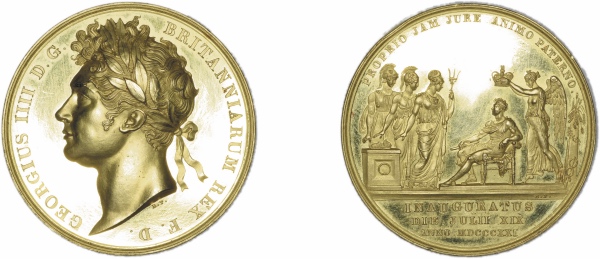
Send all items for inclusion to exploringlondon@gmail.com.
Famous Londoners – William Baldwin…
An English author who originally hailed from the west of England (possibly Wales), William Baldwin wrote and published a number of works in the mid-1500s while living in London and has been credited, thanks to his satirical work, Beware the Cat, as being the author of the first English novel.
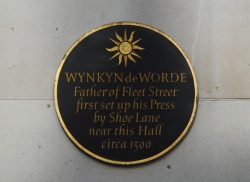 Baldwin is believed to have studied at Oxford prior to coming to London where, from 1547, he worked with the printer Edward Whitchurch – who had apparently set up shop at Wynkyn de Worde’s former printworks at the Sign of the Sun (now at the Stationer’s Hall, just off Ludgate Hill – pictured) – as a corrector.
Whitchurch also published Baldwin’s works including the popular Treatise of Moral Philosophy (1547) and Canticles or Balades of Salomon (1549), which was dedicated to a young King Edward VI and was a translation of the Biblical book, Song of Songs.
His other works included being the editor and key contributor to the hugely popular and influential Mirror for Magistrates (1554) which was something of a cautionary tale for public officials, and the Marvelous History Entitled Beware the Cat, Concerning Diverse Wonderful and Incredible Matters (aka Beware the Cat).
The latter book, which is an attack on Catholicism, tells the story of a priest who uses alchemy to talk to cats and finds that, despite his low opinion of them, they actually live according to strict rules (reflecting on the arbitrary nature of the “rules” which govern everyday life).
While Baldwin is believed to have finished the work during the last months of the reign of King Edward VI (he died on 6th July, 1553), the subsequent accession of Queen Mary I and her tougher line on the press freedoms led Baldwin to postpone publication until 1561 by which time Queen Elizabeth I was on the throne.
Around the same time as he completed this work, Baldwin is said to have assisted the Royal Master of Revels, George Ferrers, in preparing Christmas festivities at the Royal Court – this was an occasional role he would perform beside his work with Whitchurch.
Baldwin’s last known work was The Funerals of King Edward the Sixth (1560). In 1563, he is believed to have been ordained a deacon and stepped away from the printing trade. He served in various clerical roles (there is an account of him preaching at Paul’s Cross) before dying some time prior to 1st November, 1563.
(With thanks to John N King’s 2004 article in the Oxford Dictionary of National Biography).
 Exploring London

