PICTURE: Esther Dyson (licensed under CC BY-NC 2.0)
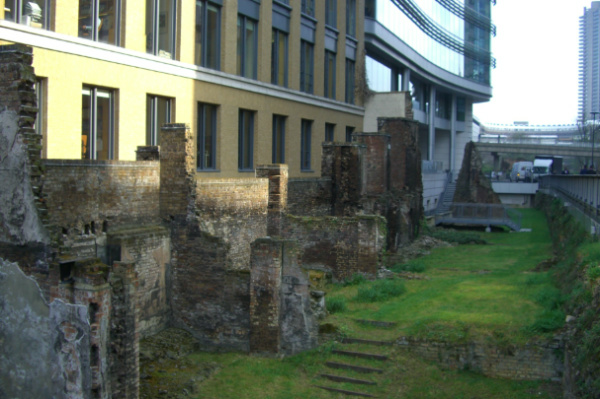
But there are several other stretches of the stone and brick wall left which evoke a sense of the structure it once was and the defensive role it played in protecting Londoners – among them is a substantial section of the wall located in Noble Street on the city’s western side.
The 80 metre long section of Roman and later medieval remains includes two internal turrets on what was the west side of the Roman Cripplegate fort (built between 120 and 150 AD) as well as a substantial bastion located at the southern end of the site.
The highest fragment of the Roman wall can be seen opposite Oat Lane, near the southern end of the site, while the highest section of the wall – which stands some 4.5 metres high and is mostly medieval – can be seen at the northern end of the site.
As well as reflecting the City’s Roman and medieval history, this section of wall also evokes a sense of the horrors of the Blitz.
Projecting eastward on the inside of the wall are party walls from World War II bomb-damaged and later demolished homes which once fronted onto Noble Street.
WHERE: Noble Street, London (nearest Tube stations are Barbican and Bank; WHEN: Anytime; COST: Free.
Once a medieval royal palace, Eltham Palace in London’s east was transformed into a 1930s house which incorporates the medieval great hall.
Tudor ruins in the garden of Eltham Palace (with the home behind). PICTURE: Peter Gasston (licensed under CC BY-NC-ND 2.0)
But there are also some other remains of the former medieval palace on the site – including the footings of the palace’s west range incorporating royal apartments used in the Tudor era.
These included separate apartments for the king and queen as well as a gallery where the king could walk in inclement weather.
The ruins feature diamond-patterned brickwork (pictured), part of the west range which was built during the reign of Queen Elizabeth I in the 1580s.
There are also the remains of a tower of yellow brick, which possibly dates from the 14th century when, prior to the site being a royal palace, it was rebuilt as a manor house by Anthony Bek, Bishop of Durham (it was Bek who gave the manor to the future Edward II in 1305).
These days the ruins lie within the home’s magnificent gardens, recreated to show how they might hav. Alongside the remains of the west range (and the medieval great hall which dates from the reign of King Edward IV and is largely intact), are the remains of a late 15th century bridge over a medieval moat, at the south end of which are the remains of a gatehouse.
There’s also an oak pedestrian bridge, supported by medieval brick and foundations which once formed part of the main southern entrance to the palace.
WHERE: Eltham Palace, Court Yard, Eltham, Greenwich (nearest train station is Mottingham); WHEN: 10am to 4pm Wednesday to Sunday; COST (advance online tickets): £14.50 adults/£8.60 children/£12.70 concessions/£37.60 family (can include a donation/English Heritage members free); WEBSITE: www.english-heritage.org.uk/visit/places/eltham-palace-and-gardens/.
Located in at the junction of Mark Lane and Dunster Court in the City of London, All Hallows Staining was a medieval church which was mostly demolished in the late 19th century.
All Hallows Staining church tower as seen in July, 2022. PICTURE: Courtesy of Google Maps
These days only the lonely tower remains (above ground at least) as testament to building that once stood there and the lives that were impacted by it.
All Hallows Staining was originally built in the late 12th century and while the origins of its name are somewhat shrouded in mystery, there are a couple of theories.
One says it takes its name from the fact it was built in stone when other churches at the time were wooden (“staining” meaning “stone”) while another says it takes it names from the fact it was built on land belonging to the Manor of Staines.
Princess Elizabeth (later Elizabeth I) is said to have presented the church with new bell ropes after she was released after two months in the Tower of London in 1554 during the reign of her half-sister Queen Mary I (paying tribute to the sound they provided while she was in the Tower).
The church survived the Great Fire of London in 1666 but collapsed just five years later, its foundations apparently weakened by too many graves in the adjoining churchyard.
It was rebuilt in 1674-75 but largely demolished in 1870 when the parish was combined with St Olave Hart Street (and the proceeds were used to fund construction of All Hallows, Bow, in the East End).
Just the tower, parts of which date from the 12th century, remained. The property was bought by the Worshipful Company of Clothworkers. Underneath the adjacent yard they installed the remains of the 12th century crypt of the hermitage chapel of St James in the Wall (later known as Lambe’s Chapel) following the demolition of the chapel in the 1870s.
During World War II, when St Olave Hart Street was badly damaged in the Blitz, a temporary prefabricated church was erected on the site of All Hallows Staining which used the tower as its chancel. It was known as St Olave Mark Lane.
The church was Grade I listed in 1950. In 1957, Clothworkers had a hall for St Olave Hart Street constructed on part of the site of the former church.
The tower is usually able to be seen across a small yard from Mark Lane.
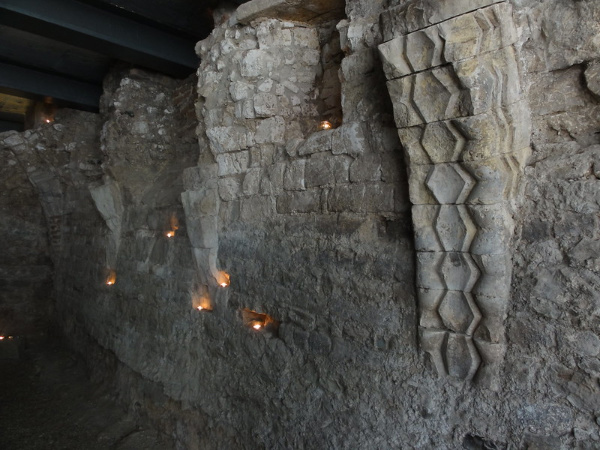
Located under glass beneath a modern square just to the north-east of the line of the City of London’s walls are the ruins of a medieval building which once held human bones.
Built on what had originally been a Roman burial ground, the medieval hospital known as St Mary Spital was constructed towards the end of the 12th century and a graveyard was located on the site for the burial of those who died there.
A small chapel was built on the site in about 1320, the crypt of which became a charnel house housing the bones of those remains disturbed when
The hospital, which had been run by Austin canons, was dissolved by King Henry VIII in 1539 and most of the bones removed. The crypt was later used as a house which was demolished around 1700 and later lost between the gardens of terraced houses.
The remains of the charnel house was discovered in the late 1990s during excavation works – complete with some 10,000 skeletons – and now lies under a glass floor in Bishop’s Square just to the west of Spitalfields Market (it can also be seen through a glass window in the basement level accessed via stairs in the square).
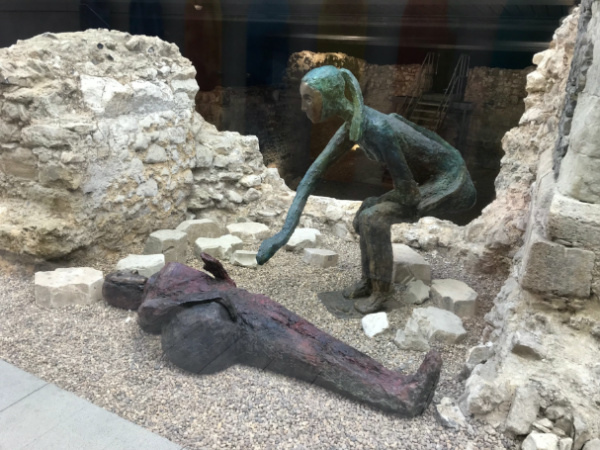
Two statues can be seen inside the ruins – a greenish figure crouching over a prone purple-red figure. Installed in 2014, they are the work of David Teager-Portman and are called Choosing the Losing Sideand The Last Explorer.
Spitalfields Chapel and Charnel House, Bishops Square, London, Spitalfields (nearest Tube station is Liverpool Street; nearest Overground is Liverpool Street and Shoreditch High Street).
On 1st December this year – World AIDS Day, four leading figures from two major HIV charities – Richard Angell, chief executive of Terrence Higgins Trust, and colleagues Dominic Edwardes and Barbara Tinubu, and Mark Santos, executive director of Positive East – were awarded the Freedom of the City of London.
But what exactly does it mean to be awarded the Freedom of the City of London?
An ancient tradition of the City of London, the Freedom is believed to date back to 1237 and was originally awarded to help citizens carry out their trade. The recipient was viewed as a “free man” and not subject to a feudal lord with the right to earn money for themselves and own property.
The Freedom of the City became closely linked with London’s medieval guilds, known as livery companies, and it was through membership of such a company that an application could be made to be a freeman, a necessary step for anyone who wants to hold office in a livery company.
In 1835, the Freedom was widened to include people living or working in the City or those with a strong London connection.
The award is these days also offered to people as a way of paying tribute to their “outstanding contribution” to London or public life, or to celebrate a very significant achievement. It is also necessary to be a freeman to stand for elected office in the City.
Freedom ceremonies take place in the Chamberlain’s Court at Guildhall and are usually conducted by the Clerk of the Court or his assistant. Prospective freemen read the ‘Declaration of a Freeman’ – which, among other things they swear allegiance to the King and obedience to Lord Mayor of London – and sign the Freeman’s Declaration Book.
A parchment document, known as The Copy of the Freedom, is then presented to the recipient along with a copy of the ‘Rules for the Conduct of Life’ which date from the mid-18th century. The clerk then extends the right hand of fellowship to the recipient and greets them as “a Citizen of London”.
A fee, known as a “fine”, is charged for applications (currently it’s £170).
Other recent high-profile recipients of the Freedom of the City of London include the UK’s Chief Medical Officer, Professor Sir Chris Whitty, England football captain and former Tottenham Hotspur striker Harry Kane, Deputy Governor for Financial Stability at the Bank of England, Sir Jon Cunliffe and theatrical impresario Sir Cameron Mackintosh.
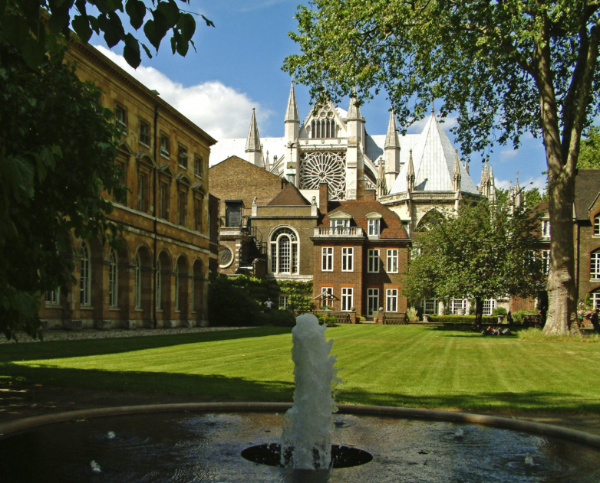
The College Garden. PICTURE: Anguskirk/Flickr (licensed under CC BY-NC-ND 2.0)
Not to be confused with London’s oldest botanic garden (The Chelsea Physic Garden), the College Garden at Westminster Abbey is believed to be the oldest garden in England under continuous cultivation.
In monastic times, the garden, as well as providing eye-pleasing flower displays, was used to grow vegetables and medicinal herbs for the abbey’s resident monks and it also included an orchard, as well as fishponds and beehives. The first herbarium dates from at least 1306 although the infirmary garden was originally established in the 11th century..
The garden was under the overall supervision of the abbey’s Infirmer – responsible for caring for the sick or infirm – and was tended to by a head gardener and two under-gardeners (all of whom were monks).
The oldest surviving feature of the garden today is a high stone wall which dates from 1376. Today the garden features London plane trees planted in the 1850s and a broad expanse of lawn.
There is also a small rose garden which marks Queen Elizabeth II’s accession to the throne and a herb garden planted to commemorate the lives of the monks and the founding of the Westminster School.
A 1993 bronze sculpture depicting the Crucifixion of Jesus Christ, by Enzo Plazzotta, sits out the south end of the garden. A single jet fountain was added in 2002.
The west side of the garden is bordered by the 18th century dormitory for the Westminster School. Two late Victorian houses, originally used for clergy, stand at the north end.
The garden is accessed from the south-east corner of the abbey cloister.
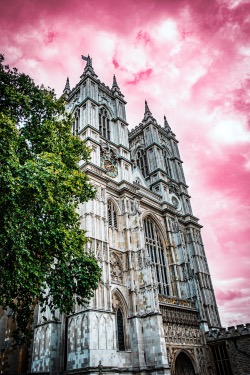
Westminster Abbey has been centre-stage at coronations since at least the Norman Conquest.
William the Conqueror set the precedent for coronations at the abbey when he decided not to get crowned at Winchester Cathedral (where Edward the Confessor had been crowned) and instead chose to be crowned at the minster built by Edward the Confessor (there is some suggestion King Harold Godwinson, the last Saxon King, was crowned at Westminster Abbey before the Conquest but no documentary evidence exists for this).
William the Conqueror’s coronation was held on Christmas Day, 1066, and since then some 39 coronations have been carried out (King Charles III’s will be the 40th).
A view of the pulpit and to the right the Cosmati Pavement and behind it the High Altar inside Westminster Abbey. PICTURE: PJ photography/Shutterstock
Arrangements for the coronation ceremony are the responsibility of the Earl Marshal and the coronation committee but the abbey’s dean acts as a liaison with the sovereign and assists the Archbishop of Canterbury who is usually the bishop who crowns the monarch.
Since the late 14th century, the service has largely followed that laid down in the Liber Regalis (Royal Book), an illuminated manuscript created in around 1390.
Since 1308, the heart of the coronation service has taken place on the Cosmati Pavement, located just before the High Altar, in what is known as the “Coronation Theatre”.
Having processed into the abbey and been acclaimed or “recognised” as sovereign by those present, the monarch then makes promises to God and the people they rule in what is known as the Oath, before being presented with a Bible.
Then, seated in the Coronation Chair, the monarch is anointed with holy oil while a canopy is held over them to shield this most sacred part of the ceremony from the eyes of those gathered.
Still seated, the monarch is then invested with the coronation regalia, including the Sovereign’s Ring, the Sovereign’s Orb, the Sceptre with Cross and the Sceptre with Dove, before St Edward’s Crown is brought from the altar and placed on the monarch’s head (it’s only since that coronation of King James I in 1603 that both the anointing and the crowning are carried out while the monarch is seated on the Coronation Chair – before that, the chair was used for only one aspect of the ceremony).
The monarch then moves to a throne and receives the homage of the royal princes and senior peers. It’s at this point that the coronation of a Queen Consort typically takes place in a simpler form of the ceremony.
The monarch then retires into St Edward’s Chapel where they dress on a purple robe known as the Imperial State Robe or Robe of Estate as well as the Imperial State Crown before processing back out through the abbey.
Other elements of the coronation include music which since the Coronation of King George II has included the George Fredric Handel anthem, Zadok the Priest. The introit I was glad has been sung at every coronation since that of King Charles I in February, 1626.
The abbey is currently closed in preparation for the Coronation of King Charles III. It reopens on Monday, 8th May. The Coronation Theatre will remain in place for visitors to see until 13th May.
WHERE: Westminster Abbey, Westminster (nearest Tube station is Westminster or St James’s Park); WHEN: Open to tourists everyday except Sunday (times vary so check the website); COST: £27 an adult/£24 for seniors (65+)/£12 a child (6-17 years); WEBSITE: www.westminster-abbey.org.
• The coronation of King William I (aka William the Conqueror) was marred by riots. The new King had chosen to be crowned in Westminster Abbey on Christmas Day, 1066, in a display of power (kings had in the past been crowned in Winchester). But when shouts of support for the new king were mistakenly thought to be an assassination attempt, Norman soldiers outside the abbey began setting fire to nearby houses, causing the abbey to fill with smoke and the congregation to flee while outside people rioted. William nonetheless ensured the service was completed.
• Henry, the eldest son of King Henry II, had a coronation service at Westminster Abbey while his father was still monarch – the only instance of this occurring. While crowning the heir during the lifetime of the monarch was a more common practice in France, it was not so in England. But in an effort to settle the succession, King Henry II had Henry crowned on 14th June, 1170. Sadly Henry, known as Henry the Young King, did not live to succeed his father but died at just the age of 28 in 1183 after contracting dysentery while campaigning with his younger brother Richard (later King Richard I) against their father. King Henry II died on 6th July, 1189, and was succeeded by Richard.
• There has only been one coronation in the abbey in which two monarchs were crowned at the same time. After King James II was deposed, William of Orange and his wife Mary were jointly invited to rule in what was known as the Glorious Revolution. They were crowned together at Westminster Abbey on 11th April, 1689. King William III sat in the Coronation Chair while another chair was specifically made for Queen Mary II, and, while the king was crowned using the traditional regalia, a special set of regalia was made for Mary.
• Only two of King Henry VIII’s six wives had coronations. Catherine of Aragon was crowned alongside the King on 24th June, 1509 (she sat on a lower chair). Anne Boleyn, meanwhile, was crowned on 1st June, 1533. Interestingly, she was crowned with St Edward’s Crown which had up until then only been used to crown the monarch. Jane Seymour died before she could be crowned (there had been plague in London at the time she married Henry), while his marriage with Anne of Cleves was annulled before she could be crowned and Catherine Howard was executed before any coronation took place. By the time the king married Catherine Parr, he was ageing and ill and a coronation was unlikely to be high on his agenda.
• King Henry VI is the youngest monarch to have been crowned at Westminster Abbey. He was aged just eight-years-old when he was crowned on 6th November, 1429, having become king at the age of just eight-months-old when his father, King Henry V, died on 31st August, 1422 (other children to have been crowned in the abbey include King Edward VI, who was just nine at his coronation). King Charles III – whose coronation will take place on 6th May – will be the oldest monarch to have been crowned at the abbey.
Correction: We’ve corrected the position of the two Catherines after the names were accidentally transposed.
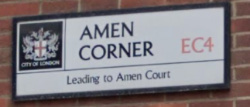
Located off Ave Maria Lane in the City of London is a tiny thoroughfare named Amen Corner.
This location of this short laneway – which leads to the U-shaped (and gated) Amen Court – makes the name no great surprise. It lies just to the north-west of St Paul’s Cathedral and is one of a number of religiously named streets in the area (others include Paternoster Lane, Paternoster Square, Paternoster Row and Canon Alley).
The corner apparently became so-named in relation to a prayer chanted by monks. It’s said that on the day of the Feast of Corpus Christi, the monks would process through the streets, chanting prayers as they did so.
The first prayer, the Lord’s Prayer, was started in Paternoster Row – itself named after the first couple of words in the prayer when recited in Latin (“Pater Noster” which translates as “Our Father”). The monks would then process westward and by the time they reached the corner of Paternoster Lane and Ave Maria Lane, they would be at the end of the prayer – “Amen”. Hence Amen Corner.
Amen Corner was, from 1614 until the Great Fire of London in 1666 when it was destroyed, the location of a three storey house which served as the headquarters of the the Royal College of Physicians.
Ave Maria Lane, meanwhile, is named after the next prayer the monks would recite after turning the corner – “Ave Maria” (Hail Mary”).
Amen Court, which isn’t accessible to the public, is home to a short terrace of 17th-century houses where the cathedral’s canons have traditionally lived.
At its western end is a wall which once marked the boundary of Newgate Prison and which itself has an interesting history. The spectral ‘Black Dog of Newgate’ was said to have been sighted crawling along its top just prior to an execution taking place in the prison.
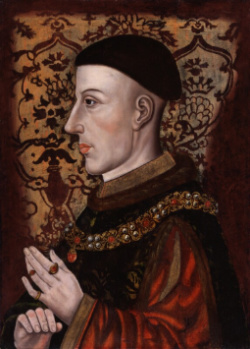
This year marks the 610th anniversary of the coronation of King Henry V and since we’re gearing up for another coronation, we thought it a good time to take a look back.
King Henry V, then 26-years-old, became king following the death of his father – King Henry IV – on 20th March, 1413. The coronation took place early the next month on 9th April at Westminster Abbey.
It just so happened there was a snowstorm that day, which some took to mean there were hard times ahead but which his supporters apparently saw as a good omen, the white-out a symbol of Henry’s holiness.
The ceremony in Westminster Abbey was followed by a feast in Westminster Hall.
It is said to have featured sugar sculptures of antelopes and eagles with illuminated texts extolling the virtues of the new king hanging from their mouths.
Guests were served by servants on horseback and, as was tradition, the King’s Champion rode into the hall and issued a challenge (which nobody took up).
The coronation hailed the start of Henry V’s short, nine-year reign, the most recalled aspect of which is his famous victory at the Battle of Agincourt in October, 1415.
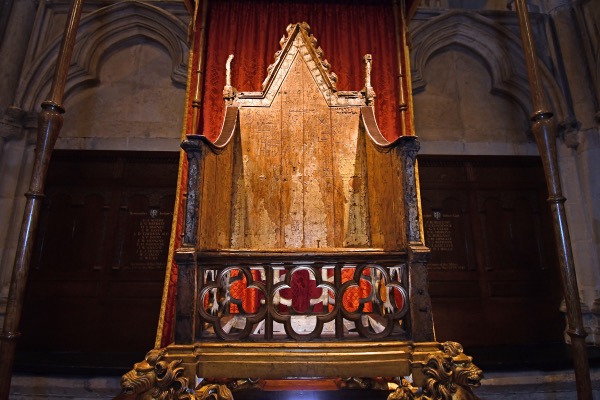
The Coronation Chair in Westminster Abbey PICTURE: Jim Dyson/Getty Images/Dean and Chapter of Westminster
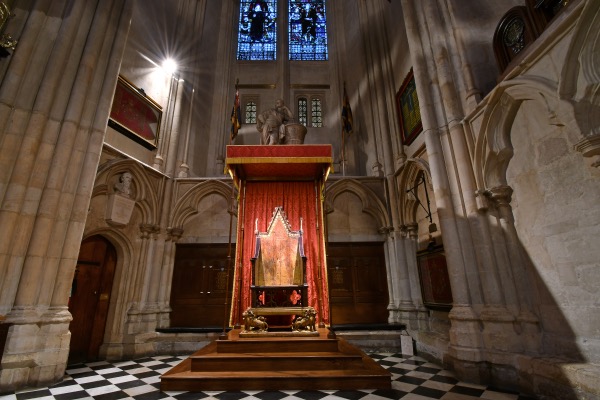
The coronation of King Charles III is taking place in Westminster Abbey on 6th June and in preparation for that, the Coronation Chair is getting a makeover.
The six foot tall chair, which was made around 1300, is commonly referred to as the oldest piece of furniture in the UK which is still used for its original purpose and which is by a known maker.
The chair was constructed on the orders of King Edward I in 1300-1301 specifically to hold the Scone of Stone which he had brought south from Scotland several years before and which he had given into the care of the Abbot of Westminster.
Made of oak and painted by one Master Walter, the chair was decorated with patterns of birds, foliage and animals on a gilt background. On the seat back was painted the figure of a king, possibly King Edward I, with his feet resting on a lion. The chair, which would have had the appearance of being made of gold, would have also been decorated with coloured glass.
The space for the stone below the seat was originally fully enclosed and it’s believed the chair originally contained no seat with the King sitting on a cushion placed directly on the Stone of Scone.
The chair now rests on four gilt lions which were added in the 16th century (although those currently there are replacements made in 1727).
The Coronation Chair in Westminster Abbey PICTURE: Jim Dyson/Getty Images/Dean and Chapter of Westminster
While there is some debate over whether King Edward II was sitting in the chair when he was crowned in 1308, that has certainly been the case from the 1399 when King Henry IV was crowned while sitting on it. Twenty-six subsequent monarchs including everyone from King Henry VIII to Queen Elizabeth II followed suit (Oliver Cromwell, meanwhile, had the chair removed to Westminster Hall when installed there as Lord Protector).
The chair has been graffitied in earlier centuries thanks mostly to Westminster schoolboys and visitors. Among the most legible graffiti scrawled upon it is “P Abbott slept in this chair 5-6 July 1800”. It also suffered minor damage in a bomb attack in 1914 thought to have been carried out by Suffragettes (it didn’t suffer any damage in World War II thanks to its being removed to Gloucester Cathedral).
The Stone of Scone, which had been taken briefly back to Scotland by Scottish Nationalists in 1950, was formally returned to Scotland in 1996 where it can now be seen at Edinburgh Castle. It is being returned to London for the coronation.
The chair, which for centuries had been kept in the Chapel of St Edward the Confessor, was moved to the abbey’s ambulatory in 1998 and then again moved again in 2010, this time to a specially-built enclosure in St George’s Chapel, located at the west end of the nave, so it could undergo conservation work. The two year conservation program was completed in 2013.
The chair is currently undergoing cleaning and work to stabilise what’s left of the gilding ahead of the coronation.
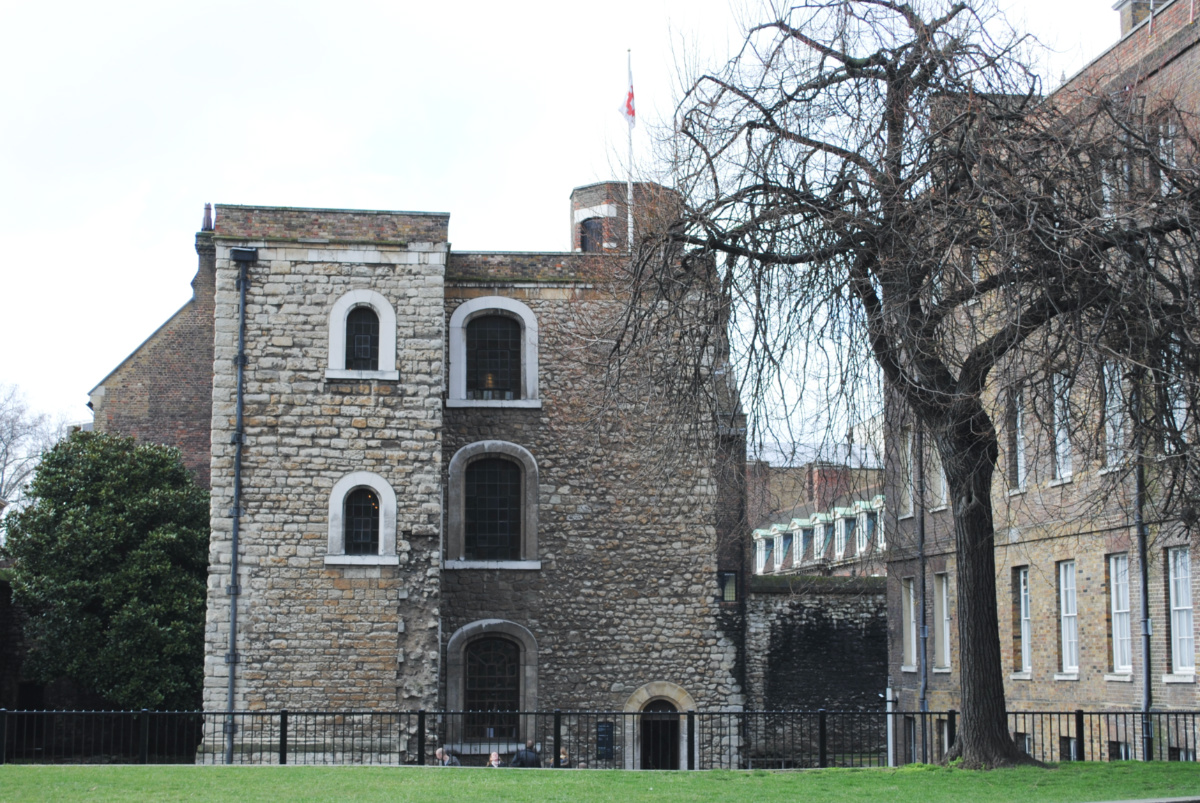
The Jewel Tower which contains the ground floor vaulted chamber. PICTURE: David Adams
Located in the ground floor of Westminster’s three-storied Jewel Tower is a fine 14th-century ribbed vault, described as an “architectural masterpiece”.
One of the ceiling bosses in the ground floor chamber. PICTURE: Daniel Stockman (licensed under CC BY-SA 2.0)
The room is believed to have been constructed, along with the rest of the building, in the 1360s to the designs of master mason Henry de Yevele.
Located in the south-west corner of Old Palace Yard, the tower was originally used as a personal treasure-house for King Edward III and was known as the King’s Privy Wardrobe. Later it was used to house government documents and in 1869 became the Weights and Measures Office.
It is one of few surviving buildings from the medieval Palace of Westminster (the rest having been destroyed in the fire of 1834).
The vaulted chamber incorporates tiercerons – ribs set between the transverse and diagonal ribs to form simple fans and also features a series of sculpted bosses.
Made in Reigate stone, these depict human and mythical animal heads, as well as intertwined pairs of eagles and swans and plant designs. It is believed the bosses were once whitened.
The west wall of the chamber features the remains of a fireplace while the main window reveal is medieval (although the window itself dates from the 18th century).
The property, which is under the care of English Heritage, is not to be confused with the Jewel House at the Tower of London.
WHERE: The Jewel Tower, Abingdon Street, Westminster, (nearest Tube stations are Westminster and St James’s Park); WHEN: 10am to 4pm on weekends; COST: £6 adults/£3.60 children (aged five to 17 years)/£5.30 concession; family tickets available; WEBSITE: www.english-heritage.org.uk/visit/places/jewel-tower/
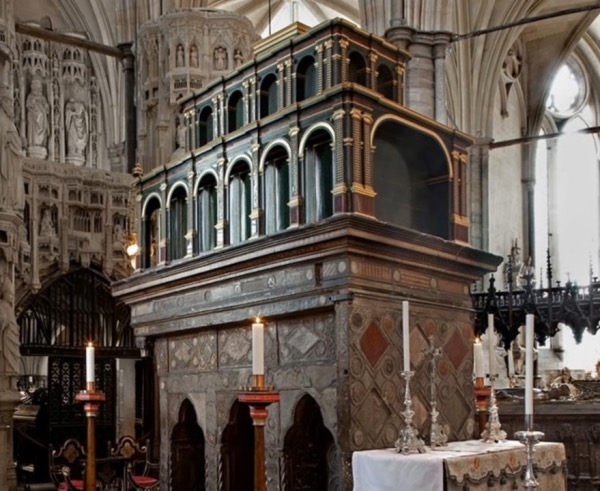
This chapel at the heart of Westminster Abbey is so named for the first king that was buried there – St Edward “the Confessor” – in early 1066.
The abbey, which had been constructed on the site of a Saxon Church at the behest of King Edward in fulfilment of a vow, was newly built when the King died. It had been consecrated on 28th December, 1065, but the king had been too ill to attend the service.
He died just a few days later some time on the night of 4th to 5th January. His burial took place on 6th January (the burial procession is actually depicted in the Bayeux Tapestry) with his body laid to rest beneath the floor of the new church (archaeologists using ground-penetrating radar believe they located the exact location of his original tomb in 2005).
He wasn’t to rest there for long. King Edward’s saintly reputation grew over the ensuing years and miracles began to be reported at the tomb – it’s also said said that when the tomb was opened in 1102, a “wonderful fragrance” is said to have filled the church suggesting that it he wasn’t embalmed the body was packed with aromatic herbs.
In 1163, two years after Edward had been made saint by Pope Alexander III, the king’s body was transferred from the tomb to a specially made shrine.
In the 13th century, King Henry III rebuilt St Edward’s church in the new Gothic-style of architecture, spending extravagant sums on the new building. His rebuilding programme culminated in 1269 when the bones of St Edward was translated into a new shrine featuring mosaics on a stone base created by Italian workmen in which the king’s coffin was placed with a wooden canopy over the top (such was his veneration of St Edward that King Henry III, his brother Richard, Duke of Cornwall, and the king’s two sons bore the coffin to the new shrine).
The shrine became a place of pilgrimage during King Henry III’s reign but his cult declined in the later years (and St Edward, who had for a time been considered patron saint of England was eventually replaced by St George).
The shrine was despoiled during King Henry VIII’s Dissolution of 1540 – the jewels were removed and presented to the King – and Edward’s body removed to another location in the abbey. But Queen Mary I had the Purbeck marble base reassembled (with new jewels added) and Edward’s body returned. The tiered wooden canopy which stands above the stone stone dates from the 16th century (and was heavily restored in the 1950s).
St Edward isn’t the only king buried in the chapel space. Others buried there – around the outer edges of the chapel – included King Henry III, King Edward I and his wife Eleanor of Castile, King Edward III and his wife Philippa of Hainault, King Richard II and his wife Queen Anne of Bohemia, King Henry V and Catherine of Valois (King Henry V had a chantry chapel built above his tomb at the eastern end of St Edward’s Chapel). Matilda, the wife of King Henry I, is also buried there.
WHERE: North Aisle, Westminster Abbey (nearest Tube stations are Westminster and St James’s Park); WHEN: Times vary – see the website for details; COST: £27 adults/£24 concession/£12 children (discounts for buying online; family rates available); WEBSITE: www.westminster-abbey.org
The City of London is dotted with halls for the city’s livery companies. But ever wondered what they are?
There are 110 livery companies in the City, representing ancient and more modern trade associations and guilds, including everything from grocers to saddlers, ironmongers to musicians. The newest livery company is the Worshipful Company of Arts Scholars which was created in 2014.
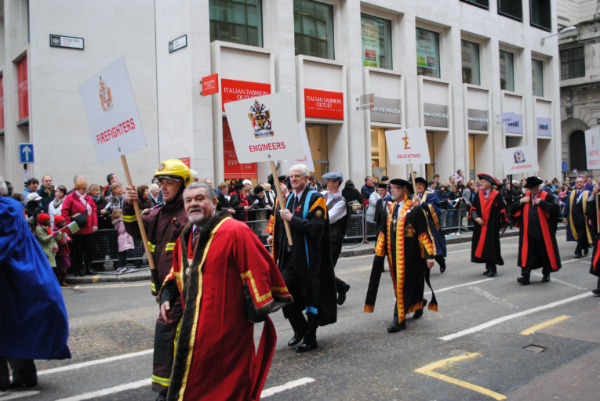
Members of livery companies taking part in the Lord Mayor’s Show. PICTURE: David Adams
Many of today’s livery companies have their origins in the city’s medieval guilds which were responsible for such things as regulating wages and conditions and setting industry standards (while many of these responsibilities have since passed to other bodies, some – such as the Worshipful Company of Gunmakers and the Worshipful Company of Goldsmiths – still play important roles in quality control).
These days the companies are also known for their support of the industries they represent and their philanthropic work.
Livery companies – many of which also traditionally had religious links – built halls as central meeting places – about 40 companies today still own or have a share in a hall.
Members of the livery companies (known as liverymen after the distinctive clothing or uniform they wore) – who are awarded the Freedom of the City of London – have the right to vote for senior offices in the City such as the Lord Mayor of London and sheriffs.
The livery companies of the City of London are listed in an “order of precedence” which was settled in 1515 for the 48 then in existence based on their political and economic power (the Worshipful Company of Mercers comes in at number one). All the companies created since then are ranked according to their date of creation.
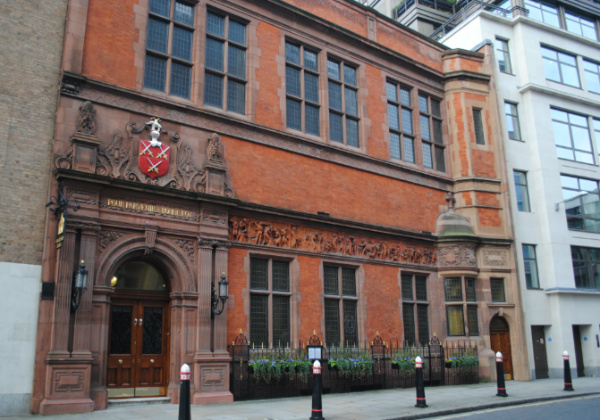
Hall of the Worshipful Company of Cutlers. PICTURE: David Adams
The 12 highest ranked companies are known as the Twelve Great City Livery Companies. Among them in the Worshipful Company of Merchant Taylors which disputes its position at number seven and so once a year at Easter swaps places with the Worshipful Company of Skinners at number six.
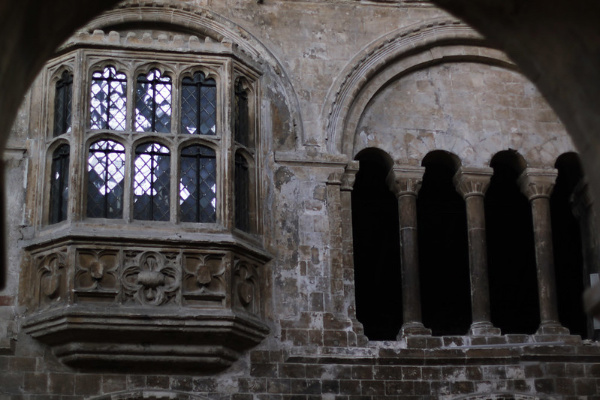
Prior Bolton’s oriel window (left) seen in the church. PICTURE: Kotomi_ (licensed under CC BY-NC 2.0)
This 500-year-old window is located inside the church of St Bartholomew the Great.
It was constructed on the orders of William Bolton who became prior of St Barts in 1505. Bolton, who was employed by both King Henry VII and King Henry VIII on various building projects including at Westminster Abbey and the Tower of London, also brought his love of construction to his role as prior and ordered the construction of a new lodging for himself to be built at the church’s eastern end.
A wooden gallery led from the first floor of the new lodging to the gallery of the church quire, where he had a private chapel. The oriel window, located in the chapel, gave a view of the quire, the high altar and the tomb of Rahere – the founder of the priory, located on the other side of the church (the window also enabled the prior to keep an eye on the monks!).
Bolton had his name recorded on the window in the form of a pictorial pun which shows a barrel or ‘tun’ pieced by a crossbow bolt (ie bolt-tun).
Bolton also had a door put through from the church to his new lodgings – it too can still be seen in the church.
WHERE: Off Little Britain, West Smithfield (nearest tube station is Barbican); WHEN: 10am to 5pm Monday to Saturday, 1pm to 5pm Sunday (plus services) ; COST: Free (but donations welcomed); WEBSITE: www.greatstbarts.com
Think of fire in relation to London and the events of 1666 no doubt spring to mind. But London has had several other large fires in its history (with a much higher loss of life), including during the reign of King John in July, 1212.
The fire started in Southwark around 10th July and the blaze destroyed most of the buildings lining Borough High Street along with the church of St Mary Overie (also known as Our Lady of the Canons and now the site of Southwark Cathedral) before reaching London Bridge.
The wind carried embers across the river and ignited buildings on the northern end before the fire spread into the City of London itself (building on the bridge had been authorised by King John so the rents could be used to help pay for the bridge’s maintenance).
Many people died on the bridge after they – and those making their way south across the bridge to aid people in Southwark (or perhaps just to gawk) – were caught between the fires at either end, with some having apparently drowned after jumping off the bridge into the Thames (indeed, it’s said that some of the crews of boats sent to rescue them ended up drowning themselves after the vessels were overwhelmed).
Antiquarian John Stow, writing in the early 17th century, stated that more than 3,000 people died in the fire – leading some later writers to describe the disaster as “arguably the greatest tragedy London has ever seen”.
But many believe this figure is far too high for a population then estimated at some 50,000. The oldest surviving account of the fire – Liber de Antiquis Legibus (“Book of Ancient Laws”) which was written in 1274 and mentions the burning of St Mary Overie and the bridge, as well as the Chapel of St Thomas á Becket built upon it – doesn’t mention a death toll.
London Bridge itself survived the fire thanks to its recent stone construction but for some years afterward it was only partly usable. King John then raised additional taxes to help rebuild destroyed structures while the City’s first mayor, Henry Fitz Ailwyn, subsequently apparently joined with other officials in creating some regulations surrounding construction with fire safety in mind.
The medieval church, which was rebuilt after being destroyed in the Great Fire of London only be badly damaged in the Blitz and finally demolished in 1962, was located on the corner of the laneway’s intersection with Cannon Street.
The church was the resting place of Catrin Glyndŵr, wife of the rebel Edmund Mortimer and daughter of Welsh leader Owain Glyndŵr, who, after being held in the Tower of London, died in mysterious circumstances (there’s a memorial to her in a garden on the former site of the church).
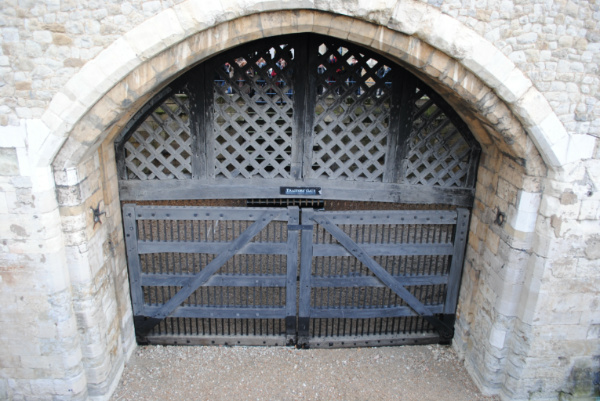
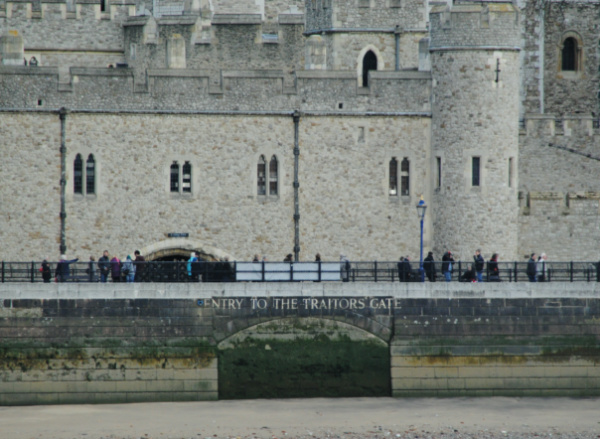
Built by King Edward I in the 13th century as a water gate to provide access from the Tower of London to the River Thames, the name ‘Traitor’s Gate’ came to be applied to this portal in Tudor times in relation to those accused of treason who were brought into the tower under its arch.
The double gateway is part of St Thomas’s Tower, which was designed by a Master James of St George, and behind it is a pool which was used to feed water to a cistern on the roof of the White Tower. While the gate was originally built to give access directly to the river, Traitor’s Gate now sits behind a wharf which runs along the river bank (and where can be seen the bricked up entrance says ‘Entry to the Traitor’s Gate’ – this was bricked up in the 19th century when embankment works were carried out)
Sir Thomas More, Sir Walter Raleigh and even the future Queen Elizabeth I (when a princess) were among those who were brought in by barge through the Traitor’s Gate (their journey would have led them under London Bridge where the heads of executed prisoners were on display). Whether Henry VIII’s disgraced Queen Anne Boleyn entered the tower through the gate remains a matter of some dispute.
It’s 560 years ago this month that the Yorkist King Edward IV was crowned at Westminster Abbey.
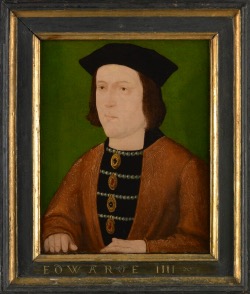
King Edward IV by Unknown English artist, oil on panel, circa 1540 (NPG 3542). PICTURE: Courtesy of National Portrait Gallery
Only three months earlier, on 4th March, 1461, the 19-year-old Edward had been declared King at Westminster in London. He had then gone on to defeat the Lancastrian forces at the Battle of Towton in North Yorkshire during a snowstorm on 29th March, said to have been the bloodiest single day battle ever fought on English soil with an estimated 28,000 men dying.
While his coronation was first set for July, ongoing trouble from the Lancastrians saw him bring the date forward (his predecessor, Henry VI, was in exile at the time).
Edward arrived at the Tower of London on Friday, 26th June, and then retired to Lambeth for the night. The following day – Saturday, 27th June – he crossed London Bridge and made his state entrance into the City.
Accompanied by the Lord Mayor and Aldermen and some 400 of the elite citizens of the City, Edward, said to be an impressive figure at six foot, four inches tall, then processed through the City streets to the Tower of London.
Once at the Tower, he created some 28 new Knights of the Bath, including his younger brothers George and Richard. They then rode ahead of him as he rode through the streets to Westminster.
The following morning, Sunday, 28th June, Edward went to Westminster Abbey where he was crowned King. Thomas Bourchier, the Archbishop of Canterbury, presided over the ceremony, assisted by William Booth, the Archbishop of York.
After the coronation, a banquet was held in Westminster Hall with the King sitting under a cloth of gold. One of the highlights was apparently the moment when Sir Thomas Dymoke, the King’s champion, rode into the hall in full armour. Flinging down his mail gauntlet, he is said to have challenged anyone who disputed Edward’s right to be king to do battle with him. No-one took up the offer.
A further banquet was held the following day at the Bishop of London’s Palace – in honour of his brother George who was created Duke of Clarence, and on the Tuesday, King Edward, wearing his crown, attended St Paul’s Cathedral.
Edward’s first reign ended in 1470 when on 30th October, he was forced into exile and King Henry VI. But it was only to be for a brief period – Edward IV reclaimed the throne on 11th April, 1471, defeating the Lancastrians in a decisive battle at Barnet on 14th April (April marked the 550th anniversary of that battle).
Sunset from Shooters Hill. PICTURE: matbickle (licensed under CC BY 2.0)
The highest point in the Borough of Greenwich in London’s south-east, Shooter’s Hill rises to 433 feet (132 metres) above sea level and provides views over the Thames to the north and London to the west as well as Kent and Essex.
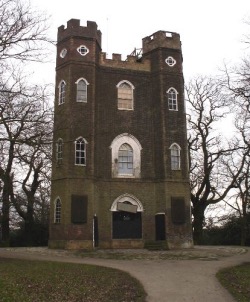
Severndroog Castle. PICTURE: Public Domain
The name, which is also that of the surrounding district, apparently comes from the fact that archery was practiced there in the Middle Ages.
But the area – which still is reasonably well wooded – was also the haunt of highwaymen (in response, there was a gallows at the crossroads at the bottom of the hill and a gibbet on the summit where bodies were displayed).
The modern road known as Shooters Hill Road, part of the A2 and later the A207, follows part of the route of the ancient roadway known as Watling Street.
Landmarks on the hill include a Gothic revival water tower dating from 1910 and a rather impressive folly known as Severndroog Castle which was built in in 1784 by Lady James in honour of her husband, Commodore Sir William James, who captured a pirate fortress at Suvarnadurg on India’s west coast in 1755.
Other landmarks include Christ Church Shooters Hill which features a Grade II-listed milestone and a Bronze Age mound known as Shrewsbury Barrow.
Literary mentions include one in Samuel Pepys’ famous diary – he rode past a body on the gibbet in 1661 – and in Charles Dickens’ A Tale of Two Cities.






 Exploring London