10 London sites associated with Sir Winston Churchill – 5. London residences…

Throughout his life – as a child, bachelor, husband and family man, Sir Winston lived in many properties in London (although, of course, a couple of the most famous properties associated with him – his birthplace, Blenheim Palace, and the much-loved family home, Chartwell in Kent – are located outside the city). But, those and 10 Downing Street aside, here are just some of the many places he lived in within London…

29 St James’s Place, St James: Having been born at Blenheim Palace in Oxfordshire and then having spent time in Dublin, at the age of five (1880) he came to live here with his family. He remained here until 1882 when he was sent off to school in Ascot (he later attended schools in Sussex and, most famously, Harrow School). The family, meanwhile, moved to a townshouse at 2 Connaught Place which backed on to Hyde Park.

33 Eccleston Square, Pimlico: The Churchills moved here in 1909 and it was here that their first two children Diana and Randolph were born in 1909 and in 1911. The family remained here until 1913. A blue plaque marks the property.

• Admiralty House, Whitehall: The Churchills first moved into Admiralty House – part of the Admiralty complex on Whitehall – in 1913 (from the aforementioned Eccleston Square) after Churchill was made First Lord of the Admiralty. They remained here until 1915 – years he would go onto to describe as the happiest in his life – before he resigned but returned in 1939 when he was once again appointed to the position.

• 2 Sussex Square, Bayswater: In 1920, the Churchills bought this property just north of Hyde Park which they kept until 1924 when they moved into 11 Downing Street (see below). The property is marked with a blue plaque.

• 11 Downing Street, Whitehall: The Churchills lived at 11 Downing Street when Sir Winston was Chancellor of the Exchequer, from 1925 to 1929. The property, located in Downing Street, is not accessible to the public.

11 Morpeth Mansions, Morpeth Terrace, Westminster:  The Churchill family lived at this Westminster address between 1930 and 1939 (prior to him becoming Prime Minister). The property is marked by a brown plaque.

28 Hyde Park Gate, Kensington: Churchill died in this Grade II-listed, mid 19th century property on the morning of 24th January, 1965. The couple moved in after the end of World War II and, while it’s not clear whether they fully vacated the residence when he was prime minister between 1951-55, it remained their property until his death 10 years later. The property next door, number 27, provided accommodation for his staff. The property is marked with a blue plaque.
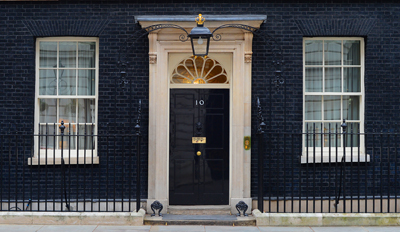
10 London sites associated with Sir Winston Churchill – 4. 10 Downing Street…

10-Downing-Street

Sir Winston Churchill lived a number of residences in London but, of course, the most famous in its own right is the traditional home of British PMs, 10 Downing Street.

Located in a short street just off Whitehall (now closed to the public), the property has been home to Prime Ministers since Sir Robert Walpole, officially First Lord of the Treasury but effectively the first PM, took up residence in 1735.

Churchill moved in following his election to the office of Prime Minister in 1940 and he and his wife Clementine took up residence in a second floor flat. It was in this property where, cigar in hand, he is famously known to have dictated speeches and letters to his secretary while propped up in bed.

The building suffered some bomb damage during the Blitz – on 14th October, 1940, a bomb fell on nearby Treasury Green and damaged the home’s kitchen and state rooms. Three civil servants doing Home Guard duty were killed but the kitchen staff were saved thanks to Churchill who, dining in the Garden Rooms when the bombing raid began, ordered them to leave their duties and get into a bomb shelter.

The Garden Rooms – which included a bedroom, meeting area and the small dining room – were subsequently reinforced with steel and heavy metal shutters although these apparently would have made little difference had there been a direct hit.

Cabinet moved out of Number 10 into the underground bunker complex now referred to as the Churchill War Rooms (see last week’s post) in October, 1939, and, after several near misses, the Churchills – Sir Winston apparently very begrudgingly – moved into the Number 10 Annex above the war rooms in 1940 (although Churchill continued to visit Number 1o for working and dining).

Much of the furniture and valuables were removed from Number 10 and only the Garden Rooms, Cabinet Room and Private Secretaries’ office remained in use (along with a reinforced bomb shelter built underneath – King George VI is known to have sheltered here when he was dining with Churchill when a raid began).

At the end of the war the Churchills quickly moved back into Number 10 and it was from the Cabinet Room that he made his Victory in Europe (VE) Day broadcast on 8th May, 1945.

He vacated the premises after his election defeat later in 1945 but returned when re-elected PM in 1951 and left after he resigned in 1955 having held a dinner party attended by Queen Elizabeth II and Prince Philip the night before.

A couple of interesting facts about Churchill’s time at number 10: Churchill had many pets who usually had free rein in the house – even at 10 Downing Street his poodle Rufus was known to have wandered into a meeting in the Cabinet Room (before he was ejected) – while in 1958, Georgina Landemare, the cook during his time at number 10, famously published a book, Recipes from No. 10, which featured an introduction by Churchill’s wife, Clementine.

There are apparently two portraits of Churchill among those of other PMs which grace the wall of the Grand Staircase.

For more on the history of 10 Downing Street, see www.gov.uk/government/history/10-downing-street

PICTURE: Sergeant Tom Robinson RLC/Crown Copyright 


This Week in London – Rarely seen Goya at the Courtauld; Wolsey Angels saved; and, A Victorian Obsession…

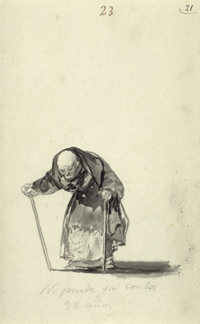
He-can-no-longer-at-theA “ground-breaking” exhibition of works of 18th and 19th century Spanish painter and printmaker Francisco Goya opens to the Courtauld Gallery at Somerset House today. Goya: The Witches and Old Women Album brings together the previously widely scattered pages of one of the artist’s most celebrated private albums in the first exhibition to ever recompile one of them. The album – which features themes of witchcraft, dreams and nightmares and has been reconstructed into its original sequence – is thought to have been made between 1819-23, a period during which Goya completed the murals known as the Black Paintings. Runs until 25th May. Admission charges applies. For more, see www.courtauld.ac.uk/goya. PICTURE: © The Courtauld Gallery (He can no longer at the age of 98, c. 1819-23, J. Paul Getty Museum).

The ‘Wolsey Angels’ have been “saved for the nation” after a campaign to acquire them by the V&A. The museum has reported that more than £87,000 was raised in a national public appeal – around £33,000 of which was raised via donations and through the purchase of badges at the South Kensington premises – which, along with grants including a £2 million National Heritage Memorial Fund grant and a £500,000 Art Fund grant, will be used to acquire the four bronze angels which were originally designed for the tomb of Cardinal Thomas Wolsey, chief advisor to King Henry VIII. The four bronze angels, which have been in display at the V&A, will now undergo conservation treatment before going back on display. For more on the history of the angels, see our earlier post here. For more information on the V&A, see www.vam.ac.uk.

Closing Soon – A Victorian Obsession: The Pérez Simón collection at Leighton House Museum. This exhibition at the former Holland Park of Lord Leighton presents more than 50 rarely exhibited paintings by leading Victorian artists including Albert Moore, Dante Gabriel Rossetti, Edward Burne-Jones, John Everett Millais, John William Waterhouse, Edward Pointer, John Strudwick and John William Godward as well as six pictures by Leighton himself and the highlight, Lawrence Alma-Tadema’s The Roses of Heliogabalus. Runs until 29th March. Admission charge applies. See www.rbkc.gov.uk/subsites/museums/leightonhousemuseum/avictorianobsession.aspx for more.

This Week in London – Giovanni Batista Moroni at the RA; German history on show; and, Afghanistan at the IWM…

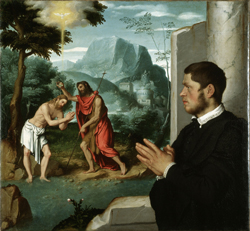
MoroniThe works of 16th century artist Giovanni Battista Moroni go on show at the Royal Academy of Arts this week. The exhibition will feature more than 40 works including portraiture as well as his lesser-known religious paintings. They include a number of altarpieces from the churches of Bergamo in northern Italy as well as portraits including Portrait of a Lady (c1556-60), A Knight with a Jousting Helmet (c1556), and The Tailor (1565-1570) – the first known portrait of a man depicted undertaking manual labour. The exhibition in The Sackler Wing, off Piccadilly, runs until 25th January. Admission charge applies. For more, see www.royalacademy.org.uk. PICTURED: A Gentleman in Adoration before the Baptism of Christ, (c.1555-60) (Gerolamo and Roberta Etro).

This year marks 25 years since the fall of the Berlin Wall and the birth of modern Germany so it’s a fitting time for the British Museum in Bloomsbury to host an exhibition looking at Germany’s tumultuous history. Germany: memories of a nation features 200 objects reflecting themes ranging from ’empire and nation’ to ‘arts and achievement’ and ‘crisis and memory’ spanning a period from the 15th century to today. They include Tischbein’s iconic portrait Goethe in der Campagna, an early edition of Grimm’s fairy tales, a home-made banner from demonstrations in late 1989 and Ernst Barlach’s bronze figure Der Schwebende, designed as a World War I memorial for Gustrow Cathedral. The exhibition, sponsored by Betsy and Jack Ryan, runs until 25th January. Admission charge applies. For more, see www.britishmuseum.org.

Britain’s 13 year involvement in Afghanistan is the subject of a new display at the Imperial War Museum London in Lambeth. Opening today, War Story: Afghanistan 2014 features new objects, photographs, film and video interviews and looks at the experiences of the Afghan national security forces and UK government and NGO workers as well as those of British troops. Objects, all collected between 2012 and this year, include a beadwork lamp made by Afghan prisoners in training workshops aimed at developing skills prior to their release and an Afghan dress and trousers. The display is part of the War Story project which started in 2009. Runs until 6th September next year. For more, see www.iwm.org.uk.

Send all items for inclusion to exploringlondon@gmail.com.

LondonLife – Long unseen ‘map room’ to be opened at Eltham Palace…

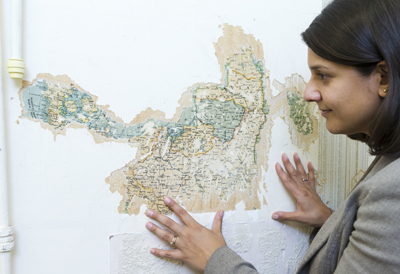
Eltham-PalaceAnnie Kemkaran-Smith, curator at Greenwich’s art deco masterpiece Eltham Palace, examines the 1930s ‘map room’, one of five new rooms to be opened at the palace this spring following a major renovation by English Heritage. Alongside the map room – to be opened for the first time in a decade following a renovation for which English Heritage has launched a £25,000 appeal – other rooms include the luxury wartime bunker, a basement billiards room, a walk-in wardrobe and two new bedrooms. The project, work on which started earlier this month, also includes restoration of the gardens, the creation of a new visitor centre, shop and cafe in former glasshouses. The former childhood home of King Henry VIII, Eltham Palace was transformed in the 1930s by art collectors and philanthropists Stephen and Virginia Courtauld and features an interior now boasting a mix of art deco, ocean-liner styles and Swedish design with then cutting-edge features such as under-floor heating, multi-room sound systems and a centralised vacuum system. The palace will remain open to the public on Sundays over winter with the new rooms to be opened in April. For more, see www.english-heritage.org.uk/daysout/properties/eltham-palace-and-gardens/.

This Week in London – Rare chance to see four Magna Cartas together; Covent Garden films; Raymond Chandler’s childhood home recalled; and Rembrandt at Kenwood…

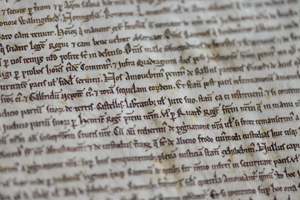
Magna-Carta• The only four surviving copies of the original Magna Carta from 1215 will go on display together for the first time ever  at the British Library in King’s Cross next February – and you have a chance to be among the 1,215 people to see them. In an event to mark the 800th year of the creation of the document, the library – which holds two copies of the document – along with Lincoln Cathedral and Salisbury Cathedral – each of which holds one copy – are holding a ballot with winners able to attend an event in which they’ll have the unique opportunity to see the documents side-by-side as well as be treated to a special introduction on its history and legacy by historian and TV presenter Dan Jones. The ballot to see the documents is open until 31st October with winners drawn at random. It’s free to enter – head to www.bl.uk/magna-carta to do so. The four documents will subsequently feature separately in displays at each of the three institutions. One not to miss! PICTURE: Salisbury Cathedral’s Magna Carta/Ash Mills.

The Silent Swoon Free Film Festival kicks off in St Martin’s Courtyard, Covent Garden, next week. The courtyard will be transformed into an open air movie theatre showing a different movie each night – The Talented Mr Ripley on 14th October, Crazy, Stupid, Love on 15th October and Rebel without a Cause on 16th October. Most of the free tickets will be allocated through an online draw but a small number will be allocated each night on a first come, first serve basis. For those with tickets, a range of freebies will be available on the night (including popcorn!). For more information, head to www.stmartinscourtyard.co.uk/silent-swoon-cinema-festival.

Crime writer and film noir pioneer Raymond Chandler has been remembered with the placement of an English Heritage blue plaque outside his childhood home in Upper Norwood, south east London. Chandler, who received global acclaim for his Philip Marlowe novels and his work on movies like The Blue Dahlia, lived at the home from 1901 after emigrating from the US with his mother, aunt and grandmother at the age of 12. He remained at the double-fronted red brick villa until 1908 – the same year he published his first poem, The Unknown Love. In his early Twenties, Chandler worked as a freelance reporter for London newspapers but, disillusioned with writing, returned to the US in 1912. He spent the next decade working for an oil company before the loss of his job in 1932 pushed him to restart writing. He first novel was published in 1939, and he went on to write further books and movie screenplays to ongoing renown. For more on the blue plaques scheme, see www.english-heritage.org.uk/discover/blue-plaques/.

Two early works of Rembrandt have gone on display at Kenwood House this month. Anna and the Blind Tobit and Jeremiah Lamenting the Destruction of Jerusalem, both of which date from around 1630, will be seen in the Hampstead landmark until May next year. The two paintings replace Rembrandt’s Portrait of the artist which usually hangs in Kenwood and is on show at the National Gallery and Rijksmuseum in Amsterdam (from where the two paintings now at Kenwood have come). For more, see www.english-heritage.org.uk/kenwood. An exhibition of Rembrandt’s works opens at the National Gallery next week – more details then!

Send all items for inclusion to exploringlondon@gmail.com.

This Week in London – Open House London this weekend; the Ming dynasty at the British Museum; John Constable at the V&A; and Totally Thames…

The-Leadenhall-Building• Open House London is finally here with some 800 buildings across the city – some of them rarely accessible to the public – open for free this weekend, from grand historical institutions and modern skyscrapers through to ‘green’ schools, engineering projects, parks and gardens, and private homes. The weekend – which is being run this year under the theme of ‘revealing’ – also includes a programme of walks, engineering and landscape tours, cycle rides, a bus tour, childrens’ activities and expert talks as well as a moonlit ‘culture crawl’ through London on Friday night and into Saturday morning (a fundraiser for Maggie’s Centres). Among the buildings opening their doors in the festival – created by London-based architecture organisation Open-City – are the ever popular 30 St Mary Axe (aka ‘The Gherkin’), the Foreign and India Office in Whitehall, the Bank of England, Portcullis House and City Hall along with everything from The Leadenhall Building (aka ‘The Cheesegrater’ – pictured), and Temple Church in the City to the Admiral’s House in Greenwich, the Dutch Embassy in Kensington and the steam coaster, the SS Robin, in Tower Hamlets. As mentioned in a previous week, some visits required pre-booking so make sure you check the programme before heading out. For a full copy of the programme of events, see www.londonopenhouse.org. PICTURE: © R Bryant.

A major new exhibition focusing on China during the “pivotal” 50 years of Ming Dynasty rule between 1400-1450 opens at the British Museum in Bloomsbury today. Ming: 50 years that changed China features some of the finest objects ever made in China – loaned from institutions in China and elsewhere – as it explores some of the “great social and cultural changes” that saw Beijing established as the capital and the building of the Forbidden City. It includes objects from the imperial courts along with finds from three regional “princely tombs”. Four emperors ruled during the period and the display will feature the sword of Yongle Emperor, “the warrior”, the handwriting of the Hongxi emperor, “the bureaucrat”, the paintings of the Xuande emperor, “the aesthete”, and portraits of the regents who ruled while the Zhengtong emperor was a boy. The exhibition runs until 4th January. Admission charge applies. For more, see www.britishmuseum.org.

The work of 19th century artist John Constable and its debt to 17th century masters is the focus of a new exhibition opening at the V&A on Saturday. Constable: The Making of a Master – which features more than 150 works including celebrated pieces by Constable like The Hay Wain (1821), The Cornfield (1826) and Salisbury Cathedral from the Meadows (1831) as well as oil sketches, drawings, watercolours and engravings – will juxtapose his works with those of 17th century landscape masters like Ruisdael, Rubens and Claude. Among those of their works on display will be Rubens’ Moonlight Landscape (1635-1640) and Ruisdael’s Windmills near Haarlem (c.1650-62). The exhibition runs until 11th January. Admission charge applies. For more, see www.vam.ac.uk/constable.

And don’t forget, Totally Thames continues to run throughout this month which an extensive programme of river-related events. Those on during the coming week include Londonist Afloat: Terrific Tales of the Thames, a series of discussion sessions on aspects of the River Thames being held aboard the HMS President and London’s River – The City’s Ebb and Flow, a guided walk along the river (held on every Saturday and Monday during September), and Hospital and Troop Ships – Transporting the walking and wounded in the First World War, an exhibition held aboard the HQS Wellington (open Sundays and Mondays in September). For the full programme of events, see www.totallythames.org.

Send all items for inclusion to exploringlondon@gmail.com.

This Week in London – Prepare to celebrate the Thames; Auerback on show at the Tate; and, Jan van Huysum at Dulwich…

London’s month long celebration of the River Thames kicks off on Monday with a 30 day programme of events ranging from regattas and river races to foreshore archaeology, arts, music and community festivals and environmental and educational activities. Highlights of Totally Thames include the Mayor’s Thames Festival, which runs all month and includes new art, films and performances on the riverside as well as beach combing, bonfires, walks, talks and cruises, the Royal Greenwich Tall Ships Festival, which runs from 5th to 9th September and features the largest fleet of tall ships to visit London in 25 years, the Great River Race on 27th September which has attracted more than 300 crews from across the globe, Handel’s Fireworks Music and Illuminations taking place at Hampton Court Palace on 14th September and, taking place this weekend, The Big Thames Tidy, which sees water charity Thames21 hosting one of the biggest clean-ups the river has ever seen. We’ll be mentioning events in more details as the month unfolds. To see the full programme of events, head to www.totallythames.org.

The most significant private collection of the paintings and drawings of Frank Auerbach – described as one of Britain’s “greatest living artists” – has gone on show at Tate Britain on Millbank. The works, which span the period from Auerbach’s student days in the late 1940s until 2007, were collected by the late artist Lucian Freud and hung in his London house until his death in 2011. They include portraits of Auerbach’s friends and relatives and landscapes of London. BP Spotlight – Frank Auerbach: Painting and Drawings from the Lucian Freud Estate is on display until 9th November. For more, see www.tate.org.uk.

• Now On: An Impossible Bouquet, Four Masterpieces by Jan van Huysum. This exhibition at the Dulwich Picture Gallery features works by the 18th century Dutch artist taken from private collections as well as the Dulwich’s own painting and is aimed at showcasing the “artist’s ingenuity and astonishing ability to paint flowers, fruit and insects with minute attention to detail”. The exhibition only has a month to go – it closes on 28th September. Admission charge applies. For more, see www.dulwichpicturegallery.org.uk.

Send all items for inclusion to exploringlondon@gmail.com.

This Week in London – Breaker’s Yard opens at Sutton House; WWI remembered; and, preparing for an Open House…

A former car breaker’s yard in Hackney has reopened as a “pocket park” of “installations and hidden spaces” following an extensive transformation project. Located next to the National Trust’s Tudor manor house, Sutton House, Breaker’s Yard incorporates elements from the site’s history including car tyres, a bus greenhouse, bespoke metal gates made out of more than 1,000 toy cars donated by celebrities, locals and artists, and a multi-storey caravan sculpture, The Grange, created by landscape designer Daniel Lobb who also designed the park in collaboration with arts-based educational charity, The House of Fairy Tales. The flower-filled park also features an ice-cream van, decorated by Rose Blake – daughter of Sir Peter Blake, which will act as a “playful shop”. The park is one of a 100 ‘pocket parks’ created under a $2 programme by the Mayor of London, Boris Johnson, in this case in collaboration with the National Trust and a host of volunteers. Entry to the park is free but admission charge applies to the house. For more on the park and Sutton House, see www.nationaltrust.org.uk/sutton-house/.

A photographic exhibition, Exploring London’s First World War Memorials, is running at City Hall near Tower Bridge in Southwark. Organised by the Mayor of London with aid from the War Memorials Trust, English Heritage and others, the exhibition is centred on new images of war memorials by London-based photographer James O Jenkins. As well as more traditional monuments, the memorials take the form of everything from fountains to paintings, buildings and landscape features. Entry is free. Runs until 12th September. For more, see www.london.gov.uk/events. Meanwhile, the Guildhall Library is showcasing images taken by photographer Simon Gregor for the Remembrance Image Project. Runs until 12th November and is part of a series of World War I commemorative events the library is running. Others include an installation by artist Rebecca Louise Law called Poppy made up of 8,000 paper poppies from the Royal British Legion. For more on World War I commemorative events at the Guildhall LIbrary follow this link.

Open House London’s programme is available for download from tomorrow (Friday, 15th August). The event, which will be held over the weekend of 20th and 21st September, will this year be conducted under the theme of ‘revealing’ and will feature more than 800 buildings, from Open House “favourites” like The Gherkin (aka 30 St Mary Axe) and the Foreign and India Office through to lesser known properties like Wandsworth’s Quaker Meeting House or the Butcher’s Hall in the City (some of which have to be booked before the weekend). There will also be a free programme of neighbourhood walks, engineering and landscape tours, cycle rides and talks by experts. To see the programme, head to www.openhouselondon.org.uk.

Send all items for inclusion to exploringlondon@gmail.com.

This Week in London – Celebrating the Year of the Bus; the British Library looks at WWI; medieval jousting and The Duke of Wellington; and, Blue Plaque nominations resumed…

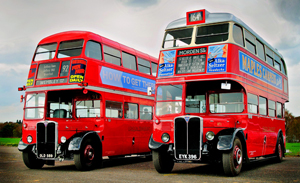
BusesAlmost 50 buses, from a horse-drawn model of the 1820s to the New Routemasters of today, will come to Regent Street on Sunday in celebration of the Year of the Bus. The ‘Regent Street Bus Cavalcade’ – which will stretch from Piccadilly Circus to Oxford Circus and will see the iconic West End street closed to traffic – will also feature a variety of free family events including Lego workshops (there will be a bus shelter and bus stop made entirely out of Lego outside Hamley’s toy shop), children’s theatre performances, a pop-up London Transport canteen and the chance to have a personal message recorded by the voice of London’s buses, Emma Hignett. There will also be an exhibition – Battle Bus – which provides information about the B-type bus (a newly restored version of which will be on display) which was used during World War I to carry soldiers to the frontline as well as ambulances and mobile pigeon lofts while jewellery company Tatty Devine will feature a special range of bus-inspired jewellery and hold jewellery-making workshops on board a London bus. The cavalcade, supported by the Regent Street Association and The Crown Estate, is part of Transport for London’s celebrations marking the Year of the Bus, organised in partnership with the London Transport Museum and the capital’s bus operators. The free event runs from 11.30am to 6pm. For more information, see www.tfl.gov.uk/yearofthebus and www.ltmuseum.co.uk.

A new exhibition of materials showing how people coped at home and on the front during World War I opens at the British Library in King’s Cross today as part of efforts to mark the war’s centenary. Enduring War: Grief, Grit and Humour features personal objects such as letters, a handkerchief bearing the lyrics of It’s A Long, Long Way to Tipperary, Christmas cards, school essays about airship raids over London sit and recruitment posters, humorous magazines and even a knitting pattern for balaclavas. Highlights include a letter in which Sir Arthur Conan Doyle expresses his concern over his son serving at the front, manuscripts by war poets such as Rupert Brooke as well as Wilfred Owen’s manuscript for Anthem for Doomed Youth, Vaughan Williams’ A Pastoral Symphony and Laurence Binyon’s For the Fallen. A specially commissioned video and ‘soundscape’, Writing Home, features personal messages contained on postcards written to and from the front. A range of events accompanies the free exhibition. Runs until 12th October. For more on the exhibition, see www.bl.uk.

Armoured knights on horseback can be seen jousting at Eltham Palace in south London this weekend. The former childhood home of King Henry VIII will host a Grand Medieval Joust which will also include displays of foot combat, the antics of a court jester, medieval music performances and a series of children’s events including a knight’s school. Runs from 10am to 5pm on both Saturday and Sunday. Admission charge applies. For more, see www.english-heritage.org.uk/events. Meanwhile, the Battle of Waterloo is being remembered at the Duke of Wellington’s home of Apsley House near Hyde Park Corner. Visitors will come face-to-face with Wellington’s troops and their wives, having the chance to take a look inside a soldier’s knapsack, see the equipment he used and the drills he performed as well as see the Battle of Waterloo recreated in vegetables. The Waterloo Festival – this year marks 200 years since Napoleon’s abdication and exile to Elba – runs from 11am to 5pm on Saturday and Sunday. Admission charge applies. For more, see www.english-heritage.org.uk/apsley/.

Nominations have reopened for English Heritage’s Blue Plaques scheme in London. In 2012 nominations were temporarily suspended while new funding for the scheme was found and thanks to one individual’s donation and the creation of a new Blue Plaques Club to support the scheme on an ongoing basis, they have now reopened. There are 880 official Blue Plaques on London’s streets – remembering everyone from Florence Nightingale to Fred Perry and Charles Darwin. For more and details on nominations, see www.english-heritage.org.uk/discover/blue-plaques/.

Send all items of interest for inclusion to exploringlondon@gmail.com.

LondonLife – ‘Belle’ and Kenwood House…

Belle3

Part of the history of Kenwood House in north London hits the big screen this week with the premiere of the film Belle.

The film, which opens on Friday, is inspired by the story of Dido Elizabeth Belle (played by Gugu Mbatha-Raw), the illegitimate daughter of Admiral Sir John Lindsay and a slave woman named Maria, who spent her childhood years at the property in the care of her great-uncle Lord Mansfield (played by Tom Wilkinson) in the second half of the 18th century.

The idea for film was apparently sparked when Belle‘s writer Misan Sagay saw a painting of Dido which hangs at Scone Palace in Scotland (a copy of the painting, which was formerly attributed to Johann Zoffany but is now unattributed, can be seen hanging in the Housekeeper’s Room at Kenwood).

Lauren Houlistan, English Heritage senior curator, says Dido grew up at Kenwood from about the age of five (about 1766) and seemed to have been considered one of the family.

She says that while Lord Mansfield was “very fond of her”, Dido’s position was, however, “lower than that of her white, legitimate cousin, Elizabeth – Dido was given a smaller allowance and is noted as only joining visitors after dinner”. Dido is known to have managed the dairy at Kenwood in 1779 and was described as “superintendent” over the daily and poultry yard (for more on Dido’s extraordinary life, see our earlier post here).

Kenwood House was undergoing restoration when the film was being made so scenes for the film set in the house were shot at various other English Heritage properties including Chiswick House and the Ranger’s House in Greenwich.

WHERE: Kenwood House, Hampstead Lane, Hampstead (nearest Tube stations are Golders Green and Archway/nearest train stations are Gospel Oak and Hampstead Heath); WHEN: 10am to 5pm daily; COST: Free; WEBSITE: www.english-heritage.org.uk/daysout/properties/kenwood/.

PICTURE: Gugu Mbatha-Raw stars as Dido Elizabeth Belle and Sarah Gadon Lady Elizabeth Murray and  in Belle. © Twentieth Century Fox.

Famous Londoners – Dido Elizabeth Belle…

Having had an extended May Bank Holiday, Exploring London returns with our usual coverage this week…

The subject of the new film Belle, the life of Georgian-era Dido Elizabeth Belle was nothing short of extraordinary.

Belle2Born in 1761, Belle was the illegitimate daughter of Admiral Sir John Lindsay and Maria Belle, an African woman who had apparently been captured from a Spanish ship when Havana was captured from the Spanish in 1762 (Lindsay had captained a ship in the fight).

Baptised at St George’s Church, Bloomsbury, in 1766, Lindsay subsequently sent Dido to live with his uncle William Murray, the Earl of Mansfield – Lord Chief Justice of England and Wales. Initially residing at the family house in Bloomsbury Square and later at Kenwood House in Hampstead, she was raised alongside her orphaned cousin Lady Elizabeth Murray who was also in the earl’s care.

She spent some 30 years living at the property and while her status remains something of a mystery, it is thought she was treated more as a companion to Lady Murray than a servant – indeed her familiarity with Lady Murray did prove somewhat shocking to some. Her presence in the house also led to some criticism of Lord Mansfield’s judgements in cases related to slavery.

Following the Earl of Mansfield’s death in 1793, Belle – who has acted as his secretary later in his life – was awarded £500 outright and a £100 annuity and had her freedom confirmed in Mansfield’s will. In December that year she married a Frenchman and gentleman’s steward (possibly at Kenwood House), John Davinier, at St George’s Hanover Square, London. The couple are believed to have had at least three sons and lived in Pimlico before Belle’s death in 1804. She was buried in St George’s Fields and her remains were later moved when the area was redeveloped in the mid-20th century.

A turbaned Belle is famously depicted in a portrait with Lady Murray which now hangs in Scone Palace at Perth in Scotland (property of the current Earl of Mansfield). The portrait was formerly attributed to Johann Zoffany but it’s now generally accepted it was not created by him.

Belle, which stars Gugu Mbatha-Raw as Belle, opens in the UK next month.

10 significant sites from Georgian London – 10. Wesley’s Chapel…

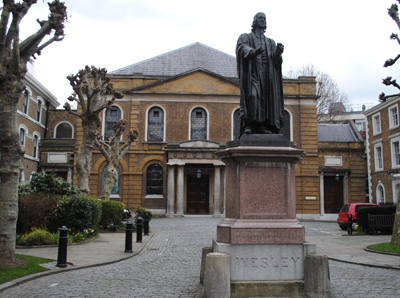
Wesley's-ChapelIt’s a church with a difference for the final entry in our Georgian series. Known as the “Cathedral of Methodism”, the Grade I-listed chapel on City Road in the Borough of Islington was first opened in 1778 just over the road from Bunhill Fields graveyard and remains in use today.

Methodism’s founder, John Wesley, had already established a London base in a former cannon foundry close by known as the Foundery when the fact the lease was expiring and plans for residential development of the area led him to look elsewhere for a headquarters for the Methodism movement (which he still then considered part of the Anglican Church).

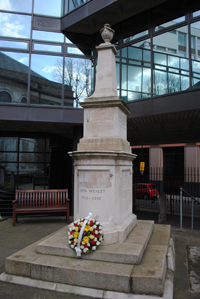
Wesley's-graveWesley approached the City of London for a new site and, following a massive fundraising effort, in April, 1777, the building’s foundation stone was laid. The architect for the new building was George Dance the Younger, then surveyor to the City of London, and the builder, a local preacher named Samuel Tooth.

The new chapel – which Wesley described as “perfectly neat, but not fine” – was opened on All Saints Day, 1778 – apparently Wesley spent the first 15 minutes of his sermon railing against the elaborate hats worn by female congregants.

The chapel last underwent a major restoration in the 1970s after it was found to be unsound and was reopened in 1978 in the presence of Queen Elizabeth II and the Duke of Edinburgh exactly 200 years after Wesley first opened it.

Inside the chapel – which features seats upon a gallery as well as the ground floor – features a ceiling said to have been the widest unsupported ceiling in England at the time it was built (the present one is a replica; the original had been damaged by fire in 1879).

The original pillars used in the chapel to support the gallery were ship’s masts from the naval dockyard at Deptford given as a gift from King George III – these were replaced during the centenary commemoration of Wesley’s death with pillars of French jasper in 1891 but a couple of originals can still be seen in the vestibule.

Memorials inside the chapel include those to John and Charles Wesley and early Methodists John Fletcher and Thomas Coke.

Next to the chapel is the house Wesley lived in during the last 11 years of his life (this can be visited – and we’ll cover it in more detail in a later post) and underneath it in the crypt is the Museum of Methodism – well worth a visit in its own right.

Wesley’s tomb (pictured) is located behind the east end of the church (accessed through the chapel) and outside the entrance to the chapel is a statue of Wesley. The grave of Susanna Wesley, mother of the Wesleys, can be found across the road in Bunhill Fields.

WHERE: Wesley’s Chapel, 49 City Road (nearest Tube station Old Street and Moorgate);  WHEN: 10am to 4pm Monday to Saturday (services Sunday – check website for details); COST: free but donations welcome; WEBSITE: www.wesleyschapel.org.uk.

10 significant sites from Georgian London – 9. Dr Johnson’s House…

In contrast to some of the grand homes we’ve featured as part of this series (and there are many more that we haven’t, meaning we might have a future series solely dedicated to them!), comes the rather more humble City home of lexicographer and renowned wit Samuel Johnson.

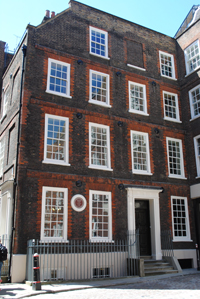
Gough-SquareThe brick townhouse at 17 Gough Square – which lies between Fleet Street and Holborn – was actually built in the late 17th century (before the Hanoverian accession) for wool merchant Richard Gough.

Johnson – who apparently had at least 17 different London residences – didn’t move in here as a tenant until 1748 and stayed for more than a decade until 1759 (seven years after the death of his wife – for more on Johnson, see our earlier ‘Famous Londoners’ post). It was during his tenancy here that he compiled his famous text, A Dictionary of the English Language. The first comprehensive English language dictionary, it was published in 1755.

The four level property, which is now a museum and has been set up as it was in Johnson’s day, was used by the writer as a residence as well as a workplace and the top floor garret is where six copyists worked transcribing the entries for the dictionary.

As well as the rather spectacular staircase, the property features furnishings from the period as well as portraits, prints and other Johnson-related memorabilia. There is a plaque which was placed on the exterior of the property by the Royal Society of Arts in 1876.

After Johnson vacated the premises, the property was used for various purposes including as a small hotel, B&B and a printer’s workshop. It had fallen into disrepair by the early twentieth century but was saved by MP Cecil Harmsworth who restored it and opened it to the public in 1914 (the small curator’s house was built after this). The house was damaged during World War II bombings – when it was used as a canteen by fireman – but survived. It is now operated by a charitable trust.

Outside the house in Gough Square is a statue of Johnson’s cat Hodge (see our earlier post here) and the property is only a short walk from the historic pub Ye Olde Cheshire Cheese (see our earlier post here).

WHERE: Dr Johnson’s House, 17 Gough Square (nearest Tube station Chancery Lane, Temple, Farringdon and Blackfriars);  WHEN: 11am to 5.30pm (May to September); COST: £4.50 adults/£1.50 children (5-17 years)/£3.50 concession/£10 family; WEBSITE: www.drjohnsonshouse.org

10 significant sites from Georgian London – 8. Marble Hill House…

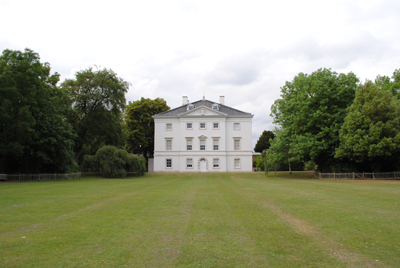
Marble-Hill-HouseA Palladian villa located on the bank of the Thames between Richmond and Twickenham, Marble Hill House was built in the mid to late 172os for Henrietta Howard, mistress of King George II and later Countess of Suffolk.

The symmetrical property – seen as a model for later Georgian-era villas in both England and overseas – was constructed by Roger Morris. He, along with Henry Herbert – a friend of the countess and later the 9th Earl of Pembroke – was also involved in its design as was Colen Campbell, architect to the Prince of Wales and future King George II, who is believed to have drawn up the first sketch designs for the house.

As well as being familiar with the work of neo-Palladian Inigo Jones, Lord Herbert had travelled in Italy and there is it believed had directly encountered the works of sixteenth century Italian architect Andrea Palladio whose architecture the property emulated (see our earlier post on Chiswick House here).

Key rooms include the ‘great room’ – a perfect cube, this is the central room of the house and boasts a wealth of gilded carvings; the dining parlour which had hand-painted Chinese wallpaper; and, Lady Suffolk’s rather sparsely furnished but nonetheless impressive, bedchamber.

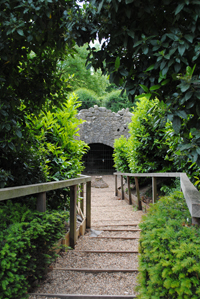
Marble-Hill-GrottoHoward, who as well as being a mistress of King George II both before and after his accession to the throne in 1727, was a Woman of the Bedchamber to his wife, Queen Caroline of Ansbach, and, as a result, initially spent little time at the property (which coincidentally was built using money the King had given her while he was still Prince of Wales).

But after she become the Countess of Suffolk in 1731 when her estranged husband Charles Howard became 9th Earl of Suffolk after his brothers’ deaths, Lady Suffolk was appointed Mistress of the Robes, and following the death of her husband in 1733, retired from court.

In 1735 following the end of her intimate relationship with the King, she married a second time, this time happily, to George Berkeley, younger brother of the 3rd Earl of Berkeley and an MP. Together the new couple split their time between a house in Savile Row and Marble Hill. Her husband died in 1746 and Lady Suffolk, who had come to be considered a very “model of decorum”, died at Marble Hill in 1767.

Among the visitors who had spent time at the property were poet and neighbour Alexander Pope (responsible for the design of the grounds along with royal landscape gardener Charles Bridgeman), writer and satirist Jonathan Swift, and, in Lady Suffolk’s later years, Horace Walpole – son of PM Sir Robert Walpole and builder of the Gothic masterpiece Strawberry Hill.

Following Lady Suffolk’s death, later residents of the property included another Royal Mistress – Mrs Fitzherbert, mistress to the future King George IV, Swedenborgian Charles Augustus Tulk and Jonathan Peel, brother of Sir Robert Peel (you can read more about Sir Robert Peel here).

Following the latter’s death, the house stood empty for many years before publication of plans for a redevelopment by then owner William Cunard caused a public outcry which saw the property pass into the hands of the London County Council around the year 1900.

The house opened to the public as a tea room in 1903 and remained as such until the mid-1960s when, now in the hands of the Greater London Council, it underwent a major restoration project and was reopened as a museum. In 1996, the house – which now stands on 66 acres and can be seen in a much lauded view from Richmond Hill – came into the care of English Heritage.

The grounds – Marble Hill Park – are open to the public for free and include a cafe located in the former coach house. Other features in the grounds include Lady Suffolk’s Grotto – pictured above – based on one at Pope’s residence nearby. It was restored after being rediscovered in the 1980s.

WHERE: Marble Hill House, Richmond Road, Twickenham (nearest Tub-e station is Richmond (1 miles) or train stations at St Margaret’s or Twickenham);  WHEN: Various times Saturday and Sunday – entry to the house by guided tour only; COST: £5.90 adults/£3.50 children (5-15 years)/£5.30 concession/£15.30 family; WEBSITE: www.english-heritage.org.uk/daysout/properties/marble-hill-house/.

10 significant sites from Georgian London – 7. Somerset House…

Somerset-House

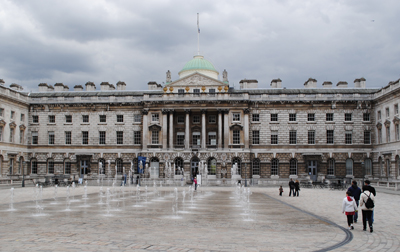
Constructed on the site of the Duke of Somerset’s Tudor-era mansion, Somerset House as we know it today owes its origins to a national scheme aimed at creating public buildings in London which would rival those of Continental cities.

The campaign led to the passing of an Act of Parliament in 1775 for the construction of a new public building at Somerset House to house government agencies such as the Navy Office, Salt Office, Surveyor General of Lands, the King’s Bargemaster and the offices of the Duchy of Lancaster and Cornwall as well as various learned societies.

The former building – which had been worked on by the likes of Sir Christopher Wren and which had been used as a residence for the likes of King Charles II’s queen, Catherine of Braganza, following his death, had fallen into a state of considerable disrepair and was demolished in 1775.

William Robinson, secretary of the Office of Works, was initially given the job of designing the new building (much to the discontent of some) but after his sudden death the same year, the task was given to Sir William Chambers, comptroller of the Office of Works and one of England’s leading architects.

The basic design was as it appears today – four ranges built around a central court (now named the Edmond J Safra Fountain Court). The Strand Block, located to the north and the most highly decorated of the buildings inside and out, was built first and largely completed by 1780, the Embankment Building (home of the Navy Office) in 1786 and the east and west ranges two years later.

When Chambers died with the work unfinished in 1796, it was carried to completion by James Wyatt and declared complete in 1801, despite the fact elements of Chambers’ design were still outstanding. It had cost more than £460,000, in excess of three times Robinson’s original estimate.

One of the first new occupants – thanks to a decision by King George III – was the fledgling Royal Academy of Arts (it had been one of the last occupants of the former premises) and its focal point was the Great Exhibition Room where exhibitions were held until 1836. Others in the new building included The Royal Society (it remained until 1837 when, like the RA, it moved to Burlington House) and the Society of Antiquaries (it moved to Burlington House in 1874).

As well as being home to various offices of the Navy Board (the southern building, where it was housed, contains the stunning, now restored, Nelson stair), Somerset House was also home to the Inland Revenue.

New additions were made to the original design in the nineteenth century – the extension of the south block to the east and addition of a New Wing to the west – and the construction of the Victoria Embankment (see our earlier post here) meant the two watergates Chambers had designed became landlocked. Somerset House no longer rose directly from the water as he’d intended but from a roadway (as it does today – we’ve mentioned this before but you can see the original riverbank by looking through the glass floor of the building’s Embankment entrance).

Somerset House is these days home to a range of cultural and artistic organisations – from the British Fashion Council to the National Youth Orchestra and, in the north wing, the Courtauld Institute of Art. And as well as hosting various art installations, the central courtyard is host to an ice-skating rink over winter.

For more on Somerset House, see www.somersethouse.org.uk.

Lost London – Montagu House…

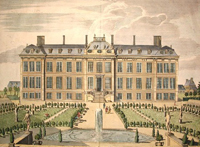
Montagu-HouseThe first home of the British Museum, Montagu House was originally built on what is now the site of the museum in Great Russell Street for courtier and diplomat Ralph Montagu, the 1st Duke of Montagu (among other titles), in the late 1670s.

The Bloomsbury property, which was designed by Robert Hooke and had both French and Dutch influences, had a central block and two service blocks built around a courtyard and featured murals by the Italian artist Antonio Verrio and wall paintings by Frenchman Jacques Rousseau.

In 1686, only a few years after it was completed, the house was gutted in a fire. But the duke had it rebuilt to the designs of French architect Pierre Pouget. It featured a prominent Mansard roof, had interiors created by French artists and formal, much admired, French-inspired gardens (see picture).

In the early 1700s, the 2nd Duke, John Montagu, relocated to the then more fashionable district of Whitehall where he constructed a more modest residence which was later replaced with a mansion.

In 1754, the now neglected Montagu House in Bloomsbury was sold to the trustees of the British Museum and both the gardens and house were restored. The museum, which was officially founded by an Act of Parliament in 1753, opened to the public in the property on 15th January, 1759, with free entry to “all studious and curious persons” (the gardens had opened two years earlier).

The collection was initially based on that of physician, naturalist and collector, Sir Hans Sloane (see our earlier post here), who has bequeathed the 71,000 objects he had collected to King George II (in return for a payment of £20,000 for his heirs).

Montagu House remained the museum’s home until it was replaced by the current museum building, designed by Sir Robert Smirke, which was completed in 1850s.

PICTURE: Wikipedia/James Simon c 1715

10 significant sites from Georgian London – 2. Burlington House…

Now the home of the Royal Academy of Arts, the origins of Burlington House on Piccadilly go back to the 1660s but it was Richard Boyle, the 3rd Earl of Burlington, who had the property reworked into the Palladian building it is today. 

It was Sir John Denham, Surveyor-General of the King’s Works for King Charles II, who first began building a red brick mansion on the site in the 1660s before he sold the still unfinished building to Richard Boyle, the 1st Earl of Burlington, in about 1667. He completed the house the following year.

Burlington-HouseThe property next underwent major changes during the minority of the 3rd Earl (also Richard Boyle, 1612-1698) – his mother, the 2nd Countess, Lady Juliana, had architect James Gibbs carry out some alterations including the addition of a semi-circular colonnade at the front of the house and reconfiguration of the main staircase.

But around 1717-1718, the 3rd Earl (1694-1753), who himself was something of an architect, commissioned architect Colen Campbell to take over from Gibbs. The property was then reworked to a Palladian design – particularly the southern front of the building and William Kent was summoned to redesign interiors – the surviving interior of the Saloon is credited as the first ‘Kentian’ interior in England.

Lord Burlington soon shifted his attention to Chiswick House (see our earlier post here), and on his death in 1753, the house passed to the Dukes of Devonshire before it was eventually purchased by the 4th Duke’s younger son, Lord George Cavendish, around 1812. He had some of the interiors reworked by Kent admirer Samuel Ware, keeping them sympathetic to the Palladian vision.  Four years after the purchase, Burlington Arcade was built along the western side of the premises.

In 1854, the property was sold to the British Government who initially intended demolishing the structure and using the site for the University of London but after strong opposition to the plan, it was occupied by the Royal Society, the Linnean Society and the Chemical Society while the Royal Academy – which had been founded by King George III in 1768 – took over the main block on a 999 year lease in 1867.

The building subsequently underwent further alterations – among them Sidney Smirke added a third floor to the main building – the Diploma Galleries – and the Main Galleries and the Art School on a garden to the north of the house. Later, three story ranges were raised around the courtyard and the three aforementioned learned societies moved into these and were later joined by the Geological Society of London, the Royal Astronomical Society and the Society of Antiquities.

The Royal Society left in 1968 and the British Academy moved in but this august institution moved out in 1998, leaving the building now home to the Royal Academy and the five learned societies, the Geological Society of London, the Linnean Society of London, the Royal Astronomical Society, the Society of Antiquaries of London, and the Royal Society of Chemistry.

More recent works at the property – the last survivor of four townhouses built along Piccadilly in the 1660s – have included a 1991 remodelling of the Diploma Galleries by Norman Foster – now known as The Sackler Wing of Galleries – and the restoration of the former state rooms including The Saloon, reopened as the John Madejski Fine Rooms.

WHERE: Royal Academy of Arts, Burlington House, Piccadilly (nearest Tube stations are Piccadilly Circus and Green Park);  WHEN: 10am to 6pm Saturday to Thursday/10am-10pm Friday (opening times for the John Madejski Fine Rooms may vary); COST: Varies depending on the exhibition (there are free guided tours of the John Madejski Fine Rooms – check the website for details); WEBSITE: www.royalacademy.org.uk

PICTURE: Installation by Ãlvaro Siza, part of the Sensing Spaces: Architecture Reimagined exhibition which runs until 6th April. Photo: Royal Academy of Arts. Photography: James Harris/Ãlvaro Siza 

What’s in a name?…Holland Park…

Holland-House2

This name lends itself both to a 55 acre park and the abutting area in the Royal Borough of Kensington and Chelsea in inner west London.

Both take their name from Holland House, a Jacobean mansion which started life as Cope Castle – the home of Sir Walter Cope, Chancellor of the Exchequer for King James I – but changed its name to Holland House when it was the property of Henry Rich, Cope’s son-in-law and the 1st Earl of Holland (Rich ended up being executed for his support of the Royalists in the Civil War). For more on the house – the remains of which can still be seen in the park – see our earlier post here.

The surrounding area became known as the abode of artists in the late 19th century – including Frederic Leighton, whose magnificently decorated house (now known as the Leighton House Museum) you can visit at 12 Holland Park Road, so much so that they became known as the Holland Park Circle.

Today the area is one of London’s most exclusive residential districts and contains a number of embassies. The streets include the Grade II*-listed Royal Crescent, designed in 1839 by Robert Cantwell in imitation of the more famous Royal Crescent in Bath.

Notable buildings include the 18th century Aubrey House (formerly known as Notting Hill House), located in the Campden Hill area (one of the most expensive parts of London for residential real estate), which was named by Aubrey de Vere who held the manor of Kensington at the time of the Domesday Book, and stands on the site of a former spa called Kensington Wells. At the end of the 1990s, it was reportedly thought to be London’s most expensive home.

PICTURE: Part of the restored Holland House, now a youth hostel.

10 significant sites from Georgian London – 1. Chiswick House…

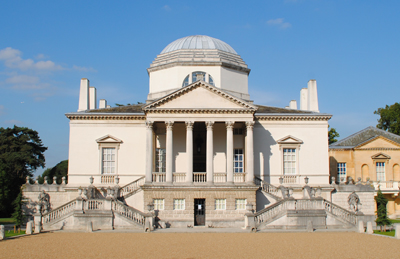
Chiswick-HouseAn icon of the Georgian era, Chiswick House in west London is one of the pre-eminent examples of neo-Palladian architecture in Britain and exemplifies the elegance of the time.

Designed by Richard Boyle, the third Earl of Burlington (1694-1753), the two storey, domed villa was inspired by what Lord Burlington had seen of ancient and sixteenth century architecture during his tours of Italy – in particular the work of Andrea Palladio – as well as the work of Palladio admirer, famed English architect Inigo Jones (his statue along with that of Palladio can be seen outside),

Chiswick-House2It was constructed in the 1720s, most likely between 1727 and 1729, on a site which had been purchased by the first Earl of Burlington (his grandfather) in 1682 and which was already occupied by a Jacobean-era house (this property, which the third Earl significantly renovated, was eventually pulled down in 1788). The interiors were designed by William Kent in collaboration with Burlington and feature luxurious rooms with velvet-covered walls such as the magnificently restored Blue Velvet Room.

The exact purpose of the property remains something of a mystery – it’s been suggested it was built to as a pavilion for private contemplation, grand entertainments and to house the Earl’s art collection and the fact it had no kitchen is supportive of such a conclusion. But there is evidence it was also used as a functioning house – the fact Lady Burlington died in her bedchamber in the premises in 1758 and the link which was eventually built by Lord Burlington between it and the older property on the estate are suggestive of this.

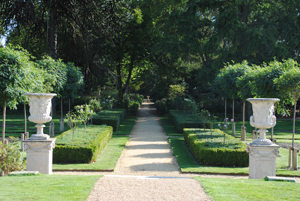
Chiswick-House3Whatever its purpose, the architectural and artistic masterpiece was complemented by formal gardens which Lord Burlington, again, along with the aid of Kent, extensively altered to create a highly planned but naturalistic-looking landscape. Known as the “birthplace of the English Landscape Movement”, the gardens have influenced everyone from ‘Capability’ Brown to the design of New York City’s Central Park.

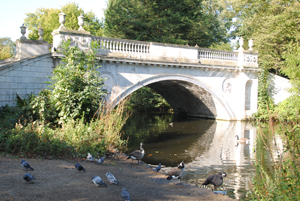
Following Lord Burlington’s death in 1753, the house passed into the hands of his grandson, the fifth Duke of Devonshire (his wife was the rather infamous Duchess Georgiana). He extended the house into a large mansion, adding new wings (these weren’t removed until the 1950s) and improved the gardens, adding the stone bridge (pictured) that still stands over the lake.

Upon the fifth Duke’s death in 1811, the house passed into the hands of the sixth Duke, known as the ‘Bachelor Duke’. He made considerable use of the property and guests included Tsar Alexander I of Russia, King Fredrick William III of Prussia, Queen Victoria and Prince Albert, and Tsar Nicholas I (again, of Russia). The Bachelor Duke also extended the grounds and brought a range of exotic animals into them, including an elephant, kangaroos and emus.

Upon his death in 1858, he left the property to his sister and after her death only four years later, it was subsequently let to some rather high-brow tenants including the Prince of Wales who received the Shah of Persia there in 1873,

The estate was eventually sold by the ninth Duke to the Middlesex County Council and after the war, gifted to the Minister of Works. In 1984, care for the house was transferred to English Heritage. The gardens are now owned by the London Borough of Hounslow.

Along with the Chiswick House and Gardens Trust, English Heritage recently completed a £12 million restoration of the gardens which, this year will host the fourth annual Camellia Festival next month. But this stunning property is well worth a visit any time of the year.

WHERE: Chiswick House, Burlington Lane, Chiswick (nearest Tube station is Turnham Green/nearest train station is Chiswick);  WHEN: 10am to 4pm Saturday and Sunday (until 31st March); COST: £5.90 adults/£3.50 children (5-15 years)/£5.30 concession/£15.30 family; WEBSITE: www.english-heritage.org.uk/daysout/properties/chiswick-house/ or www.chgt.org.uk.