• Festive Fayre returns to Hampton Court Palace this weekend with visitors having the chance to do some Christmas shopping, sample some festive treats and enjoy live music. The festival, which runs from Friday to Sunday, takes place ahead of the launch of the palace’s Christmas light trail – Palace of Light – next Wednesday (7th December). Inspired by Henry VIII’s heraldic beasts, it features an array of installations, ranging from a sea-monster lurking in the Great Fountain Garden to polka-dot panther lanterns in the Wilderness. Created by the award-winning outdoor event producers Wild Rumpus, the light trail can be visited until 2nd January. For more, see www.hrp.org.uk/hampton-court-palace/.
• The V&A has unveiled its couture Christmas Tree installation for this year – a work by London-based Korean fashion designer Miss Sohee. On display in the Cromwell Road Grand Entrance, the installation reimagines the traditional Christmas tree as a three metre long couture gown, which combines Sohee’s signature style of vibrant silhouettes and intricate embroidery with religious statuary found around the museum. The installation can be seen until 5th January. For more, see www.vam.ac.uk.
• On Now – Tiny Traces: African & Asian Children at London’s Foundling Hospital. This exhibition at The Foundling Museum in Bloomsbury explores the newly discovered stories of African and Asian children in the care of the hospital in the 18th century, following the stories of more than a dozen children through personal items, physical artefacts, works of art and archival documents. In a parallel thread, works of art by artists including Zarina Bhimji, Hew Locke, Kehinde Wiley, Alexis Peskine, Deborah Roberts and Shanti Panchal form a dialogue with the historic narratives. Admission charge applies. Runs until 19th February. For more, see https://foundlingmuseum.org.uk.
• The Tower of London is getting into the festive spirit with a celebration of the Twelve Days of Christmas. Twelve installations have been installed at the Tower, each representing as different aspect of the fortress’s unique history – from nine wreaths representing “nine rowdy ravens” to five gold coins representing the Mint once housed there. There’s also the six Queens of King Henry VIII and three “lordly lions” – a reference to a gift presented to King Henry III and housed in a Lion Pit at the tower. Visitors will have the chance to collect a map at the start of their visit and follow a trail to find the installations at they explore the Tower. Christmas at the Tower of London runs daily until 3rd January. Admission charge applies. For more, see www.hrp.org.uk/tower-of-london/.
• The Museum of London is preparing to close its doors at its London Wall site as it moves to its new location in Smithfield and to celebrate it’s holding two free weekend festivals. The first, to be held this weekend, will feature family-friendly activities including arts and crafts, dance, face painting and theatrical performances while the second, to be held on the weekend of 3rd and 4th December (after which the museum will close), will feature a celebration of London’s music scene from the 70s to the present day with a DJ sets, a late night film festival and museum’s first ever 24 hour opening. Visitors on both weekends can also take part in London Biggest Table Football competition for a chance to win an England shirt signed by Harry Kane and to see the museum’s collection in a new light thanks to an illuminated display. For more on the festivals, see www.museumoflondon.org.uk/museum-london.
• Now On: Blood and Battle:Dissecting the life of William Beatty. The life and work of renowned 19th-century naval surgeon and physician, Sir William Beatty, is explored in this exhibition at the Old Royal Naval College in Greenwich. The display – which marks 200 years since Beatty, who had served as ship’s surgeon on HMS Victory during the Battle of Trafalgar (and who wore the musket ball that killed Nelson in a locket on his watch chain for the rest of his life afterwards) – took up the post of Physician to the Royal Hospital for Seamen – explores Beatty’s work as a ship’s surgeon, his time at Greenwich Hospital and how he was honoured by being knighted and appointed Physician Extraordinary to George IV and the Duke of Clarence (later William IV) as well as his outside interests including his involvement in developing the London – Greenwich Railway. Admission charge applies. For more, see https://ornc.org.
Send all items for inclusion to exploringlondon@gmail.com.
• Christmas returned to Kew this week with the launch of its 10th festive light trail. This year’s display features some past favourites as well as new light installations including Feathers by Pyrite Creative which features 16 floating UV feathers which sway in the breeze, LuminARTi’s Willow Hives which illuminate natural forms, and Illusion Hole by UxU Studio, a geometrically arranged pattern situated on the lake which presents visitors with an optical illusion in which water formed by light appears to flow into an unknown abyss. The popular Fire Garden has returned along with the Christmas Cathedral and a series of breath-taking projections dance across the surface of the Palm House and adjacent lake, set to a memorable soundtrack of much-loved Christmas classics. The display can be seen until 8th January. Admission charge applies. For more, see www.kew.org/christmas.
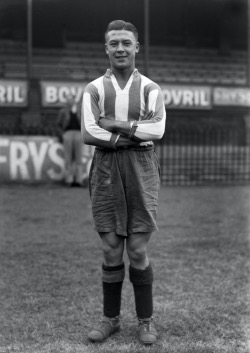
Frank Soo at the Victoria Ground, Stoke, 1933. PICTURE: The Sentinel & StokeonTrentLive
• A free exhibition exploring British Chinese communities and culture opens at the British Library tomorrow.Chinese and British celebrates the lasting impact of Chinese communities in the UK and presents personal stories and artefacts. Highlights include a hand-drawn map of China by Shen Fuzong – the first recorded Chinese person to visit the UK in 1687, a detailed doll’s house model of a Chinese takeaway, Ling Shuhua’s 1953 autobiography, Ancient Melodies, which was dedicated to Virginia Woolf who offered advice on drafts of her memoir, a fan made of bamboo slats and paper from mulberry bark in Hangzhou and pair of hand-embroidered shoes belonging to Kathy Hall, a London-based practitioner of traditional Chinese opera. There’s also trench art produced by Chinese Labour Corps workers during World War I, cigarette cards featuring Frank Soo, the first player of Chinese origin to play in the English Football League, and Rosanna Lee’s 2022 film Parallel whichfollows a family during their weekly ritual of going out for dim sum at the Pearl Dragon restaurant in Southend-on-Sea. The exhibition can be seen until 23rd April. For more, see www.bl.uk.
• On Now:The Horror Show!: A Twisted Tale of Modern Britain. This display at Somersert House, divided into three acts – ‘Monster’, ‘Ghost’ and ‘Witch’, explores how exploring how ideas rooted in horror have informed the last 50 years of creative rebellion, looking beyond horror as a genre and instead “taking it as a reaction and provocation to our most troubling times”. The display features more than 200 artworks and culturally significant objects including Chila Burman’s If There is No Struggle, There is no Progress – Uprising (1981), Derek Jarman’s last feature and magnum opus, Blue (1993), and a striking presentation of Turner Prize winning-artist Tai Shani’s The Neon Hieroglyph (2021). Admission charges apply. Runs until 19th February. For more, see somersethouse.org.uk.
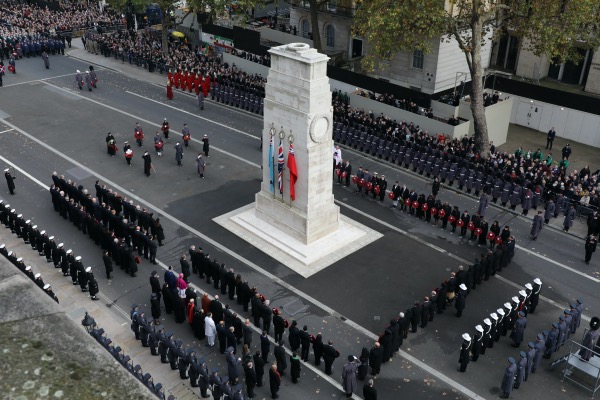
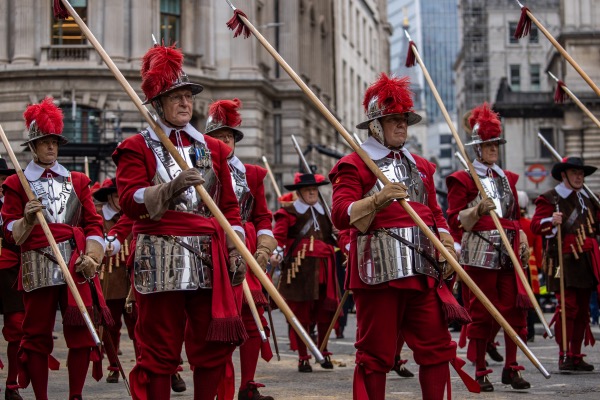
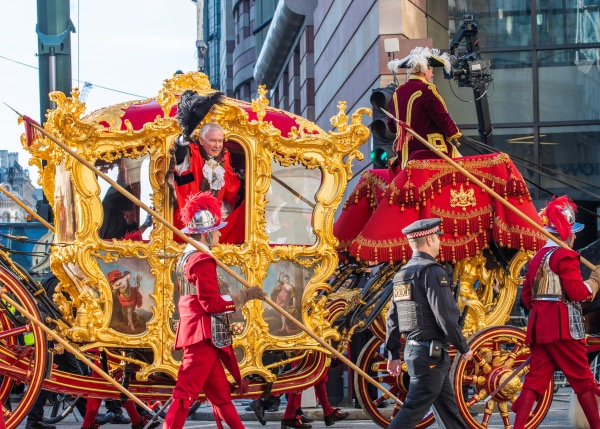
• The Lord Mayor’s Show will be held this Saturday, 12th November, welcoming the 694th Lord Mayor of London, Alderman Nicholas Lyons, into office. The Show, which dates back to the early 13th century, features more than 6,500 people, 250 horses and more than 130 floats as well as the golden State Coach which has been used to carry the Lord Mayors since as far back as 1757 and is said to be the oldest ceremonial vehicle still in regular use anywhere in the world. The three mile long procession will start passing by Mansion House at 11am and make its way to St Paul’s Cathedral and then head on to the Royal Courts of Justice where the Mayor will swear an oath of allegiance to the monarch, before returning along the Embankment and Victoria Street to Mansion House. For more on the history of the Show and details about the best places to stand, head to https://lordmayorsshow.london.
• The original headquarters of Mass-Observation, a pioneering social research organisation, has been marked with an English Heritage Blue Plaque. The organisation started its worked at the property 6 Grotes Buildings in Blackheath from 1937 until 1939 – by the end of its first year there were around 600 ‘mass observers’ involved in the work, one of the key aims of which was to gauge public opinion on a range of issues to help enable the writing of “a democratic people’s history from below”. During World War II, Mass-Observation worked on behalf of the government and morphed into a market research company in 1949, Mass Observation Ltd, before being incorporated into the British Market Research Bureau. The project was restarted in 1981 at the University of Sussex and continues to this day. For more on English Heritage Blue Plaques, see www.english-heritage.org.uk/visit/blue-plaques/.
• A collection of about 100 modern and contemporary artworks on paper have gone on show at the British Museum, part of a larger gift of works donated by London-based art collector Hamish Parker. Art on paper since 1960: the Hamish Parker collection features works by works by the likes of British artist Lucian Freud, French-Israeli artist Avigdor Arikha, American artist Richard Serra and Pakistani artist Imran Qureshi. There are also two “artist in focus” sections which take a more in-depth look at the work of American artists Carroll Dunham and Al Taylor. Runs until 5th March in Gallery 90. For more, see www.britishmuseum.org.
Send all items for inclusion to exploringlondon@gmail.com
A previous Bonfire Night in London. PICTURE: teo73/iStockphoto
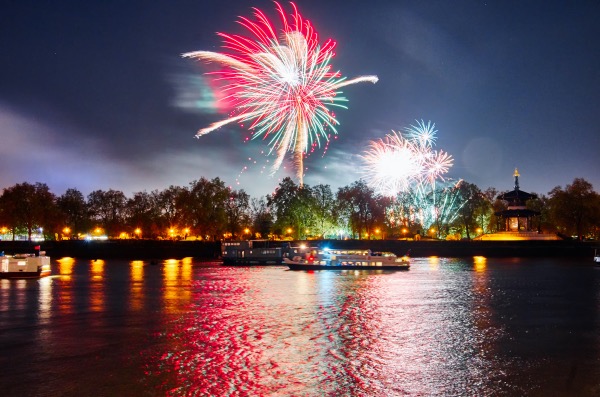
• “Remember, remember, the 5th of November…” It’s Bonfire Night this Saturday night and fireworks displays will be held across London with key displays at Alexandra Palace, Battersea Park and Wimbledon Park. Rather than list them all here, Visit London has put together a handy guide which you’ll find here.
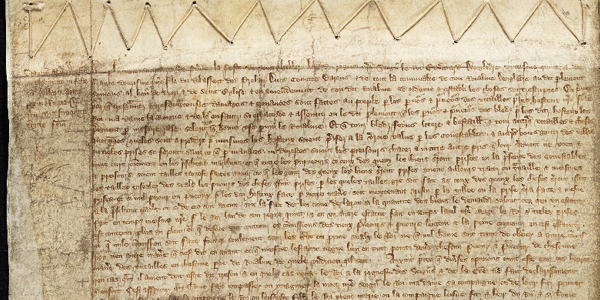
A section of the Treason Act. PICTURE: Courtesy of The National Archives (Open Government Licence)
• What did the abolition of the transatlantic slave trade, the establishment of the Church of England, the creation of the United States of America and the extension of UK voting rights have to do with acts of treason? Treason: People, Power & Plot, a new exhibition at The National Archives in Kew, examines the role treason has played across the span of 700 years of history. On display will be the original Treason Act, passed in 1352 during the reign of King Edward III (pictured), and the Monteagle Letter – which suggested the recipient should not attend parliament on 5th November, 1605 (effectively tipping them off about the Gunpowder Plot) as well as Guy Fawkes’ confession, a document containing the charges levelled against King Henry VIII’s ill fated wife, Anne Boleyn, and the United States’ Declaration of Independence. Accompanying the display will be a range of online and on-site events. The free exhibition opens on Saturday and runs until 6th April. For more, see www.nationalarchives.gov.uk/treason/.
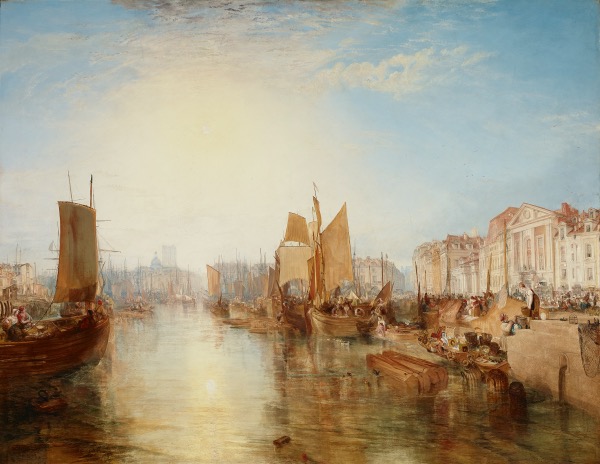
Joseph Mallord William Turner (1775 – 1851) The Harbor of Dieppe, 1826 oil on canvas 68 3/8 in. x 88 3/4 in. (173.67 cm x 225.43 cm) Henry Clay Frick Bequest. Accession number: 1914.1.122
• Two ground-breaking JMW Turner paintings – Harbour of Dieppe: Changement de Domicile and Cologne, the Arrival of a Packet-Boat: Evening – have returned to the UK for the first time in more than 100 years as part of a new exhibition at The National Gallery. The Turner on Tour exhibition looks at the artist’s life-long fascination with ports and harbours and highlights the regular sketching tours he took within Europe that were central to his fame as an artist-traveller, as well as his “radical approach to colour, light and brushwork”. The two paintings, which have not been since in the UK since 1911, were exhibited in New York in 1914 at the Knoedler Gallery. They were subsequently acquired by the American industrialist Henry Clay Frick and have remained in the United States ever since but are now being generously lent by The Frick Collection. Can be seen until 19th February in Room 46. Admission is free. For more, see nationalgallery.org.uk.
• On Now: Science Fiction: Voyage to the Edge of Imagination. This exhibition at the Science Museum in South Kensington features more than 70 objects and uncovers connections between significant scientific innovations and celebrated science fiction works. On display is classic literature that has inspired new understandings of the world as well as set-pieces and props from iconic films and TV – everything from a Lieutenant Uhura costume from Star Trek: The Motion Picture, to the Dalek from Doctor Who and a Darth Vader helmet created for Star Wars: Episode V – The Empire Strikes Back. There are also contemporary artworks from across the globe that explore alternative futures for humanity. The exhibition is accompanied by an events programme. Runs until 4th May. Admission charges apply. For more, see sciencemuseum.org.uk/science-fiction.
Send all items for inclusion to exploringlondon@gmail.com
• The glittering world of musical theatre is at the centre of a new exhibition which opened at the V&A in South Kensington recently.Re:Imagining Musicals showcases some 100 objects, most being displayed for the first time, with highlights including Paul O’Grady’s Miss Hannigan costume from Annie, new costume acquisitions from SIX the Musical, Everybody’s Talking About Jamie, Moulin Rouge! The Musical, Company, and A Chorus Line, the rarely displayed beaded gown designed by Cecil Beaton which was worn by Julie Andrews in My Fair Lady in 1958; the toy Olaf puppet from Frozen the Musical, and an original poster from the off-Broadway premiere of Hamilton signed by the cast and creatives. There’s also a 1965 original cast recording of Hello Dolly! signed by Carol Channing, Bunny Christie’s Olivier and Critics’ Circle award winning costume design, model and costume for Rosalie Craig as Bobbie in the 2019 West End revival of Company and Shakespeare’s first folio, which celebrates its 400th anniversary in 2023. The free display can be seen in the Theatre and Performance Galleries until 27th November, 2023. For more, see www.vam.ac.uk/exhibitions/reimagining-musicals.
• Visitors to Hampton Court Palace and the Tower of London are being invited to explore some of the properties’ spookiest stories in the lead-up to Halloween. Until 30th October, visitors to Hampton Court are able to explore the stories of everyone from King James I to tormented wives to Tudor trumpeters with special effects including mystical projections and eerie sound effects. Meanwhile, until 31st October, visitors can follow in the footsteps of infamous prisoners at the Tower of London with “spooky decorations, spine-tingling sound effects, and rooms transformed to tell terrifying tales about past inhabitants” while ghostly figures such as the Welsh Prince Gruffydd ap Llywelyn and King Henry VIII’s ill-fatded wife Anne Boleyn wander the grounds. Admission charges apply. For more, see www.hrp.org.uk.
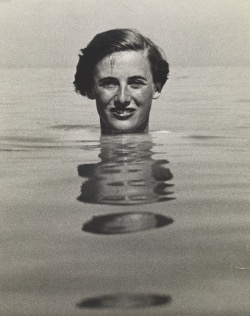
• The work of British photographer Bill Brandt (1904-83) is the subject of a new exhibition at Tate Britain on Millbank. Bill Brandt: Inside the Mirror features 44 original photographs from across his career are displayed alongside the magazines and photobooks in which these images were most often seen. Brandt was first known as a photojournalist, renowned in the 1930s for his observations of British life, and later for his landscapes, portraits and nudes. Highlights include Woman Swimming (pictured), Hail, Hell & Halifax and his handmade photobook ‘A Dream’ – which is being exhibited for the first time. Runs until 15th January. Admission is free. For more, see tate.org.uk.
Send all items for inclusion to exploringlondon@gmail.com.
Rishi Sunak was appointed as the nation’s third Prime Minister in less than two months today following Liz Truss announcement she would resign on Friday. Sunak visited King Charles III at Buckingham Palace after Truss visited earlier to officially resign.
As the nation awaits the announcement of new Prime Minister following the 48 day tenure of Liz Truss – the shortest of any British Prime Minister, we take a quick look at the circumstances surrounding the next three shortest serving PMs…
1. George Canning. Canning, a Tory, had twice served as Foreign Secretary – between 1807-1809 and 1822-1827 (a period during which he also served as Leader of the House of Commons) when, following the resignation of Prime Minister Lord Liverpool in April, 1827, he was chosen to succeed him in the office. But Canning’s health took a turn for the worse soon after and he died in office on 8th August, 1827, having served just 119 days as Prime Minister.
2. The Viscount Goderich. FJ Robinson, 1st Viscount Goderich, succeeded George Canning as Prime Minister in 1827. But he was unable to hold together Canning’s coalition of Tories and Whigs and so resigned himself after just 144 days in office. He nonetheless went on to serve in the cabinets of both Earl Grey and Sir Robert Peel.
3. Andrew Bonar Law. The only Canadian to have served as British Prime Minister, Law was a Conservative Party leader who became Prime Minister after the fall of David Lloyd George’s Coalition Government on 23rd October, 1922. The party then won a clear majority in a general election on 15th November of that year. But ill with throat cancer he resigned on 20th May the following year, having served just 211 days in office. He died soon after on 30th October that year.
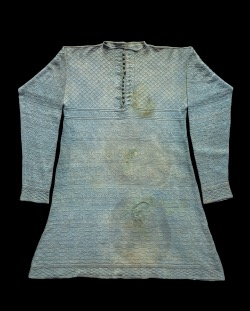
• The history of public executions in London – spanning a period of some 700 years – is the subject of a landmark new exhibition at the Museum of London Docklands in West India Quay. Executions explores how capital punishment became embedded in the city’s landscape – from the first recorded public execution in 1196 to the last in 1868 – and looks at the rarely told and often tragic human stories behind them. Items on display include an intricately woven silk vest said to have been worn by King Charles I at his execution outside the Banqueting House (pictured), a 300-year-old bedsheet embroidered with a love note in human hair and personal items which once belonged to prison reformer Elizabeth Fry. Visitors can also stand in front of the Newgate Prison door, marking the last steps for prisoners heading to the scaffold, and see a dramatic recreation of the Tyburn “Triple Tree” gallows. Visitors will also learn about the 200 offences that became punishable by death and the spectacle and rituals of execution days as well as what led celebrity criminals to the gallows. Admission charge applies. Runs until 16th April next year. For more, see https://www.museumoflondon.org.uk/museum-london/whats-on/exhibitions/executions.
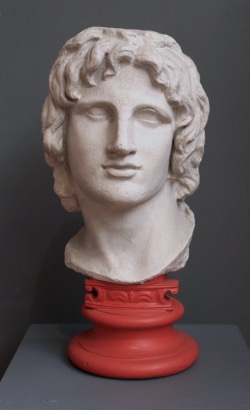
• The first exhibition exploring the rich history of story-telling around one of the most famous figures of the ancient world – Alexander the Great – opens at the British Library tomorrow. Alexander the Great: The Making of a Myth features almost 140 exhibits from 25 countries including astrological clay tablets, ancient papyri and medieval manuscripts as well as comics, films and video games. It reveals how Alexander’s character has been adapted and appropriated by different cultures and religions, with conflicting interpretations. Runs until 19th February. Admission charge applies. A season of in-person and online events accompanies the exhibition. For more, see www.bl.uk/events/alexander-the-great-the-making-of-a-myth.
• Portraits of the Euro 2020 England men’s football squad and its manager, Gareth Southgate, will be shown at the City of London Corporation’s Guildhall Art Gallery from today. The free exhibition, This is England, features the most successful men’s national team – finalists in Euro 2020 – since the winners of the World Cup in 1966, from Harry Kane and Jude Bellingham to Bukayo Saka and Raheem Sterling. The paintings are the work of artist Matt Small and were commissioned by the FA and exhibited at the St George training ground during the Euro 2020 finals. The paintings can be seen until 19th February. For more, see www.cityoflondon.gov.uk/events/this-is-england.
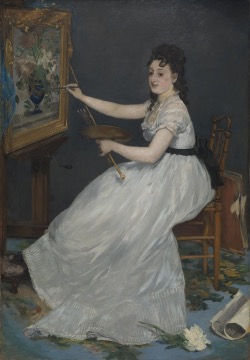
Edouard Manet, ‘Eva Gonzalès’, 1870
• Édouard Manet’s 1870 portrait of Eva Gonzalès is the subject of a new exhibition at The National Gallery opening on Friday. The painting was considered by the early 20th century to be the most famous modern French painting in the UK and Ireland. The exhibition, the first in a new series of ‘Discover’ exhibitions to be staged in the Sunley Room with the aim of exploring well-known paintings in the collection through a contemporary lens, examines the lifelong artistic dialogue and the complexities of the friendship and mentorship between Manet and Gonzalès, his only formal pupil. It also looks at the broader context of female self portraits from the 18th to early 20th centuries, alongside portraits of women artists by male friends, husbands, and teachers The free exhibition includes works by Eva Gonzalès, Elisabeth Louise Vigée Le Brun, Edouard Manet, Berthe Morisot, Alfred Stevens and Laura Knight. Runs until 15th January. For more, see www.nationalgallery.org.uk/exhibitions/discover-manet-eva-gonzalès.
Send all items for inclusion to exploringlondon@gmail.com.
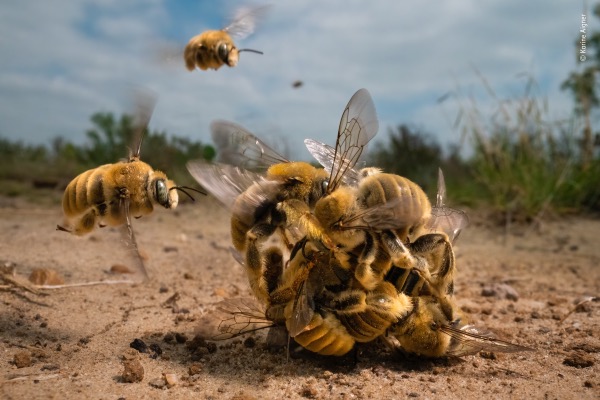
‘The Big Buzz’ by Karine Aigner, USA, winner of Wildlife Photographer of the Year.
An up-close image of a buzzing ball of cactus bees over the hot sand at a Texas ranch has won American photographer Karine Aigner the honour of Wildlife Photographer of the Year. The image depicts male bees as they compete for the attention of the single female bee at the centre of the ball. Aigner is the fifth woman to win the Grand Title award in the 58 year history of the competition, which is run by the Natural History Museum. Her image is being shown along with that of 16-year-old Thai Katanyou Wuttichaitanakorn – who won Young Wildlife Photographer of the Year for an up-close image of a whale’s baleen – as well as those of category winners in this year’s contest in a redesigned exhibition at the museum in South Kensington. Alongside the photographs, the display features short videos, quotes from jury members and photographers and insights from museum scientists on how human actions continue to shape the natural world. The exhibition can be seen until 2nd July. Admission charge applies. For more, see www.nhm.ac.uk/visit/exhibitions/wildlife-photographer-of-the-year . The 59th annual competition is now open for entries. For more on how to enter, see www.nhm.ac.uk/wpy/competition.
‘The Beauty of Baleen’ by Katanyou Wuttichaitanakorn, Thailand, winner of Young Wildlife Photographer of the Year.
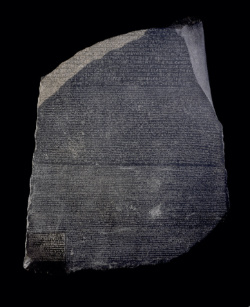
• Marking 200 years since French Egyptologist Jean-Francois Champollion (1790-1832) was able to decipher hieroglyphs using the Rosetta Stone, a new exhibition opening at the British Museum explores how the stone and other inscriptions and objects helped scholars unlock one of the world’s oldest civilisations.Hieroglyphs: unlocking ancient Egypt centres on the Rosetta Stone but also features more than 240 other objects, many of which are shown for the first time. Alongside the Rosetta Stone itself, highlights include: “the Enchanted Basin”, a large black granite sarcophagus from about 600 BCE which is covered with hieroglyphs and images of gods; the richly illustrated, more than 3000-year-old Book of the Dead papyrus of Queen Nedjmet which measures more than four metres long; and the mummy bandage of Aberuait, a souvenir from one of the earliest ‘mummy unwrapping events’ in the 1600s where attendees each received a piece of the linen, preferably inscribed with hieroglyphs. There’s also the personal notes of key figures in the race to decipher hieroglyphs including those of Champollion which come from the Bibliothèque nationale de France as well as those of England’s Thomas Young (1773 – 1829) from the British Library. The exhibition can be seen in the Sainsbury Exhibition Gallery until 19th February. Admission charge applies. For more, see britishmuseum.org/hieroglyphs.
• King Charles III will be crowned at Westminster Abbey on 6th May next year, Buckingham Palace has announced this week. The Queen Consort, Camilla, will be crowned alongside him in the first such coronation since 12th May, 1937, when King George VI and Queen Elizabeth were crowned in the abbey. The ceremony, which will be conducted by the Archbishop of Canterbury, will, according to the palace, “reflect the monarch’s role today and look towards the future, while being rooted in longstanding traditions and pageantry”. King Charles III is expected to sign a Proclamation formally declaring the coronation date at a meeting of the Privy Council later this year. The first documented coronation at Westminster Abbey was that of King William the Conqueror on 25th December, 1066, and there have been 37 since, the most recent being that of Queen Elizabeth II on 2nd June, 1953.
• A new dark comedy, The Admiral’s Revenge, has opened in The Admiral’s House in the Old Royal Naval College, Greenwich. The play, set in 1797, features sea shanties, puppetry and follows a crew of shipmates in the wake of the ill-fated Battle of Tenerife. Audiences have the chance to explore the Admiral’s House before the show and enjoy a complimentary rum cocktail. Runs until 12th November. For ticket prices, head to https://ornc.org/whats-on/1797-the-mariners-revenge/.
• A new exhibition exploring Charles Dickens’ interest in the paranormal has opened at the Charles Dickens Museum in Bloomsbury.To Be Read At Dusk: Dickens, Ghosts and the Supernatural explores Dickens’ famous ghost stories, including A Christmas Carol, and reveals his influence on the genre. Highlights include a copy of The Chimes which Dickens gifted to fellow author Hans Christian Anderson, original John Leech sketches of Dickens’ ghosts of the past, present and future and original tickets and playbills relating to the author’s public performances of his ghost stories. The display will also look into Dickens’ own views on the supernatural as a fascinated sceptic and includes correspondence in which he was asking about the location of a supposedly haunted house. Runs until 5th March. Admission charge applies. For more, see https://dickensmuseum.com/blogs/all-events/to-be-read-at-dusk-dickens-ghosts-and-the-supernatural.
Paul Cezanne, Mont Sainte-Victoire (1902-6)/Philadelphia Museum of Art. Gift of Helen Tyson Madeira, 1977.
• A “once-in-a-generation” exhibition of Paul Cezanne’s paintings, watercolours and drawings opened at the Tate Modern this week.The EY Exhibition: Cezanne features around 80 works including key examples of his iconic still life paintings, Provençale landscapes, portraits and bather scenes. There are also more than 20 works which have never been seen in the UK before including The Basket of Apples (c1893, from the The Art Institute of Chicago), Mont Sainte-Victoire (1902-06, from the Philadelphia Museum of Art) and Still Life with Milk Pot, Melon, and Sugar Bowl (1900-06, from a private collection). The display traces Cezanne’s (1839-1906) artistic development and also examines the relationships which were central to his life, particularly that with his wife Marie-Hortense Fiquet and their son Paul, immortalised in paintings such as Madame Cezanne in a Red Armchair (c1877) and Portrait of the Artist’s Son (1881-2). Admission charge applies. Runs until 12th March. For more, see www.tate.org.uk.
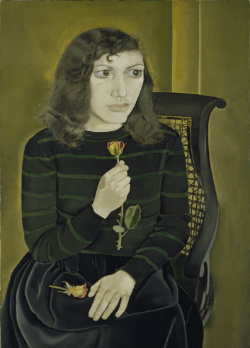
• A landmark exhibition to make the centenary of the birth of 20th century artist Lucian Freud (1922-2011) has opened at The National Gallery. The Credit Suisse Exhibition – Lucian Freud: New Perspectives is the most significant survey of his paintings in a decade and brings together output from across his seven decade career, everything from early works such as Girl with Roses (1940s) to Two Children (Self-Portrait) (1960s) and famous late works such as The Brigadier (2003–4). The display also shows how Freud positioned himself in the tradition of court painters such as Rubens or Velázquez through works such as HM Queen Elizabeth II (2001). Can be seen in the First Floor Galleries until 22nd January. Admission charge applies but in response to the cost of living crisis, the gallery is allowing visitors on Friday nights to pay as much as or little as they like. For more, see www.nationalgallery.org.uk/exhibitions/the-credit-suisse-exhibition-lucian-freud-new-perspectives.
• Diwali on the Square will take place at Trafalgar Square this Sunday. The free annual family-friendly event will open with 200 colourfully dressed dancers in the main square followed by performances from artists drawn from London’s Hindu, Sikh and Jain communities. From 1pm to 7pm, there will also be a host of activities including Neasden Temple’s Diwali Festival Experience, dance workshops, yoga and meditation, sari and turban tying, comedy, a children’s zone, and, henna and face painting. Meanwhile, an array of South Asian food stalls will be serving up delicious traditional and fusion, vegan and vegetarian cuisine. For full details, head here.
• Lawyer Hersch Lauterpacht, who played a key role in prosecuting the Nazis at the Nuremberg trials and whose belief that states should be held accountable for crimes against their own people led to lasting change in international law, has been honoured with an English Heritage Blue Plaque. Born in what is now Ukraine, Lauterpacht moved to London in 1923, originally to study at the LSE and lived with his family at 103 Walm Lane in Cricklewood for 10 years (it was here that his son Elihu – who went on to be a prominent lawyer himself – was born in 1928 and where Lauterpacht was living when he was naturalised as a British citizen in 1931). For more, see www.english-heritage.org.uk/visit/blue-plaques/.
• Nicholas Lyons was elected as the 694th Lord Mayor of the City of London last week. He succeeds current Lord Mayor Vincent Keaveny and will take office on 11th November for a one-year term. The annual Lord Mayor’s Show takes place on 12th November, which will be followed by the Lord Mayor’s Banquet on 28th November at Guildhall where the Prime Minister will deliver a keynote speech.
Send all items for inclusion to exploringlondon@gmail.com.
‘Samson is shining a light on an often overlooked part of our country’s history and I’m sure it will encourage discussion about the fight for freedom and equality’ – @mayoroflondon on the new Fourth Plinth sculpture Antelope https://t.co/KmFUD3nt7upic.twitter.com/XfbkAP0H9r
Samson Kambalu’s Antelope was unveiled on Trafalgar Square’s Fourth Plinth last week. The sculpture – the 14th commission since the Fourth Plinth programme began – depicts the restaged of a photograph taken of Baptist preacher and educator John Chilembwe and European missionary John Chorley which was taken in 1914 in Nyasayland (now Malawi) at the opening of Chilembwe’s new Baptist church.
Chilembwe, who is shown wearing a hat in defiance of rules forbidding Africans from wearing hats in front of white people and is depicted as almost twice the size of Chorley, led an uprising in 1915 against British colonial rule, triggered by the mistreatment of refugees from Mozambique and the conscription to fight German troops during World War I. He was killed and his church destroyed by the colonial police.
Though his rebellion was ultimately unsuccessful, Malawi, which gained independence in 1964, celebrates John Chilembwe Day on January 15th and the uprising is viewed as the beginning of the Malawi independence struggle.
The artist Samson Kambalu was born in 1975 in Malawi, and is now associate professor of fine art and a lifelong fellow at Magdalen College, Oxford University.
“I am thrilled to have been invited to create a work for London’s most iconic public space, and to see John Chilembwe’s story elevated,” he said in a statement. “Antelope on the Fourth Plinth was ever going to be a litmus test for how much I belong to British society as an African and a cosmopolitan. Chilembwe selected himself for the Fourth Plinth, as though he waited for this moment. He died in an uprising but ends up victorious.”
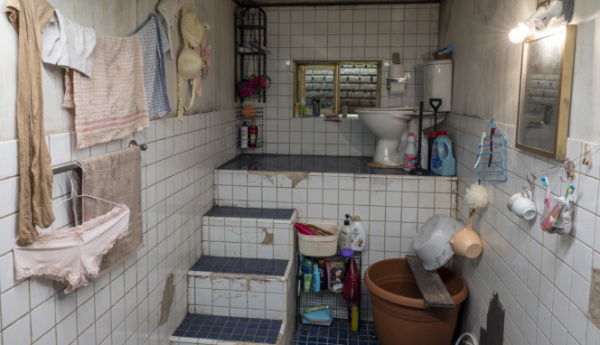
Installation image featuring re-creation of Parasite bathroom scene, at Hallyu! The Korean Wave at the V&A Ⓒ Victoria and Albert Museum, London
• From K-Pop to Parasite, the popular culture of South Korea is being celebrated in a new exhibition which opened at the V&A last weekend.Hallyu! The Korean Wave features around 200 objects across four thematic sections focused on the phenomenon known as ‘hallyu’ (meaning ‘Korean Wave’) which rose to prominence in the late 1990s and rippled across Asia before reaching across the world. Highlights including outfits worn by K-Pope idols PSY, Vespa and ATEEZ, an immersive recreation of Parasite’s bathroom set and monumental artworks by the likes of Nam June Paik, Ham Kyungah and Gwon Osang. There’s also fashion designs by Tchai Kim, Miss Sohee and Minju Kim, and early examples of advertising and branding, including an original poster from the Seoul Olympics, and the first Korean branded cosmetic from the 1910s. The display can be seen until 25th June next year. Admission charge applies. For more, see www.vam.ac.uk/exhibitions/hallyu-the-korean-wave.
• An exhibition which seeks to challenge perceptions about how video games interpret stories about war and conflict opens at the Imperial War Museum London on Friday.War Games: Real Conflicts | Virtual Worlds | Extreme Entertainment explores the relationship between video games and conflict through a series of 11 unique titles, including everything from Call of Duty: Modern Warfare to 2D artillery game Worms and a military training simulator, which, over the last 40 years, have reflected events from the First World War to the present. The display features immersive installations, never-before-displayed objects and perspectives from industry experts. There’s also a retro gaming zone and a programme of supporting events. Admission is free. Runs until 28th May next year. For more, see iwm.org.uk/events/war-games.
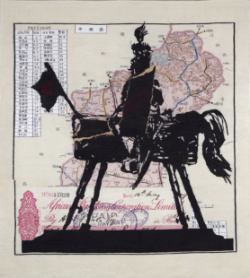
• The work of celebrated South African artist and Honorary Royal Academician William Kentridge has gone on show the Royal Academy. Spanning the artist’s 41 year career, William Kentridge brings together important works spanning from the 1980s through to the present day, including charcoal drawings, animated films, a mechanical theatre, sculptures, tapestries and performance pieces. Highlights include a selection of Kentridge’s early, rarely-seen drawings from the 1980s and 1990s including three triptychs displayed together for the first time and the most significant work from the period, The Conservationist’s Ball, (1985) as well as around 25 large charcoal drawings, made for the creative process of the eleven animated Drawings for Projection, and the installation Black Box / Chambre Noire, (2005), a mechanical theatre piece including puppets and projections, which interrogates the harrowing story of the massacre of the Herero people in Namibia, now considered the first genocide of the 20th century. The display in the Main Galleries can be seen until 11th December. Admission charge applies. For more, see roy.ac/kentridge.
Send all items for inclusion to exploringlondon@gmail.com
An image from the Open House Festival 2020 PICTURE: Phineas Harper/Courtesy Open House Festival
An image from the Open House Festival 2020 PICTURE: Sophie Cunningham/Courtesy Open House Festival
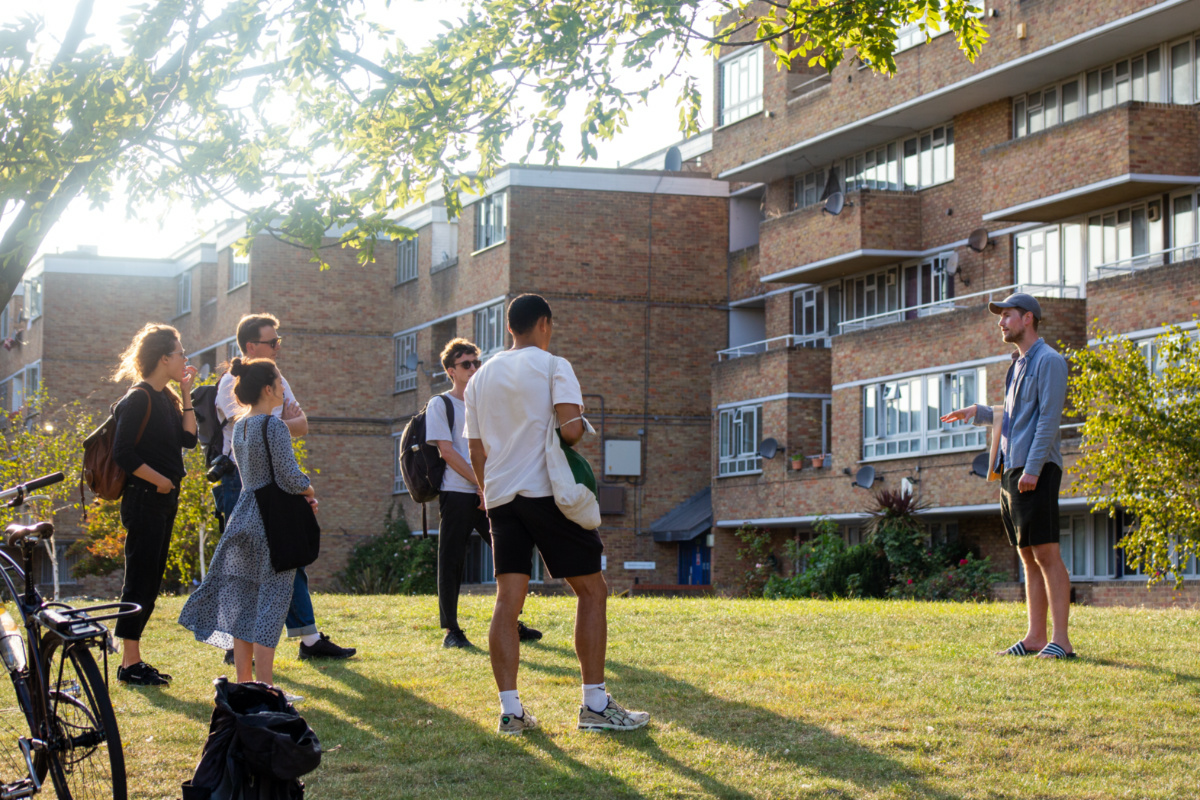
• The Open House Festival, a two week-long celebration of buildings and neighbourhoods in London, kicks off today. Now in its 30th year, highlights from this year’s programme include the introduction of nine “headline neighbourhoods” – among them Aldgate, Somers Town, Battersea, and the Greenwich Peninsula, each of which will feature a specially-curated programme of free events. Buildings open for tour include the Bank of England, the recently refurbished Leathersellers’ Hall, and ROOM, an inhabitable sculpture by Anthony Gormley forming part of Mayfair’s Beaumont Hotel as well as pioneering homes such as the David Adjaye-designed ‘Fog House’ in Clerkenwell, the Khan Bonshek-designed ‘Two-up Two-down House’ in Stratford, and Richard and Su Rogers’ high-tech house in Wimbledon. There are also tours of housing estates including Dawson’s Heights designed by Kate Macintosh for Lambeth and infrastructure demonstrations including the new Rolling Bridge designed by Tom Randall-Page at Cody Dock in Canning Town as well as walks, talks and other event. The festival runs until 21st September. For the full programme, see https://open-city.org.uk/open-house-festival.
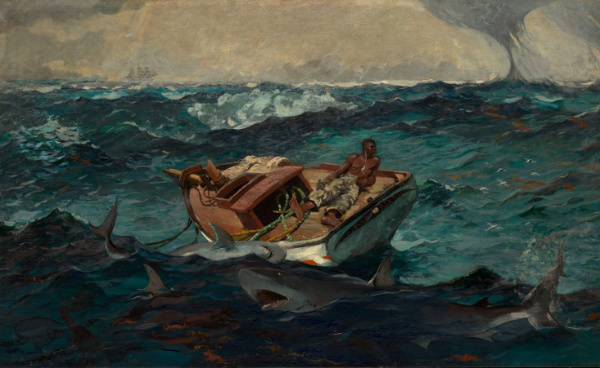
• The first in-depth exhibition in the UK of the work of late 19th and early 20th century American painter Winslow Homer has opened at The National Gallery. Winslow Homer: Force of Nature features more than 50 paintings and watercolours from public and private collections spanning over 40 years of the artist’s career. Highlights include his paintings from the front lines of the American Civil War such as Prisoners from the Front (1866), those depicting the lives of African Americans during the period known as Reconstruction such as A Visit from the Old Mistress and The Cotton Pickers (both 1876), paintings from his travels to England and the Caribbean such as Inside the Bar (1883), A Garden in Nassau (1885), and The Gulf Stream (1899, reworked by 1906), and works created in the final years of his life such as Driftwood (1909). The exhibition can be seen in the Ground Floor Galleries until 8th January. Admission charge applies. For more, see www.nationalgallery.org.uk/exhibitions/winslow-homer-force-of-nature
• A celebration of some of finest wood engravings of the past 100 years and those who made them opens at the Heath Robinson Museum in Pinner on Saturday.Scene Through Wood, which comes from the University of Oxford’s Ashmolean Museum, celebrates the founding centenary of the British Society of Wood Engravers. It traces wood engraving from its origins – objects on show include an early woodcut by Albert Dürer (1471-1528), its subsequent development by 18th and 19th century naturalist Thomas Bewick and the establishment of the SWE in 1920. Included is the work of notable 20th century artists such as Robert Gibbings, Eric Ravilious and Gertrude Hermes as well as more recent figures such as Monica Poole, Edwina Ellis, Simon Brett and Anne Desmet. Admission charge applies. Runs until 11th December. For more, see www.heathrobinsonmuseum.org/whats-on/scene-through-wood/.
Send all items for inclusion to exploringlondon@gmail.com.
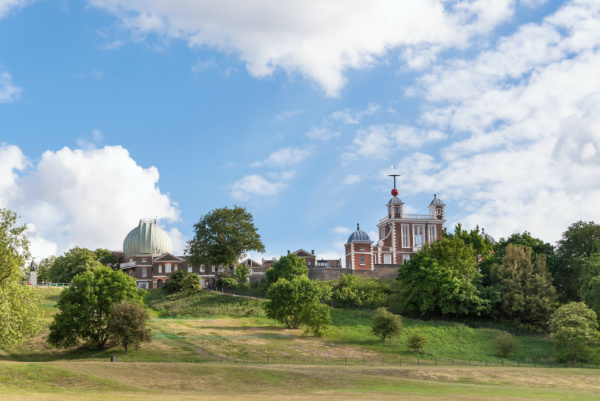
Looking up to the Royal Observatory in Greenwich Park. PICTURE: mkos83/iStockphoto.
The Royal Parks announced recently Greenwich Park, here pictured showing the view up to the Royal Observatory, was to undergo a three year project to restore its 17th century landscape. The formal landscape of the park was commissioned by King Charles II and, designed by French landscape architect André Le Nôtre (who also designed the world-famous Versailles gardens), features tree-lined avenues which frame the view up the hill from the Queen’s House as well as “The Grand Ascent”, a series of giant, grass steps leading up the hill, and a terraced layout – known as a parterre. Massive numbers of visitors – some five million annually – have, however, seen the landscape features erode and slump while the trees – Turkey oaks planted in the 1970s to replace the elms wiped out by Dutch elm disease – are now in decline. The restoration work, which begins next month, will see the terraces restored and the declining tree avenues recreated with 92 new, more resilient trees. The work is scheduled to be completed by March, 2025. For more on Greenwich Park, see www.royalparks.org.uk/parks/greenwich-park.
• Totally Thames – London’s month-long celebration of its river – kicks off Friday with a programme featuring more than 100 events across a range of locations. Highlights this year include Reflections, an illuminated flotilla of more than 150 boats that will process down the Thames to mark the Queen’s Platinum Jubilee on 24th September; River of Hope, an installation of 200 silk flags created by young people across the UK and Commonwealth at the National Maritime Museum; and, of course, the Great River Race, London’s great river marathon on 10th September involving some 330 boats and crews from across the world. There’s also talks, walks, exhibitions and art and, of course, the chance to meet some mudlarks. For more, including the full programme of events, see https://thamesfestivaltrust.org.
Roman beaker, 1st century AD, The Archaeological Museum at the American University of Beirut, Lebanon
• Eight ancient glass vessels, newly conserved after being damaged in the 2020 Beirut port explosion, have gone on show at the British Museum. Painstakingly pieced back together and conserved at the conservation laboratories at the British Museum, the vessels were among 72 from the Roman, Byzantine and Islamic periods which were damaged when a case fell over in Beirut’s AUB Museum. Six of the vessels at the British Museum date from the 1st century BC, a period which saw glass production revolutionised in Lebanon, while two others date to the late Byzantine – early Islamic periods, and may have been imported to Lebanon from neighbouring glass manufacturing centres in Syria or Egypt. The vessels can be seen in Room 3 as part of the Asahi Shimbun Display Shattered glass of Beirut until 23rd October before their return to Lebanon in late Autumn. For more, see www.britishmuseum.org.
• Chiswick House LEGO model. A brick model of Chiswick House is on show at the property in London’s west. The model, which uses 50,000 bricks and took two years to build, illustrates the dramatic architectural changes that Chiswick House has undergone in its 300-year history including the addition of two wings which were demolished in the late 18th century. On show until 31st October. Admission charge applies. For more, see https://chiswickhouseandgardens.org.uk/event/chiswick-house-lego-brick-model/.
Send all items to exploringlondon@gmail for inclusion.