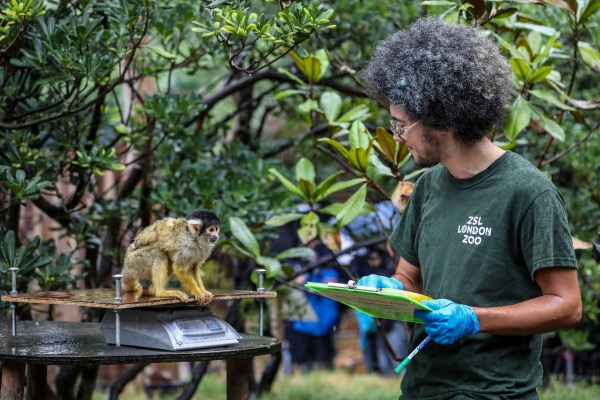
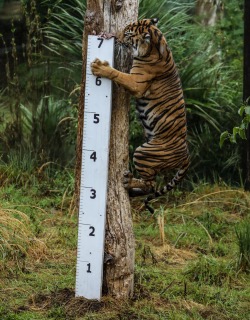
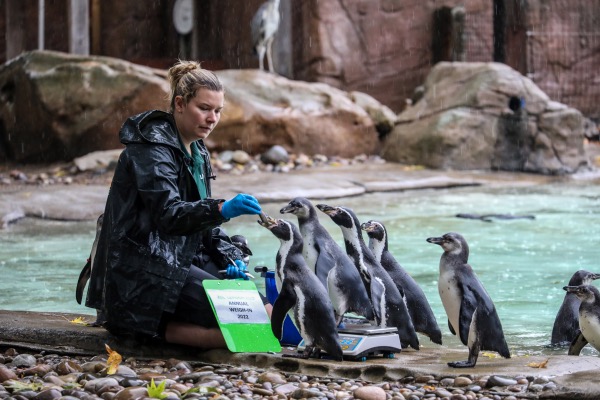
Squirrel monkeys, Sumatran tigers and Humboldt penguins were among the animals that had their statistics recorded at ZSL London Zoo’s 2022 annual weigh-in last week. With more than 14,000 animals in their care, ZSL London Zoo’s keepers spend hours throughout the year recording the up-to-date heights and weights of all the animals – information which helps them to monitor their health and wellbeing. The data is added to the Zoological Information Management System, a database shared with zoos all over the world that helps zookeepers to compare important information on thousands of endangered species. “We record the vital statistics of every animal at the Zoo, from the tallest giraffe to the tiniest snail,” says Daniel Simmonds, deputy animal manager. “This helps to ensure that every animal we care for is healthy, eating well, and growing at the rate they should, as weight is a key indicator of health and wellbeing – a growing waistline can also help us to detect and monitor pregnancies, which is important as many of the species at ZSL London Zoo are endangered and part of international conservation breeding programmes, including today’s Sumatran tigers and Vietnamese giant snails.” Three Sumatran tiger cubs which were born at the zoo in June will be weighed next month at their first health check – which takes place at the age of three months. For more, see www.zsl.org/zsl-london-zoo.
• The Museum of London is celebrating its final 100 days at London Wall on Friday with free ice creams and “goody bags” for visitors. The museum will be giving away 500 Lewis of London ice creams from 11:30am, while visitors will also enjoy a performance by Grand Union Orchestra at midday. The first 100 visitors through the doors will also receive a gift bag featuring Museum of London memorabilia, including a Museum of London guidebook, a pack of playing cards displaying iconic images from the museum’s collections, a greeting card featuring a print by artist Willkay, and a special gift of either a tea towel, a Vauxhall Pleasure Gardens mug, a sketch notebook, an A3 print of London or a soft toy. Meanwhile, from Friday, digital screens will display a countdown clock to mark the days left before the London Wall site closes to the public on 4th December, in preparation for the museum’s move to a new home at West Smithfield. Friday’s event is part of a six-month long programme of activities leading up to the closure of the site. For more, see www.museumoflondon.org.uk.
PICTURE: Courtesy of the British Museum
• Thetabla – twin hand drums – used by legendary Indian musician Ustad Alla Rakha during his European tours of the early 1980s is going on display at the British Museum in a world first. Ustad Alla Rakha was one of the most important and respected tabla players of his generation, working with the All India Radio in the 1930s, composing music for the film industry in the 40s, and regularly playing with world-renowned sitar player Ravi Shankar. The tabla will be on display in the Hotung Gallery until early 2023 after which they will go on loan to the Manchester Museum South Asia Gallery. For more, see www.britishmuseum.org.
• Now on: Lucian Freud: The Painter and His Family. The first exhibition of Lucian Freud’s work at the Freud Museum, the home of his grandfather, Sigmund Freud, and aunt, Anna Freud, this display explores Lucian Freud’s childhood, family and friends and celebrates some lesser known aspects of his life including his love of reading and lifelong fascination with horses as well as his relationships with the former occupants of the building. Alongside paintings and drawings, the exhibition includes illustrated childhood letters, books Freud owned and book covers he designed. His sole surviving sculpture, Three-legged Horse (1937) and early painting, Palm Tree (1944), is also being displayed. The display is being accompanied by a programme of events. For more, see www.freud.org.uk.
Send all items for inclusion to exploringlondon@gmail.com.
• A series of free art trails featuring globe sculptures that aim to increase understanding of the Transatlantic slave trade and its impacts have gone on show in several parts of central London. A national art project which spans seven UK cities,The World Reimagined is designed to bring to life the reality and impact of the slave trade in a bid to help make racial justice a reality. Among the artists involved in London are the project’s founding artist British-Nigerian Yinka Shonibare (who also chose the form of the sculptures), Nicola Green and Winston Branch and each has created a work responding to themes ranging from ‘Mother Africa’ and ‘The Reality of Being Enslaved’ to ‘Still We Rise’ and ‘Expanding Soul’. There are four trails in London, including in the City in London, Camden-Westminster, Hackney-Newham and Southwark-Lambeth. More than 100 artists are involved in the project overall. For more including details on where to find the trails, see www.theworldreimagined.org.
• Dadabhai Naoroji, an Indian Nationalist and the first Indian to win a popular election to Parliament in the UK, has been honoured with an English Heritage Blue Plaque at his former home in Penge. Known as the “grand old man of India” and described in his Times obituary as “the father of Indian Nationalism” following his death in 1917, Naoroji made seven trips to England and spent over three decades of his life in London, including at the red-bricked semi-detached house in Penge, south London, that was his home around the turn of the twentieth century and where the plaque is located. The plaque was unveiled last week ahead of the 75th anniversary celebrations of India’s independence. For more, see www.english-heritage.org.uk/visit/blue-plaques/.
Send all items for inclusion to exploringlondon@gmail.com
• The Natural History Museum’s five acre site in South Kensington will be transformed into a free-to-visit green space under a new project. The Urban Nature Project will feature new outdoor galleries telling the story of life on Earth from 540 million years ago to the present day as it follows an immersive timeline of plants, trees, reptiles, birds and mammals. Children will come face-to-face with a giant bronze diplodocus surrounded by plants from the Jurassic period. The garden will also be home to scientific sensors gathering environmental DNA and acoustic data, to monitor, understand and protect urban nature. You can find out more and donate at www.nhm.ac.uk/support-us/urban-nature-project/donate.html.
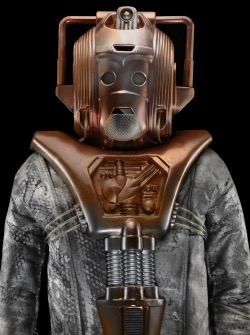
Cyberman costume as used in the T.V. series ‘Dr Who’ made by the BBC, London, c1988
• A new display exploring how the BBC developed and popularised new media has opened at the Science Museum in South Kensington.BBC at 100 features five iconic items from broadcast history that have influenced how we interact wth modern media platforms. They include a six foot tall 1988 Cyberman costume from Doctor Who, a World War II “Midget” Portable Disc Recorder developed to bring listeners close to the reality of conflict, and the BBC microcomputer developed during the Computer Literacy Project in the 1980s. The display, which is part of the Science Museum Group’s Broadcast 100 activities marking the 100th anniversary of the BBC and the 40th anniversary of Channel 4, to free to visit. For more, see www.sciencemuseum.org.uk/see-and-do/bbc-100.
• More than 36,000 sculptures on public display across the UK can be seen online. Art UK has photographed and digitised more than 13,500 outdoor sculptures as well as almost every sculpture inside public collections from the last 1,000 years. The project, which was funded with a £2.8million Heritage Fund grant and involved more than 500 photography and data volunteers, can be accessed at Art UK website.
Send all items for inclusion to exploringlondon@gmail.com.
• A new entrance to a memorial dedicated to those who died as a result of the COVID-19 pandemic has opened at St Paul’s Cathedral. The Remember Me memorial entrance portico, which is accessed through the cathedral North Transept door, has been designed by Caroe Architecture with Connolly Wellingham and is an elliptical structure made from British Oak into which the words ‘Remember Me’ have been etched in gold. It leads through to the Middlesex Chapel where a digital book of remembrance can be accessed. The inner portico is the first project of its kind to be built inside St Paul’s for nearly 150 years and this is the first time the North Transept of the cathedral has been used as a permanent entrance since this part of the cathedral was bombed during World War II. For more, see www.stpauls.co.uk/remember-me-memorial.
• A temporary 35 metre high observation wheel providing new views of London is being placed in Somerset House’s central open-air courtyard as part of a new cultural festival which kicks off Monday. This Bright Land features art installations and a programme of events featuring everything from music and dance performances through to workshops and talks. As well as the wheel, the courtyard will host a ‘Wonder Garden’, a soundscape installation telling Londoners’ stories, a futuristic custom-built ‘Clubhouses’ where complimentary make-up services will be provided, and a pop-up experimental zone which will feature immersive installations and complimentary light treatments. The month-long festival, which runs until 29th August, will also include a series of open air balls and parties at night as well as weekly family-friendly activities. There is free daytime entry on weekdays and pay-what-you-can entry on Monday to Thursday evenings and Saturday daytimes. Charges apply for special events and observation wheel rides. For more, see www.somersethouse.org.uk/whats-on/this-bright-land.
• Two 16th century works have gone on display in The National Gallery for the first time following their acquisition. Paolo Veronese’s ful-length Portrait of a Gentleman of the Soranzo Family (about 1585) can be seen in Room 12 while Lo Spagna’s Christ Carrying the Cross (perhaps 1500–5) can be seen in Room 61. Admission to the gallery is free. For more, see www.nationalgallery.org.uk.
Send items for inclusion to exploringlondon@gmail.com
Sir Roger Penrose at a conference in January, 2011. PICTURE: Biswarup Ganguly (licensed under CC BY 3.0)
World-renowned mathematical physicist Professor Sir Roger Penrose has received the Freedom of the City of London. Sir Roger, who won the Nobel Prize in Physics two years ago for his pioneering studies in the 1960s, was the first to prove mathematically that black holes exist. The now 90-year-old, who is currently Emeritus Rouse Ball Professor of Mathematics at the University of Oxford and Emeritus Fellow of Wadham College in Oxford, also jointly won the 1988 Wolf Prize in Physics with the late Stephen Hawking for their work on gravitational singularity theorems. Sir Roger said he was “hugely honoured” to be given the Freedom of the City. “London is a magnificent city in which I have spent many happy and productive years since my school and undergraduate days, and then with four separate academic appointments,” he said. Sir Roger, who is also known for discovering Penrose tiling in which a pair of rhombus-shaped tiles can be used to tile a flat service without the pattern ever repeating itself, was nominated for the Freedom by Lord Mayor of the City of London, Vincent Keaveny, and the City of London Corporation’s policy chairman, Chris Hayward. The tradition of the Freedom of the City of London is believed to have begun in 1237 and enabled recipients, who were also required to join a Livery Company, to carry out their trade.
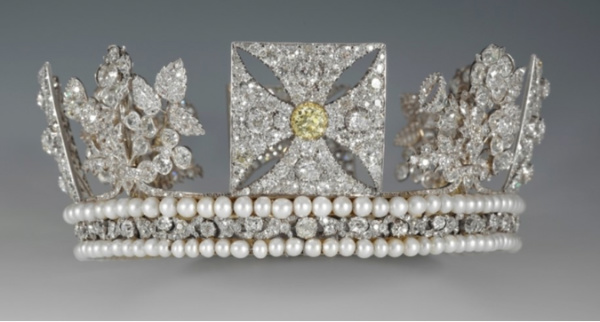
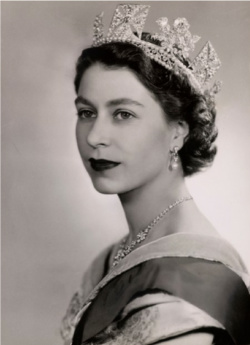
• Key items of Queen Elizabeth II’s jewellery including the Diamond Diadem and the Delhi Durbar necklace go on display in Buckingham Palace’s State Rooms from tomorrow as part of the palace’s Summer Opening. Created for the coronation of King George IV in 1821, the Diamond Diadem is set with 1,333 brilliant-cut diamonds, some of which are set in the form of a rose, a thistle and two shamrocks, the national emblems of England, Scotland and Ireland. The diadem, which was inherited by Queen Victoria in 1837 and passed down to the current Queen, will be displayed alongside the official portraits of the Queen taken by photographer Dorothy Wilding just weeks after the Accession (the portraits were later were used as the basis of the Queen’s image on postage stamps from 1953 until 1971, as well as providing the official portrait of Her Majesty sent to every British embassy throughout the world). The Delhi Durbar necklace, meanwhile, incorporates nine emeralds originally owned by Queen Mary’s grandmother, the Duchess of Cambridge, as well as an 8.8 carat diamond pendant cut from the Cullinan diamond – the largest diamond ever found. It was made for Queen Mary as part of a suite of jewellery created for the Delhi Durbar in 1911. The Queen inherited the necklace in 1953 and wore it in a portrait sitting for Dorothy Wilding in 1956 – thought to have been their last sitting together before Wilding’s retirement in 1958. The jewellery, a special display to mark the Platinum Jubilee, can be seen at the Summer Opening of the State Rooms at Buckingham Palace, the first time the palace has been open to the public in three years, until 2nd October. Admission charge applies. For more, see www.rct.uk.
• An exhibition exploring how design can enhance our experience of ageing has opened at the Design Museum.The Future of Aging includes a selection of prototypes, sketches and research from projects that are being developed by Design Age Institute and its partners. They include a self-balancing, two-wheeled personal electric vehicle known as ‘The Centaur’, a hands-free cargo-carrying robot called Gita, and a digital ‘audioscape’ app that uses the sound of birdsong to engage visitors with their hearing health. The free display also includes a long-term participatory project that explores opportunities for an intergenerational garden at the museum and two new film commissions which showcase stories and experiences of later life. Runs until 25th September. For more, see https://designmuseum.org/exhibitions/the-future-of-ageing.
• On Now: Painting ‘A Bridge with a View’. Until the end of August, English artist Melissa Scott-Miller is painting the views she spies from Tower Bridge’s West Walkway. Visitors are able to observe her at work and take part in related public workshops and family activities. Admission charge applies. For more including the dates for activities, see www.towerbridge.org.uk/see-bridge-view.
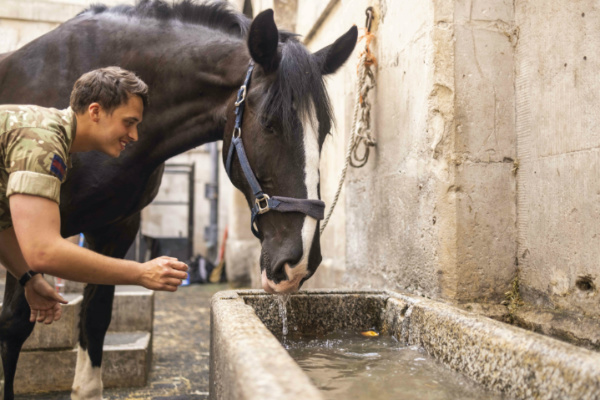
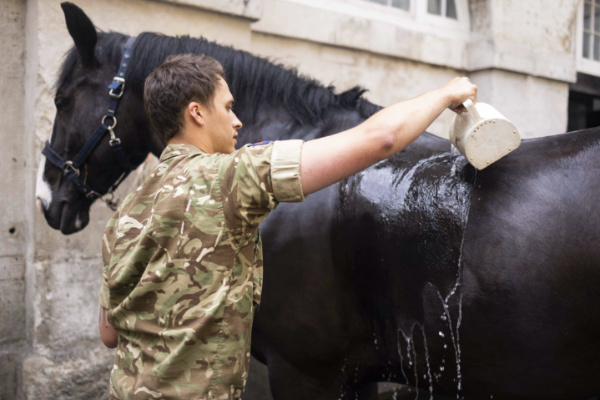
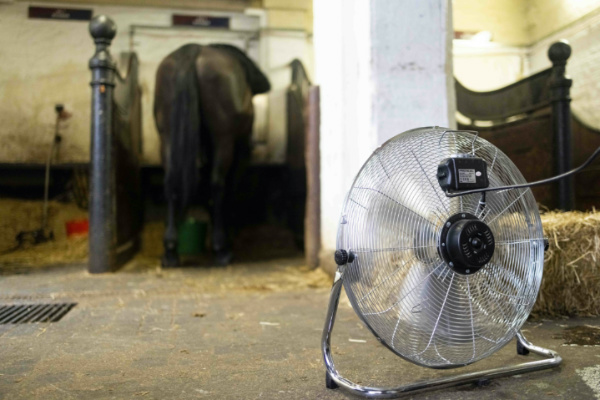
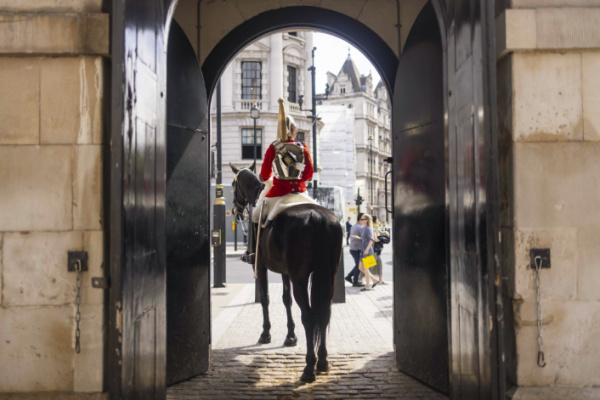
As London swelters, the Troopers of the Household Cavalry Mounted Regiment conducting the Queen’s Life Guard at Horse Guards take care to ensure their loyal horses are well looked after. That includes a hose off in the shade after duty to help them cool down, bobbing for in the water trough to help ensure they’re drinking enough and providing fans in the stables.
• The Museum of London has launched a six-month programme of events celebrating its 45 year history ahead of its doors closing on 4th December in preparation for its move to West Smithfield. The programme includes a range of family activities – from Roman picnics to large LEGO builds – as well as behind the scenes access at the museum during Open House London and two festivals on the closing weekend celebrating the past 50 years of London’s history. For the full programme of events, head to www.museumoflondon.org.uk. Following its closure at the London Wall site, the new site at West Smithfield, to be named The London Museum, will open in 2026.
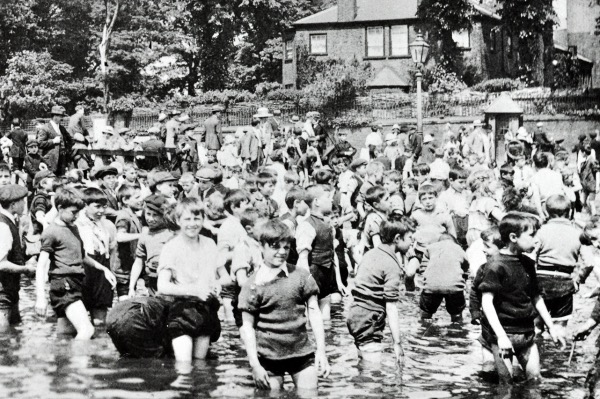
• An outdoor exhibition on the essential role of London’s parks and open spaces – which have served as everything from playgrounds and picnics to concerts and Sunday football kickabouts – opens inGuildhall Yardon Monday.Green City: A Visual History of London’s Parks and Open Spaces, which is curated by the City of London Corporation’s London Metropolitan Archives, celebrates the role open places have played in the capital since the 16th century and brings together 100 photographs and prints from the archives’ collections. The exhibition can be seen in Guildhall Yard until 1st August when it moves to Aldgate Square. On 15th August it will open at Hampstead Heath and then, from 1st September, spend two weeks at The View in Epping Forest’s Visitor Centre.
• Kenley Airfield – an integral part of London’s defence during World War II – has reopened following a £1.2 million restoration. The airfield, which sits in the Borough of Croydon, was a station for the Royal Flying Corps during World War I and the Royal Air Force during World War II. The restoration work has brought back to life eight deteriorating fighter blast pens, which protected RAF Spitfires and Hurricanes from attack. The site also includes The Kenley Tribute, a memorial to all who served there between 1917 and 1959, both on the ground and in the air. For more, including information on visiting the airfield and self-guided walks, see www.kenleyrevival.org.
• The work of 20th century American artist Milton Avery is the subject of a new exhibition opening at the Royal Academy of Arts on Friday. Milton Avery: American Colourist – which can be seen in The Gabrielle Jungels-Winkler Galleries in Piccadilly – features some 70 works including portraits and landscapes dating from 1910 until the 1960s. The exhibition is divided into four sections – ‘Early Work’, ‘Portraits’, ‘Innovation in Colour and Form’ and ‘Late Work’ – and highlights include Blossoming (1918), a portrait of Avery’s friends known as The Dessert (1939), two portraits of his daughter March – Seated Girl with Dog(1944) and March in Brown (1954), and, Black Sea (1959). Runs until 16th October. Admission charge applies. For more, see www.royalacademy.org.uk.
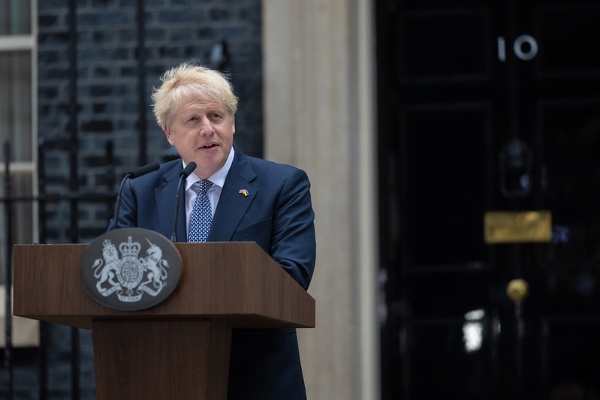
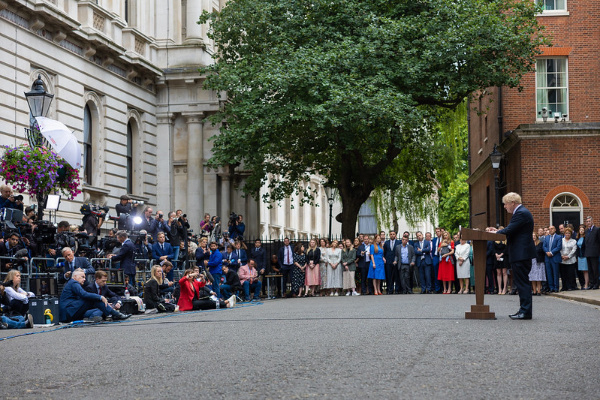
Above and below: Boris Johnson resigns as leader of the Conservative Party. PICTURE: HM Treasury (licensed under CC BY-NC-ND 2.0)
All eyes turned to Whitehall last week with Prime Minister Boris Johnson emerging from 10 Downing Street to announce he would resign. The move has sparking a leadership contest in the Conservative Party which is expected to be complete by 5th September.
• The famous matchgirls’ strike at the Bryant and May matchworks in the East End has been commemorated with an English Heritage Blue Plaque. The event, widely recognised as a spur to the New Unionism movement, saw about 1,400 of the predominantly young female workforce walk out in protest at the dismissal of a number of their co-workers in early July, 1888. While some of the details remain unclear, it is thought that the women were probably sacked for giving information to reporters, refusing to sign a statement refuting poor working conditions, or on trumped-up charges of trouble making. The women – whose poor working conditions, including low pay, the imposition of fines and deductions by the company and the dangers of ‘phossy jaw’, were catalogued by journalist Annie Besant – won a famous victory after a three week strike in which almost all their demands were met. Bryant and May also recognised the Union of Women Match Makers which, by the end of 1888, had become the Matchmakers’ Union and admitted both men and women. For more on English Heritage Blue Plaques, see www.english-heritage.org.uk/visit/blue-plaques/.
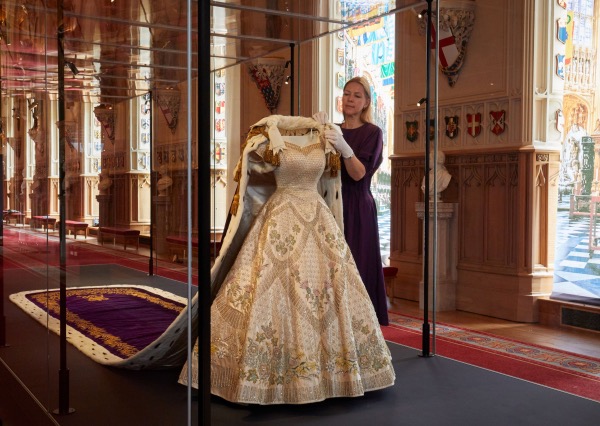
Curator Caroline de Guitaut puts the finishing touches to the display of the Queen’s Coronation Dress and Robe of Estate in St George’s Hall, Windsor Castle. PICTURE: Royal Collection Trust/All Rights Reserved.
• Queen Elizabeth II’s coronation is the subject of a new exhibition opening at Windsor Castle today.Platinum Jubilee: The Queen’s Coronation, which focuses on the coronation which took place at Westminster Abbey on 2nd June, 1953, features portraiture, photographs and dress and jewellery worn by the Queen including the Sir Norman Hartnell-designed Coronation Dress, Robe of Estate and the Coronation Necklace and Earrings which were originally made for Queen Victoria in 1858. Also on display are brooches representing the emblems of some Commonwealth countries including a Canadian Maple-leaf Brooch worn by then Princess Elizabeth on her first visit to Canada in 1951, a Flame-Lily Brooch, the emblem of Zimbabwe, which was pinned to the Queen’s mourning clothes when she returned from Kenya after the death of her father in 1952, and the New Zealand Silver Fern Brooch, the Australian Wattle Brooch, and the Sri Lanka Brooch. There’s also a 2.5-metre-tall portrait of the Queen by Sir Herbert James Gunn which was commissioned to commemorate the coronation and a three-quarter length photographic portrait of the Queen taken by Cecil Beaton. Included in general admission. Runs until 26th September. Running in conjunction id a digital event – Royal Jewels: A Platinum Jubilee Celebration – which will be held at 7pm on 28th July in which Caroline de Guitaut, deputy surveyor of The Queen’s Works of Art and curator of the Platinum Jubilee display, with join Carol Woolton, former jewellery editor of Vogue in discussing items of The Queen’s jewellery on display at Windsor Castle and Buckingham Palace this summer. Tickets can be booked at www.rct.uk.
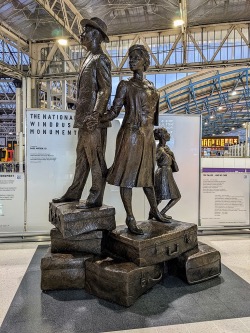
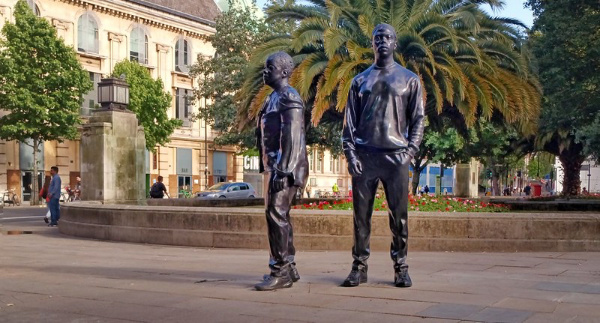
The National Windrush Monument (right) was unveiled at Waterloo Station on Windrush Day (23rd June). The bronze sculpture – the work of US-based Jamaican artist Basil Watson – memorialises the British West Indian immigrants who came to the UK on board HMT Empire Windrush in 1948 and later ships and who subsequently became known as the Windrush generation. Funded by a £1 million government grant, it depicts a man, woman and child who, dressed in their “Sunday best”, are climbing a pile of suitcases which represent all the possessions they brought with them. The memorial, which is located inside the station through which thousands of the Windrush Generation passed on their way to their new lives in the UK, was unveiled by the Duke and Duchess of Cambridge. Floella Benjamin, chair of the Windrush Commemoration Committee, reportedly said the monument will “act as a symbolic link to our past and a permanent reminder of our shared history and heritage for generations to come“. Meanwhile, a public bronze sculpture was unveiled outside Hackney Town Hall on the same day which also commemorates the Windrush generation. Warm Shores, the work of London artist Thomas J Price, depicts larger than life-sized a man and woman and was based on 3D scans of real-life residents.
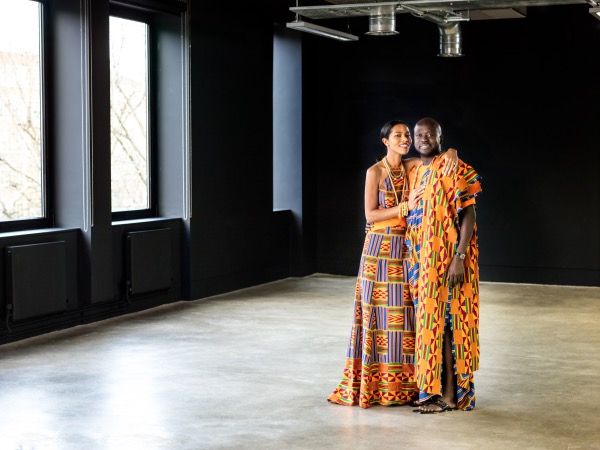
Designed by Kofi Ansah, Ensembles for the wedding of Ashley Shaw-Scott Adjaye and David Adjaye. Ghana, 2014. Photographed in London in 2014 by Robert Fairer
• The work of some 45 designers from more than 20 countries can be seen in a landmark Africa Fashion exhibition opening at the V&A on Saturday. More than 250 objects are on display – half drawn from the museum’s collection and including 70 new acquisitions. Many of the garments come from the personal archives of iconic mid-20th century African designers including Shade Thomas-Fahm, Chris Seydou, Kofi Ansah and Alphadi and the exhibition also features the work of contemporary African fashion creatives such as Imane Ayissi, IAMISIGO, Moshions, Thebe Magugu and Sindiso Khumalo. The display includes personal insights from the designers, together with sketches, editorial spreads, photographs, film and catwalk footage. Runs until 16th April. Admission charge applies. For more, see vam.ac.uk/exhibitions/africa-fashion.
• Discover the role public transport is playing in keeping London green at London Transport Museum’s Depot in Acton Town this weekend. The ‘Act-on It!’ Open Days, being held as part of London Climate Action Week, are part of London Transport Museum’s 18-month programme, Climate Crossroads, which shines a light on sustainable cities, travel, transport and greener skills for the future. Along with the artworks, maps and signage housed at depot, visitors will be able to explore the museum’s extensive collection of historic vehicles including Tube trains, buses, trolleybuses and trams including, for the first time, the iconic RM1 Routemaster, built in 1954, displayed alongside the ADL/BYD Enviro 400 Electric, the best-in class bus from route 63. There’s also family activities – including storey-telling sessions, miniature transport displays made entirely of LEGO, and rides on the London Transport Miniature Railway. Tickets must be booked in advance. Admission charge applies. For more, see www.ltmuseum.co.uk/whats-on/depot/summer.
• The Upminster Tithe Barn has an open day on Saturday. The more than 500-year-old barn, these days houses the Museum of Nostalgia which holds more than 14,500 artifacts of domestic and agricultural use, ranging from Roman times to the present day. For more, see http://upminstertithebarn.co.uk.
Young V&A creative Story Telling session. PICTURE: Courtesy of Young V&A
• The V&A is celebrating 150 years since the opening of the Bethnal Green Museum (now known as the Young V&A) with the launch of a year long celebration on Friday. The museum, which opened in 1872 as the first ever museum in east London, is currently undergoing a major redevelopment and is scheduled to reopen in summer, 2023, as a new national museum dedicated to children to the age of 14. To mark the 150th – and a year until Young V&A’s opening – the museum has launched a year-long ‘Reinvent Festival’ with the first event – an online summit called Sparking Creative Futures headlined by children’s author, Ed Vere, and live-illustrated by Beano’s youngest ever artist, Zoom Rockman – on Friday. On Sunday, Young V&A will celebrate its birthday with families at Rich Mix’s ‘Everyone a Maker’ event with free, fun activities. Further events will be held over the year including pop ups at Queen Elizabeth Olympic Park’s Great Get Together on 23rd July featuring large-scale, creative construction and making sessions for children and families using playful building materials by Hackney-based architect Emilie Quene. For more (including the full programme of events), see www.vam.ac.uk/blog/museum-life/reinvent-festival-young-va-summer-family-events.
• Europe’s biggest free musical theatre festival – West End LIVE – will transform Trafalgar Square into an open-air theatre this weekend. A joint production by Westminster City Council and the Society of London Theatre, the event will feature hundreds of performers, creatives and production staff, showcasing the best the West End has to offer. No tickets are required for the free event. For more, head to www.westendlive.co.uk.
• An English Heritage Blue Plaque has been unveiled on a house in Hackney, commemorating the hundreds of stranded and sometimes abandoned South and East Asian nannies, known as ayahs, who sheltered there in the early 20th century. The Ayah’s Home at 26 King Edward’s Road housed around 100 women a year between 1900 and 1921 after which the home moved to another address nearby. The ayahs were women who served the British in India and other colonies as children’s nannies, nursemaids and ladies’ maids and who were sometimes required to care for babies, children and their sea-sick mothers on the long sea voyage from the colonies to England but who were generally not expected to serve the families once they arrived, instead either contracted to wait until needed for the return journey or take a passage home. The Hackney shelter, which also welcomed ‘amahs’ – nursemaids of East Asian origin, appears to have been the only one of its kind in Britain for almost the whole of its existence. For more, see www.english-heritage.org.uk/visit/blue-plaques/.
Send all items for inclusion to exploringlondon@gmail.com.
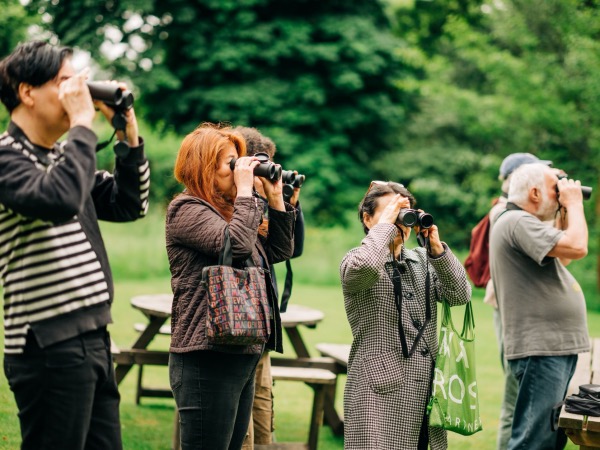
• The Royal Parks are running a series of free sessions for bird-watching novices in all eight of its London parks during June and July. The sessions, for which binoculars will be provided, last up to two hours. Pete Lawrence, The Royal Parks’ biodiversity manager, says many people growing up in a city may not have had the “opportunity, the equipment or the know-how to take up this activity” before. “These free sessions aim to make bird watching more accessible, and, if they prove popular, we hope to repeat them in future years.” Author and TV naturalist David Lindo, aka ‘The Urban Birder’, will be leading some of the free bird watching sessions along with The Royal Parks’ conservation officer, Tony Duckett – a six decade veteran birdwatcher, and local bird enthusiast Julia Holland. To book a place, head to www.royalparks.org.uk/birdingtours. The Royal Parks is also hosting a bird watching photography competition with a top prize, binoculars worth £400. Entrants need to take a photo of one of the birds included on the parks’ bird spotter sheets and send it to competition@royalparks.org.uk or submit via The Royal Parks’ social media channels. Find out more here.
• The “music, people and places” central to the grime scene which first emerged in London in the early 2000s are the subject of a new exhibition at the Museum of London. Grime Stories: from the corner to the mainstream, which opens on Friday, is co-curated by Roony ‘Risky’ Keefe, one of grime’s early documentarians, and features a series of newly commissioned films that explore the community at the heart of grime’s success as well as a large-scale illustration from artist Willkay and personal artefacts from the MCs and producers who developed grime’s unique sound. Admission is free. For more, see www.museumoflondon.org.uk/museum-london/whats-on/exhibitions/grime-stories.
• The ideas of repair, care and healing are explored in a new exhibition which opened at Somerset House this week. Eternally Yours, which is being staged across three Terrace Rooms, showcases some diverse examples of creative reuse including transformed items salved in the aftermath of Japan’s 2011 earthquake, shoes worn by Syrian migrants which have stories of survival sewn into the soles and a jumper from Annemor Sundbø’s ragpile collection which has been transformed by Celia Pym. At the heart of the exhibition is ‘The Beasley Brothers’ Repair Shop’, a pop-up created by designer Carl Clerkin and modelled on traditional East End repair shops of old, which is hosting live workshops and demonstrations from artists and designers. The free exhibition and accompanying events runs until 18th September. For more, see www.somersethouse.org.uk.
Send all items for inclusion to exploringlondon@gmail.com.
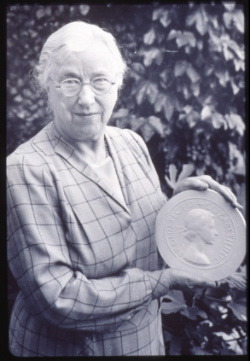
• A free display featuring the first coin bearing a portrait of Queen Elizabeth II has opened at the British Museum. Part of the celebrations marking the Queen’s Platinum Jubilee, The Asahi Shimbun Display Mary Gillick: modelling The Queen’s portrait showcases the production and reception of the coin which was designed in 1952 and released the following year. Gillick’s portrait – which remained in circulation on coins in the UK until the 1990s and was also adapted for use on commemorative stamps – combined modern design with Italian Renaissance influences. Can be seen until 31st July. For more, see www.britishmuseum.org.
• The UK’s first Stolperstein or “stumbling stone” has been installed in Soho as part of an initiative to remember the victims of the Nazis. The small brass plaque commemorates former resident Ada van Dantzig, a Dutch-Jewish paintings conservator for the National Gallery who came to London in the 1930s and worked and resided in Golden Square in Soho (where the plaque has been installed). She later re-joined her family in the Netherlands and was arrested in France in early 1943 along with her mother, father, sister and brother. Deported to Auschwitz, Ada, along with her parents, was murdered there on 14th February, 1943. Artist Gunter Demnig created the project almost 25 years ago to commemorate victims of Nazi Persecution during the Holocaust. More than 100,000 of stones have now been laid in 26 countries throughout Europe with the location of the stones the last address of those being remembered.
• A pioneering female landscape gardener has been honoured with an English Heritage Blue Plaque at her former flat in Shaftesbury Avenue. Fanny Wilkinson, who is believed to be Britain’s first professional female landscape gardener, was also a campaigner for the protection of open space in London. She lived and worked at the flat, which overlooks an open space she laid out herself, between 1885 and 1896. Wilkinson began her career as an honorary landscape gardener to the Metropolitan Public Boulevards, Gardens and Playgrounds Association – an organisation whose mission was the formation of gardens and public parks that would create playgrounds and green ‘lungs’, especially in poor districts of the capital. In June, 1885, it was agreed that she could charge five per cent on all her MPGA payments, leading her to drop the ‘honorary’ title and become Britain’s first professional female landscape gardener. For more, see www.english-heritage.org.uk/visit/blue-plaques/.
• A painting by Pablo Picasso – Woman with a Book (1932) from the Norton Simon Museum in Pasadena, California – and a painting by Jean-Auguste-Dominique Ingres – Madame Moitessier (1856) – are being shown together for the first time at The National Gallery. Picasso admired Ingres and referred to him throughout his career and this connection can be seen not only in his paintings but in drawings and studies he made during his ‘neoclassical’ phase in the 1920s. He encountered Madame Moitessie at an exhibition in Paris in 1921 and 11 years later painted Woman with a Book. The paintings, which are being show under a collaborative initiative between the two institutions, can be seen in Room 1 until 9th October. Admission is free. For more, see www.nationalgallery.org.uk.
Send all items for inclusion to exploringlondon@gmail.com
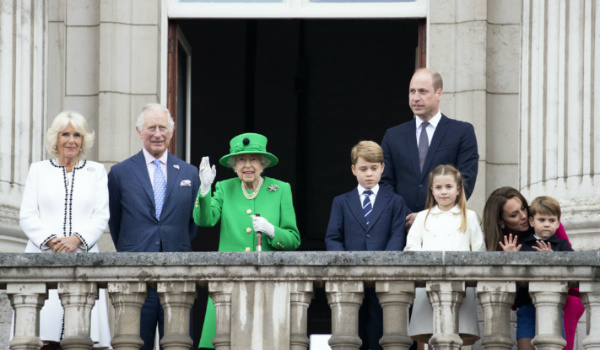
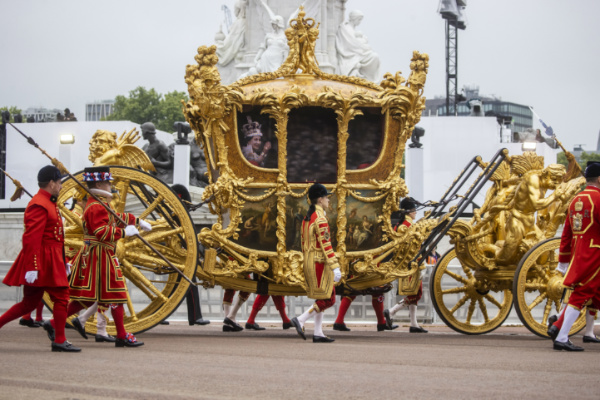
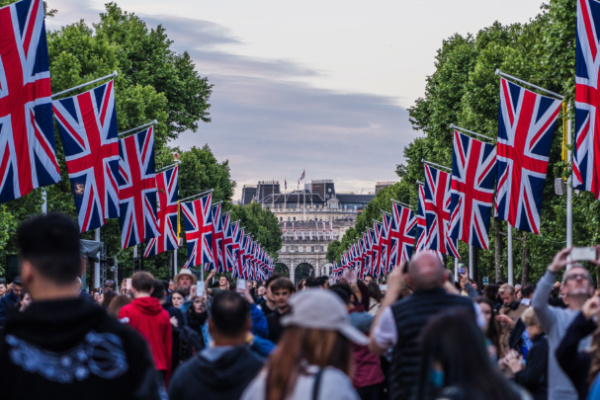
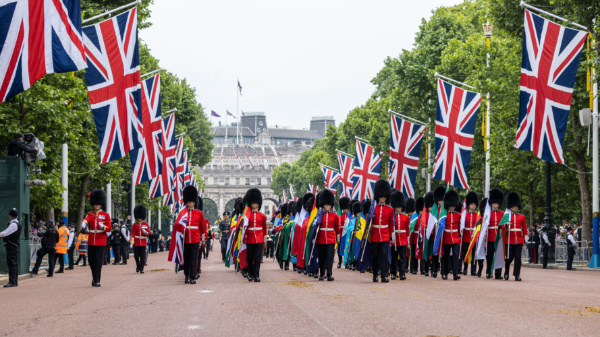
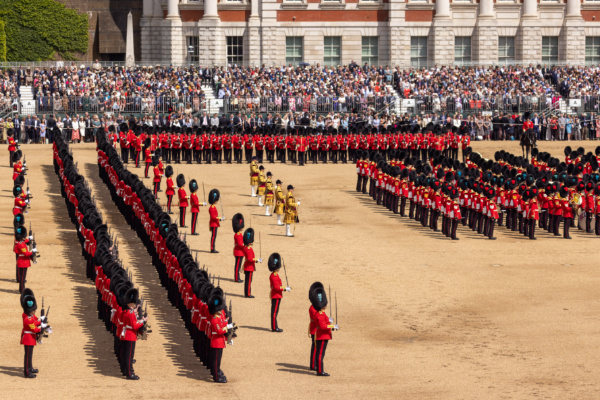
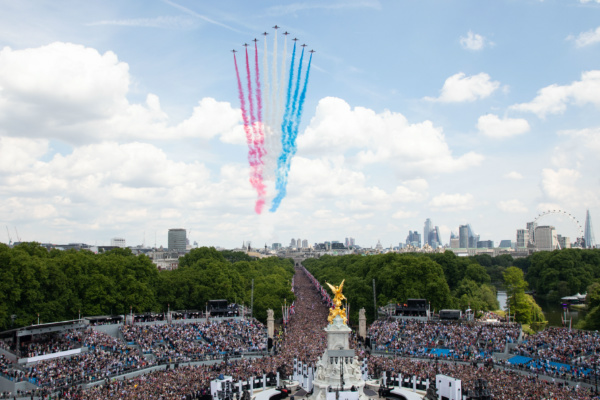
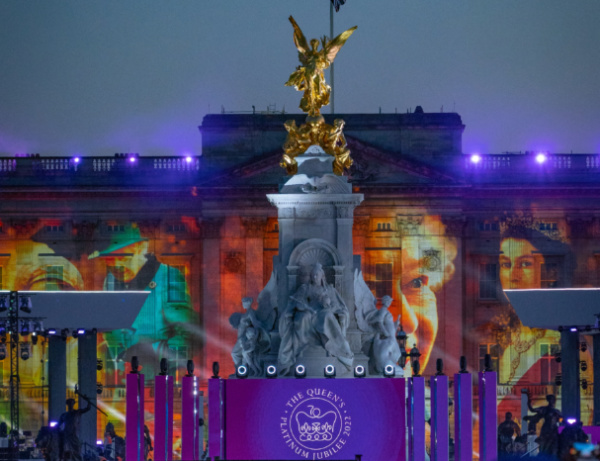
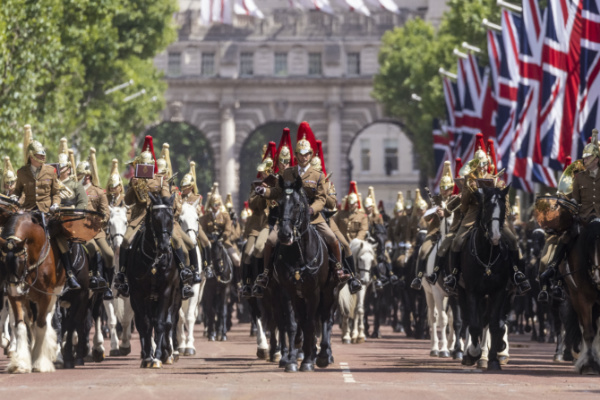
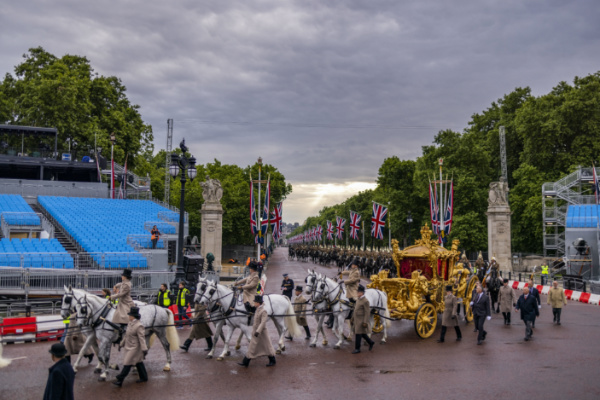
Four days of celebration were held from Thursday to Sunday to mark Queen Elizabeth II’s Platinum Jubilee. Here’s a short selection of images from the events…
• The Queen’s Birthday Parade – Trooping the Colour – takes place today (Thursday) at Horse Guards Parade. It’s the largest parade in three years due to the coronavirus pandemic and will involve more than 1,400 soldiers, 200 horses and 400 musicians. The day will feature an appearance by the Queen on the Buckingham Palace balcony and an RAF flypast.
• More than 3,000 beacons will be lit all around the world tonight (Thursday) to mark the Jubilee. The event will culminate in a 21 metre high giant tree sculpture constructed of 350 smaller trees – the ‘Tree of Trees’ beacon – being set alight out the front of Buckingham Palace at 9pm. For more, see www.queensjubileebeacons.com.
• A service of thanksgiving will be held at St Paul’s Cathedral on Friday (sadly without the Archbishop of Canterbury who has COVID-19 and mild pneumonia). The event is private. The cathedral is also hosting Jubilee: St Paul’s, the Monarch and the Changing World, an exhibition which explores the history of Jubilee celebrations at St Paul’s Cathedral across three centuries and features objects from the cathedral’s collections including the Jubilee Cope which depicts the spires of 73 churches in the Diocese of London, three Royal Peculiars and St Paul’s Cathedral and was created to commemorate the Silver Jubilee of 1977. Entry to the exhibition is included in general admission. For more, see www.stpauls.co.uk/platinum-jubilee.
• The BBC’s Platinum Party at the Palace will take place on Saturday featuring a line-up of performers from the worlds of music and dance. Those attending include Duran Duran, Andrea Bocelli, Mimi Webb, Sam Ryder, Jax Jones, Celeste, Nile Rodgers, Sigala and Diversity as well as stars from stage, screen and the sporting world such as Sir David Attenborough, Emma Raducanu, David Beckham, Stephen Fry, Dame Julie Andrews, The Royal Ballet, and Ellie Simmonds who will also pay tribute in person and on film. Queen + Adam Lambert will open the concert, sure to evoke memories of Brian May’s historic appearance on the Palace roof at the Golden Jubilee Concert in 2002 – and Diana Ross will close it in her first UK live performance in 15 years. Advance booking and tickets are required but the event will be shown live on the BBC.
• The finale of the weekend will be the Platinum Jubilee Pageant which will take place in “four acts” through central London on Sunday. The pageant, which will begin with the ringing of the bells of Westminster Abbey, will start with a military spectacle – ‘For Queen and Country’ – celebrating all three services in the UK Armed Forces and involving some 1,750 people including from Commonwealth nations. Act two – ‘The Time of Our Lives’ – will feature a cast of some 2,500 people showing how British culture has changed over the past 70 years. In act three, ‘Let’s Celebrate’, performers will “mash street theatre, music-on-the-move, urban dance, and the very best of Carnival, May Day, Mela, Fiesta and Mardi Gras to celebrate The Queen’s extraordinary life experience”; this will also include a ‘River of Hope’ procession featuring children from across the UK carrying some 200 silk flags featuring pictures depicting their hopes and aspirations for the next 70 years, particularly with regard to climate change. The musical finale – ‘Happy and Glorious’ – will focus around the Queen Victoria Memorial in front of Buckingham Palace and will see attendees singing the National Anthem with appearances by Jeremy Irons, Bill Bailey and Gok Wan and Ed Sheeran and the public invited to become part of the performance. The pageant will start at Westminster Abbey and head down Whitehall, turn through Admiralty Arch into The Mall, travel to Buckingham Palace and then turn down Birdcage Walk. For more, see www.platinumpageant.com.
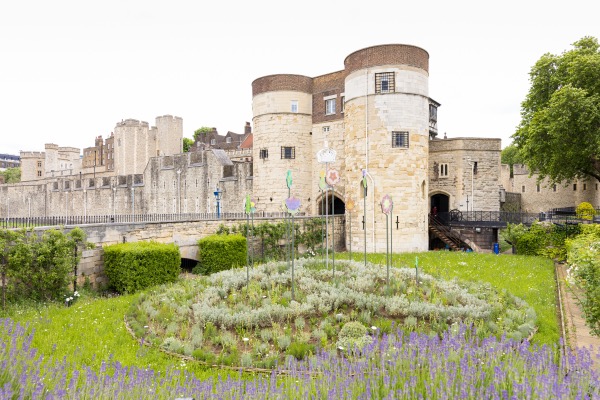
Twenty million seeds have been sown into the Tower of London’s moat to create a floral display known as ‘Superbloom’ as part of the celebrations surrounding Queen Elizabeth II’s Platinum Jubilee.
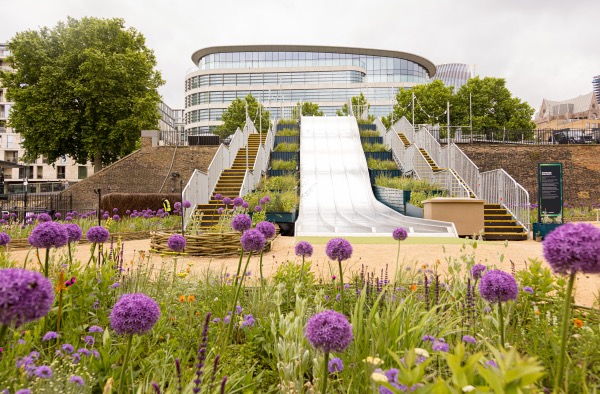
Paths, walkways and viewing points have been installed throughout and in a first at the Tower, a four lane slide has been installed to provide an unusual entrance to the display.
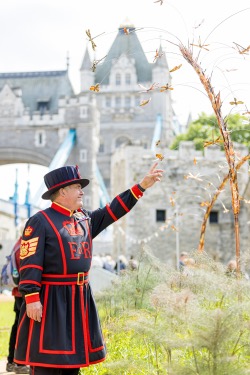
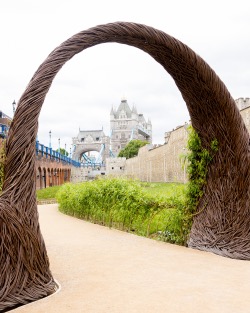
Those visiting the display – which features wildflowers such as red poppies, yellow corn marigolds and blue cornflowers as well as garden plants including sunflowers, cosmos and rudbeckias – will hear a score by Scottish composer Erland Cooper – Music for Growing Flowers – while other attractions include a willow sculpture by artist Spencer Jenkins and a swarm of intricate copper insects by sculptor Mehrdad Tafreshi.
The centrepiece of the display is the “Queen’s Garden” which has been installed by Grant Associates – the lead designers for the Superbloom project – in the Tower’s historic Bowling Green.
Inspired by the Queen’s Coronation gown, this garden features a combination of meadow flowers, topiary and summer-flowering perennials, bulbs and ornamental grasses and draws on the colours, shapes and motifs used by designer Norman Hartnell in the 1953 gown.
Rising above the garden are 12 cast glass forms by glass artist Max Jacquard which represent the national emblems featured in Hartnell’s design and in their centre sits a glass crown, a reminder of the Tower’s role as home of the Crown Jewels.
Tower Wharf, meanwhile, has been transformed into a food and drinks venue, with street food and bars from KERB and fine dining available riverside in ‘The Glass Rooms’. The flowers are expected to gradually bloom in June and will continue to evolve until September. For more, including how to purchase tickets, head here.
• A new exhibition exploring the Queen’s role during wartime opens at IWM London in Lambeth tomorrow. Part of a suite of events at IWM venues celebrating the Queen Elizabeth II’s Platinum Jubilee, Crown and Conflict: Portraits of a Queen in Wartime features 18 images drawn from the museum’s image archive which chart the Queen’s experience of war – from growing up during World War II when she served in the Auxiliary Territorial Service to her role in carrying out important public duties involving the armed forces, including at the annual Service of Remembrance. Among newly digitised photographs included in the display are an image of the Queen dressed in overalls and cap while working on a vehicle during her time in the ATS, and another showing her with her father, King George VI, and mother, Queen Elizabeth, during a visit to airborne forces in 1944. IWM London is also launching a dedicated trail of historic objects spread across five gallery spaces which explores the Royal Family’s long-standing association with the British armed forces. Objects include a Princess Mary Gift Fund box which was sent to those serving at Christmas in 1914. Runs until 8th January. Admission charge applies. For more, see www.iwm.org.uk/events/queens-platinum-jubilee-iwm-london.
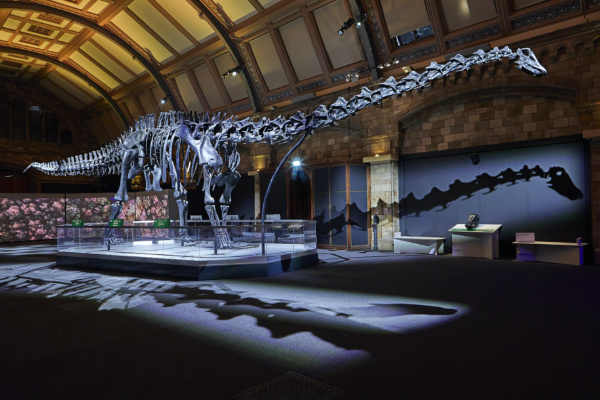
• Dippy the dinosaur is back for a limited time at the Natural History Museum in South Kensington from tomorrow. A free, temporary exhibition – Dippy Returns: the nation’s favourite dinosaur – gives visitors the chance to get up close and personal with the 26 metre-long dinosaur which first went on display at the museum in 1905. The display comes at the end of a record-breaking tour of the UK in which Dippy was seen by more than two million people. Can be seen until 2nd January. To book tickets, head to www.nhm.ac.uk.
• The first major exhibition to explore the history and future of cancer treatment and research opened at the Science Museum in South Kensington this week. Cancer Revolution: Science, innovation and hope features more than 100 objects including some never-before seen as well as information on cutting edge treatment and research, new artist commissions and installations, interactive exhibits and a breadth of personal stories. Runs until January, 2023. Admission is free but bookings required. For more, see www.sciencemuseum.org.uk/see-and-do/cancer-revolution-science-innovation-and-hope.
Send all items to exploringlondon@gmail.com for inclusion.