This Week in London – Beatrix Potter and nature; a tribute to Stephen Hawking; and, illuminated trails and free performances in central London…

The Tale of Benjamin Bunny, Peter with handkerchief by Beatrix Potter, 1904. Watercolour and pencil on paper. © National Trust Images/ From Beatrix Potter: Drawn to Nature at the Victoria and Albert Museum, London, 12 February 2022 – 8 January 2023.

• Artworks from some of Beatrix Potter’s most famous storybooks and sketches of the real-life animals, places, art and literature that inspired them are at the heart of a new exhibition opening at the V&A in South Kensington on Saturday. Beatrix Potter: Drawn to Nature, which is being run in partnership with the National Trust, features more than 240 personal objects which also include rarely seen personal letters, family photographs, early sketchbooks, manuscripts and scientific drawings in a family friendly display exploring Potter’s passion for animals and the natural world. The display is spread across four sections: ‘Town and Country’ which provides the backdrop to her childhood in South Kensington in London; ‘Under the Microscope’ which highlights Potter’s interest in natural science; ‘A Natural Storyteller’ which reveals her “almost accidental journey to becoming a best-selling author”; and, ‘Living Nature’ which follows Potter to the Lake District and celebrates her profound impact on the natural landscape. The exhibition can be seen until 8th January next year. Admission charge applies. For more, see vam.ac.uk/exhibitions/beatrix-potter-drawn-to-nature.

A rare copy of renowned theoretical physicist Stephen Hawking’s PhD thesis (one of only five known copies), his Permobil F3 model wheelchair and a blackboard which hung on his office wall have gone on show at the Science Museum as part of a new exhibition on his working life. Stephen Hawking at Work also features his spectacles which were adapted to aid communication, a photograph from the set of Star Trek: The Next Generation where Hawking made a guest appearance, the insignia given to him on becoming a member of the Pontifical Academy of Sciences in 1986, and an invitation to a time travellers’ party Hawking hosted. The blackboard, one of Hawking’s most treasured possessions, came from a 1980 conference – Superspace and Supergravity – at which delegates covered it in equations, cartoons and jokes about each other. Hawking’s subsequently had the blackboard framed and hung in his office. The free display can be seen until 12th June. For more, see www.sciencemuseum.org.uk/stephen-hawking.

• Free immersive outdoor light installations and pop-up performances can be seen in the city’s centre over this half-term as part of the Mayor of London’s ongoing ‘Let’s Do London’ campaign. The events include ‘City Lights’ – an illuminated light trail in the City of London by internationally renowned artists including Colour by Light which invites people to use their smartphones to turn the city into a colourful canvas (11th to 20th February), free pop-up performances in the streets of central London including storytelling, puppetry, dance, and music (17th to 20th February) as well as discounts to West End shows and dining out. For other events and more information, head to www.visitlondon.com/things-to-do/lets-do-london.

Send all items for inclusion to exploringlondon@gmail.com.
LondonLife – Gun salutes mark Queen Elizabeth II’s Platinum Jubilee…

PICTURE: Cpl Victoria Goodall (Copyright:© UK MOD Crown Copyright 2022)

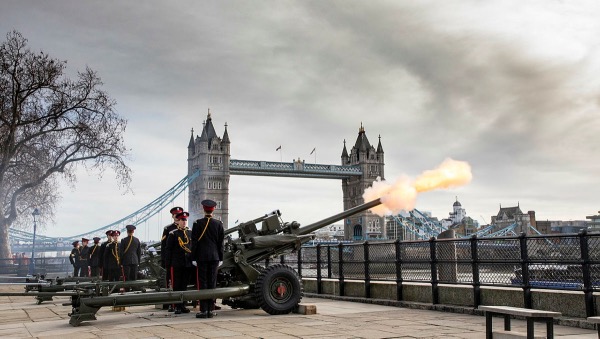
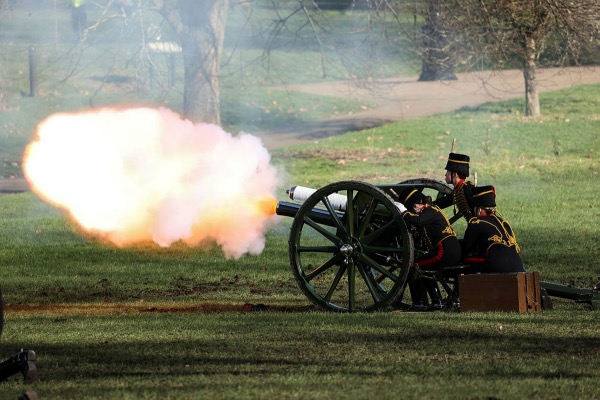
The Honourable Artillery Company fires a 62 gun salute at the Tower of London to mark the 70th Anniversary of Queen Elizabeth II’s accession to the throne. The gun salute at the Tower was one of a number which took place across the UK on Monday – while the date of the Queen’s accession was the 6th February, gun salutes do not traditionally take place on a Sunday. The gun salutes are traditionally comprised of 21 rounds with a further 20 rounds fired at Royal Parks and palaces and a further 21 at the Tower to show the respect the City of London has for the Queen. Below, the King’s Troop Royal Horse Artillery can be seen firing 41 rounds in Green Park.

PICTURE: Corporal Rebecca Brown RLC (Copyright: ©MoD Crown Copyright 2022)

This Week in London – Costa Rican orchids at Kew; Holocaust survivor portraits; and, Bob Marley at Saatchi…

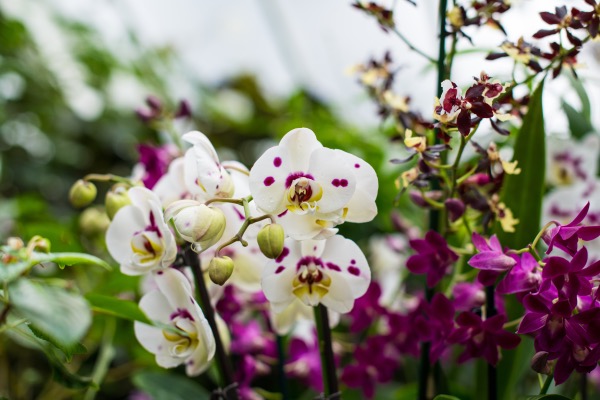
A scene from Kew Gardens’ Orchid Festival in 2020.

Biodiversity hotspot Costa Rica is the focus of this year’s Orchid Festival which opens at Kew Gardens on Saturday. The festival, which returns for the first time in two years, sees a recreation of the verdant landscape of the Caribbean island nation in the Princess of Wales Conservatory – including the creation of monkeys, sea turtles, toads and hummingbirds in plant form – with a central display in the glasshouse pond of vibrant orchids and bromeliads. Meanwhile, the International Garden Photographer of the Year exhibition is also opening in Kew’s Arboretum and features a selection of images from across categories including ‘Beautiful Gardens’, ‘The Beauty of Plants’ and ‘The World of Fungi’ as well as winner of the ‘Captured at Kew’ special award. Both can be seen until 6th March. Admission charge applies. For more, see www.kew.org.

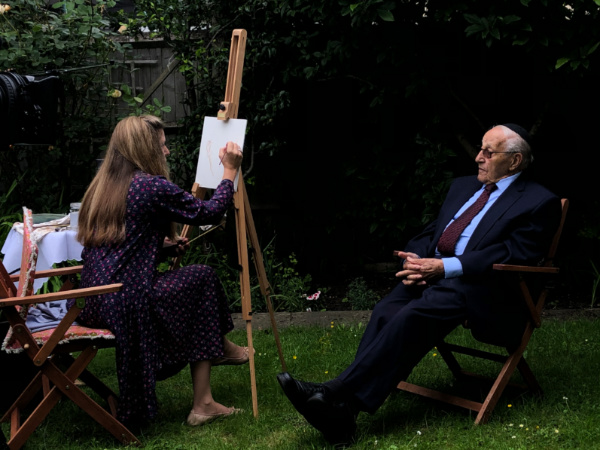
Artist Clara Drummond and Holocaust survivor Manfred Goldberg BEM, PICTURE: Angel Li and BBC Studios

• A series of portraits depicting Holocaust survivors has gone on show at The Queen’s Gallery in Buckingham Palace. The seven works in Seven Portraits: Surviving the Holocaust were commissioned by Prince Charles in his role as patron of Holocaust Memorial Day which was marked last week. The exhibition can be seen at The Queen’s Gallery until 13th February. Admission charge applies. For more on Holocaust Memorial Day, see www.hmd.org.uk. For more on The Queen’s Gallery, head to www.rct.uk/visit/the-queens-gallery-buckingham-palace.

Music Room by © Adrian Boot

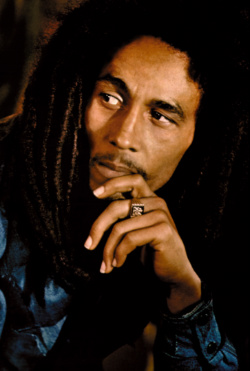
Music icon Bob Marley is the subject of an exhibition which opened at the Saatchi Gallery this week. Bob Marley: One Love Experience features hitherto unseen photographs of Marley as well as memorabilia, giant art installations and multi-sensory experiences as visitors are led through a series of rooms including the ‘One Love Music Room’, the ‘One Love Forest’ and the ‘Soul Shakedown Studio’. The exhibition runs until 17th April. Admission charges apply. For more, see www.bobmarleyexp.com.

Send items for inclusion to exploringlondon@gmail.com.
This Week in London – ‘The Blue Boy’ returns; Heath Robinson’s children’s stories; and, architectural wonders…

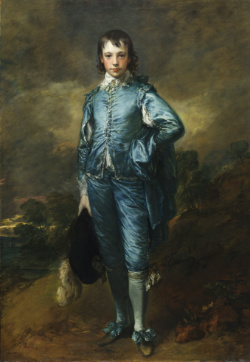
‘The Blue Boy’, Thomas Gainsborough PICTURE: © Courtesy of the Huntington Library, Art Museum, and Botanical Gardens, San Marino, California

A century after it last appeared in the UK, Thomas Gainsborough’s The Blue Boy returns to the National Gallery off Trafalgar Square from next Wednesday. The showing of the painting, which left for the United States in 1921 after it was purchased by rail and property businessman Henry E Huntington, marks the first (and possibly the last) time it has ever been lent out since that date. The full-length portrait, which was created in 1770 by Gainsborough during a period he spent in Bath, can usually be found at the Huntington Library, Art Museum, and Botanical Gardens in San Marino, California. The painting is being shown alongside four other works that, among other things, demonstrate Gainsborough’s interest in Flemish artist Sir Anthony van Dyck’s work from 100 years earlier. They include Van Dyck’s George Villiers, 2nd Duke of Buckingham and Lord Francis Villiers (1635) and Lord John Stuart and his Brother, Lord Bernard Stuart (about 1638) as Gainsborough’s works Elizabeth and Mary Linley (about 1772) and Mrs Siddons (1785). The display can be seen for free in Room 46 from 25th January until 15th May. For more, see nationalgallery.org.uk.

An exhibition showcasing artwork from Heath Robinson’s children’s stories opened at the Heath Robinson Museum in Pinner last Saturday. Heath Robinson’s Children’s Stories features works from books including The Adventures of Uncle Lubin (1902), The Child’s Arabian Nights (1903), Bill the Minder (1912) and Peter Quip in Search of a Friend (1922). Entry is included in general admission charge. Runs until 15th May. For more, see www.heathrobinsonmuseum.org.

Shortlisted and winning entries from The Architecture Drawing Prize 2020 and 2021 have gone on show at Sir John Soane’s Museum in Lincoln’s Inn Fields. The competition, run in partnership with Make Architects and the World Architecture Festival, is now in its fifth year with awards made across three categories – digital, hand-drawn and hybrid. Entry is free (pre booking required). Runs until 20th February. For more, see www.soane.org/exhibitions/architecture-drawing-prize-2021.

Send all items for inclusion to exploringlondon@gmail.com.
This Week in London – Spitfires at Duxford; The Jam in photos; and, Waterloo & City line reopens…

A Spitfire at IWM Duxford. PICTURE: Peter Bromley/Unsplash

The largest collection of Spitfires gathered under one roof can be seen at the Imperial War Museum Duxford’s AirSpace hall. Twelve of the iconic planes have been gathered at the airfield, often referred to as the “home of the Spitfire”. Spitfire: Evolution of an Icon, which is being accompanied by a programme of tours, talks, events and family activities, shows how the plane evolved throughout World War II in order to keep pace with German aircraft development. As well as the IWM’s iconic Mk Ia Spitfire, the display also features Mk V, Mk IX and Mk XIV models. The Spitfires be seen until 20th February. Admission charge applies. For more including details of events, head to www.iwm.org.uk/events/spitfire-evolution-of-an-icon.

A new exhibition focused on photographs of iconic 70s and early 80s band The Jam opens at the City of London Corporation’s Barbican Music Library tomorrow. True is the Dream features the photography of Derek D’Souza who has captured the band and frontman Paul Weller, who went on to found The Style Council, on film over several decades. D’Souza’s work include a career-defining shoot of the band at Chiswick House. The display is free to see until 16th May. For more, see www.barbican.org.uk/whats-on/2022/event/true-is-the-dream.

The Waterloo & City line has reopened following a brief closure over Christmas. The London Underground line, which connects Waterloo to Bank, was temporarily closed by Transport for London in late December following increasing COVID cases in the capital and the impact on staff absence. Meanwhile, the Bank branch of the Northern line (between Moorgate and Kennington) for 17 weeks from 15th January to allow for upgrade works.

Send all items to exploringlondon@gmail.com.

LondonLife – Buckingham Palace…

Buckingham Palace. PICTURE: Debbie Fan/Unsplash.

Buckingham Palace is among the sites across London which will be hosting events to mark Queen Elizabeth II’s Platinum Jubilee this June. The Queen’s 70th year on the throne will be marked with four days of celebrations across the June bank holiday weekend which will include the Queen’s Birthday Parade (known as Trooping the Colour), the lighting of Platinum Jubilee Beacons – including the principal beacon at Buckingham Palace, a Service of Thanksgiving at St Paul’s Cathedral, the ‘Platinum Party at the Palace’ – a celebration concert in the gardens of Buckingham Palace, The Big Jubilee Lunch in communities across the city, and a special Platinum Jubilee Pageant, part of which will see a moving river of flags rippling down The Mall. For more information, head to www.royal.uk/platinum-jubilee-central-weekend.

This Week in London – ‘Westminster Elves’; a song for Nelson; and, Caribbean-British art…

Christmas is fast approaching and, to add to the festivities, Westminster City Council has created an augmented reality experience for families to enjoy at four landmark locations. Under the ‘Westminister Elves’ initiative, families are invited to scan a QR code at Piccadilly Circus, Marble Arch Mound, Soho Square and Hanover Square which will lead them to a microsite which, in turn, will transport them into the elves’ world. There, they can throw snowballs, share a moment with Santa’s reminder and glimpse inside Santa’s workshop as well as, of course, seeing the man himself. Those taking part are also invited to take a selfie or picture of a family member or friend alongside the elves at one of the four locations and post it on Twitter, Instagram or Facebook using the #WestminsterElves and tagging @CityWestminster. They’ll then be entered into a competition to win a £50 Love to Shop voucher. The competition closes at midnight next Wednesday with the winner announced on Christmas Eve. For more, see www.westminster-elves.co.uk.

A recording of old sea song paying tribute to Horatio Nelson was released by the Museum of London this week. The song, which was  thought to have been sung after the battle of Cape St Vincent in 1797 and subsequently transcribed by Nelson, was brought to life by musicians from the Guildhall School of Music & Drama. The recording marked the first performance of the piece in more than 200 years. While th song’s existence had previously been known about – it was referred to in a letter from Nelson to William Douglas, 4th Duke of Queensberry, which was was sold at auction in 2013 – it was one of four rediscovered last year among songbooks belonging to Nelson’s lover, actress and model Emma Hamilton. “The song was written by Nelson’s crew in one of his early victories,” said Lluis Tembleque Teres, the Museum of London librarian who found the songs. “It is fascinating how, some four years later and already a national hero, he recovers the lyrics and sends them to the Duke of Queensberry, almost as if showing off his early successes. The Duke then adds music and a chorus, and gifts the manuscript to Emma Hamilton, thus allowing us exactly 220 years later to relive Nelson’s fame while performing it.” The song’s release follows a special one-off live performance of all four songs at the Museum of London Docklands on 11th December, which will be available to watch in full as an online event – DIGITAL Emma’s Songbooks: rediscovered music for Nelson – next Tuesday, 21st December. Admission charge applies. For more, see museumoflondon.org.uk 

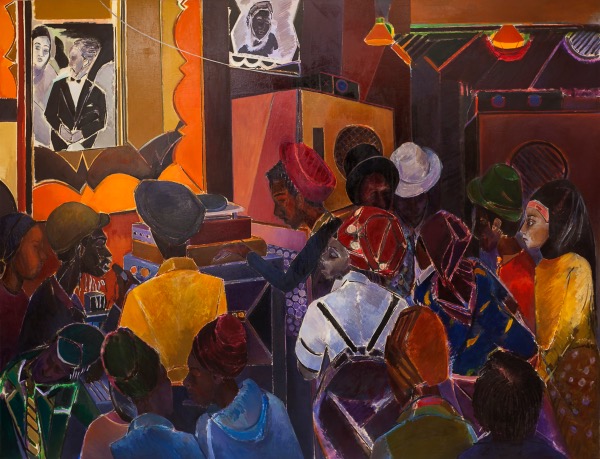
Denzil Forrester Jah Shaka, 1983. Collection Shane Akeroyd, London © Denzil Forrester

A landmark exhibition exploring the extraordinary breadth of Caribbean-British art over four generations can be seen at Tate Britain. Life Between Islands  spans 70 years of culture, experiences and ideas expressed through art and features more than 40 artists, including those of Caribbean heritage as well as those inspired by the Caribbean, such as Ronald Moody, Frank Bowling, Sonia Boyce, Claudette Johnson, Peter Doig, Hew Locke, Steve McQueen, Grace Wales Bonner and Alberta Whittle. Highlights include Neil Kenlock’s Black Panther school bags (1970), Denzil Forrester’s Death Walk (1983) – a tribute to Winston Rose who died in police custody, Lisa Brice’s After Ophelia (2018) – a work inspired by her time on Trinidad and new works including designs by Grace Wales Bonner evoking the brass bands and parades of the Commonwealth Caribbean. Runs until 3rd April. Admission charge applies. For more, see www.tate.org.uk.

Send all items for inclusion to exploringlondon@gmail.com.
LondonLife – A Christmas menagerie at the Tower…

ALL PICTURES: © Historic Royal Palaces.

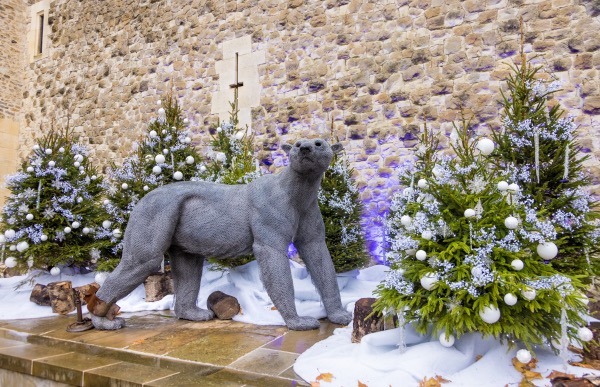
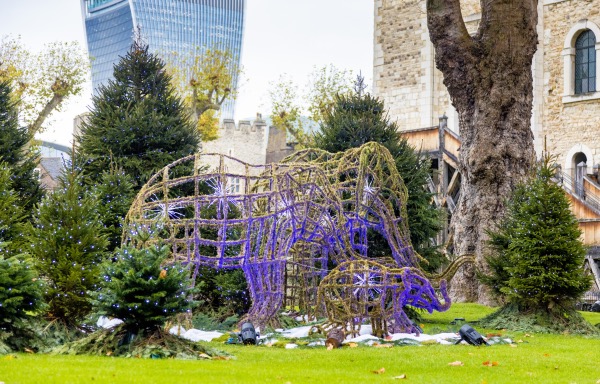
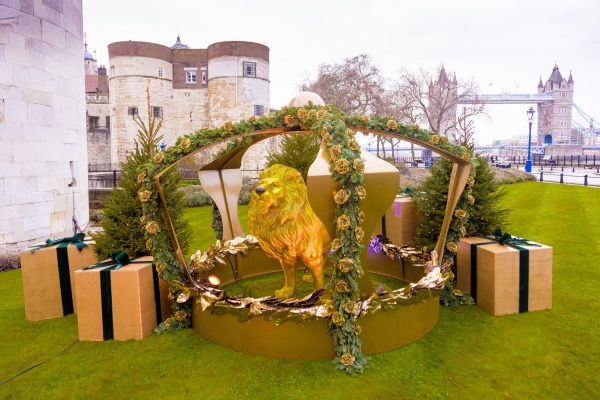
The Royal Menagerie at the Tower of London has been decked out for Christmas with an array of glittering decorations. Animals including a polar bear, elephants and lions were kept at various times in the Tower’s menagerie which started thanks to a royal penchant to giving exotic animals as gifts to fellow monarchs. King Edward I created the first permanent home for the menagerie which, after hundreds of years, closed for good in 1835. The Christmas display the Tower, which centres on the Tower Green Christmas tree, can be seen until 3rd January. Admission charges apply. For more, see www.hrp.org.uk.

This Week in London – Hampton Court’s astronomical clock after hours; Beethoven explored at the British Library; and, the Sherman Rangers Yeomanry at the National Army Museum…

Palace of Stardust at Hampton Court Palace. PICTURE: © Historic Royal Palaces

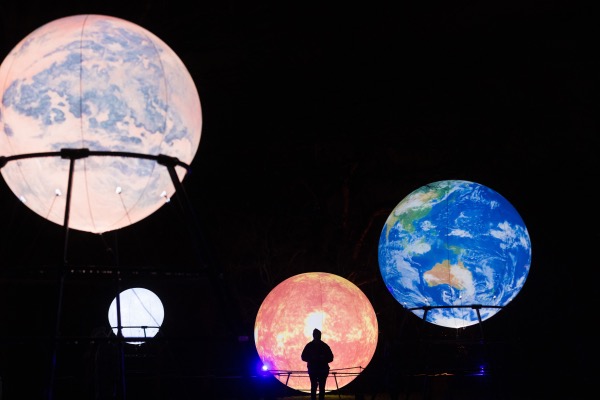
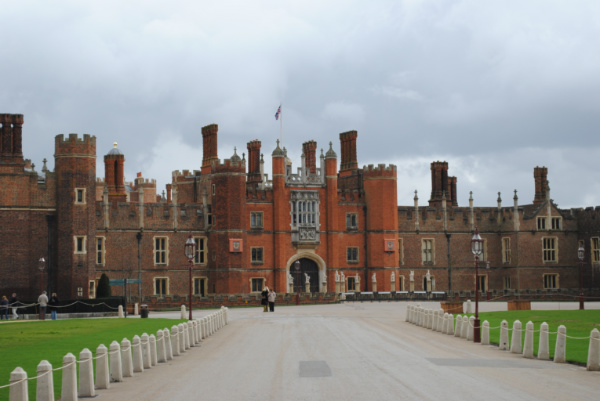
• An after-hours light trail featuring clocks, moons, planets and sundials has opened at Hampton Court Palace this week. Palace of Stardust takes people through the palace’s historic cobbled courtyards and gardens which have been filled with magical illuminations inspired by the palace’s famous astronomical clock installed at the command of King Henry VIII. Visitors to the display, designed and created by award-winning outdoor event producers Wild Rumpus, will uncover the mysterious meanings on the clock’s dial, attend a flickering moonlit ball in the East Front Gardens, hear the ancient royal trees as they whisper their secrets and peek into mysterious miniature shadow worlds before being transported to another planet in the deepest depths of the Wilderness, once home to King Charles II’s formal pleasure garden. Seasonal food and drink will also be available. Runs until 3rd January. Admission charge applies. For more, see www.hrp.org.uk/hampton-court-palace/whats- on/palace-of-stardust-at-hampton-court-palace.

Beethoven’s tuning fork. PICTURE: © British Library Board, Add. MS 71148 A. Photography by Justine Trickett

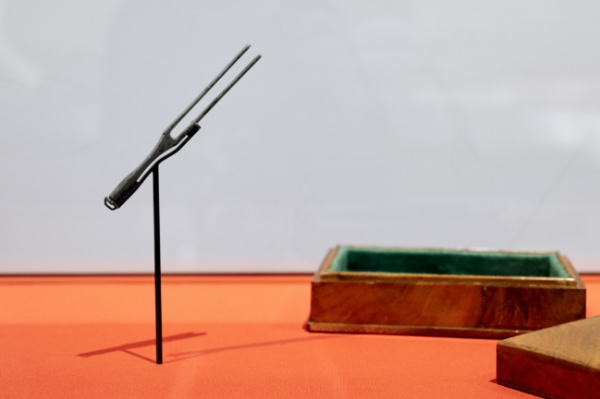
One of the greatest composers of all time, Ludwig van Beethoven (1770-1827), is the subject of a new exhibition opening at the British Library. The display, which draws on the library’s world-famous collection, features manuscripts, archival documents, personal belongings and sound recordings with highlights including Beethoven’s own copy of his earliest published works which he composed at age 12 and 13, sketches for his Pastoral Symphony and late string quartets, a tuning fork which is thought to have belonged to him until 1803, and a pocket sketchbook the composer used to note down musical ideas when out walking, which dates from 1825. There is also a specially commissioned audio-visual incorporating bone conduction to present extracts from the composer’s music in an engaging and immersive way, in particular to those with hearing impairments. The exhibition runs until 24th April. Admission charge applies. For more, see www.bl.uk/events/beethoven. To coincide with the 250th anniversary of Beethoven’s birth, the library last year launched ‘Discovering Music: 19th century‘, a free online resource which explores key works of 19th-century classical music and the social, political and cultural contexts in which they were written.

The World War II story of the elite tank regiment, the Sherwood Rangers Yeomanry, is being told in a new exhibition which opens today at the National Army Museum in Chelsea. Based on broadcaster and historian James Holland’s book, Brothers in Arms, the exhibition spans the period from the D-Day landings on 6th June, 1944, to VE Day almost a year later and focuses on the stories of eight soldiers who served in the regiment as it explores the dangers and pressures they faced and the camaraderie and bonds that bound them together. The exhibition is being accompanied by a programme of events. This Saturday, the Museum is putting a spotlight on tanks with free talks, tours and tank challenges for the family – plus the chance to see a Sherman tank parked up at the Museum. Online booking is recommended. For more, see www.nam.ac.uk/whats-on/brothers-arms.

Send all items for inclusion to exploringlondon@gmail.com.
This Week in London – Borealis at Guildhall Yard; princess panto costumes; and ancient Greeks at the Science Museum…

Borealis. PICTURE: Doug Southall

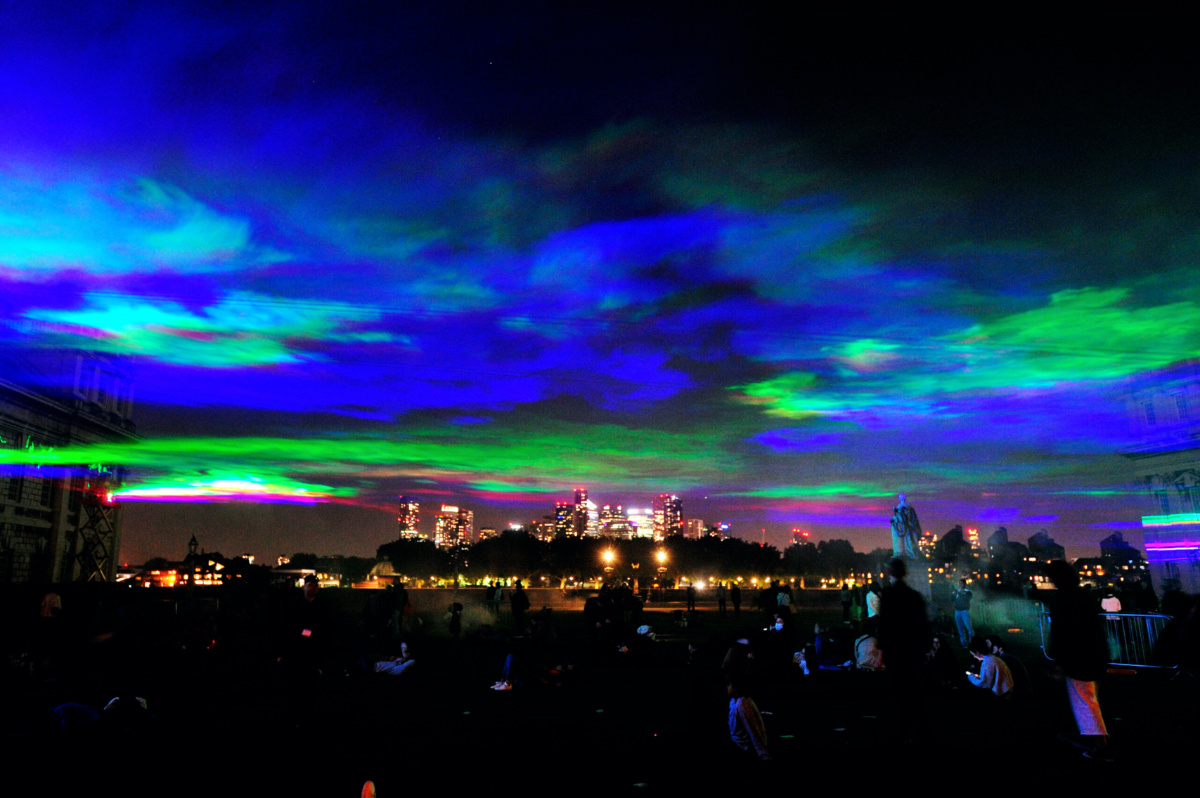
A dazzling light show inspired by the Northern Lights – one of the seven natural wonders of the world – can be seen in the Guildhall Yard this December. Borealis – which can be seen between 11th and 22nd December – is the work of artist Dan Acher and is one of a number of light displays which is illuminating London this winter as part of Mayor Sadiq Khan’s ‘Winter Lights’ campaign. Others include an animal-themed display bringing to life the beasts that once lived at the Tower of London, an outdoor programme of installations and video art projections illuminating the Southbank Centre’s site, the ‘Illuminated River’ display lighting up nine of London’s bridges in what is be the longest public art project in the world, and a free Canary Wharf ‘Winter Lights Spectacular’ in January which will feature 20 new light commissions by some of the most innovative artists across the globe. In Grosvenor Square, Mayfair, thousands of illuminated white roses will form an ‘Ever After Garden’ designed by fashion designer Anya Hindmarch while traditional favourites like the Hyde Park Winter Wonderland as well as winter markets and ice rinks at locations like the Natural History Museum and Somerset House are also once again returning to the city. London’s red buses are an easy way to see the Christmas lights this year with routes 12, 94, 98, 139 and 390 all travelling through Oxford Circus. Free tickets to Borealis can be booked at www.visitlondon.com/Borealis while, for more on the best bus routes, see https://londonblog.tfl.gov.uk/festive-bus-routes/. For more information on all the light shows and events (some of which are already underway), see visitlondon.com    .

Costumes worn by then Princess Elizabeth and her sister Princess Margaret in wartime-era pantomimes are at the heart of a new display at Windsor Castle this Christmas. The princesses spent much of their time at Windsor during World War II – away from the Blitz in London – and, between 1941 and 1944, they performed in and helped to stage a series of pantomimes to raise money for the Royal Household Wool Fund which supplied knitting wool to make comforters for soldiers fighting at the front. Six of the costumes they wore have been brought together for the first time and are being displayed in the castle’s Waterloo Chamber where the pantos were originally performed. The costumes on show were worn in the last two pantos – Aladdin, which was performed in 1943, and Old Mother Red Riding Boots which was performed in 1944. Also on show are 16 large scale pictures of fairy-tale characters that were pasted around the walls to create the space for the performances. Visitors to Windsor this Christmas will also see State Apartments decorated for the festive season and a 20 foot high Christmas tree in St George’s Hall. The Semi-State Rooms, created for King George IV and now used for official entertaining, are also now open to visitors. The costumes can be seen until 31st January. Admission charges apply. For more on the Christmas activities at Windsor, including a ‘Mary, Queen of Scots at Christmas Family Activity Day’ on 18th December, see www.rct.uk/whatson/. Meanwhile, Buckingham Palace is offering guided tours of the State Rooms over winter with special family guided tours available for the first time. The tours run until 30th January. Admission charge applies. For more on the guided tours, head here and for more on the family tours, head here.

• The ancient Greeks’ pursuit of knowledge is the subject of a new exhibition which has opened at the Science Museum in South Kensington. Ancient Greeks: Science and Wisdom takes visitors on a journey in which they will sail the perilous seas with a statue of Hermes that was discovered on a shipwreck off the island of Antikythera, experience the lost music of the aulos instrument through interactive displays and an exclusive video that reimagines its ancient sounds, and gaze at the starry cosmos through ancient Greek eyes via a beautiful and rare silver globe depicting the known constellations and a Byzantine sundial-calendar – the second oldest known geared mechanism in the world. The free display can be seen until 5th June. Tickets are required – to book head to sciencemuseum.org.uk/ancient-greeks.

Send all items for inclusion to exploringlondon@gmail.com.
This Week in London – Faberge eggs; Royal jeweller Garrard; and, Christmas at Kew…

The Alexander Palace Egg, Fabergé. Chief Workmaster Henrik Wigström (1862-1923), gold, silver, enamel, diamonds, rubies, nephrite, rock crystal, glass, wood, velvet, bone, 1908 © The Moscow Kremlin Museums

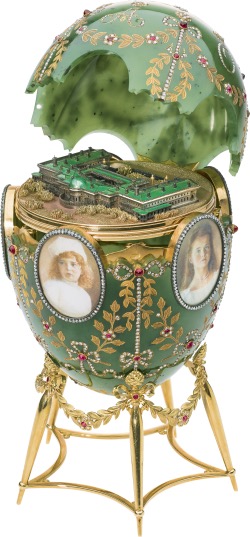
• The largest collection of Faberge’s Imperial Easter eggs to be displayed together in a generation go on show at the V&A from Saturday. Fabergé in London: Romance to Revolution is the first major exhibition devoted to the international prominence of Russian goldsmith, Carl Fabergé, and his little-known London branch. Divided into three sections which cover everything from the techniques and detailing synonymous with the Faberge name to his time in London, the royal patronage he received, and the impact of the Great War and Russian Revolution on the business. The display features more than 200 objects with highlights including a prayer book gifted by Emperor Nicholas II to Empress Alexandra Feodorovna on his Coronation Day, the only known example of solid gold tea service crafted by Fabergé, a rare figurine of a veteran English soldier commissioned by King Edward VII, and a “kaleidoscopic display” of 15 of the Imperial Easter Eggs. The latter include several that have never before been shown in the UK including the largest Imperial Egg – the Moscow Kremlin Egg – which was inspired by the architecture of the Dormition Cathedral, the Alexander Palace Egg – which features watercolour portraits of the children of Nicholas II and Empress Alexandra and contains a model of the palace inside (pictured), the recently rediscovered Third Imperial Egg of 1887 (found by a scrap dealer in 2011) and Empress Alexandra Feodorovna’s Basket of Flowers Egg. Runs until 8th May. Admission charge applies. For more, see www.vam.ac.uk.

The Royal Family’s relationship with the jeweller Garrard is the subject of a new exhibition which has opened in Kensington Palace’s ‘Jewel Room’. Going on display for the first time are examples of the firm’s ledgers which document royal commissions dating back to 1735 while other highlights include Queen Mary’s fringe tiara which was made in 1919 using diamonds taken from Queen Victoria’s wedding gift to Queen Mary and which was subsequently worn by Queen Elizabeth II on her wedding day. Admission charge applies. For more, see www.hrp.org.uk/kensington-palace.

Botanical illustrations from the archives at Kew Gardens are brought to life on a canvas consisting of a selection of spectacular trees from the arboretum as part of this year’s Christmas display. Christmas at Kew also includes Spheric – a 15-metre-wide dome of light covered in more than 2,000 individually controlled LED pixels which sits on a reflective water pool and allows visitors to fully immerse themselves in a unique mirrored illusion as they cross the lake, a new installation for Holly Walk which will illuminate the night sky for over 200 metres overhead as it replicates the enchanting visual phenomenon of the Aurora Borealis, a vibrant rainbow tree illumination which brings to life the 12 Days of Christmas, and the ever-popular Fire Garden. The display can be seen until 9th January. Admission charge applies. For more, see www.kew.org.

Send all items for inclusion to exploringlondon@gmail.com.

LondonLife – Commemorating World War I at Hampton Court Palace…

Hampton Court Palace. PICTURE: David Adams

Standing with Giants, a thought-provoking art installation at Hampton Court Palace, commemorates the lives lost in World War I and II and, in particular, the Indian soldiers who resided on the palace’s estate prior to the coronation of King Edward VII in 1902, and again for the World War I Victory Parade in London. The work of Oxfordshire artist Dan Barton and a dedicated group of volunteers, the work – located in the East Front gardens – features 100 almost life-sized silhouettes of soldiers and 75 screen-printed poppy wreaths along with an additional 25 specially commissioned silhouettes which represent the Indian soldiers. Almost 1,800 Indian Army officers, soldiers, and civilian workers sailed from India for the World War I Victory Parade and a camp was specially created to house them in the palace grounds in what was at the time one of the largest gatherings of people from India and South-East Asia ever assembled the UK. During their stay in London, the soldiers were treated to excursions in London and across the country which included trips to the Tower of London and a Chelsea football match. Alongside the display, a special trail map has been created to allow visitors to explore other aspects of the palace’s World War I history and former residents who took on roles ranging from frontline nurses to campaigners for improved care for injured veterans. One of the most poignant contributions the palace made to the war effort was the use of wood, supplied from an oak tree felled in Hampton Court’s Home Park, for the making of the coffin for the Unknown Soldier. Can be seen until 28th November. Admission charge applies. For more, see www.hrp.org.uk.

This Week in London – The Lord Mayor’s Show returns; Peru at the British Museum for the first time; and, Heritage at Risk in London…

The Lord Mayor’s Show returns to London this weekend after being cancelled last year due to the coronavirus pandemic. More than 6,500 people, 120 horses and more than 50 decorated floats are expected to take part in the event – which dates back to the 13th century – on Saturday. It comes a day after Alderman Vincent Keaveny, who has been elected as the 693rd Lord Mayor of the City of London, officially takes office tomorrow. Highlights in this year’s three mile-long procession include colourful full-size model elephants, Japanese taiko drummers, and a horse-drawn bus as well as a fire engine with a 210-foot extendable turntable ladder – the tallest in Europe. The procession, which will be watched by millions live on the BBC and through online streaming, will leave The Mansion House, the Lord Mayor’s official residence, at 11am. In honour of this year’s show, three of London’s Thames bridges – London, Cannon St and Southwark – are being lit specially for the occasion. For more, including details on where to watch the show, see www.lordmayorsshow.london.

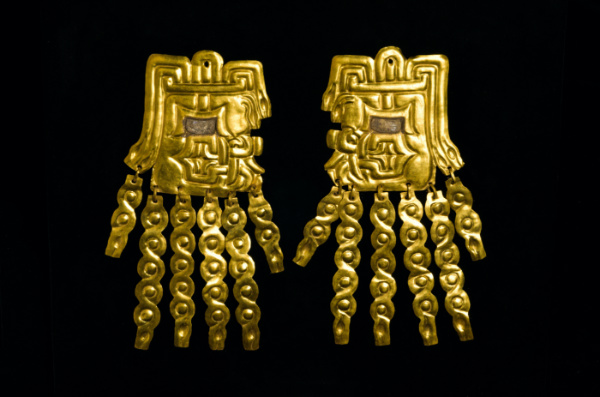
Gold alloy and shell ear plates with feline features, Peru, 800–550 BC. Museo Kuntur Wasi.

More than 40 ancient objects from Peru are the centrepiece of a new exhibition which opened at the British Museum this week. Peru: a journey in time is the first major exhibition the museum has ever staged focused on Peru and coincides with the 200th anniversary of the country’s independence. The exhibition charts the rise and fall of six societies, from the early culture of Chavin in 1200 BC to the fall of the Incas in AD 1532. Highlights include a 2,500-year-old gold headdress and pair of ear plates which were part of an elite burial found at the site of Kuntur Wasi, Cajamarca, a ceremonial drum from around 100 BC-AD 650 featuring a depiction of the capture of defeated enemies in ritual combat, and, the oldest object on loan – a ceremonial vessel from the Cupisnique culture in the shape of a contorted human body, which dates from up to 1200 BC. The display can be seen until 20th February, 2022, in the Joseph Hotung Great Court Gallery. Admission charge applies. For more, see www.britishmuseum.org.

• Streatham Hill Theatre in London’s south is among buildings added to Historic England’s ‘Heritage at Risk’ register for this year. Opened in 1929, the Grade II-listed building was designed by William George Robert Sprague and is described as an “unusually lavish example of a theatre built outside of the West End”. Other London buildings on the list include everything from a Toll Gate House in Spaniards Road, Highgate, to Alexandra Palace in Wood Green, and churches such as St Mary Woolnoth in the City of London. Meanwhile, among the sites removed from the list this year after being “saved” are the Battersea Power Station, first added to the list in 1991 and in recent years the subject of a major redevelopment, and former public conveniences at Guilford Place, Lamb’s Conduit Street, in Bloomsbury, which have been “sensitively transformed into a cosy wine and charcuterie bar”. For more, see https://historicengland.org.uk/whats-new/news/heritage-at-risk-2021/.

Send all items to exploringlondon@gmail.com.

LondonLife – Up close with a Komodo dragon…

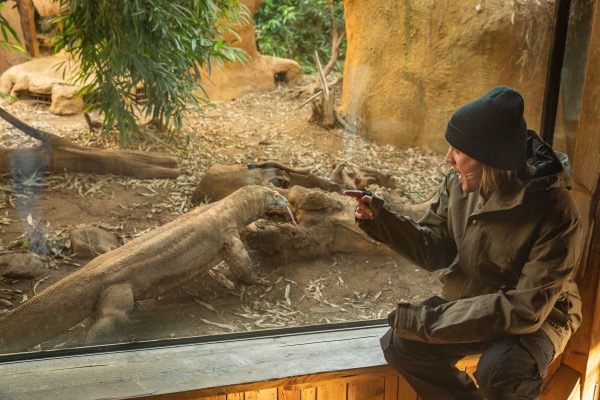
Dougie Poynter meets ZSL London Zoo’s dragon Ganas during The Komodo Dragon Experience. PICTURE: © ZSL

ZSL London Zoo launched its ‘Komodo Dragon Experience’ this month with McFly bassist, Dougie Poynter, getting hands-on in caring for the 13-year-old dragon Ganas. Poynter joined zookeeper Joe Capon behind the scenes at the Attenborough Komodo Dragon House and watched Capon demonstrate the 54 kilogram creature’s training routine. He then helped prepare its food before hiding the meat in holes and inside logs to allow Ganas, one of just 1,400 Komodo dragons left in the world, to use its remarkable sense of smell in obtaining its next meal. The Komodo Dragon Experience is only available twice a month. Admission charge applies. For books, head to zsl.org/the-komodo-dragon-experience.

This Week in London – William Hogarth and the Europeans; Christmas in the post; and, Paul McCartney’s lyrics…

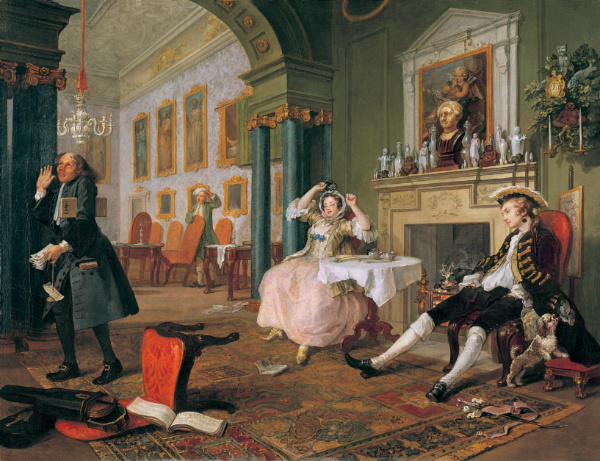
William Hogarth, ‘Marriage A-la-Mode: 2, The Tête à Tête’ (1743) 45 © The National Gallery, London.

• See the works of 18th century English artist William Hogarth alongside those of his European contemporaries in a new exhibition which opened at Tate Britain this week. Hogarth and Europe features more than 60 of Hogarth’s works and has some of his best-known paintings and prints – such as Marriage A-la-Mode (1743), The Gate of Calais (1748), Gin Lane (1751) and his celebrated series, A Rake’s Progress (1734) – shown alongside works by famed European artists including Jean-Siméon Chardin, Pietro Longhi, and Cornelis Troost. The display also includes Hogarth’s work, Miss Mary Edwards (1742) – it depicts the eccentric, wealthy patron who commissioned many of Hogarth’s best-known works and has not been seen in the UK for more than century. Admission charge applies. See www.tate.org.uk.

The first commercial Christmas card, created after civil servant Henry Cole commissioned artist​ John​ Callcott​ Horsley to design one for him in 1843, can once again been seen at The Postal Museum’s permanent display. That’s just one of the drawcards (pardon the pun), at the Postal Museum in the lead-up to Christmas with others including a new display, Letters to Santa, featuring Royal Mail cards sent by Father Christmas to children between 1963 and 2010 (from a recently donated collection), and the chance to ride on the Mail Rail which has undergone a Christmas makeover. The museum is also holding a series of ‘Festive Family Fun Days’ on selected dates in December. Admission charges apply. For more, head to www.postalmuseum.org.

Handwritten lyrics and photographs spanning the career of Paul McCartney feature in a new free Entrance Hall display at the British Library from tomorrow. Paul McCartney: The Lyrics features previously unseen materials from his personal archives as it reveals the process and people behind some of the most famous songs of all time, from some of his earliest compositions to his time with The Beatles, Wings and through to today. The display accompanies his new book, The Lyrics: 1956 to the Present. Can be seen until 13th March next year. For more, see www.bl.uk/events/paul-mccartney-the-lyrics.

Send all items for inclusion to exploringlondon@gmail.com.

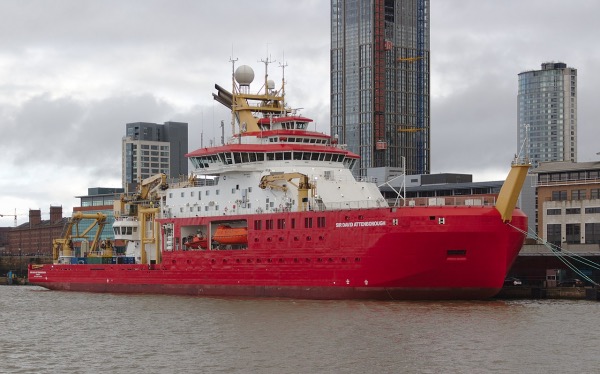
This Week in London – The ‘RRS Sir David Attenborough’ at Greenwich; the Amazon explored at the Science Museum; and, Christmas at The National Gallery…

The RRS Sir David Attenborough in Liverpool. PICTURE: By Phil Nash from Wikimedia Commons CC BY-SA 4.0 & GFDL.

Find out what it’s like to live and work in the Earth’s polar extremes at Greenwich from today. The three day ‘Ice World Festival’ centres on the British Antarctic Survey’s vessel, the RRS Sir David Attenborough, which is visiting Greenwich before beginning its first mission to the Antarctic. Visitors will also be able to meet real polar scientists and explorers and see the Boaty McBoatface submersible as well as treasures from the National Maritime Museum’s polar collection including relics from HMS Erebus and Terror and items belonging to Captain Scott and Ernest Shackleton. While the ship can be seen from the dockside, a limited number of tickets are available for walk-up visitors to the festival (advanced booking tickets have sold out). Runs from today until 30th October. Admission is free. For more information, head here.

More than 200 images – captured by Brazilian photographer Sebastião Salgado over seven years – explore the rich diversity of the Amazon in an exhibition at the Science Museum. Amazônia provides a close-up look at one of the most unique environments on the planet through Salgado’s eyes, including panoramic scenery and the Indigenous peoples of the region (Salgado spent time with 12 different Indigenous groups over his period in the Amazon). Runs until March next year. Admission charge applies. For more, see www.sciencemuseum.org.uk/see-and-do/amazonia.

Father Christmas with return to The National Gallery for selected dates in November and December. The gallery’s Christmas experience will provide children with the chance to have their photo taken with Santa in his grotto, listen to an elven story in the winter forest set and receive a special token which they can exchange for a gift at the Elven Sorting Office. Meanwhile, Hendrick Avercamp’s painting A Winter Scene with Skaters near a Castle (about 1608–9) will be enlarged and reproduced on a canvas to provide a scenic backdrop for the activities. Admission charge applies. Bookings are now open. For more, head to www.nationalgallery.org.uk/whats-on/meet-father-christmas.

Send all items for inclusion to exploringlondon@gmail.com.
This Week in London – Free family festival kicks off this weekend; Beano the subject of Somerset House exhibition; and, lawyer Helena Normanton honoured…

Pop-Up London, a free festival for families, kicks off in central London on Saturday and runs throughout the half-term break until 31st October. The festival features more than 300 artists – including musicians, dancers, comedy acts and circus performers – who can be seen in more than 100 performances at locations including Trafalgar Square, King’s Cross, Spitalfields, and Canary Wharf. The diverse range of acts will include Brazilian drumming, Cantonese story-telling and Caribbean steelpans. For the full list of events. head to www.visitlondon.com/things-to-do/lets-do-london/pop-up-london.

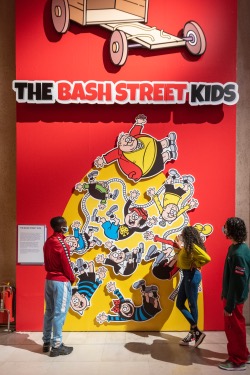
The Bash Street Kids cut outs in ‘Beano: The Art of Breaking the Rules’ PICTURE: Stephen Chung for Somerset House

The world’s longest-running weekly comic, Beano, is celebrated in a new exhibition opening at Somerset House today. Beano: The Art of Breaking the Rules features 100 comic artworks from the Beano archive exhibited, including original drawings never previously seen in public, and, works by contemporary artists including artist duo Gilbert & George, sculptor Phyllida Barlow and Oscar-winning animator Nick Park as well as larger-than-life recreations of Beano’s most iconic settings and interactive installations including Peter Liversidge’s patchwork of protest signs and a jukebox filled with music influenced by Beano’s rebellious streak. Beano was first released in 1938 and is still created weekly at its home in Dundee. This year marks the 70th since Dennis, Beano‘s top mischief-maker, made his debut. Runs until 6th March. Admission charge applies. For more, see www.somersethouse.org.uk/beano.

Barrister and women’s rights advocate Helena Normanton (1882-1957) has been honoured with an English Heritage Blue Plaque at her former home. The plaque at 22 Mecklenburgh Square – where Normanton lived from 1919 to 1931 – was unveiled almost 100 years since she passed her Bar finals on 26th October, 1921. Normanton played an instrumental tole in paving the way for women to practice law, being the first female students one of London’s Inns of Court, one of the first women to be called to the Bar, the first female counsel to lead a case in the High Court, the first woman to run a trial at the Old Bailey and the first women to lead murder trials in England as well as one of the first two women to take silk as King’s Counsel. For more, see www.english-heritage.org.uk/visit/blue-plaques.

Send all items for inclusion to exploringlondon@gmail.com.
This Week in London – The extraordinary story of George King; Guildhall statues survive (with explanations); and, Wildlife Photographer of the Year…

The extraordinary story of 18th century foundling and sailor George King, who fought in the Battle of Trafalgar, is the subject of a new exhibition opening at the Foundling Museum in Bloomsbury tomorrow. Fighting Talk: One Boy’s Journey from Abandonment to Trafalgar features King’s hand-written account of his life, a fragment of the flag from Nelson’s coffin, letters between the Foundling Hospital’s matron and Lady Emma Hamilton (annotated by Nelson himself) and two rare Naval General Service Medals, of which only 221 were awarded retrospectively when the medal was first issued in 1849, belonging to King and the foundling William South, who served aboard HMS Victory. There is also a display of works by contemporary artist and photographer Ingrid Pollard – Ship’s Tack – which reflects on the Foundling Hospital’s connections with Empire, trade and the Navy and which includes newly commissioned work responding directly to George’s autobiography. Runs until 27th February. Admission charge applies. For more, see www.foundlingmuseum.org.uk.

Two Guildhall statues portraying figures with links to the slave trade will be retained but have information added detailing those links. The City of London Corporation’s Court of Common Council voted last week to keep the statues of William Beckford and Sir John Cass which will have plaques or notices placed alongside them containing contextual information about the two men’s links to slavery. William Beckford was an 18th century slave owner and two-time Lord Mayor of London, while Cass – an MP and philanthropist – was a key figure in the Royal African Company, which traded in slaves in the 17th and 18th centuries. Sir John Cass’s Foundation Primary School in the City and the nearby Cass Business School have already changed their names to remove the association with their founder and his links to slavery.

•  French underwater photographer and biologist Laurent Ballesta has won the Natural History Museum’s Wildlife Photographer of the Year for an image showing camouflage groupers exiting their milky cloud of eggs and sperm in Fakarava, French Polynesia. The image was selected out of 50,000 entries from 95 countries and is being displayed with 100 images in an exhibition opening at the museum on Friday. Meanwhile 10-year old Vidyun R Hebbar, who lives in Bengaluru, India, was awarded the Young Wildlife Photographer of the Year 2021 for his colourful image, Dome home, showing a tent spider as a tuk-tuk passes by. The exhibition can be seen until 5th June next year. Admission charge applies. For more, see www.nhm.ac.uk/visit/exhibitions/wildlife-photographer-of-the-year.

Send all items for inclusion to exploringlondon@gmail.com.
This Week in London – Elizabeth I and Mary, Queen of Scots; Ellen and William Craft honoured; and, Kehinde Wiley’s ‘Portrait of Melissa Thompson’…

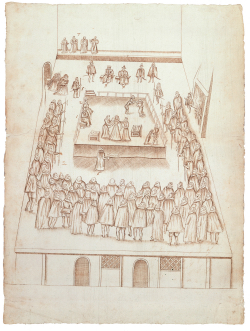
Ink and pencil drawing of the execution of Mary, Queen of Scots at Fotheringhay Castle, 8th February, 1587 © British Library (Additional MS 48027, f. 650r)

• The complex relationship between Queen Elizabeth I and Mary, Queen of Scots, is the subject of a new exhibition opening at the British Library in King’s Cross tomorrow. Highlights of Elizabeth and Mary: Royal Cousins, Rival Queens, the first major exhibition to consider both women together, include Queen Elizabeth I’s 1545 handwritten translation of her stepmother Katherine Parr’s Prayers and Meditations – a gift for her father King Henry VIII, a sonnet by Mary, Queen of Scots, which was handwritten the night before she was executed in 1587 (possibly the last thing she ever wrote), the ‘Penicuik Jewels’ which she is thought to have given away on the day of her death and Robert Beale’s eye-witness drawing depicting her entering the hall, disrobing, and placing her head on the block (pictured right). Other items on show include King Henry VIII’s Great Bible (dating from 1540, it was later inherited by Elizabeth I), Elizabeth I’s mother-of-pearl locket ring (c1575) containing miniature portraits of herself and her mother Anne Boleyn, and the warrant confining Mary, Queen of Scots, in Lochleven Castle in 1567. The exhibition is accompanied by a programme of events. Runs until 20th February. Admission charge applies. For more, see www.bl.uk/events/elizabeth-and-mary.

Nineteenth century African-American abolitionists Ellen and William Craft have been honoured with an English Heritage Blue Plaque at their former Hammersmith home. The Crafts escaped from enslavement in Georgia in the US in December, 1848, and fled to Britain, settling in a mid-Victorian house at 26 Cambridge Grove where they raised a family and campaigned for an end to slavery. The Crafts returned to the US following the end of the American Civil War and the emancipation of enslaved people and settled in Boston with three of their children. In 1873, they established the Woodville Cooperative Farm School in Bryan County, Georgia, for the children of those who had been emancipated. Ellen died in Georgia in 1891 and William in Charleston in 1900.

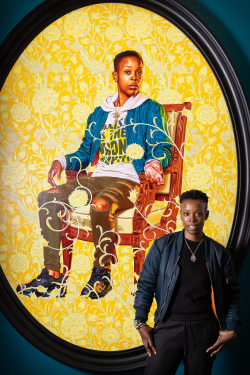
Melissa Thompson standing beside Kehinde Wiley’s Portrait of Melissa Thompson, 2020, now on display at the V&A © Victoria and Albert Museum

American artist Kehinde Wiley’s monumental Portrait of Melissa Thompson has gone on display in the V&A’s British Galleries, alongside William Morris’s Wild Tulip designs that inspired it. The massive oil painting, which was created as part of Wiley’s series The Yellow Wallpaper and was first exhibited at the William Morris Gallery in Walthamstow in 2020, was acquired earlier this year and is being displayed as part of a series of initiatives marking the 125th anniversary of William Morris’s death this October. The painting will be displayed in the William Morris Room (room 125) until 2024, after which it will move to its permanent home at V&A East Museum in 2025. Admission is free. For more, head to vam.ac.uk.

Send all items to exploringlondon@gmail.com.
LondonLife – 5,000 haikus take flight…

PICTURE: RBG Kew

One Thousand Springs, an artwork by internationally renowned artist Chiharu Shiota, is the centrepiece of the Japan festival taking place at Kew Gardens in west London. The work features 5,000 haikus submitted by members of the public which have been suspended on red threads in the Victorian-era Temperate House. Says Shiota: “The Japanese language was formed by a culture that cherishes the natural world. Many cultural practices like ikebana, bonsai and hanami are based on the contemplation and enjoyment of nature. For One Thousand Springs I chose to focus on the haiku. The traditional haiku mentions one of the seasons and many haikus are based on observations in nature.” The installation can be seen throughout the month-long festival along with horticultural displays including a specially commissioned Chalk Garden, a contemporary response to a Japanese garden showcasing native plants including grasses, shrubs and trees. For more on the festival, including after hours events, see www.kew.org/kew-gardens/whats-on/festival-japan.