This Week in London – Christmas Tree lighting goes virtual; Ottobah Cugoano’s Blue Plaque; and, see ‘Leila Alaoui: Rite of Passage’ online…

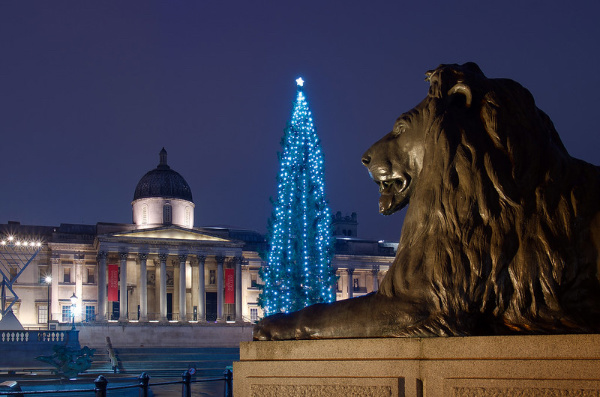
The Christmas Tree in Trafalgar Square in 2017. PICTURE: Raphaël Chekroun (licensed under CC BY-ND 2.0)

The traditional Trafalgar Square tree lighting ceremony has gone virtual for the first time this year due to coronavirus restrictions. The online event, which will be held at 6pm on 3rd December via YouTube and Facebook, will include messages from the Lord Mayor of Westminster and the Mayor of Oslo as well as information on the history behind the gift of the tree, footage of its journey from the forests of Norway to London, and performances from the Salvation Army, the Poetry Society and the St Martin-in-the-Fields Choir. While the tree felling ceremony in Norway is usually attended by the Lord Mayor of Westminster, this year COVID restrictions meant he was represented by the British Ambassador to Norway, Richard Wood, who was joined by the Mayor of Oslo, Marianne Borgen, and school children from Maridalen school in Oslo, to witness the tree begin its journey to London. A Norwegian spruce has been given by the people of Oslo to the people of the UK in thanks for their support during World War II in the lead-up to every Christmas since 1947. Once the tree arrives in London, it is decorated with Christmas lights in a traditional Norwegian manner.  For more on the tree, see westminster.gov.uk/trafalgar-square-christmas-tree.

Eighteenth century anti-slavery campaigner Ottobah Cugoano – a former slave himself – has been honoured with an English Heritage Blue Plaque. The plaque is located at Schomberg House at 80–82 Pall Mall, the property where he was employed as a servant by artists Richard and Maria Cosway. It was while living here in the 1780’s that Cugoano wrote the book, Thoughts and Sentiments on the Evil and Wicked Traffic of the Slavery and Commerce of the Human Species, Humbly Submitted to the Inhabitants of Great-Britain, one of the first black-authored anti-slavery books to be published in Britain. The house was actually mentioned in the frontispiece of the 1787 edition of Thoughts and Sentiments as one of the places where copies of the book might be obtained. It is, says English Heritage, “evidence of the Cosways’ support for their servant’s endeavours as an author and a campaigner”. For more, see www.english-heritage.org.uk/visit/blue-plaques/.

Somerset House is offering virtual tours of its exhibition Leila Alaoui: Rite of Passage. The exhibition is the first major retrospective of the work of Alaoui, a celebrated French-Moroccan photographer, video artist and activist who died in a terrorist attack at the age of 33 while working on a photography project promoting women’s rights in Burkina Faso in 2016. ​  ​Guided by award-winning broadcaster and cultural commentator Ekow Eshun, the tour of the exhibition takes in three of the artist’s defining series – No Pasara, which documents the lives of North African migrants trying to reach Europe; Natreen (We Wait), which follows families trying to flee the Syrian conflict, and Les Marocains, which, inspired by Robert Frank’s The Americans, meets the many individuals who make up the multifaceted fabric of contemporary Morocco.  The exhibition also includes an unfinished video project L’Ile du Diable ​(Devil’s Island) which Alaoui was working at the time of her death, featuring dispossessed migrant workers at the old Renault factory in Paris.  The free tour can be accessed at www.somersethouse.org.uk/blog/virtual-tour-leila-alaoui-rite-passage.

Send all items for inclusion to exploringlondon@gmail.com.

LondonLife – Buckingham Palace’s Picture Gallery empties out…

Old Masters have been removed from the Picture Gallery at Buckingham Palace for the first time in almost 45 years to allow for essential maintenance works. The works, which include paintings by Titian, Rembrandt, Vermeer, Van Dyck and Canaletto, will be featured in a landmark new exhibition – Masterpieces from Buckingham Palace – which, featuring some 65 artworks in total, opens in the palace’s Queen’s Gallery on 4th December. They have been removed from the Picture Gallery – one of the palace’s State Room where Old Master paintings have hung since the reign of King George IV in the 1820s – over a period of four weeks to allow for building improvements which will include the replacement of electrics and pipework – some of which has not been updated since the 1940s – as well as the gallery’s roof. The refurbishment is part of a £370 million, 10 year refit programme being carried out at the palace due for completion in 2027.

This Week in London – Female pirates at Wapping; historic Zoom backgrounds; and, new virtual tours of London’s hidden Underground…

As controversy continues to swirl around the statue dedicated to Mary Wollstonecraft in Newington Green, another statue was unveiled in London this week – this time depicting two women pirates which some accounts say were lovers. The statue of Mary Read and Anne Bonny was unveiled at Execution Dock on the north bank of the Thames at Wapping – a site where pirates and smugglers were put to death for more than 400 years. Commissioned by audiobook company Audible to mark the release of a podcast, Hell Cats, a dramatic interpretation of the two women’s lives, the statue of Read and Bonny is the work of artist Amanda Cotton. Early next year it will be relocated to Burgh Island off the south Devon coast.

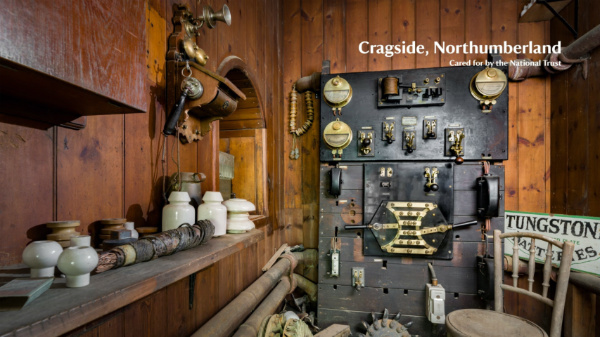
The National Trust has released a series of six free downloadable backdrops – featuring some of the star interiors from its properties – for use in virtual meetings. The backdrops on offer include Vita Sackville-West’s writing room in the tower at Sissinghurst Castle in Kent, Agatha Christie’s library at Greenway, and the ‘Office of the Caretaker of the Electric Light’ at Cragside (pictured above). Different backgrounds will come online in coming weeks. Head to www.nationaltrust.org.uk/features/virtual-backgrounds-for-zoom

The London Transport Museum has unveiled three new virtual tours taking in the Holborn (Kingsway) area, Brompton Road station and King William Street station. The tours, part of the museum’s Hidden London programme, provide access to areas not usually open to the public as well as to historic archival material and footage from the museum’s collection and are led by expert guides on Zoom. Admission charges apply. For more, including dates, see www.ltmuseum.co.uk/hidden-london/virtual-tours.

Send all items for inclusion to exploringlondon@gmail.com

This Week in London – Mary Wollstonecraft controversy; ‘Faint Signals’; National Gallery’s new digital partnership; and, have your say on City of London landmarks…

A controversial new statue commemorating feminist icon Mary Wollstonecraft was unveiled in Newington Green, near where Wollstonescraft lived and opened a girls’ school, in the city’s north this week. Designed by British artist Maggi Hambling, A Sculpture for Mary Wollstonecraft depicts a small nude female figure – described by those behind the campaign for the statue as “Everywoman, her own person, ready to confront the world” – rising out of other, intermingled, female forms below. Hambling said she wanted the sculpture to reflect Wollstonecraft’s spirit, rather than her likeness. The statue’s unveiling is the culmination of a 10 year campaign to see a statue for Wollstonecraft led by author Bee Rowlatt. The statue has already been the target of protestors who have reportedly used black tape, COVID masks, and a T-shirt to cover it up.

Images of Faint Signals on screen by Invisible Flock

A new work set in an imagined Yorkshire forest and looking at how natural sound has changed over the last 50 years has gone online this week. Commissioned by the British Library, Faint Signals is the work of Yorkshire-based interactive arts studio Invisible Flock and allows people to explore Yorkshire’s flora, fauna, and wildlife – both past and present. Launched to mark World Science Day on Tuesday, the work can be visited until 2nd January. Head here faintsignals.io.

‘Butterflies, Moths and Insects with Sprays of Common Hawthorn and Forget-Me-Not’ by Jan van Kessel the Elder (1626 – 1679), 1654, Oil on Wood  © The National Gallery, London 

The National Gallery has launched a new collaboration with camera maker Nikon to showcase the gallery’s works and “explore the synergies between photography and fine art”. In the first collaboration of its kind, the “digital content partnership” will see the gallery work with Nikon to produce a range of online content over the next year. This kicks off with an exploration of Jan van Kessel the Elder’s 1654 work, Butterflies, Moths and Insects with Sprays of Common Hawthorn and Forget-Me-Not, under the Picture of the Month series (the concept of ‘Picture of the Month’ dates back to 1942, when a single painting was returned to the gallery each month from the disused Welsh slate mine where the collection was kept for safety during World War II). The painting is explored in depth in a range of ways on the gallery’s website including through two short films. Further online films, talks and events are planned. For more on the Picture of the Month, head to the National Gallery website.

Londoners still have two weeks to have their say on what should happen to statues and other landmarks in the City of London which have links to slavery and historic racism. The City of London Corporation said it has received more than 800 responses since launching the consultative exercise in September in which it’s asking people to give their views on which landmarks – including statues, street and building names – they think are a problem, and what action they think should be taken. Among those monuments which have been mentioned to date are statues at Guildhall depicting former Lord Mayor William Beckford and MP and philanthropist Sir John Cass, both of whom profited from the slave trade. In September, the Sir John Cass’s Foundation Primary School in the City announced it was changing its name to The Aldgate School to break the link with its controversial founder. Head to  www.cityoflondon.gov.uk/historiclandmarksconsultation by 24th November to take part.

Send all items for inclusion to exploringlondon@gmail.com

LondonLife – Lockdown sentiment…

PICTURE: Kevin Grieve/Unsplash

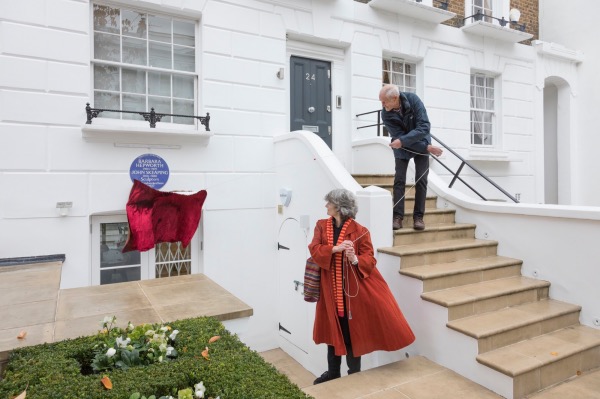
LondonLife – New Blue Plaque for sculptors…

Sophie Bowness and Nicholas Skeaping unveil the Blue Plaque. PICTURE: © English Heritage
This image has an empty alt attribute; its file name is hepworth-and-skeaping-blue-plaque.jpg
© English Heritage.

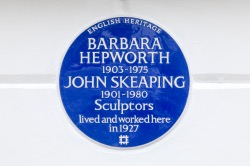
Twentieth century sculptors Barbara Hepworth (1903-1975) and John Skeaping (1901-1980) have been recognised with an English Heritage Blue Plaque at their former home in St John’s Wood. The couple lived in the basement flat at 24 St Ann’s Terrace for less than a year in 1927 but during that time held a joint exhibition (Hepworth’s first ever) in the studio, located in a former billiards room at the rear of the house. The room was also where Hepworth created one of her earliest Mother and Child sculptures as well as works including Doves and Seated Figure. Present at the unveiling last Friday were Sophie Bowness, Barbara Hepworth’s grand-daughter, and Nicholas Skeaping, John Skeaping’s son. For more, on English Heritage Blue Plaques, head to www.english-heritage.org.uk/visit/blue-plaques/.

This Week in London – JMW Turner’s world at the Tate; ‘Unknown Warrior’ centenary marked at National Army Museum; and, model making from the ‘age of railways’…

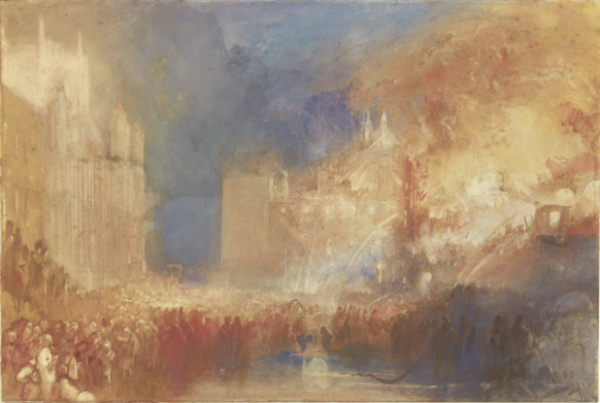
JMW Turner, ‘The Burning of the Houses of Parliament’ (c 1834-35), oil paint on canvas, Tate (accepted by the nation as part of the Turner Bequest 1856)

A landmark exhibition on the work – and times – of JMW Turner opens at the Tate Modern in Millbank today. Turner’s Modern World features some 160 works and attempts to show how the landscape painter found “new ways to capture the momentous events of his day, from technology’s impact on the natural world to the dizzying effects of modernisation on society”. Highlights include war paintings such as The Battle of Trafalgar (1806-8) and Field of Waterloo (1818), works capturing political events like The Burning of the Houses of Lords and Commons (1835) and maritime disasters like A Disaster at Sea (1835) and Wreck of a Transport Ship (c1801), as well as works related to the industrial advances taking place such as Snow Storm (1842), The Fighting ‘Téméraire’ (1839), and Rain, Steam and Speed (1844). Admission charge applies. Runs until 7th March (online booking required). For more, see www.tate.org.uk.

An exhibition at the National Army Museum in Chelsea marks the 100th anniversary of the Unknown Warrior being laid to rest in Westminster Abbey. Using objects, paintings, photography and personal testimony, Buried Among Kings: The Story of the Unknown Warrior tells the story of the creation of this symbolic memorial dedicated to the hundreds of thousands of British servicemen who died during World War I. Highlights include a union flag on loan from the Railton family (it was Chaplain David Railton who conceived the original idea for an Unknown Warrior following an encounter in 1916 with a wooden cross on the Western Front which was inscribed ‘An Unknown British Soldier’), a Bible carried by Chaplain George Kendall during the selection of the Unknown Warrior, a fragment of the original wooden Cenotaph erected in 1919-1920, and Frank O Salisbury’s large scale painting, The Passing of the Unknown Warrior, which depicts the procession of the Unknown Warrior from Victoria Station to Westminster Abbey. In connection with the exhibition, Victoria Station is hosting a pop-up display between 9th and 16th November on the journey of the Unknown Warrior from the Western Front to Westminster Abbey (the coffin actually arrived in London on 10th November, 1920). Admission charge applies (at Chelsea). Runs until 14th February (online booking required). For more, see www.nam.ac.uk.

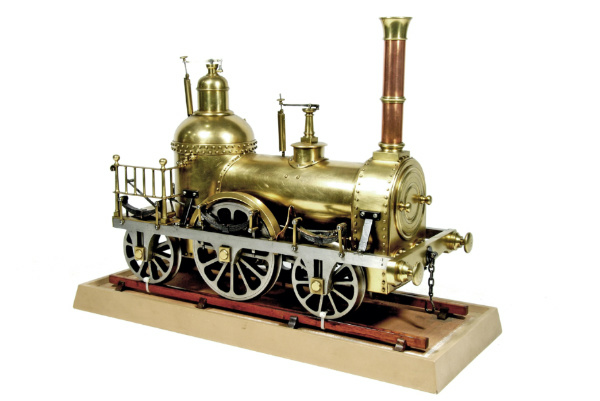
Model steam locomotive, 1:12 scale, working, represents a standard passenger type locomotive c.1837, made by Mr. J. Dawson, District Superintendent at Southampton of the London & Southampton Railway.

Model making in the “age of the railways” is the subject of a free exhibition now on at the Science Museum in South Kensington. Brass, Steel and Fire features intricate models from the Science Museum Group Collection as well as stunning miniature locomotives and a display of almost 200 tools used by model-maker Keith Dodgson. Highlights include ‘Salamanca’, the world’s oldest model locomotive (on loan from Leeds Museums and Galleries), a model of ‘Fire King’ – made in the 1840s by apprentice Josiah Evans who used his experience to later build full size locomotives, and the world’s oldest working model steam engine, the Etherley winding engine model. The exhibition is free and runs until 3rd May. Online booking required. For more, see sciencemuseum.org.uk/see-and-do/brass-steel-and-fire.

Send all items for inclusion to exploringlondon@gmail.com

This Week in London – The ‘Fight for Women’s Rights’ at the British Library; ghosts at Hampton Court Palace; and, Arctic culture at the British Museum…

Banners loaned from Southall Black Sisters, Bishopsgate Institute, People’s History Museum, Sisters Uncut, Feminist Archive South (Courtesy of the British Library)

The history of the women’s rights movement and the work of contemporary feminist activists is the subject of a new exhibition opening at the British Library tomorrow. Unfinished Business: The Fight for Women’s Rights, the opening of which was delayed due to the coronavirus pandemic, features everything from personal diaries and banners to subversive literature, film, music and art. Highlights include protest poems written by Sylvia Pankhurst on toilet paper in Holloway Prison following her imprisonment for seditious activity in January 1921, a first edition of Jane Austen’s debut novel, Sense and Sensibility, published anonymously ‘By a Lady’ in 1811, and, football boots belonging to Hope Powell, a veteran player who became the first woman to manage England Women in 1998. There’s also records of surveillance carried out on Sophia Duleep Singh, one of Queen Victoria’s god-daughters and a supporter of campaigns for women’s suffrage, and a piece of fence wire cut by writer Angela Carter’s friends and sent to her as a present from RAF Greenham Common in Berkshire where they were protesting against nuclear missiles. Runs until 21st February next year. Admission charge applies. For more, see www.bl.uk.

Like a good ghost story? Hampton Court Palace is launched a new self-guided ‘Creepy Stories and Ghostly Encounters’ trail on Saturday. The trail takes in sites including those where the ‘Grey Lady’ – said to be the ghost of Tudor nursemaid – has appeared since Victorian times, the locations said to be haunted by two of King Henry VIII’s queens – Jane Seymour and Catherine Howard, and the site where a spectral figure was captured on film slamming shut a door in 2003. The palace is also unveiling a new display of carved pumpkins in the Royal Kitchen Garden. Entry charge applies. For more, see www.hrp.org.uk/hampton-court-palace/.

The first major exhibition on the history of the Arctic and its Indigenous people, through the lens of climate change and weather, has opened at the British Museum. The Citi exhibition, Arctic: culture and climate, reveals how Arctic people have adapted to climate variability in the past and are facing today’s weather challenges. It features everything from rare archaeological finds, unique tools and clothing as well as artworks and contemporary photography with highlights including an eight-piece Igloolik winter costume made of caribou fur and an Inughuit (Greenlandic) sled made from narwhal and caribou bone and pieces of driftwood which was traded to Sir John Ross on his 1818 expedition as well as artworks commissioned specifically for the exhibition. These include an Arctic monument of stacked stones, known as an Inuksuk – used to mark productive harvesting locations or to assist in navigation – which was built by Piita Irniq, from the Kivalliq Region of Nunavut, Canada. Can be seen in the Sainsbury Exhibitions Gallery until 21st February. Admission charge applies. For more, see www.britishmuseum.org.

Send all items for inclusion to exploringlondon@gmail.com.

LondonLife – Not such a lonely bear…

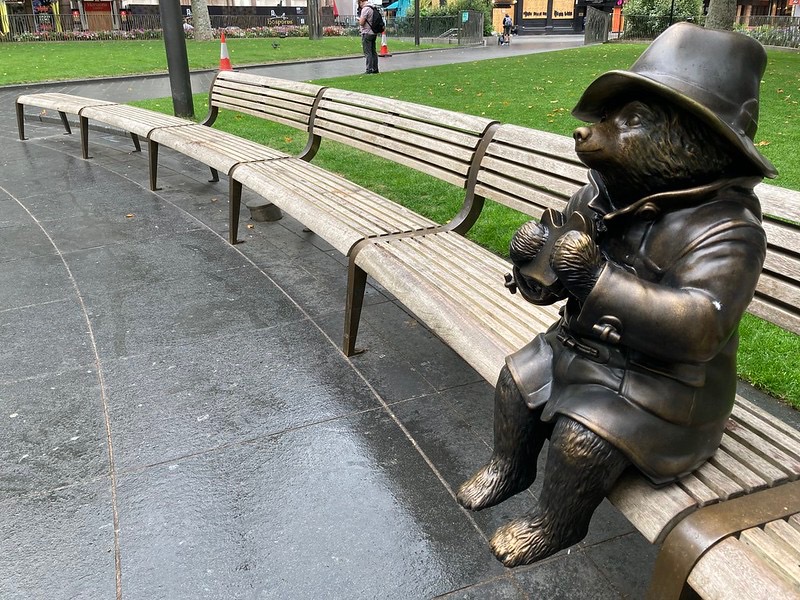
Paddington Bear may look lonely seated on a park bench but he is actually among a host of new statues which were placed in Leicester Square earlier this year. Others include Mr Bean, Mary Poppins, Laurel and Hardy, and Harry Potter and now comes news that Paddington will have more company from spring next year. A 10th statue – depicting the “King of Bollywood”, Shah Rukh Khan, and his co-star Kajol – will be placed in the famous square in what will be the first ever Bollywood statue erected in the UK. The new statue will recreate a scene from the award-winning rom-com, Diwale Dulhania Le Jayenge. PICTURE: Matt Brown (licensed under CC BY 2.0).

This Week in London – King’s maps go online; life at Tower Bridge; Wildlife Photographer of the Year; and, the Gruffalo at Kew…

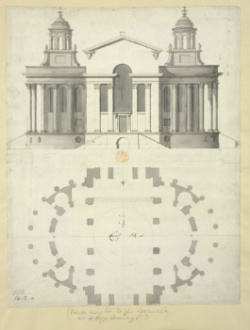
• Treasures including a hand-drawn map of New York City presented to the future King James II in 1664, Nicholas Hawksmoor’s architectural drawings for Castle Howard and some London churches, and Italian Jesuit Matteo Ripa’s massive 1719 Kangxi Map of China are among thousands of maps and views The British Library have placed online. The library is now nearing the end of the project to put 40,000 early maps and views online and most can now be accessed via the library’s Flickr Commons collection website. The documents are all part of the Topographical Collection of King George III, itself a distinct segment of the King’s Library which was donated to the Nation by King George IV in 1823. Other highlights to go online include Italian artist Bernardo Bellotto’s drawings of the town of Lucca, dating from about 1742, James Cook’s 1763 large manuscript map of the islands of St Pierre and Miquelon, and watercolours by noted 18th century artists including Paul Sandby and Samuel Hieronymus Grimm. PICTURED: Nicholas Hawksmoor, [An elevation and plan for St George, Bloomsbury]. London, between 1712 and 1730. Maps K.Top 23.16.2.a.

• A new exhibition celebrating the lives of those who work behind the scenes at Tower Bridge and the visitors who walk its floors opens in the iconic bridge’s Engine Rooms on Friday. Lives of a Landmark features images commissioned in 2019 to commemorate the 125th anniversary of the bridge. Photographer Lucy Hunter spent several months at the bridge, recording daily life there and this display is the result. Admission charge applies. For more, head here.

Winning images from The Natural History Museum’s Wildlife Photographer of the Year – including Sergey Gorshkov’s Grand Title winner, a rare glimpse of Siberian tigress – go on show at the South Kensington-based museum from Friday. The exhibition features the 100 images, selected from more than 49,000 entries, that were short-listed for the 56th annual competition, the results of which were announced in a virtual ceremony earlier this week. Runs until 6th June. Admission charge applies. For more, head to www.nhm.ac.uk/visit/exhibitions/wildlife-photographer-of-the-year.html.

The Gruffalo is the subject of a new “curated journey” taking place over the half-term break in Kew Gardens’ Arboretum. Visitors are encouraged to play the role of the “little brown mouse” and follow a trail to track down the Gruffalo, along the way encountering some of the other characters from Julia Donaldson’s famous book including Fox, Owl and Snake. Admission charge applies. For more, see www.kew.org.

Send all items for inclusion to exploringlondon@gmail.com.

LondonLife – Iconic shirt becomes part of Collecting COVID…

Arsenal captain Pierre-Emerick Aubameyang with the shirt. PICTURE: © Arsenal FC

A Black Lives Matter tribute shirt worn by Arsenal captain Pierre-Emerick Aubameyang during the 2020-21 Premier League season is being donated to the Museum of London as part of its Collecting COVID project. The Black Lives Matter logo was added to all Premier League shirts following anti-racism protests across the globe earlier this year. Aubameyang – the latest Black player to captain Arsenal – said it was “an honour to have the opportunity to donate my Black Lives Matter shirt to the Museum of London’s Collecting COVID project”. “I hope this will be remembered as the moment that football stood against all forms of racism and that it will inspire young people for the future,” he said. The Collecting COVID project was launched in April this year with the aim of collecting objects relating to how Londoners lived during coronavirus pandemic. For more, see www.museumoflondon.org.uk/discover/museum-for-london-collecting-covid.

This Week in London – ‘Dub London’; exploring Sin; and, COVID-19 explored at Science Museum Late…

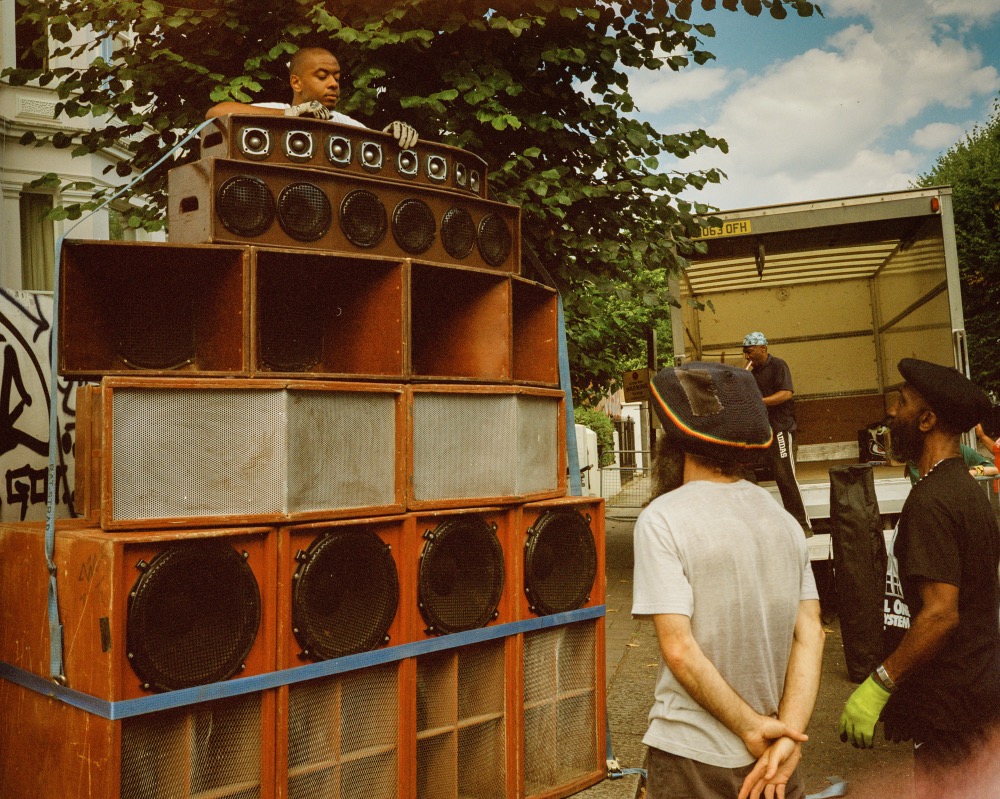
Channel One Sound System at Notting Hill Carnival 2019. PICTURE © Eddie Otchere / Museum of London

Dub music and the impact it’s had on London’s identity and people is the subject of a new, long delayed, exhibition which opened at the Museum of London late last week. Dub London: Bassline of a City, which had been postponed due to the coronavirus pandemic, charts how, from its roots in Jamaican reggae, dub music went on to influence multiple genres and played a key role in the development of punk bands like The Clash. The display includes the iconic speaker stack belonging to Channel One Sound System that has appeared yearly at Notting Hill Carnival since 1983 (pictured above) and a specially created bespoke record shop with a selection of 150 vinyl records chosen by 15 London based independent record shops which can be listened to. Runs until 31st January. Admission is free but must be booked in advance (and bring your own headphones). For more, see www.museumoflondon.org.uk/museum-london/whats-on/exhibitions/dub-london.

The concept of sin is at the heart of a new free exhibition at The National Gallery. Sin brings together 14 works dating from the 16th century to now by artists ranging from Jan Brueghel the Elder and William Hogarth to Andy Warhol and Ron Mueck. Among the paintings on show are Lucas Cranach the Elder’s Adam and Eve (1526), Hogarth’s The Tête à Tête and Marriage A-la-Mode, Diego Velázquez’s Immaculate Conception, William Holman Hunt’s The Scapegoat (1854-55), and Ron Mueck’s sculpture Youth (2009). The display can be seen in Room 1. For more, see nationalgallery.org.uk.

The science of the coronavirus is explored in a special night event at the Science Museum next Wednesday, 14th October. Staff from the Francis Crick Institute will be joining with those from the Science Museum in exploring how the immune system remembers and evolves and how the Crick was turned from a biomedical research centre into a COVID-19 testing facility. Visitors can also hear from NHS transplant surgeon Pankaj Chandak who has been using 3D printing tech to make life-saving PPE for frontline staff while the Leonard Cheshire charity shows how assistive eyegaze technology has played a vital role in helping to keep people with access needs connected. There will also be a chance to make a facemask as part of the museum’s #MaskSelfie campaign and the opportunity to explore the museum’s new Medicine: The Wellcome Galleries. Admission charge applies and pre-booking is essential. Head to sciencemuseum.org.uk/see-and-do/lates.

Send all items for inclusion to exploringlondon@gmail.com.

LondonLife – Frieze Sculpture at The Regent’s Park…

Arne Quinze, Lupine Tower, 2020, Aluminium, Maruani Mercier Gallery. PICTURE: Stephen White.

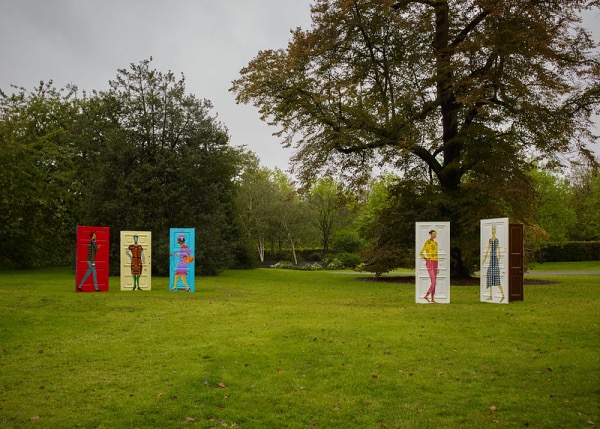
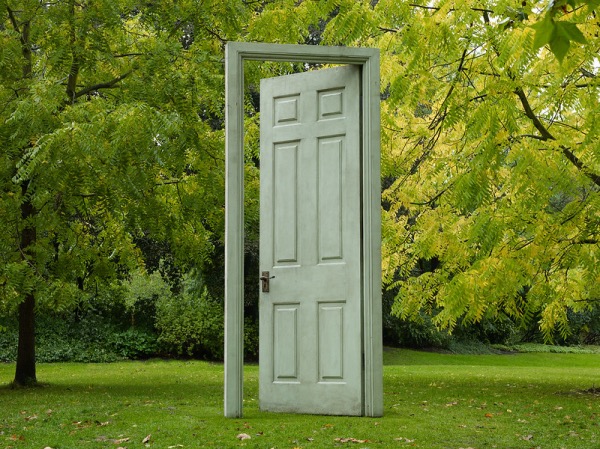
Twelve works by leading international artists have gone on show in the English Gardens, The Regent’s Park, in this year’s Frieze Sculpture display. The works, which can be seen until 18th October and form part of an expanded Frieze Week programme, includes pieces from Patrick Goddard, Kalliopi Lemos and Arne Quinze as well as a recent commission by Lubaina Himid which is being exhibited in the UK for the first time. The works touch on a range of themes – from civil rights and ecology to the role of the artist as a disruptor. The display is accompanied by a free audio tour by curator Clare Lilley, director of programme at Yorkshire Sculpture Park, and can also be seen virtually in the Frieze
Viewing Room. For more, see www.frieze.com/FriezeSculpture.

Sarah Lucas, Sandwich, 2011 – 2020, Concrete, Sadie Coles HQ. PICTURE: Stephen White.
Lubaina Himid, Five Conversations, 2019, Acrylic paint on five reclaimed wooden doors from traditional Georgian townhouses, Hollybush Gardens. PICTURE: Stephen White.
Gavin Turk, L’Âge d’Or (Green & Red), 2019, Painted Bronze, MARUANI MERCIER. PICTURE: Stephen White.
Kalliopi Lemos, The Plait, 2020, Mild steel, Gazelli Art House. PICTURE: Stephen White.

This Week in London – ‘Artemisia’ at The National Gallery, ‘Black Greenwich Pensioners’, and, Bruce Nauman at the Tate…

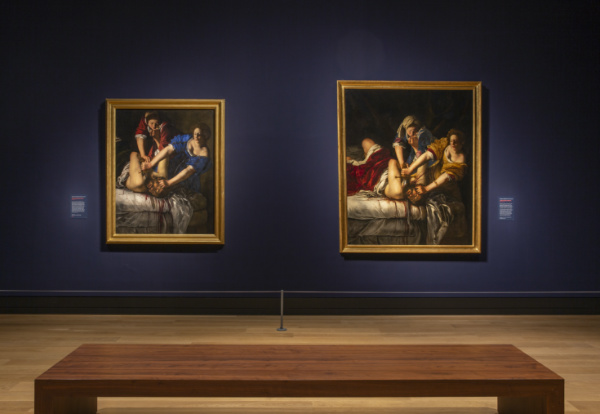
• The original transcript of the trial in which 17th century Italian artist Agostino Tassi faced charges of ‘deflowering’ female artist Artemisia Gentileschi will be public display for the first time as part of an exhibition on Gentileschi’s work opening at The National Gallery on Saturday. The rescheduled exhibition Artemisia, the first major monographic exhibition of Artemisia Gentileschi (1593–1654 or later), was inspired by the gallery’s recent acquisition of Self Portrait as Saint Catherine of Alexandria (about 1615–17), the first painting by the artist to enter a UK public collection. Gentileschi, the first women to gain membership of the artists’ academy in Florence, had a career spanning more than 40 years and is now widely recognised as one of the most gifted painters of the Italian Baroque period. Alongside her artistic achievements, elements of her biography have also attracted considerable attention including her rape as a young woman and the torture she choose to endure as part of the trial that followed (seen at the time as an accepted means by which testimony could be validated). As well as the trial transcript, written in Latin and Italian, the exhibition will include recently discovered personal letters and works such as two versions of Susannah and the Elders – one painted in 1610 when Gentileschi was just 17 and the other, her last known painting, dating from 1652. There’s also self portraits including Self Portrait as a Female Martyr (mid 1610s), and her two versions of Judith beheading Holofernes – one dating from 1612-13 and the other from 1613-14. Runs until 24th January. Admission charge applies. For more, see www.nationalgallery.org.uk. PICTURE: Installation view of Artemisia at the National Gallery. © The National Gallery, London.

The history of Black British mariners is the subject of a new exhibition opening at the Old Royal Naval College in Greenwich on Saturday. Marking Black History Month, Black Greenwich Pensioners explores the history of the Black Royal Navy personnel and how they formed one of Britain’s earliest Black communities when they became pensioners at the Royal Hospital for Seaman on the site where the Old Royal Naval College stands today. Through paintings, prints, photographs and a small selection of objects, the display looks at the role Black mariners played in British naval conflicts as well as the personal histories of prominent Greenwich pensioners including John Thomas, who escaped slavery and was later returned to enslavement in Barbados, John Simmonds, a Jamaican veteran of the 1805 Battle of Trafalgar whose descendants still reside in the UK, and Briton Hammon, author of the first slave narrative. Entry is free. Runs until 21st February in the mezzanine gallery at the Visitor Centre. For more, see https://ornc.org/uncovering-the-history-of-black-british-mariners/

The first exhibition to showcase the full spectrum of American artist Bruce Nauman’s work in more than 20 years opens at the Tate Modern on Wednesday. Bruce Nauman features more than 40 works and “unfolds” over a sequence of immersive installations. Highlights include a selection of early works such as Henry Moore Bound to Fail (1967/70) and A Cast of the Space Under My Chair (1965/68), the moving image installation MAPPING THE STUDIO II with color shift, flip, flop & flip/flop (Fat Chance John Cage) (2001), ground-breaking neon signs like The True Artist Helps the World by Revealing Mystic Truth (Window or Wall Sign) (1967), Human Nature Knows/Doesn’t Know (1983/86) and One Hundred Live and Die (1984) and large scale works such as Going Around the Corner Piece with Live and Taped Monitors (1970) and Double Steel Cage Piece (1974) as well as the whole-room installation, Shadow Puppets and Instructed Mime (1990). Runs until 21st February. Admission charge applies. For more, see www.tate.org.uk.

Send all items for inclusion to exploringlondon@gmail.com.
This Week in London – Richard Leveridge in the spotlight; ‘Paradise Lost’ at Kew; and, Princess Beatrice’s wedding dress at Windsor…

The life and work of Richard Leveridge, a leading singer of the London stage during the 18th century, is the subject of a new display opening at the Foundling Museum in Bloomsbury tomorrow. The display, which can be seen in the Handel Gallery, charts the life of this popular theatre singer who became the lead bass singer at Drury Lane Theatre in 1695 and sang for Purcell in many of his stage works as well as, later, singing in the first performances of Handel’s early London operas. It also includes a look at Leveridge’s work as a composer and coffee shop owner and among items on show are manuscripts, early printed music, artworks, copies of drinking songs and stage works, contemporary accounts and formal portraits. Runs until 28th March. Admission charge applies. For more, see https://foundlingmuseum.org.uk

The first solo exhibition by Dutch-born, Mexico-based visual artist Jan Hendrix to be held in the UK opens in Kew Gardens’ Shirley Sherwood Gallery of Botanical Art next week. Paradise Lost features new works in a number of mediums created as a responser to the transformation of the landscape known as Kamay Botany Bay, in Sydney, Australia (which gained its English name – Botany Bay – from plants collected and recorded there in 1770 by European botanists Sir Joseph Banks – Kew Gardens’ first director – and Daniel Solander abroad the HMS Endeavour). Reflecting on how the visit of the Endeavour sparked a transformation of the region – from a pristine environment to what is now a suburban and industrial landscape, the exhibition explores themes including the destruction of the natural world in the wake of colonial industrialisation, contemporary urbanisation and climate change. New works include a vast monochrome tapestry evoking the dynamic texture and beauty of an Australian landscape threatened by wildfire – which ravaged the region in 2019 – as well as the display’s centrepiece – a huge walk-through mirrored pavilion inspired by two plant species that grow in Kamay Botany Bay – Banksia serrata or Wiriyagan (Cadigal) and Banksia solandri, and a moving image work created by Hendrix in collaboration with filmmaker Michael Leggett. A visual tour narrated by the artist will be made available online for those not able to visit in person. Runs from 3rd October until 13th March. Admission charge applies. For more, head to www.kew.org. PICTURE: Mirror Pavilion III, 2020, Stainless Steel by Jan Hendrix/Kew Gardens

• FURTHER AFIELD: Princess Beatrice of York’s wedding dress, first worn by Queen Elizabeth II in the 1960s, goes on display at Windsor Castle from today. Designed by Sir Norman Hartnell, the dress was first worn by the Queen during a State Visit to Rome in 1961 and was altered for Princess Beatrice for her marriage to Edoardo Mapelli Mozzi on 17th July this year. The display, which can be seen in the State Dining Room, also features Princess Beatrice’s wedding shoes, made by Valentino, and a replica of her bouquet. Can be seen until 22nd November. Admission charge applies. For more, see www.rct.uk.

Send all items for inclusion to exploringlondon@gmail.com

LondonLife – The Battle of Britain remembered…

Dignitaries including Prime Minister Boris Johnson and the Chief of the Air Staff, Air Chief Marshal Michael Wigston, were among those attending a service commemorating the 80th anniversary of the Battle of Britain in Westminster Abbey on Sunday. The service, which was witnessed by fewer people than would normally have been the case due to the coronavirus pandemic, included an Act of Remembrance during which the Battle of Britain Roll of Honour – containing the names of the 1,497 pilots and aircrew killed or mortally wounded during the 112 days of fighting – was carried through the church and placed beside the High Altar. After the service three Spitfires and a Hurricane from the Battle of Britain Memorial Flight took part in a flypast over the Abbey. Pictured above are the standard bearers formed up on the altar at the service (all pictures via MOD © Crown copyright 2020)

Above: The Queen’s Colour Squadron lining the entrance to Westminster Abbey.

Above: Prime Minister Boris Johnson carrying out a reading during the service.

Above: FO Buckingham saluting the Battle of Britain memorial stained glass window at Westminster Abbey.

Above: The four planes from the Battle of Britain Memorial Flight fly above the Abbey.

This Week in London – Open House London; The British Army in Germany; and, Christine Granville’s Blue Plaque…

• It’s Open House London this weekend and, thanks to the coronavirus pandemic, this programme features a host of documentary films, online events and self-led walking tours. Highlights from the festival, which runs over Saturday and Sunday with some additional events taking place until 27th September, include online tours of the HM Treasury in Whitehall (pictured) and Dorich House Museum in Kingston-upon-Thames, a self-guided walking tour of Fosters + Partners buildings in London’s centre, and the chance to visit Rochester Square in Marylebone. The programme features a series of collections of related events – such as those related to ‘colonial histories’ or ‘architecture for the climate emergency’ – to help make it easier for people to access. For the full programme of events, head to https://openhouselondon.open-city.org.uk. PICTURE: HM Treasury Building taken from the London Eye (Dave Kirkham/licensed under CC BY-ND 2.0/Image cropped)

The work and lives of the more than million British Army soldiers who have served in Germany following World War II is the subject of a new exhibition opening at the National Army Museum in Chelsea next Tuesday. Foe to Friend: The British Army in Germany since 1945 charts how the Army helped to rebuild a broken nation in the aftermath of the war, provide protection during the Cold War and, later, how they used Germany as a base to deploy troops all around the world. It will include stories of family life as well as those involving espionage and massive military training exercises. The free exhibition can be seen until 1st July, 2021. For more, see www.nam.ac.uk.

Christine Granville, Britain’s first and longest-serving female special agent, has been honoured with an English Heritage Blue Plaque. The plaque is located at the 1 Lexham Gardens hotel (previously known as the Shelbourne Hotel) in Kensington which was Granville’s base after the war. Granville, who was once described by Churchill as his “favourite spy”, was born in Warsaw as Krystyna Skarbek. She joined  British intelligence after Germany invaded Poland in 1939 and undertook missions including skiing over the snow-bound Polish border in temperatures of -30 degrees Celsius, smuggling microfilm revealing Hitler’s plans to invade the Soviet Union across Europe and rescuing French Resistance agents from the Gestapo (in fact, it’s said she was also the inspiration for Vesper Lynd, a spy in Ian Fleming’s first James Bond novel, Casino Royale). Christine Granville was one of her aliases she had been given during her time with intelligence and it was a name she decided to keep after the war. For more, see www.english-heritage.org.uk/visit/blue-plaques/.

Send all items for consideration to exploringlondon@gmail.com.

LondonLife – ‘Rivers of the World’…

River inspired artwork created by young people from across London, the UK and around the world is one show on South Bank as part of the Totally Thames festival. The art for Rivers of the World was created during the coronavirus lockdown under the guidance of professional artists who provided briefs and films to help the young artists. The outdoor exhibition, on Riverside Walkway near the Tate Modern, is free to visit. For more on Totally Thames, London’s annual month-long celebration of its river, head to https://thamesfestivaltrust.org. PICTURES: Young artists with work created as part of ‘Rivers of the World’ (Courtesy of Totally Thames).

This Week in London – The Havering Hoard on show; and, Totally Thames returns…

With the impact of the new rules being put in place to counter the coronavirus outbreak still being assessed, some scheduled events may be subject to change. As we would always advise anyway, please check with organisations before making any plans…

The ‘Havering Hoard’ goes on display at the Museum of London Docklands on Friday, the first time it’s ever been on public display. Havering Hoard: A Bronze Age Mystery features all 453 objects found during an archaeological investigation in Havering in London’s east, in September, 2018. Dating from between c900 and c800 BC, the cache of items – the largest Bronze Age hoard ever found in London and the third largest find in the UK – includes fragments of swords and spears as well as tools including axeheads, sickles, gouges and awls, and terret rings, believed to prevent reins from tangling when horses were pulling a cart (these are the first examples found in England). There are also bracelet fragments, part of a double-sided razor, a ceramic loomweight and bronze pin decorated with amber which may have been used to secure a cloak. The display will explore questions surrounding who buried the hoard and why as well as why it was never recovered. Runs until 18th April. Admission charge applies. For more – including how to prebook tickets to the museum – see www.museumoflondon.org.uk/haveringhoard. PICTURE: Part of the hoard found in Havering (© Archaeological Solutions).

Totally Thames – London’s annual celebration of its river is once again underway with a program featuring art exhibitions and installations, tours and online performances. The events include an online performance of Whittington about the life of the City’s famous mayor, ‘Words on the Wind’ – an outdoor art installation in Kingston featuring a soundscape of recorded poets, and online tours of The Golden Hinde, a replica of Sir Francis Drake’s famous ship. Many events are free and the festival runs to the end of the month. For more, see https://thamesfestivaltrust.org.

Send all items for inclusion to exploringlondon@gmail.com.
This Week in London – National Maritime Museum, London Transport Museum reopen; and, Picasso at BASTIAN gallery…

The National Maritime Museum in Greenwich opens its doors this Monday, 7th September. Those who visit in the first week will be able to see all the winning images in the ‘Insight Investment Astronomy Photographer of the Year’ competition.Entry is free but tickets must be booked in advance. For more, see www.rmg.co.uk/national-maritime-museum.

• Other reopenings include the London Transport Museum in Covent Garden which also throws back its doors on Monday. Along with displays including historic vehicles and iconic posters, the reopening includes the ‘Hidden London’ exhibition revealing London’s ‘abandoned’ Underground stations. Tickets must be booked in advance. Admission charges apply. For more, see www.ltmuseum.co.uk.

Picasso’s Cannes’ studio has been recreated in an immersive experience  at the BASTIAN gallery in Mayfair. Atelier Picasso is an installation-style exhibition and features furniture, sculptures, ceramics, drawings and prints. Highlights include portraits of the artist taken by his friend André Villers, ceramic works such as Wood Owl (1969) and Carreau Visage d’Homme (1965), lithograph and linocut posters and books including Gallieri Jorgen Expose Le Lithographies de L’atelier Mourlot (1984), and the masterpiece Minotaure caressing une dormeuse from the artist’s Vollard Suite. Admission is free. For more, see www.bastian-gallery.com. PICTURE: Courtesy of Luke Andrew Walker.

Send all items for inclusion to exploringlondon@gmail.com.