This Week in London – Turner’s ‘The Battle of Trafalgar’ returns to public display; Halloween at Hampton; Diwali at Greenwich; and, NYE tickets…

The Queen’s House, Greenwich. PICTURE: Frank Chou/Unsplash

Artist JMW Turner’s only royal commission has returned to public display in Greenwich to mark the 250th anniversary of the artist’s birth. The more than three metre-wide painting (Turner’s largest completed work), The Battle of Trafalgar, went on display on Tuesday – 220 years to the day since the battle it depicts – at the Queen’s House. The 1824 painting, which was commissioned by King George IV, commemorates the victory of the British Royal Navy over a combined French and Spanish fleet off Cape Trafalgar on 21st October, 1805. First displayed at St James’s Palace, it was transferred to the Naval Gallery at Greenwich Hospital in 1829. It was removed from public display in March last year to protect it during a works project at the National Maritime Museum and has now found a new home at the Queen’s House. Admission is free. For more, see www.rmg.co.uk/queens-house.

The ghosts of King Henry VIII and Oliver Cromwell are among those which can be encountered at Hampton Court Palace from Friday as it marks Halloween. Immersive Halloween-inspired installations with unearth the stories of some of the palace’s former residents while outside there’s a Haunted Garden complete with skeletal horse and carriage. Halloween season at the palace runs until 2nd November and is included in general admission. For more, see www.hrp.org.uk/hampton-court-palace/whats-on/halloween-at-hampton-court-palace/.

Diwali, the annual Hindu celebration, comes to the National Maritime Museum in Greenwich this Saturday with the ‘Illuminate’ festival. The free festival, which runs from 11am to 5pm and is curated by Mehala Ford – founder of South Asian art collective COMMONGROUND&, includes performances, creative workshops including traditional Rangoli art and Henna art, storytelling sessions including a puppet show telling the epic story of Ramayana, and a lantern parade around Greenwich Park. There ares also talks and Diwali-inspired food. For more, see www.rmg.co.uk/whats-on/national-maritime-museum/diwali.

Tickets to London’s New Year’s Eve celebrations have gone on sale. The 12 minute show celebrating the new year will kicks off with the familiar sounds of Big Ben’s chimes, before thousands of fireworks and hundreds of lights help to illuminate the night sky around the London Eye all set to a wide-ranging soundtrack. Around 100,000 Londoners and visitors are expected to attend. Ticket prices are between £20 and £35 for Londoners and £40 and £55 for visitors. For more, see www.london.gov.uk/nye.

Send all items for inclusion to exploringlondon@gmail.com
LondonLife – ‘Goavve-Geabbil’ at the Tate Modern…

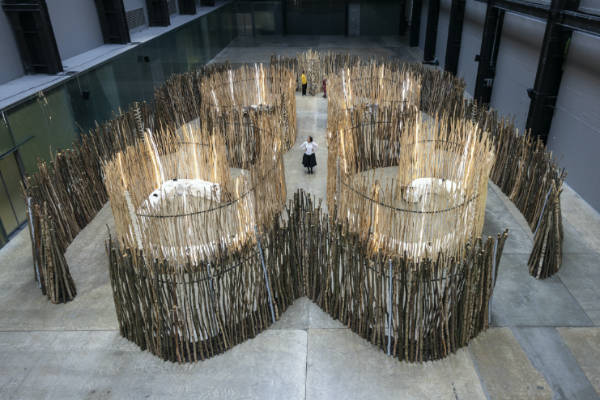
Hyundai Commission: Máret Ánne Sara: Goavve-Geabbil installation view featuring -Geabbil at Tate Modern 2025. © Máret Ánne Sara. PICTURE: © Tate/Larina Fernandez.

Described as an “immersive work honouring the reciprocal relationship between the Sámi people, the reindeer, and the land”, the Goavve-Geabbil is a monumental new sculptural installation by Sámi artist Máret Ánne Sara and has been made using materials which sustain her community in Sápmi, the territory of the Indigenous Sámi people which spans the countries of Norway, Sweden, Finland and Russia.

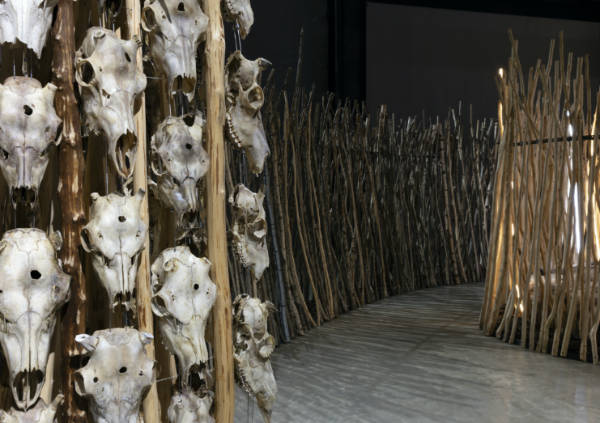
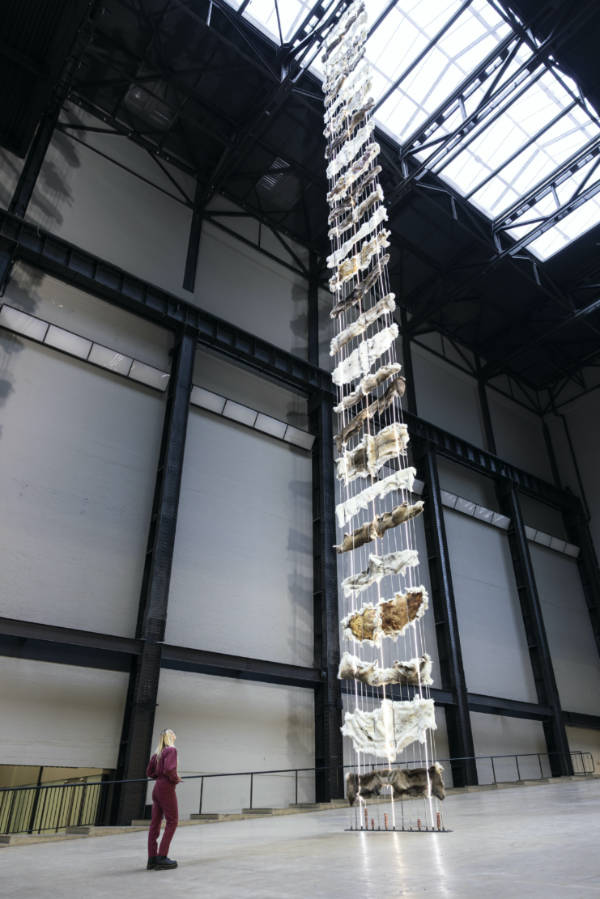
In this, Sara’s first major work in the UK, the artist draws on her experience as member of a reindeer herding family to highlight ecological issues impacting Sámi life and has combined hides and bones derived from traditional reindeer herding practices along with wood, industrial materials, sound and scent.

The Hyundai Commission: Máret Ánne Sara: Goavve-Geabbil can be seen in the Turbine Hall at the Bankside institution until 6th April. Admission is free. For more, see tate.org.uk/visit/tate-modern.

Hyundai Commission: Máret Ánne Sara: Goavve-Geabbil installation view featuring -Geabbil at Tate Modern 2025. © Máret Ánne Sara. PICTURE: © Tate/Sonal Bakrania.
Hyundai Commission: Máret Ánne Sara: Goavve-Geabbil installation view featuring Goavve- at Tate Modern 2025. © Máret Ánne Sara. PICTURE: © Tate (Larina Fernandez).

This Week in London – Wildlife Photographer of the Year exhibition; 20th century conflicts; Jennie Baptiste at Somerset House; and Nigerian Modernism…

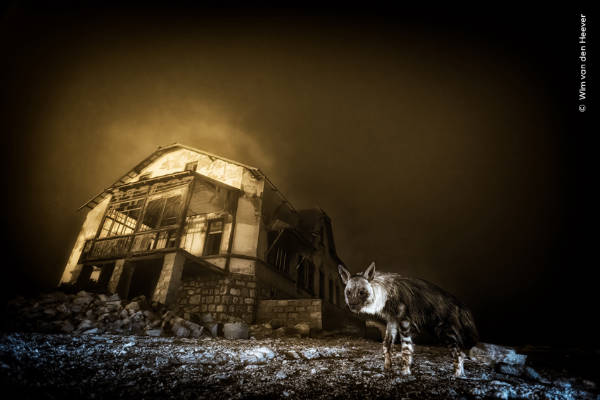
Wim van den Heever’s winning entry, Ghost Town Visitor.

An exhibition of entries into the annual Wildlife Photographer of the Year competition opens tomorrow at the National History Museum in South Kensington. The exhibition features 100 images selected from a record-breaking 60,636 entries and follows from this week’s announcement of the winners at a ceremony held at the museum earlier this week. The display includes the winning image – ‘Ghost Town Visitor’ which, captured by South African wildlife photographer Wim van den Heever depicts a brown hyena near the ruins of a long-abandoned diamond mining town in Kolmanskop, Namibia – as well as the winner of the Young Wildlife Photographer of the Year 2025 – 17-year-old Italian Andrea Dominizi’s After the Destruction which spotlights a longhorn beetle in the Lepini Mountains of central Italy, an area once logged for old beech trees, with a background of abandoned machinery. Other images on show include the winner of the Impact Award – Brazilian photographer, Fernando Faciole’s Orphan of the Road depicting an orphaned giant anteater pup following its caregiver after an evening feed at a rehabilitation centre – as well as category winners. The exhibition can be seen until 12th July next year. Admission charge applies. For more, head here.

Three 20th century conflicts which broke out in Malaya, Kenya and Cyprus after World War II are the subject of a new exhibition at the Imperial War Museum in Lambeth. Emergency Exits: The Fight for Independence in Malaya, Kenya and Cyprus looks at how these three conflicts, known as “emergencies” to the British Government, shaped and continues to shape Britain, its former territories and the wider world today. The display includes more than 70 objects such as propaganda posters, flags and artworks as well as oral histories and personal belongings which belonged to those impacted by them. As well as telling the stories of the three conflicts, Emergency Exits also explores Operation Legacy, the British Government’s attempt to prevent publication of sensitive documents related to the conflicts which included evidence of human rights abuses. The free exhibition, which opens on Friday, runs until 26th March. For more, see iwm.org.uk/events/emergency-exits-the-fight-for-independence-in-malaya-kenya-and-cyprus.

The first major solo exhibition focusing on the work of pioneering Black British photographer Jennie Baptiste opens in the Terrace Rooms at Somerset House on Friday. Jennie Baptiste: Rhythm & Roots, which is a highlights of Somerset House’s 25th birthday programme, charts how Baptiste used her lens to capture youth culture, music, fashion, and urban life within the Black British diaspora in London in the past few decades. The exhibition can be entered under a “pay what you can” model. Runs until 4th January. For more, see www.somersethouse.org.uk/whats-on/jennie-baptiste-rhythm-and-roots.

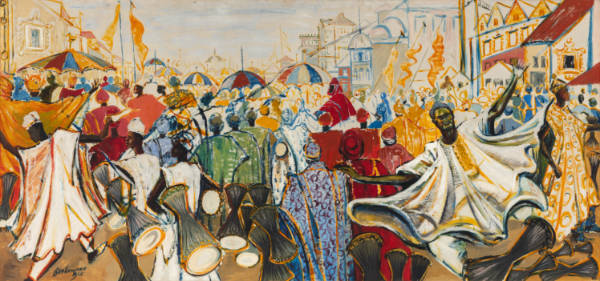
Ben Enwonwu, ‘The Durbar of Eid-ul-Fitr, Kano’, Nigeria 1955. © Ben Enwonwu Foundation. Private Collection

On Now: Nigerian Modernism. The Tate Modern is hosting the first UK exhibition to trace the development of modern art in Nigeria with more than 250 works by more than 50 artists on display. The exhibition, which spans the period from the 1940s to today, features works by globally celebrated artists of the 1940s, Ben Enwonwu and Ladi Kwali, as well as works by The Zaria Arts Society members Uche Okeke, Demas Nwoko, Yusuf Grillo, Bruce Onobrakpeya, and Jimo Akolo, Nsukka Art School members including Obiora Udechukwu, Tayo Adenaike and Ndidi Dike, and concludes with a spotlight on the work of Uzo Egonu. The display can be seen until 10th May. Admission charge applies. For more, see www.tate.org.uk/whats-on/tate-modern/nigerian-modernism.

Send all items for inclusion to exploringlondon@gmail.com.

This Week in London – Lee Miller at the Tate; the Hallelujah Chorus’ origins and impact, and conkers on Hampstead Heath…

• The UK’s largest retrospective of trail-blazing 20th century surrealist photographer Lee Miller opens at Tate Britain today. Lee Miller features around 230 vintage and modern prints, some of which are on display for the first time, which reveal how her approach pushed boundaries and led to the creation of some of the most iconic images of last century. Highlights include the newly discovered solarisation exemplar, Sirène (Nimet Eloui Bey) (c1930-32), her celebrated surrealist image of Egypt’s Siwa Oasis, Portrait􏰊of Space (1937), London-based works such as You will not lunch in Charlotte Street today (1940) and Fire Masks􏰘(1941) which convey the “pathos and absurdity” of the city in wartime, and war-related images including portraits of Miller and David E Scherman in Hitler’s private bath in April, 1945, as well as a rare 1950 self-portrait showing Miller posed in Oskar Kokoschka’s London studio flanked by artworks. Runs until 15th February. Admission charge applies. For more, see www.tate.org.uk/whats-on/tate-britain/lee-miller

The initial and enduring impact of the Hallelujah Chorus is the subject of a new display at the Foundling Museum in Bloomsbury. A Grand Chorus explores the profound impact music can have on listeners and performers and brings together musical scores, librettos, and musical instruments as well as paintings, photographs, audio, video, personal testimonies􏰞, and other archival material spanning three centuries. Originally􏰞composed as part of his famous Messiah oratorio, George Frideric Handel later incorporated the Hallelujah Chorus into an anthem he created specially􏰞for the Foundling Hospital that premiered in 1749 as a fund-raising exercise. The exhibition also showcases a major sound and video installation by􏰞Mikhail Karikis – We are Together􏰈 Because (2025), described as a modern counterpart to the Hallelujah Chorus. Runs until 29th March. Admission charge applies. For more, see https://foundlingmuseum.org.uk/event/a-grand-chorus-the-power-of-music/.

• Swing a conker at the Hampstead Heath Conker Championships this Sunday. People are all ages are invited to join in, whether a conker veteran or a newcomer, with competitions held in a range of age categories. The competition is being held near the Parliament Hill Bandstand from 1pm to 4pm. Entry is free. For more, see www.cityoflondon.gov.uk/events/go-conkers-on-hampstead-heath-5-october.

Send all items for inclusion to exploringlondon@gmail.com
LondonLife – Screen characters set a new record in Greenwich…

It’s official, a new Guinness World Record was set in Greenwich on the weekend when some 874 people gathered at the Old Royal Naval College on Saturday dressed as their favourite characters from the big (and little) screen. The Old Royal Naval College team partnered with Elstree Studios for the event, part of the festivities being held to mark 100 years of film and TV at the site, which featured everyone from Stormtroopers to Jack Sparrow, Batman to characters from Bridgerton and Sherlock Holmes. The record, which was verified by Guinness, is officially known as the ‘largest gathering of people dressed as screen characters’.

This Week in London – Guildhall Library marks 600 years; the David Bowie Centre opens; the Chelsea History Festival; and returning to the Blitz Club…

Guildhall Library is celebrating its 600th anniversary with a new exhibition. The display, which can be seen for free at the library, looks at the founding of the original library in 1425, what a medieval library would have looked like and what books it would have included as well as links with the library as it is today. Runs until 30th December. For more, see www.cityoflondon.gov.uk/things-to-do/history-and-heritage/guildhall-library/information-and-enquiries/visit-guildhall-library.

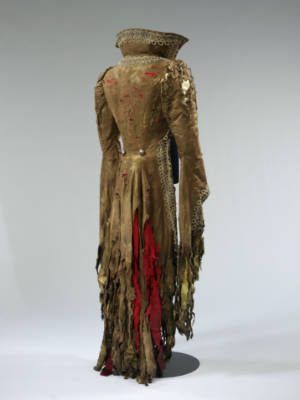
Frockcoat designed by Alexander McQueen and David Bowie for his 50th Birthday Concert, 1997. Image courtesy of the V&A

David Bowie’s final, unrealised musical projects – The Spectator, an unseen Ziggy Stardust guitar, and Bowie’s costume designs are just some of the treasures housed in the new David Bowie Centre which opened to the public this month. Located at the V&A East Storehouse in Queen Elizabeth Olympic Park, the new home for David Bowie’s archive features nine displays show-casing more than 200 items which also include handwritten lyrics, photography, costumes and sketches. As well as seeing the displays, visitors can book one-on-one time with some of the 90,000-plus objects in the archive through the ‘Order an Object’ service. More than 500 items were requested in the first week of the service going live with a frockcoat designed by Alexander McQueen and David Bowie for his 50th birthday concert in 1997 the most frequently requested item. Entry to the archive is free, but ticketed. For more, including bookings, see www.vam.ac.uk/exhibitions/david-bowie-centre.

The annual Chelsea History Festival kicked off yesterday with more than 80 events taking place until Sunday. Events include tours of the Royal Hospital Chelsea, and the chance to visit the Soane Stable Yard, the free exhibition Lost and Found in Hong Kong: The Unsung Chinese Heroes at D-Day at the hospital, walking tours including ‘Rock ‘n’ Roll Chelsea’ and ‘1960s Chelsea’, and a medicinal trees tour at the Chelsea Physic Garden. For the full programme head here.

A major exhibition on the Blitz club – which helped shape London’s culture not only in the mid-1980s but in the decades that followed – has opened at the Design Museum in Kensington High Street. Located in a Covent Garden side street, the club is credited with having “transformed 1980s London style”, generating a creative scene that had an enormous impact on popular culture in the following decade. Blitz: The Club that Shaped the 80s features more than 250 items including clothing and accessories, design sketches, musical instruments, flyers, magazines, furniture, artworks, photography, vinyl records and rare film footage. Runs until 29th March. Admission charge applies. For more, see https://designmuseum.org/exhibitions/blitz-the-club-that-shaped-the-80s.

Send all items to exploringlondon@gmail.com.

This Week in London – Marie Antoinette; ‘Theatre Picasso’, ‘Exploring Space’ at the Science Museum; and Talk Like A Pirate Day…

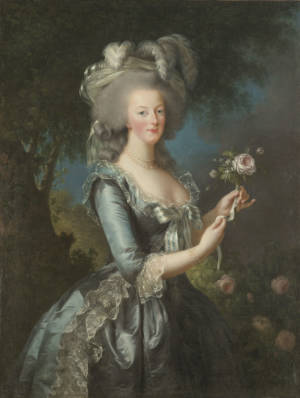
Portrait de Marie-Antoinette à la rose, Élisabeth-Louise Vigée Le Brun © Château de Versailles, Dist. Grand Palais RMN / Christophe Fouin.

The UK’s first exhibition to focus on the French Queen, Marie Antionette, opens at the V&A on Saturday. Marie Antoinette Style explores the dress and interiors adopted by the Queen, an early modern “celebrity”, during the final decades of the 18th century. It features some 250 objects including loans from Versailles which have never before been seen outside of France. There are personal items worn by the Queen including fragments of court dress, her silk slippers and jewels from her private collection as well as items from the Queen’s dinner service at the Petit Trianon, accessories and intimate items from her toilette case and even recreated scents from the court and a perfume which was favoured by the Queen. There also contemporary couture pieces by designers such as Moschino, Dior, Chanel, Erdem, Vivienne Westwood and Valentino and costumes, including shoes, made for screen, such as for Sofia Coppola’s Oscar winning film Marie Antoinette. The exhibition can be seen in Galleries 38 and 39 until 22nd March. Admission charge applies. For more, see vam.ac.uk/exhibitions/marie-antoinette.

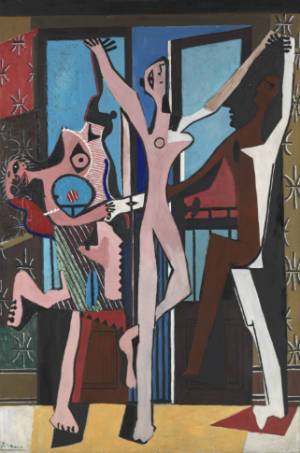
Pablo Picasso, The Three Dancers (1925) Tate. © Succession Picasso/DACS, London 2025.

Around 50 works by famed artist Pablo Picasso have been brought together for a new exhibition at the Tate Modern to mark the centenary of the artist’s work The Three Dancers (1925). Staged by contemporary artist Wu Tsang and write and curator Enrique Fuenteblanca, Theatre Picasso explores aspects of performance in his works and features the Tate’s entire collection of Picassos which, alongside The Three Dancers, also includes Weeping Woman (1937) and Nude Woman in a Red Armchair (1932). There are also loans from key museums in France as well as prints, drawings, sculptures, textile works and collages. These include the wool and silk tapestry Minotaur (1935) which is being displayed in the UK for the first time. Accompanying the works is Henri-George Clouzot’s 1959 film The Mystery of􏰱Picasso. Admission charge applies. Runs until 12th April. For more, see

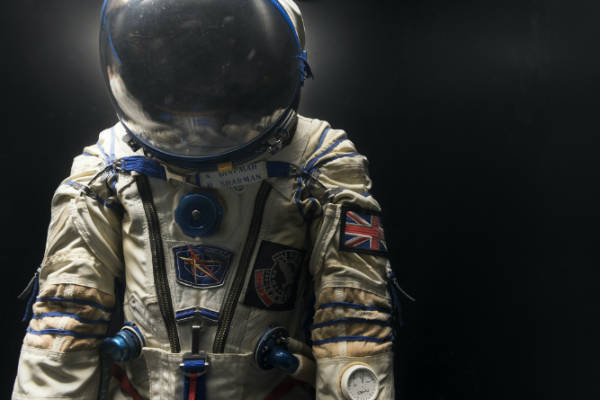
A new free gallery revealing the stories behind space exploration opens at the Science Museum in South Kensington on Saturday. The gallery – Exploring Space – showcases iconic items from the history of space exploration including a chunk of Moon rock nicknamed ‘Great Scott’ which was collected in 1971, the Soyuz TMA-19M descent module that carried astronaut Tim Peake, and the Sokol KV-2 rescue suit worn by Helen Sharman in 1991. There are also new technologies from the space sector including prototype electric propulsion technology from Magdrive and the ‘rolly-polly’ LEV-2 Moon rover, the result of the first collaboration between a space agency (JAXA) and a toy company (Takara Tomy). For more, see www.sciencemuseum.org.uk/see-and-do/space.

British astronaut, Helen Sharman’s Sokol spacesuit made by Zvezda. Sharman wore this rescue suit during the space flight on board the SOYUZ-TM-12 and MIR spacecraft in May 1991. Space suit model number KV-2 No. 167.

“Ahoy me hearties!” It’s International Talk Like A Pirate Day on Friday and the National Maritime Museum in Greenwich is celebrating from Friday across the weekend with talks about everything from Barbary corsairs to sea shanties, character actors and two-for-one discounts on tickets to the Pirates exhibition. Visitors over the weekend who dress like a pirate will be in the chance to win prizes including Cutty Sark rig climb tickets, annual passes to the Old Royal Naval College, and a family tour of The Golden Hinde. And to brush-up on your pirate lingo, “Abbey-Lubber” means a lazy sailor avoiding work, and ‘Jack Ketch’ a hangman or executioner. For more, see rmg.co.uk/whats-on/national-maritime-museum/international-talk-pirate-day.

Send all items to exploringlondon@gmail.com.

This Week in London – Open House London; Georges Seurat and the Neo-Impressionists; and, the Burma campaign remembered…

The week-long Open House London kicks off this Saturday and features a range of activities across all 33 London boroughs – from “drop-ins” at and guided tours of buildings to talks, exhibitions, workshops and, of course, walking tours. Highlights include architect guided tours of Rana Begum’s Little Citadel retreat compound in Stoke Newington, rare access to the Islip and Nurses’ Chapels in Westminster Abbey, tours of several facilities at Queen Elizabeth Olympic Park including the new Sadler’s Wells theatre, the Lee Valley VeloPark and the Hackney Wick Fish Island Creative Enterprise Zone, and walking tours exploring Roman London. For the full programme, head to https://programme.openhouse.org.uk/.

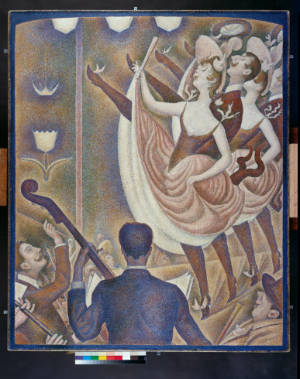
Georges Seurat, Le Chahut (1889-90), Oil on canvas, 141 x 170 cm © Collection Kröller-Müller Museum, Otterlo, the Netherlands

Georges Seurat’s painting of cancan dancers Let Chahut (1889-90) goes on display in the Sainsbury Wing of The National Gallery on Saturday. Radical Harmony: Helene Kröller-Müller’s Neo-Impressionists, which draws on the collection of the German art collector Helene Kröller-Müller (1869‒ 1939), at the Kröller-Müller Museum, Otterlo, in the Netherlands, also features several other works by Seurat as well as other radical works of French, Belgian and Dutch artists, painted from 1886 to the early 20th century. Among the highlights are Seurat’s Sunday at Port-en-Bessin (1888) and The Canal of Gravelines, in the Direction of the Sea (1890), Théo van Rysselberghe’s In July – before Noon (1890), Jan Toorop’s Sea (1899), Henry van de Velde’s Twilight (about 1889) and Paul Signac’s The Dining Room (1886-87). Runs until 8th February. Admission charge applies. For more, see www.nationalgallery.org.uk/exhibitions/radical-harmony-neo-impressionists

Marking 60 years since VJ (Victory over Japan) Day, the National Army Museum is hosting the first national museum exhibition on the Burma campaign during World War II in the 21st century. Beyond Burma: Forgotten Armies features more than 180 objects including artworks, weapons, uniforms and photographs and explores the retreat from Burma in 1942, the transformation and resurgence of British and Indian forces in India in 1943 and the campaign against the Imperial Japanese Army during 1944-45. Highlights include the abstract painting And the World was covered in darkness by Major Conrad ‘Dick’ Richardson Romyn who experienced intense fighting in Burma, a bottle of Army anti-mosquito cream and a vial of anti-malarial tablets representing the treatment of soldiers, a tin identity bracelet and food bowl used by Gunner Moss Simon, who spent three years as a prisoner of war, and a military medal awarded to Corporal Dogo Manga who served with 1st Battalion, the Nigeria Regiment, Royal West African Frontier Force. Opens on Tuesday and runs until 13th April next year. Admission is free. For more, see www.nam.ac.uk/whats-on/beyond-burma.

Send all items for inclusion to exploringlondon@gmail.com
This Week in London – Totally Thames kicks off; Black On The Square; and, ‘Rivers and Roads’…

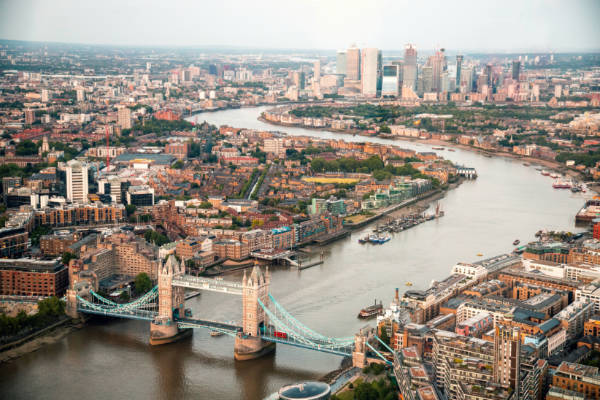
The River Thames. PICTURE: Sander Crombach/Unsplash

It’s September and that means Totally Thames – London’s annual month-long festival centred on the famous waterway – is underway. This year’s festival includes a packed programme of events which this weekend include the St Katharine Docks Classic Boat Festival, the Kingston River Cultures Festival, a mud-larking exhibition held in the ancient Roman amphitheatre under Guildhall Yard and a Victorian family day out at Crossness Pumping Station. Other highlights include a foreshore archaeology walk at Deptford (14th September), guided tours of the HMS Wellington (20th September), the month-long exhibition of winners and runners-up from the annual Thames Lens photography competition on the Riverside Walkway on the north bank near Millennium Bridge, and, of course, the annual Great River Race (on Saturday, 20th September). For more, head to https://thamesfestivaltrust.org/whats-on/.

The contribution of Black Londoners is again being celebrated this weekend as Black On The Square returns to Trafalgar Square. The free, family-friendly festival, now in its third year features live music, dance, food and workshops and this year includes a focus on London’s nightlife under the theme ‘Intergenerate’ recognising Black Londoners’ contribution to electronic culture and night life and featuring Garage music producer and DJ Wookie. There will also be a series of stalls offering foods ranging from Caribbean classics to West African vegan bites and artisanal goods including jewellery, art, books, homeware and fashion with the ‘Accra to London’ stall offering a range of items influenced by Ghana’s capital city, Accra, a highlight. Runs from 12pm to 6pm on Saturday. For more, see https://www.london.gov.uk/events/black-square-2025.

The Great West Road and the Thames have served as key routes into London since Roman times and they’re now the subject of a new exhibition at the Barbican Library. Rivers and Roads features the work of Brentford-based painter Helena Butler, who paints in a semi abstract style to capture the landscape and the feelings and images the local scenery inspires, and ceramic artist Anna Butler, who has produced a series in response to Alfred Noyes’ beloved poem The Shining Streets of London. Admission is free. Runs until 29th September. For more, see www.cityoflondon.gov.uk/events/rivers-and-roads-art-exhibition

Send all items for inclusion to exploringlondon@gmail.com.

This Week in London – Wildlife Photographer of the Year is coming; ‘Vanishing Africa’; and, ‘Black Chiswick Though History’…

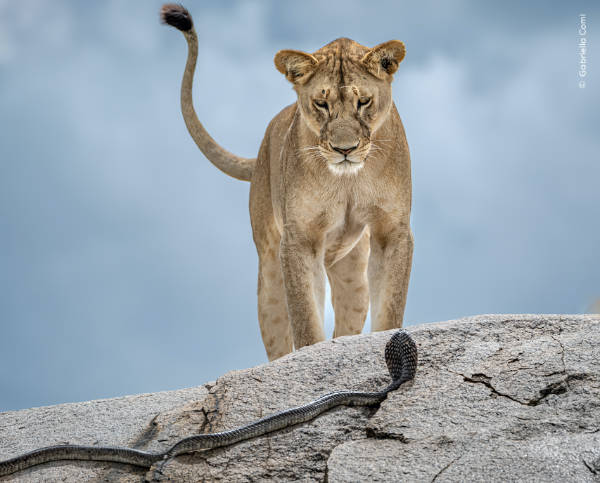
‘Wake-up Call’ by Gabriella Comi, Italy, (Highly Commended, Behaviour: Mammals). PICTURE: Courtesy of the Wildlife Photographer of the Year, Natural History Museum

Depicting a dramatic stand-off between a lion and a cobra in the Serengeti National Park in Tanzania, Gabriella Comi’s impressive image is among the 60,636 entries, from across 113 countries and territories, received in the Natural History Museum’s 61st annual Wildlife Photographer of the Year competition. The competition’s category winners and the prestigious ‘Grand Title’ and ‘Young Grand Title’ awards will be announced on 14th October, 2025, after which, from 17th October, 100 of the images will go on show at the museum in South Kensington. Other images revealed this week include Amit Eshel’s portrait of an inquisitive pack of Arctic wolves and photographs of flamingoes, coyotes and red deer by emerging young photographers as young as nine-years-old. For more, see https://bit.ly/WPY61Exhibition.

One of the images in ‘Vanishing Africa’. PICTURE: © Mirella Ricciardi

The Science Museum has launched a new online exhibition, Vanishing Africa, which features images by Kenyan-born photographer Mirella Ricciardi and reveal how much climate change is changing the continent. Taken in East Africa over two years in the 1960s, the photographs are a visual record of the Indigenous peoples of the region, including the Maasai, Samburu, Turkana, Orma, Pokot and Rendille people, and “capture a land of untamed wilderness, diverse wildlife, and Indigenous communities attuned to nature”, an East Africa which many no longer recognise. The exhibition has been published to celebrate the ‘UK/Africa Season of Culture’ and launches ahead of the international climate summit, COP30. To view it, head to www.sciencemuseum.org.uk/objects-and-stories/vanishing-africa-through-mirella-ricciardis-lens.

On Now: Black Chiswick Through History. This project, launched in 2011, looks at how the history of Chiswick House is connected to Black history and people of colour. This year’s installation explores the life of 18th-century Chiswick House resident James Cumberlidge – one of the few people of African heritage in Britain whose likeness was captured and preserved for posterity – and traces his journey from  page boy at Chiswick House to trumpeter in the Royal Court of King George III. There’s also a painting dating from the 1870s which depicts Queen Victoria attending a fashionable garden party right here at Chiswick House in July, 1875. Runs until 28th September. Admission charge applies. For more, see https://chiswickhouseandgardens.org.uk/event/visit-chiswick-house/.

Send all items for inclusion to exploringlondon@gmail.com.

This Week in London – Downton Abbey in London; new evening street market for Rupert Street; and, ‘Virtual Beauty’ at Somerset House…

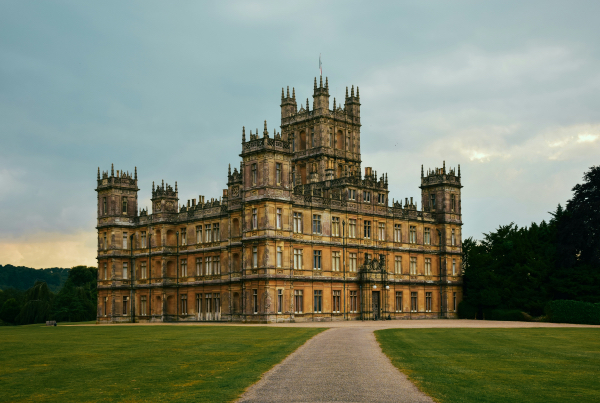
Highclere Castle in Hampshire which doubles as Downton Abbey in the TV series and movies. PICTURE: Tim Alex/Unsplash

Downton Abbey has popped up in London. With the final Downton Abbey movie, Downton Abbey: The Grand Finale next month, Bonhams auction house are auctioning off some iconic props, costumes and set pieces from across the series and is accompanying it with a preview exhibition which is open to the public. Among the items up for sale in Downton Abbey: The Auction are everything from a 1925 Sunbeam saloon car and various dresses and costumes including Lady Mary Crawley’s wedding dress (as worn by Michelle Dockery) to a George III oak dresser (seen in the Servant’s Hall in season 1), a silver pocket watch worn by Mr Carson (played by Jim Carter) and an autographed script from episode one, season one. The display can be seen at Bonham’s salesroom at 101 New Bond Street until 16th September. Admission is free but bookings are essential. For more head to https://www.eventbrite.co.uk/e/downton-abbey-the-auction-tickets-1555891024939

• A new evening market opens in Rupert Street, Soho, tomorrow night. The market – said to be the city’s first evening market – will be open from Mondays to Saturdays between 3pm and 10pm and will feature different themes on different days including artisan food on Wednesdays, world street food on Thursdays, vintage clothing on Fridays, and arts, crafts and jewellery on Saturday. Monday and Tuesday will be a general market. For more, see https://www.westminster.gov.uk/licensing/markets-and-street-trading/markets-westminster/rupert-street-w1.

On Now: Virtual Beauty. This exhibition at Somerset House explores the impact of digital culture and technologies on the traditional definitions of beauty today. It features the work of more than 20 artists with highlights including ORLAN’s Omniprésence (1993), a groundbreaking performance in which the artist live-streamed her own facial aesthetic surgery, and Amalia Ulman’s Excellences & Perfections, a powerful commentary on the authenticity of social media personas. There are also AI-generated portraits by Minnie Atairu, Ben Cullen Williams, and Isamaya Ffrench, and Harriet Davey, Frederik Heyman, and Andrew Thomas Huang explore digital self-expression and the creation of avatars beyond human boundaries. Not suitable for under 15s. Admission is pay what you can. Runs until 28th September. For more, see https://www.somersethouse.org.uk/whats-on/virtual-beauty.

Send all items to exploringlondon@gmail.com

LondonLife – Remembering VJ Day, 80 years on…

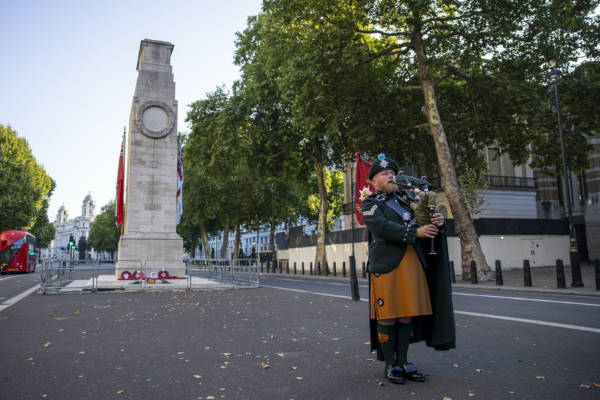
PICTURE: Sergeant Rob Kane UK MOD © Crown copyright 2025

Lance Corporal James Bell plays the bag pipes in front of the Cenotaph to commemorate the 80th anniversary of Victory in Japan Day on Friday, 15th August. Lance Corporal Bell was one of six military pipers who performed solemn laments across the UK, the Far East, and aboard HMS Prince of Wales at sea, to honour the end of World War II and the sacrifices of the Commonwealth forces.

This Week in London – Rare Tudor choirbook at Lambeth; Sculpture in the City returns; and, picturing Blondie…

One of only two surviving choirbooks from the reign of King Henry VIII is on display in a new exhibition at the Lambeth Palace Library. Sing Joyfully: Exploring Music in Lambeth Palace Library displays the ‘Arundel’ or ‘Lambeth’ Choirbook (Arundel, Sussex, c. 1525) – this year marking its 500th birthday – along with other items from the library’s collection such as two leaves of a 14th century polyphony recently discovered in the binding of an early printed book. The exhibition, which is free, can be seen until 6th November. For more, see www.lambethpalacelibrary.info/sing-joyfully/.

Looping Loop, © Andrew Sabin, Courtesy of the artist and Brooke Benington. PICTURE © Nick Turpin

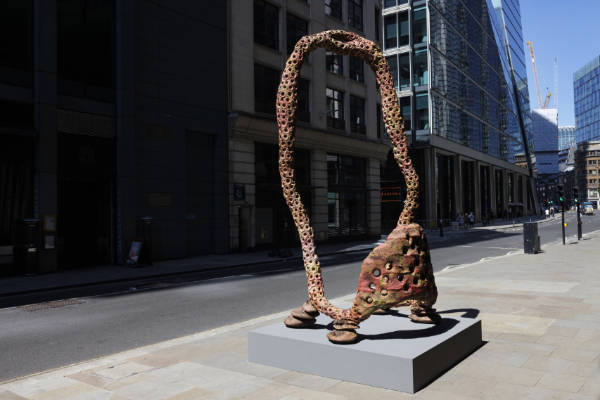
On Now: Sculpture in the City. The 14th edition of the annual sculpture exhibition in the City of London features 11 pieces including three new works as well as six works which have been retained from previous iterations of the exhibition and two permanent acquisitions. The new works include: Ai Weiwei’s Roots: Palace, a cast-iron tree root sculpture located outside St Botolph without Bishopsgate which, as part of a series created in collaboration with Brazilian artists and communities, explores the concept of unrootedness; Jane and Louise Wilson’s Dendrophiles which, located beneath the escalators of The Leadenhall Building, combines ink drawings based on images of DNA with 3D scans of ancient oak wooden samples; and, Andrew Sabin’s Looping Loop which, located outside 70 St Mary Axe, which forms a continuous loop creating what’s described as a “lively, pulsating sensation”. Runs until April. For more – including a map of the locations – see https://www.sculptureinthecity.org.uk/.

Rare, behind the scenes images of US band Blondie have gone on show at the Barbican Music Library from today. Taken by photographer Martyn Goddard during the group’s breakthrough year of 1978, the 50 images show the band in concert, backstage, in the studio and during photo shoots. The display of photographs is complemented by poster prints, album covers, tour and concert memorabilia, period cameras, and photographic equipment. There are also items lent by Alan Edwards, who has handled Blondie’s publicity since 1978, from his private collection. Blondie in Camera 1978 runs until 5th January. Admission is free. For more see, www.cityoflondon.gov.uk/services/libraries/barbican-music-library.

Send all items for inclusion to exploringlondon@gmail.com.

This Week in London – Millet at The National Gallery; exploring Great Ormond Street Hospital’s new children’s cancer centre; and, a Banksy at the London Transport Museum…

The first UK exhibition in almost 50 years dedicated to the works of 19th century French artist Jean-François Millet (1814-1875) opens at The National Gallery today. Millet: Life on the Land, which coincides with the 150th anniversary of his death, features around 13 drawings and paintings from British public collections including The National Gallery’s The Winnower (about 1847‒8) as well as L’Angelus (1857‒9) from the Musée d’Orsay, Paris. The exhibition can be seen in Room 1 until 19th October. Admission is free. For more, see www.nationalgallery.org.uk/exhibitions/millet-life-on-the-land.

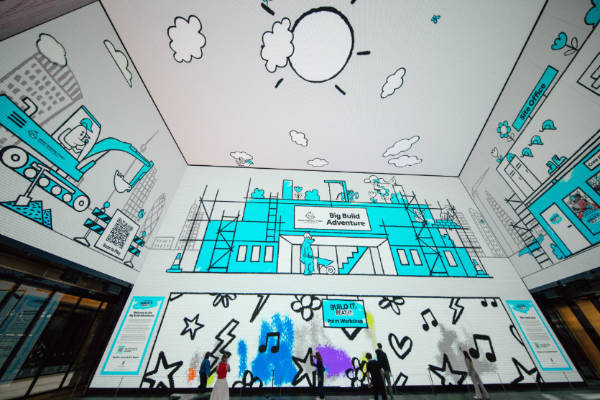
The Big Build Adventure at Outernet London.

An immersive digital experience which brings to life the Great Ormond Street Hospital’s new Children’s Cancer Centre opened at Outernet London off Tottenham Court Road this week. The Big Build Adventure, a partnership between the Great Ormond Street Hospital Charity and Outernet London, features a giant virtual paint wall, building themed games, a construction site selfie station and the chance to symbolically buy a brick to help build the centre. The free experience can be experienced until 31st August. Admission is free. For more, see www.outernet.com/news/great-ormond-street-hospital-charity-and-outernet-studios-launch-the-big-build-adventure.

An artwork by Banksy – depicting a rat hanging from the arm of a clock – has gone on show at the London Transport Museum in Covent Garden. The artwork first appeared on the door of a Transport for London signal controller cabinet in Croydon in October, 2019, which was located in front of the artist’s pop-up showroom installation, Gross Domestic Product. The work, which was preserved by the museum, has been mounted onto an identical cabinet body to provide context for its original appearance. Admission charge applies. For more, see www.ltmuseum.co.uk.

Send all items for inclusion to exploringlondon@gmail.com
This Week in London – Jousting at Eltham; Thamesmead Festival returns; and, ‘Robot Zoo’ at the Horniman…

A knight prepares to joust at an earlier event at Hampton Court Palace. PICTURE: David Adams

Eltham Palace returns to the medieval age this weekend with a jousting tournament in which knights will compete for glory. The ‘Legendary Joust’ will feature four knights, each representing a character from myth or legend including The Wyvern, The Wildman, Sir Lancelot and Jason of the Argonauts. The event runs from 10am to 5pm on Saturday and Sunday. Admission charge applies. For more, see https://www.english-heritage.org.uk/visit/whats-on/eltham-palace-legendary-joust-2-3-aug-2025/.

The Thamesmead Festival returns to Southmere Park in south-east London over the next two weekends. The free, family-friendly festival boasts four big stages with headline guest Omar and musical performances across genres including Afrobeat, R&B, rock and pop as well as spoken word, comedy, and street dance. There will also be a market featuring local artists and food from around the world. Runs from 12pm to 7:30pm on Saturday and on 8th August. For more, head to https://www.thamesmeadnow.org.uk/whats-on/arts-culture/thamesmead-festival-2025/.

On Now: Robot Zoo. This exhibition at the Horniman Museum in Forest Hill features a range of larger-than-life animals recreated using machine parts and gadgets in a bid to reveal how their real life counterparts see, eat, hunt and hide. The display also features interactive exhibits giving visitors the chance to try jet-propelled squid racing and shoot a chameleon’s ‘tongue-gun’. There’s also two specially commissioned interactive murals by artist Giulia Casarotto. Runs until 2nd November. Admission charge applies. For more, see www.horniman.ac.uk/event/robot-zoo/.

Send all items for inclusion to exploringlondon@gmail.com
LondonLife – Kew Gardens’ new Carbon Garden…

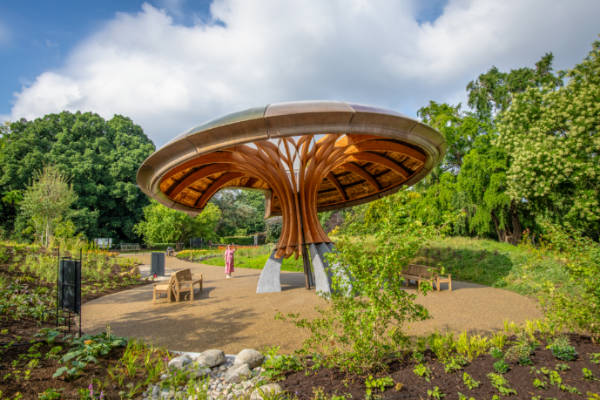
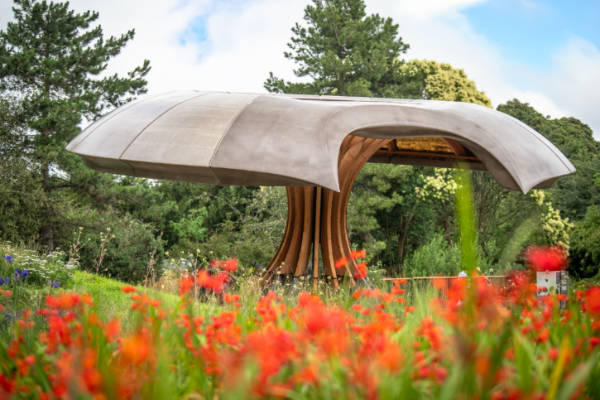
The Carbon Garden at Kew Gardens. PICTURES: Ines Stuart-Davidson © RBG Kew

A cutting edge ‘Carbon Garden’ opened at Kew Gardens on 25th July with the aim of revealing the critical role carbon plays in sustaining life on Earth, the scale of the climate crisis, and the “extraordinary potential of the natural world to combat it”. The permanent new garden features a selection of herbaceous perennials which illustrate the dramatic rise in global average temperatures over time, a dry garden which showcases how we can work with plants to adapt to a changing climate, more than 20 new trees selected for their resilience to projected future climate conditions, a rain garden and bioswale which, among other things, illustrate the ways we can manage waterflow, prevent soil erosion, and reduce flooding, and carbon storage. and grasslands, wildflower meadows and native hedgerows which aim to boost biodiversity. At the centre of the garden is a pavilion designed by Mizzi Studio which is inspired by the symbiotic relationship between the plant and fungal kingdoms, and is created using low-carbon, natural materials. Admission charges apply. For more, see www.kew.org/kew-gardens/whats-in-the-gardens/carbon-garden

This Week in London – Showtime! at the Charles Dickens Museum; the ‘Future of Food’; and, Peter Rabbit hops to Hampton Court…

PICTURE: VV Shots/iStockphoto

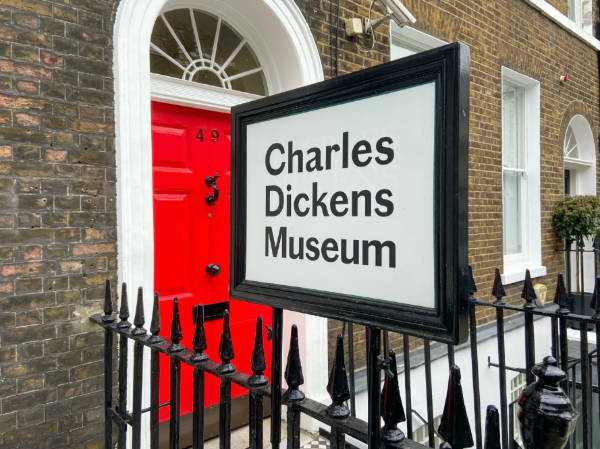
The enduring appeal of Charles Dickens’ works and how they have been adapted for the stage, screen and radio is the focus of a new exhibition at the Charles Dickens Museum in Bloomsbury. Showtime! looks at productions starting from as far back as 1837 and including such classics as The Muppets Christmas Carol and Oliver! the musical with objects on show including original playbills, posters, programmes, photographs and props. There’s also the opportunity to hear from actors and writers about what makes Dickens so adaptable and see Dickens’ own works which he annotated with stage directions. The display can be seen until 26th January. Admission charge applies. For more, see www.dickensmuseum.com.

A major new exhibition on the future of food – how science is creating more sustainable ways of producing and consuming food – opens at the Science Museum today. Future of Food reveals how the way we grow food and eat impacts the climate, nature, and society. Among the more than 100 objects on show are cricket burgers and cell-grown salmon as well as 3,500-year-old fermented sourdough bread, the first Quorn burger dating from 1981 and the first beef steak grown outside a cow. There is also the chance to join a multiplayer interactive game and create your own “future for food”. Runs until 4th January. Admission is free. For more, see https://www.sciencemuseum.org.uk/see-and-do/future-of-food.

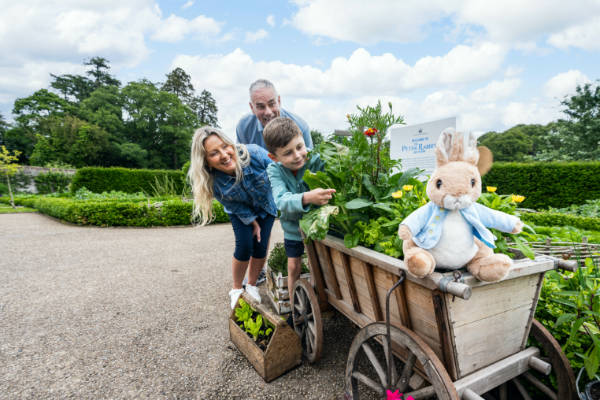
The Peter Rabbit Adventure at Hampton Court Palace. PICTURE: Courtesy of Historic Royal Palaces.

Peter Rabbit is hopping over to Hampton Court Palace to take part in a new family trail that brings Beatrix Potter’s beloved characters to life in the palace gardens from tomorrow. The Peter Rabbit Adventure, included as part of the palace admission, is spread over the Kitchen Garden, Tiltyard, and Wilderness and the activities on the trail will introduce little ones to the plants, vegetables and wildlife that inhabit the gardens. These include the chance to use Mrs Tiggy-winkle’s washing equipment to make music among the trees, to join in a search for Peter Rabbit under wheelbarrows and flowerpots in the Tiltyard, and to try to hop, skip and jump as high as Peter and his friends. A larger-than-life Peter Rabbit will be greeting families in the Kitchen Gardens. Runs until 7th September. For more, see https://www.hrp.org.uk/hampton-court-palace/whats-on/the-peter-rabbit-adventure/.

Send all inclusions to exploringlondon@gmail.com
This Week in London – Red Lion Playhouse excavation explored; a restored Victoria Embankment Gardens fountain; and, a blue plaque for the first female civil servant…

An exhibition of items unearthed at the site of the former Red Lion Playhouse and the subsequent inn – the White Raven Tavern – built on the site in Whitechapel has opened at UCL East Culture Lab. Patterns Beneath Our Feet tells the story of a 2015-19 excavation on the site and features some of the discoveries made there – everything from clay pipe fragments to Bellarmine jugs and sugar moulds. The White Raven has particular associations with the history of Black Londoners and was one of the taverns from where members of London’s Black community began coerced journeys of resettlement to West Africa in 1786. The free exhibition is open Wednesdays and Saturdays by appointment. Members of the excavation team will be at the Culture Lab (UCL East Marshgate, 7 Sidings Street, Stratford) this Monday (21st July) to guide people through the exhibition as well as answer questions as part of the Festival of Archaeology. There will be a parallel event at the excavation site. For more, see https://www.ucl.ac.uk/archaeology-south-east/research-projects/2025/jul/whitechapel.

A 1950s fountain in Victoria Embankment Gardens is once again flowing after more than 20 years of silence. The fountain, located at the end of Villiers Street, is octagonal in design and was inspired by a pumping station erected nearby in 1675-76. Standing at more than 70 feet tall, the water tower used to be a major landmark on the London skyline and had provided water pressure for houses along the Strand by using a heavy weight on the top of the tower. The bandstand which surrounds the fountain dates from the 1870s, when it was used to host midday concerts for workers from the neighbouring printing works. The £85,000 restoration project preserved the fountain’s original teak finish and involved replacing the sprinkler system and water treatment as well as adding LED lighting to each tier of the fountain.

Britain’s first female civil servant has been honoured with a blue plaque at the site of her former home in Battersea. Jeanie Senior became the first female civil servant in 1873 when she was appointed as the first female inspector for girls being educated in pauper schools and workhouses (and later went to work with soldiers returning from the Franco-Prussian War, which contributed to the foundation of the National Society for Aid to Sick and Wounded in War, a predecessor to the British Red Cross, as well as being a co-founder of the Metropolitan Association for Befriending Young Servants). The plaque, funded by The Battersea Society and the FDA union, is located on the Battersea Arts Centre where the property named Elm House was once located.

Send all items for inclusion to exploringlondon@gmail.com.

This Week in London – Royal art on tour; ‘More than Human’ at the Design Museum; and, the St Paul’s Watch celebrated…

Richard Foster, Their Royal Highnesses on North Seymour Island, 2009. PICTURE: © Richard Foster Royal Collection Trust

More than 70 works of art from the King’s private collection – many of which have never been shown publicly before – go on show from today as part of the summer opening of Buckingham Palace’s State Rooms. The King’s Tour Artists, which can be seen in the ballroom, features works by 43 artists who have travelled with the King and Queen during the past 40 years. They include the earliest work on show – From the Afterdeck of HMY Britannia by John Ward, the inaugural tour artist – as well as Basilica of San Vitale, created by Fraser Scarfe who became the first tour artist to create digital artwork on an iPad when he accompanied the King and Queen on a State Visit to Italy. Other works include a pair of portraits of the King and Queen when Prince of Wales and Duchess of Cornwall which were painted by James Hart Dyke following a tour to the Gulf States in 2007, a drawing by Claudette Johnson made after the first official royal visit to Rwanda in 2022, and a terracotta head by Marcus Cornish, the only sculptor ever to have been chosen as a tour artist, which depicts a war veteran met by the royal party during a visit to Slovakia in 2000. Other highlights of the summer opening include the chance to see the recently installed Coronation State Portraits of the King and Queen in their permanent home. Runs until 28th September. Admission charge applies. To book, head to www.rct.uk.

Artworks for octopii and an immersive seaweed installation are among artworks in a new exhibition at the Design Museum focusing on a growing movement of ‘more-than-human’ design. More than Human brings together more than 140 works spanning contemporary and traditional practices, fine art, product design, architecture and interactive installations – the work of more than 50 artists, architects and designers. As well as the artworks for octopuses by Japanese artist Shimabuku and the seaweed installation by artist Julia Lohmann, other highlights include a vast new tapestry that explores the perspectives of pollinators by Alexandra Daisy Ginsberg and an eight metre long mural by MOTH (More Than Human Life Project), depicting the growing movement to award legal rights to waterways around the world. Runs until 5th October. Admission charge applies. For more, see https://designmuseum.org/exhibitions/more-than-human.

On Now: Saving St Paul’s: The Watch and the Second World War. This free outdoor exhibition – part of St Paul’s Cathedral’s commemorations around the 80th anniversary of World War II, honours the volunteers known as the St Paul’s Watch and their efforts to protect the cathedral during the Blitz. That included during the two direct hits to the cathedral – in October, 1940, and April, 1941. A short film accompanies the display which can be seen in the cathedral garden. The exhibition can be seen until October, 2025. For more, see www.stpauls.co.uk.

LondonLife – Remembering 7/7…

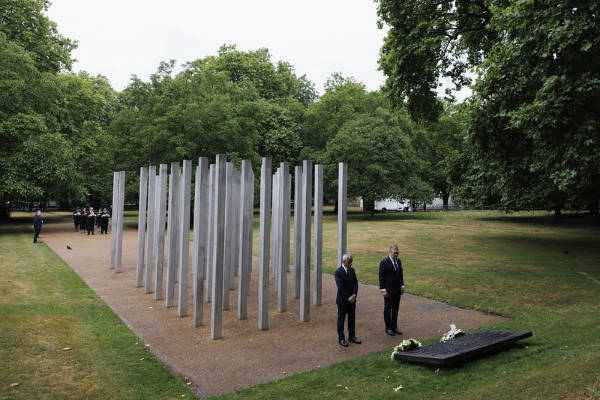
London paused on. Monday to mark the 20th anniversary of the terror attacks which took place on the 7th July, 2005.

Fifty-two people died in the attacks and hundreds were injured when three suicide bombers struck at 8.50am in the vicinity of Aldgate, Edgware Road and Russell Square Tube stations. A fourth device exploded at 9.47am on a bus that had been diverted via Tavistock Square.

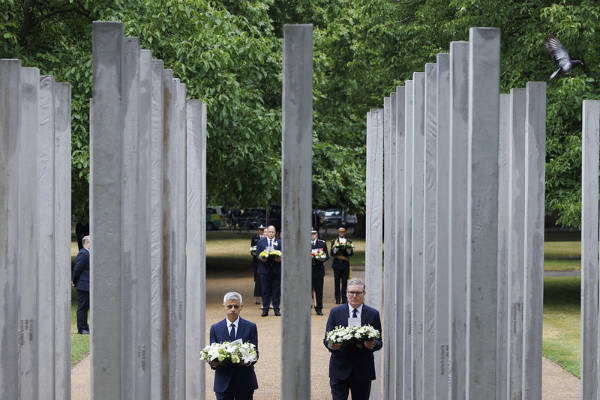
On Monday, the names of all those killed in London’s 7/7 bombings were read out at the National Memorial Service at St Paul’s Cathedral. In Hyde Park, Prime Minister Sir Keir Starmer and Mayor of London Sir Sadiq Khan laid wreaths at the 7/7 Memorial, marking the time when the first bomb exploded.

Prime Minister Keir Starmer and Mayor of London Sadiq Khan lay wreaths at the 7/7 memorial in Hyde Park. PICTURE: Simon Dawson/No 10 Downing Street (licensed under CC BY-NC-ND 4.0)

Commemorative events were also held at the sites where the bombings occurred.

In a message to mark the anniversary, King Charles III said his “heartfelt thoughts and special prayers remain with all those whose lives were forever changed on that terrible Summer’s day”.

“We remember with profound sadness the 52 innocent people who were killed in senseless acts of evil – and the enduring grief of their loved ones. We recall, too, the hundreds more who carry physical and psychological scars, and pray that their suffering may ease as the years pass.”

The King also called on people to “remember the countless stories of extraordinary courage and compassion that emerged from the darkness of that day”.

“The selfless bravery of our emergency services, transport workers, and fellow citizens who rushed towards danger to help strangers reminds us of the very best of humanity in the face of the very worst.”

Prime Minister Keir Starmer and Mayor of London Sadiq Khan lay wreaths at the 7/7 memorial in Hyde Park. PICTURE: Simon Dawson/No 10 Downing Street (licensed under CC BY-NC-ND 4.0)