LondonLife – Shop pops up in Carnaby Street to help Asian lions…

HeidiA new pop-up shop has appeared in iconic Carnaby Street as part of a campaign aimed at helping to save endangered Asian lions, like Heidi, pictured above.

The initiative, supported by ZSL London Zoo and Carnaby, aims to help raise £5.7 million in funds for the Zoological Society of London’s Lions400 campaign through the sale of specially designed products.

There are only some 400 Asian lions left in the wild, living in the isolated Gir Forest in Western Gujarat, India, and vulnerable to threats including disease, disaster, poaching and a growing human population. 

The funds raised in the campaign will be used to build a state-of-the-art lion breeding centre and visitor experience at the zoo – where about a million people a year come into contact with the Asian lions including Heidi – as well as being used to extend conservation work in the field.

Among the items for sale in the shop at 15 Carnaby Street (pictured below) are T-shirts, bone china pieces, notebooks and badges created by fashion designer Elizabeth Emanuel and based on her lion sketch drawings as well as animal print notebooks and cards created by pop artist Rose Hill.

As well as selling products, the shop – which is only open for six weeks – is also hosting a series of free events. On Thursday, 19th June, Phd student Simon Dures will talk about African lions and their genetics at 1pm, 1,30pm, 6pm and 6.30pm. On 3rd July, Joanna Barker, the UK and Europe Conservation Programme coordinator will talking about marine mammal conservation in the Thames Estuary at similar times and, on 17th July, Nisha Owen, EDGE Conservation Biologist will talk about EDGE (Evolutionary Distinct and Globally Endangered) species.

For more, on the campaign, see www.zsl.org/support-us/lions400. For more on Carnaby Street, see www.carnaby.co.uk.

ZSL-pop-up

This Week in London – London’s garden squares open their gates; World War I comics; and, exploring the Science Museum’s garbage…

London Open Garden Squares Weekend will see more than 200 “hidden and little known” gardens swing their gates open to the public this Saturday and Sunday. Featuring 20 more gardens than last year’s event, the gardens range from classic London square parks to rooftop gardens, community allotments and ecology centres as well as gardens attached to restaurants and historic properties. They include Highbury Square – former home of the Arsenal Football Club, Barnsbury Wood – London’s smallest nature reserve, the Cordwainers community garden in Hackney, Garden Barge Square which will see a floating garden created on the decks of barges, the garden at the PM’s home of number 10 Downing Street, and The Roof Gardens, located above the former Derry & Toms department store in Kensington. One £12 ticket gains access to all gardens (excepting those with special conditions) while National Trust members are half-price and children under 12 go free. For more and a full programme of open gardens, head to www.opensquares.org.

Comics created during World War I are the focus of a new exhibition which opened at the Cartoon Museum in Bloomsbury this week. Never Again! World War I in Cartoon and Comic Art features works by British cartoonists Alfred Leete, Bruce Bairnsfather, William Heath Robinson and Donald McGill and includes more than 300 images ranging from political and joke cartoons taken from newspapers and periodicals and children’s comics to comic cigarette cards and publications produced in the trenches by serving soldiers. There are also some more recent works such as the 1980s comic strip Charley’s War and drawings from the Horrible Histories series. The exhibition runs until 19th October. Admission charge applies. For more, see www.cartoonmuseum.org.

Explore the world of garbage in this new exhibition opening at the Science Museum in South Kensington on Monday. The Rubbish Collection aims to use 30 days worth of the Science Museum’s waste to “expose the beauty, value and volume of what we call ‘rubbish'”. Visitors are able to take part by collecting, sorting and documenting the rubbish generated by the museum which will then be photographed by artist Joshua Sofaer before going on to be processed for recycling or to generate electricity. During a second phase of the exhibition, Sofaer will bring the rubbish back into the museum at different stages of processing. The exhibition is part of the museum’s Climate Changing programme. Runs until 14th September. For more, see www.sciencemuseum.org.uk.

LondonLife – ‘Belle’ and Kenwood House…

Belle3

Part of the history of Kenwood House in north London hits the big screen this week with the premiere of the film Belle.

The film, which opens on Friday, is inspired by the story of Dido Elizabeth Belle (played by Gugu Mbatha-Raw), the illegitimate daughter of Admiral Sir John Lindsay and a slave woman named Maria, who spent her childhood years at the property in the care of her great-uncle Lord Mansfield (played by Tom Wilkinson) in the second half of the 18th century.

The idea for film was apparently sparked when Belle‘s writer Misan Sagay saw a painting of Dido which hangs at Scone Palace in Scotland (a copy of the painting, which was formerly attributed to Johann Zoffany but is now unattributed, can be seen hanging in the Housekeeper’s Room at Kenwood).

Lauren Houlistan, English Heritage senior curator, says Dido grew up at Kenwood from about the age of five (about 1766) and seemed to have been considered one of the family.

She says that while Lord Mansfield was “very fond of her”, Dido’s position was, however, “lower than that of her white, legitimate cousin, Elizabeth – Dido was given a smaller allowance and is noted as only joining visitors after dinner”. Dido is known to have managed the dairy at Kenwood in 1779 and was described as “superintendent” over the daily and poultry yard (for more on Dido’s extraordinary life, see our earlier post here).

Kenwood House was undergoing restoration when the film was being made so scenes for the film set in the house were shot at various other English Heritage properties including Chiswick House and the Ranger’s House in Greenwich.

WHERE: Kenwood House, Hampstead Lane, Hampstead (nearest Tube stations are Golders Green and Archway/nearest train stations are Gospel Oak and Hampstead Heath); WHEN: 10am to 5pm daily; COST: Free; WEBSITE: www.english-heritage.org.uk/daysout/properties/kenwood/.

PICTURE: Gugu Mbatha-Raw stars as Dido Elizabeth Belle and Sarah Gadon Lady Elizabeth Murray and  in Belle. © Twentieth Century Fox.

This Week in London – London’s architectural festival; Tower Bridge celebrates its 120th with gifts; and, unseen Nicholsons at Dulwich – plus late addition: this year’s Keats Festival…

The month long London Festival of Architecture kicked off this week with the first of more than 200 activities taking place right across the capital. Now in its 10th year, the festival features talks, exhibitions, film screenings, cycle rides, open studios and the chance to explore the city with experts at hand. Headline events include a gathering of international architects at Balfron Tower where they will come up with new ideas for the surrounding area of Poplar as they explore the influence of emigre architecture on London, a talk by Will Self on architecture, and an exploration of ‘The Death and Life of Great London High Streets’ with experts guided people around newly completed projects. Other highlights include the House of Muses, an architectural installation at the Museum of London, the rare chance to see a late 16th century model of country house Tyringham Hall in Buckinghamshire which was commissioned by Sir John Soane (and will be on display at the Sir John Soane Museum), and the art installation, The Pungent Subway which will see a 55-year-old subway in Elephant and Castle transformed by sweet-smelling herbs and flowers as well as GUN Architects Rainforest in Bedford Square. For a full programme of events, many of which are free, check out details on the website, www.londonfestivalofarchitecture.org.

London icon Tower Bridge celebrates its 120th anniversary this year and to mark the event, the Tower Bridge and its events partner Seasoned Events are giving away free tickets to special sunset event. To take place on its high-level walkway on 30th June, the night, which runs from 7pm to 9.30pm, will feature Victorian-themed entertainment in commemoration of the age in which the great structure was constructed. For your chance to win tickets, look out for special competition posts by Tower Bridge on Facebook (www.facebook.com/towerbridge) and Twitter (@TowerBridge) from 9th June and share them on social media by 19th June. As many as 120 lucky winners will be selected at random and notified by 5pm on 20th June. Each ticket includes entry for two and a drink token (and obviously you must be in London and available to attend on 30th June). Good luck! For those who don’t win, there is a consolation prize – entry to the Tower Bridge Exhibition is being dropped to just £1.20 (120 pence) on 30th June when buying tickets at the door. The exhibition will that day also be playing host to a range of ‘Victorian visitors’ – from policeman and tourists to engineers. For more, see www.towerbridge.org.uk.

• Featuring previously unexhibited or rarely seen works by important 20th century painters Ben and Winifred Nicholson, a new exhibition opened at the Dulwich Picture Gallery in south London yesterday. Art and Life: Ben Nicholson, Winifred Nicholson, Christopher Wood, Alfred Wallis, William Staite Murray, 1920-1931 features more than 80 words with 16 being displayed for the first time including Ben Nicholson’s 1926-27 (still life) and Winifred Nicholson’s Flowers in a Glass Jar. The display is a rare opportunity to see works by the Nicholson’s different views of the same landscapes, seascapes, still-lives and portraits and has the works grouped by locations where they painted including London, Lugarno in Switzerland, Cumberland and Cornwall. Alongside works by the Nicholsons, the display also features the art of their fellow artists and friends including Christopher Wood, the self-taught marine painter Alfred Wallis, and potter William Staite Murray, and the exhibition is curated by the Nicholson’s grandson, art historian Jovan Nicholson. Runs until 21st September. Admission charge applies. For more see www.dulwichpicturegallery.org.uk.

Late addition: The annual Keats Festival kicks off at Keats House in Hampstead on Saturday, 7th June, with highlights including guided tours of the house, plenty of poetry readings and workshops, musical performances, a screen-writing workshop and a family day on 15th June. Other events at the Keats Grove house where the poet lived between 1818 and 1820 include an afternoon tea “in the company of Keats” and an offsite event held at UCL’s Bloomsbury campus next Friday – One Day in the City: A Celebration of London and Literature – which will feature performance poetry, a seminar on Keats and a contemporary retelling of The Canterbury Tales. Many events are free but many require pre-booking. For more information, check out www.cityoflondon.gov.uk/things-to-do/attractions-around-london/keats-house/Pages/Keats-Festival.aspx.

Send all items of interest for inclusion to exploringlondon@gmail.com.

This Week in London – Norman Shaw’s drawings on display; Tower Bridge art; and, German medals from World War I…

Drawings by the renowned Victorian-era British architect Norman Shaw (1831-1912) are the subject of a new display at the Royal Academy of Arts. Shaw’s building works included New Scotland Yard on Embankment and renovations and additions to the likes of Burlington House, home of the RA. The display Dream, Draw, Work will explore the materials, draughtsmanship and design practices of Shaw and his staff and many of the works in the display bear the marks of extensive handling. As well as the drawings, photographs of Shaw’s London buildings will be displayed in the Royal Academy’s Architecture Space. Opens in the Tennant Gallery tomorrow and runs until October 26. Entry is free. For more, see www.royalacademy.org.uk.

An exhibition of artworks depicting Tower Bridge over its 120 year history opens at the Guildhall Art Gallery on Saturday. Tower Bridge: A Celebration of 120 Years includes paintings from the gallery’s permanent collection, contemporary interpretations and archive material. For more, follow this link.

On Now: The other side of the medal: how Germany saw the First World War. This free display in Room 69a of the British Museum focuses on medals made by artists who lived and worked in Germany from 1914-1919. While smaller struck ‘medalets’ were mass produced, the larger cast medals – such as those featured in this display – were produced in smaller numbers and mostly cast in iron because bronze was required for shell casings. While some of the medals, unusually modernist in style, were used to influence opinion against Germany’s enemies, others provided what the museum describes as a “more universal criticism about the futility of war and waste of human life”. Among the motifs used was that of Death who can be seen killing soldiers and attacking ships or giant Zeppelin airships. The medals were not officially produced or sanctioned and attracted their fair share of controversy (one depicts the passenger ship Lusitania, sunk by a German U-boat in 1915, as laden with armaments). The display can be seen until 23rd November. For more, see www.britishmuseum.org.

Send all items of interest for inclusion to exploringlondon@gmail.com.


This Week in London – Woolly mammoths star at the NHM; the Ceremony of the Constable’s Dues; mummies at the British Museum; and, Rupert Potter’s photographs…

The most complete woolly mammoth ever found is the star attraction at a new exhibition opening at the Natural History Museum tomorrow. Lyuba – a one month old mammoth – was found by a reindeer herder in Siberia in 2007 and was named after the reindeer herder’s wife. Thought to be 42,000-years-old, the young mammoth was thought to be healthy when it died and still has remnants of its mother’s milk in its stomach. It is the first time the mammoth – normally housed at the Shemanovsky Museum-Exhibition Complex in Salekhard, Russia, is being shown in Western Europe. Mammoths: Ice Age Giants will also feature life-sized models and skeletons of mammoths. Runs until 7th September. Admission charge applies. For more, see www.nhm.ac.uk.

The German naval ship FGS Niedersachsen will take part in the Ceremony of the Constable’s Dues at the Tower of London tomorrow, having saluted the Tower with a gun salute yesterday – the first time a gun salute has taken place in honour of the ceremony in 40 years. The ceremony dates back to the 24th century and while past offerings have included barrels of rum, oysters, cockles and mussels, this year the Tower’s constable, General the Lord Dannatt, will be presented with a barrel of wine. The ceremony will see the ship’s Commander Kurt Leonards led his crew to the Tower’s West Gate where they will be challenged by the axe wielding Yeoman Gaoler before marching on to Tower Green to “present the dues” or deliver the wine, to the Constable. The ceremony takes place at noon. For more on the Tower, see www.hrp.org.uk/TowerOfLondon/.

A new exhibition about ancient lives in Egypt and Sudan has kicks off at the British Museum today. Ancient lives, new discoveries will reveal new research about one of the museum’s most popular collections – that of ancient Egyptian and Sudanese mummies – and uses state-of-the-art technology to take you inside the mummy cases and bring you face-to-face with eight people who lived in the Nile Valley thousands of years ago. The selected mummies come from a period spanning 4,000 years, from the Predynastic period to the Christian era, and come from sites in both Egypt and Sudan. They include an adult male from Thebes mummified about 600 BC and a female singer called Tamut who lived in Thebes around 900 BC. The museum received its first mummy in 1756 and hasn’t unwrapped any of them relying on increasingly advanced technologies to see inside. The exhibition runs until 30th November. Admission charge applies. For more, see www.britishmuseum.org.

On Now – The World of Rupert Potter: Photographs of Beatrix, Millais and Friends. The amateur photography of Rupert Potter, father of children’s author Beatrix Potter, is on show in his exhibition at the National Portrait Gallery. The display features selected works from the gallery’s extensive collection of his works including two new acquisitions which show Beatrix Potter on holidays both before and after her publishing success. Other photos depict the sitters and paintings of artist Sir John Everett Millais, who was a friend of Rupert Potter’s. The free exhibition runs until 16th November in Room 28. For more, see www.npg.org.uk.

Send all items of interest for inclusion to exploringlondon@gmail.com.

This Week in London – London’s World War I transport in focus; Museums at Night; and, Tony Hancock remembered…

Opening tomorrow, a major exhibition at the London Transport Museum will take an in-depth look at the role transport played in London during World War I – from how London bus drivers took their vehicles to the front lines to the advance of women into the transport workforce for the first time and, of course, how Londoners fared under the deadly aerial attack of the Luftwaffe. Key among the objects on display as part of Goodbye Piccadilly at the Covent Garden site will be ‘Ole’ Bill’ – a 1911 bus on loan from the Imperial War Museum which was requisitioned for the front and, taking its name from Bruce Bairsfather’s popular cartoon character, featured regularly in Armistice Day parades until the 1960s. Other highlights include World War I recruitment posters, a 1914 female bus conductor’s uniform and a newly acquired piece of ‘trench art’ – a decorated Daimler bus steering wheel. Runs until 8th March. Admission charge applies. For more, see www.ltmuseum.co.uk.

The annual Museums at Night event kicks off tonight and runs until Saturday night. Among the premises participating this year is the Hunterian Museum at the Royal College of Surgeons in Lincoln’s Inn Fields which is showing a selection of rarely seen materials from its archives, the Banqueting House in Whitehall, Keat’s House in Hampstead and the Petrie Museum of Egyptian Archaeology at University College London which is running a murder mystery event Friday night. Some events are ticketed and some have an admission charge so check out the website before you go. For more, see www.culture24.org.uk/places-to-go/museums-at-night.

The late comedian Tony Hancock was honoured with an English Heritage Blue Plaque at his former home in South Kensington on Monday on what would have been his 90th birthday. Hancock, famous for Hancock’s Half Hour on radio and TV, lived on the fourth floor of a Grade II-listed building at 20 Queen’s Gate Place with his wife Cicely Romanis between 1952 and 1958. It was the longest time he lived at any property in London and coincided with the most creative and successful period of his career with the show first board cast on BBC radio in 1954 and also appearing on TV from 1956 onwards. Hancock died in 1968. For more, see www.english-heritage.org.uk/discover/blue-plaques/.

Send all items of interest for inclusion to exploringlondon@gmail.com.

This Week in London – UK’s largest ever exhibition on comics; wedding dresses at the V&A; ‘La Dolce Vita’ at the Estorick; and, architecture and the Italian renaissance…

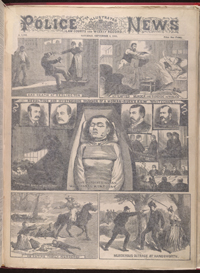
Jack-the-Ripper,-Illustrated-Police-News,-1888-(c)-British-Library-BoardThe UK’s largest ever exhibition on comics opens at the British Library tomorrow. Comics Unmasked: Art and Anarchy in the UK examines the history of the comic book in the UK – from 19th century illustrated reports of Jack the Ripper to 1970s titles like 2000AD and Action and more recent works – and examines how they have been used to explore confronting subjects like violence, sexuality and drugs. Among the highlights is a specially commissioned work by Tank Girl and Gorillaz co-creator Jamie Hewlett and works by the likes of Neil Gaiman (Sandman), Alan Moore (Watchmen, V for Vendetta), Grant Morrison (Batman: Arkham Asylum) and Posy Simmonds (Tamara Drewe). Admission charge applies (and due to the graphic nature of some exhibits, the Library has issued a parental guidance warning for under 16s). Runs until 19th August. For more, see www.bl.uk/whatson/exhibitions/comics-unmasked/index.html. PICTURE: Jack the Ripper’s victims, Illustrated Police News, 1888 © British Library Board.

The history of the white wedding dress goes under scrutiny at the V&A with its Wedding Dresses 1775-2014 exhibition opening on Saturday. The display includes more than 80 extravagant outfits from the museum’s collection – they include the Anna Valentine embroidered silk coat worn by The Duchess of Cornwall for the blessing of her marriage to The Prince of Wales in 2005, a purple Vivienne Westwood dress chosen by Dita von Teese for her wedding in 2005 and Dior outfits worn by Gwen Stefani and Gavin Rossdale on their wedding day in 2000. Some of the earliest examples in the chronological display including a silk satin court dress from 1775 and a ‘polonaise’ style brocade gown with straw bergere hat dating from 1780 lent by Chertsey Museum. The exhibition will also explore the growth of the wedding industry and the increasing media focus on wedding fashions. Admission charge applies. Runs until 15th March. For more, see www.vam.ac.uk.

The golden era of Italian film during the 1950s and 1960s and the birth of celebrity culture – did you know the term paparazzi was coined in the 1960 Federico Fellini film La Dolce Vita? – are the subject of a new exhibition which opened at The Estorick Collection this week. The Years of La Dolce Vita features 80 photographs from the period depicting Italian movie stars and the Hollywood “royalty” like John Wayne, Charlton Heston, Lauren Bacall and Liz Taylor who were working in Italy at the time. Juxtaposed against Marcello Geppetti’s images of this “real-life dolce vita” are behind-the-scenes shots from the set of La Dolce Vita taken by cameraman Arturo Zavattini. Runs until 29th June. Admission charge applies. For more, see www.estorickcollection.com.

The first British exhibition to explore the role of architecture in the Italian Renaissance opened at the National Gallery this week. Building the Picture: Architecture in Italian Renaissance Painting looks at the works of Italian masters such as Duccio, Botticelli and Crivelli with highlights including Sebastiano del Piombo’s The Judgment of Solomon – on display in London for the first time in 30 years – and Andrea del Verrochio’s The Ruskin Madonna. Five short films also form part of the display. Entry to the exhibition in the Sunley Room is free. Runs until September 21. For more information, see www.nationalgallery.org.uk.

Send all items of interest for inclusion to exploringlondon@gmail.com.

LondonLife – Celebrate Shakespeare with a cake…

Jane-Asher

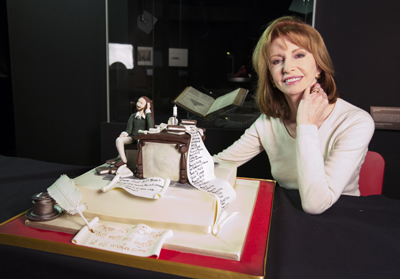
Time is running out for your entry into Cakespeare – the V&A’s competition to find the best Shakespeare-themed cake as part of the institution’s celebration of the 450th anniversary of William Shakespeare’s birth. The competition, which closes on 4th May, was launched earlier this month with an almost 15 kilogram cake created by Jane Asher Party Cakes (actress Jane Asher and the cake are pictured). A fruitcake, it features the playwright at work with a writing table and feature quill made from icing while a scroll lists the 36 plays in Shakespeare’s First Folio (which is on show in the V&A’s Theatre and Performance Galleries). To enter the competition, design, bake and decorate your cake celebrating Shakespeare and then upload an image of it to social media, tagged #Cakespeare. Oh, and the winner – selected by Asher and Geoff Marsh, director or the V&A’s department of theatre and performance – will receive a weekend for two in Stratford-upon-Avon complete with tickets to see the Royal Shakespeare Company. The V&A’s Shakespeare Festival runs until 4th May. For more, see www.vam.ac.uk. So enjoy your Shakespeare – and your cake…might be a way to take your mind off London’s transport woes! PICTURE: Victoria and Albert Museum, London.

This Week in London – A rare chance to walk through a Thames tunnel; Matisse at the Tate; and, Spitting Image on show…

It’s a rare chance to walk the historic Thames Tunnel between Wapping and Rotherhithe – the first tunnel ever dug under a navigable waterway. Transport for London and London Overground are offering the chance to purchase tickets to walk the tunnel – built by Marc Brunel, it’s now used by the London Overground – over the May Bank Holiday weekend on 24th to 26th May. Tickets, which cost £18 plus booking fee, go on sale today at 10am via the London Transport Museum in Covent Garden and are strictly limited (with no on the day admissions allowed). Proceeds from the day will go to the Railway Children’s Charity and the Brunel Museum. Also, worth noting is that the London Transport Museum is offering tours of its depot this Friday and Saturday. Admission charge applies. For more, see www.ltmuseum.co.uk.

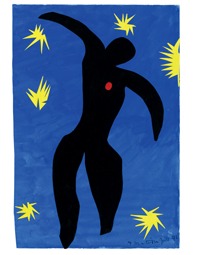
MatisseThe paper cut-outs of Henri Matisse are the focus of a landmark exhibition which opened at Tate Modern last week. Henri Matisse: The Cut-Outs features about 130 works created between 1937 and 1954 with many seen together for the first time. Highlights include maquettes featured in the 1947 book Jazz, The Snail and its sister work Memory of Oceania (both 1953) and the largest number of the Blue Nudes ever shown together. The display takes an in-depth look at the methods and materials Matisse used in the production of the cut-outs. Runs until 7th September (and keep an eye out for the accompanying film, Matisse: Live in cinemas). Admission charge applies. For more, see www.tate.org.uk. PICTURE: Henri Matisse, Icarus 1946, Maquette for plate VIII of the illustrated book Jazz 1947, Digital image: © Centre Pompidou, MNAMCCI, Dist. RMN-Grand Palais / Jean-Claude Planchet, Artwork: © Succession Henri Matisse/DACS 2014.

On Now: Spitting Image. This exhibition at the Cartoon Museum in Bloomsbury centres on the partnership of three dimensional artists Peter Fluck and Roger Law and their key role in the creation of what became known as Spitting Image. It features caricature drawings and photographs created for magazines in the 1970s and 1980s of the likes of Paul McCartney, Michael Jackson, Kate Moss, Saddam Hussein, Billy Connolly, Rupert Murdoch, Jo Brand and John Paul II as well as members of the Royal Family and politicians including Margaret Thatcher. Also present are some of the puppets used in the TV show which ran for 18 series between 1984 and 1996 – these include those of Thatcher, The Queen, Princess Diana and Mr Spock. Runs until 8th June (with selected late opening nights). Admission charge applies. For more, see www.cartoonmuseum.org.

Send all items of interest for inclusion to exploringlondon@gmail.com.

This Week in London – Meet King George I this Easter; celebrating Shakespeare’s 450th; and feasting with St George in Trafalgar Square…

Historic Royal Palaces are offering you the chance to meet King George I and explore the world in which he lived at his former real-life home of  Hampton Court Palace this Easter weekend. A re-enactment marking the 300th anniversary of his accession will have the new Hanoverian king arrive by royal barge on the River Thames and will also include courtiers taking part in a “stately dance”, the King’s troupe of Hanoverian horses performing a “horse ballet” and a Georgian Army encampment with soldiers involved in firing displays. Visitors to the palace will also be able to see a new re-presentation of the Queen’s State Apartments which explores who the Hanoverians were, how they came to rule and their many and bitter family feuds. Runs from tomorrow (18th April) to 21st April. Admission charge applies. For more, see www.hrp.org.uk/HamptonCourtPalace/.

The 450th anniversary of Shakespeare’s birth is being celebrated with a week of events at the Guildhall Library next week. Kicking off on Tuesday, 22nd April, and running until Friday, 25th April, events include talks – with subjects including ‘Shakespeare’s London Theatreland’ and ‘Imaging Shakespeare’s Indoor Theatre’, and a six hour complete reading of Shakespeare’s sonnets with readers including actor Damian Lewis, author Alan Hollinghurst and Lord Mayor of City of London Fiona Woolf as well as Shakespeare-themed walks around the City and Southwark, and the free Shakespeare in Print exhibition at the Library. For more, see www.cityoflondon.gov.uk/things-to-do/visiting-the-city/archives-and-city-history/guildhall-library/Pages/default.aspx. Meanwhile, the V&A is also holding a Shakespeare Festival, kicking off next Monday and running until 4th May. Highlights of the festival include screenings of some of the best theatre productions of Shakespeare in the last 20 years, live performances by actors and musicians and a series of debates and talks including the “interactive lecture” Marchpane to Mutton – A Taste of Shakespeare’s Time by food historian and artists Tasha Marks. There’s also a competition – Cakespeare – in which the public are invited to design, bake and decorate a Shakespeare-themed cake and share an image of it on social media (#Cakespeare) by 4th May with the winner to receive a weekend for two to Stratford-upon-Avon and tickets to the Royal Shakespeare Company. The festival is being complemented by a display in the Theatre and Performance Galleries, Shakespeare: Greatest Living Playwright which features the First Folio as its centrepiece. Admission is free. See www.vam.ac.uk for more.

It might be two days ahead of the official saint’s day, but the Feast of St George will be celebrated in Trafalgar Square this Bank Holiday Monday with a banquet and guests including a five metre high interactive dragon. The festivities, hosted by Mayor of London Boris Johnson, will also include an English Farmers’ Market featuring 20 stalls, a kid’s marquee and traditional wooden garden games, harlequins on stilts, swing boats and circus lessons for children, a bandstand located in front of Nelson’s Column and a 12 foot tall Maypole. Runs from noon to 6pm. For more, see www.london.gov.uk/feast.

Send all items of interest for inclusion to exploringlondon@gmail.com. 

This Week in London – New drawbridge for the Tower; Churchill War Rooms celebrate 30 years; and, the mid-Twentieth century home at the Geffrye…

There’s a working drawbridge at the Tower of London, something not seen at the fortress since the 1970s. The bridge, which would have originally spanned a water-filled moat, was created in 1834 to allow munitions to be brought into the basement level of the White Tower from the wharf (the moat was drained in 1843 on the orders of the then-Constable, the Duke of Wellington). The bridge has been altered many times but the last time it was completely replaced was in 1915 while the tradition of raising it was carried on until the 1970s before it was permanently fixed in 1978. The new bridge draws on historic designs from 1914 and has been constructed of steel and English oak. It will be raised and lowered on “high days” and holidays and for educational purposes. For more, see www.hrp.org.uk/TowerOfLondon/.

The Churchill War Rooms – a complex of underground rooms from where then PM Winston Churchill and others directed the course of Allied troops during World War II – is celebrating the 30th anniversary of its public opening with a new displaying showcasing never before seen objects related to its creation as a tourist attraction. The objects include a private admissions ticket from the days when the only way inside was via specially granted permission, correspondence about the fate of the War Rooms and a poster from 1984 advertising the opening of the Cabinet War Rooms to the public. Admission charge applies. For more, see www.iwm.org.uk/visits/churchill-war-rooms.

On Now: John Pantlin: photographing the mid-century home. This free exhibition at the Geffrye Museum in Shoreditch celebrates the work of Pantlin who is noted for his extensive work for the architectural press in the 1950s and 1960s. The small exhibition focuses on his shots of domestic interiors with shots of sun-filled living rooms and bedrooms filled with toys with all images drawn from the Robert Elwall Photographs Collection. Runs until 29th June. For more, see www.geffrye-museum.org.uk.

LondonLife – A splash of colour comes to St Pancras…

Chromolocomotion,-Terrace-Wires-art-programme-at-St-Pancras-International-1In contrast to the colourless smog which has lain over London, Scottish artist David Batchelor’s sculpture, Chromolocomotion, brings a splash of colour to the Grand Terrace at St Pancras International. Unveiled this week, the 20 by 10 metre work consists of 44 L-shaped pieces of coloured perspex suspended from the Grade I-listed roof of the Barlow Shed. It replaces Lucy and Jorge Orta’s Cloud: Meteoros and is the second installation commissioned by St Pancras International’s owners HS1 Ltd as part of the Terrace Wires initiative. The work will remain in place until late September. For more on the initiative, see www.terracewires.co.uk. PICTURE: HS1 Ltd.

This Week in London – Queen Elizabeth Olympic Park opens fully this weekend; Shakespeare at the Guildhall Library; and, the V&A celebrates Italian fashion…

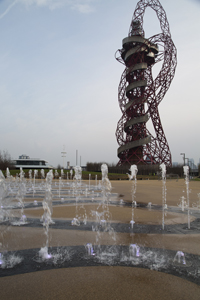
QEOP• The UK’s tallest sculpture, the ArcelorMittal Orbit, will be open to the public in Queen Elizabeth Olympic Park – described as the “biggest new park to open in Europe in 150 years” – in London’s east from this weekend. While the northern part of the 560 acre park, the Copper Box Arena, Lee Valley VeloPark and Aquatics Centre have been open to the public since July last year, from Saturday visitors will be able to visit the southern part of the park featuring the 114.5 metre high sculpture. Features in the southern part of the park include a new tree-lined promenade with giant globes, interactive water fountains, an adventure playground and four themed walking trails focusing on the 2012 Games, nature and biodiversity, education, and art and culture. Visitors who head to the top of ArcelorMittal Orbit will be able to view across 20 miles of London from a 76 or 80 metre high platform (admission charges apply – £15 adults/£7 children/£40 for a family of four – and, be warned, you may need to book) while at the base of the sculpture is a cafe and event space. The opening weekend will see a host of special events including a parade of children, an aerial acrobatic performance, choirs, bands, dancers, poets, circus performers and story tellers and ‘try out’ sports and fitness sessions. There’s more yet to come with the Lee Valley Hockey and Tennis Centre opening to the public in June and the Olympic Stadium reopening for the 2015 Rugby World Cup next year. For more on the park, see www.queenelizabetholympicpark.co.uk and for tickets to the ArcelorMittal Orbit, see http://arcelormittalorbit.com.

The printed works of William Shakespeare are the focus of a new exhibition which opened at the Guildhall Library in the city this week. Shakespeare in Print explores the library’s Shakespearean works and looks at how they were produced. Among the treasures on display will be a First Folio, the first collected edition of his plays, contemporary writers quartos and later editions of the Bard’s plays and poetry. This free exhibition is running until 29th May. The library will be hosting a series of Shakespeare-related events in the week of 22nd to 25th April to mark the 450th anniversary of his birth. For more, head here.

Italian fashion from 1945 until today is the subject of the V&A’s spring exhibition opening on Saturday. The Glamour of Italian Fashion 1945-2014 will feature 100 ensembles and accessories by leading Italian fashion houses including Dolce & Gabbana, Giorgio Armani, Gucci, Prada, Valentino and Versace as well as creations from the “next generation of talent” including Giambattista Valli and Fausto Puglisi and will also showcase the creativity of less well remembered figures such as Sorelle Fontana and Walter Albini. As well as charting the shifting international perception of Italian style, the display will also highlight techniques and materials used in the creation of Italian fashion with a digital map visualising the industry. Runs until 27th July. Admission charge applies. For more, see www.vam.ac.uk.

Send all items of interest for inclusion to exploringlondon@gmail.com.

This Week in London – Sutton Hoo rediscovered; The Sixties at Tower Bridge; and, the British Library celebrates spring…

• Celebrating 75 years since its discovery this year, the Anglo-Saxon treasure of Sutton Hoo has a new home from this week with the reopening of the renovated gallery housing early medieval artefacts at the British Museum. Excavated at a site in Suffolk in 1939, the Sutton Hoo ship burial is described as the richest intact burial to survive from Europe. It featured a 27 metre long ship and objects including an iconic helmet and is thought to be linked to the death of an Anglo-Saxon king in the early 600s. The treasure now forms the centrepiece of the gallery – Room 41 – which was last renovated in 1985. Other objects in the gallery – which covers Europe during the period from 300 to 1100 – include the Kells Crozier, the Lycurgus Cup, and the Fuller Brooch as well as new objects never shown before such as late Roman mosaics, a copper alloy necklace from the Baltic Sea region and a gilded mount found in a lump of material taken from a Viking woman’s grave. Admission to the gallery – the refurbishment of which was made possible through a donation from Sir Paul and Lady Jill Ruddock – is free. For more, see www.britishmuseum.org.

Twiggy The Sixties are the focus of a new photographic exhibition at Tower Bridge which opens tomorrow. The Sixties features more than 60 iconic images of everyone from actors like Peter Sellers and Elizabeth Taylor to Prime Minister Harold Wilson, fashion icons like Twiggy (pictured), racing car driver Jackie Stewart and activists like the Aldermaston marchers. A rare photograph of comic pair Dudley Moore and Peter Cook – taken as a publicity still for the film The Wrong Box – is a highlight. The images can be seen on the bridge’s West Walkway – located 42 metres above the River Thames – and admission is included in the entry fee to Tower Bridge. Runs until 31st December. For more, see www.towerbridge.org.uk. PICTURE: © Getty Images 

The British Library’s annual celebration of fashion, film and design kicks off today. Now in its third year, the Spring Festival, which runs over the weekend, will give people the chance to see selected material from the newly acquired archive of screenwriter, novelist and playwright Hanif Kureishi (he will also be present, speaking with writer Rachel Holmes about his career). Other events celebrate fashion and film in the Jazz Age, the British newspaper archive and the resources the library has for film-makers. For full details, see www.bl.uk/whatson/exhibitions/spring-festival-2014/events/index.html.

Send all items of interest for inclusion to exploringlondon@gmail.com.


This Week in London – William Kent at the V&A; new City Visitor Trail; and, Veronese at the National Gallery…

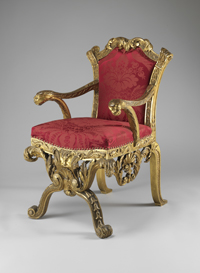
Armchair_for_Devonshire_House_ca._1733-40__Devonshire_Collection_Chatsworth._Reproduced_by_permission_of_Chatsworth_Settlement_Trustees._Photography_by_Bruce_WhiteThe life and work of William Kent, the leading architect and designer of early Georgian Britain, is the subject of a new exhibition opening at the V&A on Saturday. William Kent: Designing Georgian Britain covers the period 1709 to 1748 which coincides with the accession of the first Hanoverian King George I. the tercentenary of which is being celebrated this year. The display features more than 200 examples of Kent’s work – from architectural drawings for buildings such as the Treasury (1732-37) and Horse Guards (1745-59), to gilt furniture designed for Houghton Hall (1725-25) and Chiswick House (1745-38), landscape designs for Rousham (1738-41) and Stowe (c 1728-40 and c 1746-47) as well as paintings and illustrated books. The exhibition, the result of a collaboration between the Bard Graduate Center, New York City, and the V&A,  features newly commissioned documentary films and will have a section focusing on designs Kent created for the Hanovarian Royal family including those he produced for a Royal Barge for Frederick, the Prince of Wales (1732) and a library for Queen Caroline at St James’ Palace (1736-37). Runs until 13th July. Admission charge applies. See www.vam.ac.uk. PICTURE: Armchair for Devonshire House ca. 1733-40, © Devonshire Collection, Chatsworth. Reproduced by permission of Chatsworth Settlement Trustees.

A new City Visitor Trail has been unveiled by the City of London, taking visitors on a 90 minute self-guided tour of some of the City’s main attractions (or longer if you want to linger in some of the places on the itinerary). The trail – a map of which can be picked up from the City Information Centre – goes past iconic buildings such as St Paul’s Cathedral, Guildhall, Mansion House, Monument, the Tower of London and Tower Bridge as well as lesser-known sites. As well as the main route, there’s also five specially themed routes – ‘Law and literature’, ‘London stories, London people’, ‘Culture Vulture’, ‘Skyscrapers and culture’, and ‘Market mile’ – and a City Children’s Trail, provided in partnership with Open City, which features three self-guided routes aimed at kids. As well as the map, the City has released an app – the City Visitor Trail app – which provides a commentary at some of the city’s main attractions which can either by read or listened to as it’s read by people closely associated with the locations (available for both iPhone and Android). For more, follow this link.

The works of the 16th century Venetian artist known as Veronese (real name Paolo Caliari) are being celebrated in a new exhibition, Veronese: Magnificence in Renaissance Venice at the National Gallery. More than 50 of his works are featured in the display including two altarpieces never before seen outside Italy: The Martyrdom of Saint George (about 1565) from the church of San Giorgio in Braida, Verona, and The Mystic Marriage of Saint Catherine (1565-70) from the Gallerie dell’Accademia, Venice. Others include early works like The Supper at Emmaus (about 1565), the beautiful Portrait of a Gentleman (c 1555) and the artist’s last autograph work, the altarpiece for the high altar of San Pantalon in Venice (1587). Runs until 15th June. Admission charge applies. For more, see www.nationalgallery.org.uk.

Send all items of interest for inclusion to exploringlondon@gmail.com.

This Week in London – Copying Hans Holbein; the Needlemakers’ 350th; and, 16th century woodcuts…

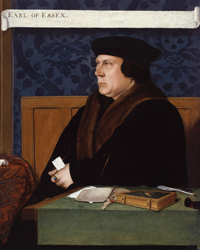
ThomasCromwellA new display exploring the demand for copies and remakes of portraits originally created by Tudor court painter Hans Holbein the Younger has opened at the National Portrait Gallery. Hans Holbein Re-made features a selection of copies of Holbein’s works from the gallery’s collection including portraits of William Warham, John Fisher, Sir Thomas More and Sir Richard Southwell, all of which have undergone new technical analysis as part of the gallery’s Making Art in Tudor Britain project. The research reveals new details about how and when the paintings were made and the techniques used. The display also includes a portrait of Thomas Cromwell, Earl of Essex – thought to be one of the first miniatures Holbein painted alongside a digital screen which enables this work of Holbein’s to be compared with that of another artist working in his studio. In Room 3. Runs until 31st August. Admission is free. For more, see www.npg.org.uk. PICTURE: Thomas Cromwell, Earl of Essex, after Hans Holbein the Younger, early 17th century (1533-1534). © National Portrait Gallery, London.

This year marks the 350th anniversary of King Charles II’s granting of a Royal Charter to The Worshipful Company of Needlemakers and to commemorate the occasion, the Guildhall Library is hosting an exhibition of some of the company’s treasures and history. Among the displays are tools used in 19th and 20th centuries, 18th century silverware, and the Company Arms (gifted to it in 1995) as well as examples of their craft from both early and recent periods. The exhibition closes on 29th March, so you’ll have to be quick. Admission is free. For more, see www.cityoflondon.gov.uk/things-to-do/visiting-the-city/archives-and-city-history/guildhall-library/exhibitions/Pages/The-Worshipful-Company-of-Needlemakers.aspx

A new display of revolutionary sixteenth century woodcuts opens at the Royal Academy of Arts on Saturday. Renaissance  Impressions: Chiaroscuro woodcuts from the Collections of Georg Baselitz and the Albertina, Vienna, looks at the development of the printing technique of the chiaroscuro woodcut and presents more than 100 rare prints by artists from Germany, Italy and The Netherlands which have come from the collection of the Albertina Museum in Vienna and the personal collection of Honorary Royal Academician Georg Baselitz. The new technique – the first known example of which is widely believed to have been created by Hans Burgkmair the Elder with his 1508 depiction of Emperor Maximilian on Horseback – involved supplementing the key ‘black line block’ with one or several ‘tone blocks’ with chiaroscuro woodcuts the first colour woodcuts to make dramatic use of light and shadow to suggest form, volume and depth. Runs until 8th June in the Sackler Wing of Galleries. Admission charge applies. For more, see www.royalacademy.org.uk.

Vikings at the British Museum; World War I portraits; and, Ruin Lust…

RoskildeThe Vikings come to the British Museum from today with the first major exhibition in more than 30 years. Vikings: life and legend, the first exhibition to be held in the new Sainsbury Exhibition Gallery, was developed with the National Museum of Denmark and the Staatliche Museen zu Berlin (National Museums in Berlin) and looks at the Viking period from the late 8th century to the early 11th century. Featuring many new archaeological discoveries and objects never seen before in the UK alongside items from the British Museum’s own collection, the exhibition is centred on the surviving timbers of a 37 metre long Viking warship excavated from the banks of the Roskilde fjord in Denmark (pictured). Other items include skeletons recently excavated from a mass grave of executed Vikings in Dorset, the Vale of York Hoard (discovered in 2007) and a stunning hoard of silver from Gnezdovo in Russia. A unique live broadcast event presented by historian Michael Wood taking cinema audiences around the exhibition will be shown in cinemas across the nation on 24th April. Admission charge applies. Runs until 22nd June. For more, see www.britishmuseum.org/whats_on/exhibitions/vikings.aspx. PICTURE: Copyright of the National Museum of Denmark. 

The commemorations of the World War I centenary have commenced at the National Portrait Gallery with The Great War in Portraits. The first of a four year programme of events and displays at the gallery, the exhibition features iconic portraits of figures such as Winston Churchill, Kaiser Wilhelm, Siegfried Sassoon and Wilfred Owen as well as major art works by the likes of Lovis Corinth, Max Beckmann, and Kirchner, whose painting Selbstbildnis als Soldat (Self-portrait as a Soldier) is featured, and Harold Gillies’ photographs of facially injured soldiers from the Royal College of Surgeons. Among the highlights are Jacob Epstein’s The Rock Drill, a contrasting pair of British and German films about the Battle of the Somme, and a press photograph of Gavrilo Princip, the student who sparked the flames of war when he assassinated Archduke Franz Ferdinand. Elsewhere among the 80 works on display are portraits of war heroes such as VC winners are contrasted with those of soldiers disfigured by war, POWs and those shot for cowardice. Admission is free. Runs until 15th June. For more, see www.npg.org.uk/whatson/firstworldwarcentenary/exhibition.php.

Our fascination with ruins is the subject of a new exhibition which opened this week at Tate Britain. Including more than 100 works from the likes of JMW Turner, John Constable, John Martin, Eduardo Paolozzi, Rachel Whiteread and Tacita Dean, Ruin Lust examines the craze for ruins that overtook creative types in the eighteenth century and the subsequent revisiting – and at times mocking – of this fascination by later figures. Works on show include Turner’s Tintern Abbey: The Crossing and Chancel, Looking towards the East Window 1794, Constable’s Sketch for ‘Hadleigh Castle’ c 1828-9, Graham Sutherland’s Devastation series 1940-1 – showing the aftermath of the Blitz, Jon Savage’s images of London in the late 1970s, and Whitehead’s Demolished – B: Clapton Park Estate 1996, showing the demolition of Hackney tower blocks. Runs until 18th May. Admission charge applies. For more, see www.tate.org.uk/whats-on/tate-britain/exhibition/ruin-lust.

LondonLife – Brompton Road tube station sells for £53 million…

BromptonThe Brompton Road tube station, which closed in 1934 after being made redundant following the opening of other stations, sold for a reported £53 million over the weekend. The former Piccadilly Line station, located between South Kensington and Knightsbridge stations, opened in 1906 and was designed by architect Leslie Green for the Great Northern, Piccadilly and Brompton Railway. It was used as a command centre for anti-aircraft guns during World War II and the story goes was where Nazi Rudolf Hess was interrogated after being captured in 1941. Owned up until the sale by the Ministry of Defence, it was most recently used as a training centre for air cadets and naval reservists. It will reportedly be converted into residential flats.

This Week in London – Data visualisation at the BL; Kenneth Williams honoured; and, celebrating ‘frost fairs’…

NASA's-Perpetual-Ocean-cropAn examination of the historical use of visual data has opened at the British Library. Beautiful Science, which is running in The Folio Society Gallery, features the work of scientists and statisticians down the ages and focuses on the key themes of public health, weather and evolution. Among items on display are Robert Fludd’s Great Chain of Being (1617), Florence Nightingale’s seminal ‘rose diagram’ (1858) which illustrated that more Crimean War deaths were being caused by poor hospital conditions that battlefield wounds, and a contemporary moving infographic from NASA showing ocean currents (pictured). A programme of events is running with the exhibition which closes on 26th May. Entry is free. For more, see www.bl.uk/beautiful-science. PICTURE: NASA’s Perpetual Ocean © NASA/Goddard Space Flight Center

Comic Kenneth Williams (1926-1988) has been honoured with an English Heritage Blue Plaque at the London apartment he lived in during the hey day of the ‘Carry On’ series of films during the 1960s. Williams lived in flat 62 on the top floor of Farley Court, located between Madame Tussauds and Baker Street station, between 1963 and 1970 during which he starred in such films as Carry on Cleo and Carry on up the Khyber and also appeared in radio comedy programmes such as Round the Horne and Just a Minute. For more, see www.english-heritage.org.uk/discover/blue-plaques/.

Two exhibitions celebrating London’s Frost Fairs are underway at the Museum of London and its Docklands sister. Frozen Thames: Frost Fair 1814 at the Museum of London in the City and Frozen Thames: Frost Fair 1684 at the Museum of London Docklands both feature objects, paintings, keepsakes, engravings and etchings from the museum’s collection. Highlights at the Museum of London exhibition include the only surviving piece of gingerbread from the 1814 fair, the last fair of its kind, as well as etchings by satirical artist George Cruikshank and a print by George Thompson while among the items on display at the Docklands museum are two paintings by a Dutch artist Abraham Hondius (c. 1625-91). Both exhibitions are free and both run until 30th March. For more, see www.museumoflondon.org.uk.