• Death and burials in Roman London are the focus of a new exhibition opening at the Museum of London Docklands on Friday with a rare sarcophagus discovered in Southwark last year one of the highlights. Roman Dead will look at the cemeteries of ancient London, the discoveries made there and their context in the modern cityscape. Alongside the sarcophagus discovered in Harper Road (which had possibly been disturbed by grave robbers), the exhibition features more than 200 objects including a multi-coloured glass dish found with cremated remains, a jet pendant in the form of a Medusa’s head and four men’s skulls which showed signs of violence and were buried in pits by the city’s wall as well as a tombstone of a 10-year-old girl named Marciana, found during excavations in 1979, and a pot decorated with a human face which was used as a cremation urn. The free exhibition can be seen until 28th October. For more, see www.museumofondon.org.uk/docklands.
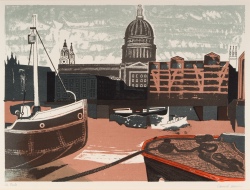 • The work of celebrated Twentieth century British artist and designer Edward Bawden (1903-89) has gone on display in a new exhibition at the Dulwich Picture Gallery. Edward Bawden is described as the “most wide-ranging” exhibition of his work since his death and the first to look at every aspect of his 60 year career. It features a number of previous unseen works as well as 18 rarely seen war portraits which are being displayed together for the first time. Some 170 works – half from private collections – are arranged thematically to follow the evolution of his style with rooms dedicated to leisure, architecture, animals, fantasy and gardens. Among the highlights are early designs for the London Underground, Rain (1926) – on display for the first time, portraits of places he visited in North Africa, the Middle East and Europe while working as an official war artist during World War II, and several linocuts from Aesop’s Fables. Runs until 9th September. Admission charge applies. For more, see www.dulwichpicturegallery.org.uk. PICTURE: Edward Bawden, St Paul’s, 1958 (Colour autolithograph/Trustees of the Cecil Higgins Art Gallery (The Higgins Bedford), © Estate of Edward Bawden).
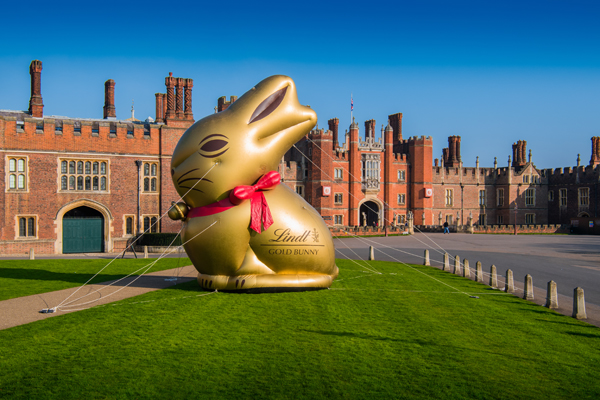
• Delve into the world of the ‘Gorgeous Georgians’ and ‘Vile Victorians’ at Hampton Court Palace this May half term. The Birmingham Stage Company will be uncovering centuries of grisly history in an hour long outdoor ‘Horrible Histories’ performance featuring characters including Georgian kings, Lord Horatio Nelson, the Duke of Wellington, Florence Nightingale, and Dr John Snow. Guests are encouraged to bring a blanket and some food for the “ultimate historical picnic”. Admission charge applies – check website for dates. For more, see www.hrp.org.uk/hampton-court-palace/explore/the-gorgeous-georgians-and-vile-victorians/.
Send all items for inclusion to exploringlondon@gmail.com.


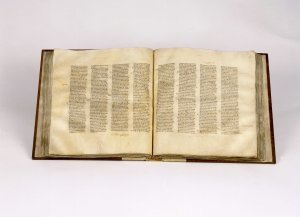 The first major exhibition to explore the history of Egypt after the pharaohs opens at the British Museum today. Egypt: Faith after the pharaohs spans 1,200 years of history – from 30 BC to 1171 AD – with 200 objects showing how Christian, Islamic and Jewish communities reinterpreted the pharaonic past of Egypt and interacted with each other. The exhibition opens with three significant examples of the Hebrew Bible, the Christian New Testament and the Islamic Qur’an – the texts include the New Testament part of the 4th century AD Codex Sinaiticus, the world’s oldest surviving Bible and the earliest complete copy of the New Testament, which is now part of the British Library’s collection. All three are juxtaposed with everyday stamps associated with each of the three religions in an illustration of the relationship between the institutional side of religion and its everyday practice, both key themes of the exhibition. Other exhibits include a pair of 6th-7th century door curtains featuring classical and Christian religious motifs, a 1st-2nd century statue of the Egyptian god Horus in Roman military costume, and a letter from the Roman Emperor Claudius (41-54 AD) concerning the cult of the divine emperor and the status of Jews in Alexandria. Admission charge applies. Runs until 7th February in Room 35. A programme of events accompanies the exhibition. For more, see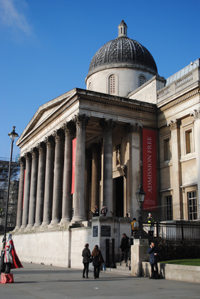




 Exploring London